
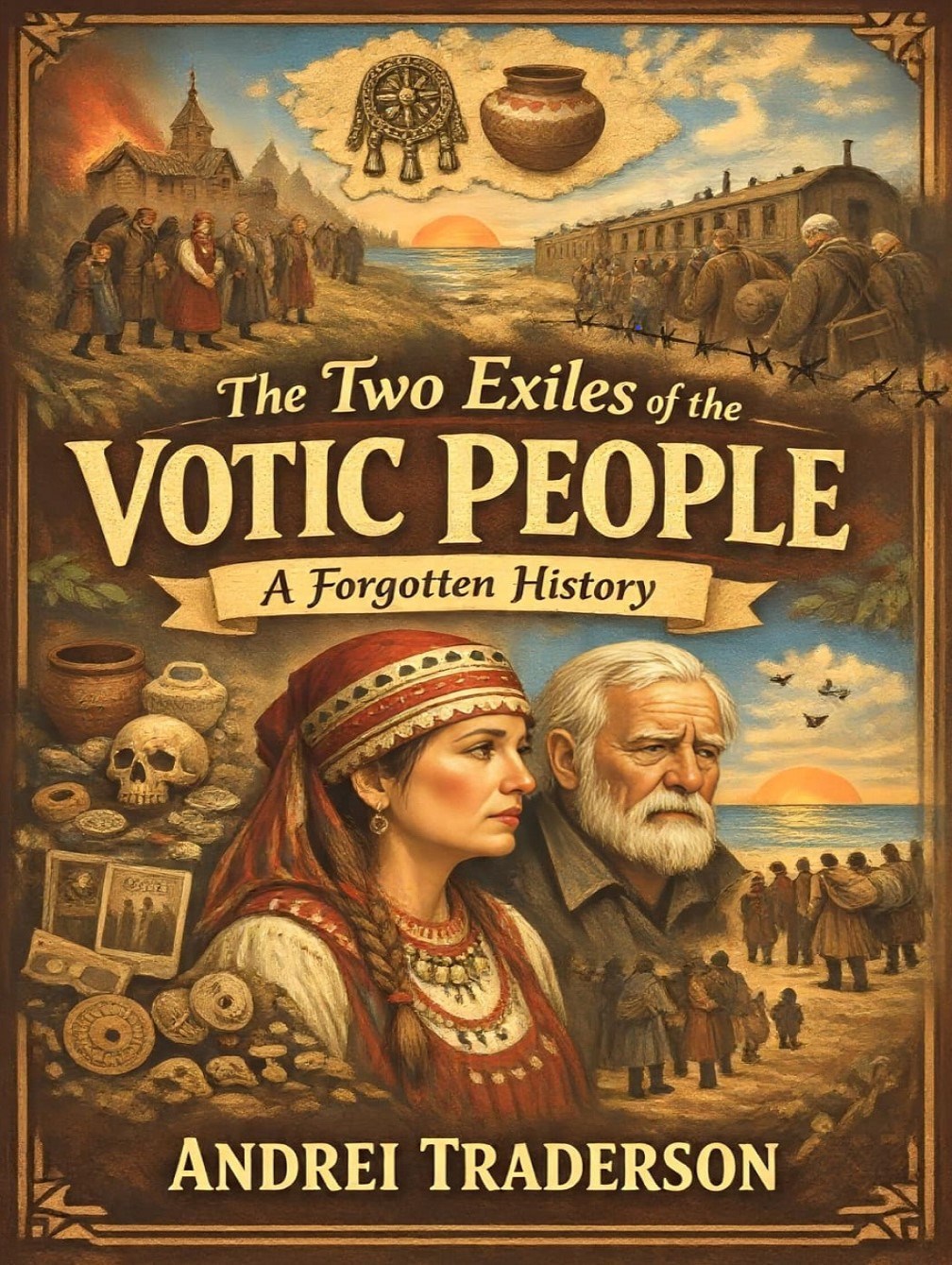
The two exiles of the votic peoples. A forgotten history
The Two Exiles of the Votic People. A Forgotten History
Introduction: The People on the Edge of Memory
The Silence of the Archives
A History in Two Acts: 1445 and 1943
The Methodology of Empathy
The Urgency of Now
A Guide to the Journey Ahead
Introduction: The Vanishing Nation
Chapter 1: Who Are the Votes? The Indigenous People of Ingria
The People at the Edge of the Known World
The Testimony of the Earth: Archaeology of the Votic Fifth
The Land, the Language, the Worldview
Between Two Fires: The Medieval Frontier
The Living Community on the Eve of Catastrophe
Echoes in the Silence: The Challenge of Recovery
Chapter 1: Who Are the Votic? Origins and Early Homeland
The Land of the Vägjä: A Finnic Heart in the Eastern Baltic
The Votic Fifth: Between Novgorod and the Sea
Archaeology of the Everyday: Unearthing a Votic Village
The First Whisper in Parchment: Early Written Mentions
The Social Fabric: Kinship, Law, and the Pagan Shadow
The Calm Before the Storm: A Society Poised on the Edge
Chapter 2: The Pagan Frontier: Livonian Order and the Baltic Crucible
The Contested Ground: Ingria as a Buffer Zone
The Livonian Order: The Driving Force of the Western Front
Novgorod’s Veche and the Distant Shield
The "Pagan Frontier" as a Concept and a Reality
The Spark: Regional Instability in the 1440s
The Stage is Set for the Unthinkable
Chapter 2: The Pagan Frontier: Votes Between Novgorod and the Livonian Order
The Votic Fifth: A Landscape of Ancient Autonomy
Novgorod the Great: A Distant Patron
The Livonian Order: The Crusading Pressure
The Mechanics of a Frontier: Raid, Tribute, and Captivity
1445: The Tinderbox Ignites
Chapter 3: Document of Dispossession: The 1445 Captivity Order
The Parchment and Its Provenance: A Record in Context
The "Pagan Frontier" and the Logic of Capture
Decoding "Gefangene": The Human Scale of the Catastrophe
The Silence of the Archive: What the Document Does Not Say
The Captivity Order as a Blueprint for Erasure
The Echo in the Stone: From Document to Legacy
Chapter 3: The First Exile: The 1445 Deportation to Courland
The Geopolitical Tinderbox: A People on the "Pagan Frontier"
The 1445 Document: Decoding an Archive of Suffering
The Route of Ruin: From Ingrian Forests to Courland Manors
The Logic of Displacement: Slave, Serf, or Colonist?
Bauska Castle: The Stone Testament
The Birth of the Krevins: A Diaspora Takes Root
Chapter 4: The Road to Courland: The First Forced Exodus
Mapping the Unmapped: Probable Routes of Displacement
The Human Column: Glimpses of an Invisible Journey
The Logistics of Human Cargo
The Landfall: Arrival in an Alien Courland
The Immediate Aftermath: Rupture and the Echo Left Behind
Chapter 4: The Krevins: Votic Exiles in a New Land
A Name Forged in Captivity: The Birth of the Krevin Identity
The Archaeology of Exile: Settling the "Krevin Land"
Life on the Manor: Labor, Language, and Faith
The Slow Erosion: Assimilation and the Fading Distinction
The Last Echo: The Death of a Dialect
Krevinzeme Today: Landscape as Monument
Chapter 5: The Krevins of Latvia: Votic Exiles in a New Land
Arrival and Settlement: The Forging of a Diaspora Identity
The Krevinian Dialect: A Linguistic Fossil
Life as the “Other”: Social Position and Cultural Markers
The Slow Tide of Assimilation: 19th and 20th Century Pressures
1989: The End of a Linguistic Line
The Krevinian Legacy: Between Erasure and Memory
Chapter 5: Stones of Memory: Building Bauska Castle
From Captives to Builders: The Documented Link
Reading the Walls: Architecture as Testimony
Bauska as a Symbol of Dual Erasure
The Krevinian Echo: From Builders to an Invisible Community
A Place of Pilgrimage and Reckoning
Chapter 6: The Builders of Bauska: Architectural Testimony to Exile
The Edifice of Power on a Pagan Frontier
Decoding the Stones: Traces of an Ingrian Craft?
The Testimony of the Engraving: A Scene of Unseen Labor
The Modern Photograph: Ruin as Revelation
Bauska as Lieu de Mémoire: Beyond the Guidebook
The Architecture of Absence
Chapter 6: Five Silent Centuries: Life Between the Exiles
The Weight of the Land: Serfdom and the Ingrian Estate
The Slow Turn of the Cross: Orthodox Conversion and Syncretic Faith
A Tapestry of Words: The Oral Tradition as Archive
The Visible Identity: Material Culture in a Changing World
The Fracturing World: From Empire to Nation-State
Chapter 7: Five Centuries Between Exiles: The Votes Under Russian Rule
The Tsar’s New Subjects: Incorporation and the Votic Fifth
The Weight of Serfdom and the Search for Autonomy
The Double Pressure: German Colonists and Russian Orthodoxy
The Soviet Interregnum: Hope and the Gathering Storm
Chapter 7: The Storm Gathers: World War II and the German Occupation
The Front Line Becomes Home
The Racial Ledger: Finno-Ugrians in Nazi Ideology
The "Security Zone" and the Noose Tightens
The Precarious Village: Life on the Eve of Deportation
The Bureaucracy of Uprooting: Orders from Afar
The Gathering Storm Breaks
Chapter 8: The Last Krevins: Language Death in Latvia, 1989
Chapter 8: The Order to Uproot: Summer 1943
The Blueprint of Dispossession: Deciphering the Evacuation Order
The Anatomy of a Village Uprooted: Pumalitsa and Beyond
The First Leg: From Home to Holding Pen
The Road to Tartu: A Journey Through a Foreign Land
Tartu and Beyond: Dissipation into the Hinterland
Echoes of 1445: The Pattern Repeats
Chapter 9: The German Occupation: Ingria 1941-1943
The Bureaucracy of Occupation: From Frontline to "Rear Area"
The "Security Zone": A Euphemism for Erasure
The Fateful Calculations of 1943
The View from the Village: A World Closes In
The Blueprint for Exodus: Order Nr. 6675
The Ghosts of 1445: Echoes Across Five Centuries
Chapter 9: Strangers in Estonia: Camps and Farmsteads
The Architecture of Limbo: The Special Camps
The Mois and the Master: Forced Labor on Estonian Farmsteads
The Social Fabric in Confinement
The Estonian Gaze: Perceptions of the "Ingrian Finns"
The Psychology of Suspended Time
The Gathering Storm: 1944 and the End of the Pause
Chapter 10: Flight to the North: The Finnish Evacuation of 1944
The Calculus of Kinship: Finland's Decision to Intervene
From Estonian Farms to the Baltic Waters: The Journey to the Coast
Crossing the Gulf: The Voyage to an Unknown Future
The Northward Train: To the Camps of Oulu and Kajaani
Life Behind the Wire: Culture and Community in Limbo
The Looming Shadow: Moscow’s Demand and the End of Sanctuary
Chapter 10: The Second Exodus: Deportation to Estonia, Summer 1943
The Bureaucracy of Uprooting
The Road to Narva: A Procession of the Dispossessed
Tartu and Beyond: Into the Estonian Hinterland
Life in the "Special Camps" and on the Farmsteads
The Testimony of the Uprooted: Voices from the Archive of Memory
The Gathering Storm: Estonia as a Temporary Harbor
Chapter 11: The Frozen Shores: Life in the Finnish Camps
A Refuge of Barbed Wire: The Geography of the Camps
The Economy of Scarcity: Rations, Work, and Survival
The Clinic and the Cemetery: Health in a Precarious Sanctuary
“Our Kindred People?”: Complex Relations with Finns
The Last Hearth: Cultural Cohesion in Confinement
The Gathering Storm: Rumors, Radio, and an Uncertain Future
Chapter 11: Life in Limbo: Votic Labor Camps in Estonia
The Geography of Captivity: Camps and Farmsteads
The Economy of Forced Labor
The Social Landscape: Votes, Estonians, and the Silent War
The Inner World: Community and Cultural Preservation in Confinement
The Bureaucracy of Displacement: Lists, Rations, and Control
The Long Winter of 1943-1944: Waiting for the Thunder
Chapter 12: Flight to Finland: The 1944 Evacuation
The Finnish Calculus: Kinship and Realpolitik
The Crossing: From Narva to the Gulf’s Dark Waters
Arrival in the "Promised Land": The Camps of Oulu and Kajaani
The Fragile Preservation of Community
The Finnish Record: Photographs and Lists as Historical Testimony
A Sanctuary in Suspense
Chapter 12: The Iron Curtain Descends: The Soviet Decree of Non-Return
The Anatomy of a Prohibition: The 1945 Decree
The Rationale of Suspicion: "Collaborators" in a Total War
The First Tremors: Rumors and Realizations in Finnish Camps
The Legalistic Void: Statelessness and Forced Choices
The Silent Partner: Demographic Erasure on the Ground
The Finality of the Paper Wall
Chapter 13: Scattered Across the North: Internal Exile in the USSR
The Machinery of Dispersal: From Lists to Lifetimes
Novgorod and Pskov: The Illusion of Proximity
Vologda and Arkhangelsk: Exile to the Frozen North
The Social Death of Community
Testimonies from the Scattered Earth
An Unmarked Graveyard of Culture
Chapter 13: Refugee Years: Votes in Finnish Camps
The Architecture of Confinement: Finnish Camp Life
The Finnish Gaze: Kinship and Otherness
The Cultural Lifeline: Song, Story, and Shards of Home
The Shadow of Repatriation: Politics of the Displaced
The Fracturing of Community
The Last Winter of Refuge
Chapter 14: The Iron Curtain Descends: Soviet Refusal of Return
The Calculus of Suspicion
The Machinery of Permanent Exile
The Psychological Landscape of the Ban
A Diaspora By Design
The Meaning of the Severance
Chapter 14: The Long Wait: The Prohibition Lifts (1956)
The Whisper from the West: News of the Thaw
The Calculus of Return: To Stay or To Go?
The Journey Back: A Pilgrimage to a Stranger’s Land
The World Erased: The Shock of the Empty Place
The New Dislocation: Limbo in the Homeland
The Legacy of the Long Wait
Chapter 15: Internal Exile: Dispersal Across Northern Russia
The Geography of Erasure: Assigning Destinies
Building Life on Foreign Soil: The Daily Struggle
The Fragmentation of the Social Universe
The Silent War: Language Loss in Isolation
Adaptation and Invisible Resistance
The Unhomely Home: The Psychology of Permanent Dislocation
Chapter 15: Voices from the Exodus: Survivor Testimonies
The Order: When the World Turned on a Piece of Paper
The Road: A Column of Dust and Despair
The Estonian Limbo: Labour as a Substitute for Home
The Second Flight: The Gulf of Finland as a River of Panic
The Scattering: The Internal Exile Within the Motherland
The Keepers of the Flame: The Burden and Gift of Memory
Chapter 16: The Last Speakers: The Erosion of Language
The Symphony of Sounds: What Was Spoken?
The Cracks Appear: The Assault of the 19th and Early 20th Centuries
The Scattering: How Dispersal Shattered the Soundscape
The Last Stand: Isolated Speakers and a Silent Dialect
The Reclamation: Linguists and the Ghost in the Machine
What Is Lost When a Worldview Falls Silent?
Chapter 16: The Long Wait: The Return Ban Lifted, 1956
The Edict of Absence: Life Under the Ban, 1945-1953
The Thaw’s Chilly Breeze: The Partial Lifting, 1953-1956
The Journey Back: Confronting the Erasure
The Psychological Fracture of a Phantoming Homeland
The Scattered Few: Those Who Stayed in the North
The Legacy of the Unreturned
Chapter 17: Archives of Absence: The Search for Evidence
The Logic of the Ledger: Finding People in State Paper
The Finnish Refuge: Photographs as Testimony
The Soviet Wall: Silences and Censored Files
The Personal Archive: Letters, Diaries, and the Smell of Home
The Cartography of Displacement
The Digital Resurrection
Chapter 17: Counting the Losses: Demographics of Disappearance
The Pre-War Baseline: A People Still Rooted
The Engine of Erosion: War and Its Aftermath
The Post-War Dispersal: Statistical Dissolution
The Invisible Factor: Intermarriage and Language Shift
Urban Migration and the Final Scattering
The Numbers Today: On the Brink of Null
Chapter 18: Vod' Today: Between Extinction and Revival
The Final Speakers: A World Reduced to a Whisper
Tangible Echoes: The Remnants of Material Culture
The Digital Diaspora: Community in the Absence of Place
The Activists: A Handful Against the Tide
The Demographic Abyss: Numbers Tell the Final Story
Between Mourning and Hope: The Paradox of the Present
Chapter 18: The Last Speakers: Language on the Brink
Chapter 19: The Work of Remembrance: Preservation and Activism
The Digital Voticia: Archives, Databases, and Virtual Community
The Grammar of Survival: Language Revitalization as Activism
Weaving the Past: Material Culture and Museum Diplomacy
The Calendar of Memory: Festivals and Ritual Reclamation
The Scholars and the Storytellers: Collaborative Knowledge Production
The Unfinished Work: Between Mourning and Hope
Chapter 19: Why Memory Matters: The Ethics of Historical Recovery
Conclusion: Echoes of a Vanishing World
Conclusion: Why the Memory of Exile Matters
The Twin Exiles: A 500-Year Pattern of Rupture
More Than a Footnote: The Vod' in the European Narrative
The Silent Language: Cultural Erasure as the Final Exile
The Ethics of Memory: Against the Tide of Oblivion
The Flickering Light: Preservation and the Possibility of Continuity
Why Their Memory is Our Memory
Спасибо за чтение
Вернуться к книге