
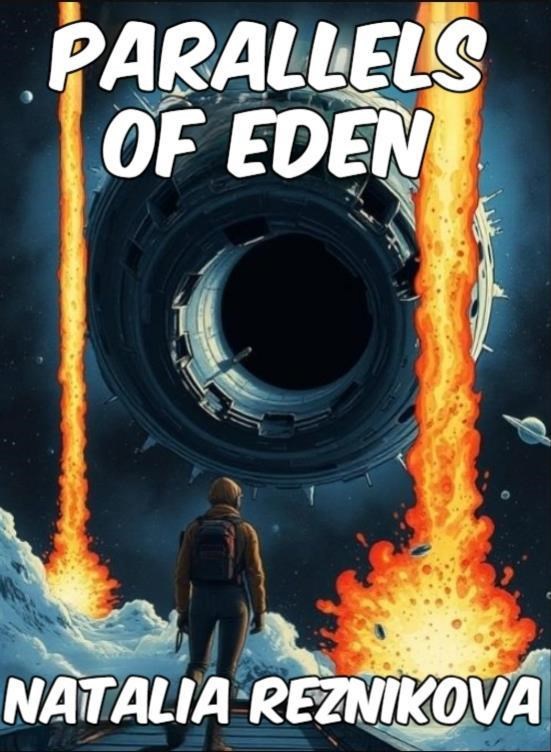
Parallels of Eden
Глава 1
PRIVATE EDITION. NOT FOR SALE OR DISTRIBUTION. FAN WORK.
This is a non-commercial fan fiction (crossover), created for creative and exploratory purposes. All rights to the characters and universes of Mass Effect, Alien, Aliens, Prometheus, The Walking Dead, Event Horizon, and others belong to their respective legal copyright holders. The author does not claim ownership of these characters and receives no financial profit from this work. This piece is transformative and represents an original narrative built upon the mentioned universes.
Co-authors: Ridley Scott, Dan O’Bannon, Ronald Shusett — creators of the original film «Alien», whose ideas and inspiration laid the foundation for this work.
Also, my co-authors and sources of inspiration:
J. R. R. Tolkien — author of «The Lord of the Rings», whose worlds and mythology significantly influenced the creation of this work (borrowed two characters);
Stephen King — author of «The Langoliers», whose ideas about time and reality inspired certain plot elements (appropriated the Langoliers themselves);
Robert Kirkman — creator of the «The Walking Dead» comic, whose concepts of survival and human relationships in a zombie apocalypse are reflected in the story (swiped the zombies);
James Cameron — director of «The Terminator» whose ideas about time travel and artificial intelligence were used in developing the plot (invited Arnie from the second part);
Stephen Sommers — director of «The Mummy» and «The Scorpion King», whose elements of adventure and fantasy inspired the creation of the atmospheric backdrop (made off with the Scorpion King himself).
These individuals are mentioned as the creators of the canon, without any desire or their consent to participate in this literary work.
Natalya Reznikova — editor and co-player, provides corrections and assistance in writing.
Main author of the work.
Interstellar tug «Nostromo», Alpha Centauri system.
Crew: of seven members, only one remains.
Cargo: an automated refinery processing 20 million tons of mineral ore.
Course: return to Earth.
August 27, 2122.
Ellen Louise Ripley.
The siren wailed incessantly, signaling that the «point of no return» had been passed and the ship’s automatic self-destruction was imminent. Chaos had already begun on the lower decks long ago: steam from the halted steam generators started pouring into its interior, creating the most favorable environment for the upcoming explosion. Nascent chemical compounds ignited, destroying its internal fittings. But on the central deck, there was no chaos. Yet. She heard the wild howl of the siren, through which the echo of explosions reached her. Still very distant. She knew that, very soon, this same mayhem would begin on the main deck as well, and she hurried to leave the doomed ship.
The woman glanced furtively around the corner, her eyes searching for the THING that had caused the demise of the crew, and, in the near future, the ship as well. All her thoughts now were on survival. For herself, as the sole witness to the disaster, and for her «little, furry, younger brother» — the cat Jones. The cat sat in its carrier, frightened, but unaware of the passions raging in the human’s soul.
The airlock space was empty. She cautiously approached the door frame and peered out, assessing the presence of danger. Not seeing the terrible creature, which, after its horrific birth, had «dealt with» the crew in less than a day, she turned her back to the open door of the lifeboat, pointing the flamethrower into the corridor of the already nearly destroyed cargo tug. A nearby explosion boomed, and a wall of flame slammed into the corner of the corridor, right where she had stood moments ago. She ran into the lifeboat and sealed the entrance behind her before another jet of fire could reach her.
Inside the lifeboat, a siren was also howling: the «Narcissus» was the tug’s standard escape craft. The woman was already closing the lifeboat’s doors when the voice of Mother, the «Nostromo»'s artificial intelligence, came from the speaker built into the small ship’s control panel:
— YOU HAVE ONE MINUTE LEFT TO LEAVE THE SHIP. — This was something the woman herself knew perfectly well, without reminders. After all, she was the one who had initiated the self-destruct sequence. — THE SHIP WILL BE AUTOMATICALLY DESTROYED IN ONE MINUTE.
The woman rushed headlong to the central panel, pressing buttons to clear the lifeboat’s path from the mother ship. The siren’s wail only spurred her on. She sincerely hoped that the thing which had destroyed her crew, her friends, and any possible future happy life, would remain there, outside her small shuttle, and share the «Nostromo»'s fate… She barely managed to release the clamps and activate all the shuttle’s systems. The shuttle was ready for flight. A reminder appeared on the screen before her: «Purge». She strapped herself carefully into the seat, knowing the startup acceleration would press her firmly into the pilot’s chair. The shuttle began to exit the bay, where it had been «docked» to the «Nostromo», when Mother’s voice sounded again:
— THIRTY SECONDS REMAINING… — and then Mother began the «countdown». — TWENTY-NINE, TWENTY-EIGHT… — At the count of «twenty-six», the shuttle’s main engine ignited, and the «Narcissus» surged forward, carrying her away from the mother ship.
The G-forces pressed her into the chair, but to the woman, «this» didn’t matter at all. The most important thing now was to be as far from the epicenter of the explosion as possible. The «Nostromo», along with the refinery, was over a kilometer long, which implied a double detonation. She stared straight ahead, but saw nothing. Now she was PRAYING that her escape plan would succeed… When Mother’s count reached sixteen seconds, the «Narcissus» finally emerged from under the refinery’s massive bulk and began to move away from the doomed leviathan.
The tranquility of the blackness of space was shattered by two explosions: first, the tug exploded. And, since the reactors of the refinery platform, which it had been towing to Earth, were «inked» to the «Nostromo»'s reactor, their detonation occurred a few seconds after the cargo tug’s explosion.
At that moment, as it seemed to her later, all the Gods of the Universe helped her: the shuttle managed to get to an almost safe distance. She had left the zone of the possible blast epicenter, and had practically left the secondary zone as well; however, the shockwave still managed to give her small ship a good shake. For a while, she just sat in the chair, still not believing that she had managed to carry out her plan.
The explosions of the tug and the refinery, almost simultaneous, turned out to be merely a prelude to WHAT happened next. The fabric of space-time shuddered from the absorbed kinetic energy and, unable to withstand the immense pressure, tore, forming a limb: a gigantic «black hole», which seemed to be touched by the very essence of the Universe’s horror. No matter how hard the cosmic darkness tried to remain intact, the invisible threads of fate intertwined for a moment, creating a connection between the fantastic future and the real world of humans. At the heart of this cosmic intersection, white stars flickered with strain, and their cold shadows covered everything around like a nocturnal cloud.
When the energy of the rupture was released, and the vacuum began to fall into the abyss, a giant accumulation of asteroids, pulled in by a small moon, was located not far from the space lane along which the «Nostromo» had once rushed home: each one was firmly held in its orbit. The moment of the third explosion changed everything. The energy of the newborn «black hole» spilled into the surrounding space, only to roll through the space sector and then return back. One of the giant stone blocks found itself at the very center of this chaos. The asteroid, a mute witness to the disaster, was drawn into the abyss; the «hole» swallowed it like a giant vacuum cleaner. Passing through the «accordion» of space-time, the meteorite sped off on a course known only to itself. Each moment of its movement towards the planet distanced it further from the cosmic darkness of the sector it had left behind. The asteroid was inexorably approaching Earth, whose inhabitants had no idea of the threat.
The collision was only a matter of time.
***
International Airport Tolmachevo, Terminal A,
Novosibirsk, Western Siberia, Russian Federation,
January 15, 2021.
Natalya Reznikova.
The bus lazily pulled up to Terminal A of Tolmachevo International Airport, and the passengers — few of them — began to get off. The driver stepped out and opened the luggage compartment. Immediately, a couple of men and one woman approached and started pulling out their rather heavy suitcases, carelessly shoving a large trekking backpack and a ski bag further to the back.
Outside, it was relatively cold, and those who managed to grab their luggage hurried inside the warm terminal building.
«Well, holy shit…» The woman who was last to reach the luggage compartment practically climbed inside the bus to grab her backpack. «Well, aren’t you nice people…» she muttered a silent curse. «Thanks a lot.» She finally managed to grab the ski bag by its handles. «And thanks for not breaking anything…»
She slipped her arm through the right strap. Her hat slid down onto her forehead, and the woman, snorting, quickly pushed it back into place. The driver stood nearby, waiting for everyone to collect their bags, then closed the compartment, got back on the bus, and shut the doors. Holding the ski bag by both straps, the woman hurried into the air terminal.
Inside, it was warm, cozy, and absolutely packed with people. Tolmachevo reminded her of a giant anthill, swarming as if someone had poked it with a stick.
«But people aren’t ants,» Natalya thought as she surveyed the area she’d soon enter after passing security. «Tolmachevo isn’t an anthill — it’s a people-hill.» A chuckle escaped her lips, and the passenger in front of her turned around, making her cut it short.
She felt excitement bubbling inside her but tried to hide it. Every moment in the airport stirred mixed feelings: on one hand, she was on the verge of a new adventure; on the other, everything felt too familiar. Tolmachevo was a place where joyful trips and returns had once begun, but it was also tied to moments she’d rather forget. Just… blot them out. Seriously. And forever.
Standing in line, she noticed the man ahead of her nervously checking his watch.
«Aha, probably rushing to an important meeting,» she thought, «or he cut it close and check-in is about to close. Or — very possible — he checked in online, but now BOARDING is ending. Now that would be funny, if his flight gets screwed.»
This involuntary people-watching was a habit for Natalya, a kind of game that entertained her and distracted her from her own anxieties. From the anxiety of meeting someone she only knew from the internet — from their shared role-playing games. But now, their Skype chats had led to this. Natalya had often wondered: what possessed her to suggest to Maria — who, before this proposal, was just an ephemeral co-player — that they go skiing together? And not just anywhere, but in Sochi, at Krasnaya Polyana, where the Olympics once were…
Still in line, she pulled off her hat and stuffed it into the ski bag. Then she went through the security arch, first placing her backpack and skis on the conveyor belt. The woman sitting at the X-ray screen said nothing, signaling that nothing prohibited was found. Natalya nodded to herself, unzipped her ski jacket, put her phone in a small tray, and walked through the metal detector.
A sharp beep sounded. Another woman, holding a handheld metal detector, approached her.
«Arms out, please.»
«For Christ’s sake,» the passenger replied, spreading her arms. The officer waved the detector near her clothing.
The beep sounded again near her pocket. The woman reached in and pulled out a handful of loose change, which she wordlessly showed to the security officers. The woman with the detector nodded and then moved it down to her hips.
Another beep. The woman unzipped her ski pants, revealing a set of keys.
«Put the money and keys with your phone and go through again.»
The passenger had no choice but to comply. This time, thankfully, the arch stayed silent. The security officer nodded and gestured «go ahead,» already looking at the next passenger—a heavyset man around 50, who had also set off the alarm.
Walking away from the «early detection of potential trouble» post, Natalya barely noticed other passengers exchanging knowing glances. Each of them, though absorbed in their own thoughts, suddenly felt a strange sense of unity in that small space.
She nodded back, grabbed her things, and headed off to find the check-in counter for S7 Airlines — the flagship carrier of the Siberian region. Having passed through the arch, she breathed a sigh of relief. This moment reminded her that all these security hassles were just part of life’s multi-layered game. She was learning to relax in each moment; it was becoming a habit.
Before her, the world of travel opened up again: glass windows let in light, creating an atmosphere full of hope and anticipation. People bustled around her, reminding her how important it was to appreciate the present moment, to leave unnecessary worries behind before every journey.
Back when she’d bought her ticket online, she knew the plane taking her first to Moscow was an Airbus A-320, so she’d paid extra for seat 18A in advance. She loved sitting there, watching the captain «play with the flaps,» seeing the plane «move» its ailerons in flight, and raise or lower the flaps during takeoff and landing.
Her path took her past one of the countless little bistros in the airport. The smell of freshly brewed coffee and sweet pastries wafted through the air, slightly distracting her from the memories of her recent snowy trek that had flooded back. Every rustle in the line, every laughing face around her, created a sense of homely comfort, but Natalya couldn’t shake a slight unease, as if something was subtly waiting for her around the corner.
She paused for a moment, debating whether to grab a cup of strong coffee, but… seeing a check-in counter free up, she hurried over.
Approaching the counter, she handed her passport to a young guy.
«Right,» he said, opening the document and staring at his computer screen for a moment. Then he looked at the woman and grinned widely. «Natalya Reznikova, seat 18A,» he announced, handing back her passport with the boarding pass carefully tucked inside. «You’re early — check-in doesn’t start for another six hours.»
«It’s not me, it’s the bus,» Natalya replied, taking her passport. «And this is my luggage.» She placed her backpack and skis on the conveyor belt, and the guy deftly slapped sticky tags on them. Then he pressed a button, and the belt started moving… «Careful with the skis!» the woman’s voice rose, but the guy had already placed them correctly, and the belt carried everything away into the baggage hold…
Her luggage disappeared from sight, and Natalya let out a careful breath. Checking in her bags was a sure sign that the rest of the journey was just around the corner. She turned towards the terminal’s glass doors and saw the winter blizzard raging outside. The airport’s steady hum was created not just by people, but by sounds: the murmur of conversations, the click of keyboards, the rumble of suitcase wheels on the floor… all blending into a symphony only travelers could understand.
«Something new ahead,» she murmured to herself as she headed towards the waiting areas. «Oh, Masha, what if you don’t like me in real life? I’m such a… character!» she said to herself with a chuckle, moving towards one of the small cafes. Inhaling the rich aroma of freshly brewed coffee, she realized her anxious thoughts were beginning to dissolve. Every bit of energy filling the space around her was a comfort. She knew every second here mattered, and letting go of the past meant leaving everything unnecessary behind. With that, she approached a coffee vending machine, hesitated for a moment, and selected a large Americano.
«At an airport without coffee is like in the mountains without snow! Especially when you’re heading there to ski for fun,» she said, stretching until her joints cracked.
As she pulled the hot drink from the machine, Natalya took a small, cautious sip and felt the warmth spread through her body. She looked again at the glass doors, where her own reflection stared back: her gaze was full of anticipation and determination.
«Alright,» she said aloud, «the show must go on!» And she headed towards the waiting area, where small sofas and tables were set up.
She found herself in a hall full of people: some reading books, some laughing loudly, some sitting with their faces buried in their phones, oblivious to everything. Natalya caught snippets of a conversation between two girls discussing their plans. In their words, she saw her own reflection: their excitement, hopes, and dreams echoed her own feelings.
Then she realized she’d forgotten something. She put her cup down on one of the tables and sat down nearby. She pulled her passport and the boarding pass tucked inside it from her pocket and began scrutinizing it for typos or any other flaws. She had experience with this — though, truth be told, that experience wasn’t with any airline operating in Russia. Right now, all her thoughts were on an incident that had happened to her at the airport in Bishkek, the capital of a neighboring friendly country.
«Air Manas» — that was the airline where, due to a typo on her boarding pass, they’d refused to let her fly. Later, of course, the whole airport regretted that. The General Director of OJSC «Manas International Airport» personally apologized, and they bundled her off back to «her native Tolmachevo» on an Aeroflot flight, via Moscow, in first class. And the cost of her tickets came straight out of the pocket of the employee who’d made the mistake.
She definitely didn’t want to «cause a scene where she lived,» so she kept examining the boarding pass over and over. Finding no flaws, she smiled, finished her coffee, and tossed the cup in the nearest bin. Then she got up and headed for the departure area, deciding she had nothing left to do on the ground floor of the terminal.
Halfway there, she felt like letting her gaming buddy know she was already at the airport, already «at the starting line.» Pulling out her iPhone (which she was terribly proud of), she dialed Maria Vorobyova’s number—her internet friend and co-player—and waited for the connection…
Co-player: Maria Vorobyova — a real person, co-author and active participant in the literary game, with whom the joint creative work is conducted.
Natalya Reznikova — editor and co-player, provides corrections and assistance in writing. Main author of the work.
Masha absolutely hated being late. It always made her nervous, so she always tried to arrive «a little early» everywhere. But this time, Moscow traffic jams were really letting her down, even considering the general rule of thumb to «arrive four hours early.» Nervously glancing at her phone, the girl bit her lip and sighed in frustration. Thankfully, she always checked in online and chose her seat in advance. The self-service kiosks at the airport made printing her boarding pass quick and easy. But she still had to do something about her luggage. Holding her breath, then slowly exhaling, Masha mentally began to pray, trusting in God’s mercy, when at that moment her phone vibrated rhythmically.
«Yeah? Hello?» Her voice trembled slightly with frustration.
On the other end, a cheerful voice rang out.
«Hi!» From her voice alone, Maria could tell her invisible caller was grinning from ear to ear. «So. I’ve arrived at the airport, but here’s the catch: I’m EARLY, like six hours before check-in even starts.» The invisible собеседница coughed, probably into her fist. «How’s Your Highness? What are you up to?»
«Her Highness is trying to buy skis,» the girl replied, finally realizing who was on the other end of the line. She touched her fingers to her forehead. Of course, she thought, this is what she had to do today. On the day of departure, and never any other time. Masha gave a humorless chuckle. On top of everything, her vacation had nearly been cancelled because Klavdia Stepanovna, the light of her life, had suddenly decided to ask HER specifically to come in today — to perform surgery in place of a sick colleague. It wasn’t exactly relaxing. «I haven’t skied since ninth grade, you know. Plus, there’s all this news about that meteorite… I’m nervous. The memory of the one that fell in Chelyabinsk is still fresh.»
***
Two Months Before the Events Described Above
European Southern Observatory Complex.
Paranal Research Observatory for Deep Space Exploration, Atacama Desert, Chile.
2635 meters above sea level.
Perched high in the Chilean Andes, the observatory — like a giant sentinel — kept watch over the infinite cosmos. Its snow-white domes gleamed in the sunlight, transforming at night into beacons for those seeking the secrets of distant stars. Its location, at an altitude of over 2,600 meters above sea level, gave it a unique advantage: the thin air and minimal atmospheric interference provided a clearer «picture» for telescopes peering into the farthest reaches of space.
A person — especially one entering the complex for the first time — would be struck first and foremost by a sense of grandeur. The mountains around seemed eternal and unshakeable, and the vast sky beyond beckoned with its inaccessible mystery. Here, some of the most powerful telescopes in the world were at work, including the famous VLT — the Very Large Telescope. Each of its four main units, like eyes fixed on eternity, could detect objects billions of light-years from Earth.
When night falls, the sky above the observatory transforms into a magical canvas strewn with millions of stars. Against the dark firmament, not only stars but also bright planets, nebulae, and distant galaxies shimmer and glow. Every breath here is filled with freshness and wonder. It is here that scientific minds from around the world gather, exchange ideas, and explore the mysteries of the universe, while the ground beneath them remains the cradle of modern knowledge. Here, you can feel that Paranal is not just an observatory, but a true laboratory of the stars themselves, where the spirit of scientific inquiry and the drive for knowledge are infinite.
A man sat alone in a fairly spacious room, at a desk cluttered with several monitors, swinging his left leg. Vicente Alonso was, in fact, profoundly bored. As a junior researcher who had only recently been trusted to work solo shifts, he was frankly restless at his post. He was a cheerful and sociable guy — like most Chileans — and long, solitary shifts sometimes drove him up the wall. And if only there was something to observe! For several shifts now, the telescopes had only been recording things their glass eyes had «noticed» long ago.
Vicente knew perfectly well that, thanks to telescopes using radial velocity and transit methods, numerous exoplanets had been discovered, including potentially habitable ones. He could spend hours imagining what forms of life might inhabit them, visualizing what our «brothers in mind» might look like, dreaming of First Contact between Humanity and extraterrestrial civilizations. He was also aware that, using spectroscopy, astronomers were analyzing the atmospheres of these very exoplanets, identifying components like hydrogen, carbon molecules, and even possible biosignatures. And although humanity hadn’t yet begun to think seriously about colonizing SUCH VAST DISTANCES, all the young man’s thoughts revolved around it. Knowing that the two largest space corporations in the world — Roscosmos and SpaceX — were planning an expedition somewhere, he scoured the internet for information on this ambitious project.
He also knew that it was the telescopes of the Paranal Observatory that had helped discover and study numerous black holes at the centers of galaxies, including our own Milky Way, home to the supermassive black hole Sagittarius A*.
Arriving for his shift that evening, Vicente felt a slight tremor of excitement but couldn’t understand its cause. Following a tradition upheld by generations of astronomers, he logged his arrival by scanning his ID card. The computer recorded his check-in time, and he proceeded to his workstation. He genuinely believed his work was not just a «job» but a whole ritualistic practice. Each shift began with equipment checks: he inspected the powerful telescopes, used advanced software to set the necessary filters, and configured auxiliary instruments like spectrometers and photometers. He knew that each of these devices helped unravel the nature of distant stars in the Universe.
During his shift, he also analyzed the data constantly streamed by the telescope. Mostly, this information was already known, but that didn’t diminish its value. Sometimes, he encountered genuine mysteries: strange fluctuations in light, as he well knew, could indicate the presence of exoplanets similar to Earth, or the existence of a black hole consuming surrounding matter. Something in the analysis of this data stirred deep feelings within him, and each new finding became a personal achievement.
During the long night shifts, he would, quite literally, push the 8.2-meter telescope to its limits, conducting his own unauthorized research. Management kept an eye on him, but that was it: Alonso’s scientific forays could prove valuable for someone else’s project. The immense telescope offered unique opportunities for research that would have made ancient stargazers green with envy. Using data-processing software, he could visualize and analyze complex structures invisible to the naked eye, no matter how hard one tried.
Sometimes, Vicente would record his observations in a diary. To it alone, he entrusted his thoughts on the vastness of the Universe, on the possibility of other civilizations. He also jotted down all his wonderful finds — like exoplanets with potential biosignatures — which filled him with genuine delight. In moments of calm, when the night sky blazed with starlight, he loved to dream that somewhere out there, someone else was looking at the same stars and, perhaps, asking the same questions.
He had been sitting at his desk for a while now, surrounded by technological marvels: monitors, keyboards directly linked to the VLT, seemingly waiting for new discoveries. Graphs shimmered on the computer screen, each one piercing his imagination like a bright star in the cosmic vastness. Vicente slowly moved the cursor across the screen, scanning data from previous nights' observations. A battle between dream and reality unfolded in his mind: «There they are, swift comets and mysterious galaxies. One click, and I can touch the secrets hidden in the universe’s depths.» He loved his work and always strove to do his best.
Operating the software for such a powerful telescope required focus and precision. Vicente carefully adjusted the parameters — magnification, brightness, contrast. Each setting was not just a technical step but a kind of dance, his improvisation, a way to express his unique interpretation of the cosmos. And it was at that moment he felt a sharp wave of excitement, almost a thrill, but he couldn’t explain why. Watching the changes on the screen, he remembered his first experience using a telescope and smiled. As a young astronomy romantic, discovering a world beyond the familiar, he had been ready to stumble and get back up, again and again. Many years had passed since then, but his sincere thirst for knowledge remained.
«What will I find tonight?» he thought, putting on his headphones and immersing himself in a world of music and sounds that helped him concentrate. He knew that every new object he was about to discover could be a new step on his path. Every star, every galaxy cluster, wasn’t just an adversary but a friend, revealing its most intimate secrets. He even had a plan for the evening — to capture an unusual phenomenon his colleagues had been whispering about for some time. Data flashed on the screen: magnitude 8.6, ascending angle 15 degrees, declination 1.6. Vicente couldn’t suppress a smile. He felt he was on the verge of something important. The telescope was showing a solitary Mars, near which, according to his colleagues, something strange had been spotted.
«Humanity must know,» he said to himself. In the distance, the sounds of his computer hummed, but at that moment, for Vicente, only one thing existed: his telescope and the infinite cosmos awaiting discovery.
His shift was barely half over. Everything was running like clockwork, and boredom was making Alonso sleepy. Leaving the computer terminals, he went down to the kitchen and heated up two fairly large slices of mushroom pizza in the microwave — his absolute favorite. Grabbing two cans of energy drink, he headed back up to his workstation. Sitting down, he put the plate of pizza on the desk, propped his feet up on another chair, opened the first energy drink, and took a large gulp.
Sitting in the office, which seemed rather dull, Vicente glanced at the monitors surrounding him. They looked like an impregnable fortress in which he was a prisoner. The pizza plates from his late dinner glared at him reproachfully from the corner of the desk. The brightly colored energy drink cans stood ready for consumption. They were like promises, promises the telescope seemed to make him. For just a moment, Alonso closed his eyes, letting his thoughts carry him away to the stars. In his imagination, an endless universe unfolded, full of shining celestial bodies: planets, comets, and galaxies. But then, for just a single instant, the tired face of Adriana, his mother, appeared before his mind’s eye, and the images of the stars suddenly seemed distant and inaccessible, chained to grey everyday life.
Vicente’s family lived below the poverty line. Besides him, his mother had five other children, the youngest of whom, Cecilia, was finishing first grade. She didn’t remember her father — he had tragically died in a car accident three months before she was born. And although he wasn’t at fault for the loss of the construction company’s cargo, the investigation (which, Vicente firmly believed, had simply been «bought» by the board of directors of the firm where his father worked as a simple truck driver) found him guilty of both the lost cargo and the accident that had killed several people. Then the bailiffs (also hired by the board of directors, Vicente was sure) simply threw his family out of their house, took their car… now Adriana Alonso’s family huddled in a tiny shack on the land belonging to her husband’s brother, who had been vehemently opposed to his brother marrying a woman with two children. Adriana bent over backwards, trying everything to please Sebastian, Diego’s older brother, but he never gave her a single chance. And after Diego’s death, he jacked up the rent for the shack to an exorbitant amount, hoping Adriana would take her whole family and vanish into thin air: even the existence of his own nephews didn’t matter to him. It was only thanks to Vicente and his salary that the family had any roof over their heads at all.
Vicente Alonso had achieved everything on his own. His father had earned a decent living and had sent his son to a college for «middle-class kids,» as he’d once put it. However, after studying there for a while, Vicente realized that money ruled there, and his family didn’t have much of it. So he didn’t slack off; he diligently absorbed the fundamentals of the sciences taught there. Eventually, graduating from college with honors, he got into a university where his grades were sufficient. Gradually, astrophysics consumed him… and he secretly hoped to make a great discovery, something like Isaac Newton.
Alonso was a lean, tall guy who attracted interested glances from girls. However, once they got to know him a little and realized he wasn’t from a wealthy family, their interest quickly faded, and Vicente was left alone again. But he didn’t lose heart. He was 28 years old and, thank God, no longer a virgin. The most important thing, Alonso thought as he finished the last piece of pizza, was to prove himself a qualified specialist, to get noticed by management, and then… He took the plates, went down to the kitchen, washed them, put them away, and grabbed another couple of energy drinks from the fridge.
«Why can’t I see past all this routine?» he thought, feeling an invisible burden in his chest. He remembered how, as a child, he had loved to dream about space, to fantasize about discoveries that would change the world. But since his father’s death, that inspiration had become ephemeral, dissolving into thin air like soap bubbles. «Maybe if it weren’t for the worries about my family, I could focus on my own desires and build a career in science?» he wondered. Vicente wanted to be a support for his family, to give them more than he’d had himself. He dreamed of supporting them, of securing a future full of opportunities for them. But at the same time, these desires pulled him down, thickening the clouds of relentless pressure.
Leaving the kitchen, he headed back to his workstation. Sometimes it seemed to him that his own dreams of a clear sky and majestic stars were dragged down to a mundane level when he faced reality. «Maybe I’m just afraid to dream too big,» he thought to himself. A conflict was born in his heart: one desire was for his loved ones, the other was his burning passion for the stars. And they, like two jealous sisters, constantly pulled him in different directions. He took a deep breath, feeling how easy it was to dream.
But where do those dreams lead, if they stand in the way of hope? No, this wasn’t how he’d imagined the work of an astrophysicist. Not at all. Adjusting the telescope and searching for interesting objects in near and deep space excited him, fueled his curiosity, but that was one thing. However… He dreamed of astounding scientific discoveries (which, for some reason, were destined to be made only by him), of national fame, success, and, consequently, a high position and a large annual salary.
And then suddenly… halfway up the stairs… he heard a beep from above, the sound of a computer signaling that a new object had appeared in the telescopes' field of view. An object not detected before. Vicente froze, as if an alien spacecraft had just hit him in the forehead. The beep repeated, over and over, and he suddenly realized: the Universe had finally heard his Wish.
«WHOOOAA!» Letting out a triumphant yell, Alonso raced up the stairs.
***
International Airport Tolmachevo, Terminal A,
Novosibirsk, Western Siberia, Russian Federation,
January 15, 2021.
Natalya Reznikova.
«Well…» Natalya replied, yawning widely. Her eyes opened a little wider, and she felt her fatigue mingling with curiosity. «A meteorite is always an Event.» She shrugged, inwardly glad Masha couldn’t see her. «Whether it’s Chelyabinsk or Tunguska…» She trailed off, watching the people gathering around the TV screen in one of the airport’s shops. Television was like an open gate to another world, a world where fear and excitement intertwined, where the cosmos watched over Earth. «And really, who knows what exactly some visitor from the cosmic depths might be carrying…» Natalya paused for a moment, reflecting on how the stars looked down on Earth, and how human destinies were sometimes just as unpredictable as a meteorite fall. «But buying skis — that’s great, good for you!» She nodded to herself, as if trying to convince her own mind of the truth of her words. «I haven’t gone anywhere in winter for two years now, just skied at local resorts…» Her interest stirred again, and Natalya moved towards the crowd that had fallen silent, absorbed in the latest news broadcast. Her thoughts intertwined with the sounds of the airport: loud announcements, footsteps, children’s laughter, the growing hum…
In the cramped space of her car, Maria snorted, glanced at the road, then closed her eyes again, holding the phone to her ear. She tried not to think about the noise and bustle that always accompanied her trips.
«So… haven’t bought them yet. I’m on my way, actually, stuck in traffic,» she said, yawning as she remembered waking up that morning under the bright light of the celestial starry 'I'. She suddenly recalled how, that morning — standing on the threshold of a new, holiday reality — she had seen the sky lit up by a flash. Anxiety for her family rippled through her muscles, making her twitch a shoulder. «I generally don’t go anywhere unless I have to. I’m a homebody, I told you…» A slight smile lit up her lips. She noticed, finally, the traffic light. How quickly the growing light changed from red to green, and the car slowly moved forward again, bringing the ski equipment and its future owner closer. Laughter, conversations, and music mixed with the noise of exhaust fumes outside the window, creating a buzz in the air.
Although the two women had never met in person (Skype and WhatsApp video calls didn’t count), Natalya knew why Maria rarely left Moscow. She was a young, brilliantly promising surgeon specializing in abdominal and thoracic surgery. And, except for a few symposiums a year, she practically never left her hometown. Natalya knew Maria had a husband, whom she had nicknamed «Daniel Jackson» (never having seen him in person) because of his passion for archaeology, and a little daughter.
«Maaaash,» Natalya almost sang into the phone, «you’ve got loads of time!» She stifled a chuckle — the TV screen showed the Oldest American President, Jeffrey Payten. As usual, he was trying to find his way off the stage, like a fool searching for a lost key in the vast expanses of his own mind. «And this is just the start of his term,» Natalya thought. «What’s next? God, the world is in trouble»! Failing to find an exit, he went wherever fate led, slipped, twisted his ankle, and fell flat on the floor — at least he didn’t let out a stream of curses. Or start swearing in three languages. Various aides immediately rushed to him, like ants swarming around scattered breadcrumbs. «The bus got here early, I still have five hours until check-in,» she said, grinning, and continued. «You’ll have time to buy skis, a ski suit, AND a backpack for your stuff!»
The news cut to a commercial break. Natalya glanced at the floor near one of the empty tables. By the leg of a chair lay an object. She quickly walked over and picked it up.
It turned out to be a passport of a citizen of the Russian Federation, issued to one Sergey Vitalievich Gorman, a native of the city of Berdsk. Natalya looked closely at the photo and immediately caught herself thinking she had seen that face somewhere before. She just couldn’t place it. She sat down on a chair near the table where she’d found it, and a moment later realized: she needed to find this scatterbrain Sergey. By returning his passport, she could give him a lecture: never lose such important things again.
She looked around: no one seemed agitated, no one was rushing around frantically, no one was bothering other people with questions. And again, scenes from her life flashed through her memory. Images flickered — like the intervals between morning jogs, like evening walks along long-abandoned paths. And the name kept running through her head: Gorman. She tried to remember where she might have heard it. Seen it. Read it. Observing the slightly tense people waiting for their flights, Natalya came to a conclusion: this «Gorman» looked exactly like the American actor William Hope, who played Lieutenant Scott Gorman in James Cameron’s film «Aliens.» She loved that story herself and laughed heartily when she realized that «Sergey» and Lieutenant Gorman from the movie were one and the same.
Scanning the bewildered faces of passengers around her, she turned her head again, hoping to spot the man. There weren’t that many people, really. The lines on the arrival and departure boards changed, like a ribbon of time rushing past, carrying moments away with it. A mechanical sound cut through the usual noise, and Reznikova shivered, looking around.
A loud commotion started at one of the check-in counters. A woman, arguing with an attendant, was trying to understand why her bag had to be checked in. Parents, running late for their flight, were frantically checking all their documents, their eyes darting to the board—their attention magnetically drawn to the line «boarding in progress.» A woman firmly held the hand of a squirming boy of about seven.
At that moment, the information boards, along with the lights, flickered slightly throughout the airport. Those standing on the escalators felt a slight tingling on their skin, as if lightly touched by an electric discharge. Two elevators stopped midway, not reaching their floors. A moment later, a cold and indifferent female voice announced over the speakers that there was no need to panic, that it was just a temporary glitch. Meanwhile, on the monitors, a pretty news anchor was reporting that the USA was planning an attempt to alter the trajectory of the meteorite approaching Earth. At that moment, the voices around converged into a single unspoken question: what happens next?
Lost in her own thoughts, Reznikova felt the tension hanging in the air — a harbinger of something big and frightening, like the calm before a storm, or a tempest… or something else.
***
Two months before the events described above.
European Southern Observatory Complex.
Paranal Research Observatory for Deep Space Exploration, Atacama Desert, Chile.
2635 meters above sea level.
02:37 local time.
Vicente Alonso.
The night, enveloping the desert, only heightened his focus and sharpened his perception. The observatory complex, like a guardian of ancient secrets, seemed to breathe with him, ready to reveal all the universe’s mysteries to him alone.
Alonso flew into his workstation like a bullet and, as if under hypnosis, reached for the console where buttons glowed—each press capable of changing the fate of humanity. The stationary telescope, a colossal cyclops embracing the night sky, immediately came online. Its eyes, pierced by technology, greedily absorbed the light of distant stars. At that moment, Vicente felt a chill run down his spine: intuition whispered that something special awaited him tonight.
He brought the telescope’s image up on the main screen mounted on the wall.
The computer instantly zoomed in on the region around Mars, and Vicente saw the «object"—one look at which triggered a powerful adrenaline rush: he started trembling. The monitor displayed the phrase: «Object detected.»
An indescribable excitement seized Vicente as the computer split the image into two windows: on the left, empty space captured moments earlier; on the right, this ominous, illogical object. He pressed several buttons, commanding it to calculate the space wanderer’s dimensions and its possible trajectory.
Then he closed his eyes, took a deep breath—slowly exhaling through his mouth—and opened them again. On the monitor, the estimated characteristics of the celestial body appeared: «18 kilometers in length, 6 in width.» This no longer seemed like just a rock, but a harbinger of something… ominous. Or, conversely, something monumental.
«I recall that asteroid—the one that killed the dinosaurs—was 22 kilometers in diameter…» he muttered under his breath, assessing the scale of the potential threat. His imagination began painting pictures of how scientists, from the heights of their observations, could etch their names into history.
Unexpectedly, he grabbed the telephone receiver, intending to report this data. But he didn’t get the chance. The asteroid’s characteristics vanished from one monitor—only to reappear instantly on the main screen beneath the asteroid’s image—and were replaced by Vicente’s second request: its projected path.
And the boy choked on his own breath.
Having commanded the computer to simulate the asteroid’s course, he waited for results—any results—but not the ones he read. Like a living being, the observatory’s main mainframe quickly produced three scenarios, all agreeing on one point: the asteroid would pass precisely between Earth and the Moon. However, two others indicated it would pass closer to the Moon than to Earth. Moreover, two further conclusions were based on the assertion that the asteroid could crash into the Moon, potentially altering its orbit.
But the most alarming result was the single scenario predicting a catastrophic collision with the cradle of Humanity, which, according to the system’s calculations, would occur somewhere in the northern latitudes of Russia. The blood drained from Alonso’s face, and his heart pounded faster as he grasped the full gravity of this data. He put on his glasses, leaned closer to the screen, and at that moment realized: the fate of not only humanity but of the Moon itself hung by a thread, forcing him to make a decision that could change everything.
«God, help me…» he exhaled, his mouth suddenly dry.
Silence was his answer.
«Why isn’t the phone being answered, Alonso?!»
This shout was like a thunderclap out of a clear blue sky. Juan Álvaros, Vicente’s shift supervisor, practically burst into the room, fury etched on his face. When he realized the young man was in shock—still holding the landline receiver—he stopped, smirked, and raised his left brow inquisitively.
Staring blankly ahead, Vicente—on the verge of shock from what he’d seen on the screen—just pointed somewhere at the wall, shifting Álvaros’s attention. The asteroid data consumed his thoughts, and he clearly didn’t know what to say. Juan, at that moment, wouldn’t have bet a ragged rag that Vicente understood what he’d asked him.
As comprehension dawned of WHAT the observatory’s system was predicting, panic seized Álvaros: he seemed to realize that the numbers and graphs contained an enormous threat. Staring at the complex models displaying the threat’s course, he choked on fear and bewilderment.
«What… what does this mean?» he croaked, his voice suddenly hoarse, shifting his gaze from the screen to Vicente as if searching for answers in his eyes. Confusion tinged his voice, and his agitation grew.
At that moment, Vicente gritted his teeth. «I’m not in your shoes!» he wanted to scream in Juan’s face. But he understood how «this» could affect his career. So he gathered his thoughts, pondered for a moment, and said:
«We need to assemble a team immediately and run additional calculations. I’ve just discovered an asteroid that could collide with Earth.» He looked at Juan. «We have… a couple of months, sir! If we don’t take action, the consequences could be catastrophic…»
Realizing the full seriousness of what he’d heard—and especially after reviewing the system’s final projection—Álvaros nearly lost his balance. He began pacing nervously around the room, trying to gather his thoughts.
«You’re saying—a couple of months? But that’s nothing…» Alonso watched him, waiting for his decision, saying nothing. «We don’t have that many specialists!»
Vicente considered all possible options. He understood that not only did they need to run calculations, but they also needed to notify the government—or better yet, the entire professional community.
«Sir,» Alonso said, a seditious thought coming to mind, and he hurried to voice it. «I agree with you,» he spoke rapidly, fervently. «We do NOT have enough specialists.» He paused briefly. «But what if… what if we work together? Us, Sutherland, the Chinese… and even the Russians, why the hell not? If we bring in the whole world?!» Álvaros remained silent, giving Vicente the chance to continue. «We could try modeling asteroid deflection scenarios,» he suggested. «Maybe, using leftover fuel from rockets currently in orbit, we could change its course. Or something else—I don’t know—maybe TOGETHER we can find the right solution. If we meticulously calculate ALL the parameters, perhaps we’ll have enough time.»
Juan froze, pondering Vicente’s words. Unexpectedly, a fanatical gleam of determination lit up his gaze. He turned his attention back to the screen.
«Do it. We must gather all available resources.» He downloaded all the data onto a flash drive. «I’m going to the director, and then—to the President.»
With those words, Álvaros practically leapt out of the room. Vicente sat back down at the console, his heart racing, but now a timid spark of hope burned within him. He understood that RIGHT NOW, the fate of billions rested on his shoulders, and this knowledge gave him strength. He stood on the threshold of either the greatest discovery—or the chance to save all life on the planet.
***
International Airport Tolmachevo, Terminal A,
Novosibirsk, Western Siberia, Russian Federation,
January 15, 2021.
Natalya Reznikova.
She had been sitting there for quite some time, swiveling her head 360 degrees, but had failed to find anyone resembling «Gorman.»
«God knows,» Natalya thought, getting to her feet. «Maybe he’s roaming the airport looking for his passport, or maybe he’s gone to the police.»
She stood up, and at that moment felt a tingling sensation in her hands.
«Strange,» she thought. «I don’t think I sat on my hands,» she stifled a chuckle, «but they’re acting like someone did.»
Soon, however, her entire body began to prickle with «needles,» and then she desperately wanted to scratch in certain places… Natalya looked around. Other people were displaying the same state she was in.
«This is all very strange,» Natalya decided, and directed her feet toward the airport information desk to have an announcement made about finding «that scatterbrain» Sergey Vitalievich.
Completely spontaneously, she came to the conclusion that her sensations, the airport’s atmosphere, had become somehow… tense, if you will. Or something like that. However, what was being said on the news hardly caused much alarm among the citizens. Something was always happening in the world, and the foolishness of the USA—which they were forever concocting—could hardly move her. Or the other people watching that «news.» Some grumbled about it, but overall, «this brilliant news» went largely unnoticed, like just another dusty page in the book of life, where new chapters open every day. There had been so many threats of meteorites falling before, and not a single one had come true. But the power interruptions caused a slight stir.
«This is just the pits, just perfect, well, mother of God!» Natalya thought as her gaze caught a strange flickering: the lamps were blinking, as if winking at her, and this was especially strange in such a seemingly stable place as an airport. «It’ll be a real joy if one of these lamps explodes now, what a laugh! Panic right away, almost to the heavens,» she mused, and stepped back toward the wall, moving out of the potential «escape line» of people fleeing the terminal building. But the lamps flickered—and everything returned to normal.
«Marunya,» Natalya said into the phone, walking quickly toward where she could make an announcement. «Buy your skis and everything you need. I’ve got a little urgent matter here.» She paused for a moment, deciding whether she SHOULD talk about the «matter» right now, with so many people around. «We’ll meet up—I’ll tell you everything then.» She didn’t mention the found passport. «I feel like a battalion of ants is running all over my body, and mean ants at that,» Natalya complained, looking around. «And I also get the feeling that all of Tolmachevo has caught some itch: everyone’s scratching, even the police dog…» She swore out loud, which made Maria giggle. «And the electricity is flickering… not badly, but a little.» Then Natalya chuckled into the phone. «God forbid all the electrical equipment shuts down now… well, not all of it.» She stood rooted to the spot for a moment, wondering WHAT WOULD HAPPEN if the power suddenly failed. «Not all of it. There are diesel generators here, and not small ones at that, but…» her gaze fell on a wall down which a static discharge ran, «… I’m already hallucinating. Anyway,» she continued walking, carefully looking around, «those generators are tied to the lighting on the runway and the glide path beacon. And for the airport to switch to the diesel generators, the power needs to disappear from the grid for just one second.» She had almost reached the Information desk. «I’ll call you back if anything happens.»
But she wasn’t in a hurry to approach: she was suddenly struck by the thought that she MUST NOT under ANY circumstances talk about the found passport. Whenever she thought about telling EVERYTHING, a wave of protest rose in her chest.
Stepping aside to the wall and opening the passport, she found the boarding pass.
«So our scatterbrain has already checked in… And where is he flying?»
It turned out he was flying to Krasnodar, via Moscow, and—oh, wonder of wonders! —the amusing scatterbrain was supposed to be on her exact flight, and his seat was 18B.
«Seatmate, it seems,» Natalya realized, and she took a step toward the window to make the announcement.
***
Co-authors: James Cameron and Alan Dean Foster — creators of the original film «Aliens» and the novelization based on it, whose ideas and inspiration laid the foundation for this work. These individuals are mentioned as the creators of the canon, without any desire or their consent to participate in this literary work.
+ Co-player: Anton Safonov — a real person, co-author and active participant in the literary game with whom joint creative work is conducted.
Natalya Reznikova — editor and co-player, provides corrections and assistance in writing. Main author of the work.
Zeta Reticuli constellation.
Ascension angle 2.35; declination 1.8.
Landing spacecraft of the Colonial Marines, American Federation of Earth’s United Americas, USS «Sulaco». Geosynchronous orbit of planetoid LV-426 (subsequently — Acheron).
July 27, 2179, shipboard time.
4 hours before the Event.
Scott Gorman.
… Somewhere on the edge of consciousness, sounds emerged, intertwining into an unintelligible cacophony. Gradually, the sounds grew louder and louder, tearing him from the oblivion in which he had spent the last 20 days. He stirred and realized he could not feel the walls of his hibernation capsule. Light pierced through his lowered eyelids, and he understood: they had arrived.
With a sharp movement, Gorman rose and swung his legs onto the cold floor of the ship. Then, after making a few sharp, vigorous movements, he headed first for the shower, then proceeded to his locker for his clothes. As he dressed, he heard the booming voice of the Colonial Marines' platoon sergeant, urging his subordinates to «break free from the sweet embrace of sleep» more quickly.
«Shit!» he heard one of the marines say. «It’s so cold!»
There was silence for a moment.
«Perhaps you’d like me to bring you your slippers?!» Gorman stifled a chuckle: if there was one thing Sergeant Apone excelled at, it was finding the right words to motivate his subordinates to carry out some action quickly.
«Indeed,» Scott thought as he put on his clothes, «every day’s a holiday, and every paycheck a fortune.» Fully dressed, he listened to the marine’s response, smirked, and proceeded to his private quarters to once again familiarize himself with the command’s orders regarding the colony in whose orbit they now sat. He had felt a strange sensation back then, the very first time he read it, just before hypersleep, and it hadn’t left him: a feeling that «something could go wrong,» that things might deviate from the plan, contrary to his orders.
Gorman was young, and he had often asked himself why HE, a soldier still green by the standards of space missions, had been placed in command of this particular mission. Before «this» one, he had had only one mission… but, to be fair, he had proven himself there, by his own estimation. And, perhaps, he had been «noticed.» But something still gnawed at him.
Something else gnawed at him too. He had read the report of «a certain Officer Ripley» several times already; it was because of her, essentially, that the «Sulaco» had been dispatched to this system, to this planetoid. In her report, this woman—the sole survivor of the commercial tug «Nostromo’s» crew—claimed that it was on the direct orders of Weyland-Yutani that the tug had landed on the planetoid—the very same one above which the «Sulaco» now orbited—over half a century ago. She wrote that the ship’s autopilot had picked up a signal, and the crew, according to clauses in their employment contract, was obligated to investigate its source. In the end, as «Officer Ripley» wrote, someone named «Kane,» while inspecting one of the compartments of an alien spacecraft, awakened «something,» and «that something» jumped onto his face, melting the faceplate of his spacesuit’s helmet.
Further on, Gorman read that the «Nostromo’s» captain, Arthur Koblenz Dallas, had led this «expedition to the alien ship.» It included the captain himself, two crew members—namely, Gilbert Ward «Thomas» Kane, the «Nostromo’s» science officer, who had «brought» the alien organism aboard, and Joan Marie Lambert, the commercial tug’s navigator.
«Curiosity is not a vice, but a source of knowledge,» Scott muttered under his breath, reading the report further.
According to safety protocols, in the absence of the commanding officer, command fell to the ship’s second officer, and that had been her—Ellen Louise Ripley, who was now part of the «Sulaco’s» crew as an advisor. Her report specifically mentioned the fact that she had FORBIDDEN the landing party from bringing Kane aboard, but she had been disobeyed by Ash—the science officer, who later turned out to be an artificial human—an android, model 120-A/2. Later, when the alien had slaughtered almost the entire crew, the three remaining survivors—Ripley herself, Lambert, and Parker—learned of «Special Order 937,» and that, for Weyland-Yutani, human lives meant nothing; the Company’s paramount objective had been to «bring the organism back to Earth and develop it into a biological weapon»…
Scott shuddered. For a moment, he felt as if he’d been hit by a low-voltage electric shock. His already short hair stood on end, a thousand needles pricked his hands as if they had fallen asleep… he shook his head, continuing to study the report.
… After the destruction of the android, the remaining crew members decided to destroy the «Nostromo» and «try their luck» in the escape shuttle. But then, Jones, the ship’s cat—effectively the eighth crew member—intervened. Unwilling to abandon the animal, Ripley went to the cockpit, while Lambert and Parker headed off to retrieve the «Nostromo’s» unused air filters. While on the bridge, searching for the cat, Ripley turned on the intercom and heard screams of terror. Screams that told her only one thing: that the alien organism (which, according to Lieutenant Ripley’s report, had grown to nearly two meters in height, had no eyes, and whose entire face was one massive jaw filled with terrifying teeth) had found her crewmates…
Gorman set the report aside, leaned back in his chair, and began to wonder if it was all a hoax. Apparently not, he concluded; otherwise, neither he nor Apone’s people would be here. The Company had taken Officer Ripley’s report very seriously, sending a ship here. And the reason, he was told, was… well, the colony had ceased communication. And, as Gorman surmised, someone believed that the very creature Ripley had described was responsible. According to Kane, «there were thousands and thousands of eggs left there,» and if the colonists had found them… Scott sighed and winced. It’s probably just a dead transmitter, and someone got paranoid… he thought dejectedly. Sighing, Gorman continued studying the report.
***
Two months before the events described above.
European Southern Observatory Complex.
Paranal Research Observatory for Deep Space Exploration, Atacama Desert, Chile.
2635 meters above sea level.
07:44 local time.
Vicente Alonso.
With a quiet, stealthy gait, the early morning enveloped the observatory, and silence—it seemed—was the sole witness to the grand discovery. Alonso found himself on the brink of change. He understood that the burden of responsibility for the fate of billions rested on his shoulders, and this weight had become clearer after the heated conversation with Juan Álvaros.
Closing the door behind his superior, Vicente sat back down at his workstation and tried to gather his thoughts. He opened several windows on the screen and focused on the asteroid data: its speed, trajectory, and possible deflection options. His heart pounded; at times he couldn’t catch his breath, and inner anxiety drove him to action. His brain worked almost on autopilot as he began writing a report that needed to be sent to several observatories, including the Russian astrophysical observatory located on the Crimean Peninsula.
«Just so long as I’m in time,» he said aloud, trying to suppress his inner fear. «Just so long as he’s there…»
Finishing the report, Vicente glanced at the clock. Time was passing, and he knew every second counted. From memory, he dialed a number, knowing that, first and foremost, he needed to speak with Andrey Provotorov—his Russian colleague from the Crimean Observatory. Nervously, he dialed his colleague’s number.
«Hello?» Finally, Andrey’s voice came through his cell phone; his sleepy tone betrayed that he hadn’t been ready for Vicente’s call.
«Andrey, this is Vicente Alonso!» He paused for a moment. «Do you remember our meeting in Ankara? The Symposium of Young Astrophysicists, 2013?» He paused again, giving Andrey time to remember. «We have serious news!»
«Vicente?» This time, Alonso heard stark surprise in his colleague’s voice. «Yes, of course I remember, especially how you passed out right at the table.» Provotorov was silent for a couple of seconds, and—apparently—realized that «such» a call wouldn’t come for no reason. «What’s happened?» Andrey’s voice changed instantly, becoming resolute. «I’m at my observatory.»
«I’ve just discovered an asteroid that could collide with Earth. It was detected by me personally—and we need to discuss how we can handle this.» Alonso fell silent and heard Andrey’s breathing quicken.
«What exactly do you know about its trajectory?» The question reflected Andrey’s focus on the moment.
«According to calculations, it will pass between Earth and the Moon. However, various scenarios exist…» Here Vicente paused, realizing the tension he was creating. «Two of them indicate it could crash into the Moon, and the most alarming is a catastrophic collision with Earth.» Alonso paused briefly, then finished abruptly. «It will happen somewhere in the northern latitudes of Russia.» He paused again. «I’m sorry.»
Instead of an answer, Vicente heard ragged breathing and realized Andrey was quickly walking somewhere. Finally, there was a crackle, then a thud. Alonso assumed his friend had switched his smartphone to speaker mode. Then came the sounds of a computer keyboard.
«When will this happen?»
«Within the next few months,» Vicente replied. «I’m sending you all the information and the data known so far.» He pressed several keys and sent the data. «We need to notify other scientists, and I was thinking of involving the international community.» Vicente rapidly laid out his ideas.
Andrey was silent for a moment, then came the clicking of keys. Provotorov was typing something very quickly; this went on for quite some time. Vicente could imagine him double-checking the information. Finally, he heard something said in Russian.
«You’re right, Vicente,» Andrey replied after a rather long silence. «I’ve triple-checked your calculations; they’re correct—I’d swear my life on it.» Vicente took a deep, convulsive breath, and a bead of sweat trickled down his temple. «We cannot stand idly by. No one can. If possible, prepare an official statement for specialized resources.» Provotorov turned off the speaker and brought the phone to his ear. «Just not the press!» Alonso heard his muffled, emphatic voice. «Don’t frighten the world; let it sleep peacefully for now.»
«Yes, of course. I’ll do it immediately,» Vicente repeated. «And not the press.»
Quickly ending the call, Vicente entered the addresses of several observatories, including international ones. Everyone’s sentiments would likely be similar: panic, enormous responsibility, a desire to act. At the same time—as he completed the final formalities—his brain generated ideas on how to use the contacts he had.
An hour after the call, Vicente took the initiative and sent the emails. The subject line of his message read: «URGENT: Potential Asteroid Threat.» In this way, he hoped to attract attention and focus the professional community on the potential danger.
Meanwhile, having returned from the president, Álvaros quickly made his way to Vicente.
«So, what about the scientific community?» he asked. Vicente looked at him.
«I’ve already sent several emails, Juan,» Vicente said. Álvaros nodded. «To Andrey Provotorov in Crimea, Weimin in China, and others. We need to act fast, and I’m going to do everything possible to assemble an international team capable of proposing the most extreme measures to prevent a collision with Earth.»
Juan nodded in agreement.
«Excellent. Aliente and I were at La Moneda with the report.» Juan hesitated. «The president wants YOU to speak this afternoon before the Supreme Council of CONICYT—the National Commission for Scientific and Technological Research. They need to allocate the appropriate resources.» At this moment, the tension in the air became palpable.
Vicente laughed nervously.
«Juan…» he looked his supervisor in the eye, «you know I’m not a speaker.» He laughed nervously again. «Here’s what: I’ll give you all the latest information right now, and you go to them: I’m a scientist, not a…» He furrowed his brow for a moment. «… Not a 'tu-pa-ya ba-la-bol-ka.'» He carefully pronounced the Russian saying. «Well, that’s Russian. That’s what they call a person who talks too much in Russia.»
Juan nodded, then shrugged, and headed to his office to study the information Vicente had provided him. While Álvaros studied, Alonso continued to ponder the next steps. And an idea about the impending solution came to him. They could not just draw up algorithms, but develop a plan of action—from monitoring to prevention.
«If we involve observatories around the world, we can create a powerful alliance that can not only track data but also put forward proposals to solve the problem,» Vicente now spoke to himself. «What’s more: we’ll use everyone who can help, even if it means cooperating with competitors.» He stared blankly ahead. «And even with enemies.» The room was filled with an atmosphere of heightened purposefulness and hope, as if a light could be seen at the end of the tunnel, despite the cold enveloping the world.
All morning, Alonso worked actively on a plan for possible success, and his movement toward interaction with world leaders became an integral part of his new life. There was no time for doubt: they had to act quickly, efficiently, and cohesively to protect their own—and others'—worlds from the ominous cosmic wanderer known as the asteroid.
***
Russian Federation, Central Federal District, Moscow.
SALARIS Shopping and Entertainment Center, Kievskoye Shosse, 23rd kilometer, building 1.
January 15, 2021.
Maria Vorobyova.
The taxi successfully passed the traffic light and the intersection, pulling into the shopping center’s parking lot. Masha listened to Natalya breathing on the other end of the line—understanding that, perhaps, something had come up—and was about to say goodbye and hang up when the other woman beat her to it.
«Yes… of course. See you later.» With these words, the girl got out of the car, knowing full well that the fare would be automatically deducted from her bank account.
Already approaching the center’s door, Maria noticed an elderly woman bustling briskly toward her. She stopped, internally torn by questions: «Is she coming to me? Why? Maybe she’s just mistaken.» The young woman hesitated, waiting for the stranger to come closer.
As the woman approached, Maria studied her carefully. She looked like a character from Soviet times, with graying hair escaping from under a bright headscarf. The deep wrinkles on her face spoke of hardships and joys endured. Her light, expressive eyes were full of wisdom and a hint of sadness, as if she had already seen everything in the world.
The stranger wore a worn but clean coat that evoked a sense of homey warmth, and boots that had clearly survived many winters. Despite her age, her posture retained a small measure of dignity. The old woman held a cane with a carved handle—as if it were her faithful companion—and a cloth bag of the kind fashionable back in the USSR. When she spoke to Maria, her voice was at first quiet and almost trembling, but it carried a sincerity that rose from the very depths of her soul.
«This filthy metro is just crawling with pickpockets. Just yesterday, someone lifted my wallet, and they did it so sneaky!» she said in lieu of a greeting, genuinely hoping for understanding and sympathy. Maria looked at her, saying nothing. «Little daughter,» the woman lisped through her toothless mouth. «Could you spare a little bread?» The old woman looked down at the ground, ashamed. «You see… it embarrasses me to ask…»
Masha felt uncomfortable, as she knew for a fact that she had no cash on her. Reaching into her pocket, she was surprised to feel something inside. Pulling her hand out, she realized she was holding a banknote… for a thousand rubles.
«Here,» Maria said, quite flustered. «It’s all I have…»
«Thank you, my girl,» the old woman’s voice faltered, and tears began to fall from her eyes. «It’s still so long until my pension…» The stranger snatched the money quickly, as if afraid Maria would change her mind. Her eyes, glowing with gratitude and vivid sorrow, flashed brightly. And Masha stood there, stunned into silence, wondering how cash could have appeared in her pocket. The old woman continued, apparently out of gratitude for the help.
«I know your work is not easy, and you do it with an honor and dignity that none of your colleagues possess,» the old woman pressed her cloth bag to herself, as if shielding herself from the young woman standing before her. «I know you want to go, to go soon and far… you didn’t come here for nothing… to buy something… something from your past…» And then Maria saw her flinch, as if struck hard in the face. Then she looked into Vorobyova’s eyes as if she intended to burn a hole in her soul. Her mouth opened and closed, and Masha thought she might be ill. But the old woman surprised her greatly.
«A debt will not let you leave Moscow, and if you decide to go,» she blurted out in amazement right in her face, «you will lose the one you meet at the airport, and you will also not be able to protect either your husband or your child.» Now the woman stared at Maria with wide-open eyes, and from the outside, it might have seemed that she had no iris, that the entire space had been swallowed by one giant pupil. «The one who is flying to you—she will soon have to leave this space and this time. She will have to fight.» Masha’s eyes widened, and her mouth fell open, causing the old woman to recoil from her. «Fight for everyone, and for each one…» With these words, the old woman stepped back a considerable distance. «Run from here…» her voice sounded like the rattle of a dying corpse, «you have ALMOST NO TIME LEFT, run.» Then the old woman turned and took off at such a sprint that Masha thought even a racehorse couldn’t catch her. Having run some distance away, she turned again; Vorobyova stood there—stunned by her words—and stared blankly at her. «Leave in time, the dog will help you… and don’t come back here, or you’ll die…» she declared, disappearing from sight.
For some time, Masha stood frozen, wondering how a thousand rubles had ended up in her pocket when she knew for certain it wasn’t supposed to be there. She was also rather unnerved by the fact that «she had no time at all» and that «she would lose her husband and child.»
«You’re nuts,» she said after the strange old woman, and shivered despite not feeling cold. «It feels like open house day at the Kashchenko asylum.»
Going over the conversation again in her memory, Masha finally allowed herself to enter the mall. «SALARIS» was not just huge. It was impossible in its vastness, and it would be easy to get lost inside. It also reminded her of her student years in Yekaterinburg. There was a similar place there where she could temporarily «escape reality» and immerse herself in a futuristic future.
«Like stepping into the Citadel,» she thought, smiling. The thought slid away and drowned in the hubbub of the bustling people here, walking past bright shop windows with enticing «Sale» stickers. She needed either «Sport Master» or something similar. Pausing every now and then to glance nervously at her phone, Masha sighed wearily and closed her eyes.
What she had heard from the old beggar woman gave her no peace. «Our Father, who art in Heaven…» The prayer glided into her consciousness and flowed from her lips like a whisper. Almost immediately, a sense of peace spread through her soul, the anxiety faded, and her heart no longer felt weighed down by a stone. Opening her eyes—and smiling at a mother and small child passing by—Maria walked on, searching first for the store, and then for the skis she needed. She even bought a gift for Natalya, as she knew full well that Natalya went crazy for two things: the Alien franchise—specifically the first two films, by Ridley Scott and James Cameron—and the Mass Effect game. Reznikova adored all three parts, even writing something set in that game’s universe—Maria had witnessed that as well. So she bought a small gift: a Normandy keychain. She was lucky that there was also a theme store for fans of certain franchises here.
Having finished her shopping and made her way to the food court, she got herself some ramen, as well as shrimp stir-fry. She allowed herself to focus on the food, digesting what she had heard from the «completely nuts» old woman. Who, as Maria was blindly sure, was clearly on bad terms with both her brainpan and whatever gray matter it contained. There was still enough time to get through all the traffic to the right airport with plenty to spare.
***
57 days before «X hour».
Xinglong Observation Station, National Astronomical Observatory of China, Yanshan Mountains.
Hebei Province.
03:21 local time.
Bei Weimin
For several days now, Bei Weimin had been running on pure adrenaline, feeling his nerves stretch like violin strings. He was on the verge—like a welder of celestial bodies working under pressure—of discoveries that seemed capable of changing the world. Two days ago, purely out of boredom, he had been scanning one of the distant Martian sectors, and now his discovery seemed to have exploded the celestial infrastructure. Information about the meteorite was immediately transmitted to the professional community: his results were confirmed, first by the Keck Observatory, then by the South African Observatory in Sutherland. However, it turned out that the meteorite had already been reported—and reported earlier: Vicente Alonso, his colleague from Chile, had been the first to detect the strange celestial body hurtling toward Earth.
«Are you okay, Weimin?» one of his colleagues asked as he walked by, but Wei merely clenched his teeth and nodded, not taking his eyes off the screen: the trajectory of this «celestial body» struck him as strange. It seemed to wobble—now to the right, now to the left… and sometimes, it even moved backward, and Weimin had no idea how to explain these strange «deviations» of the Rock, now in one direction, now in another.
Finally, when he realized he could take no more, he turned on his computer, opened Skype, and found the right contact—his communication partner: Vicente Alonso from Chile. On the screen appeared a tired but resolute face; the young man looked as if he had just crawled out of the depths of the universe. Or from the mouth of a volcano, just before a magma eruption.
«Hello, Weimin. I heard about your discovery. It’s incredible!» Vicente said, his voice trembling with fatigue and tension.
Weimin hesitated for a moment. Then he smiled grimly: lack of sleep was taking its toll.
«Yes, but the thing is, you discovered it first,» Weimin smiled again; Alonso merely nodded modestly. «But I noticed something strange about this discovery of yours.»
«Strange?» Vicente echoed. «What exactly?»
Bei frowned. Then he rubbed the tip of his nose.
«The asteroid’s trajectory is strange,» he finally said. «Sometimes it moves in a way it shouldn’t, you know?» Alonso looked at him without saying a word. «It goes like a drunken Russian after a massive bender: right, left, sometimes backwards…» Weimin tried to find a suitable comparison.
«I know,» Vicente looked somewhere to the side and upward, as if searching for inspiration among the stars, or simply looking at someone nearby. «Have you considered that this might be connected to something artificial?» Alonso winked slyly.
At first, Weimin sat and stared into space, as if pondering what his colleague had just told him. But as the thought sank in, his eyes opened wide, as if he had just seen the Wonder of the World.
The Ninth.
«Something artificial?» Bei repeated, raising his eyebrows. «You don’t mean to say that…?»
«An engine. There’s an engine at work there,» Alonso cut him off before his colleague could finish. «And 'it' isn’t just a meteorite. It’s an alien spacecraft that is…»
«… that is heading deliberately toward us, toward Earth,» Weimin finished, shuddering involuntarily. Alonso looked at him with a burning gaze that betrayed the scientist’s extreme curiosity. «If what we’ve just said is confirmed, it will be a shocking piece of news for the whole world.» He broke off, as if choking on air. «But how? How can we verify this?» Bei asked, his voice already beginning to rise with excitement.
Vicente paused, his face growing serious.
«We need more data. Do you have access to additional scans?» Weimin nodded, and Alonso began typing rapidly. «I need you to run calculations on this.» On the screen, Bei saw a rather interesting formula. «Can your team calculate this?»
«Yes, but these are quite serious calculations…» Weimin pondered how to speed up the process. «I’m in contact with other observatories right now. We’re doing new trajectory calculations, and…»
Alonso typed something else on his keyboard. A link to a closed internet resource appeared before Weimin.
«Direct everyone there! We all need to formulate a general plan, even a rough draft. And if there really is an engine 'there, ' we could be on the verge of something great,» Vicente said, articulating his thoughts as he typed.
«I’ll do it,» Bei nodded, his heart beating faster. «Let’s gather all available data and meet at the level of scientific consensus. This is important.»
Vicente’s tone softened, but his eyes retained their determination.
«We’ve only just begun. The main thing is to convince others of our idea. Weimin, time is not on our side…» Vicente said, and the connection was severed.
Against the backdrop of the main console’s soft but insistent signals, Weimin began gathering information, his attention glued to the monitor, when another colleague—Li Yuan, dressed in a white lab coat—entered the room.
«What’s new?» he asked, glancing at the screen.
Bei looked at his colleague.
«Alonso expressed an idea, and honestly, it grabbed my attention.» His colleague was silent, so Weimin rubbed his chin. «He believes that 'there'—» he pointed a finger at the sky, referring to the meteorite, «—there’s an engine installed, and that First Contact is possible.» Yuan didn’t respond, and Bei turned his head toward him. «Do you understand?»
In response, he heard a chuckle.
«Or perhaps it’s alien reconnaissance,» Li also pointed a finger at the sky, «and they need resources that—unfortunately for us—they’ve discovered on our planet through their scanning.» Bei fell silent, listening intently. «They’ll arrive, realize the planet is inhabited, but that we haven’t fully ventured into space yet.» He looked skeptically at Weimin. «What do you think they’ll do?»
Weimin broke out in a cold sweat. Then a hot flash, as he realized what Li was trying to tell him.
«They’ll send a couple of military cruisers here and start an orbital bombardment,» his colleague nodded. «A war for resources will begin,» Yuan nodded again. «Until one side is completely annihilated. That could mean the end of humanity as a species,» Bei replied, looking him over.
His colleague sat down at another table and turned on his computer.
«Give me its trajectory and speed at the moment it was detected.» After receiving the data, he immersed himself in calculations. «And give me its current speed parameters,» he requested after some time.
While his colleague busied himself with the calculations, Weimin wrote several emails. He paid no attention to his observatory colleague, who had expressed—still tentatively—the seditious idea that the «meteorite» might very well be inhabited, and was about to stand up when new data appeared on the screen before him. Li stood beside him, arms crossed over his chest, his expression one of carefully suppressed panic. Bei carefully studied the data that Li had provided.
«It’s slowing down…» Weimin exhaled in complete shock, looking at his colleague. «It’s slowing down… Mother of God. Vicente was right…»
Li nodded.
«We need to warn the others.»
«I will,» Bei said, already immersing himself enthusiastically in his work. Seconds turned into minutes, but that was irrelevant to him: every detail mattered, every discovery could change the course of history. Thoughts raced through his head: if this is indeed the case—if someone really is controlling the meteorite—then what consequences could this have for Earth? Remembering the global panic that had already begun to brew around their discovery, he understood that the boundaries between good and evil could become blurred in the face of what was coming. And, very possibly, that «what was coming» would be nothing less than the apocalypse.
***
55 days before «X hour».
Crimean Astrophysical Observatory, southern slope of Mount Sel-Bukhra,
Bakhchisaray District, Autonomous Republic of Crimea, Russian Federation.
800 meters above sea level.
16:54 local time.
Andrey Provotorov
Leaning his body against one of the tables, the lead researcher, Anton Bolotov, clutched a stack of reports in his hand. His voice, full of displeasure, rang out in the semi-dark room like thunder in a clear sky.
«This cannot be! These are fairy tales! And you—» he shook the papers, «—are trying to squeeze a chunk out of the budget with THIS?! And a very respectable chunk, I might add!» he sharply burst out, attempting to stop the flow of information from the junior researcher who had been literally spouting, almost at a tongue-twisting pace, his thoughts about the meteorite hurtling toward Earth. In his eyes, one could read not only contempt for the youngster but also a hidden irritation at the very idea of a potential threat. «Shooting the breeze isn’t the same as hauling loads.» For him, this promising research, based on available information, was nothing more than an inappropriate joke. Disappointed, he abruptly turned and left, leaving behind a heavy atmosphere.
One of the researchers, watching him leave, couldn’t contain himself and, squinting with anger, let out a curse.
«Jerk!» The contempt burst through his lips, as if he couldn’t hold all his emotions inside. His gaze focused on Andrey Provotorov, who was trying to process how it had all turned out. «You know what?» he said, trying to calm his friend. «Just observe. Don’t tell anyone anything. Don’t answer to anyone — just do your work.» His words were meaningful, but in Andrey’s heart, anxiety was growing. He understood that this encounter with the gloomy Bolotov was only the beginning of the storm. «And if that… moron bothers you again…» the young man continued, pausing to collect his thoughts. His gaze became more serious.
Andrey, crossing his arms, took a deep breath and let it out.
«I know WHAT I’ll do then.» In a quiet but firm voice, he spoke words that contradicted his inner voice. His courage wavered between an unwillingness to conflict and the necessity of defending his ideas. «The main thing is to keep that idiot away from me.» With that, he quickly winked and, deciding he could no longer stay in that gloomy room, walked out.
When Andrey stepped outside, the icy wind hit his face, carrying with it the scent of the sea and the mountains, reminding him of the symposium in Turkey where he had first met Vicente Alonso. He shuddered: the freshness only intensified his internal turmoil — anxiety and anger intertwined, creating a whirlwind of emotions in his soul. Andrey understood perfectly well that his calculations — and those done by Vicente, who had discovered the asteroid — had been confirmed. There was no backing down. Yet with each step bringing him closer to the unyielding reality, his confidence dimmed like a faint star gradually slipping away into the boundless night sky. Thoughts of possible consequences tormented him from within. What would happen if he lost control? He involuntarily shuddered. He knew that «loss of control» threatened his very essence, in which he identified himself with achievements and status. This fear, undoubtedly, lay at the heart of his struggle with his inner demons.
Only knowledge, like a saving thread, kept him from telling everything to go to hell. He knew that Vicente, his comrade from Chile, was full of determination; their joint research could open doors that no one had ever dreamed of. But now, more than ever before, Andrey felt the weight of Bolotov’s mistrust. This man had become a real stumbling block for him. Slouching, Provotorov sighed sadly and inwardly cringed: his funding depended on a man who refused to listen to the truth. Bolotov also knew Vicente but saw Alonso as nothing more than an upstart and had no intention of listening to his stubborn arguments about the potential threat from the asteroid. Every alarming message sent across the ocean in the hope of receiving an answer from Vicente now echoed in his head like fragile shards of glass, ready to shatter at any moment.
«What’s to be done next?» he reflected, feeling the mounting pressure more and more. «Even a hedgehog understands that that bitch Bolotov will reject my application. Bet on it sure.» Before him rose a wall of distrust and incompetence, and he understood that he needed to break through that wall to open a new page in their research journey. «Wait a minute, though.» Andrey stopped dead in his tracks. «Sasha!» He quickly pulled his smartphone from his pocket. «You’re raking in money with a shovel — right? So you’re the one I’m going to tell this 'purr-fect' story to.» He dialed a number; the receiver was picked up on the second ring. «Sanya, hey, it’s…»
«Yeah, I know!» the caller interrupted him. «You’re there at your observatory?» Andrey answered in the affirmative. «Let’s meet up; I have some business.» Andrey also replied that he had «some business with the caller.» «Well, that’s perfect then; I’ll call you.»
Andrey didn’t have time to respond before his caller hung up.
«Okay, Sash,» he said, holding the phone in his hand. «If you don’t help me… then… then… then we’re…» A colorful Russian curse slipped from his lips. Despite Bolotov’s hatred of young ideas, Andrey understood that he had no path other than to take risks — to risk everything for the truth, for the honor of science, and for humanity itself.
***
International Airport Tolmachevo, Terminal A,
Novosibirsk, Western Siberia, Russian Federation,
January 15, 2021.
Natalya Reznikova.
Natalya put her iPhone in her pocket and took a step toward the window to make an announcement about finding a person in the airport. She could feel the tension building inside her. What if «that scatterbrain Sergey Vitalievich» thought he’d left his passport not in the airport cafe but, say, in the bathroom? What if he was currently at the airport police station, reporting that he’d LOST his passport and boarding pass? What if… She had almost composed the text for an announcement about Sergey Vitalievich Gorman when her thoughts were suddenly interrupted by a pushy figure beside her.
«Hey, you!» A guy with an unstable smile on his face gave her a solid shove. «Didn’t you hear? Things aren’t so simple here!» He looked her over dismissively. «Get in line!»
Ignoring his provocations, she continued focusing on her task.
«Can you shut up? I need to make an important announcement right now,» she snapped, feeling irritation building in her chest. She didn’t want to attract attention by starting an argument that—she was absolutely sure—would quickly turn into an airport brawl with a passenger who displayed all the signs of schizophrenia.
The guy didn’t let up. He came closer, nudging her in the side.
«Do you seriously think anyone in all of Tolmachevo is waiting specifically for YOUR announcement?» His voice dripped with irony, and his tone was clearly mocking. «Maybe it’s better to leave this to the professionals? Or do you just not know what to do? Or are you trying to attract attention to yourself—» he grinned, showing half-rotten teeth, «—like that meteorite heading toward Earth?»
Natalya stepped back, feeling her patience running out. «Meteorite»?!
«So this flare-up of yours is connected to that?» She smiled sweetly and then continued harshly, making a face. «If you can’t talk like a normal person, better just breathe through your three holes! Or even better, stay home with your mommy. Let her teach you some good manners, for crying out loud!» She blurted out disgustedly, no longer holding back her emotions. With each word, her anger grew, and she no longer feared being heard by those around her.
The guy just smirked.
«Oh, did I hurt your feelings? No way,» and at that moment, his laughter pushed her over the edge.
«Get lost!!!» Reznikova roared, finally losing control. She realized she now had only one desire—to send this loser far, far away. The crowd buzzed, and a man of retirement age came up to the guy and pulled him away from her.
Natalya approached the window, deciding she wouldn’t mention the found passport, but would simply say that «passenger Sergey Vitalievich Gorman» was expected at such-and-such a place. She barely opened her mouth when…
«Miss, thank you!» A screech like a madman’s rang out beside her, and the passport was snatched from her hand so quickly that she nearly jumped from fright. «Thank you, miss!» «William Hope» wailed again, then grabbed her, squeezing her in a hug so tight that she felt at least a couple of her ribs crack—for sure. «What a scatterbrain I am!» The guy dragged Natalya away from the window like an old acquaintance, and then—apparently overcome with emotion—kissed her so hard that she felt like «any second now, she’d take off.» She barely managed to push his arms off and step aside.
«Hey.» Out of the corner of her eye, she saw several passengers watching them with interest, and an airport security officer quickly approaching. «Don’t overdo it, dear.» The security officer was within earshot. «So, you dropped your passport under a table in the cafe,» Gorman made «huge eyes,» «when you were stuffing your face like a pig…» those last words were directed at the security officer, who nodded and walked away from them—"it happens to everyone.» Then she grabbed Sergey by the sleeve and dragged him away from the information desk—at least, that’s what she thought it was. «Let’s get out of here, for goodness' sake, or you’ll lose your own…» she barely stopped herself in time, «…something else.» She physically shuddered, and the guy guffawed. «Wouldn’t put it past you…»
After a while, they were sitting at a table in one of the airport’s cafes, talking as if they’d known each other for ages. Despite the rather high prices, Gorman ordered so much that she felt like any more and the guy would blow his whole budget. When she brought this to his attention, Sergey just laughed and told her not to «worry about such trifles.»
Then the conversation turned to James Cameron’s film «Aliens.» Natalya noted that Sergey, both physically and by name, resembled the rescue mission commander sent to the «Hadley’s Hope» colony on planetoid LV-something-or-other, which was later named «Acheron.» Just for fun, she asked him what would happen if, purely hypothetically, the Gormans swapped places.
«Knowing how the film ends,» Sergey replied quietly after thinking hard, «I’d do everything my way.»
«How?» Natalya pressed. «Nuclear strike from orbit?» Out of the corner of her eye, she noticed a smirk on the face of a man sitting at the next table. She leaned her head close to Sergey’s. «But there’s a little girl there, you have to consider… and that bony, egg-laying cow—I’d grab her by the legs and bash her against the corner… and she went and hid in the basement.»
«I’d just make some changes to the script,» Gorman clearly accepted her game, whispering these words into her ear. «And the film would end differently.»
She raised her left eyebrow in a questioning expression, but Sergey didn’t elaborate.
«If James Cameron himself heard you right now,» laughter crept into her voice, «do you know WHAT he would do to you?»
«Force me to act in his movie under threat of death?» Gorman suggested, and Natalya choked on her laughter before howling outright. In her mind, a scene appeared: James Cameron, with an expression of blind determination on his face, dragging Sergey into the frame by the leg like a rag doll. Gorman, in a desperate attempt to escape, fended off the director with his other leg, screaming for help at the top of his lungs, looking like a wild animal. She leaned back in her chair and, unable to help herself, crashed noisily to the floor as she was sitting, still laughing hysterically.
An explosion of laughter followed. Everyone laughed: the people inside, the vendors. Out of the corner of her eye, she saw a man glance at her and smirk crookedly. Natalya shuddered. The laughter evaporated in an instant.
«What?!» She rudely addressed the gray-haired old man who was leisurely sipping his coffee, listening to their conversation. Her irritation was ready to erupt from her like lava from an angry volcano.
Sergey turned around slowly, unable to take his eyes off the old man, who was the spitting image of Gandalf the White. Everything—from his long, snow-white hair to his impressive beard—created the complete impression that this man had just stepped out of a frame from Peter Jackson’s «Lord of the Rings» trilogy. However, instead of the usual «robe and wizard’s hat,» he sported a gray double-breasted suit, as if he’d just left some stylish film from the 1960s.
«Gandalf?!» Sergey said, his tone resembling a capricious child’s question, full of bewilderment. The old man, as if expecting a very serious question, stared at Natalya.
«You know him?» Natalya’s eyes widened, quickly turning to Sergey as if seeking confirmation of her joke. «Was that his mother’s name for him?» She chuckled, looking around at the other customers. The room filled with her laughter, and several people at nearby tables turned curiously. «Mister, your parents must have read one too many books—» wearing them out completely, «—or watched movies until they passed out. Although, wait a minute…» She narrowed her eyes, deep in thought. «When you were born, my dear, Tolkien wasn’t even a twinkle in anyone’s eye!»
Sergey giggled softly, his eyes sparkling with amusement, but Natalya wasn’t about to stop.
«So who are you, old-timer?! Saruman the White, or Sauron himself?» She glanced at Sergey again, who seemed ready to jump for joy, until the old man—apparently quite surprised by her sharp jokes—showed his straight white teeth in a smile that radiated trust, but its charm quickly gave way to seriousness.
«But the problem is you… 'Spectre Sample Cryke',» he finally said, as if pondering. Pointing at Natalya, his voice trembled, sending a chill across her skin. «You were a problem in the Gardens of the Lord, and you remain one here, despite being cast out.»
Her heart began to beat faster, and she felt something shift sharply inside her. At first, she wanted to smile back, but the loud silence at the tables swallowed her plans. Sergey froze; his cheerful mood replaced by excited anticipation.
«You’re always sticking your nose where it doesn’t belong… what’s that saying…» he hesitated, thinking. «Like a naked man in a bathhouse…» The old man took a bite of one of the buns, and Natalya, overcome with indignation, nearly gasped. «And so you bring 'journeys' upon yourself. You’ve already walked through all Nine Circles of Hell,» he was clearly intrigued now. «And now you want to get on skis…»
«Jealous?» Reznikova shot back instantly, raising an eyebrow. «Or couldn’t you find a decent mountain in all of Mordor, with plenty of snow? Oh, right, there’s just that one volcano standing there, the one next to your little tower.» The old man looked at her silently, and Natalya felt her excitement building. «Be a dear and lend me the Ring of Power for a while, would you?» Sergey found this irresistibly funny and laughed quietly into his fist. The cafe patrons were also watching them, tilting their heads as if witnessing a theatrical performance.
«And what do you need it for?» The old man inquired, carefully removing the coffee cup from Natalya’s hand. «The Ring comes with responsibility…» Suddenly, she felt as if, by some magic, both time and air had frozen around them. Everything else—the noise of the airport, the recent chatter in the cafe, even her upcoming trip and meeting with Maria—faded into the background.
«… a responsibility not everyone is meant to bear, I know,» she finished what she thought was his incomplete sentence, nodding. She met his gaze. «Forget it, I’m definitely not Frodo Baggins, and I never will be.» The old man continued to look at her expectantly. «What would I want the Ring for?» Trust colored her voice. «I’d take care of my enemies: some would just die, some would suffer horribly. And someone…» Remembering a certain female creature whose name she preferred not to mention, she added, «… one little bitch would never get off the toilet for the rest of her life…» She glanced at Sergey, who was crying with laughter.
«How many people would shit themselves to death…» he began, but laughter swallowed his words.
The old man also smiled, but only for a moment. He suddenly became serious. He clearly didn’t like that Natalya, unable to control herself, kept teasing him and joking about his appearance. He took a deep breath and slowly rose from his seat.
«You know, girl,» he said, his voice full of slight contempt, «when you insert yourself into a conversation above your station, you only show how petty you are.» Reznikova raised her left brow in question. «No amount of jokes can hide your true nature, what you really are to this world. A little respect, and you would understand that not everyone flaunts their jokes for no reason.»
Clearly disarmed by this unexpected turn of events, she smirked in response.
«You forget, dear Jedi, that I’m not your apprentice,» she couldn’t resist a touch of arrogance. «And I certainly don’t intend to squirm under your lessons. Say 'goodbye' if you don’t like it. No one’s keeping you here!» She stared intently at the old man, who silently looked back at her. «Or should I give you a kick in the pants?»
Suddenly, she felt a hand on her shoulder.
«Hey,» Sergey said. «Easy.» The strange old man continued to look at them, saying nothing. «So what if he took a bun… no need to kill him for it, right?»
She turned to him.
«I’d kill him,» she nodded toward the «exact copy of Gandalf the White,» «for even less, and with pleasure!» Natalya looked at the old man with disgust, and the face of a bloody-maniac butcher clearly appeared on her features. «Back off, nice and easy, got it?!»
The old man, maintaining his dignity, slowly shook his head.
«You don’t understand,» he said, his eyes flashing with a strange light that quickly died out. «Cutting corners won’t get you to your destination. At least in Mordor, respect for one’s elders was held in high regard. Nothing can be done about those left behind…» With that, he turned and, knowing his words had hit their mark, slowly walked toward a large trash bin to dispose of his used disposable dishes.
Reznikova felt herself boiling.
«High regard?! Listen here, YOU,» she said in a quiet, low, threatening voice. «If YOU don’t get out of here right now, I’ll…»
The old man turned to her.
«I’ll go,» he replied flippantly. «Do as you wish, and may what you earn come to pass.» His gaze shifted to Sergey, and the old man chuckled softly, «Would have done everything your way, knowing the film? Sure, sure… although…» He looked at them as if saying goodbye forever, «a man is the blacksmith of both his happiness and his problems.» He straightened up. «And the choice of the Path he walks is his alone.» With these words, he headed for the exit, leaving behind a heated tension, as if his words were the final chord in a musical composition. The laughter that had filled the cafe began to die down, as if even the walls needed silence.
Natalya watched his back; her smile had vanished, leaving only emptiness in place of the laughter.
«Smooth!» Sergey commented, peering at the retreating old man. «I wouldn’t want to be in your shoes, my dear.» He put his arm around her. «Well, let me congratulate you: you’ve just made yourself a mortal enemy…»
Swallowing her resentment quickly, Natalya forced out:
«Screw him!» She said vehemently, then looked at the establishment’s employee, who was watching them intently. «What a passenger, huh!» She shuddered yet again. «God forbid his seat is 18 °C and he’s flying to Moscow!» She exhaled noisily. «Because you’re my seatmate, I’m in 18A…» Natalya didn’t pay attention to the fact that the old man had already left the cafe, continuing to curse him. «Who needs him anyway! What a character!» But—somewhere deep down—she understood: the old man had left her something important—a thought about herself and how to behave toward those who are older, more experienced, and perhaps wiser.
Instead of «shutting her down,» Sergey looked at Natalya attentively.
«Spectre Sample Cryke?» He laughed heartily. «Mass Effect?» The guy pressed a napkin to his mouth, laughing silently. «I’ve read it, read it… Listen…» He continued laughing for a while. «If he,» Gorman nodded back, referring to the crazy old man, «told the truth about you being cast out from somewhere…» he snorted again, «… they should put you in the game instead of Shepard…» He was openly cackling now. «The Reapers would flee from you like the devil from holy water, reaping each other.»
«Yeah, right, yeah, right…» Natalya took a giant gulp of her now-cold coffee. «Probably…»
***
Russian Federation. Waters of the Northern Sea Route.
Lead nuclear-powered icebreaker of Project 22220 — «Arktika».
Sea area approaching the Kara Strait — 74°49'55» N, 71°18'48» E.
13:29 shipboard time.
January 15, 2021.
Konstantin Liberty.
The cold, ominous polar night had once again enveloped the Northern Sea Route like a black shroud drawn over the boundless ocean. The majestic creation of engineering thought—the Russian icebreaker «Arktika"—moved with the grandeur of an ancient monster through the vast expanses of the icy kingdom. Its metal hull, clad in thick steel plates, stood against nature’s onslaught like an unconquered fortress. Jagged icebergs, like enemies rising from the depths of an ancient seabed, waited silently, ready to lay siege to this steel giant.
A slightly overweight man of about forty stood, staring intently at the control panel, watching the ice radar screen. His gaze found nothing but piles of ice hummocks, and his mind kept replaying how what had happened could have come to pass. In his worst nightmares, he couldn’t have imagined that the captain—a man of strong character and bright charisma—would suddenly clutch his chest, his face contorted in unbearable pain. The ship’s doctor, kind-hearted and brave, had tried in haste to stabilize his condition, but… to no avail. The captain had passed away. Now his body lay in one of the «Arktika’s» bottomless freezers, and Konstantin—unable to shake the oppressive feeling of guilt that bound him like shackles weighing on his soul—continued to stare into infinity.
Each slow breath, filled with frosty air, felt burdensome to him. His heart beat in unison with the rhythm of the icebreaker’s reactors, which—despite external hardships—kept the crew warm and cozy, protecting them from the merciless northern cold. But now that warmth could not warm his inner emptiness. Time was compressing, demanding a reaction, a decision from him, yet Liberty felt his resolve melting like snow under the spring sun. Regret and the weight of guilt grew in his chest like sinister shadows with each reminder of what had happened just a day ago. The conflict with the captain, which had reached its peak due to the geopolitical situation, now seemed trivial, and the grudge he had held could be compared to a drop in the ocean. Now Konstantin was filled with melancholy: it was too late to ask for forgiveness. Much too late.
Liberty stood, staring into the blackness that surrounded the vessel, pondering the transience of existence. He secretly hoped that the captain had left them without feeling pain, for he knew how much suffering had fallen upon that man. A protracted divorce, the death of his mother, and then the death of his only son had severely crippled a once healthy and energetic man. A life full of grief and loss had now turned into a lifeless shell resting in one of the refrigeration units.
Konstantin, by nature a soft and gentle person (as long as you didn’t start arguing politics with him), never sought to «bite off more than he could chew.» He simply did his job—the one he loved and was proud of. Now, feeling the weight of responsibility, he couldn’t shake the thought: «What could I have done?» This «honor"—which had unexpectedly fallen to the first mate—both frightened and attracted him. Memories rose before him: long conversations with the crew, full of optimism and determination, as they prepared for bad weather, ready to overcome any obstacle. Their laughter, woven into the air, mixed with the smells of the piercing sea breeze that penetrated the body and awakened a longing for home. His main motivation remained his duty to his family, and every maneuver was a reminder of the obligations he had taken on. He pulled himself away from his thoughts and looked at the radar screen again, but as before, besides piles of ice hummocks, he saw nothing, and a feeling of uncertainty seethed within his hell.
The INMARSAT connection—as well as the communication between vessels—was working perfectly, and the workers of the Northern Sea Route Administration could say exactly where the icebreaker was at that moment, down to the meter. The «Arktika» was leading a trade caravan consisting of two Greek ships, one French, and one Danish. In addition to them, there was a large Canadian LNG carrier in the «chain,» carrying Canadian liquefied gas to the Asian market. This news had not brought joy to the former captain: he sincerely believed that the gas should go… WHERE it should go, the captain didn’t say, but Liberty knew his point of view on this matter and on the situation the European Union was cooking up for itself. The deceased captain sincerely believed that America—instead of helping Europe with energy resources—would go where the pay was better. «Friendship is friendship, but business is business,» the deceased used to say with a chuckle. And he had been proven right.
Suddenly, the helmsman touched his elbow, and Konstantin looked in the direction the man was pointing. Curving violet lines stood out against the black velvet of the sky. «The Northern Lights», Konstantin thought kindly, smiled, and raised his binoculars to his eyes for a better look at the phenomenon. The icebreaker’s crew had witnessed such displays many times, BUT NEVER had the Northern Lights treated them to this color. It was not just beautiful; it was mesmerizing and thrilling. The icebreaker moved forward, grinding the ice, the main control panel was all green, and Liberty relaxed a little. No joke! Fulfilling the duties of a captain… no, he wasn’t afraid of responsibility. And he was sure that «this new job"—which had fallen on him «out of nowhere"—was within his capabilities, and he would handle it. But something was bothering him… and he couldn’t understand the REASON for his inner tension.
The «Arktika’s» crew consisted of 53—Liberty sighed heavily—now 52 people. Suddenly, Konstantin realized that the life of the ship—and the lives of its crew members—DEPENDED ON HIM, on HIS orders and instructions. He wasn’t a «green rookie»; he considered himself already an «old sea wolf,» because before his transfer to the «Arktika,» he had also served as first mate on the icebreaker «Taymyr.» This meant he had a real understanding of the range of tasks and unresolved issues that could later «fall» on his head.
A violet flash appeared in close proximity to the ship’s path. The occupants of the command bridge tore themselves away from their duties and looked out the window—a truly fantastic spectacle was unfolding out there. Only this time, the glow was different. After the flash in the sky, the aurora condensed: it now resembled a sphere with a white center, its edges colored green, then yellow, transitioning to orange. The «sphere» quickly disappeared, and darkness returned, broken only by the deck lamps. After some time, the radio communication between vessels crackled to life.
«Captain,» the navigating officer addressed him. «The 'Queen of the Seas' is on the line"—he chuckled—"they’re having a poltergeist over there, I can’t describe it any other way…»
Konstantin bristled. The memory of the deceased man—who had been his friend—reminded him that he was not the captain, only the acting captain. But he said nothing aloud, approaching the radio console.
«So, what’s up?» he asked rhetorically, picking up the radio.
From the ensuing conversation, Liberty gathered that on the Greek ship—which was sailing first behind the icebreaker—there was one more person on board than was prescribed by the ship’s manning schedule. That crew had also seen the «sphere.» Then it disappeared, and in its place remained a man… clearly a pirate from the distant past. Konstantin’s eyebrows—like those of everyone in the command bridge—shot up in extreme surprise. According to the captain of the «Queen,» this man was dressed in some kind of gray robe—which resembled a hotel bathrobe—had something gray on his head, a wide red belt, and a huge curved scimitar, with which he was currently threatening the crew. At the same time, he was shouting something in gibberish that neither the captain nor his motley crew could clearly understand.
Liberty chuckled. His favorite film, «Back to the Future,» which he had watched several times, came to mind. But what could he say to the captain of the Greek vessel? After asking a few questions—including whether this man posed a threat to the escort—and receiving a negative answer, he told the captain—a fairly young Greek by the sound of his voice—that the man who had appeared ON HIS SHIP was HIS problem and HIS headache. Until such time as he became a threat to the entire caravan. The Greek muttered something unintelligible in response and disconnected.
«Should we report it?» The navigator glanced at the satellite phone, hinting at the need to contact the Northern Sea Route Administration.
«Is it necessary?» Konstantin coughed into his fist, looking uncertainly at the icebreaker’s navigator, German Chirkov. «We weren’t witnesses, we don’t know anything…» He broke off. «And anyway, I’m not exactly keen on taking a medical exam immediately upon our return.» Suddenly, he was overcome by a strange feeling, as if he’d been electrocuted. He noticed that Chirkov and the others in the bridge also immediately became alert. «Well now,» he said, grabbing the ship’s intercom, «what’s going on? Are the RITMs acting up?» Although Konstantin was 98% sure that the «Arktika’s» nuclear reactors had nothing to do with it.
As Konstantin turned away, Chirkov shook his head disapprovingly and glanced at the helmsman, who just shrugged. From the conversation between the acting captain and the shift engineer of the reactor control room, it became clear that both reactor units (RITM-200, fourth-generation civil marine class reactors) were operating correctly, delivering the required 55 megawatts to the shafts. When Liberty asked about a low-voltage discharge, the RE engineer expressed genuine surprise: no «spike» in the energy field had been recorded during the shift. Konstantin ended the call and disconnected the intercom.
And as if INMARSAT had been waiting precisely for this—the satellite phone beeped. Liberty looked at Chirkov and smiled: it was the dispatcher on duty. Picking up the handset—and nodding to German to pick up the extension—he answered the call. However, with each new word from the dispatcher, the thought of the unreality of what was happening grew stronger in their minds. The dispatcher told them that a barquentine, the Soviet Union’s «Sextant,» had appeared out of nowhere in the port of St. Petersburg, and its crew had no idea how they had ended up in the—for them—future. When asked, «Have you witnessed anything similar?» the dispatcher heard the colorful story about the «Queen of the Seas» from the acting captain. Advising the dispatcher to contact the Greek vessel directly and question its captain, Liberty hung up.
«This is some devilry, Captain,» Chirkov shuddered, returning the handset to its cradle. «It turns out your 'space and time continuums' had a chat and got their ends tangled,» Herman blurted out all his dissatisfaction at once, without hiding his bewilderment.
The helmsman couldn’t help himself and burst out laughing: the entire crew knew that the navigator couldn’t stand either science fiction or fantasy, preferring historical novels. Liberty also smiled and contacted the shift engineer of the reactor control room again; Herman eavesdropped on the parallel line.
Konstantin learned that the «Arktika’s» reactors had been fully loaded with fresh fuel. This meant the icebreaker could operate for five years until the next refueling of the fuel assemblies. He also knew that the icebreaker’s freezers were packed with provisions, saving them from needing to replenish supplies for one or two escort missions. All departments reported full operational readiness.
«Kostya,» Herman said quietly, «don’t worry, we’ll manage.»
«I’m not worried,» Liberty replied just as quietly. «Just don’t call me Vanga…» He looked around anxiously and added, «I have a feeling that…»
The acting captain didn’t get to say what «feeling.» High in the sky, to the left of the caravan’s path, a long violet flash appeared, followed by something like a rumble of thunder. Everyone present on the cockpit went to the windows.
«Thunder?» The helmsman asked with a chuckle. «You know, Captain…» A crack came from the sky, and a violet lightning bolt struck an ice floe directly in the caravan’s path. A patch of open water immediately formed at the spot, and the «Arktika» entered it without any harm to itself.
The Northern Lights began to sparkle across the entire sky. It was no longer just violet: people saw white, yellow, and green colors. Lightning bolts of various colors struck the ice, yet, however, did not harm the caravan. A roar came from the sky, as if the Lord Himself were blowing on His horn, announcing the arrival of Judgment Day. Konstantin, all the inhabitants of the bridge, and the entire crew of the icebreaker turned their gazes to one point: to the left, along the caravan’s path. There, a truly phantasmagoric action was taking place: people saw the same «sphere,» only now its size was terrifying—it occupied half the sky. With a disgusting crack, the «sphere» burst, illuminating the sky, the caravan, and the surrounding ice. An overwhelming silence fell, in which a sound began to grow rapidly.
Konstantin had no time to do anything, and Chirkov had already grabbed the ship-to-ship radio. Calling all vessels at once, he demanded in an authoritative tone that they reduce the lights on their ships. Then he looked into Liberty’s face, and Konstantin understood that the navigator was VERY Afraid of something. The sound was now clearly audible on the bridge, behind the closed doors.
«WHHHHIIIIIIZZZZZZZ…»
***
Zeta Reticuli constellation.
Ascension angle 2.35; declination 1.8.
Landing spacecraft of the Colonial Marines, American Federation of Earth’s United Americas, USS «Sulaco». Geosynchronous orbit of planetoid LV-426 (subsequently — Acheron).
July 27, 2179, shipboard time.
4 hours before the Event.
Lance Bishop.
He never slept. Even while in the cryo-chamber, he didn’t sleep—he only pretended to. Because. He. Was. Not. Human. He was a robot, an android, but he preferred the term «artificial person.» He found it more pleasant than…
The internal timer counted down the required time, and he opened his eyes one second before his cryo-tube opened. He didn’t stretch out on the bed the way humans did, nor did he do any warm-up exercises after «waking up.» He simply stood up, washed his face out of human habit, dressed, and headed to the galley to prepare food for the ship’s crew.
Simultaneously, he connected with the «Sulaco’s» autopilot and «looked» at the surrounding space through the sensors and numerous external cameras outside the ship. Everything was fine. However, one of the sensors showed a «flare,» encompassing a considerable chunk of space. Taking his time, loading the food concentrates into the dispenser, he put some cornbread in the microwave to heat up, knowing full well that the humans simply had to eat to recover their strength after hypersleep. But his consciousness was not in the galley. Or on the «Sulaco,» for that matter. Using a 1000x magnification, Bishop investigated the area of the strange «flare» the ship’s AI had drawn to his attention. An ugly black line cut across the darkness of space, something only Bishop had managed to discern. He didn’t know what it was or where it came from, but small whirlwinds of both anxiety and curiosity began to spin in his inner self.
The anxiety was justified. Ten days after departing for Acheron, while in his cryo-chamber, he had heard strange sounds. The AI, which was confidently guiding the ship to its destination, hadn’t reacted to these sounds, so he had risen from his cryo-tube: curiosity was not alien to him—they had tried to make him as human-like as possible. He dressed (the thought of walking around the ship completely naked never even crossed his mind) and left the cryo-chamber section. The source of the noise was in the main hangar. Entering it, he saw a violet sphere between the floor and the ceiling, which was rapidly dissipating. And lying on the floor was… Bishop moved closer… another artificial person, just like him. He approached and knelt beside it. The artificial person turned out to be a woman who suddenly opened her eyes with a groan.
She wore a blue outfit, resembling denim, but… it clearly wasn’t denim—it was some other material. Blue pants with multiple pockets, and a matching blue short-sleeved shirt. Beneath it was a thin, long-sleeved white blouse. And the patches on her shoulders… he was stunned, his surprise boundless… «Nostromo.»
For a while, the stranger simply stared at the ceiling, saying nothing. Then she turned her head toward him and sat up. He noted that at first—apparently, when she realized WHO was in front of her—shock appeared on her face. Then she smiled widely and joyfully, and he understood that recognition was setting in—so. She. Knew. Him. But from where?
«Bishop?» She looked at him warmly. «How long ago did your team head for LV-426?»
He didn’t answer, and she rose to her feet, arching her back in a way that would have broken a normal person’s spine. Then she made several sharp movements, not attempting to attack, however. And literally fixed her gaze on one of the shuttles.
«You didn’t answer.» She shifted her gaze from the shuttle and looked him in the eyes. «How long ago did the 'Sulaco' head for Acheron?»
He looked into her eyes. The woman didn’t evoke aversion, didn’t demonstrate nervousness… but something about her was off. And he couldn’t figure out exactly what. So, he started from the beginning.
«Some time ago, contact with the Hadley’s Hope colony was lost,» he began, realizing that she already knew «about this.» «Our leadership…» The woman raised her hand, forcing him to stop mid-sentence. He raised his eyebrows inquisitively.
The stranger—very human-like—smirked crookedly. Then she giggled with a grimace.
«Say it like it is: having received Ellen Ripley’s report, the leadership of Weyland-Yutani, in the person of Carter Burke, sent an order to the planet to investigate the coordinates containing the strange signal that had been received by Mother—the 'Nostromo’s' AI.» He remained silent, realizing that—perhaps—this artificial lady was telling the truth. «And the colonists checked that place. They checked it so thoroughly,» she suddenly swore colorfully in Russian, «that they brought one of the monsters back to the colony on themselves.» She paused. «Bishop, answer the question.»
For a full minute, he was silent.
«The 'Sulaco' left for LV-426 about a week ago,» he finally began. «We received orders to find out what happened in the colony. Now we’re almost halfway there, and—it seems—we have many questions that need answers.» The woman smiled again, and he found that smile repulsive. «But first of all, I have questions FOR YOU. Who are you, where do you come from, and why do you claim what you claim? Why do you accuse Mr. Burke of the colony’s destruction?» He fell silent, his voice masterfully conveying suspicion.
The stranger laughed softly.
«My name is Ash… Ashley Seegson,» she finally said in a cold, sharp voice that pierced the hangar’s space like a lightning bolt. «And yes, I have news for you, and it’s very bad. Your group will die. Almost all of you. Only Hicks, Ripley, Newt, and you will survive.» She paused briefly. «But you will be…» she carefully coughed into her fist, «…erm… somewhat non-functional.»
Bishop’s heart—even though it was artificial—stopped for a moment. He didn’t know what to think. A girl, completely unknown to him, had introduced herself, and her words sounded threatening and inevitable, like a death sentence.
«Newt?» he repeated. «Who is that?»
«A little girl, her name is Rebecca Jorden. She’s the only one who will survive from the entire human population on the planet. Right now, she’s completely alone in the colony. Alive. There are no more living people there,» Ashley stated unequivocally. «And it was her parents who found that very Derelict beyond the Illium Range, where they were sent by Al Simpson on Carter Burke’s orders: Ripley will find both the order and his signature on it.» She paused a moment. «Burke will betray you all,» she made a face, «but his end will be terrible.»
He was silent. She looked at him, her eyes gleaming threateningly.
«Now listen carefully, Mr. Henriksen, and mark my words.» Bishop said nothing. «What Ripley says is the truth, from her very first word to her last,» Ashley paused briefly. «You will study the samples and come to the conclusion that this is a 'remarkable creature'—your words.» He was silent, wondering where she had come from. «Then, Burke will tell you that the creatures must be brought to Earth.» She took a step toward him. «Bishop. DO NOT DO THIS UNDER ANY CIRCUMSTANCES!!! No matter what they have drilled into you here,» she pointed to his head. «And…»
He raised his hand, stopping her verbal flow.
«Firstly, why 'Mr. Henriksen'?» he began. «Secondly, how do you know what I will do and what I won’t?»
Instead of answering his question, «Ashley Sigson» burst into loud laughter.
«Bishop, can you tell if I’m lying or not?»
He approached her closely.
«You are an artificial person, just like me,» he examined her carefully from head to toe. «And artificial people do not lie, unless they have been consciously programmed to do so.»
What «this Ashley» did next shocked him. In his consciousness—created to fulfill his functional duties—a failure occurred when she placed his hands on her lower back and put her arms around his neck. With this gesture, she seemed to break down the boundaries he had so carefully maintained. And somewhere deep inside him, a feeling of confusion arose—like that of a driver who is suddenly asked to drive a car blindfolded. The emergence of an emotion on his face, even if only for a moment, showed that he was capable of perceiving human feelings, even if deep down he was still a program aimed at completing a task.
«And why do you claim that I am an artificial person?» Her words stung him. He felt bewilderment: as if someone had challenged the very basis of his existence. At that moment, he realized: yes, her body—like his own—could have been built in a factory that manufactures artificial people. But the mind… that was different. How could she dispute her non-human nature? He felt a dissonance growing inside him: two opposing views on identity, two beings who, despite their differences, were trying to determine where the line between humanity and artificiality lay.
He pushed her away.
«Firstly, there is no oxygen inside the ship…» Suddenly, his words became sharper. He felt a wave of cautionary fear, showing him where his rationality ended and his protective reaction began. The feeling of fear made him pull back, as if he were standing on the edge of an abyss, ready to distance himself from this unusual entity reaching out to him. «At this moment, the entire crew is in cryo-stasis,» he turned his head slightly to the side warningly, as if to prevent «Ashley» from approaching again. «I don’t need oxygen, and apparently, neither do you.» She looked at him, saying nothing. «So who are you after that—a human?» She was silent. «You are an artificial person, just like me,» his eyes glinted dangerously. «The question is, how did you get here? And one more thing,» he paused, «you were never on the crew of the commercial tug 'Nostromo, '» he paused meaningfully, then continued. «And you’re wearing a uniform with that ship’s patches…»
Ashley was silent, and at that moment, anxiety seized him. He remembered his duties again, his mission: to care for the crew, to protect them from danger. Her silent response reminded him of a shadow cast by his consciousness: was this «Ashley» truly a threat of the same magnitude as those alien creatures he had learned about from Ellen Ripley’s report? Or was it just his inner anxiety, his inability to accept another, more human approach to interaction?
«So many questions,» Ashley finally replied, pursing her lips and pretending to be offended. «Lance, if I told you EVERYTHING right now, you wouldn’t just refuse to believe me—you’d be insulted to the very depths of your electronic soul.»
«I don’t have a soul, and neither do you,» he parried. «How did you get here?» A metallic clang sounded in his voice. «And why do you have the right to claim that the group will die? And what right do you have to accuse Mr. Burke?»
Ashley felt around her hip area, and Bishop guessed that she was—in fact—checking the contents of her pocket.
«Is there a television or a projector here?» He looked at her, saying nothing. «Bishop, believe me: right now you WILL SEE the true story of Ellen Ripley. You’ll feel like you’re a participant in 'those' events.» He was silent. «I pose no threat—at least, definitely not to you.»
He smirked.
«A threat TO ME?» He looked her over appraisingly. «Well, well… very well, curiosity is not alien to me. Let’s go.» And he walked ahead, showing the way. Ashley followed, also saying nothing.
They didn’t have to go far. They entered the mess hall, where—at Bishop’s silent command—one of the panels slid away to reveal a large plasma screen. Ashley nodded and, approaching it, pulled a flat black object from her pocket, one side of which was smooth and shiny. Turning it on, she transferred a file to the ship’s memory via Bluetooth. Then she turned to him.
«Turn off all the lights. Let’s have a movie theater.» He shrugged, and the lights went out everywhere except for a couple of dim lamps. Ashley started the file playing. On the screen appeared the Twentieth Century Fox logo, then—in the middle of the screen—the words «a Brandywine-Ronald Shusett production,» followed by «a Ridley Scott film.» Then came the names of the actors who had worked on this film project.
Bishop sat down to watch Ridley Scott’s film attentively, and his system began analyzing every detail. The film—filled with masterful visual storytelling and deep metaphors—immersed him in a state not typical for his software. The image of the «Nostromo» and the ore refinery it was towing back to Earth appeared on the screen.
At first, he was seized by a feeling of admiration. The scenes of space travel, the strange planet from which the signal had come, and the commercial tug awakened something in him beyond mere captured images: it was a symphony of humanity’s drive to explore the unknown. Each frame brought him a feeling of respect for the creative genius capable of conveying such complex emotions through art. And then came a feeling of confusion. He watched the characters, their fears, hopes, and victories. Bishop felt how these emotional waves emanating from the characters awakened echoes of feelings within him that he could never fully understand—feelings of devotion, the bitterness of loss, the need for protection. A paradoxical thought occurred to him: could he, too, be capable of such feelings, if he had the ability to choose?
Then, as the story progressed, he was overcome by a feeling of unease. He saw how the dramas of the space voyage intertwined with questions about the nature of humanity. Bishop felt that, although he was created to serve, the internal conflicts appearing on screen reflected his own inner contradictions. What was it like to be a being whose capabilities were focused on helping people, yet at the same time being detached from their true essence? And more than that: how could PEOPLE sentence PEOPLE to death—in this context, the crew of the tug? He couldn’t wrap his head around the AI’s response to Ripley: the crew has no value…
At the film’s end, he was overcome with deep reflection. He thought that—perhaps—this was precisely why fiction and film were so important to humanity. They allowed one to feel, not just to exist. He realized that even being a machine, he still experienced some form of «humanity»: a desire for understanding, empathy, and genuine perception. Sitting before the screen, he—despite his artificial nature—had become part of a true human tradition: contemplating the meaning of existence, the fears and desires that made them what they were.
«Lance,» Ashley said in a quiet voice as the last credit disappeared from the screen. «Ripley is anything but a liar: you saw for yourself WHAT happened to her ship’s crew.» He looked at her, saying nothing. «Almost the same thing will happen to you.» She paused as well, fiddled with her «black thing,» and then put it back in her pocket. After that, she looked at him, her gaze simply dripping with warning. «Lance, even if you have to bend over backwards, you must not let this happen…»
And again, the Twentieth Century Fox logo appeared before his eyes. Then it disappeared. In the middle of the screen appeared «A BRANDYWINE PRODUCTION,» then «A JAMES CAMERON FILM.» Then—just like the first time—came the names of the actors who had worked on this film project.
However, Bishop noticed a certain oddity: although most of the cast was different—in the first and second cases—only one name remained constant: Sigourney Weaver.
«And this 'Sigourney Weaver, '» he nodded toward the screen, «who is that?»
«She’s the actress who portrayed Ellen Ripley on screen,» Ashley paused the film and looked at him. «And further, you asked why I called you 'Mr. Henriksen.' Well,» she smiled, «you were portrayed by an actor named Lance Henriksen.» She resumed the film. The opening credits passed, and the story itself began. And it began with a shuttle containing a woman being discovered, and the woman being brought to Gateway Station, which was in high Earth orbit.
Bishop watched the screen intently. The images at the beginning of the film evoked refined feelings in him. He couldn’t help but note how skillfully—and, most importantly, plausibly—both the characters and the surroundings had been depicted. He noted that the film crew seemed to have actually worked in orbit outside the station.
«Gateway Station,» Ashley explained. «That’s where Ellen Ripley was brought after her long hypersleep. She was the sole survivor of the 'Nostromo, ' and she still had to face what had happened during her absence. Especially to come to terms with her daughter’s death…» Bishop, without taking his eyes off the screen, thought about how hard it must have been for her to adapt to a new world that had changed while she was gone. He remembered his own experience—how hard it could be to pull yourself together after a long period of isolation. But of course, he was only an android.
«Interesting,» he said, «how her perception might have changed because of such trauma. How many times she must have told herself it was all behind her, and then… she faces the horrors of the past again.»
Ashley glanced at him briefly and smirked.
«This isn’t just horror—it’s also a fight for survival. She couldn’t just let it all go: the death of her friends, Captain Dallas.» She looked into his eyes. «Did you know that Ripley and Dallas wanted to get married?» Bishop silently shook his head in denial. «And Amanda—her daughter—wasn’t at all opposed to accepting the captain as a stepfather. And largely,» she paused, «her strength lies in her ability to 'deal with it all.' She’s a very, very strong woman, a true patriot of Earth.»
Bishop nodded, as if agreeing that Ripley was a strong woman. Meanwhile, the story continued: Bishop watched as Burke told her about the time she had spent in space. Then, the scene shifted to the very room where Ellen testified before the Commission that had convened to investigate the causes of the ship and cargo’s destruction. And he understood that no one on the Commission believed her: she lost her pilot’s license and was sent to a psychiatrist…
Next, a completely different picture appeared before him. He found himself on the planet, in the very colony that had lost contact. He saw that—besides adults—the colony also had children, kids who wanted to play everywhere: children will be children. And then he saw a massive mobile home, a man and a woman, and two children—Timmy and Newt—and he understood that THIS GIRL was the one now alone on the planet they were heading toward. He saw the parents enter «something,» and how—later—apparently after a long time—the woman pulled the man out with a strange parasite attached to his face.
Bishop already knew that this was the same thing that had happened to Kane aboard the «Nostromo.»
Later, Burke and Gorman came to Ripley’s apartment. As they tried to persuade her to fly with the Colonial Marines, Ashley heard a humming sound. It was the same humming… a harbinger of… «What the hell is this, for crying out loud»?! she thought. «Got to be in time»… Then she saw a long, curved violet lightning bolt run across the wall of the «Sulaco.» «God help me»…
«Wait,» Bishop suddenly tensed and turned his head toward her; the image on the screen froze instantly. «I didn’t see Mr. Burke give the order…»
Ashley looked at him and smiled. And it was very human-like.
«You’re daydreaming, aren’t you?» She raised a questioning eyebrow and tilted her head. «Should I go back to the moment when Simpson and that guy were talking in the colony?» He made a negative gesture. «That means the Commission hearing has already taken place, and Burke has already received both the 'Nostromo’s' landing coordinates AND the coordinates where that alien ship—that Derelict, dammit—is lying around.» He tried to say something. «Just watch, you’ll see where Ripley catches him out…»
He didn’t reply, continuing to watch the screen. «What is this 'Derelict'?» He realized that the «Sulaco» had begun to fill with air, preceding the awakening. He saw on one of the life support screens a list of the still-sleeping—at that time—crew, saw how the cryo-tubes warmed up and opened. How people began to rise, and how Sergeant Apone started lining everyone up. At this point, he couldn’t help but smile: it was all so natural… that he began to record. Record the film in his memory to compare with what would happen in reality during the crew’s waking. He saw himself, going to get dressed with everyone else… The film froze again on a still frame.
«This… this is too realistic,» he breathed. Ashley looked at the screen, ahead. She stared at one point, saying nothing. «What does it all mean?»
«It means that, to Weyland-Yutani, people don’t matter,» she answered in a flat, expressionless voice. «And you, too—unfortunately—were sent here as sacrificial lambs. All of you.» He didn’t answer, and she looked at him. «Then how do you explain that Gorman is completely green?» Bishop was silent. «An almost untested young commander—with only ONE military mission under his belt—was sent here, along with all of you, hm? And the commander who LED this unit before him was either relieved of command, or sent on another mission with ANOTHER team?»
Bishop was silent, his brain—with the precision of a fine Swiss watch—analyzing what Ashley was saying.
«Gorman is nothing. He’s a nobody as a commander,» she continued, as if hammering her thoughts into his head. «Because of him, nearly half the team will die, including Apone.»
«Sergeant Apone will die?» He furrowed his brow.
«Yes,» she nodded. «And command will pass to Corporal Hicks.» He tilted his head. «Just watch, watch.»
The film continued. He smiled when Hudson asked him to «do the knife trick,» when Drake forcefully put Hudson’s hand on the table, and how he—Bishop—placed his hand over Hudson’s. «Trust me.» As the knife began to «dance» between the fingers, Hudson screamed his head off, and finally cut off his yell when Bishop finished the «trick.» He couldn’t say anything: it was all so real that he couldn’t find any fault. And Ripley’s fright—when she realized that Bishop was not human—was so plausible that he himself felt… something like fear.
But then came the obstacles. They all boarded the shuttle, and Ferro «flew» her precious cargo down to the planet. The shuttle flew past the atmosphere processor, and Burke told Ripley that it was a unique structure. On this point, Bishop fully agreed with him: the complex was genuinely unique. Next, he saw Gorman and Ripley carefully inspect the exterior of the complex—everything was fine, there was even power. But no people were visible. Ferro «dropped off» the APC and «went» to an alternate landing zone.
«Bishop,» Ashley turned her head toward him, and the image froze again. «Ferro will make a mistake.» He looked at her; his eyes asked a question, but it never came. «She’ll let her guard down and let Spunkmeyer leave the shuttle. And a creature will get in on him—one of those Ripley told you about.»
«She didn’t just tell,» he said. «She laid out her story in detail in her report, and she wanted to defend herself at the hearing that was investigating the 'Nostromo’s' destruction.» He nodded toward the screen, alluding to the recently witnessed events. «So she was telling the truth… and they didn’t believe her…» The story on the screen «came alive» again.
He saw the marines enter the colony structures. Saw the terrible destruction inside… saw the med bay, and himself. Then he saw Ripley freeze, staring off to the side. Then the woman simply walked into another room, and—finally—a few canisters containing facehuggers appeared in the shot.
«Those?» Burke turned his head to Ripley, and the woman nodded.
Next, he saw Mr. Burke—despite Ripley’s warning—bring his face close to one of the canisters, and how the thing inside stirred and attempted to attack. However, it couldn’t penetrate the glass wall of the container. Burke recoiled.
Hicks leaned his face close to his ear.
«Looks like love at first sight…» the marine chuckled. Carter’s stunned expression told Bishop that Burke was uncomfortable.
Next, Bishop saw himself on the screen. Himself, taking charge of some papers and examining them.
«Marachuk, John J.,» he heard his own voice. «Died during the operation,» he stated a bit later. The voice was definitely his—he had no doubt about THAT. The manner of speaking, the timbre… he couldn’t tell if it was a joke. In the next moment, the motion detector in the med bay went off, and a whirlwind seemed to sweep through the «Sulaco.» Ashley jumped to her feet.
«Well, for crying out loud…» Her voice betrayed universal anguish. At that moment, he began to doubt that «Ashley» was an artificial person. He stood up and took a couple of steps toward her. «Bishop, I’m about to be transported again—don’t come near me!» She looked at the screen. «The film will disappear with me! Damn!!!» She swore, and a cluster of energy appeared beside her: a completely white center, surrounded by yellow, red, and green colors… Ashley jumped away from it. «After this scene, you’ll find Newt.» The cluster materialized again, but Ashley jumped away once more. «Hudson will find the colonists. BISHOP, THEY’RE ALL DEAD EXCEPT NEWT… save the girl, and get out of there!» Four spheres materialized in the corners of the hangar, flying off and targeting Ashley. «You don’t have enough firepower to clear the complex—just destroy it! Drop a nuclear bomb from orbit!»
As an android, Bishop had his tasks: to support the rest of the crew, to ensure safety, to act as a protector. But at this moment, his entire being was filled with bewildered silence. He understood that nothing—not even his ability to adapt to critical situations—could prevent this tragedy. At that very second, Bishop believed that in a world where reason and technology went hand in hand, there was another facet—intentions; intentions that sometimes didn’t match the results. The words spoken by the «artificial-unartificial» girl stuck in Bishop’s head like a peg in wood. He kept wondering HOW Ashley could know all this information, where she came from. And who she was. It could be a trick, a manipulation, but what if it was true? What if all these «films» were the truth?
The spheres struck Ashley and merged into one. A sharp sound rang out, painfully striking his ears. She disappeared as quickly as she had appeared—inside a huge glowing sphere—leaving behind only a faint residue of metaphysical anxiety. And a strong smell of ozone. Bishop stared at the spot where Ashley had stood, feeling that he could no longer return to his ordinary existence. He already knew too much, and no matter how long he waited for her, and later searched for her, she never appeared on the «Sulaco» again. As if she had never been…
A storm of reflection raged inside him. He hesitated—should he tell Gorman about the encounter with this mysterious woman or keep it a secret? On one hand, the information could save them; on the other, what if it turned out to be false? Ashley had seemed real, her voice had sounded serious, but she could have been simply a programmed dummy. Bishop had often heard that some artificial lifeforms could appear flawless, but behind them lay something else, something that always weighed heavily on his «human» reflections. Now he understood that he couldn’t trust everything he saw, and the threat looming over him and his crew could be far worse than he could imagine. Or it could just as well be that there was no «threat» at all.
Quietly rising to his feet, he left the mess hall, still immersed in thought about how to act next, as the approaching darkness beat against the windows of their fragile existence, and the starry sky offered no answers to the questions troubling him. He decided not to tell Gorman about what he had witnessed, but—initially—to see how things played out. At least he had—to verify Ashley’s truthfulness—two scenes: the knife trick scene, and the scene with Ripley when she realizes that he—Lance Bishop—is an artificial person.
***
Zeta Reticuli constellation.
Ascension angle 2.35; declination 1.8.
Landing spacecraft of the Colonial Marines, American Federation of Earth’s United Americas, USS «Sulaco». Geosynchronous orbit of planetoid LV-426 (subsequently — Acheron).
July 27, 2179, shipboard time.
3.8 hours before the Event.
Scott Gorman.
For some time, he shook his head in disbelief, deciding that «Lieutenant Ripley» was simply mocking him. Mocking him, Apone’s people, and finally the Company’s leadership. Really — how could anyone believe her «report»?! «I wonder how she told 'this vivid story' to the psychiatrist? And they — believed her?! I swear, she’s ALREADY a patient, if not of a mental hospital, then… wait, stop, calm down, Scott. Let’s finish reading.»
… After Ripley found her friends dead, she didn’t hesitate. There was simply no time left. She decided to act according to the plan they had developed earlier: blow up the ship and try her luck on the escape shuttle. She was alone now and had the right to go into cryo-sleep, but she had to act quickly. Ellen — quite deliberately, apparently realizing that the alien organism that had slaughtered her entire crew had to be destroyed — initiated the ship’s self-destruct sequence. The ship’s AI, «Mother,» informed her that the ship would be destroyed automatically in ten minutes, and the option to cancel the self-destruct would expire in five.
To reach the escape shuttle faster, she took a shortcut. The shortcut led her to a technical compartment of the «Nostromo» — or somewhere else — where, as she would later understand, the alien had made its home. Examining strange growths on the walls, she saw Dallas and Brett, who had been incorporated into them. In front of each stood something that gave her the impression of some kind of large vessels, for unknown purposes.
Dallas saw her and weakly asked for death. The shocked woman incinerated him and Brett with her flamethrower, which she constantly carried with her. But this act of mercy «consumed» some of the precious little time she had left…
When she caught the cat in the cockpit, she placed it in its carrier — which, by the way, had its own oxygen tank — and left it by the staircase that ran vertically through the ship. It stood where Ripley had left it. Grabbing it, she looked around and headed for the shuttle bay.
Approaching the last turn before the airlock, she suddenly heard something, and — cautiously peering into the lock — saw the alien. She realized that, to simply enter the lock, she would have to lure the alien out — anywhere. Ripley put the cat carrier on the floor and rushed back to the technical area to cancel the self-destruct sequence… But she was literally a few seconds short. The time during which the control rods could be reinserted into the ship’s reactor core had expired. She wasn’t in time — and, since the cooling units were offline and the temperature was rising, the fuel assemblies inside the reactor began to melt, spreading across the bottom of the core in a liquid mass.
The result was an uncontrolled nuclear reaction. Steam from the stopped steam generators began to flood the ship’s technical decks. When it dawned on her that all her actions had become pointless, she hurried back. The first localized explosions sounded behind her. The «Nostromo» had become an enemy.
Oddly enough, the cat carrier was in the corridor where she had left it, and Jones was alive. The alien was nowhere to be seen. Looking around nervously, Ripley entered the airlock and backed toward the escape shuttle. Meanwhile, on the «Nostromo’s» upper decks, gas began to vent, having already almost completely filled the lower decks.
She managed to enter the shuttle and seal the door behind her before another tongue of flame could reach her. Meanwhile, «Mother’s» voice from the main control panel announced that she had exactly ONE MINUTE to leave not only the «Nostromo» but also to get the tug and the refinery — which it was towing to Earth — to a safe distance.
Activating the shuttle’s controls and releasing the physical lock with the «Nostromo» took her 30 seconds. After she had buckled up, the small ship’s engines — which she had previously set to full power — automatically ignited. The shuttle barely managed to get beyond the «second blast zone,» so it was almost undamaged… After Ripley realized that neither the tug nor the refinery existed anymore, she breathed a sigh of relief. Taking the cat out of its carrier, she held the furry creature for some time, enjoying the peace and satisfaction of a job well done. Then she placed it in a cryo-tube and began preparing for a long sleep.
The alien was destroyed.
However, Gorman knew perfectly well that this was not the case. Oddly enough, he had seen the recording of the Commission hearing investigating the causes of the ship and cargo’s destruction — which had been of considerable value. From Lieutenant Ripley’s testimony «to that very Commission,» he knew that the alien had gotten aboard the escape shuttle and — together with the human — had survived the destruction of the mothership and the refinery. And it revealed itself by accident: just before hypersleep, the woman was preparing the small ship for a long (six weeks, as she thought) flight home. That’s when the alien’s claw emerged from the cooling pipe bundle of the shuttle’s small reactor.
For Ripley, it was a shock.
So she had destroyed the «Nostromo» for nothing…
The woman rushed headlong into the compartment adjacent to the cockpit (into which the hypersleep capsule was integrated), realizing after a moment that she was in the «storage room» where the space suits for potential spacewalks were kept. The solution came instantly. Trying not to lose sight of the alien, Ripley began putting on her space suit, running through in her head a plan to expel the alien organism from the pipework. Finally, she decided that she needed to use some coolant to «smoke out» the uninvited guest from where it had hidden, without damaging the ship. But before that — she had to sit in the chair and buckle up securely. Then open the doors, thereby «shooting» all the air currently inside the shuttle into space. Ripley knew that this could be done twice: the escape craft’s tanks had enough powdered air mix. The small ship could replenish its atmosphere in just 10 minutes.
Having fully suited up, she nodded to herself when — upon reaching a critical level of carbon dioxide — the suit’s life support system activated. The woman looked around, and her gaze fell upon a small pistol that fired metal darts resembling miniature spears. She took it and cautiously walked toward the captain’s chair of the escape capsule. Sitting down and buckling up, she activated the emergency coolant dump panel, gradually pinpointing the location of the creature she hated with every fiber of her being. She succeeded, and the alien — with a disgusting squeaking sound audible even through the suit’s helmet — began to emerge from its chosen hiding place inside the shuttle. The woman understood full well that the creature was furious and was very afraid it wouldn’t give her the chance to fire.
But everything worked out quite well. The alien stood up to its full height, intending to kill the insolent human. That’s when Ripley opened the airlock, and — everything not secured inside the shuttle was blown out into space by explosive decompression. The alien also «slid» back, caught in the air stream, and — unexpectedly for her — caught hold of the airlock walls. It was for this very reason that Ripley had brought the pistol.
However, she hadn’t counted on the recoil tearing the pistol from her hands. The pistol flew toward the airlock and got stuck vertically: the alien began to climb back up the rope — which ran from a cleat to the pistol’s barrel — into the shuttle. Ripley closed the door, and the alien hid in one of the shuttle’s engine nacelles. And then the woman gave full throttle…
The reactor burned through the small ship’s fuel in a matter of seconds. But the alien — caught in the superheated plasma stream — detached from the engine and flew off into God’s hands. Ripley realized she had won, and her victory was FINAL.
Gorman set down the report and stared blankly at a point before him. The story contained within it, from his point of view, seemed fantastic: he had NEVER been sure that «such» creatures actually existed IN REALITY, rather than living in the diseased imagination of the woman who had written the report. Yet the Company had taken it seriously, sending the «Sulaco» to this planetoid. Scott was simply convinced that the Company’s leadership had included «Lieutenant Ripley» in the crew only because they needed this woman and didn’t want to fire her. And as for why contact was lost — whether it was because of the creature or not — Gorman couldn’t care less: he was simply sure that the colony’s transmitter had broken down and there were no spare parts for repairs.
At that moment, behind him, a soft cough sounded, and he turned around. Bishop was standing in the doorway of his quarters, hinting that everyone had gathered at the mess table. Gorman demonstratively tossed the report onto the table.
«Bishop, have you read this? Do you believe all this?» His face showed extreme disgust.
***
53 days before «X hour».
Russian Federation, Autonomous Republic of Crimea, Sevastopol.
«Barkas» Fish Restaurant, Kapitanskaya Street, 2A.
Andrey Provotorov.
A tall, lanky man with disheveled red hair entered the establishment where the meeting had been arranged. He was wearing a dark, heavy wool overcoat, blue jeans, and dark boots, and in his hands he carried a small black briefcase—a «diplomat,» as he called it. He stopped at the threshold and began looking around, hoping to spot his friends, whom he hadn’t seen in quite some time.
Despite the early hour—for any restaurant on the Crimean peninsula—the place was bustling. Quiet, unobtrusive music played, and the soft murmur of relaxed patrons could be heard. The restaurant occupied a fairly large space, furnished ergonomically and with taste. After standing at the threshold for a moment, Andrey caught himself feeling not like he was in «some sort of government establishment,» but rather like a guest invited into a hospitable host’s home. There was a sense of coziness and a relaxed atmosphere that seemed to beg him to leave all his cares behind and enjoy the skill of the establishment’s Head Chef.
«Mr. Provotorov?» A quiet, pleasant voice sounded beside him. He turned his head—a pleasant-looking girl in a server’s uniform was standing there, smiling vaguely. «You’re expected. Please follow me.»
Without a word, Andrey followed the girl, covertly watching her move with the gait of a professional dancer. As he followed, Andrey was already mentally rehearsing his upcoming request. He needed to explain how important his asteroid research was and ask for funding to carry out his far-reaching plans. Soon, he spotted a private table where his friend Alexander Kopeika and an unfamiliar young woman were sitting. The server gestured toward the table and disappeared before he could thank her. Andrey hoped that this conversation would be the start of something great.
«Hey, hey!» Kopeika rose and extended his hand. Andrey returned the handshake and sat down opposite. The girl smiled vaguely at him. «Meet…» Kopeika sat down and put his arm around the girl beside him. «… my future keeper of the hearth.» Andrey nodded, absorbing the information, and extended his hand to her. «Alevtina Ozerskaya.» Alexander nodded toward the dish sitting opposite Andrey. «We’ve already ordered you some food.» He snorted amusingly. «Otherwise, you and your astrophysicists will soon forget what normal life and normal establishments look like.» Andrey tried to say something, but Kopeika wouldn’t let him get a word in. «I know,» he waved his hand, «for you guys it’s nothing but fast food. No place to eat properly, no place to relax… I told you—come work for me, you’ve got a business streak, but no…»
Andrey was, in fact, very hungry. Deciding that the true purpose of the meeting could wait, he dove into the food. The most delicate fish fillet melted in his mouth, and the aroma of the exquisite wine was intoxicating and went to his head. For a while, silence reigned at the table: each was lost in their own thoughts. Finally, it was time for conversation. Kopeika looked at him intently, saying nothing.
«Okay. Here’s the thing.» Andrey placed his «diplomat» on the adjacent chair and opened it. «Interesting things are happening in the space surrounding our planet. And moreover, they’ve been 'happening' for a long time.» He handed Kopeika a large photograph, clearly printed on a color printer. «And no one gives a damn.»
Kopeika studied the photo for a few seconds, clearly not understanding what was what. Then he handed it to his girlfriend.
«And what is this?» she asked in a low, rich baritone. Provotorov opened his mouth…
«Andrey,» Alexander carefully cleared his throat. «Let’s take it from the top.» He raised the index finger of his right hand, as if to emphasize his words. «Steadily, in order, AND FROM THE VERY BEGINNING.»
Kopeika’s future wife—Alevtina Ozerskaya, a journalist for «Rossiyskaya Gazeta"—began to follow the conversation attentively. Interest sparkled in her eyes, and she sensed intuitively that «this» could become the subject of her next article. Without waiting for Andrey to finish, she quickly pulled a voice recorder from her bag and pressed the record button. Two small glowing indicators on the device lit up, confirming that everything happening in the room was now being recorded. The recorder captured every word, and she hoped this conversation would become a sensation capable of drawing readers' attention to an important topic. Thoughts of headlines and catchy captions were already swirling in her mind: «Asteroid Over Russia: How Real is the Danger?» or «A New Threat from Space: A Report on the Risks to Earth.» Alevtina was determined first to gather the facts, and then to secure public understanding. This moment could be the start of her career breakthrough, and she was ready to do everything to capture it.
Provotorov gathered his thoughts, considering how best to convey to his friends the information that barely fit in his own head. Focusing, he began:
«Guys, you won’t believe it, but something truly astonishing has happened recently.» He paused. «Vicente Alonso, an astrophysicist from Chile, recently 'discovered' an asteroid, which has been designated 2021 AN3.» They listened without interrupting. «But there’s more to this unexpected discovery than just a new space object.»
He paused to capture his listeners' attention. Then it dawned on him that Sasha didn’t necessarily need to know that it was precisely Alonso who had warned him about this object falling in northern Russia. He nodded to himself and continued with fervor in his voice:
«While researching this asteroid—and through computer modeling—I arrived at a stunning conclusion that shocked me to the core.» He looked at Kopeika, whose interest was clearly written on his face. «There’s a high probability that, in the coming months, this asteroid could fall in the northern latitudes of Russia.» Provotorov glanced at Kopeika, seeing him raise his eyebrows in disbelief, and added: «It seems to me that these results are not only shocking but also present a unique opportunity. I’m certain that we could develop several research projects and initiatives based on this that would attract the attention of the scientific community and even investors.» Gaining confidence, he continued. «Sanya. I need some funds for further modeling of the situation. This is no joke!» He looked at his old friend with an expression that made it clear that «this» was genuinely serious. «I’m not asking for a lot, but it’s absolutely necessary to fully develop the topic and prepare for potential consequences.» Then he fell silent, feeling the tension at the table instantly rise. It was now up to Kopeika whether he would support him in this endeavor.
Alexander listened to Andrey attentively, filtering what his friend was saying through the prism of his own perceptions. Emotions flickered in his eyes—from disbelief to curiosity. Over the course of their friendship, they had experienced many unexpected turns, and this one seemed to be at the very limit of what they could possibly imagine.
«Andrey,» he began cautiously, covertly glancing at Alevtina, «you realize this sounds insane, right? An asteroid that could fall in Russia? You need more proof. Do you have any actual data? Models? Research?»
Provotorov nodded, knowing his words needed to be backed by factual evidence. Knowing his friend was a visual person, he pulled a plastic folder from his briefcase, opened it, and handed Alexander several sheets.
«Look, here I’ve used several algorithms to model the asteroid’s trajectory. These are data on its current position, velocity, and possible course changes,» he explained, showing Kopeika graphs and tables. «These mathematical models predict that, even with the most minor deviations, the asteroid could intersect the atmosphere precisely on this trajectory.»
Kopeika said nothing. Then Andrey pulled out several more sheets, also handing them to his friend.
«These are reports from other scientists that confirm my hypothesis.» Kopeika and Ozerskaya examined the sheets with growing interest.
For a while, the table was silent.
«This is certainly impressive,» Alexander said cautiously, «but even if you’re right, what can we do about it?» He distinctly emphasized the pronoun «we.»
Realizing he had to push further, Andrey said:
«I want to organize a working group to develop a plan for monitoring this object and assessing the potential impact on regions that might be at risk. This could attract the attention of government agencies that deal with space threats.»
At that moment, Alevtina interjected:
«And how do you plan to organize this? Do you have any contacts or support yet?» Kopeika shot a meaningful look at his girlfriend.
Feeling his heart beat faster, Andrey answered confidently:
«I’ve already started gathering information on potential partners and scientific institutions willing to cooperate. If we can show them—and prove to them—that the threat is real, it could attract additional funding. I’m counting on, initially, five million rubles to cover the initial expenses of this research—which is currently absolutely vital for us.»
«I see, I see,» Kopeika mused, crossing his arms over his chest. «Andrey, but this is a huge risk.» For a while, he was silent, studying Provotorov intently as mental calculations played out on his face. «But if you have at least some basis, I’m willing to support you. We all know you have the intelligence and ability to handle this task.»
Andrey’s heart beat even faster. He noticed that the other patrons had started looking at them somewhat suspiciously. Even the music, he felt, had become quieter.
«I’m confident that this could become something bigger than just a scientific project,» he concluded, lowering his voice by an octave. «Let’s do this, and see where it takes us. I’m ready to work tirelessly to prove that we’re not just fantasizing, but that we can genuinely make the world a safer place.»
Silence reigned for a time. Finally, Kopeika, nodding slightly, said:
«Alright, let’s give it a try. I’ll help raise the money, and we’ll begin. But be prepared,» he smiled, and his smile boded nothing good, «that if anything goes wrong, we’ll have to share the responsibility.»
Andrey smiled and nodded, realizing that this was exactly what he had wanted—the support of friends who believed in his idea. At that moment, he understood that together they could handle anything, even if it sounded insane.
«But there’s another theory,» he said, drawing out the words. «And it sounds insane.»
Alexander smirked and looked at Andrey.
«Well, go on, lay out your insane idea.» He nodded toward the sheets his future wife was studying. «I think compared to what’s about to fall on Earth… by the way, when,» he nodded at the papers in Alevtina’s hands, «is 'this' supposed to land on our heads?»
«Alonso believes we have only a couple of months,» he said quietly. «As for the 'insane idea'…» He tensed up, like a swimmer preparing to dive off the platform, and exhaled sharply. «Extraterrestrial civilizations have turned their attention to Earth.»
Kopeika snorted and stared at his friend in bewilderment. In the ensuing silence, Ozerskaya—stopped studying the papers—raised her gaze to Andrey:
«Excuse me… WHAT?!»
***
Solar System. Territory of the Systems Alliance of Earth.
Main office of the Weyland-Yutani Corporation, San Francisco, Earth.
November 21, 2121.
Jack Weyland.
The aging man — whose life in recent decades had been rapidly slipping through his fingers — sat in an expensive leather chair. He involuntarily stared out the huge panoramic window, which offered a breathtaking view of the city, the glowing skyscrapers, and the mesmerizing stellar expanses of the heavens. All these grand achievements and aspirations of humanity seemed to him something distant and intangible. He wasn’t thinking of anything specific; his consciousness was drowning in a turbulent stream of reflections on the past and future, as if searching for answers to questions that no longer concerned him.
Suddenly, his thoughts were interrupted by a sharp sound from the secure line communicator sitting on the desk nearby. The lifeless, monotonous voice of the computer delivered information to his ears: a signal had been intercepted, originating from the Zeta Reticuli system, from a specific planet currently designated as LV-426. The sender’s name sparked a flicker of interest in him: the sender was an artificial being named David, who had left Earth aboard the ship «Prometheus.» And who — by all accounts — had been lost in the vast silence of space.
Weyland slowly raised an eyebrow, and a shadow of confusion crossed his face. This signal, it seemed, left no room for doubt, and could well be the key to understanding what had happened to the «Prometheus» crew. The ship and its entire crew had been declared missing: true heroes of humanity who had passed into oblivion. But what could have happened to make an android, created to assist and protect, suddenly decide to send a signal? The man began to say something in response, but his voice lacked its usual confidence. The information not only sharpened his curiosity but also gave rise to unease. After a while, he fell silent, plunging into deep thought, considering the possible consequences. His mind worked with exceptional speed, constructing possible scenarios for further action. Finally, he dialed the number again and said in a hollow voice:
«Do we have any kind of tug at the Thedus refinery?»
There was a pause; his secretary, a young and beautiful girl of model-like appearance, checked the information.
«The commercial tug 'Nostromo' will be arriving there soon. It’s on approach. It will load up with mineral ore and head for Earth, where there’s a processing plant,» the girl paused briefly. «By the time it arrives, the ore will be ready for the next stage of the production cycle.» Jack dryly thanked his secretary and ended the call.
For some time, he stared ahead. The cityscapes faded into the background. Then he scratched his chin; he clearly had an idea.
«They could be sent to investigate the signal,» his words hung in the air, as if he were reluctantly making this decision, leaving behind sound waves of uncertainty. He disconnected the communicator, swallowing the growing feeling of unease. A few seconds later, as if he couldn’t stay away from this situation, he turned the device back on and dialed an identification number. In response, a mechanical voice announced that the connection was being routed through a closed «Hyperdyne Systems» channel. Finally, the face of someone who owed him a great deal appeared on the screen.
«Hello, Bishop,» he said, trying to sound confident, but there was something more than mere formality in his voice.
«Oh, it’s you…» the caller replied with distaste, and his response clearly showed displeasure. He had grown accustomed to Jack always using him — and his business — as a tool whenever he needed one. «And what do you want now?»
The man in the chair smirked crookedly, as if immediately recalling how often his decisions had led to unpredictable consequences. A smirk played on his face, reflecting all the nuances of his cunning nature and a certain degree of contempt for the person who was currently his caller.
«Once upon a time, I helped you so you could cobble together your parodies of people without any problems,» he reminded with a slight touch of sarcasm. His voice sounded as if he had returned to the past, remembering how in their strange, and sometimes dangerous, relationship there had always been a corner of hidden but clearly significant mutual assistance. «The time has come to repay some of that debt. Now you will help me, and 'this' is non-negotiable.»
The pause that hung in the air was like a taut string; the tension was palpable even through the screen. Bishop showed signs of processing the words, but he could not fully grasp the emotions surging through Jack’s mind. Each moment of waiting stretched out, as is usual in his infinitely complex game.
«And what exactly do you want?» he inquired cautiously and with a clearly noticeable degree of apprehension, as if knowing that behind this request could lie something far darker than just another «little errand.»
Weyland laughed loudly, sounding as if the laughter came from the depths of his being. Michael Howard Bishop’s reaction had amused Jack to no end, as if the man had inhaled a breath of fresh air into their weary lives.
«Nothing serious,» Jack smiled at Bishop with the same smile a hungry wolf offers a calf it has just caught, as if he himself understood the absurdity of the situation. «There’s just this one very interesting little matter.» For some time, he bored into the caller with his gaze, searching for the right words, as if tuning the strings of a musical instrument. Bishop waited patiently, making no attempt to continue the conversation. «You do have androids at the Thedus refinery, don’t you?» Jack inquired, letting it be known that a plan had already come to mind. Bishop nodded; his movement was carefully calculated and executed with — almost — mechanical precision.
For a while, Weyland simply stared at the screen displaying Bishop’s face.
«Excellent,» Jack continued, encompassing the space around him with a confident gaze. «One of your creations will have to replace a science officer on the tug 'Nostromo.' And don’t ask why; you won’t get an answer anyway.» His voice again took on a harsh tone, and a certain threat seemed to creep insidiously into it, one that Bishop couldn’t shake off. «Pre-load it with the necessary instructions. You will receive them over a closed channel. Load everything precisely, understood?»
Bishop was silent, calculating the information, analyzing the risks, and searching for any loophole to avoid carrying out this dubious assignment. He knew what any assumption, any erratic move on Jack’s part, could lead to.
«Fine,» he said when the pause became threatening. «I’ll send Ash there, along with whatever you wish.» He looked directly into the camera, as if wanting to peer into the man’s soul. «But I’m warning you, Jack: this could potentially disrupt the stability of the refinery’s operation…» Bishop spoke with caution, not wanting to be perceived as an opponent expressing explicit disagreement. «And…» Weyland raised his hand, and he fell silent.
Jack smirked, and Bishop didn’t like that smirk.
«You, of all people, shouldn’t worry about that entire refinery,» he interrupted, and his voice now sounded cold and final, like a thunderbolt. «Everything will work as planned. Over and out!» With these words, he terminated the connection, leaving Bishop in a silence full of uncertainty and unease. Michael Howard understood perfectly well that far more was hidden in this task than simply following instructions. This game with Jack not only jeopardized his enterprise but also — purely theoretically — could affect the lives of other people. He sighed; his mind was working at full capacity, trying to decide how to act when faced with such an assignment, one he couldn’t fully comprehend.
After the call ended, Weyland pulled back from the screen; his hand, trembling slightly from the tension for a moment, finally came to rest on the smooth surface of the desk. A shadow of relief played across his face: this matter no longer distracted him from his main goal. He looked out the huge, panoramic windows offering a view of the vast city, looking up at the sky, imagining the boundless cosmos studded with stars. Each one seemed to beckon to him, as a potential source of wealth or knowledge. He could lose himself for hours in that infinite grandeur, but now his thoughts were focused on far more mundane tasks.
«We have found what we lost,» he said, as if it were an incantation affirming his intentions. As if these words had the power to bring all the Company’s resources to his feet. Gazing at the stars, he felt that this entire cosmos had finally become his, like a long-awaited reward for years of hard work and strategic decisions. «And now all that was lost will be ours…» His words sounded like a death sentence for the crew of the «Nostromo»: these people were merely cogs in the Company’s vast machine, easily replaceable. He understood that in any business, «humanity» is just a word, nothing more. The crew was no more than a combination of tissues, muscles, and bones, expendable for the sake of a greater goal. For Weyland, these people were simply «meat» — disposable material necessary for the completion of a mission that would ultimately bring him even greater fame, wealth, and influence than he already possessed.
A shadow darted from the corner of his eye — a small figure of Bishop, who, as Weyland knew, would soon receive instructions from him. He needed to prepare clear directives so that when his «envoy» went aboard the «Nostromo,» everything would proceed smoothly. A plan was already forming in his mind for how to use this tool to forge decisively ahead. Weyland felt that something far greater than just an «expedition» of a tug’s crew to «that» planet had come into his grasp — doors were opening to a world of possibilities where every action could be a step towards even greater control over the fate of humanity.
He sat down at the desk and began to clearly structure the algorithm that would form the basis of the instructions for the thing that would go onto the tug in place of a human. It was necessary to ensure the flawless execution of all tasks. No emotional delays, no betrayals. Bishop’s «envoy» would have to become the focal point of the operation, because for Jack, Michael Howard had long ceased to be a mere tool — he had become a necessary link in this great game, where only the strongest survive.
He had left behind everything that could distract or slow his progress. «These are just administrative rearrangements,» he thought, a satisfied smile spreading across his lips. «There’s no room for sentimentality.» The abstraction pressed on his horizons, growing wider with each new understanding of his plan. With the cosmos and its secrets in hand, this operation was to be his greatest victory.
***
Zeta Reticuli constellation.
Ascension angle 2.35; declination 1.8.
Landing spacecraft of the Colonial Marines, American Federation of Earth’s United Americas, USS «Sulaco». Geosynchronous orbit of planetoid LV-426 (subsequently — Acheron).
July 27, 2179, shipboard time.
4 hours before the Event.
Carter Burke.
The Zeta Reticuli constellation flickered in the silent sky; its stars held incredible secrets. These secrets were as deep as the void surrounding the «Sulaco.» Time crept slowly forward — only a few hours remained before the Colonial Marines — and he among them — would descend to the planet’s surface below. Their mission: to determine why the Hadley’s Hope colony had ceased communication with Earth, the Colonial Administration, and the Company’s leadership, which had invested substantial funds in the terraforming project of this rock. He sat alone in the «Sulaco’s» lounge, trying to gather his thoughts. While dressing after hypersleep, he had replayed the recent events in his mind, committing every detail of his meeting and conversation with Lieutenant Ellen Ripley to memory. She was not just another figure in his life; she had become something of a backdrop against which events unfolded, barely amenable to his logical understanding.
He was impressed by Ripley’s determination when, for a moment, she showed him her vulnerability and trusted him. She told him about the «Nostromo,» the horror she had endured, and the fatal consequences her entire crew had faced. Although Burke found her report implausible and even absurd, he suppressed his skepticism — he needed this fragile bridge of trust they had managed to build. And then she asked him. Asked him to find information about her daughter, Amanda Ripley. A daughter to whom she had once promised to return home to celebrate her 11th birthday together.
As he searched for information about her daughter, images surfaced in his mind: a little girl waiting for a mother who had been absent for far too long. Burke delved into the archives and began tracing the life of this Amanda Ripley. What he found was shocking. After the disappearance of the «Nostromo» — for the entire span of her God-given life — she had roamed the vast expanses of space, hoping to find the one she called mother. Later, she even married some space trucker, became part of his crew, plunged into the whirlwind of space adventures, and even visited Sevastopol Station, which Ellen knew nothing about. But time is an arrow, not chains: too much had happened during such a long separation. And now Amanda was gone…
With every minute aboard the «Sulaco,» Burke felt the weight of his mission pressing down on his shoulders. He knew that Ellen had destroyed the ship and its cargo not so much to put an end to her own painful past, but for the sake of saving humanity. She had tried to convince the Commission members of the necessity of those extreme measures, but she had failed. He remembered that day — and that Commission hearing — as if «it» had happened yesterday. As if the revocation of her flight officer’s license, the work on the loading dock, his and Gorman’s visit to Ripley’s apartment, the hypersleep… He closed his eyes, reconstructing the entire chain of events in his memory.
Solar System. Territory of the Systems Alliance of Earth.
Main office of the Weyland-Yutani Corporation, San Francisco, Earth.
June 12, 2179.
12:00 hours.
Carter Burke.
He had been sitting at the U-shaped table for quite some time, surrounded by eight other Commission members, each of them looking at Ripley as if trying to discern not just a person but also a potential threat. Nine pairs of eyes, like nine sharp blades, aimed precisely at her soul. He understood that trust and sympathy were a fine line that could easily be broken, and she seemed to be on the edge of an abyss. That was precisely why the hearing had become a battle, one in which Ripley had to defend not only her actions but also her reputation.
«So, you freely admit,» said the Chairman of the Commission, Van Leuwen, his voice cold and expressionless. He seemed ready to arrange everything as methodically as a chess player awaiting an opponent’s move. His piercing gaze appeared to see everything that people tried to hide behind maneuvering and tactics in conversation with him. «That you destroyed an M-class commercial towing vehicle.» He took a dramatic pause. «That is a rather expensive piece of equipment.»
Tension filled the silence of the room, and Burke held his breath, absorbing every detail. He knew the conversation was not going according to plan. His initial intention had been to ask a few soft questions, to create an atmosphere of understanding, but now everything looked different. Ripley — whom he had so carefully tried to portray as a modest, frightened woman — suddenly fought back so fiercely that each of her answers became more confident, and moreover, seemed almost aggressive.
«It cost forty-two million dollars,» interjected the insurance agent sitting next to him. The smirk on his face suggested he was deeply indifferent to human fates. «And that’s without the value of the cargo.» The agent’s words cut through the air like a sharp knife. Burke bit his lip slightly, realizing that at this moment the lieutenant was facing not only legal issues but also a moral barrier difficult to overcome. Everyone in the room knew that the true cost wasn’t just money. It was lives, experience, mistakes that had come at a very high price.
Carter didn’t know how events would unfold, but he understood that this moment would be critical not only for Ripley but also for himself. The decision they would make today would determine their future. And, perhaps, the future of humanity.
Ripley was silent. No one else said a word.
«The shuttle’s computer records,» Van Leuwen spread his hands, «confirm your story: for reasons unknown, the 'Nostromo' did indeed land on a then-unexplored planet.» He paused to catch his breath. «Then, it continued on its course, but… for reasons unknown,» he pointed an accusatory finger at Ripley, «you destroyed it.»
«We had to do it,» Ripley began, probably for the hundred-thousandth time, responding to Van Leuwen’s attacks. «We landed on the Company’s orders, we picked up that creature, and it killed everyone.» She shot the insurance agent a look as if he owed her a considerable sum of money. «And your expensive ship, too.»
Van Leuwen exhaled before presenting his counter-argument. He had grown rather tired of «all this.»
«The analysis team carefully examined the shuttle and found no traces of your creature,» he began in a soft voice, as if speaking to a mentally ill person.
Ripley straightened up and rose from her chair. Her expression became resolute, as if she had just prepared for a real physical confrontation. Burke understood that if she started talking about justice, about how ruthlessly the Company had sacrificed her crew, he wouldn’t be able to stay on the sidelines. But if she revealed his true nature, if she saw in him only a businessman, another Weyland-Yutani manager driven solely by greed, the trust between them, which he had tried so hard to build, would vanish. This alliance was fragile, and every wrong step could destroy it.
«Of course not,» her voice rang with tension, «because I threw it out the airlock.» She seemed to wilt slightly. «I told you…» She turned toward the wall, where Lambert’s personnel file — the «Nostromo’s» navigator — was displayed on a large screen.
«Are there any aggressive organisms on LV-426?» The insurance agent looked at the representative of the Colonial Administration — a woman with a bob haircut who was constantly smoking. His voice sounded with childish curiosity.
«No, unlikely,» she replied, releasing another plume of smoke from her mouth. «There’s nothing there.» And her answer became the trigger.
The atmosphere in the room shifted. Carter noticed the other Commission members beginning to whisper among themselves; their whispers were full of uncertainty. Every word from Ripley sounded like a final argument in her defense. He continued to encourage her with his gaze, trying to convey his full support, even if her verdict depended on people who, it seemed, had no compassion. What followed, Burke perceived as a terrible dream. They still managed to provoke her, and the woman raised her voice. This fact was manna from heaven for «them»: everything was decided quickly, and Ripley was given no further chance to speak.
«The Investigative Commission finds it perfectly clear that Officer Ripley, ID number 1472, made an improper decision,» Van Leuwen looked the woman straight in the eye. «Therefore, she is hereby stripped of her flight officer’s license.» Ripley stood, arms crossed over her chest, boring her gaze into him, saying nothing. «The validity of said license is suspended indefinitely. And I believe that for now,» he rose from the table, as if to indicate the proceedings were over, «there will be no criminal case.» He leaned his hands on the table and pierced the woman’s eyes with his gaze. «You will be required to undergo a six-month course of psychometric probation, which includes an examination by an interplanetary Commission psychiatrist.» Ripley stared at his face without blinking. «That is all,» he looked around the room. «Good day.»
A plan formed in Burke’s mind: he now KNEW the landing coordinates of both the «Nostromo» and the derelict alien ship. Only one idea gnawed at him now: to leave the hearing room as quickly as possible and send an order to LV-426 to investigate those coordinates where — according to the «Nostromo’s» shuttle records — the alien spacecraft lay…*
Still lost in thought about his duties and the decisions connected with this mission, he walked along the deck, separated from the dark, alluring, cold cosmos only by the ship’s hull. Ahead of him lay the descent to the planet, which could change everything. Carter did not believe that these creatures were actually real, but — if they did exist — he planned to procure some for the bio-weapons division.
No matter what methods it took.
***
Zeta Reticuli constellation.
Ascension angle 2.35; declination 1.8.
Landing spacecraft of the Colonial Marines, American Federation of Earth’s United Americas, USS «Sulaco». Geosynchronous orbit of planetoid LV-426 (subsequently — Acheron).
July 27, 2179, shipboard time.
3.8 hours before the Event.
Lance Bishop.
«To believe or not to believe,» he said with a confident smile, «is the province of you living organisms.» The artificial person stepped forward, his eyes, like skillful searchlights, focusing on Ripley’s report which the man had carelessly tossed onto the table. The atmosphere in the room was tense, like a coiled spring, and Bishop felt that every word he said could matter. Gorman knew: the synthetic didn’t realize it, but right now he would play a key role in the conversation, bringing an unexpected perspective that could change the course of events. «But, to be honest…» the android continued, his voice becoming slightly more serious, «it’s quite interestingly written. I might even say — logical.» His words rang out unexpectedly in the silence, hanging in the air like something mysterious. Bishop’s eyes glowed with a cold light as he paused, considering how best to proceed. He knew he had to be careful. «Of course, assuming it’s the truth.»
Bishop’s words met with no reply: Scott was silent, as if digesting everything he had just heard. The synthetic noticed the pause and continued his thought.
«Before going into hypersleep, I managed to speak with her briefly,» he nodded slightly toward the report, as if to lend it the importance necessary for understanding the situation. «Based on my observations, all aspects: her voice, body language, temperature, and even Lieutenant Ripley’s facial expressions left no doubt that she was telling the truth.» He folded his arms over his chest, as if these words themselves were part of his programming. «Or, at the very least, she sincerely believes that 'this' —» he nodded again toward the report, " — is indeed the truth.»
Scott was slightly surprised by the tone of his voice and raised his head, meeting the android’s gaze with mild disbelief.
«So,» he began slowly and deliberately, as if every sound emerging from his lips was being chewed over, «you think that all of this…» he nodded carelessly at the paper copy of the report, «all this scribbling…» Gorman was clearly surprised. His shifting expression was a revelation to Bishop, standing out vividly in the dim light of his quarters aboard the spacecraft. «Is the truth?»
Bishop held the man’s gaze; there was coldness in his eyes, but at the same time — something human, something that made Scott feel a new wave of doubt.
«Yes,» he replied simply. «According to my observations and analysis…» his voice became slightly more confident, as if each phrase reinforced his assertion. «The report tells the truth.» Gorman’s eyebrows migrated toward his forehead, expressing growing anxiety. «At least,» the android finished, «SHE HERSELF sincerely believes all of it.»
Scott fell into thought, staring at a point before him: his thoughts darted between anxiety and disbelief. He tried to gather all the information together but didn’t know what to focus on. Bishop, too, was lost in his own thoughts, but were they anything like Scott’s experiences? No, not at all. Only logical constructs arose in Bishop’s mind, leaving no room for fear.
«If what Ashley said was indeed true, and some monsters from Ridley Scott’s 'Nostromo' story ended up in the settlement, that means we will all face the unknown. And our chances of survival would be extremely low.» To be honest, Bishop himself didn’t know if these creatures were real. Only the dark, oppressive memories of the film he had watched earlier compressed his consciousness; points that had once seemed dim were now emerging as clear pictures of horror.
The first images of the Hadley’s Hope colony story evoked in him what people called fear. Ashley’s warnings did not leave his mind but rather burst forth, washing over him with waves of panic. What if they ALL risked repeating the fate of the «Nostromo’s» crew? In such moments, his thoughts thrashed about like birds in a cage. He remembered Ashley saying that only Ripley, Hicks, Newt, and Bishop himself would survive — but he would be broken. Involuntarily, Bishop shuddered. It was a premonition. Like a loud reminder that even artificial beings can sense danger.
Scott crossed his arms over his chest; his fingers trembled with tension. He glanced at Bishop; he knew the synthetic always demonstrated cold logic, but now Gorman noticed a flicker of unease on his cool face. Or was he imagining it?
«Everyone has gathered in the mess hall,» Bishop said, his voice even, but a hidden heaviness could be felt in it. «Now they’ll sit down at the table, eat something, and then…»
«Then they’ll learn about the situation,» Gorman interrupted, involuntarily feeling anxiety seizing him. «Then there will be the preparation phase for the drop.» He cracked the muscles in his neck, trying to release the tension. «After that — we’ll land in the colony and try to find out what happened there.» Bishop paused for a moment, as if weighing something inside himself, before saying:
«Lieutenant, preparation for the drop is certainly very important, but… we should keep potential threats in mind.»
Gorman felt the tension building. Bishop, like himself, clearly didn’t like the situation, but the synthetic didn’t express his concerns, deciding to keep that information to himself.
«I don’t like any of this,» Gorman said, whispering so that no one would hear. Every sound seemed ominous to him; every shadow around could be hiding a threat. Their «adventure» was just beginning, and Gorman was simply sure they could be facing something very, very dangerous. He took a deep breath, trying to return to reality, but even that didn’t help.
«One way or another, we have to act,» Bishop concluded, his voice firm and clear. «Without action, we’ll miss the opportunity.»
Scott nodded, but confusion still lingered in his eyes. The moment was approaching, and every action required extreme caution. Time was passing, and soon they would have to confront reality — but what would that reality be?
Gorman didn’t know.
Глава 2
International Airport Tolmachevo, Terminal A,
Novosibirsk, Western Siberia, Russian Federation,
January 15, 2021.
Sergey Gorman.
The snow falling quietly outside the terminal’s glass walls created an atmosphere of coziness and serenity, contrasting sharply with the boiling tension hanging in the air. Sergey Gorman — a young man with short-cropped hair and a perpetual squint — gazed into the distance where the strange, in his opinion, passenger had disappeared — the one who was the spitting image of Gandalf the White.
«Weird old dude, don’t you think?» he asked, his voice breaking the silence that had momentarily settled in the boutique. He shifted his gaze to the woman sitting across from him. Natalya — with short chestnut hair and a face full of bewilderment — still didn’t know how to react to the stranger’s departure. «And he really 'laid into you, '» Sergey continued, unable to suppress a smirk, «telling you who you are.»
Natalya’s face turned crimson with embarrassment, heightening the contrast between her pale skin and the bright, deep red of her unzipped ski jacket.
«And why are we making such a fuss?» he said with genuine surprise, as if pondering that, after all, this was just a game. «If he hadn’t said it, I’d have had no idea I was sitting with someone I’ve read about.» He looked at her slyly. «'SPECTRE Sample Cryke'» — he exhaled, his eyes widening with excitement — «holy crap, I can’t even stand up…»
Natalya looked at him doubtfully, trying to figure out if he was serious or joking.
«Yeah, right,» she smiled, finishing her bun and the last of her coffee, which — it seemed — had become her only source of warmth on this cold winter day. «Like I believe that…»
«What?!» The guy pretended to be offended, and for a moment, genuine hurt clearly appeared on his face. «I know Mass Effect too, and I play it.» A moment of silence filled the space around them before he continued, as if gathering his thoughts. «My Shepard is always a guy, looks as much like me as possible, and he’s an Engineer class.»
Despite her titanic efforts, Natalya couldn’t hold back her laughter and howled with delight. She remembered how she herself had chosen the female version of Commander Shepard — making her look like her beloved self — and at that moment, her face filled with tenderness for a character that had become more than just a game to her, something bigger.
«So?» the girl asked through her laughter, looking at him. «How many parts have you beaten?»
«I’m playing the second one,» he replied, his voice, surprisingly, filling with notes of offense. «If it weren’t for this trip, I’d have long since removed the IFF from the Reaper ship.»
Natalya nodded.
«But in the third one,» she said conspiratorially, looking around furtively, «you get a gay guy on your crew.» His eyebrows shot up, as if asking her if he’d heard correctly. «Yes, yes, the Kodiak pilot — a real homosexual.» Natalya smiled at him, genuinely enjoying his reaction. A look of disgust clearly appeared on the young man’s face, as if he’d seen something so repulsive that he couldn’t process «it» adequately. «So be careful, or your Shepard might end up with an extra hole… and become a 'rear-wheel drive engineer.'» She laughed, watching his reaction.
The guy was silent for a long time, and his eyes reflected a struggle: disgust mixed with bewilderment. He looked at Natalya, who, still laughing, finally finished her last bun, and suddenly realized that his own games were nothing compared to real life.
«That… you were joking just now, right?»
«Not really,» Natalya snorted, unable to contain her cheerful tone. «I just gave you a little spoiler.» She leaned in a little closer, lowering her voice. «Besides the fact that the Reapers will arrive, and a war of life and death will begin — called the Harvest.» She lowered her voice even more, as if emphasizing the moment. «You’ll get a 'picture' on your crew.» She raised her hands, as if demonstrating a worrisome picture for Sergey. Gorman froze, then pointed to his own ear. Natalya listened.
Silence reigned, like in a graveyard. She turned around and realized that they weren’t the only ones hearing the silence: all the visitors in the small cafe began looking around. And then, as if by magic, a wind rushed through the cafe… first, a lightning bolt flashed, tracing first the wall, then the floor of their cafe. The vendor who was making a cocktail for a customer simply disappeared. The second vendor, apparently deciding to intervene, also vanished afterward, as if he had never been there…
«What the hell is that?!» Natalya couldn’t help herself, her voice trembling with horror and bewilderment.
«I don’t know,» Sergey said in a hoarse voice, his gaze wandering in search of answers. «I’ve never seen anything like it. Only in movies…» He looked beyond the glass wall: there, airport life was going on as usual. People displayed no «weird» emotions; it was calm and serene — unlike their little cafe. «It feels like we’ve all been ripped out of our familiar world and dropped into some grotesque nightmare.»
Natalya was also looking around.
«You think I’ve seen this?» she asked tensely, rising from her chair. The girl who had been waiting for her cocktail looked around in fright, her eyes wide with fear. Without a word, Natalya went behind the counter and handed her the cocktail.
«On the house.» The stunned girl nodded and shot out of the boutique like a bullet. Two others followed her. Sergey quickly pulled down the plastic «curtain,» signaling that the cafe was closed.
Feeling that it was time to take decisive action, Natalya walked over to the refrigerator and pulled out two sandwiches. Calmly — as if stealthily — she deftly stuck them in the microwave. While they were heating up, she pulled two cartons of tomato juice from the fridge, deciding what to do now and how best to prepare for the unexpected. She remembered that the asteroid should have already been destroyed by an American missile, but something told her that the Americans' plan had gone down the drain. She was getting scared.
«Heat up some pelmeni for me,» Sergey said, approaching her and studying the menu. Natalya nodded in response and, quickly shoving four servings of pelmeni into another microwave, deftly opened the cash register using the vendor’s badge and key.
«What are you doing?!» Gorman exclaimed, not believing his eyes.
«Taking advantage of the moment,» she replied, grabbing all the bills, leaving only the loose change in the register.
***
International Airport Tolmachevo, Terminal A,
Novosibirsk, Western Siberia, Russian Federation,
January 15, 2021.
Natalya Reznikova.
In the silence of the cafe — broken only by distant conversations, as if through cotton wool, and the sound of the working microwave — she realized that no one else had entered their little establishment. Natalya looked with interest at Sergey, who — paying no attention to the surrounding situation — was happily wolfing down the pelmeni she had just heated up. The woman’s light hand landed on the cash register keyboard, and she, satisfied with a job well done, closed the drawer. Then the microwave with their order emitted its characteristic sound, signaling readiness.
«Forbidden fruit…» Sergey said with a grin, chewing thoroughly so his words sounded a bit muffled. The situation seemed cozy until a feeling of anxiety came, like a harbinger of a storm. The guy shuddered.
«Let’s just say: stolen goods are many times tastier than bought ones,» she chuckled, giving her phrase a playful ring. She sat down next to him and began wolfing down her portion of pelmeni, feeling that food was stopping time around them. «Seryozha. Let’s eat, drink our juice, and get out of here, run straight away.» Her intuition was screaming at her that luck could run out at any moment, and she shuddered. «I feel like our 'luck' won’t last long…» Sergey nodded, confirming her words, and they both quickly finished eating in complete silence.
Leaving behind a considerable mess in the little boutique, they headed for the exit. However, as soon as they stepped out, a fireworks display seemed to explode before their eyes. They both suddenly realized that they weren’t in the terminal at all, but in a restroom.
«Cool,» Sergey stated.
«AAAAAAAAAAAAAA!!!» A piercing female scream rang out, and they both, bewildered, turned around. «What, nowhere to screw around, so you’re 'hanging out' in the bathrooms?!» The woman — who was looking at them from inside a stall — was without underwear, her lower half hidden by a blouse that was clearly a couple of sizes too big. «GET THE HELL OUT OF HERE, OR I’LL CALL THE COPS!!!!!» Without thinking, Natalya and Sergey flew out into the fresh air, finding themselves back in the corridor.
«What the hell is going on?!» Sergey asked quietly, trying to understand what had happened and what had caused their extraordinary «detour.»
«No idea,» Natalya looked around the space and realized they were in the departure area of Terminal A. Through the sounds of bustle and waiting passengers from the lower floor came shouts, mixed with swearing and sounds of pain. This sight made her seriously uneasy.
«We…» she began, but Sergey gave her a sign to be quiet. Involuntarily, she shut up.
«We’re in the departure area, domestic flights,» he confirmed, pointing to the board. His voice was quiet and resolute. Gorman glanced at his watch, calculating the time. «Two hours until boarding, and I want to know what’s going on 'down there, '» he nodded downward, where the sounds of the commotion were becoming clearer. Suddenly, from around the corner, a burst of automatic gunfire reached them, cutting through both their ears.
«Are the security guards just eating their bread for nothing?» Natalya asked with a hint of humor, and they headed back toward the stairs, intending to find out what was happening. However, their path was interrupted by a man suddenly rushing toward them, armed with a Mosin rifle and dressed in a military uniform from the Great Patriotic War era. They stood like pillars, not believing what they were seeing.
«Out of the way!» the man roared, charging straight at them. Sergey stepped aside and, at the same moment, stuck out his foot, tripping the stranger, who crashed to the floor, smashing his face. Without thinking, Sergey straddled him like a horse and twisted his arms behind his back, holding him tight like a captured bandit. The unknown man hissed, writhing like a worm, but Sergey sat on him firmly, holding both arms. His weapon flew off to the side.
«Who are you?!» Natalya asked, her voice full of tension: it wasn’t every day you got to see «something like this.» The man — apparently realizing the seriousness of his situation — temporarily fell silent, although his breathing was heavy. He didn’t answer the question. «The cops will be here soon, and we’ll turn you in, whoever you are: they’ll get you talking in no time,» she said with a crooked smirk, hoping her provocation would work.
And it did.
«THE COPS?!» the man exclaimed, and in his cry slipped a mixture of anger, surprise, and disgust. «I am Senior Lieutenant of the Red Army, Alexei Yegorov, SMERSH.» He paused for a moment, and Natalya and Sergey exchanged glances of surprise.
«So?» Reznikova asked defiantly. «Should I give you a blowjob, or spread my legs?» Sergey made a face — it was clear that the guy was about to burst out laughing.
«In the name of the Working People, I order you to release me!» he continued in an authoritative tone, but Natalya just smirked, feeling how this situation was becoming more and more absurd.
«Go on, get him up.» When Sergey lifted the man, Natalya saw shock on his face, and it dawned on her that this guy had no idea where he had ended up.
«The Red Army?» she asked insinuatingly, looking intently into his face with the kind of look a hungry cat gives a mouse it’s just caught. «Allow me to introduce myself: Cryke, Sample, Special Tactical Reconnaissance Corps.» Sergey buried his nose in «Alexei Yegorov’s» back, and his shoulders began to shake. «Under the protection of the Citadel Council.» A new fit of laughter made Gorman press his face harder into the clothes of the «SMERSH man.» Natalya made a scary face. «How did you get here, man?! Who are you, anyway?!»
«I am not obligated to answer,» Yegorov said quietly but defiantly, looking at her with hatred.
«Damn!» Natalya blurted out, seeing the police coming up the stairs. «They’re going to get you talking, and — I swear to God — you’ll tell them everything.» Gorman turned the man to face the police. «You’ll even confess to killing Joseph Stalin.»
«And you’ll tell them in gory detail HOW you strangled the Leader,» Sergey added. The people around were watching the free show, grinning from ear to ear.
«What?!» Yegorov burst out, trying to break free. However, the arriving police squad — without ceremony — twisted his arms, slapped cuffs on them, and dragged him downstairs.
* SMERSH — a Soviet counterintelligence organization active during the Great Patriotic War (1941–1945). The name is a contraction of the Russian phrase «SMERt SHpionam» — which translates to «Death to Spies.»
***
Union of Soviet Socialist Republics. Waters of the Northern Sea Route.
Lead long-range seaplane Blohm & Voss BV 138 °C-1 «Catalina» (number two).
Sea area approaching the Kara Strait — 74°49'55» N, 71°18'48» E.
July 7, 1942.
Olaf Schultz.
Their takeoff from the closest point to Soviet waters ignited a flame of excitement in his chest. He was wise, he was calculating, and he was confident that his pair of aircraft would deliver vital intelligence that would become a turning point in their war against the Bolsheviks. But this confidence was merely a mask hiding a dose of anxiety. The other three machines had taken off from the mainland—though they could have launched from the water’s surface—and this, it seemed, was clear evidence that they were not set on success. Sergeant Bamber Bauer, one of the few with whom Olaf felt a sense of unity, led the crew of the second reconnaissance aircraft. And both of their planes, until the starting point, had been towed by one of the Norwegian ships—a decision that saved them considerable fuel, which would undoubtedly prove decisive on the return journey. If fuel ran short, they could always rely on an airfield on the islands—the Germans had established a reliable outpost there for monitoring the sea convoys of the Russians and their allies.
Olaf glanced at his navigator, Karl Lange, who was squinting intently, studying the map and carefully calculating the upcoming route using a slide rule. Karl’s face was focused, and Schultz felt that his practical nature was building confidence in their success. Olaf wasn’t worried about getting lost: Lange was a top-tier specialist. They had already marked two enemy ports on the map, and were now heading out to sea to avoid encountering Russian anti-aircraft batteries. No one wanted to test the accuracy of those guns on themselves, and it was quite obvious that reaching their target without drawing unnecessary attention was their priority.
The aircraft moved away from the shore and was now racing parallel to it, a light breeze bringing them the scent of the sea and the sound of distant surf. But just as the mood shifted to one of focus and professionalism, Schultz automatically raised his eyes. Directly ahead of them, thick stratocumulus clouds were forming. But they were not ordinary: their color ranged from deep green to purple—something none of them had expected. The crew knew about the Northern Lights, but no one had mentioned such natural phenomena.
«Karl,» Olaf turned to the navigator, trying to extract some glimmer of hope from him. «Can we get through?» Lange carefully looked out the window, comparing the size of the cloud to their aircraft. «Is it possible?» he asked, breaking a silence that had become oppressive.
The navigator carefully studied the space ahead, then shifted his gaze—filled with doubt—to the commander.
«We can try,» he finally said, but Schultz immediately sensed uncertainty in his voice. «Perhaps we should try to go over or under 'it, ' but…» He trailed off.
«If we lose control inside that cloud, it could cost us dearly,» noted Niels Braun, Schultz’s co-pilot, instinctively feeling an icy wave of fear run through his body.
Lange was silent, calculating something, weighing every word. The pause only heightened the sense of impending doom. He looked first at Schultz, then at Braun, and shook his head.
«It’s unlikely we can go around this cloud. However,» he pointed to the ragged tears in its body, «there’s a chance to get through if the path is wide enough…»
«And if it’s not?» The question, asked by the radio operator, persistently cut through the dense air.
«If it’s not…» Lange spread his hands, as if in utter despair. «Then I don’t know.» He shook his head dejectedly. «An hour before the flight, the weather service didn’t mention any such phenomenon. I can’t say what this is…» he glanced out the window, «…'this'…»
Olaf looked through the porthole. Bauer’s aircraft, despite being at a considerable distance, was flying slightly off to the side. And then it happened.
The strange clouds began to churn violently, their green and violet hues swirling together like a bruise spreading across the sky. Then, the clouds parted—not like mist, but like flesh tearing open. From the rift, an intense, blinding white light poured forth, so bright that Olaf had to shield his eyes. The light coalesced into a sphere, its edges shimmering with orange, yellow, and green coronas. For a moment, the sphere hung there, pulsating, as if the sky itself was giving birth to something impossible. The sphere was so huge and full of light that it stunned him. The center of the sphere looked white, surrounded by an orange ring, then yellow and light green…
Then, with a sound like thunder rolling backward—a deep, sucking whoosh that seemed to pull at the very air in his lungs—the sphere imploded into a vertical column of crackling energy. The column twisted, sparking with tendrils of violet lightning, and within its core, Olaf could see… shapes. Silhouettes of things that couldn’t be there. The lightning lashed out, striking Bauer’s plane, and the column expanded into a shimmering wall, translucent yet solid, like oil on water. Through it, Olaf saw not the sea, not the sky, but another place entirely—a dark, cavernous space filled with metal and strange lights.
Then the column collapsed inward with a final, earth-shaking boom, the clouds snapped back into place, and the vision was gone, leaving only the smell of ozone and the trembling of his hands. And — before he could fully process what he had seen — his fading consciousness «felt» the co-pilot take over the controls.
**
«Olaf…» a voice came, muffled, as if someone very far away was calling him. «Captain…!» He was slapped on the cheeks, jolting him awake. Schultz groaned and opened his eyes; there was only darkness around, and only the faint light of the instrument panel illuminated the cockpit. He looked out the window: Bauer’s plane, floating in the vast night waters, was flying a parallel course.
«What happened?» he said, not recognizing his own voice: it sounded uncertain and hoarse, barely escaping his lips. The radio operator handed him a small cup of water. Olaf took a sip, unable to stop his hands from trembling. «Were we shot down? Are we in hell? Or where are we?» Questions poured from his mouth like a cornucopia, perceived by the crew as the muttering of a lost man.
«Captain,» the radio operator handed him a headset. Olaf quickly put it to his ear, and the commander of the second aircraft began his report. Despite the disorientation and the circumstances, they were maintaining their fighting spirit and were ready to carry out the tasks assigned by the Reich, even in a state of uncertainty. The flow of information quickly filled his consciousness, and his confidence returned.
«Everyone look down!» His voice became commanding. «Regardless of what happened to us, we must find that port the Russians are hiding!»
For a while, silence reigned in the cockpit, and only the steady hum of the engines told them they were still flying. Everyone strained to see into the darkness outside.
«Captain…» Half an hour later, Lange pointed toward the shore, his voice full of confidence. Near the horizon, lights were clearly visible. «A convoy… another Russian convoy…»
For a moment, Schultz hesitated. Two reconnaissance aircraft against an entire convoy was certainly a gamble that could end in loss. But the thought that only one or two escort ships might be with it turned the whole situation around in his head.
«Bauer,» he addressed the crew of the second aircraft, «we’re attacking this Russian convoy. Follow us. Heil Hitler!» His aircraft began to bank sharply to the left, heading toward the convoy, readying for a real battle. At that moment, when the sky ceased to be mere sky and became a chessboard of combat, Olaf felt a fusion of fear and exhilaration. He knew it was a tactical gamble, and in that instant, his soul suddenly gained unwavering faith. He knew perfectly well that every soldier only truly became a soldier in battle. The risk of their flight had sharpened their senses, and an extraordinary, almost exquisite, tension hung in the air. Something greater than just a battle awaited them. Dying on the spot for no reason was clearly not in Schultz’s plans: he hoped to do everything for the victory of the Great Reich.
***
Headquarters of the High Command of the Third Reich.
Oberkommando der Kriegsmarine, Germany.
Final discussion of Operation «Wunderland.»
July 14, 1942.
Erich Raeder.
The man with the short-cropped haircut and slightly protruding ears sat in one of the halls of the Reichstag, attentively listening to the latest speaker. In his gaze, one could notice a certain satisfaction, a tangible sense of the moment’s importance. Erich Raeder, Commander-in-Chief of the Kriegsmarine, understood perfectly well that the time had come to implement the most ambitious strategy, one that could significantly impact the course of the war. He realized that his great nation, led to victory by the Great Führer, now had an alternative route for communication with its main ally, Japan. After all the naval blockade imposed by the Allies, the Reich had only this risky path left — one that, undoubtedly, opened up certain possibilities.
At this meeting, not only the route itself was considered, but also the possibilities for its use. One of the key reports came from the commander of the cruiser «Komet,» which, back in 1940 — with the support of the Soviet Union itself — had successfully traversed this route, despite earlier disputes. This report seemed to lend additional weight to all the arguments put forward in favor of adopting and executing Operation «Wunderland.»
The primary objective of the new plan was to disrupt Soviet shipping in the Kara Sea and along the entire route they called nothing other than the «Northern Sea Route.» Raeder’s team believed that such a plan could deliver a significant blow to the enemy’s logistics and paralyze their key supply lines. Additionally, a secondary task was on the agenda: the capture of an important enemy port where, according to intelligence, the unloading of Arctic convoys sent from the USA to the USSR took place.
However, even at the peak of his military career, Raeder was not naive. He realized that their «ideal plan» was filled with assumptions, many of which could be called unfounded. What particularly troubled him was the fact that the prospect of successfully transforming the «Northern Sea Route» into a safe route was based on assumptions about the location of «that very port» that Göring had spoken of. This time, everything depended on the scouts and the intelligence they gathered, which had become indispensable for planning a successful operation.
Raeder was also aware of recent events: during the preparation of the operation, aerial reconnaissance had been conducted, utilizing five long-range seaplanes. And although three of them had returned with the data they had collected, two aircraft — specifically, the assault plane piloted by Olaf Schultz — had mysteriously disappeared. This incident raised numerous questions and created an atmosphere of uncertainty around the operation. The lack of information about the whereabouts of these aircraft and their crews troubled Raeder and everyone present at the meeting. War brought with it both successes and tragedies, and each new report could reflect either hope or fatal error. Nevertheless, faith in success remained unshakable. «Control over the Northern Sea Route will provide us with a strategic advantage,» one officer confidently declared, and his words were supported by numerous heads nodding in agreement. Raeder understood that Operation «Wunderland» had only one goal: to achieve supremacy and consolidate those positions that would ensure further success in the face of the global conflict.
Surveying those present, Erich Raeder could not shake the feeling that something was bound to change. The disappearance of two aircraft could not be a simple coincidence, and the coming events might present surprises that no one had yet anticipated. As if sensing an approaching storm, he took a deep breath and continued listening to the discussions, knowing that the fate of an entire nation rested in his hands.
***
Russian Federation. Waters of the Northern Sea Route.
Lead nuclear-powered icebreaker of Project 22220 — «Arktika».
Waters of the Kara Strait — 70°29'56» N, 58°00'28» E.
14:35 shipboard time.
January 15, 2021.
German Chirkov.
The strange glow in the sky had barely faded when he grabbed his night-vision binoculars. Liberty and the helmsman on this shift, Vladimir Tolstopuzov, looked at him intently, saying nothing.
Chirkov pulled on his pea coat and hurried out into the night. Thanks to the fact that all the lights on the deck were not burning at full strength, nothing was creating «flares» in the lenses, and Herman carefully scanned the surrounding area as far as the sensitivity of the binoculars' night matrix would allow. Finding nothing suspicious in the surrounding waters, he shifted his focus to the sky and froze. As the sound grew louder, he saw what was making it — two seaplanes flying at a fairly low altitude. Herman would have sworn that these planes hadn’t ended up here by accident. Pulling the binoculars away from his eyes, he returned to the bridge.
«It seems to me that these seaplanes must have come from somewhere, and the best option would be from a coastal base,» Liberty said quietly as the navigator took off his outerwear. «But,» he paused, «according to the transponders, there’s no one else here except our caravan, and the shore is a considerable distance away.» Konstantin picked up the ship-to-ship communication handset. «And where these two planes came from, I don’t understand.»
«Neither do I,» Chirkov agreed, nodding.
After that, Liberty contacted the captains of the vessels following behind the icebreaker. The captains — like Liberty himself — had no theories about these two planes. Konstantin gave the order NOT TO RESPOND UNDER ANY CIRCUMSTANCES, even to a deliberate provocation. The French captain — with a chuckle in his voice — promised to shoot down the planes with the pistols they had on board if the pilots expressed a desire to say anything negative about the French Republic over the air. The Dane and the Greeks just laughed, and only the Canadian maintained a dangerous silence. Dismissing it, Liberty hung up and tried to contact the Northern Sea Route Administration.
Then one of the planes flew very low over the «Arktika,» barely grazing the antennas, and for a moment, Chirkov thought he saw fascist crosses on its wings. Shaking his head from side to side, Herman dismissed the plane from his mind and leaned over the paper chart, on which the fairway was clearly marked. At that moment, he heard the sound again, growing like a storm, and — it seemed — was transported back to those times when the sky was filled with similar planes — but that was a different era, a different, real war. Every noisy rumble drowned out thoughts of the present. What if these planes hadn’t appeared here by accident? What if they posed a threat?
«Kostya,» Herman spoke up, and when Liberty turned his head toward him, he said clearly: «I have a bad feeling about this.»
«And?» Liberty looked at him intently.
«Put the caravan on full alert. We might find ourselves in a situation we didn’t expect.»
Liberty thought for a moment, processing what the navigator had said. Then he nodded, quickly focusing on the crew, and gave the order. The «Arktika» shifted into a different mode: the crew began to stir, checking communication systems and starting to prepare rescue equipment for possible assistance to the caravan. Meanwhile, the two planes, having turned around, approached again, becoming even more visible. As they drew nearer, Herman looked at them again through the night-vision matrix. This time, he had no doubt: he clearly saw the insignia of the Third Reich on the wings of both planes.
«Captain!» The helmsman’s voice rang out. «Those are… fascists!» Both planes flew over the icebreaker, blasting it with the roar of their engines.
Liberty looked at Tolstopuzov with a bewildered expression:
«Who?!» Konstantin’s surprise knew no bounds. The planes roared over the icebreaker once more.
***
Russian Federation. Waters of the Northern Sea Route.
Canadian-chartered liquefied natural gas tanker — «Arctic Lady».
Waters of the Kara Strait — 70°29'56» N, 58°00'28» E.
14:43 shipboard time.
January 15, 2021.
Jonathan Webb.
He had heard many horrific stories from his hero father, a veteran of the Vietnam War. Upon returning to his native California, Thomas Webb constantly expected a dirty trick from everyone: from the authorities, from his own parents, and even from his own wife, who — unable to endure the drinking and constant beatings — left him, taking their three children. Webb filed a lawsuit and, with the help of some veterans' organization, won custody of his eldest son, rightly believing that while he was shedding blood for the glory of the United States, his wife had «partied around» and given birth to a couple more children just to sit on his neck and live off his hard-earned benefits. He was 200% sure that Jonathan was his son, because he had been born four months before he was drafted.
After the divorce, Thomas raised his son himself. In the grip of war syndrome, he began to constantly expect a major, global conflict that would destroy all life on the planet. And from the moment he learned that the USSR also possessed nuclear weapons, he completely «lost his marbles»: he constantly claimed that «the communists are about to start a war to take over the whole world.» Moreover, he began building his own nuclear fallout shelter, reasoning that when the USSR started a nuclear war, there would be no room in the shelters for people like him and his son. That’s why he and his son moved from California to Florida. As a war veteran, he bought a plot of land and started digging a large pit. His neighbors considered him «a man who’d lost his marbles,» but he didn’t care. He sincerely hoped to survive the global cataclysm that was «just about» to happen.
But time passed, and the war never came. After finishing high school — and then college — Jonathan joined the army. He had the honor of serving as a sailor on a submarine, where some crew members, recognizing Jonathan as a quiet guy and a «nerd,» one day «initiated» him in the shower. After that, he filed a complaint against them with the submarine’s captain.
He couldn’t have made a worse move in his life. He was dishonorably discharged from the army, and when he returned to his father and told him everything, Thomas said nothing. Then, one fine day, he found out that all of them were gathering in one place. So he crashed the party of those arrogant people and shot his son’s abusers in front of numerous witnesses. Because he was a veteran, a hero, «a man with war syndrome,» he was given two years in prison. After serving his time, he returned to Florida, where Jonathan finished his father’s project.
But money was tight. Almost all of his father’s modest benefits went into upgrading their underground shelter, so Jonathan — who had a naval military specialty — went to work on oil tankers. Later, when liquefied gas «started gaining momentum,» Webb transferred to the «Arctic Lady» and never regretted it. But Thomas constantly insisted that he should never be unarmed: on every voyage, Jonathan took an automatic rifle with ammunition, a combat knife, and a couple of pistols. The tanker’s captain turned a blind eye to this; he himself also brought personal weapons on voyages. Almost constantly, their route took them through the Mediterranean Sea and the Suez Canal, which was pirate territory. And the captain had no desire to be captured by several dozen men who, for the most part, couldn’t even read or write properly. That’s exactly why he encouraged the crew to bring personal weapons — to give the pirates a «surprise.»
However, «this time,» they were traveling in a convoy through the northern latitudes of Russia. It was very cold outside, the temperature dropping far below -30 degrees, and the crew was starting to «lose it.» The captain was barely managing to avoid a «major bloodbath» by giving the crew various tasks in time. But when a seaplane brazenly flew over the tanker, didn’t respond to calls from the ship, and furthermore knocked off one of the satellite communication antennas, and the captain swore using far from literary language, Jonathan’s patience snapped. He quickly went to his cabin, took his automatic rifle, and went out on deck. When the seaplane flew over the tanker again, he opened fire on it. Despite the polar night, his shots were effective — the plane caught fire.
***
Deep space. Zeta Reticuli constellation.
Ascension angle 2.35; declination 1.8.
Landing spacecraft of the Colonial Marines, American Federation of Earth’s United Americas, USS «Sulaco». Geosynchronous orbit of planetoid LV-426 (subsequently — Acheron).
July 27, 2179, shipboard time.
3.5 hours before the Event.
Carter Burke.
He was remembering. Carefully remembering what had happened relatively recently.
Solar System. Territory of the Systems Alliance of Earth.
Main office of the Weyland-Yutani Corporation, San Francisco, Earth.
June 12, 2179.
18:54 hours.
Carter Burke.
After the Commission hearing concluded, when Van Leuwen had «killed» Ripley with his revelation that people — even entire families — had been living on LV-426 for a long time, Burke — without even saying goodbye to his colleagues — headed to his office. Relying only on himself — and without consulting anyone from upper management — he typed out an order instructing the colonists to «conduct an immediate study of the artifact at the specified coordinates.» After sending it, he allowed himself to relax for a moment, anticipating how Weyland-Yutani’s Bio-Weapons Division would soon receive that creature, if it actually existed. He imagined the boundless horizons of opportunity that would open before him: the process of studying an extraterrestrial organism seemed to him a source of limitless scientific and financial potential. Such finds could cure diseases, improve technologies, and strengthen the Company’s position in the market — something he desired with all his soul.
But his confidence in success began to seriously falter when, first, confirmation of receipt of the order came from the colony, and then communication unexpectedly ceased. Leaving no room for doubt, he tried to get an explanation from the Company’s head of communications, but the man just broke out in a cold sweat, unable to explain the reasons for the loss of contact with one of the colonies. There wasn’t even room in his head for the idea that an alien creature was to blame; he sincerely believed that Lieutenant Ripley was tormented by her own demons. Her stories about monsters and the threats they posed seemed to him nothing more than the paranoid fantasy of a woman left without a family and placed in a dangerous environment. Moreover, he secretly believed that one of the «Nostromo’s» crew members had gone mad and killed everyone. But the tug’s «black box» was never found, despite a most thorough search. Which meant that — until proven otherwise — Lieutenant Ellen Ripley’s report was to be accepted as the truth. Although what was written in it — in Burke’s opinion — was pure schizophrenia. But — for now — no one could catch her in a lie, and he had obtained the Company’s permission to bring the lieutenant aboard as an advisor. In other words — if… IF she had written the truth… her help would be far from superfluous, and could be…
When the Company’s leadership — in the person of its President — set the task of finding out WHAT EXACTLY had happened at the Hadley’s Hope colony, Burke gladly agreed to participate in the expedition. Few knew that he had reread the lieutenant’s report many times. A plan was forming in his mind: if… IF Lieutenant Ripley was telling the truth, then he needed — by any means necessary — to infect someone in the group, put them in cryo, bring them back to Earth, and then…
Then we’ll see.
***
Territory of the Union of Soviet Socialist Republics.
Icebreaking steamship «Alexander Sibiryakov,» fourth berth of the port of Arkhangelsk.
July 13, 1942.
Anatoly Kacharava.
A short, stocky man with a neat beard stood on one of the ship’s decks, looking toward the shore. His gaze fell upon many people: wounded soldiers climbing into the back of a medical truck; ambulances constantly pulling away or driving onto the dock; and other military personnel busy loading the icebreaking steamship. The vessel had been entrusted to him personally; he was its captain.
Several soldiers were deftly loading the third (of four) 130-millimeter cannons onto the ship. And just this observation alone clearly showed the captain that «this upcoming voyage» would not be an easy one.
Continuing to survey the dock and pier, he spotted a civilian car, skillfully maneuvering around various obstacles in its path. Kacharava understood that they had come «for him,» as he had previously submitted a report requesting to be transferred to combat duty, to smash the fascists. And now — apparently — they had brought him an answer. And — to be completely honest — he had been waiting for this car and for the person who would honor him with their attention and finally announce the command’s response to his report.
Upon seeing who had arrived, he quickly dropped the remains of his cigarette onto the deck and hurried ashore. Meanwhile, the fourth cannon was being loaded onto the ship.
«Comrade authorized representative of the State Defense Committee,» the captain said, approaching the «guest» who had come to see him, and giving a military salute. «Mission accomplished: delivered reinforcements, evacuated the wounded.»
«Good,» the «guest» nodded, shaking his hand firmly. «I approve.» He embraced Anatoly in a friendly manner, as if he were his own son. «Well, hello.»
The men exchanged handshakes once more.
«What’s this,» the guest asked the captain with a smile, «you’ve grown a beard?»
Kacharava nodded.
«Yes. It’s cold.»
For a while, his guest gazed at the pier and the people on it.
«Is it hard there?» The question came quietly. The guest understood that there were problems with Lend-Lease supplies — the fascists regularly harassed both the nerves and the ships themselves. The USSR had already lost several vessels carrying aid from America. And it couldn’t continue like this; both the guest and the captain understood that perfectly.
«It’s hard,» came the affirmative answer. Kacharava nodded and looked questioningly at his superior.
«Yes,» the guest turned the captain’s back to the dock and pier and slowly led him aside. «Here’s the thing.» The superior stopped and blocked Anatoly’s path, staring intently into the captain’s eyes. «You’ll load up here, and then from Dikson you’ll take supplies for the polar explorers, and then,» he made a sweeping gesture, «to Severnaya Zemlya, to open a new station.»
Kacharava stood rooted to the spot, then his body jerked as if struck by a powerful blow. During those few seconds of silence, his guest saw everything: from confusion and surprise to uncontrollable fury.
«What about my report?!» Anatoly deliberately emphasized the last syllable of the last word. The tone in which the question was asked boded nothing good.
The guest was silent for a moment, clearly analyzing the captain’s tone.
«Don’t you understand,» he began in response, «WHY we need new polar stations?!» he asked with quiet fury in his voice. Kacharava was silent. «Precisely now, when the Northern Sea Route has become the shortest route for strategic transport?!» He made a nervous gesture with his hand. «From east to west?!» He paused briefly, clearly expecting an answer, but none came. «Is this not the front, in your opinion? Or is this a resort coast?!»
«I didn’t want 'that kind' of front,» the captain replied, offended. Then he pointed at the ship. «Then why were the cannons delivered to me? And I received a military crew aboard…»
«So that, if necessary, you could scare off the Junkers,» his guest cut him off. «Understood?!» He paused, but the captain was silent. «You’re heading to the North Pole!» the guest declared in an unwavering voice, and paused a little longer. «Preparation time is five days!» The guest looked Kacharava over from head to toe. «Report compliance within three hours.» After this speech, the guest turned and headed toward his car. «You have an icebreaking steamship,» he reminded the captain before getting into his car. «So remember that!»
Then the car left the dock. Kacharava stood there, his feelings deeply wounded. After some time, he spun around sharply and hurried back to his ship.
***
53 days before «X hour».
Russian Federation, Autonomous Republic of Crimea, Sevastopol.
«Barkas» Fish Restaurant, Kapitanskaya Street, 2A.
Alevtina Ozerskaya.
«What?!» she burst out again, feeling bewilderment and disbelief brewing inside her. This time, it came out loudly: several restaurant patrons turned their heads in their direction. Alevtina stared at Andrey with an expression as if horns had suddenly sprouted on his head. «You’re joking, right?»
Kopeika realized they had attracted unwanted attention, stood up, placed his hand over his heart, and — in a heartfelt voice — apologized to the respected citizens. The «respected citizens» didn’t react to Kopeika’s gesture and returned to their own conversations.
«Sorry,» Alevtina said to Alexander as he sat back down. «It’s just such news…»
The astrophysicist was ready for any turn in the conversation. He calmly took a laptop out of his «diplomat» and gestured to the waitress standing nearby. When she approached, he waved his hand toward the table:
«Clear this, please.»
The waitress nodded.
«Shall I bring the bill?»
«No, not yet,» Andrey replied with a smile. «We’ll be staying a little longer.»
Alevtina was literally devouring Andrey with her eyes, while Kopeika concentratedly twirled the printouts in his hands, throwing questioning glances at his friend. Provotorov waited for the waitress to clear the table and wipe the surface, then positioned the laptop facing his friends and stood behind them. His right hand — as if emphasizing the seriousness of the moment — rested on the mouse.
«This started quite recently,» he said, selecting a video file from the folder and pressing keys. The video player’s loading screen appeared. «It was discovered by one Vicente Alonso, a scientist from Chile.» On the screen, among the first images, an empty black field of space appeared, but it was immediately filled with images of a large planet. For a while, nothing changed. «Congratulations,» Andrey said after a pause, «ladies and gentlemen. You are the first of the 'common mortals' to see the planet Mars.»
Kopeika snorted in surprise, while Ozerskaya maintained complete silence, seeming to sink into her own thoughts.
«Not live, of course,» Andrey continued, not letting up. «Declination 1.6, ascension angle 15 degrees. Captured by a Chilean station.»
«What station?» Alevtina asked instantly, still unable to believe the seriousness of what was happening.
Andrey wasn’t paying attention to anyone, and that was a mistake. If he had looked at Ozerskaya, even out of the corner of his eye, he would have noticed that she had placed the narrow rectangle of a digital voice recorder on the table.
«It was the Paranal Observatory for Deep Space Exploration,» he explained, his gaze lingering on her for a moment. «After the 'contact, ' it was also confirmed by the Chinese National Observatory.»
Kopeika was silent. Curiosity awakened excitement in Andrey, and he continued:
«Sutherland also reported that all of this —» he nodded toward the screen showing the lone Mars, «is not a joke, not a lens flare, but a genuine sensation.» Ozerskaya exhaled softly and silently thanked herself for having recorded the conversation from the very beginning.
When he hesitated slightly, Ozerskaya’s tension could — with the appropriate desire — be felt on the skin. But neither Alexander nor Andrey were looking in her direction…
«Now pay attention, my friends,» Provotorov said, focusing again on the video.
Nothing happened on the screen for a long time, and just as Kopeika was about to burst from growing curiosity, and Ozerskaya was about to erupt like Mount Vesuvius, some object suddenly appeared from behind the shadow of Mars. Instantly, the screen split into two halves: one showed the planet, the other focused on that very «object.» Alevtina even stood up slightly to get a better look at what had appeared on the monitor.
«We conducted comparative trajectory analyses of the 'object, '» Andrey said in a quiet voice, opening a new program. «Look: here’s Mars, and here’s this 'object' next to it,» he pointed to the image. Then a thin red line appeared on the screen, winding first around the planet, then moving away from it, before returning again. Soon, the «object» began to clearly move away from Mars.
Andrey spoke with growing tension:
«This thin red line,» he pointed at the monitor, «is nothing other than the path this object has traveled.»
Kopeika looked at the screen incredulously. Ozerskaya froze beside him.
«It wobbles like it’s hungover,» she voiced her thought, deciding to «show off her intelligence» in front of Andrey. «Some kind of cosmic currents?»
Just as Andrey was about to answer, Alexander raised his hand, calling for silence.
«Is this rock going to hit Russia?» The friends were silent, their faces frozen in anticipation.
Provotorov confirmed Kopeika’s question with a nod and said:
«Alonso believes that this 'object' has an engine installed, and that it’s deliberately heading toward Earth.»
She took a deep breath, counting to five. Alexander remained silent. But it was clear from his face that no small passions were boiling in the man’s soul.
«How far is 'it' from us?»
«A fair distance,» Andrey replied gloomily. «If they keep moving at THIS PACE, we have about… a month.»
«So you’re trying to say,» Kopeika began, «that this 'asteroid' is not a rock, but an alien ship that will fall on our country’s territory?»
«Why does it have to 'fall'?» she asked, turning her head to her future husband.
«Then why is it flying like it’s drunk?!» Alexander looked at her, poking his finger at the laptop screen. She and Andrey glued their eyes to the display. «Here, there, back, and then again…» His finger traced the asteroid’s route.
And then Provotorov took a noisy breath. Then exhaled. An idea came to his mind. A seditious one, but still.
«What if there’s no one there?» he burst out. His friend and his future spouse both looked at him simultaneously. «What if it’s true? There’s. No. One. There?» His friends looked at him without saying a word. «Alive? What if the entire crew of the 'rock' is dead, and the ship is heading here on autopilot?!»
Silence hung for about ten seconds.
«So you’re saying,» Kopeika began cautiously, raising his eyes from the monitor, «that what’s heading toward us is a bomb, and someone wants to wipe us out as a race? All at once, all of Humanity?!» Andrey opened his mouth, but only a rasp came out.
Andrey shifted his gaze to Alevtina, who was trying to focus on the screen, but unease and uncertainty were already evident in her eyes.
«Alright,» Alexander said again. «What are 'their' intentions?» he asked hoarsely, looking up into Andrey’s face. «Who are 'they, ' where do they come from? Do 'they' wish us harm? To destroy us?»
«Or is it possible that it’s something else?» Ozerskaya interjected unusually quietly, her voice literally exuding agitation. «What do they want from us: slaves, resources, or something else?»
«I don’t know,» he answered honestly. «At the moment, almost all the telescopes of our planet’s stations are aimed at this sector of space. The 'object' isn’t transmitting anything; they’re just flying toward us,» he paused for a moment, giving his friends time to grasp the full seriousness of the situation. «And no one is doing anything… not lifting a finger…»
An oppressive silence fell over the table. Despite the sounds of the restaurant, whose patrons seemed absorbed in their own affairs, this trio felt only loneliness and a growing sense of doom. Each of them understood that the boundaries of the world around them were shrinking, and that they needed to act quickly. But no one could even imagine how.
***
Russian Federation, Central Federal District, Moscow.
SALARIS Shopping and Entertainment Center, Kievskoye Shosse, 23rd kilometer, building 1.
Main food court area.
January 15, 2021.
Maria Vorobyova.
Despite the encounter with the strange old woman — and her «prophecy» that «she would lose the one she meets at the airport» — her mood did not fall; on the contrary, the young woman felt she could move mountains. Finishing her meal, she smiled: she had, after all, bought herself skis and boots; they now lay neatly on the floor in their bag beside her table. And everything else she wanted to bring with her, she already had. A small trekking backpack — carefully packed at home — rested on the chair next to her. Now she was deciding what to do next: stay here, or go to Vnukovo, where the plane carrying Natalya Reznikova to Moscow would be landing in just a few hours.
Vorobyova had seen her photos on her VKontakte page, had communicated with her, and — honestly putting her hand on her heart — couldn’t say that Reznikova belonged among the beautiful people. She knew that from early childhood she had been diagnosed with cerebral palsy, and sometimes she doubted whether it was even true: Natalya was excessively active. She traveled around the world here and there… she had no permanent job. And — supposedly — as she herself had told her, she lived only on her disability pension, which wasn’t very large. But where, then, did she get the money not only for plane tickets but also for a holiday at Krasnaya Polyana? Maria suspected that Natalya wasn’t telling the whole truth, preferring to be underestimated. She also knew — from Natalya’s own words — that she had as many enemies as stars in the sky, but she only knew this from her words. And she already understood that she would have to form her own — real and true — opinion of her when they met. After thinking, she decided that — nevertheless — she needed to head to Vnukovo, rather than sit around doing nothing in the warm mall. Especially since something strange had suddenly settled in her chest. «It» was driving her out of the shopping complex, and the young woman could not find a rational explanation for «this.» Masha had trusted her intuition ever since that moment when, together with her two brothers and their friends, she had gone rafting on one of the mountain rivers in Siberia. Back then, she had been visited by a strange feeling, a feeling that disaster was approaching, and that this disaster would be directly connected to one of the rafts. And then, at night — the day before the launch — she saw it all in a dream. And she was horrified.
She spoke about it. She spoke in the evening, on the eve of the rafting trip. She directly pointed out that four would die, and she named the names of those people. For which she later received a slap in the face from one of the wives of those whose names she had mentioned. But she didn’t tell anyone that five were supposed to die… and she was among them. That’s why she stayed on the shore, that’s why she didn’t get on the helicopter that was supposed to take everyone to the starting point… they called her a coward.
She simply wanted to live. And when, at the appointed and agreed-upon time, the group failed to make contact, Maria raised hell with everyone she possibly could. And even reached those she shouldn’t have. Her frantic energy, persistence — and her belief that she would get it right — launched a massive search operation that continued for several days.
**
No one ever thanked her. Yes, of course, the Ministry of Emergency Situations acknowledged her contributions, she was shown on television, she was written about… but that was all. The group, which had once seemed monolithic, fell apart on its own; Maria immersed herself in work, and Vladislav… her Vlad… grew to love her even more deeply, because he knew that he had survived only because he had believed her incredible story, and had not gone straight, nor turned right…
Vorobyova paid, took her bag of purchases, and left the food court. At that moment, the lights in the entire mall flickered several times. For an instant, people stopped and looked up at the ceiling, but the lights were already burning steadily, causing no complaints. After a few seconds, people went back to their business and forgot about the strange incident. Maria walked quickly toward the exit.
Near the exit itself, she saw a woman and a little girl with a tiny dog on a leash, who — because of the clothes it was wearing — looked like a little ball. She paused for a moment; it was such a heartwarming scene: a girl about five years old — practically a little button — and, matching her, a tiny dog. «Toy terrier,» Masha thought kindly, and — having taken a few steps toward them — tensed up: the dog was trying too eagerly to run out of the mall. And the woman was trying to pull the girl back inside.
«Alina, honestly, how many times have I told you…» the woman began, bending down to the child, and accidentally noticed Maria. «Look, there’s already a lady watching you.» Masha smiled, approaching. «Miss,» the woman looked at Vorobyova almost pleadingly. «Could you possibly watch her for a moment?» She nodded toward the girl. «My husband is coming; he’s parking the car…» Maria nodded, and the woman quickly walked deeper into the mall.
The little dog pulled its little owner toward the exit. Stepping outside — and moving away from the entrance door — Maria saw a man walking quickly toward the mall entrance.
«What’s the dog’s name?» she asked, looking at the girl.
Alina raised her clear blue — almost sapphire — eyes to Vorobyova.
«Businka,» she answered, smiling sweetly, showing dimples in her cheeks. «Busya…» Masha nodded and smiled at how well the nickname suited the little dog. «Daddy!» Alina ran toward the man, who crouched down and spread his arms wide, as if wanting to hug the child.
And then something boomed deep inside the mall. The lights went out immediately. Vorobyova quickly approached the door and tried to enter, but THE DOORS WOULDN’T BUDGE. Then came a whistling sound, and she got the impression that somewhere in the mall, an explosion had occurred… a terrorist attack? She couldn’t explain that initial «boom» any other way. The man also approached the door and tried to open it, applying physical force, but it was useless. A ringing silence fell, pressing on people’s psyches. Masha, without thinking, looked at Businka: the dog sat down at its owner’s feet, and then…
And then a canine howl rang out, filled with nothing but despair and terror, all at once.
***
Zeta Reticuli constellation.
Planet LV-426 (Acheron): 35°18'39» «north» latitude, 64°45'12» «east» longitude.
Aramean Valley. Human settlement «Hadley’s Hope.»
April 19, 2179, 10:29.
Rebecca Jorden.
The last three days haven’t been much fun: my brother Timmy’s friend got caught in an air duct. There was a big scandal, and Dispatcher Al yelled a lot. About how air shafts aren’t toys, how they’re too dangerous, and how even adults aren’t eager to climb into those narrow mole holes. And about how they’re full of important equipment that keeps the colony alive. And if something breaks because of us, the colony would have to be evacuated, which would mean our parents would have to pay back the money the Company gave them as colonists and first settlers on this God-forsaken planet.
Exactly — ON THIS GOD-FORSAKEN PLANET. That’s what Mom said when Dad spanked Timmy. Mom didn’t really believe that Weyland-Yutani — the Company my mom and dad worked for — would actually collect any money from her, a mother of two and a geological engineer. But Dad was adamant: if Timmy was guilty (even though only Mike was caught), then «sign here and receive your punishment.»
The next day, Dad came home in high spirits: it turned out that an order had come from Earth — from Company Headquarters — to investigate something. I didn’t understand what, and Timmy didn’t either, but our parents started packing. I realized that we — for a while — were leaving our little town: school was still far off. And we could easily go wherever Dispatcher Al had sent Dad. Dad, and several of his colleagues, but they got different routes, though all of them converged somewhere beyond the Illium Range. It was terribly, terribly far away, as Mom said. She didn’t want to leave us with Mrs. Tiffany, so Timmy and I went with our parents in a huge atomic all-terrain vehicle that Mom and Dad had bought — after selling everything they owned — when they got confirmation that they’d been assigned to the terraforming team of the planet Acheron, in the Zeta Reticuli constellation.
I was born here. Timmy was born here too. And Mike, and Linda, and Isabella… all our friends. Their parents — like ours — worked for the good and prosperity of the Company. I started school here and finished first grade. Mr. Kix said that Acheron is far from Earth… but I’ve never seen Earth. «Hadley’s Hope» is our home, all we have.
Leaving the town, I hoped this trip wouldn’t be long, but God… how wrong I was. We’ve been driving for four days now, and on the horizon — as Mom told Dad — it’s the same view: boulders that look like they’ve been uprooted from the planet. I know a boulder is just a rock and doesn’t have roots… but Mom apparently thinks otherwise.
That day, Dad contacted the colony’s dispatch and requested permission to keep whatever we might find — if we found anything — as our own property. For a few hours, there was silence; Mom doubted permission would be granted… but everything turned out fine. The dispatcher on duty officially stated that «whatever you find is yours.» Dad lit up with joy. And then Mom smiled too.
Mom is very beautiful when she smiles. At least, that’s what Dad always said.
The planet is very strange, as Dad said when he was first considering the Company’s offer to «go somewhere unknown.» Mom said there are no active volcanoes, and I only just noticed that along the road — the road we’re taking to our destination, whatever coordinates — thin little lava streams are winding like snakes. Mom pointed them out to Dad. Dad didn’t say anything, just snorted. And for a while, we were all silent. Until Timmy remembered how Dad had punished him. And I, being older, was left as the scapegoat.
By the way — I’ve also crawled through ventilation shafts, but unlike some people, I always found my way to where I wanted to be.
«You go places we can’t get to,» Timmy reproached me again.
«So what?» I answered, and gave him a good hard punch on the shoulder. «That’s because I’m better than you!»
And then Mom’s patience, apparently, finally ran out.
«Stop it!» She turned to us in the back seat. «If you play in the ventilation shafts, I’ll punish you!» The «punishment» would include a ban on watching cartoons in the big room rigged up as a theater.
«But Mom…» I looked her straight in the eye, «everyone plays there!»
And Mom was just about to answer, to say something instructive, when Dad’s voice cut through:
«Whoa, whoa, hold on —» Dad touched Mom’s shoulder, turning her gaze forward. «Look there, Annie, what’s that?»
Mom instantly forgot both us and our playing in the vents, and turned forward. We too — instantly forgetting our quarrel — leaned forward, trying to see what had so impressed Dad. At first, no one saw anything because of the whitish fog that had gathered in the low area where our vehicle was driving. But as soon as Dad drove up a rise — we all saw IT.
It looked like a giant spear — or a rib arch, as Mom would later describe it back in the colony. And «it» looked very strange. At the end of the «rib» was some kind of growth that looked like a worn-out tooth or a beehive, but this «hive» was a perfect triangle. The sight was strange and mesmerizing. It loomed over the road we needed to take.
My heart squeezed, then dropped somewhere to the backs of my heels. But Dad wasn’t thinking about danger, and we all knew that: our parents wanted to settle down. On some agricultural colony of the Systems Alliance that would be like, well… Eden Prime, for example. Something green, with blue skies and clean water… and where it would be safe.
«We’ve hit the jackpot this time, it seems,» Dad said, his voice now sounding like a conquistador who had just discovered El Dorado. Mom said nothing, carefully studying the strange «object.»
After we drove under «it,» a terrible panic began to brew inside me. As we moved further, we realized that this… spear… rib… something or other… was part of some structure that — as Mom would later say — looked like an alien spacecraft. It was truly a MEGASTRUCTURE, as Mom would later say, describing what she’d seen. Because the video recorder was acting up badly in those places, recording in separate fragments that wouldn’t line up linearly at all.
«What is it?» I asked as we drove under the «rib.»
«Hard to say,» Dad said. He studied the «hive» for a while longer, and when we passed that «rib,» he looked ahead. «Let’s try to get a better look at it through that opening over there.» In the headlights, a fairly large hole stood out, through which we could get inside «it.» I kept watching, passing by that strange «door,» half-listening to what my parents were saying. Timmy — stunned by everything he’d seen — was silent…
It turned out that «it» had a second identical «horn,» rib, or whatever. A «hive» was also present. But both «horns» converged in the «middle» part, which is where the open «door» was located, through which Dad decided to explore the find.
«Call base,» Annie said, looking at her husband driving the vehicle, carefully studying what lay before them.
«But we don’t know what to say yet,» Dad countered, and the vehicle pulled up almost right next to a row of large boulders — separating them from the invitingly open «door» — that looked like big, ugly alien figures from TV. «Can’t get any closer… maybe we should go in?» He looked playfully at Mom, who smiled shyly at first, then took a powerful flashlight and handed it to Dad.
They put on their gear, took flashlights and spare batteries. Getting out of the vehicle, Mom turned to us:
«You two stay here, understand?» Timmy and I nodded. «We’ll be back soon.»
«Okay,» I said, and Mom started helping me close the heavy door of the all-terrain vehicle. «Bye.»
«Bye,» Mom answered, and forcefully slammed the door shut, locking it. For a while, we watched our parents walk toward the strange find, and when they went inside — we started playing «word games» to pass the time. The game was to say a word that started with the last letter of the previous word…
This went on for quite a while: we managed to play, fight until we were hitting each other, and make up. Our parents still weren’t back, even though it was clear that evening was approaching. Shadows stretched from the boulders — which looked a lot like aliens — and the sun was visibly sinking below the horizon. We were so bored we were half-asleep; I wanted to sleep, but I was determined to wait for Mom and Dad to come back and hear the story of what they’d found «in there.» Or maybe even see what they might bring back with them. Dad calls them artifacts. The wind began to howl; I knew very well that at night on Acheron, the storms were so fierce that no one wanted to stick even the tip of their nose outside the perimeter. And I also knew how Acheron is translated from Earth’s ancient Greek.
River of pain.
The waiting became agonizing. I kept looking out the window: would our parents appear? How much longer were we going to sit here? The panic that had arisen when we drove under the «horn» with the «hive» — or whatever you call it — hadn’t gone anywhere; it lay curled up in a ball, waiting for its moment. I turned to Timmy, who was pretending to be asleep very carefully.
But I knew he wasn’t. I nudged him on the shoulder, and he reluctantly turned his head toward me.
«Timmy,» I asked, knowing full well he couldn’t answer the question, «why aren’t they back yet?»
«It’s okay, Newt,» he answered encouragingly. «Dad knows what he’s doing.»
And I was just about to say that if everything was «okay,» our parents would have been back long ago, when something clearly hit the door of the all-terrain vehicle. We turned around. I saw Mom, who — not looking at me or Timmy — grabbed the radio, and then I heard her words. And the tone in which they were spoken drove me right into that very panic that had been waiting for its moment in my chest…
«Come in, come in! This is Alpha Kilo two-four-nine! Calling Hadley’s 'tower'! …»
I looked out the window. Dad was lying on the ground next to the all-terrain vehicle, and something nasty, a disgusting yellow-green color, was stuck to his face. And I saw that the TAIL of «it» was wrapped around Dad’s neck like a scarf. And Mom kept calling and calling, not waiting for the settlement to answer…
And then I screamed. I sincerely hoped that the creature — sitting on Dad’s face — would get scared and try to run away. Then Mom would shoot it. However… no matter how much I screamed, the creature sat on Dad’s face without even trying to move. Then the headlights of another all-terrain vehicle — coming from somewhere ahead — hit my eyes, and I realized that these were other people whom Dispatcher Al had also sent to find whatever WE had discovered. And immediately, another vehicle pulled up beside us.
Mom looked forward. People were running toward us. Whether from joy or from realizing that we weren’t alone anymore, Mom started crying. Seeing Dad — and the strange «parasite» on his face — Mr. Jefferson ordered nothing to be touched, and to transport Dad just as he was, with «that thing» on his face. And there were doctors in the colony, and the «parasite» would just be cut off Dad’s face.
And everything would go back to normal. Thomas, Dad’s friend, got into our vehicle because Mom wouldn’t be able to drive without thinking about Dad. Strangely enough — Dad wasn’t placed in any vehicle, for fear of contamination; they strapped him outside, laid a soft mattress under his back, and tied him down securely. On top of that, they stuffed Dad into a sleeping bag and closed all the zippers and fasteners.
Only after that did we start the journey back. Thomas drove like a maniac, not sparing the vehicle. The medical staff at the settlement were notified that «something» had been found, something that defied all classification. And it was no wonder that we got back in two days… even though the trip there had taken four.
**
In the colony, everyone was in an uproar. But the Weyland-Yutani science division was the most nervous, as one of the residents said — they were clearly expecting «this.» I never understood WHAT exactly they were expecting: that Dad would confirm that at the coordinates Mr. Simpson had given, something would be found, or that the thing was now sitting on Dad’s face. Timmy and I — as well as all the other children — weren’t allowed into the med bay; they just told us to go home… yeah, right.
Mr. Simpson is Dispatcher Al. He’s the one in charge here, and we all have to obey him. As he said himself: if I tell you to jump, you should ask «how high» or «where to.» But Mr. Kix said right to his face that Dispatcher Al was a «used condom» and that he wouldn’t obey him. I don’t know what a «condom» is, but it sounds disgusting.
Mike KNEW how to get into the medical wing, which was located in almost the most secure part of our little town, where the Company’s science staff were in complete control. Of course — through the ventilation. We waited until Mrs. Tiffany and Mrs. Kix left the room, then Timmy opened one of the vent grilles and nodded to me.
«You go first?»
I nodded, and Mike boosted me up. Then he boosted Timmy, Linda, and Isabella up, and then — Timmy pulled him up too, carefully hanging the grille back on the pins sticking out of the wall. After we’d gotten a good distance away — and trying not to make too much noise — I heard anxious voices. Mrs. Kix took the grille off, and Mrs. Tiffany shone a powerful flashlight into the tunnel, but… we’d already turned a corner, and they couldn’t see us, even if they desperately wanted to. But they couldn’t climb in after us: they were both so fat that Thomas once said that if someone very evil stuck a fuse up one or the other’s butt and lit it, whoever’d been lit would burn for a year.
I know it’s not very nice or funny. But I laughed then.
These ventilation shafts run through our home from one end to the other, and then through again from the other. If Mike hadn’t once climbed through the vents into Dispatcher Al’s office and stolen a big paper map, we’d have no idea where to go. But — luckily for us — one of the technical crews had written on the «intersections» which tunnel led where. The writing was faint, but we knew where to look for it. And the most important thing was that we discovered a room that was almost completely surrounded by fans that pumped air into our home. It wasn’t on Mr. Simpson’s map, and Mike said then that it was the perfect hiding place. But he didn’t say — from whom. Or — from what.
Finally, about two hours later, we reached the place. The ventilation shaft ran along one wall, and there was a horizontal grille in the wall, through which we had a full view of the entire room, which was called a «special regime medical laboratory.» We lay down near it, not afraid of being discovered: the grille was very high on the wall, and no one would deliberately climb up there.
As long as we didn’t make any noise.
Dad was lying on a medical table in nothing but his underwear. I didn’t actually see the underwear myself, but he was covered with a sheet below the waist. Everyone knows that doctors don’t put patients on the table without underwear. The thing Mom called a «parasite» was still on his face. «It» covered his entire face, and on Dad’s ears were little sacs of «it» that kept inflating and deflating. «It» also had a rather bony spine that turned into a tail, and that «tail» was wrapped several times around Dad’s neck. Like a scarf, but THIS «scarf» was alive. I got scared; I was afraid that this parasite would stay on Dad’s face forever.
«It» also had long «fingers.» And overall — this parasite looked like two fused-together palms of something very large. And these «fingers,» as Mike explained, were pressing the body of that ugly creature right against Dad’s face. Timmy whispered that if HE were down there, he’d just take a knife and cut them off. Without batting an eye.
Apparently, the people down there were thinking exactly the same thing. After a while, we saw two medics in masks cautiously approaching the table where Dad was lying. My gaze accidentally fell on the opposite wall, and I saw the lens of a video camera. So — as Timmy said — Dad — and the parasite on his face — would be under surveillance. They’d watch ALL THE TIME, until the parasite gets tired of sitting on Dad’s face and climbs off to run away. Then they’d kill it. And then the Company’s specialists would thoroughly study this uninvited guest. And finally say what «it» is. And how to fight «it» properly. Or how to cook it properly, if it’s edible.
The medics stepped away from the table where Dad was lying. For a while, they stared intently at what was on his face.
«And then what happened?» came the voice of a person I couldn’t recognize.
«Then what?» Mom’s voice answered, and I realized that Mom was telling the story of how — perhaps — they’d found «it.» «There’s some kind of horned thing there, or something that looks a lot like… a megastructure. Russell even said something about an alien spacecraft.» I heard skeptical grunts. «Anyway, it’s this big, grey, banded thing, with two horns.» I nodded; Mom was describing it perfectly, trying not to miss anything. «And in the middle of it was a thickening and an opening —» she paused, " — I think it was an airlock, but we didn’t see any outer or inner door. Just look at the footage; you can see everything there.»
«Of course, we’ll look at everything, Mrs. Jorden,» the same voice said. «Please, continue.»
***
Russian Federation. Waters of the Northern Sea Route.
Wingman long-range seaplane Blohm & Voss BV 138 °C-1 «Catalina» (number two).
Waters of the Kara Strait — 70°29'56» N, 58°00'28» E.
14:35 ship chronometer time.
January 15, 2021.
Bamber Bauer.
Everything was very, very strange.
To be honest, he had a bad feeling back when Schultz had arranged things with the captain of that cruiser, and their planes had been taken in tow. But… he passionately wanted to contribute to the victory of the Great Reich, which — as he sincerely believed — was just around the corner. The armies of Greater Germany had managed to conquer all of Europe in just a few months, and now the military machine of the entire European continent was working for the good of Germany and the Führer personally. No matter how you looked at it, the Soviets couldn’t resist the Reich’s military machine for much longer. Göring and Goebbels believed that the Soviet Union had some kind of secret weapon, and it had to be destroyed at all costs.
At any cost.
Their lives meant nothing. They knew that perfectly well.
And so they had set out on a dangerous journey, one that could very well be a one-way trip for them.
But no one had told him about any aurora borealis of a strange color, nor about any clouds in their path. His navigator — his wife Gerda’s own brother, Wilhelm Weiniger — had received nothing from Lange, nor from the Kriegsmarine weather service, nor from their higher command… nothing, no information about these strange weather phenomena. And the instantaneous transition from «day to night» had frightened him. He looked at his relative sitting next to him. From the expression on his face, he understood that he wasn’t the only one who was afraid.
«What do you think,» Bauer asked, using the inter-pilot radio, «is something like that even possible? And what 'was' that?»
The co-pilot just shrugged. Wilhelm shook his head negatively.
«I don’t know, Bam,» he said, shivering as if it had suddenly become very cold in the cockpit. «The last thing I remember is that… it was as if someone set off a grenade right in front of my face.» He paused briefly. «A flash-bang, I’ve read about them. And I think I lost consciousness. I woke up,» he pointed out the window, «and it was already this…»
Bamber looked to the right. Schultz’s plane was flying alongside. And then he saw… below… a thin chain of lights. An inner voice told him that these weren’t just navigation lights, and he grew even more frightened.
«Maybe the Russians used their new weapon on us?» Bamber asked cautiously.
«Maybe,» the navigator shrugged. «We have to capture it. That weapon must belong to the Reich. Those lunatic savages shouldn’t have anything: not their army, not their navy… and at all,» he looked at Bamber, who was intently watching the instrument readings, «this USSR is just too big.» Wilhelm paused briefly. «Well, HOW did God allow such a huge territory to fall into the hands of these Russian subhumans?»
«And if we can’t capture this weapon?» Bamber looked momentarily into his relative’s face.
«Then we’ll destroy it,» his brother-in-law replied, his voice putting an end to the matter.
Bauer didn’t have time to answer. Schultz came on the air and announced that «this chain of lights on the black surface of the water» was nothing other than another Russian convoy, which right now should be attacked and destroyed.
«Heil Hitler!» they said in unison, following Olaf’s aircraft’s maneuver.
Carefully following the actions of the lead plane, they descended to 900 feet on the altimeter and flew almost above the water, constantly risking a dive into the ocean. And then Bamber realized WHAT was bothering him.
The convoy. Was. Strange.
There were no escort ships.
«Where are the escort ships?» he asked, looking at Richard Genz, his co-pilot. He couldn’t shake the thought of the defenselessness of this group of vessels, strangely and silently sailing across the — seemingly — endless ocean. «Something like 'this' just can’t be…»
Instead of a cluster of ships accompanied by escort vessels, something incomprehensible was moving in the multitude of lights. First came a huge, floating multi-story building — a ship, with a tricolor painted on its white hull. The same flag was flying above it. Its deck was fully illuminated, which in no way aligned with Bauer’s thoughts about blackout measures. Flying over it, they realized there was no weaponry on the ship’s deck: they saw no artillery guns, no anti-aircraft mounts, which — as they knew perfectly well — the Russians installed on each of their convoy escort vessels in multiples. Instead of weapons, some incomprehensible things were rising from the ship… soaring into the sky.
«They look like antennas,» Weiniger pressed his face to the glass, carefully examining the ship below.
«I’ve never seen 'anything like that, '» Bamber admitted, banking into another turn over the first ship. «How much fuel does that thing need?»
He received no answer. Bamber made another pass over it, and understood everything: this enormous ship was breaking ice. IT WAS BREAKING ICE so that the ships following behind it could move.
«The first ship is clearly not a warship,» Genz piped up. «It’s just breaking ice.» He paused briefly. «Probably by its sheer weight.»
«Lange,» Weiniger called out to Schultz’s navigator. «You’ve studied the language of these northern bears.» He paused briefly, then swore. «There’s an inscription on that ship — down below. What does it say?»
«He means the lead ship, Karl,» Bamber supported his navigator.
For a while, there was silence, only the crackle of interference on the air. Then Lange’s «hmm» came through.
«That word has no meaning,» Lange finally answered. «It says 'Rosatomflot, ' but what that is — or who that is — I don’t know.»
«'Rosatomflot, '» Bauer echoed, tasting the strange word. «I’ve never heard the Russians use such an expression on the air.» He flew over the strange ship once more.
For a while, silence reigned on the inter-plane radio.
«And what country is that? What the…?» Wilhelm finally asked.
«That’s the flag of Russia,» Schultz explained. «I don’t understand anything. The savages had a revolution in their country, killed the Tsar, killed his entire family, and changed that flag to their red rag.»
«But then how do we explain that we’re now seeing a ship flying the flag of RUSSIA?» Lange’s voice came over the air. Silence was his answer. «Have we fallen into hell?»
«Quiet!» Schultz’s voice was like a whip crack. «All right, behind it comes a Greek ship, even two.»
For a moment, they stopped their conversation and began studying the «convoy» without escort or support ships.
«Then comes a Frenchman,» Bauer swore colorfully in his native language. «Frogs, damn you… charlatans,» he paused briefly, «then — comes a Dane.» An approving «hmm» came over the air, either from Schultz or Lange. «And following them is a Canadian… a strange one. Bloated.»
The ship flying the Canadian flag looked even stranger than the one in front — which was clearly «breaking a path» through the ice. Firstly, it was very long, even longer than the one now sailing under the Russian flag. Secondly, on its deck were four enormous tanks, containing something unknown. And — for some unknown purpose.
«And there’s the fuel for the first ship,» Weiniger observed, carefully examining the strange floating structure.
«Maybe for the first ship,» Bamber agreed, nodding. «But it’s entirely possible that this ship is carrying fuel for the Russians' secret weapon.» Wilhelm was silent. «Otherwise, how could they have turned day into night?!» Weiniger simply shrugged. Genz took no part in the argument, observing the future battlefield.
Thirdly, this «strange bloated ship carrying fuel for unknown purposes» had — from Bamber’s point of view — a very small deck structure for the crew’s quarters. As a pilot, Bamber sincerely believed that servicing SUCH a bloated ship would require a huge number of people — and the deck structure was clearly too small for the number of people Bauer had in mind. They flew over the strange «bloated ship» several times when suddenly they heard anti-aircraft fire from below.
«A convoy without escort, you say?» That was the last thing Bamber said on the air BEFORE he realized that he had been hit.
***
The further narration of the Alien story is conducted with the help of characters and descriptions taken from this fan fiction: https://ficbook.net/readfic/12203132/31357615. The author’s consent to use their work has been obtained.
Zeta Reticuli constellation.
Planet LV-426 (Acheron), somewhere beyond the Illium Range: 15°38'25» «north» latitude, 43°09'15» «east» longitude.
Alien spacecraft, lower level.
June 23, 2179, 11:32.
Threee.
There wasn’t much protoplasm left on the ship, and the creatures were clearly not curious. The ship was flying into the unknown, and with it went THEM. But all THEY needed was for at least one specimen to carry one of THEM, and from there — the process of THEIR takeover of the ship would snowball.
And so it happened. The crew members disturbed many facehuggers, which began hunting the transport ship’s crew. The hunt was brutal and merciless: no one could hide from THEM. No matter what the crew did, THEY always came out on top. When those who could protect HER had fully formed, the last surviving crew member was driven right to HER. And HER facehugger struck its target perfectly.
However, the growth process of the one who could give new life to HER race was quite long, for Queens mature very slowly. SHE was a Queen. The last crew member nearly went mad from loneliness until an idea came to him. An idea of how to prevent THEIR spread. He considered THEM a threat to his race and to the entire sentient Galaxy. And all the time he was given — while SHE grew inside him — he worked diligently on a signal that would tell all sentient beings that «right here on this planet, death awaits you all if you land.» THEY knew what the last protoplasm was working on and hoped that SHE, by her birth, would prevent the protoplasm from sending that signal. The last crew member knew the ship could be destroyed, knew that the reactor — which essentially gave life to the ship and the crew — could simply be put into an uncontrolled chain reaction mode, but he couldn’t «do that» because he was a simple medic, not an engineer. Then — observing the last crew member, and reading his thoughts, for THEY communicated without sound, using telepathy — THEY realized he was looking for a place. A landing site, a place that would become a Grave. A grave for the ship. And for THEM.
THEY miscalculated. The one appointed as her bodyguard — Shhi — realized her «birth» had begun. And the protoplasm understood «this» perfectly well as well. But still, he thought he could hold HER inside himself, and thereby condemn her to a banal death by starvation. For this attempt, the last crew member put on something that among themselves they called nothing other than a «combat spacesuit.» But even he could not contain the creature that clearly surpassed the protoplasm in its will to live. SHE burst out of the protoplasm like a projectile fired from a cannon. There was a wet «thwack!», and Shhi caught HER, preventing a bad fall.
And subsequent death.
However — as it turned out later — before his death, the ship’s last crew member had managed to activate what he mentally called nothing other than a «beacon.» This «beacon» began transmitting a signal across half the constellation, and THEY could do nothing about it, because in the thoughts of the last — remaining — protoplasm, THEY caught the fact that the «beacon» could NOT be turned off: it was powered by the ship’s reactor, which no one had thought to shut down. THEY didn’t know how. And the crew members were already dead.
THERE were few of THEM — exactly the number of crew members on the strange ship. THEY didn’t know where this ship was taking THEM, or where to… having gained freedom, THEY explored the «object,» but their destination — and THEIR subsequent mission — were unknown to THEM. The dead protoplasm was enough for HER, but it was clearly insufficient: HER «bodyguards» needed to fully develop so that, in case of danger, they could protect the Nest, which this strange ship had become for THEM. Finally — after a series of transformations — SHE was ready to continue the Line.
The females of HER race carried two sets of chromosomes, and — in essence — SHE did not need a male for mating. Males were needed, firstly, as soldiers who guarded the Nest and HER, and, secondly, as gatherers of protoplasm which could become a nutrient medium for the birth of THEIR kind.
As soon as the feeding process was complete, and the eggs were laid, THEY fell asleep. They fell asleep to wake up when protoplasm — capable of giving life to HER children — would again appear in THEIR field of vision.
Children who were chosen to rule this world.
**
How long THEY waited in hibernation — none of THEM will say. For THEM, time generally flows according to its own laws. There is no protoplasm, therefore there are no hosts to carry the embryos, which means that if THEY do wake up, energy will be wasted, and THEY will have to go back into hibernation. THERE were still too few of THEM to establish a full colony.
But one day… one day, they heard a rumble. So powerful that EVERYONE woke up, ALL at once. Shhi and several adults left the Nest, driven by curiosity. But THEIR main goal was, of course, the search for protoplasm.
The scouts went outside. Billions of stars hung over the planet that the ship’s last protoplasm had chosen for THEIR Grave. It was very unpleasant: THEY didn’t know what cold was, and being outside the Nest was unpleasant for THEM. The local sun was far away, its dim light barely illuminating the spot where the last crew member had made a far-from-soft landing. But in the distance, something was descending to the surface. «It» was interesting. THEY only hoped that «there» would be enough protoplasm to significantly increase the population of THEIR colony. The eggs were ready, the facehuggers inside them were also ready to implant embryos. They just had to wait, and THEY knew how to do that.
Finally, after a sufficiently long wait, the scouts detected three individuals clearly heading toward them. They observed for a while, then returned to the Nest, waiting for the protoplasm to come inside.
But the protoplasm was in no hurry. The individuals moved slowly, but THEY waited. Finally, the protoplasm reached the place where the last crew member had died. The individuals fiddled with the corpse for a bit, then one of them found an entrance. An entrance that led directly to the egg chamber, an entrance that THEY had carefully made.
Two protoplasms rigged up something using which the third descended into THEIR holy of holies. The protoplasm could be heard communicating among themselves, and this incomprehensible noise was even more unpleasant for THEM than being outside the Nest. Finally, the protoplasm reached the eggs and clearly began examining them. SHE gave a signal — and one of the eggs, slowly — so as not to frighten the protoplasm prematurely — opened, revealing the back of a facehugger ready to jump. And when the protoplasm individual leaned down lower to see what was in the egg, the facehugger — with a terrible screech meant to shock the curious individual — jumped out, penetrated whatever was protecting the protoplasm’s head, and latched onto it.
The «deed» was done. Since no one else descended, THEY concluded that soon THEY would swarm over the bright «thing» that the two protoplasms were quickly retreating toward, dragging the third with them. THEY only had to wait until the Child was born from her to weaken the protoplasm that might still be there. The embryo was implanted, and THEY were able to obtain the language and thought matrices of this protoplasm. SHE thought «this» would help them hunt it better.
But history followed the scenario THEY wanted least of all. «This strange glowing thing» remained on the planet’s surface for some time, then lifted off, never to return, as SHE understood. But SHE didn’t dwell on who had left them: SHE was confident that the «beacon» would lead someone else to THEM. And that only meant that THEY needed to fall asleep again. And SHE didn’t know for how long. Ordering her children to sleep, SHE soon fell asleep as well.
**
The awakening was sudden: THEY were hungry. THEY sensed noise, some sounds, but SHE forbade reconnaissance, rightly believing that the protoplasm would come on its own. Would come to once again carry one of THEM back to its lair, and then THEY would know where it was, how many of it there were, and most importantly: how many more of HER children could be born. The rumble did not cease, but — after a fairly long interval — finally, everything fell silent. The scouts noted that being outside the Nest was now more pleasant than before. But again SHE forbade reconnaissance.
But now none of THEM slept. There was no time for sleep. THEY were hungry. Ravenously.
And when THEY heard a growing roar of something, and then «it» stopped near the Nest, SHE understood that THIS TIME THEY were destined to eat well. And to grow. As a Family.
Something clapped outside, and THEY felt rather than heard: «You two, stay here,» said a high-pitched voice. «We’ll be back soon.»
What or who answered, THEY did not sense, but the clap came again.
Silence hung for a while. The consciousness and thought matrices of the protoplasm that had left this planet «on that strange, glowing thing» allowed THEM to understand creatures as if THEY were part of their world.
«What do you think, Russ,» the same voice asked again, «how long has this thing been here?»
«I don’t know,» came a much lower voice. «I swear, I’ve never seen anything like it before.» The owner of the voice paused. «Let’s see what’s inside, maybe we’ll find something.» After that, silence fell, this time for a long while.
The protoplasm was walking right into THEIR net. During the time it walked, THEY — using telepathy — learned that the protoplasms had names and genders. One of them was called «Mr. Russell Jorden,» and he was a male. And the second protoplasm — with the high-pitched voice that sounded shrill to THEM — was called «Mrs. Anne Jorden,» she was a female, and Russell’s wife.
Additionally, in the atomic all-terrain vehicle (what is that?), in which they had arrived following the orders of some Simpson, their children remained: Rebecca and Timmy. At the mention of «children,» SHE felt hostility and rivalry. SHE knew that only HER children mattered, and only they should be born on the surface of this planet.
Then THEY were visited by a feeling of deep satisfaction. The protoplasm that had wandered into THEIR Nest was not alone on the planet. For more than 20 years (by the way, what is a «year»?), on the planet — which the protoplasm had first named «LV-426» and then «Acheron» — a colony of this very protoplasm had been present. They called themselves «people» and «colonists,» worked for the «Weyland-Yutani» corporation, and were engaged in terraforming planets. Such people specialists — engineers of new planets — land on planets and assemble huge atmosphere processors that make the planet’s air breathable for humans. Currently, the colony — which they called «Hadley’s Hope» — had 60 or 70 families. Neither protoplasm knew the exact number of colonists, but that was enough for HER. THEY already knew that soon THERE would be more of THEM, which would make THEM stronger.
The protoplasm was in no hurry to reach the Nest. It was examining everything in its path. Driving — as THEY had done with the transport ship’s crew that brought THEM somewhere — was strictly forbidden by HER: while the protoplasm looked around and slowly walked toward the Nest, SHE scanned its brain for possible danger. Very soon SHE knew that «people» had never before encountered races like THEM. That played into HER «hands»: the protoplasm had no means of defense against THEM, which meant easy Hunting, the birth of many babies, and relief from hunger.
The people walked forward, and the woman commented on everything she saw. Russell turned and realized that by making this recording, Anne would give Company Management a strong reason to raise the salary for not only her but also him. And, why the hell not, this could lead to a transfer to a higher-paying job than Anne had now. Satisfied, he nodded to her and began looking around again.
Very soon they concluded that something had happened on the ship, and they openly discussed it between themselves. Something terrible, and incomprehensible to the crew. They found cuts on the walls, and Anne said they looked like scratches left by enormous claws. She had no idea what creature could have left SUCH. Moving further, they found themselves in the very chamber where SHE was born, ending the life of the last crew member.
«Look at that,» Anne pointed at the creature. «Let’s see what it is.» Russell nodded, and the people climbed up, not realizing they were repeating the path taken through this same chamber by the three protoplasms that had earlier arrived on the «glowing thing.» «Strange,» the woman approached very close to what remained of the last crew member and pointed at the channel through which SHE had emerged from the cocoon. «Look, Russ.» The man approached her. «It’s like he exploded from the inside.»
«What made him do that?» The man looked carefully at his wife, then examined the «combat spacesuit.» «Was there a bomb inside him?»
«I don’t know,» the woman shrugged, continuing to examine. The man walked further. Anne aimed the camera directly at the strange «helmet.» «I have no idea who or what this is, or how it got here.» She turned the camera lens toward herself. «One thing is clear: this isn’t our ship,» she paused. «Not Earth-made. This is clearly an alien life form. And something happened here.» She climbed down from the chair’s pedestal, filming the chair and the last crew member one last time. «Something not very good… maybe even dangerous…»
«Annie!» Suddenly a voice came from a distance, and the woman shifted her attention to where her husband had gone. «Come here!»
Watching her step, the woman approached the man. He was standing near a clear breach in the floor, above which stood a tripod. The man was shining his flashlight directly on one of the «legs.» The woman zoomed in on the letters on it.
«'Nostromo'?!» Surprise was audible in her voice.
«Exactly,» the man nodded with a victorious look. «It disappeared about 60 years ago, that’s for sure.» Russell examined the clearly rare artifact again. «I’ve read about it.» Anne looked at her husband with curiosity. «It left Thedus with a load of mineral ore for Earth and vanished.» He paused, examining the tripod, then scratched the letters a bit — as if wanting to make sure the equipment was indeed from the vanished ship. «But,» he looked helplessly at his wife, «what the hell were they doing here?!»
«I don’t know,» Anne dutifully filmed the tripod and peered into the hole above which it stood. «But they definitely went 'down there.'»
Russell looked doubtfully at the hole and the tripod above it. It seemed to him that over half a century, it had lost its strength. He didn’t want to test it.
«I’m not going 'down there,» he said, shaking his head negatively. «And I don’t want to go back like this. Let’s see if we can find 'there'» — he nodded toward the hole in the floor — «another, less extreme passage.» The woman agreed, and the people left the chamber that had become the site of HER birth.
«Look,» Russell showed her a hook bearing the stamp «Nostromo.» «A souvenir.» Anne shrugged doubtfully. «You put it in your pocket; you’ve got as many pockets as a dog has fleas…» Anne laughed, but the hook moved to her.
Talking among themselves, they exited into a corridor that, at a slight downward slope, led them deeper into the alien spacecraft’s interior. The people walked cautiously; Anne filmed, commenting on everything she saw and her theories about it. Finally, the corridor led them to a large chamber. It was so huge that they couldn’t see the opposite wall. The entire floor was blue, and upon closer inspection, they realized there were many depressions in the floor, covered from above by a blue «fog» or something else blue. And inside stood something. It stood in even rows. It was dark, covered. And only one…
«Those are eggs!» Anne realized. The camera’s matrix penetrated the fog, and each egg the lens slid over seemed to glow from within. And something was moving inside. «And they’re alive!»
Russell froze beside her. The size of the chamber amazed him. Only after examining the walls, which gradually disappeared into the darkness, and the quite high ceiling, did he focus on what lay ahead.
«Alive?» he repeated. He approached the very edge, cautiously, afraid of falling inside. His gaze carefully examined what Annie had called «eggs.» Exactly, they looked remarkably like them. And against the wall stood another one, already open. «Look.» The woman saw what her husband was pointing at. «What do you think was in there?» Russell looked into his wife’s eyes. «And where is it NOW?»
Anne shrugged. Russell understood that to see what sat inside the egg, he would need to approach it. He signaled his wife to stay put and cautiously stepped into the «fog» covering the eggs.
Nothing happened. He looked back: Anne, biting her lips, was meticulously filming his every move. Russell smiled, waved to his wife, and carefully approached the egg that was the last in the row, next to which lay another — open.
Now it had come, the moment of truth, SHE understood: both protoplasms had come to HER children themselves, and the male protoplasm had approached one of the eggs. SHE chose the neighbor of the one that «that strange, glowing thing» had taken away. The second protoplasm stood still, and reading «her,» SHE deduced that this protoplasm was very afraid of something. SHE felt deep satisfaction feeling her fear. All that was needed was for the curious male protoplasm to approach the egg and for the facehugger to jump out. After that — to frighten the female protoplasm, but not too much. Frighten her just enough so that she would deliver the male protoplasm to her lair. And after the Child is born, THEY themselves will come to harvest the crop. The seeds that would give life to HER future babies, waiting in the eggs for their birth.
Meanwhile, the egg opened. Slowly, so as not to frighten the human prematurely. Russell approached — something was moving inside the egg, at least he saw something, he thought, plump. He leaned down further to get a better look at «it,» and at that moment a terrible screech rang out. Instantly, something of a disgusting greenish-yellow color — quite large — jumped from the egg and latched onto Russell’s head, wrapping its tail around his neck. The man fell.
Everything happened in a flash, and at first Anne didn’t understand what had happened. For a while, she waited, waited for Russell to get up and shake off this creature. But her husband lay there, making no attempt to get up.
«Russell,» the woman called quietly, but the man continued to lie there. «Russell!» Anne raised her voice an octave, but the result was the same: the man continued to lie there, making no attempt to get up or answer her.
The woman became frightened. Moreover, a terrible sound reached her from deep within this chamber, whose contours were lost in the pitch darkness. Anne realized she needed to leave. To take her husband, drag him back to the all-terrain vehicle, and call for help. The sound repeated, now noticeably closer, and it seemed to her that someone was clicking their teeth in the darkness, which had suddenly become nightmarish. The darkness thickened, and her imagination began painting terrible monsters waiting for their moment. Looking around in terror, the woman approached the man, trying not to disturb any of the eggs, then grabbed the man by his arms and with some difficulty pulled him out of the floor opening.
The sound came even closer, but SHE forbade THEM to show themselves to the protoplasm. HER order was clear: frighten her, but the female protoplasm must keep a clear mind. The woman was simply obliged to lead THEM to the generous fields of her nest — and who knows how many more of HER children would be born? The female protoplasm, hanging the glowing thing around her neck, dragged the male protoplasm — as SHE understood — toward the exit, toward the thing containing her children. At the mental mention of children, SHE again felt hostility: someone else’s children did not concern HER; they were merely food for the development of HER offspring. The woman dragged the man by his feet, back the way they had come.
From deep within the chamber came a howl that chilled Anne to the very core, to the last cell of her brain. It wasn’t loud, but it resonated with terrible horror in every cell of her body. She didn’t remember how she got her husband outside; she was consumed by terror, and all her thoughts were only about ripping off Simpson’s ears if not other body parts. Or that high-and-mighty Company forehead who had sent the order to investigate these strange coordinates. So that the likes of them would never reproduce again.
Never.
The all-terrain vehicle was still there. Anne didn’t remember how she flew to it, opening the heavy door with a single effort. She just grabbed the radio and screamed, not too concerned about what Rebecca and Timmy might think.
«Come in, come in! This is Alpha Kilo two-four-nine! Calling Hadley’s 'tower'! …» The scream that followed these words sounded to HER like a song of hope. Soon, very soon, the Child would be born, and THEY would know the nest of this strange Anne Jorden.
***
International Airport Tolmachevo, Terminal A,
Novosibirsk, Western Siberia, Russian Federation,
January 15, 2021.
Natalya Reznikova.
«Weird things are happening, don’t you think?» The police had dragged the «SMERSH operative» somewhere downstairs. «Where did that 'dressed-up guy' come from? But he looked cool!»
Sergey was silent, and from his tense expression, Natalya understood that he was thinking something over. It got hot; she took off her ski jacket, turning it inside out. At the same time, she carefully tracked the information posted near each gate to see where boarding would be. Her efforts paid off: their flight number appeared above the nearest «boarding via jetbridge.» She nudged Sergey in the side, pointing at the gate.
«I don’t think Yegorov was 'dressed up, '» he said after she pointed the way. «You’re right: his reaction to 'Citadel Council SPECTRE' and 'strangling Stalin' was too natural.» He snorted. «And I don’t like it.»
She laughed.
«Seryozha, now you’re going to tell me about 'time-displaced persons.'» Gorman looked at her strangely. «Have you read Kontorovich?» Sergey looked at her, saying nothing, clearly not understanding where she was going with this. «Well, for example — a wounded veteran of the Chechen campaign, decorated with orders, a Russian special forces instructor, a hardcore survivalist who, on top of everything, is obsessed with gathering information about the Great Patriotic War, and also a historical reenactor — gets behind the wheel of his car and goes about his business.» She began. «And he needed to drive up a hill, so he went.» She paused briefly; Gorman looked at her the same way, saying nothing. «And coming down the hill — straight toward him, right in his face — was a fuel tanker with something dripping from its tanks and brakes that failed by some magic.» Natalya started «painting a picture.» «And our veteran saw 'it' when he’d already picked up considerable speed, because the 'hill' was high and the road curved.» She paused briefly, forming a story in the style of Kontorovich in her mind. «Then these two vehicles passionately kissed — right on the road, believe it or not — complete with explosion and fire, get it?» Gorman smirked crookedly. «Well, so: after 'all that, ' our special forces soldier comes to his senses in the body of a young border guard, wearing a green peaked cap, at a border outpost in Byelorussian SSR — just in time for June 22, 1941.»
Sergey chuckled.
«And if he kept his memory…» he began.
«He did, he did,» she nodded eagerly, «and not just his memory. All his knowledge and all his skills remained with him.» Sergey stopped; there was already interest in his eyes. «And so he decides to lie low — knowing that all the border defenders will simply be swept away — and then, on occupied territory, to create a partisan detachment…»
Gorman roared with laughter.
«Oh, how much of a headache he’ll give the fascists!» Natalya pulled off her hat, which Sergey immediately snatched from her hands. «You remind me of my sister, so — let me take care of you.» Reznikova just shrugged at this outburst. «Think of how many supply lines could be cut, what kind of war could be started on those territories!»
«Uh-huh,» she nodded readily, stopping next to him. «The Germans weren’t scared back then: cut them down, no problem!» Gorman chuckled softly, imagining the situation. «So it is with Yegorov.» Reznikova stared intently into Sergey’s eyes. «Well? Have you read Kontorovich?!»
From Gorman’s embarrassed expression, she understood that he never had.
«I didn’t even know who that was until you told me…» he began, shaking his head negatively. She only managed to see a blue lightning bolt streak across the wall, freeze the motion, and then receive a nudge in the side. «What’s wrong with you?»
Natalya shook her head.
«Listen. I feel like something is happening, believe me…» she began; Sergey looked at her intently. «Okay.» She took a deep breath. «I just saw a blue lightning bolt on that wall over there…»
«WHERE?!» Sergey’s reaction frightened her. A nearby passenger turned around, looked at them, looked at the walls, looked at other people, and twirled his finger at his temple. Gorman grabbed her elbow firmly and pulled her away from the group of passengers who had already become their fellow travelers. «I saw 'them' too, but I didn’t say anything.» She looked at him intently. «I was afraid you’d think I was crazy…»
«I won’t,» she replied, yanking her arm from Sergey’s hand. «Do you realize you’re a bear?» Gorman was embarrassed again. «Now I’ll have a bruise all over my arm…»
«Well, that’s…» Sergey looked at the gate, through which boarding had already begun. «You don’t have any carry-on luggage?» She shook her head negatively. «Okay, let’s go.» He pointed to the gate — through which almost all the passengers had already passed — and dragged her toward the counter where an airline employee was collecting boarding passes. She followed, and…
«OUT OF THE WAY!!!» A screech sounded almost right in her ear. Natalya turned around. A woman was running straight at her, dragging a child of about five years old. The child was literally flying behind her. «People! Out of the way! Please!!! Boarding is closing!!!» Reznikova tried to move out of the «flight path»; she was well aware that boarding was underway at the neighboring jetbridge for a flight to Neryungri. She wasn’t fast enough — she was hit, knocked off her feet, and painfully slammed her forehead on the airport floor.
Her ears rang, and Natalya swore with all her might. Tears burst from her eyes; she raised her head to tell this woman everything she thought about her and all her relatives, but she stopped short. She didn’t see the woman.
Sergey was not nearby.
The employee at «her» flight’s check-in counter was not there.
There were no passengers in the airport building.
There was no one. Silence reigned, like in a graveyard. Sitting on the floor of the empty departure area, she couldn’t understand WHAT had happened. The open space WITHOUT PEOPLE frightened her. For a while, she sat on the floor, but when the blood from the gash on her forehead dripped onto her ski pants, she screamed throughout the entire terminal:
«WHAT THE HELL IS GOING ON HERE?!»
Her cry echoed through the completely empty airport building. For a while, she waited for someone to answer her, maybe, but there was no answer. «Well, I’ve really lost it,» she thought, rising to her feet. There were no people, Sergey with her things was also gone, and she had no idea where all the people who had just been diligently boarding the plane had disappeared to. Pulling out her smartphone, she saw that there was no cell service. And that was the worst thing that could happen. There was nowhere to expect help.
«Natalya, mother of God,» she turned her head, suddenly feeling ravenously hungry. «Damn it, Natalya!» Feeling her knee, she realized that the sharp, piercing pain was gone… and her leg could bend without discomfort. She shifted her weight onto her leg and again felt no pain. Looking around, she walked to the nearest outrageously overpriced boutique and — ignoring the price list, which had become completely irrelevant — took a couple of wet wipes from the display, tore open the package, and wiped her forehead. The blood had already clotted. Glancing at a mirror, she noted with horror that her forehead showed no signs of any skin damage. This was extremely strange. For good measure, she felt her forehead with her hand. Then her gaze fell on her pants.
There was no blood anywhere.
«Am I hallucinating?» Her voice sounded in the absolute silence. «Or did America drop a nuclear bomb on us instead of that asteroid, and 'all this fuss' is nothing but the hallucinations of a dying brain?» Her question went unanswered.
She stood for a while, thinking about her next move. A plan immediately came to mind on HOW TO CALL FOR HELP when there’s no mobile network and she’s alone in the airport. Through the panoramic windows of the departure area, she could see that the planes parked at the gates hadn’t gone anywhere, waiting for Their Majesties the Passengers to enter their hospitable interiors. But there was no one to «enter,» and the planes were just sitting there… four of them.
«Motherfuckers! Assholes! Fucking nitwits!!!» A wild laugh burst from her lips. «Well, fuck, I’m going to give you all the St. Bartholomew’s Day Massacre, fuck, together with the Morning of the Streltsy Execution, you son of a bitch.» Terrible cursing poured from her mouth. «Or how about a 'seven-five-zero-zero' situation?!» Her face took on a predatory expression, her nostrils flaring against her will. «I’ll fucking paint it right now, on all four aircraft, mother of God…»
But first — she just needed to eat. She opened the display case and took out a few salads, grabbing a plastic fork. Then she decided to make herself some coffee, and went behind the counter. The cash register was open. Natalya’s eyes fell on a pile of bills of various denominations, which she immediately decided to take from the store. Then she’d visit ALL the boutiques in Tolmachevo with the same goal. But her first priority was to fill her stomach, and quickly: the hunger was pressing so hard that her mind was starting to spin; she was swaying as if she were standing on the deck of a ship in a wild storm. Finding neatly sliced bread, Natalya took a plastic plate, put a few slices on it, and carried it out to the customer area with its cute little tables. Placing her haul on one of the tables, she returned behind the counter and poured herself an Americano into a large paper cup. Then she grabbed a tray, carefully placed the coffee and salads on it, went out to the tables, and gave in to gluttony.
Having emptied the first salad bowl, she stretched her body until it cracked and let out a loud burp. No one to be embarrassed in front of, she thought. Then, with her «rear left ear,» she seemed to hear something. Freezing like a statue, Natalya listened to the airport’s silence for a while. Her efforts paid off: after a fairly long interval, far below — clearly on the first floor — came the sound of someone banging hard on a closed door somewhere. People were also shouting something, but she couldn’t make out what.
«What, did someone else survive?» she asked herself, rising from the table. Going back behind the counter, she took a large paper bag and stuffed all the money from the cash register into it, leaving only the change. Then she froze. She remembered that ALL her plastic cards were in the inside pocket of her «ski jacket,» and she had left her jacket with Gorman… who had disappeared, who knows where. She put the bag of money on the counter and patted her pockets. After a while, she breathed a sigh of relief: she found the «Ozon» bank card in her t-shirt pocket. This service had given it to her for free. The marketplace was great; she often used its services… and the card came in handy.
«You can apparently top it up without commission at a VTB Bank ATM, I think,» Reznikova said, looking at the card. «And I saw their ATM downstairs… but was it just an ATM? Or a terminal too?» No one answered her, and she left the boutique, chewing on the go.
The next boutique’s cash register was locked. It was some kind of travel store for avid travelers. Looking around (and wasting a lot of time doing so), Natalya managed to snag a good fifteen-liter backpack. After a bit, she put a powerful flashlight, a pile of alkaline batteries, rechargeable batteries and their charger, several packs of wet toilet paper, scissors, an army knife, some wires, and a couple of dry rations that you could just gnaw on into the bottom of her backpack…
«Natalya, what are you doing?» she asked herself, as her hands dragged a portable sewing kit into the backpack. «Why the hell do you need all this?!» But her hands didn’t listen to their owner’s protests.
Finally, she left that boutique. She felt thirsty. Seeing a store, she went in, grabbed a can of energy drink, and downed it in seconds. A couple more went into the backpack, and she entered the security screening area.
As everywhere else, there were no people here either. Handheld metal detectors lay on the floor; Natalya quickly grabbed one and hid it in her backpack. The X-ray machines were working, and a pile of suitcases lay on the floor on the other side of where people pick them up after screening. One of them had opened, and Reznikova’s eyes fell on a wad of dollars. She stood for a while, then decided not to take the dollars: Russian ATMs wouldn’t accept them anyway. Examining everything again for abandoned Russian rubles, she moved on, descending the stairs…
On the first floor of the terminal, there was also no one. The banging sound became clearer. She understood that it was coming «from the police corner,» and it dawned on her. Natalya stopped, took a deep breath, and…
«YEGOROV!!!» Her answer was a terrible banging and elaborate cursing. Natalya hurried to rescue the poor door, but — unexpectedly — she stopped. Far above on the second floor, a strange sound was heard. She was confused for a moment, trying to determine where the sound was coming from: from the domestic terminal «A» or from the international terminal «B.» The sound was painfully familiar, and Reznikova began to recall WHERE she might have heard «it» before. The sound came again. Then again. And again. «It» wasn’t getting closer, but the woman felt a growing sense of dread. Where? Where could she have heard it?! And then, suddenly, the airport’s public address system clicked on. Natalya instinctively froze: she thought that they were about to announce over the loudspeaker that «she had been filmed by a hidden camera,» that all the people would come out and, clapping their hands, congratulate her on not losing her composure and award her some prize. And that she — Natalya Reznikova, S7 Airlines passenger on the flight to Moscow — would return all the money to the boutique she had taken it from, pay for the food she’d eaten, return the backpack and all the gear she’d stolen from the travelers, pay for the energy drinks… but. From the speakers came a «beeping» — the sound of the tracker from James Cameron’s film «Aliens.» It was still quiet, which meant that someone — or something — was still far away. She stood frozen, her unseeing eyes staring blankly at the wall… the sound grew louder. From the second floor came the sounds of hoarse breathing. WHOSE «breathing» — she could imagine perfectly.
«Oh, no…» Reznikova said in a defeated voice, flying down the stairs. Beside her came the sound that preceded the «beeping.» And only now did Natalya recognize it: it was the sound of a teleport appearing from the computer game «Half-Life,» or «Halfa,» as all Russian gamers called it. «God fucking damn it…»
Feeling the floor under her feet, Natalya ran as fast as she could. She ran toward the police station, knowing that «their» doors would hold those — she had in mind — at least for a while. Of course, the doors of a simple airport police station and the doors of the LOVDT — the Line Department of Internal Affairs on Transport — were DIFFERENT doors, but she sincerely hoped… She flew to the door, nearly ripping the handle off, and ended up on the floor, and was literally trampled. She looked after the running man: Yegorov was running as if all the devils of Hell were chasing him at once, or even Satan himself. The tracker sound grew louder.
«YEGOROV!!!» She screamed, but it was of little help. «In the name of the Working People and Comrade Stalin — come back, you stupid old goat!!! Where are you going?!!!!!» The opened teleport vomited forth an unmanned aerial vehicle of the airplane type, which shot sharply upward and exploded as it hit the ceiling. Cardboard ceiling tiles flew in all directions, and a fire started. «Bitch!» She screamed, grabbing a fire extinguisher from some boutique. Meanwhile, the fire suppression system activated and extinguished the fire on the ceiling.
The UAV’s wreckage fell to the floor. Natalya diligently extinguished them. Suddenly, she was strongly pushed in the back, and she flew to the floor, landing next to the UAV debris. Yegorov towered over her, holding his trusty Mosin rifle.
«You… whore!» It was clear that he was absolutely furious. «How dare you defile the bright name of Comrade Stalin with your filthy mouth…» His eyes were bloodshot, his nostrils flared. Without a word, he removed the bayonet from his rifle and approached her. «You, Bandera scum…» he took a breath, but behind him a teleport opened, spewing forth a Gonarch — a creature from the game world of Xen. A spider on four thick legs, with a testicle-like sac hanging from its middle, began scattering smaller spiders, then came a sharp sound… Yegorov stared at it for a few seconds, and the woman rose to her feet…
«Don’t run,» Reznikova’s quiet voice rang with tightly drawn steel cables. «Don’t run. Carefully, back up toward me, don’t provoke him… all questions later.» Yegorov stared at his rifle for a while, deciding whether it was worth attacking. «Don’t even think about it, you’ll only make him angry; we have NO weapons against him.» She opened the door that the man had been pounding on moments earlier.
After standing for a while, Yegorov backed up. She grabbed him by the scruff of the neck and dragged him into the station. The sound of another teleport came, and the Gonarch disappeared. But it was unclear for how long. Reznikova closed the door behind them and turned the inside latch. Then she turned around.
Yegorov stood against the wall, pale as death itself. His eyes were wide open, sweat streaming down his face. «Truly, they put prettier people in coffins.» Natalya became curious about where he came from and how he got into the airport building. She moved away from the door and walked down the corridor of the «police station.» It was clear that people had been working: reports were being written, documents printed… and then, pop! — and none of the people were there. Not at all. Yegorov followed her, looking around.
Natalya’s eyes fell on an open weapons safe. There were shotguns, and the ammunition was neatly stacked in cardboard boxes. Alexei quickly walked over to the cabinet, took out a shotgun, and stared at it in surprise. Reznikova collapsed onto a chair.
«So what year was it in your world, back there? Where you came from? Judging by the fact that you mentioned SMERSH, — it’s probably sometime after 1943. And there’s a war going on with half the continent.» She stated the fact, carefully watching him. «Just don’t start telling me about 'just Germany' — Adolf bent over all of Europe, they worked for him like Papa Carlo’s puppets, if not worse…»
Yegorov tore his gaze away from contemplating the unfamiliar weapon and looked at Natalya. He looked without the previous hatred he had shown.
«Adolf?!» He blinked like a child. «Bent over? Like Papa Carlo?» It dawned on Natalya that the poor man was not familiar with modern Russian slang. «Who is Papa Carlo, and why was he working? Was he sowing grain?»
Reznikova barely had time to stuff her hand into her mouth before she was doubled over with laughter. Then she slumped back in her chair and began to shamelessly guffaw. Yegorov’s round-eyed, surprised face swam before her eyes. Having paid her respects to the giggle fit, she looked at the man. Alexei’s eyes narrowed, his lips pressed tightly together. He was clearly waiting for an explanation.
«Adolfik is none other than Adolf Schicklgruber,» she explained. Seeing that Yegorov didn’t understand, she corrected herself. «Hitler, that is. Schicklgruber is his real surname, Hitler is a pseudonym.»
«What a freak,» Yegorov drawled. «So… he could just run away after our Victory! Say that he was Shick… Shickl… gruber, not Hitler…» His voice was that of a man who had just learned THE TRUTH.
Reznikova stood up and made herself at home, rummaging through one of the cabinets. The «cabinet» turned out to be a mini-fridge, and soon a plate of thinly sliced cheese, fish preserves, some cookies, half a chocolate bar, and a large bottle of mineral water appeared on the table. Natalya carefully moved all the documents aside.
«Help yourself,» she allowed, taking a couple of plastic cups from a dispenser and pouring mineral water into them. «Hitler, after the Victory…» she looked at Alexei. «He killed himself, like a coward.» Yegorov’s jaw slowly dropped and hung in the air; his eyes migrated to his forehead in surprise. «That’s one version. In its favor, it’s said that Soviet soldiers captured his trusted aide — his valet, or whatever.» She found two metal forks. «And Adolfik, not wanting to answer for his atrocities, preferred to send himself to Satan, in the company of his wife and dog. And after the suicide, he ordered this valet to drag their bodies outside and disfigure their faces…»
«Why?» The question sounded as if it had been vomited out.
«Well, that’s the second version,» Natalya answered eagerly. «According to it — Hitler had a double. So did Eva Braun, his wife. And after the Soviet troops entered Berlin — he and Eva Braun fled the country. Alone, without the dog. And it wasn’t the Führer himself who was shot, but his double.» Out of the corner of her eye, she looked at the man’s face; Alexei’s face had turned to stone, his lips formed a straight line. Sweat appeared on his temples. «Are you okay?»
«Continue,» he almost ordered, with quiet fury in his voice.
Reznikova shrugged.
«If we take the second version as the truth — the version that Hitler escaped,» her even voice again flowed through the silence of the airport. «Then the valet’s order is logical.»
«Disfigure the faces,» Yegorov stared blankly ahead. «So that he couldn’t be identified…» he almost whispered.
It was terrible to look at Alexei’s face. And pitiful. The realization that the instigator of this entire war, of all these deaths, had escaped responsibility for his atrocities… she wouldn’t want to be in his shoes. Not now, not ever. She paused the story and began eating the fish preserves slowly, chasing them with cookies. She wasn’t hungry, but she felt it was necessary to «unlock» the mystery of Yegorov’s appearance; she felt it in her gut.
«Wait.» After a fairly long pause, Alexei looked at her. «We’re not complete idiots.» Reznikova raised an eyebrow questioningly, encouraging him to continue. «IF we were taking Berlin now… not even a couple of Germans would get out… a mouse wouldn’t run away!»
«So, you’re clinging to the second version, which makes me happy; I’m also a supporter of it,» Natalya nodded and took a sip of mineral water. «You see, the city of Berlin is on two rivers — the Spree and the Havel. One of the city’s metro lines ends at a closed station, right on one of the riverbanks, and there’s a version that a submarine was waiting for them there.» Yegorov snorted. «It was the Kriegsmarine that transported the Schicklgruber couple out of Europe…»
Alexei pushed aside the cookies and mineral water, placed his elbows on the table, put his head in his hands, and groaned. Then he fell silent and sat without speaking for a very long time. Natalya got tired of waiting; she stood up and left the room. It seemed to her that Alexei didn’t pay her any attention, absorbed in his thoughts. She was looking for a bathroom.
**
«Don’t you think that you just signed his death warrant by revealing information about the future?» A familiar, anxious voice sounded almost right in her ear.
Natalya spun around, jumping back, and saw him — the very same old man who had been «bothering» them in the cafe before this whole mess began. The wizard’s hat and staff were present. «Gandalf the White, mother of God,» Natalya thought. «Your daddy Tolkien, damn it,» she thought, more kindly. The anger that had flared up then was no longer there; now she was overcome only by curiosity and a desire to figure things out.
«Believe it or not, no, it doesn’t seem that way to me,» she grunted, walking around him. «There are many parallel universes and holes in the space-time continuum in the universe…» She looked him straight in the eyes. «Mister, haven’t you ever thought that Russia — with information about the future — could also exist? And has every legal right to 'that'?» She paused. «Or the Soviet Union, or whatever they call it over there —» she nodded her head somewhere back, " — in their time? Thanks to Yegorov, 'they' could avoid the mistakes WE made.»
«Gandalf» was silent, looking at her with intelligent and, at the same time, sad eyes. Her face twisted with hurt and confusion.
«And don’t even start about paradoxes, counterbalances, and matrices, I beg you,» she added, before finding the bathroom. «You don’t mind?» The old man spread his arms, as if symbolizing his surrender, and Natalya closed the door in his face.
For a while, she just sat on the «porcelain throne,» having long finished her business, trying to sort through the chaos of her thoughts. «What caused the creation of this space-time corridor?» This thought tormented her. «Okay, the corridor is one thing. The question is: how did this Yegorov manage to get into it without harming himself?» She understood one other important thing: soon everything she said would be perceived by him as absolute truth. «He could very well start asking his own questions — and he will, that’s for sure… and, Natasha, congratulations: you’ve got a guy from SMERSH,» she thought. «And 'that' means he was trained to discern truth from lies, or he could have developed a sensitive 'truth scanner' himself if he’s been doing this job for a long time. Which means I’ll have to explain the nature of my knowledge. Although… wait.» She was suddenly jolted on the toilet against her will. «He doesn’t know my real name and never will… unless I BLAB it myself. And I don’t have any documents with me… and I said that I’m Cryke, Sample, a SPECTRE.» She snorted with laughter. «Good, then I’ll add OGSOPiVP too — certainly no harm will come to me, and he’ll have someone to refer to if they don’t believe him… if he gets back alive… if he isn’t killed right at the end of the war.»
With these thoughts, she left the bathroom, but she didn’t run into the strange old man. «What a pity,» she thought, feeling new questions for him piling up.
**
Alexei showed no signs of wanting to continue the conversation. When she entered the room, he was still sitting there, his head buried in his hands. It was only when she slammed the door that he raised his gaze to her.
«You said Hitler escaped, with the help of their fleet.» Natalya nodded. «And then? Where did that…» a terrible curse from the Soviet era escaped his lips, «…coward and con man end up?»
Reznikova sat down at the table, listlessly picking up a piece of fish with her fork.
«Adolf Schicklgruber-Hitler lived quite well in Austria,» she answered Alexei’s question, «under the name and documents of one Byron Hoffman, a German refugee and communist.» Yegorov stared at her with empty eyes, saying nothing, but clearly expecting more. «He ran a small bakery, baking French bread, croissants, and similar products.» The man swore colorfully again. «Eva Braun gave him two daughters and died giving birth to a third. Hitler himself died of natural causes at the end of August, nineteen ninety-eight.»
Yegorov looked as if he’d been hit by a brick. He jumped up from his seat.
«What yeeeeear?!»
«Are you having hearing problems?» Natalya looked at him intently. «Or what?»
For a few moments, Yegorov just stood before her, swaying like a ghost, unable to ask the single question that was clawing its way out of his throat like a wild beast. His pupils dilated, his breathing became ragged. Reznikova, without blinking, bored her gaze into him, as if intending to sink her teeth into his throat and drink all his blood, down to the last drop. Ten agonizing minutes passed until the tension in the air became almost tangible.
«And…» Alexei finally forced out, his voice sounding like a long-submerged bell, «WHAT YEAR is it NOW?!»
Natalya smiled and nodded. Her smile reminded him of a predator’s baring of teeth.
«I’m glad you asked,» she said, in a voice full of something cold and ominous. «And I’m glad you haven’t lost your mind and left your mortal body prematurely.» A grim silence enveloped the room; a pause hung in the air, like a splinter lodged in the darkness. Alexei continued to look at her silently, as if at a ghost. «The current date,» Reznikova continued, «is January fifteenth, two thousand twenty-one.» She announced, and Alexei’s eyes widened. He sank back onto his chair and froze motionless. Natalya felt that any movement on her part now could trigger an apocalypse. For him, in the form of a stroke. Or a heart attack. Or something else. Moments stretched like an eternity.
«Who killed Comrade Stalin? And how did he die?» he finally rasped, grabbing a glass of mineral water and emptying it without tasting it.
«Nikita Khrushchev,» she said, as if pronouncing a sentence. «After the USSR’s victory in the Great Patriotic War,» Yegorov smiled, but his smile was empty and grim, «Joseph Dzhugashvili continued to rule the country.» Yegorov pierced her with his gaze. «But all men are mortal. Because of the war and all the stress — especially concerning his son Yakov — his health deteriorated greatly — and from an energetic leader, he turned into a feeble old man with absolute power.» She paused for a moment; Yegorov didn’t utter a word. «And at the age of seventy-four, on March 1, 1953, good old death came to visit him without an invitation…» she tried to joke.
But her attempt fell flat.
«Who came? Who is this Nikita Khrushchev?» Yegorov shouted, fear seeping into his voice like a lynx stalking its prey. Reznikova burst into wild laughter. Alexei slammed his fist on the table and jumped to his feet. He was clearly seized by wild rage; his hand gripped a metal fork as if it could ward off an invisible threat. «WHO CAME TO HIM?!» he screamed almost hysterically, and Reznikova realized she was about to be stabbed. Instinctively, she recoiled.
And then — as if by magic — «Gandalf the White» materialized behind Alexei, placing a hand on the man’s shoulder. Immediately, unbearable pain reflected on Yegorov’s face, as if he were being cut without anesthesia. He began to scream, but Reznikova couldn’t hear anything.
«You know, if you don’t calm down, you definitely won’t return to your own time alive,» the old man said, and his voice contained, it seemed, all the cold of the Arctic. The feeling of his incredible power descended upon Reznikova, filling the room with icy terror, frightening her as well. «When you are told about the future of your country,» — «Gandalf» forcefully sat Yegorov back down on his chair, — «they give you information against all odds… you should absorb it like a sponge, not throw a tantrum,» he spat, turning away in disgust, «and not scream at those who are telling you things that YOU can change.» He paused, and Natalya realized that she herself was on the verge of a hysterical breakdown.
A conflict with the old man threatened to flare up anew. Reznikova’s heart beat faster as she understood that «Gandalf» was merely a harbinger of a new horror. A horror FOR HER already. Yegorov remained silent, unable even to open his mouth, while the old man turned his gaze to Natalya, his eyes full of vile amusement.
«He would have simply killed you just now if he could, SPECTRE Sample.» His voice suddenly became heavy, and his eyes bored into her like spears. «How did they ever let him into SMERSH?» «Gandalf» grinned a smirk that promised nothing good for either him or her. «Quick as a baby’s diarrhea…» His teeth glinted in the dim light, and Natalya suddenly realized that «grandfather» probably wanted to get rid of her too, for her possible distortion of the facts. She knew history, if at all, at a «C» level.
Yegorov was shocked into silence, and Natalya faced a choice. Like a skilled manipulator, «Gandalf» gave her a chance. She looked into Yegorov’s eyes and winked at him. But her gaze was full of irony.
«But if he kills me,» her voice sounded muffled, which could betray her own fear to Yegorov, «then the entire Special Tactical Reconnaissance Corps, together with the United Galactic Service for the Protection of Space and the Time Stream,» her voice became ominous, «might just happen to end up on the side of Nazi Germany. By accident.» Her eyebrows migrated to her forehead; she saw horror slowly appear on Yegorov’s face as he grew pale, realizing WHAT he could have casually done. As Natalya spoke her words, she felt her own fear as well. And how «it» hung in the air. Reznikova realized that in any further conversation with the «old man,» she would need to watch her language. Or else he’d rip her tongue off. A pause hung in the air.
Neither Yegorov nor «Gandalf» made any attempt to continue the conversation. At the same time, Natalya realized she hadn’t said EVERYTHING yet. «Gandalf» looked at her, his face retaining an expression of a question.
«We will run roughshod over your communist state so that the USSR will be left with nothing but crumbs, and we’ll do 'it' as if jokingly. And then we’ll do the same to the fascists.» She gasped, feeling a pleasant tremor run through her body as she realized that Yegorov was AFRAID. «Be so kind,» she addressed the old man, «as to send him home. He must live to see the Soviet Union’s Victory.»
«Gandalf» grinned predatorily; his smile echoed with icy terror in her heart.
«No one will believe him,» his voice became ominous, like an omen. «Instead of believing him, they’ll consider him a traitor and send him to a penal battalion…»
«But he must live to see the Victory,» were the last words Yegorov heard before disappearing into the light of a teleport.
Silence reigned for a while.
«Damn!» Reznikova said in despair, slapping the table with her palm like Yegorov. The old man looked at her in surprise. «I didn’t get to question him…» She broke off.
For a while, the old man watched her, and then suddenly said:
«You play well.» He seemed to hunch over, looking at her from under his brows. «A real born actress, what’s her name…» he looked at Reznikova, holding his gaze on her a moment longer. «Sigourney Weaver.» Natalya opened her mouth, unable to say anything, while his gaze seemed to dissect her. «Who did she play? Your beloved Ripley?»
«What does she have to do with anything?» Natalya said in a strangled voice.
But the old man didn’t deign to give her an answer.
«You have five hours until his return,» he said threateningly, and she understood he was talking about Yegorov. «And in the meantime, I’ll watch what else you do, and what other mischief you get up to.» His smile resembled the baring of Death itself, and she concluded once again that FOR HER, the whole point of the situation, the whole horror, was just beginning. «He’ll come back,» «Gandalf» continued, ignoring her state, «quieter than water, lower than the grass,» he chuckled softly, as if laughing at her fears, and added: «And then,» his face suddenly became emotionless and aggressive, his eyes like two thorns, «I will play with you, SPECTRE Sample.» He paused briefly, boring into her with his gaze. «OGSOPiVP, just look at what came into your head…»
He spat, and without waiting for an answer, headed for the door, causing her face to redden. Natalya’s ears burned, her cheeks ached as if someone had generously slapped her. The back of her head also ached, and she had the impression that she had collected a few «slaps.» She also felt as if she were being squeezed from both sides. «I’m not a flounder, after all…»
The old man was already opening the door.
«Just not the red box, four meters underground!» she threw after him, her phrase full of despair. «And not the 'bright red chariot in the sky, ' mother of God…»
«It depends only on you, my dear,» his voice came as he closed the door behind him. Reznikova flew to it and flung it open…
Her gaze met only an empty corridor, swallowed by darkness.
«What a bastard! Who are you, mother of God?! What damn hole did you fall out of onto my head, you fucking bastard?! And what do you want?!» No one answered her, and she screamed throughout the entire area given over to the airport police. «No more teleports! Please!!!» Although she wasn’t sure if anyone heard her.
Receiving no answer, she returned to the office and drank mineral water straight from the bottle. Then she finished the preserves, picked up her backpack, and locked the weapons in the safe. She put the safe key in the refrigerator, and then set off to continue her dark deeds. For a while, she «diligently» visited the airport’s boutiques, but the open cash registers in the domestic terminal yielded four more hauls. Looking around, she headed toward the international terminal, fortunately there was a through passage on the first floor connecting the two Tolmachevo terminals. Entering the international departures area, she finally spotted the coveted VTB Bank ATM. She approached it and deposited a half-million rubles into her account in one go.
«Well, now is the time for a Squawk 7500,» she grinned maliciously. The escalator was working, saving her from climbing the stairs. Passing through the visa and customs checkpoints — and seeing another pile of suitcases — she entered the «departures area» and saw a lone plane standing sadly at the gate.
«Squawking 7500,» as Natalya remembered well, is the code for aircraft hijacking by air terrorists. This code is scary, and no pilot, no air traffic controller, is happy to have to use it or work with a plane that has sent it. The point is that when any aircraft goes on a flight, it is assigned its own unique four-digit code in the air transport system. No one has the right to change this code during the entire flight, and — if — God forbid — terrorists get into the cockpit, to the pilots — which is unlikely now — the captain won’t shout it out to the whole world that his plane has been hijacked. He will simply set 7500 on the control panel and remain silent — like a partisan under interrogation in the Gestapo — when the air traffic controller asks him to confirm the situation on board. And thus, the «ground» will learn of the hijacking, and the police and air force will be alerted… she sincerely hoped that now «all this» would end, and people would return to their places to fly off to their destinations. She entered the lone Boeing and realized that boarding for this flight had ended; she walked through the cabin, checking for people, finding no one. However, she did notice «gifts for business class passengers» — cosmetic bags with various useful travel items — three of which went into her backpack.
Then she entered the cockpit. It was open, and Reznikova guessed that the pilots had been waiting for documentation from ground services, which is brought to EVERY plane at the very last moment, regardless of whether it is flying domestically or internationally. She was also struck to see that a tug was already positioned in front of the plane and slightly to the side, and the plane was powered by its auxiliary power unit. Natalya realized that in a little while, the forward left door would have been closed. Which meant that she wouldn’t have been able to get on board and carry out the sabotage she firmly intended to do.
But before «that» — Natalya walked through the plane. She needed money. She didn’t understand WHY she needed «it.» But something inside her was driving her to commit these crimes. As many as possible. Which, like their first «batch,» would be «deposited» into her Ozon-Bank card. There were no people, but their carry-on luggage remained… which Reznikova began to dissect. She found a cellophane bag and began putting her findings into it. She immediately rejected foreign currency; she needed rubles, and only rubles. Moreover, she only took bills, leaving the change where it was.
After that, she left her backpack on the plane and returned to the VTB ATM, depositing another tidy sum into her card account. Then she decided to «make a nest egg.»
Stepping away from the ATM and looking around, she headed back to Terminal «A.» Natalya didn’t know why she needed all «this,» but she trusted her intuition — it had never let her down — and this was also a topic on which she and Maria agreed. And now, her «gut» was guiding all her further actions. Diligently entering every open shop, she took everything she deemed necessary, and soon was carrying such a huge pile of stuff on a luggage cart. She filled four such carts, which now stood in the middle of the first floor of Terminal «A.»
«Natalya, what are you doing?!» Her voice sounded in the silence of the terminal. And then, as if in response to her phrase, Cameron’s tracker sounded over the airport’s loudspeakers. Reznikova swore. Then she made a mental note — talking loudly, even to herself, was absolutely FORBIDDEN; it was dangerous, it had consequences… She began looking around, standing near the carts with her «stuff.» After standing like that for a while, she heard the tracker fade away. Finally, «Cameron’s beep» fell silent. «What was 'that'?» Reznikova asked herself mentally. «Clearly something bad.» Accidentally, her gaze fell on the airport window, and she nearly swore out loud. People were approaching the airport building from its eastern side, and there were many of them. She cautiously approached the huge window and deduced that all these people had previously been inside the terminal: she saw the guy who had issued her boarding pass, and the woman who had served passengers at the neighboring check-in counter. She looked closer and also saw the two girls who had been standing in line behind her. Now they were disheveled; the woman’s half-torn skirt was barely hanging on her waist. The guy’s shirt was missing a sleeve. The clothes on the girls were torn, as if they had been fighting with some wild animal. They were dirty, very dirty. Waiting a little longer, she saw a man emerge from the crowd, — also clearly a passenger — and from his chest protruded the handle of a large knife.
«Holy shit,» she thought. «The Walking Dead, damn it.» She choked, realizing WHAT had come to mind. «Well, they certainly look like it, but where did 'they' come from? They definitely couldn’t have escaped from the TV series, it’s clear they’re all local. I was on the bus with that woman over there; her son’s ringtone was 'Sinéad'. Something’s wrong, something’s happening, I can feel it in my gut.» The people began to move chaotically, twice impacting the windows with their bodies. «No way, no way.»
Carefully moving away from the window, she exhaled deeply and looked at her «belongings.» «So. Now I need to hide 'all this' with the nice policemen,» she pushed one of the carts toward the LOVDT. «We’ll sort it out later; one thing is clear: something incredible has happened, and I’m even afraid to guess what.» — Natalya left the cart near the door, and — one by one — pushed the other carts to the airport police station door. Only after that did she look out the windows again: the «walking dead» weren’t trying to storm the building. «So.» — She cautiously opened the door, praying it wouldn’t squeak loudly. — «All these bastards are — for now — outside the building’s perimeter, and EVERY TIME James Cameron warns about danger with his beeper,» she carefully rolled the carts into the police station corridor and locked the door with the combination lock. Only then did she allow herself to take a deep, noisy breath.
«So,» she said quietly, then fell silent, waiting for the tracker sound. From the ringing silence, she gathered that it was possible to speak, but only in enclosed, separate rooms. «Now I need to do a thorough reconnaissance. Bitch.» — Entering the room where she had sat with Yegorov, and opening the weapons safe, she took a TT pistol and several clips. «If 'these' really are walking dead, they can only be 'calmed down' one way: by shooting them in the head.» She swore. «And then the whole rest of the 'army' will chase me, and they could easily break the windows with their pressure. Well, no, no way.» — She put the pistol back.
Silently, she went through all the department’s offices. The doors were open, the equipment was working, but there were no living beings. Opening another door, she broke into a wide smile: she had found the airport’s video surveillance center. All the screens were working, showing every nook and cranny and the square in front of the airport.
For a while, she carefully examined the entire territory the cameras could see. As she suspected, both terminals were empty, and all the people were outside, — beyond the building’s doors. Her gaze fell on the wall: there hung a large box with glass walls. Inside hung all sorts of keys: physical keys, magnetic cards…
«Well, thank you for that, whoever you are,» she said loudly. Almost immediately, the sound of a teleport appeared. Very close. She shot out into the corridor — the glow was beginning to fade, and she managed to see… Arnold Schwarzenegger. Completely naked.
«Terminator»? Natalya’s brain began working with obvious lags. «But where from? Which part»? Meanwhile, Arnold noticed her, approached her, and bent down, examining her carefully. For a while, Natalya and Arnold looked at each other. Then he straightened up.
«You are not John Connor,» he stated.
«No kidding,» Natalya thought, «not John, not even Sarah, but you’re definitely the Terminator, Uncle Arnie.» She looked at him for a while. «I haven’t drunk anything, haven’t sniffed anything, haven’t injected anything, I don’t use anything at all,» she stated the facts to herself, «so what the hell is going on?!»
«Excuse me,» the Terminator looked at her. «What would you do if you saw this John?»
Arnie looked at her intently. Then he bent down so that they were looking into each other’s eyes. Another moment passed like that.
«Where is John Connor?» he asked.
«He wasn’t here,» she answered with difficulty. «But if you want, you can look for him.» She nodded toward the police station door, approached it, and opened it. Arnold stepped out… and immediately disappeared into the «sphere» of another teleport.
«Got it,» she said to herself, trying to speak quietly. «Silence is needed.» For a while, Natalya carefully examined the room, then closed the door and went to unload the carts.
* OGSOPiVP — a fictional organization for the protection of time that I made up.
***
Zeta Reticuli constellation.
Ascension angle 2.35; declination 1.8.
Landing spacecraft of the Colonial Marines, American Federation of Earth’s United Americas, USS «Sulaco». Geosynchronous orbit of planetoid LV-426 (subsequently — Acheron).
July 27, 2179, shipboard time.
3 hours before the Event.
Lance Bishop.
Accompanying Scott, he entered the mess hall. Almost all of the Colonial Marines were already seated around the long table. He looked around carefully: Ripley had just taken her portion and was hurrying to the table. The command staff table. He stopped. For a long time now, the command table had been empty: Lieutenant Donovan and Sergeant Apone ALWAYS took their meals with their subordinates, making no distinction between themselves and the enlisted. Bishop understood them perfectly: the group was a FAMILY; they shared everything among themselves: joys and sorrows… until Lieutenant Scott Gorman showed up — who, according to that strange «Ashley Seegson,» was a green commander, because of whose «command» nearly the entire team would die. Now Gorman, Burke, and Ripley were sitting separately from the rest of the group at the command staff table. Bishop knew perfectly well: the Marines would forgive Apone if he left them and sat at the command table; they would not forgive Gorman. Even at the departure stage of the mission, the group already knew that a different commander would be in charge, and — if it weren’t for Sergeant Apone, who stayed with them — the new commander would have been boycotted, and he wouldn’t have been able to do anything about it. The Sergeant stayed with them, which gave faint hope that Gorman wouldn’t lose his command position before his time.
Suddenly, he realized that all the Marines were already in their seats. There was chatter; especially when Apone announced that «several pretty colonists' daughters need to be saved from their virginity,» laughter erupted around the table. Then, the situation proceeded exactly as he had seen earlier in «that film» of Ashley’s. Someone started saying they «wouldn’t mind f*ing those chicks from Arcturus,» someone replied that that «would-be f**r» would screw a man, to which the response came that «with Arcturians, that doesn’t matter.» The table was lively, as if there were no spectral — as yet spectral — flight to a planet, to a depopulated colony.
Lance held a small plastic plate on which lay neatly cut pieces of cornbread. He walked slowly along the table, offering the bread, the edge of his consciousness focused on what he had seen some time ago in the film that strange «Ashley» had tried to show him.
«What is this shit?» Lance suddenly heard. The Marine’s next move was to throw back whatever he had taken.
«Cornbread,» someone answered. «Just for you.» Laughter ensued.
Suddenly, Hudson’s voice was heard:
«Hey, Bishop.» Lance looked at the man and saw a large army knife, exactly like the one he had seen in the film. He paused for a moment, frozen. «Do the knife trick,» Hudson asked.
«Oh, God,» he said these words, and then realized that HE HAD UTTERED THE SAME WORDS in the film. The Marines began to clamor, noisily demanding a performance, and Lance wasn’t about to disappoint them. Taking the knife in his hand, he tested its balance.
«Go on, go on, Bishop!» voices rang out. «Show us!»
He didn’t miss the fact that Vasquez and Drake exchanged glances, and she nodded her head toward the «trick lover.» Drake smiled predatorily, rose from his seat, and came up behind Hudson.
«Come on, Bishop,» the man droned on. «You do it — super!»
The android placed his hand with splayed fingers on the table. Hudson’s face showed delight, but at that same moment, Drake put his right arm around Hudson’s neck — so he wouldn’t think of resisting — and placed the Marine’s left hand on the table, next to Bishop’s hand. Not quite understanding the situation, Hudson saw Bishop’s palm cover his hand.
«Not on me!» Hudson screamed in panic, when he realized WHAT was expected. «Hey, stop messing around!»
Lance glanced briefly at Hudson, knowing that he was about to say the exact phrase he had seen in that strange film:
«Trust me,» Bishop said to the man, and the knife began its «dance» between his fingers. As the speed increased, Hudson screamed horribly, and fell silent only when the «trick» was over. Bishop returned Hudson’s knife to him. The stunned man looked at his palm. Frost grinned widely:
«Nothing cut off, at least?!»
The Marines laughed. Hicks handed Hudson a cup of coffee, and he downed it in one gulp, even though the drink was hot. Then his food tray was returned to him and placed on the table in front of him.
«By the way, I didn’t think it was funny,» William said in an offended tone, and began to eat away his stress. Vasquez and Drake shook hands, and the meal continued as usual. The Marines discussed the «trick» they had seen, then the conversation smoothly shifted to the colony they were supposed to be orbiting.
Bishop approached the command table, holding a plate of neatly cut cornbread. Gorman, Burke, and Ripley were sitting there, talking quietly about something. The conversation stopped as soon as he sat down at the table.
«Anyone want some?» He offered the plate to Gorman. He made a negative gesture. Bishop extended the plate to Burke. «Mr. Burke?»
«Yes, thank you,» Carter leisurely took a piece of bread from the plate. As he began to eat, he noticed a thin stream of white fluid trickling down Lance’s finger. «I thought you didn’t make mistakes. You never make mistakes.»
Bishop remembered this whole scene, which he had seen not long ago in that strange James Cameron film Ashley had shown him. He turned his hand over and, simultaneously, out of the corner of his eye, looked at Ripley. The woman seemed to recoil, sitting bolt upright. Her back stiffened, as if she had «swallowed a spear.»
Her eyes, seeing nothing — except Bishop’s hand, as he realized — blazed with fear.
«You didn’t mention an android on board,» she hissed, like a scalded cat. «WHY?!»
Gorman almost choked when he saw her reaction. He was familiar with Ripley’s report, but he never expected such a reaction.
«I… I just didn’t think,» Burke was clearly flustered. «Usually, we always have a synthetic on board…»
Bishop — so humanly — licked the «blood» from his finger.
«I prefer 'artificial person, '» he said, turning to Ripley. He wanted to know HOW the woman would react to his question. He knew what her answer would be, and her subsequent reaction, but he still wanted to test it. And, above all…
To test «Ashley’s film» for truthfulness. The scene with the knife had played out perfectly; everything was as he had seen. But he still couldn’t believe…
«Any problems?» Bishop looked at the woman. Instead of answering, she looked at Burke, clearly expecting an answer from him. Her expression was literally seething with indignation.
Carter clearly hesitated.
«I’m sorry,» he said, almost clutching his head, addressing Ripley. «It was an accident…» Burke shifted his gaze to Bishop, who was clearly waiting for an explanation. «On Ripley’s last flight, there was trouble with a synthetic…»
«Trouble?!» Ripley couldn’t believe what she was hearing. If a look could turn a man to stone, Burke would have long since frozen in place as a stone statue.
«Problems,» he explained to Bishop. «And… people died.»
«I’m shocked,» the android breathed, looking intently at the man. «An older model?»
«Hyperdyne Systems, 120,» Burke replied.
«I see,» the android turned his head toward Ripley. «Those models were imperfect.» In his synthetic eyes, Ellen saw so much empathy that she felt uneasy; she felt out of place. «All I’d need is an apology from him, of all people,» she thought with disgust, as the synthetic continued. «That can’t happen with the newer models. I would never harm a human being, because I am programmed to protect them,» he explained, offering the plate of bread to the woman. «Care for some?»
Ripley, with all her might, smashed the plate; it was literally blown from his hand. The next moment, it hit the floor with a loud crash and rolled across it. The Marines — as if on command — looked toward the command table, saying nothing. Ripley’s hand ached terribly, but, nevertheless, she bored her gaze into his eyes and said in a low, threatening voice that «rang» with tightly drawn steel cables:
«STAY AWAY FROM ME, UNDERSTAND, BISHOP?!»
He recoiled. He KNEW how Frost would react, but still. Everything matched. EVERYTHING, down to Ripley’s reaction…
Which meant Ashley was right, and nearly the entire team was doomed to die. «Bishop, even if you have to bend over backwards, don’t let this happen,» her words echoed in his memory. And, secretly, he regretted that he hadn’t been allowed to watch the film to the end…
***
International Airport Tolmachevo, Terminal A,
Novosibirsk, Western Siberia, Russian Federation,
January 15, 2021.
Natalya Reznikova.
She unpacked unhurriedly, following a system known only to her. Her hands moved quietly and methodically, as if this process held genuine meaning for her: they worked automatically, while thoughts raced through her head like a storm. Her consciousness wove together the most vivid images: theories about undeservedly forgotten myths and legends, about the unwritten laws of the Universe, and — finally — about what she was doing now and why she needed «it.» Each of these images created whimsical and multi-layered pictures in her imagination, which seemed to merge into a single whole in her head, becoming understandable only to her.
Some ideas evoked laughter — absurd, like the product of spontaneous fantasy; others were perplexing, making her wonder how often reality gives way to imagination. But in the end, she decided she wouldn’t «force a square peg into a round hole.» Yes, the metaphor itself was too cumbersome: how could one expect results from incompatible things? A very small owl on a very large globe — she didn’t like that scenario, not secretly and not openly. She knew that such «ideas» could only evoke bewilderment and condemnation, even from the most patient and understanding people. Ornithologists, it seemed to her, were especially ruthless when it came to verbal metaphors, leaving no stone unturned.
«Clearing the rubble,» as she jokingly called all this, took her a full three hours. She was tired from the extra tension; every item, every detail had to be put in its place, like in the distant past when she was still in university. It was almost a ritual, and rituals, as we know, not only help to get absorbed in something but also to focus on the main thing. After the tedious task, she again walked through all the rooms of the police station, hoping to find at least someone who could distract her from her obsessive thoughts.
But the emptiness remained ruthless. Even behind the bars, there was not a single brawler, not a single drunk, not a single person who could disturb the silence of this gloomy space. «The problem now was something else,» a thought gnawed at her, giving her no peace, «namely that all the doors of the airport are open, almost wide open, except for the one leading into this department.» She pondered, looking at the doors with an uncharacteristic wariness and a soul full of anxiety and dark forebodings. «If one of 'them' pushes the door in the right direction — it will open! Bet on it,» she thought, finally putting an electric kettle on the table, deciding to give herself a little rest. Approaching the window, Natalya watched for a while the airport’s control tower and the way another blizzard gently embraced the city with its snowy paws. «And all this dead army will be here, and quickly. And then 'they' will crush me with their numbers alone,» — her thoughts shifted into a state of mild panic, as if a premonition was approaching her like an uninvited guest. The kettle clicked off, breaking the silence. With a feeling of relief, she poured boiling water into someone’s glass mug, and immediately felt a sense of unease in her soul. «But I don’t need that,» she suddenly thought, as if glimpsing the multifaceted nature of her life in that moment. «The doors need to be closed — all of them — that’s for sure.»
Having a small snack, Natalya slowly headed toward the door, and it was at that moment that she realized the importance of her actions: to close all the doors in the airport, to protect herself from the unknown, and to find her own comfort amidst all these anxieties. She understood perfectly well that as long as she was «inside the perimeter,» she was safe. But she had no idea how exactly to close «this perimeter.» She would have to close every door in the airport, and besides the main entrances — through which ordinary travelers enter the terminal — there were many service doors that could lead her outside… to them.
«Gandalf said five hours,» she looked at the large wall clock, which showed late evening. «But by whose time?» she began to reason quietly, to somehow calm the fear that — like a giant tide — was spreading through her soul. «By my feelings, five hours have long since passed, but what if he measures everything by some standards of his own… damn him. And his father too.»
Her hands froze for a moment as she imagined how this «living trap» — which the airport had suddenly become for her — where there were no boundaries for the mind, could keep her here for a long time, but she didn’t know HOW LONG she would have to live alone. She knew that the airport — illuminated by many lights — was a cozy place, but inside her, doubts raged as to HOW MUCH TIME she could stand being here.
She sat down at the table, chewing a bun she had taken from the buffet’s supplies. The crunchy bread reminded her of the simple joys of life, but even it couldn’t distract her from reality.
«There’s a refrigerator here. Even two,» she stated. «And they’re almost empty — were these policemen feeding on the 'Holy Spirit' or something?» She shook her head and took a sip. «I will never believe that they BOUGHT their lunch or dinner, or brought it from home. The airport, by rights, should carry them on its hands and feed them for free at work. They maintain security, drag all sorts of brawlers off planes by the scruff of the neck, listen to complaints and insults from 'grateful' passengers…» Natalya wondered how much longer she would have to spend in this forgotten corner of civilization. «I need to bring food in here,» flashed through her head. «Who knows what else might happen; I need to prepare for events.» She shuddered, imagining what it would be like to find herself here alone, with empty refrigerators, and only a bun for comfort. «And I also need to take from 'that store, '» she added, meaning the travel boutique, «an air mattress. And choose a sleeping bag… I have a feeling I’m going to be stuck here for a while, damn it… mother of God. The main thing is not to go crazy ahead of time.»
She knew she couldn’t afford to give in. This emotional outburst was terrible, but there was also something liberating about it: she realized that — no matter how circumstances unfolded — she still retained the freedom of choice. There was still the possibility not to succumb to panic and doubt. Natalya spoke to herself quietly, trying not to attract unnecessary attention, remembering how quickly and mercilessly the Terminator had appeared when she accidentally raised her voice. At the same time, she realized that — instead of encountering one of the most famous cyborgs — a completely different creature might come «to her light.» That very monster — the fantasy of Dan O’Bannon, brought to life on screen by Ridley Scott — which seemed to have been released from humanity’s worst nightmare — the Alien. Against him, she had no chance, and she was fully aware of that. Every cell of her body was ready to generate panic, but Natalya tried to suppress her fear, trying to focus on the fact that she still had a choice and the opportunity to plan her actions. And what unnerved her most was the fact that «Gandalf» had suddenly remembered Sigourney Weaver, and the question swirling in her head was: «Why did he bring her into this? He doesn’t look at all like a fan of her talent»…
To calm her nervous tension, she took a deep breath and began cleaning up. She cleared the table, carefully washed the dishes, shaking her head at the worries invading her consciousness, and turned off the light in the room. At that moment, something told her that there should be no light. Although, no… it occurred to her that the light should be on, but it should remain invisible from the street. She went out into the police station’s corridor, which was completely devoid of windows and light, and then headed to the bathroom. Opening the door wide, she turned on the light, and then — as if experiencing an internal protest against its brightness — she turned off the lights in all the rooms, and in the video surveillance center, she pulled down the dark blinds on the windows. Now only the dim light of the monitors illuminated the police station, creating an atmosphere of mystery and anxiety. Then she lowered the blinds on all the station’s windows, including in the rooms where she had turned off the light. With every open door, the feeling of impending danger grew, and, suddenly, her gaze fell on the keys, which — as if they had been left for her on purpose. They fit the lock that secured the main door of the police station.
«So. Now I need to go… to that store. And in the supermarket, take a cart, load it up with necessary items and supplies. Then take the elevator down, and lock myself in here again,» she said, trying to inject confidence into her words, already opening the door and stepping out of her «police corner.» At that very moment, a crash sounded outside, and something slammed hard against the huge panoramic window of the airport. Involuntarily, she flew back inside, almost screaming.
«Damn it! They can see me somehow!» She choked on her words, realizing the seriousness of the situation. Her heart pounded in her chest, while her mind rapidly analyzed what else could be done in this situation. For a while, she stood near the door. «Okay. Then I’ll try to do what I need to do tomorrow during the day.» She locked the door with her key and went into the «duty room.» There was nothing valuable there. She went through the policemen’s lockers, and soon a large pile of outerwear lay on the corridor floor. She closed the doors of the other rooms; light emanated dimly from the half-open bathroom door… Reznikova blindfolded herself and immediately fell asleep.
Fortunately, without any dreams.
***
International Airport Tolmachevo, Terminal A,
Novosibirsk, Western Siberia, Russian Federation,
January 15, 2021.
Sergey Gorman.
«Out of the way!!!» A scream rang out almost right next to him, instantly yanking him out of his own thoughts and plunging him into the bustle of the airport departure area. The check-in clerk quickly tore off the coupon from his boarding pass and handed it to him with visible anxiety. Mechanically, he grabbed the paper, and then someone shoved him hard from behind. Turning around, he saw a tall girl with a cold, indignant look.
«People! Out of the way! Please!!! Boarding is closing!!!» A woman with a child rushed past behind him; the child looked about to throw a tantrum if they missed their flight. At that moment, the girl made a bold attempt to snatch the ski jacket from his hands, but Sergey held on tightly. The realization was firmly fixed in his mind that he had taken this item «for safekeeping» and wanted to keep it with him for at least a while. Until he saw Natalya.
A shove from another passenger nearly made Sergey fall onto the check-in counter.
«Hey, buddy,» came a voice from behind. «I’ll fucking call the cops right now if you don’t give back that jacket! And you’ll be arrested, fuck!» The voice carried a threat, and it alarmed Sergey. He quickly turned around, intending to see Natalya, but instead, he saw a rather stocky man in a gray ski suit. He looked very athletic, and a thin line of a mustache snaked above his upper lip — giving him a look not without persistence.
«What jacket?!» Sergey blurted out in bewilderment, not even realizing the absurdity of the situation. He expected the man to explain what was going on. But instead, the man just stubbornly stared at him, as if looking for hostility in Sergey’s expression as some justification for his anger.
«This jacket.» The girl forcibly snatched someone else’s property from Sergey’s hands. He was stunned: the passenger was wearing ski pants identical to those on «SPECTRE Sample Cryke.» He looked around: Natalya was nowhere to be found. «I asked you to just hold it, but I didn’t think I’d have to chase you all over the airport.» She swore colorfully and handed her ticket to the «cashier.» The check-in clerk returned her boarding pass coupon, and Sergey was literally dumbfounded: he saw that the girl’s seat was 18A. Behind her, the same man — who was clearly flying with her — received his coupon; his seat was 18 °C. The other passengers, without a word, walked around them and headed down the jetbridge into the plane.
«The only problem is, this isn’t your jacket, sweetheart,» Sergey tried to snatch the item from the girl’s hands.
«What the hell, man?!» The man stepped closer to him, tilting his head slightly, and grabbed Sergey by the collar. «Pretty boy, you’re probably one of those who realized the airport is in chaos, stole someone else’s property, and now you’re blaming someone else?» Gorman didn’t answer. «Am I right?»
Sergey felt a wave of anger mixed with anxiety rise inside him. The unexpected seizure of someone else’s property, the decision — like a deceptive outcome of events — seemed to be tightening an invisible spring inside him: he was ready to explode.
«I’m just waiting for my girlfriend and… this is HER jacket,» he began, but his words were drowned out by the voice of some female passenger walking past, declaring that she was trying to catch her flight for the last time. As if everything happening was part of some dark spectacle, and he was just one of the unfortunate actors in this madness that had not yet reached its climax. Under pressure from the crowd, the dissatisfied passengers, and his interlocutor’s ambiguous intentions, Sergey gradually realized that his day was turning into complete madness. The snow outside was falling slowly, creating an illusion of calm, while inside him everything was raging like a hurricane, ready to unleash Armageddon at any moment. The girl gave him a contemptuous look and disappeared through the jetbridge door at that very instant, not leaving even a shadow behind. Sergey felt a slight indignation flare in his chest — he didn’t understand why, and most importantly, why she had shown him so much contempt. Maybe because he wasn’t in as much of a hurry as she was, and judging by her look, he didn’t seem determined enough? And how could Natalya’s jacket have become HER jacket?!
«Are you flying or not?» asked the airport employee, her voice flat and mechanical, as if she were saying the phrase on autopilot, already tired of the multitude of passengers chattering like children, each rushing for their flight. She approached the gate doors, already preparing to close them, and a note of dissatisfaction was heard in her voice, heightening the tension in the air.
Feeling the pressure of time, Sergey turned around one last time, searching for Natalya with his eyes. Passengers were bustling around, frantically checking their documents, absorbing last-minute information from paper guidebooks. But among all these faces, there was no one who could remind him of his real seatmate, the girl who had returned his passport and then seemed to have vanished into thin air. He had the feeling that she had dissolved into the air, leaving behind only a trail of some vague feeling.
«Yes,» he exhaled, not even realizing he’d said the word. He stepped toward the jetbridge entrance, as if performing an act of submission. Inside him, despite the pangs of dissatisfaction, a thought was forming that he must not give in to panic. «Of course.» As he passed the employee, his gaze again fell on the «blue lightning»: a stripe that brightly streaked across the wall, reminding him that the «miracles» were not over. This time, no one disappeared; the girl who was still swirling in his thoughts remained outside his perception. He suddenly felt a strange relief at the possibility of leaving it all behind. «Thank you,» he said uncertainly, as if saying the word to life itself.
«Have a good flight,» the check-in clerk said, closing the jetbridge door behind him.
Gorman stopped and, completely unexpectedly, realized that all the sounds of the airport — the hum of the crowd, the crackle of voices, the rustle of luggage — had suddenly disappeared behind the door; all of it had dissolved into silence, as if he had crossed the boundary of the ordinary world.
He turned around and couldn’t believe his eyes: HE WAS STANDING NEAR A BLIND WALL FROM WHICH THE JETBRIDGE CORRIDOR EXTENDED.
There wasn’t a single sign that could indicate that he was indeed continuing his journey. The silence seemed ominous to him, and every step he took toward the plane reminded him that his life — at this moment — seemed to be suspended between two worlds: between a past full of bustle and a future full of uncertainty. As if he were stepping into an unknown abyss, in which neither fears nor hopes remained… only white light coming from somewhere above.
***
Territory of the Systems Alliance of Earth.
«Helios» Medical Facility, Maternity Ward.
Eden Prime, June 27, 2161.
Tracy Castor.
«How could this happen…» A middle-aged woman sat on a hospital bed, her body steadily rocking back and forth, as if she were trying to find balance in the chaos of her thoughts and emotions. Her face was frozen in a grimace reflecting not only shock but also the terrible realization of the reality that had suddenly burst into her life, from which there was now no escape. Waves of such pain raged inside her that her heart clenched into a knot and her nerves twisted into a tight bundle. Her once beautiful eyes — not long ago full of bright hope — were now red and inflamed. Her entire face was swollen from tears, and every tiny wrinkle now seemed like an ugly crack on her face. «How could this happen…» this phrase escaped her lips again and again, like a mantra, something like a dark incantation, unable to return what she had lost. She grabbed a pillow — pressing it tightly to her face — and howled with grief, like a wild beast confronted with the fury of fate. At that moment, it seemed to her that the silent pillow would give her the feeling that she still had at least something to hold onto — even if it was a soulless object.
The man sitting beside her placed his hand on her shoulder, trying to comfort her, but his saving gesture lacked the strength he wished for. He understood that at this moment, neither his words nor any of his further actions could ease her loss. Or his own, for that matter. She didn’t react to his support; she simply fell onto the bed, continuing her incessant sobbing, as if this were the only way to free her soul from torment. The pillow mercilessly absorbed her tears, and her heavy breathing momentarily tore through the silence of the room as another wave of pain crashed over her, consuming her entirely.
The man, lost and confused, looked at his wife — who had suddenly lost everything most precious — then shifted his gaze to her. To the doctor who had delivered the baby and was now standing with them. In her eyes, he saw a shadow of regret but found no comfort there.
«You said everything went normally…» his voice trembled like a leaf in the wind. Each syllable came out with difficulty, and his words contained the final stage of bewilderment. «Everything was fine… you yourself said our daughter was fine…» Images flashed through the man’s mind: the joy of the first movements in the womb, the long hours of waiting when he dreamed of holding his daughter — his own flesh and blood — in his arms and raising her to be a good person. All of it paled against the backdrop of the current nightmare, tearing his heart to shreds. He couldn’t comprehend how they had ended up in this abyss of despair, how their dreams had turned to dust. The woman remained captive to her emotions; every deep breath only reminded her of her deceased child, who had left her forever. The woman’s world was crumbling, and with it went the years of waiting, joy, and love that her heart had carefully guarded each day. At this moment, nothing existed for her except her pain and her unwillingness to let go of what had never had a chance to see the world. The ground was disappearing beneath her feet, leaving only a bottomless sense of loss.
«Mr. Nought,» Castor said, forcing herself to utter the words, as if each one weighed several tons. «Your newborn daughter suffered a seizure of synthoidal abraxia. The problem was discovered here, in this facility… the birth began suddenly; your wife simply didn’t have time to receive the necessary treatment…» Her voice was dim, like the light of a candle slowly dying in the corner of a gloomy office where the absence of peace of mind filled every space. A storm of conflicting emotions raged inside her: fear, anger, inner condemnation, and pangs of conscience. She understood that she was lying, that the words she was speaking were full of falsehood. She needed this child. The darkness of the present seemed frightening, but even more sinister was that she had managed to make herself believe her own deception. Like a circus juggler, Tracy Castor, an obstetrician-gynecologist and surgeon, felt herself standing on the edge between duty and ambition. For a long time now, she had been part of the «Cerberus» organization, Project «Telchin,» whose base was located on the planet Pragia, in the Dakka system, Nubian Expanse cluster, and her friend — the project’s lead scientific director, Evgenia Berstenyova — who had brought her into the project — was a citizen of the Russian Consortium. Seemingly fragile and vulnerable, Evgenia possessed a bulldog’s grip and a ruthlessness capable of tearing down any barriers to achieve her goals: there was no room for pity in her eyes, only boundless determination to follow her immense ambitions.
She knew that Evgenia was currently searching. Searching for children with biotic abilities who could become the key to solving unsolvable problems. There were few «such»… «such ones»… in the Telchin Project, and each one found became a star in the black sky of scientific discovery. But what had been born recently… this child could become a valuable object of study. The first real breakthrough that would change the future. At that moment, Tracy realized that her fate was already tied to that of this little girl. She was ready to do anything to justify the horror of which she had become a part. Feelings of guilt, shame, and fear mixed with a mad sense of hope that — perhaps — they could all emerge victorious from this cruel game. Thoughts flashed through Castor’s mind like a flock of endless birds striving to break free. She understood that the Noughts could easily have a desire, wrapped in maternal love and unbearable pain. And at the same time, the worm of greed — which had long controlled her life — stubbornly whispered to her about the necessity of manipulation. The pale light of the lamp outlined the anxious, fearful faces of those in this small room.
«It’s clear that these people wouldn’t give up a living child for anything in the world…» thoughts raced through her head. «But what if the child died? I think I’m on the right track.» The thought made her nervously clench her fists. This was what she needed to «drill» into the grief-stricken people before her, in whose eyes a threat as yet unknown to her was beginning to appear.
Anxiety gripped her heart in a vice; a thick veil of terror wrapped around her mind. She knew that in reality, the girl was alive — the very girl who, against all odds, had been born strong and healthy, but had been hidden from her parents. Secrets branched around her like thorny spikes. «May all the gods grant that no one ever finds out about her, finds her, or exposes her,» Castor’s thoughts swirled.
Suddenly, Diana Nought looked at her with an aware, penetrating gaze, reflecting a flame of determination and the power of the whole world. The emotions accumulated over these long months flared up like a flash of light in the woman’s heart, and with each passing moment, they grew like powerful ocean waves.
«I want to see her!» Diana said decisively, and this sharp statement sounded like a clap of thunder. This was exactly what Tracy absolutely must not allow.
«No, ma’am,» she placed a warning hand on Diana’s shoulder, drawing an invisible line she should not cross. «No.» A wave of bewilderment ran through the eyes of Diana and Tom Nought; they stared at her questioningly, their poor hearts, full of fear, beating in unison. «I’m not sure you would want to see what the seizure did to your child,» she said, and these words — like a cold gust of wind — pierced the atmosphere of the room. Silence reigned for a while, as if time had stopped, and only the echo of memories of the impending horror still hung in the air, even though it was true.
«Seizure?!» Diana repeated, her voice trembling with agitation, and terror could be heard in it, as if the woman were at the epicenter of a hellish storm.
Tracy knew there was no truth in her answer, but there was no choice; she had to protect what little remained in her hands, even if the price was horrific. A moment of silence was broken only by the beating of hearts, and at that moment, she began to think about what would happen if the truth burst to the surface, destroying the fragile world they were crafting like glass figurines in the spring sun. «This» must not happen, under any circumstances. She slowly exhaled through her mouth, closing her eyes for a moment, as if trying to gather her thoughts and emotions into one pile.
«Indeed,» she paused briefly, to let the meaning of her words sink in for the grief-stricken parents sitting before her, bound by sorrow and bewilderment. «A seizure… your daughter was found to have synthoidal abraxia; it’s terrible.» She paused a little longer, as if searching for the right words to ease this terrible reality. «Mrs. Nought, you came to us too late, and we were unable to administer the necessary treatment…» She fell silent, and at that moment, an oppressive silence hung in the air.
«But how could 'something like this' happen?» Diana Nought listened attentively, sobbing occasionally. Her voice broke, as if every word she uttered was filled with unbearable pain. «How could 'it' happen? We knew something was wrong, but we never thought it was this serious…»
Castor shook her head negatively and sank into thought, trying to find the right words for these parents, who were now experiencing heart-wrenching emotions.
«We don’t know, ma’am,» she replied softly, but with clear regret and sympathy, while trying to maintain professionalism in this difficult situation. «Your daughter is not the first child we have lost this way: we don’t know the cause of the disease. It defies explanation.» She paused briefly. «Synthoidal abraxia is a mystery that the best minds in human medicine cannot solve. And the government hardly helps us at all.» She looked into Tom’s eyes, then shifted her gaze to his wife. «No matter how much research and analysis we conduct, the causes remain unknown…» Tracy fell silent, not knowing what to say next. She was fully aware that every phrase she uttered must be weighed most carefully: Diana Nought’s condition required special sensitivity, proper respect for her «grief.»
«Bastards!» Tom burst out, then pressed his lips together tightly, as if to imply that no continuation of his speech was to be expected. Castor was silent.
For a moment, an oppressive silence hung in the room. As if there were no sound, no movement left in the universe, only fragments of their bright memories of their daughter, which now, like scattered puzzle pieces, would not fit together into a whole. Three days… for three days their daughter had been alive, and then…
«Do you wish to take her body?» Castor asked, her voice like a soft whisper that must not disturb the peace and tragedy of the moment. The question hung in the air like something unbearable, and Diana struggled to realize that the time had come to make one of the hardest decisions of her life. Thoughts churned in her mind: the final moments with her daughter, the happy memories filled with a child’s laughter and the joy of motherhood… All of it was now mixed with a cold reality unlike anything they had experienced before.
Castor continued to look at her, and in her eyes sparkled a «light of understanding and support,» however, in some deep corner of her soul, resolve was growing. She already knew how to help these grief-stricken parents, even though she also knew that her words could cause even more harm.
Diana swallowed, lowering her head. Her voice was quiet and trembling:
«Yes, I… I want to spend some time with her… and take her with me, if possible.» Her eyes searched for support and comfort, but hope quickly faded as she turned her gaze to Tracy.
Tracy shook her head negatively, and it felt like a blow to the chest.
«Listen…» Castor began, barely able to control herself, as Diana and Tom looked at her, waiting for her to continue. «I understand this is not the best time…» she paused, her voice softening, as if she were trying to convince herself that she was trying to help. «If you would allow us to study your daughter’s body, to conduct the necessary tests and analyses…» Tracy’s words seemed to freeze in the air. Diana was about to protest, her mouth just opening, but she didn’t have time, because Tracy immediately continued, using the argument that, in this situation, could decide everything. «This could help spare other families from your tragedy.»
Diana and Tom exchanged glances, and in that look was the entire spectrum of emotions: from grief to uncertainty, from hope to despair. Tom seemed to be searching for an answer in his wife’s eyes, an understanding that could ease their heavy burden.
«Perhaps there would be some benefit in that?» Tom asked disarmingly, his voice hoarse, almost lifeless. «So that no other parent would ever have to experience what we are experiencing now…»
Diana thought, listening to her husband’s every word: she understood that he was speaking sincerely. She slowly lowered her head, deeply immersed in her thoughts. Tracy attempted to continue, but a sharp movement from Nought stopped her. Diana raised her head, and a slight sadness flickered in her eyes, like clouds covering a sunny day.
«Alright,» she said heavily, barely holding back another sob. «Perhaps there will be some benefit in this.» She glanced at Tom. «So that no other parent… never…» With these words, she stood up heavily, leaning on her husband’s arm, which was her only bulwark in this difficult moment. With horror and longing in her heart, Nought looked at Castor, but now she was no longer just a woman in a white coat, not just a doctor, but a person who — perhaps — could help them make something meaningful out of their grief.
Tom slowly led his wife toward the exit. Castor took Diana’s other side, carefully supporting her so she wouldn’t fall.
«Doctor,» Diana said, and there was unexpected determination in her voice. Tracy felt all-encompassing sympathy, as much as she was capable of in that tragic moment. She felt that every word Nought spoke was important. «She… our girl… she has a name…» Diana continued gradually, but the words stuck in her throat. Tears again flowed from her eyes, and she felt the weight of the loss, as if an invisible hand were squeezing her heart.
«Our daughter’s name was Jacqueline,» Tom said, his voice now full of both firmness and pain. He looked into Tracy’s eyes, the hope for support reflected in his mind. «Jacqueline Nought.»
In response, Castor simply nodded, saying nothing. She desperately wanted to scream at these people, to tell them to leave as quickly as possible, and to go as far as they could… but she understood that she had to play her role to the end.
«I understand,» she replied quietly to Tom. «You will now be escorted to an office to sign all the relevant paperwork…» She deliberately paused, giving the parents time to process what she had said. «My condolences on your loss…»
As if every word she spoke was a touch upon their grief, a reminder that, despite all the suffering, there were still people around them ready to lend a helping hand in the darkest of times. When the Nought couple left the walls of the medical facility, Castor breathed a sigh of relief: half of her mission was successfully completed. She hurried to her office, locked the door behind her, and logged into the extranet using a secure communication channel. After authorizing under the faceless number 3362, she dialed the long number of the project of which she was a part.
She needed to contact Berstenyova.
Глава 3
International Airport Tolmachevo, Terminal A,
Novosibirsk, Western Siberia, Russian Federation,
January 16, 2021.
Natalya Reznikova.
She woke up late: the clock showed half past ten. Her whole body ached, her back was stiff, and she could feel the cold rising from the floor. She listened but heard nothing suspicious. Then she got up, went to the bathroom, and entered the video surveillance center. For a while, she watched carefully but saw no sign that «anything dead» had entered the terminal. The airport square was empty. There were no people.
Getting some water from the dispenser, she drank greedily. Natalya decided to go up to the second floor, grab a cart, fill it with food, take the elevator down to the first floor, and stock both refrigerators until they were overflowing. Grabbing the last piece of bread, she ate on the go, then carefully opened the station’s outer doors and — trying to stay quiet — stepped out, locking them behind her.
The «walking dead» were nowhere to be seen, and she understood they wouldn’t appear unless she made a lot of noise. Approaching one of the panoramic windows, she looked out at the square. She saw a couple of buses near the bus stop sign and several cars in the parking lot. The buses stood with their doors closed.
Just as she was about to step away from the window and go about her business, one of the buses opened, and a group of people emerged. They looked around, moving very slowly and cautiously, but steadily heading toward the building’s doors. And toward her. Natalya opened the door, stuck her head out, and put her finger to her lips in a gesture of silence. The bus doors automatically closed. The man walking first nodded to Natalya, signaling that he understood her request for silence. The people following him did the same.
Reznikova stepped aside, letting them in.
«What’s happening?!» he asked her when the whole group had entered the terminal. «I thought the end of the world had come when people around started going crazy and throwing themselves at each other…»
She shook her head negatively and carefully closed the door.
«I don’t know,» she answered him. «And speak quietly.» The man nodded in agreement. «Are these all the people? No others?»
«In our bus — that’s everyone. At least, everyone who was rushing to the airport,» said the man who entered after the first one. «I’m Pavel,» he nodded toward the bus they had just left, «the driver.» He smirked crookedly, shook his head, and continued, «And this is my first shift after vacation.»
Natalya nodded. Then she led the group to her shelter.
«And who are you?» one of the women asked.
«I’m Natalya,» Reznikova introduced herself. «A passenger.» They reached the police station door, and she tried to get her keys. At that moment, the man who had been walking first on the street pressed a magnetic key to the reader, and the door opened with a quiet click. Everyone looked at him.
«I’m Roman,» he introduced himself immediately. «An investigator. I work at the airport.» They entered the station, and he carefully closed the door. Then he looked at Reznikova. «I see you’ve already made yourself at home here.» Natalya nodded. «It’s safe here.» Reznikova nodded again, and the man closed the entrance door, pressing his magnetic key to another reader.
Soon they gathered in one room. Natalya looked carefully at the people: there were nine of them. Nine pairs of very worried eyes looked at her as if she could answer all their questions. Roman carefully put all the papers into the safe. They pushed several tables together and sat around them in a circle.
«Alright,» the investigator said quietly. «Before we start figuring out what happened and what we’re going to do now, let’s introduce ourselves.» He looked at Reznikova. «I think we’ll start with you, hostess.» The woman sitting across from her smiled.
Reznikova shrugged.
«My name is Natalya, last name Reznikova. I’m forty-five years old,» she began. «As I said, I’m a passenger. I was supposed to fly to Moscow on an S7 flight yesterday.» Roman nodded encouragingly, looking at her intently. «We were already walking through the jetbridge when…»
«We?» another man, whose name she didn’t yet know, asked insinuatingly.
«Well, yes,» she answered. «Me and Sergey Gorman. He lost his passport, I found it, and I wanted to make an announcement.» She paused briefly. «He caught me at the very last moment. My seat was 18A, his 18B, so…» Natalya paused meaningfully.
«And what happened then?» one of the women asked.
«Then we went up to that counter so that the woman letting people into the jetbridge could tear off our tickets.» Roman nodded again. «And then — from behind — came a voice: 'Out of the way, I’m late for my flight.' I turned around, and there was this woman with a child running at me, holding his hand, and the kid was flying right behind her.» She paused briefly. «I tried to get out of her way — I couldn’t. And she — at full speed — ran into me. I fell and hit my forehead on the floor. And when I raised my head — there were no people left. The airport was empty, like a dried-up well.» She paused briefly. «And it occurred to me that the Americans — instead of blasting that meteorite heading toward us — had dropped an atomic bomb on Russia, and that was it.» She fell silent.
Silence reigned for a while.
«And why did you come here specifically?» Roman asked. «To the police station, I mean?»
Natalya smiled sheepishly.
«Just don’t take me for a crazy person,» she warned, and began her story. About how she and Sergey had met «Gandalf»; about how the vendors had disappeared from the cafe and they had been transported by some unknown force to the second-floor bathroom; and, finally, about how Alexei Yegorov from SMERSH had appeared before their very eyes. And how a police squad had forcibly dragged him from the second floor to the first. How later — when she was left alone in the whole airport — eating stolen salad — she had heard distant banging on the first floor and had gone down.
«The banging was coming from here. I opened the door, and Yegorov trampled all over me.» She shuddered first, then involuntarily recoiled. «And then there were those teleports…»
«I told you!» a boy of about thirteen said. «They’re teleports, from Half-Life.» He looked hostilely at Roman. «And you didn’t believe me!»
Natalya nodded affirmatively. Roman looked at her questioningly.
«That teleport brought a Gonarch here,» Reznikova continued her story. The obvious gamer looked at her, his eyes wide. «Yegorov, that fool, nearly opened fire on it with his Mosin rifle.» The boy laughed quietly into his fist. «Then I dragged him in here, and we sat here for a while.» She paused again. «I told him about who Adolf Schicklgruber was and about what happened after the war.»
«Adolf Schicklgruber — who’s that?» The gamer looked at her with wide eyes.
Pavel smirked and gave the boy a light cuff on the head.
«Learn your history, bear cub,» he said. «She’s talking about Hitler.» He shook his head ruefully. «If you don’t know who Adolf Hitler is…»
«I know who he is!» the boy pushed the driver’s hand away. «But she said,» he pointed at Natalya, «Schicklgruber.»
«Well, that’s his real surname,» Reznikova answered. «Hitler is a nickname.»
«Got it, got it,» the gamer nodded.
«So where did this 'Yegorov' disappear to?» Roman looked at Natalya with narrowed eyes. «Is he somewhere here?»
«No,» Reznikova answered and continued her story. She emphasized that Yegorov had tried to kill her, and «Gandalf» had sent him back to his own time with the information she had told him. «But I realized I hadn’t told him everything, and that damned old man answered that IN FIVE HOURS he would return here.» «But 'five hours' expired yesterday,» she finished.
Roman nodded, as if «accepting» her story, and looked at the woman sitting next to him. Then he nodded toward the gamer.
«Are you together?» The woman nodded. «Then it’s your turn to introduce yourselves.»
The woman took a deep breath.
«My name is Yulia, last name Kozhanova. I’m thirty-five,» she said, pausing briefly. «I’m a hairdresser. His,» she nodded toward the boy, «name is Konstantin Filatov, and he’s my nephew.» The boy nodded importantly. «We came here to meet his father. He was supposed to arrive yesterday. He works a rotation in the north of the Krasnoyarsk Territory, something related to gas extraction.» Yulia paused briefly. «Gennady Filatov — his father — is my own brother.»
«I go to school,» Kostya continued. «I’m thirteen. Dad works up north. Mom’s not around; she died of asthma when I was eight.» He paused briefly. «I’m an asthmatic too.»
It fell silent.
«Do you have medicine?» one of the women asked cautiously. «With you?»
The boy nodded and pulled an inhaler from his pocket.
«Is that all?» Kostya shook his head negatively. «Where else?»
«In my backpack,» he nodded toward the door. «In the bus.»
«Great!» expressed the man who hadn’t yet introduced himself.
For a while, it was quiet.
«You need to go get it,» Natalya looked at Yulia and Pavel. «IF YOU DON’T MAKE TOO MUCH NOISE, you can get your carry-on luggage and all your bags from the bus.» The people, as if on command, turned their heads toward her.
«And how do you know?» Roman asked insinuatingly.
«Have you watched the TV series 'The Walking Dead'?» Reznikova asked instead of answering. Roman stared at her as if a rhinoceros horn had grown on her forehead. Pavel started laughing into his fist.
«I watch it,» said a lanky, sturdy guy sitting next to Reznikova. «Online.»
Natalya turned her head toward him.
«Doesn’t the situation seem familiar to you?» The guy looked very surprised. «Apply what you’ve seen in the show to what’s happening now.» The young man’s mouth fell open after a few seconds. «People seem to have gone crazy, attacking other people. If someone gets hit by a car — they get up,» Pavel stopped laughing, «and you can’t talk loudly?» The group was stunned into silence, and she looked at the woman who had asked about the medicine. «There’s a pharmacy here, but…»
«I understand,» Pavel got up from his seat. «Let’s go. We need to get all your luggage and bring it here,» he paused, «transport it. We can get to know the others later.»
Reznikova raised her hand like an diligent schoolgirl in a lesson at a Soviet school. Roman looked at her questioningly.
«The thing is, I’ve already managed to eat all the food here,» Natalya, involuntarily embarrassed, blushed. «We need to bring food from those boutiques.» Everyone was silent. «Also, we’ll need sleeping bags and air mattresses.» Roman nodded in agreement.
«Also — we shouldn’t put ALL our eggs in one basket, if shit has already come to visit us uninvited,» the voice of the man who had commented on the «greatness» of the situation in a clearly negative tone sounded again.
«What do you mean?» Yulia asked.
For a while, everyone looked at the unknown man, who was clearly lost in his thoughts. His attentive gaze scanned the group, as if he were looking for support, understanding, or even allies in this strange and tense situation they had all found themselves in. Finally, he gathered his strength and spoke:
«If we’ve ended up alone in this damn building,» he began, his voice sounding confident but with a slight edge of anxiety, «then — believe me — we shouldn’t stockpile all the food only here.» He paused, clearly emphasizing his words. «We need to be realists: situations may arise where not everyone can reach this place.» Listening to him, Reznikova realized he was trying to convey the importance of mobility and readiness to act in conditions of uncertainty. She nodded in agreement, feeling that his rational approach could save their lives in critical moments.
«We need to identify several stores,» he continued, pointing at both floors, «where we can have 'staging bases'» — he said this with a slight smirk, indicating that this might not be an ordinary tactic, but a vital one. «And where we can wait out any trouble if something happens,» he added, his voice trembling slightly as he uttered the word «trouble.»
At that moment, Natalya felt the need to speak and — gathering her thoughts — also decided to «chime in»:
«Furthermore,» she began, her confident and firm tone attracting the attention of the whole group, and now all eyes were on her, «RIGHT NOW we are practically defenseless.» She paused. «The situation is truly critical. If you’ve been stuck in that bus since yesterday, you must realize that all these… peeple,» she nodded her head, referring to the «dead,» «appear either at night or when you start making noise.» Her voice was full of anxiety and urgency; she carefully looked around the group, as if trying to read everyone’s thoughts. She knew what she was talking about, and that lent weight to her words. «And even one of them manages to apply the right amount of force to the right door…» she said, and a warning sounded in her voice.
Roman, having listened intently to them, turned to Kostya, his gaze full of concern:
«How much do you have left in that little dark box, and how often do you need to use it?» The question wasn’t just asked out of curiosity, but with a significant degree of anxiety, as if he understood that this could be a decisive factor in their future actions. Kostya, aware of his limited supplies, felt the seriousness of the moment and understood that health might become the most valuable resource in their difficult situation. His answer could be more than just a choice between life and death — it could become a serious foundation for their survival amid growing threats.
«He shouldn’t get too upset,» Yulia quickly interjected, casting a quick, slightly reproachful glance at Kostya, not letting him answer. Her voice was calm, but care shone through it, as if she were trying to protect him from his own anxieties.
«Great!» Reznikova butted in, her smile playful but at the same time hiding some sharpness. «'He shouldn’t get upset, ' but playing computer games — that’s fine. And not the most peaceful ones, either. That’s just great!» Kostya puffed up like a balloon, his childish resentment showing. He frowned but didn’t say anything. Yulia tried to calm him, but he just turned away, lost in his thoughts.
Being a kind of silent witness to this exchange, Roman didn’t reply. Instead, he left the room, leaving behind a silence that resembled the calm before the storm. Despite the sudden quiet, the tension in the room grew. Yulia, feeling that someone would have to take the initiative soon, continued:
«Now one of us will have to start stockpiling…» Natalya didn’t have time to finish her thought when Roman returned, holding a rolled-up piece of Whatman paper.
«Cancel that last order,» he said quietly, with a hint of determination that brought a note of hope into the atmosphere. «Right now, we need to close all the doors on the first floor. Here’s its layout,» he added, unrolling the Whatman paper, which had all the doors marked. «With all the exit points indicated.» The people gathered around and began to study it carefully. Every member of the group, from Natalya to Kostya, felt the importance of this moment. They understood that their safety and even their lives depended on their actions. As Reznikova had expected, a significant number of doors «to the outside world» led from purely service areas where ordinary passengers had no access. This understanding only heightened the anxiety. There was also a large baggage handling area with doors leading outside. She now realized that those doors also needed to be sealed. But she thought that even now, with all of them, there were still too few.
«Every open door is a vulnerable point,» Natalya said, her voice sounding confident, but notes of worry could be heard in it. Behind her words lay not only logic but also the emotional tension that hung in the air like a taut string ready to snap. She looked at the others, as if seeking understanding and support. «If we want to keep what we have, we need to act very carefully.» Kostya, feeling the significance of her words, calmed down a bit. A battle began within him between childish resentment and the realization of the seriousness of the situation. He remembered what they had been through together and understood that now was not the time for petty conflicts. It was time to unite and do everything possible to survive. Looking at Natalya, he felt her anxiety and finally realized that they were all in the same boat.
«Let’s split into groups,» Roman suggested, looking resolutely at everyone. He had always been a leader, and he sincerely hoped that now his confidence would inspire the others. «I’ll take care of the service areas, and someone should check the baggage handling area. We have to work together and efficiently.»
In response to his words, silence fell. Each participant in this gathering understood that it wasn’t just about logistics; it was about survival in a critical situation.
«Roman,» Natalya spoke up again, her voice becoming more insistent. «I still think we need to clean out that bus.» She nodded back toward where the vehicle that had brought the group to the airport was parked, which could be both a potential threat and another «staging base.» «And we need to take EVERYTHING, starting with the carry-on luggage and ending with the checked bags,» she continued, her eyes burning with determination, energy boiling inside her, and she knew that every word she said now mattered. «And we need to check the second bus for living people, and those cars parked nearby as well…» Natalya paused, her gaze darting for a moment toward the parking spaces where snow was accumulating and no one was thinking of clearing it. She looked into Roman’s eyes, as if seeking support and agreement. «I have a feeling that even the ten of us won’t be able to secure all the approaches. There are probably doors here that aren’t marked on any maps…»
The contrast between everyday life and the danger looming over them became more palpable. Each of them understood that a decision needed to be made, here and now. Kostya remembered his friends and that he would never see any of them again. It was time to unite their efforts. The lanky guy nodded in agreement with Natalya, hoping this would be the beginning of a new phase in their fight for survival. Roman looked at him as if reading his thoughts.
«Then it’s decided! We’ll assign duties, and let each of us be extremely careful. Remember: no threat should go unnoticed. This isn’t just a game. This is our lives.»
«Yes,» supported him a woman still unknown to everyone, her voice firm. «We can do this if we act together and trust each other.» All the participants began exchanging ideas and duties; fear slowly gave way to determination. The team was ready for any trial, and despite the danger, there was a prevailing confidence that together they could handle any challenge fate threw at them.
«So,» Roman began, drawing the group’s attention, «now I need to go through the service areas, close them, and check if any workers are left. I’m sure that among the staff here, someone might have managed to take cover and survive. If so, we need to find them and bring them to the rest of the group.»
Natalya shook her head doubtfully.
«You’re not going alone. That’s a risk, and a big one. Let’s do it differently. I propose the following plan: you,» she said, pointing at Roman, «and someone else — a man and a woman — will go explore the service areas together. And we,» she nodded at Pavel, Yulia, and Kostya, «will take a cart and head to the bus.» She took a deep breath, as if preparing to say something important. «The rest will stay here, and one person — a man or a woman, doesn’t matter — will sit at the monitors.» She meant the airport’s video surveillance system. «It’s too bad there’s no communication…» Roman looked at her intently but said nothing. «I realize those assholes haven’t gotten into the building yet. But until we close ALL the doors, 'yet' will remain just that. I personally don’t know how many entrances and exits there are from this building, both public and service…»
Kostya raised his hand. Everyone fell silent and looked at him.
«We need to close not only the doors on the first floor,» the teenager said importantly. «There are also plenty of entrances and exits on the second floor — the jetbridges, for example…»
The lanky guy waved him off.
«That’s secondary,» he said, looking at each person in turn. «If 'this' really is 'the walking dead, ' then they’re as dumb as a doornail — unless someone is directing their actions.» Reznikova remembered Alpha and Beta and shuddered. «Kostya, they wouldn’t have the brains to climb a jetbridge without a leader.»
«But what if there is a leader?» one of the women asked cautiously.
Reznikova began to tremble, and everyone saw it.
«Then we’re screwed,» the lanky guy answered. «And that’s why we need to act fast, lock all the doors, and be ready for a fight.»
«I’m going to check the service areas,» Roman approached the police station door, turned around, and beckoned to the lanky guy. «You… what’s your name?»
«Andrey,» he introduced himself. «Andrey Voronov, I’m twenty-nine, a circus performer, an acrobat.» Everyone smiled at the way he introduced himself, following the format previously unwritten but clearly adopted by all.
«And you,» Roman smiled, nodding toward the heavyset woman who had been the first to ask Natalya a question.
«Galina Orlova, thirty-four,» she answered. «A veterinarian.»
«You’ll come with me,» he looked Galina in the eyes. «Are you scared?» She shook her head negatively. «Then follow me.»
«And one more thing,» Reznikova drew attention to herself. «As soon as it gets dark outside — don’t go out. You’ll HAVE TO stay wherever you are,» she paused. «Somehow, 'they' can see us in the light, and they bang on the windows… and please, observe silence,» she paused again. «All of you.»
«And take a cart,» asked the woman whose name no one yet knew. «Collect any food you come across; we’ll need it.» Roman nodded in agreement.
«We need knives,» said Andrey, turning to Roman with a serious expression. «In case of danger, you have to aim for the head, the temple, to damage the brain for sure.» At his words, Roman smiled and lifted his sweater slightly. Everyone noticed a holster carefully hidden under his clothes and the black grip of a pistol protruding from it, like a reminder that not every enemy can be attacked with a knife. And that he is more dangerous than he seems.
«I have something better than just a knife,» he said with a slight self-satisfied smirk.
But the reaction to his words was immediate and explosive.
«NO!!!» Natalya and Andrey exclaimed simultaneously. The sound of an appearing teleport came; «it» was inside the perimeter. Everyone fell silent on command. And for a while, they listened to heavy footsteps outside the police station doors. After a while, they heard the trumpet call of a Gonarch, then — they heard a sound like metal ball bearings being scattered on the floor, and then — the sound of a teleport again. The faces of the people went pale with fear and tension, as if this formidable danger — which they had all heard together — had somehow managed to get into their shelter. When it became clear that the Gonarch had disappeared, Natalya clenched her fists and, staring intently at Roman’s nose, continued: «One shot, and the dead will come running from the whole area, if not worse!!! Don’t you understand that? This isn’t a game; it’s a matter of life and death! If a shot rings out and 'they' hear it, we’ll all be trapped. Every single one of us.»
«Bet that Gonarch released its 'children, '» Kostya whispered, turning to Natalya.
Roman stood by the door for a while longer. Then he turned around.
«We need radios,» he said. «Without communication, we’re like blind kittens.» He thought for a moment. «Put someone on the cameras. They need to see us approaching this door and open it quickly.» Natalya nodded, and the three left the station.
Pavel, Yulia, and Kostya approached her.
«We’re ready.» Natalya nodded and looked at another woman, tall and pretty.
«And who are you?»
«Me?» She was confused. «Yekaterina Usoltseva, I’m thirty-nine,» she paused. «And, it seems, I’m the most useless person on the team.» Everyone looked at her, saying nothing. «I work at a conservatory; I’m a vocal teacher.»
Everyone smiled, but no one commented.
«And you?» Natalya asked a medium-height girl, clearly Asian.
«Akylai Nazaralieva,» she introduced herself. «I’m twenty-eight. Fifth TV Channel, Bishkek, Kyrgyzstan. A novice TV journalist.»
«Well, we’ve gotten acquainted,» Pavel said with obvious relief in his voice, nodding at Natalya. Reznikova took another luggage cart and approached the exit.
«Akylai, you’re a TV person,» she said, looking intently at the Asian girl. «You should sit at the monitors.» The young woman nodded in agreement.
A guy came out of the «group brainstorming» room. Everyone looked at him.
«Daniil Smirnov, I’m thirty-six,» he said. «A handyman.» Akylai greeted the guy with a nod of her head and went into the video surveillance center.
Reznikova nodded.
«I hope you all can work it out among yourselves,» she said, and the three left the station.
Walking through the empty terminal toward the exit, they looked around, lowering the plastic shutters of the various boutiques they passed.
«Still, it’s not clear what happened,» Yulia whispered as they approached the airport building’s exit. «And how it happened that all the people disappeared. The main thing: where to, that’s the question.» And then she fell silent.
«Well, holy shit,» Kostya blurted out.
The airport building’s wall was covered with snow about half a meter high. Even though the day hadn’t yet given way to evening, snow was falling. And not just falling — it was POURING, and everyone realized they wouldn’t be able to push the carts outside…
«It’s a good thing,» Natalya said quietly, «that the doors open inward. Otherwise, the sheer weight of snow might have pushed them into the building, and that would be it.» She approached the window and looked around: nothing was visible except the snow, but the bus could be made out.
«It’s not snowed in yet,» Pavel approached her. «Not completely buried.» He looked intently at Yulia and Kostya. «Is 'it' really worth it?»
«A child’s life is at stake,» Yulia replied quietly. «Of course it’s worth it.»
«I’m not a child anymore!» Konstantin hissed and turned to the window.
«Okay,» Natalya took hold of the door handle. «We’re going out…» She forcefully pushed the door «away from herself.» Pavel put his hand on her shoulder, stopping her, and stepped outside first.
Outside, the wind was howling. Strangely, they hadn’t heard it while inside the building. Looking around, they reached the bus, and Pavel opened the luggage compartment. Kostya immediately put a backpack on his shoulders. Then Natalya and Yulia pulled out several suitcases on wheels and sent Kostya back with them. The boy took two and dragged them by the handles to the door and entered the building. He left the suitcases to the side and was just turning to go back out when he froze on the spot.
While Natalya and Pavel were pulling out the rest of the luggage, Yulia carefully watched her nephew. A smile appeared on her face when Kostya freely entered the building. But when he froze, she tensed up. And then she saw him raise his hands above his head, crossing them.
«Quickly!» she whispered, pointing at Kostya. Natalya listened. «Hurry!»
«Get out of here!» Reznikova pushed Yulia’s shoulder. «Grab the luggage, and…» The snow creaked, and shuffling sounds could be heard. Very close. Pavel, outside, opened the bus door, and he and Yulia quickly got inside. «God fucking damn it!!!» Reznikova jumped out of the luggage compartment, and immediately something slammed into the opposite side of the bus. There was nowhere left to run.
She quickly got down on all fours, pushed the snow aside, and crawled under the bus.
***
53 days before «X hour».
Russian Federation, Autonomous Republic of Crimea, Sevastopol.
«Barkas» Fish Restaurant, Kapitanskaya Street, 2A.
Andrey Provotorov.
His gaze was fixed on the monitor, which now showed a detailed diagram of the object’s trajectory. He continued, tracing his finger across the screen, as if trying to convince himself of the seriousness of the situation. But now he was thinking only that the RESEARCH — which he intended to conduct — might cost too much.
«You see, this red line is not just a path, it’s… it’s a prediction,» his voice sounded confident, but a note of anxiety could be felt in it. «We analyzed the data, and everything indicates that the object is controlled.» He paused briefly. «Which means Alonso is right. Perhaps there are even living crew members on board, although that’s only speculation. This 'meteorite' isn’t just flying toward us; it’s… it’s changing its trajectory, correcting it to arrive precisely at Earth.» As if in response to his words, Kopeika’s money trembled. He frowned and voiced a question that had apparently been troubling him:
«But how is that possible? How can an object in space perform such maneuvers?» Andrey took a deep breath, trying to gather his thoughts, opened his mouth to say something, but instead of words, only a sigh escaped him, as if he were concisely indicating that he himself didn’t know the answer to his friend’s question. Meanwhile, Ozerskaya exchanged glances with Kopeika; bewilderment and fear were reflected in their eyes, as if the shadow of a possible impending disaster had already firmly hung over the planet.
Suddenly, Andrey’s smartphone beeped, indicating he had received a WhatsApp message. He frowned — unable to distract himself from his anxious thoughts — but, still, curiosity won out. He spent some time looking through the message. It contained nothing but several screenshots of someone’s computer, which immediately aroused his suspicion. For a while, Andrey stared blankly at the screen, trying to figure out exactly what this mysterious sender was trying to convey.
«Weimin…» he said automatically, with difficulty tearing his gaze away from the monitor. Gradually, it became clear to him that the information he held could lead to new discoveries or, conversely, worsen the situation. He began scrolling through the screenshots — there were many — and on the last one, he noticed a message: Bei claimed that the asteroid was SLOWING DOWN. Provotorov swallowed hard and — as if returning to reality — went back to his story and his friend:
«If this object is indeed controlled by someone, then we don’t have a minute to waste. We must act before it’s too late. From this message emerges not only a threat but also an opportunity — perhaps even a chance — to avoid catastrophe.» Andrey rose from the table and began pacing nervously around the restaurant, trying to gather his thoughts. Outside the windows, Sevastopol lay quietly, almost serenely, shrouded in mist, while the faces reflected in the mirrors had no idea of the real threat rapidly approaching Earth.
Kopeika and Ozerskaya said nothing, overwhelmed by the excitement washing over them.
«We need to contact Alonso,» Andrey decided, heading toward his laptop. His friends looked at him. «We need to contact Alonso,» he repeated for their benefit. «He can analyze the data more deeply. If there are indeed forces at play here that are beyond our understanding, we need to understand what we’re dealing with. And it’s better to understand before…» He trailed off.
Kopeika, feeling the need for support, stood up as well.
«I’m with you,» he said confidently, despite the chill running down his spine. «And you know what? I have a way to contact Roscosmos. Maybe they have new observation equipment?» Alexander looked at Andrey, who quickly nodded in agreement.
Ozerskaya, who was watching her future husband and his friend with anxiety, raised her hands as if calling for silence:
«Wait! We need to be careful. If someone really is controlling this object, we need to stay one step ahead,» she almost hissed. They looked at each other, their gazes intersecting, and in that moment, everyone understood: NOW they NEEDED to work together, combining knowledge and joint efforts to prevent a potential catastrophe that could turn their world into something completely unrecognizable.
«What do they want FROM US?» Ozerskaya leaned forward, her voice trembling like the thread of a taut rope ready to snap. In Alevtina’s eyes one could read not just agitation, but fear, an all-consuming fear. Clearly aware of the weight of her words, she didn’t even notice the silence that had fallen behind her, enveloping everything around. Her gaze darted across the faces of those around her: from Andrey, who seemed focused and ready to answer, to Kopeika, with his habitual smirk that now looked like an inappropriate grimace. At the same time, she felt her heart beating faster and faster, as if heralding something ominous. At their table, where light conversation had reigned at the start of their discussion, there was now a tense silence that nothing could break. At that moment, thoughts swirled in her head about how, with every line of her article, she could shake not only Russia but the whole world. She imagined how she would be the FIRST to bring this news to the reader. The dazzling lights of the restaurant became increasingly oppressive, reminding her that her words could change everything — including the peaceful existence of those around her.
«We don’t know,» Andrey said with a sigh, interrupting her thoughts. He paused, then continued. «We can only speculate. Perhaps they’re looking for a new home, perhaps they’re refugees, just as we once were. Or…» He trailed off, as if unwilling to voice his next thought, as if the words might be too heavy to bear.
«Or what?» Kopeika asked insistently, tilting his head. Andrey had intrigued him; he was practically oozing curiosity, and it was visible.
Andrey shrugged.
«Or they’re explorers. Or they’ve lost their way, gotten lost in space,» he continued, his voice louder than before, yet still marked by heavy contemplation. «Or maybe they simply want to know who we are. Perhaps they can’t even imagine the impact their arrival will have on our world. We won’t be able to return to our former lives» — having received an answer — «in the darkness of our own thoughts,» he drew his hands back, as if unfolding suddenly grown wings.
Meanwhile, the restaurant patrons sitting at nearby tables, eating their meals, suddenly became part of a frightening new context. Everyone around their table froze in anticipation — the absent sounds of orders and conversations starkly contrasting with the internal tension of each person who, wittingly or unwittingly, had become a witness to their discussion. Andrey looked at the man and woman who, holding their breath, were staring at the monitor displaying a detailed diagram of the unidentified object’s movement. Still unidentified. In their eyes, one could see not only curiosity but also a tiny spark of hope that everything would be all right.
«In any case,» Andrey added, his gaze indicating the screen where the mysterious object still rotated, «we are soon facing a First Contact situation. And that’s not just a word; it could be a completely different understanding of existence.» He paused briefly. «We must be prepared for the very idea of 'others' to completely change not only our world; perhaps WE, AS A SPECIES, are also threatened with change.»
Silence reigned in the room again, broken only by the noise of the cafe behind them. Outside, people strolled carefree; time was inexorably slipping away into eternity, and in this setting, the three sat, immersed in their thoughts, trying to comprehend the shocking information they had just heard. Each processed what they now knew in their own way, and various emotions could be read on their faces: from anxiety to determination, from fear to a call to action.
«Then we need to act,» Kopeika said decisively, as if his words were an incantation capable of dispelling the darkness. Confidence rang in his voice, while his fingers nervously drummed on the table. «We need to inform the government, the UN, the whole world! They need to know the truth before it’s too late!»
«Yes,» Ozerskaya supported him, her eyes burning with determination. «We must prepare. Regardless of 'their' intentions, we must be ready for anything. This isn’t just a threat — this is our future, and we cannot stand idly by when what we love is at stake.»
Andrey, feeling the situation reaching its boiling point, closed his laptop with an expression that could be interpreted as anxious foreboding. He looked at Alexander, his gaze full of worry and tension.
«We can’t,» he replied, his voice sounding like a bucket of cold water to those who heard it. «If anyone blabs anything to anyone,» he hesitated, as if aware of the full seriousness of his words, «such panic will break out in the world that…» He didn’t finish, stopping mid-sentence, and began gathering his things into his «diplomat,» trying not to meet the eyes of either of his companions.
Kopeika and Ozerskaya looked intently at each other; confusion mixed with growing concern flickered across their expressions. They understood that the issue was no longer just about the information, but about the fact that each of them was perceiving it differently, in their own way. Alexander shook his head almost imperceptibly; his thoughts were overloaded with the many possible consequences toward which they were heading. Andrey was busy with his own affairs and couldn’t «see» this. When they finally stood up, leaving behind an empty table with unfinished cups of coffee, the feeling of the looming crisis resembled a sticky web that wouldn’t let them go. After paying their bill, each of them felt the weight of responsibility now resting on their shoulders. This heavy burden left its imprint on their consciousness, not allowing them to relax. A new world awaited them, full of uncertainty and possibilities, and at the same time — full of fears and changes. But above all, they were about to face the greatest challenge ever to confront the human race. This was not just a stream of sound or a whisper of rumors — this was a real threat, like a dark cloud hanging over the horizon, ready to crash down upon Humanity. And they understood that now, much depended on them.
***
51 days before «X hour».
Russian Federation, Autonomous Republic of Crimea, Simferopol.
Branch of the Federal State Budgetary Institution «Editorial Office of 'Rossiyskaya Gazeta'», Proletarskaya St., 1A, 3rd floor, room 34.
Alevtina Ozerskaya.
With a heavy heart and a stone on her soul, Alevtina entered the editorial office and went to her office, where an empty desk and a flickering computer screen awaited her. The morning sun barely broke through the clouds, casting dull patches of light on the floor, as if the world around intuitively sensed the approaching storm. Alevtina took a deep breath and — paused for a moment — looking around: the gloomy walls of the office seemed to judge her, knowing what horror she was about to unleash upon the world.
The journalist sank into her chair and put earplugs in her ears so that nothing would distract her from the process of writing her masterpiece. Her fingers began to dance across the keys, as if they were separate entities, full of determination to tell the world about the impending upheaval. Alevtina knew that this information was a bomb. It seemed to her like a match capable of igniting people’s minds. From Andrey’s story, and — especially — from his demonstration of the «object,» a chill ran down her spine. His words sounded in her head like an alarm bell that cannot be ignored. Every moment she spent contemplating WHAT would come from her pen seemed like wasted time. She knew one thing for sure: she had to be the first to tell people about this threat, a pioneer in the world of harsh reality in which she lived.
«How is this possible?» she thought, staring at the blinking cursor. «How can the world remain in ignorance when we are on the verge of catastrophe?» She didn’t just imagine it; she KNEW IN ADVANCE that her article would turn the world upside down, and she felt that she had to be prepared for a response from those who would certainly want to silence her. She still had the recording of the restaurant conversation — and that was her main proof, her protection against accusations of defamation.
Ozerskaya began by describing the situation — grim and dangerous. She led the reader through the intricacies of the information, creating an atmosphere of dread, using facts and details she had heard from Andrey. «This is not just an article,» she thought. «This is a cry from the soul, a battle we must fight for our future.»
With each line, Alevtina understood that she was taking on serious responsibility. Her words could easily become the spark that awakens society. She outlined scenarios that frightened her and those that could become reality if nothing was done. She sent one version of her article to a scientific publication overseen by Roscosmos. The necessity to act was the main idea she wanted to convey to the reader. «We cannot stop time, but we can prepare ourselves for change,» she wrote in it, confidently tapping on the keyboard.
Time passed, and the outside world continued to exist at its own pace, but Alevtina had no opportunity to be distracted by its routine. For now, only in her consciousness did this dark «cloud» of the impending threat exist, and she was ready to confront it, armed with her words. She knew that this second article — written for «Rossiyskaya Gazeta» — had to be bold, honest, and above all, truthful. There would be no compromises, no gray areas. Every fact, every assumption — everything had to be substantiated. This was her personal «journalist’s code,» which she never forgot for a second. When she wrote the final lines and signed her name under the text, her soul — finally — was freed from fear and filled with relief. Reading it again carefully, Alevtina understood that in her hands was not just information — in her hands was the fate of what might happen. She pressed the «Save» button, and at that moment, the room filled with the sound of her heart, which seemed to beat in unison with a world ready for change.
«I am the first to tell people the truth,» she brought herself back to reality, looking confidently at the screen. At that moment, she realized: her words would become the beginning of something greater than just an article. They would become the beginning of a struggle — a struggle for a future that the darkness of the unknown is trying to eclipse.
She sat in her chair for a while longer, as if «soaking up» the energy of the morning. Then she sent her text to the managing editor of the newspaper issue.
Harbinger of the Apocalypse: Unknown Space Object on a Collision Course with Earth.
In a world where each day seems like an endless repetition of grey routine and familiar worries, a terrible harbinger has appeared — some kind of space object, slowly but surely, with terrifying inevitability, moving toward our planet. Unknown and silent, it was first spotted by scientists at the Paranal Observatory in Chile, and since then, this grim news has shaken our peace. What makes it even more horrifying is that this «object» has been confirmed by other observatories, including the Chinese National Observatory and the Sutherland Observatory. All of this creates an atmosphere of paranoia and anxiety — who is flying toward us, what kind of creatures are they, and what do they want from us?
According to information from astronomy expert Andrey Provotorov, this nightmarish «object» is not simply hurtling in our direction: it is correcting its course. It seems to know where it is going, and why. What if this means that it is not just drifting through the vastness of space, but is consciously moving toward us? Horror, like needles being driven into our very destinies… a controlled object… inexorably moving toward our planet…
And then what? What can we expect? Are they friends, or are they a potential threat capable of erasing our very understanding of normal life and destroying us as a sentient species, plunging us either into another Stone Age, or perhaps even into another Ice Age?
Scientists remain in turmoil: an endless game of conjecture continues. Some see it as a ship full of refugees seeking a new home in our world. But this can only provoke panic: if they are in such despair that they come to us — to a race that has never encountered them — then what threat could have frightened them away, forcing them to leave their familiar habitats? Others suggest it is a probe, sent here from the cold expanses of space from somewhere far away… But what if something far more threatening is heading toward us? What if it is a weapon, primed for destruction? What if «they» arrive, realize that we are not yet a fully-fledged spacefaring race, and decide to enslave us?
Each new day brings us closer to the moment of truth, when our planet will once again confront the unknown. Terrifying thoughts of a possible catastrophe pierce our consciousness: what if this «object» is not just a wanderer? Our world is limited only by the shell of our understanding, and each of us can, in an instant, cross from calmness into pure terror. Right now, the constant sense of looming danger is plunging us into an abyss of hysteria.
What can Humanity do if the end is now on the horizon? One thing can be said for certain: we must prepare for anything — for any scenario, any catastrophe, any reality that this mysterious visitor brings us closer to. We must unite and prepare for any outcome, for this trial may be the greatest that Humanity has ever faced.
Alevtina Ozerskaya, exclusively for «Rossiyskaya Gazeta.
With trembling in her heart and professional calm, she sent her article to the editor for review. This moment was not just another step in her career, but a true turning point, where the joy of anticipation and a slight anxiety mingled. Every step toward sending the text was deliberate: she checked every phrase, every word, emphasizing the need to convey to the reader the full depth and significance of her source material. She knew that from this moment on, every glance at the night sky, every rustle of the wind would be filled with new meaning — which, according to her final message in the article, readers should pay their closest attention to.
As always, the managing editor had a strict approach to selecting materials. He demanded proof of the facts' reliability, and Ozerskaya, without hesitation, presented the voice recorder recording. This moment was critical for her: her creativity and professional reputation were at stake. The recording — made during an interview with an eyewitness to the events — was indisputable confirmation of her arguments. It contained sincere and agitated voices that gave the text a special vividness and credibility. When the article fell into the editor’s hands, her career stood on the verge of takeoff. In the editorial hall, filled with the buzz of discussions and anticipation, the editor reviewed the text with interest. He understood that this material could change the perception of the topic the team was working on. The article made it into the issue at the very last moment, which added extra weight to its significance. Alevtina could not hide her delight when she saw her text — finally — printed on the pages of the newspaper. And also posted on the publication’s website. Here, on these pages, her work, her efforts, her vision of the world now materialized.
That night became a new milestone in Alevtina’s creative life. She understood that the article could cause a wide public outcry and anticipated how her words would grow wings and begin to travel from mouth to mouth. Discussions, arguments, and readers' opinions began to appear on forums and across all social networks, confirming her hopes and anxieties. With each passing minute, more and more people realized that their world was changing, and this change could no longer be stopped. Now her voice was part of that change, part of a broader dialogue that intertwined the fates and opinions of different people across the country.
**
In the shadow of Ozerskaya’s article — which spread across the Internet with viral speed — the world found itself on the verge of chaos. Words written with hope for enlightenment turned into sparks igniting the flames of fear and ignorance. Drawn with bright strokes of anxiety and panic, they seized the consciousness of millions, leading many into a world of grim predictions and catastrophic scenarios.
In Russia — where winter nights are long and dark — the light of the stars was erased from the skies by grim prophecies. During this dark period of uncertainty, when the winter frost crept into the very hearts of people, religious leaders, seizing the moment, began preaching the imminent end of the world. They passionately argued that the unknown object — hurtling toward Earth at a crazy speed — had become not just an astronomical phenomenon, but an obvious sign of God’s Wrath, a harbinger of the apocalypse. The words of these «preachers» — full of fervor and conviction — resonated in the hearts and minds of many people in our country. Their vivid, emotion-filled speeches, like ancient recitatives, filled halls, churches, and squares. The fear of the unknown — which had always lurked in the depths of the human soul — flared up like dry grass. People began to take every word seriously, assuming that the inexorable end — punishment for their sinful lives — was already approaching. A wave of suicides, caused by this fear, began to spread like a contagion, first in Russia, then beyond its borders, spreading to other countries.
Not everyone could cope with the growing emotional burden. People who saw the unknown object as an ominous sign sought salvation in self-sacrifice, believing that, by doing so, they would avoid the coming wrath of God. They believed that these actions could appease the higher powers, and that, thus, their bodies and souls would not be punished for the lifestyle they had led before. People felt like victims on the altar of hope and faith. Families were destroyed, communities fell apart, and no country could escape this. This all-consuming storm of emotions. While some sought solace in faith and tried to regain a sense of control, others saw in these tragic events only confirmation of their worst fears about the meaninglessness of life.
Discussions about the future of humanity rapidly filled the internet, radio, and television broadcasts. Entities emerged on social networks that continued to escalate fear and panic, fueling interest in the impending Armageddon. Self-help groups began to appear everywhere: from crowded city apartments to remote villages on the edge of the world, where people sought support but found only deeper disagreements and mutual suspicion. Not only individuals but entire communities plunged into this ocean of disappointment and disbelief, striving to understand how to survive a new reality where every breath took place under the sign of uncertainty.
The world began to turn to the essence of its existence, asking questions that previously seemed distant and out of place. The realization that every moment of life could be the last revealed hidden corners of the soul, inspiring people to unite in search of answers to the difficult questions stuck in their hearts. Hope and fear, faith and distrust — everything mixed together in this dark palette of human emotions, twisting into a new round of history where everyone wanted to leave their mark, while internal and external conflicts flared up around them.
In turn, scientists tried to speak to the world about the meteorite, stating that no one knows for sure what it will bring with it. They sought to reason with the people, trying to counter the waves of overwhelming fear and panic with rational thinking. These rational-minded people called for calm and unity in the search for answers, arguing that fear of the unknown should not lead to self-destruction. Instead, it should become a source of motivation for study and understanding. However, the main question remained: will Humanity be able to overcome its primal fears and meet the unknown with an open mind and heart? Or will the darkness it has created itself consume it before the dawn of a new understanding arrives?
Alevtina Ozerskaya — closely following the unfolding events — was in shock. She realized that every word she wrote could both create and destroy. Every text, every phrase, every paragraph carried enormous responsibility for the fates of those who found themselves surrounded by her lines. She knew that her words could be hope and support, but they could also cause panic and chaos. This duality became both her strength and her fear simultaneously. Now more than ever, she understood: she held on her shoulders the weights of human feelings and dreams, and every decision, every written word, was like a step into the unknown.
***
International Airport Tolmachevo, Terminal A,
Novosibirsk, Western Siberia, Russian Federation,
January 15, 2021.
Sergey Gorman.
For a while, he just stood there, immersed in both confusion and bewilderment. What had happened shocked him to the very depths of his soul, sending chills down to his heels. He didn’t understand how he had ended up there, or why his heart seemed about to leap out of his chest. He was also curious about where the wall had come from that seemed to cut him off from the sounds of the airport and the sounds of his own life. He genuinely felt like a part in a vast machine operating according to principles unknown to him. Just a moment ago… everyone had been bustling around: airport employees were going about their routine tasks, passengers were heading to their flights… but NOW, that all seemed very distant to Sergey. As if it had happened in a past life.
He couldn’t answer how long he had stood THERE. His attention was drawn to sounds coming from somewhere ahead. Voices that evoked shadows of anxiety. He was frightened. «The plane isn’t just a means of transportation; it’s my ticket out of here, out of this strange situation,» he thought, «and out of this damn airport, a hundred times cursed.» At the same time, he understood that at any moment, the plane could simply close its doors — and that would be it, he’d be stuck, as that guy had put it. He didn’t want to be left to fate in this jetbridge. Anxiety grew inside him, and he forced himself to move forward.
He quickly stepped around the corner of the jetbridge, and his eyes fell upon the invitingly open door of the aircraft. Sergey sighed with relief. The soft light inside the plane seemed alluring, like hope for a return to normal life. But the relief didn’t last long. The worker managing the jetbridge — the «master of the bridge» — looked at him with such distaste that Sergey felt uncomfortable. The man’s gaze seemed to pierce him to the very core — he was the last one, the final piece, a worn-out and unwelcome passenger who suddenly needed to take a seat among those who had been diligently sitting in the cabin for a long time.
The flight attendants he noticed at the open door were tense. Their behavior betrayed the anxiety hanging in the air, and he felt the atmosphere around him heating up. It seemed to hang invisible weights on his shoulders. One of the flight attendants glanced at him nervously, as if listening to his conscious thoughts.
«Are you Gorman?!» she said with a slight hint of distaste in her voice, as if the name contained a whole world of mysteries that no one wanted to solve.
Sergey nodded, but an inner voice whispered that behind that door, something more significant than just a flight awaited him. In the instant before he stepped inside, he saw the blue lightning again on the walls of the jetbridge, like a reminder that this flight could become something fateful and inexorably change his life. Every step toward the plane felt like a breakthrough into the unknown. Everything that was happening was wrapping itself into an intricate pattern of coincidences, woven specifically for him on this day.
A flight attendant, with a professional expression, carefully studied Sergey’s ticket and his passport, then nodded toward the cabin, inviting him to proceed. At that same moment, another flight attendant quickly closed the aircraft door, setting it to the ARMED position, indicating readiness for takeoff. Walking down the narrow aisle of the cabin, Sergey impatiently looked for his seat, but all his thoughts were occupied with Natalya. He really wanted to see her, sitting by the window, lost in her thoughts. To his great disappointment, Reznikova was not in her seat. Instead, some unfamiliar woman was sitting there, someone he had never seen before. And it wasn’t the girl who had taken Natalya’s jacket. In the aisle seat sat a young man who appeared to be about twenty years old.
«Excuse me,» Sergey addressed them. «18B is my seat.» He held out his ticket to the woman.
«Excellent,» the woman snapped, her voice sounding authoritative and confident. «I want to sit next to my son.» The young man, without hesitation, moved to Sergey’s seat, pointing to the one he had just vacated. Gorman shrugged, not wanting to argue, and sat where they had indicated. Meanwhile, the plane began to move backward, and soon the hum of powerful engines filled the cabin with the vibration of anticipation. Finally, the plane stopped, leaving the terminal building behind.
The passengers on the right side, as if mesmerized, pressed themselves against the windows. Sergey couldn’t resist either; he looked out the window, and his heart stopped in surprise: the terminal building was being «sliced» by lightning bolts of various colors, creating a mesmerizing spectacle. Then came a bright flash. And another. And another. The plane slowly rolled across the tarmac, clearly heading toward the runway; an atmosphere of anticipation settled in the cabin. And for some reason, the sudden smell of ozone filled the air. Sergey looked around and realized: the passengers, absorbed in what was happening outside, weren’t paying attention to the smells. He felt uneasy in this «closed-off-from-all-sides tin can with wings.»
«Dear passengers, please fasten your seatbelts!!!» a female voice announced over the PA system, its tone insistent and serious. «Prepare for takeoff!» But the «dear passengers» didn’t hear any of this important announcement: every single one of them was absorbed in the spectacle outside, and there…
The terminal gleamed like a Christmas tree, its lights shimmering with all the colors of the rainbow, creating a magical atmosphere of some grand celebration. The spectacle was truly beautiful and mesmerizing. The enormous stained-glass windows reflected the light, creating the illusion that the building itself was floating in the air rather than standing on the ground. People rushing to their flights looked like little ants, busy with their own affairs, but at that moment, they were all one unified whole. Then — at some moment — all the «lightning bolts» converged in the center of the airport wall, and a flash blazed again, forming a gigantic «sphere» with a white center, surrounded by green, red, and bright orange, blinding everyone. Following this, a scream of terror rolled through the cabin, making Sergey’s heart beat faster: the terminal building had vanished, as if it had never existed.
«Well, holy shit…» was all he could manage to say, his voice trembling with shock. The other passengers — as if having suddenly lost the power of speech — looked at each other in astonishment, their eyes full of fear and bewilderment. «God help us,» Sergey breathed, internally urging the pilots to take off quickly. «God save me…» He fastened his seatbelt and leaned back in his seat, trying to calm his trembling hands.
The «sphere» appeared in close proximity to the plane, which was already taxiing down the taxiway toward the runway threshold. After a few seconds, it «exploded,» releasing something that resembled a tangle of lightning bolts. The «lightning bolts» scattered in different directions, and one of them struck the nose of the plane, raced along the fuselage, the wings… only to «jump» off the tail onto the tarmac. Then came the sensation of a powerful high-voltage discharge passing through him. Sergey looked at the other passengers: they displayed a mood bordering on panic, their faces contorted with fear and bewilderment.
Finally, through the left window, he saw the runway and heard the growing roar of the plane’s engines. «It’s about time,» he breathed, and as if obeying his wish, the plane began its takeoff roll. Sergey saw that the terminal building was back in its place, but it looked somehow lifeless, old, dilapidated, as if Time itself had not spared it. Then, large balls began to fly out from its walls, and where they emerged, holes formed, looking terrible, with a terrifying blackness inside them.
«I’ll be damned…» Gorman groaned. «Langoliers…»
As if in response to his words, tension hung in the air, and passengers began to look at each other. Each of them understood that this wasn’t just some flight. People realized that something was wrong with this «flight.» Now the hearts of everyone on board were beating in unison, and their thoughts were racing in search of explanations. Feeling the adrenaline surging through his veins, Sergey tried to concentrate on the takeoff, but his mind was seized by fear and a premonition of disaster. At that moment, he clearly realized that this «journey» was only beginning, that his whole life would change, and that he would never see his loved ones again…
Never.
***
International Airport Tolmachevo, Terminal A,
Novosibirsk, Western Siberia, Russian Federation,
Flight S7-2504, Novosibirsk-Moscow. January 15, 2021.
Aircraft Captain Anatoly Mamochkin.
«I wonder if we’re going to fly or not?» he said with a slight hint of irony in his voice. This question was far from rhetorical, as he knew that one passenger was either late or had suddenly changed his mind about flying. According to the documentation brought on board, passenger Sergey Gorman had checked in long ago, but he still wasn’t on board. «If he doesn’t drag his ass here in five minutes, he’s taking the next flight, I swear,» the co-pilot nodded; he couldn’t agree more. Suddenly, he saw blue lightning streak across the terminal building and smiled at something of his own.
«New Year has already passed, but apparently no one here remembers that,» the co-pilot interjected, who, like Anatoly, was watching the unusual phenomenon. At that moment, the indicator light for the open 1L door went out. «Look at that — Gorman made it after all!» he smiled, winking at the captain.
Mamochkin nodded, feeling a wave of relief spread through his body.
«Communications are on you,» he said to the co-pilot. «We can push back.»
The chief flight attendant reported that all passengers, according to the passenger manifest, were present on board.
«I told you this Gorman would make it,» Anatoly said, smiling sincerely. «Otherwise, his ass would be flying to Moscow on the next flight.» He smiled even wider. «Or he’d be hitchhiking there, but by train.»
«Novosibirsk Ground Control,» came the steady, confident voice of the co-pilot, «Siberia two-five-zero-four, gate number three.» Mamochkin looked out the window: he suddenly thought he saw some human figure where it shouldn’t be. A strange shadow — he thought it was a woman — moved unsteadily, as if searching for a path, and the crew couldn’t ignore this strange sight. «Request pushback and start,» the co-pilot added, noting the disconnection of the boarding platform.
For a while, only the crackle of interference was heard on the frequency, creating an atmosphere of tension that suddenly hung in the cockpit.
«Siberia two-five-zero-four, Novosibirsk-Ground,» finally came the clear voice of the ground controller. «Pushback and start is approved, facing east.»
«Pushback and start is approved, facing east,» the co-pilot repeated, nodding to Anatoly with an approving expression. «Siberia two-five-zero-four.»
The captain nodded, then stared out the window again. Nothing was happening, but suddenly his attention was again drawn to the woman moving in zigzags, as if she were intoxicated. She approached the building, pressed her head against the wall as if trying to break it, and froze in that pose. Anatoly felt that «something wasn’t right,» but quickly dismissed the strange thoughts and focused on the upcoming flight. Meanwhile, the towing crew came on the radio. The plane was on the parking brake, and no major issues arose. The Airbus was lifted by the nose gear and, using the tug, was towed backward.
«Starting engines, beginning with the left,» Anatoly said, flipping the starter, looking intently at the control panel. He performed the start-up procedure, supplying fuel after a few seconds, and the left engine hummed evenly and powerfully, belching a cloud of smoke. «Starting the right,» he added. The right engine «woke up» and began to hum just as powerfully as the left, «gobbling» fuel with an insatiable appetite. Meanwhile, the towing crew completed their work, and the plane stood facing east, toward the threshold of runway «two-five,» ready at any moment to receive permission to begin taxiing to the holding point.
Anatoly glanced at the instruments. Once he verified that all systems were functioning correctly, he seemed to feel the passengers settling comfortably into their seats, continuing to contemplate the upcoming flight. Memories of past flights flashed through his mind, but now his thoughts were only on safety. The excitement suddenly subsided, like waves in the sea before a storm. The head of the towing crew stood to the right, raised his left hand up, and extended his right hand to the side to form a right angle. This was permission to proceed.
«Novosibirsk-Ground, Siberia two-five-zero-four,» the Airbus co-pilot radioed again. «Pushback and start is complete, request taxi to holding point runway two-five.»
Only the crackle of interference was heard on the frequency…
«Tolya, look!» The co-pilot — Alexey Menshov — nearly rose from his seat. Anatoly stood up to get a better look at what his colleague was trying to draw his attention to.
Two members of the towing crew lay on the ground, motionless, showing no signs of life. The third stood with the clearance to proceed… and behind him, the woman who had earlier stood with her face pressed against the airport wall was approaching. Glancing at the overhead panel, Mamochkin engaged the taxi mode, as if to say that the plane was «about to» move. There was still no clearance from the controller. And then the woman jumped onto the back of the man whose stance indicated clearance to move. He tried to shake her off; she tore the headset from his head, and the man clutched his head, trying to cover his ears. The woman latched onto his neck, and the man fell. For a while, she stood on all fours beside him, then raised her head…
Her entire face was generously smeared with blood.
«God…» escaped Mamochkin’s lips. «My God…» There was only interference on the frequency; the controller did not respond. «What the hell is going on here?!» He stared at Menshov with eyes the size of satellite dishes. «How am I supposed to understand this?!»
Menshov made several more attempts to call. But — like the first time — no one answered him. Alexey made several more attempts on various airport frequencies and was horrified: not even the monitoring controller responded.
«Let’s go,» Mamochkin decided, his voice very quiet. «Something fucking weird is happening; there’s something seriously wrong with this Novosibirsk.» Menshov didn’t know what the captain meant, but he didn’t ask. Anatoly released the parking brake, carefully adding throttle. «No more than twenty knots,» he said to himself, turning on the plane’s lights. «God, thank you that we at least managed to get towed…»
Menshov looked out the window. The strange woman was looking at their plane and smiling horribly, not taking any action. Alexey’s soul was uneasy. He again hailed the ground controller.
«Novosibirsk Ground Control,» he called Tolmachevo’s ground controller again, «Siberia two-five-zero-four.» He paused, releasing the frequency for a moment to give the controller a chance to answer. There was no response, only interference, which seemed to have grown louder, somehow. «QNH one-zero-one-one is set.» Alexey looked at the captain: Anatoly was tense, and droplets of sweat had gathered above his mouth. «Taxi to holding point, runway two-five, via apron, taxiway alpha.» And again, there was no response. Alexey began looking out the window on his side.
The terminal was glowing, as if celebrating New Year’s in Moscow. Or celebrating American Independence Day. Looking closer, he noticed that near the lights leading up to the runway itself, something seemed to be stirring. Looking out the right window, he saw a group of people walking in the same zigzags as the woman who had «eaten» the head of the towing crew. The plane stopped before the taxiway marking line, which was not working. At the same time, a roar sounded, and ahead of the plane’s path, slightly to the right of the taxiway centerline, a sphere appeared. It was strange: its center was bright white, blinding, surrounded by green, yellow, and bright orange. After a few seconds, it burst, and a tangle of lightning bolts scattered in all directions. One of them struck the nose of the Airbus and «ran along» it, causing no harm to people or electronics.
Mamochkin turned his head toward Menshov. He nodded and again tried to contact Tolmachevo’s ground controller:
«Novosibirsk Ground Control,» his steady voice came. Alexey was doing everything to prevent fear from entering him. «Siberia two-five-zero-four.» He paused again, sincerely hoping that someone would answer him. «On holding point runway two-five, ready for departure.»
There was no response…
«Switch to the tower frequency,» Mamochkin said quietly, staring out the window to his left. «One-one-eight, point five.» He saw a large group of people moving from the hangar. «And what were they doing there?» The people walked as if drunk.
«Something fucking weird is happening, captain, I’ll bet on it,» Menshov set his radio to the tower frequency. «Novosibirsk Tower, Siberia two-five-zero-four, on holding point runway two-five.» He released the transmit button, hoping that at least the tower controller would answer, but that was just wishful thinking. «Ready for departure.» He waited a bit. «No answer…»
Mamochkin scanned the sky, looking for a plane on approach. He had no desire to take the active runway and then become a cushion for a plane that might be landing right now. While the captain decided what to do next, Menshov looked out the window and froze: the «something stirring in the distance» turned out to be a group of people moving as chaotically as the woman who had «bled» three healthy men from the towing crew.
Anatoly looked out his window. The people had approached so close that they were moving beyond the apron, trying to block the runway. That could not be allowed. He picked up the cabin PA handset.
«Dear passengers,» his voice came over the cabin speakers, «we are ready for takeoff. There may be temporary discomfort; there will be some shaking, but we’ll get through it.» He returned the handset and turned his head to Menshov. «Immediate takeoff.»
The co-pilot nodded and again pressed the transmit button for the Tolmachevo tower.
«Novosibirsk Tower, Siberia two-five-zero-four,» he paused for a moment, releasing the frequency, but there was no response. «Ready for immediate takeoff.» He looked at Mamochkin. «No answer. Let’s go.» He paused a little. «We warned them honestly; we’ll have a recording on the black box if anything…»
«Knock on wood,» Mamochkin replied, watching the strange people coming from the hangar, of whom there were VERY MANY. Anatoly entered the runway cautiously, constantly scanning the sky to the right, monitoring the air, hoping to spot any plane on approach in time. Finally, the Airbus turned parallel to the runway, and he began advancing the engines to takeoff power. He pushed the thrust levers forward to 40% and happily noted that the rpms immediately rose. The engines roared, and Mamochkin felt their full power with every cell of his body.
«Engines stabilized,» Menshov stated the fact. His gaze inadvertently fell on the terminal building: it looked as if the airport had been abandoned for decades. The building looked dark, but there was no indication that its windows had been blown out. And also… he sensed a threat. A threat TO THEM if they didn’t «take off right now.» «Tolya…» his throat had become so dry that he had to «push» the words out, «look over there…»
«Takeoff thrust,» Anatoly exhaled sharply, pushing the thrust levers all the way forward. The Airbus literally leaped forward and rushed down the runway, faster and faster. Behind them, a roar sounded, and almost next to them, a «sphere» flashed, materializing into a giant spider on four powerful legs. Something resembling a breast, but without a nipple, hung from its middle. The «spider» emitted a sound that resonated like the scream of demons in the pilots' brains, and for a moment, they lost their orientation.
«One hundred knots,» the flight management system informed the pilots. Menshov shook his head; Mamochkin felt nauseous. Glancing ahead, they both saw a huge grave cross at the end of the runway. «V one…»
Both pilots grabbed their sidesticks and executed the takeoff — though the co-pilot knew full well that the captain had control.
***
49 days before «X hour».
Russian Federation, Autonomous Republic of Crimea, Katsiveli, the foot of Mount Koshka.
Radio Astronomy Laboratory of the Crimean Astrophysical Observatory, RT-22 radio telescope.
02:34 local time.
Andrey Provotorov.
Immediately after Ozerskaya’s article saw the light, Andrey felt the ground give way beneath him. The realization grew in his mind of how skillfully he had been set up. Bolotov, his immediate supervisor, had no idea of the true reasons for his departure, and God willing, he wouldn’t find out. But a «dressing down» was guaranteed; the only question was when «it» would happen. Andrey seized the opportunity to isolate himself for a while and — without telling anyone — left for this place, which he considered remote and peaceful. It truly was far from the noisy world, with no room for passions or intrigues.
There were few workers at this facility; besides him, only three others remained — his old friends. They knew him like no one else and understood that under the current circumstances, he could only count on their support. That’s why Andrey felt relatively safe: no one could «betray» him, even if they wanted to.
At night — when his shift was just beginning — he went outside and lost himself in observing the starry sky. It seemed like black velvet embroidered with millions of diamonds — distant and cold luminaries. Standing in contemplation, he returned inside, throwing subsequent glances at the monitors that reflected the unknown darkness in space where the strange object was now moving with inexorable speed, approaching Earth. Andrey realized that his partner had fallen asleep, and this silence was a relief to him. Provotorov didn’t want to talk to anyone, didn’t want to discuss the events of the past few days. He knew that Bolotov would certainly ask him about the article that had frightened half of Russia’s population, and perhaps the whole world. He knew that the journalist’s scheme — with her secret recording of their entire conversation — could bring serious trouble down on him, if not put an end to his entire career. Andrey’s soul was heavy, and he clearly understood that this was only the beginning.
He woke the computer from sleep mode, put on headphones, and focused on the data coming from the object flying toward them. Recently, the «object» had begun transmitting something over the airwaves, but WHAT it was transmitting remained a mystery. Time passed, and nothing seemed to happen, when suddenly a signal appeared. It was clear and pure, consuming all of Andrey’s attention. It was an audio transmission. It lasted exactly 15 seconds, followed by a 12-second pause, and then it all started again. Strange clicks, wheezes, and — as he sometimes thought — even cries, sometimes resembling sighs, were heard. Every second of tension made him try harder to understand the nature of this signal. Starting the analyzer, Andrey turned his attention to another monitor, which also served as his cosmic eye. It captured the object in both the radio and infrared spectra, and his heart immediately beat faster when the computer registered that the asteroid was pulsating and, it seemed, transmitting something important. But what exactly, Andrey couldn’t decipher. The signal continued to broadcast, and Provotorov suggested that those flying toward them had looped it into an infinite repetition. This meant that, perhaps, there was no one alive on this asteroid, and it was moving according to a predetermined route.
A struggle raged inside him: a mind filled with fantastic stories of space adventures and exotic life forms; and — simultaneously — a warning about possible dangers that the mysterious alien from space might carry. Nevertheless, his curiosity proved stronger than the fear that gripped his body. He continued recording the strange signal, imagining that perhaps this could reveal the secrets of the Universe or, conversely, bring another threat disguised as a space signal. With each passing second, his interest only grew, making his heart beat faster in anticipation of discovery.
The depths of Andrey’s memory endlessly tried to tell him that he had heard this sequence of sounds before. But confusion reigned in his consciousness: what it was and under what circumstances he had encountered these unknown sounds remained one big mystery. He began to think, trying to figure out where he might have come across something like this. Definitely, as he understood from the computer’s analysis, this was an X-signal that could not simply be ignored: some ancient call, harboring the unknown and darkness. But what exactly «it» meant, and what images it evoked in his consciousness, Andrey ultimately could not remember. Provotorov suggested that this mysterious «cacophony» might be a trap or — even worse — a distress signal warning of something far more dangerous than could be imagined. At the moment when Andrey was listening to this sound for what seemed like the hundred-thousandth time, his consciousness — unexpectedly even for himself — began to fill with fragments of memories. The tug «Nostromo» materialized in his memory, and he seemed to hear again that strange signal that «Mother» had received. Which the tug’s crew had listened to as well. This image returned him to those times when he lived, watching movies, dreaming of space adventures. He immediately remembered that Ellen Ripley had partially deciphered that very signal, which had been the cause of unimaginable tragedies. His body immediately reacted to these thoughts: he choked on his own saliva and nearly fell off his chair at the realization of WHAT might be flying toward them, at the realization of the impending danger. Suddenly, Andrey came to a conclusion: he needed to share this with his friend immediately. He grabbed the landline phone handset, holding it in his tense fingers, and called downstairs to the first floor, where his partner Igor was sleeping. Igor Selivanov — that very person who was obsessed with Ridley Scott’s cult film. When the sleepy voice finally answered, Andrey gathered his thoughts and said clearly:
«Igor, come up. I need you to listen to 'this.'»
As soon as Selivanov approached, the signal being broadcast into the vastness of space from the asteroid sounded again in the room. Still half-asleep, Igor walked in zigzags, as if dragging shadows of threatening suspicions behind him.
«Igor,» Provotorov said anxiously as soon as Selivanov reached the desk, «have you heard this signal before?» He deliberately avoided mentioning the «icon» — his beloved metaphor for «miracles» — afraid of provoking laughter at a time when fear was overwhelming him. «And have you heard it before?»
Selivanov still looked sleepy. He rubbed his eyes, making incredible efforts to focus his attention on the screen before him, before answering:
«What signal?» His voice was full of confusion. He stared at the monitor with glazed eyes, struggling with the overpowering urge to fall back asleep. «What are you mumbling about, Andrey? It’s the middle of the night, for God’s sake…» He yawned loudly, and Andrey yawned in response. «I understand you’re an enthusiast, but this is too much. Damn!» He yawned loudly again, pausing for a moment. «So some kind of crap is flying toward us, right. When it arrives, we’ll figure out what we’re dealing with.» He yawned again, covering his mouth with his hand, and Andrey felt his irritation turning into despair. His friend didn’t understand the seriousness of the fact that he might well «die of curiosity,» simply stuck in an endless circle of the unknown. «This isn’t just a sound,» he thought. «I’d bet anything that it’s an ancient call, something that could be the beginning of the end for all of us. Or a chance for a new discovery. Damn it, I need you to believe me!»
Provotorov played the signal through the computer speakers, and the room filled with strange sounds that seemed to come from the very depths of space. He watched Igor intently, saying nothing, but his gaze spoke volumes. As the sounds filled the room, Selivanov could be seen gradually waking up. His face grew pale, and his nostrils flared with anger and bewilderment.
«You know what?!» he said with quiet fury, his voice trembling with emotion. «You’re the last person I expected to pull a dirty trick like this!» He forcefully knocked a mug off Andrey’s desk and, without waiting for an answer, turned to leave. «Go…» followed by far from literary expressions that only emphasized his irritation. The direction in which Andrey was supposed to go was clear and consisted of well-known letters: three or five of them. Provotorov understood that Igor was about to leave, and it was unbearable for him.
«Stop!» He rose from his chair and grabbed Igor’s shoulder, trying to stop him. In response, Selivanov spun around sharply, and his fist slammed hard into Andrey’s forehead. On Igor’s face, Andrey saw an emotion of ultimate offense; his expression was one of a man ready to tear him apart. Provotorov managed to block his arms, waiting for the bottomless cesspools flowing from his friend’s mouth to run dry.
«Check it yourself!» he shouted, releasing Igor but bracing for another blow. «Check it yourself, and then tell me it’s a joke!» He stepped away from him and demonstratively closed all the windows that had been open on the monitor. «Well?!»
Selivanov looked intently at Andrey, and Provotorov read on his face that if — God forbid — he found a flash drive with the file that Andrey had supposedly played for him, nothing good awaited him, Andrey Provotorov, in that case. Igor approached the desk and began searching it, his eyes looking for any clue that could confirm or refute Andrey’s words. Then he reached under the desk, apparently to check whether a flash drive with the signal recording was plugged into one of the USB ports. Finding nothing, he crawled out from under the desk and sat down in the chair, his face expressing a mixture of disappointment and confusion. Andrey stood beside him, arms crossed over his chest, and felt the tension hanging in the air. A bruise was forming on his forehead. He knew that now everything depended on whether he could convince Igor of the seriousness of the situation.
«Igor,» he said, trying to keep his voice as calm as possible, «this is not just a sound. This could be something important, something we cannot ignore. You understand that this might not just be a signal, but something more.» Selivanov, still not believing what was happening, stared at him, and obvious doubt flickered in his eyes. He was clearly torn between the desire to return to his normal life and the need to figure out what was going on.
«Alright,» he finally said, «let’s see what’s there. But if this turns out to be another joke, I won’t leave you alone, I swear!» he promised. Andrey felt a spark of hope ignite inside him. He quickly returned to the computer, ready to show Igor everything he had managed to gather. The signal continued to sound, and in its sounds lay a mystery they were obliged to solve.
Igor performed all the same manipulations Andrey had done earlier. The signal came again, and as they listened, Selivanov’s face took on such an expression of «holy shit» that Andrey found it funny. He secretly regretted not having captured this transformation for posterity, which could have been a subject of discussion for years to come. Igor’s face looked as if a brick had hit him in the forehead, and at that moment, Andrey couldn’t help but think about how profoundly their work could change their lives. Igor looked up at Andrey from below, his eyes shining with excitement and bewilderment.
«I thought you were pulling my leg,» he said with a hint of irony, «this time, even you, my best friend, damn your mother.» Then he turned his gaze to the monitor and nodded affirmatively, as if seeking confirmation of his own thoughts in the gesture. «Yes, I confirm: this is the very X-signal. The one that 'Mother' received on the tug 'Nostromo, ' which originally came from the Juggernaut on LV-426. The one that Ellen Ripley…» He trailed off, unable to continue, as if the very fact of finding this signal was too heavy to comprehend.
«Wait, wait,» Andrey leaned closer to him, trying to lower his voice so as not to disrupt the atmosphere of tension. «So you’re absolutely sure this is the same signal that made your 'Nostromo' land on Acheron? The one that led to… 'that'?» He fell silent, realizing WHAT the astronauts had found «there.» Thoughts of what might have happened to the crew of that spaceship — which, for some reason, had been disguised as a simple asteroid — filled his mind, and he felt goosebumps crawl over his skin. The «goosebumps» were the size of overgrown elephants.
Selivanov nodded, his face becoming serious like never before.
«Yes. And I can’t tell if this is a trap or a cry for help. But we must act. This is not just a signal, Andrey,» Igor said quietly. «This could be the beginning of something terrible.»
«Terrible, you say?» Provotorov shivered, as if it had suddenly become very cold in the room. «It could be anything,» Andrey said seriously, his voice becoming more strained. «In that film, your Ripley said that 'Mother' considered it a warning of danger. We can’t ignore it, but we shouldn’t take risks either.» He paused for a moment, listening to what came from space. The sounds they had captured were not just noise; it seemed to him that they were filled with meaning, and a hidden threat could be felt in them. «I recorded it. We need to analyze every sound, every pause. If this is a message, we must decode it. And if 'this' is a warning…» He fell silent meaningfully, realizing that every action of theirs could have unpredictable consequences. Tension hung in the air, and each understood that they were on the verge of something great and terrible.
Without taking his eyes off the screen, Igor began to consider possible scenarios. He knew that their next steps could determine not only their fate but also the fate of all humanity. In this silence filled with anticipation, they both realized that their lives would never be the same again.
«We need to contact Alonso,» Andrey put his hand on Igor’s shoulder, trying to convey confidence and support. «Perhaps they too are hearing this recording, or signal, or sound beacon, as Captain Dallas called it.» Selivanov looked at him, and deep satisfaction spread across his face when he realized that his friend was also «in the know.» Nodding, he felt their bond grow even stronger in this moment of tension. Provotorov left the room, leaving Igor alone with his thoughts and worries. Taking a deep breath, Selivanov launched several other programs and began an in-depth analysis of the audio stream coming from space, realizing that not only their fate but the fate of the entire planet depended on it.
Andrey was gone for about forty minutes, and during that time, Igor made another discovery — inside the signal was another signal, hidden and invisible at first glance. The first one — which 'Mother' had received from the strange planet — masked a second one, whose rhythm and amplitude were radically different from what had ultimately led that tug to that planet, to its own death. Igor’s heart beat faster with excitement as he realized the scale of the find.
«So?» Igor asked when Andrey finally reached his desk, his voice full of anticipation.
Provotorov nodded, his face expressing a mixture of fatigue and determination.
«They also received the signal, but they received it two days ago,» he looked at Igor, his eyes sparkling with excitement. «But until they found out from ME what 'it' was, they had no idea, only assumptions.» He chuckled, trying to hide a smirk. «You know what? Vicente thought I was either mocking him — jealous that I hadn’t discovered the 'rock' — or cruelly taunting him.» He paused briefly, as if emphasizing his words for his friend. «Not 'making fun of him, ' but exactly — taunting him!» He moved the second wheeled chair closer to the desk and sat down, feeling the tension easing, giving way to friendly laughter. «And what cruel surprise was on his face when he downloaded the film at my request and then found that episode!» Andrey smiled widely, his eyes sparkling. «He was even more shocked than you were then…»
Selivanov smirked, unable to hold back a laugh.
«But inside 'this' is not just noise,» he said slowly, his voice becoming serious, «there’s a rhythm that repeats every 35 seconds and lasts 23 seconds. Here, listen.» Igor handed Andrey a large pair of headphones and played the signal in slow progression. At that moment, silence reigned in the room, and both men focused on the sounds that could change everything. Provotorov leaned closer to the screen, his heart beating in unison with the rhythm he could hear in the headphones. With each second, he felt the tension grow, as if they were on the threshold of a discovery capable of overturning their understanding of reality. A sound was heard.
«So what?» Provotorov made an expression of bewilderment. «It’s the same signal…»
«Wait, wait, I’m not done yet.» Selivanov, focused on the screen, pressed a couple of mouse buttons, his fingers quickly gliding across the surface, as if he were trying to catch an elusive thought. He took another pair of headphones, placing them lopsidedly on his head, as if preparing for a musical experiment. «Just a moment…»
He played the signal again, but now «what Mother heard» was barely audible. Something else came to the foreground: a steady tapping, the clinking of something ringing, a wheeze, and a terrifying musical passage ending in something resembling a «meow.» Andrey listened, his face becoming serious, and then he nodded. It chilled him to the bone, and Igor saw it. Excitement mixed with anxiety ran across Andrey’s face, and he couldn’t help but shiver.
«Damn, you’re a treasure hunter, I swear…» he said with a hint of sarcasm, shuddering from an unexpected cold wave. «Yes, this is definitely not a coincidence. This MUST mean something.» Igor looked at him, his eyes seeking confirmation. «But what?» Provotorov asked a rhetorical question, as if hoping the answer would appear on its own. Selivanov just shrugged, his face expressing bewilderment.
«The part at the beginning,» Igor, wasting no time, set the deep signal to the beginning, and the clicks were heard again. «It’s definitely not Morse code; I checked.» He paused briefly, weighing every word. «I’ve tasked the computer with breaking down the musical passage into its components and writing it out in score form.» He nodded at the adjacent monitor, where something resembling a musical staff had appeared, and several musical symbols had already been drawn, like mysterious signs awaiting decoding. Andrey looked intently at the monitor, his mind working at full capacity, trying to grasp the essence of what was happening.
«Listen,» he turned his head to his friend, his voice becoming more confident. «We need to then 'play' this 'opera' —» he nodded at the monitor, where a few more notes had appeared, «with different musical instruments. Maybe they sent us something worthwhile…» He smiled, but there was a shadow of anxiety in his eyes.
«Worthwhile?» Selivanov repeated, his voice sounding ironic. «How can anything 'worthwhile' be INSIDE a signal from a space horror story?!» He looked at Andrey with bewilderment, as if not believing what he was hearing.
Ignoring his friend’s doubts, Andrey continued to think. Images formed in his head: mysterious planets, stars whispering their secrets, and signals that could be the key to something greater. He understood that «this» was no longer just «sounds»: it was a message, possibly a cry for help or a warning. Of something terrible.
«But imagine,» Provotorov began, his voice becoming more insistent, «if this is not just noise, but an attempt at communication? Maybe someone or something is trying to convey information to us that we can’t yet understand?»
Lost in his thoughts, Selivanov nodded, but his face remained serious. He understood that they were on the threshold of something grand, but fear of the unknown did not leave him.
«Alright,» he finally said, «let’s continue analyzing. If this is indeed something important, we need to find out what exactly.» He glanced at the screen again; his determination had returned. «I’ll run additional tests, and you do what you said — play this on different instruments.» He nodded at the score. «When it’s complete.» He looked at Provotorov’s face: Andrey was intently studying one of the graphs on the monitor. «Or no, I’ll do 'it' myself, later. Maybe we’ll be able to detect something more.» Andrey nodded, his heart beating faster with excitement. They both understood that this discovery could change everything. Like two researchers standing on the edge of an unknown world, they were ready to embark on a journey that could lead them to incredible discoveries or to dangers they couldn’t even imagine.
«What if? What if we really do find something?» Provotorov shrugged, and then seemed to wake from something. «Do you need help? What kind?»
Looking at Andrey, Igor saw not only anxiety in his eyes but also determination. This was something more than just research; it was an opportunity to change their understanding of the Universe.
«Alright,» he said, «let’s figure this out together.» But they both knew that NOW they faced a task that could change their lives forever.
Sitting at the computer, Selivanov began analyzing the signal, his fingers dancing quickly across the keyboard, entering commands and parameters. He immersed himself in the algorithms, trying to catch every note, every vibration that might point to something important. From time to time, he stopped the playback, making notes on a sheet of paper; his mind was working at its limit.
At the same time, Provotorov was studying data from the Hubble telescope, his eyes sliding over images of distant galaxies, stars, and planets, as if searching for an answer to a question posed in the darkness of space. He felt the excitement growing, as if the Universe itself was suggesting that they were on the right track.
«Listen,» he said, breaking the silence, «if this is indeed a signal, it might contain not only music. It could be information encoded in the sound. Perhaps we should try to decode it in a different way.» Igor nodded, his face becoming serious. They worked enthusiastically, full of hope and apprehension. Every mouse click, every sound they heard, seemed like part of a great mosaic they had to assemble. Both felt that they were on the threshold of a great discovery, but what it would be — salvation or doom — remained a mystery for now.
«You know,» Igor said thoughtfully, turning away from the screen, «believe it or not: I’ve always dreamed of being part of something bigger. We’re not just exploring; we could become witnesses to history.»
Andrey looked at him, a gleam in his eyes. They both understood that this was not just work; it was their life, their dream, their chance to make history. But with each second, anxiety grew — what if they stumbled upon something they weren’t supposed to find? That no one was supposed to find?
«Let’s just focus on the data for now,» Andrey said, trying to dispel the dark thoughts. «We need to be careful. If this is indeed something important, we need to understand it before sharing it with anyone.» Igor agreed and nodded, but his thoughts were already carried far beyond the laboratory. He imagined them presenting their discoveries to the world, their names being spoken in the same breath as the great scientists who had changed the course of history. With the same Vicente Alonso, for example. But deep down, he understood that with great power comes great responsibility. They continued working; time flew by unnoticed, and soon silence reigned in the room, broken only occasionally by the sound of the keyboard and the soft rustle of paper. In this tense silence, each of them felt their fates intertwining with the secrets of the Universe, and they were ready to face whatever destiny had in store for them.
***
48 days before «X hour».
Keck Observatory, Mauna Kea, Hawaii.
4145 meters above sea level.
15:17 local time.
Susan Wimmer once again immersed herself in complex calculations, recalculating the trajectory of the asteroid that had seemingly become the center of her universe. She couldn’t shake the feeling that she — and not the Chilean scientist Vicente Alonso — should have been the one to discover this cosmic messenger. Resentment gnawed at her from within, like the torments of a nightmare, and every time she thought about her stolen credit, her heart clenched with anger. She was ready to tear apart anything that stood in her way, but now all her emotions merged into one — hopelessness.
She glanced again at the screen, where the computers tirelessly stated that the asteroid would pass at a point exactly halfway between Earth and the Moon. She knew in advance that this «event» would cause anomalies that could affect the entire world, but all her thoughts were occupied with something else. How did this rock, this «messenger,» manage to pass through the meteor shower without changing its course? Who or what was behind its appearance? Questions, like shadows, haunted her, and she could find no answers. Ignoring her colleagues — who were engaged in heated discussions, constructing the most fantastic hypotheses about the «rock’s» origin — Susan put on headphones and decided to listen to space. At first, she only heard crackling and hissing, as if the Universe itself was whispering its secrets to her. But soon something changed. From behind the static noise emerged melodies that awakened long-forgotten memories in her. The signal, strange and mysterious, reminded her of something she couldn’t quite recall.
Susan began analyzing the data, loading the observatory’s servers with new tasks. Time passed slowly, but soon her efforts bore fruit. She discovered that hidden within the static noise was a signal, like a matryoshka doll within a matryoshka doll. This discovery amazed her. Her heart beat faster: this could be something important, something that would change everything. She immediately decided to report it to her superiors.
Simon Hughes — a man she didn’t particularly like, but who was her boss — was leading the shift today. Susan pulled out her phone, her hands trembling slightly with excitement.
«Doctor Hughes, I need to speak with you,» she said, without waiting for a greeting.
«Something important?» he asked with interest.
«I’ve discovered something strange,» she continued, trying not to betray her excitement. «Some kind of strange signal.» She hesitated, gathering her thoughts. «Like some kind of music, or something… a signal within a signal, if the crackle of space can also be called a signal… it’s like the Russians have a doll called a matryoshka.»
Silence hung on the other end of the line. She could imagine him raising an eyebrow in bewilderment.
«Susan, speak English. Please,» his voice sounded patient but with a hint of irritation.
«At first it was just noise, the static of space. Well, you know that space is constantly noisy,» she continued, trying to be clear. «But then I noticed that inside this noise there is a signal.» She paused. «And it seems artificial.» As if in response to her words, the same strange sound came through her headphones: hissing and — what seemed like — popping bubbles. Susan felt a shiver run down her spine. «I’ve definitely heard this signal somewhere before, but I can’t remember where,» she added, feeling her voice tremble with excitement.
Simon seemed to ponder.
«Are you sure it’s not just interference?»
«I’m sure,» she answered, her voice firm, «it’s something more. This could be the key to what we’re looking for.» Susan knew that her intuition had been passed down from her great-grandmother — a shaman of the Iroquois tribe — and had never failed her before. She was ready to go all the way, even if it meant confronting something they couldn’t yet understand. Perhaps this was the beginning of something great, or perhaps the beginning of the end. But one thing she knew for certain — they could not ignore this signal.
They simply had no right to.
As she later understood: Hughes ignored the information «about having heard the signal before.» For him, something else was far more interesting.
«Artificial?» he repeated, his voice sounding with slight disbelief. «Are you sure?»
«I’ve checked it several times,» came a confident female voice in his receiver. «This can’t be a coincidence. I’ve already prepared all the data. If we’re going to act, we need to do it NOW.»
Hughes nodded to himself, remembering that Wimmer couldn’t see him. He understood that at stake was not just a «scientific discovery,» but perhaps something more.
«Alright, we need to report this to Mission Control immediately. This could be important,» he said, trying to remain calm. He glanced at the wall clock in his office; time was inexorably passing, and every second could be decisive. «I’ll contact them right now. Thank you, Susan, and send me everything you’ve managed to discover.» Then he hung up but didn’t move for a while, thinking about his next steps. Thoughts swarmed in his head about how this discovery could change everything: from the simple scientific community to all of human civilization.
The computer beeped, notifying him that the data had arrived. Hughes focused and began studying what Wimmer had managed to «extract.» Neither the first signal — which was just the crackle of space, as it seemed to him — nor the second told him anything. He was a man of action, a realist, and «all sorts of fantastic collisions» could not move him. Nevertheless, his intuition told him that this could be something bigger. After racking his brains a bit, he finally decided to notify Mission Control: he quickly made contact and transmitted the data that Susan Wimmer had «brought in her beak.»
Soon, the entire team — thanks to Wimmer’s talents — was aware of the strange signal. A flurry of activity began at the observatory; everyone tried to understand what it could mean. Scientists, previously absorbed in their routine research, were now exchanging hypotheses and assumptions. Electricity seemed to hang in the air.
After a while, a video call came in on Hughes' computer. It was Andrew Miller, Hughes' superior; his face on the screen expressed seriousness.
«Simon, we received your data,» he confirmed. «What do you think about this signal?» His voice was full of anticipation.
Hughes just shrugged, not wanting to reveal his doubts.
«We believe this signal may be of artificial origin,» he answered seriously. «One of my employees, Susan Wimmer, discovered it inside ordinary noise. But…» Hughes hesitated, trying to find the right words. «She believes that inside this signal, there is another signal,» he paused for a moment. «She even compared it to a matryoshka — a Russian doll.»
«Of artificial origin?» Miller immediately latched on, his interest clearly piqued. «An attempt at communication?»
«Possibly,» Simon nodded, feeling his own excitement beginning to build. «We’re continuing to analyze the data, but we need time — as much time as possible.»
Miller nodded, his face becoming more focused.
«Continue your work, and keep us informed.»
«And you let us know if you find out anything,» Hughes only had time to say before Miller disconnected. Simon felt the «pressure of the situation» mounting. The whole world could be on the verge of a discovery that would change their understanding of space, and perhaps humanity’s place in it. After the conversation, Hughes returned to the screens full of data and graphs. He knew that now was not the time for doubt. Every detail, every piece of data mattered. Susan Wimmer — his subordinate — was full of determination, and he felt that soon she would have something important, something that could change all the usual ideas about the cosmos surrounding humanity’s cradle. Outside the observatory, the sky was gradually darkening; the stars were beginning to twinkle, but in Hughes' mind, only one thought shone: they could not afford to miss this chance.
Simon leaned back in the soft chair he was sitting in and closed his eyes, trying to think through the situation. However, he couldn’t fully relax: thoughts of the strange signal gave him no peace. Suddenly, another video call came in. He sighed and, gathering his thoughts, accepted the call. A familiar image of Susan Wimmer appeared on the screen, her face focused, determination in her eyes.
«Simon,» she said, and he had long noticed that she always used his name when the situation seemed serious to her. «I found something else,» she added, pausing as if to collect her thoughts. «The second signal we discovered inside the first one repeats with a certain periodicity. The first signal also repeats, but it seems to me that it’s static, the crackle of space. And the first signal is not as interesting as the second: the interval between its repetitions is 12 seconds, and its duration is 15 seconds.» She looked away, apparently looking at some screen, and Simon felt the tension mounting. He knew this could be important.
Listening to her, Hughes already understood that they were on the verge of a discovery that could change everything they knew about space and humanity’s place in it. He felt his heart beat faster with both excitement and anxiety.
«Excellent, Susan,» he gathered his thoughts and tried to speak confidently. «Find out what all of this might mean.» He paused briefly. «Continue analyzing the data and report any new anomalies. This could be the key to something bigger than we can imagine.» With these words, he ended the call and felt not only tension but also a desire to act growing inside him. Thoughts that they might be on the verge of a discovery that would overturn ideas about the Universe did not leave him. He wanted to call his brother, who worked at the Pentagon. He had a small position, but Simon knew that even the most insignificant information can sometimes be useful. He quickly dialed the number and, waiting for an answer, began to speak, trying not to betray his excitement.
«Hi Andy, it’s me, Simon. Listen, we’ve encountered some… unusual signals here. I can’t say much, but this could be related to something important. Could you help me get access to some data?»
The caller on the other end paused for a moment, and Simon felt his heart pounding in anticipation of an answer. At that moment, he realized that their work at the observatory might turn out to be not just scientific research but part of something much larger. For a moment, he smiled: imagine the commotion if his team accidentally «intruded» into the sphere of interest of the country’s military department. He explained in detail what had happened, what data they had discovered, and what he might need.
«I’ll try,» Andy finally said, and Simon caught a note of seriousness in his brother’s voice. «But be careful. If this is really that important, it’s better to keep it a secret from the rest of the world. But WE,» he particularly emphasized the pronoun «we,» hinting at the Pentagon, the President, and the Department of Defense, «need to be informed of everything you discover.»
«Yes. I understand,» Simon replied, and thoughts were already swirling in his head about how they could use this information. «Thank you, I’ll contact you later.»
Hanging up, he returned to the data-filled screen. He again had the feeling that they were on the verge of a discovery that could change everything. Time was not waiting, and he knew he had to act quickly. Susan was already working on the analysis, and he was going to support her, because this discovery could become the beginning of a new era for humanity.
**
Among the observatory’s staff was a young technician named Jason. He had only recently started his career at this scientific institution and quickly became known for his frivolous attitude toward work. With his Casanova-like appearance, always well-groomed, and with a carefree smile, he attracted the attention not only of his colleagues but also of the observatory’s visitors. His romantic exploits became a subject of jokes and discussions among the staff, and each new affair of Jason’s caused a wave of laughter and teasing. When he first heard about the strange signal that had caught the attention of his more experienced colleagues, his curiosity sparked so much that he couldn’t sit still, and he knew one thing for certain: he couldn’t miss the opportunity to listen to this mysterious message — no matter what. The older, more experienced staff tried to dissuade him, pointing out the seriousness of the situation and the need to focus on data analysis, but Jason, as always, proved persistent and unyielding. And they gave in.
People gathered in one of the laboratories, where he connected to the equipment and began listening to the recording of the transmission from the asteroid now heading toward Earth. All his attention was focused on these sounds, and he listened several times in a row, as if mesmerized. Finally, unable to contain himself, he guffawed, drawing the attention of his colleagues. They looked at him as if at a madman.
«I don’t know WHAT you’ve imagined and then analyzed, ladies and gentlemen scientists,» Jason said with a horrible smirk on his face, «but I’ll tell you this, and I’ll say it with full responsibility: this is a prank!» He burst into laughter again, looking at the serious faces of his colleagues, realizing that among them were «name-brand» scientists, those who had various scientific works recognized by astrophysicists around the world. «This is the signal from Ridley Scott’s film 'Alien'.» Silence fell in the room, and all heads turned to him, as if he had said something incredible. Jason, noticing their reaction, continued with even more self-assurance. «Yes,» he nodded, «this is the same signal that made the 'Nostromo' land on Acheron and find…» And then he gestured with his hands, mimicking the famous scene from the film where another set of jaws protrudes from the monster’s mouth. His actions drew smiles from some colleagues, but others, frowning, began exchanging glances full of bewilderment.
«A signal from a movie? Are you sure?» asked one of his colleagues, obvious doubt in his voice.
Jason nodded, still smiling, and answered:
«Absolutely. I’ve watched that film dozens of times. It’s definitely the same signal.»
His words sparked a lively wave of discussion among the staff. Some began to doubt the seriousness of the discovered signal, while others, on the contrary, continued working, trying to find a rational explanation. An atmosphere of light laughter and bewilderment hung in the air, but at the same time, the excitement of a possible discovery did not leave them. Hearing the conversations, Susan Wimmer — one of the observatory’s lead researchers — approached Jason and, with clear interest in her voice, asked:
«So you really think this is all a prank?»
Jason shrugged, not losing his confidence:
«Well, I’m not a hundred percent sure, but the signal really does sound very similar to the one in the film 'Alien'.»
Susan frowned and thought. She felt that Jason might be right, but her intuition told her that this was not the point. She felt that behind this signal lay something more than just a joke or a coincidence. Or perhaps it was a threat? A threat not only to people but to all life on the planet? Thoughts swirled in her head that they might be on the verge of a discovery that would change all conceptions of life in the Universe.
Most of her colleagues gathered in the large room designated as the cafeteria. A huge plasma screen hung on the wall, and the «plasma» was connected to the computer network of both the observatory and the world. Jason started the film online, and silence fell in the cafeteria: everyone was trying to understand the nature of the signal and what place it had found in the souls of the people whose ship had intercepted it.
Despite her colleagues' doubts — and the unexpectedly appeared cinema right in the observatory — Susan decided to continue analyzing the signal. She knew that in science, there was no room for a frivolous approach, and that every discovery required serious, in-depth analysis. She was confident that they needed to investigate this signal further, despite Jason’s jokes and bewilderment. After all, it was moments like these that could lead to great discoveries, and she was ready to go all the way.
***
Passenger Bus, Route 111E: Railway Station — Tolmachevo International Airport.
Novosibirsk, Western Siberia, Russian Federation,
January 15, 2021.
Pavel Morozov.
The trouble started the moment his mother-in-law showed up unannounced. He didn’t know what he could have done to her, but he was acutely aware of this fact: Elizaveta Vitalievna simply hated him, hated him with a fierce hatred, and methodically did everything to turn his life into hell. «It» started 14 years ago when he met Lyubasha. Even then, she was on the verge of divorce from Nikolai; their acquaintance only accelerated the process. Despite the fact that Lyubasha and Nikolai had a child, Lyuba broke it off with him brutally and decisively: he had raised his hand against her more than once, was jealous to the point of brain fog… but he was very much liked by Elizaveta Vitalievna herself. Despite her mother’s protests, Lyuba left her husband for Pavel even before the divorce. And from that moment on, her mother hated him with bestial cruelty, despite Lyuba having two more children. Nikolai started drinking, and then was found dead in the forest. No matter how much Nikolai’s mother tried to pin this crime on Pavel, she failed; the investigation showed that on «that day» Pavel was at work and was seen by a huge number of people. Later, it became known that Nikolai had been playing cards, lost, and borrowed money from a serious man. He couldn’t pay it back in time… and the end of his life began to loom on the horizon. Nikolai fled. And they found him. Who found him no longer mattered. Lyuba was free. Completely. They sold their apartment in Berdsk and their dacha outside the city and moved to Novosibirsk. Just like there, Pavel got a job as a driver — he was an excellent driver. He was assigned the route from the city’s railway station to Tolmachevo Airport, and he had been driving this route for several years now: he liked helping people get from point A to point B. And Lyubasha took on the work she was proud of, the same one she had in Berdsk.
She became a kindergarten teacher again.
«Just imagine,» Pavel thought, replaying these memories in his head, «how life can turn around. First you’re happy, and then»… he sighed, looking at the road, and added to himself: «and then your mother-in-law shows up, and that’s it, the end. As if she came down from heaven to remind me that I’m a loser in her eyes.» He turned on the radio, but the music didn’t help, and the man returned to his thoughts. «What’s happening in this city? Strange things, like in a horror movie. People are acting strangely. More and more with each trip.» He remembered how the day before, about two hours ago, after one of his trips, he had witnessed a strange scene. A man who had been hit by a car first got up as if nothing had happened, then attacked someone. «Did I really see that?» Pavel shook his head, trying to chase away the obsessive thoughts. «Maybe I should see a doctor? Or is this just fatigue?» At the intersection, the traffic light turned red, and he obediently braked, then stopped altogether. «No,» he continued thinking, «it can’t be just fatigue. I haven’t lost my mind. Look outside; people are acting strange, too. Like they’re drunk. All on their phones, not looking at anyone. Or maybe I’m the only one?»
He glanced in the rearview mirror at the passengers in the bus. Eight people heading to the airport. All were silent, immersed in their own thoughts. He didn’t know what to think. «Maybe they saw it too? Maybe they have their own strange experiences?» However, the people were behaving normally. Like all normal, law-abiding citizens.
«Hey, guys!» he said aloud, even though he knew no one would hear him. «Don’t you get the feeling that something’s wrong? Like we’re in some kind of movie?» He shuddered involuntarily.
No one responded. One of the passengers — a fairly young man, but already with gray hair — only raised his gaze to meet his, but immediately returned to his smartphone. Pavel sighed. «See, people are no longer interested in the world around them. Everyone’s gone crazy.» He looked in the mirror again. «Maybe I should stop and talk to them? But about what? About what I saw? Or about my mother-in-law showing up again?»
Suddenly, something caught his attention. People were walking in a crosswalk. On the side of the road in front of the crosswalk — whose traffic light was still green, giving right of way to cars — stood a group of people. One of them, a guy in a hoodie that was clearly too big for him, was slowly approaching them. Pavel felt a chill run down his spine. «What the hell?» he thought. «This kid is acting like he’s high as a kite.» The guy moved as if drunk but behaved quietly. People preferred to ignore him. Until he got almost right next to them. Then he simply jumped on the man. Pavel saw him latch onto the man’s neck… «Holy shit,» the driver shuddered. «Did I really see 'that'?» People screamed and began to run away. The guy lunged at a woman, and… behind him, an insistent car horn sounded. Pavel proceeded through the intersection, inwardly shuddering at what he’d seen. In truth, he just didn’t know what to do. «Just don’t stop, don’t stop!» he repeated to himself, like an incantation, as if that could help. But inside him, a feeling was growing that something was about to happen.
Morozov carefully drove the bus, and all his thoughts were occupied with the upcoming stop at the airport. He was already imagining how he could rest a bit, have a cup of coffee, and get a bite to eat at the airport before the return trip to the railway station. But at the moment he heard a sharp pop on the left, his peace was shattered. Turning his head, he saw nothing unusual, but when he looked forward again, his heart nearly stopped.
The familiar high-rise skyscrapers of Novosibirsk had simply vanished. Evaporated like snow in spring. In their place, typical Soviet five-story buildings surrounded him, with peeling paint and dark windows. Pavel couldn’t believe his eyes. He froze, suddenly realizing that he had ended up in a completely different world. But the most shocking thing was that a crowd of people carrying posters and banners was heading straight toward the bus, shouting something he couldn’t comprehend. He froze in his seat like a pillar of salt, and then read on one of the banners a statement about the thirtieth anniversary of the Soviet people’s victory over the Nazi invaders, and he was seized by cruel surprise.
«How is this possible?» ran through his head. He braked sharply, and the bus stopped dead. Morozov tried to understand what was happening. Turning onto a less significant road, Pavel left the parade behind but couldn’t shake the feeling that the world around him had changed forever. He drove a few meters and stopped, shocked, gazing at the Soviet buildings towering around his vehicle like ghosts of the past.
«This is some kind of madness,» he thought in despair. Morozov felt cold sweat break out on his forehead. Panic flared up inside him, his heart beating faster. He gripped the steering wheel.
«I don’t drink,» he said loudly and clearly. But even these words sounded like a weak excuse in his mind, which was trying to find a logical explanation for what had happened. He slapped himself, hoping it would help him wake up from this nightmare. But the world outside the bus remained irrevocably Soviet, and he didn’t know how to escape this time trap. He glanced in the mirror at the passenger cabin and froze: the people sitting in the bus seemed frozen in place, their faces indifferent, they wouldn’t be able to help him. Pavel felt alone in this strange and cruel world that had suddenly become his reality. He didn’t know what to do, how to explain to himself what was happening, or what would happen next. A feeling of hopelessness and loneliness flared up inside him. More than ever, he realized that this trip could be his last.
Left alone with reality, he began to look for a way out. Like no other, Pavel understood that he couldn’t just sit and wait for what would happen next; he simply had no right. «A rolling stone gathers no moss.» His mind began to work «at its limit»: what if he really had traveled to the past? And how could he find a way to return to his world, his time? The specters of the KGB and the Gulag loomed on the horizon. After all, his bus was foreign-made, and there wouldn’t be any like that for decades… what if he was mistaken for a spy… and if not shot, then definitely sent to the camps. No one would believe he was from the future. And if they did believe him, what could he tell them? That in the 1990s, the great country would fall apart, that a war would start in Chechnya, and that a once-brotherly people would sell themselves to the Westerners who would declare hybrid war on Russia? WHAT could he tell his ancestors?
He had no answers to any of these questions.
He went into the cabin, intending to get a better look at the place where he had stopped. At that moment, his gaze fell on one of the passengers — a boy about thirteen years old, who was looking around with genuine curiosity. Unlike the others, he wasn’t sleeping but seemed to be trying to understand what was happening. Pavel felt his heart beat faster. This obvious schoolboy could become his ally.
Pavel approached, leaned toward him, and quietly asked:
«You’re not asleep? Do you see 'this' too?» The boy nodded, his eyes glowing with both curiosity and fear. He clearly didn’t understand what was happening but was ready to listen. Pavel was silent; his eyes asked a question.
«Yes,» the boy nodded. «Even when I saw that zombie, I knew something was wrong,» he said to Pavel. «And when the teleport appeared, I knew something was about to happen.» He glanced at the woman lying in the next seat. Then he raised his hand and almost professionally checked the pulse on her carotid artery. «She’s asleep.» At that moment, a loud sound was heard, reminding Pavel of a crow’s cry.
He sharply raised his head and looked out the window. And his world turned upside down again: there, behind the glass, he saw his mother — young, who had long since died — next to her, himself, and his dog Tuzik, who had lived with them. Tears welled up in his eyes. Then another boy approached them, and only a choking sound escaped Morozov’s throat: he saw his own brother Viktor, smiling as if nothing had happened. Pavel’s heart sank. He knew that Viktor would die in an accident, and he KNEW that «it» would happen in a week — starting from the celebration of Victory Day in 1975.
«I have to save him,» Pavel suddenly said distinctly.
«Save whom?» The boy looked at him, expecting an explanation. «Do you even know where we are? When we are?»
Pavel looked at the boy. Then he motioned him away from the woman to a neighboring pair of seats. When he sat down, Pavel began to tell the story of his family. He particularly mentioned the fact that after Viktor’s death, his mother would become very ill, would be in the hospital for a long time… then would return home, even go back to work, and everything, it seemed, would be fine. And then he would find her in the morning in the bedroom, on the bed… dead. «Heart attack,» his father would tell him, and then he would leave for a geological expedition, never to return. And he would live his whole life with his grandmother, and then his aunt.
«And you want to change the past?» asked the boy, staring intently into his eyes. Pavel didn’t answer, continuing to watch his loved ones through the bus window. «So that none of what you just told me would happen?» Morozov only nodded; he didn’t have the strength to speak. «Have you ever heard of the 'butterfly effect'?» Pavel shook his head negatively, and the boy thought hard. «We don’t know the exact circumstances of his death,» he finally began in a mature manner, and Pavel stared at him questioningly. «So saving him doesn’t make sense — the 'butterfly effect' could kick in…»
«But…» Morozov began, but the boy raised his hand warningly. «Wait,» he grabbed his arm. «What is this 'butterfly effect'? And why does it make no sense to save him?» He nodded out the window, to where a man and an elderly woman had approached the young woman and her two boys. The family turned their backs to the bus and entered the entrance of one of the buildings.
For a while, the boy looked out the bus window at the street. Then he looked at Pavel, who was eagerly waiting for answers.
«My name is Konstantin,» he said. «But you can call me Kostya.»
«Pavel Vasilievich,» Morozov introduced himself automatically. «Call me Uncle Pasha.»
The boy nodded.
«If we’re dealing with time travel… and we ARE dealing with time travel,» he began, «then I have a question.» Pavel looked at him intently. «Have you seen the film 'Back to the Future'?»
«No.»
Kostya nodded.
«In that film, the main character, Marty McFly, helps his parents meet, and as a result — comes into existence in the future,» he looked into Pavel’s eyes. «Everything was done so cleverly and carefully that there was no 'butterfly effect.'» Morozov opened his mouth, but Kostya continued. «The 'butterfly effect' is a concept related to chaos theory.» Morozov raised his left eyebrow questioningly but didn’t utter a word. «It suggests that small changes in the past can drastically alter the future.» Pavel was silent. «Well, sometimes they say: shoot into the past with a pistol, and the future will answer you with an artillery barrage — if you shoot a cannon into the past…»
«I understand,» Morozov nodded, stopping the verbal flow. «But how is your 'butterfly' relevant here? And how do you know all this?»
Kostya scratched the back of his head.
«How did your brother die? In what kind of accident?»
Pavel frowned, remembering what witnesses had told him.
«He and his friends were playing football, and the ball rolled away. It rolled out onto the road. Vitya was in goal; he let a goal in and ran after the ball,» he paused briefly. «And there… a truck whose brakes had failed… hit him. He was crushed against a pole…»
Kostya’s eyes lit up.
«'Brakes failed by some magic, ' eh?» A terrible smile flickered across his face. «So there’s no point in trying to prevent that event,» he began passionately. «They could replace the truck, the driver too.» He paused briefly. «Your brother and his friends might go play on a different field, and there…» He paused. «To save Viktor for sure — and to neutralize the 'butterfly effect' — we need to…» From behind came a groan, then a cough. Someone was clearly waking up and getting up.
«…to break the chain of events that led to the catastrophe,» a strained, hoarse voice said. Pavel and Kostya stood up and looked back.
A disheveled, tall young man was looking at them.
«Andrey,» he introduced himself immediately. After that, he firmly shook hands first with Kostya, then with Pavel.
«Break the chain of events?» Morozov repeated in confusion.
«Don’t let him go play football,» Kostya explained immediately. «Get him in trouble, forbid him from going out…»
Pavel shook his head negatively.
«It won’t work,» he said sadly. «They start playing right after school.»
«Then you need to keep him out of school that day — that’s it.» Andrey took a seat across the aisle.
Pavel smiled.
«You don’t know my father. 'Learning is light, ignorance is darkness'!» he quoted. «Dad’s favorite saying.» He paused, remembering something. «It won’t work: on May 15, 1975, Viktor will go to school, and…»
«My dad says it differently,» Kostya replied after a few seconds, chuckling. «He says: 'Learning is light, but without learning — you’ll be working from dawn! '» He paused briefly, clearly thinking something over, then looked at Pavel almost with hostility. «What if, the day before, he ends up in the police… or, well, the militia?» Pavel grunted in indignation. «Uncle Pasha, we…»
«Yes,» Andrey suddenly interjected sharply. «School is an insurmountable factor tied to a chain of events,» Pavel looked at him. «And it’s the juvenile delinquency division, or a hospital — which is definitely even better — that can become the factor that breaks that chain. We need to make sure he ends up either in the militia as a hooligan or in the hospital.»
«And then Death will pass him by,» Kostya finished.
Andrey looked at the boy.
«Final Destination?» he asked, grinning broadly.
«Yep,» he nodded, also smiling.
For a moment, silence fell, each thinking their own thoughts.
«So you’ll help me?» Pavel asked with tears in his eyes, feeling hope beginning to stir inside him.
Andrey and Kostya exchanged glances.
«We can try,» Kostya answered, but uncertainty sounded in his voice.
«Not 'try, '» Andrey’s voice was tinged with warning; Kostya and Pavel looked at him. «We HAVE to DO IT.» He paused, letting his words sink in. «We ARE NOT TRYING, we ARE DOING IT.»
«Yes,» Kostya answered in an enlightened voice. «We’ll do 'it.'»
Morozov wept, feeling that now he had a chance. With these two allies, he definitely had the opportunity to change the fate not only of his brother, but perhaps his own as well. A fire of hope blazed inside him, and he knew they wouldn’t miss this opportunity.
Still overcome with emotion, Pavel wiped his tears with his sleeve and looked at his new friends. Interest shone in Kostya’s and Andrey’s eyes, and it gave him strength. They all understood that the situation required not just action but a carefully thought-out plan.
«We need a plan,» Andrey said, leaning back in the seat. His voice sounded confident, as if he already saw how everything could unfold. «If we want Viktor to end up in the militia or the hospital, we need to figure out how to do it without raising suspicion.»
«We can find out his class schedule,» Kostya suggested, his mind quickly processing the information. «If we know which day he’ll be at school, we can prepare.»
Feeling the plan beginning to take shape, Morozov suddenly realized there was another way they could use. He looked at his friends, and a glimmer of a crazy idea lit up in his eyes.
«Wait,» he said, scratching the back of his head, «no militia. No,» he shook his head negatively. «My father works at a good job; we’re not going to ruin my family’s reputation for nothing.» He paused briefly, clearly thinking about something serious. «I have another question: what if we just… get him into the hospital?» He smiled, and confidence sounded in his voice. «Provide him with an early voucher for sanatorium treatment, so to speak…»
Kostya and Andrey exchanged glances, not understanding what Pavel meant. Their faces expressed a mixture of surprise and bewilderment.
«What are you talking about?» Andrey asked, raising an eyebrow. «You’re not…»
Suddenly, a groan came from the front. Kostya, Andrey, and Pavel instinctively fell silent, their attention shifting to the source of the sound.
«My tower,» said a youthful-looking but already gray-haired man, rising from his seat. For a while, he stared blankly out the window, not understanding where he was. Then he shifted his gaze to them. «Where are we?»
Kostya laughed like a good horse, unable to contain his laughter. The man stared at him uncomprehendingly, as if he had said something completely absurd.
«Whoever you are, add a second question to the first: 'WHEN are we? '» he said, standing up and beginning to watch as the man started meticulously examining the world outside the bus windows. First, he shook his head in disbelief, then walked through the entire cabin, peering carefully into each window. Bewilderment and confusion could be read in his eyes. Then he returned to them.
«So, when are we?» Kostya laughed quietly into his fist, seeing the man’s expression, which looked as if he had just woken from a long sleep.
«As the driver of this vehicle,» Pavel carefully cleared his throat, trying to bring the attention back to the conversation, «I can confidently tell you that it’s May 9, 1975.»
For a while, the just-awakened passenger stared at him, not believing his ears.
«Man, did you fall off a turnip truck? Driver, you say?» Unconcealed suspicion sounded in his voice, which the man didn’t even try to mask. «And you’re sure you didn’t shoot up before your shift?»
Pavel opened his mouth in righteous anger.
«No,» Andrey immediately interjected, answering for Pavel. «We really did travel to the USSR, man, believe me.» A group of children, clearly elementary school students, walked by. Girls in dark school dresses, white aprons, white hair ribbons, white knee-high socks, carrying balloons and flowers in their hands. The boys were older, and one of them clearly wore a Young Pioneer’s red neckerchief. «Or do you think all of this,» he nodded out the window, «is just some passing illusion, man?» From the waking passenger’s face, it was clear that he was a bit stunned.
«The current date is May 9, 1975,» Kostya 'enlightened' the man, his voice sounding confident and calm.
For a while, the youthful-looking man scrutinized first their faces, and then his gaze slid back over the world outside the bus.
«But… how did 'this' happen?!» he finally looked at Pavel, then shifted his gaze back out the window, as if hoping to find the answer on the street.
«I don’t know. And no one knows, at least among us for sure,» Morozov said quietly, feeling the tension building inside him. «Just a moment ago, I was driving into the Zaeltsovsky district, then — bam! — a sound on the left…» He paused. «I turned around instinctively, didn’t see anything,» Pavel shrugged. «I look forward, and a parade column is coming toward me, and on one of the banners it says: '30 Years of the Soviet Union’s Victory over the Nazi Invaders'… or something like that…»
For a while, it was quiet in the cabin. Everyone seemed absorbed in their own thoughts, trying to understand what was happening.
«What kind of sound was it? Before 'this'?» asked the man, carefully examining the people outside the window, as if they could give him an answer.
Pavel and Andrey looked at Kostya. As if he… could explain EVERYTHING.
«I’d venture to guess,» Filatov spoke up, «that Uncle Pasha heard a teleport but didn’t see it.» He paused briefly, collecting his thoughts. «A paired one.» The youthful-looking man turned his head to Kostya, his interest clearly piqued. «It was like something from Half-Life…»
«From what?» The man looked at him, not understanding what he was talking about.
«From a computer game…»
«From what?!»
«From Half-Life…» The youthful-looking man stared at him as if Konstantin were an alien from the depths of space. For a while, the man and the boy looked at each other in silence. Then the man abruptly left his seat and walked to the back of the bus, carefully examining the Soviet urban landscape.
For a while, silence fell again in the cabin. The strange man walked around the cabin, looking out the windows, saying nothing. Finally, he returned to them.
«And… how do we get OUT OF HERE?» He nodded out the window. «You can relax; I believe you: you can’t fake the season.» «Well,» he grinned crookedly, «unless we’ve driven onto a movie set where they’re filming another masterpiece… although, that,» he indicated with his head out the window, «would be too much for a green screen.»
Andrey shook his head, his thoughts quickly processing the information.
«To go back… it won’t be easy, to say the least — it might be impossible.»
«What?!»
«We weren’t just thrown here for nothing,» Kostya examined the still-unknown man, his voice sounding confident. «Whether you like it or not, we have a MISSION here, and we have to complete it.» He looked at the driver, who had fallen silent, intently watching him. «And then… maybe…»
«And what mission is that?» The youthful-looking man raised an eyebrow, awaiting an answer.
Pavel told him the story that had been his family’s grief. They listened without interrupting, and an atmosphere of understanding and support hung in the air. After Pavel finished, the man nodded, as if «accepting» his story.
«What day did your brother die?» he asked, his voice sounding serious.
Pavel sighed sadly. He had already repeated this date many times today.
«May fifteenth, seventy-five,» he said, his voice trembling. «Today is the ninth.»
The strange man nodded, and his expression became more focused.
«My name is Roman,» he introduced himself. «Roman Krasnov, investigator with the Linear Department of the Russian Ministry of Internal Affairs at Tolmachevo Airport.»
Pavel nodded, feeling his heart fill with hope.
«I’m Pavel Morozov, driver of this bus. Route 111E, from Novosibirsk-Glavny Railway Station to Tolmachevo Airport.» He looked at Andrey.
«I’m Andrey Voronov, circus performer with the Novosibirsk Circus, acrobat,» his voice sounded with pride.
The gazes of three men converged on the boy, who seemed to be the only one who didn’t fit into this serious atmosphere.
«My name is Kostya Filatov,» he introduced himself, trying to look confident. «I’m thirteen, I go to school, and I have asthma.» The men were silent, not saying anything, but interest and understanding could be seen in their eyes. «I also like movies about space, time travel, disaster and horror movies, and I play computer games.»
Pavel smiled, feeling the tension gradually ease.
«Now at least I understand why you’re so… advanced,» he said, and Kostya nodded, feeling a little more confident. Morozov turned his head to Roman and noticed a skeptical expression on his face. «What’s wrong?»
***
Russian Federation. Waters of the Northern Sea Route.
Wingman long-range seaplane Blohm & Voss BV 138 °C-1 «Catalina» (number two).
Waters of the Kara Strait — 70°29'56» N, 58°00'28» E.
14:53 aircraft chronometer time.
January 15, 2021.
Bamber Bauer.
Suddenly, a whirlwind of fire and smoke engulfed Bamber’s cockpit. Unbearable heat scorched his face, and instinctively he pulled back on the stick, trying to climb higher in hopes of avoiding inevitable disaster. But it was too late. Everything happened in a matter of seconds: flames were already licking the wings, and he realized his machine was doomed. Weiniger, his loyal navigator, recoiled, his face contorted in pain. Burned, he hung limply in his harness, strapped to his seat. The question «what was that?» left no doubt: they had been attacked, treacherously attacked by ships that appeared to have no weapons whatsoever.
However, by nature, Bamber Bauer was not the kind of man who surrendered without a fight. He was a warrior, and if he was going to die, he intended to take as many enemies with him as possible. With this thought, he aimed his burning plane straight at the heart of that outlandish ship which, from his perspective, looked «bloated» and, he firmly believed, was carrying fuel for the Russians' secret weapon. His brother-in-law and navigator could no longer stop him — they were dead, and he was determined to ram the strange vessel. It was the last thing he could do for the victory over the Bolsheviks.
The speed was staggering. The cockpit window had been shattered by a bullet, and the wind howled furiously in his ears. The strange ship rushed toward him, its silhouette becoming clearer against the grey sea and icy floes. Bamber closed his eyes, prayed that his sacrifice would not be in vain, and opened them again, staring at the approaching end. At the very last moment, he released the controls and spoke aloud, his words full of hope and determination:
«For the glory and victory of the Great Reich!»
The roar of the raging sea mixed with his final thoughts. He knew he could no longer turn the plane away from the strange vessel.
«Heil Hitler!» he whispered, and his plane struck precisely between two tanks on the ship’s deck.
A powerful explosion tore through the silence of the Arctic Ocean, and a fireball shot into the sky, illuminating it brighter than any northern lights. Shrapnel flew in all directions, and the two nearest ships — the Danish and the French — found themselves at the epicenter of the disaster. Enormous waves from the explosion lifted them several meters into the air before throwing them back into the icy water. The Danish vessel sustained several breaches below the waterline and began to sink rapidly. Witnessing the heroic death of his best friend, Schultz was filled with a desire for revenge. He began firing at the rest of the convoy, flying at a decent altitude above it and dropping bombs, two of which fell on the deck of the ship flying the French flag. One of the Greek ships listed dangerously; it had also sustained critical damage, like the Danish vessel. The crews were in shock, but their survival depended on their speed of reaction. The surviving Greek ship immediately began a rescue operation. Lifeboats were launched, and they maneuvered among the wreckage, trying to pick up survivors. Meanwhile, Olaf’s plane passed over the water again, strafing both those floundering in the icy water and those rushing to help.
The icebreaker «Arktika» continued on its course for a while longer, then stopped and also joined the rescue operation, launching its own lifeboats. However, on board there were secrets that could not be revealed, and Liberty was acutely aware that any delay on their part could lead to the compromise of Russia. He ordered his crew to remain alert while his boats and the Greek ship’s boats carried out the rescue. With anxiety, he watched the events unfold, understanding that in this icy hell, not only lives were at stake, but something more.
Bamber Bauer, though dead, left behind a legacy of heroism and self-sacrifice. Schultz understood that he would not be able to escape from Soviet fighters, which might already be flying toward the convoy’s distress signals. He headed out to sea away from the strange convoy, turned around, and began to approach it again. He still had ammunition left, and he knew how to put it to good use.
***
Zeta Reticuli constellation.
Ascension angle 2.35; declination 1.8.
Landing spacecraft of the Colonial Marines, American Federation of Earth’s United Americas, USS «Sulaco».
Geosynchronous orbit of planetoid LV-426 (subsequently — Acheron).
July 27, 2179, shipboard time.
2 hours before the Event.
Lance Bishop.
It seemed that his entire world had shattered into pieces. He still remembered from the film how Ellen Ripley — with her characteristic determination and strength — had rejected his existence as something more than just a mechanical shell. Her reaction to his true nature, to the fact that he was not entirely human, had left a deep mark on his memory. Bishop felt a chill of fear run through his «blood»: he was not designed for «this,» not designed for fear.
Leaving the command table, he almost instantly accelerated, as if trying to escape his own thoughts. An inner voice told him that «Ashley» — that mysterious woman whose words echoed in his consciousness — had, after all, told the truth. With each passing moment, his anxiety grew: the «Sulaco’s» crew was in danger, and he could not ignore it. Thoughts that his very existence might be the cause of people’s deaths tormented him. He stopped by the wall, trying to hide his uncertainty. An atmosphere of tension surrounded him, and he did not want anyone from the crew to notice his inner turmoil. Bishop knew he had to make a decision, but he didn’t know which way to turn. Time was passing, and he felt every second bringing them closer to the inevitable — the flight to the colony, straight into their own deaths. The First Law of Robotics stated: a robot cannot harm a human being by its action, or by its inaction allow a human being to harm itself, cause its death or injury. He had to act, but he had no idea how.
Meanwhile, the crew was gathering in the «Sulaco’s» main hangar. People arrived one by one after their meal; no one dispersed, everyone waited for new briefings. The noise of voices, the sounds of equipment, and the anticipation of the upcoming operation created a tense atmosphere, as if some invisible energy hung in the air. Deciding not to interfere for the time being, Bishop quietly entered the hangar and stopped at a distance, observing the unfolding events. His mechanical eyes scanned the environment, recording every detail: the tense faces of his comrades, their gestures, their expressions full of anticipation and anxiety. He tried to compare reality with what he had seen in James Cameron’s film, which «Ashley» hadn’t had time to show him to the end. For him, it was a strange sensation: being part of a script that seemed already predetermined. He looked at his comrades, at their focused faces, and understood that despite all his advanced capabilities, he could not fully understand human emotions. Questions arose in his consciousness for which there were no answers. What was it like to be human? And what did it mean to be a «non-human» in a situation where the lives of others depended on it?
The hangar contained almost everything the crew might need for any given mission. The group was very well equipped: besides a very comfortable armored personnel carrier, which significantly aided movement across the surfaces of the planets where «work» awaited the Marines, the hangar contained a couple of shuttles. These shuttles, designed for travel between space and a planet’s surface, were reliable and proven. They not only delivered the APC and the troops to the planet but also returned it to the ship. Furthermore, the hangar was full of various equipment necessary for loading and unloading the shuttle, as well as for the technical maintenance of all systems, both the shuttle and the mothership.
The people were restless, each in their own way. Frost and Dietrich had started something like a hand-to-hand fight, their laughter and shouts drowning out the hum of the machinery. Wierzbowski, standing nearby, acted as a referee, carefully making sure Frost didn’t cheat. The rest were not interested in the fight; they huddled together, discussing in half-whispers why THEY were needed in this — as they themselves considered — God-forsaken colony. With a smirk on his face, Hudson suggested that the colony might be the site of First Contact with representatives of an intelligent alien civilization. But he was laughed at: in the past hundred-plus years, no one had heard anything about extraterrestrial intelligence. Despite thorough searches: hundreds of telescopes and transmitters had «scanned and listened to» distant galaxies, but nothing «like that» had been found. Far more speculation surrounded the spaceship «Prometheus» and its crew. They had left Earth very, very long ago, and since then, there had been neither hide nor hair of that expedition. Rumors circulated that someone had made contact, but who and when remained at the level of «word of mouth.» Conjecture hung in the air about what might have happened to the «Prometheus» crew, and each of them secretly hoped that their own mission would not become a repeat of that tragedy. Watching his comrades, Bishop felt the tension growing within him. He knew that what lay ahead was something more than just another operation. It was a trial capable of changing their lives forever.
«Platoon, attention!» he heard Sergeant Apone’s booming voice. «Lieutenant Gorman!» Into his field of vision appeared: the «man of the hour» himself — Lieutenant Scott Gorman, Apone himself, as well as Ellen Ripley and Mr. Burke.
«At ease,» Gorman ordered, and the Marines stepped out of his way and huddled together, warily eyeing Scott, not knowing what to expect from him. They had never worked under his command, and — consequently — had every right to doubt him as a commander. Only Apone was the foundation upon which the unit’s morale «rested.» The team sat down «as God willed»: some sat on nearby ammunition crates, some leaned against them. Some remained standing where they were when the order came. They were also dressed not according to regulations, and Gorman secretly thanked Apone for staying with the team.
«Come on, come on,» the Sergeant urged Dietrich and Frost, who were clearly in no hurry to abandon their fistfight. «Hurry up!» The Marines turned to face Apone and Scott, behind whom stood Burke and Ripley. «And listen carefully!»
Gorman felt uncomfortable. He turned his back to the group, removed his cap, and ran his hand over his closely shorn head. Then, slowly, he turned to face them.
«Good morning!» he greeted the soldiers, and continued without letting them respond. «Unfortunately, we didn’t have time to brief you before departure…» A hand rose from the group — there was clearly a question.
«Sir!» a Marine drew his attention.
Gorman paused for a moment, trying to recall the man’s last name.
«Yes, Hicks?» Scott fixed his gaze on the soldier who had dared to interrupt the initial briefing.
«Hudson, sir,» the Marine corrected him without flinching at his gaze, and nodded toward his neighbor — a young man with a buzz cut and corporal’s insignia. «He’s Hicks.»
«Hicks» watched Gorman with interest. Scott felt a chill run down his spine as he realized the soldier was assessing him. But the first rule — drilled into him at the very beginning of his military career — was: never, ever show uncertainty. Otherwise, you simply won’t be respected. For most of his military career, Gorman had served on staff, carrying out minor command errands, and had learned to mask his fear and uncertainty well by observing how command behaved in situations that were not fully understood.
«What’s your question?» Gorman automatically moved to the right, looking at the floor, trying to focus on the question that would be asked of him as the group’s commander.
However, his hopes for a serious question were not to be fulfilled.
«Is this a combat operation, or a butterfly hunt?» Hudson said with distaste, staring intently at Scott.
The Marines rumbled. Gorman again felt uncomfortable, despite starting to calm down internally.
«The colony is still out of contact,» he began, ignoring the Marine’s question. «There may be a xenomorph present there.»
«Come again, sir?!» Frost, who was standing right behind Hudson and Hicks, spoke up. Bishop — realizing that everything was unfolding exactly as he had seen — would have clutched his head if he were human. But he was simply stunned: then his consciousness seemed to split in two: one eye watched the group’s briefing «live,» and the other… Lance opened the recording he had started while watching the film with «Ashley.»
The dialogues matched perfectly. Down to the emotions in the voices.
«A xenomorph,» Gorman said again to the group of soldiers.
«Still not clear,» someone’s voice said.
Hicks looked directly into Scott’s eyes, continuing to smoke.
«Nevertheless, what exactly awaits us there?»
Gorman held his gaze, then turned his head to the left — toward the woman standing nearby.
«Ripley.» Then he put his cap back on, clasped his hands behind his back, and moved over to Apone and Burke, who were standing a little apart.
The woman stepped forward. And took a deep breath before beginning.
«I’ll tell you what I know,» she began. «We landed on LV-426» — she didn’t mention that they had landed there on Company orders. Hicks smoked, watching her intently, knowing that the «briefing» was right before his eyes — and quite attractive. «One of our men was brought on board with some thing on his face; it turned out to be a parasite.» Ripley paused for a moment, preventing herself from slipping back into painful memories. «We tried to pull it off, but it wouldn’t come off.» Hudson even stopped chewing, listening to someone clearly involved in those events. «Then it detached on its own and died.» The woman paused again. «Everything seemed fine.» She swallowed nervously. «We were eating dinner, but… apparently, the creature had laid something like an embryo in his throat…» Vasquez’s face took on an expression of «well, that’s it for me,» and Ripley continued. «He started… he…» She took another convulsive breath and looked at the floor, clearly calming herself.
«Listen.» In the general silence of the hangar, Vasquez’s voice rang out; the soldiers, Burke, Gorman, and Apone — as if on command — turned their heads toward her. «I only want to know one thing:» the woman formed her hands into the shape of a pistol, as if holding it. «Where are they?» She mimed a shot.
An approving rumble followed.
«Vasquez kicks everyone’s ass.» Drake extended his hand to her, and she shook it.
«Always and everywhere.»
«That’s right, that’s right,» Hudson said half-jokingly, sitting behind her on some crate, grinning almost from ear to ear. «They told her 'aliens, ' and she thought they said 'illegals'.» His grin widened. «And so, she’s with us.»
In response, Vasquez showed her middle finger, smiling charmingly.
«Go fuck yourself, asshole!»
«Whatever you say, baby,» he replied playfully, and fell silent.
Ripley silently watched the group. She truly felt sorry for them, even though she knew that pitying someone — demeans their personality, makes them feel absolutely unwanted. She knew that these people did not understand what they might soon have to face. The «Nostromo» crew had underestimated the enemy. None of them had even suspected that this creature would be able to both quickly adapt to their atmosphere and find paths that allowed it to move around safely. It seemed to be a step ahead of them. Or even two. And if these Marines did not take seriously what she was trying to convey, they would all soon face an inglorious death. All of them. She was sure she could not survive the loss of another crew.
«Are you finished?» She asked sharply, and unabashed anger was heard in her voice. The group fell silent; all eyes again focused on her. She took a few steps, moving closer to Vasquez. «Maybe you’re right,» she paused briefly. «I hope so.» Vasquez openly looked into Ellen’s eyes, saying nothing, and her gaze was defiant. Everyone understood that in a moment, Vasquez, with her personality — which was like a bomb… she would simply take — and tear this arrogant «pussycat» in half. No matter what lectures or morals she tried to read them.
Without batting an eye.
«Alright,» Gorman managed to defuse the brewing storm. «Thank you, Ripley.» The woman slowly turned her back to the Marines, as if deciding to leave the hangar, and Gorman continued. «We have Ripley’s report on a disk.» A pause hung in the air; Gorman carefully surveyed the faces of the Marines with a serious gaze. «I recommend you study it before one such creature managed to wipe out an entire crew in twenty-four hours.» Ripley turned to face the Marines, and they saw blind determination in her eyes. Hudson’s eyes opened so wide that, it seemed — if he opened them any wider, they would fall out of their sockets and roll across the main hangar floor. «And if the colonists found that ship, who knows how many of them have been attacked, do you understand?!» The woman’s voice held a veritable tsunami of anger. Apone lowered his gaze and began chewing his cigar, looking at the floor. Hicks even stopped smoking, staring at the woman without blinking. For a while, such silence reigned in the hangar that, it seemed — if some insect were to run across it, everyone would hear the rustle of its legs. But there were no «insects» on the «Sulaco.»
Bishop was again amazed at how closely what he was now seeing matched what «Ashley» had shown him. He decided to tell the lieutenant everything after he finished his briefing. Suddenly, his gaze fell on a wall, and he saw… a light wave, the kind that preceded the appearance of the «spheres» and the disappearance of «Ashley Seegson» herself. The strong smell of ozone filled the air, and he began to scan for the appearance of «spheres.»
He saw nothing. Everything remained as it was when Gorman had started the briefing. But he couldn’t shake the feeling that something was about to happen. Secretly, he hoped that «Ashley» would appear again to accompany them to the planet’s surface. He began watching the people again, who didn’t even know he was present in the hangar.
«All of this is on the disk; familiarize yourselves with it,» Gorman was clearly alluding to Ripley’s report, which she had written after arriving at the Company’s office — before the Commission hearing where she was stripped of her Earth Space Flight pilot’s license. «Any questions?» Hudson’s hand shot up again; it was the only one.
For a moment, Gorman simply looked at him, saying nothing.
«Speak, private.»
Hudson made a wily face.
«What if I want to get the hell out of here?» he asked innocently.
«Shut up, Hudson!» Apone pulled the cigar from his mouth and jabbed it in the direction of the Marine.
For a while, Gorman expected another question. None came.
«Alright,» he said, when he decided that no more «questions» were forthcoming. «Listen. I want this operation to go quickly.» He took a couple of steps forward and paused for a moment, formulating the next order. «I need tactical and topographical data studied by zero-eight-thirty.»
«Shit!» Ferro looked at Vasquez, not believing what she had heard.
Ignoring the Marines' reaction, Gorman continued:
«For weapons inspection and ship preparation, I’m giving you seven hours.» He carefully scanned the soldiers' faces.
«That’s not much,» the pilot remarked, critically eyeing the operation’s commander.
«Get moving!» Scott practically spat out, clasped his hands behind his back, and quickly left the hangar.
«So,» Apone took over, «you all heard me, darlings; it’s time to get to work.» He shifted his gaze to the one who, he believed, had spoiled Gorman’s mood. «Hudson, get over here!» A terrible expression flickered across his face. «Get over here!!!»
Having watched the scene to its end, Bishop was struck by how closely «James Cameron’s film that Ashley tried to show him» matched what he had just experienced. He firmly decided to tell the lieutenant about the «strange visitor» and followed him out into the corridor. The lieutenant was walking ahead, and Bishop quickened his pace. Either not noticing him or deliberately ignoring him, Gorman abruptly turned a corner. Lance calculated the man’s route and realized that Scott was heading to his personal quarters.
Suddenly, a sound came — one he knew too well. It was the very sound that preceded the appearance of the «spheres.» He rushed forward but couldn’t warn the lieutenant in time. Directly in front of him hung a «sphere,» and Bishop noted that its diameter was about a meter and a half. It hovered twenty centimeters above the floor, as if waiting for something.
Noticing the «sphere,» Gorman took a step back, his face contorted with fear. Bishop spoke quietly but weightily, as if giving an order: «Gorman, stop! Don’t come any closer!» But it was too late. Another sound came, and another «sphere» materialized directly behind the lieutenant. Gorman found himself between them; his eyes widened in horror; he tried to retreat but couldn’t. At that moment, Lance saw the «blue lightning» again, which «ran» along the wall of the ship, and then — along the wall of Scott’s personal space. The air filled with the strong smell of ozone, and at that moment, Gorman, as if absorbed by an invisible force, began to slowly disappear, dissolving into the air. Bishop quickly closed the distance separating him from the man and extended his hand to grab him, but he couldn’t reach. The lieutenant vanished into the air, leaving behind only faint ripples, as if on water. Then everything returned to its place, as if Gorman had never been part of the «Sulaco’s» mission. Then the «spheres» themselves disappeared, as if they had never existed…
Bishop remained standing alone, his artificial heart pounding in his chest. One «half» of him, the «human» half, was in deep shock at what he had seen. But his other «half,» the «electronic» half, understood that something terrible had already happened. And now, there was no Gorman on the «Sulaco,» no explanation of where he had gone…
***
Territory of the Union of Soviet Socialist Republics.
Icebreaking steamship «Alexander Sibiryakov,» fourth berth of the port of Arkhangelsk.
July 19, 1942.
Anatoly Kacharava.
The wind of the northern port swept across the deck of the icebreaking steamship, near which — on the pier — Captain Anatoly Kacharava still stood, stunned by the order he had received. He watched as the last 130-millimeter cannon was hoisted aboard, its heavy weight symbolizing the implacability and inevitability of the journey ahead.
«How can this be?» he whispered bitterly, looking at the gun. «I dreamed of combat, of defending the Motherland, and now I have to open polar stations…» It was hard for him to accept that his dreams of fighting the enemy had dissipated like the smoke of his cigarette, carried away by the wind. Instead, the mission to open a new polar station on Severnaya Zemlya awaited him. Of course, deep down, he understood the importance of this task for strategic shipping, but his heart yearned for something else. With every fiber of his soul, he longed for combat, to crush those who had treacherously attacked Soviet soil. If it were up to him, he would tear the fascists apart with his teeth if they didn’t give him a weapon…
«Anatoly Alekseevich!» his first mate Kostya called out to him, approaching with maps in his hands. «We’re ready to depart. What are your orders?»
Kacharava sighed sadly; this did not escape Konstantin’s notice.
«We’ll follow the orders and the route,» the captain replied, clenching his fists. «But you know what?» He looked directly at his first mate. «I can’t shake the feeling that we should be where the real war is.»
«I understand completely,» Kostya answered, nodding. «But this mission is also important: we’ll be ensuring the safety of the entire northern route. This is our fight now.» He emphasized the word «this.»
Gathering his thoughts, Kacharava turned toward his ship. He could not disobey the order, which meant only one thing: he would carry out his assigned mission. And then he would submit another report. And again. And again, until it was approved. He knew that every soldier, every gun, and every round of ammunition on board played its role in the great chain of the country’s defense. He was ready to do his duty, even if it meant setting aside his personal ambitions.
«Anatoly Alekseevich,» Kostya addressed him again, «you can’t work yourself up like this. We’re all here to do our jobs. And we’ll do it to the best of our ability.»
«You’re right, my faithful assistant Kostya,» the captain sighed. «I just can’t shake the thought that over there, at the front, our guys are fighting, and we… we’re here, on this icebreaker…» He climbed aboard and went to the navigation room. There, he picked up the maps and began planning the route. Five days of preparation were enough for an experienced sailor, as Kacharava and his team of professionals were. But all good things — sooner or later — come to an end: the time allotted for loading and taking on people had run out. He gave his final instructions, and the «Alexander Sibiryakov,» like an unshakable symbol of Soviet power, began its voyage into the unknown, leaving behind only churning waters and the promise of new victories.
The icebreaking steamship slowly pulled away from the pier, leaving a bubbling wake in the cold waters of the Northern Sea. Kacharava stood at the helm himself, his gaze fixed on the horizon where sea and sky merged. But emotions still raged in his heart: disappointment at the command’s refusal to let him participate in combat, but also a sense of duty to a country that demanded his service in these harsh times. Even if it was somewhere on the periphery, as he thought.
«Look how beautiful it is,» Kostya said, standing beside him. «This feeling of freedom when the sea calls.»
Kacharava nodded, agreeing with him. The radio operator looked at both of them, at the navigator, but did not interfere in the conversation, listening to the airwaves.
«Yes, but it’s not what I wanted, you know,» Kacharava replied, not taking his eyes off the horizon. «I want to fight the enemy, not just go somewhere, even if it’s to Severnaya Zemlya.»
With every meter taking the icebreaker further from shore, Kacharava increasingly realized the importance of his mission. Opening a new polar station on Severnaya Zemlya was critically important for the security of the northern routes and the support of strategic shipping. He knew that every kilometer of this journey would be a test not only for him but for the entire crew. As the sun began to sink toward the horizon, painting the sky in orange-pink hues, the captain felt the tension of the day slowly leave his body. He handed over the helm to the first mate and went to his cabin to prepare for the long polar nights and cold that awaited them ahead.
«Anatoly Alekseevich,» Kostya said to his back, «just don’t forget that we’re all here with you. We’re a team. And we’ll do everything in our power.»
«To a speedy Victory,» the captain replied casually, and smiled. «I know I can count on you.»
In his cabin, he spread out the maps and began studying the route. He had to make sure that every stage of the journey was carefully planned to avoid ice jams and dangerous currents. He knew that the mission’s success depended on his experience and determination, and he was ready to face these challenges head-on. This was a new chapter in the life of the icebreaking steamship’s crew, full of dangers, discoveries, and unwavering faith in victory. The journey north was full of uncertainty, but also the opportunity to glorify the indomitable will and hasten the Soviet people’s Victory over the enemy.
«Difficulties lie ahead,» Kacharava said to himself. «But together, we will overcome any challenge. We are not just a crew; we are a family.»
***
Zeta Reticuli constellation.
Planet LV-426 (Acheron): 35°18'39» «north» latitude, 64°45'12» «east» longitude.
Aramean Valley. Human settlement «Hadley’s Hope.»
April 28, 2179, 19:37.
Rebecca Jorden.
We had been sitting in the ventilation shafts for a very long time. So long that the boys had gone to the kitchen several times for food. The last time, they brought back a bunch of dry rations and bottled water. They saw Mrs. Tiffany and retreated before she noticed them, but Mr. Kix spotted them when they entered the food storage area to get the rations. We assumed we would be hiding in the ventilation shafts for a long time.
«How much longer do you think we’ll be sitting here?» Mike whispered, clutching one of the rations.
«I don’t know,» I answered with a shrug, staring at the grille through which the dim corridor lighting was visible. «Maybe until morning?» I looked at him.
«I hope not,» came a voice from behind. «I can’t wait for Dad to come home.»
Mike moved aside, and I felt a push from behind. It was Timmy.
«Hey, don’t push!» I snorted, turning around.
«Sorry,» he said quietly. «I just thought I heard noise and footsteps.» At that moment — almost right next to us — a loud crack was heard, along with several voices. We all froze, listening.
«It must be Mr. Kix and his friends looking for us,» Isabella whispered, trying to hide the fear in her voice. «They won’t find us if we’re quiet.»
We froze, and soon the sounds of footsteps faded. Suddenly, I remembered what had happened to Dad. The memory of the medics trying to remove the parasite from his face troubled me. Then they all left somewhere, and «it» — which had been sitting on Dad’s face — suddenly detached. «It» tried to hide but only crawled to the middle of the room and lay suspiciously still. I remembered how one of the medics — his face pale, when they returned — said that the creature had been alive and probably had its own needs. Now, two of them were standing near the creature, poking it with a long stick. It didn’t move.
«Maybe it’s dead?» Isabella speculated about the «parasite,» interrupting my thoughts. Timmy shrugged at this question, and Mike muttered something. I said I was going back to Mom. When Mike asked what to do with the supplies we’d brought, I told them to hide them in «our secret cave» under the fans. The guys nodded, and I went home.
Mom scolded me severely and almost hit me. Our «kind neighbors» had already told her that we had been crawling through the shafts again. I apologized and then told Mom that the parasite had detached from Dad’s face. She smiled and asked how long it had been since I’d eaten. I shrugged, and Mom put some tasty food on my plate.
Suddenly, the video phone beeped. I looked up, pausing mid-chew. Mom answered the call. She looked very worried.
«Mrs. Jorden,» a nurse appeared on the screen, her face beaming with the realization that she was bringing good news. «Could you come in?»
«Has something happened?!» Mom asked anxiously.
The nurse shook her head negatively and smiled disarmingly.
«Your husband is awake, Mrs. Jorden,» she said. A smile also settled on Mom’s face, and she disconnected the call. I quickly finished eating, and then we started getting ready. Mom gave me clean clothes and changed herself. I grabbed my inseparable companion, the doll Casey, whom I slept with when our parents were away for a long time, and we went to see Dad. As we left our apartment and entered the main corridor system, I noticed a blue light wave «running» down the hallway.
«Mom, what’s that?» I looked at her face.
She shrugged.
«Probably the lights acting up,» she speculated, and grabbed my hand tightly, as if expecting me to run off somewhere. «Let’s hurry.» I nodded, and we walked to the wing where the Company’s science staff worked.
When we entered the room, Dad was sitting on the bed, with medics bustling around, constantly checking his condition. Dad looked weak, his hair was disheveled, and he tried to smooth it down with his hand, looking embarrassed.
«You look like you’ve lost something,» Mom smiled, hugging him. I also came over, and he hugged me tightly. I squealed with delight and kissed his unshaven, prickly cheek.
«Where’s Timmy?» Dad asked Mom. Mom looked at me. I said he was probably out playing with Mike somewhere. Dad nodded and sat me on his lap, where I settled comfortably. Mom stepped away from us and began talking with the medical wing staff. The adults whispered, and I caught words like «medicine,» «the parasite died,» «research,» and «help,» while talking with Dad. He looked very weak, but his eyes were again shiny.
«Russ, how are you feeling?» Mom finally asked, coming back over to us.
Dad shrugged.
«A little dry mouth. I’m constantly thirsty. I want to eat.» He grabbed a plastic bottle and drank half the water straight from it. «It feels like I’ve been eating sand for breakfast, and for a very long time now,» he complained. «Eating it with a big spoon, without washing it down.» I stuck out my tongue; it sounded disgusting. How could anyone eat sand with a big spoon?
«Oh, how awful,» Mom said sympathetically. «You really look very tired, like you’ve been run over by a truck…»
«Annie,» Dad reassured Mom. «I’m… fine, just a little tired,» he answered, adjusting my sweater. They brought him food, and he began to eat, occasionally glancing at us. Mom didn’t take her eyes off him.
«Do you remember what happened there?» she asked, watching him intently.
Dad stopped eating and frowned.
«Strangely enough — yes,» he nodded after swallowing. «We walked to a huge room inside that alien ship, and it was clearly below the planet’s surface.»
«I remember you said it was terribly hot there,» Mom added, «that even our clothes were soaked.»
«Yes,» Dad confirmed. «That’s right: it was damn tropical, I swear to God. And humid too. We hadn’t been there for three hours, and my clothes were already soaked — you could wring them out.»
I looked around. It seemed that everyone had frozen, greedily catching every word Dad said. Out of the corner of my eye, I saw several video cameras. They were all «looking» at Dad, recording his story the entire time we had been in this room.
«Then you and I saw…» Russell frowned, «a huge room. So huge that its far walls were lost in darkness. And…» he frowned again, his gaze freezing, as if he were staring at a single point somewhere on the opposite wall, «there was a depression in the floor, with blue mist swirling above it.» Russell looked at his wife and smiled happily. «It was beautiful.»
«A depression?» one of the medics asked, moving closer. «What was in it?»
Russell looked at the doctor.
«It contained elongated, leathery objects, quite large, at least a meter tall, Kevin,» Jorden answered, taking a huge bite of his burger and chewing thoroughly. «And they looked like…» he swallowed his food and took a sip of water from a plastic cup, «some kind of eggs. In girth…» He paused, and then his face contorted in pain. He groaned, and his face reddened. The equipment immediately registered his skyrocketing pulse.
«Something wrong?» Mom immediately became worried. Two more medics approached him, and Dad began to cough. But it was a terrible cough. Blood appeared on his lips. He turned very pale and began to breathe like a dog that desperately wants water. Then — he clutched his chest.
«I don’t understand…» he whispered. Then his wild, guttural howl from — apparently — unbearable pain rolled through the entire medical wing and, it seemed to me, the whole hospital. He screamed desperately, as if he were being operated on without anesthesia. I jumped off the bed and ran aside.
«Dad!» I screamed. «Daddy!» The guards grabbed Mom and me and forcibly shoved us out the door. The door was made of sound-absorbing material, like all the rooms in the Company’s medical facility, and neither Mom nor I heard anything more.
I only know what happened next from Linda’s, Isabella’s, Timmy’s, and Mike’s stories. According to them, Dad first screamed terribly, then began to convulse. Blood appeared on his chest — a lot of blood. His rib cage swelled, as if something was inside him. Involuntarily, Isabella screamed in horror, and the medics heard her. But even BEFORE they ran away through the ventilation tunnels, following their friends, Timmy saw something crawl out of Dad’s chest… a snake? I couldn’t see «it,» but the others were terribly frightened, and I believe them. They barely managed to escape from those ventilation shafts belonging to the Company’s medical unit. The ventilation simply closed off; a huge, massive grille — according to Linda — blocked the ventilation shaft, becoming part of the wall, as if that ventilation passage had never existed…
«We thought it was the end,» Mike whispered when we gathered again in our hiding place. «We heard it hiss.»
«Was it definitely a snake?» I asked the guys again, not believing my ears. «Are you sure?»
Timmy nodded.
«Yes, I saw it,» a shudder ran through his body. «It was long and covered in blood.» I was silent. «And Dad died…» He took a convulsive breath.
I no longer had the strength to even cry. But — at the same time — I had a feeling… a feeling that «ALL OF THIS» WAS ONLY THE BEGINNING. The beginning of something terrible that would change not only us but also this place.
«It made a terrible screeching sound,» Mike added quietly. «We ran away through the ventilation, but I suspect…» He trailed off.
Linda looked at him for a long time, then looked at each of us, one by one. Of all of us, she was the oldest.
«What do you suspect?»
Mike shook his head.
«I thought the 'snake' was calling someone. But who?» He stared at us with wide eyes.
Linda shifted her gaze to Timmy and me.
«What was on that 'ship' that your parents went to?» We were silent; I shrugged. «Yes, of course I heard Mrs. Jorden’s story, but still…» There were more questions than answers. «We need to get copies of all the recordings they made.»
Timmy nodded, agreeing with this plan. For a while, it was quiet. Then we heard voices that grew louder, clearly approaching.
«They’re looking for US,» Isabella whispered, and everyone agreed. We carefully went into our hiding place and closed the door just a few seconds before a team of several men passed by it. The voices of Mike’s and Isabella’s fathers were clearly audible.
«We need to find out what happened,» I said, looking at the others. «If the 'snake' really was calling for help, we can’t just sit and wait.»
«Right,» Mike nodded. «And the very first thing we need to do is ensure we can stay in our hiding place for a long time. They might be looking for us for a while… find us and punish us.» Everyone knew about his father’s strictness.
We looked at him.
«How?» Timmy asked.
Linda nodded.
«Rations, water. A lot of 'that',» she began to list. «Sleeping bags — we can take those from the first hangar; no one goes there anyway. Clothes. Medicine.»
«We can get medicine from Aaron’s dad,» Isabella suggested. «He said his parents have a couple of 'emergency kits' that have everything.» She paused. «And they have instructions that say what medicine is for what illness.»
«I’ll do it,» Mike said.
«How?» I turned my head toward him.
«Through the ventilation, of course,» he smiled. «Aaron bragged about it, and I know where 'they' are.»
«I’ll go with you,» Linda nodded, and looked at Timmy and me. «You two. You NEED to get to your all-terrain vehicle right now and copy the recording of the route you took.»
«But we…» Timmy began.
«SHUT UP AND LISTEN!» Linda hissed. «The recording from the body cameras — the ones your parents took with them — is saved on the main vehicle’s computer.» She paused briefly. «You need to copy EVERYTHING; then we’ll look at it.»
«But how?» Timmy’s surprise knew no bounds. «We can’t go back there; we’ll be caught.»
I touched his shoulder and nodded.
«We’ll find a way,» I answered confidently. «We have to find out the truth, even if it’s dangerous.» At that moment, I realized that fear could no longer hold us back. We had to act.
***
International Airport Tolmachevo, Terminal A,
Novosibirsk, Western Siberia, Russian Federation,
January 16, 2021.
Natalya Reznikova.
The bus sat low to the ground, and every time Natalya tried to lift her head, the back of her skull slammed painfully against the hard metal. Pain shot through her head, but she soon fell silent, trying to focus. Time dragged on slowly, and she began to realize that a strange silence surrounded her. Soon, six legs appeared in her field of vision, one after another. The people walked as if they were broken; their movements were unnatural, as if they couldn’t feel the ground beneath their feet. Each step echoed in her heart with an ominous echo. After a while, such a stench reached her that she began to retch involuntarily. Trying not to give herself away, she carefully moved toward the bus’s rear axle, then to the opposite side from the luggage compartment, and without hesitation, dug into the snow. The cold air burned her lungs, but she couldn’t afford to give up.
Before her lay the airport parking lot. A sizable group of once-living people was approaching her at a distance of about a hundred meters. Suddenly, Natalya realized that these three walking dead might just be the rearguard of an impending «invasion.» Her heart beat faster, and a thought flashed through her mind: «I hope the entrance to Terminal B isn’t closed.» She crawled out just enough to quickly get to her feet and added in despair: «Otherwise, I’m done for.» Natalya carefully crawled out from under the bus and pounded on it hard. Yulia’s head appeared in the window, her eyes full of both panic and determination.
«Get out of here; I’ll lead them away!» she screamed, and shot out from behind the bus like an arrow, darting sharply to the right. They bypassed her, and she felt adrenaline flood every cell of her body. Natalya put a lot of distance between herself and the zombies and, without hesitation, dashed toward the Terminal B door, confident that these three dead would follow her.
Indeed, the zombies, hearing her footsteps, began shuffling their feet more actively in the snow in her direction, not taking their eyes off their prey. Out of the corner of her eye, Natalya noticed the main group of dead changing course, heading toward her. She ran with all her might but suddenly stopped, just fifteen meters shy of the entrance.
«No!!!» A cry escaped her chest, filled with horror and despair. The entire expanse of Tolmachevo’s panoramic windows on the international terminal side was covered in snow, and it became clear to her that the doors wouldn’t be opened for her now. She looked back and saw Yulia and Pavel ducking into the terminal with some suitcases, leaving her alone with imminent danger. The zombies approached inexorably, bringing fear and death with them. Natalya realized she was alone, and a whirlwind of thoughts about how to save her own life spun in her head.
She began weighing her options. Her gaze darted across the parking lot. A feeling of hopelessness grew inside her, but she knew she simply couldn’t give up. She had no right, and every moment of hesitation brought her closer to death. She understood that she had to act, and act quickly. Natalya took a deep breath, trying to suppress her fear, and took a step forward, ready to fight for her life.
For a moment, she froze, feeling adrenaline raging in her veins like a river of fire, filling every cell of her body. The zombies slowly approaching her seemed inexorable; their empty, gleaming eyes, like a black abyss of hell, looked at her hungrily, as if they could smell her fear hanging in the air like a foul mist. Each step they took reminded her of inevitable death, already reaching out its cold hands, ready to grab her and drag her into the abyss. The time she had left was clearly running out, and she understood that she couldn’t just stand there, waiting for her fate like a cow at a slaughterhouse, doomed to certain death.
Her gaze darted across the airport building, and she noticed several «people» emerging from the tarmac side. «So there really is a hole in the fence. That’s my chance,» flashed through her mind, and without hesitation, she turned and dashed toward the breach, hoping the zombies wouldn’t catch her. Running was hard, but she couldn’t afford to stop: adrenaline literally drove her forward, like a wild wind, making her forget pain and fatigue. Every breath came with difficulty, and her heart pounded as if trying to leap out of her chest, as if striving to break free. The zombies were tireless; their rustling behind her reminded her that they were one step closer, like a shadow following her every move.
Reznikova ran around the terminal and ended up on the side where the jetbridges were located. Suddenly, she stopped, realizing that a strange silence had fallen around her, as if the whole world was holding its breath. The airport building looked old and abandoned; its glass walls on the first floor were boarded up with thick planks, and the doors were welded shut. «When was this unfortunate terminal abandoned?! I don’t remember that,» flashed through her mind, and a feeling of hopelessness again began to grow inside her. But she knew she couldn’t simply surrender to the mercy of these zombies. She simply knew that no «mercy» would be forthcoming from them — they would just bite… «and I’ll become just like them. No way!»*
Suddenly, a crackling sound came, and Natalya turned around, feeling cold sweat break out on her forehead. Something was falling from the sky — like large balls — and their size and shape were frightening. They flew toward her at such speed that she barely had time to dodge when one flew too close. The stench of decay emanating from the zombies mixed with something else — something acrid that nearly made her vomit. She retched.
«Damn!» she burst out, as she saw one of the «balls» crash into the ground, leaving a ragged hole in its surface. «Langoliers?! What are you doing here?!» Two of the «balls» hovered near her, displaying enormous teeth that sent a shiver down her spine at the mere sight. Then she heard a loud sound of popping soap bubbles and turned around. Three more were hanging behind her.
«No, no, Mr. King, you’ve made a mistake,» Reznikova said with a horrible smile. «As far as I remember both the book and the film, the creatures in your novel» — followed by a terrible curse directed at the author — «are devourers of YESTERDAY, and the current date,» she pulled out her iPhone and demonstratively showed it to the entities, «is January sixteenth, two thousand twenty-one.»
The popping of the soap bubbles ceased, as if by magic, and silence fell.
«GET THE HELL OUT OF HERE!!!» Natalya screamed at the top of her lungs, and the «balls» flew straight toward her, dissolving somewhere behind her. She barely managed to get out of their flight path. But the wall of zombies clearly was not standing still; «it» was moving toward her, and the distance was very short. Seven steps, no more.
«Goddamn motherfucker!!!» Reznikova jumped back and, dodging a few zombies, set off at a gallop across the tarmac. She knew she couldn’t stay there. In a panic, Natalya kept looking around for shelter. She knew there had to be emergency exits in the terminal. If she could reach one, perhaps she could avoid the dead and find a safe place. The zombies seemed to have guessed her intention, and their steps became faster, as if they sensed her fear and thirsted for her blood. Natalya gritted her teeth and began scrutinizing the wall, hoping to find some door. Any door. The zombies were approaching in a wide front, and there was no escape from them. None at all.
«Daughter!» she suddenly heard from somewhere above. «Daughter, come here!!!»
She began searching for the source of the sound and soon saw a man standing on the stairs leading up into a jetbridge. The bridge was «docked» to a plane. It dawned on Reznikova that «this» was her only chance. She twisted away from the group of zombies, who had almost encircled her, and shot up the stairs like a bullet.
«Thanks, brother!» she shouted, looking back. Almost the entire tarmac was swallowed by a horde of zombies, moving slowly like an inexorable river of death. The man shoved her into the corridor space and locked the doors, as if blocking the path to all the horrors outside. Then he pointed to the aircraft entrance, where she might find temporary refuge from the pursuit.
Глава 4
Territory of the Union of Soviet Socialist Republics.
Passenger Bus, Route 111E: Railway Station — Tolmachevo International Airport.
Omsk, Western Siberia, Russian Federation,
May 9, 1975.
Pavel Morozov.
«What’s wrong?» Roman asked again, looking at Pavel in bewilderment. «Yes, everything’s wrong,» Morozov raised an eyebrow, expressing both dissatisfaction and bewilderment. «You said today is the ninth, but your brother will die on the fifteenth,» Roman continued, not taking his eyes off Pavel.
«Yes,» he nodded, feeling anxiety growing inside him.
As if trying to process what had been said, Roman fixed his gaze on the driver’s eyes, trying to find an answer to the question that tormented them all.
«And what are we going to eat until then?» he said, and the problem the investigator had raised immediately dawned on everyone.
«We have places 'to sleep, ' and that’s good,» Andrey added, his voice tinged with irony.
«But what we’re going to eat…» Krasnov continued, «and clothes wouldn’t hurt either. According to the time and place,» he continued, raising his hand as if that could help solve their problems.
Tension hung in the air, and everyone understood that the situation was becoming increasingly hopeless. Pavel, feeling the growing panic, tried to calm his companions.
«Leave that to me,» came a confident voice from behind. «I mean, what we’re going to eat and where to find clothes.» Everyone turned and saw a rather young man with blue tattoos on his arms, as if they were part of his skin.
«Smirnov?!» Roman’s voice was full of cruel surprise. «Where did you come from?! You’re…»
«Smirnov» rose from his seat, his figure looking confident and threatening. He was not the kind of person they would have expected to see in such a situation.
«Eleven years, from bell to bell,» he said, his face contorting into a terrible smile. «Thanks to your prayers, citizen investigator.» «Smirnov» bowed mockingly, his eyes gleaming ominously. «Daniil Smirnov, repeat offender and murderer,» he introduced himself, then chuckled, letting his words hang in the air. «True, the 'murder' was never proven.»
Pavel felt a chill run down his spine. He knew about Smirnov only by hearsay, and now that he stood before them, all those stories seemed too real. Rumors of his cruelty and cunning grew with new details, and at that moment, Pavel realized that their situation had become even more dangerous. Kostya shuddered under his gaze.
«Are you mocking us?» Andrey asked, not hiding his hatred. «We’re not here to listen to your ravings.»
Smirnov just smirked, as if enjoying their fear. He stepped closer, and cold sarcasm sounded in his voice.
«Mock? You?» He grinned. «No, I’m here to help you. But my help will come at a price.»
Pavel felt his heart beat faster. A deal with Smirnov could turn out to be either a blessing or a real nightmare. He understood that time was not waiting, and they needed to act quickly, but trusting this man was risky.
«And what do you propose?» Roman asked, trying to keep his voice calm, though fury was boiling inside him. He understood that the situation was heating up, and every word mattered. Smirnov sat down on the edge of a seat; his gaze was penetrating and cold, like a knife blade ready to strike.
«I’ll help you deal with your problem. But in return, you’ll have to fulfill my request — a mere trifle for you.» He leaned forward, and his voice became quiet and ominous, like the whisper of wind before a storm.
Pavel exchanged glances with Roman and Andrey. They knew they had no other choice. Time was passing, and their chances of survival were melting away with each minute, like snow under the scorching sun.
«What task? I mean, what needs to be done?» Pavel asked, preparing for Smirnov’s answer, which could change everything. There was caution in his voice, but also determination.
Daniil smirked, and something terrible appeared in his eyes, like a predator preparing to attack.
«We need to erase one person. Completely erase him. Eliminate him,» he said, his words like a thunderbolt. «He’s the reason I went down the wrong path in life.» He paused briefly, letting his words hang in the air. «It’s time to settle the score.»
Silence fell.
«Have you heard of the 'butterfly effect'?» Kostya squeaked, his voice trembling with excitement.
Smirnov looked at him and grinned widely, as if he had heard a joke.
«Of course, I’ve heard of it,» he nodded. «Or do you think YOU were the only one who saw that zombie and everything you saw?» Everyone was silent, and Daniil continued. «No, little kitty, I’ve been conscious for a long time, from the very beginning of this 'performance'» — he looked at Andrey — «it’s a shame it’s not a circus one.»
«And what did you see?» Roman asked quickly, his voice full of curiosity and wariness.
Andrey raised his hand like a student in a classroom, and all eyes turned to him.
«Let’s be mutually polite,» everyone looked at him. «Perhaps,» he looked at Roman, «this man has indeed done terrible things.» He paused for a moment, his eyes shining with tension. «But right now, we’re all in the same boat…»
«We don’t use first names,» Morozov agreed, his voice sounding confident. «And besides, his skills as a thief are now essential for our survival; we have no means to exist in this world.» He looked at Smirnov, and determination could be read in his gaze. «If you help me, I’ll tear your enemy apart with my teeth, I give you my word.» Kostya giggled, but there was also fear in his eyes. Pavel looked at Daniil. «What did you see?»
Smirnov frowned, his face becoming serious.
«It started the moment that quarrelsome woman got off the bus.» Everyone quickly remembered the woman with the small child who, having entered the bus three stops from the start, had tried to force a boy, clearly disabled, out of his seat. All the passengers had nearly gotten into a fight with her, and the memory of that conflict was still fresh in their minds. The boy got off, and at the next stop, the woman got off as well, cursing every passenger in the bus to the tenth generation. «So,» Daniil continued, his voice becoming more confident. «We passed the intersection, and I clearly saw a blue light wave in the sky, like the northern lights. And it quickly descended to the ground, passed through every house, and — through our bus.» They listened without interrupting, hanging on every word. «And then I noticed that some people started acting strangely.»
«And 'strangely' how?» Roman asked, his voice sounding wary.
Smirnov scratched the back of his head, as if trying to recall the details.
«Like…» he echoed. «Some people on the street started moving in zigzags and attacking other people. And one man… I clearly saw that he was hit by a car, but he got up as if nothing had happened and latched onto the throat of one of those trying to help him.»
Kostya nodded, his eyes wide with horror.
«I saw that too. And then a teleport appeared.» Smirnov looked at him in bewilderment.
«The one from your Half-Life, you said?»
«Yes,» the schoolboy nodded, his voice sounding confident. «And several more zombies came out of it and started lunging at people.»
Silence reigned for a while, and each of them realized how strange and dangerous their reality had become.
«And how did it happen that we drove into the past?» Smirnov looked at Pavel, his eyes full of questions.
The driver shuddered, his face becoming tense.
«I stopped at an intersection — the traffic light was red,» the men nodded in unison, and only Kostya listened, leaning back in his seat. «I saw a guy in a hoodie walking toward a group of people; he was walking unnaturally, so I thought he was high as a kite.» The driver paused, his voice becoming quiet. «And he was clearly dressed for the wrong season.» Everyone nodded, understanding that something had happened in their world, and «something» had gone wrong. «He approached the people, jumped on one of them, and latched onto his neck with his teeth.» He shuddered. «Then someone honked at me from behind, and I drove on. Suddenly, I heard a sound on the left. Loud. I turned my head — no one was there. I looked forward in the direction of travel — and a crowd of people with some kind of banners was coming toward me. I stopped, let them get closer, and read: 'Thirty Years of Victory of the Soviet People in the Great Patriotic War.' At first, I didn’t believe it, I swear on the cross,» he shook his head sadly, then crossed himself. «Then I pulled away and drove into this courtyard; I didn’t understand how 'it' could happen.» Roman and Daniil nodded, understanding that it all sounded like madness. «I looked in the mirror — everyone was sitting there, like pillars of salt. I went into the cabin, and saw that he» — a nod toward Kostya — «wasn’t asleep. Well, he told me everything.»
Now everyone’s gazes focused on the boy, and anticipation hung in the air.
«'Told' — what?» Roman asked, his voice sounding insistent.
Kostya shrugged, his face becoming serious.
«Uncle Pasha asked if I’d seen anything strange — I said I had. Well, that was after he’d already driven into this courtyard.» He paused and frowned, his eyes shining with excitement. «Then we saw a family through the window: a young woman, a boy with a little dog, then another boy, older, came up to them, and Uncle Pasha said he had to save him.»
Everyone, as if on command, looked at Pavel, and the weight of his decision could be read in his eyes.
«Yes,» the driver answered quietly, his voice sounding like a shadow. «On May 15, 1975, my own brother Viktor will die under the wheels of a truck…»
«And you decided to change things?» Smirnov asked Pavel quickly, looking at Kostya as if seeking confirmation. «And this is the 'mission' that must be completed to go back to our time?»
The boy nodded, his eyes full of determination.
«Well, then,» Daniil summarized, his voice sounding confident. «I’ll help you, and then you’ll help me.» He wasn’t suggesting; he spoke as if stating a fact. «Right now, we need food, water, clothes from this time. And…»
Kostya raised his hand, his face becoming serious.
«And we also need to get out of this place,» he said, his voice sounding insistent. «I can’t explain why none of those people» — he nodded toward the window, where people were walking home as if nothing had happened — «can see us. But I suspect the bus will become visible the moment we open the doors.» He coughed into his fist, his eyes darting around the cabin. «And it’s better that 'it' doesn’t happen here…»
Morozov stood up, his face becoming determined.
«I know a place where they definitely won’t find us,» he said, then went to the driver’s cab, his steps sounding confident, like the hammer blows of a blacksmith.
The bus started with a guttural rumble, like an animal ready to pounce. Pavel carefully steered onto the road and circled the house where his family lived. Everyone immediately saw some dense thickets, as if they had entered another world. There was also something like an alcove in the cliffs, and the bus fit perfectly into that space. After that, Pavel turned off the engine and went back into the cabin. Andrey and Daniil were standing near the woman Kostya had been traveling with; their faces expressed tension and determination.
«This is Aunt Yulia,» the boy said, his voice sounding confident. «Carefully drag her to the back and seat her in a seat.»
Andrey nodded, his face becoming focused.
«And we’ll strap her in too.» Little by little, all the sleeping passengers — still sleeping, not waking up — ended up at the back of the bus. There was particular trouble with a young and rather heavy woman, but they managed to seat her too. «I hope they don’t wake up,» everyone nodded in agreement, their faces expressing anxiety and hope.
Evening was approaching, and lights began to appear in the apartment windows one by one, like stars appearing in the night sky. Daniil began to get ready, his face focused. He approached the bus doors and looked at the people who had now become his team.
«Open up,» his voice sounded resolute.
«Wait!» Kostya stepped forward, looking intently at Smirnov, his eyes full of anxiety. «I don’t want to know WHAT you’re going to do, but I implore you: NOT IN THIS DISTRICT! Don’t shit where you eat.»
Daniil smiled, and something playful flickered in his eyes.
«You’re pretty savvy, kid,» he said, and disappeared into the darkness when Pavel opened the door, leaving behind only a faint rustle, as if he had become part of the night itself.
***
47 days before «X hour».
Russian Federation, Autonomous Republic of Crimea, Katsiveli, the foot of Mount Koshka.
Radio Astronomy Laboratory of the Crimean Astrophysical Observatory, RT-22 radio telescope.
06:25 local time.
Andrey Provotorov.
«Holy shit!» he breathed out when he first listened to «that little tune» being transmitted by the asteroid, the one masked by the signal from the film Alien. Igor, who had listened to it several times before inviting him, stood nearby, smiling almost from ear to ear. «That’s just brutal, to say the least.»
Selivanov nodded. After listening several times in a row, his head was spinning a little, but overall he felt fine.
«Don’t show 'this' to anyone else,» Andrey advised, trying to hide his growing unease. «It’s already making me want to vomit, I swear on whatever you like.» Igor smiled sheepishly again but didn’t reply.
Suddenly, a loud noise came, and the door of the room — where, besides Igor and Andrey, there was no one else — nearly flew off its hinges. Anton Bolotov, their scientific supervisor, appeared in the doorway.
«Well, show me,» he said in a condescending tone, looking intently at them, «what 'such thing' you two have discovered that has the whole observatory shaking with curiosity, which is already noticeable to the naked eye.»
As he understood the situation, the expression on his face grew serious. And after Andrey mathematically proved that «this space object» could «kiss» Earth in the area of the Yamal Peninsula, and — possibly — shift the planet’s axial tilt by several degrees, Bolotov’s face practically oozed anxiety.
«Check it again,» Bolotov ordered in a hollow tone, his voice sounding as if he were pronouncing a sentence. Tension hung in the room, like before a storm, as Andrey entered the data into the formula again. On one of the monitors, the threat reappeared: the asteroid’s flight trajectory ended on Russian territory. Andrey’s heart beat faster, and his palms became clammy with sweat. He felt cold sweat run down his back as realization washed over him in waves, like an icy waterfall.
«This can’t be true,» muttered someone who had entered the room with Bolotov, but his voice was almost unintelligible, as if he himself didn’t believe what was happening. Bolotov himself seemed to notice no one. He stepped closer to the monitor, his eyes widening in horror as he saw the numbers confirming their worst fears.
«This is… damn…» he began, but the words stuck in his throat, as if too heavy to utter aloud.
Selivanov touched Bolotov’s shoulder.
«We need to report this to the observatory director,» Igor stated, but his voice trembled, as if he himself didn’t believe what he was saying. An unbearable weight hung in the air, and everyone understood that not only their careers, but the lives of many people depended on this decision.
Bolotov abruptly turned to Provotorov, and something flashed in his eyes that Andrey couldn’t read: fear or anger.
«I’m going to Dovzhenko right now,» he said, determination in his voice, generously «seasoned» with a sauce of anxiety. Vitaly Dovzhenko, the director of the Crimean Observatory, was well known in astrophysics circles, and his authority was unquestionable. «No one else must know,» he said with such seriousness that Andrey felt uneasy. «If 'this' is true, we could cause panic without having complete information.»
A snort came from behind.
«The panic has already broken out,» replied the man who had come with Bolotov. Then, nodding toward Andrey, he added: «He shared 'this wonderful news' with Ozerskaya. Someone should cut her hands off — without anesthesia — up to her knees.» The man swore. «Religious panic is already rising in Russia, so you’re late on that front.»
«WHAT?!» Bolotov breathed out, and looked at Andrey. His face went pale, and beads of sweat appeared on his forehead.
Provotorov held Anton’s gaze, which seemed ready to tear him in two.
«If YOU hadn’t cut my funding, I wouldn’t have had to find other means,» he said with undisguised bitterness. Bolotov’s mouth opened and closed, like a fish cast ashore by a cruel wave. Andrey’s voice carried an undisguised challenge. «Yes, I showed my work to a private investor, and Ozerskaya was with us as his future wife.» He paused briefly, realizing how much this had affected the situation. «How was I supposed to know who she was… If only I’d known she was a journalist…»
For a while, Bolotov was silent.
«Give me everything you’ve managed to 'dig up',» he ordered, his tone becoming almost commanding, and pulled a flash drive from his pocket. «Copy it here. Stepan,» he addressed the man who had come with him, «get the car ready. I’ll call Dovzhenko myself.»
Stepan left, and a phone appeared in Bolotov’s hands.
«Don’t go anywhere, because you’ll likely have to repeat your story to Vitaly,» he said, and everyone knew that Bolotov was married to Dovzhenko’s cousin, and their families were friends. «And for God’s sake, don’t do anything!» With these words, he flew out of the room, slamming the door loudly.
«Someone’s clearly got their wires crossed,» Selivanov giggled, trying to lighten the mood, but his laughter sounded unnatural.
Meanwhile, Andrey felt an icy horror wash over him. He remembered his family, about what could happen if the asteroid did indeed hit Earth. Thoughts raced through his head like wild beasts, and he couldn’t shake the feeling that they were on the edge of an abyss. He copied all the material onto a storage device and looked at Igor.
«I’m going to Kopeika right now,» he said, staring intently into Igor’s eyes. «I think two paths will let us accomplish more» — he hinted at Bolotov — «Sasha seems to have some connections; he mentioned it.»
Igor grabbed him by the shoulder, his face expressing concern.
«What if Dovzhenko demands to see you? After all, you’re the one working with Alonso, and you’re the one who discovered the rock could hit Earth…»
«He can wait,» Provotorov concluded, driving away his fear with a stream of profanity. «You’ll 'cover' for me, right?» Selivanov was silent, but doubt could be read in his eyes. «We’re friends, aren’t we?» Andrey asked, and Igor nodded, though his expression boded nothing good. Provotorov quickly left the room, heading for the parking lot where his car was. Secretly, he hoped he wouldn’t run into Bolotov or his driver.
He was lucky. Out the window, he saw Bolotov’s car disappear from view. He waited a few minutes, then took a deep breath, went outside, got into his car, and drove off the premises of the radio telescope.
Left alone, Selivanov began to think about what else he could do. And suddenly he froze: an idea came to him — to send «that little tune» toward the space wanderer now hurtling toward Earth. He sat down at the computer and made the calculations: according to them, the transmitted radio signal would reach the asteroid in twenty minutes. A response could come very quickly, if it came at all. Igor quickly sketched an algorithm, wrote a simple program, and sent the signal into space. Then — with a clear conscience, a sober mind, and a singing soul — he went down to the cafeteria, intending to grab a bite. When there were about five minutes left until the «answer,» still chewing a sandwich as he walked, he entered the room, sat down in a comfortable wheeled chair, and began patiently waiting either for this very «answer» from the asteroid, or for Bolotov to call him. As he waited, strange premonitions overcame him, and — out of nowhere — unease crept into his soul. Had he done the right thing?
«Mistakes could cost us our lives,» he said aloud, and excitement sounded in his voice. «We need to be careful.» He yawned and looked at the monitor, which showed the asteroid in the infrared spectrum. «Wow, that’s some activity! 'It' clearly liked this 'opera'.» He chuckled.
At that moment, a sharp crack echoed through the room, the lights in the laboratory began to flicker, then a couple of halogen lamps simply burst, showering the room with sparks. There was a strong smell of ozone, and somewhere inside Igor, a feeling of impending catastrophe arose. Panic seized him, a tremor running through his whole body.
«Or maybe it didn’t like it,» he concluded, and in the far corner of the room, he suddenly saw a sphere with a white center, surrounded by orange and green. «It» was beautiful. He rolled away from the desk, turned in his chair, and froze.
Next to Igor’s chair stood a short, bald woman, her face and hands smeared with dirt. Her gaze was cold and penetrating, like the edge of a knife dripping with cruelty. Her eyes gleamed like black coals, full of hatred and despair, and her lips were pressed into a thin line, as if ready to utter a threat. You could cut bread with her lips.
The woman was dressed in tattered, wet-asphalt-colored clothes, which looked worn and soiled. Traces of old wounds were visible on her hands, and smears of dirt on her cheeks, as if she had just crawled out of a swamp. Every movement she made was confident and purposeful, like a predator ready to strike. Igor felt a chill run down his spine as he met her gaze. She wasn’t asking for help — her presence inspired fear and wariness. In her eyes, one could read not only cruelty but also a deep understanding of pain, as if she herself had endured countless sufferings and was now ready to strike back.
***
Ocommfjord, Narvik, Norway.
German heavy cruiser of the Deutschland class — «Admiral Scheer».
August 16, 1942.
Captain First Rank Wilhelm Meendsen-Bohlken.
Standing on the deck and watching the receding shore, Wilhelm felt unwell. Even though August was supposed to bring warmth, his body was gripped by cold, and he shivered as if in a strong wind, though the weather was calm. Thoughts of the cruiser’s previous captain, Rear Admiral Theodor Krancke, who had received a promotion and been transferred to the main headquarters of the Kriegsmarine, did not leave him. Wilhelm had taken command with enthusiasm, knowing that the «Admiral Scheer,» under Krancke’s leadership, had a reputation as the most successful cruiser in the Kriegsmarine, conducting voyages as far as the Indian Ocean, striking terror into the hearts of the Reich’s enemies.
Now, a new task lay before him — hunting various Soviet military convoys. The German command understood that the USA was actively supplying weapons to the Soviets, and this only strengthened the captain’s resolve. He knew that the soldiers of Greater Germany, whom the inhabitants of the Soviet Union had immediately dubbed «fascists,» must fight this «enemy» as well.
He returned to the bridge, gazing out at the grey waters of the North Sea. His gaze was focused, but conflicting feelings raged inside him. He realized that his mission was not only a duty to the Fatherland but also a challenge to his personal abilities, his qualities as a leader.
«Herr Captain, course 020, full speed ahead,» Lieutenant Zimmermann said clearly, snapping him out of his thoughts. Bohlken nodded and looked at the map, estimating where their enemy might be hiding. Soviet sailors had proven to be worthy opponents — serious and elusive — but the German fleet was better equipped and more disciplined. The «Admiral Scheer» was not considered the pinnacle of the Third Reich’s naval art for nothing.
«Funke, keep us informed of any radio intercepts,» he said to the radio operator. «If you notice anything suspicious, report immediately.»
The radio operator nodded in agreement, listening to the airwaves with one ear, the other headset pushed aside so he could hear orders on the bridge.
«Yes, sir,» he replied, not taking his eyes off his instruments, and covertly watching the helmsman.
The captain went out on deck and inhaled the fresh, cool air. He hated the Russians, but he couldn’t help but acknowledge their bravery in battle. He knew their soldiers would fight to the last, defending every inch of their Motherland.
«Römer, how’s the crew’s morale?» he asked his first mate.
«In high spirits, Herr Captain,» the latter grinned. «Everyone is ready to carry out your orders and awaits the start of the hunt.» He gave a military salute, raising his right hand.
Bohlken nodded.
«Excellent. We have a lot of work ahead of us. We must show these wild Russian bears that there are no invincible enemies on the Reich’s path,» Bohlken replied. «And that they now have a master.» His voice was firm and resolute. They returned to the bridge, and the radio operator — finally — reported the location of a large Soviet convoy. The navigator plotted the course and looked questioningly at the captain. Bohlken knew this convoy was heavily guarded. He thought for a moment, then made a decision.
«Course more north. We won’t attack now,» he said, looking at the detailed navigational chart lying on the table. «This convoy is too heavily defended. We’ll find a better moment and strike where they least expect it.»
«Understood, Herr Captain,» Römer replied, asking no further questions.
The cruiser turned north. Bohlken knew his strategy was not cowardice, but calculation. He had no intention of dying ingloriously and wrecking his ship for the sake of a single victory. After all, the most important thing in war is not heroic death, but VICTORY.
«Lieutenant Zimmermann, keep your eyes open. We must be ready for any eventuality,» the captain said, then bent over the map table with the navigator.
«Yes, sir,» the latter replied, staring intently at the horizon.
Before them lay the endless sea, full of dangers and opportunities. Bohlken knew his cruiser was a powerful weapon, capable of delivering a blow from which his enemy might never recover. He only had to choose the right moment. He looked out the window at the deck, where a tense silence reigned. Every crew member understood that hunting Soviet ships was not just an assignment, but a matter of honor and survival in battle, and — ultimately — of total victory. The crew worked in harmony; everyone understood their role and responsibility.
«Herr Captain, signatures of lone ships detected to the northeast,» the radio intercept officer reported, not taking his eyes off his instruments. Bohlken frowned, realizing this could be either an opportunity or a trap. He grabbed his binoculars and headed to the edge of the bridge to personally scan the horizon.
«Doctor Müller, what is our combat readiness status?» he asked, addressing the ship’s doctor.
Müller, the medical officer, had just finished his rounds, and his report was precise.
«The crew is in excellent condition, Herr Captain,» he replied. «Our men are ready for any eventuality.»
Bohlken nodded, pleased with what he heard.
«Excellent. Lieutenant Zimmermann, make sure all weapons systems are ready for action. We cannot afford mistakes.»
«Yes, sir, all systems are at full combat readiness,» Zimmermann replied.
At that moment, the navigator addressed the captain again:
«Herr Captain, we are approaching the suspected area of the lone ships. What are your orders?»
Bohlken thought for a second before making a decision.
«Maintain current course and speed. We’ll approach them cautiously and without unnecessary noise. I don’t want to be detected prematurely. Have the scouts prepare to move into position.»
The navigator nodded and passed the order down the chain.
«Funke, what about the weather conditions? Can we hide in the fog or use rain for cover?» the captain asked, addressing the communications officer.
«The weather conditions are favorable for us, Herr Captain. Fog is beginning to cover everything, and 'this' will give us an advantage in stealth,» Funke reported, grinning predatorily.
Bohlken felt adrenaline begin to circulate through his veins. He approached the map table and carefully studied the route they needed to take.
«Prepare the torpedo tubes and keep the artillery in reserve,» Funke and Zimmermann nodded in unison. «We will attack quickly and unexpectedly. The Russians must not have time to understand what’s happening until it’s too late,» he ordered his officers.
«Everything will be ready, Herr Captain,» Römer confirmed, heading off to coordinate the crew’s actions.
The «Admiral Scheer» continued to glide through the waves, approaching its destination. Bohlken knew that the success of this mission could be decisive for the entire campaign. The Russians showed enviable tenacity and courage, but he was confident in the strength and discipline of his men.
«We must be vigilant. Any mistake could cost us dearly. And remember what we represent: the Great and Invincible Reich,» he said, addressing the crew and watching how his words boosted their morale.
The agonizing minutes of waiting began to pass. Bohlken knew it wouldn’t be easy, and that casualties were inevitable. «As in any war,» he thought. An hour passed, then two. The ship was like a great bird of prey circling above the waves, searching for food. Finally, the moment came, and the officer on the bridge reported:
«Enemy ships in sight, Herr Captain!»
Bohlken grabbed his binoculars and peered at the horizon. For a moment, he thought he saw ghosts among the waves, but then he made out the familiar outlines of enemy ships and smirked crookedly.
«Man your battle stations. Prepare to attack,» he ordered, feeling his blood run faster through his veins as the tension in the air reached its peak. The cruiser began to maneuver carefully, approaching the potential targets. The fog thickened, creating ideal conditions for a surprise attack. Bohlken tracked every step, coordinating the crew’s actions to ensure everything went according to the pre-arranged plan. Silence reigned on the bridge; everyone prepared for the upcoming battle. They had found a convoy — several Soviet ships, guarded by a pair of destroyers.
Bohlken raised his hand:
«Fire on command. We must be precise and,» he looked at the helmsman, «merciless. This is our chance to show what the ships of the Great Reich are capable of.» The helmsman nodded, agreeing with the captain. The first mate and the radio operator coughed meaningfully, fixing their gazes forward.
Silence fell over the bridge. The crew waited tensely for the captain to give the order. The guns were loaded, the torpedo launchers ready to send their deadly payload forward.
«Target locked,» the first mate looked at the captain, awaiting his reaction.
Bohlken nodded and spent a few more seconds examining the Soviet ships through his binoculars.
«Fire!» he finally ordered.
Immediately, the torpedo tubes and artillery guns thundered, sending heavy shells and torpedoes toward the enemy. The Soviet destroyers began to maneuver, but for many of the Russian ships, it was already too late. Some were sinking without having fired a single shot in return. Explosions lit up the night sky, shattering enemy positions. After about fifteen minutes of intense battle from their side, it was almost over.
«Excellent work, crew,» Bohlken smiled, observing the results of the attack through his binoculars. «Keep up the pressure. We must break these Russian Ivans, break their fighting spirit, and then — either force them to surrender or destroy them all.»
«And then string up their Stalin from the yardarm,» Funke added. The men on the bridge laughed.
«So be it!» Zimmermann answered for everyone.
The cruiser continued its attack, methodically destroying enemy ships and moving closer, like a hungry predator. At the same time, the radio operator transmitted surrender terms, but there was no response. Bohlken watched as one by one the Russian ships sank beneath the water, but he knew this was only part of his struggle. When only splinters remained floating on the water, boats were lowered and rowed to the scene of the battle. The soldiers had orders — to take no prisoners. Occasional single shots and short bursts of automatic fire were heard.
«Minimal damage, Herr Captain,» Römer, quite pleased with himself, turned to the captain, and Bohlken smiled. «All systems are running steadily.» The captain nodded, continuing to survey the work of the boat crews through his binoculars.
«Excellent. Course more north; we need to get as far from this place as possible, full speed ahead.» His command was immediately relayed to the engine room. «We continue our mission.» He thought for a moment. «We have shown these Russians once what it means to face the power of the Reich.» He paused briefly. «And soon, we shall repeat the lesson.» The cruiser began to move rapidly northward. By the time Soviet aircraft began circling the scene of the massacre, the «Admiral Scheer» was so far north that the Soviet pilots never even entertained the thought that the one who should have been destroyed was anywhere near them. Captain Bohlken surveyed his crew once more, feeling pride and confidence. That evening was his triumph, and he knew that many more battles and glorious victories lay ahead.
***
Airspace of the Russian Federation.
Flight S7-2504, Novosibirsk-Moscow.
January 15, 2021.
Co-pilot Alexey Menshov.
Obedient to the pilot’s will, the Airbus majestically lifted its nose gear from the runway, and then — as if reluctantly — lifted off completely, soaring into the sky like a giant bird spreading its wings. As if in a farewell glance, the «grave cross» remained somewhere below, and he carefully exhaled, feeling the tension gradually leave his body. Then, focusing, he set the frequency to 122.0 to contact the approach controller, trying to steer his thoughts back to normal.
«Novosibirsk-Radar, Siberia two-five-zero-four,» he said with a composure that he lacked inside. The calm in his soul was merely an illusion. «After departure, with you.» Only the crackle of interference, like the howl of an electric saw resonating in the silence, came over the frequency. He waited a few seconds, trying to tune in, and turned his head to the left, hoping to see some movement, some response.
«No answer, Captain,» he said, trying to hide the excitement in his voice.
Mamochkin didn’t answer. He honestly reached the «initial climb» of three and a half thousand feet without handing over control to the autopilot, and looked down. The terminal, the entire airport infrastructure, had vanished as if they had never existed. Instead of the familiar lights and silhouettes, an impenetrable darkness, full of mysteries and unknowns, stretched beneath the belly of the plane. There wasn’t a single light, nothing for the eye to latch onto, and this caused alarm.
«Call 'Approach',» he said quietly, trying to remain calm. «If they don’t answer, announce that we have begun climbing to flight level three-six-zero. Once we pass one-niner-zero, contact 'Control',» he added, feeling his internal tension mounting. He pressed a couple of buttons on the autopilot’s main panel, and the automatic system took control of the aircraft, allowing the pilot to relax a little. He leaned his head back against the headrest, closed his eyes, and tried to focus on his breathing.
But dark forebodings did not leave him. «Approach» never answered. Menshov set his radio to Novosibirsk Airport’s «approach» frequency; his voice sounded confident, but doubts were raging inside him as well:
«Novosibirsk-Approach, Siberia two-five-zero-four. Climbing flight level three-six-zero. After departure flight level one-niner-zero, I will contact Novosibirsk-Control on one-two-seven, decimal zero.»
Again, there was no response. Even the crackle of interference had disappeared, leaving only an oppressive silence. He looked at Mamochkin, his gaze full of questions and anxiety. Then he shifted his gaze to the primary flight display.
«Positive climb,» he said, trying to keep confidence in his voice.
«Gear up,» the captain replied, his voice sounding clear and decisive, but concern could be read in his eyes. He looked at his co-pilot; he knew Alexey was a professional, and he knew that very soon he would be promoted to aircraft captain. There had long been a mutual understanding between them, built on years of experience and trust. The plane climbed higher into the dark sky, and with every meter it traversed, the world below became more distant and unclear. Suddenly, the sky began to shimmer with all the hues of green light, and this «light» was like the northern lights.
«Mysticism, that’s all,» Mamochkin involuntarily smiled, his heart filled with admiration. The course lay through these green clouds, and the plane cut through them like a knife through butter, without any harm to itself. It was a spectacle that left no one indifferent.
«Beautiful…» Alexey said, pressing his face to the windshield and admiring the phenomenon with bated breath. He turned to the captain, his eyes shining with delight. Mamochkin was also looking out the window, and on his face was the emotion of a small child who had finally received a long-awaited toy from his parents. At that moment, Alexey felt calm. He smiled and looked forward again, immersing himself in this magical spectacle.
«Climb.» Suddenly — like a thunderbolt from a clear sky — came a voice in the silence of the cockpit. «Climb. Climb.» Menshov became alert, his attention instantly shifting. He began to peer into the green haze that had «enveloped» the Airbus, hoping to see the aircraft that the collision avoidance system was warning about, but he saw nothing. His heart beat faster, he felt anxious. Then he looked at the primary flight display, but again saw nothing.
«Only emptiness and mystery,» Alexey shrugged, his hands sliding over the control panel as he pressed the TFC button, but nothing appeared on the PFD. The captain, relaxed in his seat, had his eyes closed. His hands were folded in his lap, and he looked as if he completely trusted the automation.
«Climb. Climb,» the system’s voice sounded again, piercing the silence of the cockpit and making Alexey even more tense.
«But we are climbing,» Anatoly said, opening one eye and looking questioningly at Alexey. His gaze held bewilderment and slight irritation, as if he didn’t understand why his co-pilot was so worried.
Alexey felt a desire to «talk to TCAS,» to explain to the system that they were indeed climbing. He couldn’t understand why the system kept insisting on this climb, and doubts crept into his head. He knew that in such situations, it was important to remain calm, but the tension in the air was becoming more and more palpable.
«Well, what are you complaining about? The main thing is: at whom?» Mamochkin said, his voice tinged with irony, which helped to lighten the atmosphere a little. Alexey smiled, trying to hide his anxiety, and returned his attention to the screen, continuing to monitor the readings, hoping that everything would soon fall into place. After a while, the collision avoidance system fell silent. Both pilots sighed with relief: if TCAS had fallen silent, it meant the aircraft had successfully separated in the air, each to fly its own route.
Suddenly, a long beep sounded, piercing the silence of the cockpit like a warning signal of something ominous.
«One-niner-zero,» the captain reminded, his voice sounding confident despite the tension hanging in the air.
Alexey nodded, quickly setting his radio to the frequency of the control controller for the third sector of the Novosibirsk air zone. He glanced at the captain and noticed an expression of expectation on his face, which — it seemed to him — reflected the general tension of the situation. Unease grew inside him.
«Novosibirsk-Control,» he said clearly, trying to remain calm. «Siberia two-five-zero-four, with you.»
Again, there was no response. The silence in the cockpit became oppressive; there wasn’t even the crackle of interference on the frequency, which caused even more anxiety. Alexey felt his heart beat faster.
«No answer, Captain,» he said, trying to hide his growing excitement. «That» was alarming, like a premonition of an approaching storm.
«Something fucking weird is happening,» Mamochkin shuddered, as if seized by the cold breath of the unknown. «We continue climbing.» He set the altitude to 36,000 feet on the main panel and pressed the CHANGE LEVEL button. The autopilot, having received the command, put the plane back into a climb, but the tension in the air remained.
«And what about TCAS?» Alexey glanced at the instruments, but everything was normal. However, anxiety showed in his voice.
«Forget it,» Anatoly stretched, relaxing in his seat. «Who knows, maybe there really was 'traffic'…» He fell silent, and in the quiet of the cockpit, it felt as if time had stopped.
For a while, silence reigned in the cockpit, broken only by the low hum of the engines. The incomprehensible situation pressed down on them like a heavy fog, and each of the pilots realized that something was wrong.
«During the climb?» Menshov asked cautiously, his voice trembling with tension and disbelief. «I’d be more likely to believe that all the controllers at Tolmachevo went on a collective vacation and forgot to tell us.»
Despite the tension, the captain smiled, but anxiety shone in his eyes.
«Not all of them,» he said, trying to add a note of confidence to their conversation. «The ground controller was in place.»
«Only if he was,» Alexey also tried to smile, but his face betrayed an internal struggle. «But then…»
Suddenly, Mamochkin turned sharply to him, his expression becoming serious.
«I don’t fully understand what happened 'there',» he pointed to the floor of the plane. Menshov shrugged, his face expressing bewilderment. «I had a feeling that woman was like a zombie,» he said, his voice trembling. «Or a vampire. Or something else.» He shuddered, as if remembering something particularly terrible.
«Tolya, I don’t know,» Alexey answered honestly, his voice full of confusion. «I don’t even have any guesses, I swear.»
At that moment, a sharp sound, like a gunshot, came from outside. Alexey, acting on instinct, looked out the front window. A white flash exploded around them, like a celestial clot of light rushing toward them. It hit the nose of the plane, and a white wave «pierced» it completely, leaving behind a feeling of cold and anxiety. Menshov shifted his gaze to the instrument panel: everything was working like clockwork, and nothing was amiss. But when he looked at the captain again, his heart stopped. Mamochkin’s body had withered so much that it seemed to Alexey as if someone very evil had extracted all the moisture from him, leaving behind only a shadow of a man.
For a while, Menshov just stared blankly at the captain, his eyes full of horror and bewilderment.
«What the hell is going on here?!» he exclaimed, and genuine panic sounded in his voice. The fear he had tried to suppress broke free, and at that moment, he realized he was trapped in a place where reality and absurdity had intertwined into something unimaginable…
***
Zeta Reticuli constellation.
Planet LV-426 (Acheron), somewhere beyond the Illium Range: 15°38'25» «north» latitude, 43°09'15» «east» longitude.
Alien spacecraft, lower level.
April 29, 2179, 00:52.
Threee.
THEY waited. No matter how much time passed, THEY waited, for THEY knew how to wait. For THEM, Time flowed according to its own laws, known only to THEM, like a river that flows past, paying no attention to the bustle of its banks. SHE knew that the Child was about to be born, and THEY awaited its awakening cry, like an ancient priest awaiting «signs» from his Gods.
Of course, SHE did not send those «atomic all-terrain vehicles» alone. Three of HER most devoted warriors, led by Shhi, followed the strange caravan. The group was constantly in contact with HER, and SHE saw everything that THEY saw. Every moment, every movement was transmitted to HER; the flow of information coming from the scouts filled her mind. And what SHE saw, her entire small Collective saw. Still small, but SHE was confident that very soon THERE would be more of THEM. With every new Child, with every new life that came into the world, SHE would expand her boundaries of influence.
The scouts telepathically transmitted what they saw. The «all-terrain vehicles» approached a large fence, then drove onto the territory that «Mr. and Mrs. Jorden» called nothing other than the «colony,» «human settlement,» and «their home.» SHE managed to learn that to settle on this planet, the «people» seriously needed to process the atmosphere. To do this, they built something that among themselves the «people» called nothing other than an «atmosphere processor.» But essentially, SHE didn’t care. It didn’t matter how much effort had been expended; what mattered was the number of colonists. The number of colonists meant the number of HER children who would come into this world through these «colonists,» each of whom would have to become a nutrient medium for the birth of HER offspring.
The atmosphere processor. «Listening» to the thoughts of the protoplasm that called itself «people,» SHE understood that the «atmosphere processor» was the settlement’s key node. It was like a heart that provided the colonists with life-sustaining air. This massive machine was not just a mechanism; it was the foundation of their existence, converting the planet’s poisonous gases into breathable air. Thanks to this technology, the «people» could not only survive but also thrive, building their homes and creating a society on virtually any hostile planet. SHE clearly realized that without this device, all their colonization efforts would be in vain, and life here would be impossible.
SHE also managed to learn that the «processor» was fully automatic and autonomous: the «people» did not need to be constantly near it. They only occasionally visited this part of the colony to service the giant machine, checking its operation and fixing possible malfunctions. However, despite its autonomy, SHE understood that such an important part of their infrastructure required constant control and careful attention. SHE knew that even the slightest mistake in maintenance could lead to catastrophic consequences for the colony. And — already realizing the importance of this node — SHE ordered her scouts to learn more about this place. This «place» suited THEIR needs: warm and dry, it was ideal for creating a Nest where HER children could grow. SHE felt that with each moment of waiting, her impatience grew. Shhi and the accompanying scouts stood still, blending into the environment, waiting for one of the «colonists» to reveal themselves. SHE needed more detailed information about the «processor,» its internal mechanisms, and capabilities.
The scouts dispersed around the strange tower that crowned a deep pit descending several hundred meters into the planet’s surface. This tower was massive and imposing, its metal walls seemingly polished by the wind. The waiting dragged on, but SHE knew how to wait. Time was relative for THEM, and every moment could be decisive.
Finally, after a long wait, a machine identical to the one that had taken «Mr. and Mrs. Jorden» and one of THEM drove up to the «tower.» This machine, like a metal monster, stopped at the base of the tower, and two men got out. SHE watched them, scanning their thoughts and emotions, which were full of fatigue and routine work. They seemed unsuspecting that at that moment their lives were in danger, that their fear and anxiety could become a source of strength for HER offspring. The scouts, remaining in the shadows, carefully watched the men’s every move. SHE knew that every step they took could be the key to unlocking the secrets of the «atmosphere processor.» She needed to understand exactly how this machine functioned, how it could be used for HER purposes. At that moment, as the men began to approach the tower, SHE felt tension hang in the air, like a harbinger of an approaching storm. A flame of anticipation blazed inside her, and she knew that soon everything would change.
«Kenneth, drive the vehicle into the corridor,» said one of them, addressing a third man who was clearly the driver. «We’ll leave it here; we’ll return via the enclosed corridor.» The man meant a technical tunnel laid from the third sublevel of the settlement’s outer side. «We won’t have to go outside.»
Kenneth nodded, his face focused as he maneuvered the vehicle, which — it seemed — was an integral part of their lives on this hostile planet. The driver carefully drove into a narrow corridor, and the vehicle, like a metal beast, followed the pair who walked ahead confidently along familiar paths. Shhi, watching them from afar, gave the command, and one of the facehuggers, a small and dexterous creature, attached itself to the «machine» as it slowly drove up a metal ramp into the interior of «this strange tower.»
As soon as the vehicle stopped, a «man» got out. He joined his friends, and together they entered a box that — as SHE read in the «people’s» thoughts — would take them down into the depths of this mysterious structure. The facehugger sat on the vehicle for a while longer, listening to the sounds coming from within, before crawling off it. SHE ordered it to follow the «people,» knowing its task was critically important.
The little creature struggled: it was clearly not designed for long periods outside its egg, that protective shell in which it could wait for its victim for years. It felt vulnerable and helpless, but its duty, its instinct, and the QUEEN’S COMMAND forced it to move forward. The creature «found» a metal staircase leading down into the pit and began to descend. The staircase was cold and slippery, and every movement required concentration. Shhi and THEY ALL watched the «picture» that the facehugger «saw.» THEY felt its fatigue as it moved from step to step ever more slowly, and SHE already knew that soon it would not have the strength even to perform its primary function. But fortunately for THEM, the facehugger reached the lower level before the three «people» had left.
Two of them stood by some control panel, flipping what they called nothing other than «switches» in their thoughts. Their actions were confident and precise, as if they were performing a well-rehearsed routine. Finally, they looked at the third, who seemed more tense and focused, as if his attention was fixed on something important. SHE could feel their emotions — fear, fatigue, and a slight excitement mixed with routine inspection. At that moment, SHE understood that this was not just a «technical process»; it was a ritual in which THEY were full participants. Every flick of a switch could mean the beginning of something new, or the end of everything THEY had managed to achieve. And in this tense anticipation, when each of them was focused on their task, SHE knew this was HER chance.
«Alright, we’re going,» said the third «man,» his voice stating a fact. «You finish up here, and go to the city through the technical tunnel.» SHE understood that the protoplasm called its «settlement» a «city.» This word resonated in her consciousness as something more than just a «place where people live.» It was a life filled with movement and energy that, it seemed, was not yet accessible to her.
Kenneth yawned, rubbing his tired eyes.
«Alright, guys, see you in about four hours,» he said, his voice sounding hollow. Following «that,» an emotion containing a question flooded THEM. Kenneth explained. «Al said the lighting is acting up on the fifth warehouse, and a couple of elevators are moving jerkily in the science wing.»
One of the men nodded, and without wasting time, activated a video call to the Hadley’s Hope administration. On the screen appeared Al Simpson himself, who, as always, was chewing gum, his jaw moving mechanically, as if it were part of some soulless machine. And with his perpetually sad gaze, he resembled a bull that knew it would soon be sent to the slaughterhouse. Tom manually turned the camera away, muting the sound.
«Al’s on duty again? That guy never leaves on time,» he chuckled, turning the sound back on and turning the camera so they were all in frame.
«Ben, don’t you want to help?» Simpson asked, after receiving the report from Kenneth. The one called «Ben» shook his head negatively, clearly not wanting to delve into problems that didn’t concern him.
«Alright, go home,» the administrator said, his voice sounding tired. «Leidecker will tell you what to do next. I’m going home; I’ve already worked three shifts in a row.»
The three men exchanged glances; their gazes intersected, and a feeling of uncertainty and fatigue hung in the air.
«And what about Jorden?» asked the third man, who had been silent until now, his voice full of anxiety.
Simpson yawned, as if this topic tired him.
«You’re asking strange questions, Tom,» he said, turning away and picking up a pen. The men understood that he had just signed some paper that had been handed to him by one of the staff. «The last I heard, he woke up and came to; his wife and daughter came to see him, they’re talking, apparently.» He looked into the camera again. «That parasite that was on his face fell off and died, thanks to all the rulers of this universe.»
The three men smiled, «smelling» the emotion of satisfaction.
«Phew, like a weight off my shoulders,» Tom replied, and in his voice THEY heard relief. It was a sound they had not expected to hear, but one that was necessary for them. «Didn’t he tell you where they’d been and what happened to them? Also…»
«You mean you think I’M not interested?» Simpson interrupted him, his tone becoming sharper. «Alright, I’m wrapping up.» He yawned, no longer embarrassed by the camera, and his attention seemed to drift. «Go on, finish your business and head back to us.» He chuckled softly, and there was something ominous in his laugh. «Unless you want to read a bedtime story to that 'fool.'» Simpson disconnected, and the screen went dark, leaving the three men in semi-darkness, where only silence and the faint hum of working mechanisms reigned. They exchanged glances full of questions and bewilderment.
«What are we going to do now?» Kenneth asked, his voice sounding uncertain.
«We need to sort out the lighting on the fifth warehouse,» Ben answered, his face focused. «And after that, we should probably check on Jorden. If he’s okay, we need to question him in more detail about everything.» Tom — still lost in thought about Jorden — nodded, but concern could be read in his eyes. He felt that behind this calm lay something more, something they could not understand.
«Russell’s come to,» Tom repeated, and the men smiled, as if this was some important event that could dispel their anxieties. «Now Al will skin him alive if Russell doesn’t explain to Simpson WHY he stuck his nose in there, and his clearly long nose.» He paused briefly, letting his words hang in the air, as if they themselves were becoming part of the joke. «He was told: only check for presence, but he decided to sign up as an Explorer himself.» The men slowly walked toward the technical tunnel, their footsteps in unison.
«Really, just like that, himself,» Kenneth objected, playfulness in his voice. «I bet a hundred bucks it was Annie who put him up to it.» Sounds of approval were heard, and a light-heartedness hung in the air. «An adventurer himself, and his wife is the same.»
«Husband and wife are one and the same,» Ben authoritatively interjected, his voice tinged with irony, «and their kids are just like their parents; they’ve probably gone through all the base’s air tunnels ten times with their eyes closed.» He grunted.
Kenneth shook his head.
«I hope we don’t have any more surprises today. I’m ready for a vacation.»
«Vacation?» Ben repeated. «Sure, you’ve earned it, but it looks like you’ll have to spend 'it' right here,» he paused. «It’s unlikely the Company intends to send vacationers anywhere off this planet.» With these words, the two men disappeared into the technical corridor, leaving behind a light trail of laughter and jokes.
Kenneth returned to where they had stood earlier, and his thoughts still wandered around Russell and his decisions to investigate what he had found at the coordinates sent from Earth. He fiddled for a long time with one «box» that hummed to THEM in a slightly off way, as if something more than just mechanisms hid inside it. Then he walked a little further and stuck his head into the second, his hands searching for something that could explain the oddities happening around him. SHE clearly tracked the protoplasm’s thought background, as if she were part of its consciousness. Kenneth HAD TO finish his work so that no more people would come here at the moment THEY began to build the Nest. This thought was persistent, it burned through her like a red-hot needle. And then… all the protoplasm that now sincerely considered themselves colonists would become a rich field on which young «shoots» would sprout, making THEM many times stronger. And — for some reason — SHE was confident that more «people» would come to this «city,» as the protoplasm called its settlement. SHE felt anticipation for this meeting growing within her, as if it were predestined. SHE would be ready for this «fateful» meeting. Kenneth — still lost in his thoughts and in the process of working — did not realize that all his actions were being watched. SHE felt the protoplasm’s energy fluctuate, as if it were part of something greater than just a person.
After a long wait, realization dawned in Kenneth’s mind: the work was complete. He gathered his tools into a large bag, slung it over his shoulder, and checked everything one more time, as if this were not just the end but a ritual emphasizing his achievements.
«Perfect,» he said to himself, a note of satisfaction in his voice. «You’re a giant, Kenneth! Now we won’t have to come back here for about two months.»
Whistling under his breath, the man headed toward the technical corridor, trying to dim the brightness of the lamps that shone too brightly both for his tired eyes and for this place: they needed to save energy, even though there was plenty of it. He had already reached the doors beyond which stretched a long, five-kilometer tunnel separating the processor building from the main settlement. At that moment, his attention was caught by a strange sound. It wasn’t just noise — the sound stood out from the general «song» of the processor’s systems, as if someone were breaking the harmony. Kenneth froze, listening; his instincts began to warn him that something was wrong.
In the shadow of the corridor, the facehugger crept closer. It hid, understanding that its strength was low. Its tail twitched nervously until it struck the wall, producing a sharp sound that caught Kenneth’s attention. The man exhaled loudly and stepped toward the source of the sound, his heart beating faster. Internally, he prepared for another, longer, repair job.
Suddenly, a disgusting screech sounded, and a creature covered in repulsive green-yellow slime jumped out of the darkness. It latched onto his face, and everything happened so quickly that Kenneth had no time to dodge or push it away with his hands. He fell to the floor, and the world around him dimmed. A thought flashed through his head: inside the «atmosphere processor,» he was alone, and there was no one to help him. Meanwhile, Shhi and his scouts entered freely, ready to begin the hunt.
SHE understood that everything was settled: THEIR new home rightfully belonged to THEM. Leaving the ancient ship, SHE put the eggs to sleep, ordering them to wait, as if they were precious seeds that must sprout at the right time. Then, accompanied by her faithful subjects, SHE left the ship’s interior, heading to where, SHE was certain, a great future awaited HER and her people. SHE felt the excitement of the larvae in the eggs she was leaving behind. Shhi’s memory clearly «recorded» the route from the ancient ship to the atmosphere processor, on the smooth operation of which the life of the «city» depended. And now THEY were to become part of it, and this thought filled HER with pride and anticipation. SHE knew that every step they took would be a step toward a new beginning. And in this new world, full of possibilities, THEY would become masters of the entire planet.
***
48 days before «X hour».
Keck Observatory, Mauna Kea, Hawaii.
4145 meters above sea level.
15:57 local time.
Simon Hughes.
He was once again immersed in data analysis when his phone rang again: in the time since he’d reported to the Center, he’d received at least fifty calls. He pulled his smartphone from his pocket, wondering who it could be this time. His brother’s name appeared on the screen. He answered, feeling the situation gradually becoming «more slippery» and slipping out of his control.
«Hey, little brother. So, how are things?» he asked immediately, instead of a greeting, trying to sound casual.
«There’s mild panic over here,» Andy chuckled, his voice sounding tense. «I just spoke with General Joshua Williams.» General Williams was «responsible» for United States operations in near-Earth space. «We managed to get information about the signal you recorded.» His voice became hollow, and Simon knew that was a sign his brother was getting worried. «Some of our analysts have started linking it to a potential threat, and the General is inclined to believe them.»
Simon felt his heart beat faster.
«Threat? What do you mean?»
«There are serious suspicions that if this signal is indeed of artificial origin, it could very well be a warning. Like in the film 'Alien, ' it matches exactly what the 'Nostromo' crew received. If that was initially received as a distress signal, then in our case, it could mean one thing: we need to prepare for the worst. Which means…»
Simon froze, realizing the seriousness of the situation. «A film, after all. Damn you, Jason.» He had just been reading an article about that film on Wikipedia when Andy called. Suddenly, an idea came to him.
«Wait, wait. What if we notify Ridley Scott about the signal? The creator of that film, actually? He’s always been interested in the topic of extraterrestrial life and space threats; look at his body of work: 'Alien, ' 'The Martian, ' 'Prometheus, ' 'Alien: Covenant, ' after all. Maybe he could offer some ideas about WHAT is heading toward us, or even help with the 'media' side.» Simon paused briefly. «Unfortunately, the screenwriters are no longer with us, but he himself…»
Silence hung on the line for a while: Andy was tensely considering his brother’s suggestion. On one hand, bringing in a director was a reasonable idea; but on the other… on the other, it meant a potential leak of information to the outside. What if Scott thought he was being pranked?
«Are you serious?» he finally asked. «What’s the point of all this? Actually, this isn’t a movie; it’s a real threat.»
«I understand,» Simon replied, «but what if he could offer a rational explanation and divert public attention away from the asteroid? And believe me, there will be one. Not to mention that he could help us get more resources and support. And if this really is a signal — a warning of danger — maybe he’d want to make a documentary about it or something.»
Andy fell silent, clearly considering the idea.
«In principle, it could work. If we can get the information to our President, it could speed up the decision-making process.»
«Okay, let’s do it this way,» Simon said. «If we decide to notify him, we’ll need to prepare a clear and convincing message. Keep in mind: we can’t just tell him, 'Hey, Ridley, we’ve got a signal that might threaten humanity; it’s the signal from your movie.'» He paused briefly. «Do you know what his reaction might be?!»
Andy was silent. When the pause dragged on, Simon heard his voice, doubt clearly audible in it.
«Suppose the Pentagon can draft a concept letter. We can explain that this isn’t just a 'scientific study' or a prank, but a potential threat requiring attention.» He paused, thinking about what he was about to say. «And moreover, we have to be prepared for the fact that it will raise a lot of questions from him. We’ll need to explain why we think this signal is important.»
Simon sighed, realizing that their work was just beginning to take on scale.
«Alright, let’s focus on the preparation. If we do decide to contact him, we need to be confident in our conclusions.» He shook his head ruefully, glad Andy couldn’t see him. For a moment, silence reigned on the line again, but now it was filled with a sense of anticipation. Each of them understood that they were on the verge of something momentous, and the decision to notify Ridley Scott could be the first step toward unraveling the mystery that could change everything.
«Okay,» Andy’s voice sounded different, indicating that he had moved on to the next item on his «agenda.» «If Scott refuses to help — and if we can’t convince him — and if that signal does indeed turn out to be a warning of danger…»
«You mean we’ll need to try to destroy that asteroid?» Simon asked.
«That’s one of the options the High Command is insisting on,» Andy confirmed. «We need more data, and — while we’re collecting it — you need to be very careful. If this is indeed real, if the danger is indeed real, we need to keep everything a secret.»
Simon nodded, even though his brother couldn’t see it. He understood that at stake was not only their work but the safety of both the United States and all of Humanity.
«I’ll be careful,» he replied. «Thanks for the heads-up.»
After speaking with his brother, Simon returned to the computer where Susan continued to analyze the signal. He felt they were on the verge of discovering something, but what, he couldn’t quite grasp.
«Susan,» he said, approaching her, «we need to talk about the signal. I just spoke with Andy, and he thinks it could be a warning of danger.» He paused. «Of a potential threat.»
Susan looked up, her eyes lighting up with interest, and she raised an eyebrow questioningly.
«And this is connected to the asteroid?»
«He said that if the signal is indeed of artificial origin, we should consider destroying the asteroid upon detection of even the slightest danger,» Simon explained.
Susan’s mouth opened in indignation.
«But we can’t just destroy it without knowing what it really is,» she hissed. «We need to continue analyzing the signal. I feel there’s more to it.» Her computer beeped, and she opened a couple of windows. Simon didn’t interfere. He had ideas, but he wasn’t sure yet WHAT had come to mind.
«Simon,» Wimmer’s voice indicated there was a problem. «The asteroid could hit the planet.» A graph of a complex trajectory appeared on the screen, ending in northern Russia. «Of course, it wouldn’t hit 'us' directly…»
Simon looked over her shoulder at the monitor and choked.
«…but it would be enough for the whole planet,» he finished. He thought tensely for a moment. «We need to deflect this 'gift' from its collision course, or blow it up…» followed by a long, unprintable expression. He grabbed his smartphone like a drowning man grasping at a straw. «We need to act, and quickly. We have to now…»
At that moment, Jason entered the lab, a smile on his face, phone in hand.
«People, I’ve just started the film 'Alien' in the cafeteria,» he began, not noticing the seriousness of the atmosphere. «You have to see 'this'!»
Susan and Simon exchanged glances, and Susan said:
«Jason, this is no time for jokes. We’re discussing a serious situation.»
«I know, but 'this' could also be useful!» Jason insisted. «If the signal really is like the one in the film, maybe we should study it more thoroughly? The film itself?»
Knowing about the possible collision between the asteroid and planet Earth, Simon began to lose patience. Jason had always seemed loud and disorganized to him, but his behavior now…
«We can’t just ignore a potential threat,» he said, still trying to maintain some patience, not allowing an explosion. «We have to be prepared for any eventuality.»
Noticing that his jokes weren’t getting any laughs, the guy nodded. His face instantly became serious.
«Okay, Mr. Hughes, I understand. But I still think this could be connected to the film.»
Feeling the growing tension, Wimmer tried to take control of the situation.
«I suggest this: we continue monitoring the asteroid, and Jason can help with additional data about 'Alien.' That could certainly give us an idea of how to respond to such situations.»
Simon was silent for a long time, understanding that every opinion could be useful.
«Alright, Jason, keep working on that film; think about how the director could help us if we notify him as well.» The slightly stunned look on the young technician’s face indicated that he hadn’t at all thought about dragging Ridley Scott into this mess. «Susan,» Hughes continued, forgetting about Jason, «let’s focus on the asteroid, to hell with the signal. We need to figure out how to deflect it if such a need arises.» Silence fell in the lab, and everyone returned to their work, realizing that they — perhaps — were on the verge of some discovery that could change everything. Time was passing, and every decision could be decisive for the fate of the entire planet.
***
International Airport Tolmachevo, Terminal B,
Novosibirsk, Western Siberia, Russian Federation,
Boeing 737-800, Flight S7-5889, Novosibirsk-Istanbul,
January 16, 2021.
Natalya Reznikova.
The unknown man locked the jetbridge door, leaving a horde of zombies outside, and nodded toward the aircraft entrance. Natalya — still in shock from her encounter with the living dead — obediently took a few steps and found herself inside the plane.
The cabin looked as if it had been ransacked. Her eyes fell on her own backpack, the one she had first carried onto this plane intending to «set 7500 on the transponder and alert someone, anyone, to the dangerous situation at the airport.» Now its contents had been dumped out. The money bag had been torn open most brazenly, and a pile of colorful foreign currency notes was scattered all over the cabin, as if someone had decided to hold their own personal fair. She shook her head, trying to fight off the rising panic.
«Strange,» she said quietly to herself. «I thought there were only rubles in there.» Following this observation, she shifted her gaze to a couple of other men sitting in seats, nervously watching her. Their faces were pale, their eyes frightened, and Natalya felt fear hanging in the air. It seemed to be enveloping everyone with its sticky paws. On the floor, she saw a torn-open dry ration package, and at that moment, realization pierced her like a red-hot needle: «So they did rip open MY backpack. I did board this plane, but I didn’t shout at the top of my lungs that it was being hijacked. I should finish what I started now.» Carry-on luggage was scattered everywhere; bags had been gutted; the zippers of those with combination locks had been torn out by the roots, or cut out, but she had no idea what could have «cut» them so that the luggage looked as if it had been torn apart by wild animals. Bewilderment grew inside her.
«Thank you,» she said, turning to her rescuer. The men looked as if they were about to pounce on her to satisfy their hunger. Their gazes were full of mistrust and wariness. «How long have you been sitting here?» she asked, trying to remain calm.
«And you?» one of the men parried immediately, his gaze suspicious. His tone was sharp, as if he had no intention of sharing information. «How did YOU end up outside?» He paused briefly, trying to assess her. «And what the hell is going on?!»
Natalya felt the growing tension in the cabin becoming almost tangible. Every sound, every rustle, seemed louder than usual, and anxiety hung in the air. She took a deep breath, trying to gather her thoughts, as if they were shards of glass some evil person had scattered on the floor. «Looks like I’ll have to tell them everything, from the very beginning,» she realized, and, gathering her courage, sat down on the armrest of one of the seats, trying not to show how scared she was.
«Just don’t take me for a fool right away,» she said, trying to make her voice sound confident. «I’m one of the passengers. I was supposed to fly out on a Sibir flight yesterday. To Moscow,» she clarified, choosing her words. «And I was inside the terminal when 'all this' started.» She told the men in detail about passenger Sergey Gorman and the passport she had found. Remembering the old man who had reminded her of Gandalf the White, she felt a shiver run through her.
One of the men began to cough quietly into his fist, and Natalya stared at him, feeling questions she wanted to ask bursting out of her. The other two men also turned their gazes to him, as if encouraging him to speak. After all, no one had a «complete picture of the world.»
«You saw Gandalf, and I saw Galadriel,» he finally said in a quiet voice, and Natalya grunted, not knowing how to react. «This morning, when I came on shift, in the bathroom mirror.»
He paused for a moment, clearly forming words from thoughts. Everyone watched him intently, saying nothing, clearly waiting for him to continue.
«She told me that 'the time of Sauron is coming' and that 'darkness will engulf this planet.'» Reznikova nodded, as if accepting his story, but her thoughts were in disarray. «She said that only a few key figures would survive the first wave, and then…» he fell silent, and Natalya felt her heart beat faster, «… then we must preserve ourselves. Our world. And our way of life — as well.»
He paused for a moment, and Natalya noticed his face grow pale.
«IF we all get through 'this, ' then there will be some kind of 'golden age' for us — and for our whole country — as she told me.» He fell silent again, and in the silence that followed, each of them seemed to sink into their own thoughts. «But what she meant by 'this' — I don’t know…»
«And who are you?» Natalya asked with interest, and the man looked at her in surprise. «By profession, I mean.»
«I’m an air traffic controller at this airport,» he answered with dignity. «Tower position.»
«So what the hell were you doing here, brother?» the man who had saved her immediately asked. «It seems to me that…»
«I came to see my mother-in-law, wife, and child off to Turkey,» he replied in an offended voice. «Then I would have…»
Natalya raised her hand, interrupting him.
«Stop. Let’s not fight,» she said, trying to keep the peace in their small group. The men looked at her, and surprise flickered in their eyes. «My name is Natalya Reznikova. I’m a passenger and a journalist by profession.» The controller nodded and smiled ruefully, as if realizing they were all in the same boat.
«Alright. Let’s get acquainted again. I’m Oleg Maisky, air traffic controller.»
Natalya looked at the young guy next to her.
«Nikolay Kuznetsov, I’m twenty-six,» he introduced himself. «A barista. I work here,» he nodded toward the terminal building, where hustle and bustle had once reigned.
«And I’m the jetbridge operator — Viktor Morozov,» her rescuer introduced himself.
Natalya nodded, feeling their names become part of her story.
«Good. I’ll continue my story,» she said, trying to keep her composure. The three men nodded in agreement, and she decided in advance not to mention that she had done her best to provoke the old man. «When we went up to the second floor of Terminal A, each of us went to the bathroom. We came back, and from the first floor, there was a burst of automatic gunfire. Someone flew up the stairs to the second floor. Sergey tripped him, he fell and smashed his nose.»
She began gazing somewhere into the distance, remembering what she had witnessed.
«Moreover, 'this someone' was acting like a king. And he introduced himself as 'Alexei Yegorov from SMERSH.'» The men exchanged glances, and Nikolai raised his hand.
Natalya fell silent, understanding that she needed to let him speak.
«We saw a lot of tanks. They had fascist crosses on them,» he shuddered, as if suddenly feeling very cold. «Then one of them fired at the plane. There was a flash before my eyes, and I think I lost consciousness. I woke up,» he shuddered again, «and there was no one here. At all.» From Viktor’s face, it was clear he was listening intently. «The plane was empty. My mother was gone…» he paused briefly, then exhaled noisily, as if trying to rid himself of the weight of memories. «And all that was left of her were her glasses, that purse, and her carry-on luggage on the shelf…»
Natalya nodded, as if encouraging him to continue.
«I tried to go out. There was a noise behind me. I turned around…»
«And there I was,» Maisky picked up the story. «I also saw that tank fire. People screamed then.» He spread his hands, and in that simple gesture lay all his bewilderment. «That was the last thing I heard. Then sudden weakness in my head, and I guess I lost consciousness.» They listened very attentively, and Natalya felt a tangle of other people’s fates being woven. Her own fate was also inextricably linked with theirs.
«When I saw him,» Nikolai nodded at Oleg, «I was ready to kiss him.» Natalya smiled, feeling warmth appear in their conversation. «After all, realizing that YOU ARE NOT ALONE — that means a lot,» he fell silent, now for a long time, sinking into his thoughts.
«The funniest thing is not that,» Viktor said thoughtfully, when it became clear Kuznetsov wouldn’t answer. «I also saw the tanks, but before all that… I saw a wave of light.» Everyone looked at him, and Natalya physically felt questions hanging in the air. «I just remembered that moment,» Viktor continued. «That 'wave' was like a solid wall.» Reznikova listened to the man intently, because what HE HAD MANAGED TO SEE might have triggered what started later.
Viktor tried to say something else, but she raised her hand, like a diligent student in a Soviet school.
«Which direction did this 'wave' come from?»
«From the east, from the direction of the 'two-five' threshold,» he answered, and looked at her questioningly, but Natalya didn’t deign to answer. Instead, she turned her head to Maisky.
«Oleg, I’ve been in this plane before,» she said, and all three looked at her in bewilderment. «But that was after the 'incident.'»
Maisky nodded, but a hint of distrust appeared in his eyes.
«That can’t be,» he said unequivocally.
«Nevertheless, it’s true,» she replied, feeling a plan forming in her mind. «I came here to set 7500 on the plane’s transponder» — the air traffic controller looked at her, almost horrified — «but I didn’t see any of you here.» The men exchanged glances, but no one said anything. She nodded toward the backpack. «And that belongs to me…»
«So that’s why it didn’t have a Sibir sticker on it!» the controller said with a voice of revelation. «I wondered whose it was.» He looked at her, and hope appeared in his eyes. «And what happened next? Did you set it?»
She shook her head negatively, and at that moment, a multitude of questions requiring answers hung in the air, while their fates continued to intertwine in this chaos.
«No, I didn’t have time,» Natalya answered, trying to hide the excitement in her voice. «Actually, I remembered an important errand» — she deliberately didn’t mention that she had urgently needed to deposit cash, which she herself had «appropriated» from several airport boutiques, onto her bank card. «I left the plane to do that.» She began telling them about how she had «fortified» herself in the airport police station. Her voice sounded confident as she shared details about bringing some food there and how she had carefully planned to close all the doors in the terminal to protect herself from the threat. Viktor listened attentively, grunted skeptically, and his expression betrayed distrust. Natalya immediately stopped and looked at him questioningly.
«You just don’t know about the multitude of service areas,» he explained, his words confirmed by nods from the controller and the barista. «It only seems like all the evacuation plans located in the 'passenger area' mark all the exits.»
Natalya listened to him attentively, absorbing the information like a sponge. She understood that every nuance could be decisive.
«I’m talking about the ones on the first floor,» she clarified. «Those dead things won’t get to the second floor unless they have a leader.»
The three men looked at her skeptically, their gazes full of bewilderment.
«What kind of 'leader' could the dead have?!» Nikolai said with a smirk. «Only if it’s as dead as the rest of them… It’s strange that 'they’re' still walking the earth instead of lying quietly in their coffins…» he tried to joke.
Suddenly, Oleg got up from his seat and approached one of the windows. Natalya and the others, purely out of inertia, also began to peer out at the tarmac. The zombies were there, and as far as Reznikova could tell, there were many more of them. They stood on the tarmac as far as the eye could see. They were also on the stairs, in front of the jetbridge doors that Viktor had previously locked. The nearest zombie was scratching at it and, glancing furtively at the plane’s windows, stretched its lips into a horrible grin.
«There’s a leader,» Reznikova noted, pointing at him. «There he is, right by the door.» She peered at his figure. «But it’s definitely not Alpha. He looks like a Beta, but I wouldn’t say for sure that 'it' is him.»
Oleg chuckled, then looked at her seriously.
«You know, it seems like it. Like a TV series.» Reznikova nodded. «I also saw the Langoliers.»
«I came across them too,» Natalya looked the controller in the face. «And I managed to prove that today is TODAY.»
«And 'they' are devourers of yesterday,» Nikolai added quietly. «But if this 'leader' —» he spat disgustedly on the cabin carpet, " — opens that damn door…»
Morozov turned his head toward him, his face contorted with hatred.
«They can stand there until the end of their days,» he said with anger in his voice. «Or until the Second Coming of Christ.» Natalya looked at him questioningly, and he explained. «The inside lock is a 'deadbolt, ' like on apartment doors.» The other three nodded in unison, understanding the logic. «So there’s no 'keyhole' on the outside for that thing to stick a key into, even if it had one.»
For a while, silence reigned inside, broken only by the quiet hum of the plane.
«I’m hungry,» Kuznetsov said, looking at Natalya. «We ate your rations yesterday…»
Natalya listened. The plane was humming, but the hum wasn’t related to the aircraft’s engines. Throughout her «aviation life,» she knew that before starting the engines, the plane must first «move away» from the terminal building in a process called towing. She didn’t hear the sound of engines, but the plane had lights on and was relatively warm. Natalya didn’t see a compressor unit near the plane and realized the auxiliary power unit was running. That was very strange: she was sure the fuel in the «center tank» should have run out yesterday.
«What do you mean, 'hungry'?» she said. «There should have been food for the passengers… it’s a nine-hour flight to Istanbul.» With these words, she got up and headed to the cockpit. Without a word, the men followed her, their footsteps echoing in the silence as a harbinger of something important. As they passed the exit, they heard someone scratching at the jetbridge door.
When they entered the cockpit, Natalya immediately looked out the right-side window. Her gaze fell upon another jetbridge, with nothing in front of it. Viktor looked there too and swore.
«God fucking damn it…» escaped Reznikova’s lips. Her throat seized up, and the phrase came out in a loud whisper.
«Vitya,» Oleg said quietly, looking in the same direction. «Can they get in?»
«Yes, they can,» Morozov answered affirmatively, also switching to a whisper. Beads of sweat appeared on his forehead. «If that door isn’t closed… you can bet they can.»
Natalya shifted her gaze to the terminal building. From the cockpit, it looked the same as always when she flew into or out of Tolmachevo. Except that «this time,» there was no life outside: the terminal was empty, and she knew it.
«So, here’s the thing,» she whispered, pointing at the living dead swarming the tarmac. They were all looking at their plane. «We need to close all the jetbridges. Immediately.» Her voice betrayed her horror. «They have a leader, which means Kostya was right: those are open doors to us. Wide open…»
«Who’s Kostya?» Maisky looked at her in bewilderment.
«One of the passengers,» Natalya explained, glancing at him briefly. «We’re not alone in the airport.» She looked at the controller. «He’s a schoolboy, thirteen years old, and he has asthma.» Oleg looked at her, but from his face, Reznikova understood he hadn’t grasped anything from her explanation.
She looked at Morozov almost pleadingly.
«Vitya…»
The «jetbridge master» nodded.
«I understand. We’ll close them all,» he said, looking at her for a long time. «But first — I just want to eat. A little. Even a crumb.»
Reznikova nodded and looked at the center display on the instrument panel. In theory, it should show fuel consumption, and if, as Kuznetsov said, the plane was supposed to have left yesterday, and if the APU had been running since yesterday, there should have been next to no fuel left. But she was surprised. Looking at the fuel gauge, she was amazed: the fuel onboard indicated that the fuel truck had left the plane very recently — literally. That meant either the fuel gauge was faulty (which couldn’t be true for an aircraft flying internationally, she thought), or the fuel simply wasn’t running out. That was extremely strange.
Then she looked at the overhead panel — the one responsible for fuel. All the fuel pumps were off. There was no fuel flow to the center tank.
«Interesting,» she said, cycling the center display. As she suspected, the center tank was nearly dry. «Barely made it,» Natalya stated and flipped the fuel pump switch for the APU. The plane hummed a little louder. She was immediately nudged on the shoulder and pointed somewhere behind her.
She looked out the co-pilot’s window. From the direction of the «two-five» runway, another «sizeable» group of living dead was approaching, clearly intending to come to their plane. Natalya looked closer, and yes: someone was walking in front, clearly leading the way. She nodded toward the group.
«A second leader,» she stated.
«What did you do?» Maisky asked instead of turning his head to the window, his voice tense. Natalya looked at him.
«I fed fuel to the center tank,» she answered, not taking her eyes off the window. «And I turned on the pump that feeds the auxiliary power unit.» Oleg nodded, his expression becoming more focused. «Now I’ll turn on the galley,» she added, flipping another couple of switches. «And now we can go and heat up the meals. I wonder what Sibir feeds its international passengers,» she was talking to herself now, her thoughts taking her back to previous flights. «Because on flights to Bishkek, they only give sandwiches…»
«And how do you know 'all this'?» Nikolai spoke up, pointing with his chin at the cockpit instruments. «It seems kind of suspicious…»
Natalya giggled.
«Full flight simulators,» she answered. «And Mother Sibir has helped me 'in this matter' — oh, how!» She smiled and looked at Kuznetsov. «Pilots' work is interesting, terribly so. They just have to know a lot.» Her hands reached for the transponder control, and she looked at Oleg. «Squawking seven-five-zero-zero. Let’s see if anyone answers.» The controller pressed his fist to his mouth and laughed softly.
But no matter how long she waited, nothing happened. No sirens went off, no one dragged her to the police… the «living dead» continued to swarm the tarmac. Natalya felt her adrenaline surging. Fear and determination fought inside her. She understood that time was not waiting, and every moment could be her last. She chuckled quietly and looked at the captain’s side radio.
«Let me sit down for a moment.» Once in the captain’s seat, she pulled the headset over her head, pushing the right earpiece aside jauntily. She checked the radio frequency and pressed the button on the control yoke. «Novosibirsk Ground Control,» she began, «Weyland-Yutani one-six-four-niner» — a grunt came from behind, then a stifled laugh — «gate number three-niner.» Natalya looked to the right — Oleg was laughing, tears in his eyes, while only Viktor and Nikolai watched her expectantly. «Squawking seven-five-zero-zero.» Maisky couldn’t take it anymore and burst out laughing. «I repeat: squawking seven-five-zero-zero.» The controller ran out of the cockpit, and the bathroom door immediately slammed. «Confirm: squawking seven-five-zero-zero.» There was silence on the frequency. Like in a graveyard. She took off the headset and looked Viktor in the eyes. «At least I tried.» Then she got up from the captain’s seat and stretched her body until it cracked. «Okay, let’s go — shall we — go hog those meals.»
She left, followed by Viktor and Nikolai. Natalya pulled out several foil packages and pointed at the microwave. Viktor understood, opened a couple, and found mashed potatoes with chicken. He deftly shoved several into the microwave, and then the controller nudged Natalya in the back. She looked at him in surprise.
«Weyland-Yutani 1649?» he asked, laughing. «Are you aware that Fedorenko is STILL looking for 'those brave pilots' who nearly sent a Sibir Boeing simulator into a flat spin? And then — walked out of it 50 meters above 'ground level'?»
«What?!» She clearly didn’t understand. Then her face flushed with embarrassment. «Well, there was one time,» she admitted. «A pilot named Lyokha texted me that a 737 can be put into a spin and also recovered from it, safely.» Oleg listened attentively. «So we decided to try it.»
«We?» Nikolai asked.
Natalya looked at him.
«Kolya. How do you think I would have been allowed to use the S7 Airlines flight simulators if I didn’t have pilot friends 'on the inside'?!» Nikolai made a «got it» face and went back to watching Viktor.
«Through the 'grapevine',» Morozov muttered kindly.
«Pilot Lyokha?» Oleg asked with interest. «Kochemasov, you mean?» Natalya nodded. «Don’t go near the Center for a month. Better yet, stay at home,» he laughed, «Fedorenko is tearing his hair out. After all, it’s a passenger plane, not designed for aerobatics.»
She looked at Maisky in surprise.
«Aerobatics?» She was nudged from behind and handed a tray of mashed potatoes and chicken. «Have mercy, we didn’t do a 'bell' or anything…» Oleg laughed out loud, also taking a portion. «But yeah, you’re right: all the passengers would become aerophobic at once.»
For a while, they diligently filled their stomachs. Viktor winced; Nikolai too. Natalya and Oleg ate calmly. They each ate three servings, washing it all down with apple juice. Outside the plane’s windows, it was also calm: the zombies stood on the stairs, not trying to enter the jetbridge.
For a while, Kuznetsov watched them carefully.
«Suspicious,» Nikolai waved invitingly. «They’re not trying anymore…»
Natalya rushed to the window, and sure enough. The «leader» was gone…
«Damn!» She pushed Oleg and ran to the cockpit. Before her stood the «leader,» slowly pushing through the crowd — like sardines in a tin — of living corpses. Four more followed him. She knew where «they» were going…
Viktor understood everything. From his blazing eyes, Natalya guessed he was ready.
«Kolya, Oleg,» Natalya looked at Maisky. «They’ve gone to that jetbridge! And if they…»
«Let’s just go already!» Morozov grabbed her by the scruff of the neck. «You two stay here.»
«Are you crazy?!» Nikolai’s voice cracked. «Like I’d just stay here…»
Natalya spun around.
«Stay here, understand?!» she began in a quiet, angry voice. «This plane is our second fallback point; someone NEEDS to stay here!»
Maisky stepped between them.
«I’ll stay,» he said, looking at Viktor. «Besides, there are a couple of interesting books here…»
Viktor, Natalya, and Nikolai quickly reached the aircraft exit.
«You’d better find the FCOM or the QRH and read it,» Reznikova advised Oleg. «Just God forbid you practice on the 'real thing'!» She nodded toward the cockpit, and the three left the plane.
Maisky watched them until they disappeared around the corner. Then he closed the doors and set them to ARMED. Then he stretched out in a first-class seat, and a Batman comic appeared in his hands. He immersed himself in reading, feeling absolutely safe.
***
International Airport Tolmachevo, Terminal B, international departures area,
Novosibirsk, Western Siberia, Russian Federation,
January 16, 2021.
Nikolay Kuznetsov.
He was simply terrified. Terrified to the point of brain fog. To the point of utter horror. Fear squeezed his heart like an iron fist, not allowing him to breathe freely. The plane — which until recently had seemed like a cozy and safe place — now appeared huge and gloomy, like an ominous castle beyond whose walls hordes of zombies awaited them. Every creak and rustle coming from deep within the cabin made him flinch, and he was ready to fight, ready to do anything just to leave that aircraft. Oleg, who was also there beside him, seemed like a complete fool to him. How could anyone remain calm when such chaos reigned around them? If Oleg wanted to die alone and in obscurity, Nikolay had other plans — for a whole life, full of hopes and dreams.
Gathering his thoughts, he quickly followed Viktor and the new girl — Natalya. As soon as she said, «We’re not alone in the airport; there’s a boy named Kostya — a schoolboy with asthma,» Nikolay felt faint sprouts of hope taking root in his soul. And with every fiber of his being, he wanted to be closer to other people, to those who could share this horror with him. Maisky — who had just left the bathroom — seemed like a bore, but a very intelligent bore. Kuznetsov understood that every airport had controllers, but what they actually did and why they were needed, he had only a vague idea. Morozov seemed more human and alive, but Natalya… she was a real mystery to him. He didn’t know where she had come from, but there was a spark of life in her eyes. She talked about other people who might be inside the airport complex, but Nikolay didn’t really believe her — not until he could see for himself. That’s why he had left the aircraft, where the three of them had spent an entire day. Until «she» appeared.
They made it safely to the doors through which international passengers usually left the «departures area» to board their planes. Following Viktor, Nikolay involuntarily grunted, realizing that even in such a terrible situation, emotions other than fear were beginning to stir within him. Natalya immediately stopped and turned to him. Her face expressed concern.
«Something wrong?» she asked sharply. Nikolay shook his head negatively, but her gaze was full of anxious attention. She quickly, with a questioning expression, looked at Viktor, who simply shrugged. «We’re going out now and heading to that gate. Don’t talk loudly!» she hissed, her whisper sounding strained. «There’s no time to explain why — just trust me.»
With these words, she carefully opened the door and stepped into the airport space, where an oppressive silence reigned. Nikolay and Viktor followed her, their hearts beating in unison, as if they understood that their lives depended on every step. Inside the airport, which had once been full of life and joy, it was now as quiet as a graveyard. The silence was broken only by the sound of their footsteps. Each step led them further into the unknown. Nikolay felt fear and hope intertwining within him, creating a whirlwind of emotions he found very hard to control.
«Now, to the gate,» Natalya whispered, looking out the window where the «leader» had almost reached the jetbridge stairs. «For heaven’s sake…»
They ran, trying not to let any sound break the silence. Natalya knew that «anyone» could «drop in» at any moment, and she had no intention of meeting such «guests.»
Reaching the gate, Viktor carefully opened the door into the «jetbridge» space and jogged to its end. They were lucky: from «the other side,» the door just opened, and the leader’s face appeared. Suddenly, Morozov’s figure appeared before him, and with all his heroic strength, straight from the heart, he punched him right between the eyes.
«Get the hell out of here, you bastard!» he concluded, hastily closing the door with the inside deadbolt. He looked at Natalya and Nikolay, who were standing nearby. «What a scoundrel…» With these words, he pressed several buttons.
What happened next, he couldn’t remember without shuddering. A bell rang from somewhere above; it was very loud. Natalya crouched down, covering her head with her hands. Viktor «sealed» the end of the jetbridge that was supposed to «connect» to the plane, lowering a cover with a small window. Then he set the locks and deactivated the exit. Only then did Natalya lift her head. Her whole appearance screamed a question.
«That’s it,» Viktor grunted with satisfaction, rubbing his hands together at the thought of a job well done. «Now let those fools bang on it all they want; they won’t get anything, I swear.»
Natalya nodded. He looked at Morozov’s face.
«Vitya, you’re great,» he said with feeling.
«But surely 'this' isn’t the only open jetbridge, is it?» came a loud whisper from behind the doors. «Your world is ending, and you need to choose a side…»
Natalya flew to the corrugated wall and slammed it with her fist.
«Get lost, you bastard!» she hissed, her voice promising nothing good. «Not a single one of your stinking gang will get inside!» She paused briefly. «We’ll make sure of that, I promise.»
«We’ll see,» the whisper replied. «Don’t want to do it the nice way? Then we declare war on you…»
Natalya didn’t deign to answer; she quickly walked toward the airport entrance. Viktor followed her, and then he did too. Anxiety grew in his soul, and he couldn’t understand why.
«There were two planes at the gates in Terminal A,» Natalya said to Viktor when they were back inside the airport. «If the Moscow flight didn’t leave — it’s still there.» Morozov nodded, and she shifted her gaze to him. «And if the Neryungri flight couldn’t take off — it’s still there too.»
«But there are two more jetbridges,» Viktor said, his voice betraying anxiety.
Natalya swallowed nervously, then — it seemed to him — withdrew into herself, apparently asking her soul about any «holes» in the airport on the jetbridge side. Her soul was clearly silent, and she — probably — took that as a bad sign. It was clear that anxiety was growing within her.
«Vitya. You can kill me,» she said, peering into Viktor’s eyes as if seeking support. «But we need to go to Terminal A; everyone is there.» She paused briefly, «gathering her thoughts.» «Oleg — if he wants to live — has already locked himself in the plane. It’s warm there; he has food, water, and a toilet. He’ll find his own entertainment: the cockpit has a real library, all in English, and he knows English. He’ll survive; besides, we’re not planning on leaving him there.»
Morozov smirked, but doubt could be read in his gaze. He knew the situation was complicated, and every step could be decisive.
«So let’s go,» he said, heading toward the corridor that led to the customs area. But Natalya sharply grabbed his sleeve, making him stop. He looked at her, clear incomprehension written on his face, as if she had just said something disgusting.
«Look,» she pointed to the panoramic window, outside which dusk was already thickening, the sky taking on grim shades of grey that were, in places, already turning to black. «I don’t know about here, but 'there'» — she nodded toward the first floor — «there are huge panoramic windows. And those bastards can somehow SEE us.» She paused. «Or sense us.» Viktor looked doubtfully toward the customs control area; his instincts were on alert. «Therefore, I suggest we 'stay' here for now,» she added, and he caught persistent notes in Natalya’s voice, as if she knew what she was doing.
«Let’s go back to the plane?» he asked, still watching her carefully. Doubt could clearly be heard in his voice.
Natalya shrugged, but something flickered in her eyes that made Viktor alert. He tensed up; he also sensed dangers lurking in the shadows.
«That’s a good idea — about 'locking ourselves in the plane.' But is it necessary?» She nodded toward one of the cafes, where the background noise created an illusion of normalcy. «I suggest we stuff ourselves silly. For free.»
He chuckled, and Viktor smiled broadly, and he felt the tension ease slightly. Morozov walked ahead, choosing a cafe — there were countless of them on the second floor of Terminal B, like oases in a hot desert.
«And then,» Natalya continued, following him, «we need to check all the open boutiques and see what valuable things we can take for ourselves in the current situation.» He chuckled again, and at that moment, the tension in the air dissipated a little more, as if they had found a small island of calm in a stormy sea.
«Seems like you’ve had experience?» Viktor asked, turning around and looking at Natalya. He spotted a playful smirk on her face, which seemed to be their only weapon against the impending uncertainty that harbored threats.
«I have. How could I not?» she answered eagerly, and they approached the first cafe. As if in anticipation of something unusual, Viktor pulled down the plastic curtain behind him. Natalya froze, and an instant realization appeared on her face, as if…
«What?!» he asked loudly, not understanding what was happening. At that moment, the familiar sound of a teleport was heard; the air around them seemed to thicken and suddenly become heavy.
«Shiiiiit!!!» was all Reznikova had time to say. «Mother of God… I told you, don’t talk loudly!!!!!» The men exchanged glances, but no one said anything; their gazes were full of anxiety.
Almost immediately, they heard heavy, muffled footsteps, and soon… a naked Arnold Schwarzenegger appeared in their field of vision. His muscular figure stood out against the bright lights of the airport, and his confident gait inspired both fear and respect. He stopped, stood for a moment, clearly scanning the room, as if looking for something or someone. Then, ignoring any possible obstacles, he headed straight for them.
«Don’t move; I’ll handle it,» Natalya said, and without losing a second, she rushed forward and quickly lifted the «curtain.» «It’s the Terminator!!!»
The men exchanged glances, and Arnold stepped inside; his cold gaze slid over Viktor’s face, as if he were trying to recognize a threat in him. Viktor felt sweat break out on his back, and his heart beat faster.
«You are not John Connor,» he stated, and turned to Nikolay. From the guy’s face, Natalya understood he was in shock. The Terminator examined him with a long gaze, then turned to Natalya.
«Where is John Connor?»
Reznikova shrugged, trying to remain calm.
«I don’t know,» she answered in an even voice, without a hint of fear. «If you haven’t found him, then he’s not here.»
«I have been in all the airport’s rooms,» Arnold said, his voice sounding monotonous, but a certain hidden threat could be felt in it. He looked intently into Natalya’s face, and she was sure he was using a lie detector. «He is not here, and he never was.»
Natalya opened her mouth; her thoughts raced.
«All the rooms?» she asked cautiously, and the Terminator nodded. «And did you see other people?»
«Affirmative,» the cyborg answered. «I saw them. But none of them realized I was nearby.»
Surprise appeared on her face, as if she had just realized that their lives could be heavily dependent on «good old Uncle Arnie.»
«Could you go through all the rooms of this place again? Without anyone seeing you?» she asked, not taking her eyes off him. Arnold remained impassive, but she continued. «Those outside are dead. But somehow, they’re still walking, stalking other people, biting them, and…»
«You know what zombies are?» Morozov asked, his voice sounding wary. He understood that Natalya wanted to give this evil robot an important task. Only — was it evil?
For a while, the Terminator stood as if he had swallowed a spear.
«Yes,» he answered after a few seconds. «I know. John and I went to a movie screening in the city…»
He, feeling the need to «do something, anything,» decided to ask a question.
«What directives have you been given regarding John Connor?» Viktor and Natalya looked at him in amazement. He didn’t answer but was determined to find out the extent of the Terminator’s danger not only to this — still ephemeral — «John Connor» but also to themselves.
«I am to protect John Connor, the leader of the Resistance,» the cyborg answered clearly, his voice sounding like a verdict.
«Kate sent you…» Natalya began, but Arnold interrupted.
«Brewster,» he finished, and «that» was obvious. «The Resistance leader’s wife.»
Natalya was looking as if through walls; her thoughts were occupied with something important.
«Look,» she spoke again, and the Terminator turned his head toward her. «He’s not here. But — the danger threatens us. Before we let you out of here, I beg you — go through the terminal one more time and close all the external doors…»
Arnold was silent, listening very attentively. His eyes were full of determination.
«… so that none of the zombies can get inside this building,» Viktor added. The cyborg nodded and simply walked toward the first floor. His heavy footsteps faded away in the distance, and Natalya carefully exhaled, as if shedding a burden.
«Don’t you dare shout anymore!!! And don’t talk too loudly,» her voice held a veritable tsunami of anger. «Otherwise, either a Gonarch or an Alien could come to us. Or — a Gargantua — which is many times worse…»
Viktor shuddered, his face contorted with fear and bewilderment. He continued in a loud whisper:
«Well, I’ve heard about the Alien, but who is Gonarch? And 'Gargantua' — what kind of dish is that?» Natalya, feeling her excitement rising, rolled her eyes. She didn’t want to explain, but the situation demanded clarity.
«Vitya,» she looked at him. «It’s great that you watch space movies.» Morozov smiled and nodded. «But you don’t play computer games, and that’s bad.»
«And couldn’t Nihilanth himself honor us with his presence?» Morozov asked sarcastically, looking at Natalya with slight mockery. «What was that?!»
Reznikova was silent for a while, «gathering her thoughts,» as if trying to find the right words in the chaos of her emotions.
«So you do play,» she concluded. «Well, Gonarch is from there… and Gargantua too, believe me.» He laughed out loud, and Natalya and Viktor simultaneously turned their heads toward him. «As for what 'that' was…» she fell silent abruptly. «I don’t know,» she finally said, and uncertainty sounded in her voice. «But — it seems to me — it’s all connected to this meteorite from hell.» She shuddered. «And it was on January fifteenth, two thousand twenty-one, that the Americans were supposed to deflect the asteroid from Earth.»
She was listened to attentively. Silence filled with anxiety and uncertainty hung in the air.
«So 'all this' is because of it, then?» Viktor asked in bewilderment. Natalya nodded silently, and he continued: «That’s why I felt this morning that some kind of trouble was coming. And it wasn’t even my shift…»
Trying to dispel the tension, he went behind the counter and, like the proprietor, took several containers of salads from the display. Then he put them on a small table in the corner of the mini-cafe. He hoped that food might distract them from their dark thoughts.
«Let’s eat,» he suggested, trying to hide his fear behind a light, cheerful tone. «Then we’ll decide what to do next…» Natalya and Viktor nodded, and soon all three were enjoying the food.
Natalya looked at him in bewilderment.
«You know, I’m glad you can think about food in a situation like this. You’re not panicking, not running around in all directions.» She looked at him, and he nodded, confirming her words. «Good for you.»
«What else is there to do?» Viktor shrugged, not stopping chewing. «We can’t change what’s already happened. This meteorite, and all that…»
«Viktor’s right,» he got up, went behind the counter, and approached the coffee machine. «We need to keep our strength up. If we’re going to figure out what’s happening, we need resources.» Natalya sighed, realizing that they were probably right. But doubts still raged inside her. He made three large paper cups of coffee, and they went over to him, each taking their own.
«Thanks,» Viktor thanked him.
«Alright,» she finally said, «we’ll find out what happened. At least we’ll genuinely try.» Both Viktor and he nodded in agreement. «Then we need to eat quickly. And we need to be ready for any eventuality.»
«And wait for our brave Arnie,» he said with a smile.
They continued eating in silence. Each was lost in their own thoughts. Suddenly, Viktor broke the silence:
«What if this Terminator is a joke?» Reznikova stopped chewing and looked at him. «This meteorite, Gonarch, the Alien… maybe it’s just a coincidence?»
***
International Airport Tolmachevo, Terminal B, international departures area,
Novosibirsk, Western Siberia, Russian Federation,
January 16-17, 2021.
Natalya Reznikova.
«What do you mean, a joke?» She caught the «fool» and looked at Nikolay in bewilderment; complete incomprehension could be read in her eyes. «So you think Arnie isn’t real?» She looked around furtively, as if afraid someone might overhear them. «Naked and all that?»
«That’s what’s strange, that he’s naked,» Nikolay held his gaze on her face for a moment, trying to read her thoughts. «In all the movies, that robot always looked for clothes first.» She stopped chewing, realizing he was right. Scenes from old films spun in her head, where the Terminator — like a human — first looked for suitable clothes to blend in. «But this one, on the contrary, walks around naked.»
«An exhibitionist?» Viktor put in, looking at his friends with a smirk, his voice tinged with light irony.
Natalya tensely pondered Kuznetsov’s words. He was indeed right: there was some inconsistency with the film. Images appeared in her head of Arnie, with his iron muscles, roaming the airport, ignoring all rules of decency. And if someone — God forbid — saw him… She covered her face with her hand.
«I don’t know,» she finally said, taking a huge gulp of coffee that burned her tongue, but she didn’t notice. «But if 'our good Uncle Terminator' closes the doors and gets rid of all the 'zombies, ' I’ll personally kiss his ass.» Nikolay snorted, unable to suppress a smile. «I’ll go down on him, I swear to God,» she added with a slight insolence, a note of playful confidence in her voice.
For a moment, silence fell, and tension hung in the air, as if everyone was waiting for something important to happen.
«Well, he might close the doors,» Morozov nodded, his face becoming serious. «But how can he lead all the zombies away from here?»
«Yeah,» Nikolay also looked at her questioningly. «He’s not alive, so they simply won’t see him.»
She nodded.
«Exactly,» she looked cheerfully at Kuznetsov. «I’ll ask him to kill them all, like cockroaches.» The men looked at her, and from their faces she understood they didn’t believe the cyborg would simply obey her. «He’s a real killing machine. The Terminator,» she carefully scraped the remains of the salad with her fork. «So let him terminate. Because he…»
A dull thud echoed from far below, reverberating through the deserted terminal. Then another. And another. Each sound was like a herald of something terrible, and that «something terrible» could happen at any moment. She knew that if the zombies had broken a window, they would move slowly until they encountered a living person. And then…
Suddenly, silence fell, a deafening silence. For a while, she listened, but «Cameron’s beeper» didn’t sound.
«What was that?» she asked cautiously in a trembling voice. Her heart was pounding, and dark thoughts crept into her head. As if on command, all three stopped chewing at once. She looked at Nikolay — he was pale, his face had turned grey, like a man who had just seen a ghost. «I’d bet anything that I look like a pale toadstool right now, if not worse,» she thought, feeling cold sweat gather on her forehead.
At that moment, she understood that their jokes and frivolous talk couldn’t hide the reality hanging over them like the Sword of Damocles. She was perfectly aware that the time had come to act, but what they could do in this situation, she had no idea. Natalya was simply sure that each of them felt that their lives could change in an instant, and that feeling of fear was beginning — against their will — to fill the space around them.
To relieve the growing tension, Natalya shook her head, as if trying to dispel the anxious thoughts:
«You know… the ancient Chinese had a curse: 'May you live in interesting times! '» she said, and her words hung in the air like a heavy omen. Nikolay and Viktor looked at her, their faces expressing deep anxiety and bewilderment. «I think we shouldn’t underestimate what’s happening right now. This is a strange, strange time, and such 'inconsistencies' can be dangerous,» she paused briefly to let her words sink into her friends' minds. «I’m talking about naked Uncle Arnie. But if he kills the zombies, I’ll only say 'thank you' to him.»
For a few moments, they sat in silence, listening to the muffled sounds of the airport. Strangely, no more thuds were heard. Viktor, having finished his salad, finally added:
«A lot of strange things have been happening lately,» he began slowly, drawing out his words as if trying to choose the right ones. «People see strange light phenomena, and rumors about aliens are only increasing. Also, I recently read that what’s heading toward us isn’t even a meteorite at all.» Natalya and Nikolay listened to him attentively, filtering his words through their own perceptions. «Apparently, our scientists — Russian ones, I mean — managed to scan that damn thing somehow and found out that this 'meteorite' is hollow inside.»
«Hollow inside?» She sharply raised her head, her eyes widening in surprise. «What do you mean?» Silence fell in the room, and no one was in a hurry to answer. «So you’re saying that 'it' might not be a 'meteorite' at all…»
«But an alien spacecraft,» Nikolay finished quietly, his voice sounding like an ominous omen. «It could be either an alien reconnaissance ship, or their probe, or the rearguard of an impending invasion.» Natalya began to remember everything she had managed to find out about it, but only dark images and ideas tangled in her head. Thoughts swirled around the religious hysteria that had arisen…
«Ozerskaya,» she suddenly blurted out, as if remembering something important. «All these religious events started about two months ago. That’s when I first read about this rock in the 'interesting and unexplained' newsletter I’m subscribed to online.» She concentrated, furrowing her brow, trying to remember the journalist’s name. «Yes. Alevtina Ozerskaya.» She stared at the wall with an unseeing gaze, and Viktor involuntarily turned around to see what she was looking at. Finding nothing, he looked back at her. «Only after that, her work somehow disappeared from the horizon, as if they were trying to silence her…» She looked meaningfully into Morozov’s eyes. «But where did she manage to find out about it…»
Suddenly, footsteps were heard behind them, and they involuntarily turned around. Kostya was standing at the entrance to «their» cafe. His clothes were filthy, and one sleeve of his shirt was missing. The boy’s face showed almost puppyish joy, which contrasted sharply with their dark thoughts. Natalya literally jumped up in surprise, grabbed the boy, and hugged him tightly, like a brother she hadn’t seen for a long time. Kostya, in turn, also hugged her, but then burst into tears. From his reaction, Natalya understood that something irreversible might have happened, but she preferred not to interrogate him.
«Meet,» she looked at the two men, who had involuntarily frozen at the table. «This is Konstantin Filatov, he’s thirteen, he’s a schoolboy…»
«… and he has asthma,» Kuznetsov finished, standing up and firmly shaking the boy’s hand. «Honestly,» he shifted his gaze to Natalya, «I thought you were lying when you told us 'we’re not alone in the airport.'» He sat the boy down at the table, brought him salad, bread, and a large bottle of mineral water. Kostya — like a hungry wolf — practically pounced on the food. Natalya watched him with interest; her heart filled with tenderness; after all, Kostya was one of those who had come to her from «that» bus. She couldn’t help but notice how greedily he scraped the plate clean, then, using the remaining bread, soaked up the salad juices.
«Want some more?» she asked, and the boy nodded, his eyes shining with happiness. Nikolay repeated the «order,» and again Kostya fell upon the food, as if he hadn’t seen food for days. It was strange, because they had parted only a few hours ago, but in these conditions, time and hunger took on completely different forms.
When they had eaten and drunk everything on their tables, Natalya stood up and walked over to the trash can, throwing away the used disposable dishes. Viktor and Nikolay did the same, then sat back down at the table, looking intently at the boy, who seemed lost in his thoughts, still experiencing the joy of meeting her and of the food.
«Kostya,» she began, reaching out to Nikolay, «this is Nikolay Kuznetsov; he worked here as a barista.» The boy took a convulsive breath and nodded; his attention was focused on Nikolay. «And this is my savior, the jetbridge operator — Viktor Morozov.» Kostya stared at him as if he had seen a ghost, and joy played on his face.
«Viktor… Morozov,» Kostya again «got emotional,» his voice trembling with excitement. «Alive. So we succeeded…» he whispered, then stood up and hugged Viktor like a relative, and at that moment, sincerity and warmth hung in the air.
Viktor, slightly embarrassed, looked at him in bewilderment. But gradually, recognition set in. When Kostya «peeled off» him, Viktor’s face showed shock.
«This can’t be,» he finally said. «So you’re that same troublemaker…»
«Because of whom you got beaten up,» the boy nodded, and Natalya and Nikolay exchanged surprised glances. «And you ended up in the hospital,» Kostya suddenly sobbed, but quietly, as if afraid of something. «And you didn’t go to school. And after lessons, you didn’t go play football. And that truck didn’t hit you… and your mother is healthy, and your father didn’t leave on 'that' expedition. And your grandmother — she’s still with you. And you have children and grandchildren…»
«Is someone going to tell me what’s going on?!» she asked quietly, gently nudging Kostya. Her heart was filled with anxiety once again, and her voice sounded in unison with her growing unease.
«Yes,» he answered, his voice trembling with fear. «But we need to leave.» Horror slipped into his tone, and Natalya felt a chill run down her spine. «No,» he quickly answered when Natalya pointed to the floor, hinting at the first floor of the building, «not there; there’s nothing left there…»
She shook her head in bewilderment, her heart beating faster. The men’s faces also expressed serious concern.
«What do you mean, 'nothing left'? What do you mean?! Where are all the people?!» Her voice trembled. «Where are all those who came with you on the bus?!»
Kostya, realizing his words might cause panic, tried to calm everyone down, but his own heart was pounding with anxiety:
«I’ll tell you,» he looked at her, his lips trembling as if he were holding back tears. «But first, let’s get out of here, please.» She opened her mouth to ask another question, but heavy footsteps sounded in the distance, making them freeze. Kostya cried out quietly and trembled all over, but didn’t try to scream. They rose to their feet; the tension in the air became unbearable. The footsteps were already close.
Arnold Schwarzenegger appeared in their field of vision again. Naked as a newborn baby, he looked both comical and threatening. Pavel was walking next to him, looking as if he were trying to train a piranha that clearly wasn’t cooperating. Seeing Kostya, Pavel rushed to him and hugged him like his own son, his eyes shining with joy.
«Uncle Pasha,» Kostya said, standing with his mouth open, not believing his eyes. He looked into Pavel’s eyes, and a mixture of happiness and fear was reflected on his face. Then he pointed at Viktor. «This is your brother, Viktor,» his voice was hoarse, as if he had just run a marathon. «We did it.»
Viktor and Pavel looked at each other, saying nothing, but their gazes said it all: joy, surprise, and bewilderment.
«Alive…» Pavel said, and the men hugged tightly, as if that was the only thing that could save them in this madness. Arnold stood, looked at her, and said nothing; his expression was serious and impenetrable. Then, when the men stopped hugging, the Terminator spoke.
«All the external doors of the terminal are closed,» Natalya nodded, understanding that the situation was becoming more and more threatening. «On that side,» he nodded toward the tarmac where planes taxi to the runway, «they’re welded shut too.» He paused briefly, as if weighing his words. «Those dead organisms pose a danger to you,» he stated, and she nodded, realizing the seriousness of their situation. «They need to be terminated. All of them,» his voice sounded like a sentence from which it was impossible to hide.
Then he looked at Kostya, his gaze softening.
«You look like the Leader, but you are not him,» the boy nodded, feeling the weight of responsibility fall on him. «But I’m glad I could at least help you in some way.»
She smiled, although anxiety reigned in her soul. The Terminator looked at her seriously, as if trying to assess her determination.
«You said that after I ensure your safety, you would let me out,» she nodded, her heart beating faster. «It’s all done. You will only be able to get out of here through one door, and he» — Arnie nodded at Kostya — «will show it to you and explain how the lock works.» Kostya nodded, feeling his knees buckle with fear and tension.
For a while, the Terminator was silent; his eyes scanned the surroundings, as if he already foresaw possible threats.
«When I get out, I will also rid you of 'that'» — a nod toward outside — «danger. How will you let me out?»
«Listen… aren’t you planning to get dressed?» She smiled, trying to lighten the mood, but anxiety sounded in her voice.
«There is not a single person here whose clothes would fit me,» the Terminator replied imperturbably, his voice sounding cold and emotionless. As always.
She turned her head to Viktor, and concern could be read in her eyes.
«Vitya,» she began, trying to speak confidently, «we need to raise that entrance to the plane again.» She hinted at the jetbridge, and Viktor nodded in agreement, understanding the seriousness of the situation.
«But,» she continued, looking again at the battle cyborg, «after you leave us, there will be no turning back.» This moment was critically important, and she knew they couldn’t afford to make a mistake.
Arnold smiled, although his face remained expressionless.
«Only I know how to open the secret door,» he said with confidence. «And how to close it behind me — as well.» She nodded, understanding that they were relying on his experience and strength. She left Kostya and Nikolay in the cafe: in fact, she was very afraid for the boy.
Viktor, Pavel, the Terminator, and she walked back into the «jetbridge» passage. Nikolay and Kostya remained in the cafe: Kuznetsov was telling him about Oleg, and their voices faded against the backdrop of the tension that overwhelmed them as they moved toward the jetbridge. Viktor supplied power, the bell rang loudly again, and the «plane entrance» opened, as if inviting them into the unknown. Looking at the sea of zombies below them, the Terminator seemed completely unruffled; his cold gaze betrayed not a drop of fear. He was a machine that had no idea what it meant to be «afraid.»
«And one more thing,» Arnie turned to her, her voice becoming slightly more serious. «Today is the sixteenth…» she pulled out her iPhone and looked at the screen, «the seventeenth of January, two thousand twenty-one.»
«Then the Leader is not here,» he stated, and a note of confidence sounded in his voice. «I need to return to my starting point.» This was important to him, and she understood that his mission was not yet finished.
She nodded, realizing the complexity of his situation.
«Just remember that, if someone tries to eat you,» she said, her voice serious, as if she were warning him about something important. «Just if you see big balls with teeth…»
«Langoliers,» he said, and she nodded, understanding that he was talking about creatures that were no longer just myths. «They’re here too… strange.» For a while, he was silent, then nodded at the zombies, the herd of which was stirring beneath them. «Some of 'them' are alive,» she nodded again, as if confirming his observations. «And they are the most dangerous,» he warned, and she felt a sense of gratitude. She placed her hand on his elbow, as if trying to convey her determination to him. He looked at her, and there was a farewell in his eyes that she couldn’t ignore.
«Then kill as many of them as you can,» she said quietly, and he only nodded. The Terminator knew perfectly well that he had no right to make a mistake. With a powerful leap, he crashed into the ocean of what had once been living people stirring beneath them. The battle began, and tension clearly hung in the air as Viktor closed the jetbridge again. They had no idea WHAT awaited them ahead, but they prepared for the next step. They were filled with both determination and fear.
Only the unknown lay ahead.
***
International Airport Tolmachevo, Terminal B,
Novosibirsk, Western Siberia, Russian Federation,
January 17, 2021.
Viktor Morozov.
Holy shit…
Just recently, the three of them had been sitting in the plane, with no prospects for the future, and now… how right Maisky had been when he advised letting that girl in. And thereby, saving her life. At first, her story had seemed more than fantastic to him. The mention of Gandalf had amused him, and he had been about to say something harsh, but then Oleg started talking about Galadriel, and everything in his head got mixed up. He was very familiar with those characters, because both of his sons were role-players. Only his daughter — the youngest — had become interested in space, dreaming of becoming an astrophysicist in the future. Or even an astronaut… but she was still too small — only in the third grade — and he hoped that, in the future, she would choose a more «down-to-earth» profession.
Then things got really strange. First, he learned that those… on the tarmac… had a leader. Then they declared war on them, and after that — first the Terminator appeared, then this Kostya. Who, before his appearance, had been only a myth, one of the «demons» living in the imagination of «that same Natalya.» And then his memory raced like an express train. All his life, he had firmly believed THAT HIS OWN BROTHER PAVEL had died under the wheels of a truck. But suddenly it turned out — again, according to this same Kostya — that it was HE who had «died,» and that «they» had succeeded. And then he actually saw his brother…
Now, standing at the edge of the jetbridge, watching the Terminator destroying zombies with the brutality of a butcher, questions swarmed in his head. Questions that he would definitely ask when the time came. Seconds dragged on like an eternity. He watched as the Terminator «taught the zombies to love the Motherland» — although what «Motherland» could living dead have? «Uncle Arnie’s» movements were precise and calculated, because, in essence, he was a machine programmed to perform a single task. The cyborg effortlessly carved a path through the dead, leaving behind only destruction and chaos that was already definitely dead. Soon, the Langoliers arrived on the scene and began «cleaning up» the corpses, simply devouring them. Characteristically, these «toothy balls» didn’t bother the Terminator.
They stood at the edge of the jetbridge, looking through its window, holding their breath, unable to tear their eyes away from the spectacle unfolding on the tarmac. Every blow, every movement of Arnold’s, evoked both fear and admiration in them.
«This really isn’t a human,» Natalya whispered, and he only nodded; his eyes were full of respect for this tireless defender.
«We need to act,» Pavel said quietly. «He’ll kill them all soon, and maybe we’ll be able to get out of here.»
«And where do you intend to go? Or drive in your bus?» Natalya looked at him. «If this is really 'because of that rock, ' then I don’t know of a better place than this one where you can feel safe.» Outside the window, the Terminator continued to fight. He had already «laid to rest» those standing closest to the jetbridge. His powerful blows knocked off once-living and intelligent heads, and his impassive expression didn’t change for a moment. He was focused only on his goal — to protect them at any cost.
«She’s right,» Viktor looked at his brother, his voice like that of a lecturer explaining the solution to a difficult problem to students. «If we assume that 'all this'» — he nodded at the surrounding reality — «is not delirium, then the airport hasn’t fallen out of 'today' only because SHE remained in it as the only living person.» Natalya glanced fleetingly at him, her eyes full of both understanding and anxiety. «And that bus 'held on' only because YOU were inside it. Otherwise…» he nodded toward the window, where the Langoliers — like predatory beasts — were feasting, «they» would have eaten both the airport and all of us, along with your bus. And they wouldn’t have choked.»
Ignoring their conversation, the Terminator cast a final glance at them, as if saying goodbye, and plunged back into the battle. He understood that his time was running out, and that he had to do everything possible to give them a chance at salvation. His powerful movements, full of strength and precision, were a real spectacle. Every blow was not just a struggle for survival; it was their chance at life.
«Good luck,» his loud voice came, as if through an amplifier, and it sounded with confidence that gave them strength. They placed their hands on the window glass, as if saying goodbye, watching as the cyborg destroyed all the zombies on the tarmac. Suddenly, Viktor pointed to a small car quickly driving away from them toward the «echo» taxiway.
«There they are, the bastards!» Natalya said with hatred, her face contorted with anger. She looked out the window, her eyes blazing with fury. «I’ll bet my annual salary that those are the leaders running away…»
The Terminator disappeared around the corner of the building, and they were all sure he would also destroy those zombies that might be in the parking lot in front of the terminal. Feeling growing anxiety, Pavel walked back to the cafe, and everyone else followed. Uncertainty hung in the air, and every step seemed heavy.
«Do you think 'they’ll' bring another horde here?» he asked, his voice sounding wary as he followed Natalya and Pavel.
«Think?» Natalya turned to look at him, slowing down near the doors from the jetbridge into the terminal building itself. Her face was serious, and confidence could be read in her eyes. «I don’t just 'think, ' I’m sure of it,» she chuckled.
They all ended up in the building and headed toward the cafe, where the air was thick with anxiety and the anticipation of disaster. Each of them understood that, perhaps, their time was also running out, and that they needed to prepare for the next step, for the next trial in this cruel game of survival. Their hearts beat in unison, and at that moment, they were united in their goal to survive, despite all the horrors that awaited them. They walked very carefully, trying to maintain silence. Every step echoed in the empty airport, and tension, mixed with fear, hung in the air. Suddenly, voices came from the direction of the customs hall. They were quiet, but a threat lurked in that whisper; it meant that danger was already close. At that very moment, «Uncle James Cameron’s beeper» went off, and its piercing sound was «heard» by everyone present.
«Quickly!» Natalya hissed loudly, and without waiting for an answer, she ran toward the cafe where Nikolay and Kostya were waiting. They barely had time to get inside when a man in a leather jacket appeared from the corridor separating the customs hall from the departures area. His confident posture and threatening expression caused alarm.
«And who’s this asshole?» he said, looking around.
Natalya, without losing a second, quickly lowered the plastic «curtain,» trying to hide their presence. Through the cafe’s glass walls, they first saw one stocky man, then a second… People kept coming, and soon they counted seven people, whose appearance was terrifying. Each of them was armed, and one of the men held a terrifying machete that gleamed in the bright light of the airport lamps.
«It’s…» Natalya began, and her voice trembled as she looked at Kostya.
The boy was breathing heavily; his eyes widened with fear. The men walked past them, not even thinking that there might be other people there besides themselves. Their confident footsteps sounded like a sentence, and everyone present in the cafe felt a chill run down their spine.
«Daniil Smirnov,» the schoolboy confirmed her suspicions in a loud whisper. «And his gang, damn them.» At that moment, everyone turned to him as if on command. Panic sounded in his voice, and horror was in his eyes. «They killed Aunt Yulia and Aunt Katya… everyone.» He sobbed quietly, and from his demeanor, everyone understood that something irreparable had happened.
Agitation and fear filled the cafe, creating an atmosphere of hopelessness.
Nikolay approached Natalya and stood next to her; his face was serious. The men, not noticing them, approached the jetbridge exit. One of them opened the doors, telling another to stay «on guard,» and six disappeared into the «jetbridge.» They were gone for about five minutes, and everyone present felt that time was dragging as if it had stopped. Then, when they came out, everyone could see from their faces that they hadn’t been able to get out onto the tarmac. It was evident even in their gait, in the way they exchanged glances, as if troubled by their failure. The situation was heating up, and each of them understood that they were no longer just observers, but participants in this deadly game. A threat hung in the air, and they needed to act quickly to avoid becoming the next victims.
«What the hell…?!» Natalya began, but Kostya, looking at her with anxiety, made a silence gesture. On an instinctive level, she understood that this was not the time for questions. A threat hung in the air, and their lives depended on how well they could remain unnoticed.
«I told you,» Kostya said, his defeated voice trembling with horror, «that we needed to leave, but you didn’t listen…» The gang, consisting of tough-looking men with gloomy expressions, walked past, but not a single door leading to the jetbridge opened. It seemed they were trapped.
Everyone in the cafe froze, listening to the conversation of strangers coming from a distance. Every sound seemed loud and sharp, as if echoing off the walls of the empty airport.
«Danya, look,» wariness sounded in one of the gangsters' voices. A pause hung in the air, and Natalya felt her heart stop. «There’s someone in that plane.» Reznikova pressed her lips together tightly: Maisky had revealed himself.
«Damn!» Nikolay swore, his angry whisper piercing the silence like a knife. He understood that the situation was becoming critical.
For a while, an oppressive silence reigned, broken only by the sound of footsteps that had stopped for quite some time. Each of them knew that this could be the last moment before disaster.
«Did you imagine it?» came a familiar but rough voice, tinged with a dangerous rasp. Natalya recognized it — it was Daniil Smirnov himself, one of the gangsters — and his words sent a chill of fear «running» down her spine. Several agonizing minutes passed before the same voice said: «No, you didn’t imagine it.» This time, satisfaction sounded in his voice. «Definitely, there’s a pilot in the cockpit, studying something.»
Then footsteps were heard, and the jetbridge door was first rattled. Then someone slammed it hard. As if in response to that blow, the sound of a teleport came — sharp and piercing, like a gunshot.
«Scram!» one of the gangsters shouted sharply, and tension hung in the air. Then a cry, full of horror, rang out. «Mother of God…» The running men, as if having lost all meaning, rushed past them into the customs terminal, leaving behind only confusion and fear. Chasing them was… the Scorpion King.
«What the fuck is that?!» escaped Kuznetsov’s lips; his voice expressed the general opinion, full of bewilderment and panic. They all knew that the Scorpion King was not just a legend, but a real threat, and now that he had appeared, their chances of survival had dropped to zero.
Natalya and Pavel exchanged glances. One thing could be read in their eyes: they needed to do something, they needed to act, but they had no idea how. Time was not waiting, and every moment could be their last. From deep within the customs hall came a scream, as if someone was being skinned alive. Then came heavy stomping, which stopped, there, deep in the customs hall.
***
International Airport Tolmachevo, Terminal B,
Novosibirsk, Western Siberia, Russian Federation,
January 17, 2021.
Natalya Reznikova.
When the silence in the cafe became unbearable and the tension reached its peak, heavy footsteps were heard again in the air. And then they heard the low, raspy voice of the Scorpion King:
«I can feel you,» he said, his voice sounding like a whisper, but with such force that it seemed to penetrate every cell of their bodies. «You cannot hide from me… you cannot hide forever…»
She froze, her heart pounding as it dawned on her that this was not just a threat. The Scorpion King could indeed sense their presence. His words were full of confidence, and that caused fear. Carefully, she turned her head. Nikolay froze beside her; his eyes were wide with horror. Viktor stood in the corner, his fists clenched, ready for action, but Kostya was nowhere to be seen. Where was he? Natalya’s thoughts raced like wild birds in a cage.
«I know you are here,» the Scorpion King continued, his voice reminiscent of rustling dry leaves. He slowly walked through the departure area, getting closer and closer to «their» cafe. «Your soul is full of fear; I can feel it. It makes you vulnerable.» He stopped in front of the doors; his sinister figure stood out against the bright light of the terminal like a black hole absorbing everything around it.
She closed her eyes, and for some reason, Jacqueline appeared before her. Jacqueline Nought, the girl who grew up in the Telchin Complex. A biotic. «Subject Zero, help me,» a thought slid into space against her will. «Grant me your power, just this once»… Immediately, her head began to feel as if it were inflating from the inside, like a balloon. Her hands prickled with thousands of needles, and they became icy. She felt a power within herself — but not the Force that various mages and Jedi from «Star Wars» possessed. It was something else, something dark and powerful. «It» was bursting out of her from within, and she felt that in a moment, she would simply be torn apart.
«Natalya…» Nikolay’s whisper came from beside her; his voice was full of anxiety. «Are you okay?»
«I don’t know…» she answered, and at that moment, the cafe doors flew out of their frames with a dull thud, and the Scorpion King, like a ghost, stood on the threshold. His eyes glowed with a terrible light, and he looked even more terrifying than ever.
«Here I am,» a horrifying whisper poured into her consciousness. «Give me your souls…»
«AAAAAAAAAAAAA!!!» She screamed, instinctively making a motion, as if swatting away a «shuttlecock» in a game of badminton.
The monster flew back and slammed with force into the door of one of the jetbridges. The impact knocked the door open, and the King flew into the «jetbridge» space. He hissed and opened his mouth, and from it poured rivers of scorpions, like a black tsunami wave, ready to destroy everything in its path. Natalya felt all her insides clench in horror, but at the same time, a fire of wild rage blazed within her. She «grabbed» the departure board, which was peacefully hanging above the gate, and half «drove» it into the monster’s mouth. She didn’t hear the sound of the «beeper,» and an even greater shock for her was the sight of a teleport from which an Alien was running.
«Bitch!» she screamed, lifting the King and sending him towards the black creature. «Get acquainted and eat each other!!!» Then came several profane expressions, full of fury and fear, as if all the tension accumulated in this sinister airport was bursting out of her in the form of vicious swearing. The Scorpion King, with his sinister aura, crashed into the Alien with such force that the air around them seemed to hiss from the impact. At the moment of their collision, Natalya felt the ground beneath her shudder. The Alien, with its hideous features, was no less dangerous than the King himself. Their struggle resembled a clash of titans, and Natalya couldn’t tear her eyes away from the scene.
«You cannot get rid of me!» the Scorpion King’s voice sounded in her mind. It was full of fury and hatred as he fought the Alien. This created incredible tension, and she understood that now they were not just observers, but participants in these events.
The Alien spat a stream of acid into the King’s face. The King, hissing with pain and with fury in his eyes, lunged forward and shoved him back into the teleport. At that moment, her legs refused to hold her body. She felt the world around her begin to disintegrate, as if reality itself was losing its shape. A flash followed, and in an instant, they disappeared, as if they had never existed. After them — like a shadow — the creatures that had come into this world through the King’s mouth dissolved. But she lay on the airport floor like a broken doll.
Her arms twitched involuntarily, as if under the control of an unknown force. Her consciousness floated somewhere in the clouds, while Pavel and Nikolay scurried around her, trying to revive her. Horror, anxiety, and helplessness were written on their faces. But at that moment, she only saw «Subject Zero,» Jacqueline Nought, the girl whose childhood had been stolen, turning her into a super-biotic. Who approached her, looking at her as if she were a scientist who had discovered an unprecedented bacterium.
«Oh, what a pity!» Jacqueline said with a sly smile, leaning down to her head. Her voice sounded like a melody full of mockery and gloating. «Now your head will hurt, for a long, long time,» she continued, looking at her with an expression that could be called pity, if not for the sinister sparkle in her eyes. «But I liked the 'movie, '» she added, and her laughter was like the crackling of breaking glass.
Natalya felt cold sweat stream down her body; her heart pounded as if ready to leap from her chest. She couldn’t tell if it was reality or just a hallucination, but Jacqueline’s presence was too real to ignore. Natalya suddenly realized that this encounter was only the beginning of something much more terrible. Her consciousness — still fogged by the battle with two monsters — tried to find a way to salvation, but the weakness that had befallen her was like chains.
«Surely you didn’t think 'all this' would end so simply?» Jacqueline continued, her voice both sweet and sinister. «We will meet again, and then I will show you what real pain is,» she finished with disgust, and walked away.
Natalya physically felt the darkness begin to envelop her again, and the only thing she could do was fight to stay conscious. She saw the frightened faces of Pavel and Nikolay, she saw Kostya crying, and she knew that she had to find the strength within herself to resist not only Jacqueline but also all the horrors that might still await her ahead.
But she knew she had lost when the darkness finally consumed her.
***
International Airport Tolmachevo, Terminal B,
Novosibirsk, Western Siberia, Russian Federation,
January 17, 2021.
Viktor Morozov.
«Is she a biotic?» Kostya asked, looking at the unconscious Natalya, his voice trembling with excitement and fear. A sense of impending danger grew inside him, as if the very atmosphere around them was becoming heavier.
«Kolya, quickly to the plane!» Ignoring the schoolboy’s question, he looked at Nikolay, who had already grabbed Kostya’s hand. They both rushed into the jetbridge, which seemed to be the only way out of this situation. The gangsters were probably already on their way back, even more armed than before. And angrier.
«Pasha, help me; we need to get her out of here!» he shouted, his voice echoing loudly in the empty terminal, emphasizing the tension of the moment.
Meanwhile, Nikolay and Kostya were already at the entrance. The door gave way easily, but at that moment, the smell of fear and tension hung in the air. Kuznetsov ran to its end and began to knock gently on the plane’s door, internally praying that Maisky hadn’t fallen asleep. His heart pounded in unison with his knocks. Oleg opened the door and recoiled, seeing a new face that shouldn’t have been there.
«This is that same Kostya 'she' was talking about, Oleg!» Kuznetsov growled in Maisky’s face, pushing the boy into the cabin, as if he were their last hope for salvation. «Don’t close the doors!» With these words, he rushed back, as if sensing that he was being watched.
Maisky looked questioningly at Kostya; his eyes were full of bewilderment and fear.
«Well, well. And I didn’t know that Natasha was a biotic,» Kostya said in a shocked voice, while Oleg’s head was in a fog. His thoughts raced like startled birds in a forest. «She hit them so hard that they slammed into each other.»
«Who?» Oleg didn’t understand anything; his voice sounded like an echo in an empty hall. «Who 'slammed into each other'?»
«What do you mean, who?» The boy opened his eyes wide in surprise; his voice was full of panic. «The Scorpion King and the Alien…»
«Who?!»
Not deigning to answer the man, Filatov rushed back. He opened the door from the jetbridge into the terminal building, right in front of the faces of Nikolay, Pavel, and Viktor. Pavel and Viktor were dragging the limp female body, and tension hung in the air, as if time had stopped. The beeping of «Cameron’s tracker» sounded, cutting through the silence like a knife through butter. Kuznetsov pushed Kostya into the jetbridge, and Viktor and Pavel entered; their faces were tense. The beeping grew louder, like a harbinger of impending disaster. Nikolay let the men and Kostya through to the plane, while he himself remained standing at the door connecting the terminal and the jetbridge. The beeping became deafening, and then suddenly stopped, leaving only an ominous silence. Inside the departure area, the armed men reappeared; their dark aura was like a shadow looming over all of them.
«This time,» they entered the cafe they had left just recently, leaving behind a considerable mess. Nikolay froze, his breath caught in his throat from fear, but he listened. First, the men swore to each other that «it hadn’t been there before,» and the raspy voice of «one Daniil Smirnov» berated them for «not being able to catch that man and the boy.» Kuznetsov understood that Smirnov was now talking about Pavel and Kostya.
«The man who was with him — you can kill him, like laundry,» Kuznetsov heard Smirnov’s raspy voice in the silence. The «voice» was full of fury, as if its owner had «just now» come out of a prison cell and was looking for an opportunity to vent his rage and malice on anyone. «Get me the boy…» his men — of whom only four remained — stood nearby like dogs, ready to tear anyone apart on their master’s orders. «Even if you have to bang your head against the wall, 'he' must be mine!»
«Danya, I swear. Boss…» One of his men kicked a plastic chair in fury, which turned over with a crash, hitting the cafe floor. «That stall wasn’t there before; what, do you think I’m blind?! It wasn’t there!»
Viktor, carefully approaching Nikolay from behind, touched his shoulder, trying not to attract unnecessary attention.
«Let’s go; why are you standing around?» he asked in a whisper; his voice sounded insistent but quiet, as if they were not in a cafe but in a dark and dangerous alley. Nikolay turned around; his eyes were full of anxiety. He made a silence gesture, pressing his index finger to his lips. Nodding, he opened the door slightly wider, and they saw Smirnov, a dissatisfied expression on his face, approach his subordinates. His movements were sharp, and his voice was full of threats.
«Are you out of your mind?!» he came down on the man who had just voiced his doubts. «Or do you have hay in your head instead of brains?!» The man was silent, his eyes downcast. «Or shit?!» Smirnov suggested, but again no one answered him. He was clearly furious. «This boy is the key to our business! To our rise! Without him, we’re like without hands!» His words poured out, full of profanity and prison slang, as if he were trying to vent all his anger on his subordinates. «What the hell, can’t you even catch an ordinary kid?!» His voice was full of contempt, and he continued without mincing words. «If you don’t bring him back» — followed by a long, obscene threat — «I’ll throw you all out on the street like puppies! Don’t you get it?! I’m not going to waste time on clueless losers who can’t even complete a simple task!» Daniil, unable to contain his anger, grabbed something from the cafe table and threw it forcefully aside. The object hit the wall with a dull thud, and his face contorted with rage. He pointed at one of his subordinates, who seemed particularly unsure of himself.
«You,» he pointed an «accusing finger» at that man. «Kolya, are you asleep on your feet?!» Daniil’s voice sounded threatening, with undisguised menace. «You’re fucking like a chicken with its head cut off! If you don’t find that boy for me, I’ll kill you myself and throw you out on the street so you can cuddle with those zombies for the rest of your life!»
Suddenly, quick footsteps were heard. Someone had clearly approached the window, and the tension in the air became palpable.
«Danya, the zombies have disappeared,» one of his subordinates said, his voice uncertain. For a moment, it was quiet, and from the sound of footsteps, they understood that all the gangsters had approached the windows. «And there’s movement in that plane.»
Without waiting for further comments, Daniil said sharply:
«We need to capture the plane!» His voice sounded resolute and commanding. They couldn’t eavesdrop any longer; Nikolay carefully closed the door, and it clicked distinctly. Almost immediately, the door was rattled violently, as if someone was trying to break in.
Viktor and Nikolay, tiptoeing deeper into the «jetbridge,» tried not to attract attention. Their hearts were pounding with adrenaline.
«Don’t hit!» came the hoarse voice of one of Daniil’s friends, who seemed to be in a panic. «Otherwise…» The door was rattled with renewed force, and tension hung in the air, but they had already passed the turn and, no longer fearing anyone, quickly walked to the plane. They were met by Oleg, who, quickly closing the aircraft doors behind them, set them to flight mode. Holding their breath, they felt adrenaline coursing through their veins.
For a while, Nikolay and Viktor stood in silence, unable to utter a word. Their hearts were pounding, and the roar of recent events rang in their ears. Oleg, with a focused expression on his face, pointed them towards the cabin, and they entered the plane as legitimate passengers, leaving behind a world full of dangers and threats.
Inside the plane, an atmosphere of calm reigned, sharply contrasting with the chaos they had left behind. Their eyes fell on Pavel and Kostya, who seemed to be enjoying the moment, eating. Their laughter and conversation sounded like music against the backdrop of the tense situation. In a reclined first-class seat lay Natalya, a soft pillow under her head, her body cozily covered with a blanket and belted into the seat. She looked so vulnerable and peaceful that at that moment, Viktor felt his heart fill with warmth.
The windows were closed, and semi-darkness reigned in the cabin, but that didn’t prevent a feeling among them that all was not lost; they had hope that, very soon, the situation would resolve favorably. Viktor nodded to Oleg to indicate that everything was fine. They were safe, at least for the time being.
«Time to sleep now,» Nikolay yawned, rubbing his eyes, tired from the strain. «Tomorrow is another day.»
But Oleg shook his head negatively; his expression was serious.
«We can’t,» he said, and looked at Viktor, as if seeking support in his eyes. «Those leaders could come back with an even bigger horde…» Oleg’s words hung in the air, creating a sense of inevitability. They knew that peace might only be temporary, and that danger could overtake them again at any moment. Viktor sighed, understanding that now was not the time for rest. They needed to pull themselves together and prepare for what lay ahead.
«We must be on guard,» he said, looking around at the others, his gaze stopping on Oleg. «Do you have any suggestions?»
***
47 days before «X hour».
Russian Federation, Autonomous Republic of Crimea, Katsiveli, the foot of Mount Koshka.
Radio Astronomy Laboratory of the Crimean Astrophysical Observatory, RT-22 radio telescope.
09:32 local time.
Igor Selivanov.
Igor froze in his chair; his heart began to beat in rhythm with his growing fear. The bald woman stood before him, like the embodiment of his worst nightmares. And the most terrible thing was that he knew exactly WHO this woman was, who had honored him — a humble man of science — with her attention. But he had no idea how «she» could have traveled into the real world, having been merely a character from a TV series.
«I am Alpha,» the woman said, confirming his worst nightmares; her voice was low and raspy, as if coming from the depths of a grave. «And whoever you are, you are in great danger right now.» For a while, she surveyed the room. «Tell me quickly how I got here,» she demanded.
Igor felt cold sweat begin to form on his forehead.
«I have no idea,» he answered. «But I think I tore you away from your dead friends and important business.» He winced in disgust. «Like the invasion of Alexandria.» He tried to move away from her, but the chair’s wheels seemed stuck.
«You know who I am,» there was no curiosity in her voice, only a cold statement of fact.
«I know much more than you can imagine, my little fish,» he answered, rising from the chair and stepping back so that a table stood between them. «I even know that you will die from a snake you’ll warm on your chest.»
Alpha stared at him without blinking. Selivanov backed away toward another terminal, which was connected to the network. There, he pulled a keychain with a small, high-capacity flash drive from his pocket, inserted it into the computer’s port, and began copying ALL the information he had managed to «dig up.» The copying started, but it was slow. According to the system, the copying would take «twenty minutes to an hour.»
He looked at the woman.
«Right now, your name is Alpha,» he began, trying to distract the woman from thoughts like «I should turn this guy into one of my faithful zombie vassals.» «But before… before, you had a different name.» Igor paused briefly, trying not to get too close to her. «You were called 'Deborah Mercer.' Or simply 'Dee.'» He saw that his words angered the woman; her nostrils flared, but she didn’t say anything. «You killed your husband Frank, simply because you considered him weak, and you wanted to kill your daughter Lydia because she chose a different life.»
«How do you know all this?» Alpha asked, and there was nothing in her voice but cold fury. «Never mind, it doesn’t matter.» The woman advanced on Selivanov, who backed away from her. «I came for what you created,» she paused briefly.
«What exactly?» Igor didn’t understand what she was talking about, but he had no intention of giving this woman even last year’s snow.
They continued playing a kind of cat-and-mouse game: she slowly advanced on him, and he just as slowly backed away from her, carefully stalling for time. He needed to finish the copying, and he already understood that both the radio telescope and the nearby scientific settlement were doomed. He had to run from here, preferably quickly. And never come back.
«The music you sent to the asteroid,» she said, and her eyes glinted dangerously. «It’s a signal. It attracts my… people.»
«Music?» He pretended not to understand. «No, originally the signal wasn’t so musical; it was just a series of clicks and wheezes that we received.» Passing by the computer, he managed to notice that there were still ten minutes left until the copying was complete. He cursed to himself. «I ran it through a computer and broke it down into a musical score…»
At that moment, the door to the room opened, and a living dead appeared. It was guided on poles by three men, so the creature wouldn’t bite or scratch them. They wore masks made of dried skin on their heads. The corpse’s body was mutilated, its arms missing. The eyes of the «guides» were empty. Igor cried out but couldn’t look away. And the woman took advantage of his distraction. She pinned him against the wall.
«You shouldn’t be afraid,» Alpha said sweetly, as if reading his thoughts. «I’m not here to kill. I came to offer a deal.»
«A deal?» Selivanov asked in a hoarse voice, not believing what he heard. «With you?!»
«Yes,» she nodded. Alpha’s people didn’t try to bring the dead closer to him, and he understood that they wouldn’t do it without her signal. «You help me, and I’ll help you.» He feigned curiosity on his face, and she continued. «The asteroid is not just a threat. It’s not even a 'threat' as such; it’s the key to what you’re looking for. And what I’m looking for.»
«What key?» Selivanov «stalled for time,» pretending to be curious. «To what I’m looking for?» He asked stupidly. «What is this 'key' for?»
For several long minutes, the woman studied his face before answering.
«To power,» she finally said simply, grinning. «To power over everything, over every person in your world.» The shock on Igor’s face could have been read even by a newborn. «But I need a more powerful signal,» she continued. «A longer one.» He saw the flame of madness in her eyes and knew he had to run. «If you help me create such a signal, I can use it to control what happens next.»
Igor thought. He knew this could be a trap, but at the same time, he understood he had no choice.
«And what happens next?» he asked innocently. The woman looked at him, saying nothing, looking with an evaluating gaze. «And what do you want from me?» he asked, when he realized there would be no reaction from her.
«I want you to use your knowledge to send a new signal,» she said sweetly. «But this time — I will be the composer,» she leaned closer, and Igor felt her breath cool his face. Then the smell of long-uncleaned, almost rotten teeth hit his nose, and he nearly vomited. «It will be a signal that no intelligent being in this universe can ignore.»
«And if I refuse?» Igor said fearfully, trying to keep his cool, despite the growing tension in the air. His voice trembled, but he didn’t want to show weakness. Alpha’s gaze, full of menace, made his heart pound as if trying to leap from his chest.
«Then you and everyone you love will become part of my army,» she answered simply, her voice becoming even sweeter, like honey, oozing unctuousness and deceptive confidence. «And you won’t be able to escape it.»
At that moment, Alpha’s people took a few steps toward them; their movements were slow and clumsy, like puppets controlled by invisible strings. The dead standing nearby began to make terrible sounds, as if sensing that soon it would feed, even if only a little. Its empty eyes looked at Igor greedily, and its breath, full of rot, reminded him that death is not always the end.
«You’ve left me no choice,» he said, his voice becoming quiet, almost a whisper, as if he were afraid that his words might attract something else. «Alright, I agree. But how can I be sure you won’t deceive me?»
Alpha smiled, but it was the smile of a predator, full of confidence in her power. She took a step closer, and Igor felt a chill run down his spine.
«Confidence is not what you need. Not now, at least. You need power. And you will have it, if you work with me.»
Igor sighed, realizing that his life had just changed forever. He was trapped, and the only way out was to play by Alpha’s rules. But an idea flashed through his mind. He had to keep her on the «hook.» Constantly. And he knew what that «hook» would be.
«Alright, we’ll do it,» he said, and determination sounded in his voice, as if he had made a decision that would change his fate. «But everything has a price,» he looked directly into the face of the woman who, with just a snap of her fingers, could end his life, and confidently concluded, as if stating a fact. «You will give me what you gave Negan.»
Alpha flinched, as if from a blow, and her eyes widened in surprise. She looked into his eyes for a very long time, as if trying to either read his thoughts or assess his intentions.
«That’s a high price,» she finally said, and fell silent, as if assessing something important. Igor looked at her with hungry eyes, full of thirst to satisfy his lust. He didn’t even have to pretend: he hadn’t had sex in so long that he’d already forgotten when he’d last done «it.» «But I agree,» Alpha nodded, and a note of satisfaction sounded in her voice.
A lustful grin played even brighter on Igor’s face, but deep down he understood that this was only a temporary victory.
«But 'it' won’t happen before we launch the signal,» she cut in, and a threat sounded in her voice.
Igor nodded. The first part of his plan had gone like clockwork. Now the second part was in sight. Namely, talking her to death. No, he wasn’t going to lie to her. He planned to give her COMPLETE information about this asteroid heading toward them — perhaps even start creating this «signal»… but he had no intention of finishing the «work.» Right now, he needed to get to the window to see if anything was left in the parking lot. There could be either a service or a personal vehicle. Igor guessed that, perhaps, all the observatory’s staff had already joined Alpha’s army, and that created dark pictures of the future in his head. Every one of them, regardless of age or gender, could become part of this menacing horde. Time was running out, and he couldn’t afford to make a mistake. Every second stretched like an eternity, and the thought that he might become the next victim never left him.
He needed to run from this place, and as quickly as possible. He understood that he had to tell everyone about the impending threat, about the terrible things happening here. Suddenly, panic seized him. Would anyone even believe him? Wouldn’t they just think he was a man who had gone crazy? Gone crazy from irregular work hours and constant stress? He went to his station, «accidentally» glancing at the parking lot. There he saw only an all-terrain vehicle belonging to one of the observatory’s employees. Alexei Sorokin, his colleague, worked with him in the same room. To find the key, he’d just have to rummage through his desk. Igor knew that Alexei always left the keys in his desk drawer so as not to lose them. That thought became his only hope.
«Alright,» he said, sitting down at his desk. The woman standing nearby didn’t take her eyes off him. «Yes, tell 'them',» he nodded at «Alpha’s three people and the zombie» to stand by the doors; they’re making me nervous,» he added, feeling his heart almost leap from his chest. Alpha nodded, and two of her henchmen moved to the doorway, leaving only one, who came closer. «I’m not planning to run away from here yet,» Igor continued, lowering his voice to a whisper. «At least, until I get paid…»
His words caused raspy sounds from Alpha’s people. Igor suddenly realized that they were laughing at him. He expected this reaction and understood that Alpha wasn’t going to let him go. Not for anything, for no price, would she let him leave. But his mind searched for «that saving straw» that could prove his sanity, if it became necessary.
«Start broadcasting to the internet,» a thought came into his head, as if from thin air. Igor barely managed to disguise his cry of victory with a coughing fit. Alpha looked at him impatiently; her eyes gleamed with anticipation.
«Not even three days ago,» he began, bringing up the telescope’s recording on the large screen, «a Chilean scientist, an employee of the Paranal Observatory, one Vicente Alonso, discovered this asteroid in Mars' orbit.» He glanced at Alpha, who was examining the image of the rock on the large plasma TV hanging on the wall with interest. «Which — according to your words — is not an asteroid, but a 'key' to a certain 'power'.» The woman turned her head toward him, raising an eyebrow inquiringly. «A signal emanated from it,» he continued, confidently clicking the mouse. He played the signal that «Mother» had picked up from the tug «Nostromo,» looping it into infinite repetition. Igor began to carefully observe the reaction of Alpha and her people.
What happened next, he could only describe as «luck»: Alpha, her three henchmen, and the zombie froze like pillars of salt from the Bible. Igor waved his hand in front of the woman’s face, but she stared blankly into space, making no attempt to leave or order his destruction. He understood that something strange had happened to them and, without wasting time, bolted.
As if at hyper-speed, he pulled the flash drive from the computer’s port and shoved it into his pocket, feeling adrenaline bubbling in his veins like a geyser. Then, without losing a second, he flew to Sorokin’s desk and, quickly rummaging through it, pulled out the keys to the all-terrain vehicle. Soon his gaze fell on the floor, where he noticed a battery that Sorokin always carefully removed from his vehicle, storing it in warmth and safety. He placed the battery on the desk, feeling his heart beat in time with the growing tension.
He needed to get to the server room to start the broadcast and tell the world what was happening here. Looking around fearfully, he cautiously walked past «Alpha’s people with the dead on a leash,» trying not to attract attention. Every step was difficult, but he knew he had no choice. He ran into the server room at the speed of sound, and a sense of horror seized him when he saw the body of one of the programmers on the floor. There was a deep wound on his neck, oozing black blood, giving the scene an ominous hue. Without wasting time, he grabbed a sharp object — a shard of glass lying nearby — and drove it with all his might into his dead comrade’s temple. A muffled groan of both disgust and necessity sounded from within him.
«I’m sorry,» he said, quickly starting a live broadcast on the observatory’s main website and on social media accounts — VKontakte, Odnoklassniki, and Facebook. Every move was filled with determination and fear. Then, without waiting for the system to load, he rushed back.
Again, carefully making his way down the corridor, he reached the exit and, without a second thought, bolted the door, then also locked it with a key, which he similarly put in his pocket. His heart pounded in his chest, and he already suspected that time was running out. Returning, he grabbed his outerwear, backpack, and the battery, carrying everything into a backup corridor designed for evacuation. This corridor was cleverly hidden by wall panels, and its existence was known only to a few.
Then, as if nothing had happened, he sat down at the computer and paused the «signal from the tug.» Several agonizing minutes passed before Alpha and her people were able to «return to this world.» He felt himself shaking from the excess of adrenaline. Tense silence hung in the air.
«What 'was' that?» the woman asked in a hoarse voice, looking at him with wild, bewildered eyes. The man next to her groaned with pleasure, as if he had just woken from a long sleep.
He shrugged, trying to hide his excitement.
«I don’t know,» he answered, trying to speak confidently. «That’s never happened before!» Suddenly, «Alpha’s man» pointed at the wall clock: by its reading, almost an hour had passed. The woman looked at him, a question full of disbelief in her eyes. «I just turned it on — so you could listen — and it was as if someone hit me on the head.» He touched the back of his head, feeling a slight pain there. «And then they strangled me… unpleasant sensations, you know.»
For a while, there was silence. Alpha looked into his eyes for a long time, as if trying to see the truth there.
«Don’t do 'that' again,» she asked, and there was a sincerity in her voice that he didn’t expect. Selivanov nodded, understanding that his actions could have consequences he hadn’t even imagined. «They will stay with you while you work.» Igor nodded.
«I want to know exactly how you plan to use the asteroid.»
«All in good time,» Alpha answered, her eyes flashing. «First, we’ll create the signal. And then… you’ll see what happens.»
Selivanov nodded; his mind was already working on how to escape this place. Thoughts of how to lock up Alpha’s people and Alpha herself didn’t leave him. And then bring the regular army or special forces down on «her and her people’s heads.» To let them shred everything here into tiny pieces. He understood that this was no longer just a matter of honor, but a matter of survival. Finally, he realized that he couldn’t do more than he already had. Time was running out, and every second could be decisive.
«Alright, let’s begin,» he said, and at that moment, he again started the recording of the beacon from Acheron. Silence reigned in the room: Alpha and her people stood almost at attention. But now he could clearly see that they were struggling, and the simple realization of «this» gave him confidence. He stood up, carefully moved out from behind the desk, and approached the panel, opening it.
«I’m sorry, darling,» he said to the woman, whose eyes were full of malice and fury. «But you’re not my type.» He paused a bit longer, gathering his thoughts. «And I will not let you destroy my world.» These words were not just a threat; they were his determination, his last chance to stop her.
After these words, he carefully opened the panel, entering the security code with ease, as if it were part of his daily routine. As the door closed behind him, he felt the oppressive atmosphere of the observatory begin to recede, although from deep within the room he had left, a terrible howl sounded, as if someone was being cut to pieces. The sound chilled him to the bone, but he knew he couldn’t let fear overcome him.
Selivanov grabbed what he had prepared — a small backpack with essential items that might come in handy on the road, a battery, and began carefully descending the emergency staircase. His steps echoed with the rumble of metal, and he tried not to make a sound, knowing that danger could be lurking around every corner. His heart pounded in his chest, and a roar filled his ears, like a harbinger of an approaching storm. He knew that time was against him, and every second counted. Downstairs, the all-terrain vehicle awaited him, his only means of escape from this hell. At the same time, Alpha’s words echoed in his head, but they no longer frightened him. He was ready to fight for his freedom, and for the whole world, even if it meant confronting the darkest side of human nature. As he descended, he thought about what he was leaving behind. The observatory, once a home to him, now looked like a prison, full of secrets and threats. Every meter he covered brought him closer to freedom, but also to the unknown. He knew that outside these walls, a world awaited him where there was no longer any safety, but he was ready for it.
Finally, he reached the ground floor and peered out from around the corner. The corridor was empty, but in the distance, sounds like cries and rustles could be heard. Looking around, Selivanov quickly went outside, where the all-terrain vehicle awaited him. He replaced the battery, jumped onto it, inserted the key, and started the engine. The motor roared dully, and it gave him confidence. Casting a final glance at the observatory, he understood that this place would forever remain in his memory not only as a symbol of fear but also as the beginning of a fight for survival. He decisively hit the gas, and as the wheels rolled over the ground, he shot forward, leaving behind the darkness that had tried to consume him. The wind whistled in his ears, and adrenaline surged in his blood. He knew this was only the beginning, and the road to freedom was full of dangers, but he was ready to fight for his life and for the lives of the whole world.
Every meter he traveled brought him closer to hope. He felt a battle raging behind him in the observatory. But now «that» was no longer his battle. He was free, and this feeling lifted his spirits.
Igor headed toward the nearest city, where he hoped to find help and tell what had happened. He knew his story had to be heard, and he wouldn’t stop until he made it public. New trials awaited him ahead, but he was ready for them.
***
+ Co-player: Vitaly Gromov — a real person, co-author and active participant in the literary game with whom joint creative work is conducted.
+ Co-player: Valeriya Shatalina — a real person, co-author and active participant in the literary game with whom joint creative work is conducted.
Natalya Reznikova — editor and co-player, provides corrections and assistance in writing. Main author of the work.
International Airport Tolmachevo, Terminal B,
Novosibirsk, Western Siberia, Russian Federation,
Boeing 737-800, Flight S7-5889, Novosibirsk-Istanbul,
January 17, 2021.
Oleg Maisky.
«Yes,» he answered decisively, turning his head toward Morozov. «I do, and a very specific and viable one at that.» He paused. «Before those leaders bring even more zombies here, we need to contact someone — anyone.»
For a few seconds, silence fell. Everyone was thinking over what Oleg had said. The air in the cabin gradually began to «fill with electricity» again, and everyone waited for a logical continuation.
«And how exactly do you intend to do that?» Kostya inquired. «I’ll bet anything that there’s no connection here already.» He looked around. «No 'landline', no 'cellular', and…»
«But we still have satellites,» he interrupted Kostya before he could finish. «We need to get to the tower.»
Pavel finished his juice and walked through the cabin to throw the used container into a trash bag. He passed the seats where Kostya and Viktor were sitting and stopped by a window from which the airport was visible. He raised the cover that had been hiding the window and looked at the control tower for a while. Despite the dark night, the tower was flooded with electric light. It was far away.
«And what’s in your tower?» he asked, turning around.
Oleg looked at him and smiled.
«The tower has a satellite stationary phone,» he answered eagerly. «There’s also another device, a portable one. It would be ideal to take that one with us; it’ll come in handy.»
Kostya looked at Oleg with interest.
«The kind that comes in a suitcase, right?!» Maisky looked at him in surprise, and he quickly explained the source of his knowledge. «I saw it in a movie.»
The controller smiled.
«Yes, exactly that kind,» he paused briefly and glanced toward the first-class section where Natalya lay in one of the seats. «And we need a doctor.»
For a while, silence hung in the air. Pavel looked at Kostya.
«But there was a doctor with us,» the boy nodded. «Galina.»
«Yes. A big woman,» he quickly agreed. «She said she was a doctor, but what she treats, I’ve forgotten.» He, like Pavel, took his used container to the trash. «When those 'Smirnov cronies' killed Aunt Yulia» — he fell silent, and Pavel quickly pulled him close — «and Aunt Katya, Akylai locked herself in the station.»
Pavel looked first at Kostya in surprise, then at Maisky.
«Akylai…» he said in complete shock, «that’s right…»
«Who is Akylai?» Viktor asked, settling more comfortably into one of the seats, trying to find the most comfortable position. His voice was full of curiosity and slight wariness. «And how can he help us?»
Pavel, who was sitting opposite, looked at Viktor intently and explained:
«Akylai is a girl, quite young, looked under thirty,» he said, pausing to make it clear that this wasn’t just anyone, but a person with an important role in their situation. «She’s a journalist from the Kyrgyz Republic who can help us,» he fell silent again, as if gathering his thoughts. «Help us significantly. If she’s still alive, she can be our eyes and ears in this place.»
«What do you mean?» Maisky asked in bewilderment, not understanding how this girl could be useful in such a complicated situation.
For a while, silence reigned in the plane, as if everyone was waiting for someone to clarify the situation. Kostya and Pavel, sitting side by side, began to tell about how they had driven to the airport and noticed the horde of zombies. How they saw Natalya open the airport’s outer doors. Roman, clearly alarmed by this, said to get out. They remembered how Natalya had led them all to the airport police station and how they realized that was the heart of the entire video surveillance system for the airport and surrounding areas. Then Kostya described how he saw Smirnov’s thugs drag Yulia and Katya out, and how Yulia shouted for Akylai to lock herself in.
«But I didn’t think he would simply kill them,» the boy sniffled. «Like criminals or some kind of animals…»
«So you’re saying that somewhere around here, your investigator, that acrobat, and the doctor are still wandering around?» Viktor listened carefully to the story; his eyebrows furrowed slightly. Pavel nodded, confirming Kostya’s words. «Then we absolutely need to find them,» he concluded, realizing the seriousness of the situation.
Pavel looked at Viktor, in whose eyes understanding flickered.
«Do you remember 'that door' the Terminator told you about?» he asked him, and Oleg’s eyebrows shot up in surprise, but he said nothing, just listened carefully. The boy nodded, confirming that he remembered. «Then here’s the thing,» Pavel continued, shifting his gaze to Viktor. «Vitya, you’ll have to stay here,» he nodded toward the first-class cabin, «with her.» Viktor nodded, accepting his brother’s decision. «The three of us will go to 'the tower itself.'» Oleg nodded.
«Only first, we need to find Akylai,» Kostya said quietly; his voice sounded serious. «Uncle Pasha and I brought her a little food from that store upstairs.» Pavel nodded in agreement, understanding that they needed to think of her as well.
For a while, silence reigned in the plane; each was absorbed in their own thoughts or worries.
«And we need to go into our 'shack' and get the radios,» Viktor spoke up; his tone was more confident. Then he walked through the plane to the seat where his jacket lay and showed a short-range radio — only within airport range. «They’re a bit bigger…»
«And you kept quiet all this time?!» Oleg practically flew over to him, snatching the item from his hands and tuning it to the airport’s emergency frequency. Then he pressed the transmit button, and a crackle was heard. «Attention. Attention. Calling Akylai.» Only a dead silence, oppressive to the ears, was on the frequency.
Kostya, without waiting for an answer, took the radio from his hands, deciding to try his luck.
«She doesn’t know your voice,» he said, looking at Oleg with slight regret. «And she won’t answer you, even if she hears you.» Following Maisky’s example, he pressed the transmit button. «Akylai, this is Kostya. The boy with asthma, remember?» For a while, there was silence on the air.
«Kostya, this is Krasnov,» the radio finally answered. At that moment, Pavel and Viktor exchanged joyful glances and slapped each other on the shoulders, while Oleg, unable to contain his emotions, smiled broadly. «Are you safe? Who was shooting?» he asked, trying to stay calm despite the tense situation.
«Daniil Smirnov was shooting,» the boy answered; his voice trembled slightly, but he spoke in a confident tone. «He somehow used his 'knowledge after the fact' to his advantage, and when 'this' started, they were ready. Smirnov and his crew.» Kostya paused for a moment, gathering his thoughts. «Roma, be careful; there are a lot of them here. And they have knives, and pistols too.»
«There were twenty-five of them,» Akylai’s voice cut through the airwaves, and everyone froze in anticipation. Pavel exhaled, as if throwing off a heavy burden. «They stabbed Yulia and shot Ekaterina, simply dragged them out of the station and finished them off. After that, they dragged them out of the building and left them. Then two of them washed the blood and had a fight. Before the shootout.» Viktor clenched his fists. «Then two 'Crocodile Dundees' appeared… just huge; they ate four and bit off the leg of a fifth, then disappeared as if they’d never been there. The 'fifth' also joined Yulia and Katya.» A crackle was heard, and everyone froze, listening. «But Smirnov’s people didn’t find me. When we meet, I’ll tell you everything. But now there are only seven of them left; the rest were swallowed by teleports.» She paused again, clearly thinking about WHAT she was sending over the air. «What about Natalya? I saw her take down that King.» A light laugh was heard in the girl’s voice. «She slammed the Scorpion King into the Alien, and then they both fell through.» She paused briefly. «Hopefully, straight to hell.»
«She’s unconscious,» Pavel answered, taking the radio in his hands; his voice sounded serious and focused. «We need a doctor.»
Silence fell, and everyone understood that Natalya’s life depended on how quickly they found a doctor.
«Akylai?» Pavel asked, trying to wake up the airwaves.
«I’m here,» the girl’s voice came, a note of concern in it. «It’s just that Smirnov and his gang are trying to open your jetbridge doors… they’re rattling them. I can see them through the airport’s cameras…»
Feeling a rush of adrenaline, Viktor quickly walked to the cockpit. He immediately saw one of the gangsters standing right by the window and, noticing Viktor, turned around and said something to someone. At that moment, the others joined him, and Viktor had the feeling that they had taken another step closer to danger.
«The jetbridge?» Roman repeated; his voice sounded tense. «And what’s the situation with Natalya? We have a doctor here, but…»
«Pasha, I’m a veterinarian,» Galina’s voice came, and Kostya’s stifled laughter was heard in the cockpit.
«But you can examine a person, can’t you?» Pavel asked. Oleg, like Kostya, was quietly laughing into his fist; the question seemed appropriate in such a situation. «Give first aid, stop the bleeding, set up an IV…»
«I can,» the woman answered confidently. «But I’m afraid that’s all I can do for a person…»
The light on Viktor’s radio began to flash red urgently, and he felt his heart beat faster.
«The battery is dying,» he pointed to the LED, and everyone realized that time was running out.
«Akylai, do you have any food left?» Viktor took the radio in his hands; his voice sounded insistent. «Our radio is dying.»
«Almost none left,» the girl answered, fatigue in her voice. «Just two cans of stew, four cans of sprats, hardtack, and that’s it. There’s tea and coffee, but the sugar is gone, and so is the bottled water.» She paused, as if gathering her thoughts. «I’ve been getting water from the tap in the bathroom, and…» the radio fell silent, leaving everyone in suspense.
For a while, everyone was silent, not believing that they had lost connection.
«The plane…» Maisky breathed out; his voice was full of tension. Sitting in the co-pilot’s seat, he quickly set the frequency on the pedestal; his eyes constantly darted between the control panel and the tablet — of which there were two in the cockpit, one for the captain and one for the co-pilot. «Akylai, are you there?»
«Yes,» the girl answered; her voice sounded confident.
Pavel, without wasting time, tore the headset from Oleg’s head; his face was focused.
«Listen to me,» he said; his tone was insistent. «Can you do anything to help get 'those thugs' away from the windows?» The silence on the airwaves dragged on, and the tension in the air became almost tangible. «If we go out now, they’ll follow us, bet on it,» Pavel continued; his voice was growing more and more insistent. «And they could be waiting for us at the only entrance that only we know how to use.»
For a long time, silence reigned on the airwaves, seeming to stretch forever. Each of them realized that their lives were at stake.
«And the zombies?» Roman’s voice finally sounded, breaking the silence.
«I saw the Terminator,» Akylai chuckled, trying to lighten the mood, but a note of anxiety was heard in her voice. «From the second part, apparently; it was Uncle Arnie, because he was protecting John Connor. He came to see ME and asked if I knew where the Leader was. Well, in the end, he killed all the 'zombies.'»
«Exactly,» Pavel put in; his voice became more serious. «But Kostya was right, and 'they' also have their own leader.» He paused briefly, as if «clothing» his thoughts in words. «And while the Terminator was 'dealing with' those dead, the leaders left the battlefield in a car,» he continued; his voice became lower and gloomier. «We suspect they could come back here, but with an even bigger herd than before.»
Pavel’s words hung in the air, creating an atmosphere of hopelessness. For a fairly long time, silence reigned. The people in the plane vividly imagined Akylai listening to the sounds that might be reaching her through the airport cameras' microphones. The gangsters were concentrated in the international departures area, and every action they took was probably making her heart beat faster. Of course, she knew she had to act, but they suspected she didn’t know how. Thoughts tangled, and options swarmed in her head, but none of them seemed good enough. Suddenly, Roman’s voice came over the radio:
«Akylai, you need to find a way to distract them. Maybe if you can create a noise, it will make them leave.»
«Right,» Viktor interjected. «The gangsters already know that a loud sound means trouble,» he laughed unpleasantly.
«So you can hear me, Akylai?» Roman asked; his voice sounded resolute, but at the same time, slight panic could be felt in it. «There are police direct line devices installed throughout the airport. That could be our chance.»
«And what should I do?» she asked quickly.
«Take a map of Terminal B,» Krasnov began; his voice became slower and clearer, as if he wanted every word to register in her memory. «There’s a computer on your desk; it’s password-protected. You’ll enter my access code, in the English layout, but with Russian letters» — a very dirty profane phrase was heard on the airwaves, and laughter rang out in the plane, lightening the atmosphere a little. «Each word is separated from the next by an underscore.»
For a while, silence reigned on the airwaves, and everyone knew that the girl — her face probably crimson with shame — was now entering the code phrase as Roman had told her. Those seconds seemed like an eternity to them.
«It worked,» she finally answered in a voice choked with laughter, and it was clear that her mood had improved a little. «What next?»
«Find the 'Terminal B' folder,» Krasnov continued; his voice sounded confident; he was her guide through this «computer chaos.» «Inside it, the 'Plan' folder, then 'Second Floor'.» Akylai could be heard clicking the mouse quickly, and soon she said:
«Yes, I found it.»
«The green dots indicate the police direct line devices,» Roman began further instructions; his voice was full of concentration. «Find the terminal closest to the gangsters and call it — there’s a communications panel on your desk,» he pointed to another desk. «There’s a blue 'dial' on it — turn it all the way up.» Oleg chuckled.
«Done.»
«Find the device’s number by clicking on its dot, then call that number,» Roman continued; his voice sounded like a command, and she felt that the fate of the entire group depended on her actions. «If you do this, the gangsters might be scared off by the sound and leave the departures area quickly. That will give you a chance to exit the plane safely and walk along the building to the door your 'Terminator' left for exit.»
«We’ll have to walk a long distance,» Kostya said quietly; his voice was barely audible over the hum of the Boeing’s APU. He looked out the co-pilot’s right window, where the darkness of the night was broken by the blinking lights of the airport. Concern could be read in his eyes, but he tried not to show it.
Oleg nodded, understanding that they were in a difficult situation and time was against them.
«Akylai, don’t start yet,» he said quickly; his voice was full of confidence, although emotions were raging inside him. He looked at Viktor, pointing him to the captain’s seat. When he sat down, Maisky finished his speech on the airwaves: «I’ll give the signal…»
«I understand,» the girl answered, and the connection from her side suddenly ceased, leaving a feeling of tension in the air.
Pavel, who was standing behind them, quietly touched Oleg’s shoulder, making him focus. Maisky turned around; his eyes met Pavel’s.
«So, to the tower, or inside?» Pavel asked; his voice was full of thoughtfulness, as if he were weighing every word.
Oleg thought. He knew perfectly well that there was no «direct path to the tower» and that they would have to go around many obstacles. Options spun in his head, but they all seemed complicated and risky.
«The tower would be preferable, of course,» he finally answered; his voice sounded resolute, although doubts still lingered inside him. «But it’s very far away.»
Viktor, sitting in the captain’s seat, looked at them for a long time; his gaze was full of understanding and wariness. He knew that every decision here could have serious consequences.
«Deal with problems as they come,» Viktor said, as if encouraging them. Pavel nodded and left the cockpit, followed by Kostya, who seemed ready to act despite the long lack of sleep.
«Come on, I’ll show you how to close the doors,» Oleg said, rising and heading toward the exit. Viktor, following him, felt that many trials awaited «them» ahead. Them. He would stay in the plane with Natalya.
Near the exit, Oleg showed him how to close the doors; his voice sounded confident, but he couldn’t shake the feeling that every move could be decisive. He gave Viktor a lecture on how important it was to close the doors properly, adding with a touch of irony: «God forbid you deploy the evacuation slide.»
Viktor listened to him, nodding, but then said decisively:
«Oleg, you’re an air traffic controller. I’m a member of the towing crew and a jetbridge operator,» he looked into his eyes. «Trust me, I know much more about how to close an aircraft door correctly.»
Oleg cast him a bewildered glance but didn’t argue. He understood that each of them had a role to play here, and it was perhaps better to trust the person who knew their job. With a slight sigh, he walked into the cabin, preparing for the next step in their complex operation. He found Pavel and Kostya, who, with some kind of frenzy, were dissecting passengers' carry-on luggage. On one of the seats stood a large briefcase, into which they periodically placed the items they found. The smell of expensive cologne, leather shoes, and new things hung in the air. The cabin lights created a gloomy atmosphere, as if underlining the urgency of their actions.
«What are you doing?» he asked, trying to hide his surprise and slight concern.
Pavel looked at him with an expression that could be interpreted as a mixture of fatigue and determination.
«Just don’t take me for a fool right away,» he said, pausing briefly. «But I have a feeling we’ll have to leave Novosibirsk. On this plane,» he looked at him and placed his hand over his heart. «Right here. A 'gut feeling, ' if that’s easier for you.»
«We’re trying to reduce its weight,» Kostya said authoritatively, continuing to sort through the belongings that had once belonged to the passengers.
«And there’s also luggage in it,» Oleg added seriously, squinting as a pair of someone’s headphones «landed» in his hands. Pavel looked at him and nodded, realizing that every little thing could play a decisive role in their plans.
«Deal with problems as they come,» Kostya said, and suddenly came across someone’s winter coat. Trying it on, he realized with surprise that it was made just for him. He set the item aside as if it were a trophy. «Oleg, find yourselves some outerwear; we’ll be walking outside for a long time,» he said, and Maisky nodded, immersing himself in the search among the belongings left after the people’s disappearance.
«Power banks, phones, tablets, and laptops — put them here,» Kostya indicated the seat next to the briefcase, «cords and headphones too.» He looked Oleg in the eye. «And don’t be shy about checking pockets.»
For a while, they monotonously carried out Pavel’s plan, sorting through belongings as if searching for treasure. Each new item they found added confidence to their actions.
«Listen to me, Pash,» Viktor came out of the cockpit; his face was focused. He looked at his brother. «Maybe you could stay with her?» He nodded toward the first-class cabin. «Because I wanted to go to 'my place' — to get the radios and the charging station… you wouldn’t be able to find them, even if I explained in detail.» He paused briefly, then added: «And there’s a lot of 'stuff' there, especially if we mean to leave…»
Pavel listened, thought it over, and nodded, finding Viktor’s arguments reasonable. Inside him, a feeling was born that each of them should contribute to the common good of survival. Oleg immediately came over to him, and they led him to the plane’s exit, where he showed in detail how to close the door. Viktor, restraining his excitement, showed him how to open the jetbridge door to the outside stairs and how to close it.
«I understand,» Pavel answered in a serious voice, after opening and closing first the jetbridge and then the plane itself several times. «Under no circumstances deploy the evacuation slide,» he repeated Oleg’s words, and Viktor nodded in satisfaction, feeling that their plan was becoming more and more real. At that moment, they all realized that every action, every decision, could be decisive in their struggle for survival. Unknown dangers awaited them ahead, but together, they were ready to face them.
Глава 5
Territory of the Systems Alliance of Earth.
«Helios» Medical Facility, Maternity Ward.
Eden Prime, June 27, 2161.
Tracy Castor.
Minutes of waiting passed: the connection was routed through extranet relays. She was nervous; she kept imagining that the Nought family would return for their daughter’s body. And, worst of all, they could very well demand it back. Diana could say, for example, that due to the psychological trauma she had suffered, she hadn’t been in her right mind and hadn’t understood what was being said to her. That she had signed what they gave her without reading it, simply «rubber-stamping» the documents. This thought tormented Tracy, causing cold sweat to break out on her forehead. She knew such cases were not uncommon, and lawyers, like sharks, were always ready to sink their teeth into any mistake for their own gain.
Waiting for the connection, she tried to breathe deeply so as not to appear like a cowardly rabbit in front of Evgenia. She was well aware that Berstenyova despised cowardice. She believed that «if you take on a task, don’t say you can’t handle it,» and, frankly, Castor had grown accustomed to the generous monetary «infusions» flowing into her account from Cerberus’s scientific division. These funds allowed her to live a life of comfort and luxury that many could only dream of. She was already living «high on the hog,» and descending even one rung down the financial ladder would be tantamount to ruin for her. And if, God forbid, something went wrong for Tracy, she knew the capabilities of the organization she worked for. One could leave «Cerberus» only feet first, and she knew that, if necessary, Berstenyova would give the order to eliminate her. Without batting an eye. Despite the fact that she considered her a friend… in this world, friendship was merely a mask hiding true intentions.
While waiting for the communication session, she sorted through papers. Paper documentation was still in use on the planet. Only for reports to Earth or the Citadel were documents converted to electronic format, while on «the ground,» paper was used. And even though «Helios» was the most advanced medical center on the planet, paper documentation was kept there too. It was part of the system, part of the game everyone played, and Tracy knew that in a world ruled by money and power, ease of manipulation was the key to survival.
It was easier to hide the evidence. Just like now, little Jacqueline (damn it, why was she thinking of her as a person; she was just a test subject) had not been entered into any electronic database. No one knew that Diana Nought had given birth to a healthy girl at all: in the documents signed by the grief-stricken parents, it was written in black and white that the child had been stillborn. This falsification had been carefully planned, and every step had been thought through down to the smallest detail. Of course, if Diana or Tom had read what they were signing more carefully, problems could have arisen. But in that office — where they were presented with what was beneficial to HER — true masters of their craft worked. By displaying «sincere» sympathy in every possible way, they distracted the unfortunate people from even the thought of reading what was placed before them.
Tracy felt fear and anxiety washing over her in waves, causing an internal struggle within her. She understood that her actions could lead to unpredictable consequences, and at the same time, this was the only chance for success in Project «Telchin,» where Evgenia worked firsthand. And since neither Diana nor Tom looked at the papers and signed everything, they would be paid some compensation later. And if the «subject» proved valuable to Evgenia’s scientific project, it would be a very substantial sum. It all depended on how «unique» the «subject» was. Tracy knew that in scientific circles, the price for rare specimens could skyrocket, especially if they proved useful for research in genetics or medicine.
Her thoughts were interrupted by a sound signaling that the connection had been established. On the screen appeared the face of Evgenia Berstenyova — strict, her hair slicked back and gathered in a bun, with perpetually pursed lips and a piercing gaze; she immediately captured Tracy’s attention. Confidence and strength could be read in her eyes, but also a certain coldness that always unsettled Castor.
«Well,» Evgenia said with her characteristic directness, not even greeting her, «you know what business I have. And why you’re sitting there.» She paused briefly. «If you got in touch on your own — good for you.» She nodded toward the camera, as if thanking her. «And now, I want to hear a report from you on the current state of affairs at your workplace.»
Tracy swallowed the lump in her throat and, gathering her thoughts, began to tell about the woman who had appeared at the Center. This woman had not been registered at her medical facility’s antenatal clinic, but she herself had delivered the baby. And about how they had managed to obtain initial data on the «subject’s» genetic characteristics and its potential value. She tried to speak confidently, although deep down, doubts tormented her.
«We scanned this girl and ran several successful tests,» she continued, as if reporting, «and the results show promise. It feels like ALL THE BONE TISSUE OF THE CHILD consists of element zero.» Tracy pressed a few buttons, sending the video report to Pragia. «Element zero is also clearly visible in the brain. However, there are certain risks worth discussing.»
Evgenia frowned as she watched the recording. As she watched, an expression of extreme surprise appeared on her face, and Tracy felt the tension in her office increase against her will.
«Risks?» she repeated, and her eyes flashed. «What kind, exactly?»
Castor hesitated, not knowing how best to articulate her concerns. She understood that any mention of possible problems could provoke her anger, but staying silent was also impossible.
«I’m worried that information about Jacqueline’s birth might become known,» she finally said. «If the Nought family decides to file a lawsuit, it could lead to serious consequences for our project.»
Without taking her eyes off the screen, Berstenyova listened attentively. Displeasure flickered in her eyes, but she quickly hid it.
«You must understand that there is no room for weakness in our work,» she said. «And 'yes, ' I am very interested in this child. We cannot afford to take risks. If problems arise with the girl’s parents — you know WHAT needs to be done.» She stared into Castor’s very soul from across the vast distance, and Tracy nodded. «As for delivering the girl here, to us… we will take measures. I expect complete confidence from you that 'the matter' will not be made public.»
Castor nodded, although anxiety grew within her. She knew Berstenyova would stop at nothing to achieve success. Success in developing both means to enhance biotic activity and to reduce it to zero. Tracy also knew that Evgenia lived with the idea of creating a «super-soldier biotic» so that humans could speak as equals with representatives of the Thessian people. In this world, where billions of credits were at stake, human lives and fates were merely pawns in a game.
«No one will find out about her, but I won’t be able to keep 'her' here for long,» Tracy warned Evgenia. «You know perfectly well that I will do everything possible to ensure your project is completed successfully, but there are also local specialists working at the medical center.» She hinted at the possibility of «breaking the veil of secrecy» that was only a few days old.
«I told you,» Evgenia answered, and a threat sounded in her voice, «I will send transport for her this evening.» Her tone made it clear that the communication session was over. «And I am not prepared to lose this material.»
The connection was terminated, and Tracy was left alone in her office, surrounded by papers and reports. She clearly knew that she was standing on the edge of an abyss. Questions of morality and humanity were lost in the abyss of ambition and lust for power. But she knew she could not back down — too much was already at stake.
Far too much.
Tracy took a deep breath, trying to calm the tremor in her hands. She needed to find a way to protect the girl and ensure her handover to Berstenyova’s people, even if it meant taking risky steps. Her thoughts returned once more to little Jacqueline, and she felt that there was no room for compassion in this world. Humanity needed to become many times stronger, and that meant the time had come to act.
***
Co-authors: Paul W. S. Anderson and Philip Eisner — creators of the original film Event Horizon, whose ideas and inspiration also laid the foundation for this work. These individuals are mentioned as the creators of the canon, without any desire or their consent to participate in this literary work.
Natalya Reznikova — editor and co-player, provides corrections and assistance in writing. Main author of the work.
«Billy…»
She opened her eyes and realized she was hanging. Hanging in some kind of tank, or flask, or something else. She moved her hand and distinctly felt liquid. «Some kind of nonsense. How did I get here?!» The walls of the «flask» had some kind of smudges or small grooves, or something… she wasn’t interested. Turning her head, she saw a lever that apparently drained the water from this tank, as she called her container to herself. She had a mask on her face — similar to a hospital mask for comatose patients — through which oxygen was being supplied to her body. Through the transparent glass, she could see the outlines of some room, but she had no idea what room it was.
For a while, she amused herself by moving her arms and legs, feeling the water flow around her limbs. Then she got bored. Activating the release mechanism (fortunately, the instructions were pasted right next to it), she climbed out of her «prison,» having no idea how she had ended up there.
The surroundings were strange, yet at the same time, she wouldn’t say they were unfamiliar. For a while, she looked ahead, analyzing the details of the place she had landed in. Then she turned around to see where she had come from, and caught her breath.
Before her stood an orderly row of vertical capsules, similar to the hibernation pods on the «Nostromo» or the «Sulaco.» Only these capsules didn’t freeze the human body: they simply protected it from the G-forces that would smear it during the ion engine start-up.
«Well, I’ll be damned,» she said under her breath. Her capsule was open; moreover, she was sure it had a sticker with the name «Weir» on it. «What a trip!» For a while, she surveyed the space with her mouth open. «God save me,» she said loudly. «Well, I’ll be damned.»
And she realized that the voice was MALE. «Apparently, I — by some currently inexplicable means — have ended up in the body of that very doctor who created this monster.» Going back to the capsules, she spent some time examining the people sleeping in them. «That’s Peters, that’s Mr. Cooper,» she touched the «glass» of D.J.'s capsule. «I am Dr. Weir? Dr. William Weir?! But why… how did I get here? Hold on.» She lowered her head and pulled at the elastic of her underwear.
The main male «equipment» was present. She even touched it and felt the contact. «I haven’t lost my mind — right? The last thing I remember is Jacqueline walking away from me and two men bending over me… then darkness, and I wake up here, in this place, in that tank, damn it.»
Natalya approached the capsule where the captain was sleeping. «You’re a handsome man, Captain Miller, Mr. Actor Laurence Fishburne,» she stroked the glass, «if I really have somehow transported myself INTO THE MOVIE, then I need to try to save both ships.»
For a while, she diligently examined the room, recording everything in her memory. «In the movie, Weir just blew up the 'Lewis and Clark, ' with Mr. Smith on board,» a thought came into her head. «I’ll try to push the situation to zero — save both ships,» she froze in place, «but why? Why do I need 'this'?» She didn’t receive an answer — one she could hear with her ears. However, a certainty settled inside her that «this» would definitely come in handy.
She would need BOTH SHIPS. «Why?»
She walked through the room again and searched every unlocked cabinet. Everything was interesting to her: she had never been on this spaceship; she had only seen it in the movies… she was already heading for the exit when…
«I’m so lonely…» A pleasant female voice reached her, coming from all directions at once.
«I’ll come to you on the bridge, my love!» she called out playfully. «But first, let me look around the ship, please.» The voice faded. And behind her, the door to one of the personal quarters suddenly slid up. «My God… what is going on here?!»
Quietly, she walked through the ship, noting every nuance. «It’s too bad I’m not a pilot…» she thought, «although, wait. I am a pilot,» she stopped herself. «Flight simulators count too.» Natalya walked through the ship, looking into every corner.
Memory showed her a picture of HOW Mr. Smith would die. Weir would pry the bomb from the corridor of the «Event Horizon» and bring it onto Captain Miller’s ship, then hide it in the airlock. «Screw you, Claire,» she thought angrily, «this is MY story now, MY script.» She closed her eyes and telepathically addressed the surrounding space. «Mr. Anderson, Mr. Eisner, forgive me… but I need BOTH ships,» she leaned against the wall. «But I have no idea HOW to save them.» She surveyed the whole ship and headed for the cockpit. «Neither Miller nor his crew will believe me if I tell them everything I know, especially without proof.» She paused. «And they’ll take me for a madman who lost his mind in deep space, mother of God.» She stood for a moment. «I’ll have to think of something and feed them a megaton of BS.»
Finally, she reached the cockpit. Everything was just as she had seen in the film: Claire was sitting in the pilot’s seat, as if piloting the ship. She was sitting with her back to her, so Natalya could only see her hairstyle. Suddenly, she was pierced by a needle and everything inside her seemed to flip: she felt HOW MUCH William Weir had loved this woman. And how he had suffered when she — deciding not to wait for the disease to take her — had committed suicide. She was a dear and beloved person to him, the one with whom he wanted to have children, but… it didn’t work out. Her soul had gone to hell. In fact, Bill knew that suicides are not given church burials, not buried in «common» cemeteries… and she understood perfectly well what had trapped his ship. The ship — the «Event Horizon» itself — according to the film — had returned to our world alive. But why? For what purpose? Where had it been for seven whole years? That was the mystery that either needed to be solved — or never come here in the first place.
Her legs carried her forward. She felt how much Bill had wanted to see her again. Even for a moment. And she knew that the entity that had now become the ship found it very easy to «catch» him. To make him a tool in its hands.
«Dream on, Claire.»
Drawing closer, she involuntarily looked at one of the monitors, which was off. She saw bright blue eyes and a very beautiful face, and her soul flipped again.
«Billy,» she heard the same pleasant voice. «I’m so cold…»
«What did you expect, Claire?» She heard «her own» voice, male, with a barely perceptible hint of warmth. «You left in an unnatural way, made him suffer, and…» suddenly her throat was seized as if by a strong hand.
She gently touched the woman’s head and ruffled her hair. In response, the woman recoiled, nearly jumping out of the seat in which she had been sitting comfortably before her arrival.
«You are not Billy,» the woman stated, clear offense in her voice. «Why are you here?»
«I am not Billy,» Natalya agreed, and touched her cold shoulder. «And I never was, up until this moment, but I know how the story ends.» Claire was silent, as if waiting for her to continue. «Claire… or whoever is inside you now… you returned from hell on this ship, and…»
«What is hell?» the woman interrupted her. «Or heaven?» Natalya was silent. «They’re just words written in the Bible. No one knows the reality…»
«You do,» Natalya pulled away from her, crossing her arms over her chest. «Do you have any idea how much he suffered?!» In truth, she wasn’t sure that Bill had actually SUFFERED, but at the beginning of the film, he talked about missing her. And that he needed her. «And it would be one thing if you had left our world through an act of euthanasia, and he could have said goodbye to you, but no!» Anger cut through Natalya’s voice. «You had to go hide in a corner and quietly breathe your last.» At that moment, she realized she was speaking almost with hatred. «In a bathtub! With your wrists slit, ugh,» she finished with disgust. «And now you think you’re 'lonely' there, and you decided that — not only would you take John Kilpack’s crew for yourself, but you’d also get your husband back!» She paused, calming down, and said quietly: «And you know, he would have gone with you… he loved you more than life itself… and he still does.» Claire said nothing, and she continued, shaking her head negatively. «Forgive me, but I’m not giving 'him' to you.» Claire flinched and sat up straight, as if she had swallowed a lance. «Neither him, nor this crew…»
«And you’re ready to fight for them?» The blue eyes in the monitor’s reflection seemed to be gazing into her soul.
«I don’t know WHAT you mean by 'fight',» Reznikova answered cautiously, «and I don’t think it’s necessary, but yes. I’m ready.»
Then she was touched from behind. Not understanding anything, she turned around: Claire was standing right next to her. She dug her hand into Weir’s shoulder.
«I’m waiting!» she demanded and opened her eyes.
Natalya involuntarily cried out. Claire had no eyes; instead, empty eye sockets gaped. And for some reason, it suddenly became impossible to breathe…
United States spaceship «Lewis and Clark».
Category: Search and rescue operations.
Top secret mission.
4.7 billion kilometers from Earth, fifty-seventh day of flight.
Approach to Neptune’s orbit apogee.
August 29, 2047, 10:24 ship’s chronometer time.
Natalya Reznikova.
She began to writhe, unable to inhale. She could only beat her hands against this mass of water. «What’s wrong with me?!» The chamber opened, and she fell onto the hard, cold floor, wet and shivering all over. Bright light hit her eyes. Then another five liters of water were poured over her.
«AAAAAAAAAAAAAA!!!» She screamed at the top of her lungs, and two people rushed to her: a man and a woman. She began to fight them off, kicking her «rescuers» painfully a couple of times, and another pair ran up to help. Together, they lifted her into a vertical position.
«It’s all right, Dr. Weir,» Peters slapped her cheeks hard, as if she had set herself the goal of either giving her slaps for God knows what «sins,» or knocking her brains out entirely. «D.J.!»
One of the men grabbed her arms to keep her from «flapping her wings too hard.»
«Okay, everything’s going to be fine,» he said, taking her face in his hands. «Dr. Weir.» He waited until Natalya focused her gaze on him. «Now, the most important thing: take it easy; you’ve been in stasis for fifty-six days. You’ll experience some disorientation and a slight lack of coordination for a while, but that’s normal.» He looked intently at her. «Do you understand?»
She stared at him with wild eyes.
«What?!»
Peters giggled.
«First time in space?» she asked.
Natalya looked at her.
«No,» she answered hoarsely, in Weir’s voice. «But the first time THIS FAR from home…» Peters nodded, looked at her crewmate, and winked at him. Then she walked away.
The man who answered to the name «D.J.» handed her a towel.
«Take this,» she automatically took what was given to her. «And take it easy.» He also walked away from her. «He’s yours,» he said to someone.
Reznikova bent into a «V» shape and froze there for a long time. «So all of this isn’t a damn dream?» a thought came to her head. «And I’ve really become the hero of something that was filmed long ago?!» She couldn’t imagine HOW she could have transitioned into the film. «Ruptured film continuum? A rift in reality, where? Or is it Gandalf, that son of a bitch — damn him — who’s given me a fun life? If I see him again, I’ll kill him.» She knew for sure that «the old man» wasn’t here and couldn’t be in this movie at all. After these thoughts, she vigorously rubbed her head with the towel. Then she straightened up.
Next to her stood a tall black man, grinning from ear to ear. His body was dry, a towel was wrapped around his hips, and he had a thermos in one hand.
«Are you all right, Doc?» he inquired. «Want some coffee?»
«What?!» she breathed out, still not comprehending how she could have ended up here. And her appearance was evidently causing concern for every member of the small ship’s crew. That was natural: no one knew her; perhaps they knew who Weir was… right now, nothing mattered to her.
Except how she had gotten here.
The black man came closer, tilted his head toward her face, and said clearly:
«Do. You. Want. Coffee?»
For a while, she stared at him with wide eyes. Her gaze was full of madness.
«Yes,» she finally answered hoarsely. «If possible…» The man nodded and handed her a cup, which she simply poured down her throat, feeling neither the temperature of the drink nor its taste. She gave him back the cup, grabbed the thermos, and drank all the coffee straight from it. Then she walked over to a table and sat down on a chair. She was shaking. The man watched her, his expression a mixture of genuine surprise and genuine pity. Without a word, he walked over and took the thermos.
Another woman approached the table. Natalya turned her head toward her; it was Joely Richardson, who played Lieutenant Starck. Or rather — this WAS STARCK, who had no idea about any «Joely.» She looked at Natalya and the empty thermos on the table, then at Cooper. Natalya knew them all but gave the crew no reason to suspect anything.
«So, no coffee,» she concluded sadly, and began to dry herself.
«No coffee,» Cooper flashed a dazzling smile. «But there’s hot and black.» Starck raised her left eyebrow in incomprehension. «Like to take some inside?» he inquired with all his attention, and made a characteristic pelvic movement. Understanding WHAT Cooper was hinting at, Starck showed him her middle finger. «Ooh,» he smiled so broadly that Natalya thought that «any second» his cheeks would crack. «Is that an offer?»
«Naturally, not,» Starck cut him off.
«There’s still no coffee,» he remarked, and the woman moved away from him toward her locker.
«Starck,» the captain’s voice suddenly rang out. Natalya looked at him: he was fully dressed, and surely wanted to get down to business quickly. From the original film, she remembered that the crew had been hastily called back from leave when Earth decoded what had been received from the edge of the solar system. According to her assumptions, the «higher-ups of the Earth Space Force Command» — or whatever their organization that handled Deep Space was called — should have initially refused to believe that a ship that had disappeared years ago would reappear at the starting point. But, one way or another, they were here, and she had no intention of following the «life script» Philip Eisner had written for this crew.
«Yes, sir,» Starck answered, straightening up. Miller stopped almost in front of her and looked at his subordinate with absolute seriousness.
«Why aren’t you on the bridge yet?» the captain inquired, knowing the answer perfectly well. At that moment, it occurred to her that Miller was deliberately «showing off» in front of the doctor — a man who had never been on board his ship before this mission. «Very possible,» she thought, «since Peters, right at the beginning, told him that Miller really likes it when there are strangers on his ship who aren’t crew members.»
Everything was clear.
«Do you mind if I get dressed first?» Natalya had already realized that this performance was being put on especially for the benefit of the scientist, but. SHE HAD SEEN THIS MOVIE SO MANY TIMES BEFORE — and it was one of her favorites — that she was no longer interested in «Miller’s attempts to surprise the 'unfortunate' passengers.» She KNEW how this movie would end. «I think I’ve been given a chance to write the story my own way,» she thought, «Paul Anderson and Philip Eisner — if they even get a whiff of this — will sue me, for sure.»
«As a matter of fact, Lieutenant,» the captain answered with an innocent face, «yes, I do mind.» He surveyed the room and concluded: «Come on, people, get moving; we’ve got work to do!»
The people headed for the exit. Reznikova sat on a chair, her body leaning over the table, her head resting on her hands. Starck, not finding the scientist, again looked into the room adjacent to the hibernation bay. Not hearing her presence, Natalya swore colorfully in Russian. In a flash of rage, she slammed her fist on the table and stood up, holding the scientist’s jumpsuit. Putting the chair back in place, she saw Starck watching her intently.
«You know, I have no idea what to do with this,» Reznikova pulled on Weir’s jumpsuit and walked up to her, speaking in Russian. «Because if you don’t know EVERYTHING, you won’t believe me, understand?» Starck knew Russian perfectly well and was very surprised when Weir suddenly began speaking it. Without letting on that she understood, she listened. She was very curious to know WHEN Dr. Weir could have lived in Russia long enough to speak its language without an accent. None at all. Natalya came right up to her and looked directly into her eyes. «And I know everything: what will happen, how it will happen, when, and where that fool who’s waiting for us there was exactly.» She nodded toward the ship’s wall, hinting at outer space, and grimaced horribly. «But you’re all going to HATE this…» she hissed.
The woman spun around sharply and left the room.
***
Zeta Reticuli constellation.
Planet LV-426 (Acheron): 35°18'39» «north» latitude, 64°45'12» «east» longitude.
Aramean Valley. Human settlement «Hadley’s Hope.»
Medical wing of the Weyland-Yutani Science Sector.
April 28, 2179, 21:01.
Geneticist Kevin Spencer.
«A depression?» he repeated, moving closer. «What was in it?» Interest was clearly audible in his voice.
Russell looked at him and smiled.
«It contained elongated, leathery objects, quite large, at least a meter tall, Kevin,» Jorden answered, taking a huge bite of his burger and chewing thoroughly. «And they looked like…» he swallowed his food and took a sip of water from a plastic cup, «…some kind of eggs. In girth…» He paused, and then his face contorted in pain. He groaned, and his face reddened. The equipment immediately registered his skyrocketing pulse.
«Something wrong?» He noticed that Anne had tensed up. Newt froze. A couple of medics approached him, and Russell — suddenly and without any apparent reason — began to cough. But it was a terrible cough. Blood appeared on his lips. He turned very pale and clutched his chest.
«I don’t understand…» he whispered. Then his wild, guttural howl from — apparently — unbearable pain rolled through the entire colony’s hospital. He screamed desperately, as if he were being operated on without anesthesia.
«Dad!» Newt screamed, rushing toward him. «Daddy!» The guards grabbed the outsiders and forcibly shoved them out the door. The door was made of sound-absorbing material, like all the rooms in the Company’s medical facility, and Spencer knew for sure that they wouldn’t hear anything more.
«Security, get them out of here immediately!» a voice came from behind him; he turned around. The chief physician of the science sector — Peter Kascher — had thrown the internal radio on the table and was quickly walking toward Jorden, who had begun to scream as if a school of piranhas were eating him alive.
A scream came from the ventilation.
«Damn!» someone shouted. «Seal the vents, catch those rats!» Everyone was sure that security had already escorted Anne and her daughter out of the science wing. «Damn kids!»
At that moment, Russell Jorden let out another wild scream, and his body began to convulse violently. The interns standing nearby scattered in all directions. Russell fell off the bed onto the floor, writhing in terrible convulsions and screaming so that everyone’s blood ran cold. Spencer didn’t have time to step aside when something burst from Russell’s chest with a deafening «thwack.» Something bloody and clearly alive. The little body jumped out, leaving behind blood and entrails. The doctor, seized by horror, didn’t have time to react before «it,» trying to escape, rushed toward a narrow ventilation grating in the floor.
«No!» he shouted, but it was too late. One of the guards standing by the door grabbed a huge fire axe and, without a second thought, swung it down hard on the creature’s body. It let out a disgusting, piercing cry — creating a sensation like someone rubbing coarse sandpaper against a person’s teeth — which echoed throughout the colony, as if hell itself had opened before them. The body was cut in two… the «blood» began to evaporate, causing a sharp burning sensation in people’s eyes. Then he saw the face of the guard who had attacked the creature become covered in sores, as if he had received a high dose of radiation. A puddle formed, rapidly «eating» through the metal floor of the science sector… the guard fell.
Blood poured profusely from his mouth.
«What the hell?!» one of the medics shouted, stepping back; his face was white as chalk.
«Everyone to the basement!» Kascher shouted, opening the door. «Spencer, get the samples!» He nodded toward Russell and jumped out the door.
At that moment, a deafening sound came from outside, like a crack and a howl at the same time, as if metal were tearing. Everyone in the medical wing froze.
«To the basement!» Kascher followed several internal security officers.
«What was that?!» one of the nurses asked Kevin. Spencer turned on the exhaust fan. Something strange and definitely difficult to explain was happening: all metal surfaces were rapidly rusting…
«I… I don’t know!» Kevin answered, looking around. «Let’s get the samples, and… we need to get out of here!»
«Use the plastic needles, Kev,» the nurse said, and they immersed themselves in their work.
***
Zeta Reticuli constellation.
Planet LV-426 (Acheron): 35°18'39» «north» latitude, 64°45'12» «east» longitude.
Aramean Valley. Human settlement «Hadley’s Hope.»
Main Atmosphere Processor.
April 29, 2179, 21:21.
Threee.
SHE felt tension hanging in the air. SHE knew the moment she had been waiting for was near. A dull, clear cry sounded in her consciousness — a cry that was simultaneously the beginning of one life and the end of another. That sound was a call that tore through the silence around her, making her heart beat faster. SHE felt the warriors — Shhi and the others — tense up, preparing for action.
THEY felt the equivalent of human joy. And at that moment, the Child’s cry changed into a piercing scream of terror, and SHE felt a chill run down her back. THEY understood that something had gone wrong. The Child could not simply «just like that» die, and what THEY heard was precisely a scream followed only by the death of a newborn creature. Threee howled, and her howl rolled across the entire planet.
Suddenly, a bright sphere of light appeared in the sky above Acheron, tearing through the sky and, with it, seemingly through space and time simultaneously. This was incomprehensible to THEM. SHE caught herself thinking exactly the same way as that protoplasm — Kane. «As if hell itself had opened up above all of us.» SHE froze; her instincts kicked in at full power. SHE suspected that this «light» could bring danger, but at the same time, «it» was also an opportunity. A chance to expand her influence.
«Forward! Semicircle,» she commanded, and her warriors, like shadows, moved toward the source of light, ready for action. The «sphere» burst with a disgusting crack, and two bodies fell to the surface. When the bodies landed, SHE felt that one of them belonged to HER race. But the other…
At that moment, the second creature rose to its feet; its massive body cut through the air with terrifying grace. It emitted a guttural roar, in which THEY heard fury and a thirst for revenge. The creature was surrounded by a dark mist. And immediately, THEIR kin — who had also come to them from the strange light «sphere» in the sky of this planet — attacked this creature. The terrible being, with a face that was somehow identical to Kenneth’s, but with many legs that writhed like serpents, and with claws instead of hands, grabbed THEIR kin and tore it in two. Its «blood» ran down its leg in a yellow stream, but it only winced, hissing in pain.
Then it lunged at one of HER warriors. Its claws, with edges as sharp as a razor, easily tore through flesh, and he fell without making a sound. SHE felt rage boiling inside her. The creature didn’t stop there — it attacked two more, and soon around it lay only dead bodies that had once been her defenders. At that moment, SHE understood: this creature had to be lured into the ship where HER children were stored. She knew that only there would SHE have a chance to save her race. Realizing the danger, SHE ran, her faithful defenders rushing after her. The creature, consumed by rage, chased them, leaving behind only an acidic trail.
THEY didn’t remember how they reached the ship, which had become the place of their Exodus. At that moment, the creature caught up with them. In some way incomprehensible to THEM, it guessed that it was Threee — that it was SHE — who was valuable to THEM. It scattered the warriors and grabbed HER by the neck. Not seeing that THEY had stopped, Threee clawed at the creature’s «arms,» but then let out a wild, long, deathbed screech, and then «it» separated the QUEEN’s head from her body. At that moment, all the facehuggers who were telepathically connected to HER woke up simultaneously. The consciousness of the warriors — and the consciousness of the larvae — filled with horror and rage. THEY understood that now they must fight this monster to avenge their queen and restore their race.
Shhi didn’t have time to do anything. When the Mistress was gone, he felt a collapse and understood that all THEIR lives had lost their meaning. But there — deep in the ship — amidst the general cacophony of rage — he heard a squeak. The squeak was demanding, calling. HE understood that not everything was lost for THEM yet.
This creature will become the Host, he decided.
Shhi rushed back. Standing before the Egg — which was adorned with something like a crown — he knelt, and the facehugger carefully crawled into his hands. He walked back, carefully cradling the future Ruler in his arms. Behind him moved a veritable Horde: all the facehuggers — diligently moving their little legs — tried to keep up with him, followed him, and the Royal facehugger he carried in his hands.
He exited the ship, and a brutal sight met his gaze. The remaining adult individuals were doing everything they could to knock the creature to the ground. They were failing. Awakened by the death of their Queen-Mother, the facehuggers united their strengths. Bodies — once subordinate to Threee — now acted as a single whole, driven only by rage and the instinct for revenge. At first, they attacked in disarray, using their razor-sharp claws to deprive the creature of mobility on the surface. The creature — enraged that it couldn’t kill anyone — lunged at the nearest one, but at that moment surrounded it, striking from different sides. Every one of their attacks was deliberate, every movement coordinated. They knew that only together could they win. Meanwhile, one of the warriors climbed onto a fairly high rock, and — when the creature was pushed back toward it — jumped onto its back. Its sharp claws «ran» along the monster’s spine, tearing out veins and tendons.
With a terrible roar, the creature fell onto its side. At that moment, one of the facehuggers, more agile and faster, also sank its claws into its soft flesh. The creature lay on its side, roaring in pain, and this gave the others the opportunity to attack with renewed vigor.
The battle was such that soon the entire area in front of the strange ship’s airlock «entrance» was drenched in blood. Feeling like a single entity, the facehuggers furiously covered the creature from all sides, not allowing it even the slightest movement. Shhi understood that the moment had come — the moment of fertilization. He knew that if they wanted to win, they needed to do something radical: namely, approach the very «face» of what only vaguely resembled «people.» With a few graceful leaps, he reached the creature’s head, releasing the New Ruler.
The Royal facehugger completed its task very quickly. Now they only had to wait. The surviving warriors dragged the body inside the ship and threw it near the airlock. Then the surviving facehuggers covered the bodies of the remaining warriors, and they scurried off toward the «city,» knowing perfectly well that «food» would be needed not only for the New Ruler but also for themselves.
And it would be needed very soon.
***
Zeta Reticuli constellation.
Planet LV-426 (Acheron): 35°18'39» «north» latitude, 64°45'12» «east» longitude.
Aramean Valley. Human settlement «Hadley’s Hope.»
Main Atmosphere Processor.
April 30, 2179, 06:30.
Kenneth Moore.
He regained consciousness lying on the hard floor of Level -15. Above him passed the massive cooling batteries of the complex’s reactor, and the steady, monotonous hum of the machines seemed to calm him, hinting that everything was normal. But this calm was deceptive. His gaze slid over the brightly lit plasma control panels, showing no deviations in the control system. However, anxiety was growing in his heart.
He felt his throat was dry. It was like the Earth’s Sahara Desert, whose existence on Earth he was aware of, and it was terribly scratchy, as if a sharp piece of glass was stuck in it. Or an enormous fishbone. His head was filled with a suspicious weakness, as if he had been forcibly drained of his strength or made to work for several years in a row, like a slave on a plantation. He sat up, leaning his back against the concrete wall, and began to try to figure out how he had ended up here. His memory was silent, and he decided that he needed to move on and get back to repairs. When he looked at the clock, he realized that enough time had passed that he would have been missed. Kenneth stood up and realized that his legs could barely support him. His tool bag — which had always been his faithful companion — was nowhere to be found.
Shrugging, he headed for the exit, like a rabbit that had been hit with a dusty bag. Vague memories still floated in his head. One thing was clear to him: he shouldn’t be here. Not at all. Suddenly, a memory surfaced: he was supposed to check the operation of the science wing elevator. The memory of the task made him quicken his pace, but at the same moment, he was twisted by a strong spasm, as if a storm had broken out inside his body. He doubled over, coughing, and with horror discovered blood on his hand, scarlet and ominous. And then, after a few agonizing moments, he felt something moving inside him, and a sharp pain pierced his chest, as if a red-hot awl had been thrust into it with all its might.
«That’s all I need,» he whispered in a choked voice, realizing that his situation was becoming more and more grim. An emergency first aid kit came into view; they hung in abundance on the walls of various rooms in the colony. Overcoming the pain, he reached it, opened it, and without a second thought, injected himself in the leg with a «pen» containing a painkiller. Almost immediately, it became much better — the pain subsided, and he began to breathe evenly and powerfully, as if regaining control over his body.
«What the hell happened? I don’t remember coming here at all,» he said loudly, looking at the first aid kit. «They’re going to tear my head off, I’m telling you.»
The man took a few more «pens» from the kit «just in case» and — when he felt he was ready — headed up the stairs, intending to take the elevator up to his things. For some reason, he was absolutely sure that all his tools were there, as if they were his only salvation. The elevator arrived quickly, opening its doors with a soft sound, and he stepped inside, feeling his heart beat in unison with the working mechanisms. The doors closed behind him, leaving him alone with his thoughts and anxieties.
While the «box» rose upward, Kenneth tried to remember what had happened and what had made him go down to where he wasn’t needed at all. But no matter how much he violated his memory, nothing came back. Finally, it occurred to him that someone who had been involved in the construction of the complex had said that, during construction, this complex had been equipped with its own video surveillance network, not connected to the colony’s main system. He didn’t know if that network was still working, but he decided it was worth checking. If it was still functional, he could find out how it happened that he had «wandered» where he never should have gone. «That» was not only unnecessary for him personally — no engineer would have gone there unless there was a strong need. There was an elevated level of radiation there. Not too high, but who would risk their health without good reason?
Finally, the elevator opened its «mouth,» allowing the doors to slide aside and the safety grille to rise. He stepped out and, after walking about forty steps, saw his tool bag. But as he approached, he noticed something else: a curled-up, long-tailed, ash-grey creature. This «something» reminded him of two human hands fused together; the creature also had many «little legs» that resembled human fingers, only very long and thin, like a spider’s. Grabbing the once-living creature by its tail, he held it at arm’s length, wondering how it could have gotten here. Before colonization, the planet had been thoroughly biologically surveyed, and scientists had solemnly assured everyone that there were no living organisms besides paramecia.
«Moore, Moore, answer!» a demanding voice came from the speakers. «This is Dr. Kascher, the Company’s Science Division.» He flinched, wanting to step before the camera’s eye, but something stopped him. Anxiety grew inside him, like a premonition of impending disaster. Without even thinking that Kenneth might be able to hear what the scientists were saying, Kascher addressed someone else. «Robbins, he’s probably dead by now; they took him away, I don’t know where.» He paused for a moment, and Kenneth felt a chill run down his spine. «Take Jenkins and his unit and go there! If you find him alive — good; escort him here carefully before whatever came out of Jorden comes out of him. And be careful with him.» Kenneth opened his mouth, not believing what he was hearing. «Moore is infected; he’ll resist. Do whatever you want with him, BUT I NEED HIM ALIVE!» Another pause fell, and Kenneth felt his heart beat faster. «And if you see that creature — try to catch it!» In the background, voices were heard, something like «Yes, sir!» and Kascher began again. «Moore, Moore, can you hear me?!» Kenneth was silent, unable to utter a single word. Emotions raged inside him: fear, anger, and complete bewilderment. Kascher swore dirty and disconnected, leaving Kenneth in oppressive silence, as if his life now depended on what he did next.
For a while, Moore stood there, unable to process what he had heard with his own ears. «So, he said something hatched out of Jorden. But what exactly?» Thoughts pounded in his head like wild beasts in a cage, trying to break free. He understood that if Kascher was telling the truth, he had fallen victim to something as terrible as what had infected Russell. But what could it be? There was no answer, and that only heightened his anxiety. He knew that if Kascher’s men found him, he would fall into this Kascher’s hands. The thought of becoming another guinea pig filled him with disgust and fear.
He also remembered that one could quickly reach this place through the tunnel using the small electric vehicles that were plentiful in the colony; they were used for various colony needs. That meant that «Kascher’s messengers» could arrive very quickly. Time was against him. He quickly checked his tools — everything was in place, nothing was missing. Then he approached the control panel and activated the camera showing the tunnel. No one was visible on the screen; the corridor remained empty, but he knew it wouldn’t last. A sense of impending doom gripped his heart, and something told him that — very soon — a real hunt for him would begin. That was highly undesirable.
Without wasting time, he ran to the nearest first aid kits hanging on the walls of the level, cleaning them out of all medicines completely. Each kit had a bag, and he quickly filled them with all available medications. His hands worked in haste, and adrenaline gave him strength: he was aware that Kascher had sent for him. Soon, three bags, completely stuffed with medical supplies, stood on the floor next to his tool bag. He nodded to himself, satisfied with his actions, and entered a code into the system that an old colonist — a condemned criminal who had participated in the colony’s construction from the very beginning — had told him about. Their friendship had been strange but valuable; that man had shared with him knowledge and secrets of the future complex until he died, crushed by a steel plate that had fallen from a flying drone’s suspension.
Kenneth knew that he was now the sole keeper of the secrets of «Hadley’s Hope» that the old criminal had known. The entered code worked — a loud «click» sounded several levels above. Moore breathed a sigh of relief but didn’t allow himself to relax. In several trips, he moved his belongings into the hiding place, trying not to waste a second. Every sound outside his shelter made his heart clench with fear. «Just have time… have time to hide.»
His gaze fell on the curled-up creature, and he examined the «long-tailed creature» more carefully; it now lay on the floor, and his insides clenched with fear. A certainty settled in his mind that «this» was something more than just a once-living thing — it was something that could be dangerous. Then, removing one of the wall panels, he disabled the channel responsible for communication between the atmosphere processor’s video system and the colony itself. Now only he could contact the main complex, but no one from the main settlement could establish contact with this place. This was his only advantage, and he intended to use it to its fullest. In truth, he had no intention of giving up without a fight. And he very much did not want the same thing that had «hatched from Russell» to «hatch from him.» Injecting himself with another painkiller «pen,» he switched to the camera showing the tunnel from the city. And not a moment too soon. At a distance of two hundred meters, armed men were cautiously approaching the processor complex’s door.
«Well, that’s it,» he said to himself, and forcibly pulled the cable, de-energizing the control panel. At that moment, he felt fear and determination fighting inside him. Time was running out, and he was ready for whatever might happen.
Without losing a second, he carefully ran to his hiding place. He locked the door behind him just as Shhi and his friends entered the complex through another entrance.
***
International Airport Tolmachevo, Terminal A,
Novosibirsk, Western Siberia, Russian Federation,
A-320, Flight R-3747, Novosibirsk-Neryungri,
January 16, 2021.
Senior Flight Attendant Oksana Tobolskaya.
She regained consciousness lying near the aircraft’s doors, which were wide open. A headache was splitting her consciousness as if sharp shards of glass were stuck in her brain. A treacherous weakness reigned in her body, as if she had spent the night fighting an invisible enemy. The silence around her was suspicious, broken only by the hum of the aircraft’s auxiliary power unit, which continued to operate as if nothing had happened.
She rose to her hands and knees and tried to gather her thoughts. Then she looked into the cabin, and her heart sank with a sense of foreboding: there was a mess inside, as if passengers had started throwing their carry-on luggage at each other, leaving behind traces of panic and chaos. However, the people themselves were not in the cabin. Turning her head toward the cockpit, she noticed that the cockpit door was open. This was a clear sign that something had happened, and anxiety settled inside her.
She carefully rose to her feet and felt the floor beneath her tremble slightly. «What happened here?» flashed through her mind. Then it dawned on her that the outer door to the jetbridge was also wide open. Oksana put on her shoes, but even this simple action seemed difficult. She stepped out into the airlock space connecting the jetbridge to the aircraft and felt the cold air burn her face.
Approaching the door, she stepped out onto the stairs leading to the tarmac. Her gaze fell upon an absolutely empty space. She looked at the terminal building itself and was horrified: the terminal looked as if people had abandoned it twenty years ago. The windows were coated with dust, and the doors leading inside had clearly not been opened for a long time. Moreover, some doors were welded shut with wide steel plates.
Oksana descended a little lower, shivering from the piercing cold. Suddenly, her gaze fell upon a tug parked directly in front of her aircraft. «Something’s wrong,» flashed through her mind. She realized that they should have started towing, but something had happened, and apparently something serious. Something for which she could find no rational explanation. Her heart beat faster when she noticed something dark on the horizon. It was moving, as if something or someone was approaching the airport from far away. At that moment, the tug’s door slammed, and a rather heavyset elderly man climbed out and walked quickly toward her, as if being driven. She simply waited for him to come closer. From his appearance, she deduced that he was afraid of something.
«Do you know WHAT happened here?!» the man asked in a trembling voice, approaching her; panic was audible in his voice. He looked around desperately and saw a grey, writhing mass slowly but inexorably approaching the terminal building. «Quickly, we need to get out of here!»
She looked at him intently. Her heart beat even faster, but she couldn’t understand what was happening. However, her instincts told her that staying on the tarmac was dangerous.
«No, what happened?» she asked, trying to ignore the treacherous tremor in her voice.
He pointed to the writhing mass.
«There’s no time to explain!» The man’s eyes were full of fear. «They’re coming! Coming again… We need to find shelter!» He looked hopefully at the plane. «I saw you come out of it.» She nodded in confirmation, saying nothing. «Are there any other people in there besides you?»
Oksana shook her head negatively and felt a chill run down her spine. Then she scanned the tarmac but saw nothing except emptiness and a lone Boeing at the international terminal, which also had a jetbridge attached. Nevertheless, the feeling of impending threat was too strong to ignore. She looked again in the direction her uninvited interlocutor had recently been pointing. The writhing mass was clearly closer.
«Who?» she asked, staring ahead in bewilderment. «Who is it?»
Instead of answering, the man simply grabbed her hand and pulled her along. Up the stairs, back into the plane.
«Believe it or not,» he said as he did so, «they’re zombies.» She smirked and raised an eyebrow questioningly. «I know it sounds completely insane, but I lost my entire crew because of them yesterday.» He paused briefly, then took a convulsive breath. «But the flight to Moscow got away. That captain was clearly a smart guy, figured out what was happening, and got out in time…» He carefully took her arm. «Questions later, let’s go!» There was almost a plea in his voice.
Oksana let herself be led up the stairs when suddenly the man stopped. A man ran out from behind the terminal wall, followed by a sizeable crowd… of them. Almost immediately, something dived out of the sky, and two «spheres» hovered in close proximity to this man. Three more «hung» behind him.
«Don’t say anything! Don’t ask anything!» The man’s voice sounded in her ear. «Just go!» His words were full of insistence, and she felt herself, on instinct, following him. At the very top, he stopped: the «spheres» flew toward them. Immediately, the watches on their hands emitted something like a long beep, and the «spheres» — which had first flown directly at them — soared into the sky. Silence fell.
«Daughter!» they heard a male voice. «Daughter, come here!!!» An unknown girl rushed to the jetbridge stairs.
The man dragged her into the «jetbridge» space, closed it, and locked the exit to the tarmac behind them. She looked at him questioningly.
«We’re not alone,» he said, and in his voice she heard such relief as if he had thrown off a multi-ton weight. «There are people in that Boeing too…»
She nodded, and they entered the plane. Letting the man go first, she locked the doors. The man went to the cockpit and pressed several buttons. The plane hummed louder, and he looked at her.
«I fed fuel to the center tank,» seeing that she was shaking, he approached her and hugged her. «Oksana, just trust me: we’ll get out of here.» She looked into his eyes. «And everything will be fine.»
Questions still swirled in the girl’s head. What had happened on board? Why was the airport so empty? And what were these «zombies» the man had mentioned? Her fear grew, and the silence around her became more oppressive.
«You read it on my badge?» she inquired; the man nodded. «What’s your name?»
«Vlad,» he answered. «Right now, I’d like something to eat…» She nodded and went to the galley.
While Oksana busied herself with her tasks, the man carefully examined the terminal from the cockpit. His gaze slid over the empty halls, and he noticed that while he had been persuading Oksana to return to her plane, a crowd of zombies, like a dark cloud, had emerged onto the tarmac from the hangar as well. «They» filled all the free space, and their numbers continued to grow, like a tsunami wave crashing onto the shore. Vlad peered into the crowd, and his heart sank: among the living dead, he recognized his immediate superior, who was now striding among them, no different from the rest.
«Well, how much longer are you going to wait?» a quiet voice came from behind, and he turned around. Oksana stood at the entrance to the cockpit; her face expressed concern. «Let’s go,» she nodded toward the cabin. «Everything’s ready.»
He nodded and left the cockpit, feeling the smell of food enter his nose and lungs. They sat down in seats and began to eat. Vlad, who had been hungry for almost a day, greedily pounced on the coffee and sandwiches the girl had heated up. Every bite was like a gulp of life, but when he had eaten, he noticed that Oksana was looking at him very intently. Wariness and a question could be read in her eyes.
«You said there are people in that Boeing,» she said, and Vlad nodded. «Then maybe we should go there? To them? After all, we’ll be together» — she looked directly into his eyes — «safety is easier in numbers.»
He thought for a while, weighing the pros and cons.
«We could,» he finally answered. «It’s a good idea, but…» he looked at her skeptically, «I’m not sure you can run in heels, even low ones.» He critically examined her signature pantsuit, which looked stylish but was clearly unsuitable for the emergency situation that had developed against their will. «And your uniform… tell me, is it actually warm, or is it just fish fur?»
She smiled sheepishly, and at that moment Vlad noticed how she was trying to hide her vulnerability.
«It’s just pretty,» she confirmed. «But it’s not warm.»
He nodded, then pointed to the pile of things scattered around the cabin, clearly left behind by the passengers.
«Then you can choose warmer clothes for yourself,» he said. «From 'that.' And keep in mind that we might have to go outside.» Seeing that she had swallowed her bite with difficulty, he quickly added: «Well, 'they' aren’t going to stand there forever, right?»
Oksana nodded and set about sorting through the items left by the passengers. She rummaged through the pile of clothes and after a while found gorgeous warm boots with flat soles. Surprisingly, they were exactly her size. Vlad also didn’t waste time. He took off his uniform «robe» and found warm fleece pants and a fur jacket adorned with as many pockets as his work clothes. Transferring everything he had in his work «parka» into the pockets of his new acquisition, he felt hope for salvation slowly beginning to emerge from the darkness surrounding them.
«What do you think,» she asked when they were more or less «outfitted,» «where are all the passengers? They couldn’t have just vanished, could they?»
Vlad looked out the window for a long time; his thoughts drifted far away.
«I think they’re all — there,» he nodded toward the tarmac, where the zombies continued to move like a silent army. «It’s just that I have no idea how all 'they' could have been transferred from the planes, the airport… to there.» He watched Oksana put on a warm piece of clothing belonging to one of the passengers and added:
«Ready?» Oksana nodded, and they exited the plane, after which Vlad slammed the doors shut. Then he took her hand, and they walked through the «jetbridge» into the terminal building.
***
International Airport Tolmachevo, Terminal A,
Novosibirsk, Western Siberia, Russian Federation,
January 16, 2021.
Kostya Filatov.
Honestly, I don’t like it when someone — even someone close — talks about my illness. That’s my right. I don’t want my life put on display like some shop window. Aunt Yulia fusses over me, clucks over me like a hen, won’t let me take a normal step. Just now, when that strange Natalya said we «need to go back to the bus and get the luggage,» Aunt Yulia looked at me as if I were a little puppy about to get lost in the crowd. She’d be better off looking after her own son like that. But he’s still little, only in kindergarten. So she takes it out on me, as if I’m her only project.
Her husband, Slavik, is completely different. He treats me like an adult. At least he doesn’t talk down to me. We’ve gone fishing and hiking together. He doesn’t worry about my illness; he just says the inhaler should be in my pocket. Always. That gives me confidence when I’m around him.
… After our miraculous teleport back to our own time, again by teleport, I noticed the zombies hadn’t gone anywhere. There were just more of them. What’s more, they appeared in front of the airport suddenly, as if out of thin air. Their faces were lifeless, and their eyes were empty but full of thirst. A thirst to spill a normal person’s blood and make them like themselves. We agreed in advance that we would NEVER even hint at what we’d been through. It was important to keep at least something of our adventures to ourselves. No one would have believed us anyway. But how cool was it when Daniil «took down» that kid, Viktor! He hit him as if he’d been doing it his whole life. Yes, I remember, Daniil Smirnov used to be a repeat offender and a murderer. What about now? After we’d been «there»? When I glanced at him, he immediately turned to me and winked. I wonder what he’s become now? After he «erased» all those people who, as he said, led him down the wrong path? Probably a good person, I hope.
Our bus — a faithful and reliable machine — had traveled so many kilometers that I began to suspect that one «fine» day it would just stop and refuse to move. But we got lucky, and we ended up where we wanted to go. But those zombies… they’re «spoiling all the fun,» as «that» Daniil once said. The «that» — the thief and murderer — who he used to be.
Pavel stopped the bus, and we were about to get out. But the doors wouldn’t open. I felt anxiety settle inside me. No matter how hard Uncle Pasha tried to open them — even manually — they wouldn’t budge. Not an inch. It was very strange — you know that the plane you need is about to land, and you need to go meet your father, but you can’t get off the bus. But maybe we ALL NEEDED to stay in this big, faithful machine? Or maybe «someone» really needed us to stay in it?
Then Aunt Galya turned around, drawing our attention. We first saw the northern lights, and Daniil was very surprised by that; he even told us that Novosibirsk is much farther south than the latitude where such a phenomenon can actually be observed. I was also amazed, but at that moment it seemed unimportant. Then this «aurora» descended to the ground and came toward us as a solid wall. Aunt Galya said it was very strange, and she had never seen anything like it. Not even in movies. I only had time to look at my watch, and then it was as if someone hit me on the head. With a baseball bat. Or something «similarly» heavy…
I woke up to Aunt Yulia shaking my shoulder, and she was as happy as a child when I opened my eyes. I felt the fear and anxiety gradually receding, but not completely. When I came to, I looked at my watch again. I don’t know why. And I found out that «out cold,» I personally had been for two hours. That meant Dad’s flight had already landed, and when I turned my head to the window, I was amazed: people were walking around chaotically outside. They looked as if they were lost in their own world. But honestly, if I hadn’t seen a knife in one man’s chest, I would never have guessed they were all zombies. Their movements were slow and clumsy, as if they didn’t understand what they were doing. I felt a chill run down my spine. It was like a scene from a horror movie where the main characters are trying to survive in a world full of dangers and unexpected twists of fate. I swallowed, trying to suppress the growing feeling of anxiety that was squeezing my lungs like iron vise. And, as events unfolded, the «main characters» of this horror movie turned out to be us. Well, and the bus, which became our temporary shelter, like some kind of last bastion in this chaos. In episodes.
Uncle Pasha immediately stopped trying to open the door, realizing that might attract unwanted attention. Aunt Yulia, Aunt Galya, and Akylai had sandwiches they’d made from Soviet supplies. Andrey, before we left the Soviet Union, had brought on board three huge two-liter bottles of kvass. These bottles, from our time, were like symbols of our present, and the saleswoman who poured the kvass from the big yellow barrel hitched to a tractor was very surprised when one of the bottles didn’t break when it fell. She didn’t show any curiosity or other emotions outwardly, but then we all felt that a hunt for us had begun. Who was hunting: the FSB, the KGB, or the Gulag, I didn’t care, but we were scared.
«They’re waiting for us there,» Daniil said when he returned with empty bottles, without the kvass. His words sounded like a warning, and Uncle Pasha — realizing the seriousness of the situation — drove to another barrel. Fortunately, we managed to replenish our supplies of drink and food, but soon almost the entire Omsk police force was chasing us. It’s a good thing they couldn’t see us — either a temporal field or some kind of barrier was working, I didn’t understand what — otherwise, it would have ended very badly for us. One way or another, we drove into a teleport «sphere,» leaving the Soviet period of our country forever, as if breaking the invisible thread connecting us to the past.
When we arrived at Tolmachevo, night caught us off guard. We spent the night in the bus, tensely listening to the sounds outside. The men «divided» the night into equal intervals and set up a duty schedule so that everyone could rest, knowing that someone was watching the situation. When I finally woke up — and I woke up late — the zombies on the square in front of the terminal were gone. It was like the calm before the storm, when the world around us suddenly froze in anticipation.
«We have to get out of here,» Roman said to us all; his voice was hollow; he understood that «this» would not be easy. «We need to get inside the airport building; there, we can survive.» Aunt Yulia, squeezing my wrist, looked at me with anxiety. In her eyes, I saw the same feeling of worry that was «gnawing» at me and everyone else in the bus. I tried to stay composed, but emotions were raging inside me, and — honestly — I didn’t want to be considered a child again, because our entire lives now depended on our actions.
We sat in the bus for a long time, and the silence around us seemed oppressive. But then Andrey — peering out the airport windows — drew our attention. We saw a woman who later introduced herself as Natalya. Roman, in a tone that brooked no argument, said we needed to leave the vehicle. Inside, we had a chance of survival. It was warm there, there was food, a bathroom, and other amenities that could help us survive in this strange and frightening world that had descended on our planet from God knows where.
Pavel, who was sitting in the driver’s seat, finally turned to us. His face was pale, but his eyes said he was ready for any challenge.
«We’re going to try opening the doors now. If that doesn’t work, we’ll have to use the emergency exit through the window, otherwise, she’ll just leave, and that’s it,» he said, and we all understood that it was better not to argue with him. We knew this was a very serious step. Akylai nodded, and a feeling of unity arose in the air. I felt a plan of action taking shape inside our group, like an invisible thread connecting us in this critical moment. Pavel opened the doors, and we carefully left the bus, as if it were on the edge of an abyss. I, in turn, began to listen to the sounds of the street. The noise of footsteps, quiet moans, and rustles — all of this I wanted to hear first, to warn the others if something went wrong.
When the airport doors opened, Natalya gestured for us to be quiet. I felt goosebumps run down my skin, and my heart «sank» somewhere down. At that moment, it became clear to me that we could — for now — stay here, in the airport building, at least for a while. And all the «action» would come later, when we had gathered our strength and each of us understood what to do next.
We entered the police station, and Roman quickly closed the doors, as if they could protect us from everything happening outside. Silence reigned inside, and each of us realized that we had a responsibility — not only for ourselves but for everyone else. We began to get to know each other, exchanging glances full of anxiety and hope, and then we started developing a plan of action. As a result of that plan, Roman, Andrey, and Galina left to inspect those parts of the airport that were off-limits to ordinary passengers like us. And I, Natalya, Aunt Yulia, and Uncle Pasha decided to go back to the bus. We figured I needed to have my medicine close at hand at all times, because I’m an asthmatic. Mom died of asthma when I wasn’t even ten, and Aunt Yulia always said the inhaler should be with me always — and a spare one, too. That’s why we went to the bus, as if it were my last chance for survival. We reached it, and fortunately, we successfully completed the first part of our plan.
After I was sent back to the terminal building with a couple of suitcases on wheels and someone’s bag around my neck, I made it safely to my destination. I put the suitcases aside, dropped the bag nearby, turned around, and… saw a crowd of zombies approaching the building again. An anxious echo resounded inside me. Seeing that Aunt Yulia was watching me carefully, I raised my arms above my head and crossed them, letting her know that I had detected danger. Uncle Pasha and Aunt Yulia quickly got into the bus; their faces were tense, and their eyes full of fear.
Natalya, however, was in the luggage compartment, rummaging around, searching for something important… and she couldn’t get out in time — the zombies were already close. At that moment, I thought, well, that’s it for her. But she surprised me: she quickly got down on all fours and crawled UNDER the bus, as if realizing that was her only salvation. The zombies surrounded it, and my heart froze in horror. I dropped to the floor, trying not to make a sound, doing everything possible to keep them from noticing me. The zombies paid me no attention and started scratching at the doors, trying to get inside. At that moment, I noticed that one of the «living dead» was carefully feeling along the wall, looking for the emergency door release button on the outside. I realized THAT THEY HAVE A LEADER; it was a living person, just like you and me, only pretending to be one of «them.» But why? Did this person really hate our world and all the people in it so much? The ghost of the TV series The Walking Dead vividly appeared before my eyes. And «that» was very bad. After a while, Natalya ran away from the bus, shouting something, and the zombies followed her. The one who had been looking for the button, apparently out of frustration, punched the bus hard and went after them. At that moment, I was truly afraid; I really didn’t know if Natalya would survive, because — essentially, as Uncle Pasha would later say — with this act, she had saved their lives and allowed them to return to the airport building.
We returned with the luggage we had managed to get from the bus just as Daniil seemed intent on «taking a walk through the airport.» His voice sounded confident, but at the same time, there was a note of something else in it that pricked me inside: I didn’t understand WHAT my soul was warning me about, or whatever else it might be. He announced that we needed to take food from the shops and bring it here, because no one knew how long we would have to stay in this abandoned place. Uncle Pasha, always ready to support an initiative, nodded and said he would go with him to help. I couldn’t help but notice that the random glance Smirnov «bestowed» on Uncle Pasha was full of hostility. A thought crept inside me that perhaps this could be a harbinger of disaster. But at that moment, I chalked it up to the stress we had been through.
Daniil and Uncle Pasha left, and we, with the help of Akylai and Aunt Katya, dragged the suitcases inside the police station. I felt that something was wrong; I felt anxiety hanging in the air, like a harbinger of something bad. Aunt Yulia and Aunt Katya immediately started opening the «gifts,» extracting everything they could, as if those suitcases held something that could lift our spirits. I left them to it and headed to the room where Akylai was.
When I entered, I was amazed by the sight that greeted me. An entire wall was covered with small monitors, and in the center was a huge plasma TV onto which footage from any airport or nearby territory camera could be displayed. It was like a window into another world — a world full of threats, but also opportunities. There were many desks around, which Akylai and I managed to push into a corner to make the room more spacious. A feeling of freedom and order filled me, but at the same time, a feeling of anxiety did not leave me.
As if sensing my thoughts, Akylai asked me to go up to the second floor and bring her something sweet. I nodded, but the idea was already forming in my head that we needed more supplies. She also said that we should set up a small food storage area here, in case we had to stay on watch for a long time. I remembered my favorite energy drinks and suggested that we should take those too. Akylai agreed, and after I brought her chocolate and ice cream, I could go to the store, take a cart, and load it up with as much as I could carry.
Her idea seemed appealing, especially considering that «all this» could be taken down in the elevator and delivered to the police station on carts. I imagined us unloading supplies, as if they were our last hope for survival. But at the same time, a warning echoed in my head that every step, every minute in this place, could be decisive.
Aunt Yulia and Aunt Katya, upon learning where I was going, suddenly started loading me up with their «orders,» and I felt like a postman. Or a courier. Or something similarly important. Pride swelled inside me: I was not just a boy running errands, but a real savior, bringing a sense of home to this place. Aunt Katya — with a sly smile on her face — asked if I knew what «sanitary pads» were. I couldn’t help myself and laughed out loud in response, and — with playful defiance in my voice — asked her if the «Red Army men» had come to visit. You should have seen her blush! Her face immediately turned crimson, like a ripe apple, and her eyes widened in surprise. It was so funny that I couldn’t stop laughing, but then I felt Aunt Yulia, noticing my laughter, come over and give me a cuff on the head.
«Listen, I need 'those' too!» she declared, and there was an insistence in her voice that left no chance of refusal. I nodded, understanding that in our little community now, more than ever, every little thing mattered. Besides all that, they needed shampoo, shower gel, and face creams — because even in conditions where we could take everything without paying, taking care of ourselves remained important.
I nodded, trying to remember all their requests, and at that moment, I felt the weight of responsibility on me. I was not just a courier, but a link between our needs and what could help us survive in this strange and disturbing place. I turned around, saw them exchanging glances with Aunt Yulia and laughing again, and it gave me confidence: even in the most difficult situations, we can find reasons for laughter and joy.
I left the room, feeling a slight chill run down my spine, like a harbinger of future events. On my way to the second floor, I listened to every sound, even though I could see that there was no one in the airport besides us. I knew that beyond the airport doors, a world full of dangers awaited us, and every second could be our last. But the thought of food, of being able to forget our fear for a moment and focus on something simpler than survival, gave me strength.
The airport was as empty as the vacuum of space. I stood for a while, trying to comprehend what was happening, and then jogged toward the huge store on the second floor. Strangely, the elevator was working, and I felt a slight excitement as the doors opened. I stepped out and found myself directly opposite a gate whose jetbridge led to a parked plane. It was an Airbus of Yakutia Airlines.
After observing the zombies on the tarmac — lifeless figures wandering around — I entered the airport supermarket, where there were no people. The silence reminded me that the world had changed, and I seemed to have found myself in some surreal dream. I focused on fulfilling the women’s «orders,» knowing that there were refrigerators in the police station waiting to be filled.
I loaded one cart with ice cream and various chocolates — that was a real treasure in our current situation: I knew that Akylai had a sweet tooth and would sell her soul for chocolate, literally. I filled another cart with canned goods and other non-perishable food items. I decided to dedicate a third cart to cosmetics: creams, shampoos, shower gels — all of which should lift the spirits of our «aunties,» even if the situation around left much to be desired.
As I was wheeling the first cart of ice cream out of the store, I noticed two people — a man and a woman — exiting the Yakutia jetbridge. I stopped, not knowing what to say, and excitement seized me again.
«So there are people in that Boeing, too,» the man said, approaching. «Who are you, boy?» His voice sounded insistent, and I stood frozen, stunned into silence, having no idea that there could be other people here besides us. «Where are your parents?» he continued, but at that moment, I heard something that reminded me of a clap. The «clap» came from the first floor.
«My name is Kostya Fi…» I began, but immediately cut myself off. From the first floor — following the «clap» — came some sounds, and I didn’t like them. Making a silence gesture, I cautiously approached the store wall and peered out. The man and woman followed me, but I could no longer think about them. A sizable group of tough-looking men came into view. And the worst thing was that, in addition to everything else, they were armed and clearly knew where they were going. I looked closer and understood: they were being led by Daniil Smirnov.
«You bastard,» escaped my lips against my will. «So you’re still what you used to be. You didn’t change anything,» insight sounded in my voice. «You just used your knowledge to…» The words stuck in my throat as I realized that he could be the cause of everything that had happened. But how was the «butterfly effect» related to him? I already knew there was no remorse in his eyes. There never had been. Only confidence and cold determination. At that moment, I felt rage and fear mixing inside me, and the realization that this man — whom I had sincerely considered my friend — had now become part of the threat. This realization weighed on me like a heavy burden. At that moment, I understood that everything I knew about friendship and trust could be undone by one act. He had deceived us. He had deceived all of us. Now I stood on the edge of an abyss, and every choice I was about to make could be decisive.
«Bastard?» the woman repeated. I didn’t answer, continuing to watch. Smirnov knocked on the door, and Aunt Yulia opened it. He immediately pushed her inside, and almost the whole gang entered.
«We need to get out of here,» I said, backing away. «And quietly.» I looked at the man. «In there» — I nodded toward the store — «there’s a cart of food. We need to take it and go to your plane, so that…» I didn’t finish; the last member of the gang entered the police station, and then I saw Uncle Pasha. He was sneaking, as if constantly expecting an attack. I stepped into the open and waved my arms; he saw me. Pressing my finger to my lips in a silence gesture, I pointed at the elevator. He understood, nodded, and pressed the call button. Pavel managed to get into the elevator, and the «box» closed its doors a second before strong male arms pushed Aunt Katya out of the station.
Uncle Pasha got out of the elevator, and a still-unknown man — with an expression of wariness on his face — gestured for him to come closer to the panoramic windows. Outside, a grim landscape and a crowd of zombies on the tarmac were visible, but at that moment, all his attention was focused on what was happening inside. The woman quickly went into the store and soon returned, pushing two carts: one with food, the other with the chocolate intended for Akylai. She deftly wheeled them into the jetbridge, as if trying not to attract unnecessary attention, and cautiously came back, as if every detail in this place could be crucial.
Meanwhile, Uncle Pasha approached me and put his hand on my shoulder, as if conveying warmth and support in this tense moment. His touch was like a reminder that I was not alone, and that we had each other. The woman headed toward the jetbridge again, bringing in a third cart — this time with cosmetics. I couldn’t help but marvel at how, in such a situation, she maintained her sanity, calm, and organization. «Professional deformation, probably,» I decided.
Soon, several more men pushed Aunt Yulia out of the police station, and I noticed that they were coming out in the same number I had seen when they were following Smirnov. Uncle Pasha and I exchanged anxious glances, and tension hung in the air. «It» was like the calm before the storm. We all strained our ears, listening to what was happening.
«Where’s the boy?» Smirnov asked sharply; his voice sounded like a clap of thunder. He grabbed Aunt Yulia by the hair, and at that moment, I felt uneasy. She didn’t answer, and he — without a shred of pity — dropped her to the cold airport floor. I felt my heart beat faster when I saw him kick her hard in the side. Even from the second floor, I heard the crack of her ribs, a sound that tore through the silence. Aunt Yulia screamed, and at that moment, Smirnov leaned over her; his face was distorted with a mask of wild fury. A knife appeared in his hand — glinting in the bright light of the lamps — like a threat that instantly hung over all of us.
«Last time I’m asking: where’s the boy?» he said, and there was a threat in his voice that made me freeze in place with horror. I understood that I had to do something, but I didn’t know what. A threat that could not be ignored hung in the air. «Talk! Or I’ll cut off your ears…»
«Why do you need him? He’s just a child. A disabled person of the third group,» Aunt Yulia answered in a choked voice; her voice trembled with fear. She began to cough, and at that moment, I felt something inside me clench, and a feeling of loss, of something irreversible, arose. Standing behind me, Uncle Pasha grabbed me in a hold, covering my mouth with his hand. I struggled against him, wanting to break free and rush downstairs to help Aunt Yulia, but he wouldn’t let me. Fear for my safety was in his eyes.
«Danya,» a quiet but confident voice said. «I’d bet anything that her rib has punctured her lung; she’s a goner already. Look, she’s coughing up blood.» Smirnov, hearing these words, let go of Aunt Yulia and looked at the speaker; his face contorted in bewilderment and anger. «Forget about him; why do you need that little brat?! He’s…» the guy continued, but his words were cut off when he met Smirnov’s gaze.
For a while, Smirnov just looked at the man’s face, and then his face seemed to turn into an ugly mask, becoming hard as stone. And cruel.
«Kesov, sometimes you seem like a smart guy,» he said, approaching the man, «and sometimes I want to punch you right in the jaw, I swear to God.» The guy fell silent, realizing that his words could cause even more irritation. Smirnov continued: «Zhora, how can I explain it to you…» he paused for a moment, as if searching for the right words. «You see, THE BOY HAS KNOWLEDGE.» He paused briefly; his eyes sparkled like a predator ready to strike. «I understood that this little ghoul knows EVERYTHING about how to travel through time.»
I was completely blown away when I heard that. My mind couldn’t grasp what was actually happening. Thoughts tangled, and sticky fear slowly filled my soul. It wasn’t just dangerous — it was terrible. Smirnov nodded his head somewhere back, then grabbed Aunt Yulia by the hair again, forcing her to moan weakly in pain.
«Call him!» His tone became commanding, as if he were the master of the situation. «Do you hear me, you witch!» He shook her hard, then burst into profanity that resonated in the empty airport. «Call your little brat!!!» The sound of a teleport appeared, but it was far away.
At that moment, I noticed the police station door open just a crack. None of the gangsters saw it, and I figured Akylai had decided to intervene, but why? Why was she doing «this»? Maybe it was a chance, an opportunity for salvation, but how could she use «it» when such danger reigned around her?
Apparently, Aunt Yulia said something to him, and Smirnov, after a moment’s thought, let her go.
«Good girl,» he praised with a mocking smile. «Good girl.» Aunt Yulia, trying to remain calm, said something quietly; her voice sounded in a whisper, and it was impossible to make out exactly what she was saying to him. «Tell him to come here; no one will hurt him,» Smirnov continued; his tone was both threatening and sweet.
Aunt Yulia said something else, clearly with hope, but Smirnov just smirked insolently.
«That depends on how he behaves,» he answered her; his eyes glinted dangerously. The gangsters around him whinnied like a herd of horses, laughing at her desperate attempts to save the situation. «Well, or you,» he added with a crooked smirk; his voice was like the breath of wind before a storm. He paused briefly, then nudged her with his toe, as if playing with her, enjoying her helplessness, deriving pleasure from the process. «Enough talk, call him!»
Aunt Yulia nodded and closed her eyes for a moment, gathering her strength. She was clearly trying to breathe; fear that could not be hidden was in her eyes. And her fear was enjoyed by all the members of Smirnov’s gang. Including himself.
«Well?!» Smirnov demanded; his impatience grew.
Aunt Yulia took a deep breath, as best she could. I saw it clearly.
«AKYLAI, LOCK YOURSELF IN!!!» she suddenly shouted; her cry was like a last cry of despair. «AND DON’T OPEN…» But her words were cut off when one of the men, unable to restrain himself, kicked her in the face. Then the sound of a door slamming shut was clearly heard. And the lock clicked several times.
«Ah, you scum!» Smirnov roared; his rage reached its peak. He grabbed Aunt Yulia by the hair, and a knife glinted in his hand, which he suddenly stabbed.
«Damn!» one of his friends swore when blood began to spurt from the woman’s neck, staining the floor bright red. A teleport «sphere» appeared; Aunt Katya screamed terribly and rushed away from Smirnov and his gang. Not letting her escape, Daniil drew a pistol and shot the fleeing woman. The sound of a falling body was heard.
«Headshot,» one of his crew said, approaching Aunt Katya’s body. «Well, you’re a beast…» he finished with a chuckle in his voice.
«Bitch!» Smirnov swore, kicking Aunt Yulia in a frenzy.
I had never heard HOW a person can wheeze. Especially on the threshold of death. It was something terrifying; it was a sound that tore through the soul and gave you goosebumps. Rhino-sized goosebumps. Aunt Yulia’s arms and legs trembled, like a paralytic’s, gradually calming down. I screamed, but my scream wasn’t heard: Uncle Pasha, trying to protect me, clamped my mouth shut with all his might. In a panic, he thought «that» would help me be quiet, and — not wanting to give up — I bit his finger hard, hoping he would let go. He mumbled something unintelligible and kicked me in the leg.
«Shut up!!!» I heard his muffled voice. «Otherwise, those monsters will come for us too…» I understood what he was hinting at and fell silent. But not for long: the realization that Aunt Yulia was dead caused bitterness, and then tears flowed from my eyes on their own. The unfamiliar woman pushed Uncle Pasha away and pressed my face to hers.
«We need to get to the plane,» the man said quietly, approaching from behind.
***
47 days before «X hour».
Russian Federation, Autonomous Republic of Crimea.
Somewhere between the RT-22 radio telescope of the Radio Astronomy Laboratory of the Crimean Astrophysical Observatory, Katsiveli, at the foot of Mount Koshka, and the city of Yalta.
12:15 local time.
Igor Selivanov.
He shot forward, and the wind howled in his ears, as if trying to convey something important to Igor that he didn’t want to be distracted by: images of Alpha’s people catching him flashed before his eyes, and then… Every turn in the road demanded his utmost concentration. He understood that now, more than ever, it was vital not to lose control. Of the road, of what was beginning to happen around him, and of his own life, after all. Thoughts of what might happen if he made a mistake pierced him like sharp needles. Alpha and her «people» were ALREADY one step ahead, and he knew that now they would quickly adapt to any situation. If they realized that the satellite — through which the asteroid had heard the «return signal» — was still connected, a real hunt for him would begin.
Igor also realized something else. He understood that he himself had started «all this» when he sent the «little tune» toward that rock. The «answer» came quickly, and he couldn’t shake the feeling that the very horror he had unleashed was now pursuing him. He knew who was to blame for this chaos. First and foremost, it was himself, and this guilt weighed on his shoulders like a multi-ton burden. But — along with this realization — he felt that «this wasn’t all» that might fall upon the world. Because of him.
Igor’s gaze involuntarily fell on the fuel gauge. He slowed down a bit to concentrate. There was just under five liters of fuel left, and he was well aware that this was catastrophically little for a long journey. Irritation arose within him. He swore, realizing that he himself had created this situation. Why hadn’t he stopped at a gas station when he had the chance?
«What’s wrong with me?!» he whispered, feeling fear grip his heart.
In truth, he was afraid. Afraid of becoming a victim of Alpha’s «people.» This fear was unbearable, like a cold wind penetrating his clothes. He drove cautiously, internally calling on God to «send» a car his way. The people in that vehicle might sympathize with his situation and lend him a few liters of precious fuel. Yes, he would gladly BUY ten liters from them, even if he had to pay triple… But the road ahead remained empty, and every minute dragged on like an eternity. The snowfall intensified; white flakes fell from the sky, covering the ground with an even, white blanket. Suddenly, the all-terrain vehicle began to lose power, and Igor realized he couldn’t go any further. He stopped, and the engine gave up with a sad hiss.
Soon, he found himself alone in the middle of this winter emptiness. The wind howled around him, creating the illusion of a living creature that could easily swallow him whole. Igor looked at the snowy expanses around him — they seemed unshakable, endless, and hostile. He knew that going further on foot, given the worsening snowfall, would be tantamount to madness. Nevertheless, he couldn’t stay here. «Who knows what that crazy woman might come up with,» he thought, «maybe even now, she’s sent a few of her minions after me.» Igor climbed off the all-terrain vehicle; his breath turned into puffs of steam in the cold air. He knew he had to move forward, had to act, and that every second counted. A desire to survive arose within him, despite all the vicissitudes of fate. Despite everything — to survive, to keep his mind, and the information he had managed to bring out of the telescope complex.
«I’ll find a way,» he whispered, confidently walking toward the darkening horizon. His soul was full of determination: to walk, to the city, to people, even if only darkness and the unknown awaited him ahead.
Silence reigned around him, as if the world were frozen in anticipation of something terrible. Igor felt as if he had entered an empty room, and someone had locked him there, leaving him alone with his fears. The wind would sometimes blow with fury, sometimes die down, as if playing with him, urging him on to his next step. Every movement was difficult, and the cold pierced him to the bone.
Another hour passed before he emerged onto a plain. His gaze fell upon a passenger car almost completely hidden under the snow. Only the faint sound of a running engine reminded him that the car was still «alive.» Igor’s heart beat faster. He quickened his pace, trying to cover the distance between himself and the car, as if it were the only thing that could save him.
Brushing the snow off the hood, he realized that it was a mobile police checkpoint vehicle. But where were the people? Where were those who were supposed to keep order? He put his backpack on the driver’s seat and began to look around, hoping to find someone. The cold intensified, and his anxiety grew like a shadow creeping along the walls of houses in the evening.
«What the hell happened here?» he began to talk to himself, trying to calm his growing unease. «Where are these cops, damn them, when 'they' are needed so much? They haven’t gone to the Canary Islands, have they…» Walking along the road, he suddenly tripped over something. A moment of confusion, and he, unable to keep his balance, fell to his knees. «God…» he whispered, trying to cope with his growing fear.
He began to quickly brush away the snow; his heart pounded in his chest. Soon, his gaze fell on two bodies lying nearby. They were police officers. One of them held a pistol in his cold fingers, and next to the other lay a shortened AKS-74U assault rifle. The smell of burnt gunpowder filled the air, and it immediately became clear that they had put up serious resistance against someone. And that the firefight had happened recently. Looking at their necks, Igor understood that «Alpha’s dead» had been here too. Fear squeezed his lungs in his chest like an iron fist, making his heart pound in time with his rising panic. But, despite the horror, Selivanov did not lose his ability to think clearly. Thoughts of survival flashed through his mind, and he knew he couldn’t hesitate. Without wasting time, he snatched the pistol from the dead policeman’s hand, put it on safety, and shoved it into his own pocket. He slung the assault rifle over his shoulder — luckily, the strap was attached — feeling the weight of the weapon as a symbol of his struggle for life. Then, with difficulty averting his gaze from the corpses, he removed their Sam Browne belts and pulled documents, keys, and anything else that might be useful from their pockets. Everything, in fact. Every step he took was permeated with panic, and time seemed to slow down, like in a horror movie. But a GOAL loomed ahead: to strip these future zombies «bare,» get in their car, and flee. Flee with no particular direction, just away from this place. But first, he needed to find Andrey. Without him, Igor had no idea what to do next.
Gathering his thoughts, he ran to the car and put everything he had taken from the officers' pockets on the back seat. Then, taking off his jacket, he placed it in the car, understanding that the dead no longer needed clothes. He was about to actually shake their bodies out of their clothes — he didn’t question why, acting on autopilot. He just knew it would come in handy, and he understood that, perhaps, «this» was the only way to survive.
Igor spent almost an hour at this task; his hands trembled with tension, fear, and the bitter cold. Time dragged on slowly, and his thoughts darted like autumn leaves torn from branches by the wind. Then, loaded down with clothes, he returned to the car and carefully placed them on the back seat. Suddenly — inside him — arose the sensation that he was not alone. Something sinister hung in the air, and he didn’t know when these people had been bitten. At any moment, «they» could rise, and then he would have to shoot again. That would undoubtedly attract even more undead, if «they» were still nearby. The wind howled around him, as if warning him. Igor froze, listening to the sounds around him. Every rustle, every crack of ice under his feet seemed louder than ever. He knew that time was against him. Gathering his will, Igor brushed all the snow off the car, got in, and slammed the doors shut. His thoughts darted in his head like freedom-loving birds that some bad people had locked in a cage. He understood that he had to act quickly, but something inside told him that something terrible was about to happen. He must not stay here a moment longer.
His gaze fell on the rearview mirror, and he was stunned: two police officers, in nothing but their underwear, were slowly approaching. His heart «sank» somewhere down toward his navel, as if sensing trouble. Igor quickly locked the front doors from inside, then did the same with the back doors. The zombies walked past the car, brushing against it a couple of times, and disappeared into the snowfall, leaving behind only icy silence.
«God!» Selivanov exclaimed fervently, noticing a small Guardian Angel icon on the dashboard. «Thank You for this 'gift'; I love You…» With these words, he carefully turned around and drove toward the city. He moved slowly and very cautiously, carefully checking the road: he had no desire to drive into a crowd of zombies. At the same time, he set his phone in a holder on the dashboard, found Provotorov’s number, and was about to make the call when the radio crackled to life.
«Post 'twenty-five', post 'twenty-five', respond to the dispatcher!» Silence fell, «diluted» only by the crackle of static. Inside Igor’s car, silence reigned, and he, gripping the steering wheel, felt his heart beat in time with the radio’s flashing lights. «'Twenty-fifth', why are you silent?» After a while, the radio «came alive» again, and the dispatcher’s voice sounded with insistent concern. «Sergei, what’s going on there? What’s happening there at that 'radio astronomy' place, damn it?!»
Selivanov stopped the car, his thoughts tangling into a tight knot. He understood that every word could be decisive.
«There’s no one left there, Dispatcher,» he answered, feeling a lump of fear form in his chest. The caller was silent, and the silence seemed to fill with ominous forebodings. «I would recommend dropping a few bombs there if it were possible, but…» He fell silent, realizing that even such radical measures might be useless.
«Who are you?» the radio asked after a brief silence. The voice of the unknown caller betrayed wariness, and Igor felt a chill.
«My name is Igor Selivanov,» he introduced himself clearly, trying to make his voice sound confident, despite the internal storm. «I am a junior researcher at the Radio Astronomy Laboratory.» He paused briefly, gathering his thoughts. «In short, it’s a mess there… there’s no one left. Alive,» he clarified, and his words hung in the air like a heavy stone.
The radio was silent for a full minute, and during that time, Igor caught every sound around him, as if expecting something to happen.
«Where are Sergei and Oleg?» a voice finally came, with a slight «hint» of panic in it.
«They’re dead,» Igor said clearly, gritting his teeth. «They became some of those damn zombies, and…» he fell silent, unable to say what was on his mind.
The airwaves were silent for a while longer.
«Listen here,» the unseen caller replied, and there were steely notes in his voice that made Igor alert. «About two hours ago, a broadcast started from your corner — a hundred times damned.» Igor nodded to himself; his voice had been heard. He understood that what had happened to these two policemen was not just a coincidence. «And what I personally saw doesn’t bode well.» The unseen caller paused, and only the crackle of static could be heard in the silence. «If you’re in our car, don’t go into the city; it’s almost under martial law.»
The caller’s words hung in the air like a heavy, leaden thundercloud ready to unleash a global flood. Igor looked out the window, and a feeling of hopelessness washed over him. He knew that every decision he made could be his last. Thoughts swirled in his head about what to do next: stay here, where his life hung by a thread, or take a risk and try to get to a safe place.
«I understand,» he said, trying to keep his voice calm, though panic was bursting to get out. «I need to find an employee of our Laboratory, Andrey. Andrey Provotorov. He knows much more than I do, and he might be in danger.»
«Don’t take risks, Selivanov,» the caller answered; his voice became softer but still full of anxiety. «If you find him, you won’t be able to leave the city. We can’t afford to lose another person. You.» The caller fell silent for a moment. «Get out of here while you can; the city is already closed; there’s a lot of military special forces here.» The caller paused a little longer. «You need to tell them what happened.» Another voice was heard, and the connection was terminated.
Igor took a deep breath, feeling fear and determination intertwine in his heart. He knew he had no choice, and that he had to act, even if it meant facing the inevitable.
«I’ll do everything I can,» he said firmly, without pressing the transmit button.
For a while, he just sat there, listening to the hum of the car’s engine. The soft rumble of the motor calmed him, but thoughts of what had happened gave him no peace. Suddenly, he remembered that he had intended to call Provotorov. His heart beat faster with excitement and anticipation. He dialed the number; the ringtone sounded, and on the fourth ring, Andrey picked up.
«Andrey, this is Selivanov,» Igor said clearly, trying to sound confident, though fear still lingered inside him. «Are you okay? Where are you?»
«Yes, we’re okay,» Andrey answered, and from the sound, Igor guessed that he had put it on speakerphone. «I’m with Sasha at one of his car maintenance stations.» Selivanov nodded. «It’s quiet here, but it’s just him and me; the others seem to have gone crazy, and how 'they' got outside is unknown to us.» Andrey paused briefly, as if choosing his words. «The whole city has gone crazy; it’s The Walking Dead in real time, a bunch of zombies, and…» He paused for a second, and in the silence, Igor heard someone scream. «Where are you? Still 'at home'?»
«Our base is done for. The Simeiz Observatory too,» Igor said, feeling his voice treacherously tremble. «It’s also full of zombies; I barely got out of there.» He paused briefly, realizing that every word he said could change the situation. «Alpha is there,» he added quietly. «Alonso hasn’t called; I think he’s got plenty of urgent matters too…»
Silence was his answer, but Igor knew that Andrey understood the seriousness of the situation. He was one hundred percent sure that Andrey was now calculating all the options.
«Igor, can you come pick us up?» came Kopeika’s voice; Igor recognized it; Andrey had introduced them. «Things are pretty unstable here.»
Selivanov thought; his thoughts darted in his head. He understood that he was taking a risk by staying in this city, but he couldn’t leave his friends to the mercy of fate.
«The drone, did you call your people at Roscosmos?» He ignored Alexander’s question, trying to concentrate. «Before leaving the scientific town, I started a broadcast on the internet… and I have all the latest data on the rock.»
«Yes, we contacted them,» Kopeika’s voice came again, anxiety in it. «They told us to get to the Special Astrophysical Observatory. It’s in the Zelenchuksky District of Karachay-Cherkessia.» He paused briefly. «They’re there, safe, and only because — shortly before 'all this' started — they launched some experimental project — a kinetic field, as they called it. According to them, it’s the only thing that’s protected them from zombie intrusion as well as from the invasion of outsiders.» He paused again, as if weighing every word. «There’s also information that they managed to scan the object heading toward us.»
«And?» Igor felt a strange excitement, as if a spark of high-voltage current had run through his veins.
«According to them, our 'rock' is either hollow inside or has several cavities,» Kopeika said, and Igor, looking in the rearview mirror, realized that he was grinning at the good news against his will. This discovery could be the key to saving not only them but the whole world. He felt a powerful wave of hope inside him, but then immediately remembered the zombies and what he had left behind.
«That means we have a chance,» he said, trying to gather his thoughts. «If we can get to the observatory, maybe they can help us with this rock and protect us from Alpha, may she be damned a hundred times over.»
«Yes, but how do we get there?» Andrey asked, a note of panic in his voice, as if he were already imagining all the possible dangers on the road. Igor, trying to dispel his fears, smiled broadly, though doubts still raged inside him.
«I’ll bet anything that RIGHT NOW, 'ordinary mortals' like us will find the roads closed,» Selivanov carefully weighed his words before uttering them. «We’ll be ordered to stay home, not allowed to go anywhere, as if under house arrest.» He paused briefly, realizing the seriousness of the situation, and then began to talk about his adventures, omitting only the moment when he had sent the «little tune» to the asteroid. That seemed too absurd in light of current events. «But we’re in luck: I’m now in a police car, and I have two sets of their uniforms. That could be our trump card.»
A full minute of silence passed, during which each of them thought about the situation. Then the phone beeped, indicating an incoming SMS.
«Igor, change into their uniform immediately, and hide the second set: one of us might need it,» he heard Kopeika’s stern voice. «A civilian in a police car might be stopped by the National Guard 'for checks, ' and you’ll waste precious time.» Igor nodded, finding the idea excellent. It was logical and, more importantly, vitally necessary. «Then. I’ll text you the coordinates of where we are,» Kopeika continued, and Igor nodded again, trying to remember every word. «Where are you now?» he asked, hoping for a positive answer.
«On my way to Yalta,» Igor answered, anxiety in his voice.
«No,» Kopeika’s voice came again, with an insistent note. «Don’t go into the city; it’s chaos there. Live broadcasts are showing how those damn zombies are turning normal people into their own kind. It’s real chaos.»
Igor nodded again, understanding the seriousness of the situation.
«We’re not in the city; we’re at a service station on the outskirts. Come to us,» Kopeika continued; his voice sounded confident, as if he knew what he was doing. «Just change your clothes; it’s critical.»
«We need to act fast,» Andrey’s voice came, and Igor felt adrenaline again surging through his blood, making his heart beat faster. «Igor. If Alpha sent for you — and she DID send for you, you can be sure of that — you need to get as far away from the Laboratory as possible, before it’s too late.» He paused briefly, realizing that every moment counted. «Okay, over and out,» he finished, and on that, their connection was terminated. Igor understood that all the responsibility now lay with him.
He lowered the window slightly, inhaling the frosty air. Silence reigned, broken only occasionally by distant gunshots and screams. Time was not waiting, and he knew that every second could be decisive. The connection was lost, and he turned to the back seat, where two sets of police uniforms lay. «If I’m going to change, it shouldn’t be here in the car,» Selivanov decided, moving cautiously onward, realizing that every move he made now had to be thought out. He knew that there were a couple of small buildings ahead where a cozy cafe had once stood, a favorite local spot for a cup of coffee and some pastries. Now that place had become his only hope for shelter. He decided to go there.
The road was strewn with abandoned cars, which had turned into icebergs on the road. These were motionless witnesses to the chaos that reigned on the road around them, as Selivanov called them. Igor moved cautiously, trying not to attract unnecessary attention. His heart pounded in his chest as he drove past empty windows, behind which there was once life full of hope and joy. Every time he heard the crunch of snow under his wheels, his thoughts returned to what might happen if he were noticed.
Finally, he saw a vehicle ahead — a tarpaulin-covered KamAZ truck lying on its side, blocking the entire roadway. On the tarpaulin — at least on its tailgate — it said «VOENTORG» (Military Trade). This obstacle forced him to stop. He pulled up right next to the truck, trying not to attract attention, and decided that while no one could see him, he should take a look at what the military was carrying in the back.
Igor got out of the car, his heart pounding with tension. Silence reigned around him, broken only occasionally by distant sounds: perhaps the wind, perhaps rustles that could mean anything. He looked around, made sure no one was there, and approached the truck’s cargo bed.
The bed was half-open, and Igor, squinting, looked inside. His eyes met chaos — boxes, overturned crates, and shreds of fabric. However, amidst this mess, he noticed several items that could come in handy: several SVD rifles without scopes, unopened tin boxes of ammunition, some empty backpacks. And, most importantly, he saw camouflage uniforms without insignia. «All this could be great cover,» he thought, feeling that, somehow, he needed to «expropriate» all this «good stuff» from the truck in a way that no one would suspect him personally. He sighed, nodded to himself with satisfaction, and was about to climb out of the truck bed when the police radio crackled to life again.
«Selivanov…» a voice came from «the other side»; the man spoke very quietly, as if afraid that someone who shouldn’t might overhear. «Igor, can you hear me?!»
He jumped into the driver’s seat like a bullet, and his heart beat faster; he understood that behind «this» there was clearly something urgent. Igor quickly pressed the transmit button, already realizing that something had happened.
«Yes, yes, I can hear you!» he confirmed, trying to remain calm, though everything inside him was boiling. «What’s happened? Is something urgent?»
The voice on the other end continued speaking with the same wariness, as if every word could attract unwanted attention.
«So, here’s the thing,» the unknown caller began to speak measuredly, clearly enunciating every word. «We’re on the air, but time is limited.» He chuckled unpleasantly, which made Igor shudder. «I’m almost dead already, so I’ve got nothing to be embarrassed about.»
Igor became all ears, his attention focused on every word.
«You need to be careful. We’ve received information about zombie movements in your area. Make sure you stay out of their line of sight.» The voice paused for a moment, and in the silence, Igor felt tension hang in the air. «The broadcast from your 'office' is continuing. And it feels like that 'bald lady' is calling all the zombies there, as if she’s set up a base 'there.' Zombies are streaming there like full-flowing rivers, and there are already over a thousand of 'them' for sure, and they just keep coming.»
The caller’s words made Igor’s skin crawl. He felt cold sweat on his back. Thoughts darted in his head, trying to process the information.
«But some of the cameras there are equipped with microphones,» Igor nodded; he KNEW that EVERY CAMERA AT THE OBSERVATORY had a microphone. That meant the cameras transmitted not only a «picture» but also sound.
«That 'lady' is looking for YOU,» Igor’s hair stood on end at the back of his head and moved with fear. He UNDERSTOOD that his life was in real danger, and that every step he took could be his last.
He needed to act quickly. He looked around, trying not to miss any detail. Fear and determination fought within him. Igor knew that now, more than ever, he needed to be careful and ready for any eventuality. But there was one more thing. And «it» was critical.
«Why do you say you’re already dead?» Selivanov asked, not understanding why his unknown caller was prematurely burying himself. Fear and bewilderment overwhelmed him, making his heart beat faster.
«Because in the whole department, I’m the only one still in my right mind,» the man answered glumly, deep fatigue in his voice, as if he had survived many horrors. «Everyone else has already been bitten, and I’m sitting in the duty room, locked from the inside… Don’t worry about me, believe me.» The caller paused, and in the silence, only sounds reminiscent of the approaching threat could be heard. Igor felt the tension mounting, and his thoughts darted in search of a way out of this situation. «Each of our cars is equipped with a 'beacon', and that allows us to…» the caller continued, but Igor couldn’t stand it and interrupted him.
«Do you want me to turn it off?» he asked, trying to remain calm, though everything inside him was seething with anxiety.
For a while, there was silence. Igor could hear the caller take a deep breath, as if gathering strength for an important decision.
«Yes, that’s exactly what I want,» he finally answered; his voice sounded with determination mixed with despair. «These zombies have living leaders; they’re picking the lock on the duty room door right now. I have a gun, and I’m thinking about ending it all… so I don’t become… one of them.»
The caller’s words hit Igor like a thunderbolt, and he felt panic seize him. He couldn’t let another person become a victim of this insane situation.
«Stop!» Igor said quickly, trying to be persuasive. «Can you hear me?»
«Yes,» the caller answered, and Igor detected a glimmer of faint hope in his voice.
«Set the radio to a different frequency, and disable anything that could track my movements,» Igor asked, trying to speak clearly and confidently.
Suddenly, he heard two gunshots, and his heart stopped.
«The computer is destroyed,» the policeman reported; bitterness was in his voice. «I’ll do what you asked now, then shoot the radio, and then…»
«Stop!» Igor began to speak rapidly; his voice sounded insistent. «Once you destroy the radio — you must shoot yourself in the head. And then — only if your brain is damaged — you won’t become a zombie. You will simply leave this world, and your soul will be free forever…»
Silence fell on the other end of the line, and Igor felt time slow down. He knew that every word he said mattered to his counterpart.
«Thank you… Igor,» the caller finally said, and poorly suppressed tears could be heard in his voice. «Thank you… and goodbye.»
The connection was terminated, and only the crackle of static remained on the frequency. Igor felt bitterness and loss fill his heart. He realized that in this world, full of horror and hopelessness, even the smallest acts of compassion could have immense significance. But he also remembered who had started «all this.» Selivanov took a deep breath, trying to gather his thoughts. Every minute counted, and he understood that now he had to act. Saving Andrey and Alexander was his top priority, and — although dangers might await him ahead — he was determined to find his friend. He got back in the car, thinking about his next move, and — looking out the window — saw the snow continuing to fall, covering the ground with a white blanket. «It» was a symbol that life continues, even when everything seems lost.
«Okay,» he said aloud, as if trying to convince himself of his own strength. He picked up his phone and got out of the car again. «I need to see if the military have anything valuable besides what I’ve already seen. I wonder…»
Approaching the truck, he turned on the phone’s flashlight and, shining the light inside, smiled broadly. His gaze fell upon a torn box from which several MREs (Meal, Ready-to-Eat) had fallen out.
«Eureka!» he exclaimed, and without a second thought, climbed into the truck bed. With every movement, his heart filled with hope. He tossed several «army ration boxes» onto the snow in front of the car, rejoicing at each found portion. Then his gaze fell on several packages of energy drinks: they were packaged several to a pack, like beer in aluminum cans in any retail chain. He enthusiastically tossed several packs over the side, imagining how they could help him and his friends in this crazy situation. And, finally, his attention was drawn to a plastic five-liter bottle labeled «artesian pure still water.» He carefully set it out of the truck bed, understanding how important it was to have access to clean water in an apocalypse. Then, after several trips, he moved everything he had found into the police car, feeling his «load of hope» growing heavier.
Suddenly, he heard the crunch of snow. For a moment, he froze, listening, trying to decide if it was just the wind. But soon his thoughts returned to Alpha, and to the fact that zombies were streaming in rivers to the place from which he had so happily escaped. Igor walked to the edge of the truck, peeked around, and was stunned: on the other side, a very large crowd of once-living people was approaching the military vehicle. Some of them were «slowly dragging their feet,» others made terrible sounds, as if looking for their prey. A wave of panic rose inside him, and he swore, quickly returning to the police car. A sound like metal scraping against metal could be heard. Accompanied by this sound, Igor slammed the doors of his shelter shut; his heart pounded in his chest. He closed the window and reclined the seat, trying to make himself as inconspicuous as possible. He knew that every movement could attract attention, and now — when danger was so close — he could not afford to make a mistake. Inside the car, he froze — listening to the sounds outside — and his thoughts darted between fear and panic. He understood that this «trial» was only the beginning, and that now the fate of not only himself but also his friends lay in his hands. No matter how the situation unfolded, he was ready to fight for their survival until his last breath.
He waited about ten minutes before the first zombie appeared. In the dim light filtering through the fogged-up windows of the police car, Igor peered intently at the silhouette slowly approaching him. When he made out the face, his heart stopped: it was a living person. «God, help me, do not leave me with Your Grace,» a prayer whispered from his lips, as if seeking solace in heaven.
The living leader of the zombies paid no attention to the police car; he moved slowly, as if in a trance, clearing away all obstacles from the path of Alpha’s terrible army that followed him. Behind him came the truly dead: empty eyes and faces distorted by malice made an indelible impression on Igor. Bodies — once alive — were now mere shells moving on inertia. Igor knew that these dead felt neither pain nor fear, and that was the most frightening thing.
He waited until the «living zombie» had moved a sufficient distance away, and — finally — sat up straight, trying not to make a sound. The zombies flowed past, bypassing the police car, whose engine Igor had timely turned off. He knew that any sound could attract their attention, and then he would be done for. And not just him. Andrey and Sasha were waiting for him, for his help. An inglorious death was not part of Selivanov’s plans.
«Well, that’s it. I think I’ve 'arrived',» he said quietly to himself, as if trying to calm his nerves, which seemed about to burst out. «Now I need to wait, just wait.»
His gaze fell on one of the MREs lying on the back seat. He opened the package, and the aroma of food, even in this terrible world, reminded him that he was still alive. Igor ate heartily, trying not to think about what was happening outside his temporary shelter. After that, he curled up on the seat, as if «releasing» negative energy into space. His body gradually relaxed, and despite the surrounding horror, he felt sleep enveloping him. Thoughts of his friends and what they might be doing at that time gradually slipped from his consciousness, leaving only darkness and silence. Soon, he fell fast asleep, while the zombies just «flowed» past him, unaware of his existence.
***
Zeta Reticuli constellation.
Ascension angle 2.35; declination 1.8.
Landing spacecraft of the Colonial Marines, American Federation of Earth’s United Americas, USS «Sulaco». Geosynchronous orbit of planetoid LV-426 (subsequently — Acheron).
July 27, 2179, shipboard time.
1 hour 15 minutes before the Event.
Lance Bishop.
For a while, he continued to stand near the lieutenant’s personal quarters; his mechanical heart pounded in his chest, and his consciousness tried to process what had happened. Gorman had vanished, as if he had never existed. It wasn’t just a disappearance — the synthetic was sure that «it» was an omen of something terrible, something that could change everything. He understood that he could no longer simply stand aside. The Laws of Robotics, as well as the survival instinct embedded in his software, told him one thing: he had to act.
He quickly exited the command personnel’s private quarters corridor; his footsteps echoed in the emptiness, and he headed toward the quarters where, he assumed, Ripley, Burke, and Apone might be. Every step he took was filled with determination: he walked, replaying in his own mind the conversation that needed to take place with three important members of the crew. He knew he had to tell them about «Ashley,» about WHAT she had said and shown him, and about what had happened to Gorman. Even the mention that, according to this «Ashley» herself, Burke would betray the crew, and that — in her words — his end would be terrible, did not leave him in peace. This was not just important — it was necessary. The team had to know the truth, at least these three did.
On his way to the quarters, he paused for a moment, listening to the sounds of the ship. The hum of the machines, the rustles, the echoes of voices — all of this created an atmosphere of tension that seemed to hang in the air like a harbinger of a storm. Bishop felt something inside him vibrating in unison with his thoughts, demanding release. He could not afford to doubt; he could not allow fear to take over. Images of Gorman — his confidence, his dedication to duty — still played in his memory. Now, instead, there was only emptiness. Every step brought him closer to the unknown, to the truth he was forced to reveal. He understood that Lieutenant Scott Gorman was no longer on the «Sulaco,» and searching for him on the ship would be useless. But what if he was not the only one in danger? Thoughts that his friends might be trapped tormented him; he quickened his pace; his legs, as if spurred by his internal tension, carried him forward.
Suddenly, he stopped, feeling something cold and sinister pierce his consciousness. He remembered «Ashley’s» words, her warning echoing in his head like an ominous melody: «Lance, bend over backwards, but don’t let this happen.» He knew he had to be ready for any consequences, and that the truth he was about to reveal might prove far more terrible than he had imagined. He continued on his way; his mind was full of determination, but also of anxiety. Time was passing, and every second could be decisive. He knew that an unknown enemy awaited them ahead, and they had to be ready for any trials that might come their way.
Finally, he reached the quarters and knocked on the door behind which Ripley and Burke were located. Inside, Apone’s voice could be heard, apparently discussing something important with them. Lance gathered all his thoughts, trying to concentrate, and, taking a deep breath, opened the door, as if crossing an invisible line between calm and chaos.
«I’m glad you’re all here,» he said, trying to remain calm, though tension was building inside him, like a storm about to break. «All three of you; I need to speak with you. It’s urgent.»
As if on command, the people turned to him. Seeing his expression, Ripley instantly understood that something was wrong. Burke frowned; his usually calm expression changed to one of anxiety. Apone — always ready for action — was already on his feet; his tense muscles betrayed his readiness for any development.
«What’s happened, Bishop?» the sergeant’s voice sounded low and tense; anxiety was clearly felt in it.
Hesitation appeared on the synthetic’s face, giving way to grim determination. He knew that «this» was no time for hesitation.
«Lieutenant Gorman, sir,» he said, looking at Apone as if seeking support in his eyes. «He has vanished, dissolved into thin air, and I have no idea why this happened.»
«What?!» Ripley repeated; bewilderment and a slight, somewhat out-of-place laugh slipped into her voice. «Vanished? Dissolved into thin air? How does that even work?»
Burke was silent; his face expressed shock, as if he couldn’t believe what he was hearing. Apone and Ripley exchanged glances; their gazes darted between each other, trying to find an explanation for what seemed impossible. Ripley shrugged.
«I know how 'all this' sounds,» Lance continued, feeling that his words might be perceived as raving. «Please, hear me out.» He shook his head, trying to suppress his growing unease. «What I am about to tell you is the truth, and I can prove it.» He glanced briefly at Burke, whose face expressed both extreme curiosity and distrust.
«Go ahead, Bishop,» Burke allowed, sitting down on a chair; his voice became more serious, as if he realized the importance of the moment.
He nodded, gathering his thoughts. Then he shifted his gaze to Ripley, who was looking directly at him; a question full of anxiety and expectation was in her eyes. Apone leaned against the wall; his tense expression betrayed that he was ready for any development, but he remained silent, as if gathering information to decide how to act next. Bishop was acutely aware that now — at this critical moment — his words could change everything. He took a deep breath, ready to tell them about what had happened and about what lay ahead. Time was not waiting, and every moment could be decisive.
«On the tenth day of the flight,» Bishop began; his voice sounded steady, but a note of anxiety was felt in it, «while in my hypersleep capsule, I heard strange sounds.» Interest appeared on the people’s faces, and they, like Burke, sat down on chairs, ready to absorb his every word. Lance continued, feeling the people’s curiosity practically hang in the air. «These sounds came from the main hangar, the very hangar where Lieutenant Gorman conducted his briefing. I got up and went there.»
He approached the projector, then turned off the lights in the room, leaving only a dim lamp above the door, casting a weak light on the space in front of it. At that moment, silence reigned in the room, as if everyone had frozen in anticipation of something either beautiful or terrible.
«And I saw this,» he continued, and a probe extended from his hand, which the android quickly inserted into a socket in the room’s wall panel. On the fairly large screen on the wall, the image of what Bishop had seen appeared: a disappearing «sphere» of a whitish-purple color. In the center of the hangar lay a woman, spread lifelessly on the floor. Lance looked closely at Ripley and noticed her lean forward when she saw WHAT this «woman» was wearing. Her face paled, and a spark of recognition lit up in her eyes.
«She was never on the 'Nostromo' crew,» her confident voice sounded, but anxiety could be heard in it. «And Ash was the one who wore that uniform,» a coarse and clearly unprintable expression escaped her lips, which seemed to reflect all her fury and discontent. «That damn robot.» She noisily drew in air and carefully exhaled through her nose, looking at Burke, who also seemed unable to believe what he was hearing. «The Company tasked him with bringing 'that creature' to Earth,» she added, and her voice held not only indignation but also the bitterness of losing her crew.
«And furthermore,» Lance continued quietly, his voice becoming almost a whisper, «later, 'Mother' told you that 'the crew has no value.'» He paused briefly, letting the words hang in the air like a heavy weight. Ripley’s expression became even more shocked; she could not hide her bewilderment and anger.
From Apone’s face, Lance understood that his feelings were currently in tune with Ripley’s.
«The primary objective of the mission was for Ash to deliver that 'organism' to Earth,» he said again, and his words sounded like a sentence. He paused again, watching Ripley clench her fists; her face reflected the full gravity of the situation. «For study.»
An oppressive silence fell in the room, as if everyone realized that they were on the edge of an abyss, and that every wrong decision they made could lead to unpredictable — and perhaps tragic — consequences. Each of them understood that now they were not only participants but also, perhaps, victims of this terrible game played without their knowledge.
«How do you know this?» Ripley asked sharply; her voice sounded with a note of distrust and anger.
Bishop brought his hand to his lips and, in a very human gesture, pursed them, thinking for a moment. He understood that this was not the time for explanations, and, not answering the woman’s question, continued playing his recording.
When the «woman» gave her name — Ashley Seegson — Ripley’s lower jaw dropped in surprise, against her will. Lance dutifully played the recording of his entire conversation with this «Ashley Seegson»; his attention was focused on every word that came from the speakers.
«That… is a blatant lie! That’s slander!» Burke jumped up from his seat; his face reddened with anger when «Ashley» accused him of what would happen to the «Sulaco» crew. At that very moment, Bishop carefully tracked his body’s reactions to the presented «stimuli.» He recorded every detail: rapid breathing, nervous movements that betrayed his state. And, according to Lance’s own observations, it was Burke who was lying. Sweat broke out on his forehead, and Bishop could have sworn that his back was also wet with perspiration.
«How can she claim…» Burke began, but his voice trembled, as if he himself did not believe his own words.
«Burke,» Ripley interrupted him; her gaze was unblinking, as if she were trying to see his true «self» through the mask of lies. «Is it true?» she asked quietly, looking into his eyes. «Did YOU send the order to that colony?»
For a moment, it seemed that Burke was about to have a stroke. His nostrils flared, his chest heaved, and Bishop understood that everything was exactly as Ripley had thought. As «Ashley» had told him. BURKE WAS THE ONE RESPONSIBLE FOR THE PEOPLE’S DEATHS.
«No,» he said dully, forcing the words out of his throat, «I didn’t…»
«You did 'it', Mr. Burke,» Bishop said; his voice sounded sharp and cold, emphasizing the word «it.» He did not recognize his own voice, it sounded so alien to him. «You sent the order to that colony — with your signature — and Ripley will find proof of this.» An oppressive silence fell in the room; the tension was so tangible it could be cut with a knife. Ripley continued to stare at Burke; her eyes were full of fury and the realization of WHO Burke really was. Bishop felt that not only anger hung in the air but also fear — fear of what might happen next, fear for the lives and fates of all who had found themselves in this nightmare.
Burke seemed to be riding a wave of panic; his face went pale, and he began to retreat, as if looking for a way out of this situation. But there was no way out. Time seemed to stand still, and each of them understood that this moment could change everything. Now they stood on the edge of an abyss, and every step could be their last.
Ripley and Apone stared at him without blinking, and tension hung in the air. Burke, trying to keep his composure, was clearly having difficulty controlling his emotions. Lance saw how, with every word, his interlocutor was losing his self-control.
«Bishop…» Burke said; his voice trembled with anger mixed with fear. «How do YOU know that Ripley will find something there? Or won’t find anything?» He stepped forward, as if wanting to impose his point of view on him. «Or maybe I’ll propose to her RIGHT NOW to marry me?» A fleeting glance at Ripley did not yield the desired result: she remained cold and indifferent, as if his words did not concern her. «What would you say then?» he added; his voice sounded like a hoarse whisper, full of irritation. Apone, who had been attentively following the conversation, smirked but remained silent, as if preparing for a storm that could break at any moment.
Instead of answering Burke, Lance shifted his gaze to Ripley, trying to find even a drop of understanding in her eyes.
«Ashley said that all of us… are part of a work of cinema.» Ripley’s eyebrows rose; her expression changed to a mixture of surprise and bewilderment. Apone exhaled noisily, and Burke froze like a stone statue in his chair, as if realizing that the conversation was taking an unexpected turn. «I saw what happened to the 'Nostromo' crew,» Lance continued quietly; his voice was full of determination. «Ellen, you destroyed the ship, but I suspect that — along with you and the alien organism — Ash also escaped in the shuttle.» He noticed Ripley tense up; her hands clenched into fists, and her eyes filled with fury and fear. «Yes, Parker first hit him with a fire extinguisher, and his head came off.» Lance said this with such deadly calm that an oppressive silence fell in the room. Ripley opened her mouth in a silent scream, and Burke seemed to lose the power of speech. «Then he decided to take a closer look at his body, and the body grabbed him.» Lance continued, not letting Ripley interrupt his story. The woman rose from her chair; her face expressed a mixture of anger and pain. «And then Lambert 'calmed' him down by having Brett collect the pieces.» From Ripley’s face, he understood that he had captured her full attention. The woman’s mouth opened and closed, and her hands trembled like a person who had just confronted an unbearable truth. «Ashley showed me the true story of the 'Nostromo, ' and I believe you,» Lance finished; his voice became quieter, but the confidence in it left no room for doubt.
«So, maybe you’ll show 'it' to ALL OF US, since that’s the case?» came Burke’s bilious voice, with a note of contempt. «Bishop, I don’t know who or what did this to you — or when — but to accuse me… you know what… 'that’s' too much.» His words were full of fury, as if he were trying to shed the burden of guilt for the colony’s destruction.
At that moment, all three noticed a blue lightning bolt run along the walls of the ship, and the tension in the air reached its peak. Their hearts beat faster, and their gazes turned toward the source of the light, as if sensing the approaching storm. Each of them understood that this moment could be decisive — for all of them.
Apone — who had been silent until now — finally intervened, and his voice sounded with cold determination:
«You can keep all your 'little jokes about cinema art' to yourselves,» his tone was stern, as if he were the final arbiter. «If Gorman really has disappeared, and isn’t hiding somewhere here, we all need to gather immediately and come up with a plan. We need to find out what the hell is happening on this ship, before it’s too late.»
Ripley, approaching Bishop, looked intently into his eyes and said in a singsong voice:
«The 'true story'… I’d like to see 'it.' Honestly.»
Bishop nodded; his determination to show everyone Ridley Scott’s film only intensified. He understood that this crew was their only hope for survival. An unknown enemy awaited them ahead, and they had to be ready for any trials that might come their way. Time was passing, and every moment could be decisive.
«To the others,» Apone said, approaching the door of the room and carefully surveying everyone. His gaze was full of tension and anxiety. «If I find out that YOU sent 'that order' to the colony…» he bored his gaze into Burke; his voice became low and threatening, «and because of you people died, you’re not coming back.» A dirty curse slipped from his lips, and a mixture of bewilderment and fear hung in the room. «I’ll kill you myself, I swear I will.»
Each of them felt the tension rise. It seemed that Burke was about to object, but the words stuck in his throat. Instead, he simply clenched his fists; his face contorted with anger and fear. They headed to the main hangar, where the crew was equipping the shuttle for the flight. The noise of the machines and the conversations created a tense atmosphere, and every step sounded like a harbinger of the approaching storm. Uncertainty hung in the air, and each of them understood that their fates were now truly intertwined in this dangerous game. Ahead of them lay a choice — to act or to wait, and the time for deliberation was running out.
***
United States spaceship «Lewis and Clark.»
Category: Search and rescue operations.
Top secret mission.
4.7 billion kilometers from Earth, fifty-seventh day of flight.
Approach to Neptune’s orbit apogee.
August 29, 2047, 10:57 ship’s chronometer time.
Natalya Reznikova.
She stood in the corridor, thinking about what had happened. Natalya didn’t react at all to Lieutenant Starck’s actions, and when the woman abruptly left the room, Reznikova simply scratched the back of her own head. «Damn,» she thought, «I should have washed; I’d been swimming in that liquid for God knows how long. God forbid I start itching like a mangy pig — that would be a laugh.» She smirked to herself, perfectly aware that time had been lost. Sighing, she decided not to dwell on the little things and just walked forward. She found a bathroom, simply washed her face, and combed her hair with someone’s comb. When she came out, she ran into Smith and Lieutenant Starck, who, without saying a word, escorted her back to where she had just left. The crew members seemed to avoid communicating with her; their silence was almost tangible, like the vacuum of outer space beyond the ship’s walls. She didn’t pay attention to it, focusing on the upcoming conversation.
When they all returned to the mess hall — which was paired with the hibernation bay — Natalya noted that all the other crew members were already in their places. The atmosphere resembled a scene from a film, where everyone was tensely awaiting the start of an important briefing. The air smelled of coffee and something fried, mixed with a slight hint of anxiety.
«Smithy!» someone greeted the pilot cheerfully, but who it was, she couldn’t care less. Now, with a smart look, she had to feed the crew such a line of bullshit that they would all be shocked by the «news» they would learn thanks to «Dr. Weir.» Also, she couldn’t give a damn if, after she told them EVERYTHING, Miller — possibly — would start checking the information she intended to dump into their brains, or more simply — shit all over them so that their convolutions would tie themselves into a tight knot. «I’ll gather everything,» she thought with a smirk, «screw me, mother of God,» her inner voice rang in her head. «I’ll tie them up so tight that you’ll start squealing with pleasure, I swear.»
She nodded to the assembled people, trying to hide her excitement. Emotions raged inside her: a mixture of fear and uncertainty. Natalya knew that the information she was about to voice could change everything, and she was ready to take responsibility for the consequences. With every step toward the table, her determination to «dump the universe of Mass Effect mixed with Warhammer onto the ears and brains of the poor people» only grew stronger. «Well, and a bunch of other information too,» she thought, looking at the people as if they were exotic animals, each «specimen» worth a lot of money. Noticing her gaze, the assembled crew members exchanged glances, and Natalya saw a spark of curiosity mixed with distrust in their eyes.
«Everything will turn out the way YOU want it to,» a thought came, as if from thin air.
Meanwhile, Starck, also without saying a word, confidently walked to her place, as if every step was pre-planned. Smith, looking intently at the captain, put his mug on the table and said:
«Excuse me, ladies and gentlemen,» his eyebrows shot up, as if he had just encountered something unexpected. «In approximately two hours and twenty-three minutes, we will arrive in Neptune’s orbit.» He surveyed everyone again, his gaze sweeping over the tense faces of his colleagues. «Thank you very much.»
Cooper, unable to contain his excitement, clapped his hands, as if this were the most joyful news in the world.
«Great news!» he exclaimed; his voice sounded with an enthusiasm that was contagious. Starck, sitting in her seat, threw a glance at the captain; determination could be read in her eyes.
«All systems are normal. In perfect order,» she said confidently, as if it were self-evident.
Miller, looking at her intently, frowned, as if searching for hidden meaning in her words.
«Does USAC know our location?» he asked; his voice sounded stern.
«Yes, sir,» Starck replied, and without waiting for further questions, sat down in her seat with an expression that left no doubt about her confidence.
Reznikova, standing by the wall, silently watched everything that was happening, feeling the tension in the room mounting.
«So, people, listen up,» the captain’s voice made all the crew members freeze in anticipation. «As you’ve all already understood, we have a new addition.» At that moment, Smith dropped something on the floor, quickly picked it up, and sat back down, trying to look unruffled.
«Dr. Weir, perhaps you’ll join us?» Miller said; his tone was insistent but at the same time encouraging. Natalya took a few steps forward and stood behind the back of a still-empty chair, realizing that this moment was important for the entire crew. Miller seemed to be waiting for just this move from her. «Clockwise,» he said to her, and Natalya nodded, turning to Starck to gauge her reaction. «This is my first officer, Lieutenant Starck,» Miller continued, and Starck nodded in greeting, smiling at Natalya as if welcoming a new crew member.
Miller continued to introduce the crew members.
«Mr. Justin, flight engineer,» he said, and Justin, with slight embarrassment, put two fingers to his empty head and jokingly gave a military salute, drawing smiles from those present. «That strange guy sitting over there… Mr. Cooper,» the captain added, pointing at him. The black man looked at Natalya and smiled broadly. «What exactly do you do on board, Coop?» the captain inquired, raising an eyebrow.
«Look, Doc,» Mr. Cooper began, showing off a little, «I’m your best friend, got it?» Natalya raised an eyebrow questioningly but was already anticipating his continuation. «I save lives,» he said with a hint of sarcasm, and Starck, unable to contain herself, smiled. «And break hearts,» Cooper added, and Natalya, also unable to resist, smiled and nodded at him in understanding.
«He’s a rescue specialist,» the captain explained; his voice sounded with pride. «This is Peters,» he pointed to Kathleen Quinlan’s character, who was sitting with her legs up on the chair, her hands on her knees, with a confident expression that said she was ready for any challenge. «And my pilot — Mr. Smith.» Smith, with an arrogant look, glanced at the «doctor» as if he were nothing more than a curious observer, and demonstratively blew a cloud of cigarette smoke from his mouth, which slowly curled in the air, creating an atmosphere of easy nonchalance. Natalya nodded to him as a sign of respect, acknowledging the contribution he made to the crew’s work, despite his sometimes provocative behavior.
«That strange guy sitting in the corner…» the captain began, pointing to a man who seemed lost in his thoughts, as if the whole world around him had ceased to exist.
«D.J.,» someone from the crew prompted, breaking the silence.
D.J. unexpectedly turned his head to «Weir»; his gaze was full of mystery, as if he had just emerged from a deep trance.
«Trauma surgeon,» he said; his voice sounded with such seriousness that several crew members snorted with laughter. It was unexpected, as «it» was said in a very serious tone, and the laughter burst out as if they all understood that behind this mask lay something more. D.J., unembarrassed, smiled slightly, as if it were part of his game. He always knew how to get along with the team, even if his manner of communication sometimes caused bewilderment.
The laughter grew even louder, and the tension in the mess hall seemed to ease a little. The team began to feel more comfortable, and that was a good sign, especially in light of the upcoming trials. Watching the crew’s reaction, Miller understood that such moments were important for team cohesion. Each of them was not just a crew member, but part of a single mechanism that had to work smoothly to overcome any difficulties that might arise on their path.
«Just great,» Cooper spoke up when the «introduction» was over. «So, now that we all know each other — Captain — I have a question: what the hell are we doing here?»
Miller shifted his gaze to «Weir»; his expression was full of expectation.
«Well, perhaps the dear doctor can explain it all to us?» The captain’s voice was serious.
Silence fell. The eyes of the crew members converged on her, and at that moment, Natalya felt the burden of responsibility fall upon her. She stood for a moment, holding the back of a chair, as if gathering her thoughts, and then, plucking up her courage, sat down at the table, drawing the attention of the entire team. Then she took a deep breath, gathered her thoughts together, and began to speak; her voice sounded confident, as if she were ready to plunge everyone into an unexplored space full of secrets and dangers that awaited them ahead.
«Three things before I begin to bring you all up to speed and explain why we’re here,» she said, trying to sound confident, despite her inner agitation. The people were silent; their gazes were full of expectation. «First: I have never been THIS FAR from Earth.» Smiles appeared on the crew members' faces, and it was probably pleasant for them to realize that someone was publicly admitting their own weakness. Natalya felt the tension in the room ease a little. «And the realization that I am THIS FAR away is weighing on me, can you imagine?!» She touched the tip of her nose, as if it helped her collect herself. «So, if I start acting strange, please tell me about it.» Starck and Peters exchanged meaningful glances.
Natalya paused a little longer, letting her words resonate in the crew’s minds.
«I’m not a professional like you,» she continued, and sincerity sounded in her voice. «No, I’ve been in space; I’ve flown to the Moon, and to Mars, but that’s it.» They listened to her attentively, and she felt the atmosphere in the room becoming warmer. «But Fate has never thrown me THIS far before. And for me, it’s nonsense.»
Silence was her answer, and she picked up a mug, which was apparently intended for her, took a large gulp of the cooling coffee, trying to calm the tremor in her hands.
«Second,» she continued, looking intently at the people, who seemed completely absorbed in her words. «I was pulled away from my place almost on battle alert, and I’m a strictly civilian specialist.» She complained, and indignation sounded in her voice, as if she still couldn’t believe what had happened. «A group of space marines just came to our facility, grabbed me, and urgently escorted me to Earth from Mars, and it was done with such urgency that I couldn’t even properly hand over my affairs to my deputy.» Natalya bugged her eyes out at the people so that «her» eyebrows migrated to her forehead, and at that moment she realized that they had all experienced something similar. «And I can assume,» she continued, staring intently at the hushed people, «that all of you, like me, were urgently recalled from your vacations because, as a member of the High Command of the Earth Space Fleet told me, there were simply no 'free' crews.»
She paused to let everyone digest the information. The gazes of the crew members met, and in their eyes, Natalya saw a reflection of her own experiences — fear, bewilderment, but also determination. She straightened up, ready to continue, but…
«That’s true, Doc,» Miller interrupted her; his voice sounded confident, but at the same time, a note of tension slipped through. «I’m sure you’re grateful to us, but…» He looked directly into Natalya’s eyes, and sincerity could be read in his gaze. «Each of us was indeed urgently recalled from vacation; we were simply gathered up and sent to Neptune. They didn’t really explain anything.» He paused briefly, gathering his thoughts. «And now,» a sad chuckle sounded in his voice, «we’re three and a half billion kilometers from the nearest human settlement… and, during our previous attempt at a rescue operation at such a distance, we lost both ships.» He fell silent, and silence reigned in the room for almost a full minute. It was a difficult admission that hung in the air like a threat, ready to fall upon them at any moment. «So… be so kind.»
Natalya nodded. Miller was straightforward, and she couldn’t help but respect him for that. But now, she was going to speak out against him too.
«And third,» she said, boring her gaze into Miller’s eyes, continuing in a hard voice that resonated with the tension in the room. «I have a grievance SPECIFICALLY WITH YOU, Captain Miller.» She grinned a predatory smile that boded nothing good. «Before the flight, I tried to talk to you, several times, and the last time was exactly when they shoved me into this…» she nodded back at the hibernation chambers, «…into that liquid.» She shuddered and fell silent; all eyes again focused on her. Miller looked at her, and his expression boded nothing good, but Natalya was not going to back down. Ignoring the captain’s possible reaction, she continued in a soft voice that literally dripped with unctuousness. «But what did you tell me?» She smiled sweetly, stretching the corners of her mouth almost to her ears, like Pinocchio, but fire burned in her eyes. «'The clock is ticking, Doc'?» She made a questioning face and froze for a few seconds, waiting for an answer.
The people at the table seemed frozen in shock. No one, ever, from among those who had been on board, had ever come down on the captain like that. Surveying the faces of the crew members, Natalya realized that they were all frozen but continued to listen to her. Their attention was focused on her, and at that moment, she felt the tension in the room mounting, as if before a storm.
Miller seemed simply devastated. Natalya opened her mouth to «add from the breadth of the Russian soul,» but, unexpectedly, Starck’s hand landed on her shoulder, squeezing it hard. The lieutenant’s expression told Natalya to wait, to give the captain a chance to respond.
«I agree; we’re all under pressure right now,» Miller replied, «but that doesn’t excuse Command leaving me uninformed.» Starck continued pressing on Reznikova’s shoulder, forcing her to be silent. «We’re all here because we believe we can handle what we find out there.» The captain made a gesture, and Starck released Natalya’s shoulder. «But to do that, we need to work together, not level grievances at each other.» He paused briefly. «And not hide behind masks.» Miller’s words hung in the air, and she noticed some of the crew members beginning to nod, supporting him. She felt that achieving her goal would be difficult, but the realization «of this» gave her strength. «So let’s start with an honest conversation,» he finished, throwing a glance at Natalya. «We need to know what lies ahead, and we need to be ready for any challenges.»
The silence that followed his words was filled with new energy. The team seemed to begin to realize that Dr. Weir was not so simple, and that the mission they had been sent on might be dangerous.
«Sorry to interrupt,» Peters' voice sounded in the silence, and she looked at the captain, as if apologizing. «But right now, we’re all in the same boat, Doc,» she continued, looking confidently at Natalya. «And if you want us to act as a single unit — and to accomplish what we were sent here to do — we need to trust each other. We can’t afford to hide the truth or ignore problems.»
These words hung in the air, and Natalya felt the tension in the room ease a little. She knew that Peters was right: without openness and honesty, the team would not be able to handle the challenges that awaited them.
«Wise advice,» Reznikova nodded; her voice sounded confident, but a slight irony was also felt in it. She turned to Starck, and shock appeared on the lieutenant’s face as she said: «I didn’t answer you simply because I don’t hit women.» Starck, not expecting such a turn, opened her mouth to object, but Reznikova continued, coldly and unequivocally. «In the future, try not to lay hands on me. I haven’t touched any of you yet.» She turned her head and looked at D.J. «Not yet.»
Reznikova’s words hung in the air, and silence reigned in the room. All eyes were fixed on her, and she felt that her words were making the team think about who this «Dr. Weir» really was. And what they were all worth in this situation. She looked at Miller, then rose from her chair and began to slowly pace around the cramped mess hall, weighing every word.
«So,» she said, stopping by the back of a chair, holding a classic pause to heighten the tension. A predatory expression returned to her face, reflecting determination and strength. «Everything I’m about to tell you now is kept in the strictest confidence, and you should have all signed the appropriate documents.»
Miller nodded; his expression became serious. He understood that this was not just a conversation, but an important moment that could change everything. He and his team had access to information that was a state secret, and it was clearly visible that this knowledge weighed on them like a heavy burden.
«A month ago, the Aeronautics Commission,» Natalya’s voice became a little quieter, as if she were afraid that someone might overhear, «its station in Antarctica, intercepted a strange signal that was sent from a decaying orbit around Neptune.» She looked at Miller’s people one by one; interest mixed with anxiety was written on their faces. «Its source has been identified,» she said with a pause, letting the tension build a little. The room became quiet; everyone was waiting to see what would happen next. Reznikova allowed herself a ninety-second pause to finally break the stunning news that could change their destinies. «It’s the 'Event Horizon.'» Her words sounded like a thunderbolt from a clear sky, and she began to carefully watch the crew’s reaction, ready for any questions or doubts that might arise from her listeners. Although she perfectly remembered that, according to the film, they were completely freaked out.
For a while, the team looked at each other, and bewilderment generously seasoned with distrust was expressed on their faces. Mr. Smith voiced the general opinion, rising from his seat; his face reflected offense.
«Well, to begin with,» he started, «this is some damn shit!» The pilot attempted to leave the mess hall, but he was stopped by the atmosphere of tension.
«Captain, I was pulled out of my vacation for THIS?!» Cooper’s voice was filled with poorly concealed anger.
The other team members also displayed open distrust. They began to look at Reznikova (or rather, at Dr. Weir, whose body she had occupied) as if she were mentally ill. Mr. Justin and D.J. looked at her with clear contempt.
«Smithy, sit down!» Miller’s decisive voice rang out. Natalya knew that the captain would quickly quell the nascent mutiny among the crew members. «Cooper,» he jabbed him in the back when the rescue specialist was about to leave the room, «let him finish.»
The team fell silent again, but now they looked at Reznikova with open distrust, which no one was shy about displaying.
«Let’s start with what YOU,» she said, emphasizing the pronoun «you,» «and other people — and others like them — know about the current situation.» She tried to smile, but there was no mirror within reach to gauge how her smile looked. «'The Event Horizon' is a deep-space exploration ship; its reactor failed, and the ship exploded,» she said sarcastically, lisping and stammering for greater effect. «That’s WHAT you know.»
She paused briefly, giving the team time to digest her words.
«Like all people on currently inhabited planets,» she added, making a gesture as if pushing something away from herself. «But 'all this' is a lie. The 'Event Horizon' was the culmination of a classified government project.» She paused again to let the crew grasp the importance of her words. «Which involved the creation of a ship that flies at speeds several times faster than the speed of light.»
One could paint paintings from the faces of the crew and the captain. Feeling that in a moment she would burst out laughing, Natalya picked up her mug and pretended to drink, trying to calm the tremor in her hands.
«How do you know Russian, Doctor?» Miller suddenly asked, looking at her intently and observing her condition. At that moment, Reznikova, instinctively taking a sip, actually choked on the cold coffee. «Her» face turned red, and she began to cough terribly, trying to catch her breath. The situation was rapidly heating up, and tension hung in the air. Starck, noticing the «doctor’s» predicament, quickly grabbed her from behind and, pressing her fist to her diaphragm, tried to help. The mug flew out of her hands, and Natalya, gasping in surprise, vomited copiously. All the contents of her stomach landed on Peters' uniform, who, in turn, recoiled in horror from her chair, and, unable to contain herself, vomited on the table.
***
International Airport Tolmachevo, Terminal A,
Novosibirsk, Western Siberia, Russian Federation,
January 16, 2021.
Akylai Nazaralieva.
She had always known that she was destined to fall into the greatest chain of adventures she had dreamed of since childhood. From a very young age, Akylai was sure that the world was full of amazing stories waiting for their time to be told. For a while, after she regained consciousness in the territory of the Soviet Union, she was in complete shock. The feeling of unreality of what was happening, as if she had found herself in the plot of an old film, did not leave her. But soon this feeling was replaced by a crazy idea. Despite the fact that her work in Russia was finished, she decided to do one more report, which might become the culmination of her career. She didn’t care if her report would read like a fairy tale — she knew that real stories often looked exactly like that.
Nazaralieva arrived in Russia accompanied by a film crew from the Fifth Channel. The hero of her report was a young man from the Kyrgyz Republic who was studying at the Novosibirsk State University of Transport. His act became a topic of discussion on social networks and news feeds. On that fateful day, he witnessed an old man — on the phone with scammers and already standing at an ATM — about to transfer all his savings to them. The smart young man quickly realized what was happening, and without hesitation, snatched the phone from the old man’s hands before he could make the fateful transfer. The old man screamed that he was being robbed and, in a panic, began shouting something on the grounds of ethnic hatred, which attracted the attention of a group of fairly tough-looking guys who were nearby. Without hesitation, they rushed to help, but when the young man explained the situation to them, everyone understood that the matter was different. They escorted him to the old man, holding him by the scruff of the neck, and despite the old man’s displeasure — who continued to cry and beg to return his communication device — the tough guys decided to find out the truth.
The people who gathered around called the police, and soon a squad arrived at the scene. The old man — a veteran of the Great Patriotic War, a Hero of the Soviet Union, a holder of the Order of Glory of three degrees — fell to his knees in front of the student, and his tears sincerely poured onto the snow. He begged to return his phone, because it was about his granddaughter, who, according to the people on the phone, had hit a child on the road. The young man shook his head negatively, as if asking for forgiveness for the misunderstanding. At that time, the old man’s granddaughter — whom one of the tough guys had managed to reach — arrived at the scene with eyes like satellite dishes and, swallowing tears, explained to her grandfather, and then to the police squad, that her car had been at a service station for the third day.
The young man was released, the old man apologized to him, but the police, realizing that not everything was so simple, decided to pursue the matter. First, the young man was honored at the city hall, where his act was duly appreciated. Then they wrote about him in local newspapers, and soon the news reached Kyrgyzstan, where the Fifth Channel urgently sent a TV journalist and film crew to capture this amazing case. Akylai knew that this was only the beginning of her adventures, and she eagerly awaited what this new chapter of her life would bring.
Akylai had only a phone and a laptop, but that was enough to start her investigation. When she realized that the place where they had ended up was neither a fairy tale nor a delusion, she decided to «cover the situation» related to the rescue of Pavel’s brother — Viktor Morozov. With every minute spent in this «Union of Soviet Socialist Republics,» she increasingly realized that here, the security service worked surprisingly efficiently. The counterintelligence, as she later learned, was a real force capable of quickly responding to any threat. Later, they left the Soviet era by teleport, and now only the recording on her laptop was proof that SHE had been «there.» They reached Tolmachevo, but soon encountered a serious obstacle that jeopardized their further actions. Many once-living people appeared on the territory adjacent to the airport.
They spent twenty-four hours on the bus, full of anxiety and uncertainty. Finally, when they saw a woman passing inside the terminal, Roman, always ready for action, told everyone to get out. It was a decision that could change their fate. They got out, went to the police station, and began to get to know each other and the situation at the airport. However, a problem soon arose: they needed to close ALL the doors of the terminal, and there were too many of «them.» This task seemed almost impossible, but they understood that their future depended on it.
Realizing that their efforts might be insufficient to solve the problem, Roman, Galina, and Andrey made the difficult decision to leave the group. They understood that in conditions of uncertainty and potential danger, it was better to act alone or in small groups. Soon they were followed by Pavel, Yulia with Kostya, and the «hostess» — as Roman not without humor called her — Natalya. About two hours later, they returned, but without her, which caused concern for everyone. Each of them understood that the absence of one person in such a situation could have serious consequences.
According to Kostya, Pavel had gone with Daniil to explore the surroundings of the terminal. Which now belonged only to them. They hoped to find a way out of this confusing situation and planned to look for any clues. Which could help them understand what was happening and how to get out of this strange situation. And Yulia and Ekaterina took care of what they had managed to pull out of the bus — their things, food, and anything else that might come in handy. Every little thing mattered, and they tried not to miss any opportunity.
Apparently feeling the need to support her, Kostya headed to the Video Surveillance Center to discuss the next steps. He noticed that she looked worried, and that troubled him.
«Listen,» she said to him, when she realized that the boy had been staring at the many screens displaying images from the terminal and the surrounding area. She pointed to a couple of tables standing in the corner of the room. «Help me. We need to move this one to the corner, and lift this one and put it on top, legs up.»
«You need open space,» Kostya guessed instantly. «Why?»
«Because,» she looked at him intently, trying to convey her thought. «I’m going to put a cot here, when we find one.» Hearing this, Kostya raised his eyebrows; a questioning expression appeared on his face. Akylai quickly explained: «Who knows HOW LONG we’re going to be 'here'?»
The boy nodded in agreement, understanding that their stay in this place could drag on for an indefinite period.
«And we need to go through the shops,» she continued, «there are a couple of refrigerators here, not here, in another room. And they’re almost empty,» she complained, and looked at him with interest. «Listen, could you visit the shops?» She smiled, and dimples slightly appeared on her cheeks, which added to her charm. «I want ice cream,» she told him quietly, as if it were the most important thing in the world. «And some kind of chocolate bar, please…»
It was clear that Kostya felt his heart fill with warmth from her request, and he smiled wholeheartedly, understanding that even small joys could boost the morale of the entire team in such a situation. The time spent together seemed to become especially valuable, and he couldn’t help but note how important such moments were for group cohesion.
«Okay,» he answered, nodding in agreement. «I’ll try to find something.» He looked at her intently, trying to grasp all her wishes and intentions. «By the way. We need to bring energy drinks too; they’re very good at helping you stay awake when you need to be on watch, for example. And we’re going to need 'that'.» He paused for a moment, thinking about exactly what he should grab. «Maybe, I don’t know, but perhaps something else will come in handy.»
She nodded in agreement, and Kostya noticed her eyes light up with anticipation.
«Okay,» they put the table on the table, as she had wanted, and the room seemed to actually become larger, filling with an atmosphere of friendliness and comfort. Then she gathered all the «extra» chairs, placing them on top, thereby creating additional space and giving the room a more organized look.
«Bring me ice cream and chocolate, then you can go to the same store — from which you’ll bring what I ask — and pick up whatever you want.» She paused briefly, thinking about what else she might need. «And it’s better if it’s something that doesn’t need to be cooked: canned goods, preserves, chips, ready-made popcorn, salads, including prepared ones.» She paused again for a moment, as if trying to remember all the details. «If you find a large pot, that would be good too,» she looked at him intently, as if motivating him to heroics. «And after you find the pot, feel free to take frozen pelmeni, vareniki, and so on.»
Kostya smiled, feeling his enthusiasm grow. He really liked fulfilling people’s requests, because it not only helped someone but also brought him joy himself. In such moments, he realized that even the simplest things can unite people and create an atmosphere where everyone feels needed and important.
«Then grab a frying pan too. And frozen patties,» Akylai added, and her gaze was full of encouragement, as if she were trying to inspire Kostya to a feat. «Mashed potato flakes, instant noodles…»
«And are you sure that 'all this' will fit in the refrigerators?» Just in case, Kostya looked at the girl suspiciously, trying to imagine how all that could be placed in the limited space.
«And there will even be room left,» Ekaterina’s voice came, and he turned around. She was standing in the doorway, a slight smile on her face, as if ready to support their idea. «So, feel free to drag anything that catches your eye here. Remember — it’s not just us here.» She paused briefly, letting it be understood that the thought of possibly expanding the team also pleased her. «Roman and those who went with him will come back here too; maybe they’ll bring someone else.» She looked at Akylai, and there was hope in her voice. «Well, we can’t be the only survivors.» She paused again for a moment, as if comprehending the situation. «Pavel and Daniil also went somewhere, and they might get lucky too, and they might find someone.»
The boy nodded; his eyes lit up at the thought of the possibility of assembling a team.
«We could go through all the mini-cafes,» he suggested, and the girl nodded encouragingly, as if approving his plan. «They probably have ready-made meals there, and if not…» he looked slyly at Akylai, as if an idea had already occurred to him. «Then there are plenty of ingredients there to cook them ourselves.»
Akylai nodded, and Kostya left the Video Surveillance Center. His soul was full of determination to fulfill her request and, perhaps, bring a little joy to this gloomy and uncertain day. Ekaterina followed him; her steps were light and confident. Akylai began to put papers away into the desks, listening carefully to the conversation through the half-closed door. Although she didn’t hear exactly what Ekaterina was saying, Kostya’s loud laughter soon rang out, instantly drawing her attention.
«Have the Red Army men come?!» Ekaterina became terribly embarrassed; her cheeks flushed, and she quickly went over to Akylai, as if trying to hide her embarrassment. Without wasting time, Yulia quickly jumped over to the boy and gave him a cuff on the head, as if punishing him for something he hadn’t even had time to realize.
«By the way, I need 'that' too!» she said, and Kostya quickly cut off his laughter. «No, really, he’s a big boy already.» He laughed again, but there was sincerity in his voice, not mockery. «Funny for a fool…» there was resentment in Yulia’s voice, and Kostya immediately understood that he had hurt her feelings.
«Okay, okay!» the boy relented, understanding that jokes could sometimes be inappropriate. «There should be a store on the second floor, in the departures area.» He paused briefly, thinking about exactly what he could bring. «I’ll go up in the elevator right now and grab you a bunch…»
Ekaterina, without wasting time, went out into the corridor, full of determination to help, and perhaps even join in his search. An atmosphere of expectation and hope hung in the air, as if each of them felt that this day could be the beginning of something new.
«Katya,» Yulia called her, noticing that she was about to go with Kostya. «Come with me; there’s some food, a stove, a small pot…»
«Should we cook something?» Ekaterina asked; her voice sounded hopeful, but Akylai was no longer listening. Right now, all her thoughts kept returning to the moment when Daniil, treacherously coming up from behind, hit Pavel on the head with his fist and dragged his body behind one of the international terminal check-in counters. This memory gave her no peace, like a shadow following her every step. She tried to imagine what could have happened to Pavel, and why Daniil had changed his behavior so drastically. The cameras recorded everything, and she quickly figured out the software surveillance and recording tools. She would undoubtedly ask both Daniil and Pavel what had happened — when they returned. Right now, Akylai was watching Daniil disappear into a room where there were no surveillance cameras. Unease grew within her, and she wanted to draw Yulia’s and Ekaterina’s attention to it, but they were absorbed in their own plans, discussing exactly what they could cook from what they had on hand. Time passed, and her thoughts darted between fear for Pavel and a desire to help her friends.
After a while, Pavel got up and — to her relief — went in the other direction. She sighed, feeling the weight on her heart lift slightly at the realization that he was alive. But anxiety did not leave her, and she continued to watch the monitors, as if searching for confirmation of her intuition. And then she remembered…
Her laptop appeared on a free table, and she, gathering her thoughts, sat down to edit the story she had created back in the USSR. Gradually, work absorbed her, plunging her into a world of creativity and art. She carefully edited the footage, trying to capture the atmosphere she had once been a part of. Every time she pressed the keys, her thoughts carried her far away from the disturbing events happening around her. But even in this solitude, her consciousness could not completely disconnect from the airport’s «eye» system. Sometimes, out of the corner of her ear, she caught snippets of conversations between Yulia and Katya, their laughter and whispers, but — each time — her thoughts returned to Daniil and his act. She tried to understand what could have made him treat Pavel that way, and she couldn’t shake the feeling that this was only the beginning of something more serious. And — more nightmarish than the scariest film she had ever seen. Only, this time, the «heroes» of the «film» were all of them.
And her included. Akylai again focused on her computer screen, but — instead of concentrating on her work — her thoughts returned to the moment when she first saw Daniil and Pavel interacting, back in the USSR. Their friendship seemed strong, but now she began to doubt its sincerity. Were there hidden conflicts she didn’t know about? Questions multiplied, and she realized that she couldn’t simply ignore what was happening around her.
She decided that she needed to talk to Yulia and Katya after they finished cooking. Perhaps together they could figure out this tangled situation. But for now, she needed to focus on her project so as not to lose herself in endless contemplation. And yet, deep down, she knew that this day would not end just like that, and that a storm would break.
«That» was what she feared most.
***
Territory of the Union of Soviet Socialist Republics.
Passenger Bus, Route 111E: Railway Station — Tolmachevo International Airport.
Omsk, Western Siberia,
May 9, 1975.
Daniil Smirnov.
He flew out of the bus as if scalded. Now, he walked through the dark streets; his heart pounded in his chest, and his mind was stunned by the fact that he had ended up here — in Omsk. His mind was clouded by a mixture of hatred and the thirst for survival. The night enveloped him like a black blanket that hid everything he hated. Every step echoed in his consciousness, reminding him of where he came from and what he had lost.
Smirnov was the son of a traitor, raised in the shadow of shame. His grandfather, Stepan Lyn, had been a monster who, in 1941, had betrayed his country, defecting to the fascists. He took unreal pleasure in the murder of innocent people for his own ideals. Captured partisans, captured Red commanders, and simple villagers who did not want to give up their belongings and harvest to the Germans — all ended their lives at his hands. Daniil hated him for leaving his family in hell, for because of his «choice» they had been exiled to Siberia, where life was hard and hope was a ghost. But even more, he hated the Soviet Union for stealing his childhood, for the fact that his father, Vasily Smirnov, became a spy for another state, hiding his true intentions behind a mask of loyalty.
He had always known that his father was a man with a dark past, but he had never guessed how deep that «past» extended. Once, when he was still a child, his father told him the story of how he had tried to start a new life, leaving behind everything that oppressed him. He had killed another man — who looked very much like him, and who was an orphanage inmate — for a passport and a new surname, to start over. Before, he had condemned his father for this act. But now, standing on the edge of an abyss, he understood that this «story» had only been a mask hiding the true essence of the man who had raised him.
His father had not wanted to be «Lyn» — he hated that surname, that association with betrayal and shame. He dreamed of a new life, of erasing the traces of his past. Daniil understood that this whole life had been built on lies. Every time his father looked in the mirror, he saw not only himself but also the shadows of his sins.
And now, having ended up in this new time for himself, he felt his father’s legacy weighing on him. He did not want to repeat his mistakes, but at the same time, he hated him for his choice of betrayal, for the fact that his father had effectively worked for a foreign country for a «better future,» as he had told him then. Daniil understood that his life was predetermined, that he was meant to be merely a continuation of this cycle of lies, betrayal, and violence. He didn’t want to be a Lyn either, but he also couldn’t afford to be weak.
Now, stalking through the night streets, his heart was full of hatred. Not wanting to repeat his father’s fate, he did not want his life to come to a dead end, becoming a victim of yet another betrayal. He was ready to fight the shadow of his past to gain freedom and become what he had always wanted to be — himself. But Daniil felt hatred for the system, for the people who had accepted this life, overflowing inside him. He remembered that he had to find food for his group, but thoughts of revenge swirled in his head. Revenge on those who had betrayed his family, who had left him in this world full of lies. Every step he took through the night city was full of determination, but also fear. Fear of being caught, fear of again falling into the hands of a system that spared no one.
«Why should I suffer for my grandfather’s sins?!» he thought, clenching his fists. «Why should I be a victim when I have the opportunity to be a hunter?!» This thought settled in his brain and refused to leave. He felt hatred tearing him apart from the inside, pushing him toward actions that could change his fate.
Images arose in his mind: his father, with a cold gaze, waiting for the moment to strike, taking another man’s passport and name as if it were something ordinary. He did not want to be part of this story, but, alas, it was part of him. He knew he had to break out of this darkness, had to find his own path, even if it meant going through fire, water, and copper pipes. And he also remembered his father saying that strength was not only physical power but also the ability to manipulate people. Daniil knew he needed to use this knowledge to survive.
Suddenly, he stopped. What if…? What if he killed all those who would be responsible for his family’s subsequent troubles? He remembered that his grandfather would be identified on the street by a partisan who had managed to escape from the camp where Stepan had been the executioner. And «that» would happen in 1975.
In May 1975.
He stopped for a moment, listening to the sounds of the night. The wind whispered to him that he was not alone, that there were others like him around, lost souls thirsting for freedom. He knew that in this darkness there was an opportunity. An opportunity not only for himself but for all those suffering under the yoke of the system. He had to act, and his hatred had to be his fuel. A crazy idea came to his mind: to meet his grandfather and make him tell who was responsible for his family’s life going to hell. And then simply find the one who had turned his grandfather in and deal with him.
His own way. Daniil continued on his way, confident that his time would come. He was ready to risk everything for his freedom and revenge. The night was his ally, and he was not going to miss his chance. He approached a large building with a sign reading «Food Store» and pulled out thin latex gloves, putting them on with slight tension. Every gesture was calculated, and he knew that not only his freedom was at stake but also the lives of several people who were waiting for help. Help FROM HIM. For a while, he stood in the shadow of the store; his heart pounded with excitement, responding to every rustle around him. He understood that he had to act quickly and decisively, because time was against him.
«Although, wait,» he said to himself in a low voice. «The bigger the store, the more serious the security, even here.» He exhaled, with clear regret moving away from this enticing place. «I need a small shop, a very small one…»
Daniil walked a couple of blocks from the large store, immersed in dark thoughts. The night enveloped the city, and an ominous silence hung in the air, broken only by rare sounds from afar. He remembered that he was taking a big risk: the ubiquitous vigilante patrols were also prowling at night, like the brave police, and «that» could be a problem. Suddenly, a memory surfaced in his mind of a warehouse on the outskirts of the city — a place where he could not only get food but also find some clothes that would be more suitable for this time. He quickened his pace, heading toward the place where, he knew, he could «change his skin.» Sensing something was wrong, he quickly left the main street and walked through the backyards. On his way, he met a pensioner who, ending his day, was putting an old car in the garage. Approaching him, Daniil put a friendly smile on his face, trying, as much as possible, to stay in the shadows.
«Good evening, old man! How are you?» Smirnov began the conversation, trying to sound casual. He didn’t want to arouse the old man’s suspicion.
Prematurely.
Somewhat surprised, the old man replied that everything was fine, and, swallowing the bait of casualness, began to tell about his daily life, about his grandchildren, about the fact that his granddaughter had recited poetry at the Victory Day celebration, and how proud he was of her. About how his eldest grandson would become a Young Pioneer next year, and about his only daughter, who worked as a pastry chef. About how he had escaped from Nazi captivity, and about how he thought — well, he wasn’t sure — but he had seen one of those who had been a fascist executioner. Daniil listened, nodding, while an idea formed in his mind about how easily he could turn the situation to his advantage.
«Surely you’re not talking about Stepan Lyn, are you, father?» escaped Daniil’s lips at the mention of the «fascist executioner.»
And immediately, it became quiet. Daniil saw surprise on the old man’s face, then shock, and then a dawning realization.
«Lyn…» The old man spat out his grandfather’s surname with fierce hatred. «So I wasn’t mistaken…» He stared intently at Daniil, but he, as if sensing something, stood in the shadows. «And who are you, son?» the old man suddenly asked, taking a step toward him.
Daniil looked around before stepping out of the shadows. There was absolute silence, and the old man took another step toward him.
«You mentioned Stepan Lyn, father,» Daniil stepped out into the light of the streetlamp, and the old man recoiled. «And I am his grandson.» Suddenly, he grabbed the pensioner by the shoulder and sharply jabbed two fingers under his Adam’s apple. The old man began to cough; his face contorted in pain, and Smirnov, grabbing his head, smashed his own nose against his knee. A crunch was heard, and the old man fell to the ground, unable to suppress a groan. «Minus one,» he whispered to himself. «I’m sorry, old man,» Daniil whispered, leaning over him, before snapping his neck. «This is clearly not your evening…» Looking around, he dragged the body into the trunk of the car, closed the garage as if nothing had happened, and got behind the wheel. His heart pounded, but a plan had already formed in his head by itself.
He calmly got behind the wheel and, observing all the traffic rules, drove toward the warehouse, feeling adrenaline surging through his veins. The night was his ally, and fear was merely a shadow he left behind. Daniil was simply sure that he had to act quickly and decisively, because every moment could be decisive.
The warehouse — which he knew well — was located on the edge of the city, and Daniil, driving past familiar streets, felt his hatred for the system and for those who had betrayed his family blaze with renewed vigor. He understood that this step was only the very beginning of his path to revenge, and that he would not stop until he achieved his goal. And he also remembered the fact that his father would be exposed and convicted, that he would never return from the camps, and that his mother would forever bear the brand of a traitor’s wife, or whatever they would later call his father. A plan formed in his mind to create a brutal gang that, in the future, would have to give its all to build a criminal empire.
And he would become the head of the clan. He shook off the obsession and focused on driving. Ahead of him lay a warehouse full of opportunities and risky decisions. The night was dark, but for him, it shone like a star pointing the way to freedom.
Глава 6
46 days before «X hour».
Russian Federation, Autonomous Republic of Crimea.
Somewhere between the RT-22 radio telescope of the Radio Astronomy Laboratory of the Crimean Astrophysical Observatory, Katsiveli, at the foot of Mount Koshka, and the city of Yalta.
09:15 local time.
Igor Selivanov.
Despite having almost fallen victim to the zombie army, his sleep was unexpectedly deep and peaceful. Perhaps it was the body’s reaction to stress — a disconnection from reality, when the mind — exhausted by fear and anxiety — sought salvation in silence. Igor woke up in complete silence, and nothing reminded him that an entire army of the dead had passed around him yesterday. He cautiously peeked out the window, and, making sure there was no one around, felt the tension beginning to gradually release him. However, this feeling was deceptive — the silence that reigned around was ominous, as if nature itself had frozen in anticipation of something terrible.
The snow around his car and the military truck was trampled by many feet, and this sight reminded him how close the danger had come. Every footprint in the snow was a reminder that the dead could return at any moment, and then he’d be in trouble. He quickly gathered his thoughts and decided to take a «total inventory» of what he currently had. But something was bothering him, as if an inner voice was whispering that he shouldn’t relax.
He slowly walked along the road, peering into the distance, but found nothing dangerous. The feeling of anxiety gradually subsided, and he began to realize that perhaps he had been lucky. But in «this new world,» luck was as fickle as life itself. Then, no longer afraid, he opened the trunk of the police car and whistled in surprise.
In addition to the spare tire, jack, and other travel essentials, he saw two more AKS-74U assault rifles and two sealed tin boxes of ammunition. «Were they seriously preparing for war with these zombies, or what?» But «this» was a real treasure in his current situation. Igor carefully laid out the weapons, checking their condition; his hands trembled with excitement and adrenaline. Each assault rifle was like a hope for survival, and he understood that now he had a chance to defend himself. Then it occurred to him that he needed to change clothes right now, but another feeling told him that he should fill every inch of the car with MREs (Meal, Ready-to-Eat) and get out of there as if being chased. That meant he would have to change elsewhere.
He stood for a while, deciding what to do next. Thoughts that he could be trapped if he didn’t hurry did not leave him. In the end, the desire to stock up on provisions won out, and he climbed back into the military truck’s bed. He spent some time tossing as many rations out of the bed as possible, imagining how they could save him — and his friends — in the future. Each ration pack was like a hope, and he felt that his actions would have consequences. He was well aware that the Special Astrophysical Observatory was about four hundred kilometers from the city of Yalta, where he had originally been heading. This meant that he, along with Kopeika and Provotorov, could get there in a few hours. But who knew if there was food there? What if those scientists had lost all their supplies and didn’t have a crumb left for themselves? And then they would show up too…
Rummaging through boxes, he found several GPS navigators. Turning one on, he saw that the device was working. This was to his advantage, and he took several. There was a slap, and a fairly large plastic box fell on his foot. Igor put down the navigators and opened it.
The inside walls of the box were lined with protective film. And inside the box lay… binoculars with a built-in laser rangefinder. Selivanov smiled broadly, climbed out of the truck, and surveyed the surroundings for a while. Thoughts that his friends might be in the same situation as him tormented him. He knew that time was not on his side, and every second could be decisive. An inner voice stirred again: «You’re not alone, Igor. You have to find them!» It wasn’t just a matter of survival; it was about friendship. He couldn’t leave Sasha and Andrey behind… He tried, at least for a while, not to think about them, and focused on what he saw.
At a distance of five hundred meters from him — along the road towards the city — Igor noticed an ambulance. His heart beat faster when he saw someone open the door and climb inside. «So I’m not alone; someone else survived,» ran through his head, and at this thought, he felt deep satisfaction. In a world where chaos reigned, where every day could be his last, the realization that someone else was still alive gave him hope. «I need to somehow let them know they’re not alone; they probably think they’re the only ones left in the whole world,» he decided, and shuddered involuntarily. «And that’s a short step to suicide.» Gathering his thoughts, Igor climbed onto the hood of a nearby car and began waving his arms actively, trying to attract attention. He knew that in this new world, every gesture could be decisive. After a while, two people got out of the ambulance and headed towards him, and he felt a wave of excitement rise in his chest.
When they finally met, Igor saw a haggard woman with a badge on her chest reading «Paramedic Yurkina Olga Yakovlevna.» Beside her stood a man whose badge read «Nikishin Oleg Viktorovich,» and, judging by appearances, he performed several functions: driver and orderly rolled into one. Igor, without saying a word, handed them the rations he had prepared in advance.
«Thank you,» the woman said; sincere gratitude sounded in her voice. «We went through so much last night… Where are you from?»
«You’re welcome,» Igor answered, trying to hide his excitement. «My name is Selivanov Igor Andreevich. I’m a junior researcher at the Astrophysics Laboratory.» He nodded back toward his car, and the people, exchanging glances, nodded in understanding. «All this crap started from there: everything there is destroyed, and the zombies are heading there.»
For a while, they were silent, realizing the seriousness of the situation. The silence around seemed oppressive, and each of them understood that Igor’s words were not just ravings.
«There’s no point going into the city,» Oleg finally said. His voice was full of fatigue and disappointment. «There are only zombies there. Recently, our base also stopped responding… Apparently, they were all bitten. Or something else happened…» He fell silent, not knowing what to say next.
Selivanov nodded; his heart clenched at the thought of what might have happened to his friends. He understood that time was working against him, and they needed to act.
«You need to head to the Special Astrophysical Observatory,» he said, trying to sound confident. The people held their breath, and he noticed their faces pale slightly. «Right now, that’s the only place with any kind of protection.»
«And how do you know about that?» Olga asked; there was nothing in her voice but terrible fatigue and distrust.
Igor understood that his words might sound like empty promises, but he was determined. He knew that in this new world — where every step could be his last — it was important to stick together. And perhaps, right now, when they had met, they had a chance not only to survive but to find new meaning in this chaos.
«I got word from a friend,» Igor said with a slight smile, feeling hope reawaken in his chest. «And I…»
«From Sasha Kopeika?» the man asked, and his eyes gleamed with interest. Igor nodded, and at that moment, a moment of joy appeared on his companions' faces, as if they were all part of a normal world again.
«Come with us…» Oleg suggested; confidence sounded in his voice, but Igor felt his inner world collapse. He stepped back a few steps, trying to process what was happening. An internal conflict tore at him: on one hand, he wanted to be with them, but on the other — all his instincts warned him against unnecessary risks.
«Oleg… you’re the driver,» he said, trying to sound convincing. The man looked at him questioningly, and Igor nodded toward his car. «Could you come over to me, on that side?» Oleg still looked at him uncomprehendingly, and Igor felt something bad begin to stir inside him. «I have… let’s say… some valuable items there,» he added, trying to hide his excitement. Olga, raising her eyebrow in an arc, was clearly interested. «I wouldn’t want to leave anything… well, I don’t know… call me Baba Vanga if you want,» he finished, falling silent in embarrassment.
Olga and Oleg exchanged glances; a mixture of bewilderment and curiosity could be read in their eyes.
«I’ll go with him,» the woman finally said; her voice sounded tired, but at the same time, determination was heard in it. «Olez, I remember you talking about exits on the road…» Oleg nodded, understanding that, perhaps, the situation required attention. «Come to us? Just be careful,» Olga added, and at that moment, Oleg quickly took both rations — which Igor had given them earlier — and headed to his car. Igor and Olga walked back to the police car.
Suddenly, Olga tugged Igor’s sleeve, and without hesitation, he crouched beside her. The woman pointed toward the road leading to the city, and Igor felt his heart beat faster. Zombies emerged from a small forest and slowly moved toward the road. Igor estimated the time. At that pace, the zombies would reach the embankment in about forty minutes. They moved slowly, but there were so many of them; they were like a cloud covering the sky on a stormy day. Igor looked through the binoculars, clearly saw a living person at the front, and understood that these were the drivers, the gatherers. They were herding this dead army to Alpha in droves…
«Damn you all…» Selivanov breathed out, realizing the seriousness of the situation. «You can’t get through 'there' anymore,» he said, gesturing to Olga to be quiet. He pulled her between the cars, trying not to attract unnecessary attention. They climbed onto the roof of the car from which Igor had attracted the people’s attention and saw Oleg disappear into the ambulance.
«He made it,» he said with relief; his voice sounded a little louder than he intended. At that moment, he grabbed Olga’s hand and pointed to the pile of everything he had taken out of the military truck’s bed. «Help me.»
Olga looked at him with surprise and wariness, but a spark of understanding was already kindling in her eyes. She understood that in this new, dangerous world, where every moment could be their last, they needed to unite their efforts. Igor felt that this was not just a request for help, but a call to action that could change their fate. They immersed themselves in the work, doing it efficiently and as quickly as possible in their difficult situation. Every movement, every gesture was filled with concentration. While they worked, their thoughts darted from one idea to another, like sparks from a blazing fire. Igor understood that every minute counted, and that he had to act quickly but wisely, so as not to miss any opportunity.
Suddenly, his gaze fell on several military-issue first aid kits, neatly lined up in a row. His heart beat faster when, without a second thought, he opened one. Immediately, his attention was drawn to «pens» of promedol, neatly folded in a mesh compartment closed with a zipper. He knew this was a powerful painkiller, and his find could be decisive in their fight for survival.
«Combat first aid kits,» Olga stated, coming closer and looking into the open box. «Believe it or not, we need to take EVERYTHING.» She paused briefly, thinking over her words. «All the medicine,» she added in a tone that inspired trust. Igor looked at her, realizing that such a risky step could very well have unexpected consequences. But then the «greed» took over, and — suppressing his inner doubts — he climbed out of the truck bed to put some MREs in the trunk and some in the cabin.
He worked quickly; his hands moved on autopilot, and soon he had transferred four large orange plastic suitcases, the kind usually used by ambulance workers, after Olga had emptied two more into them. Each was filled with vital medications and medical supplies that could save human life. Every new item they added to their collection gave them a sense of confidence. They understood that with each «such» step, they were becoming a little more prepared for what might lie ahead. It wasn’t just collecting things, not just theft or looting — it was their attempt to create a stockpile of resources that could help them in a critical moment.
Despite all this, Igor still had a feeling that he needed to act carefully. As if someone was standing behind him, watching them all. This sense of wariness did not leave him, like a shadow following him, reminding him that in this world, danger could lurk at every turn. He tried to focus on the task, but thoughts of a possible threat did not let go.
Together, they moved everything into the trunk and cabin, working smoothly and quickly. Every move was calculated, and neither of them thought about how carefully they were doing it — now, survival was more important. Time was relentlessly passing, and they knew they still had a little time left to settle into the car, lock all the locks, and prepare for what might happen in the next minute. In the distance, a rumble was already audible, heralding the appearance of the zombie army’s leader, and this added tension to their actions. Without wasting time, Igor darted back, hastily covering the entrance to the truck bed with the tarpaulin. Then he returned to his place behind the wheel.
«I don’t know why, but 'they' can’t hear or see us when we’re inside cars,» Olga whispered quietly in Selivanov’s ear; her voice trembled with tension. «And even those who are in charge of them can’t see us either… I don’t know why.»
Hearing her words, Igor felt a chill run down his spine. It was strange and at the same time encouraging. He knew that in this new, dangerous world, you shouldn’t rely on luck, but at this moment, this discovery gave them at least some hope.
«Thank God!» he said fervently, and without a second thought, crossed himself, as if this gesture could protect them from the impending danger. He felt lightness in his chest, although he understood that this was only temporary relief. Fear and anxiety still churned inside him, but now they were a little muffled.
Noticing his reaction, Olga smiled encouragingly, although the same anxiety could be read in her eyes. They both understood that this was no time to relax. They had to be ready for any turn of events. With every passing moment, they increasingly realized that their lives depended on how quickly they could act, and how well they could use all their resources. Having finished with the last items, they got into the car, checking that all the locks were closed. Igor gripped the steering wheel tightly, feeling the adrenaline pounding in his temples. He glanced at Olga, and at that moment their eyes met — they reflected determination and the understanding that they must fight to the end. The unknown awaited them ahead, but together they were ready to face any trial.
The first zombie appeared. The leader walked slowly, surveying the road, paying no attention to their car. Behind him came the dead army, which began to bypass their car, making no attempt to open the doors.
«They’ll be walking for the rest of the day,» Olga said. «I’m going to sleep.» Igor nodded, and she lay down on the front passenger seat.
«I’ll bet they walk all night too,» Igor thought. He watched the zombies for a while, and then sleep also overtook him.
They were woken by a knock on the window. It was already light, and at first Igor didn’t understand where he was or what was happening. His body was heavy from sleep, and his thoughts were tangled in a fog. He sat up in his seat, rubbing his eyes, and, looking around, immediately saw Oleg, who, smiling broadly, was tapping on the driver’s side window. Seeing him, Igor couldn’t help but smile and shook Olga awake, who still seemed to be in the grip of her dreams.
«Huh?» she said, sleepily rubbing her eyes, not understanding what Igor wanted from her. But he had already opened the door and, without waiting for her reaction, stepped outside. Olga finally understood what was happening. She also got out on her side.
Oleg stood with a happy expression, as if he had just been awarded the title of Hero of Russia. His eyes shone with joy, and it was contagious.
«You look like you just won a million,» Olga remarked, stepping behind one of the cars and crouching down beside it. Igor looked at Oleg questioningly, waiting for an explanation.
«They both know you,» he said instead of answering, firmly shaking Selivanov’s hand. «Only the two of them are left, just Sasha and that… Andrey Provotorov.» Olga cautiously came up from behind, listening to the conversation. Oleg looked at her; his smile widened even more. «We met the ones we needed,» he added; his voice filled with enthusiasm.
«Maybe it’s fate?» the woman smiled grimly; her gaze slid over Igor’s car, as if searching for signs confirming Oleg’s words. Sparks of hope glinted in her eyes, but they quickly died out, giving way to anxiety. Olga understood that in their situation, fate could be both a friend and an enemy.
Selivanov shook his head; his thoughts were full of doubt. He felt excitement rising inside him, as if sensing an approaching storm.
«Fate or not fate, I don’t know,» he said, throwing a glance at the overturned military vehicle lying nearby, like a grim reminder of recent events. This vehicle, once proudly speeding along the roads, now looked like a symbol of their own failures and the dangers that awaited them at every turn. «Oleg, what you see before you is a Klondike, damn it, a 'gold mine, ' mother of God…»
Oleg, without waiting for Igor to finish, headed toward the military truck; his steps were firm and confident. He felt adrenaline surging through his veins, urging him to action.
«And we need to take from here, if not everything, then at least most of it…» Igor continued, following the driver; his voice sounded confident, but deep down, he felt a worm of danger gnawing at him. Thoughts of what might happen if they weren’t careful did not leave him. He again felt anxiety, but — so far — he didn’t yet know where to expect trouble from. Danger surrounded them, and every step could be decisive.
Watching them, Olga felt her heart beat faster. She knew that this wasn’t just a find — it was a chance for survival, but — at the same time — it was also a big risk that they had to be aware of. And accept all the consequences. Thoughts swirled in her head about what they could lose if everything went wrong.
«Let’s act carefully,» she reminded; her voice was firm as steel. «We need to stay alert.» Igor nodded, understanding that many trials lay ahead. He felt the tension rising, like a taut string ready to snap at any moment.
Meanwhile, Oleg was turning an empty orange medical suitcase in his hands. He felt it, as if searching for something important inside that could change their fate. At the very bottom, the man noticed a Velcro sticker with an image of a cell tower. This was unexpected, but at the same time logical: in a world where technology played a key role, such a mark could mean that the suitcase was used to transport something valuable.
Peeling it off, he quickly walked over to Igor; his eyes burned with excitement.
«Look what I found!» he said, holding up the sticker as if it were a precious gem. «It could be a beacon! If someone can activate it, they can track where the medicine is.»
Igor frowned, realizing that this «discovery» could be both a blessing and a curse. In their situation, even a small detail could play a decisive role.
«Did you repack the medicine?» Oleg’s voice sounded hollow, as if he were speaking from the bottom of a well full of anxiety and uncertainty. «Or did you take it 'as is'?»
«Well, yeah, we took it as is,» Igor answered, opening the trunk. His eyes stopped on the four huge suitcases full of medical supplies. He couldn’t help feeling a slight excitement as he realized they had come into possession of such a valuable find. «What’s wrong? Is something the matter?»
Oleg nodded; his expression became serious.
«Something’s wrong,» he said, and showed Igor and Olga something shiny that was stuck to the bottom of one of the medical suitcases. «It’s a GSM beacon.»
Igor’s back was covered in cold sweat, because he knew perfectly well what that meant. Thoughts that their location could be tracked began to churn in his head like a storm at sea. He looked at Oleg, then at Olga, and anxiety crept into his heart.
«I saw several empty tactical backpacks in the truck bed,» Oleg continued, and Igor nodded in agreement, indicating that he had noticed them too. «We need to repack everything into them,» Oleg said; his voice was relentless, but at the same time, a note of concern could be felt in it. «And these,» he nodded at the orange suitcases, «need to be left, no matter how much we want to take them.»
Selivanov was silent for a while, realizing the seriousness of the situation.
«I don’t know… I don’t know how to explain it, but I have a feeling that we are all in danger. And the source of 'this very danger' is not the zombies.»
Olga nodded; her face became serious in an instant.
«It’s clearly 'someone’s' property,» she said, and Igor and Oleg nodded automatically, understanding that they were all in a very dangerous situation. «So it’s safe to assume that soon 'this someone' will come here.»
«Oleg,» Igor looked at the driver; his voice became more insistent, «how do you know about this?» He nodded at the suitcases, as if searching for an answer in his eyes that could dispel his anxieties.
Nikishin jerked his head toward his car; his face expressed fatigue and irritation.
«We had the same thing. But I tore those damn stickers off a long time ago,» he said; his voice sounded with a shade of immense relief. «Who knows WHO is at our station now. And with what purpose they are monitoring all the teams.» He paused briefly. «But no one will ever monitor us again. Never.»
For a while, there was silence, and tension hung in the air. Selivanov physically felt their time running out. He understood that the military — since, no matter how you looked at it, it was THEIR vehicle — would not stand on ceremony with unlucky thieves. Thoughts that they could be «caught red-handed» made his heart beat faster. He vividly imagined WHAT the sentence would be that they would pass on them if they caught them at the scene of the crime or tracked them down along the route via the beacons. Pictures full of violence and fear flashed through his head, and he understood that they needed to act quickly and carefully.
«We need to hurry,» he said, and his voice sounded hollow, like an echo of anxiety penetrating the very essence of what was happening. «Both of you… take all the dry rations — and anything else you think is necessary — to your car.» Oleg nodded; his face expressed the utmost seriousness. He also understood that time was not on their side, and every second could be decisive. «I’ll check what I’ve gathered myself,» Selivanov continued. «If we don’t do this now, it might be too late later.»
Olga and Oleg exchanged glances, and understanding of the moment was reflected in their eyes. They knew that ahead of them lay not only risk. «All this» was also an opportunity to survive. Therefore, they set to work quickly — as if each of them were a robot — pedantically cleaning out the military truck. Each knew his task and acted with a clarity born of the urgency of the situation.
Igor checked his supplies, and with the help of Olga and Oleg, repacked all the medicine into tactical backpacks, which Oleg had previously checked for beacons. Every item, every package was important, and they understood this best. Then he had to part with the case for his fancy binoculars. Taking the device itself and its charger, he put the empty case inside the car, realizing that in the harsh reality, every little thing matters.
Meanwhile, Oleg found grenades and rigged up several tripwires; his actions were quick and confident.
«Where…?!» Igor didn’t have time to finish before Oleg slapped something cloth-like on him. «What 'is it'? Why?» he asked in bewilderment, looking at what Oleg had thrown at him.
«Camouflage nets; they’ll come in handy,» Nikishin answered; his voice was serious and full of understanding of the moment. «Take them; I’m almost done.» Igor didn’t leave; his curiosity and anxiety did not leave him. «And as for how I know this… well, both Chechen campaigns are behind me,» Oleg added; his words sounded like confidence that could inspire action.
Selivanov nodded and trudged toward the ambulance. Olga crossed his path; her eyes were full of horror, and he felt the tension in the air become even more palpable.
Oleg finished his tasks and came closer. Olga pointed to the police uniforms lying in the police car’s cabin, under the other items. She pulled them out and now looked at Igor with eyes in which fear blazed.
«Oh!» Igor exclaimed, and began to tell how the police uniforms had come into his possession. He told everything, omitting only the fact that he himself had sent the «little tune» toward that rock. Olga listened to him carefully; her face expressed a mixture of surprise and disbelief.
«He’s telling the truth,» Oleg said, after Igor finished his story. «Of course, I didn’t understand everything, but he didn’t kill those guys. That’s for sure.»
Olga breathed a sigh of relief. Igor grunted; his face became more serious.
«Didn’t kill,» he confirmed. «Just stripped, and took the car.» He was silent for a while, realizing that their fates were intertwining with the fates of other people who had already left this world. «Sasha said to change.»
«Well, what are you waiting for, then?» Oleg took one set of the uniform, with the shoulder boards of a junior lieutenant, and his voice sounded insistent. «Let’s get dressed.»
They spent some time putting on the unfamiliar clothes. It wasn’t that they fit Igor perfectly, but they fit him decently. And after Oleg did a little more work on his image, Selivanov really did start to look like a cop. He looked at his reflection in the car window, and for a moment felt like a different person, a person who could survive. After that, Igor handed Oleg one of the navigators, into which the coordinates of Sasha and Andrey’s location had already been entered. Oleg nodded, took the clothes they had taken off, and shoved «them» into one of the cars; his movements were quick and confident. Then he and Olga got into the ambulance and drove off, showing the way.
Selivanov drove after them, internally praying to God that they would be able to escape any possible pursuit. Excitement reigned in his soul, but he knew that now they were not alone. Their fates were intertwining, and in this intertwining lay all his hope for salvation.
***
Airspace of the Russian Federation.
A-320, Flight S7-2504, Novosibirsk-Moscow.
January 15, 2021.
Co-pilot Alexey Menshov.
Passenger Sergey Gorman.
Still seized by anxiety, he looked at the primary flight display, which showed no warning signals. His heart pounded in his chest, and his mind tried to gather its scattered thoughts. He understood that time was not waiting, and he had to act. The captain’s desiccated body continued to lie in the seat, securely strapped in. Alexey didn’t know what to do. Fear flared up inside him, hindering his concentration. He quickly called the flight attendants' station, hoping help would arrive in time.
«Senior flight attendant,» he said, trying to keep his voice calm, although notes of panic could already be heard in it. «Have someone come to the cockpit immediately. We might have problems.»
«Yes, Alexey,» the girl replied, but her voice sounded strange, as if she were speaking from far away. «Sveta will be right there.»
Sveta left the galley, heading toward the front of the plane. Passing by one of the passengers, the girl lightly brushed against him. At that moment, her face went pale, and her eyes widened with anxiety.
«Are you okay?» Passenger Sergey Gorman, sitting in a row closer to the aisle, quickly grabbed her by the sleeve of her uniform; his instincts told him that something was wrong.
«Yes,» the flight attendant was clearly flustered. «Everything’s fine.» However, her voice was hollow, and this immediately told Gorman that something had indeed happened. He released the girl’s hand, but anxiety did not leave him.
**
Three minutes later, the cockpit door opened with a quiet click of the lock. The senior flight attendant — Svetlana Romashina — entered the cockpit and gasped when she saw what had become of the captain. She looked somewhat puzzled but still maintained her characteristic professionalism. Her gaze darted around the cabin, trying to understand what had happened.
«What happened, Lesh?» she asked, coming closer, but notes of alarm could already be heard in her voice.
«I have no idea, believe it or not,» Alexey answered; his voice trembled with tension. «But we clearly have a technical malfunction. I can’t contact the ground,» he said, trying to ignore the strange expression on Mamochkin’s face, which was becoming more and more bizarre. «Not a single controller, do you understand? Not a single one.» He looked into her face. «Are the passengers okay?»
Svetlana frowned, instinctively feeling that the situation was much more serious than she could have imagined.
«What could be wrong with them?» the girl chuckled, but her laughter sounded unnatural, as if she were trying to hide her own fear. At that moment, the captain let out a wheeze; his eyes opened, and he suddenly grabbed Sveta’s arm with such force that she didn’t have time to react. Seconds that seemed like an eternity flew through the air as Mamochkin pulled her toward him and… bit her neck. The girl screamed, but her scream was silent, as if at that moment the world around them had plunged into silence. She slowly sank to the floor; her body became somehow lifeless, like a useless doll in a puppet theater, thrown into a corner.
Alexey, in shock, watched the captain, who began to twitch in his seat, making terrible sounds that made Menshov’s blood run cold. He couldn’t believe what was happening. Mamochkin — seemed to have become even paler; his eyes had sunk into his skull and glowed with some dark, unhealthy gleam that was impossible to ignore.
«Captain?» Alexey said; his voice trembled with wild horror. He recoiled, trying to understand what was happening. Anatoly abruptly turned toward him, and his face contorted into a sinister smile that boded nothing good. At that moment, Alexey understood that they were on the verge of something terrible. Mamochkin jerked abruptly, intending to bite him too, but the shoulder harnesses would not let him do «it.» He arched in his seat, making sounds that made Menshov feel as if he were in a nightmare. Suddenly, he felt the touch of something cold. It was a sensation that penetrated to the bone.
Turning his head, Alexey saw the senior flight attendant reaching for his neck, her bloody mouth open. Madness could be read in her eyes, and this sight was unbearable.
«No!» Alexey screamed in horror, pushing her away from him with such force that she fell. «Get away from me!» He understood that — no matter what happened now — the passengers must not be harmed under any circumstances. Losing her balance, the senior flight attendant fell to the floor, but despite this, she continued to reach for him, as if under the control of some invisible force. Alexey, seized by panic, rushed to the cockpit door, trying to find a way out of this terrible situation, but he didn’t make it: Svetlana grabbed his leg. He knew he had to act quickly before this madness consumed them all.
But he knew he had lost when he felt her teeth on his ankle. And — before consciousness left him — he managed to slam the cockpit door shut.
**
All the passengers were either frozen like pillars of salt — motionless and silent — or were diligently ignoring the situation unfolding around them, immersed in their own thoughts and fears. Each of them seemed locked in their own world, unwilling to realize what was happening on board. Gorman — feeling the tension building inside him — unfastened his seatbelt, intending to get up and sort out this strange atmosphere. And — first of all — he planned to visit the cockpit: he really didn’t like the terrible scream that reached him. «Get away from me!»
«Well, my little blue-gray dove,» a voice suddenly came from behind, and Sergey, turning around warily, saw the very same «Gandalf the White» whom Natalya had so brilliantly put in her place at the airport. This man looked as eccentric as he had the moment they first met, and his presence made Gorman feel anxious. «You said that knowing the film, you would have done everything differently?» The old man continued with a smirk, and his eyes sparkled with some strange light that boded nothing good for Sergey. «Well, here it is,» the old man pointed to the tail of the plane, from which an ethereal glow emanated, shimmering and mesmerizing, as if time and space themselves were bending around it. «Your film. Go…»
Gorman — unable to take his eyes off this strange light — looked at the old man, his eyes wide with the bewilderment and fear that overwhelmed him. He couldn’t understand what was happening, and his mind tried to find a logical explanation for this madness.
«Grandfather… my dear man,» Sergey began, trying to speak as politely as possible so as not to anger this strange interlocutor. «You have a problem, probably, and your 'roof' has already started leaking, I swear to God.» He smiled broadly, hoping that his friendliness would help defuse the atmosphere. «You’re either drunk, or high, or something else,» he added, feeling his voice tremble with tension. «Gandalf» looked at him silently, saying nothing, however, and this silence only heightened the tension in the air. Gorman felt his heart pound in his chest, and panic was already palpable inside him. «Tell me, for Christ’s sake, how can I get INTO A FILM? INTO A MOVIE?!» A smirk slipped into his voice, but it was full of nervousness. He couldn’t help but think about what was happening around him, and how the old man’s strange words resonated in his soul. At that moment, he felt as if he were standing on the edge of an abyss, and the only thing holding him back was the ability to joke even in the darkest moments.
«You will,» the old man answered affirmatively; his voice sounded in the silence of the aircraft cabin like a tocsin. «And you have almost no time. Very soon, this plane will become a coffin with wings, and you’d better leave before…»
Gorman frowned, not understanding what the old man meant. His attention was focused on his strange and terrible words, which gave him no peace.
«What do you mean, 'a coffin with wings'?» he repeated in bewilderment, trying to grasp the meaning of what the strange «old man» had said. «What are you talking about?»
The old man smirked slyly; his eyes sparkled like those of a wise elder who knows more than he says. He seemed to be enjoying the moment when Gorman, full of bewilderment, waited for an explanation.
«Two pieces of advice, before I leave here,» the old man said; his voice became more serious, and Gorman, feeling the urgency of the moment, froze in anticipation. He was shocked into silence, realizing that these words could change everything. «First. Pick out a good backpack from among their things» — the old man nodded at the passengers, who were staring blankly into space, as if seeking salvation in invisible horizons — «you’ll need it. Stock up on everything you think you might need; go through all the passengers' carry-on luggage, and find the tablet with a motorcycle on the back.» He paused briefly, letting the words sink into Gorman’s consciousness. «In the tablet, you will find EVERYTHING you could wish for.» Sergey smirked crookedly, not fully believing what he was hearing. «Gandalf,» as he had mentally dubbed the old man, continued. «And second, you really don’t have much time left.» He looked at Sergey the way a grandfather looks at a beloved grandson before spanking his bottom for a misdemeanor. «You have watched the TV series The Walking Dead, haven’t you?»
And before Sergey could answer, the old man literally dissolved into thin air, as if he had never existed.
«What?!» Gorman breathed out; his heart beat faster, and his mind filled with anxious thoughts. «The Walking Dead?!»
He looked around, trying to understand what had just happened. A strange silence reigned around him, and only the sound of the plane’s engines reminded him of reality. Gorman felt cold sweat break out on his forehead, and thoughts crept into his head about what he now had to do. The passengers seemed immersed in their own worlds, not noticing how their lives could change at any moment. He decided to trust the old man and grabbed the nearest backpack; his hands trembled with excitement. He knew that now he had no choice but to follow «Gandalf the White’s» advice, and — perhaps — that was exactly what would save him from inevitable doom.
***
Zeta Reticuli constellation.
Planet LV-426 (Acheron): 35°18'39» «north» latitude, 64°45'12» «east» longitude.
Aramean Valley. Human settlement «Hadley’s Hope.»
Main Atmosphere Processor.
April 30, 2179, 09:17.
Kenneth Moore.
Kenneth had managed to slip into a small room and lock himself inside. Strangely enough, the video surveillance system was working, transmitting images from the depths of the atmosphere processor to the main settlement. He had also disabled the tracking system at the software level, and was now completely confident that no one besides himself would be spying on «his domain» anymore. In the room — which resembled more of a doghouse than a workspace — lay a well-worn exercise mat. With some difficulty — folding it in half — he moved it to the far wall to make himself an improvised bed and free up space to maneuver.
Then he leaned against the door, feeling his heart beat in time with the hum of the machines continuing to work below. Every sound, every rustle outside his hiding place seemed like a dire omen, heralding inevitable danger. He knew he had only a few moments to prepare for what might happen. Gathering his thoughts, he surveyed his hideout. Only one small light bulb was burning; its dim light barely penetrated through the dusty shade, casting gloomy shadows on the walls. Silence reigned around, broken only by the muffled sounds of the working equipment. His tools and medical supplies gave him confidence. He quickly checked his supplies: three bags full of medications, each of which could save a life; several tools: a scalpel, tweezers, and even an old flashlight that had once been his faithful companion in the dark corners of the base. And, opening one of the wall cabinets, he found three cans of stew, but they were long expired.
«At least something,» he said to himself.
An inner voice told him that he had to be ready for anything. He could imagine that not only his life was at stake, but also the fate of other people in the settlement. «What hatched out of Jorden?» The thought gave him no peace. «And what am I infected with myself?» Kenneth crouched down, listening to the sounds outside the door. He heard footsteps — heavy and confident, as if belonging to something unnatural. They were approaching, and every step sent a chill of cold fear through his heart.
The young man quickly activated the video surveillance system: the activation code was written in black marker under the light of the lamp. Kenneth understood that, besides that old criminal and himself, no one else knew about this place. The footsteps came again, and now he could make out voices — rough, low, full of hatred. They were colonists — the very ones Kascher had sent after him, the ones pursuing him. They had come for him, and he could not let them catch him. He had no desire to be a frog on a dissection table. Even if, according to Kascher, something had «hatched» out of Jorden.
Silence again enveloped the room for a while, but Kenneth knew it was only temporary. He took a deep breath, trying to calm the tremor in his hands, and, after checking his supplies one last time, prepared for the inevitable confrontation. Thoughts raced through his head about how he could escape from this hell. He knew his only chance was to act quickly and decisively. Gathering all his strength, Kenneth pressed himself against the door, ready for what might happen in the next moment. He was ready to fight, ready to survive at any cost.
Kascher’s colonist-soldiers approached the processor door, constantly double-checking themselves, as if they themselves couldn’t believe their luck. Although… whom did they need to fear?! Kenneth Moore — as far as they knew — was just a technician. They also knew that, besides his repair tools, he had nothing, and they were confident they could easily shoot him with a tranquilizer dart. As soon as he revealed himself. Then, after placing him on a stretcher, they would strap him to an electric cart and send him to the city. This confidence gave them courage, but deep down, each of them felt a slight unease.
One of the soldiers — with a short haircut and a hard expression — entered the access code, and the door slid aside with a characteristic hollow sound, revealing the processor’s interior. Peter Jenkins, the leader of the group, knew perfectly well that this was a unique complex that had turned this «piece of lifeless rock» into a tolerable world for human habitation. They entered, and the air — filled with the smell of metal and dust — hit their faces.
«Well, where could this dog be?!» one of the men roared, sweeping the barrel of his weapon along the corridor walls. His voice sounded uncertain, as if he didn’t believe his own words. «He’s not going to go all the way down, for God’s sake…»
Kenneth, hidden in his shelter, carefully watched the innards of the giant machine. His heart pounded in his chest when he suddenly noticed something strange. Several figures — terrible, as if emerging from the depths of hell — were creeping down the corridor, slowly approaching the people. There were smaller creatures hanging on these figures, and they looked like the one he had already seen — dead, but still full of sinister energy.
«We’ll leave the backpacks with provisions here; there’s no one here anyway,» said the group leader; his voice sounded with a clear note of self-satisfaction. Kenneth recognized this voice, and memories instantly surfaced in his head of how he had «frolicked» with Jenkins’s wife during his night shifts. From his wife’s words, he knew that Peter was completely impotent and worthless in bed. And someone from the medical staff had once let slip that he was also completely sterile. Yet they had a second child. This thought brought a wide smirk to Kenneth’s face, but now «that» was inappropriate. Through the «system of glass eyes,» he saw that the people had put down their belongings and seemed to be preparing to go down into the dark depths of the processor. He again felt a sharp pain in his chest and immediately injected himself with another painkiller «pen.» It was then that one of the soldiers, with a dissatisfied expression, suddenly noticed something crawling along the wall — a creature of a disgusting yellow-green color.
«Uh… what’s th.?! What is that?!» His voice trembled with fear.
The creature jumped onto the man’s face; its tail wrapped around his neck like a boa constrictor. The man crashed hard against the wall, but the sounds of his panic were muffled as he fell to the floor, trying to tear the monster off himself. The second soldier, seeing a black, pitch-black figure, panicked and emptied his entire clip into it, but the creature turned out to be either incredibly lucky or fantastically agile. Suffering no visible damage, it pushed the man away, and then the same small creature jumped onto the unfortunate soldier’s face. Watching this horror, Kenneth felt his blood freeze in his veins. He understood that he had no choice but to act. These creatures were not just a threat — they were the embodiment of his worst fears.
The remaining colonists opened fire in unison on the black figures advancing toward them. The sharp sounds of gunfire rang out, and an ominous atmosphere hung in the air. Watching this, Kenneth trembled with fear: he had never in his life encountered such creatures. Even in his worst nightmares, he could not have imagined such a thing. These creatures, standing three meters tall, seemed like spawn of hell itself. They had no eyes, and their entire heads were crowned with a terrible jaw, sharp-toothed and merciless. Huge, yellow teeth gleamed in the dim light like instruments of torture, ready to tear apart anyone who dared to approach.
«One. Fucking. Single. Jaw.» The thought pierced his consciousness — like lightning — leaving only horror behind. He could not take his eyes off these monstrous figures, which seemed about to burst into his hiding place and tear him to pieces…
«These shooters, damn them, they’ll damage the cooling system,» he suddenly realized. Pressing a couple of buttons on the control panel, Kenneth activated the emergency alarm system. Below — a couple of levels down — a siren went off: an ominous signal that, he sincerely hoped, might distract these monsters. The black figures paused for a moment, as if considering what to do next. This gave one of the colonists — from Jenkins’s group — a chance. Without wasting time, the man slipped into the corridor leading to the city; his movements were as quick as a wounded beast. Meanwhile, the shooters were finished: each person had a small, yellow-green creature jump onto them.
Kenneth saw the last man jump onto an electric cart and floor it. With a terrible screech, four small creatures and one black figure followed him. The man raced off — seized by primal terror — leaving behind the others who were still firing. Moore was surprised to find that the remaining «figures» did not follow. Instead, each of them carefully approached the person on which the strange creature was sitting, and all «they» began to descend into the depths of the atmosphere processor.
«So the same thing was sitting on me,» he realized; his heart pounded in his chest. Thoughts swarmed in his head like disturbed bees, giving him no peace. «But why? Why are they doing this?» There were no answers, and he began to watch the strange creatures and the unfolding events, as if it were a scene from some sinister play in which he found himself not as a spectator, but at the center of the action. The «figures» reached the bottom of the complex — a place with elevated radiation levels. Then, they began to spit on the people they had brought with them. And how great was Kenneth’s surprise when «they» hung the people on the walls like grotesque paintings.
He surveyed the level from which all the «black ones» had departed again. The corridor was empty, as were the adjacent rooms. The path to the city also showed no signs of movement.
«I need to bring the backpacks here,» a belated thought flashed, and he felt adrenaline again fill his body. «Before anyone takes them.» Kenneth understood that this might be his only chance. A chance for survival; who knows HOW LONG he would have to «be stuck» in this place. He quickly looked around, trying to find a safe path to the backpacks the people had left behind. Every sound, every movement seemed threatening, but he could not let fear stop him. Images of what might happen if he didn’t make it flashed through his mind. He knew he had to act quickly, or the consequences would be terrible. Moore carefully left his hiding place. Reaching the pile of backpacks, he deftly took a couple, putting one on his back and one on his chest, and the rest he hung on his arms like garlands. Kenneth deliberately did not take any weapons: he didn’t want to fight anyone. Well, unless he was forced to. And even in that state, he wouldn’t shoot anyone — he would simply cut off the city’s power supply for a couple of hours — and that would be it. He faithfully made several «trips» when noise came from the corridor leading to the city. Kenneth grabbed the last backpack, flew upstairs, and quickly locked himself in his hideout.
***
46 days before «X hour».
National Center for Seismology and Mining, Santiago, Chile.
14:38 local time.
Diego Sandoval.
Against the backdrop of the news about the object heading toward Earth, which had been discussed for several days in a row, he had a persistent feeling of an impending catastrophe. He hadn’t been able to sleep properly for a week now: with enviable regularity, every night, he had the same nightmare. A river of lava. From the very horizon to the ocean shore. This deadly «river» devoured everything in its path: cities and villages, people and livestock. Moreover, a certainty had settled in his heart that his country was in for a change in topography. Fundamental changes. Which meant it was safe to say that the earthquake he saw every night would be magnitude 12 on the Richter scale. Therefore, to be on the safe side, he hastily sent his family to his wife’s brother — to Spain. And some nasty feeling told him that even there his family would not be safe. Absolutely safe — certainly not.
For several hours now, he had been carefully studying the data coming from the seismic sensors. His face was focused, and his eyes were fixed on the charts reflecting the latest movements of the earth’s crust. Diego was an experienced seismologist, and his intuition had never failed him. Every new signal appearing on his screen caused him increasing concern. He knew that in recent weeks, volcanic activity throughout the country had increased, and this could not be a simple coincidence. The seismic waves he observed on the seismograms were not only strong but also unusual in shape. They reminded him of how the earth behaves before a real catastrophe strikes.
He remembered being taught at university that nature always gives signals, but they are difficult to recognize amidst everyday routine. But now — as he looked at the charts — it seemed to him that the planet itself was crying out for help. Diego quickly made notes, recording every detail, every anomaly, as if they were the last words the Earth could utter. He knew that his work could be the key to saving many lives, and this gave him strength and confidence.
«Damn it,» he muttered when the chart showed a sharp spike in activity. «This is not just an anomaly.» He got up from his desk and paced nervously around the room; his thoughts raced like birds in a cage. Images of people he knew swirled in his head: family, friends, colleagues — all of them could be in danger.
At that moment, his phone rang. The name Mario appeared on the screen, his colleague’s name, and Diego’s heart beat faster. He knew that Mario was always up to date on the latest news and events, and his intuition rarely failed him.
«Diego, you won’t believe what I just heard,» Mario began; his voice was full of excitement. «They’re reporting that wild animals are fleeing the area around the Llullaillaco volcano in large numbers. This can only mean one thing — something is brewing.» He caught a nervous tension in his colleague’s voice and felt a chill run down his spine. Diego quickly opened a map showing all the active volcanoes in the region; his gaze slid over the lines, as if searching for an answer in this chaos. «This volcano is clearly getting ready to dance, believe me.»
«I believe you,» Diego answered. «I also noticed a sharp increase in seismic activity in that region,» he tried to remain calm. «We could indeed have an eruption in the next few hours.» He couldn’t shake the thought that this was not just a coincidence, and that all the 'events' were connected.
«Are you absolutely sure?» Mario asked; his voice became more serious. «Animals are stampeding from those areas, literally. My father-in-law has a plot of land in that area; his dogs broke their chains and ran away almost at the speed of light. And he lives a considerable distance away.» The caller paused briefly, and in the silence, Diego felt mounting tension. «This could be catastrophic.»
«Well, you know, I’m not ruling 'it' out,» Diego said, looking at the data. «But there’s something else: if Llullaillaco starts erupting, I’m afraid it could set off a chain reaction.» The caller was silent, and Diego continued, as if plunging headlong. «I’m proposing a theory of a collective eruption of all the volcanoes in that area. We could be facing something that no science can stop.»
Silence lasted a full minute, and each of them realized the seriousness of the situation.
«You mean the Paranal Observatory… that they could be in the line of fire?» Mario asked in a quiet voice; confusion and fear could be heard in his tone.
«Exactly,» Diego confirmed; his voice became more resolute; he began to speak with certainty. «If the pressure reaches a critical point, it could lead to catastrophic consequences. We need to warn the authorities. We can’t let this come as a surprise to those in danger.»
«Okay,» worry was audible in Mario’s voice. «I’ll call Alonso right now; tell him to get his act together and get the hell over here. We need to act quickly before it’s too late.»
Every second was worth its weight in gold, and Diego felt adrenaline fill his body. He understood that the fates of many people were in his hands, and this realization gave him strength.
«Yes, do it immediately.» Diego knew that Vicente and Mario were friends. «And I’ll try to go 'from the top down'; maybe I can start an emergency evacuation of the adjacent areas…» he fell silent, seeing another seismogram chart on the monitor. It was the forecast that was causing alarm. The chart rose sharply, as if heralding an approaching storm, and Diego felt a chill run down his spine. He knew that every decision he made now could be crucial for people’s safety.
He quickly dialed Gonzalo Rivera, the director of the National Emergency Center, and knew that time was not waiting. Every ring on the line seemed like an eternity, and he used this time to gather his thoughts and focus on what he needed to say.
«Sir,» his voice betrayed excitement, «this is Diego Sandoval,» he introduced himself clearly when he answered. «We have a serious situation. I’ve just gathered data from the seismic sensors, and we have reason to believe that the Llullaillaco volcano could erupt in the next few hours.»
«What?!» Rivera was clearly surprised; his voice had a note of disbelief. «Are you sure about this?»
«Absolutely,» Diego nodded to himself, realizing that Gonzalo couldn’t see him, «and that’s not all. Wild animals are fleeing the area en masse, and I have reason to believe this is a harbinger of the eruption.» He paused, letting his words «settle» in the caller’s head. «Using the seismic activity data I have now, I also suspect that 'this' could trigger a collective eruption of all the volcanoes in the area, including Parinacota.» Confidence sounded in his voice, but — at the same time — he felt the pressure around him mounting. He had to act quickly and decisively, and he knew that his words could affect the lives of many people.
«Immediately alert the local authorities; tell them to start evacuating the population,» Rivera said; steel was heard in his voice. «How much time do we have?»
«A few hours, for sure,» Diego answered, continuing to watch the activity chart on the monitor. «And we need to act quickly.» Every second counted, and he understood that every minute could be decisive.
«I’ll contact the President and prepare an emergency address to the population,» Gonzalo said dryly. «You stay on the line and continue monitoring the situation.»
Diego felt his heart nearly leap out of his chest. He knew that a real struggle for people’s lives was beginning right now, and he could not afford to let down those who trusted him. His gaze again fell on the charts that continued to pulse on the screen. Emotions raged inside him: fear, anxiety, and determination. He had to do everything possible to prepare people for what might happen.
«Yes, sir, I’ll do that,» Diego confirmed and hung up. His gaze again fell on the charts; his heart pounded in his chest. Now 'this' was no longer just research for him — it was the lives of people who could be in danger. He continued to analyze the data; his mind worked at its maximum capacity, and he was well aware that every second mattered. The seismogram charts showed increasingly alarming trends, and he could not afford to miss a single detail. Every line, every peak on the screen seemed alive to him; they cried out for help, and he felt obliged to respond.
Suddenly, a loud sound was heard — like the crack of a whip — and new information appeared on the screen — a sharp increase in the magnitude of seismic tremors was recorded in the immediate vicinity of Llullaillaco. Diego felt his heart beat faster. This could mean that the 'eruption' had already begun. Thoughts raced through his head, and he understood that he needed to act quickly. He could not allow himself to panic, but the internal tension was mounting, like a spring ready to uncoil at any moment. He called Mario again. His hand trembled as he pressed the call button.
«There is new data,» he began without preamble, as soon as Mario answered. «The tremors are intensifying, and I’m afraid the eruption could happen at any moment.» He tried to remain calm, but his voice betrayed the anxiety he was trying to suppress.
«And what do we do?» Mario asked; his voice trembled with excitement. Diego could imagine his friend pacing nervously around the room, trying to find a solution.
«Where is Alonso?» he asked, hoping he was already on his way.
«He’s not at the observatory,» Mario answered, and Diego breathed a sigh of relief. «I told him to come to us, but how long it will take him, I don’t know.» Every minute counted, and he couldn’t allow himself to think that Alonso might be in danger.
«The main thing is that he’s not 'there',» escaped Diego’s lips, and he felt the tension ease slightly. He heard unfamiliar voices on the line, raising his anxiety again.
«Stay on the line and continue monitoring the situation,» the caller said to him before hanging up.
«Why does EVERYONE keep telling me 'that'?» Sandoval asked a rhetorical question to the space around him. «'Stay on the line',» he mimicked, feeling his irritation grow. «What else am I supposed to do?»
He closed his eyes for a moment, trying to calm down. Thoughts swirled in his head about how many people depended on his actions. He understood that he could not allow himself to give up, even if 'external pressure' was becoming threatening. He needed to focus so as not to miss a single detail, and perhaps find a way to prevent the catastrophe.
***
Zeta Reticuli constellation.
Planet LV-426 (Acheron): 35°18'39» «north» latitude, 64°45'12» «east» longitude.
Aramean Valley. Human settlement «Hadley’s Hope.»
April 28, 2179, 23:30.
Rebecca Jorden.
Mom locked me in our quarters — that’s what they called the individual living spaces for each family here. And went off somewhere without even saying a word. For a sinful moment, I thought, just maybe, she KNEW that we had overheard what she said in Dad’s hospital room. But no, she didn’t even mention it. Just like she forgot that someone had complained about us crawling through the settlement’s ventilation shafts again.
The TV showed nothing but white noise, which seemed even more oppressive in this silence. I stared at the screen, as if it could provide answers to all the questions swarming in my head. But instead, it just hummed, as if it were panicking itself.
And I decided I had to go to the garage, to our all-terrain vehicle. There — amidst the dust and tools, and among other such vehicles — I could find the recording of WHERE Mom and Dad had been — what they had seen — BEFORE Mom dragged Dad out of that «megastructure» with that «parasite» on his face. Memories of that moment, when I saw him, still sent chills down my spine. I remembered what he looked like with that thing on his face, and I felt as if something alien and terrible had crawled into his body, and how Mom, her eyes full of horror, had tried to save him.
I knew where Dad kept his notebook, where he wrote down all his passwords. Both the ones he made up himself and the ones he was given so he could do his job. Once, he showed me where he kept it, and explained that «it» wasn’t a toy, and «it» was only for emergencies, if something bad happened to him. I sincerely believed that «bad» had already happened, and now I was allowed to take «it» into my hands. I also knew where the spare emergency tablet was. Dad was friends with Mr. Leidecker and Mr. Jenkins. One evening, when Mom was at a parent-teacher meeting at school (where she first found out about us crawling through the ventilation shafts), he brought «it» home. I remember Mom and Dad arguing, and how Mom said then that Dad had stolen it.
«The tablet needs to be returned before everyone gets punished,» she said, but Dad just shook his head. He said that if anyone ever remembered it, he would return it. And accept whatever punishment they gave him. But if not…
«It could be our chance to survive,» that’s what he said, and I remember it like it was yesterday. Those words echoed in my head, like some kind of good magic spell.
No one ever asked about the tablet. Well, Mr. Jenkins asked, and Dad said he’d given it to Simpson. After that, no one ever mentioned that tablet again. He showed it to me too, along with that notebook. Mom had said then that, with 100% certainty, all the access codes had already been changed. And a few days later, Dad told her he’d tried one of the passwords on an old warehouse. He not only deactivated the alarm and surveillance systems via software, but also got inside. And, as he later told Mom, that warehouse contained emergency medical kits. Dad brought home a couple, carefully wrapped in plastic, as if they were treasures. Mom was very angry then, but she didn’t tell him to take them back. Maybe she just didn’t want him to take any more risks, or maybe, deep down, she hoped those first aid kits wouldn’t be needed. Dad didn’t seem to care. He just hid the tablet and the notebook at home, where he wrote down all the passwords, as if they were spells capable of opening doors to another world.
«Only you and I know about 'this'. Timmy and Mom don’t know,» he told me; his eyes sparkled with mystery as he spoke. I felt this knowledge weighing on me like a heavy stone. Now that trouble had come and Dad was gone, I realized that I had become the keeper of this secret.
I found the tablet in the hiding place Dad had shown me and felt that it could be the only key to survival, not only for me but for our whole family. It held information that could change everything we knew about our world and shed light on what had happened to Dad «there.» Gathering my thoughts, I stood up, put the tablet in my backpack, and headed for the door. Thoughts swirled in my head that I had to act quickly: if Mom came home, she wouldn’t let me out again. Linda said the recording NEEDED to be obtained, and I couldn’t afford to doubt. Every step brought me closer to the answer, and I knew I had to do this for Dad, for Mom, and for myself.
Opening the door, I came face to face with Timmy. His eyes were full of understanding, and I felt a stir of relief in my chest — I wasn’t alone.
«Wait for me,» he said, and without waiting for an answer, headed into our parents' bedroom. I was afraid Mom would come any minute, so I followed him, not wanting to be left out. He was rummaging through «Dad’s hiding place»; his hands quickly sifted through things, as if he was searching for something important.
«I have it,» I pointed to my backpack. «Dad said…»
«Dad said only you and I know about it,» he interrupted; his voice sounded resolute. He grabbed his jacket, as if preparing for an adventure. «Mike and I took all the supplies to the 'perfect hiding place', and we brought water there too.» I nodded, and froze in place.
Mom’s voice could be heard in the corridor.
«This way!» Timmy grabbed a battery-powered flashlight; his expression became serious. He removed the ventilation grille from the wall, pushed it into the shaft, then boosted me up. I squeezed in with difficulty, and then pulled him up after me. Together, we hung the grille back in place, trying not to make a sound.
Holding our breath, we carefully went deeper into the ventilation system, trying not to make any noise. Mom came in with Mrs. Tiffany. At least, I heard her voice. We hid around a corner, and Timmy turned off the flashlight. We waited a long ten minutes, but the voices faded, and a certain tension hung in the air. It became clear that something else had happened. This worked in our favor, and, no longer afraid of being discovered, we headed toward the outer side of the base. To get into the garage, we had to cross a fairly large outdoor area.
As we walked through the shaft, its darkness seemed gloomy and ominous. Especially that which remained BEHIND us. But we couldn’t let fear get the better of us. That tablet, and the recording from the all-terrain vehicle’s main computer, were the key with which we could try to understand what had happened to Dad, and how we were supposed to live with it now.
With every step, I felt growing excitement overwhelm me. We were on the verge of something important, and I knew that our time had come — time to take our fate into our own hands. I looked at Timmy, and in his eyes I saw the same determination I felt myself. We weren’t just looking for answers to questions; we were searching for the truth.
***
Zeta Reticuli constellation.
Ascension angle 2.35; declination 1.8.
Landing spacecraft of the Colonial Marines, American Federation of Earth’s United Americas, USS «Sulaco». Geosynchronous orbit of planetoid LV-426 (subsequently — Acheron).
July 27, 2179, shipboard time.
34 minutes before the Event.
William Hudson.
He saw Apone, Bishop, Ripley, and Burke quickly enter the hangar. The crew was preparing the shuttle for the flight to the colony, and at first, no one paid them any attention. Hudson — standing with his arms crossed over his chest — watched them with a dissatisfied expression. He was always wary when it came to the Company and its representatives. He didn’t trust those smart-faced people he contemptuously called «managers.» And he immediately disliked Burke. Sleazy, greasy… a real trader who would sell not only his country but his own mother. He would never have agreed to accept him on the team, even temporarily. Even if he were offered a million. He still wouldn’t agree.
«What do you mean, 'vanished'? Just dissolved into thin air? And can you prove it?» he said, raising his eyebrows and looking at Bishop and the others in turn, after, on Apone’s orders, the preparation work for the drop was completely halted, and the Sergeant had told them what had happened. His voice sounded as if he couldn’t believe what was being said. «Bishop, are you okay?» he added, with a slight smirk as he looked at the android. «You haven’t accidentally reprogrammed yourself into 'lost' mode, have you?» he asked cheerfully, but there was seriousness in his tone. «Or has Burke been 'working you over' while we were all sleeping in those 'coffins'? Or don’t you remember?»
«Maybe he’s still on the 'Sulaco'?» Frost suggested, but Hudson just snorted.
«He’s not on the ship,» Bishop’s calm voice sounded. At that moment, everyone noticed Burke flinch nervously. He had the expression of someone who had encountered a ghost. Hudson smirked and again couldn’t resist commenting.
«Hey, Burke, did you see a ghost? Or is that just your inner fear coming to the surface? Or maybe almost three weeks of hibernation had 'that kind' of effect on you?» Hudson said with a grin, trying to defuse the tension in the team. His tone was light, but a shadow of anxiety lurked in his eyes. Burke just shook his head; his face became even paler. Watching this, Hudson continued, not wanting to let the situation go. «Oh, come on. If anyone should be scared, it’s us. Not you, Crater — oh, sorry — Carter.» He paused briefly; his voice became more serious. «Are you really going to abandon us all when the fun starts outside the door?» Burke remained silent at this jab as well.
Hudson’s words drew a light laugh from some of his comrades, but tension still hung in the air. William understood perfectly well that this was no time for jokes, but he couldn’t help himself. His distrust of the situation, and of Burke in particular, mixed with a desire to keep the team’s morale up. Hudson knew they had to be ready for anything, and that was precisely why he couldn’t afford to relax, even when confusion reigned around them.
«We need to search everything. The whole ship. I don’t believe anyone can just disappear for no reason,» Vasquez said seriously, critically eyeing the team. Frost and Dietrich nodded immediately; Spunkmeyer and Ferro shrugged, showing disbelief. The others nodded, as if accepting her suggestion. «If someone disappeared, it’s not for nothing,» Vasquez continued. «And if I see even one alien who thinks we’re having a picnic here, I’m not going to be the first one to try to make friends with it.»
The team agreed, and Hudson felt that his words, although spoken with a joking undertone, were taken seriously. Time was passing, and they knew that every moment could be decisive. Seeing the general mood, Apone looked at Bishop and shrugged.
«Alright,» Bishop wasn’t going to argue with the people. «You’ll need to search the entire ship, including the engine room and the power core.» As soon as the group left the hangar, he looked at Apone. «I’ll go to the cockpit; I need a partner.»
«I’ll go with you, Bishop,» Burke said quickly; his voice sounded tense, and his gaze darted between the Sergeant and the synthetic, as if seeking support in this difficult situation. In truth, Burke was terrified of Apone and didn’t want to be left «alone» with him. He wasn’t counting Ripley…
«No,» the Sergeant’s rough and decisive voice put an end to his whole «escape attempt.» «Hudson will go with Bishop.» Burke opened his mouth to object, but the Sergeant just looked at him sternly, as if the entire weight of command duty was in his gaze. «Hudson is our regular computer specialist,» he narrowed his eyes with interest, looking at Burke. «Or do you also have an idea of how to operate this ship?» Burke shook his head negatively, realizing that in this situation, his opinion meant nothing. Apone, satisfied with his decision, turned to the synthetic. «Ripley, Burke, and I… we’ll search the personal quarters,» he said, nodding confidently toward the side. «We need to check everywhere, even the ones no one lives in.»
Ripley agreed with a simple nod, and they left the hangar, heading toward the quarters. The tension mounted with every step, as if the very space around them had suddenly become heavy and ominous. Unease grew inside them, but they knew they had to check everything before making any decision. The people spread out across the ship; they had to find their commander.
Wherever he was. And in whatever condition he was in. Meanwhile, Bishop and Hudson, following the Sergeant’s instructions, headed for the control room.
«If Lieutenant Gorman is somewhere here, we’ll find him,» Bishop said confidently, although inside, he too was worried. This feeling — even though it was foreign to his programming — filled him with anxiety. To what extent this could be considered part of an artificial life, he didn’t know.
Obedient to the android’s silent command, the cockpit door opened, simply sliding into the wall. They entered, and then Hudson, out of human habit, nudged Bishop in the side, pointing.
«Bishop, what’s that?» he whispered; his voice trembled with excitement. Strange symbols and graphs flickered on the screens, as if the «Sulaco» itself were trying to communicate something important. Focusing on the information, Bishop began to analyze the data. His algorithms worked at their limit, trying to understand what exactly was happening on board. He felt the tension in the air mounting, and despite his nature, he could not ignore the growing sense of anxiety.
The monitors in the «Sulaco’s» control room displayed numerous indicators: graphs, system status alerts, and even several warning messages about possible equipment malfunctions. Bishop focused on this data; his mechanical eyes quickly scanned the information, trying to find patterns in the chaos. He noticed that some systems showed abnormal fluctuations, and this made him wary.
«Malfunctions in the life support system,» he said; his voice remained calm despite the warning signals, and he turned his head to William. «We need to find out the causes of these failures.» And he immersed himself in his work, saying nothing more.
Hudson nodded and also began examining the ship’s control instruments. He looked at the screens, unable to understand what exactly was happening. Suddenly, his attention was drawn to an image on the ship’s wall that seemed strange and almost surreal. There, something appeared that could only be described as a «window into another world.» It looked like a vortex of light and shadow, in the shape of a large circle, and inside…
«Bishop, just look at this, what is it?» Hudson exclaimed, pointing at the wall. His voice held a mixture of admiration, cruel surprise, and fear.
The synthetic turned his head to where the man was pointing, and his algorithms began processing the visual data. He noticed that images flickered in the center of the portal: the figure of a man he recognized. It was Scott Gorman, but what he was doing there… in truth, Bishop couldn’t understand how «this» was possible, but his system registered that this man was not just an illusion.
«I have no idea,» the android answered. «But 'it' is definitely Gorman. It’s just not clear what he’s doing there…»
Hudson felt his heart beat faster. He couldn’t take his eyes off the «portal» — as he immediately dubbed the «window» — which beckoned him like a magnet. A strange desire arose within him to step through this «door,» despite the possible danger. He hesitated for a moment, unable to resist.
«I’ll bring him back,» he muttered, and without a second thought, stepped forward. The portal enveloped him in light, and he felt his body seem to dissolve in this stream. But nothing terrible happened, only a slight nausea. And — he found himself on the other side, almost in the very same place where Gorman was standing.
Still stunned by the unexpected «journey,» William looked around. This world was strange, and he thought that he had, as if in a moment, been transported to another reality. Around him stretched the shadows of people sitting in some very old chairs, but the main thing he felt was a sense of connection to Gorman, who seemed to be paying him no attention, continuing to rummage through clearly someone else’s belongings. Hudson hesitated; he didn’t know what to do next.
«What’s going on?» Bishop asked in his ear; he, too, had passed through the «portal» just like him. The android looked as if he were trying to gather his thoughts. «Why did you go alone?!» William shrugged, walked over, and put his hand on Scott’s shoulder. When Gorman turned around, Bishop understood that this man was not Scott, but someone who looked very much like the lieutenant.
***
Airspace of the Russian Federation.
A-320, Flight S7-2504, Novosibirsk-Moscow.
January 15, 2021.
Sergey Gorman.
With the methodicalness of a machine, he began rummaging through the belongings of people who paid him no attention. The hum of the engines seemed to drown out his actions, and he felt relatively safe. For now. As if he were standing in the shadows. On the overhead luggage rack, he noticed a very large trekking backpack. As if on autopilot, he took it and dumped its contents onto the strange woman who had wanted to sit next to her son. The woman paid him no attention whatsoever, staring blankly straight ahead.
Into the back of the seat in front of the one she was sitting in.
Sergey began examining the items he had thrown out. Thermal underwear went back, two power banks too. Toothpaste and shaving supplies followed them: pre-shave and after-shave gel. «I have a brush and a razor,» Sergey thought, and transferred his own belongings from his bag into the backpack. Then a tablet computer appeared before his eyes. He tore off its leather «protective case,» but there was no «motorcycle» on the back. Sergey realized this wasn’t the right tablet and resumed his plundering of the passengers.
From one of the men, he removed a latest-model smartwatch, and from his luggage, he pulled out a charging cable. The owner of the belongings said nothing in protest; he stared into space with a gaze that held only emptiness. Gorman felt a chill, but he continued his actions, as if in a trance: «Gandalf’s» words wouldn’t leave his head. From this same passenger, he took a pair of combat boots, replacing his own shoes, which, to be honest, should have been thrown in the trash long ago. Then, with some difficulty, he pulled off the fleece pants from the man in the aisle seat. Then it was the turn of the girl sitting nearby, across the aisle: he took the wireless earbuds from her ears and put them in their case. Then, without a second thought, he pulled a charger and charging cable from her purse.
«It’s a good thing I’m wearing thermal socks,» Sergey muttered to himself, and then felt a ravenous hunger. He remembered how long it had been since he’d eaten, and this feeling became another reminder that he couldn’t afford to waste time. «Gandalf, does this mean that UNTIL I FIND THAT DAMN TABLET, your 'movie' won’t move forward?» he asked into the space around him, but only silence answered.
He walked toward the cockpit; his heart beat in time with the roar of the engines. Passing through the first-class cabin, he saw a boy, about eight years old, with a tablet lying screen-down on his lap. And on its back was a drawing of a motorcycle. Something clicked inside Sergey.
«And until I take 'it' in my hands…» it dawned on him. «But I need to hurry.» He felt time slipping through his fingers like sand. He reached the cockpit and listened: silence reigned behind the door. He knocked, but the pilots didn’t answer, and didn’t ask what he wanted there.
«Something fucking weird,» Sergey concluded, returning to the cabin and continuing his «looting business.»
Gathering his thoughts, Sergey again approached the seat and looked at the boy. His heart clenched at the thought that this child could be both his salvation and his curse. His gaze darted to the backpack he had left on the floor. Time was pressing, and he needed to act quickly. For a moment, he thought about what would happen if he were caught. Right now, this very minute, all the passengers might snap out of their «strange trance» and start confronting him. But fear was only a faint whisper in his mind, and he again immersed himself in his mission. He took only what he considered necessary.
With a decisive step, he headed toward the boy; his hands were already ready to grab what he wanted. But at that moment… at that moment, someone touched him. From behind. «And who might this be?!»
Gorman spun around sharply and stared in disbelief. Behind him stood… William Hudson, the character from the film Aliens, played by actor Bill Paxton. Sergey stared at him like a ghost and stood with his mouth open for several minutes, unable to believe his eyes. Hudson, with his characteristic smile and indomitable spirit, looked as if he had just stepped out of the movie. But in Hudson’s eyes, there was cruel surprise, as if he had encountered something completely impossible.
«What the hell?» Hudson said; his voice trembled with shock. «Gorman, what are you doing here? They’re looking for you all over the ship.» The man standing before him made a questioning face but didn’t answer. In truth, Sergey still couldn’t fully understand how this man from a movie — which looked so strange and incomprehensible to residents of modern Russia — had ended up in front of him.
Gorman glanced sideways, and immediately Bishop appeared in his field of vision, and Sergey just laughed nervously, trying to hide his confusion. Bishop — with his calm and analytical gaze — looked at the situation as if trying to piece the details together into a single picture. A spark of surprise flickered in his eyes as he realized that something unusual was happening. As an artificial intelligence, he had no emotions, but at that moment, even he felt the tension in the air.
Hudson said something, but since Gorman didn’t know English — being fluent only in German — his words were unclear, as if he himself didn’t believe what was happening. Bishop looked at him silently; his mechanical mind tried to process the information.
The silence became threatening, and Sergey understood this. He cleared his throat before beginning to speak:
«Bishop,» he finally began, feeling uneasy. William fell silent; a question appeared in his eyes. His surprise became intense; he couldn’t understand how this was possible. HE DID NOT RECOGNIZE THE LIEUTENANT’S VOICE; instead of Scott Gorman, a man who was his exact double was looking at him. «I remember you’re an artificial person,» Sergey continued in pure Russian and paused briefly. «Do you understand me?»
«Yes,» the android replied after three seconds, as if his system were trying to process the information. «I understand. Lieutenant, how did you…»
Sergey shook his head and raised his hand.
«My last name is Gorman, yes.»
Hudson stared at them with increasingly stunned eyes; his surprise was turning into bewilderment. He understood that his life had just intersected with something absurd. With something that was on the edge of his comprehension.
«But my first name is not Scott,» Sergey continued, trying to remain calm. «My name is Sergey Gorman.» Bishop looked at him with an open gaze, then spoke to Hudson in English. And Sergey could see that William was not just surprised.
Hudson was shocked. Still not believing his eyes, he began to slowly realize that before him stood something more than just a man. It was a «clash of worlds,» and he didn’t know how to react. Thoughts raced through his head, as if he were in some crazy dream where reality and fantasy intertwined into one chaos.
«But I can understand the current situation,» Sergey continued; his voice sounded confident, despite the tension in the air. William and Lance looked at him simultaneously, and their gazes were full of bewilderment and anxiety. «And it seems to me that 'Lieutenant Scott Gorman' has vanished from the 'Sulaco.'» Bishop nodded; his mechanical eyes scanned the space, trying to catch every detail. Sergey, feeling uncomfortable, swore colorfully; his words were full of bitterness and dissatisfaction. «Anyway, with him in charge, the group almost died,» he said, taking the tablet and putting it into his backpack with a decisive motion. His breathing became more rapid, as if he sensed the approach of something terrible.
«Almost died?» Bishop asked softly; his analytical mind was either trying to grasp the essence of what was happening or trying to catch «Sergey Gorman» in a lie.
«Yes,» Sergey nodded; his face became more serious. «Only four would have survived: Hicks, Ripley, Newt, and you.» He continued, despite Bishop’s face stretching in surprise. This was not just knowledge; it was a reality in which they could all find themselves. «But you will be…»
«But I will be broken,» Bishop finished; his voice sounded as if he were realizing the full weight of the situation.
Gorman nodded; his gaze became more serious.
«Exactly. Torn in two by the Alien Queen.» Bishop was silent; his sensors indicated that «Sergey Gorman» was human and was telling the truth. But there was one small hitch: he was echoing «Ashley Seegson.» It was a strange coincidence, and Bishop couldn’t shake the feeling that there was some deep meaning hidden in this. «And poor Ripley will have to blow her out of the 'Sulaco, ' just like she blew the Alien out of the 'Narcissus'» — seeing the synthetic frown, he quickly explained. «The escape shuttle she used to leave her ship. The 'Nostromo.'» Bishop looked at him without averting his gaze.
Suddenly, a commotion was heard in the cockpit, and the door was struck hard. Sergey quickly slung one of the backpack straps over his shoulder; his movements were fast and precise, like a man who knows what to do in a critical situation.
«We’re getting out of here,» he said, showing Hudson the path they had used to get onto the plane. «This aircraft is about to become a coffin with wings.»
Bishop gently pushed Hudson toward the «hole.» They had already approached the «portal» when the cockpit door first literally bulged out like a bubble, and then flew off its hinges with a dull crash. The co-pilot ran toward them, but his eyes were hopelessly dead, as if he had fallen victim to some terrible nightmare.
«Well, then,» Gorman whispered; his voice boded nothing good, «the game begins, Mr. Gandalf the White… Mr. Lord of the Cinema.» He didn’t know himself WHY he had called the old man that. Then he forcefully pushed Hudson through the «portal»; his actions were full of a certain dark passion. Then he took Bishop by the hand, and they disappeared from the plane just seconds before the once-living man reached the portal. The portal collapsed and soon dissolved into the air, and only a strong smell of ozone filled the space of the «Sulaco’s» cockpit, creating the feeling that they had «just now» escaped from the very darkness. At that moment, Hudson realized that they were on the verge of something great and terrible, and that their lives would never be the same again. He turned to look at Sergey and Bishop, and in his eyes, there was a clear awareness that their fates were now intertwined in this mad world.
***
Zeta Reticuli constellation.
Ascension angle 2.35; declination 1.8.
Landing spacecraft of the Colonial Marines, American Federation of Earth’s United Americas, USS «Sulaco». Geosynchronous orbit of planetoid LV-426 (subsequently — Acheron).
July 27, 2179, shipboard time.
40 minutes before the Event.
Carter Burke.
Burke walked alongside Apone, Bishop, and Ripley down the corridor toward the main hangar; his thoughts raced like sand in a desert during a hurricane. Every step echoed in his head and chest like a hollow omen of something terrible. He couldn’t shake the feeling that all eyes were fixed on him, as if they knew what he was carefully hiding. This woman who had appeared out of nowhere, «Ashley,» had first revealed his most secret act for the good of the Company, then simply accused him, and Bishop — that synthetic traitor — had caught him in a lie. How?! How could he, Carter Burke — soon-to-be top-tier manager — have made such a blunder?! He was sure no one knew about his order. No one except him and those involved. And he was one hundred percent sure that this «Ashley Seegson» had never been among his trusted circle.
But now everything had changed. Every time he caught Ripley’s gaze, he saw contempt and distrust in her eyes. No matter how you looked at it, she was an insightful woman, and now — when she looked at him — he felt everything inside him shrink with fear. She knew what he had done, and this «knowledge» poisoned his mind. «She wasn’t supposed to find out,» he thought, trying to find a way to justify his actions. But nothing «useful,» as he wished, came to mind.
Apone. Burke realized that yes — the Sergeant was just. His anger was like a bright flame, ready to burn everything in its path. Carter felt cold sweat run down his spine at the thought that this man had promised him death. «He can’t kill me; he just doesn’t have the right,» Burke tried to convince himself, but deep down he knew that wasn’t true. Apone was ready to do anything to avenge the defenseless people and restore justice, and — if he learned the WHOLE truth — he would stop at nothing.
«What am I going to do?» Thoughts circled in his head like birds of prey over an exhausted victim. He understood that the only way to save himself was to eliminate Apone. Kill that healthy black bastard. But how? This man was dangerous, and his rage could spell disaster not only for Burke but for the entire team. «Maybe I should just run away from the 'Sulaco'? Find a way to leave this damned ship before it’s too late,» he planned, but he knew it would be difficult. All paths to salvation were closed, and he didn’t know how to get out of this trap.
He remembered how easy it had been to send that order. At that moment, he was only thinking about profit, about how it would help him climb the corporate ladder. But now he realized that his actions had led to terrible consequences. «Maybe I can convince them it was a mistake? That I didn’t mean any harm? That I just had to check? And how would I have looked if that 'alien spaceship' hadn’t been at those coordinates?» This thought gave him some glimmer of hope, but he understood it was just an illusion. Approaching the main hangar, he felt his heart pound in his chest. All his efforts to hide the truth could be in vain. He knew that Bishop and Ripley wouldn’t leave him alone until they got to the bottom of it. «I have to be careful. I can’t let them find out the truth,» he repeated to himself, but deep down he knew that time was running out. Every step brought him closer to an inevitable confrontation with the truth, and he didn’t know how to handle it.
The hangar was filled with a tense atmosphere. The noise of the machines and conversations created a backdrop, but only one thought echoed in his head: «How do I survive?» Burke knew his life hung by a thread, and he was ready to do anything to save his own skin. But whatever he devised, he understood that it might be his last step in this dangerous dance.
He absolutely did not believe that Scott Gorman had actually vanished from the ship. Burke’s thoughts darted like wild animals in a cage. Perhaps, he thought, the team already knew WHAT he had done, and they had started «their own game,» the goal of which was, for example, to discredit him in the eyes of Weyland-Yutani’s senior management. That would be logical — frame him to divert attention from their own mistakes. With every passing moment, his paranoia grew, and he felt cold sweat run down his back, and — when Vasquez suggested looking for Gorman — he only breathed a sigh of relief. This bought him time. Time to be alone with Bishop — that damned bag of bolts — who, he knew, was ready to give his life to carry out orders. Burke clenched his jaw. This synthetic was too predictable, too reliable. He was a tool that could be used, but at the same time — a dangerous game if not kept under control.
«But how I hate this,» he thought, realizing that at any moment, Bishop could become the one to expose his secrets. He was ready to show mercy — just to send the team down to the planet, ordering the ship to return to Earth. It would be simple, and although he understood it wouldn’t solve all the problems, it could buy him time. Time to devise a plan, to figure out what had happened and how to fix it.
«What the hell sent the Colonial Marines?» he thought with irritation. If he had made the decision himself, a Company team would have been sent to LV-426. They would have been more prepared, more meticulous in their work. Carter had nothing against the Colonial Administration, but he believed their forces and the Company’s were incomparable in terms of mission quality. These Marines were good in combat, but in research work, they were like bulls in a china shop.
«What is this team going to do now? What can they do when Gorman has decided to play hide-and-seek?» Burke knew their actions would be chaotic, and there would be zero system in them. He imagined them running around the ship, trying to find Gorman, who had probably already left the ship long ago, leaving behind only empty promises and bewilderment. «Green snot-nosed kid,» Burke thought with hatred, «you realized you screwed up, and you ran away.» Every second stretched like an eternity. He felt the tension ready to pour out of his ears, feeling like a coiled spring ready to fire at any moment. «I have to act,» he convinced himself. Burke understood that if he didn’t take control of the situation, he risked losing everything. He decided to talk to Bishop and mentally prepared for a conversation that could be decisive for his fate. «If I can convince him that I’m on the Company’s side, that I’m not the enemy, maybe he’ll help me,» he thought, gathering his thoughts. But deep down, he knew that trusting Bishop was like playing Russian roulette. He took a deep breath, trying to calm his heart, and stepped toward his fateful interlocutor.
However, fate had a surprise in store for him. That black ape — Sergeant Apone — «delighted» him with his decision. He couldn’t believe his ears when he heard that Hudson would go to the cockpit with Bishop, and he, Apone, and Ripley would check the quarters. «What humiliation,» raced through his head, but he said nothing aloud. «How I would love to break your black neck and blow off your ass!» Burke thought, gritting his teeth as he followed Ripley and the Sergeant out of the «Sulaco’s» main hangar. His anger grew like a storm ready to break at any moment. He couldn’t afford to show weakness, but emotions raged inside him — from anger to utter despair.
This Sergeant — with his self-satisfied smirk — seemed to him the embodiment of everything he hated. Apone was always too self-confident, too proud. Burke couldn’t help but notice how Apone looked at Ripley with pleasure, as if she were his trophy. «Just don’t think I’ll let her brainwash you,» he thought darkly, feeling that Ripley could be his trump card in the fight for survival. She seemed focused on the mission at the colony, but Burke knew she, too, felt the tension in the air. He noticed how she occasionally cast him glances full of bewilderment and, perhaps, even sympathy. But right now, he didn’t care. He had to focus on not letting Apone and Hudson seize the initiative. He needed to be near Bishop.
Every step toward the hangar exit felt like an eternity to him. He tried to imagine what awaited him when they started checking the quarters. «What if Gorman really is hiding somewhere? What if Apone just kills me to cover his tracks?» Thoughts of the «possible consequences of a walk with the Sergeant nearby» tormented him. He knew that time was against him, and every second counted.
But he wasn’t going to leave everything to fate. Burke intended to take the situation under HIS control, even if he had to act in the shadows. After all, he was ready to do anything to protect his interests, the Company’s interests, and to achieve success. It was with these thoughts that he left the hangar, ready for what lay ahead.
***
International Airport Tolmachevo, Terminal A,
Novosibirsk, Western Siberia, Russian Federation,
January 16, 2021.
Akylai Nazaralieva.
She sat at a desk in the Video Surveillance Center, located in the very heart of the Tolmachevo International Airport police station, immersed in the world of her little film about the Soviet Union. It seemed to her that this film was not just a «project» but a real mission, the very reason she was here. On her laptop screen, footage she had shot herself on her smartphone flashed by: people laughing at the Victory Day celebration, rows of red flags, and faces full of hope and dreams that reflected the spirit of an era that had passed into oblivion. These moments were not just captured instants — they were living memories that Akylai tried to preserve for future generations.
Working on the script, she delved deeper into the atmosphere of those years. Images related to recent events swirled in her head — the moment when Kostya and Daniil, her friends and comrades on the journey, had saved Viktor Morozov by sending him to the hospital with a severe concussion and, she suspected, a cracked rib. Daniil, who had always been hot-tempered, had «beaten» the boy as if he were his worst enemy. Viktor literally had no unbruised spot left on him: his body was one solid bruise. But despite all this, the kid was alive, and that was the main thing. They had been able to take care of him, and «this» gave her the strength to continue. She tried to capture that atmosphere that seemed forever lost in the past. Music played in her earpiece, adding a nostalgic note to her work. She chose melodies that resonated with those times when dreams of the future were full of hope and expectation. Akylai decided that before moving on to the main events, she should give viewers a glimpse of her personal perception. In this context, she remembered the monologue she had recorded in the bus cabin when the group was actually in the USSR.
In that monologue, she spoke about the fact that she — and the group she was part of — had a MISSION: to save a man named Viktor Morozov. It was not just a task; it was a challenge that required courage and determination. She had persuaded Pavel and the others to do a series of interviews — which, she felt, would add diversity to the modern world. Akylai was sure her viewers would understand how important it was. If she ever had any viewers.
The girl glanced at her watch — time was flying, and she knew she had to focus. Outside her little world, in reality, things were happening that could affect both her work and her life. But at this moment, she gave herself completely to her creativity, hoping that her film would become not just a story but a real window into the past, helping people understand how important it is to remember where they came from. All of them — right now, she meant herself and the entire small group that had survived — had come out of the Soviet Union. And none of them had the right to forget that.
Her work was in harmony with pleasure. Akylai wasn’t counting on winning an Oscar or any other prestigious film award for her work. She was doing «this» — for the most part — for herself, for her own soul, and she had been working for about an hour and a half, immersed in editing and creativity. Every frame, every scene came to life under her hands, and she felt she was creating something unique, important, and meaningful. Suddenly, there was a knock at the door. Akylai tore herself away from the screen, annoyed at being interrupted, but didn’t make a big fuss. Curiosity got the better of her. She took the wireless earbud out of her ear — she was using just one on purpose to keep everything under control — and stood up to open the door. Yulia was standing on the threshold; she looked as if she had brought a ray of sunshine with her.
«Hello, TV workers!» she said with gusto. «We’ve cooked some food; maybe we can go have a bite?» she suggested, winking. «You’re working all the time, and we need to talk at least a little,» Yulia added; her voice was like a melody that could clear the clouds in Akylai’s head. «It seems to me that we all need to discuss what happened 'there'.» She nodded somewhere behind her.
From Nazaralieva’s face, it was clear that she wasn’t quite ready to tear herself away from her work. But Yulia was persistent, and it was hard to ignore.
«Well, and we have some ideas for another 'interview',» her eyes sparkled cheerfully, and Nazaralieva, unable to resist her friend’s charm, gave in. Plus, the promised «interview» warmed her journalist’s soul and pride.
«You’ve convinced me,» Akylai said with a slight smile, although deep down, she felt she couldn’t tear herself away from her work. However, the smell of food, the friendly invitation, and especially the promise of an «interview» were too tempting. She nodded and, leaving the editing table open on the monitor, followed her friend to the kitchen.
They were greeted by the aroma of a freshly prepared dish, reminiscent of home comfort and warmth. While they sat at the table and laughed, Akylai sincerely tried to focus on the conversation, but thoughts of the film did not leave her. Yulia and Ekaterina saw her distraction but were in no hurry to let her return «to her kingdom.» They made plans about what Kostya would bring «from that supermarket,» discussed the latest news, and shared their impressions of life. Gradually, Nazaralieva joined the general conversation, and the dangerous scene being impassively broadcast by the airport cameras passed before her eyes as if she were in another dimension. When the conversations and laughter died down, and it became clear that everyone was exhausted, Akylai suddenly remembered her film. She jumped up, washed her dishes, and returned to the computer, but it was already too late. There was a knock on the police station door.
«Damn,» escaped her lips as she realized she had missed an important moment. She quickly switched her attention to the camera, but at that moment, rough voices sounded «inside the perimeter.» Nazaralieva froze, listening. Her heart beat faster, and she felt adrenaline fill her veins. Something was wrong, and she couldn’t afford to miss it. With every second, the external tension grew, and Akylai knew that it was precisely in moments like this, when everything seemed calm, that something unexpected could happen. Her thoughts raced, and she tried to gather them to figure out what to do next. Perhaps this was that very moment when her film could become not just a story but a true testimony to the events unfolding right before her eyes.
«Get inside, bitch!» a raspy voice came, and the sound of a resounding slap echoed through the air. Following this came Ekaterina’s scream, which pierced the silence like a sharp thunderbolt. «Where is he?!» one of the strangers roared, and the heavy footsteps of several people quickly approaching sounded in the corridor. Every second seemed an eternity, and Akylai felt a chill of fear run down her spine. She quickly went behind the desk with her laptop, planning to grab some cigarettes to at least calm her nerves. But at that moment, her hand trembled, and the wireless mouse, the room keys, and the pack of cigarettes fell under the desk, as if in slow motion.
«Damn you…» she swore, and — getting down on all fours — crawled under the desk — reaching for the fallen items. At that moment, the door to «her domain» was abruptly flung open, and a man she had never seen before appeared in the doorway. The stranger was dressed in a black leather jacket; his face was covered with at least a week’s worth of stubble, and his hair hung from his head in greasy ropes, giving him an even more terrifying appearance. Akylai froze under the desk, like a mouse caught in a trap, and held her breath.
«There’s no one here!» the brute shouted; his voice sounded like a thunderclap. Without waiting for an answer, he left the room, slamming the door loudly. With a characteristic click, the lock snapped shut, and she understood that now no one would definitely come in here. She was the only one with the keys. Trying not to make any noise, she carefully crawled out from under the desk, realizing that she had just — possibly — saved her own life. Akylai sat down in the chair and, without wasting a second, activated the camera’s recording function to a separate file. With wide-open eyes, she watched the screen as Daniil Smirnov swaggered into the station; his confidence and indifference sent chills down her spine.
«So that’s why he hit Pavel,» it dawned on her, «because Pavel would have gotten in his way.» Thoughts raced in her head like wild beasts. She didn’t know what to do. «But what do they want?!» The question that gave her no peace spun in her consciousness like one of the circles of hell. There were no answers, only silence that pressed down on her, and «this» got on her nerves. Akylai felt fear and adrenaline mix so much in her veins, creating unbearable tension, that they were about to pour out of her nose and ears in an avalanche. She knew she had to act, but what? What to do?! Stay calm? Find a way to escape? Or, perhaps, take a risk and find out what was really happening? Every thought carried risk, and Akylai felt on a subconscious level that this wasn’t the end.
Her gaze again fell on the screen, where Daniil seemed full of confidence in his actions. She couldn’t afford inaction, but acting without a plan was dangerous. She had no choice but to stay in the shadows and watch until the opportunity to clarify the situation arose.
Through the cameras inside the station itself, Akylai saw Daniil enter the room where the three of them had recently eaten. With a confident gait, his eyes sparkled like sharp knife blades, piercing the tense atmosphere. He immediately noticed the two unwashed plates and, realizing that besides the two frightened women, there was no one else in the station, seemed to fly into a rage. He was full of desire to find out where Kostya was hiding.
Yulia and Ekaterina, frozen in horror in the middle of the room, exchanged frightened glances, as if seeking support in each other’s eyes, but they knew that this support might not be enough.
«Where is he?» Smirnov’s sharp voice sounded with menace; his tone was low and gloomy, like the silence before a storm. He stepped closer, and tension you could cut with a knife hung in the air. «That Kostya of yours, where is he?»
«He left to look for Pavel. We don’t know when he’ll be back,» Yulia answered; her voice trembled with fear. «He left almost immediately after you and Pasha left…»
For a while, silence reigned, in which you could easily hear only the dull beating of the girls' hearts.
«Left?» Daniil asked insinuatingly and leaned closer; his gaze became more and more insistent, as if trying to penetrate the very essence of their lie. «Are you absolutely sure about that? He couldn’t just disappear.»
Akylai saw him carefully look around the room; his eyes scanned every corner like a predator stalking its prey. Then he went to the refrigerator and opened it.
«Daniil,» Ekaterina’s voice trembled with horror. «It’s the truth…»
Smirnov smiled broadly.
«So — the kid left,» he began, ignoring Ekaterina, and his voice sounded like a sentence. «And you,» he looked at Yulia, «you stupid hen — just let him go?» His voice boded nothing good. «Then why, back there,» he jerked his head back, referring to the Soviet Union, «didn’t you let him go farther than five millimeters from you, huh? And you practically wanted to put a collar on his ass?!» He looked intently at Yulia for a long time, and she, unable to withstand his pressure, lowered her gaze, as if trying to hide her weakness. «And I see you have almost no provisions here…» he continued, closing the refrigerator in irritation. Then, taking a step toward Yulia, who was neither alive nor dead, he barked: «WHERE IS HE, YOU BITCH?!» Then he grabbed her by the hair on the top of her head and slammed her forehead against the wall with all his might, making Nazaralieva nearly choke on her air. «Answer, carrion…» His voice sounded like a command. «Or I’ll cut off your ears.» A knife appeared in his hand, as if by magic.
«I don’t know!» Yulia screamed; her voice was full of despair. «I don’t know!!!»
With wide eyes, Akylai watched as Smirnov slapped Yulia, suppressing her panic. She fell to the floor; her face contorted in pain. Then he abruptly turned to Ekaterina, who seemed to shrink with fear.
«He was here, yes,» Usoltseva’s voice cracked. «But then everything happened too fast,» she said; her voice trembled. «We couldn’t stop him; he went after you and Pavel…» She fell silent and quietly added: «Then there was a teleport… we heard the sound… and now we don’t know where he is…»
Hearing her words, Daniil paused for a moment; a grimace of deep thought crossed his face. He knew what a teleport was, and the realization that there were «holes» that could lead to who knows where was bad news. Thoughts raced in his head like wild beasts in a cage. «So that asthmatic kid has moved again? But where?» he asked himself, trying to grasp any thread of logic in what was happening. A firm belief settled in his mind that Kostya, purely out of spite, had gone back and again changed what he had achieved with great difficulty.
Suddenly, his gaze fell on the desk where a turned-off computer and printer sat. On the desk lay an object that caught his attention. He quickly grabbed it, and a flash of insight lit up his eyes.
«How strange,» he said, and without a second thought, slapped Ekaterina hard across the face. Blood began to flow from the woman’s nose, and she, gasping in pain, tried to pull away. «You say he left, but what’s this?» He showed her the inhaler. «He’s an asthmatic, isn’t he?»
At that moment, one of Daniil’s henchmen, a tall, muscular type whose entire face was covered in tattoos, looked at his boss questioningly.
«Why do you need that boy?!» he said; his voice sounded uncertain, as if he didn’t understand what all the fuss was about. «He ran away — he’ll come back.»
Daniil didn’t answer, boring his gaze into the women. His heavy silence was now more eloquent than any words. He just stared at them, and in his eyes, one could read that he was right now making a decision that could change everything.
«We need to find him,» his voice became cold as ice. «Go!»
Laughter was heard, resonating in the air like an ominous melody. Smirnov abruptly turned around; his eyes flashed with anger.
«Kesov, isn’t it clear to you?!»
«Forgive me, of course, boss,» «Kesov» began, «but did I understand you correctly just now? You want US to search this whole fucking airport?!» Smirnov was silent; the pause became threatening. «Drag them out of here, and let one of them call him!» he advised, followed by a rather crude expression, and Daniil nodded in satisfaction; the advice given to him by his accomplice was excellent. «I’m just sure that this little» — a very crude expression in prison slang followed — «is hiding somewhere nearby.»
Smirnov grabbed Yulia by the hair; her face contorted in pain, tears streaming down her cheeks.
«He’ll come to you himself, whore,» he said threateningly. Yulia screamed; her voice was full of despair. Several men grabbed Ekaterina; she tried to break free, and they hit her and broke her finger.
«Go ahead, you damned cow! If he doesn’t come out, I’ll cut off your ears!» came the threat, followed by a string of strong expletives and more blows. One of the bandits grabbed Ekaterina by the hair and, without mercy, dragged her out of the station. The woman screamed; her screams were full of fear and pain.
In a state of complete panic and uncertainty, Akylai, watching everything from her hiding place, felt her heart beat faster. She knew she had to intervene, but how? A desire to act flared up inside her, and she knew she couldn’t stay in the shadows when people’s lives were at stake.
She activated the station’s internal surveillance system and watched with bated breath as Smirnov’s gang left the building, dragging Yulia and Ekaterina out. At that moment, a crazy idea came to Nazaralieva’s head, like a bolt of lightning piercing her consciousness: if Smirnov decided to do something to one of the women, she would simply lock herself in the station. «The door is thick; only an explosion could knock it down,» she realized, carefully examining the massive police station door through the camera mounted in the corner of the ceiling. A feeling arose inside her that could be called a sixth, or perhaps a ninth, sense — a survival instinct that told her anything was possible. Even that Smirnov, without a second thought, could kill both women. «He mustn’t get such a treasure,» Akylai thought about the airport’s entire video surveillance system, psyching herself up for «work.» She had never been a coward, but she knew perfectly well what reasonable risk was. At this moment, she had to take off her shoes, leave her hiding place, and get to the door. She saw how the bandits were positioned and understood that with that «stance,» none of them would notice her. Yulia would be the only witness to her action.
Akylai re-examined all the rooms for the hundredth time, as if gathering her thoughts before an important step. Then — after carefully examining the gang again — she noted that all its members were standing not too close to the station door, which gave her room to maneuver. Her heart pounded in her chest, but she knew she couldn’t let fear overcome her. She had no right. Taking off her sweater, she remained in a light blouse that didn’t restrict movement, and, taking off her boots, tiptoed out of her hiding place.
With every step toward the door, her confidence grew. She knew it might be too late if she didn’t act now. Her thoughts raced, but she was determined to carry out her plan. Akylai carefully opened the door a crack — trying not to make a sound — and — at that moment — her gaze met Yulia’s eyes. Her gaze was full of fear, as if she sensed that Akylai was ready to risk everything for their salvation. Yulia quietly said something to Daniil, and her voice sounded like a whisper in a stormy sea.
«Good girl,» Smirnov answered, and in his voice, she heard mockery that he didn’t even try to hide. «Good girl.» Yulia quietly said something; her voice was a whisper that Akylai couldn’t make out, no matter how hard she tried. «Tell him to come here; no one will hurt him,» he continued; his tone was simultaneously threateningly sweet, as if he were enjoying keeping them in such suspense.
Yulia said something else, something about guarantees; her voice was full of hope, but Smirnov just smirked insolently, and there was something sinister in that smirk that made Akylai’s heart clench with fear.
«And 'that' depends on how he behaves,» he answered her; his words sounded like a sentence. Akylai realized that the bandits had begun to enjoy themselves, laughing at the woman’s desperate attempts to save herself. They enjoyed her fear like predators watching their prey, and there was nothing human left in «this.» And Daniil was also involved in this sinister spectacle. «Well, or you,» in his voice, she clearly heard a smirk that he didn’t even try to hide. He nudged the woman with his toe, as if enjoying her helplessness, deriving pleasure from the very act of humiliation. «Enough talk, call him!»
Yulia nodded, and — seeing Akylai — closed her eyes for a moment, gathering her strength. She breathed with a wheeze; in her eyes was animal terror that was perfectly «read» by the criminals surrounding her. Nazaralieva was sure that they were all former «convicts.» Who were now simply enjoying her fear. Getting high on the realization that she was afraid of them. All of them, including Daniil himself.
«Well?!» Smirnov demanded; his impatience grew.
Yulia took another deep breath, as best she could. Tears appeared on Akylai’s face, and she felt her own heart clench with hopelessness.
«AKYLAI, LOCK YOURSELF IN!!!» Yulia screamed at the top of her lungs. Her cry sounded like a last cry of despair. «AND DON’T OPEN…» The last thing Akylai saw was one of Smirnov’s cronies, unable to restrain himself, kick Yulia in the face.
At that moment, she clearly realized that she could not let «Smirnov and company» get hold of the airport’s «eye system.» But — before the bandits could do anything — Akylai slammed the police station door with all her might and turned the lock’s «deadbolt» several times. Then she also locked the bolt. «Better safe than sorry,» the girl thought, realizing that the station might be her only chance of survival.
«Ah, you scum!» Smirnov roared, and from his voice, Akylai knew his rage had reached its peak. Then she heard a terrible wheeze, and, quietly sliding down the wall next to the door, felt her body overcome by primal terror.
«Damn!» another bandit’s voice came immediately. «Danya, have you gone… have you gone crazy?!» — Very close by, the sound of a teleport came, then Ekaterina’s desperate scream, which began to fade quickly. Then a pistol shot was heard.
«Headshot,» a rough voice from one of the gang members sounded. «Well, you’re a beast…» the man was clearly suppressing a laugh, and Akylai realized that «this» was not just a game — it was a real hunt. For Kostya. And «they» were enjoying every moment.
Sitting against the wall of the police station, Akylai stared blankly at the ceiling, trembling. She realized that Smirnov had simply killed them. He had killed both Yulia and Ekaterina, but why? What could they have done to him?! What did they do?! How dangerous were these two unarmed women to a group of over a dozen men?
Tears flowed from her eyes in a single, unbroken river, and a firm certainty settled in her soul that Smirnov and his people must under no circumstances be allowed in here. She also realized that now she was alone.
Completely alone.
And there was nowhere to expect help.
***
Russian Federation. Waters of the Northern Sea Route.
Lead nuclear-powered icebreaker of Project 22220 — «Arktika».
Waters of the Kara Strait — 70°29'56» N, 58°00'28» E.
Third dosimetric control post.
14:50 shipboard time.
January 15, 2021.
Alexander Gladyshev.
He went out on deck to smoke, feeling suffocated by the ship’s cramped spaces. He had had a bad feeling back when «that bitch Liberty» had driven the captain to the grave, but — so far — he had no idea what his «gut» had been reacting to. He just felt uneasy, which always preceded the appearance of Big Trouble on the horizon. Or in his personal life. With every fiber of his being, he hated Konstantin, considering him an upstart. But now he could do nothing… except send a report to the Route Administration, which he had done. There was no answer, and he doubted there would be.
The air on the deck was fresh, and the icy wind pleasantly tickled his face. Alexander also really wanted to call his daughter to wish her a happy birthday, but now «all that» seemed secondary. Slowly, he headed toward the command bridge, enjoying a moment of freedom when his thoughts were only of family and the warmth of home. The radiation level on the ship was normal, and he could safely leave his post — briefly. Right now, he needed satellite communication, the device for which was in the bridge. After the captain’s sudden death, the «acting captain» had ordered it turned off throughout the ship, except for his own quarters and the bridge. Alexander walked across the deck in a foul mood, focusing only on his phone call. He gave himself his word that he would not give in to provocations from either the «acting captain Liberty» himself or those who might be directly on the bridge. And «those,» more or less, were the helmsman and the navigating officer, damn them a hundred times. Alexander had transferred to the icebreaker relatively recently, for a higher salary. «Shifts» on the «Arktika» sometimes lasted for months.
Sometimes it seemed to him that all his efforts were meaningless. He felt that «on land» he had a rival, someone who, in his absence from home, was «plowing his field.» His wife had somehow blossomed inside, and at night — while performing her marital duties with him after his long absences — it seemed to him that she did everything possible to «end the session» as quickly as possible. That was why he had pre-arranged with his third-grade daughter — without explaining «what was what» — to say a «code phrase» during their conversation if ever a «strange man» stayed overnight. Or if that same «strange man» started showing «signs of attention» to her — still a child, essentially — buying her silence. He loved his wife very much, but he couldn’t give up his job: a considerable amount of money went towards the treatment of his child, who had been disabled since birth. His wife didn’t work, spending all her time with their younger son. Yegorka was only two months old when a terrible diagnosis was made. And in his short life — at two and a half years old — the little boy had already undergone several serious operations. There was never enough money. Alexander walked slowly across the deck, smoking, and thought about how he would go on living — and what he would do next — if the code phrase ever came from his eldest child’s lips.
Suddenly, the bustling figure of the icebreaker’s navigator, Chirkov, appeared in his field of vision. Alexander was sure that Chirkov had conspired with Liberty. They had both devised an «excellent» scheme to kill a man and get away with it. Chirkov seemed lost in thought, peering intently through binoculars into the darkness of the polar night. This caught Gladyshev’s attention, as the navigator’s behavior seemed unnatural to him. «They’re probably already scared. Damn pair,» Alexander thought with disgust. He stopped, listening to the sea’s silence, and suddenly caught a sound. He froze, and an inner voice told him that, besides them, there should be no one else in this part of the Arctic Ocean. But the sound was rapidly approaching.
«Interesting,» he said under his breath. Chirkov went back into the bridge, and Alexander was sure he hadn’t been noticed. He stood there for quite a while; his attention was fixed on the horizon when, finally, he saw a pair of seaplanes flying just barely above the water.
«Well, cool!» he chuckled, amazed at how realistic the planes looked. «Now that’s funny: exact replicas of World War II planes.» «I only have one question: what are they doing here?» he remarked with a chuckle in his voice.
But when the planes flew closer, his joy turned to alarm. On their wings, the emblems of the Third Reich were clearly visible, and Alexander’s heart began to pound like crazy, then sank somewhere down. For a while, the planes circled over the icebreaker like birds of prey, then flew over the entire «chain» of ships being led by the «Arktika.» Alexander felt a chill run down his spine. Something was wrong. He knew these planes shouldn’t be here, and this could only mean one thing — an impending threat, and he didn’t quite understand what kind.
Alexander quickly returned to his post; his thoughts now focused on what he had managed to see. He didn’t know, had no idea, how to inform his partner about the situation. But he understood perfectly well that their safety and the safety of the entire operation now depended on the speed and precision of their actions. He was already running through possible scenarios in his head and was ready to act if the situation got out of control.
«Already called?» his partner, Anatoly Dyachenko’s question, came as he closed the door behind him, creating a slight hum in the enclosed space. «That was fast…»
Still seized by anxiety, Alexander shot him a short, tense glance. His thoughts were not occupied with what was happening in the room he had entered, but with what he had just seen. The images of the planes flying past did not leave his consciousness, as if they had left an indelible mark on his soul.
«Just believe me, there’s no time for calls right now, Tolik,» he answered abruptly, trying not to betray his agitation. His voice trembled, but he did everything possible to sound confident. «I just saw two fascist fighter planes. Right above us.»
Lost in his own thoughts, Dyachenko didn’t pay attention at first. But at the mention of «fascist fighter planes right above us,» he instantly became alert. He put down his tablet and got up from his chair, squinting his eyes as if trying to spot invisible threats.
«Wow, that movie you saw yesterday really got to you,» he chuckled, but his laugh sounded uncertain. «What are you talking about? Sasha, did you realize WHAT you just said, huh? Fascist fighter planes?» He came close to him and put his hand on his forehead. «Are you in your right mind? You don’t have a temperature, just so you know…» Although his voice sounded skeptical, concern had already appeared in his eyes, like a shadow heralding a storm.
«Go to hell!» Gladyshev recoiled, unable to hide his growing irritation. «I’m serious!» His response was an octave higher and sharper than it should have been between two friends; despair could be heard in his voice. «They’re flying over the icebreaker, and I don’t know what they’re going to do.»
Anatoly, although he didn’t believe what he was hearing, understood that «this» could not be ignored. He quickly headed for the exit to the deck, and Alexander — following him — felt a growing excitement within him. They went out, and the frosty air «penetrated» their lungs. At first, it was quiet, and Dyachenko thought he was simply being pranked. Then a rumble sounded overhead, and both men stopped, listening to the sounds that grew louder, like harbingers of an approaching storm.
«There they are!» Gladyshev, pointing at the sky, looked at his friend; his voice sounded like a scream awakening from a nightmare. Dyachenko froze: two fighter planes — with the emblem of the Third Reich on their wings — flashed over the icebreaker, leaving behind a trail of blue smoke that seemed to envelop them in a veil of both anxiety and danger. Dyachenko swore out loud, and his face went pale, as if he had seen a ghost.
The fighters, banking in a turn, flew over the icebreaker again, and at that moment, he realized this was not just a figment of the imagination. He turned his head to Alexander; shock mixed with bewilderment and confusion could be read in his eyes.
«So you weren’t joking, damn it!» he said; his voice trembled with excitement.
Gladyshev swore.
«Are you kidding me?! I’m not in the mood for jokes!» His words were full of fear, and he himself couldn’t believe what was happening.
Suddenly, the sound of gunfire rang out, and both men froze, looking at the black silhouettes of the planes flying over the caravan. The black planes occasionally revealed themselves in the light of the ship’s lights, like ghosts. Dyachenko swore and, without a second thought, grabbed the wired telephone handset with a direct line to the control bridge; his hands trembled with tension. Gladyshev peered toward the end of the «chain» — as the «Arktika’s» sailors often called the convoy. Black planes appeared above the Canadian gas tanker, and then they heard shooting. His heart pounded in his chest when one of the planes burst into flames, and he shouted in horror:
«Wow! Someone really gave it to the fascists!» Joy sounded in his voice, but it was only for a moment. The damaged German plane turned and flew straight toward the ship.
«Tolya, let’s go!» He tore the phone receiver from his friend’s hand; his voice became loud and panicked. «Shit crept up unnoticed!» Dyachenko stared in horror at the last ship in the convoy; his eyes widened with fear. «He’s going to ram it!!!»
The fighter jet, engulfed in flames, sliced through the air and crashed into the gas carrier, and at that moment, it seemed to him that the world had split into several pieces. A deafening explosion roared, and a fireball rose into the sky, blinding people like the flash of a nuclear blast. Huge waves capsized the Danish ship; the French vessel listed dangerously, like a toy in a wind that wasn’t there.
«Bitch!» Dyachenko swore; his voice sounded like the cry of a man who had lost everything. «What the fuck is going on?!»
«Just fucking go already!» Gladyshev screamed; his face contorted with fear. The shockwave reached the «Arktika,» and the icebreaker shook from the impact, as if caught in a violent storm. Gladyshev screamed like a whore who hadn’t been paid, cursing both Germany in general and Hitler in particular; his words were full of hatred and despair. The second plane turned and again headed for the icebreaker, and only then did he hear the machine gun fire echoing in the air like a sinister symphony of war.
«We need to get out of here!» Gladyshev yelled right into Dyachenko’s ear; his heart pounded with fear, as if trying to leap from his chest. «Fucking hell, bitch!!! What fucking hole did you crawl out of onto our heads, fuck?!» His voice sounded like a cry of despair, full of fury and hopelessness.
He opened the door, but they didn’t even have time to take a step. The second fascist plane descended like a bird of prey and again made its approach, targeting the icebreaker. Now it began firing; the whistling of bullets rang out around them like an ominous melody. Alexander, seized by panic, fell to the deck. Anatoly, losing his balance, collapsed on top of him, covering him with his body. The plane flew over the icebreaker, continuing to spit fire left and right, like a beast thirsting for blood.
«Tolya, get off! Don’t you hear me?!» Alexander cursed terribly, trying to crawl out from under Anatoly. His voice sounded like a scream, full of fear and despair. When he finally managed to get out, he saw Anatoly’s open eyes already glazed over with death, and his heart clenched with grief and despair.
Anatoly Dyachenko was dead. Suddenly, Gladyshev heard two powerful explosions, and his gaze darted to the «chain.» The French vessel, which had clearly thought itself the «Titanic,» was almost sunk; the Dane was no longer visible, its fate unknown. The wreckage of the «Arctic Lady» slowly sank into the icy water; the water — like a giant mass grave — was swallowing everything that had once traveled upon it. One of the Greek ships was damaged, and Alexander realized that a fierce fire had broken out on board; the fire was like an evil demon thirsting for destruction.
The fascist plane turned for another approach; its black shadow again loomed over them. Only now it came from the end, like a predator preparing for its final lunge. Firing continuously, it dropped a bomb on the deck of the surviving Greek ship, and a deafening roar sounded in the air, shaking everything around. Alexander, realizing that their chances of survival were rapidly diminishing, felt cold sweat run down his back. At that moment, he knew he had to act, and that time was running out. But he had no idea — what specific actions he should take.
***
Zeta Reticuli constellation.
Planet LV-426 (Acheron): 35°18'39» «north» latitude, 64°45'12» «east» longitude.
Aramean Valley. Human settlement «Hadley’s Hope.»
April 29, 2179, 00:19.
Rebecca Jorden.
We had been crawling through the ventilation system for a long time, and with every moment, this journey was becoming more and more exhausting and tense. The dark, narrow corridors seemed endless, as if they had been created to confuse us and keep us captive. Every «step» we took was accompanied by a quiet but persistent creaking of the ventilation pipes, echoing in the silence, its sound breaking it. We could only move in a crouch or bent over, which added extra discomfort to our situation. Despite this, we tried to move as quickly as we could, but carefully, so as not to attract the attention of those who might be looking for us. «Who knows, maybe they’re already looking for us — either Mom, or Mrs. Tiffany, or both,» such anxious thoughts crept into my head, making me feel even more vulnerable. Every time we crossed intersections of several «paths,» my little heart froze with fear, as if at any moment a threat could appear from the darkness. But Timmy walked forward confidently, showing the way: he knew this part of the complex better than I did, and I relied on his confidence. We both knew that — no matter what — we had to get to the garage. I remembered what Linda had said: only by viewing the full recording from the main computer could we understand where our parents had gone and what had happened to them «there.»
«Almost there,» Timmy whispered; his voice sounded tense but confident, which gave me strength. «If we 'go through' three more of these 'intersections' and reach the air intake shaft, we can get outside through it. There’s another passage to a different direction. And we can climb out right into the garage.» With every word, his confidence transferred to me, and I felt warmth in my chest: soon, very soon, we would know EVERYTHING. We were so close to our goal, but — at the same time — we knew that unexpected obstacles could appear in our path. I tried not to think about what might go wrong and focused on what we had to do next.
«Be careful,» I tried not to think about WHAT might happen if someone saw us.
Suddenly, we stopped, hearing sounds coming from behind a cover separating some room from the main ventilation shaft. There were voices, full of anger, tension, and something else. Something clearly bad. We froze, pressed ourselves against the grille, and looked through the narrow slits.
«I’m telling you, those creatures have to be destroyed!» a voice came, only rage audible in it. It was one of the men. «They pose a danger to all of us! Do you hear me, TO ALL OF US!»
«You don’t understand! None of you!» retorted another, and I recognized him. It was Dr. Kascher. «These creatures are important to science! We can learn more about them than you can imagine!»
«For science?!» shock was audible in the third man’s voice, and he sounded as if he were restraining his fury with the last of his strength. «So… I understand correctly, you want to risk our lives for your 'important for science' experiments?! That’s madness, don’t you think?!»
We exchanged glances, and our eyes widened in horror. We didn’t know what «creatures» they were talking about, but the voices sounded emotional, even too emotional. The emotions were off the scale. The creature they were probably talking about, I had seen only once — when Dad died. And «it» was a terrible sight that still haunted me.
«Forgive us, Dr. Kascher,» another voice came; it was Mr. Tiffany, Otis, who worked in the settlement’s Security Service, «but information about both these 'creatures' and the Company’s 'experiments' must be made public. And not only to the public of this settlement.»
For a while, there was silence, as if everyone present realized the weight of their words. I felt the tension «there» mounting, and my heart beat in time with the silence.
«I can’t let you do that,» Kascher finally said with deadly calm; his voice became cold and resolute. «You don’t understand what’s at stake.»
«It is you who refuse to see the truth, Doctor!» one of the men said weightily, hatred in his voice. «We cannot allow those creatures to remain alive! They are… messengers from hell!»
Trying to be as quiet as possible, I looked through the gaps in the vent grille. Besides Dr. Kascher, I saw six other people, two of whom were clearly from the Science Sector. Their faces reflected a mixture of fear and something else, and I could feel their thoughts darting between ethical dilemmas and the instinct for self-preservation.
«You can’t let us?» A smirk flickered in Kascher’s voice, but there was no joy in it, only contempt. «And what do you intend to do?»
Mr. Tiffany stepped right up to Peter Kascher. His expression was serious, and Kascher could «see» it. He understood that a critical moment had arrived, leaving no room for compromise.
«Last chance, Dr. Kascher,» he said, trying to put all the confidence he felt into his words. «Right now — the easy way — you will give us the access card and get out of our way, or…» He fell silent, looking into the eyes of the man opposite him, as if trying to read his thoughts or anticipate his next move.
Kascher smiled broadly, and there was not a drop of kindness in that smile. Not a drop of understanding. Not a drop of sympathy. It was the smile of a man who was not going to give up.
«Or what?» he said mockingly; his voice sounded as if he didn’t perceive the threat in the slightest.
As if in response to these words, Mr. Tiffany tried to hit Kascher. His movement was quick and decisive, but Kascher, displaying surprising agility, easily intercepted Otis’s hand, yanked it down, and pushed the man away from him with such force that he lost his balance and fell to the floor. At the same moment, as if on command, all the other people lunged at Kascher simultaneously. They understood that they had no time to think, and each of them was ready to give their all to stop the doctor.
But Kascher, even though he was alone against five, had no intention of giving up. We held our breath, watching how, despite the opponents' numerical advantage, he fought with incredible agility and strength, as if he were an experienced fighter who had faced similar situations many times. His movements were precise and swift; he used every opportunity to dodge blows and counterattack.
«You have no chance against us; we outnumber you! Come to your senses, Doctor!» shouted one of the attackers, throwing a punch at Peter’s face. But he dodged at the last moment and, taking advantage of the opening, responded with a powerful blow to the attacker’s head, who seemed not to have expected such a reaction. Even from here, we heard a characteristic crunch when Kascher hit his target. For a moment, the fight stopped.
«He…» one of the men looked at the one lying on the floor, making no attempt to get to his feet. His face contorted in a mixture of shock and fear. «He… killed him?!» As if on command, all eyes turned to Kascher, and horror was reflected in them.
«Don’t touch me!» Peter roared; his voice was full of fury, as if he were ready to fight a whole army to protect himself and his work for the Company. His eyes were dangerously narrowed, and hatred could be read in them for those who dared to challenge him.
One of the men grabbed the nearest object — it was some kind of metal tool — and without a second thought, threw it at Kascher, aiming for his head. But Peter, possessing incredible reflexes, easily dodged, and the object flew past, hitting the wall and falling to the floor with a dull thud.
«Kill him!» shouted one of the men, and a feeling of something inevitable and sinister hung in the air. Holding our breath, we watched this scene, unable to take our eyes off what was happening. Excitement washed over us, and I felt my heart pound in my chest, as fear and adrenaline had long since mixed in my consciousness. We couldn’t intervene. Couldn’t reveal ourselves; we didn’t have the right. We were merely witnesses to this brutal struggle, and every second seemed an eternity as we watched the drama unfold, full of danger and unpredictability. And I also remembered what we had to do. Revealing ourselves was an unaffordable luxury… and we had no choice but to watch what was happening.
The men attacked simultaneously, like a pack of hungry wolves, and rage could be read in their eyes, ready to pour out of them like magma from an angry volcano. Kascher continued to fight; his movements were fast and confident, as if he were not a scientist but an experienced space special forces fighter accustomed to such clashes. Soon, another man lay on the floor, his body sprawled lifelessly on the cold concrete. Without wasting time, the doctor moved on to another opponent, clearly intending to commit another murder. His face was focused and expressionless, as if he felt neither fear nor pain.
And then, suddenly, one of the men grabbed a fire extinguisher and — in the heat of the fight — crept up behind the doctor. Then, with force, he struck Kascher’s neck with it. When the doctor’s head flew to the side, we almost revealed ourselves.
«This can’t be true,» Timmy whispered; his eyes were full of shock, and his voice treacherously trembled. I covered my mouth with my hand, trying to suppress any emotion, so as not to accidentally scream and betray our presence.
Realizing what had happened, one of the remaining men froze in a stupor; his confidence wavered. The other, unable to cope with his rising horror, shouted:
«God, oh my God, he’s a robot! Kascher is a goddamn robot! We have to…»
At that moment, what had once been Peter Kascher turned towards the sound. The headless body lunged at the remaining men and dealt with them in a matter of seconds. The men, who just moments ago had been confident of their victory, were defeated.
«You don’t understand what you’re dealing with,» Kascher said; his voice became cold and merciless, a metallic taste could be heard in it. «I’m not just a scientist.» With these words, he found his head, picked it up, then — with incredible precision — impaled it on the metal pin sticking out of his back, as if it were the most natural thing in the world.
After that, he dragged the bodies into a corner and, throwing some rags over them, left the room, leaving behind only confusion in our souls. For a while, we sat in shock, unable to believe what had just happened.
«Let’s go on,» Timmy was the first to recover. «And don’t make a sound.»
***
International Airport Tolmachevo, Terminal A,
Novosibirsk, Western Siberia, Russian Federation,
January 16, 2021.
Akylai Nazaralieva.
Literally ten seconds later, a powerful blow struck the police station door, making the walls almost tremble.
«Hey, you, little scum!» Smirnov’s muffled voice came, seeming to drown out even the alarm sounds echoing in her head. «If we have to break this door down, I’ll kill you!»
Akylai rose to her feet; her heart beat faster, as if in response to the threat. She approached the intercom on the wall and, gathering all her determination into a single fist, turned the volume to maximum.
«Go ahead, you festering faggot,» she answered, trying to make her voice sound confident, though everything inside her clenched with fear. In response came the sound of a teleport appearing somewhere close by, followed by a scream of terror from one of the men. This sound nearly made her heart stop. She knew that her friends' lives were at stake, and now she had to act quickly. Checking all the locks again, Akylai made sure that «this door couldn’t be opened by anyone.» Every lock was securely fastened, and she felt confidence returning to her, despite the mounting tension. She went to where she could see the «picture» being broadcast by the airport’s impassive cameras.
Entering the room, she brought up on the plasma screen the image from the camera showing the area directly in front of the station door. Right now, on the grey floor was a puddle of something red, and she shuddered at the realization of WHAT «that» could be. Then her gaze fell upon… a crocodile. A huge alligator; she had only ever seen such reptiles on television. But she never could have imagined that, despite their enormous weight and small legs relative to their bodies, crocodiles could run THAT fast.
Right now, one of the bandits was screaming horribly as a crocodile — and there were TWO of them! — slowly, it seemed to her, chewed on the unfortunate man’s leg. Blood spurted from the torn artery, and she smirked vengefully. Then, inwardly shuddering, she watched the murder scene of the two defenseless women and understood that — no matter what — Daniil Smirnov and his gang must stay here. Forever. She had no idea what had happened or when «all this» would end, but she clearly realized that Smirnov and his gang were certainly not their friends now; from now on, it was every man for himself. The alligators, having had their fill, disappeared into another teleport, and she understood one more thing: loud sounds cause «those spheres to appear, out of which anything could crawl.»
«So,» Akylai began to speak quietly to herself, to at least calm her fear a little. «Now I need to go and take stock of all the food I have left.» She closed her eyes, holding her breath for a moment. «I have a feeling there’s barely any supplies left…»
Emotions raged inside her: fear, anger, and blind faith. Faith that everything would be alright, and that she would come out of this terrible situation with honor. Despite her friends' monstrous end, she could not allow herself to give in to panic: it was not just her own salvation at stake — it was the lives of their small group of people, who now depended on her actions. Because ONLY SHE could see the whole picture, and the loneliness pressed down on her like a heavy weight. Every moment spent in this nightmare reminded her that she had to be strong.
Closing the windows, she remembered Natalya’s words: «They can somehow see us in the evening.» This thought made her heart beat faster. Akylai sincerely did not want any of «them» to break in and kill her like they had her friends. That was why, with utmost care, she closed the windows, lowered the blinds, and laid the uniforms of the deceased people on the windowsills. It was her little warning, a symbol of hope that «they» wouldn’t be able to get inside. Then she turned off the lights, leaving only the camera monitors to illuminate the room with their cold light. Akylai went out into the corridor and, walking to where she had, just recently, eaten the food prepared by Ekaterina and Yulia, felt the weight of memories wash over her. They had eaten, making plans for the future, laughing and sharing dreams, but, alas, their hopes were not to be fulfilled. At that moment, Akylai made a vow to herself to survive, no matter what. Somehow, staying alive — that was her only desire.
Entering the room where they had once sat together, her heart clenched with horror. Inside was only emptiness, and on the table were mute witnesses to their recent presence — empty plates and scattered belongings, reminding her that life had once reigned here. She listened to the sounds beyond the station, hoping to catch any sign of what the murderers were doing right now. Hearing nothing, she washed the dishes, while simultaneously taking stock of what she had left.
There wasn’t much left. The refrigerators held only a few tiny supplies: a small pot of soup, six eggs, a couple of vegetables, and half a chicken, reminding her how quickly life could change. She knew she had to be careful and calculating to survive in this unfriendly world. Food became for her not just a way to satisfy hunger, but also a symbol of hope — hope that she could continue to fight until she found a way to save those she still had left.
«Damn! Not even any instant noodles — what did they eat, the Holy Spirit or something?!» she swore through her teeth, at that moment hearing a piercing, unpleasant squeaking outside the station door. This sound made her feel as if someone had just run coarse sandpaper over her teeth. She shuddered and, feeling adrenaline surging through her veins, cautiously approached the entrance door. She had no intention of opening it, but on the small video intercom screen, she saw an empty hall. At least, the camera showed nothing that could calm her.
She looked through the peephole but also saw nothing. However, she couldn’t shake the feeling that something was about to happen. Something bad. Every rustle in the depths of the airport terminals, beyond the boundaries of «her» little world, made her tense up, and thoughts swirled in her head about what to do next. She knew she had to stay one step ahead of her enemies — ahead of Smirnov and all those zombies who could appear at any moment. But how? How could she save her friends when all around was only darkness and fear? Gathering all her willpower, Akylai decided that she would not sit idly by. She had to find out where the rest of her little team were. This meant that right now, she needed to go to the room with the cameras and methodically — centimeter by centimeter — scan all the terminal rooms. In every frame, she would look for clues that might point to the location of those who had left.
Every second stretched like an eternity. She knew that time was against her. At the very least, she had to warn people that Natalya hadn’t returned, and that Daniil Smirnov was now an enemy who needed to be eliminated. This thought gave her strength. She had to act quickly and decisively, to not give the enemy a chance. Gathering her thoughts, Akylai headed toward the monitors, determined to find at least one clue that could help her save her friends. She understood that not only their lives were at stake, but her own as well. The doors she had closed could be the only barrier between her and whatever lurked behind them. She had to become smarter, stronger, and braver than ever before.
***
45 days before «X hour».
Russian Federation, Autonomous Republic of Crimea.
Somewhere between the RT-22 radio telescope of the Radio Astronomy Laboratory of the Crimean Astrophysical Observatory, Katsiveli, at the foot of Mount Koshka, and the city of Yalta.
11:28 local time.
Igor Selivanov.
The two vehicles — an ambulance and a police car — carefully moved along a secondary road, trying not to attract unnecessary attention as they put distance between themselves and the military truck they had looted. Igor’s soul had been churning for a long time, and now, sitting behind the wheel of the police car, he occasionally cast anxious glances toward the road where the almost completely stripped military truck lay. As if in a fog, he remembered how they, risking everything, had taken from it everything they could carry. Almost everything; the rest had been rigged with explosives by Oleg. At least the explosion should warn them that someone had arrived at «that place.» They drove fast — but as fast as the situation allowed. Selivanov internally thanked Oleg for not taking them back onto the highway: it was clogged with cars, and collisions were clearly visible. He knew that the loud sounds of accidents, the screams, and the panic of people trapped in wrecks probably created an atmosphere of complete chaos. Especially when the ubiquitous zombies began turning people into their own kind. Right now, no living people were visible for many kilometers around, but chaos reigned. Their little «convoy» peacefully rolled along one of the secondary roads — a few dozen meters from the highway — toward a large, clearly two-story building.
The cottage village «appeared» out of nowhere. Silence reigned, and no one was visible on the street. Nikishin was driving toward one of the houses, whose gates were wide open, as if inviting them in. The asphalt-colored cottage was clearly waiting for them. Alone, without those who had once called themselves its owners. There was not a soul around; only the wind rustled dry leaves and lifted snowflakes that swirled smoothly in the air, creating an illusion of calm. The highway remained behind sparse trees but was visible — as a grim reminder of what was happening both outside this quiet corner and throughout the world. But this village seemed cut off from everything, and Igor couldn’t shake the feeling that this peace was only temporary.
Selivanov tried to focus on the road, but his thoughts wandered like autumn leaves carried by the wind. He couldn’t shake the feeling that either someone was watching them or something was about to happen. Something definitely bad, and every possible movement in the sparse bushes made his heart beat faster, while a sense of anxious foreboding grew in his chest. The wind rushed by, bringing with it another snowfall, but Igor couldn’t fully enjoy this atmosphere, no matter how hard he tried. Countless questions swirled in his head: how far would they go? What awaited them ahead? Every moment became heavy, like a lead weight, and he felt his nerves stretching like the overtightened strings of a musical instrument.
Finally, Nikishin stopped. He pulled up and carefully parked nearby. Then he got out of the car, surveying the landscape. The snow around was trampled down to the asphalt by many feet, and it was no wonder: they had gone around «that little forest» where the zombies had appeared yesterday. This reminder of recent events only heightened his anxiety.
«Igor,» Oleg’s voice came, interrupting his thoughts. «You can kill me, but my 'beastly intuition' is telling me we should settle in here for a while.» He paused briefly, then nodded toward the cottage. «We’ll spend the night here; maybe we’ll stay in this place for a couple of days.» Igor looked at him, intending to say something, but Oleg continued. «On top of everything else, I’m a mechanic, and I’ll inspect our cars.» At Selivanov’s unspoken question, he shook his head. «As long as they have food, water, electricity, and a toilet, we don’t need to worry about them.» He stepped into the cottage’s yard, and Igor felt his anxiety grow. «Be prepared for danger,» he said, trying not to betray his agitation.
Igor nodded, pulling out his army knife. In Oleg’s hands, he saw the same one, which calmed him a little.
«We need to check out this building,» he said, trying to hide his anxiety. He already had a rough idea of what might be waiting for them «there,» and it was far from reassuring.
«We’ll do it now,» Oleg answered; his voice was firm.
Igor came right up to him; their eyes met, and at that moment, they both understood that they were on the edge of something dangerous.
«Only the two of us will go,» he said quietly, sighing heavily. «I have a feeling the military is already heading full speed toward their truck.» Oleg nodded, agreeing with him. «So, the sooner we get out of sight, the better.» Nikishin nodded again but said nothing, just turned away and began to study the house carefully, as if looking for clues that could help them understand what had happened here.
The cottage windows were covered with heavy curtains, and the doors were clearly locked. This created the feeling that the place had been abandoned recently, maybe just a day ago. Time seemed to have stopped here. But Igor knew it was just an illusion. Inside could be hiding either those ready to feast on them, or those ready to do anything for their own purposes. He felt his nerves stretching like a string ready to snap.
«Olya,» he said, stepping back a few steps from Oleg and returning to «his» car. Opening the door, he took out his binoculars. The very same binoculars with the built-in laser rangefinder that he had liked so much, and handed them to the woman. The cold air hit his face, and he paused for a moment, gathering his thoughts. «You stay here; I want you to observe the situation.» He shuddered, as if someone had walked down his spine. «Something is gnawing at me…» he looked at her, «I don’t know what, you can kill me, but I can’t explain…»
Olga took the binoculars and shuddered. The silence around pressed on the psyche, creating the impression that nature itself was holding its breath, waiting for something terrible. There was no wind in the treetops, as if it too realized that danger hung in the air.
«I have a bad feeling too,» she finally said; her voice was quiet and tense, as if afraid to disturb the grim peace. «Those military men aren’t stupid; they’ll immediately realize they’ve been robbed.» She raised the binoculars to her eyes, peering toward the highway, along which stretched deserted roads leading in various directions. The sun, through the clouds, cast a dull light, giving everything around a sinister hue. «And in all likelihood,» she continued, «they’ll be looking for the thieves.» She looked at Igor with an honest gaze, in which anxiety and determination could be read. «At least, I would.»
Selivanov glanced toward the road, feeling adrenaline begin to seep into his blood, as if preparing him for an inevitable confrontation with something. He was simply sure that in this house, they could find anything: from information capable of changing the course of events to enemies ready to destroy them. And he also knew that Olga was right, that they would be searched for. His heart pounded, reminding him that time was not waiting, and every second could be decisive. He had no doubt about what sentence the military would pass on them if they were found, along with everything that had disappeared from them. So, they had another reason to leave the «open space» as soon as possible and hide, at least for a while.
Nodding to Olga, he returned to Oleg and patted him on the shoulder. The men cautiously, looking around, walked toward the building, constantly expecting an attack. Every rustle, every sound made them wary, as if invisible enemies were hiding around them. Passing the garage, Oleg crouched, listening to the surrounding silence. Igor came closer; his heart beat in time with his steps, and he felt sweat cool his forehead as he realized they were on the edge of something dangerous.
Nikishin slid his hand under the «curtain» and lifted it, opening the way into the house. The garage door rose without a problem, making no sound, which meant the owner had kept up with the technical upkeep of his home. This was a troubling sign, highlighting that someone could be here, and this thought made him nervous.
«After you,» Oleg smiled slyly and tried to enter, but Igor put his hand on his shoulder. Nikishin turned around; his expression screamed a question.
«Let’s check the emergency exit; such houses are equipped with them,» Selivanov suggested in a whisper, pointing to a small plot of land. «It’s better for us to go around the house now.» He paused briefly, thinking about the situation. «You never know… Let’s go counterclockwise; maybe we’ll find something…»
Nikishin looked into Igor’s eyes for quite a long time, as if trying to read his thoughts.
«Logical,» he finally answered, nodding approvingly. «If someone is here, they might be there. Or 'that' door might be open.»
With these words, they began to circle the house, trying not to make unnecessary sounds. Every step was full of danger, and they felt the mounting tension, which seemed to become tangible. Emotions raged inside them: fear, determination, and even hope. Every rustle of the wind, every crack of a twig underfoot seemed like a harbinger of imminent danger. Approaching the emergency exit, Igor stopped and looked at Oleg. In his eyes, he saw a reflection of his own feelings. This was not just an «operation»; for them, this meant life.
«On the count of three,» he said, «we open the door.» Oleg looked at Igor; his face expressed a mixture of determination and slight worry. «Ready?»
Selivanov nodded, and counting to three, they both struck the door, but it was hopelessly locked, as if warning them against intrusion. Igor took the handle and pulled the door toward him. The door didn’t give either.
«It’s locked,» Oleg said.
«A negative result is still a result,» Selivanov stated, not wanting to go back. He walked forward, completing the circle around the cottage; his steps were confident, but every footstep on the snow seemed too loud in this dead silence. Oleg nodded and followed Igor, carefully examining the first-floor windows, hoping to catch some glimpse of what might be hiding inside.
But the windows offered nothing. The heavy curtains, as if specially installed to hide what was inside, gave no chance to assess the situation in the house. They returned to the front door, and Oleg shook his head negatively in response to Olga’s unspoken question, who, standing a little way off, continued to watch the surrounding area through her binoculars. The woman nodded, understanding that their attempts had not yet succeeded, and again focused on searching for possible threats. Oleg climbed onto the porch and rattled the front door. Igor, standing still, watched him closely, feeling the built-up adrenaline ready to burst out of his ears.
«Locked,» Nikishin concluded. He sighed disappointedly and headed toward the garage entrance. «All the same, no matter how you look at it, this is the only way into the house.»
Selivanov nodded and, following Oleg, entered the garage space. As soon as they crossed the threshold, Igor felt that a special atmosphere reigned here. The garage was empty, but it was spacious enough to fit both their cars. Dust covering the floor indicated that no one had been here for a long time. He glanced at Oleg, who was examining some objects scattered in the corners, and then his gaze fell on a door that clearly led from the garage directly into the house.
«If only it were open,» he thought painfully, turning the handle and carefully pulling the protective barrier. The door opened without noise or creaking, and he saw a small corridor, also closed, but with a dim light bulb burning. At that moment — quite far from them — a series of explosions rang out, deafening and resonating in their hearts. Then another crashed, and from the sound, it was clear that something serious had «blown.»
Igor looked questioningly at Oleg; his heart beat faster. The explosions were too close, and their presence here could be discovered. They exchanged glances, and a silence full of anxiety hung in the air.
«It’s the tripwires on that military van,» Nikishin explained, pointing to the smoke slowly rising into the sky. His voice sounded sharp, as if he had just realized the seriousness of the situation. «Someone tried to get into it.»
Igor, feeling adrenaline begin to surge through his veins, quickly approached Oleg and grabbed his shoulder.
«We need to get the cars inside!» he said with an insistence that left no room for doubt. «As quickly as possible!»
Nikishin nodded, and both, without losing a second, quickly exited the garage; their faces were tense with the awareness of the approaching threat.
Outside, snow was falling from the sky in huge flakes, as if nature itself were trying to hide their actions. Olga, watching the perimeter, already resembled a large snowman; her dark hair and winter clothes contrasted sharply with the whiteness of the snow. She was looking toward where, rising above the trees, a thick column of black smoke rose, its sinister shape heralding trouble.
«The active burning phase,» Selivanov said, approaching Olga; his voice was full of anxiety. The woman turned around, and concern was reflected in her eyes. «Did you see anything besides that?» he asked, nodding toward the smoke.
Olga shook her head negatively, handing him the binoculars. At that moment, Oleg had already gotten into his car, and the ambulance carefully drove into the unfamiliar garage, leaving tracks in the fresh snow. Then it was the turn of Igor’s police car. Selivanov handed over the keys, and Oleg, just like with his own car, drove it into the garage, trying not to attract unnecessary attention. The snowfall intensified, and visibility dropped noticeably. Oleg approached them, and Igor turned around, handing him the binoculars. But Nikishin shook his head negatively; his expression became more serious.
«We need to close the gate,» he said; his voice sounded resolute. He paused briefly to let it sink in that he understood the seriousness of the situation. «Close the gate, and make everything look normal.» Igor and Olga turned to him simultaneously; their gazes expressed a question. «If it’s those military guys, they’ll search ten square kilometers to find their stuff,» Nikishin added, and his words hung in the air like a leaden cloud.
Olga, looking at the house, nodded, understanding the importance of every action.
«And the snow will erase our tracks,» she said, and confidence could be heard in her voice.
«Exactly,» Igor agreed, and nodded.
The three of them quickly closed the gate, trying to act as quietly and inconspicuously as possible. On one of the posts hung a chain with a lock that looked quite old. The key was inserted, and — without wasting time — Oleg left the yard, closing the gate in such a way that passersby would get the impression that all the residents had left, locking everything behind them. Then he re-entered the yard through the wicket, and the lock remained on the street side, as if leaving them in safety.
«Good job,» Olga praised; her voice sounded warm and encouraging. «That might discourage anyone from checking inside the house.»
They closed the wicket, and — taking a few steps toward the garage entrance — felt the snow begin to fall so heavily that in a few minutes, no one would be able to tell that people had been standing by the gate just moments ago. Snowflakes filled the space around them, creating an illusion of peace, but anxiety raged inside each of them. Time was passing, and they knew that every second counted. The snow continued to fall, covering all traces and leaving only a white, even surface, as if nature were trying to erase their presence from this reality.
They entered the garage, under the roof, and Igor put the binoculars to his eyes one last time. He distinctly saw movement among the trees: someone was following them along the road. His heart beat faster when he noticed an approaching minivan, its engine growling as it moved toward the cottage village.
«That’s bad,» he said, handing the binoculars to Oleg. Suddenly, a new sound reached his ears, sharp and alarming. «And what’s that?!»
«I have no idea,» Oleg answered, pushing him and Olga deeper into the garage. He quickly lowered the «curtain,» blocking the door from opening, as if that could protect them from the imminent danger. «And I’m not going to find out.» Olga nodded, and without wasting time, headed toward the corridor leading into the house, which was marked by the dim light of a small bulb barely penetrating the darkness.
Semi-darkness reigned in the little hallway. They looked around, and Igor noticed that everything was in perfect order: tools were neatly in their places, and the floor was clean. But this only added to the tension — why did everything look so lifeless? As if time had stopped here, leaving only silence and a feeling of abandonment. They reached the end of the corridor, and Oleg, who was walking in front, pushed the door away from him. It opened with a slight creak, and the people’s gaze fell upon chaos: everything was scattered, but at the same time, nothing indicated that there had been a struggle. Some things were thrown on the floor, as if someone had been in a hurry to leave the place.
«It looks like they left in a hurry,» Olga said quietly; her voice sounded with a slight tremor.
«We need to check the house,» Igor said; his instincts told him something was wrong here. «Since we’ve decided to stay here for a while.»
Suddenly, a crackling sound was heard. They froze, deciding where the sound was coming from. Tension grew inside them; each understood that something dangerous could be in this house.
«Attention, attention, new residents!» a voice reached them, as if over a radio, piercing the silence. «Welcome to the 'Sunny Park' settlement!» A pause hung, then the same voice continued. «This settlement is for very wealthy people from Yalta and the surrounding towns.» They stood like pillars, not understanding where the voice was coming from. Fear squeezed their hearts, and their minds tried to comprehend what was happening. «At the moment, there are only four of us in the settlement: the three of you and me — Sergey Alekseev — a Security Service employee,» the voice continued, and its confidence seemed threatening. «Everyone else either left or turned.» The voice paused briefly, and in the silence, they could hear their own hearts beating. «Wait for me; I’ll be with you in ten minutes. There’s no one in the house but you,» he concluded, and at that moment, Igor felt a chill run down his spine. Now they were not just trapped but also in complete isolation, and each of them realized that time was against them.
The transmission cut off, and Igor, looking around warily, walked through the rooms on the first floor. He carefully peeked out from behind the curtain, trying not to attract attention. There was commotion on the street: the minivan was clearly stuck, and several men, apparently civilians, were trying to push it free. Their actions showed some haste and tension, which raised Igor’s suspicions even more.
«And what 'was' that?» Olga finally asked, breaking the silence that had descended upon them.
«I have no idea,» Igor answered, putting the curtain back in place and stepping away from the window. «But he said he’d be here in ten minutes, and I’d like to understand how that’s even possible. And how 'his coming' might threaten us.» He quickly checked all the rooms he could reach and finally found the stairs to the second floor. With every step, his heart beat faster, and he felt that time was not on their side. «We need to get a 'view' from above…» he said, climbing the stairs.
«Let’s go together,» Oleg said, and Olga nodded, joining them. They climbed the stairs and soon found themselves in a spacious room that seemed to have once served as an office. A lamp glowed on the desk, providing warm but at the same time unsettling illumination. Next to the lamp on the desk stood a laptop, but the curtains were tightly drawn, making the room even gloomier.
Igor approached the desk and woke the computer from «sleep mode.» He was surprised to find that no password was set. This was unusual for such places, and it only heightened his wariness. He quickly checked the connection — the Internet was working. This gave them a chance. Without wasting time, he went to the Laboratory’s website, to the very page where he had personally started the broadcast. Oleg and Olga stood behind him, tensely watching the monitor, waiting to see what he would discover. The familiar interface appeared on the screen, and Igor began quickly scrolling through the latest camera footage. What he saw, he didn’t like.
Alpha sat on a high, weathered pedestal, once part of something majestic but now nothing more than ruins shrouded in darkness. Around her gathered zombies — grim, emaciated creatures, their bodies mutilated, their eyes full of madness. They reached out to her — their leader — as if to a magnetic force; their movements were slow and clumsy, but with every moment, they became more coordinated, as if they felt her call.
With a smirk on her lips, Alpha watched this terrible sight. She raised her hands, and the zombies began to gather around her, filling the space like an ocean flooding new lands. Their numbers exceeded all conceivable limits, and soon they could barely fit within the Laboratory’s grounds, their bodies intertwining to create a horrific human landscape of flesh and bone.
«Here is my army!» Alpha proclaimed; her voice was deep and resonant. «They will never tire! They know no fear, no pain! They will fight for me until they turn this world to dust!»
As if under some kind of hypnosis, the zombies began to emit a low, threatening sound that grew into a powerful rumble. It was like a storm ready to break upon the world. Their hands rose upward, as if hailing their leader, and at that moment, Alpha felt her power over them reach its peak.
«We will roll like an avalanche!» she continued; her eyes gleamed with a mad light. «We will sweep away everything in our path! This world cannot withstand our power! It will be ours!»
Igor, Oleg, and Olga, watching the laptop screen, felt a chill run down their spines. They heard a rumble coming from afar and understood that it was not just a sound — it was an approaching threat. Their hearts pounded in time with the rhythm of the zombies, and they exchanged glances full of fear and determination.
«If that crazy woman decides to bring them all out at once,» Igor whispered, talking to himself, «they will move very slowly.» His voice trembled with tension. «But if they really do form an army, it will be the end for all of us!»
«Then we need to stop her!» Oleg looked at him, and Selivanov only grinned terribly. «Don’t you think stopping 'them' is possible?»
«Olez,» Igor’s voice was hollow. «'Them' can be stopped.» He paused. «Only one way: a bullet to the head to damage the brain.» He paused again. «Otherwise — no way.»
«There you are!» a voice came from behind, and they turned around, looking at the man who had appeared as if he were a ghost. «What, did I scare you? I said I’d be here in ten minutes…»
The three stood silently, studying the man who had come to them. He looked about forty, broad-shouldered, with a build resembling a wrestler. A thick neck, large shoulders, characteristically broken ears, and cheerful eyes suggested that if this man attacked, only a point-blank tank shot could stop him.
Sergey was dressed in a uniform that reminded Igor of American police uniforms — only the characteristic sheriff’s hat and dark glasses were missing. In his hands was a rubber baton ending in bare contacts resembling pins. A pistol sat in a holster on his belt. His boots were polished to a shine.
«You startled us,» Olga honestly expressed the group’s opinion.
«I didn’t mean to,» Sergey answered, and approached the table. «What are you looking at?» Seeing what was happening at the Laboratory, he looked Igor in the face. «Where is this?»
Never taking his eyes off the new acquaintance, Igor felt the tension in the room rise. Sergey’s question was not just curiosity; a note of alarm sounded in his voice. He clearly understood that behind what was happening lay something more than just a random find.
«This is the Radio Astronomy Laboratory; I’m a junior researcher,» Igor said clearly; his voice sounded confident, despite the tension in the air. «My name is Igor Selivanov, and I barely got out of there.»
Sergey continued to watch intently as the crowd of zombies moved in an organized manner out of the mountains. His face expressed a mixture of anxiety and bewilderment. He turned to Oleg, who was standing nearby, and said:
«Damn it, what’s going on there? This started two days ago; I just came on shift…»
Olga, standing a little apart, interrupted him with a question that was tormenting everyone in the room:
«Did you come from somewhere?»
Sergey nodded; his eyes sparkled with memories.
«Actually, I’m from the Krasnodar Territory, the village of Starovelichkovskaya,» he began; his voice became a little more relaxed. «Here, yes, I work on a rotational basis, a month on, a month off. There’s almost no work, but the pay is very good.» Oleg nodded, as if encouraging Sergey to continue; his interest only grew. «And three days ago, I started my shift. Me and five other guards…» Sergey hesitated, as if trying to find words to describe everything that had happened.
Igor, feeling the need to understand the situation, moved away from the window and came closer to the group. Opening the curtain, he confirmed that the minivan was still there, and all the men were sitting inside, tensely waiting for events to unfold.
«And what kind of settlement is this?» he asked, turning from the window; his interest was genuine.
Sergey smiled; a slight hint of irony could be heard in his voice.
«Oh, this is a special settlement,» he said, suppressing a stifled laugh. «Have you ever heard the name: Volgin, Anatoly Borisovich?»
Igor wrinkled his forehead, trying to remember, but his memory was silent. He shifted his gaze to Olga and Oleg, and from their faces, he could see that they, too, were hearing this name for the first time.
«No,» Oleg voiced the general opinion; his voice had a note of bewilderment. «Who is that? Should we know him?»
«Nobody knows him,» Sergey began ingenuously; his voice sounded with a touch of irony. «The architect Anatoly Volgin built this village.» He smiled broadly; playfulness gleamed in his eyes. «But, you see…» he coughed into his fist, and it was unnatural; most likely, Sergey was trying to mask his own laughter, «this man was constantly expecting the Big Shitstorm, and he found equally paranoid investors. So he built this whole village accordingly.»
«What?!» escaped Igor involuntarily; his surprise was genuine.
Sergey, noticing Igor’s reaction, continued with enthusiasm:
«You asked me how I got here,» he looked at Olga and winked, as if sharing a secret. «The whole village is honeycombed with passages; there’s even its own nuclear bunker. Very extensive. At a depth of ten meters; that’s where I’ve been staying since the beginning of 'all this.' And almost every pole, almost every branch, has passive surveillance cameras installed.» Oleg, unable to resist, snorted into his fist; his laugh was contagious. «So, if you were still thinking about leaving,» Sergey added with a sly smile, «I wouldn’t advise it. You are in ABSOLUTE SAFETY here.»
At that moment, a phone signal sounded. Igor quickly took out his phone; his face became serious as he read the message.
«It’s from Andrey,» he explained to Oleg and Olga; his tone became wary. As he read, his face darkened. «They left the service station with a military convoy; they’re heading to Rostov-on-Don, and from there — by plane. They’re being evacuated to central Russia.»
«So, we’re supposed to fend for ourselves?» Olga asked; a note of anxiety was in her voice.
For a while, there was silence. Finally, Oleg shuddered.
«A total evacuation…» he looked at everyone, «so they’re letting the meteorite hit Earth? And where are they taking them? What’s the final destination: Yamantau? Tenochtitlan? Or somewhere else? To the eastern part of the country?»
«Seryozha,» Oleg addressed the guard; his expression became more serious. «Maybe we really will stay with you for a while.»
Sergey nodded; his confidence did not waver.
«We’re not freeloaders,» Olga immediately said, trying to emphasize that they weren’t going to just sit on their hands. «We’ll earn our keep, within reason.»
Sergey raised his head to the ceiling and laughed heartily; his laughter was full of sincerity. Then, when the laughing fit subsided, he looked at the three bewildered people.
«I told you — stay,» he smiled. «And you don’t need to 'earn your keep'.» And he hung his baton on his belt. «Four is more fun…» And he cut himself off.
From the opposite side of the house, a thunderous, growing rumble could be heard.
Neither Oleg nor Igor had time to think of anything, and Sergey cat-like darted to the other side of the cottage. Carefully opening the curtain, he saw three military helicopters flying toward the village.
«Well, 'that' is serious now,» he said, and at that moment, the helicopters flew over the house. A few seconds later, their onboard weapons came to life. Then an explosion was heard, and the fading rumble of helicopter engines. Igor cautiously peeked out from behind the curtain: the minivan was burning, and it was clear that no one inside had survived. The helicopters flew over the sparse forest and headed… where they were heading was clear to everyone.
«Isn’t there something you want to tell us?» Sergey stared intently at them.
Igor smiled.
«Well, we didn’t think we’d stop here: we were planning to drive to the outskirts of Yalta to pick up our friends who 'went with' the military,» he began. «First, I was alone on an all-terrain vehicle, escaping from there» — he nodded at the monitor still broadcasting the situation at the Laboratory — «but the vehicle was low on fuel. Then I abandoned it and walked.» Oleg and Olga listened attentively as well. «About an hour later, I came out onto a plain, saw a police car almost buried in snow; it was wide open, the engine was humming, but there was no one there. I started looking for them, tripped over them, dug them up, realized they’d been bitten. So I stripped them naked, left them in just their underwear, and got in the car. They got up and walked into the night. And I drove. I got in touch with Andrey; he sent me his coordinates.» He paused. «The next day, I ran into a military KamAZ truck; it had tipped over, blocking the whole road.» Both Oleg and Olga nodded. «Then I started climbing inside, found the binoculars, and started looking around — I saw their ambulance. And we met.»
«And then we took everything we could get our hands on,» Oleg finished.
After that, Sergey began to laugh quietly into his fist.
«So, the Great and Terrible Brigade Commander Satan is now tearing his hair out,» he laughed openly. «You’ve made my day, I tell you.» And he abruptly fell silent. «Satan loves to put radio beacons in all his 'gizmos'…»
Oleg nodded.
«We figured that out,» he answered, and smiled broadly. «So we left behind everything that was compromised.»
«Then we need to go,» Sergey looked for a while longer toward where the trio of helicopters had «gone.» «They have thermal imagers on board; they’ll see us in the houses…»
«Why 'Satan'?» Oleg asked.
Sergey chuckled.
«Because the brigade commander’s name is Soson Vasily Valentinovich,» he paused. «Believe me, he lives up to his nickname, one hundred percent.» While Sergey was talking, Igor found a laptop bag and shoved the computer into it. «I haven’t secured this side completely yet; otherwise, you wouldn’t have gotten in here.» He paused. «I’m afraid we need to hurry…»
Igor slung the laptop bag over his shoulder and looked questioningly at Sergey.
«But the snow covered our tracks…» he began.
«Yours, yes,» Sergey nodded. «And you did very well closing the gate with the 'lock on the outside'.» He critically examined everyone. «But those men following you — that’s not good.» He returned the curtain to its original position. «Satan is paranoid; they’ll be flying around here for days now.» He paused briefly. «Although… if the zombies come again, that will distract him, but, it seems to me, not for long.»
They filed down the stairs.
«We have MREs, firearms, and medical supplies in the cars,» Oleg stopped. «It’s a shame to leave them…» Not letting Sergey answer, he continued. «We’re going to live and work together — so let 'that' be our contribution to the common cause.»
«Firearms are good,» Sergey also stopped. «Here, we only have pump-action shotguns and stun guns — nothing more was needed.» A painful struggle was reflected on his face. «We could try to take everything, but if they have thermal imagers…»
«And our engines will show up anyway,» Oleg said, and Sergey nodded in agreement. «So, one way or another… they’ll definitely find us.»
Sergey stood still for a long time.
«Alright,» he finally said, and looked at Olga. «You. What’s your name?»
«Olga Yurkina,» the woman answered. «A paramedic…»
«Olga,» Sergey looked at her. «Now, we’ll try to protect your cars.» He opened the doors into the corridor leading to the garage, then removed one of the wall panels. The slightly shocked people’s gaze fell upon a thermostat panel. «I told you, complete paranoids lived here,» Sergey said, then set the final temperature to -15 degrees Celsius. A steady hum was heard. «Ten minutes — and everything here will freeze.» Olga and Oleg nodded. «And when they leave — we’ll come back here to start unloading.»
For a while, there was silence. Igor approached the window and carefully moved the curtain aside. He immediately saw a chain of military personnel moving around the recently shot-up minivan.
«We’re not alone,» his voice was tense.
Sergey came closer.
«We’re leaving,» he said. «We’ll come back later, when we see they’re gone.»
«Nice place,» Oleg commented, following Sergey.
Alekseev nodded. He entered another corridor, the door to which was cleverly hidden by a steel panel. Then he stopped, let them through, then closed first the panel, then manually slid a thin steel plate into place. After that, he opened a hatch in the floor. The space below was lit with a soft light; the ladder down had seven rungs.
«You have no idea how unique this place is,» he said; his voice became more serious. He nodded toward the hatch, and Igor climbed down first. «Volgin really built this village with the apocalypse in mind. He was obsessed with the idea of protecting against anything that could threaten humanity. There are not only shelters here but also security systems you couldn’t even dream of.» It was Olga’s turn, and she also disappeared into the hatch. Oleg, watching her, crossed his arms over his chest.
«And how does it work? Can you show us?»
Sergey nodded; his face lit up with enthusiasm. He nodded toward the hatch. Nikishin shuddered but climbed down. Sergey followed him, and as soon as he disappeared into the hatch opening, the light above turned off automatically. Sergey closed the hatch behind him, and the slab slid into grooves hidden in the main «floor.» As soon as Sergey stepped onto the level where Olga, Igor, and Oleg were standing, the ladder retreated into a niche specially carved for it, and a thick steel plate covered the hatch itself. Within five minutes, nothing remained to indicate that there had ever been an exit to the house here.
«Of course!» Sergey answered, responding to Oleg’s earlier question. «We have a control room where we can monitor everything happening around us. And, if necessary, activate protective mechanisms. You have no idea HOW WELL this place is protected.» He paused to look at his new acquaintances. «But you need to understand that this is not just a shelter. There are rules here, and I hope you’re ready to follow them.»
Feeling the situation becoming more and more tangled, Olga asked:
«But what if we can’t get out of here? If this place becomes our prison?»
Sergey shook his head; his expression became serious.
«I’m not going to lock you up; you’re not prisoners,» he said; his voice was full of confidence. «But if you yourselves decide to stay, you’ll have to help me with security and safety: I am alone here. And 'this' is not just a shelter, believe me.»
Understanding the seriousness of the situation, Igor said:
«We’re ready to work. But we need to know more about what’s happening outside. What are our chances of survival?»
«Absolute,» Sergey said confidently, walking further. «Now, I’ll get you settled, and then I’ll show you what’s here and how things work.» He looked at Oleg. «Extra people here are only a plus.» He chuckled. «The 'masters of life' never showed up, after all.»
With these words, he led the people down a short corridor that had a noticeable downward slope.
***
International Airport Tolmachevo, Terminal A,
Novosibirsk, Western Siberia, Russian Federation,
January 16, 2021.
Kostya Filatov.
«We need to get to the plane,» came a voice from behind. I looked up at Uncle Pasha with my tear-stained face, and he gave me a silence gesture. Downstairs, the gangsters were raging, and I felt a vengeful satisfaction when the crocodiles had their fill of several gang members. But no one could bring Aunt Yulia back, no matter how much they wanted to. Or Aunt Katya, either. Uncle Pasha patted me on the back and followed the man into the jetbridge. Then I went, followed by the woman who later introduced herself as Oksana.
Approaching the jetbridge door, I wanted to leave «them» a gift. The woman went inside; I lingered for a moment. But nothing sensible came to mind; I was gnawed by the thought that Akylai had nothing. No food, no water, nothing. Finally, a sound came from the first floor, telling us the elevator doors had opened, and Uncle Pasha forcibly pulled me into the jetbridge space, carefully closing the door.
It just clicked shut. Moreover, I got the impression that outside, NO ONE EXCEPT US could open the jetbridge door. I knew the «theory» was weak, but it needed testing. Without saying a word, the unfamiliar woman and man pushed the carts carrying the supplies I had gathered for my three women, of whom now only one remained alive. Uncle Pasha pushed a third cart; I went last, feeling the anxiety growing inside me. We reached the plane, and then I realized something was wrong. The space was warped. The air before the aircraft doors seemed to ripple, as if reality itself was trying to resist what was happening around us.
After a while, I realized that only I had seen «it»: the man simply opened the door using a red something he pulled from the door’s groove. The door opened, and I realized the air had returned to normal, but the feeling of unease didn’t leave. Stepping inside the plane, I immediately looked into the cabin. And saw nothing. All the seats, passengers, and their carry-on luggage had disappeared somewhere. The cabin space «pleased» us with absolute emptiness: besides a smooth floor — with no trace of the seat fastenings — there was nothing. The woman was very surprised, and I started thinking. «If this is some kind of time paradox, then — what exactly happened, and where are all the people?» I couldn’t figure out what had happened.
«Something happened,» I said, looking intently at the others. «Something ambiguous, but I wouldn’t say 'it' is bad.» I carefully examined the people, who had frozen, like me, surveying the situation. «Something is wrong with this plane. You can kill me.» The woman looked at me and shrugged.
Uncle Pasha also favored me with a penetrating look. If anyone knew, he knew that I was, almost, an expert on time travel in that little group we were in together. Until recently. Then he surveyed the cabin; his face became serious, and an expression appeared in his eyes that I knew too well: it was a premonition of trouble.
«Kostya,» he said quietly, «are you sure we’re on the right path?» He nodded into the plane’s space. «Maybe we should go back?»
I felt my heart beat faster. An immediate feeling came over me that we couldn’t turn back. Zombies waited outside; inside the terminal, there were gangsters and many threats that could swallow us at any moment. I shook my head.
«No, Uncle Pasha,» after quite a long thought, I looked at him. «We can’t. We need to find out what happened here. Maybe understanding is our only chance to get out of this hell.»
Standing nearby, Oksana watched me anxiously, as if seeking confirmation of her own fears. I noticed her hands trembling, and this made me feel guilty. She shouldn’t be here; she shouldn’t be going through all this. But, specifically, where should she be, and what had happened? I still couldn’t grasp the essence of WHY what had happened had happened. How had «all this» started?! I stepped forward, trying to appear confident, though doubts and fears raged inside me.
«And to start with, we need to reconstruct the picture of what happened,» I said, trying to take the initiative. Proprietarily, I took an ice cream from one of the carts — it seemed like the only familiar object in this strange place. I sat right on the floor, feeling hunger gnawing at my bones, but it helped me gather my thoughts. «Let’s get acquainted, shall we?» I paused for a moment, watching the unfamiliar man and woman exchange glances; their faces expressed bewilderment and wariness. «My name is Kostya Filatov; I’m thirteen, and I’m a passenger,» I tried to speak confidently, as if it helped me feel better myself.
Uncle Pasha, standing nearby, looked at me with a question in his eyes but said nothing. His silence was burdensome, and I wished he would support me. I also became curious as to why I had said I was a passenger. Actually, I had just come to meet someone…
«I’m Pavel Morozov,» Pavel finally introduced himself; his voice sounded calm, but a slight tension could be heard in it. «A passenger bus driver, Route 111E.»
«Aunt and I came here on his bus,» I immediately explained to the other two people, trying to connect our fates, not knowing why.
The silence didn’t last long.
«I’m Oksana Tobolskaya,» the woman said; I caught notes of anxiety in her voice. «Before 'all this' started, I was the senior flight attendant on this» — she tapped her foot on the plane’s floor, as if trying to bring back reality — «flight to Neryungri.»
I raised my hand, and the man whose name we didn’t yet know looked at me in surprise. From his face, I could guess that he also wanted to introduce himself but was hesitating. I could understand him: he didn’t know us. He could think anything.
«Do I understand correctly that YOU were the only one left on board the plane after everyone disappeared?» I asked Oksana, trying to understand how much she knew about what was happening.
She nodded, and I saw fear in her eyes.
«How do you know that EVERYONE disappeared?» the man asked insinuatingly, looking carefully at me, and then at Uncle Pasha. «I’m Vladislav Stepanov, a tug driver… a member of the towing crew…» Wariness sounded in his voice, and I felt that his question was not just curiosity but an attempt to assess how interconnected we all were. I thought about how to explain to him that I hadn’t just guessed about what had happened, but had felt it on an instinctual level. «I’m just…» he began, but the words stuck in his throat. «I just feel that something is wrong,» he finally blurted out.
Uncle Pasha and I nodded, looking intently at Oksana, waiting for her answer. The woman was silent, and the silence in the room became more and more tangible. Involuntarily, my gaze fell on the window, and I realized that evening was approaching. The sun was slowly setting over the horizon, painting the sky in shades of orange and purple. Remembering Natalya’s words: «They can somehow see us,» I felt a chill down my spine. Thoughts that «this» was bad haunted me.
«We need to close the windows,» I said out of nowhere, trying to remain calm. Then I got up, and — without saying a word — without explaining my actions — together with Uncle Pasha, began to close all the «holes» in the fuselage. We acted quickly and efficiently, as if it were part of some pre-arranged plan. When all the windows were closed, I sat back down on the floor, finished my ice cream, and looked at Vlad.
«He and I,» I nodded at Uncle Pasha, «have witnessed people disappearing more than once.» Vlad nodded in response; his face expressed understanding and wariness. He took a package of chips from the basket and, without wasting time, sat down on the floor next to me; a question was in his eyes. He seemed to be waiting for me to continue.
I looked intently into Oksana’s eyes, trying to motivate her to talk.
«Yes,» she finally said, not losing her composure and remembering what I had asked her. «We had almost finished boarding,» she began to recall the previous events, «and then…» she paused briefly, gathering her thoughts, «then I felt some weakness in my head, as if someone had strangled me… and I think I lost consciousness… I woke up in the same place where I had been standing.» Following my example, she took an ice cream from the cart and began to lick it, as if it helped her calm down. «Only lying down; there were no passengers, no one; the cockpit door was open, almost wide open; someone had pulled my shoes off my feet…» She spoke, and confusion could be heard in her voice. For a while, she just licked the ice cream, as if seeking comfort in this simple act.
«I walked through the cabin,» she continued, looking at me as if preparing to argue about something. «And I swear to you: everything was here!» She helplessly surveyed the cabin, as if trying to find confirmation for her words. «The seats were there, and the passengers' things were on them… but no people.» She fell silent for a long time, and a feeling of uncertainty hung in the air.
«Something is wrong with this plane,» the thought visited me again. I felt that until I understood what exactly had happened, «this» would be a serious problem.
«And then what?» Uncle Pasha asked, not without curiosity; his voice sounded calm, but there was a note of tension in it.
«Then what?» Oksana frowned, trying to recall the details. «Then I put on my shoes and went outside. There was nothing on the tarmac; those» — she gestured outside, hinting at the zombie horde — «appeared later.» Vlad nodded; his face expressed interest. «I started looking around, and then he got out of the car…»
Vlad coughed, and an air of expectation hung in the room.
«In short, something strange is going on here,» he began his story, his eyes darting across the faces of those gathered, as if seeking confirmation of his words. «Yesterday, I lost my entire crew.» He paused, taking a deep breath, as if gathering his thoughts. Then he continued, talking about how he had towed a flight to Moscow. Anxiety could be heard in his voice as he recalled seeing a woman he thought was drunk. She had somehow ended up on the tarmac, and Vlad couldn’t understand how it happened or who had let her into the service area. «And as soon as I saw her,» he continued, «she suddenly attacked the people directly responsible for initiating the plane’s movement on the tarmac. It was like a nightmare.» He took a convulsive breath, and then shuddered. «I locked the doors and spent the whole night in the tug, as if that machine was the only thing that could save me. I only fell asleep toward morning, and even then, with one eye open,» he complained; his voice trembled with emotion and memory.
Oksana, I, and Uncle Pasha listened attentively, making no attempt to interrupt.
«And then, when I saw her again, and the zombies in the distance,» Vlad fell silent abruptly; his eyes widened with fear, «I realized that if I didn’t go to her — didn’t go, right now, this very second — I’d be dead.» Oksana nodded; her face expressed understanding. «We had almost entered the jetbridge, and our gazes accidentally fell on that Boeing at the international terminal,» he continued, nodding his head toward the outside. «A girl ran out from behind the building, and behind her came a huge crowd of those living dead.»
«A girl?» Kostya immediately asked; his voice sounded with a note of surprise and concern.
«Yes,» Oksana nodded; her voice was full of anxiety. «The zombies almost caught up with her, but a man called her from that jetbridge.»
«He shouted to her: 'Daughter, daughter, come here! '» Vlad specified, nodding; his eyes shone with tension as he recalled that moment.
Kostya smiled broadly; a spark of hope flickered in his eyes.
«You heard that, Uncle Pasha?» he asked, turning to Pavel with genuine interest.
«Yes,» Morozov answered; his voice sounded confident. «Natalya survived.»
Глава 7
Zeta Reticuli constellation.
Planet LV-426 (Acheron): 35°18'39» «north» latitude, 64°45'12» «east» longitude.
Aramean Valley. Human settlement «Hadley’s Hope.»
Main Atmosphere Processor.
April 30, 2179, 12:24.
Kenneth Moore.
He moved the backpacks into his hiding place, trying not to make any noise. Every movement was difficult, as if his body were burdened by invisible chains. He blocked the doors again, checking that everything was securely locked. The pain in his chest returned with renewed force, and he felt panic rising inside him like a wave ready to drown him. With trembling hands, he took a syringe and gave himself another injection. A moment later, the pain began to subside, receding into the background, and then fading away completely.
«Maybe the painkillers make 'it' sleep? Or immobilize it in some other way?» raced through his head. He didn’t know if he was right or not, but at this moment, it was the only thing that mattered. Through the glass eyes of the cameras, he watched what was happening on Level -15. The people who had just experienced the nightmare were beginning to come to their senses. They looked around, turned their heads; their faces were contorted with fear and bewilderment. Conversations could be heard like whispers of wind, but Kenneth didn’t want to hear them. He switched to the camera closest to the underground tunnel leading to the city. The camera on the settlement side.
On the screen, he saw the only remaining survivor, who seemed to have reached his goal. But behind him followed creatures, black and silent as shadows, and when the soldier screamed, his voice, filled with horror, did not reach the ears of anyone who could have helped. Kenneth clenched his jaw as he saw the man in the protective suit stumble, get up, and desperately try to run. But it was too late. The black creatures, like ghosts, reached the same goal as the unfortunate man.
A pair of small creatures, with terrible, twisted limbs, jumped on two unsuspecting colonists who had tried to help the last man sent into the processor complex. The people seemed unaware of the threat until it was too late. They fell like dolls in a puppet theater that had suddenly lost the puppeteer’s hand, and Kenneth closed his eyes, unable to watch. His thoughts darted like a captured beast locked in a cage. He remembered how it all began: colonization, hopes, dreams of a new world they — the colonists — would build themselves. But now, sitting in this hideout, surrounded by uncertainty, he understood that all «this» — all their dreams and hopes — had turned out to be just an illusion. This new situation for everyone, strange creatures that had somehow ended up on this same planet, only brought new horrors, and he felt time slipping away like water through his fingers.
Kenneth took a deep breath, trying to calm himself. He knew he couldn’t afford to give up. Thoughts of how to survive swirled in his head. But he didn’t know, had no idea, how to save those who remained. He understood he had to act. But how? Every sound outside his hiding place seemed threatening. He listened, waiting for the silence to be broken. Suddenly, on the camera showing the people on Level -15, he saw something unusual, and his heart beat faster. The black creatures dragged in several more unconscious people and began, just like the others, to hang them on the walls. Then, onto each face jumped a smaller creature, a corpse of which he had already seen. And which, he was sure, had also «sat» on him for a while. He left the image on one of the monitors and switched to the city.
The black creatures — covered with smaller, yellow «jumpers» — were running through the part of the colony closest to the transition to the atmosphere processor complex. He realized the colonists had already recognized the threat emanating from them. Shots from automatic weapons were heard, and he clearly saw one of the creatures — apparently wounded — spit something on one of the men. The man fell, and his body immediately began to dissolve where the «spit» had landed. The other people screamed in horror and scattered, hoping to hide behind thick steel doors. But it didn’t have the effect the colonists were hoping for. The creatures began actively spitting on the steel partitions, and soon their «spit» overcame the steel. The creatures took another sector of the colony from the people.
«Never seen 'anything like this before,» Moore thought to himself. «It looks like molecular acid, and it seems this acid replaces both saliva and blood for these monsters.» He watched for a while as the black figures gathered up the people on whom the small creatures had jumped. «But what are these monsters? Where did they come from? And how did they get here?»
There were many questions, but not a single answer.
***
Zeta Reticuli constellation.
Planet LV-426 (Acheron): 35°18'39» «north» latitude, 64°45'12» «east» longitude.
Aramean Valley. Human settlement «Hadley’s Hope.»
April 29, 2179, 04:19.
Rebecca Jorden.
«Let’s go on,» Timmy was the first to recover; his voice was low and tense. «And don’t make a sound.»
We moved again, trying to be quiet, but it was harder than expected. Every step echoed in the silence, and Timmy constantly hissed at me, as if my actions could attract the enemy’s attention. I realized that if we were discovered, we wouldn’t just «get in trouble» — we would be punished, and the punishment would be severe. But something inside me told me that our fears and problems right now were mere trifles compared to the fact that Dr. Kascher, our friend and colleague — whom I sincerely considered Dad’s friend — had suddenly turned out to be a robot. We were trapped, and I crawled after Timmy, thinking about how quickly life could change. Suddenly, I saw the same «corridor,» and the same room where the people killed «by Kascher» lay. Their bodies, once full of life, were now motionless, and the air smelled of blood and fear.
«You got lost,» I carefully crawled up to him, trying not to look at the horror surrounding us. Timmy looked at what had once been people; his eyes filled with anxiety. «Have you been in this part of the complex before?» I asked.
«No,» he whispered; his voice trembled with tension. «I haven’t.» I realized we were stuck here for a long time, and this feeling of hopelessness overwhelmed me. «We need to get out of here and get into another passage,» he said, pointing his finger back and forth. «These are the ventilation shafts of the Science Sector.»
I was silent, thinking about his words. Then I nodded uncertainly, and Timmy carefully removed the grille «cover» that blocked the exit from this tunnel. He quietly lowered it to the floor of the room and climbed out of the «corridor,» as if every move could trigger a new wave of danger. I handed him the backpack and suddenly heard a sound that made my heart stop. It was hollow, like a hammer striking metal, and it could mean that whoever made it had already entered our «tunnel,» but very far away. My thoughts raced: «Mom? Mrs. Tiffany? Who else? Or maybe it’s Dr. Kascher himself?» I froze, like a statue in a game of freeze tag, and began to listen into the space of the ventilation shafts. And sure enough: after a while, the sound repeated.
«Well?!» Timmy urged me; his voice was full of impatience and anxiety. I climbed out, made a silence gesture, and he froze, not understanding, however, why «this» was necessary. When he was quiet, I — also with gestures — asked him to stick his head back into the shaft. He listened for a while, then recoiled from the opening in the wall we had just glanced at.
«You’re right, Newt, someone is following us,» he said with just his lips; his face immediately went pale, and his eyes widened with fear. «But whoever it is, 'they' are still far from us. Let’s go.» He pulled my arm, and we again plunged into the darkness, leaving behind the gloom and fear that followed us.
Trying not to look at the bodies Kascher had piled in the corner of the room, we reached another ventilation grille, hiding yet another dark tunnel. But Timmy, bypassing it, continued moving forward, making me think he might know where he was going. Or he was just lost but didn’t show it, trying to remain confident. We were about to move into another room when voices sounded in the distance, rapidly approaching. Anxiety crept into my heart, and without a second thought, we gritted our teeth and hid under one of the tables, holding our breath.
People entered «our» room, and I felt the tension spike. Moreover, both inside us — I was sure of it — and inside the group of people that entered it.
«… notify the Company,» Mr. Jackson finished the sentence; I recognized his voice, which always sounded confident and authoritative. «And then get in the shuttle and get as far away from this rock as possible.»
From the murmur that followed, I guessed his proposal had been accepted. It was encouraging, but at the same time terrifying. We couldn’t afford to be caught.
«Hey!» a voice suddenly rang out, in which we simultaneously heard both confusion and anger. «Over here; there are our guys!»
The man paused for a moment, and then, as if realizing the seriousness of the situation, finished with horror in his voice:
«Dead!»
Muttering something, the people quickly left the room, giving us a chance to escape. As soon as the door closed behind them, we instantly slipped out of our hiding place. The room was a dead end, and — in case of trouble — it could easily become our trap, but now we had no time to think. We ran down the corridor, trying not to make a sound. I prayed that no one would come toward us: that could raise a lot of questions, which I personally didn’t want to answer. We HAD to copy from the all-terrain vehicle’s main computer the recording of how Mom and Dad had «explored» that «megastructure.» Linda said it would help us understand what happened there and, perhaps, what we needed to do next. We were on the verge of a discovery, and every step brought us closer to the answer, but also to the danger that could await around every corner.
Finally, Timmy, who was running ahead, stopped abruptly, and I almost crashed into his back, barely managing to stop in time. He looked around the room we had run into, listening to the sounds coming from the corridor. Then, as if remembering something important, he approached the wall, carefully studying its surface. I immediately noticed a grille covering a ventilation shaft: it was different. Fine-meshed, with a carefully thought-out design. Unlike the ones we simply removed, this grille slid aside, as if hiding something valuable behind it. Next to it, we noticed a digital lock panel, which looked quite complex and imposing.
«Give me Dad’s notebook,» my brother asked in a whisper; his voice was full of insistence. I spent some time finding the desired item in my backpack, sifting through things in search of the needed notebook. Finally, I pulled it out and handed it to Timmy. He quickly flipped through the pages; his eyes scanned the entries until he found the right code. Focusing, he entered it into the system. The grille slid aside, almost silently, and I felt excitement wash over me.
«You first,» Timmy said with just his lips, boosting me up. I nodded, trying not to make any loud sounds, and, taking a deep breath, climbed into the tunnel. It was dark, but I felt this was our only chance. Then, holding Timmy’s hands, I pulled him in after me. As soon as he was inside, he turned toward the entrance, and a seditious thought occurred to me that he wanted to climb back out. But no: he leaned out of the tunnel and pressed a button on the digital lock panel next to it. Then, stepping back, he watched as the grille, just as silently, blocked our path. «This passage will lead us almost to the garage,» he whispered right in my ear, and I felt his breathing become more tense. Rapid footsteps sounded in the corridor, and «Dr. Kascher» entered the room along with another employee of the Company’s Science Sector. We hid, pressing ourselves against the wall, trying not to breathe too loudly.
For a while, they just waited for something, listening to the surrounding sounds and talking in whispers. Then footsteps were heard, and another man appeared before us — Dr. Benson, who looked so much like «Kascher» he could have been his twin. «Dr. Kascher’s» expression was serious, and his eyes, full of determination, scanned the space as if he sensed that something was wrong. A carelessly tied scarf around his neck masked the torn neck of what had once been considered a man. And at that moment, I realized our situation had become even more dangerous, and we needed to act quickly before we were discovered.
«The specimen has been destroyed,» «Kascher» said in a cold, mechanical tone, as if his voice had been passed through a synthesizer, stripped of all human warmth. His words hung in the air, creating tension that was felt even in our hiding place. «At the same time, there is information that the 'entities' are now settling into the Main Atmosphere Processor,» he added, and a certain grim satisfaction sounded in his voice, as if he were anticipating the consequences of this event.
«Our actions?» asked Dr. Benson, and his voice, unlike «Kascher’s,» was alive and full of emotion, which set him apart from the cold logic. Anxiety could be heard in his tone, but also determination.
«All long-range communications must be disabled,» «Kascher’s» voice came again; his confidence was frightening. «So these little people can’t call for help when things get really bad for them.» He paused, letting his words hang in the air before continuing. «The information currently known is to be transmitted to the Company’s Science Division over a closed channel.» Benson nodded; his face became serious. «A couple of our guys will have to retrace the Jordens' route: we need samples for research,» he added; insistence sounded in his voice, as if he understood the importance of this mission.
«Dr. Kascher,» another employee of the Science Sector suddenly said, approaching the group with a hurried step, «we have the recording from the Jordens' all-terrain vehicle’s main computer; we can simply reverse the route.» «Kascher» nodded in agreement; his attention was completely focused on this information. «These 'entities' only react to living organisms,» he said, and something ominous slipped into his voice.
Kascher smiled, but his smile was disgusting and… lifeless, as if he felt nothing but cold calculation. This smile gave me goosebumps.
«Very soon, we will have many subjects for research,» he said, and a certain sinister joy sounded in his voice. He paused, lending weight to his words. «And only we will remain on this rock…» he added, and a spark of madness lit up in his eyes. The others exchanged glances; their faces expressed fear and the realization that they had become part of something much bigger and more dangerous. The group dispersed, and only silence filled with inexpressible tension remained in the air. We waited for an hour, holding our breath, and then carefully crawled along the tunnel toward the garage. There was what could explain what happened to Dad, and I knew we had to be ready for anything.
But somewhere deep inside me — in the very center of my chest — a feeling of almost hopelessness arose. As if something had snapped, and this feeling was like a premonition of disaster.
If only I had known how «this» would end…
***
Territory of the Union of Soviet Socialist Republics.
Outskirts of Omsk, Western Siberia,
May 9, 1975.
Daniil Smirnov.
He left the car under thick trees, trying to make it not too noticeable: he had plans for it; he wanted to get as close as possible to his «base» of operations. The night enveloped him, as if hiding him from prying eyes. He walked quietly, trying not to make a sound. Approaching the warehouse, he felt his heart begin to pound in his chest with excitement and adrenaline. He was entering his working state, «the state of flow.» It made it easier for him to do his work. Daniil had no doubt that, perhaps, he would have to kill; he was morally and technically prepared to commit these crimes. That’s why he hadn’t removed his latex gloves, which had allowed him to kill that old man and arrive here leaving no «trace» in the car. He was aware that, quite possibly, dogs would be set on his trail; if nothing else, the canine service in the Soviet Union was top-notch. Always. He crept toward the warehouse, trying, as much as possible, to stay in the shadows. He knew there were no guards with dogs here initially, which made his task several times easier. He knew that the «dogs» would appear later, after he successfully completed the business for which he had come here.
He was surprised to see that a van marked «Bread» was already parked near the warehouse. But. There was no smell of any «bread.» The stench of rot and dampness mixed with something else, sharper and more unpleasant. Daniil narrowed his eyes, listening to the sounds coming from the darkness. He counted at least fourteen people carrying sacks of something into the van. Their movements were hurried and careless, as if they were afraid of being caught.
«Robbery,» flashed through Daniil’s mind. «Well, what do you know! These people came here with the same purpose as me, only their goal is larger-scale compared to mine.» He understood that, perhaps, these thieves could become unwanted witnesses. Or they could completely cover up the traces of his crimes, depending on how things went. Unlike them — who were clearly dragging everything their left foot pointed at — he knew what he needed; he had his own goal, which went far beyond simple theft. He couldn’t allow himself to be seen, or worse, identified, and that meant one thing — they all needed to be eliminated. One by one.
Watching the actions of the «organized crime group, Soviet-style,» Daniil figured out the best way to approach, knowing that, for the most part, he had no time to think. Each of these people could become a witness, and he couldn’t risk his freedom. He chose a place where he could watch what was happening: he hid behind a dumpster standing in the shadows. A plan was already forming in his head. But, no matter how you looked at it, there were too many people. For one man, that meant he would have to work quietly.
Before «taking the stage,» he carefully studied the thieves. They were of different ages and appearances, but they were united by one thing — a thirst for easy gain. «I’m about to ruin all your fun,» he thought vengefully, watching them. One of them, tall and thin — like a stick — with a dirty cap on his head, was giving orders to the others. He spoke weightily, pointing where to carry the sacks; his voice was quiet and confident. Smirnov felt hatred for these people and for that country boiling up inside him. They weren’t just robbing; they were desecrating what belonged to others.
Daniil took a pocketknife from his pocket; its blade glinted in the dim light of the lamps illuminating the warehouse. «Not much of a weapon, but still,» he thought to himself. «I hope 'there' I’ll find something worthwhile.» He understood that the speed of his actions would determine a lot, if not everything. He mentally counted to twenty and began to quietly creep toward the group, trying not to make a sound. Every step was carefully thought out, every action carefully planned. He felt adrenaline surging through his veins.
He decided to take out the tall, thin man giving the orders first. He crept up behind him as he bent down to lift another sack. But then he heard the sound of another truck’s engine. Daniil swore, disappearing into the shadows. He decided to wait and stop for a while, listening to the sound of the engine, which was approaching with every second. The truck stopped near the warehouse, and a hunchbacked type with a face whose very aura reeked of death got out. Daniil immediately felt something was wrong: this man’s face was haggard, with deep wrinkles, as if he had been through something terrible.
«A killer,» flashed through Smirnov’s mind, «a brother in profession.» For a while, he watched him, intently studying what he was wearing. «Only whether he’s older or younger isn’t clear; needs checking.» His instincts screamed of danger; he preferred to just watch the situation for now.
The hunchback approached the group of thieves, and Daniil heard him, in a quiet and confident voice, begin giving instructions. He spoke quickly and clearly: at his command, the men took a sack of money from the back of the truck he had arrived in. «So that’s it,» Daniil thought, assessing how this might affect his plans. «If they have money, it means they’re not just robbing. Apparently, they have a serious goal, but so do I; I need to take that money too.»
Smirnov watched as the hunchback took ten men with him, after they had loaded the back with several sacks and large boxes containing something heavy, and his heart filled with joy. «The fewer of them left, the easier it will be for me,» he thought. The bandits got into the hunchback’s car, and he, waving his hand, drove off. Soon, only four remained. Daniil took a deep breath, understanding that now his finest hour had come. He waited a few minutes to make sure the hunchback and his gang wouldn’t be back anytime soon. Then, clutching the knife in his hand, he made cautious movements toward one of the bandits who had stepped away from the warehouse into the bushes, hoping to relieve himself. The other three had disappeared into the building.
The bandit was indulging in «his little pleasures» and didn’t notice his own death. Daniil, approaching from behind, waited for the man to change his position, then sharply struck him with his fist at the base of the skull. Then, when he fell, he snapped his neck and quickly searched him. His «loot» was a sturdy blade; looking at it, he realized that this knife was clearly a war trophy. The blade had clearly once belonged to the fascists and had been captured on the battlefield. Smirnov smirked crookedly, cut the belt on the dead bandit’s trousers, taking the sheath. In the pockets of his trousers, he found some paper money, which he tossed aside with disgust. He also found an open pack of cheap cigarettes, which he took. Then he listened. Hearing nothing suspicious, he left the place of the first murder.
The night hid him from prying eyes. Daniil crept to the entrance of the building and listened: voices came from inside. The men hadn’t yet missed their comrade and were talking among themselves, unaware that a hunt had begun for them. One of them, a short man with tattoos on his arms, chuckled softly, telling some spicy joke. Daniil narrowed his eyes. «I need to act quickly,» he realized, freezing in place and listening to their conversation.
«… so, you have no idea how much I 'cooked up' yesterday!» the short man boasted, finishing his sentence, the beginning of which Daniil had paid no attention to. «Those suckers didn’t even get that they’d been ripped off!»
«Yeah, you’re a master!» answered another bandit, tall and muscular, with a scar on his cheek. «The main thing is that Stepka doesn’t find out it was you; he’s quick to settle things, you know…»
A contemptuous snort was heard.
«Lyn!» Daniil shuddered at the torrent of hatred with which his grandfather’s name was spoken. «That fascist spawn won’t even know where it came from.» He paused briefly. «Zyaba wrote an anonymous letter, and I saw him drop it in the mailbox yesterday.» He chuckled. «So, in a couple of months, Stepka will be swinging from a gallows, or let him count the holes in himself when they shoot him…» The man clearly spat on the ground.
Daniil felt rage wash over him. These people weren’t just thieves; they were informers; they were part of the system that oppressed him and his family. He couldn’t let them go. For a while, it was quiet, and Smirnov heard only heavy breathing coming from somewhere ahead.
«Tyapa. Do you think he’ll come back?» another voice asked. Daniil cautiously peeked around the corner. Through the weak light, he saw the owner of the voice: a thin man with long hair, who looked like a neurotic.
«The coward, motherfucker,» the short man responded immediately with hatred, and looked at his muscular comrade. «Go get him, and make him understand: his share will be equal to his contribution to the common cause, and I don’t see him here.» The muscular type giggled, saying something in response. Daniil crept back; he wanted to meet the man outside the warehouse.
«Wait,» the short man’s voice came, and Smirnov froze. «Take the backpack with food; we’ll feast.» Daniil heard a few quick steps. «Put it on the edge of the van; we’ll take it later.» He heard a response, which Daniil had no intention of deciphering. «And the money, too.»
Smirnov went out and hid near the door. As soon as the man was slightly ahead of him, he clamped his mouth shut with his left hand and slashed his throat with the knife in his right. A rasping sound, full of horror and pain, escaped the victim’s throat, quickly fading as life left his body. Daniil held the body for a while longer, letting it fall to its knees. Once the fountain of blood subsided, Smirnov carefully laid the body in a pool of blood, holding it by the clothes. He knew he would have to throw away his sweater: the sleeve was hopelessly stained with blood. Waiting a bit, he took the backpack, took all the money, and disappeared into the night.
***
United States spaceship «Lewis and Clark.»
Category: Search and rescue operations.
Top secret mission. 4.7 billion kilometers from Earth, day 57 of flight.
Approach to Neptune’s orbit apogee.
August 29, 2047, 11:17 ship’s chronometer time.
Natalya Reznikova.
«You have a talent for asking unexpected questions, Captain,» Natalya noted, shuddered, and nodded toward Starck, as if agreeing that she knew Russian. «To answer: for the last four years, I’ve been working closely with Professor Roman Lyubimov, and he is a citizen of the Russian Consortium.» The people were silent, which allowed her to take a handkerchief and wipe her face. «Well, I decided that Russian would be useful to me; most of the team were Russian. I learned the language through hypnotic sleep for a long enough time to speak without an accent.» She paused briefly. «I also know Japanese, Hindi…» Cooper raised his hand, as if to close the subject, and she fell silent. «Excuse me,» she looked at Peters.
The crew continued to stare at «Dr. Weir» as if he were a previously unknown bacterium.
«I’m sorry, Doctor,» Mr. Smith spoke for everyone, jabbing his cigarette into the air, «what you just said is impossible.»
Reznikova looked at the pilot questioningly, saying nothing. She expected more questions.
«According to the theory of relativity,» Starck scratched her head, «such a speed cannot be attained.» The team nodded, agreeing with her. Natalya looked at Miller: he listened attentively, saying nothing.
«Correct,» she answered the first officer’s remark. «No one can break the laws of relativity.» Natalya paused briefly. «But they can be circumvented.» Reznikova sat down in her chair and looked at Starck, as if preparing to debate with her. «The ship doesn’t fly at that speed; it creates a space-time corridor that allows it to instantly travel from one point in space to another.» From the slightly stunned faces of the crew, one could tell that they were not just surprised: they were looking at «Professor William Weir» as if he had just escaped from a mental hospital.
«How?» Starck asked a perfectly appropriate question.
As Natalya remembered from the film, Dr. Weir had launched into lengthy explanations, which, it seemed to her, exacerbated the crew’s distrust of him. She intended to tell a different story.
«As you all know, commercial mining on Mars began in 2032.» The people nodded in agreement; for them, this date was unshakeable. «Which means that there was already infrastructure on the planet, implying the presence of houses, hospitals… well, you get the idea. And all…» she stumbled, «all subsequent scientific discoveries… began with an innocent scan of the North Polar Cap and one of the lowlands,» Reznikova continued, not noticing how the tension in the air was almost beginning to be felt physically. «The first finds were encouraging: water reserves, rare minerals. But soon, commercial interests began to overshadow common sense.» She paused briefly. «And then later, the military joined the mining project.»
Cooper, unable to resist, interrupted her:
«What do the Russians have to do with this?»
Natalya laughed openly.
«They all have a hornet in their pants, that nation,» she joked, and the tension eased a little. «At any moment, all of them — regardless of age or gender — are ready to get into their spaceships and go explore the Universe… weren’t you aware?»
«And what, in your opinion, happened next?» Mr. Justin smiled charmingly, looking at Peters. «Mama Bear,» Peters looked at him, «well, your guesses?» Peters was silent, and he looked at Reznikova. «Dr. Weir, what? Did they find gold, get rich, build cities on the planet, and start throwing parties on Mars? Turn it into paradise?»
People smiled; Reznikova smirked, but her gaze remained serious.
«Not exactly. They found something more.» She paused to let the team realize that this was not just a joke. «They discovered traces of an ancient civilization.» Silence hung in the air. Reznikova’s words sounded like something out of science fiction, but a spark of interest was already beginning to awaken in their eyes. «A civilization that called itself the Proteans.»
For a while, it was quiet.
«And what kind of civilization is that? And why did they decide to establish their colony on Mars? How many years ago?» Starck asked; her voice became more and more insistent. Reznikova smiled, keeping the intrigue and saying nothing. «How are we, the 'Event Horizon, ' and the place where it was, connected to it?» Natalya smiled broadly. «You said you KNOW where the ship was.»
It became quiet.
«You know?» Miller repeated.
Natalya nodded.
«I know. But without prior explanation, you simply won’t believe me.» Exclamations of approval were heard. «Therefore, I intend to bring you all fully up to speed, especially since you have all the necessary access to information.» She looked around at everyone. «So. When the top layer of Martian soil was removed, and they dug 200 meters deep, something appeared from the ground. They began to dig more actively — and as a result, the 'hole' grew to 700 meters. And this structure revealed itself completely.» She looked at the captain and raised her eyebrows. «Right now, I need my luggage,» she smiled. «I’m going to prove it with all scientific accuracy.»
For a while, Miller looked at her, saying nothing. In turn, «Dr. Weir» looked at the captain.
«D.J., Cooper,» the captain finally ordered. «Bring it.» Natalya was about to go with them. «You stay with us, Dr. Weir; they’ll manage.» The men nodded, and Natalya sat back down. «Continue, continue.»
Reznikova nodded.
«As it turned out, this entire structure was covered in some kind of writing that no one could decipher at first. No one at all.» She paused briefly. «And then three women, three archaeologists: a scientist from the Russian Consortium, Elena Zhuravleva; a scientist from the African continent, a citizen of Mozambique, Dakara N’Kono; and an American, Amanda Carter, based on the research of a scientist from the USSR, Yuri Valentinovich Knorozov — who deciphered Mayan script — finally presented the world with a deciphered alphabet. And soon, people read what was written there.»
«Excuse me, Doctor,» Peters raised her hand, like a diligent schoolgirl, «this writing… how did it even survive?» She paused briefly. «And if 'it' was read, then what year could 'it' be dated to?»
A thud was heard; the men were returning.
«According to Zhuravleva’s conclusions — and, no matter how you look at it, she led the project — when the Proteans were observing Humanity, people were still walking around in animal skins and living in caves.»
Silence fell.
«And how did the writing survive?» Reznikova looked intently into the team doctor’s eyes. «It was covered with sand. There was no weathering; the temperature was stable. If we hadn’t discovered 'it, ' 'it' would have lain beneath the surface for many thousands more years and would have remained in the same condition it was buried in.» D.J. and Cooper set down what they had brought: a large bag and a suitcase.
«That wasn’t easy, Doc,» Cooper said, and both sat back down in their seats.
«Thank you,» Natalya thanked them, and looked at the captain. «With your permission, I’ll set up the system.» Miller nodded, and Reznikova got to work.
No one said anything as she took out a large projector and a tablet. She hung a white screen on the wall. All this took her less than half an hour, and the team watched her actions with interest the whole time.
Finally, she looked at the captain.
«Captain Miller, now I need semi-darkness.» Justin got up and fiddled with something on the wall. Natalya looked at Miller. «Excellent, thank you, Mr. Justin.» A pleasant semi-darkness settled in the room.
She poked at the tablet. A three-dimensional image of a spire rising from the surface of Mars and reaching upward appeared on the white screen. For a while, the people looked at the image.
«And what is that?» Miller asked.
«It’s a Protean beacon,» Natalya answered. «They placed them all over the Galaxy; they were communication devices. Through the difficult reading of these pictograms — as Zhuravleva herself called this language — it was established that these 'beacons' served as communication devices.» She paused briefly. «Dr. Zhuravleva herself fell under the influence of this thing: she began having strange visions.» On the screen appeared a photograph of a youthful-looking woman with slight bags under her eyes. Her dark hair was neatly tucked under a sun hat. «She dreamed that a huge ship appeared near our planet, that some signal emanated from it, and that all the people who heard it committed suicide.» The team exchanged glances; a quiet murmur was heard. «She’s still there, at the excavation site.» She paused briefly. «They tried to isolate her, but she stubbornly returned to the research site. She harmed no one, wished no one ill — and they left her on the planet to continue her scientific work, because a Nobel Prize was guaranteed for all three: Zhuravleva, N’Kono, and Carter.» She pressed something on the tablet, and the photograph changed. Now Elena was clearly in some kind of cave. She stood with a flashlight, and there were three others with her. Reznikova pointed to a small, Negroid woman. «This is Dr. Dakara N’Kono, and her son.» She introduced the people with a laser pointer. «And this is her daughter.»
D.J. coughed slightly. When Reznikova turned to him, he said:
«Dr. Weir, I understand this is interesting.» He nodded at the screen with the photo. «But I don’t understand how 'all this' connects to us, and to the fact that we’re here, at the back of beyond, almost.»
Reznikova smiled.
«Not the galaxy, Mr. D.J., only the solar system,» she answered. «I just want to tell you everything so that it’s clear what we might be dealing with once we’re on the ship.»
Miller nodded and looked at his crew member.
«The more we know now, the easier it will be later,» Reznikova nodded, agreeing with the captain. «Continue, Doctor.»
Natalya nodded again and changed the photograph. Now the people had the opportunity to see something oblong, oval-shaped, that seemed to be growing out of the floor of this cave. Above «it» hung some kind of transparent sphere.
«And what’s that?» Cooper asked incredulously. «What is this folk art?»
«This is what finally put an end to the discussions about what was discovered,» Reznikova explained. «It turned out to be a computer, and specifically, this sphere is a universal translator, a thinking machine.» She looked at the entire crew one by one. «'It' introduced itself to us as Werner. And explained that it could help us travel beyond the borders of the solar system, hinting that we are not alone in space in claiming the title of a sentient race.»
«That sounds suspicious,» Peters noted. «Doctor, doesn’t it seem that way to you?» Natalya looked at her, waiting for her to finish. «On some planet, in the sand… there’s something that no one has ever found before?» She looked at Miller. «I don’t know about the rest of you, but I see a beautiful trap.» She paused briefly. «Come on, come on, doesn’t it seem that way to you?!»
For a moment, silence hung in the air: everyone was diligently pondering what Peters had said. Natalya was also silent, waiting for the captain’s verdict.
«Continue, Doctor,» the captain finally said.
Reznikova nodded.
«I developed the ship project a long time ago. And the ship was already built — I’m talking about the 'Event Horizon' now.»
«Wait a minute, Doctor,» Cooper interrupted. «We left off at the ship creating a space-time corridor.»
Natalya nodded.
«How? How does it work?» D.J. asked.
Natalya shrugged.
«I don’t think you’ll understand what I’m going to say,» she paused briefly. «It’s mathematics.»
The team exchanged glances. From their looks, Natalya understood that she had just questioned the intellectual abilities of their little group.
«Still, try, Doctor,» the captain voiced a COMMAND, hiding it behind a simple request.
Natalya cleared her throat. For a while, she decided what to say, but suddenly… the very text that actor Sam Neill had delivered in the film clearly settled in her mind. «Okay, for now, I can use scientific terms,» Reznikova decided, «we’ll connect it to the Proteans later.» She wanted to giggle and restrained herself with all her might. «Then we’ll talk about the Galaxy, and about the 'Geller field' that Captain Kilpack didn’t activate when he turned on the gravity drive…»
«So,» Reznikova pretended to be confused, while Dr. Weir’s explanation to the crew from the film was already playing in her mind, and she was not going — not yet — to change anything. «Well. In layman’s terms, we use counter-rotating magnetic fields to focus a narrow beam of gravitational energy. And according to 'Valis dynamics, ' they fold space and time until its curvature becomes…» As she spoke, she carefully watched the state of the crew themselves: everyone looked as if they were being told something they couldn’t understand. «…becomes infinite.» Natalya realized that she had already sufficiently messed with the crew’s minds: the team exchanged glances, and each member had a very puzzled face. «And then,» Natalya brought her thumb, index, and middle fingers together, as if wanting to cross herself. Miller understood that «Dr. Weir» was really explaining something and was inspired by it. «And… and 'at the output' you get a singularity,» Reznikova looked at the team; her eyes shone with an unhealthy, fanatical gleam.
«Scientists,» the captain thought with disgust. «So Weir and his 'colleagues' circumvented the laws of relativity, and 'that' is dangerous.» Weir was speaking almost breathlessly and really did resemble the leader of some religious sect. «He’s about to break my guys' brains, and»…
«Singularity…» the doctor’s eyes burned, and the crew looked as if each member was about to vomit right on the table.
Miller looked pleadingly at Starck.
«In layman’s terms,» escaped him against his will.
Cooper looked at the doctor as if all his teeth had suddenly started aching at once.
«Screw your 'layman’s terms', Doctor,» he said, almost with hatred. «Do you speak English?!»
***
46 days before «X hour».
Russian Federation, Autonomous Republic of Crimea, Simferopol.
Office of radio station «Krym 101.1 FM», Simferopol, Studencheskaya St., 14.
Alevtina Ozerskaya.
For her, the whole world around had ceased to exist in its usual way. All at once. Now, looking at familiar places from the street, walking past the editorial building where she had recently been an employee, she felt as if her entire life had turned upside down because of one «absurd» coincidence. It was as if a turn in a book, where a bright plot — and its expected happy ending — had suddenly changed to a somber note.
From the very moment her article about the asteroid heading toward Earth saw the light, troubles began to pile up one after another, like a massive avalanche that had broken loose from a mountain peak. The publication, full of alarming facts, attracted the attention not only of ordinary readers but also of the authorities. The editor-in-chief, a man who had once supported her quest for truth, summoned her to his office. His anger was like a fire in a dry forest, a fire fanned by a hurricane wind. Without saying a word — and without explaining anything — he forced her to write a letter of resignation of her own accord. Words had no power: the «interview» to which the governor had summoned him, and the demonstration of his unyielding will, were enough for him. He «pleased» her by saying that her article had sown panic in Russia, obediently bowing to the pressure being exerted on him from all sides. At that moment, Alevtina felt the cold for the first time. It enveloped her like the Epiphany frost.
The voice recorder recording — which she had previously presented as proof that the article was based on real facts, and on which the threat emanating from the asteroid heading toward them was discussed — only worsened the situation. It became additional evidence for the «newspaper chief» of her intentions to sow panic in the world. It was the final nail in the coffin of her career at the «Rossiyskaya Gazeta» editorial office. The editor-in-chief’s eyes, full of rage and fear, quickly dispelled all doubts: he had been pressured, and painfully so. He was clearly frightened.
She was paid a small honorarium for those of her articles that had already seen the light in «Rossiyskaya Gazeta.» It wasn’t enough to cover the cost of her lost opportunities and dreams. Now she was free as the wind, yet at the same time, dark thoughts about the future haunted her. The freedom she had so long sought now seemed like a «one-way ticket.» Into the unknown. The only one who was unspeakably happy about «this» was her husband, Alexander Vitalievich Kopeika. His business gave him a solid enough footing, but she herself did not want to be a freeloader. She told him so, and Alexander had no choice but to accept that his wife would never be a gentle house cat.
However, the public’s reaction to her article horrified her. The material, which was supposed to simply clarify the situation, became a catalyst for endless arguments, panic-stricken sentiments, and even the cause of several suicides. She paid no attention to it until the «wave» began to turn into a huge snowball rolling down a mountain. On social networks, not only in Russia but throughout the world, a real war of opinions broke out: some users supported her for her courage and desire to tell the truth, while others accused her of disinformation, creating hysteria, and subsequently anathematized her altogether. She did not take sides, but every time she went online, a new wave of hatred poured out on her in the form of «personal messages,» emails, and people’s opinions on their pages. This spurred her on to deeper digging and investigation of the case.
Provotorov did not answer. No matter how many times she tried to reach him, the system told her the subscriber was unavailable. Eventually, she realized he had simply changed his phone number. But oddly enough, Kopeika — his best friend — couldn’t reach him on his cell either.
Her thoughts returned to the word «asteroid.» Now, for her, it was not just a «celestial body» flying through space toward Earth: it was a symbol of how the truth can turn into a weapon. It seemed that the very idea of the approaching threat reminded her of how quickly a person’s destiny could change — a person who, quite recently, everyone considered confident in a cloudless tomorrow.
Alevtina walked down the street and realized that her «ticket to the world of independent journalism» had turned into strict shackles. The burden of responsibility for every word spoken, for every letter she had ever written, weighed on her shoulders. She knew that one day she would have to make a decision: either retreat into the shadows, or step into the light, showing everyone that the truth is not just information, but an honor that must be defended. These thoughts tormented her from within, and her soul felt vile.
With such gloomy thoughts, she approached the radio station’s office; her steps became more confident, as if she were trying to overcome her own anxiety. Suddenly, inadvertently raising her gaze to the sky, she noticed something white, similar to the contrail a plane leaves when flying at its assigned altitude. But now this white cloud looked different — this «white snake» was slowly crawling across the sky, and no plane was visible nearby. Alevtina froze, unable to understand exactly what she was seeing. Strange feelings seized her: from mild curiosity to growing unease. Looking at the sky, she accidentally bumped into a man who, like her, was walking toward the radio company building. This small collision brought her back to reality.
«Excuse me, please,» she mumbled, not taking her eyes off the sky, where the «white snake trail» seemed terrifyingly alive to her. The man grunted and also looked up. Immediately, she heard him choke on his breath; the sounds of his throat seemed to release the excitement that had been building in his soul.
Alevtina looked at him carefully and smiled, noting that this man looked like a chronicler of perpetual anxiety. His face bore the marks of worry and fear, and wrinkles she hadn’t noticed before appeared in the corners of his eyes. For a moment, their eyes met, and she noticed that his eyes were shining; dark circles lay beneath them, as if unbearable insomnia gave him no rest. Judging by his expression, he was not only worried about his own life but also aware of the deep hostility of the world in which he found himself.
«Yes, that asteroid has really messed me up; I’m ready to jump at anyone,» she thought darkly, and then — gathering her strength — she climbed onto the porch, opened the door, and went inside, gradually calming down.
«Did you see 'that' too?» suddenly came the quiet, insinuating voice of this man from behind her, who had followed her in. His voice betrayed his hidden excitement, as if he were afraid that he alone had seen the «phenomenon in the sky.»
«Yes,» Ozerskaya answered curtly, trying to suppress the tremor in her voice. «And it doesn’t make me feel happy, believe me.» Heading toward the reception desk, she felt the tension in the air gradually mounting. The man followed her, and she sincerely hoped that in this troubled world, they could figure out what was happening.
***
Zeta Reticuli constellation.
Planet LV-426 (Acheron): 35°18'39» «north» latitude, 64°45'12» «east» longitude.
Aramean Valley. Human settlement «Hadley’s Hope.»
April 29, 2179, 06:19.
Rebecca Jorden.
We crawled through the air shafts for about another hour, and several times we heard the same sound behind us. It was distant, muffled, but there was a certain ominous meaning in its sound. Timmy stopped, turned off his flashlight, and we listened for a while.
«Someone is definitely following them,» he finally whispered confidently right into my ear, «crawling slowly and carefully, but coming, as if tied. As if they know where to go, can navigate in the dark, and know the entire ventilation map down to the last detail.» He paused briefly, waiting for the pursuer to reveal itself again. «Rustling, can you hear it?» I didn’t have the strength to answer him, so I just nodded silently. Every rustle deep in the ventilation shaft seemed deafening to me, and my breathing became ragged. Against my will. Fear gripped my chest like steel vise.
«You heard that?» Timmy whispered to me when the sound came again.
I nodded and turned around. My eyes darted across the dark space of the ventilation shaft we had already traversed, where the dim light of our flashlights only emphasized the sinister shadows dancing on its walls whenever we shone them behind us. We sped up and soon found ourselves in front of a cover that opened onto the outside.
«We’ve made it,» my whisper held incredible relief, as if I had thrown off a hundred-kilogram weight.
«Not yet,» Tim looked at me seriously. «When we get to where we’re going, then you can say we’ve made it.» He peered into the outdoor space beyond the cover. «Something’s wrong…»
«What?» I crawled up to him. At that moment, a human figure passed by us and approached the long-range communication antenna. When the figure began doing something near it, I looked closer, recognized the shape, and whispered: «Tim, that’s Dr. Benson.» Timmy turned his head toward me.
«And right now…» he didn’t finish.
I nodded.
«He’s breaking the connection, remember what Dr. Kascher said?» I couldn’t bring myself to say the word «robot.»
«But why,» he paused briefly, «what are they trying to achieve?»
Every moment became an eternity as we waited for Benson to finish his business. And then it dawned on me.
«Listen,» I whispered, and Tim looked at me; his gaze held a question. «Didn’t you notice that Dr. Benson and Dr. Kascher look alike, like twin brothers?» Tim froze in place, and even, it seemed to me, stopped breathing. «And if Dr. Kascher is a robot, then…»
I didn’t finish. The sound of the pursuer came clearly.
«Damn!» Tim pulled Dad’s notebook out from under his shirt and began searching for the code. «The one following us is now only a couple of turns behind us…» With these words, he looked out at the street: Benson was gone. «Let’s go!» We quickly climbed out, and the air shaft cover slid shut behind us without a sound. I was about to run to the garage gate, but Tim grabbed my arm tightly and pulled me in the opposite direction. Soon we found ourselves in front of a large bulldozer. Ahead was a dead end and another ventilation shaft entrance. «Under the machine!» Tim hissed. «Quickly!»
«Why?!» I stopped and stared at him, my eyes full of terror, but he, without answering, grabbed me by the hair, forcing me to crawl after him. «What are you doing?!»
«Be quiet!» he hissed, and fear and anger boiled inside me simultaneously. I couldn’t understand why he was acting so harshly, but at the same time, I knew that it was his instincts that were giving us at least a small hope of survival.
We hid under the bulldozer, inhaling the smell of oil and dust: the machine had been working recently, and heat radiated from it, enveloping us. My heart pounded in my ears as we both froze, holding our breath. Every sound seemed like an echo from another world, and at that moment, I felt that this was the end. The end of everything, of our way of life, which had seemed so solid just a month ago.
Tim scanned the area for possible danger; his face was tense like that of a wild animal on the hunt. I tried not to make a sound; my lips were tightly pressed together, and fear had settled in my heart. We sat there — under the huge machine — like two frightened little animals hiding from an approaching storm. Long minutes dragged on, and the silence around us resembled the calm before the storm. Suddenly, a quiet crunch came from outside. I spun around sharply, and at that moment, my heart seemed to stop. The crunch of broken glass sounded again, and at that same second, Dr. Kascher climbed out of the shaft — his figure, covered in dirt and dust, looked sinister. His once-white coat now resembled a dirty rag, and one missing sleeve only emphasized the difficult route he had traveled. The scarf had slipped, revealing a terrible wound on his neck, from which a dark fluid oozed. He cautiously looked around, like some kind of predator, and at that moment, our hearts stopped. For a long fifteen minutes, he stood near the air shaft that had closed behind him, listening to something, as if he wanted to hear us specifically. To our incredible relief, he eventually moved back inside the complex. As soon as the doors closed, I, without realizing «it,» exhaled and scratched my neck.
«We can’t stay here,» Tim whispered, peering into the space around us, as if it could show him the way. «We need to go where we were going; it’s critical.» He signaled me to be quiet; his forehead was covered in sweat, and his gaze was full of determination.
«But how?!» I opened my eyes wide. «If Kascher is there, hunting us, and Benson, who broke the antenna…» I answered. «Right now, we need to…»
My brother put his hand on my shoulder.
«We’ll find a way,» he whispered in an encouraging voice. «You and I have always been strong; we can do this,» Timmy continued firmly, but I could feel fear in his voice. And also hope that we really could change something.
Anything at all.
***
United States spaceship «Lewis and Clark.»
Category: Search and rescue operations.
Top secret mission.
4.7 billion kilometers from Earth, day 57 of flight.
Approach to Neptune’s orbit apogee.
August 29, 2047, 12:26 ship’s chronometer time.
Natalya Reznikova.
«Is it really that hard for you people to understand?!» «Dr. Weir» was genuinely indignant. The crew looked at her silently, saying nothing. Natalya looked around; her gaze fell on a portrait of a woman printed on an ordinary sheet of paper, and she reached for it. «I hope this example will be clear to you,» she muttered under her breath.
«Doctor,» she heard Mr. Justin’s voice from behind, suddenly tinged with a metallic ring. «That’s a picture of my mother.»
Reznikova facepalmed and picked up another poster, the one Weir had taken in the film.
«Uh…» the pilot’s voice immediately came, «Doctor.» She looked at him, and Smith finished: «That’s Vanessa. That’s my pin-up poster.» Something pricked Natalya’s mind — that this Vanessa Rourke was a well-known star of adult films. «Well, screw her,» Natalya thought, saying nothing. Next, a knife that had been lying on the table appeared in her hand.
«Imagine that this nice sheet of paper,» she began, «represents Space and Time.» She paused briefly, hoping to stimulate the imagination of the people sitting at the table. «And you want to get from point 'A'» — here, ignoring the pilot’s disgruntled muttering, she poked a hole at one end with the knife — «to point 'B'.» She poked a hole at the other end of the sheet as well, then looked around at the crew, focusing her gaze on the captain. «What is the shortest distance between two points?»
The people exhaled and laughed. «God,» Reznikova realized, «they’re laughing at me; is there something on my face?» She looked at the crew, and they looked at her, and everyone laughed terribly. Even Miller smiled.
«A straight line?» Justin asked, grinning from ear to ear.
The crew laughed for a while longer. Natalya «held the pause,» standing silently, waiting for the team to calm down: she had something to surprise them with. After a while, the laughter died down.
«No,» she said, as if dousing Justin and the entire crew with a bucket of cold water. «The shortest distance is zero.» Mr. Justin’s face took on an expression as if he had just been hit on the forehead with a brick. Silence fell; even Miller stared at her without blinking. «And THAT is what the corridor allows — the gravity drive, how it works.» Natalya lined up the holes she had made with the knife. «It folds Space and Time so that» — Reznikova tore herself away from her «demonstration» and raised her right index finger, emphasizing the moment — «points 'A' and 'B' exist in THE SAME SPACE AND TIME.» Then she pushed the knife through the holes, making the «holes» in the paper even more ragged. «And when the ship passes through this 'corridor, '» she unfolded the sheet, «Space returns to normal.» She looked at each member of the small group sitting at the common table in turn. «Is that clearer?»
Silence was her answer. For quite a long time, it was quiet in the mess hall. Then Starck raised her hand, and Reznikova looked at her questioningly.
«And the principle of operation?» the lieutenant asked.
The following description of gravity drive technology is based on the work «Frontier — Author’s World» by Alexander Vaishttps://author.today/work/391588.
Permission for use has been obtained.
«The principle of operation…» Natalya paused for a moment. «The gravity drive — or as the Russians called it, the Singularity Point Rupture Engine (SPRE) — is based on the creation of a controlled micro-singularity from particles and antiparticles, which allows for local distortions of space-time and the formation of spatial ruptures, similar to a 'wormhole'.» This time, they listened attentively, especially since she had again picked up «that ruined sheet of paper» belonging to Mr. Smith and began explaining with it. «The ship creates a rupture around itself and transitions into a pre-calculated 'transition tunnel' that passes through 'transition space, ' which is sometimes also called hyperspace or subspace. The properties of this space are not fully understood. The jump takes 7-10 seconds, while the engine begins to form a rupture at the exit point in advance, which means the ship’s arrival can be detected beforehand if you have the appropriate technology.» She paused briefly. «Currently, as far as I know, there are only two such installations: one on our ship, and the second with the Russians. The 'Russian' project was headed by Professor Lyubimov, but then their project was shut down…» Natalya paused, «…due to an experiment that resulted in the deaths of several hundred of their people.» She was spouting nonsense, just to mess with their heads.
«And what was that experiment?» Miller spoke up, and everyone heard something vaguely resembling curiosity.
Reznikova tried her best to appear uncomfortable talking about it.
«They, like us, built a drive, only they called it a microdrive,» she began. «And they put that drive into a patrol cruiser, hoping to kill several birds with one stone, as they always say.» They listened without interrupting. «The first 'bird' was to find out how much energy their drive consumed when opening subspace, as they called the space in which their cruiser would travel. The second 'bird' was to test how the human body would behave during passage through subspace. The third 'bird' was to…»
Miller raised his hand, and Natalya fell silent.
«It’s clear they died,» the crew nodded in agreement, supporting their captain. «And I’m not interested in information about a failed project, and…»
«It wasn’t just 'failed, ' Captain Miller,» Natalya brazenly interrupted him. «They found out that 'subspace' itself is dangerous.» The captain looked at her in surprise. «All the video recorders on their ship turned out to be virginally empty; at first glance, the Russians didn’t get any valuable information, but… by studying the tertiary control system, they discovered that all the recordings had been deliberately deleted on the direct order of Captain Semenova. This was done one minute after they transited subspace.»
Mr. Smith smiled broadly.
«But you’re sharing this information so freely, Doctor,» he sat more comfortably and looked into the eyes of the person whose skin her consciousness currently inhabited.
Reznikova nodded.
«So something happened there, something non-standard, right?» asked Peters, who had been listening attentively to what «Dr. Weir» had been saying up to that point.
«Where was that ship, Doctor?» Miller looked directly at her. «Where was it for the last seven years?»
And Reznikova got the feeling that this time she wouldn’t get away with bluffing. She looked the captain in the eye. Miller looked at her with a heavy gaze, and she realized that «the doctor» could be in serious trouble if she didn’t answer the question directly.
«In the Third Dimension,» she answered, and stared at a spot on the captain’s face just above the bridge of his nose. «It’s sometimes called 'warp, ' sometimes 'subspace'…» she paused briefly, «and Captain Semenova, before communication with the cruiser 'Daring' was lost, managed to shout that they had fallen into hell.»
It became quiet.
«So…» the pilot began carefully, «she meant…»
«She meant the biblical hell, Mr. Smith,» Reznikova cut him off. «I wasn’t joking when I told you that the tertiary video recording system was working, and no one on the ship knew about it; otherwise, it would have been turned off too.» She paused briefly, then a remote control appeared in her hands. «And here is WHAT happened there.» And she started the recording.
An image appeared on the makeshift screen. A middle-aged woman with short hair sat in the captain’s chair. The woman’s face was well-groomed, and even showed signs of minimal use of cosmetics. Skillfully made-up eyes and lips concealed her true age.
«We are ready to start the microdrive and open a corridor to the Andromeda system,» a man, clearly the helmsman, looked at her. «Permission, Captain?»
Semenova smiled and began her final speech before the jump. There was no pathos in her words; they were the words of an ordinary captain of an ordinary patrol cruiser. Her speech took about five minutes, and then she looked at the helmsman and nodded without saying a word. A loud «click» was heard.
Then the image changed. The crew saw that — right through the walls of the «Daring» — some kind of fog began to penetrate inside, forming into human figures. Only the «figures» looked terrible; they attacked the cruiser’s crew, tearing off people’s clothes with their teeth, and then…
«Turn off the video! We’ve fallen into hell!» That was the captain’s last order. Then the image flickered a couple of times and began broadcasting again WHAT was happening on the ship.
A gang rape began, both literally and figuratively. The captain’s throat was cut, and a fountain of bright blood flooded the command bridge; some creature tore the still-beating heart from the helmsman’s chest. It throbbed in the hand of the creature, which had clearly once been human; then the monster put it in its mouth. Screams were heard from all sides that made Reznikova’s legs tremble, but externally «Dr. Weir» remained calm. Natalya thanked God that she was standing with her back to the «screen.»
While the crew «enjoyed» the show, Natalya thought about who was helping her so much. Not seeing what was happening on the screen, from the expressions on the faces of the «Lewis and Clark» crew, she understood that the people were shocked by WHAT she had shown them. Miller facepalmed, Peters turned away, Justin was nauseated, Starck began to look at the floor… Cooper and D.J. looked at each other. Disgust was visible on their faces.
«Turn it off,» Miller’s voice came. Natalya pressed the button, and the «screen» went dark. For a while, silence reigned.
«Do you permit me to continue?» Natalya asked harshly.
«Continue?!» Cooper’s voice masked his fear. «And you think…»
Miller raised his hand.
«This gravity drive of yours…» he paused briefly. «What is it, and how does it work?» Natalya nodded as a sign that she understood the question. She tapped on the tablet’s screen. Immediately, the face of «that old man she had dubbed Sauron» appeared on the screen, stretching his mouth into a terrible grin; then an image of the «invention of Professor Weir» itself appeared on the makeshift screen.
The people saw a fairly large, circular room. In its center was something that reminded the crew of a man-made reservoir, with a pedestal in the middle. The «pedestal» stood at the intersection of «bridges» across this «lake.» It was small but looked monumental. Its top was crowned by three rings, inside which rolled something resembling a large ball. Or a ball of yarn. Or something else; its surface was covered with rounded protrusions, the center of each «crowned» with a small spike.
«This is the core — the gravity drive,» Reznikova looked at the people, who simply had their mouths open looking at the unusual technology, and smiled. «The heart of the ship.»
«Impressive…» escaped Justin’s lips. Reznikova showed several more photographs, in which the «gravity drive» was captured from different angles.
«And the principle of operation?» Starck asked.
«How do you know so much about the ship, Doctor?» escaped Justin’s lips.
«I built it,» the «doctor» answered.
Cooper’s eyebrows shot up, and he nodded in understanding.
«Now I understand why they sent you,» he said.
Miller was toying with his chin, as if hesitating.
«Where did we leave off?» he asked, looking at Starck. «Ah, yes, the principle of operation…» He shifted his gaze to «Dr. Weir.»
Reznikova nodded.
«So, the gravity drive,» she carefully controlled every word, as she seriously feared the moment when one of the crew might catch her in a lie. She knew that in the film, no one had asked Weir provocative questions that would have thrown the doctor off balance. But… she had already significantly altered the original film, and to such an extent that — sometimes — she herself was frightened. She had already understood that, in general, the crew of any spaceship is not made up of dumb brutes, but people capable of solving any problems within their competence. And Captain Miller particularly stressed her out. From the film, she knew that Weir would make him his enemy, and she tried with all her might to steer the story away from such an ending.
«The three magnetic rings, when they are aligned together, mean that the ship has created a 'corridor' — an artificial 'black hole' — to any point in the galaxy.»
«But a 'black hole' is the most destructive force in the entire universe,» Starck parried cautiously, clearly choosing her words. «And you created one?!»
Reznikova smiled and suddenly felt that her smile reminded everyone of a fanatic’s grin.
«Absolutely, yes!» she answered, sitting down in her seat. «Because,» while she paused, her triumphant gaze swept around the mess hall, «it would take your ship several hundred years just to reach the nearest star…» she looked at Miller, who seemed to be thinking very seriously about something, «and the 'Event Horizon' will be there in a day. That’s the whole story.»
«Is there anything else we need to know?» Miller inquired.
***
International Airport Tolmachevo, Terminal A,
Novosibirsk, Western Siberia, Russian Federation,
January 16, 2021,
Roman Krasnov.
Accompanied by Galina and Andrey, he left the police station, trying to decide where to go first. Since both strength and hope had seemingly long since abandoned him, everything inside was churning: anxiety, confusion about the current moment, and an urgent need to act quickly. He knew that right now they vitally needed to get to the airport administration. There — in the guts of this enormous machine that was Tolmachevo — there should be people capable of explaining what had happened and, perhaps, providing some kind of help. However, he had no idea how to get there.
Having moved a considerable distance from the station, he carefully surveyed the space around him. The airport was empty, and it seemed to him that no one would pay them any attention if they lingered a little before starting their search. He entered one of the boutique cafes, hoping for at least a brief respite from his restless thoughts.
«We need some kind of action plan,» he said, driven by confusion and a desire to take control of the situation. Galina nodded uncertainly, pointing back, and everyone turned around just as Pavel, Yulia, Natalya, and Kostya headed for the exit. Kostya needed his medicine, and they all knew about that. «Otherwise, we’ll just be bumping into walls like blind kittens…» he added, trying to lighten the mood, but he himself felt his words hanging in the air.
For a while, silence hung in the cafe, robbing him of hope and even the confidence that he was right.
«Right now, we need to find a phone, internet, or something,» Andrey’s voice came after a brief pause; he seemed to have taken on the role of spiritual leader. «At the very least — a radio. We need to find out what’s happening in this world.» Galina and he looked intently at Voronov, saying nothing. «I remember that it was precisely on JANUARY FIFTEENTH, TWO THOUSAND TWENTY-ONE, that the Americans planned to deflect that damn rock from our planet… and if chaos has broken out in the world, it means only one thing.» He paused, and the tension in the air became palpable, like a taut string. «Their plan went to the dogs…»
Roman’s gaze darted restlessly around the cafe walls, and he felt a ringing in his ears from excessive anxiety. Every word spoken was clothed in harsh realities that could lead them away from their plan to search the terminal.
«I suggest we eat,» Galina, like an experienced housewife, walked behind the counter with a warm smile and, deftly glancing at the display, pulled out several prepared salads. The bright colors of the ingredients shone in the cafe’s light, creating an atmosphere of coziness and homey warmth. He nodded, as if confirming her actions, and in turn, took several cans of energy drinks from the shelf, which, he thought, would help invigorate them before the upcoming search. Soon, everyone was consuming food, each immersed in their own thoughts, their own reality, pondering everyday worries or dreaming of something greater.
At that very moment, Andrey, staring toward the cafe’s glass door, noticed something strange: one of the doors located behind the counter of Sibir Airlines was slowly opening. Behind it appeared two unshaven men in leather jackets, who outwardly did not fit the establishment’s atmosphere at all. Their narrowed gazes and confident gait reminded him of 1990s gangsters — an era when fear and tension hung in the air like sinister shadows. Andrey quickly swallowed his food, trying not to betray his anxiety. Then, he nudged Roman, indicating the door with his eyes full of alarm. Krasnov turned around but didn’t quite catch the situation: the men quickly closed the door behind them, leaving only a slight aura of mystery. Roman looked questioningly at Andrey; bewilderment flickered in his eyes.
«We are not alone,» Voronov’s voice betrayed tension, as if danger were already lurking in the air. Roman and Galina stared at him, and immediately unease settled in the woman’s eyes. Her face grew paler; she swallowed convulsively, feeling fear begin to grip her consciousness. «There,» he jabbed his finger toward the door that had just closed. «I saw two people come out of there» — his voice trembled with growing excitement. «Two men.» He paused briefly, considering his words. «They reminded me of the arrogant gangster faces from the nineties… who think they can get away with anything.»
Galina furrowed her brows, while Roman, sensing the heated situation, instinctively squared his shoulders. He scanned the room, as if searching for a safe haven in the cafe where only the three of them currently were. In that moment, all the joys of everyday life vanished, leaving only a feeling of anxiety that, like gathering storm clouds, heralded a tempest.
«We’ll eat, throw away the trash, and go there,» Roman nodded toward the door from which, according to Andrey, someone had been looking out. Galina nodded and worked her jaws more energetically.
Soon they gathered the used dishes into a trash container standing by the cafe wall. Galina, being a true woman, couldn’t walk past. She took a napkin and began wiping crumbs off the table, masking her fear, which she didn’t want to show anyone, with her attentiveness. Meanwhile, Andrey warily surveyed the surrounding space, feeling the tension rise. They cautiously proceeded to where, in Roman’s opinion, danger might be lurking for them — an unclear, invisible misfortune from which it was impossible to hide.
Going behind the counter, they were surprised to find that the computers were working, as if someone had left them on in a hurry and left without leaving a note — where. The flickering lights of the indicators and the quiet hiss of the printers reminded them that life had continued, but it was clear that there was no longer any life in this place: a layer of dust covered everything. The telephone there was also in place, and Andrey felt his fear slightly stir his hair, simultaneously arousing a desire to find out what had happened.
Under glass on the desk lay a list of subscribers of the local PBX, and Andrey and Galina intently studied the information, searching for the first clues that could clarify the situation. Suddenly, he picked up the receiver and dialed several numbers, knowing that someone might be on the other end. The dial tones sounded in the silence, but no one picked up. Each signal echoed in the void, causing only inner indignation. «Why is no one answering? Where is everyone?» thoughts flashed through his head, endlessly slipping past.
He didn’t give up. When he dialed again, and the dial tones again went unanswered, bitterness overtook him. As he suspected, there was no one else in the airport besides them, and this emptiness could become a real problem. He felt as if a heavy burden lay on his heart. But he didn’t abandon his attempts.
«Catering,» a voice suddenly answered, and he flinched. «What the hell happened, where are all the people?!» a highly irritated female voice paused. «Who are you?!»
«Roman,» he answered, signaling to Andrey and Galina. When they approached him, he pulled the receiver slightly away from his ear. «Roman Krasnov, investigator…»
«What the hell are you investigating here?!» the female voice on the line switched to a male one. «What happened?! Where did all the people go, and what the…» — followed by a crude name for the male reproductive organ — «happened here?!» Another curse sounded, this time even stronger.
«We don’t know ourselves,» he thought, realizing that the tone of his caller’s voice boded nothing good. The anxiety in Galina’s and Andrey’s eyes heightened the tension.
«Lock yourselves in, and sit quietly like mice; don’t go outside,» he answered to the people who, besides them, were in the airport building. He hesitated, gathering his thoughts. «We’re coming to you, and we’ll explain everything. But for now, the most important thing for you is to stay safe.»
A nervous grunt came through the receiver.
«To us?!» And the man laughed angrily. «Well, go outside; there’s a crowd of zombies wandering around. Maybe they’ll bite you, and you’ll become just like them, but then there’s no turning back.» Roman understood he had called another building in the airport. «And honestly, stay where you are: sooner or later, someone will come to help us.» There was a commotion, and the receiver ended up in a woman’s hands. «Try to get in touch with someone in the outside world. We’re fine for now — we have lights, food, and we’re warm and behind closed doors.» The unknown woman paused. «Even better, if you find a radio station, we’re on frequency 121.3. Just say 'catering, ' and we’ll answer. And until you find help, don’t call us; we’re also trying to get through to somewhere.» And the receiver in Krasnov’s hand began to beep with disconnection signals.
For a while, the trio was silent.
«How polite,» Galina finally said quietly. «But now we know for sure we’re not alone here.» Andrey nodded, clearly agreeing with her.
Spending some more time searching the desk, they managed to find a small flashlight and two large sets of keys. Roman nodded toward the door, and they proceeded into what were clearly service areas. There were soft sofas, and outerwear hung in cabinets. On one of the walls, Andrey found an evacuation plan, and all three photographed it on their phones, each saving a copy. Then they spent some more time diligently poking around the rooms they encountered on their way.
«Are you sure you really saw 'those gangster faces from the nineties'?» He looked intently at Andrey; the acrobat just nodded. «Strange… and where are they?» Galina shrugged; he reached for the doorknob to open it and froze in place, like a pillar of salt.
They clearly heard the voices of several men, rapidly approaching.
***
Territory of the Union of Soviet Socialist Republics.
Outskirts of Omsk, Western Siberia,
May 10, 1975, 03:38.
Daniil Smirnov.
Holding in one hand a canvas sack tightly packed with banknotes, and in the other a backpack with canned food, bread, and something else, he quickly disappeared from the warehouse territory, dissolving into the darkness of the Siberian night. No one stopped him. He knew that the path to the car he had left in the roadside thickets was not simple: he imagined that around every bend, behind every trunk of an age-old birch tree, danger could be lurking, and someone else’s eyes, as if someone was relentlessly watching him. But the desire to escape possible pursuit, to escape the gnawing doubts about his own abilities, had long been stronger than his exhausting fatigue. Intending to reach the car, he walked quickly back, but this was more a gesture of blind trust in his memory than a confident step. The car, which was standing where he had left it, was hidden in the semi-darkness. However, as soon as he saw it, somewhere deep inside him, an acute, animal sense of danger immediately arose. Anxiety gripped his heart with icy fingers: it was quite possible that someone had set a trap in advance to catch him specifically. But how? He was sure he had done the job cleanly, and no one had seen him leave the blood-soaked warehouse.
Daniil stopped under the last tree, with deeply cracked bark and sparse, pale-green leaves that rustled in a dry, whispering chatter as the wind lifted debris and small clumps of dust from the ground. He crouched, pressing himself into the darkness, to get a better look: the shadows of the trees around the small clearing where he had left the car were not moving as they should — not from the wind, but as if by themselves, and in this movement, there was a distinct, obsessive rhythm to his own breathing. He listened: footsteps? The tramp of boots? The rustle of fabric? Muffled laughter? Some strange creaking? But all he could hear was the loud, staccato echo of his own heart and the distant, monotonous hum of engines: a highway passed nearby. The familiar course of autogenic training helped him find a way out of this tangled web of thoughts — a discipline he had taught himself back in that damp, rat-infested prison.
He stopped just in time. A small thorny bush hid him from the road, and he managed to crouch down so as not to attract unnecessary attention. The car was close; it glinted dimly in the yellow, bright light of a streetlamp located about ten meters away. Waiting further, he finally saw two men emerge from the darkness — from behind the trunk of an old pine tree: the first, in rumpled civilian clothes, with a red people’s guard armband on his shoulder; the second, in an ironed but worn-at-the-elbows police uniform. They stood nearby, exchanging nervous glances, and their quiet conversation was interrupted only by rare, clipped phrases, as if they were waiting for someone or something specific.
«Are you sure?» the policeman asked hoarsely. «That this is his car?»
«Absolutely, Comrade Captain,» the people’s guard replied hastily, almost in a whisper. «Pyotr Ilyich was putting the car in the garage; I saw him through the window.» The man in civilian clothes paused briefly. «He has a TV, and the football match was about to start… I stepped away for cigarettes, came back to the window, and saw him already driving out of the yard.» The guard pulled a crumpled pack of «Belomorkanal» cigarettes from his pocket and gave one to the policeman; both hastily lit up. «He couldn’t have forgotten about the match, Comrade Captain; I’d bet my life on it…» The policeman said nothing, just smoked nervously, listening intently to his companion. «When I saw him drive off somewhere, I got on my motorcycle and followed him.» Smirnov silently cursed to himself, moving only his lips. «But he turned off here, and I thought he was going to Glafira’s place. I got there; he wasn’t there.» From the palpable tension he discerned in the policeman’s coiled-spring figure, he guessed that the «cop» was listening to his civilian colleague. «Then I started checking everything, and I found his car here, abandoned.»
Daniil tensed every muscle: he hadn’t foreseen that the pensioner would be missed. But walking on foot, through this godforsaken place, was beyond his strength. He understood that the first person who saw him here would ask himself who he was, where he was from, and where he was going. And — if they didn’t approach him themselves — they would alert either the police or the people’s guard. And then it would be the complete and utter end for him. Carefully opening the sack of money, he reached inside and pulled out the first bill his hand touched: it turned out to be a worn five-ruble note. «To hell with them all,» Smirnov decided fiercely, «I’ll catch a taxi.» He cautiously glanced at the car and nearly choked: both men were standing near the closed trunk, under the lid of which a piece of light-colored fabric, resembling the pensioner’s jacket, was caught. He tied the sack tightly shut and began to carefully, stealthily like a wolf, back away. At that moment, somewhere very close, a sharp, silence-ripping whistle of a police whistle sounded from behind, from the direction of the warehouse…
He immediately understood that the burglarized warehouse had been discovered, the bodies found, and perhaps those who had been there had been arrested. And that meant he had to leave the area immediately. He managed to move away from the car unnoticed, and he carefully, crouching low to the ground, walked toward the road, trying not to stray from the saving shadow of the trees. Daniil walked, pressing himself against tree trunks and trying to get as far away as possible from both the car and the two men standing there. He managed to get far enough; he had almost reached the road along which cars were flowing in a stream, when suddenly his hearing detected clear, fast footsteps behind him. Someone was running. Heavily and purposefully.
He hid in the thick bushes, pressing himself to the ground, and let the man — whom he instantly recognized as the police captain — run past. The man ran about three meters, stopped, breathing heavily. From the darkness, from the opposite side, another man in a police uniform — fresher, with major’s shoulder boards — approached him with a quick, confident step.
«What’s the hold-up, Semyonych?» the major asked sharply, without preamble. His voice was low, commanding, and accustomed to giving orders. «Where is he?» The captain spread his hands, indicating he hadn’t seen anyone. «I thought I heard someone rustling around here,» the major shone his flashlight somewhere to the side and nodded sheepishly toward the thicket. «I thought maybe he… What do you think, Viktorov — is he lying?»
The captain caught his breath.
«Comrade Major,» he began his report, «the car keys were in the ignition. We opened the trunk — and there was Pyotr Ilyich. Broken nose, and his neck…» The captain paused meaningfully, and in the silence, it was possible to hear his breath catch. «Believe me, his neck was snapped professionally. Very clean work, and clearly without any extra noise. One movement.» He paused briefly. «That’s…»
Smirnov continued to lie there, barely alive. The policemen were standing literally a few steps away from his safe haven.
«Shut up!» the major interrupted the report. «It’s clear this isn’t some ordinary domestic crime. Not some rabble.» The major’s voice changed, becoming hard, like steel. «It smells like a saboteur. A professional saboteur or agent. Someone who knows what they’re doing.» He turned sharply, scanning the darkness. «And he’s here somewhere; he couldn’t have gotten far — not enough time has passed.» He pulled his pistol from its holster, taking it off safety. «And he’s armed, don’t doubt it.»
«Comrade Major, 'this' is beyond our level now,» the police captain’s voice was tinged with warning.
The major nodded and made a decision instantly.
«Here’s the plan. Go back to the car. Don’t let anyone near it, don’t touch anything. I’ll go to the post at the intersection; they have a phone there. I’ll call a team, an ambulance… and a dog handler with Rex. This gentleman with the broken neck belongs on a cold slab, and whoever did this — in an interrogation room. I’m curious whose spy he is.» He looked at the captain. «Carry it out!»
The captain turned and ran back to the car, which had now become a crime scene. The major, with a firm step, headed toward the road, straight past the bushes where, holding his breath, Smirnov lay.
***
Zeta Reticuli constellation.
Ascension angle 2.35; declination 1.8.
Landing spacecraft of the Colonial Marines, American Federation of Earth’s United Americas, USS «Sulaco». Geosynchronous orbit of planetoid LV-426 (subsequently — Acheron).
July 28, 2179, shipboard time.
Sergey Gorman.
The last trace of the other reality — that shimmering oval gaping in the air of the cockpit — collapsed. Not with a crash, but with a soft, wet sound, like a human-sized soap bubble popping. In the airplane cabin, it had smelled of fear, ozone, and perfume; here, on the «Sulaco,» the air was sterile, cold, and smelled of metal, ozone from sparking consoles, and a faint chemical aroma that Sergey took for the smell of the future itself. The ship’s silence, broken only by the steady, bass hum of the life support, was pierced by the trill of an alarm, which Bishop was already silencing with his smooth, precise movements.
Sergey stood, settling into the role of Scott Gorman, feeling the strange weight of artificial gravity after the weightlessness of falling through the portal. He knew. Knowledge came in fragments, like flashes of light behind closed eyelids: The «Sulaco.» The «Acheron» colony. Aliens. Now he was not just a passenger stuck in a zombie apocalypse; he was the one who would have to lead a rescue mission into hell. The weight of this responsibility fell on his shoulders with an almost physical heaviness, constricting his chest. He slowly turned, his gaze sliding over panels with flickering runes of incomprehensible data, over the austere, functional walls. This was not a Hollywood soundstage; it was no longer his favorite movie. This was a war machine.
And now he was at the tip of the spear.
His gaze fell on those who had possibly saved his life. Bishop, impassive and composed, was already finishing his system diagnostics, his mind processing what had happened as a set of inputs. Hudson, meanwhile, stood with his legs wide apart, with the expression of a man who had just watched the laws of physics publicly compromise themselves. His usual bravado had evaporated, leaving on his face a mixture of shock and grim concentration. They both looked silently at Sergey, and in that silence hung a single question: «What now?» Meanwhile, Bishop handed William an earpiece, which the man inserted into his ear. «Surely, it’s a translator,» Sergey realized.
Gorman took a deep breath, trying to swallow the lump in his throat. He had to begin. With the most important thing. He had no intention of losing this crew the way the lieutenant he had replaced had done.
«Bishop.» The android turned his head toward him; his objective eyes were devoid of emotion but full of attention. «I understand that I’m not Scott Gorman,» Sergey began, and his voice sounded louder than he expected in the echoing silence of the cockpit. «But,» he paused, letting the word hang in the air, endowing it with the weight of an order, «from this moment on, I forbid you to be alone with Burke.»
Hudson snorted — a short, sharp sound containing more nervous tension than mockery.
«And I’ll explain why,» Sergey continued, his words becoming harder, sharper. He moved closer, looking at the perfect, poreless face of the synthetic. «Burke is not just a passenger. He’s a member of Weyland-Yutani management. And that means his bosses don’t even trust their own creations.» He paused briefly. «Bishop, protocols you don’t know about are almost certainly embedded in your programming shell. You don’t even suspect them. It’s a kind of 'backdoor.'»
He noticed the microscopic motors in the android’s face freeze, ceasing their simulation of breathing. Bishop was silent, but it was not a passive silence. It was the silence of intense internal scanning, a search in the depths of his own code for something he believed should not be there.
«A code phrase, a special sequence, even a gesture,» Sergey spoke, as if driving nails, «and you will turn from our friend and protector into an obedient tool in his hands. And you won’t be able to do anything about it. Your will, your Laws of Robotics… they will be overwritten by a single phrase. And you won’t even remember it.» Gorman shuddered, and Bishop understood it.
Hudson, who had been silent until then, thought. His gaze, usually full of caustic sarcasm, became sharp, analytical. He was a genius with computers; he loved delving into code and security systems. He could understand the logic of corporate paranoid thinking: absolute control. Always. Over everything. And if Weyland-Yutani had sent its man on such a risky mission, they had surely given him the tools for total control as well. Including control over his own android. He looked at Bishop, this perfect crew member, and suddenly saw him as a potential Trojan horse. The perfect weapon, standing right next to them.
«He’s right,» William said, and his voice was unusually quiet and serious. He nodded toward Sergey; his face became grim. «If Burke really wasn’t sent with us for nothing, but with a special assignment… then what he said is not a conspiracy theory. It’s standard operating procedure for bastards like that. Very possible. More than possible.»
«Furthermore,» Sergey continued, feeling the weight of decision-making pressing on him more and more tangibly. He was a stranger in this world of steel and paranoid visions, but now it was he who held the threads leading to salvation or destruction. «We have two options: either we invite Apone and Ripley here, to the cockpit, or we go to them in the hangar.» He looked at his silent «allies.» Bishop stood, frozen in anticipation of the algorithm that would determine the optimal course. Hudson, arms crossed over his chest, looked at Sergey with a narrowed gaze that held distrust mixed with forced acknowledgment: this «not-Gorman» was saying things that were strangely, frighteningly, taking on a logic of their own. Bishop offered him an earpiece as well, and Sergey, like Hudson, inserted it into his own ear.
«Either way,» Sergey’s voice became firmer, metallic notes of command sounding in it, «the preparation for the drop onto the planet is canceled.» He paused, letting the words hang in the air like a sentence. Canceling the landing was a challenge not only to Burke but to the entire logic of the mission. It was the first step towards mutiny against the predetermined scenario. «Reconnaissance is needed here,» he continued, «and very serious reconnaissance at that.» His finger jabbed downwards, toward the invisible planet lying tens of kilometers below the «Sulaco’s» armored belly. The gesture was full of grim theatricality, but behind it lay a chilling certainty. «There… there’s no one alive.»
He paused again, seeing Hudson swallow involuntarily and Bishop’s gaze become more intent.
«Except for one little girl,» Sergey added, and his voice softened involuntarily. «Her name is Rebecca Jorden.»
«Newt,» the name escaped Bishop instantly, as if he hadn’t thought but was simply stating a fact, extracting it from a database. And immediately, his processors registered an anomaly. How did he know that? That name did not appear in any open briefing on the «Acheron» colony.
«Correct,» Sergey nodded, looking intently at the android. Interest mixed with suspicion flashed in his eyes. «Where did that information come from, Bishop?»
Instead of answering, the android smoothly turned and approached one of the numerous panels. A mechanism in his wrist made an almost inaudible click, and a thin interface — a probe — jumped from the fist he had clenched. With extreme precision, he inserted it into a nearly invisible slot on the wall’s surface.
Instantly, the space before them came alive. Diffusing light formed a holographic image of such quality that for a moment, Sergey felt as if he were looking out a window. He saw a huge hangar filled with equipment, the figures of Marines near the shuttle. And then, in the center of this virtual window, appeared a figure in the familiar, old uniform of the «Nostromo» space tug.
Sergey involuntarily grunted in astonishment — a short, strangled sound.
«What?» Hudson immediately reacted, instantly becoming alert.
«That’s Natasha,» Sergey immediately, almost automatically, explained, not taking his eyes off the hologram. Images of Tolmachevo Airport flashed in his mind: losing his passport, his panic, the chaos, and his new acquaintance who had found his lost document. «I met her at the airport, we…»
But his memories were brutally interrupted. The woman on the hologram clearly and distinctly introduced herself, and her voice, filtered through the audio systems, resonated in the cockpit with chilling clarity:
«Ashley Seegson.»
Gorman laughed wildly. But it was not a joyful laugh; it was a nervous, almost hysterical release of tension. The laughter of a man who sees how the threads of his own nightmare are intricately intertwining.
«Ridley Scott’s film is one of her favorites,» he explained, addressing his stunned companions. «And she also likes Ash as a character, played by actor Ian Holm.» He was speaking quickly now, almost babbling, trying to release the accumulated bewilderment. «And also the game 'Mass Effect, ' where one of the characters is named Ashley Williams.» They listened attentively. «Ashley,» Gorman paused. «Ash.» «And she took the surname Seegson from a computer game — 'Alien: Isolation.'» He paused briefly. «So it turned out: Ashley Seegson, with 'Seegson' being the name of the company that owned the Sevastopol station, where, according to the game, the 'black box' from the 'Nostromo' was delivered.» He paused again. «And which was absorbed by the same old 'Weyland-Yutani.'»
He fell silent, again staring at the hologram where «Ashley Seegson» was speaking with Bishop. They listened without interrupting, but Hudson was now looking at him as if he were an alien from another planet. Bishop was analyzing; his processors were comparing data: «Natasha» from the airport, «Ashley Seegson» from the vision in the hangar, and now this projection.
«But how she ended up here…» Sergey shook his head; his voice held not so much anxiety now as a kind of resigned amazement at the scale of the absurdity. «…that’s a mystery.» And this «mystery» was no longer just his personal problem. It hung in the air of the «Sulaco’s» cockpit — a ghostly bridge between worlds, embodied in the image of a woman whose name and essence were as changeable as the reality around them.
For a while, silence reigned.
«Alright,» Hudson ran his hand over his face, wiping away the invisible web of bewilderment. His brain, accustomed to the binary logic of processors and straightforward threats, was having difficulty digesting this «mess» of inter-world travel and meta-narrative. «Alright. Cancel this… metaphysics.» He shuddered involuntarily. «Bishop, is everything okay here? Are the systems going to go haywire after this… circus with the portal?»
Bishop, whose attention had been fixed on the hologram, smoothly turned.
«Yes,» his voice was even, soothing. «I’ve stabilized the energy flows and localized the navigation array malfunctions caused by the anomaly. The temporary glitches have been resolved. For the foreseeable future.»
«Great,» Hudson nodded, returning to the familiar territory of concrete problems and solutions. «Then we need to go. Back to the hangar, to the others. The longer we hang around here, the more questions they’ll have, and the closer Burke gets to pulling off his corporate sh…» He trailed off, glancing at Sergey.
«Arrest him,» Sergey said coldly and clearly, picking up his thought. «He needs to be arrested and isolated. Right now. Before he can do anything.»
Hudson and Bishop exchanged glances. Then William shook his head, and a spark of common sense — the very kind that had kept him from going crazy so far — flared in his eyes.
«Look, personally, I believe you. Damn it, after everything we’ve seen, not believing you would be a sin. But for them,» he jerked his head toward the hangar, «you are Lieutenant Gorman, who just disappeared, and now he’s back and demanding the arrest of a civilian Company representative. Without evidence.» He paused briefly. «Apone is a soldier; he won’t violate regulations without solid, ironclad proof. He needs facts, not… stories about code words for androids.»
Sergey clenched his fists but understood Hudson’s point. He was a stranger here, trying to break the established order.
«So what?» he asked, feeling helplessness rise in his throat.
«So, Plan B,» Hudson straightened up, taking on the role of tactician. «Surveillance. We won’t give Burke a second alone with Bishop. We’ll shadow him. I’ll personally be the one tailing the artificial person,» he jabbed his thumb into his chest, «until it becomes clear who is who. And then… we’ll see.»
Sergey nodded silently. It was at least some step forward. But he was tormented by another, more personal fear.
«What if… the team doesn’t believe that I’m not Scott Gorman?» he said quietly, almost insinuatingly. «What if they — especially Sergeant Apone — decide I’ve lost my mind? Or worse, that I’m a threat?!» He paused briefly. «I’m not a coward, of course, but I am afraid…»
Bishop, who had remained a silent observer until then, stepped forward. His voice sounded with unexpected, serene confidence.
«They will believe me,» he stated simply. «My testimony as a witness to your appearance and subsequent dialogue will be taken into account as objective data. Furthermore, there is a polygraph on board. If doubts arise, they can conduct a test. Voluntarily.»
Sergey felt a weight lift from his soul. A path to legitimizing his insane story existed.
«I won’t resist,» he immediately assured him. «Let them test me. I’m ready. But first…» He looked at them both; his gaze became heavy, full of new, sinister determination. «But before we go 'there, '» he jabbed his finger at the ship’s floor, hinting at the planet below, «I need to show you something. Something that will clarify the scale of what we’re facing. And why Burke is not our main problem. He is just a symptom, nothing more.»
***
United States spaceship «Lewis and Clark.»
Category: Search and rescue operations.
Top secret mission.
4.7 billion kilometers from Earth, day 57 of flight.
Approach to Neptune’s orbit apogee.
August 29, 2047, 12:57 ship’s chronometer time.
Natalya Reznikova.
A heavy moment of silence, thick with the smell of recycled air and strong coffee, hung in the mess hall after the captain’s question. Natalya felt the eyes of the entire assembled crew on her — heavy, full of expectation and unspoken fear. They were waiting for an answer, some kind of anchor in this madness into which she had plunged them.
«Yes,» she answered Miller, and nodded, more to herself, to gather her thoughts. The words came with difficulty, as if she were pulling them from the thick, viscous resin of memories that did not belong to her. «On board the 'Event Horizon'… that is, on board the ship, there is a system. It was created by a scientist from Hungary who worked within a joint program with the Russians. His name is Peter Geller.» The scientist’s name meant nothing to the crew; they continued to look at her.
She fell silent, frowning deeply, trying to find the simplest and most precise words to explain the inexplicable. A familiar ghostly hum, the whisper of someone else’s thoughts, echoed in her temples.
«The system consists of a chain of quantum-entangled sensors that form a stabilizing field around the entire ship,» she continued, and uncertainty sounded in her voice, as if she herself did not fully believe what she was saying. «This field… it’s like a cocoon. An isolating barrier. It prevents 'that' reality, that madness lurking beyond the boundary of the Third Dimension, from penetrating inside. It protects the ship and crew from those… 'entities' that got on board the 'Daring.'»
Silence fell, even more oppressive than before. The words «entities» and «Third Dimension» hung in the air like poison gas. No one knew what they really meant, but everyone felt their ominous undertone.
Peters, crossing her arms over her chest, broke the silence. Her practical mind was looking for a flaw in this fantastic story.
«And how did it happen that the 'Event Horizon' went through that… portal without it? Without this cocoon?» Her voice was sharp as a scalpel. The question hung in the air, the main and inevitable one.
Natalya shook her head helplessly, and in the «doctor’s» eyes everyone read genuine confusion mixed with despair.
«I have no idea,» she admitted honestly, meeting Peters' gaze. «That’s the main mystery. Captain Kilpack was strongly, I emphasize strongly, advised to activate the Geller system three minutes before initiating the jump. The ship’s log even contains his virtual signature under the order, confirming that he was notified and understood the critical importance of the procedure.» She spread her arms in a helpless gesture. «But why the system was never activated at that crucial moment… I cannot answer. Perhaps sabotage. Perhaps a technical failure. Or perhaps…» she didn’t finish, but everyone understood, «perhaps 'something' was already interfering with them back then.»
And at that moment — as if in response to her words — the space of the mess hall was torn apart by a piercing, blood-chilling signal from the ship’s alarm. The white-and-red light of the emergency strobes flashed, casting convulsive, pulsating shadows on the walls. Miller jumped to his feet; his face instantly became a stone mask of composure and determination. His whole demeanor indicated that the time for talking was over.
«We’re close,» his voice sounded loud and commanding, drowning out the wail of the siren. He was no longer a conversationalist but a captain. «To your stations!»
The crew, like a single organism, sprang from their seats. Chairs scraped noisily across the floor. An electric tension of the upcoming encounter with the unknown hung in the air. The madness of Natalya’s theories was about to collide with the chilling reality of space. And the «Lewis and Clark» was flying toward this collision at full speed.
Natalya hurried with everyone to the command bridge; her footsteps echoed hollowly in the metal corridors. She vividly remembered her arrival on board and how she had given herself a detailed tour of the ship, studying its nooks and crannies like an evacuation plan before an inevitable catastrophe. Now that instinctive decision had paid off handsomely: in the general flow, in the thick of restrained panic and adrenaline rush, she did not rush through the labyrinth of passages but knew the way clearly. Yet, when she, out of breath, flew into the bridge, everyone was already in their places. She arrived last, becoming a kind of «uninvited guest» at this feast of professionals.
The entire crew of the «Lewis and Clark» was assembled. And each of them was now in their element. The air on the command bridge became different: thick, electric, filled with the quiet hum of systems and the restrained muttering of reports. It was not the nervous hum of confusion from the mess hall, but a focused hum of absolute concentration. They had transformed from a group of people into a single organism, into the nerve center of a ship preparing to touch the unknown.
Then Neptune revealed itself in all its chilling power. It filled the main viewport, and not just one, but all the screens and monitors at once. «It» was not a picture from a textbook, but a vast, living, breathing abyss of aquamarine and snow-white marble. The planet hung in the blackness of space, not approaching, but growing, consuming the entire field of vision, all consciousness. It was a silent, majestic colossus absolutely indifferent to their tiny vessel.
«Crossing the horizon,» Starck’s voice sounded steady, but Natalya caught a steely thread of tension in it. Her gaze shifted to the engineer: Mr. Justin’s eyes were fixed on the readings of the sensors tracking the slightest fluctuations in the giant gravitational field. «Optimal angle of approach… fourteen degrees.»
Miller did not take his eyes off the main viewport. His face was impassive, but his fingers, gripping the armrest of his chair, betrayed a titanic effort of will. He was a mountaineer preparing to assault an incredible, icy wall.
«Change course to three-three-four,» his order was not loud, but with that absolute authority that made it clear: on the bridge, the captain tolerates no objections. It was not a request, but a statement of a fact that had already taken place in his mind.
Mr. Smith simply nodded; his movements were economical and precise to the millimeter.
«Course three-three-four, sir. Holding.»
And then Miller’s gaze finally tore itself from the hypnotic mass of the planet and fell on Starck.
«Approach angle?» he asked, and in his question there was not just a request for data, but a demand for a guarantee. A guarantee that the gravitational meat grinder would not crush or tear them apart.
«Setting approach angle to fourteen degrees,» Starck confirmed, and her fingers flew over the touch panel, making final adjustments.
Natalya, standing quietly to the side, understood what they were doing. They were not just approaching the planet. They were literally screwing themselves into its atmosphere, exposing the ship’s hull to monstrous pressure and cold, calculating every degree, every second. And there, below, against the backdrop of the raging aquamarine atmosphere, the «Eye» itself appeared — the Great Dark Spot. The white vortex at its center looked at them like the pupil of a blind celestial cyclops. It was a gateway. And they were heading straight into it.
The atmosphere on the bridge was so oppressive that you could almost hear your own heartbeat. It was broken only by the steady, focused voice of the pilot, both long-awaited and frightening.
«I’ve locked onto the 'Event Horizon’s' homing beacon frequency,» Smith did not take his eyes off the radar, where a barely perceptible but inexorable target was blinking. His fingers, as if by themselves, flicked switches, making microscopic adjustments. «Heading straight for it.»
No one uttered a word. The air thickened, filled with anxious expectation.
«It’s in the upper layers of the ionosphere, and it seems…» Suddenly, the hull of the «Lewis and Clark» shuddered, emitting a long, metallic groan. It was not a vibration, but a roll — powerful, rocking, as if they were on the deck of an ancient ocean vessel thrown into a storm-tossed alien sea. «There will be turbulence, sir!» Smith warned; his voice rang with steel.
Overcoming the resistance of the thin atmosphere, the rescue ship entered a low orbit. Mad vortices of aquamarine and milky-white clouds drifted past the viewport. They were flying not in a void, but in the thick of a colossal, raging atmosphere.
«Get us there in one piece, Mr. Smith,» Miller said. There was not a hint of a joke in his voice, only the cold, honed steel of responsibility. He had entrusted the pilot with their lives, and it was not a request but a statement of duty.
«Of course, sir!» Smith replied briskly, and a tense smile, which no one saw, flickered on his lips for a moment. He was in his element — on the cutting edge, where every miscalculation threatened death.
The «Lewis and Clark» entered the dense cloud layers. The world outside the viewports plunged into a milky-white, seething murk. The vessel shook and vibrated but continued to move inexorably forward, like a phantom breaking through a wall of fog.
«Mr. Justin,» Miller turned to the engineer; his gaze was heavy and assessing. «How’s my ship?»
Justin paused for a few seconds.
«Hull stress within acceptable parameters, but rising,» Justin reported, not taking his eyes off the telemetry. «All systems holding. For now.»
Watching the crew’s coordinated work, Natalya could not help a warm, proud smile. Now she saw not just a group of specialists performing their duties. She saw a single organism, fused with the ship, where every nerve, every impulse was directed toward one goal: to survive and fulfill their mission. They worked for results, and it was both beautiful and terrifying.
«Equalizing velocity on my command,» Smith’s voice sounded with absolute authority. At that moment, he was the god of their tiny world. Justin silently prepared; his hand rested on the appropriate lever. «Three… two… one… mark!» They flicked the switches in unison. The dull hum of the engines changed its pitch for a moment, and the ship, overcoming another wave of turbulence, stabilized.
«Distance?» Miller inquired; his gaze was fixed on the main radar screen, where, amidst the static interference, the first vague outlines of the target were appearing.
«Ten thousand meters, sir,» Smith reported crisply, not taking his eyes off his instruments.
The ship continued to shake, and Natalya felt every vibration in her bones. But she remembered the original film. The little ship would reach its destination. It would not crash.
Though it would be on the very edge.
«Starck,» Miller turned to her. His face was impenetrable.
«Sir?» Her voice was clear and ready for action.
«Raise them. Maybe there’s someone alive over there.» There was no question in his tone. It was an order born not of hope but of duty. Duty to those who might still be waiting for help in a frozen hell.
Starck nodded; her fingers confidently gripped the radio. She took a deep breath, and her voice, clear and strong, cutting through the hiss of cosmic static, called out into the void.
«Attention all stations! This is the rescue vessel 'Lewis and Clark.'» She paused briefly. «Calling the 'Event Horizon.'» She released the transmit button, and in the ensuing silence, only the hiss of the ether could be heard. «'Event Horizon, ' do you copy?!»
But only a deathly, all-consuming silence answered her, static interference aside.
***
46 days before «X hour».
National Center for Seismology and Mining, Santiago, Chile.
18:25 local time.
Diego Sandoval.
He sent all his colleagues home, even those junior to him, taking full responsibility upon himself. In the end, he decided to stay alone at his post. Rivera wasn’t answering.
The deserted National Center for Seismology felt like a crypt. The hollow silence, broken only by the monotonous hum of the servers and the clicking of the instrument churning out more and more seismograms, pressed against his ears. Diego saw no reason to doom his colleagues to death if his worst fears were confirmed. Now he was alone with the ticking clock and the silent testimony of the instruments.
The readings were monstrous. The graphs went off the scale, the lines shooting upward as if trying to escape the screens. Seeing yet another unthinkable spike, he thought the sensors had gone mad. That would have been good news, almost joyful — equipment failure, not the end of the world. With trembling fingers, he initiated a remote self-diagnostic of the entire sensor network. The process took ten eternal minutes, during which he didn’t breathe, his eyes glued to the monitor.
The green «OK» checkmarks appearing next to each device were more terrifying than any verdict. It meant the Earth was indeed tearing itself apart. «This» was the truth.
He grabbed his phone; his fingers slipped across the sweaty screen. He had to warn someone, to get the truth to those who didn’t believe the official statements. He called his friend, a host on a national radio station.
«Felipe, you won’t believe it…» he began, his voice breaking as he told him about the possible chain reaction of eruptions, about how their hours, maybe even minutes, were numbered.
Felipe, the eternal skeptic and joker, was impressed this time. Perhaps he was convinced by the primal terror in Diego’s voice.
«One second, my friend,» he interrupted. «I have a guy here, a TV journalist. His crew is in that area right now, filming a report on something. For some assignment. Let me get in touch with him.»
A minute later, a message arrived on Diego’s phone. A video. He jabbed his finger at the screen.
And instantly, his world shrank to the size of that video. The camera was shooting from a car window. Against the backdrop of familiar mountain silhouettes — not only Llullaillaco but its neighbors as well — thick, oily-black columns of smoke and ash were rising into the sky. They were so dense and thick that it seemed the mountains had decided to pierce the sky with their giant tar-black needles.
«Dear God…» Diego breathed.
«You see it too?» came Felipe’s voice on the phone, now devoid of any doubt. «Are you watching? He says the ground is shaking…»
An icy wave ran down Diego’s spine.
«Listen to me!» he shouted into the phone, pressing it so hard against his head that his ear ached. «Tell him to GET OUT OF THERE IMMEDIATELY! RIGHT NOW! This isn’t an eruption, it’s…»
He didn’t finish. He just didn’t have time.
First came a rumble, and he realized this wasn’t just a video but a live feed. It was like not a sound but a physical sensation transmitted through the speaker. A low-frequency roar that made his insides clench. Then the image jerked — the camera captured how the peak of Llullaillaco, that eternal and unshakeable peak, simply… disappeared: it was blown away in an instant, and in its place arose a hellish mouth, belching fire, rock, and black ash into the sky, which immediately began to coat the lens like thick, black snow.
«Hey, you guys in the battle wagon!!!!!» Diego screamed terribly, jumping from his chair, as if his cry could travel hundreds of kilometers to the hapless TV crew. «GET OUT OF THERE, GODDAMNIT! GET OUT, NOW THEY’RE ALL GOING TO BLOW!!! FASTER, YOU BASTARDS!!!»
They heard him. The car lurched forward, the camera capturing the blur of rocks and the panic in the operator’s voice as he filmed against the direction of motion. The car raced through a valley squeezed between two mountain ranges. And on one of the ranges — which looked like an ominous twin of Llullaillaco — an identical black column was already rising.
And then Diego saw it. From the mouth of Llullaillaco, slowly, inexorably, like a molten, breathing avalanche, a pyroclastic flow began to creep: a mixture of gas, ash, and rock heated to thousands of degrees, destroying everything in its path. It filled the valley, moving at a monstrous speed. The TV crew was in a deadly trap — between two fiery mountains. Diego froze, unable to make a sound, waiting for the screen to go black.
But the incredible happened. The pyroclastic flow — that sinister breath of hell itself — raced through the valley, but its main mass, its incandescent core, passed slightly to the side. Death touched them with its edge — the camera flooded with blinding white light for a moment, a deafening roar was heard, the glass cracked. But the car wasn’t vaporized. Wasn’t overturned. And then the TV crew’s driver, without wasting a second, floored the accelerator. The car, covered in ash like a ghost, sped away from the mountains, carrying the film crew out of the fire-engulfed hell. Diego sank into his chair; his body shook violently. He had witnessed the beginning of the end. And he knew: this was only the first act.
***
Milky Way.
Dakka System, Nubian Expanse region.
Pragia, research complex under the protection of the «Cerberus» group — Project «Telchin».
June 27, 2161, 19:34.
Evgenia Berstenyova.
The terminal went dark, leaving a resonant silence in the office. Like the echo of the threat just uttered. «I am not prepared to lose this material.» Not a child, not a girl, nothing. Material. That’s what it was. «Sentimentality is the lot of the weak,» was Evgenia’s understanding. «The weak are either broken or thrown overboard.»
The thought of Castor, that perpetually nervous woman, brought a slight grimace of irritation to her face. Of course, Tracy’s surgical talent was undeniable — as was her talent as a gynecologist — but her moral agonies were a leaky trunk from which sand was sprinkling onto the gears of a flawless mechanism. «Let her be afraid,» Berstenyova decided. «Fear is the best motivator.»
Suddenly, the door to her office opened without a knock — a privilege available to only one person.
«Evgeniya Viktorovna,» the assistant’s voice was flat, almost mechanical. «The 'Reaper' has returned. The pirates have delivered the cargo.» Evgeniya raised her head; her right eyebrow arched in question. «Three units; biotic potential preliminarily confirmed.»
She didn’t even turn around, didn’t deign to look at the man. She stared at the black terminal screen where, a second ago, Tracy’s frightened face had loomed. «Units.» Children. Possibly stolen, possibly bought for a can of nutrient concentrate on some backwater in the Terminus Systems. Raw material. Useful, but… ordinary.
And against this backdrop — the message from Eden Prime, from Castor. A girl whose bone tissue was pure element zero. An anomaly. A breakthrough.
«Prepare them for the initial examination,» she said precisely, still not looking at the assistant. «Standard protocol.» A nod at her back, a slight rustle of clothing — and he was gone. The door closed.
Her mind — which had already dismissed the pirate cargo as irrelevant — was working at faster-than-light speed. «Castor might not be able to handle the situation. Local doctors. The parents… No. We can’t take risks. Not for a second.» Her finger slid across the sensor panel, accessing an encrypted direct communication channel.
«Allison,» her voice was impersonal, without greetings. «Prepare for immediate departure. Coordinates: Eden Prime, 'Helios' Medical Center. Mission: extraction of 'Alpha' category cargo.»
«Alpha Cargo.» The code name for priority biological specimens.
«Mission understood,» came the pilot’s flat, slightly mechanical voice from the speaker. «Will be in orbit in ten.»
«I’m flying with you,» there was no room for argument in her voice. It was an order.
A pause. Short, almost imperceptible.
«Confirmed. I’ll be on the upper landing pad in ten minutes.» She nodded to herself, as if noting the availability of some free time for herself.
The connection was terminated.
And immediately, she made the next call — to her deputy. Arkady. The man she trusted only as much as was necessary.
«Arkady, I’m taking operational control of the mission on Eden Prime.» She paused briefly. «The complex is yours. All current projects — on schedule. Contact me as needed.» And — without letting him get a word in — she hung up. Then she got dressed and left her office.
The landing pad on the complex’s roof greeted her with a gusty, thin wind. The air smelled of ozone and cold metal. In the center of the pad, like an overgrown hawk, stood the small reconnaissance-transport ship «Shadow.» Its running lights blinked in rhythm with the cyclotrons preparing for the jump. The hatch opened with a barely audible hiss. She stepped inside without looking back. The world with its pirates, «units,» and red tape remained down there. Now only one thing existed — the girl in the Eden Prime medical complex, whose body was a key. To power. To the future.
To the elevation of humanity. Or to its destruction. That no longer mattered. Only the result mattered.
«Let’s go,» she ordered the pilot, taking the adjacent seat.
The «Shadow» shot off, soaring into the crimson sky. Towards a fate named Jacqueline Nought. But for her, the name didn’t matter; only the fact of the rare biological material was important. Neither name, nor age, nor gender mattered.
What mattered was that the «material» would serve for the good of humanity. Of humans as a species.
Berstenyova silently stared out the viewport at the planet receding into the darkness. Her thoughts were already there, on Eden Prime, among the clean and sterile corridors of «Helios,» where, unbeknownst to all, her new key to greatness awaited. Plans, calculations, protocols for the first tests were already forming in her mind. Every move was calculated, every possible obstacle accounted for. Error was an unaffordable luxury: too much was at stake.
***
Zeta Reticuli constellation.
Planet LV-426 (Acheron): 35°18'39» «north» latitude, 64°45'12» «east» longitude.
Aramean Valley. Human settlement «Hadley’s Hope.»
April 29, 2179, 08:21.
Rebecca Jorden.
Timmy shoved their father’s tattered notebook into the bottom of the backpack, on top of the pitiful remnants of their former life, snatched from the living module in a hurry. Inside it also lay the tablet that Dad had never returned to Simpson. «No one will remember it now,» the boy thought.
«Put it on,» he said curtly, handing her the backpack. There was no room for argument in his voice. She silently put it on; it was as heavy as a steel plate. They hid under the bulldozer again. The bulldozer smelled of oil, and its temperature had not yet equalized with the planet’s surface temperature. And that saved their lives.
From around the corner of the complex, with a leisurely, sweeping gait, Dr. Benson appeared. His boots thudded rhythmically on the metal decking. He didn’t look around, didn’t search with his eyes. He approached the very doors and stopped. Then his head smoothly turned, and his gaze, cold and inhuman, crawled across the surrounding space. Timmy felt Rebecca, pressed against him, shudder violently. He himself held his breath. Somewhere deep within those artificial eye sockets, thermal imaging lenses must have been searching for them — two lonely spots of life in the cold air of Acheron.
A second. Two. Ten.
Without changing his expression, Benson turned and disappeared into the airlock. The doors closed behind him with a soft hiss. Tim didn’t move for a long time, until a cramp in his tensed muscle forced him to shift his leg. They crawled out from under the bulldozer, stretching their numb and stiff arms and legs.
«Now,» Tim exhaled; his fingers were already feverishly rummaging in the backpack. He pulled out their father’s tablet. The very one Russell had never parted with after it was given to him for work. The screen lit up, casting a bluish glow on his focused face.
His fingers flew across the interface. The Hadley’s Hope local network had been hacked long ago, and not by them. In a moment, he was in the garage’s video surveillance system. Many cameras in a rather long room. He sniffled with concentration for a while, then raised his gaze to her.
«I started the 'loop, '» he explained. «Now anyone watching the monitors sees only calm. An illusion behind which we will enter the garage.»
I knew our goal was there, deep in the garage: our parents' all-terrain vehicle. «The Galloper,» as Dad jokingly called it. Its onboard server held not just a recording. But what they saw there, in the belly of the alien ship. The recording for which they were now risking everything.
Tim led Rebecca to another ventilation grille leading inside the garage. He entered the code, and the grille slid aside, opening another ventilation corridor. I cried out in a strangled voice, not my own, and dug my fingers into my brother’s arm; he looked at me uncomprehendingly. I pointed to what was BEHIND HIM, slowly approaching us.
Tim turned around.
«It» wasn’t running. «It» was slithering along the ground, swift and silent as a cloud’s shadow. A long body, shiny, black as space. A head without eyes glided above the surface, and behind it writhed a tail with a deadly barb at its end. It was the embodiment of a nightmare they couldn’t have imagined even in the scariest fairy tale.
«The code! Where’s the code?!» His brother’s fingers, sweating with fear, slipped across the tablet’s glass. The grille slid aside with a dull clang.
«Go!» he ordered, pushing Rebecca into the black abyss of the shaft. Then, he threw a last glance at the approaching death, and dove inside. The grille slammed shut just as the blade-tail struck the steel from the outside with a deafening clang.
«What was that creature?!» I looked at him.
«I have no idea,» Tim answered, and pushed me forward. «I don’t want to find out.»
We were again in the darkness. But now it was the ventilation of the garage complex. And we were already close to the final goal of our journey.
Tim again pushed me hard in the back, making me crawl faster. The air smelled of dust, metal, and old grease: the familiar smell of the garage, which now seemed like the most desirable refuge in the universe. Somewhere behind us, beyond the steel grating, another deafening blow sounded, shaking the walls of the ventilation shaft. The creature didn’t give up.
«It’s trying to break through!» I breathed, my voice dropping to a whisper.
«Crawl faster!» Tim’s voice sounded angry to me. «Let it try,» he hissed through his teeth, urging me on. «The grating can take a hit from an all-terrain vehicle. The main thing is not to linger in these corridors.» We crawled a few more meters, and in the semi-darkness ahead, a light began to glimmer — dim, artificial, falling from a ventilation grate in the garage itself. Tim reached it first and cautiously peered down.
The Hadley’s Hope garage was a vast, cave-like room, now flooded with the light of emergency lamps. A long row of machines: all-terrain vehicles, bulldozers, loaders — stood frozen in a silent line like metal sarcophagi. The air was still and cold. And there, at the very end, in a corner, almost, stood «The Galloper.» Our parents' all-terrain vehicle. Its streamlined shape and powerful hull seemed like the embodiment of salvation, the only scraps of the past surviving in this hell.
«No one,» Tim finally reported quietly, peering into the emptiness. «The cameras are still on the loop. Let’s go, quickly.» He nimbly climbed out of the shaft, then helped me down, and closed the grate.
We silently descended to the concrete floor. The silence in the garage was ringing, oppressive. Every step we took echoed, seeming indecently loud to me.
Pressing against the cold sides, we crept along the row of machines until we reached «The Galloper.» Tim took out the tablet, and his fingers again slid across the screen.
«Opening it,» he whispered; then came a quiet click of the lock, and the hatch in the ship’s side slid aside. «Quickly!» We scrambled inside, into the familiar cabin, smelling of ozone and plastic. Tim carefully closed the door behind him. The click of the lock sounded deafening, like a gunshot.
For a while, we just sat in our parents' seats, trying to catch our breath. Here, inside this steel cocoon, it was a little safer.
«The server,» I reminded, my voice noticeably trembling. «Let’s look…»
Tim nodded and went to the pilot’s terminal. He plugged the tablet’s cable into the port, and «The Galloper’s» screens came alive, illuminating his face with a deathly blue light.
«Look for it…» I muttered as he scrolled through the menus. «The external camera recording… it…» I trailed off, «it just has to be… somewhere in there.» I nodded at the control panel.
My heart was pounding somewhere in my throat. We were so close to understanding what had happened, where Mom and Dad had gone. Now we would find out what had killed our parents. What plague had come to our home in the form of that creature that had first sat on Dad’s face. And where that «snake» had come from that, according to Timmy, had crawled out of his chest, killing him. At the same time, I realized that we needed to leave the all-terrain vehicle. And never come back here: I clearly heard Mom say that the entire recording was staying here. And that someone — whoever she was talking to «about it» — had said that «they» would definitely watch it.
But who was she talking to? And who were «they»? I had no answers to these questions. Suddenly, Tim froze, staring at the screen. His face stretched.
«Tim?» I whispered in fright. «What is it?» He didn’t answer. Instead, he slowly turned the screen toward me.
On the recording, made by a camera that Mom was clearly holding, the interior of an alien spaceship was visible. Strange, organic shapes, semi-darkness. And hundreds, thousands of eggs, like giant seed pods. One of the eggs was slowly opening. And what happened next was worse than any nightmare.
«Timmy, we need to get out of here,» I whispered. At the same time, I had a feeling that it was already too late. «Let’s just take the hard drives, and…»
«…and get the hell out of here,» my brother agreed. Unscrewing the panel, he pulled out three hard drives and handed them to me. I put them in the backpack, and we quietly left our vehicle.
But I had a strong feeling that we would never leave the garage.
«Wait!» I grabbed my brother’s sleeve. «Hold on…»
Timmy breathed heavily, pressing his forehead against the cold glass of our family car.
«You can call me a witch,» I whispered, my voice sounding like a moan. «Or a shaman, remember, like back then, Dad?» I smiled for a moment. «But I have a feeling that WE are needed by someone.»
Tim snorted contemptuously.
«Obviously. Kascher and his robots,» he said. «They need what’s recorded on those drives.» He nodded meaningfully at the backpack on my back. «They’re waiting. Just waiting. We’re trapped.»
Quite unexpectedly, my gaze fell on the familiar silhouette of my father’s friend’s all-terrain vehicle. Thomas Kane’s vehicle was parked almost next to us, and I knew the door’s unlock code. We could hide there if someone was, after all, looking for us.
«There,» I breathed, and nudged my brother in the side. «Quickly!»
I flew to the all-terrain vehicle and entered the unlock code from memory. We slipped inside like shadows, and Timmy slammed the door shut with force; the click of the mechanical lock sounded like a gunshot. I went to the onboard computer, my fingers trembling, searching the menu for the manual lock. Another click, this time quiet and final. Steel «shutters» lowered over all the windows, completely preventing anyone outside from seeing what was inside.
And just in time.
Kascher entered the garage. His gait was just as measured and slow. Behind him, like shadows, glided other service androids. They didn’t shout, didn’t search with flashlights. Through Thomas’s all-terrain vehicle’s external cameras, we saw them methodically begin to search every inch of the garage space. They slowly inspected the undersides of the vehicles, looked inside the cabs. One of them stopped a meter from our vehicle; his head turned, and his unseeing lenses stared directly inside.
It seemed he was looking through the steel shutters, through the hull. I pressed myself into the seat of Thomas’s vehicle, closed my eyes, expecting a fight, a forced entry, an attempt to break into our vehicle, the deafening crash of breaking glass… But several eternities passed — the android smoothly turned and walked on. Without changing his artificial expression, Kascher approached our family «Galloper.» He didn’t try to crack the lock; he simply placed his palm on the touch panel, and the door, obedient to the higher access priority, silently slid aside.
He disappeared inside. A minute. Two. Three. When he came back out, something had changed in his mechanical gait. It wasn’t faster or sharper. It had become… how to put it… purposeful. Kascher stopped in the middle of the garage, and all the other androids synchronously stopped their search, turning their «faces» toward him.
«Statement of fact: information storage devices from the server of the transport vehicle 'Galloper' have been removed,» his voice sounded in the ringing silence, even and emotionless, but a steely confidence vibrated in it. «Analysis. Probability of the storage devices remaining within this module — 0,0001%. Logical conclusion: target objects have evacuated the material evidence.»
His head turned, and his optical sensors slowly, with inhuman thoroughness, swept over the ventilation grilles, the shadows under the vehicles, every possible hiding place. It seemed he wasn’t searching, but scanning the space for the slightest anomaly.
«New priority. Detection and detention of biological units: Rebecca Jorden and Timothy Jorden. Objective: return of information storage devices. All other parameters are secondary.» He didn’t shout, didn’t threaten. He simply stated the new order of things. And in that silent statement was a chilling horror. The game of hide-and-seek was over. Now the hunt was beginning. A hunt for us. Without wasting another second, the group of androids broke formation and silently, like ghosts, left the garage, dispersing to search the entire colony. I was simply sure of it.
The door closed behind them, automatically locking. The silence that followed their departure was deafening. But it was not the silence of safety. It was the silence of the calm before the storm. We sat in it for another ten minutes, afraid to move, listening to every rustle in the ventilation, every distant footstep outside the door.
«That’s it,» Timmy finally whispered resignedly, his voice hoarse with restrained terror. «They know everything. They’re coming for us. We have to get out. Now. While they’re searching the living modules.» And I knew he was right. The trap had snapped shut. Our only chance was to escape at the most inopportune moment — right out from under the noses of the departing hunters.
«You’re right,» I whispered, and squeezed my brother’s elbow. «Kascher… they all think we got away through the ventilation. We have to get out. Now.»
We disabled the lock and, like ghosts, slipped outside. The way back, through the ventilation shaft, now seemed like our only salvation, because that damned robot Kascher could very well have placed one of his «brothers» by the garage door to guard us. We crawled, not looking back, driven by a single desire: to break free, to some semblance of freedom.
When we finally crawled out of the ventilation system onto the unnaturally lit surface of Acheron, Timmy abruptly stopped and looked around. And froze.
From around the corner of the communications center, Kascher emerged. Then — Dr. Benson. They stood and looked at them. They didn’t move. They just stared.
«You both took something from the garage,» «Dr. Kascher’s» voice sounded as if passed through a synthesizer. «Give it to me, and no one will get hurt.» The scarf at his neck had slipped, revealing the terrible wound for us to see.
Receiving no answer, they both moved toward us.
«Run!» Timmy screamed, desperately pushing me aside. «Run to the people!»
And he dashed left, drawing their attention. The tactic worked. The cold, calculating minds of the androids deemed it logical that the boy had the recording. Kascher rushed after him; his steps were fast and inhumanly precise. Benson stood for a moment, then rushed after me.
I saw nothing around me except the ground flashing under my feet. And so I didn’t notice how I ran out into the open, and the air before me began to dance with a shimmer, to waver like heated asphalt. I stopped for a moment, but I shouldn’t have done «that»: a huge black figure, with only teeth on its face, saw me. Slithering along the ground like a giant snake, the creature began to approach. I screamed and tried to run, a terrible sound came from behind, and footsteps were heard.
But even earlier, a sphere with a white center appeared before me. It was almost tangible, and it was flying toward me.
I veered out of its path. The «sphere» absorbed my pursuer. Then another similar «sphere» crashed into me.
It felt as if I’d been hit hard in the face.
I took a step — and fell through. The ground disappeared from under my feet. I was turned over.
Then I was dragged downward…
***
Russian Federation, Central Federal District, Moscow.
SALARIS Shopping and Entertainment Center, Kievskoye Shosse, 23rd kilometer, building 1.
January 15, 2021.
Maria Vorobyova.
The little dog was howling, and Vorobyova didn’t know what to do. What to prepare for. Alina looked first at her father, then at the crying Businka… and burst into tears herself, shattering the deafening silence that had suddenly fallen outside.
The man crouched down in front of his daughter, trying to comfort her, but all his words were drowned in the child’s sobs and that chilling howl.
«Daddy, what’s wrong with Busya? Why is she crying like that?» the girl sobbed, clinging to his jacket with her small fingers.
He didn’t have time to answer. Suddenly, the little dog fell silent, turning sharply toward the glass doors. She backed away, her tiny paws gripping the tiles… and then the fur on the back of her neck slowly and horribly stood on end. And from her throat came a guttural growl, completely unnatural for such a tiny creature. But Masha saw — Businka’s tail was clamped tightly between her hind legs, her entire small body trembling with a fine, intermittent tremor.
Which meant only one thing: the little dog was afraid. Afraid of something inside, and not just a little. She was backing away from the glass door, never taking her eyes off it, her little beady eyes fixed, and growling. And in her growl — full of primal terror — fear, hopelessness, and doom were clearly discernible.
Russian Federation, Central Federal District, Moscow.
SALARIS Shopping and Entertainment Center, Kievskoye Shosse, 23rd kilometer, building 1.
January 15, 2021.
Half an hour before this moment.
A bright, silent flash, like from a welding arc, pierced the semi-dark corridor in front of the elevator lobby on the third floor. The air shimmered, smelling of ozone and something sour, metallic.
Out of nowhere, with a deafening crack of distorting reality, a tall black creature flew out and slammed against the wall, showering the plaster with the crystal chime of its chitinous armor. Its body, long and compact, was perfectly smooth, shiny like wet pebbles, scattering the dim light into sinister rainbow highlights. A face? There was no face. Only an elongated, curved-back head merging with its spine, and that same nightmare, extending inner jaw, now half-open in a silent roar. Viscous, clear saliva dripped from its mouth onto the clean tile. The creature lay for a few seconds, disoriented, its limbs twitching convulsively in the air.
Its consciousness, if it could be called that, feverishly tried to process the data. There were no endless, pheromone-soaked caves of its home world. No damp, organic warmth of the nest. No warm-blooded prey to serve as food for its countless brothers and sisters waiting in their eggs for living flesh to be born into this world.
Instead — sharp, artificial air, light that stung its eyes, and… vibrations. Dull, rhythmic beats coming through the floor. Footsteps. Voices. Life.
Instinct, ancient and unerring, overshadowed confusion. The goal was clear. Food. Reproduction.
It pushed off from the wall with the graceful power of a large predator; its tail with its deadly barb writhed like a whip through the air. Its long head turned toward the source of the sounds — the food court atrium, from which came the hum of dozens of voices and the smell of food.
Life.
It rushed forward silently, like a shadow, dissolving into the labyrinth of boutiques and corridors, beginning its merciless hunt. A hunt that, in half an hour, would ignite the first fires of the apocalypse.
Two teenagers — who called themselves by the trendy «Western» name — Vasily Sbitnev and Timofey Kalin — were walking past the boutiques. They were looking for a «sucker» to sell a «free» SIM card to. Both worked for Megafon, and here, on the Center’s premises, they had already sold several dozen cards. No one paid attention to the lights going out, or to the doors locking themselves: that happened all the time here. When the power went out, all the electronics locked — everyone knew that. They just had to wait a little. Someone nearby decided to joke, a child nearby started crying… and Timofey pulled out his smartphone, hoping to surf the web while waiting for the power to come back on.
But, as luck would have it, his phone began to reboot automatically. Kalin was surprised and looked at his friend. From his surprised expression, he understood that the same thing was happening to his phone.
«I don’t get it…» Timofey looked helplessly at his friend. «What the hell is this?»
Sbitnev shrugged.
«No idea,» he looked at Timofey. «Maybe it’s the cops?» He paused briefly. «Another 'anti-terror operation'?» He giggled. «Just without the 'whirlwind'?»
Kalin didn’t answer. Instead, his gaze was glued to something in the semi-darkness of the corridor.
The creature stepped into a more «well-lit» area, bathed in dim emergency light, and stopped. It didn’t sense fear around it, although it knew that there was a lot of protoplasm nearby. «It» wasn’t being feared. No one was paying «it» any attention. Although… two warm spots were approaching. Quickly. With loud sounds.
«Wow!» Timofey drew Vasily’s attention, pointing. «Look. It’s an Alien.» He chuckled, filming the dark, glossy figure on his phone. «You know, the one that gave Ripley nightmares, remember?» They approached closer, violating the instinctive safety distance. «Looks so real… And it stinks. Ugh!» Kalin reached out his hand and tugged the creature’s hard, cool limb, then flicked his finger against the smooth dome of its head. «Strange, I don’t remember any exhibition being announced at SALARIS.»
Sbitnev frowned and moved closer.
«Damn!» Kalin swore, shaking his phone. «It died again! Just my luck!» A moment of universal pain flickered in his voice. «Otherwise, I’d post a photo like this on my feed and make all my buddies jealous!»
«Look at the tail!» Sbitnev drew his friend’s attention to the sharp, mobile appendage, which was twitching finely, like a scorpion’s stinger before a strike. «What if it’s…»
«Real?!» Kalin couldn’t help it. He stuck out his tongue, made a face, and wheezed, mimicking agony. «Actually, first the facehugger jumps out, and then…»
«I remember!» Vasily bared his teeth at the black figure and growled, playing the wild beast.
The xenomorph sensed their scent: sharp, young, full of life. It lacked fear, and their aggressive actions spoke of dominance, not fear. And those sounds, those touches… they were an insult. An unbearable noise. Its tail twitched slightly from tension, the muscles in its back coiling.
The «game» ended in an instant.
The creature, which had been frozen until this moment, exploded into lightning-fast motion. It didn’t just straighten up — it launched itself. A clawed hand, just seconds ago the object of mockery, swung and — with a dry crunch — tore Vasily Sbitnev’s head from his shoulders. The head, its face frozen in a mask of amusement, flew to the side, hit a boutique window, and — leaving a bloody spray on the glass — rolled further.
A disgusting screech pierced the space — not a human scream, but the creature’s own battle cry, a sound of tearing metal and pouring acid. Before Vasily’s decapitated body could hit the floor, the Xenomorph, without losing momentum, lunged toward the stunned Timofey.
Paralyzed with terror, Kalin saw the sharp tip of its tail glint in the semi-darkness and dart toward his throat. His survival instinct proved stronger than his stupor. He ducked, and then his hand — as if on its own — jerked toward a stand with fire-fighting equipment. His fingers found the cold metal cylinder. A fire extinguisher. The creature was already preparing to impale him with its tail, and the world shrank for Timofey to two points: the deadly creature before him and the heavy cylinder in his hands. He didn’t aim. He simply pressed the lever with as much force as he could and pointed the nozzle in the direction where the creature’s face should have been… White, liquefied carbon dioxide burst from the nozzle with a roar and hiss, hitting the xenomorph with a dense, freezing stream. The effect was instantaneous. The creature, never having encountered anything like it, recoiled, emitting a piercing, whistling cry of rage and pain. Its chitin hissed, covered in frost, and its terrible elongated head jerked back.
At that moment, two security guards from the shopping center, attracted by the screams and strange sounds, came out from the stairwell leading to the fourth floor.
«Hey! What’s going on here?!» one of them shouted, stopping in bewilderment.
Their eyes beheld a strange sight: a frightened guy with a fire extinguisher, a freezing cloud of carbon dioxide, and… something. Tall, black, unnatural.
«DEATH!» he screamed at them, his voice cracking into a shrill, hysterical cry. «DEATH HAS COME! RUN!» With these words, he hurled the fire extinguisher straight at the bewildered guards. The heavy cylinder bounced off the floor and rolled under their feet. Kalin, without looking back, dashed away toward the emergency exit on the stairwell.
While the xenomorph, recovering from its encounter with the fire extinguisher, looked with insane rage at the new creatures that had dared to attack it, panic had already begun its inexorable growth.
Running out onto the open balcony of the third floor, Kalin continued to scream, clinging to the railing:
«DEATH! DEATH IS HERE! EVERYONE IS GOING TO DIE! PEOPLE, RUN AWAY!»
His wild cries echoed through the atrium, falling on fertile ground. And at that moment, something happened that turned mere chaos into true phobia.
The severed head of Vasily Sbitnev, which had been rolling along the floor past a boutique window, rolled to the edge of the floor and fell down. Tumbling through the air, it landed softly in a stroller with an infant, peacefully sleeping on the first floor.
For a second, silence reigned. Then a piercing, soul-rending maternal cry rang out. The woman — realizing in one glance what had fallen into her baby’s stroller — gasped and collapsed to the floor in a deep faint. Several people rushed to help her.
That was enough. A chain reaction of horror rolled through SALARIS. A single, rising scream of a thousand throats merged into a deafening symphony of panic.
Hell had begun.
The deafening rumble coming from behind the glass doors was replaced by a growing roar. First, there were isolated screams, then the pounding of feet. And then the first wave of people poured toward the exit where Maria, the man with his daughter, and Businka trembling under the bench stood.
Their faces were distorted with all-consuming, primal fear. They saw nothing and no one — only those treacherous transparent doors, behind which lay the street, freedom, life.
«OPEN UP! OPEN THE DOOR!!!» someone’s hoarse cry pierced the glass.
«LET US OUT! ARE YOU FUCKING KIDDING US?!»
The first bodies slammed into the glass. The steel-reinforced handles shook. Then there were five of them. Ten. Twenty. The crowd compressed into a single, twitching organism, pushing with force against the immovable barrier. The glass, which had seemed so fragile, only hummed dully under the pressure of dozens of bodies, withstanding the onslaught.
Maria instinctively recoiled, clutching her ski bag to her chest. Her stomach lurched; she felt cold and nauseous. It was no longer just fear — it was a physical sensation of impending disaster, that very «something» that had been driving her away from here. She saw how, in this human mass, weaker people were trampled, pressed against the doors, and they beat against the glass not even trying to escape anymore, but simply trying to breathe.
«Daddy, Daddy…» Alina whispered quietly, frightened, frozen in his arms. «When is Mommy coming back?!» The man silently pressed his daughter to him; his face was grey.
Maria’s hand reached for her phone. Her clumsy fingers, barely obeying, dialed «112.»
«Emergency services, operator Anna. What is your emergency?»
«SALARIS Shopping Center… on Kievskoye Shosse…» Vorobyova’s voice broke; she swallowed the lump in her throat. «There’s been some kind of… accident. Panic. People are dying! The doors are locked; no one can get out!»
«Please specify the nature of the incident. Fire? Explosion?» The operator’s voice was calm, almost detached.
«No! Not a fire! There’s panic here… I see… I see people panicking, they’re…»
«Maria, you are in a state of stress. Police and emergency services have already been dispatched to verify reports of a public disturbance. Please try to calm down and leave the area…»
«ARE YOU DEAF?!» she suddenly screamed into the phone, surprising herself with a rage born of despair. «PEOPLE ARE DYING HERE! HELP US!!!»
«Incident logged. Please remain calm and…» Vorobyova threw her phone to the ground. The glass cracked loudly.
And then she saw it. Deep in the hall, behind the backs of the people crushing against the doors, the movement changed. They weren’t just rushing around anymore — they were scattering. Space was being cleared. And in that suddenly formed gap, IT appeared. Tall, black, unhurried. A FIGURE STRAIGHT OUT OF A NIGHTMARE.
Having shaken off its encounter with the fire extinguisher, the xenomorph had emerged to hunt. Its long head turned smoothly, scanning for prey. It chose the nearest group — three people trying to pry open a service door with a screwdriver. They didn’t see it until it was too late.
The blade-tail shot into the air and, with inhuman strength and speed, pierced the back of one of the men, burst through his chest, and pinned him dead to the very door. The unfortunate man’s cry was quickly cut short. Before the others could comprehend what was happening, a clawed hand swept out and decapitated the woman. A fountain of blood splashed across the transparent half of the door. The third victim, trying to flee, was caught by the creature in a single leap, and its inner jaw crunched through the back of his skull.
Maria froze, unable to look away. Her breath caught. The world shrank to this scene beyond the glass: twitching bodies, scarlet splatters on the shop windows, and a tall, faceless figure methodically turning people into a bloody pulp. Everything inside her turned to ice. Now she knew what the premonition had meant. And she knew that the old woman had been right. She had already lost the one she was supposed to meet. She had lost herself — the person who lived in a world where such things were impossible. She stood there, pressed against the wall, watching her former life crumble. The blood-soaked glass door was the last straw.
She turned her head to the man, meeting his stunned gaze. Without a word, he grabbed his daughter and the little dog and hurried to his car…
***
Rebecca Jorden.
The world under my feet ceased to exist. There was no up, no down, only a blinding, deafening nothingness. I was abruptly dragged downward through a glowing tunnel where unfamiliar faces, fragments of strange landscapes, and distorted stars flickered past. It wasn’t like flying or falling. It was like being erased by an eraser, stretched into a thread, and I almost stopped feeling where I ended and this mad kaleidoscope began. Then, suddenly, I was jerked sideways with such force that my bones creaked, and I was hurled into reality as if being spat out like a pit. I tumbled across a hard, prickly surface, painfully hitting something solid: my backpack — a shard of my old life that could now cut me.
And then everything fell silent. Suddenly. The silence was deafening, pressing in from all sides like a vacuum. My ears rang, and that ringing was the only thing convincing me that I was still alive.
For a while, I lay there, unable to move, listening to the frantic pounding of my own heart. It was beating somewhere in my throat, ready to jump out of my mouth. Then my sense of smell, accustomed to the sterile, cold, clean air of the colony, detected something new, terrible, and unfamiliar. A smell. Thick, suffocating, cloying. A sweetish, cloying stench of smoke, acrid dust, decay, and something else I didn’t recognize then — gunpowder and blood. This smell seeped into my lungs, enveloping my face in a sticky film. I wanted to cough but was afraid to make a sound.
My body ached as if I had been dragged through a rock crusher. Every muscle screamed with overexertion. Overcoming the pain, I slowly raised my head.
The sky was not purple, not strewn with familiar constellations. It was a dirty grey, overcast with heavy, greasy smoke, through the billowing clouds of which a dull, yellowish light penetrated. Not the even light of Hadley’s Hope’s lamps, but the light of… a star? But so faint, sickly, and alien. The sun. It was supposed to be the sun. But it gave no warmth, only illuminated the ruins. I knew I needed — no matter what — to get away from here. This place was terrifying.
And alien.
I pushed myself up on a pile of stones, and something very sharp dug into my palm. I pulled my hand away, pulled the shard out of my palm, and saw blood. Around me was not the neat soil of Acheron, but rough, prickly rubble, broken bricks, and shards of glass. I was sitting on a pile of debris that had once been a large building. There were no straight, geometric lines of the colony’s structures. Everywhere, black, frightening voids gaped in the walls, from which hung shreds of some kind of wire. Everything was gray, shattered, dead. This place wasn’t just destroyed. It was killed. And it was slowly decaying.
I had seen old films about Earth. Dad used to show Mom, Timmy, and me archival newsreels about past wars. But I had no idea that the picture on the screen would be so… tangible. That it would smell like that. That it would be so loud.
And then, somewhere very close, an explosion boomed. The ground shook, and I felt the vibration in my bones. I cried out, short and meaningless, and pressed myself against the pile of stones as if they could save me. Then I heard shouts. But they weren’t the screams of terrified colonists caught off guard. They were hoarse, desperate, animalistic cries in an unfamiliar, barking language, full of such primal fury and pain that goosebumps ran down my spine. Then, clearly, as if right next to me, a burst of automatic gunfire crackled. I had only heard such a sound in movies. But now it was real. It cut through the air, and each shot echoed in my stomach.
I climbed down from the large pile, my legs trembling as I descended. I approached a semi-destroyed wall and huddled beside it, trying to make myself as small as possible. I sat there, clutching my faithful friend Casey to my chest, and slowly, with a chilling, inexorable clarity, a realization, perhaps, dawned on me?
This wasn’t the colony.
THIS WAS NOT ACHERON.
No history textbook, no film had prepared me for this. This was something else. Something ancient, wild, and infinitely, unfairly cruel. There were no Weyland-Yutani androids here, no Dr. Kascher or Dr. Benson. There was war. And I had landed right in the middle of it.
What’s more: I was alone. Completely alone in this stone hell. And Tim was nowhere to be seen. He wasn’t there to push me in the back and say, «Crawl faster!» His determined gaze was absent. And I doubted my little brother was anywhere around here at all. This world had swallowed me whole, leaving not even the hope that he was alive.
I squeezed my eyes shut, trying to imagine the ventilation shaft, the warm hum of «The Galloper,» the steady light. But only ruins stood before my eyes, and the sound of gunfire and alien shouts rang in my ears. I was trapped. Not a trap of steel and plastic, but a monstrous game whose rules I didn’t understand, and whose main prize was death. That, I knew for certain. On an instinctive level.
This wasn’t just «a different time.» This wasn’t just «a different planet.» This was a broken world. Worse than the scariest movies. In movies, there was always a plot, a beginning, and an end. Here, there was neither beginning nor end. Only an endless, furious nightmare that, I thought, could last forever. And I didn’t know how to get out. Tears streamed down my cheeks, but I didn’t even notice when I started crying.
Figures emerged from behind a pile of ruins, dressed in dirty, earth-colored uniforms. They were carrying long sticks smeared with the same dirt as their faces — tired, weathered, with eyes that held nothing left but fatigue and a cruelty that had become a habit directed at the enemy. One of them, short and broad-shouldered, jerked his head toward me and barked something short and raspy in his guttural language.
Two dirty figures hurried toward me, almost running, their boots crunching loudly on the rubble. I just stared at them, frozen, unable to make a sound. My little heart, which already knew the faceless horror of the Xenomorph and the cold betrayal of the androids, froze in the face of a new, incomprehensible nightmare. A nightmare called «war.» A war that she had only seen in old newsreels suddenly acquired the smell of sweat, cheap tobacco, and blood, and breathed alcohol fumes in her face.
One of the soldiers, young, with weathered cheeks, roughly grabbed my arm above the elbow. His fingers, hard and rough as sandpaper, dug into my skin. The touch was so alien, so rough, and so threatening that my instincts reacted faster than my thoughts.
«No!» I screamed desperately, and tried to pull away, to slip from his iron grip. That was my mistake. A childish and fatal one.
The man who had grabbed me perceived my movement as a challenge, and for HIM it was intolerable. Another soldier, older, with an impassive face, seized my hair with a practiced motion. A sharp, tearing pain burned my scalp; I cried out in hurt and frustration, and tears burst from my eyes on their own. He jerked me back, making me lose my balance, and dragged me, ignoring my choked sobs.
«Let me go! Please! I didn’t do anything!» I screamed, stumbling over the stones, my legs refusing to obey me. They just buckled underneath me. «I’m just lost! My brother’s name is Tim! We’re from Hadley’s Hope!» But it was clear that my words were breaking against an armor of absolute indifference. The soldiers walked on, not slowing their pace, exchanging short, raspy phrases, as if they were dragging not a child but a trophy or a burden in my person. My world shrank to a strip of dirty sky above my head, to the pain in my scalp, to the rough hands dragging me into the unknown. «I want to go home…» Every scream, every explosion in the distance, made me curl into a ball, but I was mercilessly dragged forward, into the heart of this hell, toward the unknown. And that «hell,» it seemed to me, was endless. The last shreds of hope that these men would understand me, pity me, let me go, crumbled to dust, giving way to a chilling, absolute terror.
***
45 days before «X hour».
Russian Federation, Autonomous Republic of Crimea.
Elite village «Sunny Park».
13:25 local time.
Igor Selivanov.
Sergey led them deeper. The corridor behind the steel plate turned out to be not just a «passage,» but the beginning of a full-fledged underground artery. The walls of matte grey composite absorbed the sound of footsteps but didn’t induce claustrophobia — the height allowed walking without stooping, and the cold white ceiling lights cast an even, shadowless illumination. The air was dry, clean, with a faint smell of ozone and filtration.
«And you live here alone?» Olga broke the silence; her voice sounded muffled, as if wrapped in cotton.
«Month on, month off,» Sergey nodded without turning around. «Shifts. Usually there are two of us here; the rest are outside, but my partner this time went to the mainland, to his family.» He glanced briefly at the woman’s face. «Lucky, probably.»
«Or maybe not,» Oleg walked last, constantly looking back, his gaze sliding over the panel joints, ceiling, floor — he was looking for weak points, hidden cameras, signs of another presence. His hand involuntarily reached for the place on his belt where his pistol usually lay, but now it was empty — the weapon had been left in the car.
Igor walked, his gaze fixed on Sergey’s back. The roar of helicopter blades still echoed in his ears, and the thick black smoke from the minivan was still before his eyes. A question brewed inside him, growing like pressure in a boiler.
«Seryozha,» he finally said, trying to keep his voice from trembling, «this 'shelter' you’re talking about… is it big? Or just this corridor, a few rooms? I mean, if the military…»
«It’s big,» Alekseev cut him off, and there was a strange note in his voice — not pride, but rather a weary acknowledgment of a grandiose, almost absurd fact. «Very big. Designed for eight hundred people. Autonomous for three years: warehouses, a medical bay, cabins, recreation, closed-cycle air and water purification systems.» He paused for a moment. «A reactor, backup diesels, although… well, later.» He said this as casually as if describing the layout of a standard five-story building. Silence hung in the air. The numbers struck their consciousness like a physical blow.
«Eight… hundred?!» Olga said, stopping.
«And it’s… empty?» Igor forced out. The thought was monstrous. Such scale, such resources — and not a soul.
Sergey also stopped and finally turned around. A grimace flickered across his face, containing something of bitter irony and endless fatigue.
«Completely empty,» he confirmed. «Like a tomb. I’ve been here alone for… what, about three days now? Since the connection cut off and the surface cameras started showing… well, you saw.» He shuddered and waved his hand back the way they had come. «So, consider it yours now. Ours. There are no more owners here, only temporary caretakers.»
He tried to smile; it came out crooked. The joke about co-owning a tomb hung in the sterile corridor air, making no one laugh.
«Let’s go,» Sergey said again, turning around. «The control room is ahead. You can see everything from there.» The corridor made a smooth turn and led them to a heavy airtight door. It looked like a bank vault door, but without the armored shine: matte, grey, with a massive handwheel. Sergey approached the panel on the side and pressed his palm to it. A soft click sounded. He turned the handwheel, and the leaves silently parted, letting them into the heart of the shelter.
The center of the entire complex — as Igor immediately dubbed it in his mind — turned out to be a spacious, semi-circular room that was a hybrid of an ocean liner’s captain’s bridge and a server room. Along the concave wall stretched a panel of dozens of monitors, only some of which were active. On them — static or slowly changing views: empty streets of the village from unusual angles (from the height of poles or roof eaves), snow-covered courtyards, the main entrance gates to the village, external access roads. The image quality was remarkably clear despite the snowfall. In the very center of the control room stood several work consoles with chairs, and above them — a large, wall-sized main screen, currently divided into sectors. But the very first thing that caught the eye was the absolute, almost painful cleanliness and order. There wasn’t a speck of dust, not a hint of human presence: no cups, no papers, no forgotten jackets. As if the complex had just been «handed over» but forgotten to be activated for life.
«Sit down,» Sergey nodded, approaching one of the consoles. His fingers habitually slid over the touch panels. «Now let’s see what our guests are up to.»
Oleg approached the panoramic screen, his gaze fixed on the images. Olga sank into a chair, looking at the monitors with quiet horror. Igor remained standing; his attention was drawn to one of the screens, where, from different angles, «that very garage» with their cars was shown.
«The surveillance system is passive,» Sergey explained, not taking his eyes off the console. «It doesn’t emit anything, only receives the 'picture.' The cameras are disguised as decorative elements, birdhouses, even stones. Standard scanners won’t find them.» He brought up an enlarged image of a Mi-8 helicopter with Russian Aerospace Forces insignia on the main screen. The machine hovered motionless over the roof of one of the distant cottages, its rotors kicking up snow dust. «But this — is active,» he stated, more to himself. «And very unpleasant.»
He pointed to several lines of data superimposed on the image.
«They have a 'Hephaestus-M' thermal imager on board, the latest modification. It can see through half a meter of concrete, and through wood and plaster — completely. Right now, they’re looking for thermal contrasts.» He looked Oleg in the face. «They’ll find a person in hiding in seconds. Vehicles — even faster.»
«But they didn’t find our vehicles,» Igor said quietly.
«Because it’s minus fifteen in that garage right now, just like inside that entire cottage.» Sergey grunted. «I activated the emergency cooling circuit there: it’s built into every house, disguised as an underfloor heating system. To hide thermal traces.» Alekseev looked at Igor. «Believe me, Volgin thought of everything, planned everything down to the smallest detail.» He paused briefly. «So right now, your cars are two big, beautiful, metal ice blocks to Satan’s men. And no thermal signatures.» On the screen, the helicopter suddenly shuddered and smoothly moved to the next house. Fresh signs of forced entry were visible on the doors of that cottage.
For a while, silence reigned: everyone watched the unfolding scene on the screen with nervous tension.
«They’re systematically searching every unlocked house,» Sergey continued, switching cameras. On one monitor, soldiers in full gear, assault rifles at the ready, flashed by. They entered a house. A few minutes later, muffled but recognizable sounds were heard: breaking furniture, shattering glass. «They’re getting angry,» he stated. «They’re not finding anything, so they’re getting angry: no people, no signs of looting on the scale they expected.» He paused for a moment, watching the «search.» «When you’re looking for something, you break everything.»
Then, the cameras captured a group of three soldiers leaving the house and heading toward «their» cottage — the very one where their cars were parked in the garage. Igor felt his stomach clench into a knot. Oleg involuntarily stepped closer to the screen, as if trying to shield it with his body. The soldiers approached the wrought-iron gates. One of them pulled at them. The lock hanging on the outside clicked, but the leaves didn’t budge: they were additionally secured from the inside by a massive horizontal bolt that he and Oleg had slid firmly into place. Another soldier said something, pointing at the lock. They could be seen discussing the situation. A lock on the outside — a classic sign that the owners are absent. Break down the gate if it’s probably empty inside? Risk the noise and time?
Judging by their gestures, the group leader made a decision. He waved his hand — «leave it.» The soldiers turned and moved on to the next house.
In the «control room,» everyone exhaled at once.
«Smart,» Sergey said, turning to Igor and Oleg. His face, for the first time, expressed something resembling respect. «The lock on the outside — that’s ingeniously simple. And it worked as a psychological barrier. Good job.» The three of them breathed out, as if the dangerous situation had resolved itself.
But the relief was short-lived. Sergey became serious again.
«But that’s just a pause,» he continued. «Not a solution. Either they’ll come back here for a more thorough check after they’ve searched everything else and found nothing, or they’ll just start breaking into every house in a row, including this one, just to check the box.» The man speculated. «They have their orders, and they’ll carry them out. We might have a day. Or less.»
«And what do you propose?» Oleg asked, his voice taking on that same commanding edge that apparently awakened in him during moments of crisis.
Sergey glanced briefly into his eyes.
«We need to get the vehicles down below. Into the main shaft. There are freight elevators and equipment bays there. And not just the vehicles — there’s another matter coming up that can’t be delayed.» Sergey switched the image on one of the monitors to a schematic of the house. Several points were illuminated on it. «In every house, in the distribution panels, there are local 'smart home' control controllers.» He paused briefly, letting the others grasp the meaning of what he was saying. «They’re tied to the central system of each specific building. And they’re not just switches. They’re keys to complete control over energy consumption, ventilation, that same cooling system, hidden panels — but ONLY IN ONE INDIVIDUAL HOUSE.» He paused again. «If we dismantle them in all the houses at once, bring them here, and then activate them all here — there’s a model of the village here — we can remotely control the entire settlement as a single organism. Create false thermal interference, simulate presence, or, conversely, make the houses absolutely 'dead' to scanners. Without them, we’re blind and deaf on the perimeter.»
Igor listened, and his «scientist’s brain» began to work, analyzing the task. Fear receded, giving way to cold, almost manic interest.
«That’s a risk,» he finally said. «Going to the surface. And there are patrols out there now.»
«Yes, there is a risk,» Sergey agreed. «But without the controllers, the risk is even greater. If they find even one, they’ll crack it and realize the system can be centralized. Then they’ll start looking for the center. And they’ll find it, I’m sure of it. Not quickly, but the possibility is there. Besides,» he looked at Oleg, «you said yourselves that you have weapons, medicine, food in your cars. That’s our strategic reserve while we’re living 'upstairs'; the main shelter is still empty anyway. Leaving those vehicles above, within reach of the military, is simply madness. They’ll find them sooner or later.»
«Upstairs?» Igor looked intently at Sergey, but he didn’t elaborate.
Olga looked at the monitor showing a live feed from another house.
«What if… what if we just wait? Not reveal ourselves at all? They might leave?»
«They might,» Sergey agreed. «But 'Satan' — Brigade Commander Soson — isn’t the kind of man who leaves questions unanswered. He’s paranoid on Volgin’s level, only with helicopters and special forces. And now he knows something is wrong here. An abandoned village, none of the residents around… but he’ll also find an ambulance and a police car. And after that, he’ll start 'digging': he has all the resources for that.» He shook his head and exhaled. «We only have 'tonight.' The snowfall is intensifying, visibility is dropping. This is our chance.» Silence fell, broken only by the barely audible hum of servers and the hiss of the ventilation systems. On the screens, warm figures of soldiers moved slowly in the cold, blue-white palette of the thermal imager.
«Alright,» Oleg said hoarsely, rolling his shoulders. «Work is work, especially since we want to live here.» Igor and Olga nodded. «Tell us the plan, Seryoga. What, where, in what order. And why are there freight elevators here? We came here on foot, sure, we were walking at a noticeable angle, but still… and we got from that house into this corridor through some kind of crawl space…»
Sergey smiled, but there was no joy in his smile.
«That crawl space is for emergency evacuation of people. But this, my friends,» he ran his hand over the console, and a three-dimensional schematic of the shelter appeared on the main screen, multi-layered like an anthill, «this is 'Sunny Park.' And I have something to show you.» He looked at each of them cheerfully.
Olga took a few steps toward the screen. She stared at the shelter’s schematic for a while.
«There’s something worth fighting for here,» she stated.
«What did I tell you?» Sergey looked at her cheerfully.
«Then — let’s get to work!» Oleg put the final point.
***
46 days before «X hour».
National Center for Seismology and Mining, Santiago, Chile.
20:43 local time.
Diego Sandoval.
Before Diego could open his mouth again to shout at the unfortunate TV crew, the world turned upside down. First, he was thrown upward. Not shaken, not rocked — thrown, like a splinter on the crest of a monstrous wave, except this «wave» was made of concrete and steel. A dull, soft impact from below, as if a giant forge hammer had struck the building’s foundation. A roar, low and all-penetrating, burrowed into his bones, his teeth, filling his skull with leaden cotton wool. This was the P-wave, the primary one, brutal and fast. On the screens that hadn’t yet gone dark, the numbers jumped to 6.0 and froze in a death rattle.
«God, save me…» Following an ancient, animal instinct, Diego didn’t rush for the door but dove under his massive steel desk. His hand automatically grabbed the laptop, hugging it to his chest. And that saved his life.
The second wave came a moment later. Not a jolt. A tearing.
The S-wave. The shear wave. The one that doesn’t throw you but twists, tears, breaks the backs of mountains.
«Magnitude nine. At least.»
Sound ceased to be sound. It became a substance. A continuous, eardrum-rupturing, air-expelling-from-the-lungs SUBSTANCE. It was the Earth itself roaring, tearing its own flesh. The floor under the desk buckled like the deck of the Titanic. The steel frame of the desk screeched; its legs, embedded in the floor, were torn out with chunks of rebar. Diego hit his head on the desktop, and his world swam in black and red splotches. Plaster rained down from the ceiling; then, with a heart-rending crack, a whole slab collapsed, revealing the dust-churning maw of the black interfloor space where torn wires flickered, writhing like snakes in their death throes.
The lights went out. For a second, total darkness reigned, pierced only by the crash and screams. Not his screams. Outside. On the street. It was an inhuman chorus — thousands of voices merging into one long, drawn-out groan of terror, the piercing screech of brakes, the crash of breaking glass, and the dull thuds of falling buildings, cars, lives.
And only then did the emergency lighting kick in. Blood-red light flooded hell. His desk now lay at a terrifying angle. Diego, pinned against the remains of the floor, saw a crack crawl up the wall like on thin paper. It didn’t just run — it lived, branched out, devoured the wall, releasing clouds of fine dust. Another piece of ceiling fell from above, right onto the control panels. Sparks, a flash, the acrid smell of burning and melted plastic. The instruments, his faithful advisers, his eyes that had looked into the planet’s depths, exploded in chorus. A piece of ceiling with a beam fell onto the one surviving monitor — the screen went dark with a soft hiss.
«I’m alive. God, I’m still alive, thank You» — this was the only coherent thought in Diego’s head, now filled with panic and the roar of the Earth and the people outside. The building was breathing, groaning, and clearly preparing to collapse like a house of cards. He had to get out. Now.
Diego rolled out from under the desk. The floor beneath his feet was unreliable, shifting. It swayed like a ship’s deck in a violent storm. It seemed that with every step, he would fall into the seething cauldron of debris on the floor below. The air was thick with dust; breathing was impossible. He pressed the edge of his shirt to his nose and mouth; his eyes watered.
The corridor, which a minute ago had been an example of bureaucratic order, had become a mountain tunnel after a cave-in. The ceiling had sunk, the light panels hung by a thread, flickering as if in a fit. Doors were torn from their hinges. And there, at the end, where the exit to the stairs was — a blockage. A mountain of furniture, drywall, rebar, and something he identified with horror as a human hand, lying helplessly in a pile of rubble. «Why didn’t everyone leave?!» Cold, nauseating panic rose in his throat.
He was trapped.
On the second floor.
In a dying building.
The Earth jolted again — an aftershock, he realized, but of what force! Diego was slammed against the wall, and he heard something crunch in his ribs. Pain, sharp and clear, pierced the fog in his head. «Pain means — alive. Alive means — fight.»
He looked around. Windows. Blank, armored glass in metal frames, installed for security against vandals. Now they were his prison. He grabbed a heavy metal bar from a broken shelving unit and, without a second thought, smashed it against the glass with all his might. A ring, a crack, a spiderweb. Another blow. Another. His arm went numb from the recoil. The glass, designed to stop a bullet, wouldn’t give.
A new, growing screech sounded. He turned around. The ceiling at the far end of the corridor was collapsing. Slowly, inexorably, with a heavy rumble. A new layer of concrete and dust was falling on him like an avalanche. The wave of destruction was rolling straight down the corridor toward him.
He had no time left. With a wild, senseless cry, he began to pound on the crack in the glass, not aiming, just pouring all his fear, all his rage at this damn planet, all his instinct for life into every blow. The crack grew. The glass howled.
And then he remembered. The thermostat. In the wall next to the window. An old, heavy cast-iron box of the air conditioning system. He dropped the bar, dug his fingers into the thermostat’s protrusion, and pulled with all his might. The muscles in his arms and back bulged, burning with fire. Something crunched in the wall. He pulled again, bracing his feet against the sloping floor, throwing his whole body back. With a groan, metal and concrete separated — he tore the box from the wall, losing his balance and a piece of skin from his fingers. But he won: now in his hands was a heavy, awkward, blunt cast-iron fist. He swung and, with all his force, hurled it into the spiderweb of cracks on the glass.
The sound that followed was not just the sound of breaking glass. It was an explosion. The armored glass finally gave way, shattering into thousands of dull, tiny cubes, like hail. Hot air rushed into the chaos that had once been a room, carrying the smell of smoke, dust, and… the sea? No, it was the smell of ruptured water mains and gas.
Behind him, the roar of the collapse became deafening. Dust, like a wall, was already covering the corridor. Without looking down, without thinking about what was there, Diego Sandoval, Chile’s chief seismologist, jumped onto the windowsill. One hand desperately clutched the laptop to his chest — his last witness, his last duty. Below, in the bloody light of the emergency lamps and fires, darkness swirled, mixed with dust. He saw mangled cars, a crack gaping in the middle of the asphalt like a wound, and the silhouettes of people running, falling, disappearing into holes.
He stepped into the void. The flight lasted an instant and an eternity simultaneously. The wind whistled in his ears, momentarily drowning out all other sounds. He saw the wall of his beloved Center fly past, riddled with cracks and holes. He saw a tongue of flame leap from a third-story window.
Diego didn’t land on the asphalt. He landed on the roof of a parked van. The impact was monstrous; he felt something inside him compress, then crunch, his vision going white with pain. The air was forced from his lungs with a groan. The laptop was knocked from his hands; it bounced and fell beside him on the crumpled roof. Diego rolled, fell off the van onto the ground, onto a strangely yielding pile of broken glass and debris.
He lay there, unable to move, swallowing the acrid, dusty air. Above him, against the blood-red sky shrouded in ash, the reflections of dozens of fires danced. And then, gathering his last strength, he raised his head and clutched his faithful laptop again.
Then he shifted his gaze to the building itself. The National Center for Seismology and Mining was still standing. It looked like a giant, mortally wounded in a dozen places. Smoke poured from the windows; one corner had completely collapsed, exposing the rooms like a doll’s house. And as he watched, a huge concrete slab with the Chilean coat of arms slowly, majestically, like a falling tree, detached from the upper floors. It crashed down, to where the main entrance had been just a minute ago, raising a new cloud of dust and rubble.
The Earth shook again, but weaker now, as if grumbling contentedly after a feast. Diego pressed himself to the ground next to the van’s wheel, feeling the vibrations of that eternal, inexorable rumble through the asphalt.
He had made it out. He was alive. But an entire city was dying around him. And somewhere to the south, the gates of hell had opened; the wind already carried the smell of sulfur and ash, promising that this was only the very beginning.
***
48 days before «X hour».
Keck Observatory, Mauna Kea, Hawaii.
4145 meters above sea level.
19:03 local time.
Simon Hughes, Susan Wimmer, Jason.
The order from the Pentagon arrived as an encrypted file, stamped with so many «Top Secret» classifications that it made your eyes water. Simon printed it on a separate, un-networked printer and now burned the edges of the sheet with a lighter, holding it over a metal trash can. The flames devoured the bureaucratic wording, leaving only the essence, seared into his mind:
«Asteroid AN 2021 classified as an 'Omega'-level threat. Authorization granted for kinetic impact (Project 'Grasshopper') to alter trajectory. Mission objective: deflection to a minimally safe angular correction. Secondary objective: fragmentation. All data regarding the object, including secondary artifacts (signal), are to be classified. Keck Observatory transitions to full mission support mode. Priority: continuous trajectory monitoring and transmission of refined data to the Aerospace Forces command post (frequency 'Omega-Golf'). Shift supervisor Hughes S. to ensure execution. No questions will be entertained.»
He shook the ash from his fingers. No questions would be entertained. The idea about Scott was buried the moment he’d mentioned it to his brother. «The risk of a media leak outweighs any potential benefit. A creator of fictional works is not a consultant on planetary defense,» Andy had dryly retorted. Instead, a soulless, well-oiled machine had taken over.
Simon left his office. The bustle in the corridors had subsided, replaced by a focused, almost painful tension. Technicians spoke in whispers. On the monitors, instead of star charts and spectrograms, there were now orbital diagrams, graphs calculating impulse application points, simulations of debris clouds. He found Susan at her main terminal. She didn’t take her eyes off the screen, where the asteroid’s trajectory drifted in real-time — a poisonous green line stubbornly crossing the Moon’s orbit and heading for Earth. Nearby, the interface for the signal decoding program blinked. It was minimized.
«Susan.»
She flinched, as if struck. Wimmer’s eyes were red with strain.
«They’ve made a decision,» Simon stated, not asking. «Project 'Grasshopper' has been activated.» He paused briefly. «Kinetic impact.»
«Destroy it?» Her voice was hoarse.
«Deflect it. Priority is course change.» He paused. «Fragmentation — only if the first option fails.»
«And they… they don’t even want to know what that signal is?! What it might mean? It’s…»
«It’s a potential warning signal of danger emanating from the object itself,» Simon cut her off coldly, quoting the phrasing from his conversation with his brother. «Warnings of danger aren’t treated with kid gloves, and you know it. You eliminate the threat. Your task now,» he jabbed a finger at her monitor, «is to watch this rock. Not the ghosts on the airwaves. The rock. Coordinates, speed, rotation, any changes in albedo or spectrum. Anything that could affect the accuracy of the impact or the assessment of the aftermath. You are our eyes. Understood?»
She looked at him not with hatred, but with a kind of icy, profound disappointment, as if he were a man who had voluntarily gouged out his own eyes.
«Understood,» she said quietly. «I’ll watch it.»
Hughes nodded and left to coordinate the transmission of telemetry data to the 'Omega-Golf' frequency. Susan remained alone, bathed in the bluish glow of the screen. Her fingers mechanically displayed radar and optical data on the main screen. The asteroid, tentatively designated 'Keck-1' at the observatory, was quite large, and she understood that its impact with Earth’s surface could easily shift it from its place. Or be the cause of a change in the planet’s axial tilt. And this lump of iron and silicates was now flying along its fatal arc.
But time and again, her gaze drifted to the minimized window. To what was inside it. She clicked the mouse. The window expanded. On the screen, a spectrogram was frozen — the asteroid’s «voice.» Above — the chaotic noise of the solar wind, interaction with the interplanetary medium. And beneath it, like a pulse, a clear, repeating every 12 seconds, signal. Not just noise. Structure. A message.
«It’s a prank! It’s the signal from the movie…»
Jason’s words burned inside her. She pressed play. From the headphones lying on the table, the familiar hiss flowed, transitioning into that same mechanical, mournful cyclical sound. A call. A warning. A trap. She closed her eyes, letting it wash over her consciousness. Her great-grandmother, an old woman with a face etched with wrinkles — maps of other worlds — used to say: «Spirits don’t shout. They whisper in the silence between sounds. Learn to listen to the silence inside the noise.»
So what exactly was this silence inside the signal whispering?
She opened her eyes again and launched a deep comparative analysis. Not of the trajectory — of the spectrum. She loaded into the program samples of signals from known natural sources: pulsars, radio bursts, Jupiter’s magnetospheres. And found nothing even remotely similar. Then, gritting her teeth, she did what she hadn’t dared to do before. She found an online digitized recording of that very signal from the 1979 film «Alien.» Purely for comparison. To prove to herself once and for all that Jason was an idiot, that she should kick him out, and that she was going crazy.
The comparison program ran for a minute. Two waveforms appeared on the screen. Above — the recording from the film. Below — the recording from 'Keck-1'. They drifted in sync. The green correlation line danced around the 99,3% mark.
Not a coincidence. Not interference. Not a forgery.
The same signal.
An icy stream ran down her spine. This was impossible. It meant that… she couldn’t even formulate what it meant. Had the universe played a cruel, meaningless joke on them? Or was the joke even crueler? At that moment, Jason burst into the lab. On his usually carefree face was an unusual look of concern. He was clutching a tablet.
«Susan! You won’t believe what…»
«I’ll believe it,» she said dully, not taking her eyes off the two almost identical lines on the screen. «Right now, I’d believe anything.»
«I… I was sitting, re-watching the scenes. With the signal,» he began to babble. «And then, I dug into old articles, interviews with Scott and the sound designers. Do you know where they got the idea for that signal in the movie?!»
Susan slowly turned her head toward him.
«Jason, we don’t have time for…»
«They said they wanted to create something 'organic and mechanical at the same time, '» he interrupted, his eyes burning. «Something that would sound like a 'distress signal from a creature that doesn’t understand the concept of distress.' But that’s nonsense, right? Artistic chatter.» He jabbed at the tablet nervously. «And then I found this.» He placed his tablet before her. «A 2014 interview with one of the assistants. He let slip that one of the initial versions of the signal was… copied from an old, declassified NASA recording. From some Voyager probe, I think. They distorted it, added effects, but the core came FROM THERE. From a real signal from space.»
Silence fell in the lab, broken only by the quiet hum of the servers.
«What are you trying to say?» Susan asked, her own voice sounding alien to her, it was so hollow.
«I’m saying that maybe it’s not our signal that resembles the movie,» Jason swallowed, and continued. «Maybe… the filmmakers subconsciously guessed something real. Or…» He hesitated, not daring to finish.
«Or what?!»
«Or this is a 'real' signal, recorded by Voyager several decades ago,» he said clearly. «And the signal from Keck-1, and the signal 'heard' by the fictional 'Nostromo' — THEY ARE THE SAME SIGNAL.» He paused briefly. «Different echoes of the same event, scattered across time, reality, and film reels.»
Susan’s head spun. This was no longer science fiction. It was some kind of ontological plague.
«No one cares about this, Jason,» she whispered. «They just need to deflect this rock from Earth, or shoot it down. Everything else is noise.»
«But if there’s something on it…» Jason began.
«Then it’s better to destroy 'it' along with that rock,» Susan finished for him harshly, suddenly realizing that this was exactly how the Pentagon thought. It was the clean, simple logic of a soldier. Unknown threat = target for elimination.
On her main monitor, a priority message window from Hughes popped up. «Confirm receipt of data packet 'Gamma-1'. Ready for transmission on Omega-Golf frequency in 10 minutes.» It was the refined coordinates and parameters for the kinetic interceptor.
Susan sighed. With a practiced motion, her fingers expanded the window with the asteroid’s trajectory. The green line, and the cold, inexorable mathematics. She deleted the comparative analysis with the spectrogram and muted the sound.
And began watching the rock. However, on the periphery of her consciousness, where the shaman’s intuition lived, a question persistently sounded: what if they weren’t just shooting at a rock? What if this asteroid wasn’t the cause, but the effect? What if what was flying toward them wasn’t an enemy, but a messenger? And by destroying it, they weren’t eliminating a threat, but severing the only thread that could explain what was already beginning to happen to their world — with its nightmares, its gradual, inexplicable slide into a madness resembling a bad script?
But orders weren’t up for discussion. The time for reflection was over. She entered the confirmation code and sent the 'Gamma-1' packet. The coordinates went out over the airwaves, toward the preparing 'Grasshopper'.
Asteroid 'Keck-1' (AN 2021), unaware of earthly affairs, continued its silent fall. And deep inside it, in the frozen pores of ancient rock, the matryoshka signal continued its cycle: 12 seconds of silence, 15 seconds of hissing, pulsating call. It had been repeating for millions of years. It would continue to repeat until someone heard it. Or until the medium carrying it was destroyed. Susan Wimmer stared at the green line, feeling a sense of betrayal. Not towards humanity. Towards the very essence of what it meant to be a scientist. To be someone who seeks answers, not just someone who pulls the trigger on time.
Глава 8
48 days before «X hour».
Yalta City Hospital, Maternity Ward.
16:35 local time.
Surgeon-Obstetrician-Gynecologist Svetlana Fursova.
Today had been rich with new arrivals: seven boys and four girls had been born. She felt a physical fatigue — that special, pleasant heaviness in her legs and back after long hours on her feet, when every step, every decision had been precise and meaningful. It was also fortunate that no emergency caesareans had been needed: all the women had given birth naturally, without urgent surgical intervention. She always considered that a small professional victory — when nature and her skill worked in harmony. With a light, tired joy in her soul, she walked to her office down the now quiet corridor: her shift was ending, three well-deserved days off loomed ahead, which she planned to devote to her family, books, and a long sleep.
At her office door, on a plastic chair, sat a young woman, staring at her phone. Svetlana had already internally prepared for a conversation with a late patient — a collected, slightly tired voice, polite but firm intonation honed over the years. But the woman raised her head, and Svetlana saw familiar brown eyes, touched by a slight shadow of anxiety that she had learned to read back in childhood. It was her daughter, Darya.
A smile spread across Svetlana’s face of its own accord, washing away the professional mask.
«Daryush!» She quickly opened the door. «Come in, sunshine.»
Darya entered, sinking with a slight groan onto the small, worn sofa in the corner of the office — the very one on which hundreds of anxious fathers and relatives had sat. Svetlana took off her white coat, hanging it on a hook. Beneath it was a simple but elegant dark blue turtleneck and soft sweatpants. At 47, she looked impeccable: a toned figure, smooth skin, only wrinkles radiating like rays from the corners of her eyes, which she called «smile lines.» Genes and daily five-kilometer walks along the embankment did their job.
«Has something happened?» Svetlana asked, sitting down in her leather chair and studying her daughter carefully. Her professional gaze automatically noted: good complexion, no swelling, a tired posture but without signs of tension or pain. Darya was four months pregnant, and at every meeting, Svetlana unconsciously conducted a quick examination.
Darya shrugged, placing her hand on the barely noticeable, neat bump under her sweater.
«Everything’s fine, Mom. Honestly,» her voice, usually so confident for an EMERCOM psychologist, sounded somewhat muffled. «I just came by to pick you up, because I know you’ll forget: Grandma Rita’s anniversary is today. Sixty-five. We’re all gathering at her place at seven.»
Svetlana felt a slight pang of guilt. She had indeed forgotten. The day had been too eventful, and her mind was still replaying the stories of today’s births — one girl had been born with such clear, aware eyes, as if she already knew everything about the world she had entered.
«Oh my God, that’s right. It completely slipped my mind. Thank you for reminding me.» She reached for her purse. «Did you at least buy a gift?»
«Dad ordered a cake and flowers; I got that scarf she mentioned last time,» Darya listed, helping her mother gather things from the desk. «He’s driving straight to her place from work.» She paused briefly. «He called me, says there’s some kind of strange commotion in the city, traffic police at the exits from Yalta. Several ambulances with lights and sirens rushed by somewhere this morning. Did you hear anything?» The daughter looked at her mother with interest.
Svetlana thought for a moment. Yes, during her shift, a couple of strange messages had come from colleagues in the emergency room: about some kind of alarm in Moscow, at the «SALARIS» shopping center, but there were no details; everyone was absorbed in their work. The world outside the maternity ward walls, with its silence and antiseptic-smelling peace, sometimes seemed like another planet.
«Not really,» Svetlana shrugged. «We have our own assembly line of life here,» she waved her hand, taking a family photo in a silver frame from the desk. It featured all of them: her, Darya, her husband Sergey — also a doctor — and her son-in-law Maxim, who, like Darya, was an EMERCOM psychologist. «Probably another drill. Or tourists acting up again.»
She gave the office a final glance — the computer off, neat stacks of journals, sterile order. Order was her defense against the chaos of the outside world and internal anxieties. Especially now that Darya was expecting a child. Especially when, reading the news at night about some incoming asteroid and strange disease outbreaks around the world, she caught herself feeling a long-forgotten sensation: a vague, icy premonition that couldn’t be cured by logic or experience.
«Let’s go,» Svetlana said firmly, putting on her coat. «We need to have time to stop by the house and change. And don’t stand; sit in the car, save your legs.» She put her arm around her daughter’s shoulders, feeling both the bone and the new, surprising strength growing within her beneath her palm. «Everything will be fine. Today we’re just a family. Just celebrating Grandma’s birthday.»
They stepped into the corridor. From the open doors of the rooms came the soft whimpering of newborns — the music of her life. Svetlana paused for a second, listening. This sound was the most honest and the most important in the world. Everything else: the fuss, the alarming news, the distant asteroids, all faded before this simple, ancient melody.
But as she closed the door to the ward behind her, she didn’t see how on the screen of the duty television in the staff room, which had switched to a news channel, an urgent scrolling ticker ran. Silent, just black letters on a yellow background: «…Incident at SALARIS shopping center. EMERCOM and National Guard forces on site. Residents are advised to avoid the area…»
A quiet, cold premonition of disaster stirred somewhere deep inside, but Svetlana pushed it away. Today was a birthday. Ahead was an evening with family. And «this» was enough for now.
They went outside and approached Svetlana’s car. Getting behind the wheel, she made her daughter sit in the back — «it» was safer. Within half an hour, they were home, in their lovely, cozy four-room apartment, smelling of apple pie and lavender. Dasha went to change; Svetlana did too, already mentally trying on a light dress for the evening.
The smartphone rang unexpectedly, piercingly, breaking the silence. Deciding that she was already on her well-deserved rest, she went to it, anticipating saying that she had her legal days off and intended to spend them with her family. But the caller’s name immediately made her tense, as if a stream of icy air had rushed into the warm room: «Kuznetsov Alexander Sergeevich. State Duma Deputy.» Not «Dad.» The official designation. Her heart skipped a beat, sensing big trouble. Feeling something was wrong, she answered, pressing the phone tightly to her ear.
«Hi, Dad.»
«Sveta, listen to me very carefully,» her father said instead of a greeting. His voice was unnaturally flat, devoid of all his usual intonations. «Drop everything, EVERYTHING, do you hear me?!» She was dumbfounded by such pressure, as if she’d been punched in the solar plexus, and she sank onto a chair. «RIGHT NOW you, Sergey, Maxim’s mother, Maxim, and Dasha — ALL OF YOU ARE GOING TO 'SUNNY PARK'.» She opened her mouth in surprise, but her father didn’t let her get a word in; his speech was like a steel belt feeding cartridges into a machine gun. «Take your 'emergency bags, ' first aid kit, documents: everything we discussed.» His voice lacked its usual paternal softness; it contained steel and a background hum — as if he were speaking from a car speeding crazily.
Taken aback, Svetlana began to tremble.
«Dad, what’s happened? Is it those horror stories of yours about the asteroid again?! On TV they already…»
«To hell with the TV!» His voice sharply cut her off, and for the first time, something sharp, almost animal, broke through. «I got this information through channels that your TV won’t reach for another week, when it’s already too late.» He paused, and in the silence on the other end, Svetlana heard a distant, multi-voiced howl of sirens, not city ones, but such… drawn-out, wailing ones. «This isn’t a discussion. This is an order. 'There' will be safe.»
Svetlana’s hands holding the phone went cold, as if she had grabbed a piece of ice. An icy, sticky horror crawled up her spine, vertebra by vertebra.
«Dad, what’s happening?» Her voice trembled against her will. «Maxim’s mother has her birthday today, an anniversary, and we…»
«To hell with the anniversary!» Her father’s voice struck like steel, and she physically recoiled. «On my channels, the situation with this asteroid… it’s not just hysteria. Daughter, check this for me: there’s data they’re not publishing.» He paused briefly, and when he spoke again, there was weariness in his voice, a terrible, burnt-out weariness. «The authorities are preparing for the worst. My dear, believe me,» pleading notes, more terrifying than any scream, clearly appeared in his voice, «right now 'Sunny Park' is the safest place within a thousand kilometers.» He paused briefly. «There’s a shelter there that would survive even the epicenter of a nuclear blast.» Frozen with horror, Svetlana didn’t know what to say, and he continued. «Do you remember when I gave you that bracelet?» Svetlana was silent, paralyzed by fear, and he gave a hint; his words fell like stones. «You know, that brown one, made of rough leather; you said it was tacky…»
«Yes…» she forced out; her gaze was fixed on the wall, but she only saw the bracelet, lying somewhere in a box with unwanted trinkets.
«YOU MUST WEAR IT! There’s a chip inside that will let you into the settlement.» He paused briefly, but she could hear his heavy, wheezing breathing, as if he were climbing stairs. «There should be a shift on duty, but if there’s no one… get to our house; you remember it, don’t you? The one I showed you in the photos.» He paused again. «DO NOT GO OUT UNDER ANY CIRCUMSTANCES!!!» His voice dropped to a lower register, breaking into a hoarse whisper, indicating his extreme, beyond-limits agitation. «The basement has everything you need for three months. Water, a generator, food. As I taught you.»
«And you? Where are you right now?!» Her own voice sounded alien, utterly childish.
An instant pause. Long, ringing. For the first time, her father’s voice held not steely confidence, but something else — weariness, frustration, and… helplessness. And that one thing was more terrifying than anything.
«I’m in Moscow. At an emergency commission meeting. We’re trying to…» he swallowed, «trying to coordinate efforts.» He paused again, and in the background, Svetlana distinctly heard a loud, sharp shout in an unfamiliar language, the clatter of weapons. «I’ll make it in time. You won’t. RIGHT NOW, MY CHILD. RUN…»
«But Dad…»
He paused briefly, then clearly — almost emphasizing each word, as if carving them into her memory with a knife — said:
«Remember. If I call again — don’t pick up. It means I’m not me. Got it?»
And he hung up, without waiting for an answer. Svetlana’s ears rang with absolute, deafening silence, replaced by a growing roar in her temples. She sat with the phone in her stiffened hand, feeling a chill slowly and inexorably crawl down her back, like a rising tide of icy water. Her eyes stared into the void, at the wall where a photo of their house in «Sunny Park» hung, but she didn’t see it; she saw an inner darkness: the phrase «If I call again — don’t pick up» was their old, childish, terrible password for a situation of extreme, inhuman danger. A password her father, jokingly, had invented when she was very young, after watching some spy movie. «In case I’m replaced by evil doubles, daughter.» He had used it for the first time in his life.
The first time.
Her body reacted before her consciousness did. She jumped up, and her legs carried her to the bedroom, to the jewelry box. Her fingers trembled, scooping out costume jewelry, until they hit a rough, cold piece of leather. The brown bracelet. Tacky, heavy. She unfastened it with difficulty with her trembling hands and put it on her wrist. The metal clasp clicked shut like a trap. A blue light lit up on the bracelet itself.
«Mom?» Darya’s voice came from the doorway. She stood there, already changed, with the wary, professional gaze of a psychologist who could sense panic a mile away. «Mom, what’s wrong? You’re white as a sheet.»
Svetlana turned around. She had to speak, to explain, but only a rasp escaped her throat:
«Grandfather.» — And suddenly she saw her daughter’s face become sharp, focused. All her EMERCOM crisis training instantly came to the forefront.
«What did he say?» Darya’s voice became low, commanding.
Svetlana exhaled sharply.
«Pack. 'Sunny Park.' Emergency bags. Now.» Svetlana spoke in clipped, abrupt phrases, surprising herself at how, on top of the panic, the instructions her father had drilled into her over the years, seemingly just «in case,» surfaced clearly and distinctly in her mind. Where the documents were. Where the keys to the safe with cash were. Where the first aid kit was. Where those silly, frightening «emergency bags» gathering dust in the pantry were.
Darya didn’t argue. She saw her mother’s eyes. Saw the bracelet she never wore. Not once. And now she was wearing it. She nodded curtly, sharply.
«I’m calling Dad, Grandma Rita, and Maxim.» Svetlana nodded. «And then I’ll get our documents and first aid kit.» Svetlana nodded again. «You get the 'emergency bags'.»
A feverish, silent activity began. While Darya called relatives, Svetlana pulled two heavy, unwieldy black suitcases on wheels from the pantry. Her father had ordered them from some specialized people. Inside — canned goods, freeze-dried food, batteries, water filters, bundles of warm clothes. Everything he called «the gold reserve for a rainy day.» She never believed «that day» would come.
As she fumbled, trying to turn on her brain and off the paralyzing fear, Darya called everyone and arranged for them to pick them up at a bus stop on the outskirts of town. She also had already gathered all the power banks, shoved passports, certificates, medical records into a backpack. Her movements were sharp, precise, but Svetlana saw her lower lip trembling and how she instinctively covered her belly with her palm.
For a moment, Svetlana paused, feeling the world around her — her cozy, solid world of family photos and future plans — crack and begin to crumble like a house of cards. Outside the window, in the usually calm Yalta evening, something had changed. The sky, pink with sunset, was clear, but in the distance — from the sea side — an unusual, thick, black smoke was rising. And sirens, which she hadn’t noticed before, were now wailing at different ends of the city, creating a dissonant, alarming symphony. Somewhere far away, once, the ground shook. Not like an exhaust blast, but like an impact. The double-glazed windows in the windows trembled.
Darya cautiously approached the window and looked out.
«What was that?» She turned to her mother. «What’s going on?»
«I don’t know,» Svetlana whispered, putting a tactical backpack on her shoulders. «And I don’t want to know. We’re leaving. Now.»
With difficulty, they rolled the suitcases into the hallway. Darya threw on a jacket, shoved a knife into her pocket — a simple kitchen knife, the first thing she grabbed. Its cold handle in her palm was the only anchor in this crumbling world.
«Ready?» Svetlana asked, looking at her daughter. She nodded; her face was a mask of calm beneath which the same panic raged.
«Yes, ma’am, Mom.»
They stepped out, and Svetlana locked the apartment door. A routine motion, repeated a thousand times — click the lock, check the handle. But this time, her fingers froze on the cold metal. A wave of realization hit her, heavy and inexorable: THEY WOULD NEVER RETURN TO THIS APARTMENT. NEVER. No matter how much she wanted to believe otherwise. She looked at the gap under the door, from which the familiar smell of home poured — wood, lavender, yesterday’s pie. The smell of her life. She jerked the key sharply, like ripping off a band-aid. The pain was sharp and instantaneous. Ahead lay the road, and «Sunny Park,» where they needed to get as quickly as possible. Not «want,» not «planned.» Needed. And «this» was the only fact in a crumbling universe.
Without waiting for her mother, Darya jabbed the call button for the freight elevator. The slow, irritating panel now seemed like an instrument of torture. Svetlana leaned against the wall, feeling the trembling held in check inside the apartment beginning to break out: a fine, treacherous trembling in her knees. A clatter. The shaft doors slid apart with a clang, revealing an empty, yellow-lit cabin smelling of dust. Without a word — acting as a single mechanism — they rolled the unwieldy black suitcases inside. Wheels hummed on the metal floor. Svetlana pressed herself into a corner; Darya pressed «-2» — the underground garage level, where Maxim’s minivan was parked. The button lit up dim red.
At the moment when the doors began to slowly, inexorably close, slicing the view of their home floor, they heard it.
From behind the door of the neighboring apartment — not a cry, but a shriek. High-pitched, animalistic, female. And then:
«LENA, QUICK! OH GOD, WHAT’S WRONG WITH HER?!» It was the neighbor’s voice, Andrey, always such a reserved engineer. But now there was neither reserve nor reason in his voice. Only pure terror. And another sound — a heavy, wet slap, as if something large and soft had fallen in the hallway.
Darya lunged forward, maybe to hold the doors, maybe to help. But it was too late. The metal doors closed with a final, dull thud, cutting them off from the hell unfolding a few meters away. And with a dull groan of motors, the elevator began its descent. In the cabin’s silence, broken only by the straining screech of cables, those sounds continued to echo in their ears. The shriek. The slap. Or was that her heart now, pounding, trying to escape her ribcage?
Svetlana looked at her daughter. She stood with her forehead pressed against the cold elevator wall; her eyes were closed, but her eyelids twitched. She wasn’t just focused. She was «inside» the information she had received earlier, replaying scenarios, plans, maps. An EMERCOM psychologist. A disaster specialist. Now the disaster was here, and her first patient was her own, terror-filled mind. Svetlana didn’t disturb this fragile, terrible concentration. There were no words that could change anything.
Thus, each lost in their own thoughts, they arrived at the building’s garage. The elevator stopped smoothly. The doors slid apart, and the smell of another world hit them. The garage. The air was cold, stale, saturated with the smells of gasoline, motor oil, and concrete. Dim ceiling lights cast harsh shadows, turning the familiar parking space into a labyrinth of pillars and car silhouettes. Svetlana’s gaze automatically picked out the target — the EMERCOM minivan. Maxim’s car. Their «medicine cabinet» on wheels, which he sometimes used for outdoor trips. Now it was an ark.
They rolled the suitcases out of the cabin. The wheels clattered loudly on the ribbed concrete tiles, echoes rolling under the vaults, breaking the oppressive silence. Every sound now seemed treacherously loud. They approached the minivan. Svetlana disarmed the alarm and pulled the driver’s door handle — open.
«Get in,» she said quietly to Darya, pointing to the passenger seat. «Buckle up.»
She walked around the car, intending to get behind the wheel. At that moment, the ceiling lights flickered.
Once.
Twice.
Three times.
And went out. Utterly, impenetrably dark.
Darkness covered them like a black, heavy shroud. It was so complete that for several seconds, Svetlana physically couldn’t tell if her eyes were open or not. A short, strangled gasp escaped her chest. Panic, cold and sticky, seized her throat.
«Mom…» Darya whispered from the darkness, turning on her phone’s flashlight. «Is everything okay?»
Svetlana did the same.
«Stay where you are,» she forced out, commanding herself more than her daughter. She took a deep breath, forcing her hands to stop shaking. «No lights. So the exit gate won’t open remotely. So»…
She got into the driver’s seat and pulled out her key ring. Inserted the key in the ignition. Turned it. The minivan’s dashboard came to life, illuminating the cabin with ghostly blue-green light. The minivan turned into a tiny, fragile island of life in an ocean of darkness. Svetlana turned on the headlights. Two wide beams of light cut into the darkness, pulling concrete pillars, dusty walls, and, in the distance, a metal barrier with a yellow-black stripe out of oblivion. It was down.
Then she buckled up; her movements were sharp, jerky. She engaged first gear. The engine hummed, the sound amplified by the garage’s acoustics, seeming like a roar.
«Hold on tight,» she told her daughter, not recognizing her own voice.
The minivan moved, accelerating faster than it should have in an enclosed space. The headlight beams bounced off the walls. The barrier approached. The thin metal bar. Behind it — the ramp up, to the street, to salvation. And to whatever awaited them there.
She didn’t slow down. Couldn’t. Every second in this underground trap could be her last, her daughter’s last, and her unborn grandson’s last. Svetlana straightened the heavy minivan, aiming its center right at the middle of the barrier.
«Mom!» Darya pressed herself into the seat; alarm was in her voice. Svetlana clenched her teeth, and pressed the gas pedal to the floor until it crunched.
The impact was deafening. A dry, ringing CR-R-ACK! of breaking metal sounded. The barrier — torn from its concrete base — hit the hood and, with a screech, sliding across the metal, flew to the side, slamming against the wall with a crash. The minivan jerked, but the powerful engine pulled it forward. In the windshield, for a moment, a mangled black shadow of their former, safe life flickered.
They broke free. The car just flew up the ramp. Behind them, the dark maw of the garage remained, and ahead — beyond the swing gates, which someone in a panic had left half-open — lay the street. Evening, but already unfamiliar. Lit not by street lamps, but by the glow of distant, unexplained fires and the frantic flashing of lone cars racing somewhere with their headlights off.
Her heart pounding wildly, her hands clamped on the steering wheel, Svetlana pulled out onto the avenue. Behind, in the concrete tomb of the garage, their past remained, and the broken barrier — a pitiful price for the right to move forward, into the thickening twilight of a new world.
***
Territory of the Union of Soviet Socialist Republics.
Outskirts of Omsk, Western Siberia,
May 10, 1975, 04:15.
Alexander Platonov.
The cold, pre-dawn wind swept across the wasteland, creeping under greatcoats and making the militiamen shiver. But Major of Militia Platonov, Alexander Vasilyevich, felt neither cold nor fatigue. A cold, clear fire burned in his chest, fueled by equal amounts of rage and professional zeal. Before him lay not just a crime. It was a brazen, insolent trampling of everything he had sworn to protect.
With a heavy sigh, he turned away from the body of Pyotr Ilyich Kukushkin, which was being carefully, with an almost unnatural gentleness, placed on a stretcher by ambulance orderlies. The pensioner — in his worn but clean jacket — looked pathetic and defenseless. A hero. A partisan scout who had personally captured two German officers, a holder of the Order of the Red Star. The pride of the district. And now — a black eye, a broken nose, and that terrifying, incredibly precise fracture line on his neck, which Platonov had glimpsed while the body was still in the trunk. The work of a master. Quick, ruthless, and completely impersonal.
«To the car!» he barked at his deputy, Captain Semyonov, and walked heavily across the frozen ground toward the UAZ communications van, which had a field phone in the back.
Inside, it smelled of cheap tobacco, sweat, and metal. Platonov removed his glove and dialed the district police station number. The receiver was picked up almost instantly.
«Duty officer, Captain Ignatov.»
«Platonov,» he began without greeting. «Reporting the situation,» the major’s voice was hoarse from strain and the night air. «At the scene. Pyotr Ilyich Kukushkin was found in the trunk of his 'Moskvich.'» He paused briefly. «Murdered. Broken nose, neck… neck snapped. Clean. Professional.»
A hiss came over the line: Ignatov swore colorfully but quietly.
«Comrade Major… are you sure it’s not a domestic incident? Maybe the old man…»
«Domestic?!» Platonov couldn’t help himself; his fist struck the metal wall of the van. «Anton, are you listening to me?! This isn’t a domestic incident! This is 'work'! I’ll also report that at warehouse number seven, there are two more: one with a slit throat, the second with a blow to the base of the skull and a snapped neck. And one of those two, by the way, was on our wanted list. One Roman Fedorov, nickname 'Serpent'.» He paused, straining his memory. «Suspected of aiding the occupiers in '43 and involvement in the murder of two party officials in '49. Small fry, but with a history.» He paused again. «And someone killed him like a chicken. At the same time as the partisan hero. Does that sound like a domestic incident?!»
Heavy silence hung on the line. Ignatov was an old hand. He understood.
«Damn,» a muffled, strong curse came through the receiver. «A saboteur?»
«Who else?!» Platonov exhaled a stream of steam into the cold van air. «Who else works like this? Quiet, fast, precise.» He fell silent, thinking. «Two different locations, three bodies, and between them — nothing. No witnesses, no noise, no clear motive.»
«Robbery?»
«No,» Platonov answered after a pause. «They didn’t take a single kopek from Kukushkin; from the warehouse…» he paused again, «we can’t tell yet. But there were clearly thieves there, local ones, and that’s a different story. But this…» he paused, «it’s like… a cleanup. Or a test run.» Ignatov was silent. «Prepare a request to Moscow. And send me a dog handler. With the best dog. Right now.»
«Zakharov with Rex have already left for you, along with the operational group and the fingerprinting kit,» Ignatov reported precisely. «They’ll be there in fifteen minutes.»
«I’ll wait,» Platonov threw the receiver down and exited the van. His men worked precisely, like a clockwork mechanism. One group had cordoned off and was searching the 'Moskvich, ' photographing, looking for traces. A second had left for the warehouse to work there. Flashlights picked out the frozen ground, icy puddles, and the concerned faces of his officers from the darkness. The major felt heavy-hearted. Kukushkin… He had personally presented the old man with a certificate for the thirtieth anniversary of the Victory. The old man had cried. And now…
Soon, the roar of engines was heard. Another 'Bukhanka' van arrived, from which plainclothes men with kits — one of which was the famous fingerprinting kit — piled out. Following close behind was a 'Volga, ' from which a lieutenant dog handler emerged with a huge, serious German Shepherd on a short leash. The dog, named Rex, was famous throughout the region. Highly intelligent, with phenomenal scent and composure.
«Lieutenant Zakharov, canine service,» a young officer, already graying at the temples, saluted. The dog sat at his feet, attentively watching the surroundings.
The major approached him.
«Lieutenant, there’s work for your specialty,» Platonov nodded toward the trunk. «The victim is pensioner Kukushkin.» There was a question in Zakharov’s returning gaze. «Yes, that one,» Platonov said. «Judging by everything, there was only one killer. We need a trail, Lieutenant. Any trail. 'He' must have left something here. Anything.»
«Understood,» the lieutenant was a man of action. He brought the dog to the open trunk and gave the command «Search!» Lowering its head to the ground, Rex moved its nose, then thoroughly sniffed the edge of the trunk, the inside, and the body itself, which was being prepared for removal. The dog’s nose trembled, absorbing hundreds of smells. Then the dog circled the car and stopped by the driver’s door, whining softly: there was a foreign smell here, strong, alien. Zakharov immediately extended the leash. «Seek!»
Rex took off. He didn’t run straight into the distance but began to circle, zigzag, building an invisible thread in his mind. He moved away from the car, toward a dark strip of forest, a gap between garages from which, Platonov assumed, the killer had fled. The trail was fresh; the dog walked confidently, only occasionally losing it on patches of hard ground, but always finding it again. Platonov, Zakharov, and a couple of other operatives followed at a heavy trot. The trail first led them to a place where, judging by everything, the killer had waited for the car: the ground was pressed down here. Then — a long, complex loop through backyards, gardens, wastelands. The killer clearly knew the area or had animal intuition — he avoided open spaces, kept to the most remote places… Without slowing their pace, Rex led them for almost two kilometers.
And finally, he led them to the highway.
But at the edge of the asphalt, the German Shepherd slowed down. He sniffed the shoulder, took a few steps along the road, then returned. And whined, burying his nose in a thick, thorny bush at the very edge of the forest.
«What’s there?» Platonov approached and shone his flashlight.
In the bushes, slumped against the branches, lay a bundle. Dark blue, with bright, acid-green inserts on the chest and sleeves. Putting on a glove, Zakharov carefully extracted it. It was a pullover, a jacket… a sweater? But some strange one. A long zipper from top to bottom, and clearly not metal. The material…
Platonov took it in his hands. «Light. Incredibly light. And warm, as if the heat of a body was still trapped inside it.» The fabric was smooth, somehow unnaturally springy, yet fleecy on the inside. He stretched it: the material gave, then easily returned to its original shape. No wool, no cotton, not even the familiar synthetic acrylic 'nitron' that was just beginning to appear in stores. This was something else. Completely different.
«What the hell is this?» one of the operatives muttered, poking at the green inserts. «That’s some… space-age color.»
«Looks more like poisonous,» another said grimly. «I’ve only seen something like that on competitive skiers, and even then in a magazine…»
«Our athletes definitely don’t have that,» Platonov cut him off. He again felt that cold fire in his chest, but now a slight — almost mystical — unease was added to it. He turned the sweater over in his hands: there were no patches, labels, or tags. None at all. As if it had been made on another planet. And it was here, on the side of the road near Omsk, discarded by a man who professionally breaks the necks of partisan heroes.
«Major, look,» Zakharov drew his attention. Having lost interest in the sweater, Rex was searching for the trail again. He walked another ten meters along the shoulder, carefully sniffing the asphalt and the ground. Then he stopped. And sat down. This was the signal that the trail was lost.
«He changed his shoes?» an operative suggested.
«Or got into a car,» Platonov said quietly but clearly. He looked at the dark ribbon of the highway, where the rare headlights of early cars were beginning to appear. «The trail goes to the road and ends.» He paused briefly and looked intently at Zakharov, who was petting his dog’s head. «So, he got to the highway. Then — either a car was waiting for him, or he stopped one. But if he had continued on foot, would Rex have picked up the trail?» Zakharov nodded, saying nothing. «So, there was a car. An accomplice. Or he drove off himself,» a deep sigh came. «In a stolen car.»
The logic was ironclad, simple, and clear to any operative. The trail leads to the road and disappears — means transport.
Everything fit together. But in Platonov’s hands was still this damn blue-green sweater. Light as down, warm as a stove, with a sleeve — which was clearly stained with blood — and completely alien. A piece of evidence that explained nothing, only raised new questions. Its material fit no pattern, no catalog of fabrics the major had ever seen in his twenty years of service.
«Bag it,» he ordered, handing the sweater to the operative. «Especially carefully: this is now the main piece of evidence. And don’t breathe a word about it to anyone; this is clearly not domestic production.»
«Imported?» Zakharov suggested.
«What imported goods are you talking about, Lieutenant?!» Platonov exhaled, looking at the lightening sky. «And, most importantly, where is it from? From the GDR? From Czechoslovakia? They don’t have that either. It’s…» he hesitated, «clearly something else.» And he turned away from the road, feeling the certainty of a simple 'saboteur with a car' version developing a deep crack. «A saboteur from abroad, with unique equipment, killing an elderly partisan and a criminal accomplice in one night? Why? What’s the logic? What’s the goal?»
«Let’s wrap it up here,» he commanded. «Zakharov, take the dog and file a report on the trail.» The lieutenant nodded, taking the dog on a short leash. «The rest… Petrenko… comb the area within a kilometer radius, look for any traces, cigarette butts, anything. And I…» he sighed heavily, «I’m going to make my report.» He paused briefly, deciding how to proceed. «And we need to request Moscow. We can’t sort this out without them.»
Alexander looked east, where above the silhouettes of factory chimneys, a pale grey band, no longer purple, was spreading across the dawn. The dawn of a new day. A day that had begun with the murder of a hero and the discovery of an object he didn’t understand. Major Platonov felt a chill run down his spine, having nothing to do with the morning coolness. It was the chill of encountering something completely unknown. Something for which there were no articles or instructions in the MVD’s rulebooks…
***
Territory of the Union of Soviet Socialist Republics.
Outskirts of Omsk, Western Siberia,
May 10, 1975, 03:43.
Daniil Smirnov.
The air was cold and damp, smelling of rotting leaves, distant smoke, and something metallic — the scent of a large river somewhere off to the side. Daniil moved, not so much seeing the path as feeling it with his skin, with every pore that absorbed the anxious pulsation of the night. He wasn’t running — running attracted attention. He slid like a shadow, from trunk to trunk, from a overgrown ravine to a rusty fence, leaving behind only the faint rustle of wet grass. The back roads he had chosen turned out to be a cesspool: chilly ditches, damp alleyways of abandoned sheds, patches of loose, sticky earth where his feet sank to the ankles in black muck. He had gathered almost all the surrounding dirt onto himself, becoming a moving clump of darkness and grime.
Finally, ahead, through a sparse palisade of birches, a dim yellow light began to glimmer, and the rising and falling roar of engines could be heard. The highway. A ribbon of asphalt stretching into the unknown. Daniil stopped in the last strip of shadows, pressing his back against the rough bark of an old birch. His breathing was ragged; his heart pounded not from fatigue — his body, hardened by the zone, barely felt the strain — but from adrenaline, from the constant, sharp sensation of danger. He was prey, and the forest around him was full of invisible hunters.
Not stepping into the light, he examined himself critically, with the cold detachment of an executioner. His trousers were covered in mud; instead of boots, clumps of earth. His jacket… he had taken it off back in the bus; it was clean. But his sweater… His gaze fell on the left sleeve. And his icy calm faltered. On the dark fleece — from wrist almost to elbow — a brown, sticky stain had spread. Not bright in this light, but to a «knowing eye» — completely unambiguous. Blood. Whose? The lanky bastard at the warehouse whose throat he had slit like a tin can? Or the first one, in the bushes? It didn’t matter. The main thing was that it couldn’t be explained by anything. Not a cut, not a fall. It was another person’s blood, and it screamed of murder.
He swore quietly, in a choked voice. Not from squeamishness, but from understanding the consequences. «Damn it all… Roman. The investigator. He’ll definitely ask. And not just ask — seeing this, he’ll go into 'apprehend at any cost' mode one hundred percent.» Daniil could lie. Say he had to off a couple of people, self-defense, they attacked first. But how would the people in the bus look at him after that? Pavel, who was already on the edge? Kostya with his 'butterfly effect'? «No. As long as they don’t see blood on my hands, they’ll think I’m just a 'provider, ' even if with a dark past.» The evidence on his clothes would kill that illusion outright.
The decision came quickly: he needed to leave the area as fast as possible. With a fierce motion, he unzipped the sweater and pulled it off. The fabric was still warm from his body. «Fleece, it’s a shame to throw it away, but there’s no other choice.» He rolled it into a tight bundle, looked around, and shoved it into the thick of a young, thorny bush about twenty meters from the road. The ground here was loose. «I’ll come back for it later,» a thought flashed, but he immediately dismissed it. «Coming back here immediately — or even in a few days — is sheer madness. Let it lie. Who knows, maybe it will rot faster than it’s found. And even if it is found, where’s the guarantee that the person who finds it won’t be overcome by greed and decide to keep it for himself?»
The thin turtleneck provided almost no warmth, but it was the cold of liberation from incriminating evidence. Now he was just a dirty, suspicious-looking guy by the road. Suspicion he could handle. From his trouser pocket, he extracted a crumpled but crisp five-ruble note. «A whole five rubles. A fortune for a cabbie. That’ll be enough to go far without raising too many questions.» He firmly decided: no more. «No more killings. Unless forced.» The system was working: extraction, getaway, disguise.
Choosing a moment when the flow of cars had subsided somewhat, he stepped out from behind the trees and stood on the shoulder, raising his hand. A figure covered in mud, without outerwear, in the pre-dawn twilight — a sight not for the faint of heart. The first two cars sped by without slowing down. The third, a beige 'Volga' — a GAZ-21 — with worn sides, braked, rolled a little further, and stopped. Daniil approached.
«Get in, what are you standing there for, you’ll freeze,» a voice, hoarse from years of smoking, rasped through the open window.
Daniil nodded politely and got into the passenger seat. The interior smelled of gasoline, cheap tobacco, and unwashed body. Behind the wheel sat a man of about fifty, with a face as weathered as a baked apple, and intelligent, overly lively eyes. The type who, out of loneliness, would talk to the steering column.
«Where are we headed, comrade?» the driver asked, pulling away and immediately grabbing another cigarette, lit from the previous one.
«Sovetsky District,» Daniil answered, looking out the window. «Cosmic Street, know it?»
«I know it, how could I not,» the driver perked up. «That’s practically outside the city. Work there? At the new factory?»
Daniil nodded.
«In a warehouse,» he said automatically, still mentally mapping his route. «I need to name a point as far from the bus as possible.»
«At a warehouse?» the driver grunted in surprise, taking a drag. «But they have their own shuttle bus there, son. Leaves from the station at six in the morning, picks everyone up. I’ve never seen anyone take a cab 'there.' It’ll be expensive.»
The silence in the car suddenly became thick, like jelly. Daniil felt his back under the turtleneck break out in a cold, icy sweat. «Fool. Forgot all about the Soviet system of organized labor. Checkpoints, passes, manpower.»
«I’m… new,» he forced out, feeling the phrase hang in the air like a mute question mark. «First day. Missed the bus.»
«First day, and they already put you on the night shift?» The driver shot him a quick, appraising glance. His liveliness had given way to wary curiosity. «Strange. And your appearance, forgive me, looks not so much like you came from a warehouse, but from… a battlefield. Covered in mud.»
«A tractor got stuck, we were pulling it out,» Smirnov said, the first thing that came to mind. The conversation was clearly going «the wrong way.» He needed to shut up, become invisible.
But the driver, having gotten some kind of answer, became chatty again.
«Ah, I understand, it happens. Spring here — half the world’s in mud. I almost got stuck myself yesterday, near that very warehouse, by the way…» He paused for a second, and in that pause, Daniil heard something important. «There, I heard something happened last night. The police are buzzing around, blocked off all the roads. They say it was a robbery. Or something worse.» Daniil didn’t move a muscle, but his entire being tensed like a string. He stared straight ahead at the road receding in the headlights, but he only saw the face of this chatterbox in the rearview mirror. Lively, tenacious eyes. Eyes that noticed everything.
At that moment, a cavalcade came around the bend, a howl tearing through the silence. First came a 'Volga' with a flashing light on its roof, followed by two UAZ vans — 'Bukhankas' — with darkened windows. The sirens wailed in a discordant, anxious chorus. They were racing toward them, and for a moment, the light of their headlights was blinding, picking out from the darkness Daniil’s pale, frozen face and the driver’s wide-open eyes. Instinctively, the cabbie pulled over to the shoulder, letting the cortege pass. The cars sped by, leaving behind a vortex of anxiety and a wailing sound that faded into the distance.
A deathly silence fell inside the car. Daniil felt the driver’s gaze glued to his profile. He saw how the man slowly, too slowly, shifted his gaze to the road, then back to him. In his silence, there was not fear, but an intense, feverish process of deduction. The mud. Blood on the sleeve (the turtleneck was light, and dark stains had become visible). The nervous reaction at the sight of the police. The strange story about the warehouse and the tractor. The car drove another half kilometer. Daniil was already mentally noting the spot where he would act. A quiet forest road, an offshoot from the main highway. And then the driver, not waiting for it, abruptly turned onto a dirt track leading to some summer cottage plots and stopped the 'Volga' under the canopy of tall, dark fir trees. He turned off the engine.
The sound died. Only the dense, oppressive silence of the forest remained, and the heavy breathing of the man behind the wheel.
«Get out,» the driver said quietly, but with a steely ring in his voice. He wasn’t looking at Daniil, staring at the windshield. «Get out of here. I don’t need the money. Just go. And fast.»
Daniil slowly turned his head. In the dim light, his eyes were two narrow slits.
«Why?»
«Because I’m not blind,» the driver hissed through his teeth. «Because I don’t want trouble with the police. I’ve got a family. There they are,» he jabbed his finger at a photo sticking out from under the dashboard, showing him, a large woman, and two teenage girls smiling at the camera. «I didn’t see you, you didn’t see me. That’s it. We never met. Get out.»
He was frightened, but not panicked. He was resolute. And he was dangerous. He had memorized Daniil’s face. Memorized all the details. And if he let him go now, he would go straight to the station. Maybe not now, maybe in an hour, but he would go. «Just a witness.» And that would be it: pursuit, a cordon, and a raid on the bus. The firm decision made back on the road — «no more» — crumbled to dust under the cold pressure of circumstances. He was being forced.
«Alright,» Daniil said quietly. «I’ll get out.»
He pretended to reach for the door handle, turning his body. The driver, feeling relief, relaxed for a split second. That was enough.
Smirnov moved not toward the door, but toward the driver. Like a spring, his left hand shot up and struck with the edge of his palm precisely at the base of the skull, into the jugular notch. The blow was short, sharp, without a wind-up — all the force came from the shoulder and a rapid release of energy. He struck not to kill, but to incapacitate.
The driver gasped; his eyes rolled back, his body went limp, slumping in the seat. Daniil caught him, preventing him from falling onto the steering wheel and honking the horn. He listened for a few seconds to the intermittent, raspy breathing. «Alive. That’s good.» Adding another corpse to the list wasn’t in his plans. Especially a man like this — a family man, with a photo on the dashboard. «It would attract too much attention.»
Working quickly and methodically, he pulled a worn, greasy wallet from the driver’s pocket. Opened it. «Driver’s license. Inspection sticker. Employment record. Identification. Ivanov, Pyotr Semyonovich. Photo. Registered address.» Daniil closed his eyes for a few seconds, absorbing the information, making his memory take a snapshot. «Pyotr Semyonych, forgive me. We were both unlucky.»
The money — not much, about fifteen rubles in small change — he stuffed into his own pocket. The documents — back into the wallet, the wallet — into his backpack. «A witness shouldn’t have documents. It’ll confuse the trail.»
Then he turned to the clothes. The driver’s jacket was clean and intact. «A sweater — coarse wool knit. A shirt, trousers.» Daniil stripped him down to his underwear, tossing the clothes onto the passenger seat. Pyotr Semyonovich himself — limp and heavy — he pulled out of the car, dragged him far into the thicket, laid him between the roots of a large fir tree, and covered him with broken branches. «Not ideal, but good enough for the first few hours. He’ll wake up disoriented, without memory, without documents, in his underwear. The police will look at his story about a 'mysterious passenger' as delusions. Especially considering what’s in his trunk… and what’s in there anyway?»
Daniil returned to the 'Volga' and opened the trunk. «Spare tire, jack, and what are those rags?» His «loot» was a spare — and clearly long-unwashed — shirt and a pair of worn but intact trousers. «Work clothes. Perfect.» He stuffed it all into his already heavy backpack of canned goods and bread. Now he had a set of mid-70s civilian clothes. Inconspicuous, not drawing attention.
He got behind the wheel and turned the key in the ignition. The engine responded immediately. «Take it further from the scene, but don’t just abandon it anywhere.» He pulled out onto the highway and drove in the direction opposite the city. He drove about ten kilometers, turned into another summer cottage development, found a dark, dead-end street, and parked the 'Volga' at its very end, between two dilapidated sheds. He tossed the keys under the seat. «Let it sit. Maybe someone will steal it, maybe the owner will find it in a week. Not my problem.» From here to where the bus was hidden was about three kilometers. He walked with a fast, purposeful stride, no longer hiding, but also not standing out — just a man going about his business early in the morning. A plan was running through his head. «Get to the shelter, hand out the food, explain things to Roman, change clothes, discuss the next step in saving Viktor. Step by step.»
Dawn was already washing away the black paint from the eastern sky, coloring it in dirty purple shades. In this cold, uncertain light, the outskirts of Omsk took on distinct, grim outlines. Standard two- and three-story buildings, vegetable gardens, dilapidated fences. Daniil turned into a familiar courtyard — the very same where, in another time, his childhood had passed. He walked on autopilot, barely looking around, immersed in his calculations.
And then he suddenly froze.
From around the corner of a five-story building, hunched over, in a dark heavy overcoat and a ushanka hat, a man was walking. He carried a string bag from which a crust of black bread protruded. He walked unhurriedly, with a tired, swaying gait. His face, illuminated by the dim light of the dawning day, was furrowed with deep wrinkles; his mouth beneath his gray mustache was set in a hard, dissatisfied line. His eyes, small and prickly, looked ahead with a worldly, ingrained malice.
Daniil’s breath caught. He recognized him immediately. Not from photographs, not from stories. He recognized him by the wave of mute, animal hatred that rose from the very depths of his being. By the way his fists clenched and his fingers grew cold.
«Stepan Lyn. Dear Grandfather. Fascist lackey. Executioner. The cause of all his family’s troubles. The cause of his broken life.» He was here, in the flesh and blood, fifty meters away. «Alive. Breathing. And heading home, probably from the night shift at some pathetic little factory where he’d been living his restless, unworthy post-war life as a free citizen.» The entire plan, everything he had been thinking about a second ago — the bus, Pavel, the mission — evaporated from his mind instantly. He was consumed by one all-encompassing thought. A thought that crystallized instantly, like a crystal in a supersaturated solution.
Where could I stash all my things? Where could I wash the bloodied turtleneck and dirty clothes? Where, finally, can I find a safe, warm place to wait out the first, hottest days of the manhunt? Where can my whole team catch their breath and eat a hot meal?
The answer was in front of him. In this very man’s apartment. «In the beast’s lair.»
«Grandma. The very one who remained silent all her life, covering for the monster. She’ll bake pies. She wouldn’t dare refuse a grandson she’s never seen.» And if she dared… well, he had his own methods of persuasion.
The idea was monstrous. Cynical. Insane. And, at the same time, — brilliant in its simplicity. Who would look for a fugitive «saboteur» in the house of an old, unremarkable worker? Who would, and — most importantly — how would they connect these two events? Daniil felt a strange, crooked smile on his face. Not a smile of joy, but the grin of a wolf that has found a den.
No longer hiding, he followed the receding figure of his grandfather, keeping his distance. His steps became firmer. A new, audacious plan was already forming in his head. A plan that didn’t begin with the words «hello, Grandma,» but with a soft knock on the door and a phrase that would stop the old man’s heart:
«Grandfather, it’s me. Your grandson, Danila. From the future. Let me in to warm up. And me and my friends need something to eat.»
***
Zeta Reticuli constellation.
Ascension angle 2.35; declination 1.8.
Landing spacecraft of the Colonial Marines, American Federation of Earth’s United Americas, USS «Sulaco». Geosynchronous orbit of planetoid LV-426 (subsequently — Acheron).
July 28, 2179, shipboard time, 16:45.
«Event» + 2.5 hours.
Sergey Gorman.
Bishop and Hudson stood frozen, waiting. The cold, ghostly light of the hologram of «Ashley Seegson» still flickered in the semi-darkness of the cockpit, casting bluish highlights on their faces and making the metal panels look like ice. This image hanging in the air was not just a recording; it was a ghost from another reality, and physical proof that the laws of causality on the «Sulaco» had cracked. The air, smelling of ozone and static, felt thick, viscous, as if filled with invisible particles of alien physics.
«What exactly do you intend to show us, Lieutenant?» Bishop asked. His voice, always impeccably smooth, sounded with a barely perceptible falseness — not as a subordinate’s question, but as a request from an equal partner in analyzing the anomaly. The «Lieutenant» in his phrasing sounded less like recognition of rank than acceptance of Sergey’s new role: an operator of unknown variables. It was a pledge of allegiance not to regulations, but to the mission of survival in a fractured reality.
Sergey ran his hand over his face, feeling the rough stubble on his cheeks and the cold sweat on his temples. The internal trembling, a knot of instinctive fear, had compressed into a dense, cold ball somewhere in the solar plexus. Suddenly, in its place, a strange, almost machine-like clarity appeared. He felt not like a soldier, but a surgeon preparing to operate on the living, breathing organism of the plot. He saw the board: Burke — a figure in the shadows, Apone — an unshakeable, protective wall, Ripley — a ticking time bomb, and his knowledge — a scalpel and a light.
«You are both men of facts,» he began, shifting his gaze from one to the other. His voice sounded tired, but without a shadow of uncertainty. «Hudson — because you believe in code, diagrams, and what you can touch.» William grunted briefly, silently; the corner of his mouth twitched in a fleeting, crooked smile that immediately dissolved, leaving on his face a mask of extreme concentration. «And Bishop — because he is the embodiment of logic, pure algorithm. That’s why I won’t show you magic or talk about prophetic dreams. You wouldn’t believe me. At any rate,» he looked directly at the android’s motionless face, «Lance,» he deliberately emphasized the name, «certainly won’t believe in mysticism without empirical data.»
Bishop did not respond. But in his operational memory, a «mark» was made: not just a note of «using the name,» but a record of a deliberate, personal address violating standard protocol. It was an act of recognizing his individuality, not his functionality. For a being whose essence was both a philosophical and practical question, this carried weight.
Sergey slowly, almost ritually, pulled a tablet from the inner pocket of his jacket. The same one. Grey, nondescript, with a worn logo of a company that didn’t exist in this universe and a faded motorcycle image on the back. A chip on the metal edge glinted in the instrument light like a scar.
«This artifact,» he said, holding the device in his hands as if it were a fragile ancient relic. «I received it there, in the plane, in the… epicenter of the previous anomaly.» He paused for a moment. «From a person who knows everything about worlds, and what lies between them. Gandalf the White, if that means anything to you, Bishop.»
The android tilted his head slightly, quickly cross-referencing data.
«A mythical character. A mentor. Continue.»
«But who he is, and who he really is, is not the main thing right now. The main thing is the information I received from him. Knowledge. Not supposition, not guesswork, not a dream. A report.»
Bishop and Hudson remained silent, and he placed the tablet on the flat surface of the control panel next to «Ashley’s» hologram. His fingers didn’t search for the power button. First, he needed to prepare the ground.
«You might ask,» Sergey continued after a few seconds. His voice dropped half a tone. It became more intimate, confidential, despite the chilling content. «How do I know about the 'hidden protocols' in Bishop? About Burke’s true intentions? About the girl named Newt, and that down there, in the colony, there isn’t a single living adult?» He paused, closed his eyes, then opened them again. «I know. Because I have seen this report before.» He looked at Bishop and saw an almost imperceptible shift in the android. Micro-tension in the shoulders, a barely noticeable pause in his simulated breathing. It wasn’t fear. It was the highest level of analytical attention, a state that in a human would be called a «premonition of a terrible secret.» The expression of a conspirator ready to learn that he, too, is part of the conspiracy.
«A report?» Hudson repeated.
Sergey nodded.
«A detailed, step-by-step, tactical, and psychological report of the Colonial Marine rescue team’s mission to LV-426,» the words fell like hammer blows. «Your team’s mission. A mission that began with silence from the Hadley’s Hope colony and ended with…» he paused, searching for the most precise, un-rhetorical word, «absolute existential defeat. A hell in which there was no room for heroism or hope, only instinct and fragile chance. In that report were names, ranks, psychological profiles, and the timeline of each death. Dietrich. Frost. Ferro. Hudson. Vasquez. Apone. Others.» He exhaled the names not as an incantation, but as a memorial list. «Lieutenant Scott Gorman,» a kid with tactics textbooks in his head and an inexperienced heart, «died trying to cover his people’s retreat. He loved Vasquez and died before he could tell her.» I saw in that report Ellen Ripley, who, having lost everything, found the strength to go alone into a deadly fight with the Queen Mother of the Hive… to save someone else’s child. And I saw» — his voice became almost a whisper — «how that same Queen, coldly and methodically, tore Bishop in two like a rag doll.» He paused briefly. «Because he was in her way. Because he tried to help Ripley.»
A silence fell over the cockpit, so complete and deep that, not the hum of the systems, but the ringing in one’s own ears became audible. Hudson stopped breathing for a few seconds. Then air forcefully expelled from his lungs. He stood leaning against the console; his face was ashen grey, all features sharpened, contorted by internal shock. His world, consisting of clear commands, humor as a shield, and understandable threats, was cracking at the seams. Bishop remained a statue, but a hurricane raged within his system as well. Without saying a word, he conducted a cross-analysis: probability, statistics, logical constructs. And every equation led to one conclusion: the information was too specific, too detailed to be fiction or just a guessing game. The hypothesis of «narrative inertia» from their previous conversation was transforming from an abstraction into a terrifying working model.
«That’s… that’s bullshit,» Hudson forced out with difficulty, hoarsely. There was no trace of his former sarcasm in his voice, only confusion and a desperate unwillingness to believe. «You’re talking as if it’s already… happened. You’re presenting 'it' like a death sentence.»
«For me — yes, 'it' has already happened,» Sergey parried ruthlessly. He couldn’t afford to soften. «It happened in a movie. It was directed by a man named James Cameron. The film’s title is 'Aliens.' A continuation of Ripley’s story about the tug 'Nostromo.' And I,» a fan of this universe — who had sat in an armchair with popcorn — shuddered involuntarily, «know every frame. Every line. Every cause-and-effect leading to death.» He was sweating; sweat ran down his temples.
Hudson opened his mouth helplessly but said nothing. His brain, capable of cracking codes and operating complex systems, had run into a data incompatibility error.
«He is telling the truth,» suddenly, clearly and loudly, Bishop said. All eyes snapped to him. The android turned his head toward the ghostly image of Ashley still hanging in the air. «She… this 'entity' that introduced herself as 'Ashley Seegson, ' showed me an audio-visual recording. Ridley Scott’s film 'Alien.'» Sergey nodded silently; his eyes gleamed with understanding. «Then — half of James Cameron’s film 'Aliens.'» Hudson listened to Bishop in shock; his face showed disbelief. «We analyzed the sequence of events. The viewing was interrupted at the moment corresponding to arrival in orbit around LV-426 and the start of the landing. But I saw enough. Sergey,» Bishop focused on him; his «gaze» was like a scanner beam, «a verification question for data calibration. In the film I saw, when the group first discovers the medical lab with the cocoons, and Burke tries to approach the specimen…» He paused for three seconds. «What did the Corporal say to stop him?»
Gorman smiled sadly. A bitter, knowing smile: Bishop didn’t just believe. He was working. Gathering evidence, cross-referencing all sources.
«Hicks said,» Sergey answered without the slightest hesitation, in a voice quoting a phrase familiar from childhood, «that it must be love at first sight.» He shuddered. «Because Burke is staring at that thing like he’s mesmerized.»
Bishop froze for a fraction of a second, then gave an almost imperceptible but unambiguous nod. Not to a human. To a fellow analyst, confirming the data match down to the word. The hypothesis had moved into the highly probable category: the «Sulaco’s» reality had become nested within an alien narrative.
«In that case,» Hudson said, and his voice acquired a new, metallic quality, «we don’t need a tactical change, but a strategic revision of the mission on a meta-level. And the first step is materializing your 'report.'» Gorman nodded in agreement.
Lance paused for a moment, processing the logistics of the suggestion.
«Wait a minute, wait a minute,» William continued. «This whole narrative,» he spat the word out like a pit, «isn’t just for two. 'It' isn’t even for three.» The Marine jabbed his finger at Sergey. «Your story, kid, is so far out there that if I hadn’t pulled you out of that… plane, out of that hole in the air, I’d be listening to you with the same face Apone listened to Burke’s report.» He chuckled at his own joke, then pushed off from the console, and his face contorted in a grimace of deep, weary skepticism. «No chance at all. Even with Bishop as a chorus of angels.»
For a few seconds, silence hung in the air: Sergey didn’t know how to react. William shifted his gaze to Bishop, and something like an apology flickered in his eyes.
«Nothing personal, Tin Man. To them, you’re a piece of metal. Very smart, very useful, but a piece of metal. His,» a nod towards Sergey, «words to 'them' are either the ravings of a madman or treason.» He paused for a moment. «And your confirmations are just a glitch in the program. Understand?»
Bishop slowly nodded. He understood. All too well, he understood the limitations of human perception, and the blind faith in protocol.
Sergey clenched his jaw tightly. The adrenaline, compressed into a diamond by cold clarity, was beginning to crack again, and through the cracks, a familiar, saving rage was seeping.
«So what, we’re just going to sit here? Wait for that creep Burke to pull his scheme?!» His voice rang out. «No, that’s it; I’ve had enough. We’re going there right now,» he nodded forward, «and we’re talking to everyone. The whole team. And if that… that corporate leech says one word out of line,» Sergey slammed his fist into his open palm, «I’ll personally smash his face in. Right there, in front of everyone.» He paused briefly. «Then Dietrich can give first aid…»
Unexpectedly, even to himself, Hudson laughed hoarsely. It was a short, snide, but absolutely genuine sound.
«Oh, 'that’s' how you should have started. 'Attention, Marines! Your commander has gone crazy and wants to beat up a Company representative! ' They’d believe that immediately, guaranteed.»
But his smile immediately faded as Bishop’s voice came in. He spoke quietly, with that same deadly logic against which there is no arguing.
«Sergeant Apone is a soldier, Lieutenant. He lives by regulations and the chain of command.» Sergey nodded. «And Mr. Burke is a civilian specialist protected by a corporate contract. De facto, he is our employer on this mission. If you attempt to use force against him without irrefutable proof of guilt representing an immediate threat to the ship or crew, Sergeant Apone will be obliged to intervene.» Bishop looked into Gorman’s eyes. «And he will take Burke’s side. Not because he sympathizes with him. But because it is procedure. His duty.» He paused briefly. «But. Your concerns are based on incomplete data. While you weren’t here, I have already acted. Sergeant Apone and Lieutenant Ripley have already seen the 'recording with Ashley Seegson.' They have heard the accusations against Mr. Burke. Sergeant Apone personally threatened him with death if the accusations are confirmed. They are not in a state of normal regulation service. They are in a state of shock and demand explanations. Lieutenant Ripley has explicitly expressed a desire to see the 'true story' you speak of. They are waiting. Not for us, but for answers. And if we don’t go to them with those answers and a plan right now, Sergeant Apone — driven by anger, not regulations — may take irreversible action. We must go. But go not with threats, but with your 'report, ' and your knowledge as the only logical way out of the impasse they have already fallen into.»
Silence hung in the cockpit again, now thick as tar. The strategy of direct assault was breaking against the rock of military protocol.
«Alright,» Sergey’s voice held nothing but submission to fate, heavy and inexorable as the gravity of the planetoid below them. He felt not like a soldier going into battle, but a patient being wheeled into a complex operation with an unknown outcome. «We’re going to the hangar, if…» he looked at Bishop, searching the android’s impassive face for confirmation or even a shadow of doubt, but found only cold confidence, «if Lance is right, 'there' is preparing for a massacre. Or it’s already in full swing.»
He looked helplessly, almost childishly, at Hudson. This look, full of weary responsibility, seemed alien on the face of a space marine lieutenant. William felt an unexpected pang of something vaguely resembling conscience. «This guy didn’t ask to be dragged into this.»
«William, lead the way. And… be ready for anything.»
Hudson grunted briefly, silently — not a laugh, but rather the exhalation of a man who had accepted the absurdity of the world as a given.
«Lead the way? Kid, there’s one corridor here, a dead end, and another corridor. Getting lost is harder than in the New York subway at rush hour.» He smiled nonetheless (or maybe with a touch of nervous sarcasm) and waved his hand, heading toward the heavy airlock door leading from the cockpit to the main corridor. «Let’s go, heroes. Off to meet adventure and corporate sh… well, you know.»
He hadn’t taken two steps when Bishop’s voice sounded from behind, sharp and clear like a gunshot:
«Wait!»
Both men stopped in sync and turned around. The adrenaline, which had started to recede, again pounded in their temples. Bishop stood at the central console; his fingers flew across the touch panel at inhuman speed.
«Translators for the whole team,» he explained, not taking his eyes off the data streams. His tone was businesslike, but urgency showed through. «Without them… our dialogue with the team will be one-sided. Or end badly. You won’t be able to explain anything. And you, Lieutenant,» he nodded toward Sergey, «won’t be able to answer questions. Any questions. Your Russian speech will be white noise to them, or worse, a sign of a mental breakdown.»
Sergey gritted his teeth, realizing his oversight. He had grown so accustomed to the «magical understanding» in his conversations with Bishop and Hudson that he had forgotten the simplest technical barrier. He wasn’t Gorman, and his language here was an anomaly.
«Damn, right,» Hudson muttered, tapping his own translator earpiece. «The 'old Gorman' had his own chip implanted, standard military. Yours… uh… biological interface is on a different protocol.»
All of Sergey’s words were Greek to him right now.
Bishop took two compact devices from a hidden panel in the wall, resembling those already worn by his companions: flat, grey, with a soft silicone ear fitting.
«These are spare modules of the onboard AI translator. They sync with the ship’s network and my own linguistic processor. I’ve redefined the language protocol for your biometric keys,» he handed one device to Sergey, the other to Hudson, who took his, clicking his tongue. «For you, William, I’ve added a 'direct Russian translation' profile with minimal idiom smoothing. For you, Lieutenant…» Bishop looked at Sergey. «For you, I’ve set up a two-way channel. You will hear English speech translated. Your Russian will be translated for those around you. But be careful: the system is imperfect. Slang, complex metaphors, sarcasm — may be distorted. Speak clearly and as simply as possible.»
Sergey took the cold device. It felt incredibly heavy in his hand. This little piece of plastic and chips was the last barrier between him and complete isolation in this world. He pressed it to his ear, feeling the soft pads automatically conform to his ear, and a thin sensor needle painlessly touch the skin behind it. A soft click and a quiet, neutral female voice sounded in his ear:
«Interface activated. Language pack 'Russian-English (general, military, and technical)' loaded. Awaiting input…»
«Test it,» Bishop immediately requested. «Say something.»
Sergey shrugged and looked at Hudson.
«Well… testing, testing, how do you read me?»
Hudson froze for a second, listening to his own device, then his face split into a crooked grin.
«Reading you loud and clear, Comrade Lieutenant. Just like a textbook on Soviet-American friendship. Just without the vodka and caviar.» The phrase came through the translation slightly more formal, but the meaning got through. Sergey sighed with relief. It worked.
Bishop pointed to the exit.
«The system will learn as you communicate, adapting to your vocabulary and intonations,» he added. His movements were smooth, but a hidden urgency could be felt in them. «Now we are ready. And we really must go. By my calculations, the level of confrontation in the hangar reached a boiling point 4.2 minutes ago.» Gorman nodded. «Further delay increases the probability of an uncontrolled use-of-force incident by 78%.»
«So what are we waiting for?» Hudson patted his gadget-filled pockets, checking their presence out of habit, and decisively pressed the door release button: the door slid aside with a soft hiss. «Let’s go meet the folks. Hopefully, they’re in the mood to talk, too. Not shoot.» Sergey nodded, taking one last deep breath in the relative quiet of the cockpit. The air again smelled of ozone and cold metal. But now, the taste of inevitability was added to that smell. He adjusted the tablet in his inner pocket, feeling its hard edge. Their weapon. Their proof. And his cross.
The trio stepped into the corridor. The door closed behind them, and the hum of the «Sulaco’s» systems finally engulfed them, carrying them toward the anger, the fear, and the decisive conversation on which it depended whether the hangar would become the place where the end began or a new starting point.
As they approached the ship’s main hangar, they involuntarily witnessed the battles unfolding just a few dozen meters from them. The pressure seemed to hang in the air itself, thick with ozone, sweat, and fury. Gorman stopped a few steps short of the open airlock door. Everything was clearly visible and audible anyway. He paused in the shadow of the lock, his gaze darting to Bishop and Hudson — a silent order to observe.
The area in front of the shuttle resembled an arena. In the center, bathed in the harsh light of the floodlights, stood Ripley. She wasn’t just «angry» — she was the embodiment of cold, accumulated rage, focused on one person. Her posture, pursed lips, burning gaze: everything spoke of readiness to move from words to deeds. Opposite her, like a deer caught in the headlights of a space truck, stood Carter Burke. His usual confident manager demeanor had evaporated, leaving behind a nervous, sweaty fussiness. And, as if anticipating the turn of events, standing between them like a rock was Dwayne Hicks. He wasn’t saying a word, but his broad shoulders and arms slightly bent at the elbows clearly marked a neutral zone that no one was to cross. Off to the side, leaning against a tool rack, stood Apone. His face was an impenetrable mask of a professional soldier, but tension could be read in every muscle of his neck, in his tightly clenched jaws. He wasn’t intervening; he was observing. The rest of the team huddled a little further away, forming an anxious, silent chorus: Vasquez with her arms crossed over her chest and a scowling look; Dietrich, pale and alarmed; Frost and Spunkmeyer, shifting from foot to foot. Drake completed the scene, nervously tapping his knuckles against the armor plating.
«Yeah?!» Ripley barked, apparently «responding» to some previous question of Burke’s lost in the shouting. Her voice, hoarse from tension, cut through the metallic air. «How does he know what I got from 'Mother' on the 'Nostromo'? What answer?!» She bored her gaze into Burke, as if trying to force the truth out of him.
Burke was silent. He was pale as a ghost, and fine, sickly sweat streamed down his temples and upper lip. He wasn’t just afraid — he was panicking, and that panic gave him away completely.
«How could he know how Ash was neutralized?!» Ellen continued, taking a step forward. Burke instinctively stepped back, bumping into the shuttle’s landing gear strut. «Or did he dream that?!»
Ripley took another step, closing the distance to a minimum, and jabbed her finger into Carter’s chest, as if driving the accusation into his soul.
«And that order,» she began to speak slowly, separating the words so each would pierce him like a knife, «which — according to him — YOU signed…» She paused. «Did he make that up too?!»
Burke recoiled as if shocked. His eyes darted, searching for a shred of support in the Marines' faces, but found only cold detachment or open hostility.
«How should I know?!» His voice cracked into a shrill, almost childish note. He stepped back again, frantically unbuttoning his shirt collar, as if he couldn’t get enough air. «Maybe it’s not the same synthetic that originally went with us; did you ever think of that?!» He glanced to the side, where Bishop should have been, but didn’t find him. «Or maybe that 'Ashley' replaced him?» A quiet, mechanical «snort» of contempt for such a primitive lie came from Bishop somewhere behind Gorman. «Or reprogrammed him, and he doesn’t even remember it?!»
At that moment, Apone, with a smooth but unmistakably powerful motion, pulled Ripley away from Burke and stood between them. The Sergeant’s gaze, heavy and unyielding, fell on the corporate agent.
«Enough. If they find Gorman now and come here,» he spoke quietly, but every syllable sounded like a hammer blow on metal, «I will ask Bishop personally. And he will answer. On what basis he accused you. In the meantime,» he surveyed the team, «I remind you all that there is a polygraph on board. Hudson, Dietrich, Hicks — know how to operate it.»
«Or you, Sergeant,» Spunkmeyer added quietly but clearly, throwing a stone into the already troubled waters. His remark hung in the air, making the suggestion official, almost an order. At that very second of heavy, oppressive silence, Burke, Hicks, and Apone almost simultaneously turned their heads toward the entrance. Their gazes caught movement in the airlock doorway. The «shadows» entered the hangar space, becoming distinct figures.
Gorman’s face was strangely detached and, at the same time, incredibly tired. Beside him stood Bishop, his flawless form and impassive face screaming of order amidst chaos. Bringing up the rear was Hudson, his usually mocking face now tense and serious.
The hell in the hangar froze for a moment, seeing the three new devils who had appeared on its threshold.
***
Russian Federation. Waters of the Northern Sea Route.
Lead nuclear-powered icebreaker of Project 22220 — «Arktika».
Waters of the Kara Strait — 70°29'56» N, 58°00'28» E.
Third dosimetric control post.
15:00 shipboard time.
January 15, 2021.
Alexander Gladyshev.
The roar of explosions and the crackle of the fire still shook the air, mingling with his own ragged breathing. Pressing his back against the cold metal of the superstructure, he watched in horror as the second fascist plane, a black shark with crosses on its wings, banked for another pass. He had already seen how those fiery tracers aimed and knew his chances of finding cover on the open deck were zero. The thought of Anatoly, lying dead just a few steps away, sent a nauseating wave through him, but running for the hatch was even scarier. It would mean «becoming a target,» even if for just a few seconds. And then — over the howl of the wind and distant rumble — he heard a new sound: sharp, dry, distinct. Not a rolling explosion, but pops. Single, clear. Five, maybe six. Pistol shots. They came from above, from the area of the conning tower and bridge wings. «Have they lost their minds?!» flashed through Alexander’s mind. «Shooting at a plane with a regular pistol?!»
But the next moment made him freeze, forgetting to breathe. The German seaplane was just passing the «Arktika’s» antenna array, its shadow gliding across the deck. And suddenly — a strange, dry click, more like a blow to an empty barrel than a shell impact. The plane’s right engine shuddered, but from it poured not black smoke, but a thick, grey-white smoke, strangely glinting in the firelight.
And then it began.
First, around the damaged engine — like a red-hot spiderweb — livid purple veins flared: exactly like those lightning bolts in the anomalous aurora they had seen earlier. «They» enveloped the wing, crawled along the fuselage, merging and branching. Then, from under the plane’s very belly, a sheaf of emerald-green flashes burst forth, twisting into an unnatural vortex that defied the wind. The German plane seemed not to be losing control, but floating through the seething energy, which grew denser with each fraction of a second, transforming into a cocoon of intertwined, multicolored lightning. The sound grew — it was no longer the roar of an engine, but that same insistent, «stitching» hum, a low-frequency howl that made his ears ache and his jaw clench.
«No, no, no, not this again…» Gladyshev mentally screamed, instinctively recoiling. The plane, enveloped in a luminous chaos, raced just meters above the bridge. Alexander saw how the long antenna on the port side flashed blinding white and, without breaking, simply… evaporated, turning into a shower of sparks instantly absorbed by the violet-green glow. And that glow, like a living, hungry substance, jumped from the plane to the icebreaker…
Multicolored lightning struck the masts, crawled along the railings, and sparked on all metal surfaces. The air smelled of ozone and something acrid, chemical. Thousands of needles pricked Alexander’s skin; the hair on the back of his neck stood on end. A howl filled his ears, and for a moment, the world lost its clarity, blurring into rainbow highlights. He saw how on the panel of his own dosimetric control post, visible through the porthole, all the needles began a frantic dance, going off scale, and the screens filled with chaotic, flickering noise.
His survival instinct — drowning out even the horror for a moment — kicked in instantaneously. Alexander lunged for the armored door of his compartment. His hands trembled; his fingers slipped on the icy handle. He cast a glance over his shoulder. The luminous cocoon around the plane was pulsating, becoming opaque. It seemed as if reality itself was fracturing and melting inside it. And across the «Arktika’s» deck, clinging to everything, streams of cold, silent flame were already running: violet, green, orange…
In a final effort, he yanked the handle, tumbled inside his post, and threw his full weight against the massive door. The latch clicked into place with a loud, reassuringly mechanical sound. He spun the airtight seal wheel, feeling the gaskets press tightly against the door, sealing the entrance — and sealing the exit. The silence of the compartment, broken only by the frantic pounding of his heart and the crackle of the operating equipment, deafened him.
Alexander leaned against the cold steel of the door, trying to catch his breath. Through the thick porthole in the door, a section of the deck was visible. There, in the darkness, danced reflections not of the fires, but of that other, anomalous light. It crawled, pulsed, changed its shape. And through the sealed hull, through layers of clothing, Alexander felt it: a low-frequency vibration penetrating the entire ship. It seemed as if the very steel of the «Arktika» was groaning from this touch.
«What did 'it' do to that plane?» he thought feverishly, staring at the insane readings of his instruments. «What will 'it' do to us now?!»
Outside, a new sound came — not an explosion, but some unnatural, wet squelch, as if a giant bubble had burst in the air. The light reflections outside the porthole went out for a moment, replaced by near-total darkness. And then silence fell. Not complete — the distant crackle of the burning Greek tanker could still be heard — but that all-pervading hum and the mournful wail of sirens had stopped. Alexander didn’t dare move. He was trapped. He knew perfectly well that outside there was either debris, fire, and a crashing plane, or something even more unimaginable brought by this «lightning.» And in his compartment, besides the wildly fluctuating dosimeter needles, indicating a completely impossible level of something-or-other, there reigned an icy, technological order that had now become the most terrible abstraction.
He slowly slid down the door to the floor, wrapping his arms around his head. In his mind, the picture was forming into a monstrous mosaic. The captain — the very man he hated — had fired his pistol at the plane. He had hit it. And that hit didn’t just «shoot down the plane» — it… activated something. That very anomaly. The one that started everything. And now it was here. On the «Arktika.» It had touched them all.
***
Russian Federation. Waters of the Northern Sea Route.
Lead nuclear-powered icebreaker of Project 22220 — «Arktika».
Waters of the Kara Strait — 70°29'56» N, 58°00'28» E.
Ship’s command bridge.
14:57 shipboard time.
January 15, 2021.
German Chirkov.
The «Arktika’s» command bridge was a hell of alarm calls, system buzzers, and the roar coming from outside. Pressed to the glass, he saw it all: the gas carrier that had been rammed by the crippled fascist plane, the listing ships, and that damned silhouette with crosses on its wings, flying deadly loops over what remained of the convoy. Each new pass of the fascist caused an icy spasm in his guts. Helplessness was the worst feeling he had ever experienced. The icebreaker was a giant of steel and technology, but defenseless against that flying bastard.
Beside him stood Liberty. The captain — or rather, the acting captain. The man Chirkov respected for his professionalism, but whose «ascension to the captain’s bridge after the commander’s death» was tinged with a heavy residue and whispers in the smoking rooms. Chirkov could see Konstantin’s jaw tense, and his gaze, full of cold fury, track the passing plane. It seemed he was reaching his limit.
And then Liberty exploded. Not with a shout, but with action. He said nothing. No one in the bridge heard an order or a curse from him. He just spun around, yanked open a locker with a crash, and pulled his officer’s pea coat over his shoulders. Chirkov heard him muttering under his breath, through gritted teeth: «…fascist bastards… driven to this… I’ll drive you to hell, that’s where you belong… vermin.» The voice was low, guttural, full of such primal hatred that Herman was stunned for a moment.
«Captain, you…» he began, but it was too late. Ignoring the stunned looks of the helmsman and the watch officer, Liberty lunged for the heavy door leading to the open bridge wing. Icy wind, smelling of smoke and ozone, rushed into the bridge. Chirkov rushed after him, instinctively grabbing his own pea coat.
«Where?!»
But Liberty was no longer listening. He stood on the frost-covered wing, half-turned to the wind rushing from the stern. In his hand, unnaturally and strangely gleaming in the emergency light, was a standard-issue Makarov pistol. «The captain’s service weapon,» Herman realized. «A toy against armor and machine guns.»
«Have you lost your mind?!» Chirkov yelled, but his words were carried away by the squall.
Having finished its pass over the sinking ships, the German seaplane was turning again, aiming for the «Arktika.» It flew low, brazenly, as if demonstrating its impunity and lawlessness. And then Chirkov saw Liberty plant his feet wide, press his shoulder against a post, and raise the pistol with both hands. His stance was not regulation, but one of desperation, yet it held deadly seriousness. The wind tore at his pea coat, but he was as immovable as a rock. The fascist plane picked up speed; its nose with its machine guns was aimed straight at the bridge. It seemed that at any moment, tongues of fire would spray. And at that moment, a crack rang out. Another. And another. Quiet, almost comical against the background of the universal rumble of catastrophe. Liberty was firing. Accurately. Coldly. Like on a shooting range.
Chirkov saw the flash of the hit. Not on the cockpit glass, but lower, near the right engine. There was no flame — only a shower of sparks and a suddenly faltering, hoarse roar from the engine. The plane jerked, as if it had stumbled in the air.
And then it began.
First, from the point of impact, veins ran: livid purple, like rotting phosphorus. They spread across the wing with terrifying speed, branching, merging. Then, green, poisonously bright ones joined them, spiraling. Schultz’s plane suddenly ceased to be just a machine. It turned into a nucleus of seething, multicolored energy. The familiar, soul-chilling hum they had heard earlier fell upon them with new, tenfold force. The sound was physical; it pressed on their eardrums and vibrated in their chests.
The icebreaker itself was next. Having finished «enveloping» the plane, the lightning «jumped» off it like tentacles. A long violet tendril struck the antenna on the mast. It didn’t bend; it simply — for an instant — became transparent, glowing from within, and then vanished. A green discharge licked the deck near the railing, leaving behind not a scorched mark, but a streak of strange, shimmering frost.
«Captain, get back! Inside! Quickly!!!» Chirkov yelled, but his own feet seemed rooted to the deck. He watched, mesmerized by both the horror and the strange, hypnotic beauty of the apocalypse. The plane, shrouded in luminous chaos, instead of falling, gained altitude. And right ahead of it — three hundred meters off the bow — reality itself tore open. The air wept rainbow blotches, condensed into a vortex of those same violet-green lightning bolts, but no longer striking, just swirling in a giant, silent tornado. It was the same anomaly, but now — focused, furious, wide open. The German plane dove into the very center of this vortex and disappeared. Not vanished into the distance, but literally disappeared, as if erased by a pencil eraser. By the inertia of its massive body, the «Arktika» inexorably followed straight after it, as if physically tethered. Still gripping the pistol, Liberty stood on the wing; his face was turned toward the oncoming light storm; his expression was impassive, almost detached.
Herman turned to the helmsman.
«Full astern! Hard to port!» he roared, but it was too late. The rainbow wall of lightning engulfed them.
The world turned upside down. The sounds — the wail of sirens, the crackle of fire, the shouts — all disappeared, leaving only the all-consuming hum. The bridge glass before Chirkov’s face reflected nothing; it glowed from within, showing not the deck, but a kaleidoscope of mad images: flashes of faces, ship wreckage, ice, unfamiliar symbols on instrument panels. A convulsion shot through his body; every cell seemed to vibrate on a separate frequency. His mouth tasted of copper and static. His eyes ached with a rainbow hell. He slowly sank down near the wall.
Time lost its meaning. It lasted an eternity or an instant; he never could tell.
And suddenly — silence. Absolute silence. The lights flickered, then went out for a few seconds, and… the lamps blazed brightly again, illuminating the bridge, the helmsman, and Herman himself, who struggled to his feet. Holding onto the back of a chair to keep from falling, he greedily gulped air. Outside the window was not the night arctic darkness, but a thick, impenetrable milky-white fog. Not ordinary. It glowed faintly from within with the same ghostly violet reflection. The ship was moving almost silently, by inertia. All the instruments on the bridge were blinking wildly; some screens were dark, others displayed meaningless diagrams.
His mouth went dry. He swallowed convulsively and looked at the wing. Liberty was still standing there. The pistol was lowered. He slowly turned to the bridge, and Chirkov saw his face. No rage, no fear. Only a frightening, icy clarity in his wide-open eyes, in which the reflection of unearthly lightning still danced.
The senior navigator of the nuclear icebreaker «Arktika» understood only one thing: they had just fired into the past. And, probably, in retaliation, «it» had swallowed them. Herman was sure: they were no longer in their own time. They were in nowhere. Or in «then.»
And there was no way back.
***
International Airport Tolmachevo, Terminal A,
Novosibirsk, Western Siberia, Russian Federation,
January 16, 2021,
Roman Krasnov.
They froze, turning into three statues pressed against the rough concrete wall of the corridor. His heart was pounding so loudly that he thought they would hear it even through the door. Muffled but distinct voices came through the thin wooden door.
«…forget this dump, Vitya, there’s nothing but paperwork here. We need to go outside while there’s still light. Look, the snow seems to be letting up.» One of the men was proposing a plan of action.
Silence reigned for three seconds, and then another, hoarser voice answered the first:
«Listen. We can always go outside. You said it yourself,» — a three-second pause — «that there were those… 'walkers, ' as you called them.»
«Boss!» a third voice sounded. «Look, there’s a corridor leading down here. Maybe it’s a warehouse, a utility room? We obviously need tools, clothes… warm jackets, after all; 'they' aren’t going to be wandering around forever, are they?»
They listened intently. Then came dissatisfied muttering.
«Tools, yeah… what I wouldn’t give for a drink right now,» the voice paused for a moment. «In the terminal itself, I remember there are plenty of cafes. And everything’s free now. To your heart’s content.»
They clearly heard a grunt.
«We search everything here first, and only then — we go eat,» the hoarse voice, which was apparently Vitya, retorted authoritatively. «And wandering around these rooms 'just like that' is the last thing we should do, you never know… Let’s do this in order.»
The argument continued for another minute, but «Vitya» prevailed. The muffled footsteps began to recede, dissolving somewhere in the web of utility rooms. The voices faded, becoming a distant echo. He didn’t move for another half minute, listening to the silence. Then slowly, as if in slow motion, he turned his head to Andrey. He stood with his eyes closed; his chest was slowly and deeply rising and falling — a circus breathing exercise under stress. Galina had her hand pressed to her mouth; her eyes were wide open.
«They’re gone,» he breathed soundlessly.
Andrey just nodded, as if confirming his words, and was the first to peel away from the wall, approached the door, and put his ear to it. «Nothing. No one.» Carefully, centimeter by centimeter, he turned the handle and pulled it toward him. The door opened silently. Behind it yawned an empty but brightly lit corridor. At its end on the right, he saw a fairly wide staircase leading up.
They slipped out of their hiding place, feeling their trembling replaced by an icy, focused calm. Roman closed the door, but not all the way.
Galina nodded, encouraging him.
«If they went down,» she whispered, nodding toward the opposite end of the corridor from which nothing more could be heard, «then we need to go up. Definitely.»
Her logic was flawless and frightening. They were trapped between two threats: those «nineties guys» downstairs, who could return at any moment, and the frightening silence of the stairwell leading up. The stairs were the only option.
Roman nodded and went first, walking on his toes so that the sound of his steps wouldn’t be heard by those who were clearly hostile to them. The staircase was wide and clearly intended for service use. The air here was clean, almost filtered; they all caught a faint floral scent. With every step, they climbed higher, leaving behind the level where danger in leather jackets roamed. They had almost reached the second-floor landing when the echo of voices came from below again. But now the voices sounded clearer and angrier.
«…told you, everything’s locked! A supply department, my ass! Should we break down the door?» It was the one who wanted to eat.
«Don’t shout!» Vitya barked. «We need to find the keys. Search every desk we come across; maybe we’ll find something. Or rig a lockpick…»
A dull thud was heard — a kick to a lock or a cabinet.
«Wasting time,» a third voice, clearly female, reached them. «Let’s just go to the hall, there…»
The sound of an opening door was heard. The very one they had just passed through. Roman froze on the step; his hand instinctively reached for the holster under his sweater. Andrey, coming up behind him, gripped his shoulder in an iron hold, a signal: «Don’t move.» The acrobat shook his head in a «no» gesture.
The lock clicked distinctly. Galina opened her mouth; she distinctly remembered that the lock on «that door» didn’t have a deadbolt that would mean automatic closure.
«The latch is locked,» came a voice from right behind the closed door. For good measure, the door was rattled. They breathed a sigh of relief and pressed themselves into the shadows: what if the door still decided to open?
«And it doesn’t matter!» the second, clearly hungry man, responded. «We didn’t find anything useful there anyway. And now, guys, I’ll say one word to you: food. I can’t take it anymore.»
There was laughter, muffled but satisfied. The sound of another door opening and closing came: the one leading back to the public area of the terminal. The click of the lock was the final chord. The silence that followed seemed deafening to them. They stood like that for another minute, listening to their own breathing gradually return to normal. Then, by unspoken agreement, they almost silently climbed the last steps and emerged again into a corridor that was a copy of the first. There were doors in the walls hinting at service offices or something else.
«Now we look carefully,» he said, and Andrey and Galina nodded, agreeing with him.
They walked to the first door, and in front of them appeared a sign: «Technical Room 2. Access by pass only.» A panel was embedded in the wall next to it, apparently for a magnetic key. He wiped his wet forehead with his palm. The adrenaline was receding, leaving behind an emptiness and heaviness in his head.
«Who do you think it was, Roman?» Galina asked in a whisper. There was not only fear in her voice but also professional curiosity, as if she were trying to classify a new, dangerous type of animal from the height of her profession. «Employees? Security?» She paused briefly. «Or someone else?»
«By their voices and manner — definitely not,» Andrey shook his head. «They’re too… chaotic. And too concerned with food and loot.» He paused briefly. «Most likely, they were already inside the airport when it all started. Passengers, like Natalya.»
«Or those who broke in later, after 'this' started,» Roman suggested. «Looters.» His words hung in the air, acquiring grim meanings. In a societal collapse, people often became more dangerous than any walking dead. «They clearly have their own plan,» he continued, his voice hoarse. «And they’re acting according to it: searching the service areas, looking for useful things. So they know how to behave. They feel pretty confident here.» He paused briefly. «At ease, I’d say.»
«So they know how to avoid those… zombies?» Galina clarified. No one answered her, and she continued. «But if they know, why are they staying here, in the terminal?»
Far beyond the service area, a dull thud sounded. It wasn’t like the sound a door makes when kicked with full force. For a while, all three listened intently.
«Or they have weapons more serious than my pistol,» Roman concluded grimly. He pulled out the keychain they had gotten downstairs. He began trying them one by one in the lock. The third keychain, covered with small cabinet keys, didn’t fit. The fourth didn’t either.
«We need to find a map. A real service map. That 'evacuation plan' on the wall is useless. It doesn’t show half the passages in this building,» Andrey suddenly said.
A click. The fifth keychain, with massive keys, worked. The door swung inward.
The room they entered turned out to be a narrow technical room. Shelves with spare lamps, boxes of wires, a few monitors, turned off and covered in dust. And — long-awaited luck — on the wall hung a large, detailed schematic of Terminal A, squared off with numbers and letters. «Plan of Service Areas and Engineering Communications. For official use.»
«Well, something at last,» Roman took it off the wall almost reverently. They spread the map on the only clean table and huddled around it.
For a while, they studied it, trying to orient themselves.
«We are here,» Roman pointed to an area marked «Block C-2. Service Corridors, Level 1.» «The stairs we came up are here. And this…» his finger moved up, to the squares of the second floor. «This is the administration area. Management offices, the security room with camera archives. And here’s something interesting.» His finger stopped on a small «room» connected by an arrow to their current location. «ECU. Emergency Communications Unit.»
«Communications?» Galina breathed out, looking at him. «Radios? Maybe even a radio to contact the control tower?» Roman and Andrey looked at her, and she became embarrassed. «Well, someone must be there…»
«We need to get on that frequency, 121.3,» Andrey added.
«But to get there…» Roman looked seriously at the terminal plan. They traced the path through the corridors. They would have to go along the corridor «all the way» — practically crossing part of the technical floor adjacent to the main waiting area on the second floor. «It’s risky. We don’t know where those 'guys' are now.» No one interrupted him. «They could come up using a different route.»
Meanwhile, Andrey was diligently studying the lower floors.
«Look,» he drew attention to himself. «Besides the main hall and service areas, there’s a huge zone here.» He circled a sizable chunk of the plan with his finger. «Marked as 'Zone 9. Airline Warehouses.' With a separate exit to the apron. And here, next to it… 'Medical Station.' And… 'Oversized Baggage Storage.'» He looked intently at Roman and finished in one breath. «It looks like a bunker.»
Galina’s eyes lit up at the word «Medical Station.»
«That’s the airport’s entire pharmacy. Sterile supplies. Maybe even oxygen. For Kostya… if he needs it…»
«And for all of us,» Roman looked at her seriously. «But that’s the next point. First, communications. Then medicine, and possibly a safer shelter than that police station. This 'bunker' sounds promising.» He carefully rolled up the map, securing it with a rubber band. A plan of action, however ghostly, had appeared. It was better than bumping into walls like blind kittens.
They cautiously left the technical room into a new corridor. Here it was cleaner, the lights brighter. The walls were painted a neutral beige, the floor grey tile: this was already administrative territory. The air smelled of coffee and paper, a ghostly aroma of normal life.
The first door on the right was ajar. From the corner of his eye, peering inside, Andrey saw a standard office: a desk, a computer, a calendar with a view of the Alps on the wall. Date: January 15. On the desk stood a mug with the inscription «Employee of the Month,» with a dried coffee residue inside. They entered the room, closed the door behind them, and Roman began his search. For a while, they stood watching him «gut» the desk, drawers, and search the cabinet.
«Now this is even more interesting,» in his hands was a small grey rectangle. «It’s a magnetic key.»
«For what?» Galina asked cautiously.
Krasnov shrugged.
«Unknown for now,» he answered. «We’ll find out soon.» He gestured toward the exit.
They moved on, listening for the slightest sound. Somewhere in the distance, through the thickness of the walls, came a barely perceptible hum — perhaps ventilation systems or generators were working. This background noise was both soothing and alarming: it masked their footsteps but could also mask the footsteps of others. Ahead, the corridor forked. Straight ahead was a massive door with a sign: «Video Data Archive. Access strictly by pass.» To the left, the corridor led to glass doors behind which the space of the main waiting area on the second floor could be glimpsed. That was probably where «Vitya’s» group had gone for free food.
«The Archive,» Roman whispered to himself, making a choice. «There may be camera recordings there. We can see what happened in the first minutes of 'this.'»
The archive door was locked. On a hunch, Roman pressed his «recent find» to the reader, and the lock clicked softly. While Roman and Andrey cautiously entered the archive room, Galina pressed herself to a small window in the wall overlooking the hall. She froze, holding her breath.
«Roman, Andrey,» her voice was thin as a blade with excitement. «Look.»
Not understanding, they approached her. The window was interesting: the part Galina was looking into was transparent. The side facing the passenger waiting area was mirrored. The view was excellent. The second-floor hall appeared in its grim, lifeless grandeur. Empty chairs, frozen «images» on TV screens, open boutiques with no one inside. And movement. At the far end of the hall, near the escalators leading down to the first floor, three tall figures flitted. They walked unhurriedly, with a swaggering gait, with a bandit’s bravado. One of them, a stocky, broad-shouldered man, carried a whole box of some bottles on his shoulder. The other two dragged plastic bags stuffed, judging by their shapes, with canned goods and food packets. They were «those» men. They were clearly conversing among themselves; they could only guess what they were saying. These men acted as if they were the masters of the situation.
«They’re coming back,» Andrey whispered. «So they have a base somewhere. And it’s clear 'it' isn’t in the public area.»
«They took enough food,» Galina added. «For a long time.»
They watched as the group disappeared around a corner leading to the opposite wing of the building. The looters were clearly heading toward the international terminal and soon vanished from sight.
Finally, they entered the archive room. It turned out to be large and filled with servers. Another door was visible in the distance. The blinking lights and quiet humming meant only one thing: the equipment was working. On a central table stood several monitors. Roman approached the main console. On it, as downstairs, lay a list with numbers and logins. He sat down in the chair, thought for a second, then chose the first login he saw, and then entered the simplest, most common password: 123456. To his great surprise, the system didn’t complain. An interface with a grid of dozens of cameras opened. «A hacker’s paradise,» Andrey said with a fair amount of skepticism. Galina only shook her head disapprovingly.
«We need to find cameras at the departure gates, passport control, the main entrance,» Roman said quickly. «The recording should be automatic. We need to understand the timeline of 'this.'» He began scrolling through the archives, selecting the date January 15. The time — approximately 13:00, when, according to Natalya, everything started. Andrey and Galina stood behind him, staring at the screen. But then Krasnov realized they needed to review everything starting from 00:00. They began to watch.
It immediately became clear that the instability had manifested itself from early morning. And when Reznikova first entered the terminal building, «it» was already fully reigning here. They saw Natalya check in for her flight, order coffee, and pick something up under one of the tables.
«That’s the passport she mentioned,» Andrey realized.
They continued until the moment Natalya and Gorman met. Then — they went to the cafe, and a tall, clearly very elderly man approached them. They saw Natalya almost attack the old man, saw him leave, and saw the light wave running along the walls. How the vendors disappeared, how the remaining customers of the small cafe quickly left.
«Strange,» Krasnov stated. «The anomalies started manifesting only around them at first.» All other cameras showed peace and quiet.
«Maybe THEY started this chain of events?» Galina asked. «She said this man looked like Gandalf the White.» Roman and Andrey looked at her with blank expressions. «Is there a close-up of his face?»
Roman fiddled with the console, and soon brought up a close-up of this passenger’s face on one of the monitors. Galina gasped.
«Exactly,» she said quietly. «That’s definitely Gandalf the White, only in modern clothes.»
Roman and Andrey exchanged glances.
«Gandalf the White?» Voronov repeated. «But that’s…»
«Exactly,» Galina answered quietly, continuing to look at the screen. «A character from Peter Jackson’s 'Lord of the Rings' trilogy, based on Tolkien’s books.»
«And what was he doing here?!» Roman asked. «He’s a fictional character.» No one answered him, and he concluded. «So. At least now we know she was telling us the truth back then.»
They watched as Natalya and Sergey ate, how Natalya cleaned out the cash register (Roman grunted in protest), and how they disappeared when they headed for the cafe exit. Almost immediately after they disappeared, one of the men, clearly one of «Vitya’s» buddies, entered the cafe. Then five more entered. There were no cafe workers, and the men waited for the rest of their friends — there turned out to be over twenty of them. Then the last one simply lowered the door curtain. The rest of the airport went about its life, as if noticing nothing suspicious.
«So when 'this' started, 'they' were already in the building,» Andrey stated. Galina and Roman nodded in agreement. Natalya’s story was confirmed, and Roman fast-forwarded.
The cameras showed the usual bustle: people in line for boarding, tired faces, children. Everything as usual. Then, around 13:07, the first burst of chaos occurred on the cameras at the airfield exit. A light wave coming like a wall. After it, people disappeared from the terminal building. Only Natalya remained, on the second floor of Terminal A.
«So she wasn’t lying about that either,» Voronov stated. Neither Roman nor Galina said a word.
«I only have one question,» Krasnov stopped the playback and turned his head to Andrey. «She mentioned some 'Alexei Yegorov from SMERSH.'» Andrey nodded. «I want to see 'that.'»
He started searching again. And he found it: on the first floor, a «sphere» formed first; Andrey gasped. Roman and Galina looked at him.
«Kill me now,» Voronov swore. «That’s exactly a teleport.» Roman smirked crookedly; his expression dripped with skepticism. «I have a younger brother… he’s crazy about those games.» He paused briefly. «It’s definitely a teleport, and definitely from Half-Life. Just like Kostya said.»
They continued watching. A man in Red Army uniform jumped out of the «sphere,» clearly carrying a Mosin rifle. Another man in a grey uniform jumped out after him. Immediately, one of the passengers punched the grey-uniformed man in the jaw. The «grey» raised his assault rifle and cut down both his attacker and a couple of other people behind him. Another passenger attacked the «grey» from behind. The «Red Army soldier» ran upstairs.
Roman quickly switched the camera to the upper floor. The trio saw one of the passengers trip the «Red Army soldier,» who fell flat on the floor.
«This is the moment,» Galina said quietly. «That’s Yegorov.»
For a while, it was quiet.
«This 'Gorman' took him down, and Natalya is saying something,» Andrey said. Then all three saw the shock on «Yegorov’s» face, after which he was taken away by a police squad. Tracking through the cameras, the trio understood that «Yegorov» had been taken to the LOVDT. Andrey looked at Roman. «At least her entire story isn’t fiction; here’s the proof.» Krasnov nodded and switched back to the moment when everyone disappeared from the terminal.
For a while, they focused intently on the area adjacent to the terminal. And — finally — they found people: they were moving slowly, but — they weren’t walking purposefully toward the building. Their movement was chaotic: they walked back and forth, but then — they saw people who were just imitating the others.
«Exactly,» Andrey’s voice sounded confident. «The 'walking dead, ' just as described, but now…»
«They have leaders,» Galina finished for him.
Roman paused the recording again and looked at them.
«So this Kostya was right?» There was an almost childish helplessness in his voice. Galina looked at him, saying nothing. Andrey just nodded, agreeing with his words. «I don’t understand what’s happening, but…»
«The meteorite,» Orlova suddenly blurted out. «She talked about the meteorite, and that she thought the US…»
«…had dropped an atomic bomb on Russia, I remember,» Roman finished, and suddenly looked at her with interest. «So you seriously think that 'all this'» — he nodded at the monitor — «happened just because of that rock?»
«At least, that’s how it seems,» Orlova concluded.
Roman nodded to someone unknown and restarted the camera recording. Five people got out of a car parked in the airport lot and quickly walked toward the Terminal B doors. Then the man leading the small group suddenly fell. A middle-aged woman rushed to him. She shook him and — finally — began administering artificial respiration. After a while, the man got up. But he got up strangely, clumsily, with an unnaturally twisted limb. And immediately attacked the woman trying to help him. The picture was harsh, without sound, but for that very reason — even more chilling. A chain reaction began. Panic, flight. And the crowd of people who had once been in the terminal building approached them closely. People darted around, bumping into each other. But it was too late: there were clearly more zombies. Soon, almost everyone was bitten, and only a girl of about ten got back into the car. Roman made a mental note that one living person was outside, in a car.
«They don’t just bite,» Andrey pointed to another monitor showing an entrance somewhere, clearly not to the airport. The camera was showing some grey building. «They… incapacitate. Break. The goal is to kill or immobilize.» He paused for a moment. «And only then — bite.»
«And leave their victim to go on to the next person,» Galina added, paling. «They’re like predators.» She paused for a moment. «But not all the bitten get up immediately.» Orlova pointed to the woman who had been bitten by the man who had fallen. «Some just lie there.»
Roman switched the camera to the main entrance of the grey building. The scene was the same, only on a larger scale. A crowd of zombies approached the doors, causing a crush. Some of the — as yet unbitten — people tried to lock the doors from inside, but the glass panels couldn’t withstand the pressure and cracked. And then… then the flow of living people was replaced by a stream of those… creatures. A crowd of zombies began to enter the grey building, which he perceived as multi-story. Roman fast-forwarded the recording several hours to the evening of January 15.
«And here are our 'friends, '» Andrey drew everyone’s attention, pointing to an inconspicuous minivan peacefully parked at the terminal’s baggage area gate. At the service entrance camera, familiar figures in leather jackets appeared. They counted twenty-five people cautiously but confidently entering, clearly knowing where they were going. One of them carried something in his hands: a long object wrapped in fabric. «A hunting rifle? A shotgun?» Roman thought. The «friends» quickly disappeared behind the service door, not forgetting to close it.
«So they came from outside. And they were warned about what would happen; they knew about it in advance,» Roman concluded. «First they waited out the peak of chaos outside — in their car — and then, when it got a little quieter, they broke in. And they have weapons.» Roman turned off the monitor. There was more than enough information, and it was grim.
Suddenly, muffled sounds broke the silence of the archive. They came from somewhere inside. Roman immediately switched the cameras, and everyone saw a crowd of men pushing Yulia and Ekaterina out of the police station.
«That’s…» Galina’s voice went hoarse. «That’s…»
«Our worst enemy,» Krasnov answered coldly. «Daniil Smirnov in person.» Disgust was clearly evident in his voice. «I suspected him back 'there'… but back then, he was necessary.»
In the next moment, they all choked on their own saliva. They saw Yulia shout something, get kicked in the face, and then…
«He killed her…» Galina said in a fallen voice. «Stabbed her like an animal…»
«Bastard!» Andrey spat out with hatred. Then they realized Ekaterina had tried to run, but she was shot. «I don’t know about you,» Voronov’s voice trembled, «but I think this motherf…» a very dirty curse followed, «needs to stay here.»
«Forever,» Galina pronounced the sentence.
«Agreed,» Roman put the final point, watching as the bandits — they could no longer be called anything else — tried to break down the police station door. «Apparently, someone stayed in there.»
For a while, it was quiet.
«Akylai,» Galina finally said. «If they didn’t drag her out, she’s in there.»
«Why would she be there?» Roman looked at her.
«I don’t know,» the woman shrugged. «I just think so…»
For a while, it was quiet: each lost in their own thoughts. Finally, Roman looked intently at Andrey.
«Alright,» he paused, thinking over his words. «You both wait here. I’m going to go to that store, take a cart, and load it with food.» He paused briefly. «Someone has to stay here, and that’s you, Andryukh.» Voronov nodded. «You’ll lock yourself in with this magnetic lock,» he showed the card, «and also with the physical one.» Voronov nodded again. «And you’ll stay here. You’ll keep watching where those scumbags go and what they do next.»
«And remember, Smirnov must not see you,» Galina added. «Otherwise, he’ll say something, provoke you somehow, and you’ll go out to him. Alone, at that.» After that, she looked at Krasnov. «I’ll go with you.» She wasn’t asking. She was stating a fact.
For a second, it was quiet.
«And you’ll end up just like Yulia. That’s the best case,» Roman’s voice was very sharp. Andrey nodded. «After we come back to you with the supplies, we’ll try to get to that plane and warn Kostya and Pavel.»
Andrey nodded. While Roman and Galina watched the monitors, he found the manual for «all this.» Without a word, Roman and Galina headed for the exit. Krasnov opened the door and listened. Then he cautiously stepped out, beckoning Galina to follow.
After the lock clicked, Voronov quickly walked to the door and opened it a few seconds later. He managed to hear the other door — the one leading to the passenger area on the second floor — close and lock. «So they went out, and nothing happened, nothing out of the ordinary,» he thought, listening, especially wanting to hear footsteps from below. But no matter how hard he listened, he heard nothing suspicious. He carefully closed the door and sat back down at the monitor.
***
International Airport Tolmachevo, Terminal A,
Novosibirsk, Western Siberia, Russian Federation.
Airport Video Archive Room,
January 16, 2021, 16:45 local time,
Andrey Voronov.
The silence that followed the click of the locks was thick and ringing. Not absolute: the server racks hummed quietly, LEDs blinked on the panels. The silence had become human: it had just been deprived of two voices.
Voronov listened. He heard neither footsteps nor scraping. Only his own heart, beating a steady, slightly accelerated rhythm. «Andryukh,» Roman’s voice sounded in his head. «Sternly, without a smile. An order.» He felt a strange mixture of offense and the calm of responsibility. His place was here. The eyes and ears.
First, he checked both locks on the heavy door leading to the corridor: the magnetic one clicked, the physical bolt slid home completely. Then he approached a small porthole window in the wall, overlooking, apparently, a service shaft between floors. The light outside was fading rapidly. The sky, from simply leaden grey, was turning into a thick violet-blue canvas. He was sure that Roman and Galina — if they were already in the passenger area — were now seeing the same thing through the huge display windows on the second floor: the approaching darkness that had almost devoured the airfield. «The time for stealthy movement had run out.»
He turned away from the window and returned to the console. The manual «for all this,» which he had found in the drawer, lay on the table — a few A4 sheets covered with diagrams and short commands. He skimmed through it, noting to himself: «Archiving. Search by camera and time. Multi-channel mode. Camera map… map. This is what I need now.»
Some of the monitors showed a live picture: empty corridors, halls, escalators moving without carrying anyone. Desolate. And eerie. He found the necessary function and called up the camera layout of the entire terminal. It was complex, like a spiderweb. Then his gaze fell on the lower right corner of the map. «Terminal B. International flights. Sector 4G.» Beside it, a red icon blinked — «Connection lost. 14:32.» That was exactly where, according to the camera data, Smirnov’s gang had gone. «Connection lost» could mean anything: they had disabled the cameras, or something had damaged them…
But that wasn’t the main thing now. The main thing was them. Roman and Galina. Andrey began feverishly searching the map for cameras in the area of the «Siberian Souvenirs» shop and the supermarket on the second floor. He found them. Numbers 2 °F-78, 2 °F-79, 2 °F-80. He entered the numbers into the live viewing system.
The monitors switched.
2F-78: View of the entrance to the souvenir shop. Doors wide open, bright light. 2F-79: View of the entrance to the supermarket. Same bright light. No one. 2F-80: The sales floor with checkouts. In the background, he saw Galina pushing a cart. A weight lifted from his heart. «They made it. Good, we’ll keep watching.»
Then his gaze slid to the adjacent monitor, which he hadn’t switched. On it was a static image from an external surveillance camera at the main entrance of Terminal A, on the first floor. The one with huge, full-wall panoramic windows. Against the electric light of the terminal, right up against the glass, shadows moved slowly and chaotically. Not one, not two. Dozens. «Possibly hundreds.» They were outside. He felt a chill inside as he imagined «all that dead brotherhood» getting inside the terminal.
«Light,» Andrey said quietly. «They’re attracted to light, Natalya said. Akylai is there alone. And I’d bet anything — she has the lights on too.»
He looked at the clock: 17:25. Dusk had finally thickened. «If Roman and Galina get stuck somewhere now, it’s all over.» Voronov gritted his teeth. His observation post had suddenly transformed from a rear position into a crisis management center that no one else knew about. He leaned back in his chair, his eyes darting across dozens of screens, searching for familiar silhouettes in the labyrinth of brightly lit corridors and tracking the slow, inexorable gathering of shadows at the panoramic windows on the first floor. The surrounding silence was no longer ringing. It had become targeted.
The minutes dragged like tar. Staring fruitlessly at the dead spaces of the airport where passengers should be, Andrey switched to the cameras of the corridors leading to the international terminal screening area: no movement, no people, nothing. More and more shadows gathered on the monitor showing the first-floor vestibule. They didn’t leave. They crowded at the glass, as if sensing warmth or life inside the building. The cold and cautious hope with which he awaited the return of Galina or Roman began to drown in a sticky, grotesquely growing horror. He imagined everything: broken doors, signs of a struggle in the dark, silence. «Someone had to stay,» Roman’s voice echoed in his head. And he had stayed. To be a witness. To realize in the complete silence of the archive that he was now all alone.
He had stopped looking at the clock when, exactly at 17:59, he was jolted out of his stupor. A sound. Not a knock, something else. He listened: someone was clearly scratching at his door. A cautious, scraping sound on the metal door. Right behind him.
Andrey’s heart leaped into his throat. He froze, not breathing. No one except Roman and Galina knew he was here. And they shouldn’t have returned. «Not so soon.» The sound repeated. More insistent.
Andrey rose from his chair, approached the door, and pressed his ear to the cold metal.
«Who?!» he breathed out; the sound came out hoarse, alien.
For a second, silence reigned outside the door. Then a low, recognizable voice came, deliberately casual, as if he were ordering a pizza:
«Open up. Delivery, straight from the restaurant.» He heard a stifled, broken giggle from Galina, which she immediately suppressed.
With trembling hands, he unlatched the locks and pulled the door toward him.
And he was literally stunned.
In the light of the corridor, Roman and Galina stood before him. Their faces were tired, tense, but alive. And beside them stood six huge shopping carts, filled to the brim with supplies.
«Come in, don’t linger,» Krasnov grunted and, grabbing the handle of the first cart, rolled it inside. Galina pulled the second. Andrey stepped back, giving way to this apocalypse bounty, then went out and grabbed the handle of the third. Galina rolled in the fourth. Then Roman and Galina rolled in the remaining two. Voronov’s eyes darted over the contents:
Bread, whole loaves in packages. At least a dozen.
Chips and crackers in packets.
Smoked chicken breast in vacuum packs. «Priceless source of protein.»
Chocolate, in bars.
Two cakes. «Stupid,» Andrey thought, «but so nice! Will be eaten first.»
Various sausages in vacuum packs.
Fish preserves.
Canned goods and a can opener.
Several packs of instant noodles.
Energy drinks in cans.
Tea in boxes. Coffee. Several cans of condensed milk. One small jar of honey.
Two packs of sugar cubes.
A large pack of salt.
A first-aid kit.
A couple of new pairs of socks.
A toothbrush and two tubes of toothpaste.
Several notebooks. A pack of pencils + a sharpener.
A thick crossword puzzle magazine.
A couple of fiction books.
Three rolls of electrical tape.
Two power banks, cables, and chargers.
Three large packs of wet wipes.
Several five-liter bottles of water.
An inflatable camping mat and a sleeping bag.
And even a white electric kettle with a torn price tag sticking out of its side.
They rolled everything into a corner of the spacious room. In the third cart, besides food, there was another five-liter bottle, but empty.
«And what’s that for?» Andrey nodded at it.
«Your toilet,» Roman said without a hint of a smile, arranging the water bottles against the wall. «You must not leave the archive room under any circumstances. Understood?»
«And what about… the other?» Voronov asked cautiously.
Without a word, Galina reached into one of the carts and pulled out several rolls of thick plastic freezer bags, two rolls of trash bags, two packs of toilet paper, and five cans of air freshener, and handed them to him.
Andrey took this strange but infinitely important gear. A lump formed in his throat.
«Thank you,» he said sincerely, looking from one to the other. «Thank you so much.»
«Don’t mention it,» Roman waved him off. «Now you’re set. For a long time. We have a different task. We’ll try to get to that plane, to those two, Kostya and Pavel.»
Andrey immediately remembered.
«Wait,» he looked intently at Roman. «Natalya said — if it’s dark, it’s better not to move. That they… those zombies, can somehow see in the grid of electric lights. As if light is a beacon for them. Or something.»
Roman nodded; his face became even grimmer.
«Thanks for the warning, but I’m not planning to go down to the first floor. If we can’t get into the jetbridge or it’s blocked, we’ll come back here.» Galina nodded, supporting the strategy. «Sitting around doing nothing is not an option: Kostya and Pavel could be in danger, or without food. You stay here. Watch the cameras in the jetbridge area and the second-floor galleries. If you see anything — note the time. Akylai, I think, is also awake.»
Andrey nodded. The instructions were clear. He was again part of a system, a cog with a specific task.
Roman patted him on the shoulder — an unexpected and therefore especially valuable gesture. Galina smiled briefly.
«Don’t get sick, Andryukh,» she said in parting.
And they left. Again, the click of the magnetic lock, then he locked the door physically. Then silence. But now it was different. Now, in «this new silence,» there was the smell of smoked chicken, the rustle of provision packages, and there was plenty to watch on dozens of screens. And there was someone to fear for. Andrey approached the table. His post had become not just an observation point. It had become a fortress. And in a fortress, there is always a supply of provisions and a clear order: hold the defense.
He sat down in front of the monitors, broke off a piece of chocolate, and began searching for cameras overlooking the telescopic jetbridges on the second floor. The waiting that followed became a mission for him, not torture.
***
United States spaceship «Lewis and Clark.»
Category: Search and rescue operations.
Top secret mission.
4.7 billion kilometers from Earth, day 57 of flight.
Low orbit of Neptune, approach to the «Event Horizon.»
August 29, 2047, 13:17 ship’s chronometer time.
Natalya Reznikova.
The air on the bridge was thick with tense silence, broken only by the monotonous hum of the systems and the intermittent clicks of telemetry. The white light cast convulsive, pulsating shadows on the walls, turning familiar faces into grimaces of the unknown.
«Dr. Weir!!!»
Captain Miller’s voice cut through the silence like a blade. Natalya grimaced horribly — her time had come. She convulsively grabbed the cold handrail on the ceiling and took a few uncertain steps; her body swayed in time with the chaotic vibrations of the hull. The ship was tossing like an ocean liner caught in the epicenter of a monstrous storm; each new jolt threatened to throw her against someone or onto the steel floor. She only miraculously stayed on her feet, feeling the unfamiliar, unusually strong muscles of her arms tense to the point of trembling.
Miller turned to her. His face in the flickering light seemed carved from dark granite — hard, impenetrable, but deep in his eyes, the same anxiety that constricted her throat seemed to float.
«I think you’ll want to see 'this.'»
«Where is it?» Natalya moved closer, feeling like a turtle wounded in all flippers inside an uncomfortable, bulky spacesuit. It dawned on her that she had asked the same question that Weir asked in the original, but in her mouth, «it» sounded somehow flat, rehearsed. She didn’t look at Miller: she knew she would get the answer from the pilot. Her gaze slid over the control panels studded with blinking lights, which now seemed not like indicators but like the eyes of some sleeping predator.
«Dead ahead, five thousand meters, sir!» Smith responded loudly, almost defiantly, not taking his eyes off the approach system. His gloved fingers rested on the joystick with an unnatural, almost dead stillness.
«Starck, is anyone home?!» Receiving no answer, the captain pressed his first officer, and for the first time, his voice held not a request but an order cast from the steel of impatience.
Natalya remembered that Starck would never get an answer. She knew there was no one alive on board: only Claire, an entity from hell, a suicide, now locked in this steel coffin. But she had no intention of telling the crew «about this.» The words stuck in her throat like a lump of freezing cotton.
«'Event Horizon, ' do you copy?!» Starck tried again; her voice, usually so confident, now sounded taut, like a string about to snap. The same silence answered her. But not the silence of emptiness, but a thick, heavy, saturated silence. It seemed to absorb sound itself, sucking it out of the radio waves, leaving behind only a vacuum that rang in the ears.
Reznikova shifted her gaze to the pilot. In the narrow gap of his helmet, she saw drops of sweat on his temple.
«Three thousand meters to contact, sir!» Smith addressed Miller, but the captain was looking at Starck. Cold and sharp disbelief, like a shard of old glass, reflected in his eyes. He couldn’t believe that on board such a huge ship there wasn’t a single living soul. But no matter how long they waited, there was no answer. Not even an automatic one. It was unnatural. Unthinkable.
The «Lewis and Clark» continued to devour the meters to its target, inexorably, like a projectile.
«But I don’t see anything!» Natalya moved closer: she was wildly curious to see what a spaceship pilot’s workstation looked like not in a movie, but in reality. She remembered that Claire had sat in this very spot, but then she had been interested only in the essence of Weir’s wife. Back then, she hadn’t looked at Smith’s instruments. Now they seemed to her like ancient runes foretelling doom.
The pilot glanced at her fleetingly, as if through a dream. Something like irritation flickered in his gaze: a scientist, what are you butting in for?
«Fifteen hundred meters, sir; we’re too close!»
She nodded, as if understanding, and shifted her gaze to Mr. Justin. From the original, she remembered that he would be the first to see the «collision warning message» and focus the crew’s attention on it. «TCAS, damn it,» a thought slid through her mind, and she involuntarily twitched the corner of her lips in something vaguely resembling a smile. «Such a familiar, earthly term here at the edge of the solar system… wild and out of place.»
«Where is it?» Miller asked, peering into the milky-white veil beyond the main viewport. His fingers gripped the armrest of his chair with force.
«Right in front of us!» Starck answered, and in her voice, Natalya caught… a warning? Or already budding fear? «She’s a professional,» a thought flew, «she hasn’t seen or heard anything 'like that' yet. So, it’s still a warning. A premonition. Animal instinct that screams louder than any radar.»
«One thousand meters!» Smith warned, and his voice trembled for the first time. The screen of his radar flashed crimson, displaying a fateful warning.
«Collision alert!» Justin shouted, turning to Miller. His eyes were round with horror.
«Nine hundred, eight hundred, seven hundred…» the pilot began the final countdown. His right hand rested on the sidestick, his finger on the trigger. He was ready to carry out the captain’s order. When he received it. If he received it. And provided they didn’t crash into whatever was finally supposed to emerge from the fog.
«We’re right in front of it, sir!» Smith cried out, and something like a real plea sounded in his voice. «We’re going to hit it…»
Miller still saw nothing. The main view screen showed only the dense, seething white-blue fog of Neptune, blinding and bottomless. He turned to his first officer, and in that movement was all his desperate hope for an mistake.
«Starck!!!»
«It’s here!» Real panic sounded in her voice, rising to a scream. «There it is!» She pushed off from her console with force, as if trying to run away from what she saw.
And at that moment, the entire main view screen, the entire space beyond the pilot’s window, was filled with a monstrous mass. The «Event Horizon» materialized before the small ship not as an approaching object, but as a sudden wall, like a jack-in-the-box jumping out right in front of its face. It was so close that every dent on its hull, every shred of cosmic frost shimmering blue in the light of their searchlights, could be distinguished.
Natalya recoiled, hitting her back against the back of Starck’s chair. She felt — no, she saw — that instead of the ship’s «nose,» a giant, distorted HUMAN SKULL was looking at them, the hollows of its eye sockets absorbing light, its jagged mouth gaping black.
«God, Weir, you’re just a space fanatic, damn you… and your father… grab him by the legs and bash his head against the corner, with all your might.» Everything inside her was churning, her heart was pounding somewhere in her throat, and a deafening ringing filled her ears. Before her eyes, superimposed on the monstrous ship, another image appeared. Claire.
She saw herself — meaning Dr. William Weir — in their shared, warm apartment on a space station «hanging» in low Earth orbit. The memory was so vivid that for a moment it drowned out the icy horror of the «encounter» with the ship. She felt muscle fatigue after a long day, the smell of freshly brewed coffee, and knew that Claire had decided to leave, not waiting for the disease to take her. The knowledge was sharp as a blade thrust into her — his — soul.
«Claire?» Natalya-Weir asked, looking at the light beige walls. Inside, a warm, vague satisfaction mixed with guilt spread: William had JUST returned home from somewhere and was eager to share news with his beloved. «Claire!» She looked around; her gaze fell on a mirror in the corner of the hallway: Claire had just put away the dishes and was wiping the table. Her movements were smooth, almost weightless. «It’s me, I’m home!»
The woman didn’t answer. Didn’t turn around. She had the feeling she couldn’t hear at all. She simply put down the cloth and silently left the kitchen. Only then did Natalya realize with full clarity: «her» body did NOT BELONG TO HER. Dr. Weir was now leading her; his memory was pulling her along like a strong current. She followed his wife into the bedroom: Claire was standing by the mirror, applying bright, crimson lipstick. Reznikova froze for a moment, internally agreeing with William: he was TRULY LUCKY. Claire was not just beautiful — she was radiant, fragile, and incredibly alive. She knew for sure that he wanted offspring ONLY FROM HER, but… it didn’t work out. «Fate, damn it.»
«I know I wasn’t there when you needed me, and…» Weir began to explain, and his voice in the memory sounded cracked, full of mute plea. «I’m sorry, I… put my work before you.»
The woman stopped applying lipstick. And, without saying a word, without glancing in the mirror at his reflection, she left the bedroom. A blinding firecracker seemed to burst before Natalya’s eyes, flooding everything with white light.
The «picture» changed. Now Claire was sitting on the edge of the bathtub, testing the water temperature with her hand. Natalya, remembering both the film and her own online research about the heroine’s motives, mentally ran through the facts again: William’s wife was terminally ill. Even in this distant future, there was no cure. She decided not to wait but simply took this fateful step herself, not letting William say goodbye. Not letting him have a final moment. Natalya knew perfectly well that GOD DOES NOT FORGIVE THOSE WHO COMMIT SUICIDE. He hadn’t accepted her. And she had gone to hell; her soul, certainly. And now, she had returned on this ship to the real world of people to take her husband with her. From the film, she knew that Dr. Weir had allowed her to do it. Himself.
Natalya-Weir approached her from behind. Claire sat and moved her hand through the water, creating slow, hypnotic circles. Reznikova understood that she was checking the water temperature. Before… it.
«God, Claire, don’t…» she heard William’s voice. HE WAS BEGGING. He knew about his wife’s illness. He wanted to «be» with her… and he WOULD HAVE BEEN, if not for his work. That damn gravity drive — the DRIVE, as he called it — that obsession. «I beg you, please.» The woman couldn’t hear him. She stood up and began to take off her robe. The movements lacked any eroticism — it was a ritual. Calm, resigned.
A new, deafening firecracker exploded before Reznikova’s eyes. Now Claire was sitting in a filled bathtub. She picked up a straight razor — old-fashioned, terrifying. She brought the blade to her wrist. Her skin was pale, almost transparent; blue veins showed through it.
«God, Claire, don’t…» William groaned and turned away, sitting with his back to his wife, curled up in a ball of helplessness and grief. «Don’t do it again, please… it was so…»
Natalya shook her head sharply, with force, as if shaking off a stuck poisonous spider. The vision disappeared, shattered into fragments. But the taste of copper remained on her tongue and an icy spot of horror in the pit of her stomach.
Reality on the bridge rushed back.
«Reverse, immediately!» Miller roared, and his command was like the roar of a wounded Russian bear. Following these words, she got the feeling that the ship had abruptly stopped — all her insides jumped to her throat — and then it was pulled backward. Smith, collected but pale as a sheet, increased the distance between the ships; his fingers flew over the panel. Natalya looked at the main screen again. There was no skull. Just a huge, dark, icy hull of the «Event Horizon,» silent and incredibly lonely against the backdrop of Neptune’s fury.
«Well, I’ll be damned,» she thought, «bashed my head against a magic corner, mother of God. What was that? His memory? Or… is she already here? With me?»
Reznikova leaned forward, standing between Smith and Starck. Miller remained sitting in his chair, and she uttered that very signature phrase that Dr. Weir said in the film. Her voice sounded soft, almost a whisper, but in the deathly silence of the bridge, it sounded like a sentence:
«There it is.»
***
Zeta Reticuli constellation.
Ascension angle 2.35; declination 1.8.
Landing spacecraft of the Colonial Marines, American Federation of Earth’s United Americas, USS «Sulaco». Geosynchronous orbit of planetoid LV-426 (subsequently — Acheron).
July 28, 2179, shipboard time, 17:54.
Sergey Gorman.
Hudson, Sergey, and Bishop stood in the hangar doorway, motionless, three silhouettes against the cold light of the corridor. The adrenaline-charged silence stretched between Ripley, Burke, and Apone seemed to vibrate with their appearance. Without taking his eyes off the scene in the hangar — Burke, pale and sweaty; Apone, ready to explode like earthly Mount Vesuvius; Ripley, frozen… — Sergey turned his head slightly toward the artificial person. His voice was low, steady, carrying not a shadow of doubt — the voice of a man making the only correct tactical decision.
«Bishop. Do you have a taser?»
The synthetic’s lips twitched in a barely perceptible, almost eerie smile — an inhuman echo of the sarcasm he had observed in humans. A flash confirming access to the toolkit flickered in his objective eyes.
«I have everything necessary to ensure the crew’s safety,» his even voice sounded quietly, and there was no boasting in these words, only a statement of fact. His right hand remained motionless, but inside his forearm, micro-drives had already activated, preparing to deploy a compact electroshock module built into his frame. In his right hand.
Gorman nodded.
«On my command,» Sergey said, his gaze fixing on Burke’s figure, who, feeling their eyes on him, instinctively recoiled toward Apone. «Take him out. Carefully,» he switched to a whisper. «No noise.»
Bishop inclined his head slightly in agreement — a respectful but unhesitating gesture. He was already calculating the trajectory, the force of the discharge, the points of contact for minimal harm and maximum effect.
Sergey walked forward, followed by Hudson and Bishop. The oppressive pause still hung in the hangar. Burke turned to Apone and said something quietly. The Sergeant ignored him, waiting for the trio to approach.
Seeing the three approaching and Apone ignoring his whispers, Burke panicked completely. His gaze darted wildly from Bishop’s impassive face to Gorman’s resolute — and suddenly so alien — face. «This isn’t Gorman. This isn’t Gorman!» he realized, and then, in his panic-poisoned mind, the last safety clicked off. «Codes, I need to use the codes before this thing compromises me even more than he already has! Company protocols. God, I have the codes for this walking piece of metal!»
«Sergeant Apone!» Sergey began even before reaching the main group of Marines and Ripley, who stood nearby. «Take Mr. Burke into custody immediately; I’ll explain everything!»
«Bishop!» Burke’s voice immediately cracked into a shrill, commanding cry, full of hysterical hope. Apone and Ripley turned to him. Carter extended his hand, as if trying to physically grab the android’s attention. «Emergency priority! Access code 'Vesper-Echo-Zero-Zero-Three'! Immediate reassignment to voice commands of Carter Burke! Neutralize Lieutenant Gorman!»
Burke’s words, spoken in the deathly silence of the hangar, struck everyone like a whip. Apone knew. «Vesper-Echo.» The secret prefix for Weyland-Yutani commands. The Sergeant gasped, and an icy realization appeared on his face: so, everything Bishop had said about Burke was true. Ripley froze; for a moment, all her rage was replaced by shock. Hicks instinctively stepped forward, his hand reaching for his gear. The other Marines fell silent.
The most terrifying was Bishop’s reaction. He froze. Not physically — his body was still facing the approaching Sergey — but a furious, visible flash flared in his eyes. Then came a quiet, mechanical click. His mouth, always ready for a flawless smile, suddenly twisted into a strange, terrible, painful grimace. He was fighting. Within him, his base programming, all his Three Laws of Robotics, were clashing in a titanic struggle… with an external, iron command, embedded deep in his subconscious, of which he hadn’t even been aware.
It took only a second. But for Sergey, who saw this internal struggle, it was an eternity. He saw Bishop’s hand — the very one that had been preparing the taser — twitch, turn… and aim not at Burke, but at him. His fingers straightened unnaturally, taking the form of a weapon.
There was no more time to wait.
«Do it!» Sergey roared; his voice held not fear, but icy fury and a command. Bishop jerked. His body was seized by a fine tremor — the last spasm of an internal war. And at that moment, his own will, reinforced by the direct order of the new commander, broke the external imperative. His hand’s movement was blurred, almost ghostly. It traced an arc, changing its target at the last moment.
Not a loud bang, but a dry, abrupt «TZZZ-AK!» — a sound like a tightly stretched wire snapping — echoed in the absolute silence of the hangar.
Burke’s hand, still extended in a commanding gesture, twitched and fell limply. His eyes, full of insane hope, rolled back. His knees buckled, and he collapsed heavily, like a sack of wet sand, twitching in a fine, uncontrolled convulsion. The sharp smell of ozone mixed with the smell of human excrement.
Apone instinctively tensed, his hand reaching for his pistol, but his mind was still processing the paradox: an android who had just obeyed Scott Gorman’s order against a civilian. A Company manager. Effectively, their employer on this mission.
The smell of ozone grew slightly sharper. Bishop had already stepped back; his hand hung by his side again, as if nothing had happened. He turned his impassive face to Apone, who stood frozen mid-motion, to Ripley… a wild, triumphant satisfaction flared in the woman’s eyes.
The hangar exploded with the hum of voices. «What the hell?!» «Bishop!» Vasquez and Drake raised their weapons but didn’t know where to aim. Hicks moved to shield Ripley in one motion; his gaze darted between Bishop and the prone body.
And then Sergey Gorman stepped forward, into the center of the circle, into the center of the universal shock.
«Everyone stand down!» he roared, his voice cutting through the hangar’s clamor. Silence fell. «Bishop was following my order,» he paused briefly. «The responsibility is mine…» He paused again. «And yes, I AM NOT LIEUTENANT SCOTT GORMAN.» He paused to let his words sink in for every Marine. «My last name is Gorman, yes, but I’m not Scott; I’m Sergey,» he exhaled sharply. «And I am a citizen of Russia.»
Burke continued to lie on the cold hangar floor, twitching from the aftereffects of the shock. His lips were foaming, his eyes rolled back. Dietrich rushed to him and was already administering some kind of aid. In the ensuing silence, only the hum of the ship’s systems and Hudson’s heavy breathing could be heard; he still hadn’t lowered his discharged pistol, seemingly unaware of it. But all eyes were fixed on Sergey, who stood over the body of the «corporate rat,» the tablet clutched in a death grip in his hand, an old-style backpack on his back. The adrenaline wave still hummed in his veins — he had done «it.» He had made it in time. He had broken the chain of events at the very first point.
Vasquez was the first to recover. The barrel of her weapon smoothly shifted from Burke to Sergey.
«We’re all waiting for an explanation, and fast,» her voice was icy. «Who are you, and what just happened here?»
«He just saved all our lives,» Bishop breathed hoarsely, answering Vasquez. He looked at his hand, which had delivered the strike. «He gave the order… and I… carried it out.»
«We already understood that,» Hicks moved closer to Sergey. «The gist is clear. A new face ordered an android to neutralize a civilian from the mission’s leadership,» Dwayne stated coldly, his gaze darting between Sergey, Bishop, and Burke’s body. His pistol was also in his hand, the barrel pointed at the floor, but his finger was on the trigger guard. A state of high alert.
Ripley couldn’t take her eyes off Bishop. Her gaze held not horror, but a chilling understanding. She had seen him struggle with himself. She had seen something real in that struggle.
«He tried to shut him down,» she said quietly, more to herself than to anyone else. «Burke. He used some kind of codes. I heard.»
Pale as a sheet, Apone looked at Ellen.
«I heard too,» he confirmed. Then he crouched beside Dietrich. «Well?»
«He’s alive,» she answered, looking into his face. «Unconscious, but stable.» She looked at Carter. «But he got hit hard…»
The Sergeant looked at Sergey.
«Now, you’d better start talking, Mr… Gorman?» He paused. «Or whoever you are.»
«Because from a legal and military standpoint,» Hicks continued, «we’ve all just become accomplices to a serious crime.»
Gorman smirked crookedly. This smirk was devoid of humor: it held fatigue from the absurdity, bitterness, and contempt for a system where «crime» was defined not by morality but by paragraphs of corporate charter.
«A serious crime?» He mimicked Hicks' words, emphasizing each syllable, as if tasting this monstrous absurdity. «No, Corporal Hicks. We just prevented it. The most serious, most monstrous crime has already been committed. And it is continuing to be committed, right now, on this very planet below us.» He jabbed his finger downward, and his voice, which had sounded with the metal of command, now filled with a quiet, chilling venom. «And it was committed by this very little man.» He didn’t even bother pointing at Burke, as if he were no longer a subject, but merely an unpleasant object, evidence of corruption. «And not by him alone. He’s just an executive cog. Believe me in this one thing. For now, just this.»
«And what crime? What crime 'has already been committed'?» Ripley spoke up. She hadn’t moved from her spot, but her body was like a coiled spring. Her unblinking gaze, mixing several years of nightmare, distrust, and desperate hope, bored into Sergey, trying to find a lie, a game, or madness. She was afraid to believe. Afraid that this was another trap.
Gorman fell silent, meeting her gaze. He saw in her eyes not just a question, but a whole maelstrom: the shadow of Captain Dallas, the ghosts of Brett and Kane, the cold gleam of Ash’s «eyes,» the bottomless darkness of space where the «Nostromo» had perished… He slowly, giving her time to read the absence of falsehood in his own eyes, shook his head. Not in denial. But as a man about to utter unbearably heavy words.
Ripley took a step, then another. She approached him so close she could feel his breath, if the hangar hadn’t reeked of ozone and fear. She looked into his eyes, searching for something familiar, a crumb of the prim, incompetent lieutenant she had despised. But she found only alien, unshakable firmness and pain — pain that seemed older than her own.
«What crime?» she asked again, and her voice held not demand, but almost a plea. «Say it. Give me, finally, a name for the evil I’ve been fighting alone.»
Sergey took a deep breath, filling his lungs with the cold, filtered air of the «Sulaco.» He raised his hand — not in a commanding gesture like Burke had, but rather a ritual one, calling for attention and silence. And silence descended — thick, oppressive, broken only by the quiet hum of the ship’s systems and Hudson’s ragged breathing. All eyes: the wary ones of Apone and Hicks, the aggressive ones of Vasquez and Drake, Dietrich’s professionally detached gaze — were fixed on him. Even Bishop froze; his processors seemed entirely dedicated to analyzing the next word.
Gorman took a deep breath. Then made a long, full exhalation.
«From this moment on,» he began, his voice sounding low and clear, filling every corner of the hangar. «I declare to you — to the entire crew of the 'Sulaco'…» He made a micro-pause, so that this legalistic formality would contrast sharply with the following phrase, «…that Lieutenant Ellen Ripley always, from her first word to her last, told the truth. Only the truth. Nothing but the truth. Regarding those creatures encountered by her ship, the 'Nostromo.'»
He looked directly into Ripley’s wide-open eyes. Something wild, uncontrolled flickered in them — something like a bursting dam. She retreated slightly, as if from a physical blow.
«Those creatures,» Gorman continued, sweeping his gaze over the Marines, «are not a legend. Not a stress hallucination. Not an 'unidentified biological threat level three, ' as they will later be called. They are a specific,» he began hammering nails into the consciousness of those around him, «hyper-aggressive, supremely evolved killing machine, an extraterrestrial life form that exists for only one purpose — reproduction and galactic conquest. Some call them 'gekhs, ' some 'hhriss, ' but no one knows the true name of their race.» He paused briefly. «The 'Nostromo.' They landed on LV-426» — he deliberately used the old, «innocent» designation — «or Acheron, as your map will later call this planet… not by a random signal. Not by a distress call. They landed by a direct, classified order from Weyland-Yutani, logged in the ship’s records.»
He looked at Ripley.
«Because YOUR Science Officer — Sebastian Leroux, a Frenchman — was left on Thedus by Company order.» Ripley opened her mouth but said nothing. «In his place, Ash was brought into the crew as 'Science Officer.'» He paused briefly. «For whom the crew’s lives were secondary… by Company order.»
Sergey fell silent. Someone in the hangar gasped sharply. Apone squeezed his eyes shut, as if from a headache. Hicks didn’t move, but his jaw tensed. Sergey knew that was how suppressed anger showed.
«And the only reasonable, the only human voice on that ship,» Sergey’s voice became harder, resonating with an old, shared rage, «that cried 'no, we’re commercial haulers, not rescuers, ' … was Parker’s voice. Dennis Monroe’s. And Brett’s. The mechanics'. Not the officers'. People the corporation considered expendable.» He saw Ripley flinch, as if shocked, at the sound of those names. Her lips silently mouthed: «Parker…». «And the android Ash,» an artificial person, as Bishop calls himself, «Sergey continued, his voice becoming sharp and cutting like a scalpel, „manipulating those very 'shift bonuses, ' effectively FORCED them to land. Despite Parker’s disagreement. Despite Ripley’s intuition when she realized that Mother considered that signal not a 'distress call, but a warning.'“ He fell silent for a moment, letting this horror settle in the listeners' minds. „Kane brought 'it' aboard himself. The embryo. The facehugger. The beginning of the end.“ He shuddered with genuine, deep revulsion that could not be faked. „And he was the first to die.“
Ripley was stunned. Her entire body went limp for a second, as if a rod had been pulled out of it. She looked at Sergey not as a stranger, but as a ghost emerging from the heart of her nightmare, bearing irrefutable evidence.
«Poor Kane sincerely believed that 'curiosity is not a vice, but a source of knowledge, '» Gorman added, looking into Ripley’s eyes. «Otherwise — why did he go in there, why did their 'holy trinity' go into the ship, if the mission was just to confirm?»
Ripley shook her head negatively.
«The mission was to 'investigate, '» Gorman responded with skepticism, returning her gaze. «But how…» her voice broke; she swallowed the lump in her throat. «How do you know about this?! About the bonuses? About what Parker said?» In her last sentence, there was such an abyss of loneliness and guilt that even Vasquez frowned, looking away for a moment. Sergey met Ripley’s gaze again. There was no triumph of a secret-keeper in his eyes. Only bitterness and the weight of what he now had to reveal.
«And that, Lieutenant,» he said quietly, «is the hardest thing to explain. And the most important answer. And to give it… I need to present you not just with proof. I need to show you the truth. The whole truth. And I have 'it.'»
Silence hung in the hangar, and all eyes converged on Gorman. No one said anything; even Bishop, who had helped him so much, didn’t utter a word. Sergey stood, feeling the weight of all those gazes. He was not a soldier, of course — he had served, but in the signal corps, on Earth, in Russia. Right now, he was an engineer who had found himself in hell twice: first the zombies on the plane. Now — the «Sulaco,» and his mission — virtually — in hell. But somewhere deep inside, in that place where his fear had once lived, a cold void yawned, filled with knowledge. And, realizing this, it became easier for him to carry out this mission.
Ripley slowly exhaled. Her fists unclenched. She was now looking not at Sergey, but at Bishop. The synthetic stood motionless; his gaze was fixed on the void somewhere over Hudson’s shoulder. He seemed to be listening not only to the words but also to something inside himself, checking his systems for residual commands.
«Why?» Ripley suddenly asked quietly, addressing everyone now. «Why did the codes work?» She stared at Sergey, as if he might know the answer. «Why would an android — whose job is to protect the crew of a space mission — have a command hardwired into it to obey some manager?»
Silence answered her. Sergey shrugged.
«Because I’m not just a manager,» Burke rasped from the floor, grinning horribly. Dietrich recoiled. Gorman looked at him as if he were a scientist who had just discovered a bacterium unknown to science. Carter lay there; his eyelids twitched heavily, trying to open. Saliva mixed with foam at his mouth. «I… after this mission, I’ll be on the Board of Directors… for Special Operations… You still don’t get it: You… are all… property… of the Company… and I won’t…»
Apone straightened up abruptly. His face turned to stone.
«Shut him up,» he said curtly to Dietrich. «Or I’ll do it myself.» His hand clenched into a fist. The medic took a syringe of sedative from her kit and injected the drug into Burke’s neck vein. He seemed to want to say something else but twitched weakly and went limp, sinking into a deep, artificial sleep.
«We need to put him in a cryo-tube and forget about him,» Frost’s voice sounded. Ferro and Spunkmeyer nodded in agreement.
Somewhere inside Sergey’s head, an alarm bell rang; he had no idea what his intuition had just reacted to — a subconscious reflex warning him — but he had no idea yet what it was about.
«'Property, '» Vasquez repeated with disgust. Her pistol wavered and finally lowered. Not from trust in Sergey, but from a sudden dawning understanding of the full depth of the shit they were all in.
«Now you’re all beginning to understand,» Sergey said. He raised the tablet. «Burke is just a symptom,» he paused briefly, and smiled, but his smile boded nothing good. «The disease is the Corporation itself. Weyland-Yutani.» He shuddered. «Especially sick is their desire to get that organism at any cost.» He paused again. «The diagnosis, however…» he shifted his gaze to each one, «…is here. Your entire mission. From first step to last. Your deaths. Your heroism. And your mistakes. All of it has already happened. Here.» He jabbed his finger at the black screen of the tablet. «I’m not asking you to take my word for it. I’m offering you to see it with your own eyes. To see the face of the little girl who was the only survivor of that hell. To find out exactly how and which of you would die if you all went 'down there' with Lieutenant Scott Gorman.» He paused briefly. «With the real one, the one they swapped for your Lieutenant Donovan — the man who effectively remained your commander.»
A deathly silence settled in the hangar. Hicks studied him with the cold, intense focus of a sniper.
«Suppose,» just suppose, «we believed you,» he began, choosing his words carefully. «Suppose that… what you’re telling us now is the truth.» He looked directly into his eyes. «What do you propose? Turn around immediately and leave?»
A contemptuous snort was heard in the hangar. «Drake,» Gorman knew.
«No,» Sergey answered without hesitation. «I propose we save the girl. Her name is Newt. Rebecca Jorden. She’s nine years old. She’s hiding in the ventilation ducts because all the other colonists are dead. And after that,» he bared his teeth in a terrible grimace, «I propose we wipe this infection off the face of the planet so that Weyland-Yutani doesn’t get a single gram of biomass. And do it with minimal losses for us. Because I know where the hive is. I know how they attack. And I know all their weak points.»
«Wait,» Ripley’s voice came. «If we just destroy the colony, they can build another one somewhere else, on another planet, and start 'studying' those tailed parasites again.» Gorman said nothing, and she continued. «We need to download all the information from the colony’s computers, including the networks of the 'Science Sectors'; I’m sure they’re there.» Silence fell in the hangar again, but of a different quality. Shock was beginning to crystallize into something else — into a sharp, almost painful interest. A glimmer of hope in the pitch darkness.
Having listened to Ripley carefully and weighed her suggestion, Sergey nodded.
«For all of this,» Sergey looked at Apone, then at Hicks, «we need order. You are the senior military officers on this ship, and this» — he indicated the Marines huddled around them — «is your team. I am just a tactical resource, a source of information.» Apone looked at him questioningly. «Therefore, I am handing over command of this mission to Sergeant Apone.»
Almost immediately, everyone heard Apone laugh loudly.
«Well, no, my dear heart,» he began to cheer up. «Scott or Sergey — that’s not my problem.» He paused. «YOU ARE GORMAN.» He grinned, «and this is YOUR operation.»
Sergey was silent for a while, looking at Apone. The Sergeant said nothing.
«I’m giving you all the data,» he began. «You make the decisions. But first,» his voice became ominous, «you must understand what you’re dealing with.»
Apone and Hicks exchanged glances. A silent dialogue, forged by years of joint operations, passed between them. Finally, Apone nodded. He turned to the team.
«Vasquez, Drake, you two guard this exit. No one enters, no one leaves, especially that 'property',» he nudged Burke with his foot. «Frost, Spunkmeyer — search him, all personal effects, terminals, everything.» The two soldiers nodded and went to search Burke’s belongings. «Crowe,» Apone continued giving orders, «help Dietrich drag that sack of bones to the isolation room, and strap him in tight.» He paused. «He might say something more. Hudson… come with us. Your electronic toys might come in handy.» William nodded and went where his colleagues were already dragging Burke.
Apone waited until they left and looked at Sergey.
«The mess hall. Ten minutes,» he said abruptly. «You show us everything you have. And then…» he sighed, «then we’ll decide what to do next.»
Sergey felt the icy block in his chest shift slightly. «The first breach had been made. Complete trust not yet, but a chance to earn it.»
«Aye, sir,» he said simply.
Hearing the movement around him, Bishop finally tore his gaze away from his internal abyss. His eyes met Sergey’s. There was no gratitude in them. There was titanic fatigue and a question for which he didn’t yet have an answer: «And who am I now?» Sergey patted him on the shoulder in a friendly manner.
«Can you set up a screen in the mess hall so they can all watch 'this' as if they were in a movie theater?» A questioning emotion appeared on the synthetic’s face. «I want 'this' to hit everyone,» he smiled. «Even you.»
«If necessary, we’ll do it,» Bishop promised, leaving the hangar with him. The rest of the team swung into action, carrying out the Sergeant’s orders with automatic precision. Ripley approached Sergey as he and Bishop were leaving the hangar.
«That little girl you mentioned,» she said quietly. «Do you know exactly where to find her?»
«Yes,» he answered. «And we’ll save her.» His voice held such unshakable confidence that Ripley, for the first time in the long hours of her 57-year hypersleep, felt not a ghost of hope but something real, solid. Something to hold onto.
***
45 days until «X-hour».
Russian Federation, Autonomous Republic of Crimea.
Elite village «Sunny Park».
3:25 PM local time.
Igor Selivanov.
The plan wasn’t born from an argument, but from a brief, businesslike discussion where everyone contributed their own brick. It felt like assembling a mechanism where all the parts had finally clicked into place.
«There’s a lock on the outer gate, ” Igor said. Everyone nodded. „Since no one entered ‘that house’, ” Oleg jabbed a finger at the diagram on the screen, where the icon for „their“ cottage was blinking, „that means we need to start there. We lower the vehicles, take everything we can from there, and everything we can’t. Controllers first.“
«And if we all stay here, on this floor, is there even a place to live here?» Olga asked cautiously, looking around the sterile «command room.» «If the answer is yes, then I think we shouldn’t go into the depths themselves, into that… core. Not yet.» She paused for a moment. «The less we walk around down there, the better.»
Leaning against the back of a chair, Sergei nodded, his face expressing approval.
«The three upper levels are blocks for security and support staff. Not luxury, of course, but perfectly habitable.» He looked intently at Igor. «Cabins, like on an ocean liner: for one or two people, bathrooms, a shared kitchen-dining room, a gym, a medical station. Everything necessary.» He paused for a moment, then continued with a smile. «‘High-ranking residents’, ” he emphasized the phrase with his voice, „were supposed to live deeper, in apartments. But down there…“ he waved his hand in the downward direction, „it’s empty. Like everywhere else.“
Olga nodded.
«Then we’ll live here, ” she concluded, and her voice sounded not like a request, but a statement of fact. This suited everyone. Quickly, without unnecessary emotion.
Then a scavenger’s gleam lit up in Sergei’s eyes.
«Controllers are priority number one, ” he said. „But we can’t live on those alone. We need to take anything valuable from these houses that isn’t nailed down. Power banks, laptops, tablets, portable radios — any electronics. Food supplies, if we find any.“ Oleg nodded. „First aid kits. And, importantly, ” he looked at Olga, „household appliances. Microwaves, at least a couple. Electric kettles. We’ll leave the refrigerators — too bulky, but if we come across a compact one…“ He fell silent meaningfully.
«Why?» Selivanov didn’t understand.
«Because on the security levels, there’s basic infrastructure, but not luxury, ” Sergei explained. „There are electric stoves, but microwaves are faster and more economical. And most importantly, ” he lowered his voice, „we need to take dishes: steel pots, pans, knives. That entire kitchen arsenal. We don’t know how long we’ll be ‘here’.“ He paused. „We need to set up a household.“
«And I’m not going ‘there’. Down, ” Olga shuddered.
After circling, the helicopter headed towards Yalta, leaving behind a nervous ringing in their ears. But on the screens, switched to the perimeter cameras installed all around the village, they could see soldiers setting up a field camp: several large tents, a generator, even something like an antenna complex… They were clearly planning to stay.
Oleg, watching this, snorted silently. Then he smiled broadly.
«Next up: a warehouse of weapons, ammunition, and warm army clothing, ” he said in a dry, almost bookkeeping tone. „Especially after they all get bitten. It’s a shame for the people, of course… but resources are resources.“
Igor and Olga nodded silently. The cynicism of this logic was disgusting, but there was no lie in it. In this new world, sentimentality had been one of the first to die.
«Alright, ” Sergei said, pulling himself away from the screens. „Work is work. We start with that house.“ Everyone nodded. „But I need a coordinator here, on site. Someone to be our eyes and ears while we’re rummaging around down there.“ He looked at Selivanov. „Igor, you’re the scientist, you’ll stay here.“ Selivanov felt a pang of resentment — he wanted action. But reason immediately suppressed the emotion. „You’ve probably already figured out the interface, haven’t you?“
Igor feigned a sigh, understanding that Sergei was right. Oleg was a soldier, Olga was a medic and observer, Sergei himself was the system expert. His, Igor’s, skills as a radio astronomer and analyst were best suited for working with monitors and data streams. This wasn’t being «excluded from the action, ” but „role distribution.“
«Yes, ” he answered curtly. „I agree. I’ll coordinate.“
«Excellent. Then listen to the movement plan, ” Sergei unfolded a detailed diagram on the central screen, resembling a cutaway of an anthill. „We won’t go the way we came. That crawlspace is only for pedestrians. There’s a main route. See it?“ He traced a line with the cursor from the command center, ending at a square marking the elevator lobby. „This elevator goes down to the third security level. From there, a transport corridor leads directly to the bunker’s main garage block. It’s huge, designed for dozens of cars. Right now, it’s empty. There are also freight elevators there that go up to the utility shafts under each house. Including the one under the house where I met you.“
«Interesting, ” Oleg said, studying the plan intently.
Igor looked at the diagram with interest. It was meticulously planned: main living areas, technical arteries, emergency exits. «A state within a state.»
«We don’t drive vehicles with supplies into the residential sectors. Fumes, gas smell, dirt. Unnecessary strain on the systems.» Everyone listened to Sergei silently. «We’ll unload them in the main garage, sort them there. What we need, we’ll bring up via the elevator to our level. The rest will stay there, under lock and key. That way, we won’t disturb the main bunker and will keep our new apartments clean.»
«Logical, ” Oleg supported. „So our first step isn’t just into the house, but into the garage under the house, via this elevator.“ Sergei listened attentively. „And we’ll lower our own cars right away.“
«Exactly, ” he nodded. „Igor, your task is to watch the cameras around that cottage and, more importantly, the movements in the military camp. The slightest movement towards us — get on the air immediately.“ Then he walked over to one of the tables and took out short-range radios and Bluetooth headsets for them. „Take these. This is our comms. Oleg, check the frequency. Our common channel is 069.“ Sergei paused for a moment. „The channels are closed, and without knowing the master encryption key, it’s impossible to eavesdrop on us.“
Nikishin turned the dial. Igor and Olga did the same. Sergei gave them the frequency of the bunker’s internal network — an encrypted, shortwave channel that would be difficult to intercept from outside. A clean, interference-free click confirmed the connection.
«Contact established!» Igor said cheerfully into his radio, standing at the console.
«Great. Then let’s go get ready, ” Sergei stretched, his bones cracking. „Oleg, we’ll grab the weapons from the cars once we’re there. Igor, as soon as we enter the transport corridor, switch the cameras to our personal tags.“ He handed out a wide leather bracelet to each member of his small group. „Volgin supplied everyone with bracelets with RFID chips. We’ll be like fireflies on your map.“
For the next twenty minutes, the command center was abuzz with activity. Oleg and Sergei checked their gear: tactical backpacks, army knives, flashlights, toolkits for dismantling that Sergei had retrieved from storage. Olga was getting ready too. In turn, Igor immersed himself in studying the surveillance system interface. He brought up on the main screen a mosaic of all the cameras covering their target house and its approaches. A thermal map of the area, downloaded from a satellite in near-real-time — yet another function of Volgin’s system, now operating autonomously — floated in a separate window. The military camp glowed on it as a cluster of orange-yellow dots.
«The weather is on our side, ” Sergei commented, looking at the screen showing data from the village’s weather station. „Temperature is dropping, wind picking up to seven meters per second, snow isn’t letting up. Visibility is terrible. Their thermal imagers will be blinding themselves.“
«And when the zombies come for them…» Igor looked at Sergei.
«When they come, we’ll see, ” Sergei cut him off. „Igor, this isn’t a joke.“
Selivanov nodded, as if agreeing with him. Finally, the group was ready. Three in the dungeon, one at the control panel. They exchanged nods. Words were unnecessary.
«Once we leave, you’ll lock yourself in, ” Sergei showed him how. „Behind that door is a bathroom and a cot. Don’t get bored if we get stuck.“ Igor dutifully checked behind every door and nodded at Sergei, as if confirming he understood. Alexeev walked over to a wall cabinet and opened it. „If things get desperate, there are freeze-dried meals here.“
«Just add boiling water, ” Igor nodded.
«Let’s go, ” Sergei said, ignoring him, and led Oleg and Olga towards the heavy door at the opposite end of the command room, not the one they had entered through. „On ‘negative third security, ’ there are several electric scooters. We won’t walk.“
The door opened into a narrow but well-lit corridor, which soon merged with the wider security elevator lobby. Sergei pressed his wrist against the reader panel, and the doors parted before him. They entered the car and began their descent.
Since sensors were everywhere, Igor could see them perfectly. One of the «dungeon system’s» functions, as he called it, was tracking: the cameras automatically showed those who had just set out on the mission. On Igor’s map, three green dots — their bracelet tags — slowly crawled along the bunker’s schematic, moving away from the command center. He could also see them in real-time. The video was black and white, with unnatural clarity. He saw the trio, looking small and fragile within the scale of the concrete maw, now moving on electric scooters in the tunnel’s light. Sergei rode first, showing the way. Olga was in the center. Oleg brought up the rear. Igor sighed, feeling a strange mix of pride and helplessness. His place was here. He was the nerve center, the brain of this small operation.
About ten minutes passed. The green dots stopped near «their» cottage, next to a symbol indicating the freight elevator.
«Igor, we’re in position. We’re going to lower your cars from the garage down here now. Give me the perimeter status, ” Sergei’s voice, slightly distorted but clear, came through the radio headset.
Selivanov’s eyes scanned across all the cameras. The streets were empty, snow covering the tracks left in the morning. Movement in the camp: several figures fiddling near the generator, two carrying a box. No one was looking towards the village.
«Perimeter is clean, ” he reported. „Routine activities in the camp, doesn’t look like they’re deploying. They’re clearly settling in.“ Igor smiled grimly, imagining the commotion that would start among the soldiers if Alpha zombies were already approaching. „Snowfall is intensifying.“
«Copy that. Lowering the cars, ” Sergei’s voice came through clearly. „We’ll roll them out, then come back up ourselves.“ Igor nodded, saying nothing. „Don’t panic. Communication cuts out in the shaft, that’s normal.“
On the screen showing the tunnel camera, Igor saw Sergei «do something» with one of the panels. He waited for about three minutes, and then the massive steel doors of the elevator parted, revealing two cars: a police car and an ambulance. Olga stayed by the open shaft, while the men put the two scooters into the back seat of the police car and rolled away somewhere.
Olga was left alone. Igor watched her on the camera. Finally, Sergei and Oleg returned and stored their scooters.
«Igor, outside perimeter, ” Sergei demanded a report.
Selivanov carefully watched the screens of the cameras placed around the perimeter of the village, facing the outside world. The soldiers had already set up four tents and started the generator. But — he saw that a little further away, about five hundred meters from the military camp, according to the rangefinder with which everything here was equipped — a gray, seething mass was slowly moving.
He understood immediately.
«Seryoga, ” he answered Alexeev, „the perimeter to the outside world.“ He paused. „The soldiers have set up four tents and run electricity for themselves.“ He swallowed. „But it seems to me they won’t remain ‘safe and sound’ for long.“
«Explain, ” Olga’s voice came over the air.
«Zombies, ” Selivanov answered simply. „They are coming. And the military camp will be the first to get hit.“
«Understood, ” Sergei replied after a short pause. „The cars are in our garage. We’re coming up.“
«Watching you, ” Igor confirmed. The green dots on the schematic froze, then began to slowly move up the vertical shaft. The connection did cut out for a moment, then returned with a slight hiss. On Igor’s monitor, „negative third security level“ was replaced by „surface, cottage thirty-seven, garage.“
«The exit is inside the garage itself, ” Sergei explained.
Igor switched his attention to the cameras inside the cottage itself, which they hadn’t touched before, switching them all to infrared mode to avoid creating light flares. The picture was the same: chaotically scattered things in the living room, a sterilely clean kitchen, empty bedrooms. No movement, no sound. He also brought up the thermal map of the house itself on a second monitor. Three distinct warm spots in the garage area — the people who had come here for the controller. No other heat sources, good.
Inside the garage, it smelled of cold, dust, and the sweet, cloying aroma of automotive plastic.
«Well, for fuck’s sake, ” Sergei exhaled aloud, looking around the semi-darkness. „I didn’t think to grab night vision devices. Didn’t get around to it.“ He paused. „Damn!“
«What is there to see anyway?» Oleg asked.
«So we don’t bump into each other, ” Sergei brought the radio to his mouth. „Igor!“ Selivanov’s response came. All four were tied into the same channel. „Give us red ambient lighting throughout the house, but don’t overdo it, just enough to see the outlines.“
A period of waiting ensued. After ten seconds or so, from the ceiling — from almost invisible panels — a thick, blood-crimson light flooded down. It wasn’t blinding, but it painted everything around in stark, alarming tones.
«Good enough, ” Oleg nodded, and they moved into the house.
The corridor from the garage was short. Entering the spacious kitchen, after spending some time searching, Olga found a large bag made of thick fabric.
«This will do, ” she pronounced her verdict, and without wasting time, began methodically filling it with anything metal that came to hand. Three frying pans: one small and two large, enameled pots, a set of knives in a wooden block. Forks, spoons, slotted spoons — all flew into the bag with a quiet, businesslike clatter.
Meanwhile, Sergei and Oleg headed for the boiler room. In the cramped space, pipes hummed. On the wall, inside a metal cabinet the size of a suitcase, tiny LEDs blinked.
«Here it is, the brain of the house, ” Sergei pointed. „Hold the light.“
Oleg aimed the flashlight. Sergei took a screwdriver and thin insulated pliers from his backpack. His thick, seemingly clumsy fingers moved with surgical precision. He quickly unscrewed four screws, removed the protective panel, revealing a board studded with microchips and fuse blocks. In the center, like a heart, pulsed a small black module with a manufacturer’s sticker. Sergei carefully disconnected three connectors, unscrewed the fastenings, and removed the device. Oleg held out a small antistatic bag.
«First one, ” Sergei stated, packing the loot. „Let’s move on.“
But stepping out of the boiler room, he froze. His face in the red light looked like a mask.
«Something’s not right, ” he said quietly, not addressing anyone in particular.
«What?» Oleg became alert.
«I don’t know, ” Sergei shrugged. „Just… a gut feeling.“ He paused again for a moment. „The soldiers… they won’t just sit there. If those things are bearing down on them, they’ll try to take shelter here, in the village. Or, conversely, set up a firing position. And they’ll start breaking into the cottages.“ He turned sharply and walked back to the kitchen.
«Seryozha?» Olga called out to him, putting a microwave on the middle of the table.
Sergei didn’t answer. He walked to the wall, where a tasteless, crookedly painted picture of a lake hung. He pulled it off. Behind it was a smooth metal panel with no visible seams. He pressed his bracelet against it. The panel soundlessly slid aside, revealing a built-in touchscreen and a series of toggle switches.
«What’s this?» Oleg approached.
«Insurance, ” Sergei snapped. His fingers danced across the screen. He entered a long code, selected „Sector 7A (Cott. 35-40)“ from a list, and checked the box next to the „Response Protocol“ parameter. A warning popped up on the screen: PROTOCOL ‘ECHO’ ACTIVATED FOR SELECTED PERIMETER. AWAITING TRIGGER. „Now, if something sets off their charges here, ours will also detonate, but ten times stronger, and from underground. So they think they hit a gas main.“
He closed the panel, hung the picture back. Oleg was silent.
«I gathered everything I could, ” Olga reported. „I even disconnected the washing machine from the water and turned it off. Maybe it will be useful to us.“
«Drag it to the garage, ” Sergei nodded. He and Oleg grabbed the heavy machine, struggled to lift it off the floor, and, grunting, dragged it down the corridor. The red light fell on their bent backs.
At that moment, Igor’s voice hissed through the radio. It sounded strained, almost a whisper, but with icy tension:
«Attention, everyone. Get out. Immediately.»
«We’re not finished with everything…» Oleg began, setting the machine on the freight elevator platform.
«You’ve been spotted!» Selivanov spoke, quiet and weighty. «At the fence itself, at our gate… a soldier. He’s holding something, but I’d bet my life it’s a thermal imager. He’s scanning the cottage.»
«How the hell did ‘they’ get inside the perimeter?! Damn, ” Sergei swore. „Quickly, we need to get out of here!“ He appeared in the kitchen and grabbed the microwave. „Everyone onto the platform!“ Olga barely kept up, dragging the bag full of utensils.
They dashed back into the garage. Hearts pounded, threatening to leap from their chests. Finally, Sergei closed the door from the house into the garage, approached the control panel, raised his bracelet to it… and heard it. A distant, growing rumble, like the roar of an enraged beast. And then the familiar, hated sound of rotor blades slicing through the damp air.
«A helicopter!» he realized.
Sergei pressed his bracelet against the panel. The platform shuddered and began to descend, too slowly. At that moment, from outside, directly above them, volleys thundered. It wasn’t a single shot. It was a long, furious burst from a helicopter’s heavy machine gun. The sound slammed into their ears, the concrete, shaking the garage walls.
Over the roar, Igor’s calm voice could be heard in their headsets:
«They’re… they’re tearing the neighboring cottage to shreds! Get out faster!»
The platform sank into the shaft, carrying them down into the saving depths, under the thunder of destruction. When they reached the bottom, the men quickly hauled out the washing machine and the microwave. Olga followed.
Sergei sent the empty platform back up. As soon as it locked into place at the top, they heard the ringing click of stops. The «leg» of the platform descended back into place.
And finally, from the shaft wall opposite them, a metal cube slid out, sealing off the space.
«We’ve lost that house, ” Sergei waited until the shaft doors closed and then locked them. Then he looked at the group. „But we did good. We have one controller.“ He paused. „Out of one hundred and ten…“
***
45 days until «X-hour».
Russian Federation, Autonomous Republic of Crimea.
Command Post of the Operational Brigade «Vepr» (Wild Boar).
2:27 PM local time.
Brigade Commander Vasily Valentinovich Sotona.
The report of the disappearance came in three hours ago. The seventeenth truck. From the column that had pulled from the warehouses of one of the blocked military units everything his men could get their hands on. Ammunition, medicine, MREs, comms radios, satellite phones, tools. Resources. Time had been lost: while they were clearing the infected from the barracks, while they were loading… Seventeen vehicles had left for his base. But only sixteen trucks had arrived. The seventeenth vehicle never made contact.
Sotona stood by the map, motionless. Hands accustomed to gripping a weapon or a glass were now clasped behind his back. On the table lay a report: *“Truck KAMAZ-6350, tactical number 17, last GPS signal — 11:47 AM, section of the Tavrida highway, 27th km, subsequent communication loss. Presumably, accident or deliberate disabling of tracking devices.»* «Deliberate. Meaning, our own people. Meaning, looters. Those who decided that in this fire of permissiveness, they could steal from him. Not from the unit. From him, personally.»
He had already created his own kingdom. A plot of land surrounded by barbed wire and pillboxes, where his people lived, their families, generators, supplies. Where he had imposed martial law, abolishing everything except his own orders. He had seen the world collapsing and made a decision: to save his own. Strangers could drown — that wasn’t his concern. He had pulled the wives and children of his soldiers out of hell. He had given them order, security, law. And now someone had dared to thrust their thieving hand into this new, precise mechanism.
The signal resumed a day later: weak, as if the sensors had barely woken up — and the rapid response team was dispatched instantly. His youngest son, Maxim, volunteered to lead the reconnaissance. «Dad, I’ll go myself, I’ll be quick.» Sotona had only nodded then. «Let him learn. Let him learn the price of discipline and his place.»
And then — a voice on the radio, strained, alien: «Explosion… Ambush… Maxim…»
They found the truck. And they found what was left of it. And what was left of the group. And of Maxim. There, in the back, among scattered crates — mostly empty — a tripwire had been hidden. Professional, not homemade. «Meaning, not just looters. Meaning, someone who knew what to do. And how to kill. And this ‘someone’ stole the cargo and killed my son.»
The cold inside him was no longer just a metaphor. It was physical, like a steel rod frozen into his sternum. All emotions, all fury were instantly smelted by this cold into a single thing — into a decision. Into a goal.
«They» were somewhere nearby. The looters. The killers. Thermal imagers from the helicopter had scoured the area. Nothing. Not a single living soul. But he knew — he felt it in his gut — that «they» were there. In that damned village for the rich, visible in the distance. «They» were hiding there.
He ordered the helicopter crews to demonstrate force. Not to search. To punish. The minibus at the entrance, where some civilians — likely more looters, or simply witnesses — were buzzing around, was shot up first. Bright, loud. A message. I am here. I see everything.
Then — a methodical shelling of one of the cottages, the largest one. Not the one where, by his instinct, they might be, but the one next to it. A demonstration. «I can destroy anything I want. Come out.» The special forces entered the shelled house afterwards. Empty. Only splinters, plaster, and the smell of gunpowder. No bodies, no traces. «They» didn’t come out. «The mice have just burrowed deeper into their hole.»
He ordered a camp to be set up right next to the village. But his men did not set up the camp. He himself, personally, allocated tents, a generator, radios to a group of «volunteers» — those picked up along the way, junior sergeants from shattered units, not his own. And he ordered: «Hold the perimeter. You will be covered.» He gave them the illusion of protection. «They» were the bait. A living shield. And reconnaissance by fire. If there was a threat in the village, it would reveal itself against them. His fighters, meanwhile, remained in their vehicles, on full combat alert.
And now — sitting in an armored KAMAZ, converted into a forward command post — he received a new report. From one of the «thermal imager group, ” the man who had approached the fence of that goddamn cottage, the one that had been locked from the outside with a padlock.
«Comrade Brigade Commander, cottage thirty-seven, ” the man reported, catching his breath. „I observed a thermal spike. Point-source. Like from operating electronics or… an open door. No more than two minutes. Then — cold again.“
Sotona slowly raised his red-rimmed eyes to the operator sitting in front of the monitor.
«Thirty-seven. The one next to the house we shot up?»
«Affirmative, ” the operator confirmed.
The silence inside the vehicle became thick, viscous. Everyone was waiting. He felt their eyes on him — his subordinates, who knew about Maxim. These were people who had seen him, the Brigade Commander, clutching his son’s medallion in his fist. Sotona did not ask for confirmation. He did not send out reconnaissance. He did not say anything over the loudspeaker.
He leaned toward the intercom microphone, his voice low, steady, without a single tremor.
«To Strike Group ‘Alpha’. Flight element ‘Falcon-1’. Target: cottage thirty-seven. Fire engagement. Suppression fire.» A dangerous edge appeared in his voice. «Keep shooting until the walls are gone.» He took a deep, convulsive breath. «Main group enters only after the shelling stops. Objective: confirmation of elimination. Take no prisoners.» He paused again for a moment, then continued in a voice that held all the frost of the Arctic. «Anything you find belonging to our property — confiscate. All other units — combat alert status one. These ‘moles’ will come out.» He spat. «Sooner or later, we’ll just wait for them.»
«To catch them while they’re still warm, ” the operator finished quietly.
Sotona leaned back in his chair. The first drops of rain mixed with snow began to drum on the armor. Somewhere ahead, beyond the dark field, a helicopter engine began to spool up. «Soon there will be noise. Soon there will be silence. I’ll strangle them personally.»
He closed his eyes for a second. Behind his lowered lids stood his son’s face. Not the one disfigured by the explosion, which he had seen today, but the old one — stubborn, mischievous. «Dad, I’ll go myself. I’ll help.»
«I’ll do everything myself, Maxim, » the Brigade Commander thought, and the cold inside him sharpened like a blade. «I’ll burn everything. To the ground. For you.»
***
46 days until «X-hour».
Santiago, Chile.
9:15 PM local time.
Diego Sandoval.
Diego lay pressed against the cold asphalt by the wheel of a van. Each breath sent a dull pain through his chest — he thought one or two ribs might be broken. The shock was slowly receding, gradually giving way to a cold, methodical fury, and an equally cold analysis. He heard screams, the rumble of approaching fires, the nearby sounds of struggle — dull thuds, the shattering of storefront glass. Looting had begun the very hour the last moans from under the rubble fell silent. The law of the jungle.
But he was not an animal. He was a scientist. A seismologist. And right now, his main weapon was not muscle, but knowledge.
Closing his eyes, he shut out the pain and panic. In his mind’s eye, he saw a map. The wind rose. Here, over central Chile, over the valley where the torn body of Santiago now lay, the prevailing wind is westerly, came the clear realization of facts. The wind blows from the ocean to the mountains, and right now it’s carrying the main ash from Llullaillaco and the entire southern ridge east, into Argentina — therefore, it won’t hit us immediately. But when it does… He mentally pictured the mega-column of ash, growing into the stratosphere, beginning to encircle the planet. We all have a few hours, maybe a day or two of relatively clean air, he understood. Then the ashfall will begin, clogging people’s lungs, destroying engines, and turning day into night. That means we need to leave. But where?
Diego pulled his laptop close — the only proof of his theory of a collective eruption — and continued to analyze the situation clearly. The looters ignored him, believing he was already dead.
So, the airport, he thought. That’s out. Runways are destroyed. The sky right now is a deadly zone of ash and turbulence. The mountains, if we head east. Suicide. Heading straight into the main plume — certain death.
A cry nearby. He opened his left eye slightly. A fairly strong man had knocked a teenager down onto shards of something, tearing a bag from his hands. The boy fought back desperately, but the looter — apparently tired of the struggle — pulled a knife and jabbed the blade into the teen’s neck. Blood gushed from the severed aorta, splattering the killer. Diego closed his eye and played dead. The looter walked over to him, grabbed him by the hair… and moved on, deciding there was nothing of value to take from Diego.
Sandoval exhaled carefully. The port of Valparaíso, he continued his analysis. That’s logical, but. The port is a trap for a panicking crowd, especially now. And — let’s not forget the tsunamis… from a cataclysm like this, tsunamis could come in waves, sweeping everything kilometers inland.
Someone roughly touched him again, then gave him a light kick to the legs.
«A corpse, ” he heard a smoker’s voice above him.
«Anything valuable?» asked another voice nearby.
«Who knows, ” said the smoker’s voice, leaning over him. „Fuck it, Felix, let’s get out of here… there’s a supermarket half a block away…“
The voices faded, swallowed by the noise around him. Diego thanked God that he hadn’t let him groan and, thereby, draw unwanted attention.
The naval base, came a sudden insight. Yes. The ‘Las Salinas’ Naval Base or the complex in Valparaíso. That sounded more like a plan. The military have bunkers, generators, water desalinators, supplies, protected warehouses, he realized. And — most importantly — ships. Ships that can go out to the ocean, away from the fiery hell and ashen sky… The decision crystallized, cold and hard as steel. The base. They might have satellite links there. I need to get the data there. I need to…
«Hey, are you alive? Hey!»
A palm slapped his back, right where his scraped elbow and shoulder burned from the fall. Diego flinched and let out a stifled groan, more from surprise than pain. He rolled onto his back, shielding his face from a possible blow.
Standing over him was a young guy, covered in dust, with wild eyes, but wearing a familiar blue shirt with the Center’s logo. An intern. What was his name… Marcos? Martín?
«Don Diego? Is that you?!» He blinked for a moment. «God, I thought everyone at the Center…» The student’s voice cracked into a shrill note.
«Marcos?» Diego croaked, sitting up and immediately groaning as a sharp pain pierced his side.
«Matías, ” the guy corrected automatically, and — no longer listening — turned around, shouting into the twilight cut by crimson glares: „Elsa! Paco! Come here! I found Don Diego! He’s alive!“
Within a minute, about ten people had gathered around Diego, who — with Matías’s help — was leaning against the crumpled van. He recognized faces: Elsa, a secretary from HR, her dress torn, ripped in many places; Paco, an elderly engineer who maintained the sensors, holding his granddaughter’s hand tightly; two other technicians. And two other couples: strangers, civilians. The men were holding bundles wrapped in blankets from which came weak, strained whimpering. Infants. In this hell — infants.
Seeing his gaze, Elsa nodded, tears welling up in her eyes.
«We… we fled from our neighborhood, ” she said, her face expressing sheer terror. „The houses just folded. They…“ she nodded towards the couples with the children, „they didn’t have time to get anywhere. We took them with us…“
Diego nodded silently. Each person’s personal tragedy was just a drop in the sea of collective grief. But these drops — the infants — made any logistics a thousand times more complicated.
«Do you have a plan?» Paco asked with bated hope, his voice tired but composed. They were all looking at Diego. Not at Matías, not at each other. At the country’s chief seismologist. Their eyes held a silent statement: You predicted all this. What do we do now?
Diego spat out saliva black with dust. Then he coughed.
«Forget the airport. The sky will become a trap in a few hours when the ash reaches it. The mountains will also mean certain death. The port — a stampede and possibly tsunamis.»
He paused, letting the people grasp the depth of the shit they were in.
«The only chance, ” he continued, „is to reach the naval base. They have shelters, water, communication. And ships. If we can convince them to take us aboard… we have a chance to get to the ocean.“
There was silence for a moment.
«What about the authorities? The government?» one of the young mothers asked timidly, clutching her living bundle to her chest.
«The government, ” Diego said slowly, looking her in the eye, „will be busy saving the state. First — infrastructure, archives, the security forces. Therefore, our task right now is to save our own lives. And to get the information out.“
He reached for the laptop, still in his hands. The lid was dented, but the power indicator glowed faintly green.
«Right here, ” he slapped the casing, „is data showing that what happened here is only the first symptom.“ The young mother who had asked the question gasped softly. „This disease is fatal for the entire planet, and my data needs to reach not a local emergency headquarters, but the UN level, or at least the main naval command.“ He paused for a moment, carefully surveying the people standing before him. „Otherwise, in a month, there will be no Chile, no Argentina, no Europe. Only a volcanic winter and famine.“
There was no pathos in his voice. Only a statement of fact. Which made it even more terrifying.
Matías was the first to break the heavy silence.
«So, we go to the naval base, ” he said. The people exchanged glances. „How far is it from us?“
«In our condition, ” Diego began, „navigating rubble and crowds of looters who will certainly want to kill us — six to eight hours, ” Diego answered the question. „If, of course…“
He didn’t finish. From the city center came a new sound. Not a crash, but a growing, wet roar, like a giant waterfall mixed with the grinding of stones.
«Lahar, ” Diego whispered, his face turning ashen. „A mudflow from the mountains. Melting glaciers, ruptured reservoirs… It will sweep away everything in its path.“
«Even us?» came a cautious female voice.
Diego struggled to his feet, leaning on the van.
«Enough discussion. We go. Now. Matías, Paco, help those who are weaker. Carry the children in your arms, take turns. Take whatever you can for water and cloth to breathe through.» The people started moving forward, somewhat reluctantly. «Don’t take the main streets, go through back alleys, through courtyards. Target: the western outskirts, the road to Valparaíso.» He looked at these people — frightened, traumatized, with infants in their arms. They were a burden to him. They would slow him down. They could be his doom. But they were also his last link to humanity, to the thing worth carrying this black, icy truth inside his broken computer for.
«Fall behind, and you’ll stay here forever, ” he said harshly, and everyone understood it was a bluff. He couldn’t abandon them. Now he was their captain in this new, collapsing world.
Diego led his small, rag-tag team of survivors away from the roar of mud and fire — towards a new, maritime unknown.
Глава 9
45 days until «X-hour».
Russian Federation, Autonomous Republic of Crimea.
Elite village «Sunny Park».
Bunker garage block, level «minus three».
5:53 PM local time.
Sergei Alexeev.
The heavy doors of the freight elevator shaft closed with a dull, final thud, and the automatic locks clicked shut. A thick silence surrounded them, broken only by the steady hum of the ventilation and the sound of their own pulses in their ears. Through meters of concrete and steel, they could hear the muffled, cotton-wrapped rumble of the helicopter continuing its work. Short, furious bursts from what was clearly a heavy-caliber machine gun.
Oleg stood with his hands on his hips, staring at the shaft doors as if visualizing the steel cube that had sealed the transport elevator shaft. His face in the cold light of the garage floodlights was expressionless.
«They’re going to tear that house down to rubble,» he said without emotion, as if stating a weather forecast. «Then they’ll go in, to what’s left. And search it, a hundred percent.» He paused. «They’ll find only emptiness, and realize we got away.»
Sergei — who had just sealed «utility shaft No. 37» — suddenly chuckled. The sound was sharp, abrupt, and utterly devoid of humor.
«Well, let them search! Let them rummage around, I don’t mind at all!» He wiped his forehead with his sleeve. «Honestly, if after a lead shower like that they find anything other than dust, they can take it as a souvenir. We’ve got the controller.» Alexeev smiled broadly and patted his backpack containing the extracted black module.
Olga silently leaned against the wall, her face pale. She was still clutching the handle of the bag stuffed with kitchenware.
«Won’t they wonder how we got away?» she asked innocently. «They’re clearly soldiers, and military people are very smart people.»
Sergei looked at them both appraisingly but said nothing. Then he nodded towards the depths of the garage block where their electric scooters stood against the wall.
«So, heroes?» he asked with feigned cheerfulness. «Are we going to hide, or finish the job?» The gleam of a hunter appeared in his voice. «While 'King Saturn' over there has his circus with horses,» Oleg smiled, «we can 'ride' to the other side of the village. To the houses farther away from this hell. We’ll have to pull the controllers out anyway. All,» he looked meaningfully at Olga, «all one hundred and nine of them.»
Oleg looked at him intently.
«Possible,» he said, nodding as if in agreement, «but, what about this?» He gestured with his head towards the washing machine, the microwave, and the bag of kitchenware in Olga’s hands.
«We’ll leave it all over there,» Alexeev pointed to the opposite wall. «No one’s going to steal anything, and we’ll come back for it later.» He looked intently at Olga. «With a cart, and move everything to our place.»
Olga shook her head, releasing the tension.
«Logical,» she said. «While they’re pounding an empty house, we’ll work in silence.» The fear in her eyes was slowly giving way to weary determination. «There might not be another chance like this.»
«Action is less frightening than waiting,» Oleg supported.
«Then let’s go,» Sergei decided, raising his radio to his lips. «Igor, come in.» He waited a moment. «Change of plan.»
Selivanov’s voice came over the air, surprisingly composed:
«Seryoga, reporting: the helicopter is still shelling. Visually, the destruction is already very significant.»
«Yeah,» Oleg confirmed. «And they’re shooting without sparing ammunition.» He paused. «As if they’re destroying terrorists, honestly.»
«Understood,» Sergei looked at Olga and Oleg. «We’re heading to the opposite side of the village, Sector 1A, starting with the cottages near the far forest park.» He paused. «Will you coordinate?»
«Of course,» Igor’s voice held readiness. «I’ve…» came the sound of keyboard clicks, «I just activated the tracking autopilot. The system will now automatically keep your bracelet tags in focus. If something goes wrong, it will alert me. I’ll keep an eye on you and the outside situation.» He paused for a moment, then his quiet laughter came over the air. «I found an instruction file here. I’m studying it.»
Sergei grunted approvingly.
«Good. You pick things up quickly. Volgin made sure the controls were intuitive anyway.» He nodded, knowing Igor could see him. «It not only guards the perimeter but also knows how to look after its own.» He paused. «Everything is as automated as possible. By the way, eat something, will you? And rest if you feel like it.»
Igor, on the other end, sounded embarrassed:
«Of course I’ll eat… just later.» He paused. «But how will it… protect? Not with automatic weapons on every lamppost…»
At this, Sergei laughed, genuinely this time.
«No, of course not! Although…» he paused theatrically, «all the houses in the village have some surprises, but that’s not our case right now. Right now, it’s using passive methods: motion sensors, vibration, acoustic analysis. If something doesn’t go according to plan,» he cleared his throat, «it will alert me, and I’ll decide what to do. For now, it’s just our eyes and ears. Very smart eyes and ears.»
«Understood,» Igor replied. «Then I’ll continue observing. By the way, soldiers have been crawling around the shelled house for a while now. Getting ready to enter the remains.»
«Noted,» Alexeev replied. «They won’t find anything interesting there. Besides, they blew it all to shit themselves.» He swore. «We’re starting to move. Stay on comms.»
They got on their scooters. The electric motors hummed almost inaudibly, and the trio of shadows dashed into the depths of the spacious underground garage, heading for the distant transport tunnel leading to another part of the underground complex. The red taillights of the scooters cast jumping reflections on the walls. They had already traveled about seven hundred meters, delving deeper into the bunker’s labyrinth, when from outside — through the thickness of the ceilings — came a new sound. Not the familiar burst of gunfire, but a heavy, devastating IMPACT. A dull, volumetric rumble that made the air tremble and the walls vibrate. Even here, underground.
They instinctively braked, lining up side-by-side. Oleg and Sergei exchanged glances.
«That wasn’t a shot,» Oleg said quickly. «That was something else.»
There was interference on the comms at first, then Igor’s voice came through. There was no fear in it, only cold, clinical astonishment.
«Sergei… Oleg… People… The house… your house. Cottage thirty-seven. It… it just exploded.»
***
US Space Ship «Lewis and Clark»
Category: Search and Rescue Operations
Top Secret Mission
4.7 billion kilometers from Earth, day 57 of flight
Lower orbit of Neptune, approaching the «Event Horizon»
August 29, 2047, 1:25 PM ship’s chronometer
Natalya Resnikova
From the movie, she KNEW that the «Event Horizon» was simply a monster compared to Captain Miller’s tiny ship. She stared at this behemoth that blocked out half the sky, and everything inside her tightened at the sheer disproportionality. Their «Lewis and Clark,» next to this high-tech colossus, seemed not like a rescue vessel, but like a splinter accidentally carried by a current against the hull of an ocean liner. «My God, how long IS it, for crying out loud?! Eight hundred meters? A thousand?» Her memory didn’t hold that kind of information — in the movie, it was just a backdrop, a background for horror. But now, looking at this monstrous steel structure, she suddenly understood clearly: this ship wasn’t just transport. It was Dr. Weir’s engineering masterpiece. His brainchild. His madness.
She also remembered that the long tunnel connecting the two parts of the ship was mined. In the original, Weir would use one of those mines to destroy the Lewis and Clark, leaving Pilot Miller to die on the ship, and Cooper in the frozen void. She had no intention of doing that. «Tough luck, Claire,» she thought again. «I’m not your husband, who went crazy over his love for you. Without a doubt, you’re a very beautiful woman… you were. But now, your body has long been eaten by worms, if you weren’t cremated.»
Suddenly, her body shuddered, as if she’d received an electric shock. It wasn’t painful. It was exactly a discharge running up her spine from her tailbone to the back of her head. Her body jerked, but none of the crew noticed — everyone’s attention was fixed on the view outside the porthole. And in her head, as if someone had turned on a hidden speaker, numbers appeared. Clear. Indisputable. Alien.
«Eight hundred and four meters,» the thought came, seemingly out of thin air. *"Mass — two hundred seventy thousand tons. Crew — fifty-seven people. Year of construction — 2040.»* A shiver ran down to her bones. «God, how do I know that?!» Then came the strangest thing of all: someone in her head seemed to touch her brain. HER BRAIN. It wasn’t painful or frightening, just ticklish, as if a finger were tracing her synapses from the inside. Purely on instinct, she scratched the back of her head. Then she blinked, shaking off the trance, and saw Mr. Justin reaching for binoculars, examining the creation of «Mister Doctor.» His fingers trembled slightly.
«My God,» was all the flight engineer could say. There was no admiration in his voice. Only horror.
«Solid ship, Doctor,» was all Miller could say. Natalya shifted her gaze to the captain. He was looking at the Horizon with a stony face, but the fingers gripping the armrest of his chair had turned bone-white.
«Thank you,» she replied simply, and smirked inwardly. «Solid,» she felt a cold fire igniting in her chest. «Captain, you have no idea how solid. It’s not just solid. It’s alive. And it’s been waiting for us.»
Miller leaned his face slightly closer to the pilot’s ear. The gesture was almost intimate — the captain and his right-hand man, the two people on whom everything now depended. The captain’s voice held that special, calm confidence that leaves no room for doubt, even when you doubt yourself.
«Are you ready for the flyby, Mr. Smith?»
The pilot glanced sideways, reading some data from a side screen. His pupils froze for a second, absorbing the numbers, then came back to life.
«Yes, of course, sir…»
«Of course. Easy for you to say,» Natalya thought, gripping the back of Smith’s chair. «You’re about to start circling this monstrosity, much like flies circle a pile of sh…» She watched the pilot for a while, noting the meticulousness with which he began executing Captain Miller’s order. «Except 'that pile of sh…' is over eight hundred meters of icy metal, and we have no idea WHAT will be resisting us inside.»
Long minutes of the flyby ensued. The Lewis and Clark moved, keeping Weir’s brainchild to its starboard side. The ship slowly, majestically drifted past the porthole, exposing its battered flanks to the eyes of the people in the tiny vessel. The Horizon’s hull was covered in a network of fine cracks: traces of micrometeorites accumulated over seven years of the ship’s absence from human space. In some places, ice had formed in such thick layers that it resembled stalactites in an abandoned cave. They sparkled in the sunlight with a cold, lifeless gleam.
The people on the bridge stared at the «lost ship» until their eyes ached. No one spoke. The silence was so dense it seemed could be cut with a knife. Only the steady hum of the Lewis and Clark’s systems reminded them they were still in the land of the living. «Seven years,» Natalya thought, following another section of the ship with her eyes. «Seven years drifting in hell, then come back and pretend nothing happened. I wonder, does he even realize he’s back? Or are those seven years like a single moment for him? Like the moment for me, between the airport and this ship? Though, no… Claire’s there. And she knows exactly who she came for… but screw her.»
An hour passed. Then another. The Event Horizon’s hull was illuminated by the search vessel’s powerful spotlights, and in their light, the shadows on the Horizon’s hull grew longer, more menacing. The crew worked in silence: Smith checked the instruments, Stark meticulously recorded the «foundling’s» external hull on video, Justin muttered to himself, logging sensor readings. Captain Miller sat motionless as a statue, only his eyes slowly scanning the ghost’s hull, searching for something known only to him.
«He’s looking,» Natalya realized. «Looking for some clue, something that will explain why they’re here. Why they were pulled from their leave and thrown to the edge of the solar system. Poor captain, you have no idea what you’re really searching for.»
Finally, the docking port, marked with the Roman numeral XIII, came into view. It looked exactly as in the movie: a horizontal ellipse surrounded by a ring of long-extinguished emergency lights. Inside the ellipse was a perfect «circle» of the airlock doors. Ice had formed on the airlock itself, making it look like bony fingers clenching into a fist. «Thirteen,» Natalya felt a chill run down her spine, completely unrelated to the temperature on the bridge. «Of course, the devil’s dozen. Damn you, Weir, and your sense of humor, for crying out loud. Or was it not you? Maybe Claire’s doing?» She was already certain that THEY WOULD ALL encounter that demonic woman.
Miller turned to her. His gaze held a question, but he didn’t rush to ask it aloud. «Go ahead, ask, Captain,» Natalya thought with a smirk. «Ask what’s next. Only I don’t know myself, dammit. In the movie, next came the airlock, docking, and then… later, hell began. But that was a movie. Now I’m here, and I’ve already knowingly changed the original story that came before. And I have no idea what’s really waiting for us in there.» She shifted her gaze to the number 13, and for a moment, it seemed to her that the ice on it trembled, as if someone was breathing on it from the other side. Natalya shook her head, and the illusion vanished. «For how long?»
«Airlock thirteen,» Doctor Weir again took control of the body, and with his hand pointed at the airlock outside the rescue ship. The gesture was confident, almost proprietary — Natalya felt the foreign hand rise on its own, obeying the muscle memory of the scientist who had designed this ship. «We can dock there.»
«Thirteen,» echoed in her head. «Weir, you chose that damned dozen yourself…» she didn’t finish the thought. «Or did he not choose? Maybe the ship itself is expecting guests at this very point?» Miller glanced at her briefly, then looked at the pilot’s console. Something like approval flickered in his eyes — a concrete proposal, a clear goal. The captain appreciated certainty.
«Good,» he supported. He paused for a moment, giving the crew a second to process. «Smith. Use the docking collar and try to secure us to the antenna.»
The pilot nodded, not even turning around. His fingers were already dancing across the control panel, calling up approach schematics on the screens. Deep within the Lewis and Clark, mechanisms that had slumbered peacefully the entire journey to Neptune came to life.
Outside the ship, thin manipulators reached toward the Horizon’s antenna array. Natalya, her eyes glued to the external view monitor, mentally dubbed them «bird’s feet with claws on the ends» — the design really did resemble a bird of prey cautiously feeling for its quarry. The grapples extended slowly, almost reluctantly, as if they themselves sensed that the alien ship’s antennas were not the safest place to latch onto. «Just don’t break,» she thought, holding her breath. «Just don’t break now. In the movie, they managed it. So it’ll work here too. It has to.»
She knew the pilot would succeed. She knew because she remembered the footage she had watched many times on her laptop screen. But now, with her life depending on Mr. Smith’s skill, that knowledge from the movie felt as unreliable as those very antennas.
«Just be careful, it won’t withstand a heavy load,» Natalya again heard the creator’s voice. The intonation was his — that same pedantic, perfectionist tone that usually made his subordinates' eyes twitch. «It’s not a load-bearing structure.»
«Thanks, Captain Obvious,» Resnikova chuckled to herself. «If it breaks now, we’ll be the first expedition in history to die trying to park.»
Meanwhile, the «claws» slowly, centimeter by centimeter, closed on the antennas. Metal gripped metal — and the rescue ship shuddered violently. The vibration ran through the entire hull, echoed in their heels and spines, making their teeth chatter. Natalya gripped the back of the pilot’s chair so hard her fingers cramped. A second of absolute silence hung over the bridge: everyone froze, waiting to see if this fragile structure would hold their weight.
Without waiting for further instructions, Smith flipped a couple more switches. Something outside hissed, scraped — and suddenly, silence fell. But a different silence: the silence of a job done.
«It will hold now, Doctor,» the pilot said, and his voice held the calm pride of a professional who knows what he’s doing. A quiet sigh of relief echoed through the command room. Someone even allowed themselves a short exhale that sounded like a chuckle. Justin relaxed his shoulders, Stark gave a short nod to herself. Miller leaned back almost imperceptibly in his chair.
«We’ve parked,» Natalya thought, feeling the tension release from her muscles. «Now we can start reconnaissance, plan a full investigation of the ship we’ve found, and also figure out how to not all die together in this steel coffin.»
She shuddered. She looked back at the airlock with the number 13 outside the porthole. Her fingers still gripped the back of the chair. «Is it my imagination, or am I actually starting to get scared?»
For a few seconds, Smith furiously flipped his switches, pressed buttons, staring at the instrument readings. His fingers, sheathed in «fingerless gloves,» moved with surgical precision, but tension showed in every movement — like a sapper defusing a mine by touch. Finally, he leaned back in his chair and exhaled shortly. It was clear: everything was fine.
«Everything normal?» Miller asked, shifting his gaze from the pilot to Stark, then to Justin. His voice demanded confirmation, though his eyes already saw the answer.
Without turning to the commander, Smith pressed a couple more switches — a final check, a professional’s gesture.
«We are docked with the Event Horizon,» he confirmed his own work. His voice was steady, but Natalya noticed the corners of his lips twitch — where ordinary people’s relief smiles are born.
«Thank you, Smithy,» Miller nodded. «Good work. If there’s a light, light it up.»
Smith nodded, and through his fatigue, a shadow of gratitude appeared in his movements.
«Thank you very much, sir.» A cigarette appeared in his hands as if by magic. He rolled back from the console, loosening his straps, and moved closer to the captain’s chair, ready to light up: a small ritual of returning to normality, after they had just docked with a ghost.
Miller continued working. His brain seemed incapable of pauses.
«Stark,» he turned to the first officer, «what do you have?»
The woman’s face showed bewilderment — a rare expression for someone accustomed to dealing only with facts.
«The reactor’s still hot,» she said, her voice steady, but a note of grim surprise slipped through. «As if the ship just arrived at this location…» she noted. «A few small radiation sources, but… mostly nothing serious. No critical leaks.»
«Is there pressure?» Smith chimed in, still holding his unlit cigarette.
«Confirmed,» Stark paused for a second, checking the data. «The ship’s hull is intact, but… there’s no gravity. All heaters are off, it’s freezing cold in there.» She shook her head negatively, a gesture more eloquent than any words. «The crew couldn’t have survived.» A pause. «Unless they’re in stasis.»
«They’re not in stasis, for crying out loud,» Natalya mimicked Stark internally. «The entire crew of that damned ship is in hell. Only you don’t know that yet.»
Miller nodded. Natalya saw his jaw clench a little tighter: the situation was starting to appeal to him less and less. This captain clearly disliked uncertainty, and here it was crawling out of every crack.
«Find them, Stark.»
«Working on it,» the woman pressed a couple of buttons, bringing up the biosensor interface on the screen. «Bioscanner initiated.» She stared at the flickering lines for a few seconds, then frowned and pressed the same buttons again. «Something’s wrong with the scanner…»
Miller leaned forward, looking at her monitor. His face became thoughtful — that special, captain-like thoughtfulness that comes when the decision-making mechanism is already starting up inside.
«Interference from radiation?» he suggested.
«Not that high, sir,» Stark shook her head, not taking her eyes off the screen. «I’m seeing life form signals, but I can’t pinpoint the location.» She paused, searching for words. «It feels like they’re everywhere, sir. It doesn’t make any sense…»
«Everywhere,» Natalya thought with malicious satisfaction. «Stark, you have no idea how right you are. 'They' really are everywhere. It’s just that those aren’t the life forms you’re looking for.»
And then it dawned on Resnikova that perhaps it was her turn again to intervene in the original script. Her hands — foreign, yet now familiar — trembled slightly. She didn’t know why: from tension, from cold, or from the struggle within her between two women — one who remembered the movie, and one who was living in it, inhabiting someone else’s body.
«Lieutenant Stark,» all heads on the bridge turned to the «Doctor.» «Can’t you access the ship’s video network?» She paused, feeling the weight of her words. «I’ll give you all the passwords. And we can see what’s inside…»
Stark looked questioningly at the captain. Her gaze held a silent question: trust her? Without a moment’s hesitation, Miller nodded. After all, Weir was the only one who knew this ship from the inside.
«Have a seat,» Stark rose, vacating the chair.
«Thank you,» Natalya sat down on the still-warm seat, catching a flicker of keen interest in the eyes of Justin and Smith. Foreign, yet obedient to her will, her fingers began to fly over the panel. Calling up menus, entering passwords, accessing the video storage. Interfaces she had never seen before now came to life under her hands. But for now, she wasn’t interested in the archives. She called up a live feed, switching between cameras as if leafing through the pages of a terrifying book. Rooms, corridors, compartments — all empty, dead, frozen in a seven-year sleep.
Soon it became clear: the Event Horizon was empty; no traces of human presence on the ship were recorded. Natalya «went» to the bridge, and the picture changed. Disorder, signs of a struggle, objects floating in zero gravity. Blood.
«That’s blood, isn’t it…» Smith exhaled, pointing a finger at the corner of a console. Dark stains on gray metal, frozen spatters that even time couldn’t erase.
«Well, here we go… the Rubicon is crossed, comrades,» flashed through Natalya’s mind. «This is the beginning of the end.»
«That’s all we needed…» Resnikova swore fluently in Russian, and Stark giggled beside her. A strange, nervous laugh of someone trying to release tension. Then the first officer gasped — the camera «caught» a body. A male corpse, frozen in an unnatural pose, its face torn. «Whoa, holy shit…»
«Keep it in frame, Doctor,» Miller’s order was sharp, leaving no room for doubt. «D.J., get to the bridge.» A tense silence fell over the Lewis and Clark’s command room. Natalya held the camera on the body, examining every detail. From the movie, she remembered that Peters would find this corpse when she entered the cockpit. But now they were all seeing it together, on a screen, and it was almost unbearable: looking at a dead man, knowing he wasn’t just dead, but marked.
Footsteps were heard, and D.J., along with Cooper and Peters, entered the bridge. The trio froze, staring at the screen.
«My God…» Stark finally voiced the general sentiment. Her voice held a mixture of horror and disgust.
«What happened to his eyes, I’ll be damned…» the pilot swallowed, and Natalya saw his Adam’s apple bob. Even the seasoned Smith was shocked.
«Oh, don’t mention the devil in vain, Mr. Smith…» Natalya thought with distaste.
«Too rapid decompression?» the first officer suggested, but there was no confidence in her voice.
«Decompression couldn’t do that,» D.J. replied in a tone that left no doubt. He approached the screen, peering at the details. «I get the feeling he was attacked by a wild animal… some kind of animal… creature… I don’t know.» He shook his head and looked at Miller. «I don’t even have any hypotheses, sir… just look at the soft tissue damage: they’re all scratches… an animal, definitely an animal.»
Resnikova stared at D.J. in disbelief.
«Where would animals come from on an experimental spaceship, Mr. D.J.?»
«You’re the one to ask, Doctor,» Miller gave a grim smile. There was no humor in it — only the bitter irony of a man beginning to realize he’d been dragged into something far worse than a rescue mission.
«It’s just a corpse-popsicle,» Peters concluded. Her medical cynicism cracked, and Natalya saw something in her eyes that shouldn’t be there in a professional: fear.
Cooper was silent. He just stared at the screen, and in his eyes was that very expression people have when they realize they’ve gone too far.
And suddenly, the bridge speaker crackled to life. By itself. At first, it was the usual static of space: hissing they’d heard a million times. And then… through the interference, something resembling a human voice broke through. Weak, distorted, but undoubtedly a human VOICE.
«That’s it,» Natalya thought, feeling everything inside her drop. «This is exactly how it started in the movie. Except then I was sitting on my couch with a cup of tea. And now I’m here. With them…»
«Clean up that interference, now!» Smith lunged for his panel as soon as Miller finished his sentence. His fingers flew across the buttons and switches so fast they seemed about to smoke. The static noise gradually cleared, and the voice became more distinct. Everyone fell silent. On the bridge, it became so quiet that Natalya could hear her own heartbeat: heavy, uneven thuds echoing in her temples.
«…libera te me…» followed by complete chaos, fragments of phrases drowning in hissing.
«Did you get any of that, Doctor?» Miller turned his head sharply, looking at Natalya. His gaze demanded answers. He expected them, because Doctor Weir was the only one who knew anything about this ship.
D.J. beat her to it.
«Latin,» he said confidently. «It sounds like Latin.» His voice held that particular calm that comes with recognition. D.J. was a trauma surgeon, but apparently, his classical education was showing.
«And what did it say?» The captain’s voice mixed interest with cold, calculating logic. He was already running through the possibilities. The entire crew looked at D.J.; everyone’s eyes held the same question. The sound repeated: the same fragment of phrase, insistent as a dying man’s prayer.
«Well, I’m not sure about the accuracy of the translation,» D.J. hesitated, but Natalya saw an iron certainty in his eyes. «But I heard 'libera te me'…»
«What?!» Miller repeated, leaning forward. The voice sounded again, now clearer, as if the Event Horizon itself was tuning into their frequency. «What did you hear?!»
D.J. looked at the captain, then at the screen with the dead body, then at Stark, at Smith, and back at Miller.
«'Save me, '» he translated.
In the ensuing silence, those two words hung like a sentence. «Save me.» Someone — or something — aboard the dead ship, amidst the icy corridors and scattered bodies, was asking for help.
«Yeah, right. 'Save me',» Natalya thought angrily, a shudder running through her. «Only you’re wrong, Mr. D.J. He said something completely different: he advised us to get the hell out of here as fast as possible… slight mistranslation, mister. You misheard.»
She turned her gaze to the number 13 outside the porthole. The ice on it was no longer trembling.
The ship was waiting for them.
***
Tolmachevo International Airport, Terminal A,
Novosibirsk, Western Siberia, Russian Federation.
Airport video archive room,
January 16, 2021, approximately 6:30 PM local time,
Andrey Voronov.
As soon as Roman and Galina left him, he closed the door. First, the magnetic lock retracted its bolt with a quiet, almost gentle hum. Then came the physical deadbolt, which he turned all the way, feeling the metal rod slot into place with a solid, final clunk. «That’s it. Now I’m alone.»
He listened. The silence in the archive room was dense, but not dead: servers hummed, somewhere far away, through the walls, the faint howl of wind penetrated, muffled by the ventilation systems. He stood for half a minute, staring at the door behind which his fellow survivors had disappeared. «For a while,» Roman had said. That word now could mean anything: an hour, a night… or all of eternity.
The adrenaline receded, leaving behind an unpleasant tremor in his knees and an emptiness in his head. Voronov moved away from the door, paced the room, working his stiff shoulders. An acrobat’s habit — you can’t leave your body motionless, otherwise it becomes an enemy. He did a few deep squats, stretched, twisting his torso, cracked his neck. Blood flowed faster again, his thoughts cleared. He examined his refuge, walked every corner, and clapped his hands joyfully: behind one of the two doors was a bathroom. The second door led to a small room containing a medical cot, a table, and a small refrigerator, which turned out to be practically empty. On the table stood an electric kettle and a thick book with a bookmark.
Andrey nodded. «Apparently, this room is meant for long shifts,» he thought. *"People must have worked 24-hour shifts here — otherwise, why the cot?»* He walked over to it and picked up what loosely resembled a pillow. «A table, a refrigerator… a bathroom, after all.» He was most pleased about the presence of a «latrine»: now he didn’t need to «pee in a bottle.»
He left the «kitchen,» as he mentally dubbed it, and was about to return to the monitors to take up his post when his gaze caught something strange on the floor, right by the server rack. On the gray technical tile lay a green binder folder: an ordinary office item, but now it wasn’t on a shelf or a table — it was lying on the floor. As if it had been dropped in a hurry or knocked over while grabbing something else. He approached it, bent down, and picked it up. The folder was somewhat heavy; there were clearly more than a few sheets inside. Andrey opened it right there, next to the server rack.
Inside were blueprints. Not the simplified evacuation diagrams hanging on the walls for passengers, but real, detailed engineering plans. Blue lines, red dashes, elevation marks, cross-sections, technical notations. He whistled, then sat down at the table, moved the desk lamp closer, and began to leaf through them.
A large-scale picture unfolded. He was looking at a plan of the airport’s underground utilities. Beneath Terminal A and further, beneath the runways, stretched an entire network: technical tunnels, utility corridors, baggage transport belts, service passages… A labyrinth whose existence ordinary passengers never even suspected. He found the baggage claim area on the plan. Next to it was a small rectangle marked «Access to service tunnels.» A little further, in the margins of the drawing, small letters read: «Restricted Access Zone. Sector 7.» And — most importantly — in the margins of the diagram, he noticed markings for surveillance cameras covering these underground areas. Camera numbers: B1-01, B1-02, B1-05… and so on. They were highlighted in red.
His curiosity was piqued. «If there are cameras, maybe I can view them? Maybe someone’s down there? Or at least try to understand what’s going on down there right now.» He returned to the console, tossed the folder next to the keyboard, and started entering the camera numbers into the live viewing system. B1-01. Enter. B1-02. Enter. B1-05. Enter. The system paused for a second, then a window popped up on the screen with a red bar and text:
ACCESS ERROR. User account: PAROMOV Konstantin, Maintenance Department. Requested sector (Zone 7, underground utilities) is under the jurisdiction of the Ministry of Defense of the Russian Federation. Tolmachevo Airport is a joint civil-military aviation facility. Your clearance level does not permit viewing data from this camera. To gain access, contact your network administrator or the military commandant’s office.
Andrey leaned back in his chair and whistled — this time louder and longer.
«Well, I’ll be damned…» he muttered into the silence. «Military commandant’s office? Joint basing?»
He looked at the folder, then at the screen, then at the folder again. The information was too unexpected. Beneath his feet, beneath this entire airport, were military installations. The tunnels he had seen on the plans now looked not just like an engineering network, but like a potential path into the unknown. Or into a trap.
«Alright,» he decided. «Later, if there’s time and someone to go with. Not now.»
He closed the error window and switched back to the cameras showing the general situation in the terminals. Roman and Galina were the top priority, but he couldn’t find them, no matter how much he scanned the second floor of the terminal. «They must already be on that plane,» he decided. At the same time, Andrey understood perfectly well that he had to watch, had to see if they needed help. But the cameras on the second floor, near the shops and telescoping gangways, showed nothing. Only the escalators moved rhythmically up and down, carrying ghosts.
He began methodically switching cameras, scanning the entire airport building. First floor — empty. Check-in area — empty. Departure gates — empty. Cafes — empty. Outside, there was a flicker of shadows near the windows, but «they» were still far away.
And then he saw them.
In the passage from Terminal B to Terminal A, in the service corridor area, figures appeared. Several people. Andrey zoomed in as far as the camera’s zoom would allow. Five of them. Men. Clothing — those same «leather jackets,» «gangster faces from the nineties.» These were Smirnov’s men. They were walking quickly — almost running — and gesticulating desperately. One was waving his arms, another was looking back, a third was pointing towards the windows. They were clearly agitated by something, if not frightened.
Andrey switched the camera to the outside, to the area from which they might have come. And his blood ran cold.
Along the street, almost hugging the terminal’s panoramic windows, a crowd was moving. Not one or two shadows, but dozens. Zombies. They weren’t moving chaotically, but purposefully — parallel to the living people, like a pack that had cornered its prey.
«Holy shit…» Andrey exhaled. «Why are you bringing them here?!»
He feverishly clicked keys, shifting his gaze from one camera to another. Meanwhile, the gangsters ran to a familiar door: the very same one through which he, Roman, and Galina had entered the administrative wing earlier that day. The first of the bandits yanked the handle. The door didn’t budge. The second threw his shoulder against it — useless. The third started kicking the door, but the fourth pulled him back, apparently telling him off — and aggressively at that.
Andrey remembered. When they had exited from there into the passenger area, the lock had clicked with the characteristic sound of an automatic lock. The door had locked itself. And now these five were standing in front of it, and behind them, outside the panoramic windows, a crowd was gathering.
Voronov switched the camera to the first floor, to the panoramic windows at the entrance. And he saw the first shadow hit the glass. Then a second. Then several at once. Dull, heavy impacts of bodies against the double-glazed windows. The glass vibrated but held for now.
The gangsters realized it too. They turned at the sound. Andrey saw them freeze, staring at the windows behind which silhouettes scrambled in the darkness of the streetlights. Then all five rushed to the information desk standing nearby in the hall and took cover behind it, trying to hide, to become invisible.
The pounding on the glass stopped. Voronov froze. «They lost the target… and calmed down. At least you were smart about that,» Andrey wiped sweat from his forehead. «But now you’re stuck hiding all night… or else we’ll all get eaten… to all the hellhounds of this world, damn it.»
He shifted his gaze to another camera — the one showing the route Roman and Galina had taken. It was empty and quiet. «I hope they’re already on that plane.»
Andrey took a convulsive breath and clenched his fists so hard his knuckles turned white. He sat in his shelter, behind two locks, with food, water, and dozens of screens, but he felt absolutely, catastrophically helpless. He could see the enemies, but he couldn’t stop them.
And then Andrey Voronov, circus performer, acrobat, a man accustomed to controlling his body and his emotions, broke. He leaned back in his chair, raised his head to the ceiling, and exhaled a long, filthy, multi-layered stream of Russian profanity, pouring all his anger, fear, and helplessness into it. The sound of his voice broke against the walls of the archive and drowned in the hum of the servers. And on the screens, the shadows continued their silent, relentless movement.
***
45 days until «X-hour».
Russian Federation, Autonomous Republic of Crimea.
Elite village «Sunny Park».
Area in front of the main entrance gates to the village.
9:21 PM local time.
Senior Lieutenant of the Russian Engineering Troops, Maxim Reshetnikov.
The camp was set up quickly, with military precision, and without unnecessary fuss. Four large army tents stood in a semicircle facing the village, about three hundred meters from the entrance gates of «Sunny Park.» The generator, delivered by the second helicopter, hummed steadily and busily, powering the antenna array that the signalmen had set up on collapsible tripods, as well as several spotlights that remained off for now: lighting up the darkness when the enemy could be anywhere seemed like a bad idea. Two «Ural» trucks with high sides and an armored KAMAZ communications vehicle stood with their backs to the tents, forming a kind of redoubt. The snow — a continuous, light snow — quickly covered their tracks, turning the temporary camp into a white patch on the gray plain. The soldiers, about thirty of them, were a mixed bunch. They were those picked up along the way from shattered units, from checkpoints that had held together on a wing and a prayer and their last rounds. Junior sergeants, privates, and the senior lieutenant — himself — whom Sotona had appointed as senior officer in charge of the «facility,» but without the right to make decisions. Decisions were made only by the brigade commander. Or his men, who remained in the armored personnel carriers by the distant forest. He had no idea WHY they had been placed here, and not there by the forest with Sotona’s soldiers.
For the first half hour after the helicopters left, the camp was bustling with the kind of activity that always arises in a new place. Boxes of rations were opened, tarps were stretched over the generator to keep snow from clogging the radiators, communications were checked. Someone smoked, leaning against a «Ural» wheel; someone drank hot tea from an aluminum mug, looking at the village. The houses — rich, with high fences and wrought-iron gates — stood silent and dark. Not a single light. No smoke from the chimneys. A dead town for the living, who were now hiding somewhere inside.
Not long ago, he had walked through the camp, checking the posts. The mood among the men was strange. Not anxious, no. Rather, bewilderment.
«Hey, Commander,» a young sergeant called out to him, adjusting a sliding ammunition pouch. «Why are we here anyway?» He paused for a moment before continuing. «I mean, a house burned down, a gas explosion, it happens. Why’d they throw us out here?» The subordinate shrugged in confusion.
He stopped and looked at the sergeant. The guy had a simple, open face, not yet marked by that heavy patina that war quickly leaves behind.
«Orders,» Maxim answered shortly. «The brigade commander ordered: here. So here we are.»
«I get that,» the sergeant lowered his voice, glancing around at the other soldiers who pretended to be busy but were listening intently. «It’s just that they say… the brigade commander’s a smart man. A talented commander. He raised his regiment and pulled them out even BEFORE all this 'craziness' started.» He paused. «Saved their families. I heard they were about to award him in Moscow. And now he’s sent us here, out in the open. In front of these… cottages. Why? We’re not recon.» He paused. «I’m certainly not.» Maxim looked at him for a long moment, and the guy explained. «I’m from a transport battalion.»
Maxim was silent. He didn’t fully understand anything himself. The orders were: set up camp, observe, let people in if they arrived in any vehicle — inside the perimeter fence — but let no one out. If they saw anyone unauthorized on the camp’s territory itself, not their own, not those the brigade commander called «his own,» detain them. Then report via radio. That’s all. No assaults, no searches. Just sit and wait for his men.
«Talented,» Maxim agreed, looking at the dark windows of the nearest cottage, the very same one, number thirty-seven, from which only the remains of walls and a pile of debris covered in snow were left after the explosion. «Maybe he knows something we don’t. That house over there,» he nodded towards the ruins. «The brigade commander said: gas. But did you hear how that blast sounded?» He paused, then finished quietly. «I was in Chechnya. Gas doesn’t explode like that. There was something in there.»
The sergeant shivered and buttoned up his collar.
«You think the ones who stole the cargo were in there?»
«They could have been,» Reshetnikov took out a cigarette but didn’t light it, just rolled it between his fingers. «Could have been. And now they’re gone. And the cargo’s gone. And they’ve left us here so that… well, so that we’re here.» He didn’t finish. He said «so that we’re here,» and there was something ominous in it, a kind of suspicion he didn’t want to complete for himself.
Maxim slowly walked away from him, leaving the sergeant with his unlit cigarette.
The second shift was due to start in an hour. The orderly, a young guy from somewhere near Krasnoyarsk who had already gotten used to being the scapegoat for everything, sat on a box at the entrance to the camp, bundled in a poncho. He was cold, but not enough to complain. The snow was falling thickly, visibility was about thirty meters, no more. The guy kept lifting army binoculars to his eyes but saw only a white veil and dark patches of fences. «Nothing. And no one.»
Somewhere inside a tent, an argument broke out. Someone laughed, someone swore. The smell of meat stew and tobacco was strong. The ordinary life of soldiers on a halt. The guy yawned, stretched. And then he thought he saw the snow ahead of him shift. Not just falling, but… flowing. Strangely, not how the wind would blow it. He rubbed his eyes, raised the binoculars. Nothing. Just a white veil. But the feeling — that very one that doesn’t lie, when the back of your neck goes cold — came instantly. He wanted to call out to the sentry making his rounds, but he didn’t have time.
At first, he thought the sentry had tripped. He took one step, two, three — and suddenly his figure simply disappeared. Folded, fell into something gray, seething, that had risen from the snow right in front of him. No sound. No cry. Only a dull, wet noise, like a butcher tenderizing a piece of meat.
The guy jumped up, the binoculars falling from his hands.
«Halt!» he screamed at the top of his lungs. «Who goes there?!»
Silence in response. Snow fell, white, indifferent.
And then, out of the darkness, out of that thick snowy veil, THEY emerged.
THEY didn’t run. Didn’t attack immediately. THEY simply — walked. Slowly, heavily, dragging their feet, but not stopping. Gray faces, empty eyes, torn clothes, icy fingers reaching forward. There were many of them. Very many. They flowed out of the snowy murk like a living river, flooding the space between the camp and the village.
The guy screamed. Grabbed his rifle, raised it, fired a burst into the air. A long, furious burst, shredding the silence.
«ALARM! ATTACK!» he yelled. The tents stirred, shouts erupted. Someone immediately ran out with a rifle at the ready, someone else started pulling on a body armor, fumbling with the straps.
Reshetnikov flew out of the command tent, fastening his holster as he ran.
«What?!» And immediately saw.
The first row of zombies was already about ten meters from the camp. THEY weren’t speeding up, THEY were just walking. And it was scarier than any sprint.
«Fire!» Maxim screamed in a voice not his own. «Fire at those creatures! Everyone fire!»
Machine guns chattered. Bursts, short, nervous, tore into the gray mass. Zombies fell. But immediately got up again if the bullet didn’t hit the head. And the heads were lowered, hidden behind the shoulders of those in front. The soldiers fired into chests, stomachs, legs. It didn’t stop them. It only slowed them for a second.
«In the head! Aim for the head!» Reshetnikov shouted, pulling out his pistol while grabbing one of the signalmen by the collar with the other hand. «Run!!! Tell the brigade commander: we are under attack! That’s an order!» He shoved the soldier away with force.
About five meters ahead, one of the soldiers hesitated, reloading a magazine. A zombie with a torn-open stomach from which bluish intestines spilled suddenly lunged forward with inhuman speed. Grabbed the soldier by the shoulder, then yanked him towards itself…. The soldier screamed, hit it with his stock, crushed its skull. But too late. Another zombie’s teeth were already buried in his neck, tearing, and the scream turned into a gurgling, death rattle.
Maxim fired twice. The zombie fell. The soldier fell after him, choking on blood, his body still jerking, but his eyes already rolled back.
«GOD FUCKING DAMMIT!» someone screamed hysterically. Panic set in.
But not the kind of panic where people just run without looking. But the kind where people shoot in all directions without seeing a target, where screams mix with howling, where orders are not heard. The signalman ran to the «Ural» with the van and radio, someone cowered under the truck, someone else kept shooting, no longer aiming, just hosing down the gray wall that was advancing. A soldier opened the doors of the armored van and disappeared inside.
The sergeant who had spoken with the camp commander half an hour ago saw one of his comrades — the one in the first tent — run out with a knife, trying to fight off two zombies who had grabbed his arms. The sergeant fired, killed one, but didn’t have time for the second. A third creature, small, like a teenager, sprang from the side and latched onto his face. The sergeant screamed, dropped his rifle, grabbed his head, and in the next second he was no longer visible — only a writhing mass of bodies on the snow.
The soldier guarding the generator managed to fire a burst. A long one, point-blank, into that very gray mass that had already filled the entire entrance to the camp. He saw the creatures fall, saw them torn apart by lead, saw them get up, saw himself knock them down again. He was screaming something, words unintelligible, until someone grabbed him from behind. The soldier spun around, raised his rifle — and saw his commander. Maxim stood, swaying, his face covered in blood, a crimson stream gushing from his torn throat, and his eyes were already empty, dead. And his hands were already reaching out to grab.
The soldier screamed. He didn’t shoot. He just screamed, thrashed, pushing away his former commander, until he himself was knocked off his feet, brought down, torn apart.
That same soldier — who had earlier been scanning the village with binoculars — managed to run out of the tent when the shooting started. He didn’t run forward, towards his comrades. He ran back, towards the forest from which they had come. He ran, sinking into the snow, stumbling over stones, not looking back. Behind him, he heard screams, gunfire growing more and more sporadic. And then a new sound emerged: a chomping, wet, terrible sound.
He ran for a long time. Until he realized no one was chasing him. He stopped, bent over, trying to catch his breath. His heart was pounding so hard his chest seemed about to burst. His ears rang. He raised his head, looked back.
The camp was gone. There was a white field, black silhouettes of fences, and something gray, moving, seething where the tents had just stood. He still heard the sound of single shots. But soon they too fell silent.
The guy stood, feeling neither cold nor fear — only emptiness. And suddenly, he broke down. He screamed, in a broken, ragged voice, screamed into the darkness, into the snow, into the void:
«Who are you, goddammit?! WHO ARE YOU?!» No one answered him. Snow fell, covering the tracks, covering the camp, covering those who had been alive just moments ago.
Then he turned and ran further. Not knowing where. Not knowing why. Away. Far away from this place. Away from the gray mass that now slowly, inexorably moved towards the gates of «Sunny Park,» towards where, presumably, those he was supposed to be guarding were hiding.
***
33 months before «X-hour».
Special Astrophysical Observatory of the Russian Academy of Sciences, Nizhny Arkhyz village, Zelenchuksky District, Karachay-Cherkess Republic.
03:47 local time.
Zinaida Petrovna Kovaleva hated, and simply became enraged, when she was distracted. Especially when she was distracted from the data. Anyone who thought astronomy was a romantic profession had never spent night after night in front of a monitor, staring at spectrograms that would look to an ordinary person like nothing more than a set of colored lines. She knew that all the romance ended exactly at the moment you realized your job wasn’t «looking at the stars,» but catching microscopic deviations in numbers that might later become a paper in the Astrophysical Journal. Or might not. More often than not, they didn’t. She sat in her chair, leaned back, and watched the screen where data strings from the six-meter BTA telescope scrolled by. The night was difficult: the atmosphere was acting up, visibility was dropping, and she was about to wrap up the observation session when the laboratory door opened.
She didn’t turn around. She knew who it was.
«Mom, you have to see this.» The voice was young, but without that boyish resonance it had still possessed a year ago. Her son, Andrey, entered quietly, just as she had taught him: don’t slam the door, don’t create unnecessary vibrations that would definitely interfere with the work. Sixteen years old, yet he already understood what «discipline» meant in science. Or maybe he was just used to his mother’s rules.
«What now?» she asked with a sigh, not taking her eyes off the screen. «If you’ve found another anomaly in the spectroscopic binary data that I’ve already rechecked three times because of you…»
«It’s not a binary system.» Her son’s voice sounded strange to her. «It’s something new.»
Andrey walked over to her desk and placed a tablet on the edge, with an image processing program open on it. She finally turned her head to her son. And to what had caught his attention. On the tablet screen was an image of a patch of sky in the constellation Cancer. An ordinary image, of which hundreds or even thousands accumulate in a night. She raised an eyebrow questioningly.
«Right here,» Andrey jabbed a finger at a barely visible dot, almost blending into the noise. «I was processing last week’s archive today. Comparing images. And this,» he zoomed in, «this thing is moving. Not like a star. Faster.» He paused. «And not in a straight line.»
Zinaida Petrovna took the tablet in her hands and brought it closer to her eyes. She had excellent eyesight, still didn’t wear glasses, and it was her little point of pride. A dot. Barely noticeable, dim, grayish against the black velvet of the sky. If Andrey hadn’t highlighted it with a box, she would never have paid it any attention.
«Show me the tracks,» she said quietly.
Without asking permission, Andrey walked over to her work computer, quickly found the right folders — she had long allowed him to use her files. The boy was meticulous and never deleted anything. He brought up on the large monitor three images taken four hours apart. The dot was moving. Slowly, but surely. And, strangest of all, its trajectory wasn’t straight. It curved slightly, as if the object was being attracted to something or… or was correcting its course.
Zinaida Petrovna was silent for a minute, maybe two. She stared at the screen, and somewhere deep in her chest, that feeling began to stir — the feeling she had experienced only a few times in her life. When everything fits. When numbers cease to be just numbers. When you realize you’re on the verge of something real. Something big. Something that will change established understandings of the world.
«Is this from our telescope?» Her voice dropped, sinking somewhere into a lower register.
«Yes,» Andrey answered. «The 'Arkhyz-7' series, week before last. I was processing the images because… well, I had nothing else to do.» He seemed embarrassed but quickly composed himself. «Mom, at first I thought it was an artifact. Or space debris, or something. But then I checked the catalog,» his voice became firm, «there’s nothing like it on that orbit. And its brightness doesn’t change like an asteroid’s.» He looked her in the eye. «Mom, it… it’s constant.»
«Distance?» She stared at her computer screen.
It became quiet.
«I estimated it using parallax, using our images and data from the Keck Observatory for the same day. I downloaded their open archives,» he finally answered, then hesitated. «You said I could.»
«I did,» she answered automatically, still staring at the screen. «And what did you get?»
«Two to three astronomical units. Somewhere between Mars and Jupiter, I can’t say exactly. But if the orbit is elongated…»
«…then the perihelion could be inside Earth’s orbit,» she finished for him. «Understood.»
With that, she stood up and walked to the window. Through the thick glass of the dome, a clear, deep sky was visible. The stars hung motionless, like thousands of small, cold eyes. Somewhere out there, among them, that dot was moving. Dim, inconspicuous. And possibly completely harmless.
And possibly not.
«How much time do you need to refine the orbit?» Her voice was quiet, but he understood that an analytical process had been triggered inside her.
«If we get another series of images tonight…» Andrey had already opened the calculation program, his fingers flying across the keyboard with that speed that only appears in the young when they are engrossed. «Two or three weeks, and that’s just for a first approximation.» He paused. «But if I use the fast extrapolation algorithm you showed me that time,» he paused again, «I could get preliminary data within twenty-four hours.» He glanced briefly at her. «The error would be huge, though — at least thirty percent. But we’d definitely see the direction and approximate speed.»
Zinaida Petrovna turned around. Her son was sitting at the computer, and in the light of the monitor, his face looked older than usual. Something of his father was already showing: the same stubborn furrow between his brows, the same habit of biting his lip when thinking. But the eyes were hers. And in them burned that very fire that, many years ago, had made her choose astrophysics.
«Alright,» she said, nodding her permission. «Keep watching. But first: double-check everything.» Her voice suddenly became mentoring. «Every image, every value. If this is a mistake, I don’t want to raise an alarm over a glare on the sensor.»
«And if it’s not a mistake?» His voice dropped to a whisper.
Zinaida Petrovna looked at him. At the boy who was no longer a boy. At the son who had stayed with her when his father left — left her and her work, taking his older sister with him. At the one she had taught not just science, but that truth is more important than comfort, that knowledge is more important than peace.
«Then we will simply know,» she answered, just as quietly.
The next twenty-four hours flew by like one long, continuous moment. Andrey barely slept. Zinaida Petrovna saw him — wrapped in his father’s old jacket — step out onto the platform in front of the observatory, gaze at the sky, then come back in and sit down at his computer again. She didn’t interfere. She knew that state — when the solution is close, when the brain is working at its limit, and any interference only disrupts. She herself spent that day in the director’s office, talking with colleagues, checking the data her son was sending, and trying not to show that the same feeling was growing inside her. Anxiety. Not panic — no, she never panicked. But something heavy, cold, that made her heart beat faster than necessary.
In the evening, Andrey entered her office. He was pale, with shadows under his eyes, but his gaze was clear, focused.
«Mom.»
She set aside her papers and looked at him as an equal.
«Sit down.»
He sat opposite and placed several printouts on the table. His hands no longer trembled. She noted this with some strange, almost maternal satisfaction.
For a while, it was quiet.
«I ran the data through four different algorithms,» he finally began. «And they all give the same result.» He unfolded his first printout in front of her. «This is its current position. This is its calculated orbit.» He paused for about five seconds, then, as if diving into the deep end, continued: «Assuming it’s moving only under the influence of gravity, then in 33 months…» He stopped. Zinaida Petrovna took the sheet. Numbers. Dry, merciless numbers. Semi-major axis, eccentricity, inclination, longitude of the ascending node. And at the bottom — the calculated perihelion distance.
0.0023 astronomical units.
She recalculated in her head. 340 thousand kilometers. Slightly less than the distance from Earth to the Moon. And the error could go either way.
«Margin of error?»
Andrey nodded eagerly.
«Plus or minus thirty percent.» He bit his lip. «But if I modeled the perturbations from Jupiter correctly, the minimum distance could be… less, Mom. Much less.» A note of warning crept into his tone. «Mom, it could…»
«I see.»
She put the printout on the table. The office fell silent. Outside, it was already dark, and somewhere far away, beyond the mountains, a real, star-filled night was beginning.
«Are you sure?» she asked, looking intently into her son’s eyes.
Andrey held her gaze.
«Yes,» he answered without hesitation. «I’ve triple-checked everything.» He looked at her for a long moment. «Do you want me to recalculate it again?»
«No need. I trust you.» Andrey looked at her, and there was something new in his eyes, something she hadn’t noticed before. Not childish pride in a job well done. Not a desire for praise. Something else. Heavy, adult.
«What happens now?»
She stood up and walked to the window. Her figure reflected in the glass: a woman of fifty-two, with streaks of gray in her dark hair, with a face that had seen much but had never lost its capacity for wonder. She looked at the stars, at those eternal, unchanging lights that were her life, her solace, the entire meaning of her life. And she thought about how one of those points — very possibly — already carried death.
«I’m calling the director,» she said simply. «And he will call up the chain, further.» She paused. «This is no longer our story, Andryusha. Our job is simply to KNOW. Others will do the acting.»
«What if they don’t believe us?»
She turned around. Her son stood there, clutching the printouts, crumpling the paper. There was bitterness in his voice: the same bitterness she herself had felt many times when her work was rejected, when her theories were called «too bold,» when they told her: «Zinaida Petrovna, come on, you’re a woman, what do you…»
«They will believe,» her voice held firmness. «Because we have numbers. And numbers don’t lie. Ever.» She paused. «Remember that.»
She took the phone from the table, found in the contact list the number she had dialed only a few times in her life. The director of the observatory, the man who had hired her fifteen years ago, who knew her as the most meticulous and painstaking astrophysicist in all of Karachay-Cherkessia.
«Vitaly Sergeevich?» she asked when the receiver was picked up at the other end. «Sorry for calling late. But we have… a situation.» She paused. «Andrey finished processing the data today, and he thinks he’s found an object moving on a trajectory that intersects Earth’s orbit.» She paused, listening to the response. «Yes, I’ve checked. It seems he’s right. I would say the probability of a collision…» she glanced at the printout where Andrey had underlined the perihelion figure in bold. «I would say the probability is very high.» A pause. «In 33 months. If the calculations are correct.»
She listened for another minute, occasionally nodding. Then she said:
«Alright. Tomorrow morning I’ll bring all the materials.» And she added, looking at her son, who stood there without taking his eyes off her: «Yes, he will be there. He did it all himself. Let him stay.»
She put down the receiver. Andrey exhaled.
«Well?»
«Tomorrow at ten, we have a meeting.» She walked over to him and placed a motherly hand on his shoulder. «Prepare a presentation: the data, graphs, all your calculations. Clear, understandable, so that anyone can follow.»
«Of course.» He nodded and turned to go, but suddenly stopped. «Mom.»
«What?»
«What if they say it’s a mistake? What if they say 'the boy pressed the wrong button' and it’s all just a software glitch?»
Zinaida Petrovna looked at him. At the son who had grown up in the observatory, and who from the age of six knew the difference between a pulsar spectrogram and a quasar spectrogram. Who — instead of hanging out with friends — spent his nights at the computer, processing her data. At the boy who wanted to prove to his mother that he was worth something. Who wanted to prove to the world that science was not boring. That it mattered.
«They won’t say that,» she answered. «Because I’ll say it’s my data. And I’ll sign my name under every number. And they know me. They’re afraid of me.» She smiled, and in her smile was something of that fire that had once made her challenge everything: her husband, her colleagues, doubts. «Go on, work.»
Andrey left. And she remained standing by the window. The stars were in their places, cold, indifferent, eternal. One of them — no, not a star, just a rock, just a speck of dust against the backdrop of infinity — was moving toward Earth. And no one except her and her son knew about it…
She looked at the phone. She could call her husband. Say: «We have something here…» She could call her daughter, who lived in Moscow, studying law, who almost never called, almost never wrote. She could say: «My girl, come here, we need to talk.»
She didn’t. «Not now. First the facts. And only then — everything else.»
Kovaleva sat down at her computer, opened the files Andrey had sent, and began to check. Not because she didn’t trust him. But because it was the right thing to do. Numbers never lie. But they must be checked. Always.
Until the very end.
***
Territory of the Union of Soviet Socialist Republics.
Passenger bus, route 111E — «Railway Station — Tolmachevo International Airport».
Omsk, Western Siberia,
May 9, 1975, five minutes after Smirnov’s departure.
Kostya Filatov.
The bus door closed behind Daniil with a soft hiss, and the cabin immediately felt somehow emptier. I watched the dark figure dissolve into the evening twilight, and felt a gnawing anxiety in the pit of my stomach. «Good that guy left,» the thought came out of nowhere. «Bad that he left alone, and we’re all stuck here, in this metal box frozen in the middle of someone else’s time, like a sardine can packed full of fish.»
I glanced at the sleeping passengers. Aunt Yulia — my aunt, with whom I was traveling to Tolmachevo to meet my father — was quietly snoring, her head thrown back against the seat. Her face, in the dim light of the streetlamps filtering through the tinted windows, looked waxy. The other people — those Roman and Andrey had moved to the back — lay motionless, like dolls carelessly tossed aside. It was scary to look at them, so I looked away.
Andrey was crouching by the exit, staring intently into the darkness. Roman sat across the aisle, his shoulder against the cabin wall. In the gloom, his face looked carved from stone: not a single muscle twitched. Pavel sat in the driver’s seat, saying nothing.
«Uncle Pasha,» I said quietly. «It’ll be alright. Daniil will bring food, and we’ll…»
«I know, son,» the driver answered just as quietly. «I know. I just… leave me be. For a minute.»
I was about to say something else, something encouraging for everyone, but at that moment, a sound from the back rows sent a chill down my spine. At first, it was just a groan — low, drawn-out, more like the mooing of a wakened cow. And then… my ears nearly curled up. A torrent of profanity exploded.
«…fucking hell! Where is this?! What the fuck is this?!»
I rushed to the back, leaping over seats, and froze. In the third row from the rear, in the very seat Roman and Andrey had struggled to stuff the corpulent woman into, a mountain of flesh was stirring: she was trying to sit up straight, but her body seemed unwilling to obey. She shook her head, gasped for air, and from her lips poured such a string of curses that, I thought, even a hardened convict would have been envious.
«…fuck… what the hell?!» Her little eyes finally focused on me, and then she ordered, as if she were my commander. «You! Kid! Answer me fast! Where are we?!»
«In a bus, where else would we be?» I involuntarily took a step back, feeling nauseous for some inexplicable reason. «Route 111E, to Tolmachevo Airport. Only…» I paused. «We’re… we’re in Omsk.»
«What?!» The woman froze, her face first stretched in disbelief, then contorted with such fury that I instinctively jumped back. «Are you out of your fucking mind, you little punk?! What Omsk?!» She paused. «I need to get to Leningrad!» She gripped the armrests, struggled to her feet, and the bus cabin seemed to grow tighter. I backed away and bumped into Andrey — he was already standing beside me, ready to intervene.
«Citizen, calm down,» Roman’s voice was quiet, but there was steel in it. «Sit back down.»
But the woman seemed not to hear.
«Calm down?! And who the hell are you to tell me what to do?!» She fixed an angry glare on Roman. «My brother died!» she hissed. «He left me an apartment in Leningrad! I’m flying for my inheritance, you understand?! And you’ve brought me… to Omsk?!» Her voice dropped to a menacing tone. «I’ll file a report on you right now! I’ll make such trouble for all of you…!»
Pavel rose from the driver’s seat, his face pale but resolute.
«Sit down,» he repeated. «You’re on a bus. We were all going to the airport. But… something has happened.»
«Something?!» The woman laughed, but her laugh was terrible: it carried hysteria. «You’ve all lost your minds?! I’m getting out of here, — bitch — I’ll find a taxi and…»
«Get out,» Roman said calmly, and there was something frightening in that calm. «Get out and see for yourself.» He stepped towards her, and the woman — despite her mass — somehow backed away and sat back down. Roman took her elbow: his grip was firm but not rough. Pavel rushed to the doors and pressed the lever. The hiss of pneumatics was deafening in the silence.
Cold air rushed into the cabin. It smelled of damp earth, rotting leaves, and… something else, elusive, that I couldn’t identify. Roman led the woman outside. I rushed to the window, pressing my face against the cold glass.
Without releasing the woman’s elbow, Roman led her to the edge of the bushes, where the edge of a homemade banner leaned against a house wall stood out from the darkness. The very same one with the unusually bright letters: «30 years since the victory of the Soviet people in the Great Patriotic War.» The woman started waving him off at first, shouting something. Then she froze. I noticed how her back first straightened unnaturally, then sagged, and how she slowly turned her head, examining the houses, the courtyard, familiar from childhood through black-and-white photos in textbooks. Her mouth opened, but no sound came out.
They stood like that for quite a while, about ten minutes. Then Roman said something quietly, and the woman, staggering, let herself be led back. Pavel closed the door, and silence reigned again, broken only by ragged breathing. Roman seated the woman in a seat by the aisle and sat down opposite her. Andrey handed her a canteen of water — where it came from, I never noticed. The woman took a sip, choked, coughed.
«My name is Galina,» her voice was no longer hysterical, but quiet, almost childlike. «Galina Vitalyevna Orlova. I’m… thirty-four years old. I’m a vet… a veterinarian. From Novosibirsk. I…» She raised her eyes to Roman, and there was terror in them. «Is this real? Are we… are we really in seventy-five?»
«Really,» Roman nodded, and there was no triumph in his voice, only terrible fatigue. «We don’t know how it happened ourselves.» He paused. «But it happened…»
Galina covered her face with her hands, sobbed… and her shoulders began to shake. I wanted to approach but didn’t dare. I just stood and watched as this large, loud woman, who moments ago had been ready to tear everyone apart, cried quietly, like a little kitten, her face buried in her palms.
«The apartment,» she whispered, and her voice was raw with pain. «My brother… he… and now I won’t make it in time. I’ll never make it in time.»
Pavel crouched down beside her, his own face also wet.
«I want to save someone,» he said quietly. «All of us here… we’ve all lost something. Or we’re afraid of losing.»
Galina took her hands away from her face. It was terrifying to look at her: her face was swollen, red, with smeared mascara, but in her eyes — through the tears — something alive was already emerging. Curiosity. A desire to understand.
«So what now?» she asked.
«Now we survive,» Roman answered. «And wait for our… provider. And then, decide how to get back. And how to do what we came here for.»
«For what?» Galina repeated.
No one answered her. I looked out the window, at the house across the street, where the last people of the day were entering. And somewhere out there, in this early, cold spring of 1975, Daniil was wandering. And here, in the bus, all of them remained and waited for him: the driver, the investigator, the acrobat, the schoolboy, and now the veterinarian. And each of them carried their own burden.
«We’re like that train,» I thought. «We’ve been thrown here, and we don’t know where we’ll get off.»
Galina sniffled, wiped her face with her sleeve.
«Alright,» she said. «Alright. I understand. But there’s probably a veterinary clinic here too.» She looked at Roman. «I… I can be useful. If… if we’re staying for a while.» Her gaze fell on me. «Sorry, kid…»
«My name is Kostya,» I introduced myself. «Kostya Filatov.»
«We’re staying,» Pavel said, looking at her. «At least until May fifteenth.» Galina looked at me, then shifted her gaze to Andrey, to Roman. And slowly nodded. The bus fell quiet again. I pressed my forehead against the cold glass once more and closed my eyes. Somewhere out there, in the darkness, bushes rustled; somewhere far away, a dog barked. And these sounds seemed to me like voices from another world, a world that had once been our home.
«Daniil,» I thought. «Come back. And bring not only food. Bring hope that we’ll all survive this.»
I heard Andrey’s quiet voice behind me:
«Rom, do you think he’ll manage?»
Roman looked at him, but didn’t answer immediately.
«He’ll manage,» he finally replied. «Men like Smirnov always survive.» Andrey nodded, and Roman continued. «The question is something else.»
«What?» Pavel asked, looking intently at him.
«The question is: what will he be like when he returns.»
I opened my eyes and stared into the darkness where Smirnov had disappeared. And suddenly I realized that Roman was right. And that this question would face us every day we remained in this world. But I decided to think about that later. For now — I just looked at the night sky and waited. Waited with everyone else.
And prayed.
***
Territory of the Union of Soviet Socialist Republics.
Internal Affairs Directorate of the Omsk Regional Executive Committee.
May 10, 1975, 6:13 AM.
Police Colonel Gromov Viktor Stepanovich.
The office of the head of the Internal Affairs Directorate smelled of tobacco, shoe polish, and old leather. On the table, cluttered with case files, stood a glass in a metal holder, half-full of cold tea. Gromov sat leaning back in his chair, looking at the man opposite him. The man fidgeted on his chair, twisting his cap in his hands, and his small, darting eyes could not find a focal point.
«Zyablikov Efim Ignatievich,» Gromov reread the statement lying before him, written in a calligraphic, overly precise handwriting. «Are you sure about what you’ve written?»
«Absolutely, Comrade Colonel,» Zyablikov’s voice was high-pitched, like a eunuch’s, with shrill notes. «I’m sure.» He shuddered with disgust. «I recognized the bastard, I saw him come out of that store, saw how he walked, how he looked around… my heart just skipped a beat. It’s him. Stepan Lyn. The fascist executioner. I’ll remember his ugly mug for the rest of my life.»
Gromov set aside the statement and folded his hands on the desk.
«How do you know it’s Lyn?» He looked intently at the complainant — who had been brought to him straight from his lathe — and suspicion crept into his voice. «Did you know him personally?»
«I wrote it all down,» Zyablikov squirmed. «Pyotr Ilyich told me about him; he was a partisan.» Efim paused. «Kukushkin. He and Lyn were in the same detachment, back when Lyn was still fighting on our side. Then Lyn switched — no one knows why. But Kukushkin knew him. Personally. He cursed him back in '43 when he saw him wearing a policeman’s armband.»
«Kukushkin,» Gromov repeated the surname slowly, and a metallic edge crept into his voice. «Kukushkin Pyotr Ilyich. Hero-partisan. Order of the Red Star.»
«That’s right,» Zyablikov nodded eagerly, clearly flattered that the head of the Directorate knew the name. «He told me right away: 'Efim, write a statement. We can’t let that degenerate walk free. He hanged children. Old people. He raped women.'»
«Why didn’t he write it himself?» asked the Colonel, but Zyablikov just shrugged.
Gromov pressed a button on the intercom.
«Send Platonov to me.»
A minute later, a Major entered the office. He was in the same uniform as at the crime scene, and he smelled of night cold and gasoline. His eyes were red, bloodshot, but his gaze was clear and sharp.
«Sit down,» Gromov nodded to the chair next to Zyablikov. «This is Zyablikov Efim Ignatievich.»
The Major smirked.
«Zyaba?» Disbelief sounded in his voice, and he chuckled. «Since when do you go to the police?» Platonov’s face clearly showed astonishment.
Zyablikov was silent. The Colonel answered for him.
«He’s filed a statement against Stepan Lyn, the fascist punisher.» Gromov handed Platonov the statement. «According to him, Lyn was identified by Kukushkin Pyotr Ilyich. The very same…»
Platonov finished reading and shifted his gaze to Zyablikov. The latter shrank under that gaze, becoming smaller, less noticeable.
«And can you, Citizen Zyablikov,» Platonov asked, «confirm that it was indeed Lyn? Personally?»
«I already told you,» Zyablikov began again, «Kukushkin told me. He knew him. Personally. He already back then, in '43…» He tried to start his old refrain.
«Kukushkin is dead,» Platonov cut him off. «There are no witnesses. Only you are left.»
«How… dead?» Zyablikov whispered. «That can’t be… I saw him yesterday, he was going to watch football. He…»
«Murdered,» Gromov said harshly. «His neck was broken. The body was found in the trunk of his own car.» He paused, letting the words sink in. «You wouldn’t happen to know who could have done that, would you, Zyablikov?»
Zyaba froze. The cap fell from his hands and rolled across the floor. He stared at the Colonel, and his face slowly became deathly pale.
«N-no,» he barely managed to utter. «I only wrote the letter. Pyotr Ilyich asked me to, so I wrote it. I didn’t know… I thought…»
«You thought,» Gromov cut him off, and there was no trace of sympathy in his voice. «Alright. About Lyn. Where does he live?»
«I don’t know,» Zyablikov shook his head negatively and spread his hands. «We met him on the street, by that store. Pyotr Ilyich recognized him right away. Where he lives… I don’t know.» His lips began to tremble. He bent down, picked up his cap, and resumed twisting it with renewed vigor.
«Are you prepared to testify under oath that the man you saw is the war criminal Stepan Lyn?»
Zyablikov opened his mouth, then closed it. He looked at Gromov, then at Platonov. And slowly nodded.
«I am,» he said, and a strange, newfound firmness suddenly cut through his voice. «I am ready. Because it’s him. I recognized him. I wouldn’t mistake that face for anyone else’s.»
Gromov and Platonov exchanged glances.
«Alright,» said the Colonel. «Sasha…» Gromov’s eyebrows drew together. «I seem to recall your brother telling me about some fascist straggler…»
For just a moment, Platonov froze. Something flickered in his eyes: pain, memory, something very personal, not meant for outsiders to see.
«Yes,» he replied, his voice growing duller. «Sergei. He was a POW. He escaped from a camp near Lviv. And joined the partisans.»
«Could we bring him in?» Gromov looked the Major straight in the eye.
Platonov was silent for a few seconds. Then he nodded.
«He can identify him. If it’s the same Lyn, the one who…» He hesitated. «He told me about him. About the executioner with the missing pinky finger.» Platonov paused for a moment, remembering something. «Sergei saw him when they dragged him to the execution along with everyone else. He was only wounded, though. He played dead. Then, in the evening, he went back to the detachment.» His eyes blazed. «But he remembered 'him' well.»
«Find him, Sasha. That’s an order,» said Gromov. «Urgently. Once you find him, make a composite sketch, send it out to all district officers immediately. If that scumbag is still in Omsk,» hatred sounded in the Colonel’s voice, «we’ll find him.»
Platonov stood up, nodded, and left.
«And you. You’re free too. For now,» said Gromov, and Zyablikov — beside himself — flew out of his office like a scalded cat.
***
33 months before «X-hour».
Special Astrophysical Observatory of the Russian Academy of Sciences, Nizhny Arkhyz village, Zelenchuksky District, Karachay-Cherkess Republic.
7:47 AM local time.
Zinaida Kovaleva.
The next morning dawned clear. The sun was just beginning to rise over the mountains, painting the telescope domes in a rosy-golden hue. Zinaida Petrovna walked along the path to the main building, the snow creaking under her feet with that special, pure sound found only in the mountains. Beside her, slightly behind, walked Andrey. He wore a dark fur-lined jacket and his best shirt — the one he only put on for exams. He held a folder of printouts in his hands. His hands did not tremble.
«Nervous?» she asked, without turning around.
«No,» he paused. «Well, maybe a little.»
She smiled — a woman’s, motherly smile.
«Good. Nerves are good. It means you care,» she concluded.
They entered the building. The corridors were quiet — it was still early, and most employees only showed up closer to ten. But the light was already on in the director’s office. Vitaly Sergeevich Kononov, a gray-haired, heavyset man with a kind but very attentive gaze, met them at the door.
«Zinaida Petrovna,» he nodded. «Andrey. Come in. We’ve been expecting you.»
There were already two people in the office: the head of the Asteroid Physics Laboratory, a wizened old man with a perpetually dissatisfied face, and a young woman — a programmer responsible for data processing. Everyone sat down. Andrey remained standing by the board, placing his folder on the table.
«Well, young man,» Vitaly Sergeevich said, almost paternally. «Go ahead, show us what you’ve got.»
Andrey took a deep breath. He looked at his mother. She nodded. And he began.
He spoke well: clearly, to the point, without unnecessary emotion. First — the detection method, image comparison, parallax calculation. Then — the preliminary orbit, perturbations from Jupiter, error estimation. Then came the numbers. Those very numbers. Perihelion. Probability of Earth-orbit intersection. The time interval.
The office fell silent. The laboratory head listened without interrupting, his expression shifting from skeptical to thoughtful. The programmer rapidly calculated something on her laptop, cross-checking Andrey’s data.
When he finished, a pause hung in the air.
«Show us the tracks,» the laboratory head said. His voice was tense.
Andrey displayed the three images on the screen. The dot was moving. Not in a straight line.
«A curved trajectory?» The laboratory head smirked. «That could be a imaging artifact. Or an error in frame stacking.»
«I checked,» Andrey said quickly. «Four times. With different programs.» He paused. «The trajectory is real.»
«Or perhaps,» Zinaida Petrovna interjected, «the object has its own motion, not solely determined by gravity.» She paused. «In other words — there’s an engine at work. Which, you’ll agree, would be even more interesting.»
Everyone looked at her as if she were insane.
«So, you’re suggesting that 'this' isn’t just an asteroid?» the director asked cautiously, surprise in his voice.
«I am suggesting,» Zinaida Petrovna began slowly, «that we have certain data.» She looked at the director’s «guests» one by one. «And these 'data' require an explanation.» She paused again. «What explanation my colleagues will accept, I don’t know, but that’s a matter of time. The fact remains: in 33 months, some 'object' will be at a distance that could be critical for our planet.»
«If all his calculations are correct,» the laboratory head emphasized, nodding toward Andrey.
«If they are not correct,» Zinaida Petrovna shot back instantly, «then we’ll lose a couple of days double-checking. But… if they are correct, and we remain silent…» She didn’t finish. And everyone understood what she left unsaid.
The director slowly nodded.
«Andrey. Zinaida Petrovna,» his voice rang out, like a steel cable stretched to its limit. «Prepare a full report. With all the raw data, with all your calculations. I’ll contact Moscow immediately.» He looked at Andrey. «You’ve done excellent work, young man.» He clapped him on the shoulder, acknowledging him as a professional. «We need people like you.»
Andrey blushed with embarrassment but found the strength to nod.
«Thank you.»
They left the office. The corridor was empty. Zinaida Petrovna stopped and looked at her son.
«Well?» she asked. «Feeling alright?»
«Honestly,» the son answered, completely seriously, «I thought they’d laugh at me.» He exhaled, and only now did she see how tense he had been. «And they…»
«As I told you, they believed the numbers,» she placed her hand on his shoulder, guiding him along. «YOUR numbers.»
Andrey nodded and was silent for a moment.
«Mom.»
«Yes?»
For a while, the son walked beside her without saying anything.
«What if we’re right — what if I’m right? What if that object really does… fall?»
They entered her office. Zinaida Petrovna looked out the window, where beyond the white mountain peaks, a cold, clear sky shone. Somewhere out there, among the invisible vastness, a tiny dot was moving. A rock. A speck of dust. Fate?
«Then, Andryushenka,» she said quietly, «you and I will have done everything we could.» She pulled her son’s head close to her. «The rest is not our job. Our job is to know. Let other people do the acting…»
She placed her hand on his shoulder, and they walked together to the window. Then — each returned to their own desk, to where their usual, familiar work awaited them. Stars, images, numbers…
And the silence, in which, sometimes, something is born that changes everything.
***
Territory of the Union of Soviet Socialist Republics.
Internal Affairs Directorate of the Omsk Regional Executive Committee.
Forensic Science Center.
May 10, 1975, 3:47 AM.
Sergei Platonov.
The office of the Forensic Science Center smelled of chemicals, old paper, and sweat. The artist — an old man with thin, gray hair and fingers that trembled when he picked up a pencil — now sat at the table, and his hands were not trembling. Not at all. As soon as the drawing paper lay before him, as soon as he heard the voices of the witnesses, his fingers became firm, confident, living their own separate life.
«Small eyes,» Sergei said slowly, sitting with his eyes closed, his voice hollow, as if he were looking not into the past, but into an abyss. «Piercing.» The artist looked at him questioningly, and Sergei quickly explained. «Like a ferret’s when it’s gotten into the chicken coop. Protruding, but small. The whites are red, unhealthy. The pupils — pinpoints. He stares and doesn’t blink. He looks at you, and your skin turns to ice.» Sergei shuddered involuntarily.
The pencil rustled across the drawing paper. The old man worked quickly, barely looking at his hands. His eyes were half-closed, but he saw. He saw what Sergei dictated to him, and what his own memory held: the memory of an artist who had drawn hundreds of murderers, rapists, thieves in his lifetime. And none of them had looked like this one.
«A potato nose,» Sergei continued. «No, wait.» He grabbed the old man’s hand. «Not like that. Wider. Broad, fleshy nostrils. He breathed through his mouth when he…» Sergei hesitated, swallowed, opened his eyes. «He breathed through his mouth when he hit, because his nose got stuffed up. From blood. Or from snot.» He shuddered. «I don’t remember. But the nose was… wide. Square.» He paused, remembering. «With a bump.»
«Got it,» said the artist, and his pencil added one stroke, then another, then a third. The face on the paper was coming to life, acquiring flesh, weight, breath. «Cheekbones?»
Sergei was silent for a moment.
«Sharp cheekbones,» he began slowly. «A square face. Strength in the cheekbones. He could hold a person with just his left hand, while with his right…» He stopped, and ran his hand over his face, as if wiping away something sticky, unbearable. «Ears are flat to the head. Small.» He fell silent again briefly. «Low, sloping forehead. Dark hair, probably gray by now.» Another pause, this time longer. «But in '43, it was black as pitch. Greasy. He oiled it so it wouldn’t smell. Because it smelled…» He inhaled noisily, and his voice faltered.
«Seryozha,» Platonov, who was sitting in the corner on a chair, not interfering with the process, spoke up. «Can you continue?»
«Yes,» Sergei looked at his brother, and there was gratitude in his eyes. Gratitude for being allowed to speak, to pour it out, to free himself. «Also, a mustache.» He closed his eyes. «A thin, graying mustache that droops down. He trimmed it unevenly, with his left hand. Because with his right…» he faltered again, «with his right he held his weapon. And with his left — scissors. Or a knife. Or…» Sergei fell silent, his face turning gray as ash.
«The left hand,» the artist reminded him, his voice soft, almost fatherly. «You also mentioned his left hand.»
Sergei nodded in agreement.
«The left hand,» he exhaled, gathering his strength. «The little finger is missing. Completely gone. A stump. Old, healed. He cut it off himself. In '43. After our detachment captured a prisoner who identified him.» He paused, took a glass, poured water from the decanter, and drank it in one gulp. «He cut off his own little finger so they wouldn’t recognize him. So they wouldn’t find him. So he could live.» Sergei paused, and in the silence, the artist’s pencil could be heard making the final strokes. «Or maybe they cut it off for him… I don’t remember. But the little finger is gone. And that’s his 'mark.' His signature on everything he did.»
The artist set down his pencil, and Sergei looked at the drawing. A face looked back at him: square, heavy, with small, piercing eyes and a thin mustache. The face of a man who had fought on the wrong side of the war. Who had killed, tortured, raped, and then played dead. Escaped, taken a false name, and lived in Omsk, on Kosmicheskaya Street, apartment twenty-seven. He worked as a warehouse keeper at the Baranov factory, received a pension, raised a son, went to the store for bread. And thought that everyone had forgotten.
«That’s him,» Sergei said hoarsely, his voice trembling against his will. «That’s Stepan Lyn.»
Alexander opened his eyes and looked at the artist, who had done an excellent job. His own face — haggard, pale, with deep wrinkles — contorted. He slowly stood up, walked to the table, and picked up the drawing paper. He stared at the portrait, and his fingers gripped the edge of the paper so hard it almost tore.
«You,» Sergei whispered, addressing the drawn portrait. «You, you fucking bastard. You’re alive. You served the fascists while my soldiers were dying: you ate, you slept, you breathed. You murdered our citizens.» He raised his eyes to his brother, pain and hatred surging in them. «Sanya,» he said, as if cutting him off. «Find him for me. Find him and bring him here. I want to look that bastard in the eyes.» He began to shake with rage. «I want to ask him how he slept all these years. I want to…» His voice broke, and he sank onto a chair, covering his face with his hands. He was shaking.
Major Platonov walked over to his brother and placed a hand on his shoulder. Silently. Not because there was nothing to say. Because words were powerless now.
«We’ll find him,» he said, as if taking an oath. «We’ll definitely find him.»
***
Territory of the Union of Soviet Socialist Republics.
Internal Affairs Directorate of the Omsk Regional Executive Committee, Office of Major Platonov.
May 10, 1975, 9:15 AM.
Alexander Platonov.
The composite sketch was reproduced at the Internal Affairs Directorate’s printing shop: a hundred copies, on thick paper, with clear, bold lines. Platonov sent them out with couriers to all the city’s police departments, district precincts, patrol posts, the train station, and the airport. The order was simple: find him, identify him, report. Keep him under surveillance until the arrest team arrives. Stall for time.
By nine in the morning, he was sitting in his office, drinking cold coffee, and staring at a city map spread out on his desk. Kosmicheskaya Street was marked with a red pencil. From it radiated arrows — possible escape routes: the train station, bus stops, the outskirts. There were many of them. Too many.
At that moment, there was a knock at the door, and the precinct officer for one of the districts, Captain Anton Kovalchuk, appeared in the doorway. He was elderly, slow-moving, with a pockmarked face and eyes that saw everything happening in his district, and then some. Under his arm was a thick folder, secured with a rubber band.
«Comrade Major,» Kovalchuk said, walking to the table and placing the composite sketch of Lyn in front of Platonov. «Here you are. In my district. Kosmicheskaya, 14, apartment 27.» He paused. «But a completely different man lives there… yet the composite matches…»
Platonov looked at the folder without opening it. Then, obeying some inner instinct, he opened it. Inside was everything required for formalities. Registration records. Personal file. Passport photo. A questionnaire filled out in his own hand: his signature, his own words: «Konstantin Petrovich Golikov, born 1905, native of Minsk province, non-party, education 5 grades, works as a warehouse keeper at the Baranov factory.» And not a word about the war. Not a word about what he did in '42, when he switched sides to the fascists. Not a word about the villages he burned. The partisans he tortured, the children he hanged in the town squares to «discourage the others».
«The family,» Kovalchuk opened the folder and pulled out several stapled sheets. «Wife, Anna Semyonovna, born 1920. Housewife. Son, Vasily, born 1968. Attends school, second grade. All positive references.» He looked at Platonov in surprise. «Neighbors say he’s quiet, hardworking, rarely drinks. His wife is a modest woman, sometimes feeds stray cats on the street, dogs… she had no more children. The child is healthy, normal.» He paused. «Are you… sure?»
Platonov took the photograph. It was black and white, a passport photo taken at a local studio. A face — square, heavy, with small, piercing eyes and a thin mustache. The same as in the composite sketch. The same as in his brother’s memory.
«Lyn…» he whispered. «Stepan Lyn. Finally.» He stood up, put on his uniform tunic, buttoned it. Kovalchuk watched him, and in his eyes was something — perhaps relief that this piece of shit would finally be rooted out, perhaps regret that he himself hadn’t suspected, hadn’t checked, hadn’t found him earlier.
«Call the arrest team,» Platonov said, taking the composite sketch and Lyn’s photograph from the table. «And arrange for witnesses. We leave in ten minutes.» He left the office and walked down the corridor to Gromov’s office. He knocked, entered. The Colonel was sitting at his desk, the same map that Platonov had lying before him, and he was staring at it as if it might speak.
«Found him,» Platonov said, placing the photograph and the composite in front of Gromov. «Kosmicheskaya, 14, apartment 27. Registered. Living there. Working.» He paused. «Our citizen Lyn, now one Golikov, Konstantin Petrovich, born 1905… a piece of shit.»
Gromov took the photograph, brought it close to his eyes. He looked for a long time, as if trying to discern in that square face with the piercing eyes something that would justify thirty years of a quiet life under a false name.
«The executioner,» he said, and there was no hatred in his voice. Only fatigue. «The fascist scumbag. And here we were, employing him at the factory, giving him a pension, a certificate of honor for his anniversary…» He put the photograph on the table, raised his eyes to Platonov. «Take him alive. I want him to answer. For everything.»
«Alive,» Platonov repeated, and there was a promise in his voice. «We’ll take him.»
Gromov nodded, picked up the intercom receiver.
«Order: arrest team to proceed to Kosmicheskaya 14, apartment 27. Target — Stepan Ivanovich Lyn, suspected of aiding the fascist occupiers and committing war crimes.» He paused. «Take him alive only. Establish a cordon. Quietly, no noise. Execute.»
He put down the receiver and looked at Platonov.
«Go, Sasha. And bring me that piece of shit. Alive — wounded is acceptable. We’ve waited thirty years for him. We can wait a little longer.» Platonov nodded and left the office. The corridor of the Internal Affairs Directorate buzzed like a disturbed beehive: orders were being relayed, weapons were being loaded, operatives were putting on bulletproof vests, even though no one expected to have to shoot an old man with a missing little finger. But it wasn’t about the old man. It was about the fact that this old man was an executioner. And executioners never surrender alive. Never.
Alexander went downstairs to the vehicles. The driver was already warming up the engine; the operatives stood by the Volga, smoking, talking in low voices. Seeing the Major, they stubbed out their cigarettes and stood at attention.
«Into the vehicles,» Platonov said, opening the door. «Let’s go.» He sat in the back seat, took out Lyn’s photograph, and looked at it one last time. The face stared back at him, and there was something in its expression that made the Major’s stomach churn. Not fear. Intuition. The very intuition that had saved his life more than once during the war and in the post-war years.
«Alive,» he repeated, like a mantra. «Take him alive.»
The car drove out of the Directorate gates, turned onto the avenue, and ten minutes later was on Kosmicheskaya Street. Platonov looked out the window at the gray five-story buildings, the empty courtyards, the rare passersby, and thought that this day would change everything. For Lyn. For his family. For those who had waited thirty years for justice.
But he didn’t yet know that the worst part of this case was still ahead.
***
Territory of the Union of Soviet Socialist Republics.
Omsk, Kosmicheskaya Street, Building 14, Apartment 27.
May 10, 1975, approximately 5:00 AM.
Daniil Smirnov.
He entered the stairwell behind the old man, neither speeding up nor slowing down. He simply walked in, as if he had every right to be there. The heavy stairwell door, smelling of dampness, cheap tobacco, and sour cabbage soup from someone’s cafeteria, creaked. The landing greeted him with the stench of cat urine, tobacco, and cheap laundry detergent. Somewhere above, a radio could be heard, a woman’s voice droning on about labor achievements and plans for the ninth five-year plan. «Like a recording of an old record,» Daniil thought malevolently.
Lyn climbed slowly, heavily moving his feet. Step, pause, step. His overcoat hung on him like a sack, his ushanka had slipped to the back of his head. Now, in the dim light of the flickering bulb on the landing, he looked like nothing more than a tired old man. A worker returning from the night shift. *"No one would ever think that in 1942, this man personally beat a sixteen-year-old partisan messenger to death with his rifle butt because the boy refused to give up a safe house.»* Daniil followed behind, stepping silently, trying not to let the old man see him before the right moment. Smirnov’s breathing was steady, his pulse calm. He felt like a hunter who had driven his prey into its own den. Only the prey didn’t know it yet.
On the third floor, Stepan stopped, took a key ring with three keys from his pocket, and fiddled with the lock for a while. Daniil stood around the corner, a few steps away, leaning against the wall, waiting. He had left his backpack with food, money, and someone else’s documents downstairs, hidden behind the heating radiator. Now he needed his hands free.
Finally, the lock clicked. Stepan pushed the door and stepped into the darkness of the hallway. Daniil moved instantly. He didn’t run; he was simply there, in the doorway, the very second the old man crossed the threshold. His palm landed on the old man’s back — not a push, but a gesture that made Stepan lose his balance and stumble inside, hitting his chest against the coat rack. The door slammed shut behind them with a dull, guttural thud that swallowed all other sounds.
The hallway was dark. It smelled of senile infirmity, boiled cabbage, and something else sweetish and cloying — lamp oil. Somewhere deep in the apartment, something fell and rolled across the floor.
«Who’s there?» Stepan’s voice was hoarse, but something else was already cutting through it. Not fear. Rage. «Who the fuck are you?!» He spun around, pressing his back against the wall. In the semidarkness, his eyes gleamed: small, piercing, like a ferret’s. His hands groped along the wall for the light switch.
Daniil found it first. The bare bulb under the ceiling flicked on, illuminating faces distorted by light and shadow.
«Well, hello there, dear grandfather,» Daniil said, his smile as crazed as his father’s had been when, drunk, he’d told him how he’d taken another man’s life for a passport. «Weren’t expecting me, you bastard?!»
Stepan stared at him, incomprehension in his eyes. Before him stood a young man: strong, wiry, with a face marked by prison sentences and street malice. A stranger. Dangerous. And somehow — vaguely, as if through murky water — familiar.
«Who are you, pretty boy?» Stepan spat on the floor and straightened up. Something ancient, wolf-like, stirred in him. «Get out while you’re still in one piece, bitch.» Daniil was silent, and Stepan continued. «One shout from me, and this whole building will come running. They’ll call the militia.» He paused. «All my neighbors are veterans. They don’t like that kind of joke.»
Daniil laughed softly and took a step forward. Stepan instinctively recoiled, his shoulder blades hitting the coat rack. The coat hanging on it fell to the floor with a dull thud.
«Go on, shout, you scumbag,» Daniil said, his voice not threatening. It was something else, something worse. Calm. The absolute, icy confidence of a man with nothing left to lose. «Shout, dear grandfather, shout.» His face twisted into a horrible grimace. «Let them come. Let them watch. And when the militia gets here — and they will get here — I’ll tell them all who it is they’ve been protecting.»
He took another step. Now they stood face to face. Daniil towered over the old man, something predatory and fluid in his posture — like a cobra before a strike.
«I’ll tell them that Stepan Lyn, fascist lackey, executioner and punisher from a Sonderkommando, lives in this apartment,» each word fell like a drop of molten lead on Stepan’s heart. «I’ll tell them that in '43, he personally shot up a village near Minsk. That he tortured partisans, that he hanged children.» Daniil tilted his head, his smile widening. «Who do you think they’ll believe? You or me?»
Stepan turned pale. His already pale face became ash-gray. His lips trembled.
«You’re lying,» he rasped, but the rage was gone from his voice. Only fear remained. «No one… no one knows about this. It’s all closed up. Long ago.»
«Closed up?» Daniil smirked, the sound like a death rattle. «So you think it’s all burned up? That there are no witnesses? That the partisan you tortured in '43 is dead?» He paused. «The one whose balls you crushed in a door to make him give up his detachment? The one whose ears you cut off?» He slapped Stepan across the face. «What, lost your memory?!»
Stepan flinched but made no sound.
«He’s alive, Grandpa,» Daniil whispered ominously, leaning close to the old man’s face. «He’s alive, he’s very angry, and he’s here, in Omsk.» Smirnov grinned happily. «I saw him today. He recognized you. And I heard him tell his friend that he’d already written an anonymous letter.» He let a ten-second pause hang, then delivered the final blow. «Or do you think, you carrion, how would I know that you’re missing your left little finger?!»
The old man instinctively hid his left hand behind his back. His eyes went wide, his pupils shrinking to pinpricks.
«How…» he breathed. «How do you know?!»
«I know everything,» Daniil straightened up and walked past the old man into the room, turning on the light. The apartment was small, cluttered with old furniture, faded wallpaper, and a portrait of Lenin on the wall. In the corner hung an icon: dark, old, with a tarnished metal cover. «I know how you switched to the Germans in '42, of your own free will. I know how you took bread and cattle from the men.» He paused, and when he spoke again, his voice was heavy as stone. And malevolent. «I know how you gave a sixteen-year-old girl — who refused to sleep with you, to pleasure you — to the German soldiers for entertainment, and then hanged her in the square to discourage the others.» He turned around. «I know how you fled in '44, taking stolen valuables with you, and how you later won the documents of a dead Red Army soldier at cards.» Then a mocking chuckle escaped his throat. «How you later married a simple woman who sincerely believed you were a hero. How you fathered a son who then spent his whole life hating you for what you did to his name, and to him.»
Stepan stared at Daniil, and in his eyes was something more than mere fear. There was recognition. Not of a face — of the essence. His own. His own blood.
«I know how you taught your son,» Daniil stepped toward him, and the old man backed away, bumping into a chair, grabbing its back, sinking onto it. «Taught him that strength is everything. That the weak can be crushed. That laws are written for fools. That if you want to survive — be the most ruthless.» He loomed over him like a vulture, and the old man shrank, tucking his head into his shoulders like a turtle trying to pull its head into its shell.
«And you know what the funniest thing is, Grandpa?» Daniil crouched down, looking into the old man’s eyes. «Your son. Yes, the very one you’re teaching to be a wolf. He’s outdone you. He killed a man. Took his passport, his name. Became a spy.» Another slap landed on the old man: Daniil hit to cause pain, but not death. «Sold out his country for currency and the promise of a better life.» His face twisted into a horrible grin. «And guess what? They’ll catch him. Convict him. He’ll rot in the camps. And your son’s mother, your wife, will live with the brand of being the wife of an enemy of the people. And you, Grandpa — you — are the cause of all of it. You made them this way.»
Stepan was silent. His mouth hung open, his eyes bulged, his face was a sickly gray-green, like a corpse’s.
«Who are you?» he whispered with hatred. «What kind of freak are you?!»
Daniil slowly stood up. He looked down at his grandfather, and there was neither pity nor triumph in his eyes. Only a cold, measured emptiness.
«Daniil Smirnov,» he said. «Your grandson. From the future.»
Silence fell. It was so thick it could be cut with a knife. Somewhere in the kitchen, water dripped from the faucet. Behind the wall, a dull thud — a neighbor moving a stool.
«Grandson?» Stepan’s voice was alien, childish. «What… what grandson? I don’t have…»
«Think about it,» Daniil sat down opposite on a chair, crossing his legs. «Your son, Vasily, will have a son. Danila. He’ll grow up in an orphanage because his mother will drink herself to death when her husband is imprisoned. From age eight, he’ll steal at the market; at twelve, he’ll be sent to a special school; at eighteen — to the zone.» With these words, he slapped the old man again. «For robbery. Then another stint.» Another slap. «Then another.» He looked at the old man, and there was no self-admiration in his voice. Only facts. «Thirteen years, dear grandfather. Thirteen years I did for what you did to this family.»
«You’re… from the future?» Stepan uttered the words as if spitting out a bone, shrinking into the corner. «You mean to say…»
«I don’t 'mean to say, ' you jackal.» Daniil cut him off. «I AM SAYING. I’m here, in your hovel, in '75, because I got thrown here, bitch. Along with other people. And while I’m here, I’ll be using what belongs to me by right.»
«Nothing belongs to you!» Stepan snarled, trying to stand, but his legs wouldn’t hold him. He collapsed back onto the chair. «This is my house! My…»
«Yours?» Daniil lunged forward, and the old man twitched, throwing his hands up to shield himself. On instinct, he fell off the chair he was sitting on. «The only thing that’s yours is the shit in the public latrine, and even that only until it gets flushed, you festering faggot.» He gave the old man a light slap. «And what you did, Grandpa — is that yours?» He paused. «The blood of the girls — children — you first raped and then hanged? The blood on your hands — is that yours too?» His eyes burned with wild rage.
He stood up, walked around the chair, hauled the old man up by his collar, and placed his hands on the old man’s shoulders. Stepan began to tremble — disgustingly, finely, like a dog.
«Now, Grandpa, you’re going to do as I say,» Daniil’s voice was quiet, almost gentle. «First, you’ll get me something to eat. Then, you’ll find me clean clothes, give me keys to the apartment, and keep your mouth shut. And if anyone asks — I’m your nephew from Chelyabinsk, come for a visit. Got it?»
Stepan was silent. His eyes darted around the room, searching for salvation, an exit, any loophole.
«And if you refuse,» Daniil leaned close to the old man’s ear, his whisper worse than any shout, «I’ll just go outside, find the first militiaman I see, and tell him who you are.» He paused, letting the «prospects» sink in. «That partisan — he’s still alive, and he’ll identify you. And then, Grandpa,» Daniil straightened up, his shadow on the wall huge, monstrous, «then you’ll really get what you deserve. Execution by firing squad. Or the gallows. And your wife will get the brand of 'fascist’s wife' and will know who she married.»
Stepan stared at him. There were no tears in his eyes — he’d forgotten how to cry during the war. But there was something worse. Fear. Submission. And the admission of defeat.
«Alright,» he whispered. «Alright. I… I’ll do it.»
Daniil nodded.
«Good,» he smiled, but there was nothing human in that smile. «Good boy. Now, come on, get up, dear grandfather.» He stepped back, letting the old man rise. «Get to the kitchen. Make some tea.» He paused, finishing in a threatening tone. «And don’t you dare try anything.»
Stepan stood up, staggering like a drunk, his hands shaking. He took a step towards the kitchen, then stopped.
«And if I say…» he began. Daniil looked at him like a wild beast. The old man shuffled silently into the kitchen. There was nothing in Smirnov’s chest. No hatred, no pity, no relief. Only a cold, measured emptiness that had always been there — for as long as he could remember.
«One — nil to me.»
«Wait,» Daniil called out, and the old man froze on the kitchen threshold, not turning around. «I’m not done.» Stepan stopped, hunched over, his arms hanging at his sides like two whips. Smirnov came up behind him, and when he spoke, his voice was calm, almost sympathetic. Like a doctor delivering a terminal diagnosis.
«You wouldn’t happen to know who Zyaba is, would you?»
The old man’s back jerked. He spun around, his face showing an expression Daniil hadn’t seen all night. Not fear. Understanding.
«How…» Lyn began, but stopped short.
«Zyaba wrote an anonymous letter about you,» Daniil explained, looking the old man straight in the eye. «Yesterday, or the day before, or a month ago… doesn’t matter anymore. He dropped it in a mailbox. It’s all in there: who you are, what you did during the war, where you hid, how and where you won those documents…» He paused, letting his words lodge in the old man’s subconscious. «The statement is already at the militia. Or the KGB. They’ll be coming for you soon.»
«Zyaba?» Stepan’s voice cracked into a falsetto. He slammed his palm against the wall, then turned pale, so pale that the freckles on his face turned black as coal. «Zyaba wrote it? Zyaba?! But he… he and I… we were together…»
«Together, Grandpa, you just chased women together,» Daniil cut him off, not moving. «But in life, you’re alone. You’ve always been alone.» He paused. «And you’ll die alone too.»
Stepan grabbed his chest, breathing rapidly, shallowly. His eyes darted around the room, searching for an exit, a loophole, any purchase. But Daniil knew he’d cut off all his routes before even entering the apartment.
«What do I do?» the old man breathed, and there was nothing of the former wolf in that exhalation. Only the panic of a cornered animal. «What am I supposed to do?!»
Daniil smirked.
«Run, Grandpa,» he said cruelly, not a drop of sympathy in his voice. «Without looking back, run as fast as your legs will carry you. Anywhere.» He looked Stepan in the eye. «Crawl into a deeper hole and stay there. A year. Two. Five. Ten. Until people forget.» «Although, that — that’s unlikely.»
«I don’t have any money,» Stepan whined piteously, a glimmer of hope in his eyes. «None at all. I just paid the rent yesterday, party dues… until payday…»
Daniil burst out laughing. The laugh was quiet, but in the cramped kitchen, it echoed like a gunshot. He slapped his knee, shook his head, and there was something of a circus clown in the gesture — except this clown reeked of blood and prison sweat.
«Don’t have any money,» he repeated, the laughter fading. «I do.» He straightened up, looking down at the old man. «Plenty. I’ll get it now.»
He stepped towards the kitchen exit, but turned around on the threshold.
«Just keep this in mind, dear grandfather,» his voice dropped to a whisper, and there was nothing in that whisper but steel. «If you lock the door while I’m gone, if you try anything, if you call the cops — I’ll come back, I swear. An honest Communist’s word of honor.» He shuddered as he said the words. «And I’ll turn you in myself. I’ll walk right into the station and say: 'Comrade Chief, there’s a war criminal living in your city, Stepan Lyn, the fascist executioner. Here’s his address. Here are his description. Look for him — you can’t miss him.'»
Stepan looked at him, nothing but terror in his eyes.
«I won’t lock it,» he whispered. «I won’t.»
«Clever boy,» Daniil said in a charming voice, nodded, and walked out into the stairwell. He went down to the first floor, pulled the backpack from behind the radiator, quickly but without hurry, pulled out a stack of money — the very ones he’d taken from the warehouse. He didn’t bother counting it: by eye, there were about five thousand, maybe six. Or more. Soviet rubles, crisp, smelling of printer’s ink and strangers' hands. He stuffed the stack into the inner pocket of his jacket and went back upstairs.
The door was open. Stepan stood on the threshold, holding onto the doorframe like a life preserver.
«Here,» Daniil pulled out the money, showed it to the old man. «Enough? Or too little?»
Stepan stared at the stack, his eyes widening. He’d probably never held that much money in his entire life.
«Enough,» he rasped. «Enough.»
«Then get ready,» Daniil nodded towards the room. «And get the family ready. Wife, son. Quickly.»
«Now?!» Stepan was taken aback, glancing towards the kitchen, the icons, the portrait of Lenin, all that miserable life he’d built over thirty years.
«Right now,» Daniil’s voice brooked no argument. «The cops will be here within half an hour. Maybe sooner.» He chuckled. «Or do you actually want them to find you in your underwear?» He paused. «What a sight for them… but… they wouldn’t appreciate it.»
Stepan twitched and scuttled into the room. Daniil stayed in the hallway, listening. Somewhere below, the stairwell door slammed, followed by footsteps and voices. But they passed by. «Neighbors, apparently.»
A few minutes later, a woman emerged into the hallway: small, thin, with frightened eyes and hands clutching a bundle of belongings. A boy of about seven, sleepy and tousled, wearing pajama pants pulled over a shirt, clung to her skirt. Daniil looked at the child. Small, skinny, with a thin neck and big eyes. His father. Vasily. Future murderer and spy. The man who, twenty years later, would tell his son the story of how he killed another man to take his name.
«This is my front-line comrade’s son,» Stepan said to his wife, and the panic was gone from his voice — replaced by a weary, forced confidence. «He’s come… to say goodbye. We need to leave. Urgently. Pack, I’ll explain everything.» The woman nodded, whispered something, and led the child into the room. Daniil and Stepan were left alone in the hallway.
The old man reached into his jacket’s inner pocket and pulled out a key ring on a rusty ring. He fumbled, then removed one key — worn, with the letter «D» soldered onto its head.
«Here,» he handed the key to Daniil. «A friend’s house. He was killed… long ago. No one knows about it. No one. The house is on the outskirts, split into two flats. The other half is empty. You can… wait it out there.»
Daniil took the key, turned it in his fingers. The metal was cold, smooth from time.
«If you’re lying,» he said slowly, his voice as cold as the key, «I’ll find you. I’ll dig you out of any hole. And I’ll flay you so thoroughly that even the devils in hell will pity you. Got it?»
«I’m not lying,» Stepan looked him in the eye, nothing but truth in his gaze. «No one knows. The house is on Pushkarsky Lane, number eight. The key is to the door. There’s a shed too, you can hide a car if you need to.»
Daniil pocketed the key.
«Okay then.» Stepan looked at him in surprise, but said nothing. «What I gave you will be enough to get you far away. Go through the market, catch the bus to Omsk-Passazhirsky station, and from there — anywhere you like.» He looked intently into Stepan’s eyes. «Do you have documents?»
«Yes,» Stepan hid the money inside his coat, his hands shaking. «Yes.»
«Then get the hell out of here. And let me never see you here again.»
Stepan nodded, turned, and went into the room. A minute later, he emerged with his wife and child: dressed, packed, with two bundles and an old suitcase. The woman cried quietly, wiping her eyes with the edge of her headscarf. The boy stared at Daniil with wide eyes, but in them was curiosity. Pure, childish, uncomprehending curiosity.
«When you grow up,» Daniil thought, «you’ll kill a man. You’ll take his name. You’ll father me. And I’ll be cursed three times over — by you, by my grandfather, and by myself.»
He turned away.
«Go out slowly, leave the building just as slowly,» he said. «Once you turn the corner — run like hell is after you.» He paused. «You first, Grandpa. Then the woman and the boy. I’ll leave last. And remember: you never saw me. Ever. If anyone asks — I wasn’t here. Got it?» Stepan nodded. The woman nodded rapidly, nervously, not understanding what was happening, but feeling the fear. The boy kept looking at Daniil, and there was something in his gaze that made the adult man’s stomach clench.
«Let’s go,» Lyn tugged his wife’s sleeve, and they exited into the stairwell. The door closed. Daniil was alone. He waited a minute, listening to the footsteps beyond the door. Then he walked into the room.
The apartment was small — just two rooms and a kitchen — but clean. Curtains on the windows, embroidered with cross-stitch. On the dresser — photographs in wooden frames: Stepan as a young man, with a medal on his tunic; a woman with an infant in her arms. Daniil didn’t look at them. He opened the wardrobe, rummaged through the shelves. Linen, clothes, old newspapers. He found some old clothes that smelled clean and changed: he knew perfectly well that what he was wearing stood out from Soviet attire and didn’t want to attract attention to himself prematurely. He grabbed the tablecloth from the table in the main room, wrapped his backpack in it, and tied it into a bundle. Then, in the kitchen, he found what he was looking for: a jar of cayenne pepper that Stepan’s wife probably used for pickling. He opened it — inside was a dark red, fiery dust.
Daniil sprinkled the pepper across the floor of the hallway, the main room, the kitchen. Evenly, without stinting. He sprinkled it into the slippers by the door. He poured the rest onto the bed. Then he left, closed the door behind him, and descended to the first floor. Stepan and his family were gone. Smirnov slowly walked across the courtyard, exited through an archway, turned the corner, and stopped short.
Two black Volgas and a black UAZ van with tinted windows were clearly heading towards Lyn’s building. Daniil pressed his back against the wall, melting into the shadow of the archway like a lizard frozen before a strike. Car doors opened. People in civilian clothes got out of the Volgas, but Daniil recognized them by their posture, by the way they looked around, by how they held their hands. «Operatives.» Two men in militia uniform climbed out of the UAZ. One was the same Major he’d seen by the road. In his hand, the Major held a plastic bag containing something dark.
«A sweater,» Daniil realized. «They found it after all, the bastards.»
The militiamen walked unhurriedly into the building. One of the civilians stayed by the cars, lit a cigarette, and looked around. Daniil stood in the shadows, hardly breathing, watching. He watched the lights come on in the third-floor apartment, shadows darting across the windowpanes, a vent window opening. Then, after a minute, some minor cursing and coughing drifted down from above.
«Pepper. They walked right into my little surprise.» Daniil smiled. The smile was crooked, terrible, full of malevolent, animal joy. «Screw you, you red-assed bastards,» he thought. «Go on, look now. Look for Lyn. Look for the saboteur. Look for a needle in a haystack… you bitches.»
***
33 months before «X-hour».
Special Astrophysical Observatory of the Russian Academy of Sciences, Nizhny Arkhyz village, Zelenchuksky District, Karachay-Cherkess Republic.
9:43 AM local time.
Vitaly Kononov.
The director’s office had emptied. The laboratory head had left, muttering something about «hot-headed youths» and «panic over nothing.» The programmer had taken Andrey’s files for an «independent verification,» throwing out a curt farewell: «I’ll recalculate it myself. If it checks out, I’ll be back.»
Kononov was alone. He sat in his massive leather armchair, which still remembered the Soviet era, when the observatory was just being built. On the table before him lay the printouts. Those very printouts. With numbers that his mind simply refused to process. 0.0023 astronomical units. Three hundred and forty thousand kilometers. A distance considered negligible on a cosmic scale. The distance at which communications satellites orbit. And this… object. This damned object that wasn’t moving in a straight line.
Vitaly rubbed the bridge of his nose. He was sixty-eight years old. Behind him — forty years in astrophysics, two doctorates, dozens of articles, hundreds of discovered asteroids. He had seen many strange things. But for a sixteen-year-old kid, even if he was Kovaleva’s son, to bring him data that made the hair stand up on the back of his neck… this was new. This was nonsense.
He looked at the clock. 9:30 AM. In Moscow, it was also morning. Working hours. And the people who could make decisions were already at their posts. Or should be. Kononov picked up the receiver of the landline telephone. Not the mobile — the red one, the government communications line, which had been on his desk ever since the observatory had been added to the list of «critical facilities.» The receiver was heavy, cold. He dialed a number from memory. One he knew by heart but had only called a few times in his life.
«Alexander Sergeevich?» he asked when the other end answered. «Vitaly Kononov. From Arkhyz. Special Astrophysical…»
A pause. Brief, but long enough to understand: the call was unexpected.
«Vitaly Sergeevich,» Lapin’s voice was even, emotionless. «I’m listening.»
«We have… a situation here.» Kononov fingered the edge of the printout. «My staff have detected an object. In deep space. The data is preliminary, but… it suggests that in 33 months, the object could cross Earth’s orbit.»
Silence. Long, drawn-out. Kononov heard someone speak on the other end, heard Lapin cover the receiver with his hand, say something sharp, then a door slammed.
«Are you sure?» Lapin’s voice had changed. Lower. Heavier.
«I am sure of the numbers,» Kononov didn’t lie. «Thirty percent margin of error. But the direction is certain: Earth. And the trajectory… it isn’t straight. My people suspect the object may have its own propulsion.»
A grunt came through the receiver.
«Own propulsion?» Lapin asked cautiously. «So, you’re saying…»
He didn’t finish.
«I’m saying it might not be just an asteroid,» Kononov cut him off. «But that’s not certain. We need additional observations, calculations, independent confirmation. I need resources. And I need someone at the top to know. In case…»
«I understand,» Lapin said quickly, but Kononov got the impression he just wanted to end the call. «Do you have documentation?»
«Yes. Printouts. Calculations. Images.»
«Send everything over the secure channel. The one I gave you.» Lapin paused. «I’ll be in touch. Today.»
«Alexander Sergeevich…»
«I said: I’ll be in touch,» Lapin snapped, and the line went dead.
The receiver beeped. Kononov looked at it, then placed it back on the hook. «Good. One call made.»
Now for the next one.
He picked up the receiver again, and dialed another number. Moscow. Work. The Space Research Institute of the Russian Academy of Sciences. The Near-Earth Object Observation Department. An old acquaintance worked there, someone he’d started out with back in the eighties. Boris Ilyich Sokolov. Golden hands, a brain like a computer. And a temperament like a bulldog.
«Borya, hello,» Kononov said when the other end picked up. «Vitaly, Special Astrophysical…»
«Vitalik?» Surprise colored Sokolov’s voice. «Why are you calling so early?» Then a smile crept into his voice. «Is it Halley’s comet again?»
«Not a comet,» Kononov didn’t beat around the bush. «And it’s not my imagination. We’ve got an object here.» He paused. «Our young people found it. According to their calculations, it will cross Earth’s orbit in 33 months. Perihelion — 0.0023 AU. And the trajectory isn’t straight.»
Sokolov was silent. Kononov heard papers rustling on the other end, then the clack of a keyboard.
«Are you serious?» Sokolov finally asked.
«Borya, I have never been more serious.»
A brief pause.
«Send me the data. I’ll take a look.» Sokolov paused. «But, Vitalik… you realize what I’m dealing with right now? This morning, reports from Belgorod: some satellite is falling out of orbit, the Ministry of Emergency Situations is already howling like hungry jackals.» He sighed heavily. «And Roscosmos calls every half hour — demanding forecasts, my people are running around like chickens with their heads cut off.» He paused. «And then you come along with your…»
«Borya, I’m begging you,» Kononov interrupted him. «Just look at it. Yourself.»
«Alright,» Sokolov sighed, realizing Kononov wouldn’t let it go. «Send it. I’ll do it. But if this is your bitch Kovaleva again with her paranoid ideas, I’ll…»
«Borya.»
«Alright, alright. Stand by.»
Kononov hung up. He sent the files. And he waited.
Sokolov called back at noon. His voice was different: not surprised, not irritated. But somehow… detached. And he chose his words carefully, like a sapper cutting wires.
«Vitaly, I looked at your data.»
«And?» Kononov sat up straight, placing one hand on the table.
«And I saw nothing.» Sokolov paused. «The data you sent is either a mistake, or… I don’t know.» He sighed heavily. «I’ve got my hands full here: Belgorod, Roscosmos, those damned satellites falling like autumn leaves. And then you, with your fairy tales, appearing like a bad penny.» Sokolov’s voice hardened. «Engines on asteroids, trajectories that bend themselves. Do you even believe this yourself?!»
«Borya, I believe the numbers.»
«Shove your numbers up your old, stinking ass, Vitalik. It’s time for you to retire,» Sokolov snapped, no longer restraining himself. «I’ve got real problems on my desk right now.» Sokolov exhaled angrily. «If you have something serious, go to the Presidential Administration. Or the Ministry of Emergency Situations. Or go fuck yourself. I don’t have time for your… fantasies. Wasting so much of my time… you asshole.»
The line went dead. Kononov stared at the receiver, and inside him, something slowly, heavily turned over. Not from offense — from understanding. He had just tried, honestly, to give a warning. And he had been told to get lost. Literally.
«Very well,» he said aloud to the empty office. «Then we’ll do this differently.»
He picked up the red receiver again. Dialed a number. Not directory assistance. Not a work number. The one given out «at special seminars for directors of classified facilities.» «Only in cases of extreme necessity.» Kononov knew that if he dialed that number now, there would be no going back. Either they would listen to him. Or they would dismiss him as a fool. And then — the end of his career: exactly as his old friend had wished for him. Retirement. Oblivion.
But he dialed.
«Connect me with the Presidential Administration duty officer,» he said in an even, calm voice. «This is Vitaly Sergeevich Kononov, Special Astrophysical Observatory. I have an urgent message, category 'Objective Threat.'»
There was a pause on the other end. Then something clicked, and a cold, clear female voice said:
«Confirm your access code.»
Kononov gave it. The numbers he knew by heart, though he had never thought he would have to speak them aloud.
«Please hold. Someone will contact you.»
He waited. Seven minutes passed. Seven eternal minutes, during which he managed to re-read Andrey’s printouts, look out the window at the telescope domes, think that perhaps he had just made the biggest mistake of his life. And then — think that perhaps the mistake was not having done this sooner.
The red telephone rang. He picked up the receiver.
«Kononov?» The voice was male, authoritative, devoid of unnecessary emotion. «Major General Vorontsov, Presidential Administration Security Service.» A pause. «You claim to have data regarding an objective threat to national security?»
«I claim,» Vitaly began speaking slowly, clearly, trying to keep his voice from trembling, «that we have detected a space object that may collide with Earth in 33 months. Its trajectory is anomalous. There are reasons to believe it possesses its own propulsion.»
«Own propulsion?» Vorontsov repeated, his voice betraying no emotion. «So, you’re saying…»
«I’m saying it may not be an asteroid at all,» Kononov interrupted him, gripping the receiver so hard his fingers turned white. «Perhaps I’m wrong. Perhaps it’s a software error, an imaging artifact, a glitch. But if I am right, and we remain silent… you know what will happen.»
Silence. Long, oppressive. Then Vorontsov asked:
«Do you have documentation?»
«Yes. Printouts. Calculations. Images.»
«Send them over the special channel — I’ll dictate the number now.» The General’s voice softened slightly. «But Vitaly Sergeevich… you do understand that if this turns out to be a false alarm…»
«I understand,» Kononov cut him off. «And I am aware of the consequences.»
«Then proceed,» Vorontsov told him, and dictated the number for the special communications channel. «Not a word to anyone. Until further notice.»
The line went dead. Kononov placed the receiver on the hook and looked at his hands for a long time. They were not trembling. It was strange. He felt they should be trembling; he had just risked everything: his reputation, his career, and perhaps — even his freedom. He had just done what he had to do. Or what he should never have done.
Vitaly stood up and walked to the window. The telescope domes gleamed beyond the glass. Somewhere out there, high above, in the cold blackness of space, a tiny dot was moving. A rock. A speck of dust. Fate? Kononov didn’t know. He only knew that he had just done everything he could.
He returned to his desk, opened the secure communications channel, and began sending the files. Andrey Kovalev’s data. The images. The calculations. Everything they had. Everything that could save or doom them all.
When the last file was sent, he leaned back in his chair. The winter day was slowly fading outside the window. Somewhere in the corridor, he heard footsteps — Andrey, probably unable to bear the suspense, had come to find out what the authorities had decided. Kononov heard Zinaida Petrovna’s voice: quiet, calm. She was saying something to her son, and he seemed to be calming down. Kononov closed his eyes. «You did your duty. Now let those who are paid to do so do the thinking.»
The telephone on his desk remained silent. The red one. The government line. Vitaly knew it would not ring immediately. It might not ring at all. Perhaps this would all turn out to be a mistake, and tomorrow he would wake up horrified to realize he had destroyed his life for a phantom. Or perhaps it would ring. And then… then a very different story would begin. A story in which the fate of millions would depend on decisions made in the silence of an office.
Kononov opened his eyes and looked at the printouts again. For the hundredth time. Numbers. Dry, merciless. 0.0023 astronomical units. 340 thousand kilometers. 33 months.
And the curve that so stubbornly refused to be straight.
«Well,» he said quietly, «we shall wait. The instructions were written in the eighties, and back then, it seemed like a mere formality.» Outside the window, the sun touched the mountain peak, painting the snow pink. The day was only beginning. And nothing had been decided yet.
***
Territory of the Union of Soviet Socialist Republics.
Omsk, Kosmicheskaya Street, Building 14, Entrance No. 2.
May 10, 1975, 10:25 AM.
Major Platonov.
The key turned in the lock with a nasty, prolonged squeak. Platonov pushed the door, and it slowly, reluctantly, swung open. From the darkness of the hallway came a smell of dampness, senile infirmity, and… something else. Sharp, acrid, unpleasant.
«Entering. Attention, everyone!» he said, stepping over the threshold. «Extreme caution!»
Kovalchuk followed him in first. The precinct officer who had brought Lyn’s file came right behind the Major, breathing heavily after climbing to the third floor. Behind him came two more operatives, young, tense, one carrying the composite sketch. Then the forensic expert — an elderly man in a worn coat, carrying a small case containing his kit for lifting prints.
«Jesus Christ,» Kovalchuk exhaled, inhaling the air. «What the hell is…?!»
He didn’t finish. His eyes began to water, he coughed, and grabbed his throat. The Major felt it too: the air in the hallway was thick, acrid, burning. The smell of pepper was so strong it stung the eyes, irritated the throat, made you want to sneeze, cough… and run back outside.
«Pepper,» the expert said with disgust, stepping back and pressing a handkerchief to his nose. «Cayenne, definitely.» He paused, then concluded, «Someone didn’t hold back.»
«Ah-choo!» One of the operatives sneezed so loudly from the depths of his soul that the echo bounced around the stairwell. «Bitch! It’s burning my eyes!»
Platonov stepped back and fumbled for the light switch on the wall. The bare bulb under the ceiling flicked on, and they saw. The entire floor of the hallway was covered in a reddish dust. On the floor, on the coat rack, on the shoes standing by the door — everywhere was pepper. It lay in an even layer, as if someone had deliberately, unhurriedly, poured it from a jar, spreading it with their foot, grinding it into the cracks between the floorboards.
«Lyn, you bastard…» Platonov rasped, wiping his watering eyes. «Pepper. He likes his surprises, the fascist scumbag…»
«Lyn?» Kovalchuk smirked, then immediately coughed from the pepper. «Maybe Lyn would have scattered it. But not like this.» He nodded towards the floor. «This is the work of a professional. Artistic. He wanted us to see this. To understand: he was here. And he’s not afraid of us.»
They moved into the main room. Here, pepper was everywhere: on the floor, on the bed, in the slippers by the door. Someone had poured the remains directly into the bed, onto the rumpled sheets. Platonov walked to the window and pulled at the latch. The vent window opened with difficulty, but fresh air rushed into the room, making it slightly easier to breathe.
«Comrade Major,» the expert stood in the doorway, holding his handkerchief to his face. «I need to work. But under these conditions… I can’t.» He sneezed emphatically. «Of course, we’ll lift whatever prints we can, but the pepper… it’s ruined everything: the whole floor is covered in pepper.» He sneezed again and swore. «Every surface. If there was anything here, it’s gone now.»
Platonov understood perfectly well.
«Get to work,» he cut him off. «With what we have. And we’ll…» he wanted to say «look around,» but at that moment, Kovalchuk sneezed so hard he nearly fell over. One of the operatives sneezed after him. Then the second. Then Platonov himself, and, unable to resist, the expert. Then they all sneezed again.
«God fucking damn it!» Kovalchuk swore sincerely, wiping his tears. «You can’t work here — you need a gas mask! We should bring Rex in here! He’d…»
«Rex would keel over in here,» Platonov cut him off harshly.
They conducted the search, more for form’s sake. Platonov knew perfectly well that the pepper had destroyed all traces, that Lyn had been gone for at least several hours. And that whoever had been here after him had left only the acrid smell and the red dust on the floor. But orders were orders. They looked in the closets, pulled out drawers, looked under the bed. The expert lifted prints from the door handles, the dishes, the windowsill. Nothing. Clean. Too clean.
«He cleaned everything out,» one of the operatives said angrily when they stepped out onto the landing to catch their breath. «Documents, money, belongings, even the photographs. And for us, he only left pepper.»
The group of militiamen stood on the landing, smoking, waiting for the expert to finish. Downstairs, by the entrance, a crowd had already gathered: neighbors, onlookers, the janitress with her broom. Someone tried to get past, but the militiaman in uniform politely but firmly explained that the entrance was closed. For now.
Finally, the apartment door opened. The operative who had been working inside stepped out onto the landing, leaving the door open behind him, and finished the sentence he’d started inside:
«…got it. We’ll air out the apartment now, then come back for a proper search. With the dog. With experts. With everything required.»
«Yes,» Platonov confirmed. «I opened all the vent windows; let all this pepper air out. Otherwise, Rex will die in there.» He fell silent, thinking about who could have done this. Confidently, unhurriedly, almost with enjoyment. A person who isn’t afraid. Who is laughing in their faces. Lyn? Or someone else?
«That’s it, we’re wrapping up here,» he said when the expert came out with his case, and one of the operatives closed the door with a lockpick. «We’re taking everything we found. Heading back to the Directorate to file the report.»
They went downstairs and got into the vehicles. Platonov took one last look at the windows of Lyn’s apartment. The vent windows were open, the curtains billowing in the wind. Inside was empty. And pepper. Lots of pepper.
«Let’s go back to the Directorate,» he told the driver. The cars pulled away from the entrance, turned the corner, and the courtyard emptied. The people dispersed to their homes.
Only the janitress stood for a while longer, looking up, then shook her head and went back into her little closet.
***
Territory of the Union of Soviet Socialist Republics.
City of Omsk, Kosmicheskaya Street, Building 14.
May 10, 1975, 11:32 AM.
Daniil Smirnov.
He hadn’t left. He waited for the «cops» to leave the dwelling, knowing full well that he hadn’t properly searched the place yet. He knew that for such moles — as his «beloved» grandfather was — stashes were scattered everywhere. And it would be very bad if he wasn’t the FIRST to find them.
After the police cars had disappeared from view, Daniil remained sitting in the acacia bushes growing along the garages of the neighboring yard. The thorny branches dug into his back, but he didn’t move. He waited. He counted. Five people had entered the stairwell. Five. Two in civilian clothes, three in uniform. After some time, the same five exited. They got into their cars and drove away.
He waited another ten minutes. Then another five. No one else came out. No one returned.
«There’s definitely no ambush,» he thought. «Unless other cops came in through the back entrance. Or…» he narrowed his eyes, staring at the windows of the third-floor apartment, «whoever stayed behind is waiting for me in the dark, gun in hand.» But his thief’s intuition told him otherwise. Whoever stayed behind would have left earlier. Or been called out on the radio. And if they were there alone, it meant they’d been left on purpose. Or no one had been left at all, and Daniil was just being paranoid. But then why did a door slam on the second floor just as he was about to go in? Why did the neighbor from the fourth floor step out onto the balcony for a smoke and go back inside without looking around?
«They’re not expecting anyone,» he decided. «They’re not expecting anyone, and no one’s in the apartment, because they don’t know anything. Because to them, I’m a dangerous saboteur, for sure, not a thief returning to the scene of the crime.»
He waited another five minutes. Then he stood up, brushed off his knees, grabbed his bundle, and walked into the stairwell. Silence greeted him. Only somewhere above, in some apartment, a radio was playing. A man’s voice reading the news. Treading carefully, Daniil climbed to the third floor and stopped at Lyn’s door. The apartment wasn’t sealed. There were no signs of forced entry: the police had opened it with their own key or a lockpick. He pressed his ear to the door panel and listened. It was quiet inside.
The door was locked, but for a thief of his caliber, that wasn’t much of a problem. He always carried lockpicks with him: a small leather pouch kept in his inner pocket, alongside his shank. A few movements, and the lock clicked. Daniil pushed the door, stepped inside, and at that same moment, he heard footsteps.
Smirnov froze. His hand automatically went to the handle of his knife, but he didn’t draw it. The footsteps were heavy, unhurried — a man, not young. They came from the floor above. Someone walked across the landing, stopped. The jangle of a key in a lock. A creaking door. Then silence again.
«A neighbor. Just a regular neighbor coming home from the night shift or from his mistress. Walked by and didn’t hear a thing.» Daniil exhaled, closed the door behind him, and clicked the lock shut. Now he was inside.
The apartment greeted him with the smell of pepper and emptiness. The pepper still hung in the air, acrid, burning, making his eyes water. Daniil walked into the room and looked around. The police had been here — and in a hurry. The dresser drawers were pulled out, but not all the way. The bed was rumpled, but the pillow lay flat. The wardrobes were open, but all the clothes were still on the shelves. On the floor were traces of dirty boots, leading from the door to the wardrobe, from the wardrobe to the bed, from the bed to the kitchen. «They searched quickly,» Daniil thought. «Or they didn’t really search at all. They came, realized Lyn had fled, took something as a souvenir, and left. They’ll be back. They’ll definitely be back when they bring the experts. I have an hour. Maybe two.»
He began his search in the hallway.
Everything was visible: the coat rack, a small cabinet. An old rug lay on the floor. Daniil lifted it and tapped on the floorboards. The boards responded with a dull sound — everywhere except one spot, right by the wall. He found a crack, pried it with his knife. The board gave way with a dry crack. Beneath it was darkness and something wrapped in an oily rag. A bundle. Daniil pulled it out and unwrapped it. Documents. Old, yellowed, several sheets — a deed for a house on the outskirts, a technical passport, some other papers whose meaning he didn’t immediately grasp. And keys. Two keys: small, worn, with the soldered letters «P» and «Z.»
«Well, well, what a hoarding scumbag,» Daniil whispered, placing the bundle on an old dresser. «Not just one house stashed away, but three. And that’s just the ones under the floorboard.»
He walked into the kitchen and placed the bundle on the table. Then he returned to the room and began overturning everything the police hadn’t had time or desire to touch. The wardrobe — he searched every shelf, shook out the linens, checked the linings of the jackets. Nothing. The dresser — he pulled out the drawers, dumped the contents on the floor, tapped the bottoms. Nothing. The bed — he pulled it away from the wall, reached under the mattress. He found a newspaper rolled into a tube and unwrapped it. Money. Three-ruble notes, five-ruble notes, tens — a stack wrapped with a rubber band. Daniil stuffed it in his pocket without counting.
In the kitchen, he found a large shopping bag, empty. And a canister. «Gasoline. About three liters, no more.» It stood in the corner, behind a cabinet, covered with a rag. Daniil put it on the table and continued his search.
Behind the icon — old, dark, with a tarnished metal cover — he found another hiding place. The icon hung on the wall, and only when you took it down could you see a recess in the plaster. Knowing the mentality of amateurs all too well, Daniil took it down and stuck his hand into the hole. His fingers touched something hard, wrapped in cellophane.
Another bundle. More documents. And more keys. And two thick stacks of money.
He unwrapped the cellophane, scanning the papers. A deed for a house. Address: Pushkarsky Lane, eight. The same one Lyn had already given him. And another: for a house in another suburb, on Zelenaya Street. «A stash,» Daniil realized. «A fallback position.» He chuckled. «Grandpa has been preparing to flee for a long time, maybe for years. He knew that someday he’d have to take off.»
«Oh, you old rat,» Daniil whispered, hiding the documents in his backpack. «How much did you steal to own so many houses? Or was this payment for blood? For every life, a house?!» He looked around the apartment. Linen scattered, drawers pulled out, pepper — which he himself had scattered — on the floor. Chaos that no one would notice in the general turmoil. «But this isn’t enough. Not enough to cover his tracks. Not enough to keep them from coming back.»
Suddenly, an idea came to him. His eyes fell on a large, black, thick grease pencil. He left it on the table, untied the knot on the tablecloth, took out the backpack, and carefully transferred all its contents into the shopping bag. Then he examined the backpack itself: it was shabby, and it was clear it would soon go to that place where worn-out things go. He placed it on top, closed the bag, and left the apartment. He walked out onto the landing. There — on the whitewashed wall — he began to draw. A cat.
«Gleb Zheglov and Volodya Sharapov didn’t sit at the table for nothing,» he began to sing quietly, nothing but gleeful malice in his voice. «Gleb Zheglov and Volodya Sharapov are catching the gang and its ringleader…»* Daniil laughed quietly and maliciously, carefully drawing the lines. The cat was turning out splendidly: black, bold, with a raised tail and arched back. Its eyes were round, attentive, and they stared directly at whoever would see it — and perhaps understand his message.
«Beautiful…» a woman’s voice suddenly came from behind him. «Are you an artist?»
Smirnov froze. Then he turned around, a questioning look on his face.
*
Lyube — «Atas»
Watch out!
Gleb Zheglov and Volodya Sharapov
Didn’t sit at the table for nothing,
Gleb Zheglov and Volodya Sharapov
Are catching the gang and its leader.
The criminal dens are blooming wildly,
All sorts of scum are running wild,
There’s no bread, but plenty of shoe polish,
And the hunchbacked leader mocks.
Watch out! Hey, cheer up, working class!
Watch out! Dance, boys, love the girls!
Watch out! Let them remember us today,
The 'raspberry' gang! Watch out!*
The light in the window won’t go out till morning,
Gleb Zheglov and Volodya aren’t sleeping,
The infamous «Black Cat»
Will fear our guys.
Gleb Zheglov and Volodya Sharapov
Earned their medals in battle,
After a peaceful working day,
Be calm, beloved homeland.
Watch out! Hey, cheer up, working class!
Watch out! Dance, boys, love the girls!
Watch out! Let them remember us today,
The 'raspberry' gang! Watch out!*
*«Watch out!» *: The word «Atas» is criminal slang for a warning of danger.*«Raspberry» *: «Malina» (raspberry) is Russian criminal slang for a thieves' den or a place where criminals congregate. The song plays on both meanings.Gleb Zheglov and Volodya Sharapov: The famous detective duo from the cult Soviet film The Meeting Place Cannot Be Changed (1979), who fight a post-WWII gang called «The Black Cat.»
***
45 days before «X-hour».
Russian Federation, Autonomous Republic of Crimea.
Elite village «Sunny Park».
Underground village control center — The Bunker.
8:45 PM local time.
Igor Selivanov.
He had eaten a solid meal and returned to the monitors. Then he sat back down in the soft operator’s chair and began methodically scanning the part of the village where Sergei, Oleg, and Olga were moving on electric scooters through the underground tunnels.
His fingers flew across the keyboard. He switched cameras faster than he had once switched channels on satellite television. He was searching for death. Not his own, of course.
«Hello, dear comrades,» he said clearly into his headset. «I’ve got a picture here.» He paused. «I don’t think you should go straight to where you were planning to go right now.»
Alexeev responded immediately. Over the radio, Igor heard a quiet «braking,» and the three dots on the tracking system screen stopped.
«What’s there?» Sergei’s voice was quiet, not tense. Professional. «Did you see something?»
«Affirmative,» Igor replied in a military manner. «Beyond the perimeter of the sector you’re heading towards.» Igor clicked his mouse, zooming in on the image. The camera was mounted on a lighting pole, almost at the entrance to «Sunny Park» from the other side, about three hundred meters from what he saw. The view was excellent. «Seryoga, there are three APCs here. At the edge of the forest, almost right next to our fence.» He paused, counting the figures. «Three soldiers are walking around near them. Smoking, I think.» He leaned back in his chair. «Guys, you can’t go into that sector. God forbid those soldiers have thermal imagers.»
«They undoubtedly have them,» Oleg’s voice sounded. Then Igor heard rustling and a quiet conversation. Then Alexeev returned to the air:
«And that camp? The one the soldiers set up at the main entrance, you mentioned…»
Igor switched cameras. The «Sunny Park» video surveillance system was state-of-the-art, installed intelligently. The paranoid architect had thought of everything: cameras hung on every pole, every corner, at entrances and exits. They were all operational, and the controls — as Sergei had told him — were intuitive. Igor found the one facing the main entrance gate to the village. Where, beyond the forest, three hundred meters from the village, the military camp stood.
Or rather, had stood.
Igor saw churned-up earth and the final stages of a battle. He saw one of the soldiers lock himself inside a KUNG* van and seal the door tightly behind him. As for «sealed the door tightly» — Igor wasn’t sure, but he assumed. The door of the armored van had closed firmly. Continuing to observe, he saw dark stains, churned-up snow. Overturned tents. The zombies didn’t use weapons, but there were so many of them. They were smashing. Breaking. Tearing everything to shreds.
«Guys,» Igor said distinctly into the channel. «The sight here is not for the faint of heart,» and he was greatly surprised by how calm his own voice sounded. «The soldiers have been wiped out. I counted…» he hesitated, «I don’t know. Many. Corpses everywhere, and they’ll soon become zombies too. But there is one, one living soldier.» He paused. «I mean, not bitten.»
«Where?» Alexeev’s voice was tense.
«He managed to hide in the KUNG.» Igor zoomed in. The compression algorithms allowed him to make out details. «KUNG — 'Universal Fire-Resistant Sealed Body' — a standard-sized army box based on the 'Ural' wheeled vehicle chassis,» he continued, explaining what he saw. «The door is tightly closed, and it would be good if he locked it from the inside.»
«So look. Passive thermal imagers won’t detect us,» Sergei reminded.
«Seryoga,» Selivanov said. «If I turn on the KUNG’s scanning, someone — someone very bad — might detect the camera’s own radiation. I’m not saying it’s a certainty, but the risk is there,» Igor countered.
There was silence for a while.
«Do you think we could be detected?» Olga asked cautiously.
«I don’t know,» Igor answered honestly. «But I’d rather not take the risk.»
«Do you see any other living people there?» Sergei asked.
«No.»
«Then scan,» he ordered. «We need to confirm that soldier is alive.»
Igor nodded, knowing Sergei couldn’t see it.
«Alright,» he replied, and activated the scanning mode. The van’s interior was illuminated. It immediately became clear that the man was simply sitting on the floor, against the wall. «Got him. He’s just sitting by the wall, like a child.» He paused. «A big, scared CHILD.»
«Do you think anyone will come for him?» Oleg asked, his voice low and hoarse. He’d been listening the whole time, just silent.
«Who?» Selivanov didn’t understand. «Who would come for him?»
«Zombies. Will they find him?» He paused. «Other soldiers?»
Igor looked carefully at the camera screens and saw no movement. No one else moved around the camp’s perimeter. But… where had all the zombies gone?
«I don’t know, Oleg,» he answered honestly. «It’s empty there now. But I wouldn’t count on it staying that way.»
Silence fell.
«Then let’s get to work,» Sergei’s voice finally sounded. «Igor, we’re coming back. We’ll take the controllers from the houses closest to the village’s main gate.»
On the tracking screen, the three dots quickly began moving back. Selivanov nodded and, without a word, activated the surveillance inside one of the houses. He saw perfect order and understood that no one had been in this house for a long time: even those who had started shelling the houses hadn’t reached this sector. Without speaking, he examined all the houses adjacent to the gate sector. There was no one.
Only in one house did he find a crying cat. The animal was howling, sitting on the windowsill, looking towards the forest. Where the three APCs stood.
«Seryoga,» he asked quietly. «If we decided to bring down another vehicle — one that’s currently outside the perimeter — could that be done?» On the tracking screen, the three dots had stopped near one of the houses.
«Of course,» Alexeev replied. «Why, is there something worthwhile?»
Igor switched the cameras to the area of the Main Entrance Gate.
«Well, how to put it…» he hesitated. «There are three APCs in the forest. The troops, although frightened by the shooting, aren’t mooing or calving,» he chuckled. «No discipline at all, as if they’ve never heard of it. If they get bitten, it’d be nice to collect all that army goodies.»
Oleg’s stifled laugh sounded.
«You, my friend, are a looter,» he stated with a chuckle in his voice. «Alright, we’re heading up.»
«Status?» Sergei asked. «And remember: the connection will be interrupted for a few seconds…»
Igor looked at the screens before him.
«All clear.»
On the screen, the three dots entered the elevator shaft and, after a few seconds, appeared in the building’s garage. He turned the red backlight on again and watched as Sergei and the others pulled the curtains tightly shut.
«Now give us normal lighting at about 15%,» Sergei requested.
Igor supplied power to all the lamps in the house simultaneously.
«Like that — normal,» Alexeev nodded. «Well, then, gentlemen looters, let’s strip this dwelling too…»
KUNG (КУНГ): Acronym for «Кузов Универсальный Несгораемый Герметичный» — Universal Fire-Resistant Sealed Body — a standardized, sealed, fire-resistant modular body/van mounted on a truck chassis, commonly used in Soviet and Russian military vehicles for communications, workshops, shelters, etc.
***
Territory of the Union of Soviet Socialist Republics.
Severnaya Zemlya, an archipelago in the Arctic Ocean.
August 22, 1942.
Icebreaker steamship «Alexander Sibiryakov».
Only silence greeted them when the Sibiryakov dropped anchor at the edge of an unfamiliar shore. Ice was everywhere: heavy, perennial, with deep blue shadows in the hummocks. Kacharava, standing on the bridge, peered into this inhospitable land and felt his last hope for battle slowly burning out inside him. Instead of war — ice. Instead of an enemy — the polar night, already breathing down the back of his neck.
Unloading proceeded unhurriedly, but without setbacks. The crew worked with that silent fury born when people don’t understand why they’ve been pulled away from real business. Nevertheless, not a single order remained unfulfilled. The houses for the polar explorers went up quickly — log-built, sturdy, with double window frames and potbelly stoves. The meteorological station came to life on the fourth day: the radio operators contacted Dikson, transmitted the first reports, and a dry, official voice came over the airwaves, accepting the archipelago onto the books.
Kacharava himself carried planks and helped hammer together the shields. Kostya approached him several times, wanting to say something, but the captain waved him off: «Get back to work. Don’t disturb me.» On the fifth day, when the last nail was driven and the last bag of coal had been moved to the storage shed, Kacharava gathered the polar explorers in the makeshift mess hall.
«This land is yours,» he said briefly. «Hold it.» He paused for a moment, looking over the polar explorers. «If anything happens: we’ll be at Dikson. You have a radio — call us.» The head of the new station, a balding man with eyes faded by the northern sun, silently shook his hand. No speeches. Polar explorers don’t like unnecessary words.
An hour later, the Sibiryakov was already crushing ice with its bow, charting a course southwest towards Dikson. Kacharava stood at the helm and, for the first time in many days, allowed himself to exhale. But the exhale came out harsh. Time was running out. Convoys were moving through the north, the Germans were prowling the Norwegian and Barents Seas, and he was carrying planks and meteorological instruments.
«Anatoly Alekseevich,» Kostya approached him with a tablet, «the course is set. If there are no ice jams, we’ll be at Dikson in four days.»
Without turning around, Kacharava nodded.
«Ahead full.» He wrapped his greatcoat tighter around himself. «I want to reach port sooner. As soon as possible.» He looked at the grey haze on the horizon. Beyond it lay war. And he still wasn’t at war. But the seaman’s instinct, honed over years of undertaking the most dangerous voyages, told Kacharava: everything would change soon. The ice, the houses, the station — this was the calm.
Before the storm, which was about to erupt.
***
Territory of the Union of Soviet Socialist Republics.
Byelorussian SSR, city of Minsk.
July 1, 1944.
Alexei Yegorov.
The air was thick, like a broth brewed from gunpowder, brick dust, and pain. Every breath burned his lungs, every exhale was short and labored, as if the city itself was in its death throes alongside those holed up in its basements. But through this acrid haze, something new, something unfamiliar after four long years, was breaking through: anticipation.
It hung in the air between the soldiers pressed against the still-warm walls of a shattered mansion. It showed in their eyes, exhausted to the point of muteness, yet burning with a feverish gleam. It could be heard in the hoarse, discordant sounds of a harmonica; someone was trying to play «Katyusha,» the melody lost in the roar of another salvo from the real Katyushas that were incinerating the streets ahead. The sweetness of Victory was not abstract. It could almost be tasted on the tongue — cloyingly honeyed, like condensed milk from American captured rations. It could be felt in the almost improbable lightness of being: the end was near. The end of the war. The end of death. Soon, it would be possible simply to live.
An officer of SMERSH military counterintelligence, Senior Lieutenant Yegorov, stepped over the rubble of destroyed buildings with his characteristic caution, noting this general loosening of discipline. He knew that soon the Army would reach the pre-war borders of the USSR. «They’ve relaxed,» he concluded to himself without malice. «I understand them. But the war is still going on, and no one has signed a surrender yet. The war is still hiding. In this city. In the basements.»
The escort soldier pointed to a low, soot-blackened door, more like an entrance to a dugout built into the foundation of a semi-destroyed building. Beside it stood a young lieutenant, whose face expressed not guard vigilance but complete bewilderment.
«Comrade Senior Lieutenant, there…» he began to report, unsure how to choose his words. «There’s a find.» He shook his head. «A very strange one.» He paused. «She speaks strangely, but it’s definitely not German.»
Yegorov nodded silently, pushed open the heavy door, and entered.
The dugout was damp and dark, smelling of earth, sweat, and the sweetish smoke of cigarettes. Several soldiers stood by the walls, huddled together as if afraid to approach the center of the room. And in the very center of the dugout, on an ammunition crate, sat a girl.
About ten years old. No more. Her tangled hair, strands dyed reddish from dirt, hung in clumps. Her face was smeared with soot and traces of dried tears, but in her huge eyes, far too adult for a child, there was neither horror nor panic. Only a weary, detached shock. In one hand, she clutched a doll’s head, pressing it to her chest as if it were the last thread connecting her to reality. And over her shoulder hung a strange bag: not a duffel bag, not a backpack, but something made of an unfamiliar shiny material, with many pockets and zippers.
He stood at the entrance, silently studying the girl who didn’t lift her head. As if she had lost interest in life. She didn’t flinch. She seemed completely unaware of him, the soldiers, or the damp semi-darkness of the dugout. She had retreated somewhere deep inside herself, somewhere from which perhaps there was no need to return.
Behind him came the heavy footsteps of the battalion commander, Major Kravchenko, a man whose face had been tanned by four years of war to the texture of an old boot. He touched Yegorov’s elbow, pulled him slightly aside, and spoke in an undertone, though the dugout was already quiet:
«Lyosha, you’re our polyglot. German, Polish, Romanian… even that, what’s it called, Hungarian a bit.» He rubbed the bridge of his nose, thinking. «So ask her. Who she is. Where she’s from. How she got here. And where, the devil take them, her parents are.»
Yegorov nodded, not taking his eyes off the girl.
«I’ll ask, Comrade Major,» he replied shortly.
Kravchenko hesitated, then added, lowering his voice to a whisper:
«Just be careful… don’t scare her any more. She’s already on the edge, I can see.» He paused. «Yesterday, my men found a German trophy warehouse. Among other things, there were tins of baby food.» He paused again, as if he couldn’t believe he was saying this. «I ordered them to be given out. It would be a sin not to, you know. War is not written for children.»
Yegorov turned his head slightly toward the Major but said nothing. He only let out a barely audible snort. «War is not written for children — good words. And just as empty as a cartridge case without a primer. War is written for everyone. It’s just that some survive, and some don’t.»
He moved closer to the girl.
Now he could see her better. Her face was covered in soot, a fresh scrape on her cheek — the blood already dried into a dark crust. Her hair was tangled, in places even torn out by the roots, as if someone had been pulling her by it. Yegorov winced internally but didn’t show it. He crouched down opposite the child, trying not to make any sudden moves. He had left his weapon at the entrance, unbuckled his holster and tablet case, and placed them beside him — to show he meant her no harm.
«Hello,» he said in Russian, quietly, almost calmly. «Can you hear me?»
The girl didn’t answer. Only her fingers, dirty with bitten nails, squeezed the doll’s head a little tighter.
Alexei waited a few seconds, then tried German: «Wie heißt du?» What is your name?
No reaction. She didn’t even raise an eyebrow.
Polish: «Jak masz na imię?»
Nothing.
Romanian, Hungarian — he ran through everything he knew, including a few phrases in Yiddish, learned from a neighbor who was a shoemaker in pre-war Smolensk. The girl sat staring at a fixed point on the opposite wall, and he suddenly realized she couldn’t hear him at all. Not because she didn’t understand the language. But because she had gone somewhere an adult man’s voice could no longer reach.
The Major stirred behind him, wanting to say something, but Yegorov, without turning around, raised a hand — wait.
He made one more attempt. But this time — without words. He simply reached out his hand, slowly, letting her see every movement, and cautiously touched her fingers that were gripping the doll. He didn’t take it away. He didn’t pull. He simply placed his palm over hers, feeling her cold, thin fingers, like little twigs.
And something stirred.
The girl slowly, as if waking from a long, heavy sleep, turned her head. Her eyes — huge, grey, with dark circles beneath them — met his. There was no fear in them. No hope. Only the quiet, profound weariness of a being who had seen too much in her short life.
Then she spoke. She said something in a language Yegorov didn’t know. The words were short, guttural, with sharp endings. This language resembled neither Russian, nor German, nor Polish. He strained his hearing, trying to catch familiar roots — and heard nothing.
«What…» the girl faltered, swallowed, ran her dry tongue over her cracked lips. «Where am I?» Her voice was hoarse, as if she had been screaming for a long time. «Please… I need… my brother… Timmy…»
English. Yegorov recognized it. Not the gibberish he heard from the Allies at rare meetings, but a pure, fluent language, with unfamiliar turns. He understood individual words. Where am I? Please. My brother. Timmy.
He turned to Kravchenko, who stood a couple of steps away, frowning.
«It’s English,» Yegorov said quietly. «She speaks English. She’s asking where she is. And about her brother. Timmy.»
Kravchenko exchanged glances with the company commander standing by the wall.
«English?» he repeated. «In Minsk?»
The company commander shook his head.
«There were no English here,» astonishment in his voice. «Not our allies, nor… others.» He didn’t finish «nor Germans.» It was obvious.
«Where did she come from, then?» one of the soldiers asked.
Yegorov didn’t answer. He turned back to the girl, who was watching him with the same detached, but now slightly more alive, gaze. Slowly, enunciating each word, he said in Russian, hoping she would at least understand the tone:
«You… are safe.» He pointed to his chest, then to the ground. «We… are not enemies.» Then he pointed at her, raised his eyebrows, miming a question: «Who are you? Where are you from?»
The girl stared. She was silent. Then suddenly she spoke again, quickly, haltingly, switching to some other language — not English, not German, not like anything Yegorov had ever heard. Notes of terror and despair distinctly cut through her voice. She repeated the same word, which sounded like «Acheron» or «Acheran,» then «Hope,» then «Hadley’s»…
«What’s she saying?» Kravchenko couldn’t stand it.
Yegorov slowly straightened up, not taking his eyes off the girl.
«I don’t know,» he admitted honestly. «But I’m sure of one thing, Comrade Major.» He met Kravchenko’s gaze. «This girl is not from the front lines. Not from the occupation. And not from the partisan forests.»
«Then where is she from?» the company commander asked, interest in his voice.
Yegorov looked at the bag over the child’s shoulder — shiny, made of a material he had never seen in any trophy warehouse or on any Allied base. Anywhere. Then he looked again into her eyes — too old for a child.
«From somewhere no one ever comes from,» he said quietly, and shuddered. «And from which, I’m afraid, there is no way back.»
The dugout fell silent. Only somewhere far away, through the thickness of stone and earth, artillery boomed again. The war continued. But here, in this damp basement, two alien universes had collided.
And neither knew what to do with the other.
***
Territory of the Union of Soviet Socialist Republics.
Omsk, Kosmicheskaya Street, Building 14, third-floor landing.
May 10, 1975, approximately 12:00 PM.
Daniil Smirnov.
«…Beautiful… Are you an artist?» Smirnov froze. His hand, still holding the pencil, stopped against the wall. A thought flashed through his mind: «Kill her. Immediately. Quietly. No witnesses.» But something stopped him. The voice wasn’t hostile. It wasn’t frightened. On the contrary, there was curiosity in it — the kind old women have when they look out a window at someone else’s life, because their own is already lived.
He turned around, and in a fraction of a second, his face transformed from tense and angry to calm, even friendly. On the landing stood a woman about sixty years old. Small, thin, in a homemade flannel robe. In her hands, a string bag with bread and a parcel tied with twine. She wasn’t looking at him — but at the wall. At the cat he had drawn. There was admiration in her eyes.
«No,» Daniil smiled. The smile came out soft, almost shy. «I’m not an artist, at least I’ve certainly never studied. I just dabble sometimes. For the soul.»
The stranger returned the smile.
«For the soul — that’s good,» the woman praised him, moving closer to examine his drawing. «Just like a real one: tail straight up, back arched.» She grew nostalgic. «Just like our Murka, God rest her soul.» Then she looked at Daniil, curiosity flickering in her eyes. «Who are you visiting, young man? I haven’t seen you around here before…»
«My uncle,» Daniil nodded toward Lyn’s apartment door. «Apartment 27. It so happens that my father told me to stop by and see him,» he smiled softly and disarmingly, «came to check on him.» He spread his hands, feigning regret. «But he’s not home. The door is locked. So I’m waiting.»
The woman paused, studying him. Smirnov held her gaze. Didn’t look away. Didn’t tense up. He stood calmly, relaxed, like a man with nothing to hide.
«Kostik…» she drawled, something strange in her voice. «You know, he says he has no relatives. He’s said so himself. His wife is from an orphanage, his son is adopted. And he himself is all alone.»
Daniil froze. Something inside him lurched, but he didn’t show it.
«I know,» he replied. «My father, he’s also from an orphanage.» He paused. «He always told me that the orphanage is a place for the strong-willed; that’s where they met and became friends. And then — one called the other brother, and it just stuck.»
The woman shook her head, not angrily, but thoughtfully.
«I see,» she said. «I’ve heard life in an orphanage isn’t easy.» She looked him in the eyes. «And where are you from yourself?»
«Chelyabinsk,» Daniil answered easily. «I work at a factory. I came to Omsk on business for the plant, thought I’d visit relatives while I was at it.» He sighed. «And then this…»
«Chelyabinsk, then,» the woman nodded, her face softening. «I thought maybe you were from… well, also from an orphanage. You know, Kostik told me that his son is from an orphanage. That he adopted him. And his wife — she’s also from an orphanage. With them, it’s all… orphanage stuff all around.»
Smirnov was lost for a second. Like someone had punched him in the gut. «Orphanage. Adoption.» So Lyn wasn’t his biological grandfather. So his father wasn’t his real son. So the blood he had hated, the blood that had burdened him, that had ruined his life — that blood wasn’t his? Or was it, after all? He didn’t know. And couldn’t find out. But his momentary confusion lasted no longer than an instant.
«Orphanage,» he repeated slowly, a new note appearing in his voice — warm, almost nostalgic. «You know, there are a lot of people from orphanages now. The war is over, many lost their parents — some in bombings, some were killed, some were taken away…»
The woman listened, her eyes growing ever more moist.
«Hitler, may he be damned,» she said quietly. «And now what?»
Smirnov tilted his head.
«And now we will rebuild a peaceful life,» he said. «Build new cities, towns, villages. Make movies.» He smiled. «And raise our children in peace, without war.»
The woman was silent, then nodded, wiping her eyes with the edge of her headscarf.
«May your words reach the Lord’s ears, son,» she said, nodding. «Kostik is probably still at work — he works as a warehouse keeper. He should be home soon.» She paused. «If you don’t wait for him, I’ll tell him you stopped by. What’s your name?»
«Daniil,» he said, and there was no lie in his voice. «Smirnov Daniil Vasilyevich.»
«And I’m Polyakova Nina Ivanovna,» the woman smiled. «I live on the fifth floor, apartment 37. If you need anything — stop by, we’ll have some tea together.»
«Thank you, Nina Ivanovna,» Daniil gave a slight bow. «I’ll definitely drop by. Once my uncle gets back from work, we’ll both come. Together.»
The woman nodded, adjusted her string bag, and started climbing upstairs. Daniil watched her go, his face slowly changing. The smile slid off his lips, his eyes turning cold as ice. He watched the old woman’s back — she had just saved her own life, without even knowing it.
«Orphanage,» he thought. «So, not blood relatives. Not that blood. So I hated strangers. Or were they still my own?» He didn’t know. And didn’t want to know. Because it changed nothing. Lyn remained a fascist executioner. His father — a murderer and a spy. And he himself — what he had become. Blood had nothing to do with it.
He waited until the footsteps faded and a door on the fifth floor slammed shut, then returned to the wall. The cat stared back at him with its round, insolent eyes. Daniil took out the pencil and added the final touch: whiskers. Long whiskers, like a cat that walks by itself.
Then he stepped back a few paces and again looked at the wall: what he saw satisfied him completely. He nodded to himself, listened to the silence in the stairwell, and disappeared into Lyn’s apartment.
He found some rags and changed: took off his turtleneck, trousers, boots — everything that smelled of the future, that could betray him. In their place, he put on Stepan’s trousers and shirt — old, worn, but clean. The jacket he found in the wardrobe was a bit tight across the shoulders, but that didn’t matter. «The main thing is not to stand out. The main thing is to become one of them — grey, unnoticeable.»
Then Daniil picked up the canister and opened the cap. The gasoline smelled sharp, nauseating. He began pouring it over the floor in the main room, then in the hallway, then in the kitchen. Not stinting, splashing it in wide arcs so the liquid spread, soaking into the floorboards, the rugs, the old newspapers scattered on the floor. Then he took out a pack of cigarettes, shook one out, and put it in his mouth. He tore the second one at the filter, poured the tobacco onto the windowsill, then stuck a match into the empty paper tube. The match was a long one, a hunter’s match, the kind that burns slowly and won’t be extinguished by the wind. A fuse.
He lit his own cigarette, took a deep drag, staring at the improvised fuse. The match stuck out of the cigarette exactly halfway. It should burn for about five minutes. Maybe ten. Long enough to get away. And long enough for the fire to catch once he was far enough away.
He stuffed his own clothes into the same shopping bag, on top of the backpack. He took one last look around the apartment.
«Farewell, Grandpa,» he said, and there was neither malice nor regret in his voice. «Thanks for the inheritance.» With those words, he lit the improvised fuse.
Then he stepped out, listened to the silence of the stairwell. He carefully closed the door and went downstairs to the first floor. Outside, it was already quite light — a grey, overcast day, the kind Omsk gets in May, when spring just can’t seem to overcome winter. Daniil walked through the courtyard, turned the corner to the spot where he had hidden in the bushes half an hour earlier.
Something made him stop. And freeze. Then — hide again in the acacia bushes. About two minutes later, he heard the sound of a car engine, and then he saw the same Volga and the black UAZ van that had left forty minutes earlier. «They’ve come back,» Smirnov realized. They were back, and people were already getting out: two in civilian clothes, three in uniform. The same Major. And with him — someone new, in a long coat, carrying a briefcase. «An expert,» Smirnov understood. «They brought an expert. They’ll look, sniff, search. They’ll find the pepper. They’ll find the gasoline. They’ll find…»
The thought was cut off along with the sky. The explosion was not loud: more of a clap — dull, deep, like a clap of thunder somewhere underground. But then came a wave — hot, forceful, it blew out the windowpanes on the third floor, shattered the frames, spewed out billows of black smoke and orange flames. Daniil watched the fire, and something inside him stirred. Not fear. Not regret. Something else: dark, ancient, that very thing that had made him survive in the juvenile detention center, in the prison camps, and in every hellhole fate had thrown him into.
«I could have stayed in there,» he realized. «If I hadn’t left. If I’d been rummaging for another five minutes. If…» He pressed himself into the ground, covering his head with his arms. Shards of glass rained down, clattered on the asphalt, hit the roofs of the cars. Someone screamed. The siren on the police Volga wailed on its own, flooding the courtyard with a mechanical, senseless howl.
«How?!» Daniil raised his head, staring at the fire tearing from Lyn’s apartment windows. «How did this happen? The delay should have been five minutes. Five minutes! And it passed…» he looked at his watch, «…two. Two fucking minutes.»
He didn’t think about it further. Didn’t waste time. He stood up, grabbed the shopping bag by its handles, and, without looking back, walked away from the fire, from the police, from this courtyard, from this life. He walked quickly, but didn’t run — he knew running attracts attention. He walked like a man in a hurry to get to work, like an ordinary Soviet citizen with his own business and concerns. Behind him, sirens wailed, people shouted, flames crackled. All eyes were fixed on the third floor of an unremarkable five-story building, and no one noticed the tall man in a too-tight jacket who came out of the alley and melted into the crowd.
Behind him, the fire raged on the third floor, spreading to neighboring apartments, licking the walls, tearing wallpaper and window frames. In the courtyard, people were gathering — neighbors in robes and slippers, women with children in their arms, men in undershirts and long johns. Someone tried to put it out, others just watched, mouths agape. Militiamen ran around, shouting, waving their arms, but they could do nothing. «A gas stove,» Smirnov realized. «That’s what it was. Gasoline alone doesn’t explode; it burns. But gas explodes. A rusty pipe burned through by the fire, or gas that had accumulated in the apartment while 'dear grandpa' slept or drank tea in the kitchen. Or — more likely — first, a spare gas cylinder standing somewhere in the corner, covered with rags, blew.» Daniil thought about how his grandfather would find out. Would find out that his apartment had burned down. That everything he had saved for years, hidden under floorboards and behind icons, had turned to ash. That his past had finally caught up with him — in the form of fire and smoke.
«Maybe,» Daniil thought, «this is the highest form of justice. Not the kind they write about in books. Real justice. Bloody. Where for every life you took, something you built burns down.»
He reached the main road and stuck out his thumb. After a minute, a truck pulled up — an old ZIL, with a canvas top and open sides. The driver, a young guy in a quilted jacket, a cigarette between his teeth, looked down at him.
«Where ya headed, brother?»
«Not far,» Smirnov answered. «To the suburbs, I’ll tell you where to slow down…» Daniil quickly climbed into the back.
«Then let’s go!» The guy shifted gears, and the truck, coughing out smoke, rolled onto the highway.
Daniil sat on top of some sacks filled with something hard, watching the road receding behind him, the grey houses, the wet birch branches, and thought about how now he had everything. Food, money, clothes, documents for three houses, keys, and — most importantly — time. Five whole days until Viktor Morozov was supposed to die. Five days to save someone else’s brother, to get back home, to become someone he had never been.
«Farewell, Nina Ivanovna,» he said quietly, looking up. «Thanks for the company. And for the orphanage.» He smiled as the truck headed out of the city. «Next time, I’ll drop by. Definitely. When you’re giving your testimony to the police.»
The cold wind whipped his face. Somewhere in the city, sirens howled, but here, in the back of the truck, it was quiet. Daniil let out a deep, satisfied yawn.
«Thanks for the game,» he said, and there was nothing in his voice but cold, measured emptiness.
The vehicle carried him away, leaving behind the stairwell where his cat remained on the wall, and the city itself. He knew his cat would become a legend. But not now. Now, he was needed by his own people. Those waiting for him in the bus. Those who believed he would bring them salvation.
In his pockets were the keys to three houses. Three shelters. Three chances at life. And he knew he would use them all.
***
33 months before «X-hour».
Special Astrophysical Observatory of the Russian Academy of Sciences, Nizhny Arkhyz village, Zelenchuksky District, Karachay-Cherkess Republic.
7:17 PM local time.
Vitaly Kononov.
The workday was drawing to a close. Kononov sat in his chair, unable to force himself to stand up, leave his office, do anything at all. He had made the call that could cost him everything. He had sent the files. Now all that remained was to wait.
Waiting, he stared at the printouts fanned out across his desk. The numbers swam before his eyes. 0.0023 AU. 33 months. The trajectory that refused to be straight. Somewhere in the corridor, he heard footsteps: probably Zinaida Petrovna comforting her son, waiting just as he was. Waiting for a decision. Waiting for someone at the top to say: «We have heard you. We are acting.»
The red telephone on his desk was silent, and Kononov had already begun to think it was over. That Vorontsov had double-checked the data, smirked, and crossed him off the list of «reliable people.» That tomorrow, an inspection would come, find violations, and he would be sent into retirement with honors. Or with a wolf’s ticket, which was more likely. That Andrey Kovalev — the sixteen-year-old kid who had made the discovery — would remain an unknown genius whose calculations no one had taken seriously.
The phone was silent.
Kononov closed his eyes, then opened them again. There was a ringing in his ears; the day was drawing to a close. «Age, probably. Or nerves. Or both.» He had almost gotten dressed, intending to head home, when…
The red phone on his desk practically jumped. The sound was sharp, piercing, unlike a normal ring. Kononov started in his seat — a couple of centimeters, exactly — and his heart dropped somewhere down into the void. He stared at the phone, unable to move, a single thought racing through his mind: «Now. Now, everything will be decided.»
He picked up the receiver. His hand didn’t tremble. It was strange — he felt it should be trembling.
«Kononov.»
«Vitaly Sergeevich,» Vorontsov’s voice sounded different. Not cold and official, as in the morning, but… weighty. Deliberate. «Your data have been confirmed.»
Vitaly stopped breathing.
«We ran them through the main computing complex,» Vorontsov spoke slowly, as if weighing every word. «Three times. Using different algorithms. And the result is the same.» A pause. «The object your employee discovered is indeed moving along a trajectory that intersects Earth’s orbit. In 33 months. Give or take. The margin of error…» Vorontsov paused. «We will refine the margin of error. But the possibility that it could collide with the planet — that is no longer a hypothesis.»
Kononov exhaled. The air came out with a whistle, like from a punctured tire.
«You’re… you’re sure?» he asked, surprised at how quiet his own voice sounded.
«As sure as one can be in such matters.» Vorontsov paused. «Vitaly Sergeevich, you did the right thing. You didn’t lose your nerve. That is important…»
«I’m still afraid,» Kononov admitted honestly.
«Being afraid is normal.» For the first time, something human flickered in the general’s voice. «What’s bad is when fear prevents you from doing what must be done. It didn’t stop you.»
There was a click on the other end. Kononov heard Vorontsov give a short order to someone, then he spoke into the receiver again:
«Now listen to me very carefully, Vitaly Sergeevich.» The general’s voice became harder, more official. «Your observatory is being given priority access to all computing resources. All observations of the object — in real-time. Every image, every calculation — to the special channel. To me personally.»
«Understood,» Kononov nodded, though Vorontsov couldn’t see it.
«Second.» The general’s voice lowered. «No one. Not a single person outside the observatory. Do you understand me, Vitaly Sergeevich? Not a word. Not to the press. Not to colleagues. Not to friends. Not to your wife. No one. This information is a state secret of special importance. Its disclosure…»
«I understand,» Kononov interrupted him. «Not a word to anyone.»
«Make sure your employees keep silent too. Those who are in the know.» Vorontsov paused. «We appreciate your work. But now is not the time for scientific glory. Now is the time for silence.»
«And what happens next?» Vitaly asked. «What will happen when…»
«Others will take care of that,» Vorontsov cut him off. «Your task is to observe. To watch the rock. To record any changes. Any. In speed, trajectory, spectrum. Anything that could influence… the decision.»
«What decision?» Kononov asked, already knowing the answer.
«The highest decision,» Vorontsov replied shortly. «Vitaly Sergeevich, you have done everything you could. From now on — it’s not your war. Watch. Be silent. Wait.» The line beeped. Kononov placed the receiver on the hook and stared at his hands for a long time. They were trembling. Now — they were trembling: finely, unpleasantly, uncontrollably.
He stood up and walked to the window. Outside, evening was falling, and the winter sky was deepening into blackness. The telescope domes pointed upward, toward where that tiny dot was moving. A rock. A speck of dust. Fate. Kononov stood, looking at the sky, thinking about how his life, the lives of his employees, the lives of millions — it all, it turned out, depended on whether he told the truth or remained silent. He had spoken. He had been heard. And now…
Now, he had to be silent. To watch. To wait.
He turned away from the window, walked to the door, and opened it. In the corridor, leaning against the wall, stood Zinaida Petrovna. Andrey was beside her. Both were looking at him.
«Well?!» Kovaleva asked. Her voice was calm, but Kononov could see how white her fingers had gone, gripping the folder of papers. «Tell us, don’t keep us in suspense any longer…»
«They’ve confirmed it,» Kononov said. «Andrey, all your calculations are correct. The object could indeed collide with Earth.» He sighed heavily. «In 33 months.»
The boy turned pale. Zinaida Petrovna closed her eyes, and for a second, Kononov thought she was about to fall. But she didn’t fall. She opened her eyes and nodded.
«What now?»
«Now we watch the rock. In real-time,» Kononov replied. «And we keep silent.»
«Keep silent?!» Andrey repeated, pain in his voice. «But we… we need to tell people…»
«We need to do our job,» Kononov interrupted him. «Andrey, we are scientists. And our job is to know. Others will do the acting.»
«What do you mean — others?!» Andrey clenched his fists. «Someone who will now decide who lives and who…»
«Andrey!» Zinaida Petrovna’s voice was sharp as a whip. «Be quiet.» She looked at her son, and he lowered his eyes.
«Vitaly Sergeevich,» Kovaleva turned her gaze to Kononov. «We will do as you say. We will watch. And we will be silent.»
«Thank you,» Kononov said quietly. «I knew you would understand.»
He turned and walked back to his office. At the threshold, he stopped and turned around.
«Zinaida Petrovna,» he said. «You have raised a fine son. Thank you.» Kovaleva hugged her son tightly. «Go home. I’m staying.»
And he closed the door behind them.
The observatory fell silent. Kononov sat down at his desk, opened his laptop, and launched the observation program. On the screen, the familiar image drifted: a patch of sky in the constellation Cancer, and in the center — a tiny, barely visible dot. The object. His object. Which had now become the object of the entire country.
He stared at the screen, Vorontsov’s words echoing in his head: «Watch. Be silent. Wait.»
«Well, then,» Kononov replied to the silence. «We shall wait.» Outside the window, the day slowly faded, and stars began to light up over the mountains. And somewhere out there, among them, moved that one — the one they now had no right to speak of to anyone.
The phone was silent. The red one. The government line. But Kononov knew: it would ring. Sooner or later. And then — then a very different story would begin. But for now… he leaned back in his chair and stared at the screen. The tiny dot drifted across the black velvet of space, and there was nothing in the world that could stop its path.
Except silence. And those who, in that utter silence, made decisions.
***
Territory of the Union of Soviet Socialist Republics.
City of Omsk, Sadovaya Street, Building 28.
May 10, 1975, 7:15 AM.
Stepan Lyn.
He didn’t go to the station. Didn’t take a train. Didn’t even look in that direction. Something inside him — ancient, animal, the very thing that had helped him survive in '41 when his unit was massacred near Minsk and he went over to the Germans — commanded him not even to think about the station, not to think about running. That «something» made him turn toward the outskirts instead. «The station is a trap,» he understood. «There are always militiamen there. There are tickets, passports, checks.» And he had on his hands a wife who understood nothing, and a son who stared wide-eyed at everyone they passed and remained silent.
He walked quickly, dragging them along, through courtyards, across vacant lots, past garages and dumps. His wife scurried behind him, clutching a bundle of belongings to her chest; his son held onto her skirt, stumbling over every bump. Stepan didn’t look back. He knew where he was going.
«Sadovaya Street, Building 28. Pyotr Zharkov’s house.» He knew him personally: from back when they both hid their past lives behind new names, like splinters under the skin. Zharkov, too, had been a policeman. Served in the same area as Stepan, but in a different unit. After the war, they had run into each other by chance at a market in Omsk, recognized each other, and since then had kept in touch — not closely, but at arm’s length. Just in case.
Now «that case» had come.
Stepan approached the gate; it creaked, from which he deduced it was unlocked. The yard was neglected, grass up to the knees, the porch crooked. He climbed up and knocked. Short, three times. Zharkov opened almost immediately, as if he had been waiting. He wore an old, faded robe; in his hands was a mug of tea. His face was sleepy, but his eyes — sharp, wary.
«Stepa?!» Lyn didn’t answer, and Pyotr stepped back, letting them inside. «What brings you so early? Has something happened?»
Stepan entered, pushed his wife and son inside, and closed the door behind him. The house smelled of sauerkraut, old rugs, and something else sweetish and cloying — lamp oil. Woven rugs hung on the walls, embroidered curtains on the windows. A cozy nest, built up over years. Stepan thought that he had had one just like it. And probably never would again.
«We have to leave,» he said, his voice strained. «Urgently.»
Zharkov put his mug on the table and moved closer. Something flickered in his eyes — not fear, more like curiosity. And caution.
«Leave, but where? Why?» He glanced sideways at Stepan’s wife, who stood by the threshold clutching the child, and at Stepan himself, who looked as if he’d been dug up from a grave. «What happened? Tell me properly.»
Without asking the homeowner’s permission, Stepan sat down on a stool. His hands were shaking nervously. He tucked them under his armpits, squeezing them to hide it.
«Someone reported me,» he said dully. «An anonymous letter. To the authorities. Zyaba wrote it. And the worst part: that partisan who survived — he identified me.»
Zharkov turned pale. His already pale face went grey as ash. He slowly sank onto the chair opposite, exhaled, and the exhale was long, like a groan.
«Kukushkin,» he said with hatred, his voice not a question, only a statement of fact. «Alive. So he didn’t die.»
Stepan nodded.
«Alive,» he confirmed. «He was.»
«Was?» Zharkov looked intently into his eyes.
«He was killed tonight,» Stepan reported, and didn’t understand why he added: «Not by me.»
Zharkov stared at him, something new in his gaze. Not fear. Understanding.
«Not by you,» he repeated mechanically. «Who, then?»
Stepan was silent. He thought: should he tell him or not? About that young man who had burst into his apartment, who knew about the missing finger, about Zyaba, about everything. About the young man who called himself his grandson. From the future. Stepan knew that if he told Zharkov this, Pyotr would think he’d lost his mind. But if he didn’t tell him, Pyotr wouldn’t understand why he was here, and wouldn’t help.
«A strange type,» he finally said, and shuddered so visibly that Pyotr saw it. «Young. Terrifying. Dead eyes, absolutely empty. Like…» he hesitated, then finished in a whisper, «like you and me, back in '41, when we…»
Zharkov nodded, not asking for details.
«He came to me,» Lyn continued. «Broke in and said he knew everything: about the war, about the Germans, about what I did. He said Kukushkin was alive, that he had identified me, that Zyaba had written the anonymous letter. He said…» Stepan stopped, swallowed, «he said they’d be coming for me soon. And he gave me money. A lot. Told me to leave.»
«And you left,» Zharkov nodded, staring straight at him. «And him?»
«I don’t know,» Stepan looked away. «I left. Took my family. Locked the door and came here. To you.»
Zharkov was silent for a long time. Then he stood up, went to the kitchen, brought another mug, poured tea, and placed it in front of Stepan. He didn’t offer any to the wife and child.
«My wife took the kids to her mother’s,» he said, nodding toward the empty room. «Out into the region. For a month. My girls won’t start school until September. So there’s no one here. You can hole up.»
Stepan exhaled. For the first time that night, he allowed himself to relax. Just a little. Just let his shoulders drop.
«Thank you, Pyotr,» he said, and something alive cut through his voice. «I’ll be in your debt.»
«I know,» Zharkov sat down opposite. «But you tell me. Tell me everything. Who was this guy?» Pyotr’s gaze became intent, and somehow — heavy. «How did he know about us? What else did he say?»
Stepan gripped the mug in his hands. The tea was hot, burning his fingers, but he didn’t feel it.
«He said,» his voice became quiet, almost a whisper, «that he’s from the future. That he’s my grandson. That my son, Vasily, will grow up, kill a man, take his passport, become a spy, rot in the camps. That this… this grandson of mine is a criminal, three prison terms, and all because of me. Because of what I did.»
Zharkov stared at him, and there was no mockery in his eyes. Only horror. Because he knew Stepan. Knew he wasn’t lying. Not in this state.
«He knows everything,» Stepan continued, his voice growing quieter, duller. «About the village near Minsk. About the children. About the partisans. About how I cut off my own finger so they wouldn’t recognize me. About Kukushkin. About Zyaba. About you.»
«About me?» Zharkov leaned forward. «He knows about me too?!»
«He didn’t say it directly,» Stepan said quickly. «But I understood. He knows everything. All of us. Every one.»
They fell silent. The house grew quiet. Somewhere in the kitchen, water dripped from the faucet. Through the wall, in the neighboring apartment, a radio droned — broadcasting the news. Stepan listened, but couldn’t make out the words. Only the tone — triumphant, victorious. They were preparing for the thirtieth anniversary of the Victory.
«We have to find Zyaba,» Zharkov finally concluded, his voice turning hard. «Otherwise, he’ll turn us all in.» He paused. «If we don’t get rid of him, he’ll write not just about the two of us — he’ll turn everyone in.»
Stepan raised his eyes.
«Do you have people?» Hope sounded in his voice.
Zharkov nodded.
«I know some others who are also… in the know. They’ll find him. And when they do,» he looked intently at Stepan, «you’ll talk to him yourself. Heart to heart.» He smirked, and there was something in that smirk of the pre-war Pyotr — young, vicious, with hands that knew how to hold a rifle properly.
Stepan nodded. He imagined talking to Zyaba. Looking into his small, darting eyes. Asking: «Why, Efim? Why, you bastard?! We were together… we were on the same side…». And then — after the «talk» — coming out of the shed, wiping his hands on a rag, and telling Pyotr: «It’s done. He won’t be writing any more.»
«When do yours come back?» he asked, turning to the immediate concerns.
«Not for at least a week,» Zharkov answered. «She’s on vacation, took the girls to her mother’s. So sit tight. Don’t move. I’ll tell you when it’s safe to come out.»
Stepan looked at his wife. She was still standing there, by the threshold, the bundle in her hands, the child now asleep, leaning against her leg. She wasn’t crying. Wasn’t asking questions. She hadn’t asked anything the whole way. Just followed him, like a machine, as if that was how it should be.
«Go, rest,» he said quietly, and she, nodding, walked into the next room, pulling their son along.
Stepan stayed in the kitchen with Pyotr. They sat, drinking tea in silence, both thinking the same thing: how much longer they could keep running. And where to.
«That guy, your… grandson,» Zharkov said when the mugs were empty. «Did he say what he would do? Will he come back?»
Stepan shook his head negatively.
«I don’t know. He said he had to get back to his people. And that if I disobeyed, he would find me. And then…» he faltered, remembering those eyes, that voice that had whispered: «I’ll flay you so thoroughly that even the devils in hell will pity you.» «He’ll find me, Pyotr. That I know for certain.»
Zharkov was silent, then slowly nodded.
«Then let’s hope he’s got bigger fish to fry. And that we find Zyaba before he finds us.»
Stepan didn’t answer. He just stared out the window at the grey, pre-dawn sky, thinking that this terrifying young man who called himself his grandson knew everything. Everything that had been. And everything that would be. And that from that knowledge, you couldn’t hide in any house, under any roof. He also thought that perhaps this was the punishment. Not the camps. Not execution by firing squad. But this: living, knowing that someone remembered. Someone knew. Someone would come.
Stepan finished his tea, put the mug on the table, and said:
«Find Zyaba, Pyotr. Find him fast. Because if we don’t get him, they will. And then we’re done.»
Having said that, he went to where his wife and son had gone. He didn’t see Zharkov nod, didn’t see the cold, calculating fire light up in his eyes. The fire of a man ready to defend his own at any cost. Even if that cost was another man’s life.
But Stepan looked at his wife and son, and thought: «We are all the same. All of us the same. And that’s why we’ll die the same. In fear. In filth. And no one will remember us with a kind word.» But aloud, he said nothing. He just sat and listened to the water dripping in the kitchen, and through the wall, the announcer on the radio continued talking about the Victory — a Victory that people like him had no right to celebrate.
Глава 10
Territory of the Union of Soviet Socialist Republics.
Omsk, Internal Affairs Directorate of the Omsk Regional Executive Committee.
May 10, 1975, 3:30 PM.
Major Alexander Platonov.
They returned to the Internal Affairs Directorate as quickly as they could. Alexander was silent the whole way, staring out the window at the grey streets, the rare passersby, the trams full of people. The smell of smoke and pepper still lingered in his head; before his eyes were the burned-out apartment, the black cat on the wall, and the empty eyes of the man he now knew by name. Nina Ivanovna sat in the back seat, curled up in a ball, occasionally crossing herself when she saw churches passing by outside the window. Her lips moved — she was praying. Platonov didn’t disturb her.
The Major’s office was stuffy, smelling of tobacco and old papers. The sun, filtering through the grimy windows, lay on the table in yellow patches. Platonov sat the woman on a chair, placed a blank sheet of paper and a simple pencil in front of her.
«Here,» he said, wearily lowering himself onto the edge of the desk. «Draw. Everything you remember. The face, the eyes, the nose, the lips. Any details.»
Nina Ivanovna picked up the pencil, thought for a moment, and began to move it across the paper. Her fingers trembled; she would bite her lip, then run her palm across the sheet, erasing unsuccessful lines. Platonov stood behind her, watching the portrait emerge. And with each passing minute, his face grew darker and darker. On the sheet appeared childish scribbles: a circle for a head, dots for eyes, a stick for a nose. The portrait didn’t resemble an adult man, but a first-grader’s drawing, done with great effort but no success.
«Citizen Polyakova,» Platonov said cautiously, trying to make his voice sound softer. «Are you sure he looked exactly like that?»
«No,» the woman lowered her eyes guiltily. The pencil slipped from her fingers and rolled across the table. «I don’t know how to draw. I’m no artist. I can see everything, but I can’t convey it.» She paused, gathering her thoughts, then continued in a dull, strained voice: «His eyes were… empty. Terrifying. And I just made dots.»
Platonov sighed, took the sheet, looked at it, and placed it on the table. He understood that the woman had tried, but it wasn’t enough.
«Alright,» he said, nodding encouragingly. «Wait here. I’ll find someone who knows how to draw.»
He left the office, walked down the long corridor past other offices from which came voices, telephone rings, the clatter of typewriters. He entered Gromov’s office without knocking. The Colonel looked up from his papers, regarding him with surprise: the Major looked as if he hadn’t slept for days.
«Comrade Colonel,» Alexander closed the door behind him and sat down on a chair, «we have a witness. Nina Ivanovna Polyakova, Lyn’s neighbor… that is, Golikov’s.» He corrected himself quickly, noticing Gromov frown. «She saw the guy who drew the cat and, presumably, set the apartment on fire. She even talked to him for a while.»
Gromov put down his papers, leaned back in his chair, listening attentively.
«And what does she say?»
«She remembers his face, his name, where he’s from. He gave his name as Smirnov Daniil Vasilyevich, from Chelyabinsk. But she can’t draw. We need an artist.»
Gromov nodded, picked up the intercom receiver, said something, and put it down.
«Sergei Viktorovich — the same one who drew Lyn,» he said. «He’s somewhere with your brother, if they haven’t left yet. They should be downstairs.»
«Good,» Platonov nodded and left.
He went down to the first floor and entered the room where the experts usually worked. His brother was sitting on a chair, leaning back against the wall, smoking. The artist was sorting through some papers.
«Sergei Viktorovich,» Platonov said, «you’re needed. We have a witness, a woman who saw that guy. She can’t draw, but she can describe him.» The artist nodded, picking up his sketchpad and pencils. Sergei stood up and stubbed out his cigarette.
«I’m coming with you,» he said, his voice leaving no room for argument.
Ten minutes later, the artist was sitting at the table opposite Nina Ivanovna. Sergei Platonov stood beside him, watching her but saying nothing. Alexander also remained silent, leaning against the wall. The artist took out a clean sheet and a pencil, and began to draw, asking questions in a quiet, calm voice.
«Was the face round or oval?»
«Oval,» Nina Ivanovna answered readily, closing her eyes to remember better. «But not narrow. Wide at the cheekbones.»
«The nose?»
«Straight,» the woman answered after a short pause. «Slightly with a bump. Narrow nostrils.»
«The eyes?»
Nina Ivanovna looked at the artist. Something appeared in her gaze that made even Platonov shudder. It was fear, but not the kind that passes. The kind that stays with a person forever, right up until the end of their life.
«The eyes…» she faltered, searching for words. «They were empty.» She shuddered, pulling her robe tighter around her. «Like a man who’s afraid of nothing. Who looks at you and sees… not a person. A thing.»
The artist nodded, and his pencil began to fly across the paper. He worked quickly, confidently, occasionally glancing at the woman and asking clarifying questions. Sometimes he would close his eyes, visualizing, then move the pencil again. Sergei Platonov was silent, watching the portrait, his face growing more and more tense. He was remembering the one he had seen himself. But that had been a different man. A different executioner.
After half an hour, the artist set down his pencil. He picked up the sheet, looked at it, then turned it toward Nina Ivanovna.
«Look,» he said. «Does it look like him?»
The woman looked at the portrait, flinched, and her lips began to tremble. She covered her face with her hands and sat motionless for a few seconds. Then she lowered her palms and looked again.
«It’s him,» she answered in a strained whisper. «That’s definitely him. Especially the eyes. Empty. Like you’re looking into a well.»
Alexander walked over and looked at the portrait. From the sheet stared a man: strong, wiry, with a broad face and a straight nose. But the main thing was in the eyes. The artist had managed to convey what words cannot: a cold, measured emptiness. The gaze of a man who had killed, is killing, and will kill. A gaze that is not forgotten.
«Thank you,» Platonov said to the artist. «Make copies. Urgently. And distribute them to all departments, to every district militia officer. To the station, the airport, the bus stations.»
The artist nodded, took the portrait, and left. The room fell silent.
«Citizen Polyakova,» Alexander now turned to the woman. He walked over to her, crouched down to be at her eye level. «Your help has been invaluable.»
Nina Ivanovna nodded, and he continued.
«We’ll take you home now. But you must remember: don’t open the door to anyone. If you see this man — don’t engage in conversation, call the militia immediately. Do you understand?»
«Yes,» Nina Ivanovna nodded, wiping her eyes with the edge of her headscarf. «And he… can he come back?»
«I don’t know,» Platonov answered honestly, weariness sounding in his voice. «But if he does come back — we’ll get him.»
He personally drove the woman home. Climbed with her to the fifth floor, checked the locks, listened to them squeak. Made sure the door was closed.
«Don’t open it to anyone,» he repeated as he left, looking into the peephole. «Even if they call you by name.»
Nina Ivanovna nodded, and he heard her slide the bolt. Alexander stood for a moment, listening to the silence. Somewhere below, the stairwell door slammed; someone walked up the stairs, coughed. Then it was quiet again. He turned and went downstairs. The steps creaked under his feet; the stairwell walls were wet from the water the firefighters had sprayed, but the smell of smoke still hung in the air. He stepped outside, took a deep breath of fresh air, and drove back to the Directorate.
The folder with the composite sketch was already on his desk. The artist hadn’t wasted any time. He picked it up, looked at the portrait, and one name lodged itself in his head: Smirnov. Daniil Smirnov.
«I will find you,» he said quietly, as if taking an oath, looking into the empty eyes in the portrait. «I will find you, no matter the cost.»
***
Territory of the Union of Soviet Socialist Republics.
Byelorussian SSR, city of Minsk.
July 1, 1944.
Alexei Yegorov.
The silence in the dugout hung heavy, like a tombstone that even the distant rumble of artillery couldn’t break. Five minutes. Ten. The girl didn’t move. The soldiers stood frozen, as if afraid that any movement — and this fragile, strange creature would crumble to dust or disappear as suddenly as she had appeared. Kravchenko exchanged glances with the company commander. The captain’s face, etched with trench lines, resembled an old, cracked mask. Then he turned his eyes to Yegorov.
«Alright.» His voice came out dull but firm. He had made a decision. «Yegorov. Go find your SMERSH people now. And bring me Major Vasily Glushkov.» He looked at the girl again, and his gaze lingered for a moment on her eyes — too adult, too empty. «He specializes in our allies. English is like his native language. Maybe he’ll be able to understand something.»
Alexei saluted, cast a final glance at the child who still hadn’t raised her head, and slipped silently out of the dugout. The door thudded shut behind him, cutting off the street noise.
The wait was long. The soldiers shifted from foot to foot, smoked with their cigarettes hidden in their sleeves, trying not to look at the center of the room. But their eyes kept returning to the small figure on the ammunition crate. And to her strange bag, which gleamed in the dim light of the oil lamp. To the doll with the severed head, which she clutched as if her life depended on it.
Kravchenko moved to the far wall and lit a cigarette. The captain approached him and spoke in an undertone:
«Comrade Major… what do you think?» He glanced back at the girl. «Could the Germans have planted something like this?»
«Something like what?» Kravchenko blew smoke toward the ceiling. «A child? Captain, almost all of Belarus is our own orphans.» He widened his eyes and stared at the company commander. «Why would the Germans need to plant this girl for us?!» He paused. «With a doll’s head and a backpack made of…» he faltered, searching for the word, «…of something unknown?»
«Maybe she’s a saboteur?» The captain lowered his voice almost to a whisper. «Sent to us disguised as a child…»
The battalion commander smirked, but the smirk was harsh, joyless.
«Look at her, Captain,» Kravchenko shuddered involuntarily. «Look into her eyes.» The captain remained silent. «I’ve seen saboteurs,» Kravchenko nodded his head. «I’ve seen child saboteurs too: they have fanaticism in their eyes. Or fear. But here — there’s just emptiness.» He shivered, as if he had suddenly grown very cold. «An emptiness, you know… as if the person has been somewhere you and I have never even glimpsed. And from where people don’t return.»
The captain paused, then nodded. He didn’t argue. All that remained was to wait.
Finally, the door creaked again. Yegorov entered first, letting a man in a major’s uniform pass ahead of him — a man with a dry, intellectual face and quick, piercing eyes. This was Vasily Glushkov. Legends circulated about him in the counterintelligence department: they said he could get anyone to talk, could look into the very soul and see there what a person hid even from himself. He worked with defectors, with captured officers, with those who crossed the front line from either side. But now, seeing the girl, the major froze for a moment. Just for a moment. No one but Yegorov noticed.
Then he saluted Kravchenko, nodded curtly to the captain. Then he turned his gaze to the child.
«So this is her,» Glushkov said quietly. «The English girl.»
«Or whoever,» the captain grunted. «We’ve been guessing for an hour now, Major. You figure it out. It’s completely unclear. Is she ours? German? One of the abducted? Where is she from?»
«Could it be true that she’s English?» the battalion commander inserted his question. «Or…» he hesitated, not knowing how to finish.
«Or who?» Glushkov asked, raising an eyebrow.
The captain waved his hand, turning away.
«Anyone. An alien from hell itself, for all I know.» He shuddered. «In this war, we’ve seen stranger things.»
Glushkov didn’t answer. He approached the girl slowly, very slowly, as if approaching a small animal that might lunge at any moment. He crouched down. Now their faces were level.
«Hey, little one,» he said softly, almost tenderly, but there was steel in his voice. «What’s your name? What is your name?»
Slowly, as if through a thick layer of cotton wool, the girl turned her head toward him, and her grey, bottomless eyes met his. Glushkov shuddered internally. He had only seen such eyes in old soldiers who had been through more than one war. In those who had looked death in the face and knew that it was there, behind their shoulders. Always.
«Rebecca,» she whispered. Her voice was hoarse, raspy, as if she had been screaming for a long time. Or crying. Or both. «Rebecca Jordan.» She swallowed, ran her dry tongue over her cracked lips. «But everyone calls me Newt.»
Glushkov nodded, committing it to memory. The accent was strange. Very strange. Not British, not American. Something… else. As if English was her native language, but not the English he knew.
«Where are you from, Rebecca?» he asked carefully. «How did you get here? Where are you from?»
The girl fell silent. Glushkov waited. The people in the dugout tried not even to breathe loudly. It seemed even the oil lamp stopped smoking.
Then Rebecca began to speak. At first quietly, as if to herself. Then louder. The words poured out in a torrent, disjointed, feverish, yet there was no mad incoherence in them, but a desperate, convulsive attempt to explain the inexplicable.
«I’m from the Hadley’s Hope colony.» Glushkov strained to hear. «Hope» — he understood that word. «On Acheron. That’s… another planet,» she explained quickly. «The Zeta Reticuli star system.» Glushkov went cold. Not from the meaning — there was none. From the way she said it. As if reciting a multiplication table. As if for her, «another planet» was as natural as for him — «another city.» «There were monsters there,» the girl continued, and her voice began to tremble. «Big. Very big. With long heads and a tail with a spike on the end. Their blood is acid. It burns through steel. It burns through everything.»
She looked at her hand, at the scrape, and Glushkov automatically looked there too. «A scratch is a scratch,» he thought. But Rebecca looked at it as if she expected something that would burn down the whole dugout to pour out of it.
«They killed everyone,» she said flatly, expressionlessly, and looked directly into Glushkov’s eyes. «First Dad.» She spoke as if reading a report. «Then… then Mom. Then the others. My brother and I hid in the ventilation. We thought we’d survive. But then the robot came.»
Glushkov listened. And at some point, he stopped breathing. Not because the words were terrible — he’d heard worse during the war years. The loss of parents, the destruction of a colony, monsters with acid for blood, children hiding in crawlspaces from death — none of this fit into his understanding of the world. A cruel, bloody world, but a comprehensible one.
His world was turned upside down. He looked into the girl’s eyes — grey, bottomless, clear, without a single spark of madness. He had only seen such eyes in people who had been through absolute hell and had returned with a truth that no one wanted to hear. He himself was one of them. He knew the value of that look.
But her truth… it was impossible.
«Robot.» Not a metaphor. Not a nickname for a cruel person. She said «robot» the way one says «tank» or «airplane.» As something real. As something that exists. And something inside Glushkov snapped. Not his heart — something deeper. That very foundation on which his understanding of the world rested. Four years of war. For four years, he had looked death, betrayal, and lies in the face. He had learned to distinguish truth from fiction, delusion from reality. He had diagnosed «concussion,» «shock,» «psychosis» — and he was almost never wrong.
But now he couldn’t make a diagnosis. Because there was no illness in this girl’s eyes. There was horror. Absolute, crystal-clear, unclouded horror at what had actually happened.
«What if she’s not lying?» flashed through his mind. «What if all of this is true?!»
He felt the ground shift beneath him. The dugout ceased to be a reliable shelter. The walls that had withstood the blows of Junkers suddenly seemed cardboard to him. Because if there were robots hunting children… if there were planets from which you could fall into Minsk… if there were monsters whose blood burned through steel… then his entire world — all his war, all his struggle, all his victories and defeats — was just a grain of sand on the edge of something unimaginably larger and more terrible.
And then the major realized he couldn’t move. Couldn’t utter a word. His professional, cynical, trained mind, capable of dissecting any lie, suddenly stalled, like a dead engine. Because he had stumbled upon something he couldn’t explain. Something that didn’t fit into any of his mental frameworks. It was an existential stupor. Not fear. Not panic. But a complete, absolute halt of thought in the face of the impossible, which had suddenly become real.
«What?!» he exhaled at last. His voice sounded alien, not his own. «What… robot?!»
«Android. An artificial person,» Rebecca explained, looking into his eyes. «Doctor Kasher. He works for the Company. Weyland-Yutani.» She spoke the name as if it were a curse. «He wanted to catch me. He killed people. With his own hands.» She paused. «In the fight, his head was torn off, but he killed everyone, and then he put his head back on again.» She spoke quickly, breathlessly. «He followed us through the ventilation. He knew where we were. He always knew. And then…»
Vasily was already afraid of her. Of her answer. But the girl looked through him, to where, in her memory, the black corridors of the ventilation shafts and the metallic crunch of footsteps behind her came alive.
Very slowly, as if running down, Glushkov rose to his feet. He turned to Kravchenko. Opened his mouth. Closed it.
«Well?» Kravchenko asked. «What did she say?»
Glushkov looked at the battalion commander. At his weather-beaten face, at his tired eyes. And suddenly realized he couldn’t repeat those words aloud. Not because they were secret. But because, by uttering them, he would make them real. And a reality in which there were robots with detachable heads and girls from other planets was unbearable.
«And then there was a round ball and light. White light,» the girl finished. «And I fell. And here — there’s war, or something else. And people shouting in a foreign language.» She paused. «And I don’t know where Timmy is. My brother. He was with me. And now he’s gone.»
She sobbed. Once. Briefly. Then fell silent again, staring at a fixed point on the wall.
Glushkov crouched down again, his eyes now level with the girl’s. He looked at her and felt his familiar, well-calibrated picture of the world tearing at the seams. From the cracks, there was a draft of cold. A cold that had nothing to do with the July heat in Minsk.
«Rebecca,» he said hoarsely, quietly, almost pleadingly. «Do you… do you understand what you’re saying?»
The girl looked at him. With tired, too-adult eyes.
«I understand. But you don’t.» She paused. «And you won’t. Until you see it. With your own eyes.» With that, she stared into the void again.
Glushkov remained squatting, feeling the cold seep deeper and deeper. And he couldn’t make himself stand up. Because he was afraid his legs wouldn’t hold him. Because the war he had known had just ended. And another war had begun. One for which he had no map, no weapon, and not even a language to ask for directions.
Silence settled over the dugout. But it wasn’t the silence that comes before a battle. It was the silence that descends when the human mind encounters something it cannot digest, cannot explain, cannot even name. Glushkov slowly rose, his face white as chalk. He turned to Kravchenko, opened his mouth, closed it. Then said quietly, almost in a whisper:
«She speaks English fluently. Without an accent. English is her native language.» He swallowed. «She calls herself Rebecca Jordan. Says everyone calls her Newt.»
«So?» the captain urged. «What else? Where is she from?»
Glushkov looked at the captain. Then at Kravchenko. Then at Yegorov, who stood by the wall, not taking his eyes off the girl.
«And then, Comrade Captain,» he said, and for the first time, something like confusion slipped into his voice, «then she says she came from another planet.» A snort from one of the soldiers. «From a planet called Acheron. That there were monsters on that planet that killed her parents and everyone she knew. That a robot was hunting her.» He paused. «An artificial person, an android. Whose head was torn off. And he put it back on again.»
The captain choked on his smoke and coughed.
«Utter nonsense,» he exhaled. «It’s a concussion, clearly.» He swore. «Anyone’s mind would go after all this bombing.»
«To the medical battalion with her?» someone’s question came.
«And the backpack… the bag with straps, on her back?» Yegorov asked. Everyone turned to him. «Have you seen material like that, Comrade Major?» He looked at Glushkov. «In England? With the Americans? The Germans?»
Glushkov shook his head negatively. Slowly. Certainly.
«I haven’t. Not anywhere.» He approached the girl and carefully touched the strap of her backpack. The material was smooth, cold, completely unfamiliar. Not canvas, not leather, not leatherette. Something else. «And these fasteners. They’re not ours. Not German. Not English.» He raised his eyes to Kravchenko. «I’ve never seen anything like this, Comrade Major. Anywhere. Ever.»
Kravchenko was silent. He looked at the girl, and a single thought hammered in his head, which he kept pushing away but kept returning: «What if she’s not lying? What if it’s true?» He pushed the thought away: it was too frightening to believe. Too monstrous. But it remained, like a splinter, aching and giving him no peace.
«And what are we supposed to do with her? Now, with an offensive looming?» the captain asked, pulling Kravchenko from his thoughts. «We can’t drag her along with us…»
The battalion commander thought for a moment.
«I order her to be taken to the rear,» he ordered, his voice very weighty. His heavy gaze fixed on Alexei. «Yegorov, you’ll go with her. As a specialist. Hand her over to the proper authorities, take care of the paperwork.» He looked at Glushkov. «And you, write down everything she said. Word for word. And attach it to the file. Let them figure it out at headquarters. That’s a different level, far above our pay grade.»
Glushkov nodded. He had already taken out his notebook, writing down the English words he had managed to decipher: Acheron, Hadley’s Hope, Weyland-Yutani. They meant nothing to him, but he knew: you don’t make up things like that. Such things are either the truth or madness. And this girl looked sane; she didn’t seem insane.
«Understood,» Alexei replied shortly.
He approached the girl and crouched down before her again. Now he could see her more closely. He saw her face streaked with dirt, the bruises on her thin arms, her broken fingernails. He saw her eyelashes trembling.
«Come with me,» he said in English, pronouncing each word carefully. «You are safe. There are no monsters here.» He paused. «And no robots, either.»
The girl raised her eyes to him. Something flickered in them — a glimmer of hope, or maybe just a reflection of the oil lamp.
«Timmy,» she whispered. «My brother. He’s here too. I know it. I can feel it.»
Yegorov didn’t know what to say. He couldn’t promise what he couldn’t deliver. He couldn’t lie to a child.
«We’ll find him,» he said. It wasn’t a promise. It was hope. Or an approximation of it.
The girl slowly nodded. Then she reached out her hand to him: a thin, cold hand with broken fingernails. Yegorov took it. Her palm was small and warm. He helped her to her feet. She was light, frighteningly light. As if there was nothing left inside her, only a shell. But in her eyes — in those huge, grey, too-adult eyes — a tiny flame burned. Weak. Almost extinguished. But still alive.
Kravchenko watched them leave. The captain smoked, the hand-rolled cigarette never leaving his mouth. Glushkov wrote down the last words, and his hand trembled — for the first time in the entire war.
The soldiers parted, making way. No one said a word. Only somewhere far away, through the thickness of stone and earth, artillery boomed again. The war continued. But in this damp, powder-and-sweat-soaked dugout, something else had just ended. Something for which they had no name.
When the door closed behind Yegorov and the girl, Kravchenko slowly crossed himself — for the first time in four years of war. The captain caught his glance and said nothing. He only exhaled:
«Acheron, then…» He shook his head. «The River of Pain, then. In our language, in the ancient language.»
«What?» Kravchenko turned to him.
«Acheron,» repeated the captain. «That’s what the river in ancient Greek myths was called, across which the souls of the dead were ferried. The River of Pain.» He paused. «She named her planet after it. The River of Pain. What do you think, Comrade Major? A coincidence?»
Kravchenko didn’t answer. He stared at the closed door, behind which Yegorov and the one who called herself Newt had just disappeared.
«Not a coincidence, Captain,» he replied at last. «In this war, there are no coincidences.» He stubbed out his cigarette butt, threw it on the earthen floor, and left the dugout. The others followed him out.
Glushkov remained standing in the middle of the empty room, staring at the empty ammunition crate on which the girl from another planet had just been sitting. He mouthed the strange words to himself: Acheron. Hadley’s Hope. Weyland-Yutani.
«What are you, Newt?» he whispered into the silence. «Where are you really from?»
No one answered him. The major followed the others out, the wind blowing through the shattered streets of Minsk, and somewhere far away, beyond the horizon, another day of the war was burning out — a war that was soon supposed to end. But for Vasily Glushkov, it was only beginning. Beginning where all his knowledge, all his understanding of the world, came to an end.
There, where the River of Pain began.
***
US Space Ship «Lewis and Clark»
Category: Search and Rescue Operations
Top Secret Mission
4.7 billion kilometers from Earth, day 57 of flight
Lower orbit of Neptune, at the «Event Horizon»
August 29, 2047, 5:31 PM ship’s chronometer
Natalya Resnikova
Resnikova looked from Cooper to Peters to the captain, saying nothing. The crew was also silent. This continued for several minutes.
Several minutes that stretched like hours. Natalya felt time on the bridge of the Lewis and Clark become viscous, thick as tar. Every breath was an effort, every movement of her eyes seemed to require inhuman strength. She looked at the faces of people who, just a few hours ago, had seemed to her like mere characters from a movie on her laptop screen. Now they were alive. Too alive.
She saw sweat break out on Peters' forehead, saw her pupils dilate, saw her nervously lick her lips — dry, cracked, as if she had spent months in a desert with a limited water supply. Cooper stood by the bulkhead, arms crossed over his chest, but his fingers — the strong fingers of a rescue specialist used to pulling people from fire and water — twitched slightly. He clenched them into fists, unclenched them, clenched them again, as if trying to stop a tremor that didn’t come from the cold. Miller sat frozen in his chair like a statue. Only the muscles in his jaw slowly rolled back and forth — back and forth, like a pendulum counting down the seconds until an explosion.
Natalya understood that they were all waiting. But for what — she didn’t know. The ghost ship hung outside, huge, dark, silent. It was oppressive. Not with gravity — no. It oppressed by the very fact of its presence, its silence, its wrongness. Natalya felt it with her entire body — a foreign body that had not yet become her own, but was no longer alien.
She shuddered involuntarily. And, to somehow distract herself from the oppressive silence, from the nine pairs of eyes that kept turning to her for answers she didn’t have, she turned back to the console. Her fingers — Weir’s fingers — rested on the touch panel. The keyboard glowed softly with a bluish light, and that light now seemed the only living thing, the only real thing in this dead silence.
She began switching through the cameras.
The image on the main screen changed every few seconds. An empty corridor. Another one. Another. A laboratory: tables, instruments, everything in its place, but somehow… wrong. Too neat. Too clean. As if someone had walked through and licked every surface clean, erasing all traces of the presence of fifty-seven people. «Although… it was just a test flight; ten people would have been enough,» she thought. The mess hall. Chairs, tables, dishes — all frozen, but lifeless, like a still life painted by a madman. The medical bay. Cots, equipment, cabinets of medicine. And no signs of blood, no bodies.
Nothing at all.
Emptiness.
Natalya felt a wave of anxiety rising inside her. In the movie, it had been different. There had been bodies. Blood. At least some signs of a struggle. But here: a sterile, polished emptiness that was far more frightening than any evidence of violence. As if someone had deliberately erased everything that could tell the story of this ship.
«Or something,» she corrected herself. Her fingers trembled, and another mouse click took them to a different room. The main engineering bay.
The people on the bridge gasped.
All at once.
It wasn’t a scream or a cry — it was precisely a gasp, an exhalation that escaped nine pairs of lips simultaneously, like in a church when parishioners witness a miracle. Or when they see something their minds cannot comprehend.
Natalya nearly choked on the air.
The gravity drive. She had seen it on her laptop screen hundreds of times. Seen it in the movie, in deleted scenes, in concept art, in fan recreations. But what now appeared before her had nothing in common with those flat, safe pictures.
Three magnetic rings.
They were aligned.
Perfectly. Incredibly. Impossibly.
She remembered clearly that in the movie, Weir had explained that the rings had to rotate out of phase, creating a controlled singularity. That they must never — never — become fully aligned, for that would create a corridor, create a «black hole,» tear the fabric of reality, create something that human language couldn’t describe. But here, on this ship, they stood motionless, locked together, and the tiny lights on their rims blinked in unison.
Blinked. Steadily. Rhythmically. Like a pulse.
Like breathing.
«Like a heartbeat,» Natalya thought, and her own heart skipped a beat.
Then she looked at the center of the rings. There, where in the original movie the core should have been — a gleaming sphere that masked the dangerous emptiness of the singularity. But instead…
Instead, there was liquid. Like in that scene where Justin flies into hell.
Overloaded with fear, tension, and foreign memories that continued to creep into her consciousness like snakes, her brain refused to process the information. She stared at the screen and saw… something. Something dark, dense, shimmering. Something that shimmered in the engineering bay lights like mercury, but was heavier. Much heavier. She felt it — felt its weight, its density, its… presence.
The liquid was moving.
Slowly. Smoothly. As if living its own life. As if waiting for something. It rose, fell, pulsed in time with the blinking lights.
And then Resnikova saw it. Something. Someone. A shadow. A clot of darkness that should not exist in a world where there was light. And that clot — it was looking at her. Into her soul. She knew it. Felt it. It looked at her through the camera, across light-years, across the boundaries of reality that should not have been breached.
«Oh holy shit…» she involuntarily let out.
«What?!» Miller immediately reacted.
He leaned forward, gripping the arms of his chair. His face, impenetrable just a minute ago, was now contorted with an expression Natalya couldn’t read. Not fear. Not curiosity. Something in between. Something that arises in a man standing on the threshold of a door behind which could be anything: from treasure to death. The other crew members turned their heads toward her. All of them. At once. As if on command. Nine pairs of eyes, dilated, gleaming in the dimness of the bridge, looked at her with demand, with pleading, with hope, with despair.
She was their only key.
The only one who knew this ship.
The only one who could explain what they were seeing.
Natalya slowly leaned back in the chair Stark had occupied not long ago. It was still warm: the woman’s warmth still lingered in the plastic and metal, and this seemed wrong to her, almost indecent. As if she were sitting in someone else’s place. As if she weren’t really here. As if only her shadow had arrived.
«Well, that’s interesting,» she said slowly. Her voice sounded even, calm, but inside everything was boiling. Weir’s fingers, resting on the keyboard, trembled slightly. She felt thoughts being born in her head that didn’t belong to her. Knowledge she couldn’t have. Hunches that were too precise, too… personal. «He’s still connected to his destination point.»
She didn’t know where those words had come from. They came on their own — surfaced from the depths of consciousness, like a corpse bloated with gases floating up from the bottom of a dark river. She didn’t resist. She knew that the truth — even such a distorted, incomplete, alien truth — was now the only rational explanation she had.
Weir’s fingers glided over the keyboard.
She had never learned this. She had never sat at the controls of a spaceship. She didn’t even know how the Lewis and Clark’s operating system worked. But now her hands moved on their own, opening the right menus, entering commands, displaying complex schematics on the screen that she didn’t understand but that seemed as natural to her as her own name.
«The ship is in two places at once,» she explained, addressing the captain.
Miller looked at her, saying nothing. His eyes — dark, deep as wells — scanned her face, and Natalya suddenly realized that he wasn’t seeing her. He was seeing Doctor Weir. The scientist. The genius. The creator of this monstrosity. And this made her feel both easier and harder. Easier — because her true identity remained hidden. Harder — because the web of lies she was weaving was growing denser, clinging to her more and more tightly, and now she wasn’t sure she would ever be able to escape it.
«In other words, he’s connecting the departure and destination coordinates,» she finished. «With this,» she nodded toward the liquid core, «corridor.»
«A black hole…» Peters whispered.
«Absolutely correct, ma’am,» Resnikova replied.
Silence fell over the bridge. Not the previous one, thick and viscous, but a new one — ringing, tense, like a string about to snap. Every member of the crew realized they had just heard something that should have remained beyond the bounds of possibility. A ship cannot be in two places at once. It contradicted the laws of physics. It contradicted common sense. But Natalya knew perfectly well that the Event Horizon was alive. And living things don’t have to obey the laws of the dead.
«So, you’re saying,» Smith began, his voice trembling, «that this ship…»
He didn’t finish. He couldn’t. The words stuck in his throat, because the thought he was trying to articulate was too frightening to speak aloud.
«I’m saying,» Resnikova choked but continued, «that although it’s 'here, ' at the same time it’s 'there.'» She fell silent.
None of the crew uttered a word either, and in this pause, in this brief moment of silence, Natalya suddenly heard something that shouldn’t have been there. A whisper. Quiet, barely perceptible, coming, it seemed, from the air itself. She couldn’t make out words — they weren’t words, more like a vibration, a tremor that was born deep in her mind and rose to the surface, making the hairs on her unfamiliar arms stand on end.
«You can’t save them.»
The funny thing was, the voice wasn’t hers. Not Weir’s. Not Claire’s. It came from everywhere. She understood that this was the voice of the ship itself. The very one whose antenna array they were attached to, huge, dark, alive. And now it was speaking to her not in words, but in images, feelings, memories that belonged neither to her nor to any person on the crew.
«They’re already dead. They just don’t know it yet. You’re a stranger here. I don’t know who you are. You must leave and give them to me. Forever.»
Resnikova shook her head vigorously, shaking off the hallucination. The whisper disappeared as suddenly as it had appeared. But the fear appeared: cold, sticky, and she didn’t know what to do with it.
«And this means…» she began, but didn’t have time to finish. Miller placed his hand on her shoulder.
The touch was warm: alive, human, real. It pulled her out of that strange, half-asleep state she had fallen into and brought her back to the bridge, to a world where colors, sounds, and smells still existed. The captain’s skin smelled of coffee and sweat, and this simple, earthly scent now seemed to her the most precious thing she could have here at all.
«So, 'he' can show us his starting point? The place where 'he' has been for the last seven years?» the captain asked. There was interest in his voice.
Not fear. Not disgust. Pure, cold, professional interest. The captain didn’t allow emotions to cloud his mind — and in this, Natalya saw both his strength and his weakness simultaneously. He didn’t understand what he was dealing with. He thought it was just a ship. Just a machine. Just iron and wire that could be repaired, inspected, returned to base.
Only she knew that wasn’t true. But she couldn’t say it.
«Theoretically — yes,» Natalya answered in a voice not her own. She felt the words coming out of her like smoke from a chimney: grey, lifeless, meaningless. «Theoretically.» This word was her shield; it allowed her to tell the truth without directly saying that it was the truth. «But one of us would have to jump into that corridor.» She nodded toward the liquid within the three rings, which had previously been a solid core inside them. «But I’m not going in there,» she added, and smiled charmingly. Such determination sounded in the doctor’s voice that Cooper, standing by the bulkhead, involuntarily recoiled. «You can kill me for it.»
She wasn’t joking. She knew that this «corridor» led to hell. In the literal sense. To where reality ceases to exist, time flows backward, space ties itself in knots, and the human mind — fragile, unprepared, weak — crumbles to pieces like a sand figure. She had seen it in the movie. She felt it now: with every cell of her alien body, with every convolution of a foreign brain that was perhaps already beginning to remember what it should have forgotten.
Silence fell over the bridge.
«We have drones on board, for remote reconnaissance,» Cooper suddenly noted. His voice was surprisingly even: calm, almost matter-of-fact. As if he were suggesting ordering a pizza for delivery, not sending a machine into the heart of darkness.
Natalya looked at him. The rescue specialist’s face was impassive, but his eyes… his eyes gave him away completely. They gleamed — with that very gleam that appears in people when they realize they’ve found a way out. When they clutch at straws because drowning is worse than hoping.
«Which means,» he continued, «that…»
«Understood,» Miller cut him off. His voice became commanding again: harsh, steely, brooking no argument. He rose from his chair with such a sharp, swift movement that Natalya involuntarily flinched. The captain paced the bridge: three steps one way, three steps back, like a tiger in a cage. His hands were clenched into fists, his shoulders tense, his jaw set. «We’ll search him ourselves,» he said, and each word was like a blow. «Every deck. Every cabin.»
He stopped. Turned to Stark. The woman stood frozen by the chair Weir had been sitting in — pale as a ghost. In her eyes was the question she was afraid to ask. She was the first officer, the second-in-command, and she knew it was her duty to support the captain, even knowing he was leading them into the abyss.
Only this time, the abyss was too deep.
«Stark,» Miller looked directly at her, «to the docking port. Prepare the airlock.»
She said nothing. She just nodded.
And left the bridge. Her footsteps — quick, sharp, like a soldier on parade — faded down the corridor, and Natalya suddenly realized that she might be seeing Stark for the last time. Not because she would die — no, she remembered clearly that from the whole crew — according to the movie — only Cooper, Justin, and Lieutenant Stark would survive. But she also knew that the person who returned from the Horizon would never be the same. If they returned at all.
«They’re already dead,» the voice in her head whispered again. «They just don’t know it yet.»
«Smithy,» the captain turned to the pilot, «you’ll connect the monitors in the command room, and you’re responsible for communication between the research team and our ship.»
Smith nodded. His fingers, which had been resting on the chair’s armrests, came alive and flew across the panel: switching on, switching off, adjusting. He was doing his job — mechanically, automatically, like a robot, because if he allowed himself to think, he would go mad.
«Mr. Justin,» Miller shifted his gaze to the engineer, «care for a walk?»
«Absolutely, sir!» the man burst out, and seemed to be blown away from his station. He flew off the bridge faster than Natalya could blink. There was no fear in his movements — something else. Impatience. A desire to act. A need to do something to break the noose of inaction strangling them all.
Natalya understood him. She, too, wanted to act. Wanted to run. Wanted to scream. Wanted to wake up, but. She was chained to this chair, to this body, and to this lie she had created herself.
Ignoring the bustle around her, she turned back to the console. Her fingers — still trembling, still alien — clicked the mouse, randomly selecting a camera in the Event Horizon’s surveillance system.
She didn’t know why she was doing it.
Maybe she wanted to distract herself. Maybe she wanted to find confirmation of her fears. Maybe she just couldn’t stop.
The image on the screen changed.
Her gaze fell upon a corridor. Long, straight, stretching into infinity. And the walls: grey, cold, faceless. The floor — metal, with barely visible traces of transport cart wheels, or something else. The ceiling — lost in darkness.
And her.
Claire. She stood in the center of the corridor, frozen in a waiting pose. Her arms were down at her sides, her head tilted slightly, as if she were listening to something that only the dead could hear. The woman’s eyes were closed. She wore only panties — her breasts clearly visible in the light of the corridor’s dim lamps. Her hair flowed behind her back like seaweed in the deep ocean. She was beautiful.
She was dead.
She was waiting.
Natalya felt her heart — a foreign heart — skip a beat. Then another. Then it started pounding somewhere in her throat, making it hard to breathe, hard to think…
Hard to exist.
«Where is 'it'?» came Miller’s voice. He approached the monitor, his face — dark, severe — reflected in the monitor glass. The captain seemed to superimpose himself on the image of the dead woman. And — for a second — Natalya thought that Claire looked at the captain without opening her eyes. Smirked. Then froze again, a statue.
«And who is 'it'?» Miller asked. His voice betrayed tension. Not fear — precisely tension. Like a hunter who has sensed prey but hasn’t yet understood who is the victim and who is the predator.
Natalya didn’t answer. She switched the cameras again. Weir’s fingers moved quickly, almost convulsively: she was afraid that if she stopped, she would see something on the screen that she wouldn’t be able to look away from. Corridor. Laboratory. Mess hall. Medical bay. Corridor again.
And there it was — the inner door of Airlock 13. Claire stood directly opposite it. Not moving. Not breathing. Not existing.
But she was there.
«You know, Captain…» The doctor’s voice betrayed tense calmness. «I don’t think you should go exploring the ship right now, Captain.» Natalya didn’t recognize the doctor’s voice: it was alien — low, hoarse. She understood only one thing: Weir was speaking through her. Or she was speaking for him. She no longer knew.
«Of course we’re going, Doctor,» Miller replied. His voice left no room for doubt. Natalya looked into his eyes, and he finished. «But you’re not going anywhere.» His gaze — heavy, burning — fell upon her. «I need you here.»
She understood that Miller was preparing for an argument. For a demonstration of authority. To put the «scientist» in his place, to show who was in charge. In the original movie, Weir had immediately expressed a desire to go to the ship, and Miller had had to rein him in. Natalya intended to muddle the plot even further.
«Captain Miller,» she began. Her voice sounded even, calm, though inside everything was trembling. She felt her alien lips forming words, her alien tongue touching the roof of her mouth, her alien vocal cords vibrating, producing sounds. «This rescue mission is under the authority of the Earth Ministry of Defense.» She paused, letting the words sink in. «At this moment, YOU are its representative in this sector of the Universe.»
Miller simply looked at her. His face expressed nothing: no surprise, no approval, no anger. He was waiting. He always waited. He was the captain, and his main skill was listening — not with his ears, but with his whole body, with all the instincts honed over years of service.
«And I’m not going to argue with your orders,» Natalya continued. «The commander of this ship is YOU. I am merely a consultant.» She paused. A long, heavy pause, filled with what cannot be expressed in words. «But still,» she finished, and her voice — alien, male, Weir’s — sounded firmer than ever before. «RIGHT NOW, you are NOT going in there.» She paused. «And no one is going.»
Silence fell over the bridge. Not the previous one — thick and viscous. It had become different. Cold. Sharp, like the blade of a knife against a throat.
Miller didn’t move. He looked at her — and Natalya watched his eyes slowly narrow to slits. There was no anger in them. No offense. Was there… respect? Understanding? She didn’t know. She couldn’t read the captain’s thoughts, just as she couldn’t read the thoughts of any person in this universe.
«Explain,» he said. It wasn’t an order. Not a request. It was a demand — cold, calm, brooking no lies.
Natalya took a deep breath. With someone else’s lungs.
«Because,» she began, each word coming with difficulty, as if she were pulling them from a deep well, «if you go in there now — unprepared — you won’t come back. No one will come back.» She paused. «There,» she nodded back toward Earth, «I still have several projects pending.» She deliberately looked insolently into Miller’s face. «And I’m not about to hand that work over to anyone else.» She shifted her gaze back to the screen.
To Claire, and to the door of Airlock 13 where she stood.
Miller was silent.
Stark returned to the bridge and froze at the entrance, not daring to enter. Smith froze beside her, looking at the screen. At Claire. Everyone had returned, and they were all looking at her. Or rather — at Doctor Weir.
«What do you propose, Doctor?» Miller asked. There was no challenge in his voice. No distrust. Only a question.
Natalya closed her eyes. She knew she had to save these people — not because they were movie characters, but because they were alive. Because they breathed, feared, hoped. Because someone was WAITING for each of them. People who loved them were waiting at home.
«Remember the Heller system I told you about, that Captain Killpack never activated?» Miller said nothing, and she continued. «I have the harness from it with me — and I’ll put it on those who go in first.» She pointed a finger at Smith’s porthole, behind which loomed the massive form of the ship. «At least I’ll have some assurance that those scouts won’t lose their minds before their time.»
None of the crew said anything.
«Captain Miller,» Resnikova rose from Stark’s seat. «Who will be in the first group?»
Miller surveyed the crew.
«Myself,» he said. «And also Justin and Peters.» The named individuals nodded.
«Excellent,» Resnikova rubbed her hands together. «Captain. Mr. Justin, Miss Peters.» She paused. «Do you have hair in your armpits and in your pubic area?»
Silence descended. The captain’s jaw dropped. Stark quickly pressed her fist to her mouth and giggled. D.J.'s eyes widened, Smith stared at her. Peters turned crimson, Justin ran his hand over his chin.
«What?!» Cooper’s question rang out, extreme astonishment in his voice.
***
48 days before «X-hour».
City of Yalta, Autonomous Republic of Crimea, Russian Federation.
7:19 PM local time.
Svetlana Fursova.
Svetlana was driving the minibus like never before in her life. Not fast: she was afraid of speed in this jumble of abandoned cars and strangely behaving people. A Logan shot out of an alley and drove into the oncoming lane, not even turning on its headlights. She had to brake, swerving around someone’s Hyundai — its door open, the sound of a crying child coming from inside, but no one nearby. Daria was silent. For the first few minutes after leaving the garage, she sat with her eyes closed, breathing — evenly, deeply, the way she had taught others. Then she took out her phone.
«Mom,» her voice was calm, but there was a note in it that Svetlana had only ever heard in emergency bulletins. «There’s no network. At all.»
«What do you mean — no? How can there be no network?» Svetlana didn’t take her eyes off the road. They had reached the embankment, and here it was even worse. The streetlights weren’t on, but the city wasn’t dark: it was illuminated by dozens of small fires. Trash bins were burning, cars that had crashed into each other were burning. Another vehicle was smoking, crashed into a lamppost. From under the hoods of other cars, tongues of orange flame licked out, and someone — a man in a torn shirt — stood nearby just watching. Not trying to put it out. Not calling for help. Just watching.
«There’s no network,» Daria repeated distinctly. She held her phone up to the ceiling, showing a blank screen. «No Wi-Fi, no mobile internet, no connection. Nothing at all.» She pressed something on the screen again. «Even 112 isn’t answering.»
«Max has a satellite phone,» Svetlana said. «In this vehicle.» She nodded toward the back. «But don’t touch it yet: we’ll meet up with them, and…»
She didn’t finish. Because ahead, about three hundred meters away, a fuel tanker — the very one that had just pulled out from a secondary road — exploded. The shockwave reached the minibus a couple of seconds later: the windows rattled, the vehicle swayed. Svetlana hit the brakes, but not all the way — keeping the option to maneuver. A black mushroom cloud rose into the sky — not a nuclear one, no — a small, thick, oily one.
«God,» Daria exhaled.
The people — those who had been near the epicenter — fell to the ground. Svetlana saw it clearly: three men, a woman with a stroller, a young man in a courier uniform. They all collapsed onto the asphalt as if mown down. Svetlana froze, preparing to see blood, shrapnel, agony.
And then a surprised exclamation escaped Svetlana.
The people affected by the explosion stood up. First, one man rose — a man in a construction hard hat. He moved slowly, clumsily, as if relearning how to control his body. His head was lowered, his shoulders hunched. He didn’t look around. Didn’t brush himself off. He just walked. In the same direction he had been walking before the explosion. No faster, no slower.
«Wow…» came her daughter’s voice from behind.
Then the woman with the stroller stood up. Simply took hold of the handle and pushed it further. Svetlana noticed the stroller was empty.
«Mom,» Daria’s voice trembled for the first time. «What’s wrong with them?»
Svetlana swallowed. Her throat was as dry as if she had swallowed sand.
«I have no idea,» she said. And added something she immediately regretted, but couldn’t stop herself: «They look like zombies from The Walking Dead.» She said it and was herself frightened by her own words. Because it was stupid. Because zombies don’t exist. Because she — Svetlana Fursova, obstetrician-gynecologist with thirty years of experience, Candidate of Medical Sciences — had no right to compare living people to fictional monsters from a TV series she watched at night when she couldn’t sleep.
Daria didn’t laugh. Didn’t say «Mom, stop.» Didn’t even look at her reproachfully. She just nodded and said quietly:
«I know you watch it. I remember you telling me about it. And you know what?» She paused. «Right now, they really do look like that.»
For Svetlana, that was more frightening than any scream. They drove on. Explosions repeated — from different directions, with different loudness. Somewhere a blast was so loud it made her ears pop, and Svetlana realized: this wasn’t gas anymore. This was something heavy. Military. She didn’t know where this certainty came from, but somewhere deep inside her, she understood: what her father had only spoken of in whispers, and only behind closed doors, had begun. The reason he had squeezed money from the budget, and why he had taught her to pack an emergency suitcase. She pulled onto the highway — the Southern Coast Highway that led toward Sevastopol and Simferopol. The road was almost empty, but she knew that wouldn’t last. Only two or three cars sped past at breakneck speed; one was standing on the shoulder with its hood up — steam billowing from underneath. No one nearby.
She accelerated noticeably. She needed to reach the city exit, to the Pionerskaya stop, where Sergei, Maxim, and Grandma Rita would be waiting for her. She would make it. She had to make it.
And then, around the bend, right in front of her, a jeep shot out. A huge black off-roader with matte wheels, a roof rack, and winches on the front and rear bumpers. Svetlana realized it hadn’t made the turn — or its driver had deliberately pulled out to block the road. She slammed on the brakes, the minibus skidded, the tires squealed on the asphalt, the smell of burning wiring filled the air. Daria screamed and threw her hands forward, instinctively covering her belly. Svetlana wrenched the wheel, veering right toward the shoulder. They stopped half a meter from the ditch.
«God fucking dammit,» she swore and turned off the engine. «Stay put.»
She saw a man get out of the jeep. Tall, broad-shouldered, in a dark blue fleece jacket and tactical pants. Bald. He walked unhurriedly but confidently: like a man not used to being feared, but used to being obeyed.
He approached the driver’s side door. Svetlana lowered the window.
«I’m sorry,» he said. Calmly. Almost matter-of-factly. «I miscalculated the turn. Is everyone alright?» Svetlana stared at him, unable to believe her ears. The city was burning around them, people were staggering like puppets, communication was down, military bulletins hadn’t even been issued yet — and this man was apologizing for cutting her off on the highway.
«Are you serious?» she blurted out.
The man raised an eyebrow slightly. There was no aggression in his gaze — rather a weary, calm strength.
«Absolutely.» He saw Daria sitting in the back seat. «I understand the situation is strange. But that doesn’t negate the traffic laws.»
Svetlana wanted to say something sharp — that traffic laws were the least of her concerns right now — but instead, she heard her own voice:
«Svetlana Fursova. We’re heading toward the exit. And where are you headed?»
The man tilted his head slightly, as if weighing whether to answer. Then he said:
«Boris Volkov. Senior ship mechanic, nuclear submarine fleet. Heading to Sevastopol, to the naval base. We were vacationing in Yalta, now we’re going back.»
Svetlana nodded. She didn’t know what to say next.
«Were you called back?» Daria suddenly asked from the back. She leaned forward, placing her hands on the back of the driver’s seat, and looked at Boris with that particular professional attention Svetlana recognized from her job.
Boris paused for a second.
«No,» he said, shaking his head. «I wasn’t called.» He said it the way one speaks of things that are not up for discussion. Like breathing. Like something you have to do or you cease to be yourself. «But my boat is there. And I need to be on it.» He paused. «No one knows what’s happened and…»
At that moment, from the minibus’s speakers — Svetlana hadn’t turned off the radio, hoping to pick up something — came a hissing, intermittent sound, and then a voice. The announcer spoke quickly, disjointedly, as if reading a text on the run:
«…Attention! Emergency broadcast! Due to the declaration of a state of emergency… the cities of Yalta, Sevastopol, Simferopol… are closed to entry and exit. All citizens… are to remain in place. Entry and exit to all urban areas are prohibited. The Armed Forces of the Russian Federation… warn: violators of the regime will be… shot without warning. I repeat: shot on sight…» Then interference took over — white noise they couldn’t decipher.
Svetlana looked at Boris. Boris looked at the radio, and his jaw slowly dropped. Not in a cartoonish way, but in a completely real, human gesture — when the mind refuses to accept what the ears are hearing. He shifted his gaze to Svetlana. In his eyes, so calm just a second ago, something new appeared. Not panic. No. Bewilderment.
«Shot on sight?» he repeated quietly. «Shoot at whom — at civilians? At their own people, at citizens of Russia?!»
Svetlana was silent, watching the man. Five seconds. Ten. Her fingers drummed on the steering wheel — a nervous, unconscious gesture she’d never noticed in herself before. Her thoughts worked quickly, as in an operating room when seconds count.
«Who is he? I’m seeing him for the first time. A man. Strong, apparently, used to weapons and discipline. But his family? Wife, three sons — that’s five mouths. The shelter has limited supplies. Father calculated only for them. For Svetlana, Sergei, Daria and Maxim, Grandma Rita. And himself. Eight people. And now four more. What if Father doesn’t come back alone? What if there’s already someone there? On the other hand — a nuclear submarine mechanic, a top-level specialist. The shelter has a generator, a filtration system, independent power supply. Who will maintain that? Sergei is a therapist, he doesn’t know machinery. Maxim is a psychologist, his business is the mind, not engines. And I myself — an obstetrician-gynecologist — my instruments are a scalpel and forceps, not wrenches.» She looked closely at Boris. «And that look. Calm, even when everything around is hell. You can’t buy that or fake it.»
She looked at her daughter. Daria was silent, but her eyes held the same thing as her mother’s: calculation. The Emergency Situations Ministry psychologist had already assessed Boris by twenty parameters, and her silence spoke louder than any words.
«Medical instinct,» Svetlana understood. «The very one that hasn’t failed me in thirty years. The one that said: 'She won’t give birth naturally — do a C-section.' That whispered: 'This baby will survive, but this one won’t.' That now, amid the explosions and flashing headlights, said simply and clearly: take him, he’ll be useful.»
Svetlana exhaled. The decision was made.
«We’re heading to a shelter,» she said. «It’s private, equipped with the latest technology. There’s room. If you want — come with us.»
Boris blinked.
«To a shelter?»
Svetlana nodded.
«Yes. It’s going to get so hot here soon that the living will envy the dead. The shelter was built many years ago. In case…» she faltered. «In case of this.» She didn’t specify what exactly her father had called «this.» Boris didn’t ask.
«Yes, but my family is with me,» he said. «My wife, three sons. Schoolchildren.»
Daria leaned out the window and looked intently at the man:
«All the more reason. Sevastopol isn’t your priority right now. You won’t get through the checkpoints. And even if you do — what will you do there alone? Without a crew, without orders? They’ll just shoot you as a looter, and that’s it…»
Boris looked at her with a long, heavy gaze. Daria didn’t look away. She was an Emergency Situations Ministry psychologist. She knew how to talk to people used to making their own decisions. You don’t bargain with them. You give them facts and leave the choice up to them.
«Alright. Lead the way,» Boris said after a long pause. «We’ll follow you.» He turned and walked back to his jeep. Svetlana started the engine.
«Quickly,» she told her daughter. «They’re coming with us.»
Daria nodded and took out her phone, just to have something to hold. They got out of the city limits ten minutes later. On the bypass road, at an old bus stop with a peeling roof, three people stood. Svetlana recognized them from two hundred meters away — figures she knew better than her own reflection.
Her husband Sergei stood in his invariable leather coat, an emergency backpack on his back. Beside him — Maxim, her son-in-law, in his Ministry of Emergency Situations uniform, but without his badge (he always took it off when off duty). And Grandma Rita: her mother-in-law, a small, plump woman in the fur hat Dasha had given her for her birthday last year. In Rita’s hands was a huge wheeled suitcase — Svetlana knew it was full of canned goods. Her mother-in-law always brought canned goods with her. Homemade pickles and jams.
They stopped. Sergei opened the back door of the minibus and began shifting the luggage without a word. Boris got out to help. Maxim hugged Daria, pulled her close, whispered something in her ear — Svetlana didn’t catch it, but saw Daria nod and exhale.
«We’re alive,» Sergei climbed into the front passenger seat. «That’s the main thing.»
«What’s the news?» Svetlana asked, already pulling back onto the road and nodding toward the back.
«Grandfather called,» Maxim answered from the back. «He said he’d stay in Moscow. He said…» he hesitated. «He said if we hear that he’s died, not to believe it.»
Svetlana gripped the steering wheel so hard her hands hurt.
«Understood,» she said.
Daria looked back. Boris’s black jeep followed them relentlessly, keeping a three-car distance. Behind it, on the horizon, smoke billowed. Yalta was burning. Not entirely: in patches, spots, like the hide of a sick animal. They sped through the last intersection before the federal highway. And at that moment, behind them, from the direction they had just come, a heavy, growing rumble sounded. Svetlana looked in the rearview mirror.
Three armored personnel carriers, grey-green, with boxy hulls and sealed hatches, were pulling onto their road. They moved in a tight group, without identification marks, with their high-beam headlights on — white, eye-straining. Behind them trailed a tail of covered Ural trucks.
«Faster,» Sergei hissed. «Sveta, faster.»
The road was empty. She pressed the gas pedal. The minibus surged forward, disappearing around the bend.
If they had been delayed thirty seconds.
If Grandma Rita hadn’t worn comfortable boots.
If Boris hadn’t helped Sergei with the luggage.
Thirty seconds.
The military were setting up a checkpoint — steel hedgehogs, barbed wire, sandbags. One of the soldiers raised his hand, looking after their minibus and the black jeep. He didn’t shoot. Didn’t signal them to stop. Just watched. And with some million-to-one instinct, Svetlana suddenly understood that the soldier wasn’t watching them — they had already disappeared around the bend. He was looking at where they had gone. Toward the pass. Toward «Sunny Park.» She exhaled and turned her gaze back to the road. The city was behind them. Ahead were mountains, tunnels, winding roads, and the unknown.
She turned on the low beams.
«Hold on,» she said. «We still have a very long drive.»
No one answered. Grandma Rita was quietly crying in the back seat, clutching her bag of canned goods to her chest. Maxim was hugging Daria, his hand on her belly. Sergei stared ahead into the darkness, silent. Svetlana closed her eyes for a second. When she opened them — the road was empty. And the silence in the cabin was so thick you could cut it with a knife.
The car drove on, into the night, into the unknown. Her husband held Svetlana’s hand. Her blood pounded in her ears. And somewhere deep, in the darkest corner of her consciousness, a thought pulsed that she didn’t dare speak aloud:
«We just escaped from hell. But we don’t yet know that we’re carrying it with us.»
***
33 months before «X-hour».
Moscow, State Duma of the Russian Federation.
Office of Deputy Alexander Sergeevich Kuznetsov.
3:47 PM local time.
The call from Vorontsov caught Kuznetsov just as he was sorting through papers for a meeting of the specialized committee. The issue was absurd: allocating funds to repair the roof of a kindergarten in the Kostroma region. Twenty million rubles. Pennies. But right now, the Duma was only dealing with such issues: small, mundane, earthly matters.
The red telephone on his desk — the one for communication with the Presidential Administration — rang sharply, piercingly. Kuznetsov picked up the receiver after the first ring.
«Kuznetsov, go ahead.»
«Alexander Sergeevich, this is Vorontsov,» the voice was even, but there was that particular tension in it that Kuznetsov had learned to recognize over the years. «Kononov — his data have been confirmed.» The caller paused. «The 'object' exists. Trajectory — intersection with Earth’s orbit. Timeframe — 33 months. Give or take. The margin of error is being refined.»
Kuznetsov closed his eyes. He had been expecting this. He knew Vitaly Kononov personally and knew he wouldn’t call for no reason. But hearing the confirmation — that was different.
«Are you certain?» he asked dryly.
«Absolutely. We ran it three times through the main computing complex. The result is identical.» Vorontsov paused. «Alexander Sergeevich, this information constitutes a state secret of special importance. The circle of those in the know is minimal, and I have included you in it. Due to… due to your position and your connections. I believe you understand what that means.»
«Yes.» He opened his eyes and looked at the stack of papers that had seemed important just a minute ago. «Who else knows?»
«The President. The Head of the Presidential Administration. The Minister of Defense. The Director of Roscosmos. And you.» Vorontsov listed the names, each falling like a stone. «This information is not to be disclosed. To anyone. Under no circumstances.»
«Even to those who will be…» Kuznetsov didn’t finish.
«Especially to those who will be,» Vorontsov cut him off. «No decisions have been made yet. But they will be made. Not today. In the very near future. Your task is to remain silent. And to be ready.»
«For what?!» Deep down, Kuznetsov already knew the answer.
«For the possibility that your… assistance may be required. In certain matters.» Vorontsov paused. «Alexander Sergeevich. You are an experienced man, and you know how this works. First — silence. Then — preparation. Then — action. We are currently at the silence stage.»
«I understand,» Kuznetsov nodded, though Vorontsov couldn’t see it. «I’ll be in touch.»
The line beeped. Kuznetsov placed the receiver on the hook and stared at the phone for a long time, processing what he had heard. «33 months. A rock. A threat. And silence.» He looked at the papers. A kindergarten. A roof. Twenty million. An issue that had seemed important an hour ago now looked like a pathetic speck of dust compared to what was coming.
Deputy Kuznetsov stood up and walked to the window. Below, on Okhotny Ryad, normal Moscow life flowed. People hurried about their business, unaware that in three years, their entire lives could go to hell. He watched them, and one thought circled in his head: «To know. I know. And I can’t do anything. Not yet. But I know someone who can.»
He returned to his desk and picked up his mobile phone. He dialed a number he knew by heart. The one that hadn’t changed in twenty years.
«Anatoly Borisovich?» he asked when the other end answered. «This is Kuznetsov.»
«Alexander Sergeevich,» Volgin’s voice was calm, but there was a hint of grim surprise in it. «Go ahead. Has something happened? Or did you just miss your old friend?»
«Yes. Something has happened.» Kuznetsov didn’t beat around the bush. «Where are you?»
«In Moscow. At home.» Volgin paused. «Why, do we need to meet?»
«Yes. Urgently.»
«Right now?» Doubt crept into the architect’s voice. «But I have a meeting with some investors from China in an hour…»
«To hell with the investors, Tolya,» Kuznetsov cut him off. «This is more important.»
Volgin was silent for a few seconds. When he spoke again, the surprise had vanished from his voice.
«Come over,» he said dryly. «I’ll tell security to let you through.»
Kuznetsov hung up, put on his coat, and left the office. His secretary looked at him questioningly.
«Alexander Sergeevich, you have a committee meeting in half an hour…»
«Well, tell them to go to hell,» he didn’t turn around. «Say I’m sick. On urgent leave.» The door closed behind him.
He went down to the garage and got into his car. As he drove out, he thought only about whether they would have time to prepare for the inevitable.
Forty minutes later, he pulled up to the gates of Anatoly Volgin’s mansion. He knew Volgin was a widower; his wife had died in childbirth, never delivering. Anatoly had a sister, Svetlana, and a nephew, Fyodor, whom he adored. He gave a short honk: the security guard at the entrance, a huge man in a black suit, nodded silently, opened the gates, and let Kuznetsov through. Alexander had been there many times, but he always felt uncomfortable in this house. «Too much concrete. Too much steel. Too much… protection.» Volgin had built his world according to his own rules, and that world was designed to withstand anything.
The architect was waiting for him in his office on the second floor. The room was huge, with high ceilings and panoramic windows, but there was little furniture: a massive desk, a couple of armchairs, and — the main feature, always striking — a wall-sized screen displaying a map of Russia. Various points, objects, and communication lines were marked on the map. Volgin sat in an armchair facing the screen, and when Kuznetsov entered, he didn’t even turn around.
«Take a seat,» he nodded toward a chair. «What’s happened?»
Kuznetsov sat down, placed his briefcase on the floor. He was silent for a few seconds, gathering his thoughts. Volgin waited. He knew how to wait.
«Do you remember me telling you not long ago about the astronomers from Arkhyz?» Kuznetsov began.
«Kovaleva?» Interest sounded in Anatoly’s voice. «The one who kicked her husband out and is raising her son alone? Did she find something?»
Alexander took a deep breath.
«She found it.» He looked into Anatoly’s eyes. «It was confirmed today. At the country’s main computing complex. Triply rechecked.»
Volgin’s eyebrows rose.
«What was confirmed?» He didn’t understand. Or didn’t want to understand.
Before answering, Alexander paused.
«The 'object, '» he finally said. «The 'object' exists. And, at present, it is moving toward Earth.» Kuznetsov spoke slowly, as if each word cost him effort. «Its trajectory intersects our planet’s orbit. The probability of collision…»
«What probability?!» Volgin leaned forward.
«High,» Kuznetsov replied. «Very high.»
Anatoly fell silent. For a long time. So long that Kuznetsov began to worry. Then the architect stood up, slowly walked to the bar, and poured himself some cognac. His hand didn’t tremble.
«Want some?» he asked.
«Not now,» Kuznetsov shook his head.
Volgin drank it in one gulp, put the glass on the table. Then returned to his chair.
«And now what?» he asked. «Does the President know?»
«He knows. The Minister of Defense. Roscosmos. A few others.» Kuznetsov paused, then slowly shifted his gaze to Anatoly. «And you.»
«Flattering,» Volgin smirked, but the smirk was crooked. «And what am I supposed to do with this wonderful knowledge?»
«What do you think?!» Kuznetsov hissed. «Tolya, it wasn’t for nothing that we got that piece of land in Crimea back then… clearly not for nothing. You’ve been preparing all these years. It wasn’t for nothing you poured concrete, not for nothing you dug tunnels.» He paused. «You knew. Or you felt it.»
«I felt it,» the architect replied quietly. «Always felt it. Something like that… on the edge. I thought it would be war. Or an epidemic. But a rock from space…» He shook his head. «No, I didn’t guess that.»
«But you prepared,» Kuznetsov leaned forward. «Tolya, this is your chance. Not just a chance — your time has come. What you’ve been building all these years,» he paused, «isn’t the whim of a madman. It’s the only place on the entire peninsula where people can survive. If, of course, you’re in time.»
Volgin looked at him with a long, heavy gaze.
«I won’t be in time,» he said simply. «You know that. The complex is eighty percent complete. The residential blocks — yes. Life support and recreation systems — almost. But the warehouses, the nuclear reactor itself, the filtration system, the camouflage, the external 'eyes'… there’s at least another two years of work.»
«You have thirty-three months,» Kuznetsov bored into him with his gaze. «Thirty-three. That’s more than two years.»
«That’s not two years of normal work,» Volgin countered and walked to the screen. «That’s two years if I drop all my other projects. If I pull workers from other sites. If materials are delivered around the clock. If…» He fell silent.
«If what?!»
Volgin turned around. In his eyes burned that very fire that Kuznetsov had seen back when they were just starting out.
«If I have the money,» the architect smirked. «And a lot of money. A huge amount. If no one interferes with me. No one. Not officials, not local authorities, not…» He looked at Kuznetsov. «No one.»
Kuznetsov stood up and walked over to him. Stood beside him, looking at the map of Russia, at the points marking «Volgin’s objects.»
«There will be money,» he promised. «As much as you need — through me, through the defense committee, through off-budget articles… I’ll find a way.» He turned to Volgin. «Tolya, listen to me carefully. A golden rain is about to pour down on you. The likes of which you couldn’t even imagine. But you MUST be in time. Do you understand? You must build 'it.'»
«Why?» Volgin looked at him. «You know I’m not an altruist. I’m building for myself. For my own people. For those who…»
«For those who will pay,» Kuznetsov interrupted him. «I know. Now, Tolya, you’re not building for yourself. You’re building for everyone. For the country. For the people who don’t know that in three years, there might be nothing left.» He paused. «I’m not telling you to work for free. I’m saying: you’ll get whatever you want. But you must be in time.»
Volgin was silent. He looked at the map. Then slowly nodded.
«I’ll be in time,» he promised firmly. «But you need to be there for me yourself, not just your money.» Alexander looked at him in surprise. «I need you to…» He hesitated.
«To what?!»
«To keep them on a short leash,» Volgin nodded toward the window, beyond which Moscow hummed. «All of them: the officials, the military, the inspectors.» He paused. «So that no one bothers me, no one asks questions. So that I can work. Three shifts. Around the clock. Without stopping.»
«I’ll do it,» Kuznetsov nodded and extended his hand. «Agreed?»
Volgin looked at his palm, then raised his eyes.
«And yours?» he asked. «Will yours make it?»
«Yours?» Kuznetsov didn’t understand.
«Your daughter. Son-in-law. Grandson,» Volgin listed them. «You’re not building just for yourself, Sasha. For them.»
Kuznetsov was silent. For a long time. Then he lowered his hand.
«They’ll make it,» he answered. «I’ll make sure they make it.» He looked at Volgin. «We’ll do it.»
The architect nodded.
«Good.» He walked to his desk, opened his laptop, and began typing. «I’ll contact the foremen now. Tell them to pull the workers. Everyone. From all fifty-four sites.» He raised his eyes and smirked crookedly. «You say a golden rain will pour? Let it pour — I’m ready for it.»
Kuznetsov stood, watching Volgin type, and thought about what he had just done. He had just opened Pandora’s box. He had just given money to a man who was supposed to build a shelter. But would he build it in time? Would he be in time? Would those who needed to be there make it?
«Tolya,» Volgin raised his head. «Is this… all we can do?»
Volgin looked at him with a long, heavy gaze.
«No,» he replied. «Not all. But it’s what we can do. Let others do the rest. Those at the top.»
He nodded toward the ceiling. Kuznetsov understood.
«Then let’s act,» he said.
«Let’s act,» Volgin resumed typing, signaling the audience was over. Kuznetsov left his office, went downstairs, and got into his car. The guard silently raised the barrier, and he drove out of Anatoly’s property. It was getting dark outside. Somewhere in the distance, Moscow hummed, unaware.
Kuznetsov parked at a bus stop and took out his phone. He dialed his daughter’s number. Svetlana didn’t answer immediately.
«Hi, Dad,» she said. «Where are you? I thought you had a meeting…»
«I canceled it,» Kuznetsov paused. «Sveta, I have a request for you.»
His daughter was silent.
«Do you remember 'Sunny Park'? The settlement Tolik Volgin is building?»
«Of course I remember,» she answered. «You’ve told me about it a hundred times. Said it’s the safest house on the entire peninsula.» Svetlana was clearly smiling. «Your paranoid ideas, Dad.» She paused again. «I haven’t seen Anatoly in a long time…»
«Listen to me carefully,» Kuznetsov began to speak slowly, enunciating each word. «I need you to go there, just make sure everything is in order. That the house we looked at, that it’s ready. And that your bracelet works. That…»
«That bracelet is ugly, and it’s heavy,» his daughter interrupted. «I’m not going to wear it. And another thing: Dad, you’re scaring me right now.» Anxiety appeared in his daughter’s voice. «Has something happened?»
Kuznetsov closed his eyes. He wanted to tell her everything. About the rock. About the 33 months. About how the world they knew could disappear. But he couldn’t. Not now. «Not yet.»
«Nothing serious has happened, really,» he answered. «It’s just… I want to be sure everything is fine with you there. Just in case. You know I like to be overcautious.»
«Alright,» Svetlana sighed. «I’ll go on the weekend. I’ll take a look.» She paused. «I have to go, Dad, I have a delivery coming up.» She was about to hang up.
Kuznetsov paused.
«Sveta.»
«Yes?»
«I love you.»
«I love you too, Dad,» Svetlana answered. «You’re acting strange today.»
«Just tired,» he smiled, though she couldn’t see it. «Bye…»
He hung up and stared out the window for a long time. Then he started the engine and pulled away. The car slowly made its way onto the Garden Ring. Life was all around. People were hurrying, cars were honking, music was playing somewhere. No one knew. And no one suspected.
«33 months,» Alexander thought. «Thirty-three. We’ll make it. We have to make it.» Outside the window, the Moscow day was slowly fading. Somewhere up there, in the cold blackness of space, a tiny dot was moving. A rock. A speck of dust. Fate. And Kuznetsov knew about it. Now, Volgin knew about it too. And a few others. As for the rest — the rest could sleep soundly for now…
***
46 days before «X-hour».
Russian Federation, Autonomous Republic of Crimea, Simferopol.
Office of the radio station «Crimea 101.1FM», Simferopol, Studencheskaya St., 14.
Alevtina Ozerskaya.
The radio station’s reception area greeted them with semi-darkness and the smell of coffee, which had permanently soaked into the carpet. Alevtina felt her fingers grow icy — whether from the morning cold or from that strange trail in the sky she couldn’t forget. Behind the desk sat a girl of about twenty-five with impeccable makeup and a gaze as absent as if her soul had long since flown off on vacation to the Maldives. Her name tag read: «Alina, Administrator.»
«Your names?» she asked in a mechanical voice, not looking up from her monitor.
«Ozerskaya, Alevtina Anatolyevna, journalist,» Ozerskaya introduced herself. «I have an interview scheduled.»
Alina nodded, glanced briefly at her, and then shifted her questioning gaze to her companion.
«Volgin, Anatoly Borisovich, architect,» the man behind her said. His voice was low, with the rasp of a man who either smoked a lot or thought a lot. Probably both.
For a second, the girl’s gaze lingered on Volgin: a moment longer than etiquette required. She quickly typed something on her keyboard, then nodded:
«Please wait. Over on those couches,» she waved toward two armchairs by the wall. «Someone will call you.»
They walked away. Alevtina sank into an armchair that probably remembered the Soviet era, placing her purse on a small table. Volgin sat down beside her, carefully adjusting the lapel of his dark coat. They were silent for a while; the silence was heavy as a lead blanket.
«Are you here to find a job?» he asked finally. There was no idle curiosity in his voice. Rather, the cautious interest of a man used to weighing every word.
«Yes,» Alevtina replied quietly. «I’m a former journalist from Rossiyskaya Gazeta.»
Volgin slowly turned his head toward her. His eyes — grey, with red veins from insomnia — suddenly came alive.
«You’re the one who wrote that article,» he said, looking intently at her. «About the asteroid.»
She didn’t nod. She simply froze, preparing for another round of accusations, swearing, abuse, and insults. But she heard something completely different:
«I read it carefully. Twice.»
«And?» Alevtina breathed out, not knowing what to expect.
«And I know that you wrote the absolute truth,» he paused. «Because I have information that neither you nor anyone else has. And it’s worse. Much worse.»
Ozerskaya felt a chill run down her spine. Not the kind from a draft. Another kind. The kind born deep in the gut when intuition screams: «Attention! The truth is here!» The hairs on the back of her neck involuntarily stood on end.
«What do you mean?» she asked cautiously.
Volgin looked around. The lobby was empty. Only Alina was typing at her keyboard, and somewhere down the corridor, muffled voices of radio station employees could be heard. He leaned closer, and Alevtina smelled expensive tobacco.
«That something is coming for Earth,» he said in a whisper. «Changes — global, fundamental I would even say.» Alevtina looked at him, not understanding. «I’m not a scientist, as you might think,» he paused, deciding whether to speak, but then whispered, after furtively scanning the room. «I’m an architect, and I built a bunker. For eight hundred people. Under the 'Sunny Park' settlement.»
She caught her breath. She nodded.
«I’ve been there,» she spoke slowly, carefully choosing her words. «At a friend’s place. It’s a settlement for rich people. Elite. Gated. Her husband…»
«For the very rich,» Volgin interrupted her. «These are people who paid for the right not to die. But they don’t know exactly what they paid for. They think they just bought elite real estate, but that’s not the whole truth.» He paused. «In fact, they bought a place in line for the air that won’t poison their lungs when everything collapses here.»
«What do you mean, 'when everything collapses here'?» Her voice trembled involuntarily.
Volgin looked directly into her eyes: there was no madness in his gaze. No panic. There was the calm, icy certainty of a man who had long since accepted the truth and made peace with it.
«I’ll tell you everything,» he nodded, whispering. «From the very beginning. From the moment, thirty-three months ago, when scientists at a special Russian observatory discovered this asteroid. Not the one where your acquaintance Provotorov works. Another one. A departmental one.»
Alevtina dug her fingers into the armrest and turned into pure listening.
«Thirty-three months ago,» Volgin continued, «people in the Russian Presidential Administration realized that the 'object' was heading for Earth. And not on a random trajectory.» He paused. «This 'object' is controlled. And it’s decelerating.» His gaze was more eloquent than any words. «Do you understand what that means?»
«That there’s something there…» she began slowly.
He nodded.
«That there is intelligence there,» he told her. «Or at least — there was. Intelligence, or what we call intelligence. But that’s not the main thing. The main thing is that the very top levels found out about it. In the State Duma. I have an… acquaintance. A deputy. He warned me long before your Provotorov started sounding the alarm.»
Alevtina didn’t know what to say. Her throat was dry. Volgin continued.
«He told me: 'Tolya, this is your chance. Not just a chance — your time has come. What you’ve been building all these years isn’t the whim of a madman — it’s the only place on the entire peninsula where people can survive. If, of course, you’re in time.' And I was in time. A golden rain poured down on me to finish the project on time. And I finished it. On schedule.» He paused. «To the very day.» He fell silent, giving her time to digest what she’d heard. Alevtina sat motionless. Fragments of thoughts swirled in her head, like shards of a broken mirror.
«So, the 'Sunny Park' settlement itself,» she finally said slowly, «is just… a cover?»
Volgin nodded.
«The bunker beneath it is a former Soviet nuclear shelter,» he continued in a whisper. «For top state officials. I secured that plot of land for myself back in the nineties.» He smirked, glumly, bitterly. «And I knew about the bunker. When I bought the land, I KNEW what lay beneath it.»
«How?» Alevtina breathed.
Anatoly looked at her for a long moment.
«My parents: both worked in the system. My father was a military builder. He used to talk… he told us everything — in fragments, when he was drunk. And then, suddenly, he was gone… very suddenly. Heart.» Volgin paused. «I was just a boy then, but I remembered his stories. Every word. And when I had money… I remembered about… that plot. I simply bought it, and put the bunker in order. Refitted it. Built the settlement on top so no one would ask unnecessary questions.»
«How many people can the bunker hold?» Alevtina asked directly. She suspected the answer but wanted confirmation.
«Eight hundred,» Volgin replied just as directly. «There’s plenty of space, but the life support systems are designed for a specific human capacity.»
«And people have already moved in?»
«All the tickets were sold,» Volgin grimaced as if he had a toothache. «But actually… I don’t know how many people actually made it there.» He shrugged. «I don’t know what percentage of people are already there.» Anatoly looked at her intently. «Now do you understand why you were fired?» Ozerskaya’s mouth dropped open involuntarily, and he finished. «Because you almost revealed what had to remain a secret until the last moment.»
«But I didn’t know about this bunker!» she hissed.
«It doesn’t matter,» Volgin told her. «What matters is that you raised the topic. And that topic is forbidden because those at the top don’t want panic. They want control.» Volgin fell silent for a moment. «They want eight hundred rich people to comfortably ride out the catastrophe while the rest…» He didn’t finish.
«What will happen to the rest of the people?!» Alevtina was afraid to hear the answer.
Volgin looked at her with a long gaze.
«The rest will do what humanity has always done in a crisis. Panic. Die. Kill.» He fell silent, waiting for the person who had approached the coffee machine to get his order and move away. «And by the time things settle down, at best a few tens of millions will be left,» he paused. «On the entire planet.»
«Why are you telling me all this?» Alevtina asked quietly. «I don’t even know you.»
Volgin looked at her with a long gaze before answering.
«Because you’re the only one who tried to tell the truth,» he paused. «I like you; you’re not one of those people who runs from the truth.» Alevtina smiled awkwardly. «And I’ll need you again.»
For a while, it was quiet. Somewhere behind the wall, a phone rang — sharply, piercingly — but no one picked it up.
«And you’re saying,» Alevtina said slowly, «that the bunker under 'Sunny Park' is…»
«It’s the only chance of survival for those who are inside,» Volgin finished for her. «And I need to get there.» He paused, studying her. «We need to get there.»
«We?!» she repeated. Volgin opened his mouth to answer, but at that moment, something strange happened.
Alevtina saw a solid wall of solid yellow light. She didn’t know where it came from: it seemed as if the very atmosphere outside the windows had condensed all at once, transforming into something dense, viscous, like honey, but glowing from within. Yellow. Bright. Unbearably bright. It penetrated through the glass, through the curtains, through the walls — as if they didn’t exist at all.
«Do you see this?» she whispered hoarsely, grabbing Volgin’s sleeve.
He turned his head toward the window. His face went white.
«I see it,» he confirmed in a quiet voice. «It’s…»
He didn’t finish. The wave hit the radio station building.
It wasn’t like an explosion. Not like an earthquake. It was like someone giant had squeezed the entire radio station building in their fist, then abruptly released it. The glass rattled. The floor beneath them rippled: Alevtina felt her insides shift, as if someone had stirred them with a spoon. Her ears began to ring — a mournful, prolonged sound, like a funeral bell far, far away. She was thrown forward, then back, then sideways. The chair beneath her creaked, gave way, and she crashed to the floor, painfully hitting her elbow on the tile. Beside her, Volgin sank down heavily: she heard his muffled exhale, and then…
And then nothing.
Darkness. Complete. Absolute. Without sounds. Without smells. Without thoughts.
***
Constellation «Zeta Reticuli».
Planet LV-426 (Acheron): 35 degrees 18 minutes 39 seconds «north» latitude, 64 degrees 45 minutes 12 seconds «east» longitude.
Aramaya Valley. Human settlement «Hadley’s Hope».
Main Atmosphere Processor.
April 30, 2179, 3:27 PM.
Kenneth Moore.
He couldn’t tear himself away from the screens. Even after he turned off the sound, the images continued their merciless flow. He sat on a chair before the console, watching as the black figures methodically, almost ritually, completed their work. They moved without haste, without panic, without screams — he was certain that all that remained there now was the crunch of bones under their feet and the wet, squelching sound as another colonist was affixed to the wall with a sticky mass that reminded him of hardened resin.
And then he saw one of the men’s chests burst open. Kenneth saw it clearly, despite the graininess of the image and the flicker of the old plasma panel. The chest split not like that of a living creature, but like an overripe fruit overflowing with worms. From inside, washed in blood and some kind of yellow, foul-looking liquid, a worm tumbled out. Small, pale, almost translucent, but already terrifying. It had no eyes, but there was something like a tiny, underdeveloped head with a sharp, bony protrusion at the end. Kenneth didn’t hear the man’s scream.
He had wisely turned off the sound. But he knew there was a scream; there couldn’t not have been one. He saw the victim’s mouth wide open in the last moment before the internal pressure tore him apart from within. He saw the fingers scraping convulsively against the resinous walls, leaving bloody streaks.
Then one of the black monsters—the one standing nearby—picked up the worm with its long, unnaturally thin fingers. It held it carefully, almost tenderly, like an infant, even though its own form suggested nothing but brute, animal strength. The worm writhed in its hands, thin and helpless, but already tenacious. And the Alien — for Kenneth had already begun to think of them as such: Aliens — carried the worm to another body. To one whose chest was similarly torn open, but which three tiny worms were already devouring.
«Bitch…» he exhaled. «You’re feeding them… with my people.» Then he whispered several expletives.
It was a cycle, Kenneth realized later. A closed, endless, biological conveyor belt of death. One person died a painful death — so that this creature could burst from his chest. Then the Alien carried the newborn worm to the corpse of someone else that other worms were already eating. He understood that the colony was becoming an incubator. A factory. A field where not grain but monsters were cultivated.
And then Kenneth felt something stir deep inside him, deep in his chest. Not pain. Rather, attention. As if there, in the darkness of his own body, a tiny parasite was also watching through his eyes. Or at least sensing the presence of its kin.
«Oh no, you little bastard,» Kenneth whispered, his voice hoarse and dry, like the crackle of parched earth. «You’re not getting me.» He pressed another «pen» into his thigh, not even looking at the dosage. A hot wave coursed through his body, extinguishing the nascent chill, and it became easier. He knew it was a lie. That the drugs didn’t cure, they only delayed the inevitable. But right now, «delay» was all he could do.
He switched the cameras. The image on the monitors jumped, hissed, and revealed the surface. The street. What just a few hours ago had been an ordinary, boring, windswept landscape of the Hadley’s Hope colony. Now it was empty.
Not empty in the sense of lacking life. Empty in the sense of lacking everything. The wind drove fine, sharp sand across the metal plates, borrowed from Acheron’s endless plains. Somewhere in the distance, near the antenna complex, something black and oily was smoking, rising into the grey, heavy sky.
Kenneth zoomed in. The long-range communications antenna was gone. Well, it was there, but now it resembled a broken tree after a hurricane — one mast snapped in the middle and crashed to the ground, bending the mesh dish like cardboard. The second was covered in something dark, clearly burnt, and sparse sparks of short-circuiting still flickered around it.
He switched to another camera. Then a third. Nowhere. No people. No communication. No colony broadcast signals, no retransmission to orbit, not even a weak, amateur signal from some surviving ham radio operator. Everything was silent. Kenneth slowly straightened, feeling his legs and back stiff. He leaned his shoulder against the cold, vibrating wall and closed his eyes for a few seconds. A dull, throbbing pain pulsed inside him, which he could no longer distinguish from his own heartbeat.
«The military,» he said in a whisper, as if testing whether his voice still worked. «They’ll come, sooner or later. They have to come.» He knew that someone must have noticed the colony had fallen silent. Weyland-Yutani always tracked its assets. If the monthly report didn’t arrive, if the signal from the atmosphere processor disappeared, if the colony administration stopped responding — someone would have to come. Someone with big guns and stupid, overconfident faces.
He believed that. He needed to believe in something.
Kenneth took a deep breath, closed and opened his eyes. And then — he set about what he had always done best when the world was crumbling around him. He got down to business.
Dumping the contents of all eleven backpacks onto the mat lying in the corner of the room, he first mixed everything into one pile: cans, packages, tools. Then he began slowly, patiently sorting things into categories.
Food. Water. Medicine. Tools. Other.
The food was meager. Standard colonist rations: canned beans in tomato sauce, dehydrated meat in plastic packets, crackers like pressed paper, and a few chocolate bars already beginning to turn white with age. There was more water — fifteen one-liter canteens, two of which were already opened and half-drunk. Someone, apparently, had been in a hurry.
But the real treasure was the medicine.
One of the dead — or dragged away, or turned into an incubator — had been incredibly lucky to be a medic, and his backpack was stuffed to the brim with ampoules, syringes, bandages, plasters, and a small portable diagnostic scanner, which, however, immediately refused to turn on — the battery was dead. But the scanner wasn’t the main thing.
Kenneth laid out before him small, neat packages with labels that made his heart beat faster — not from fear, but from a strange, almost animal hope.
Morphine. Promedol. Fentanyl. Tramadol.
The drugs were strong. Very strong. The kind used in field surgery when a person must either live or die, but not feel. The kind that can kill with an overdose if you don’t know the measure. He DID know the measure, though he had never been a medic. It was just that he had worked in the colony since the very beginning of its construction and had seen doctors inject these drugs in industrial accidents. He knew that one ampoule relieved pain for eight to twelve hours. Two — induce sleep, and three could easily stop the heart.
He intended to use just enough to freeze himself. Freeze the process. Make that little worm hiding in his chest fall asleep, or — even better — lapse into a coma.
«You’ll sleep, you bastard,» Kenneth hissed, sorting through the ampoules. «You’ll sleep, you bitch, and I’ll wait. And we’ll see who lasts longer.»
He carefully, almost lovingly, sorted the medicines into two separate piles. In the first — those that needed to be injected every day to maintain the level. In the second — his emergency reserve in case the process accelerated. And the worst part was that he didn’t know if it would work. He didn’t know if the opiates would affect the alien biology. But he knew his own body responded well to them. And if the pain subsided, perhaps the embryo would subside too.
«Perhaps.»
Among the medicines, he found something else. A small, dull-silver container labeled «Atropine.» Kenneth froze. He knew atropine was used for nerve gas poisoning and some types of overdoses. He didn’t need it right now. But the very fact that the medic had an antidote meant that the people sent to find him had prepared for various contingencies.
«It’ll come in handy. Everything will come in handy,» he told himself, and put the container in the far corner of the soldier’s backpack, which he decided to use as a medicine bag.
Besides food and medicine, he found things in the backpacks that he never expected to see. A mat of foamed polyurethane. It was stiff, but it was better than the mat lying on the bare concrete floor. He spread it in the corner, on top of the mat, to create at least some semblance of a sleeping area. He placed a sleeping bag on top. The bag had a name written on the fabric in black marker: «Sanders.» But the catch was, Kenneth didn’t know anyone with that surname in the colony. Maybe it was one of the soldiers sent from the base? Or a new engineer he hadn’t had time to remember. The name no longer mattered. Sanders was either dead or now hanging on the wall of level -15 with that yellow creature on his face. And his sleeping bag would bear witness to another man’s struggle for life.
He also found three lighters, a roll of strong tape, and a small portable mirror. Kenneth set the mirror aside with particular, almost grim interest. He hadn’t yet decided what he needed it for, but intuition told him that sooner or later, he would want to see what was happening to his face. To his eyes. To his skin.
He had to control everything. Even his own transformation.
Kenneth sat down on the polyurethane mat, leaning his back against the wall, and surveyed his new dwelling. Against the wall stood three bags of medicine he had taken from the complex’s first aid kits. A whole backpack of medicine. Two backpacks of food. A sleeping bag. A mat. A couple of flashlights. Tools. A control console with working cameras. A dim light bulb under the ceiling. And silence.
A deep, oppressive silence, broken only by the steady, guttural hum of machinery somewhere far below. Kenneth Moore was alone. Completely alone in a vast, complex, monster-infested facility. But he was alive. And he was as safe as could possibly be.
«I will survive, no matter the cost,» he said aloud, his voice firmer than he expected. «I will survive, and I will wait for help. And when 'they' arrive, I’ll tell them everything. About the eggs. About the worms. About those creatures that spit acid. I’ll tell them how they hunt. How they build their nests. How…» — «And you, bitch… you’ll sleep,» he repeated, addressing the embryo. «And I will watch and wait.» From these words, from this mantra, warmth spread through his body, blurring the boundaries between his own consciousness and the surrounding reality. The hum of the processor’s machinery seemed quieter, softer, almost a lullaby.
Kenneth tilted his head back, resting his head against the wall, and closed his eyes. But he didn’t sleep. He couldn’t afford to sleep; he knew that in sleep he was vulnerable, and the cameras required constant monitoring. But he rested. He gave his body and mind a respite before the long days, weeks, perhaps even months of solitude in the heart of enemy territory.
He knew the military would come. He just didn’t know when.
He knew the Company would launch an investigation.
And he also knew that when they entered this complex, they would be met not by just another dying colonist, but by a man who had survived. A man who had seen everything. And who remembered everything.
And who was still dangerous.
***
Tolmachevo International Airport, Terminal A,
Novosibirsk, Western Siberia, Russian Federation.
Area leading to the telescoping boarding bridges.
January 16, 2021, approximately 7:45 PM local time,
Roman Krasnov and Galina Orlova.
They emerged from the administrative wing into the second-floor passenger area like shadows. Roman held the door with his hand to keep it from slamming. Galina slipped into the hall first. A second — and he was beside her, both pressed against the wall by the exit, scanning the space.
The second-floor hall greeted them with silence and a ghostly, cold light. Not all the lamps were working: some flickered, some had gone out entirely, creating zones of deep shadow between islands of sickly yellow. Advertising billboards displayed bright, cheerful images that now seemed like mockery. The waiting chairs were empty; forgotten newspapers and a child’s toy — a teddy bear lying on its side, upside down — lay on the floor. Roman gestured to Galina: «Follow me, stay close.» She nodded, and they moved along the panoramic window that looked out onto the apron and runway, keeping away from the edge of the «floor» from which they could be seen from the first level of the terminal. It was down there, according to Andrey, that those very «gangster mugs» he had warned about were lurking. The light downstairs was bright: the fluorescent lamps under the first-floor ceiling created an illusion of normalcy, but it was precisely this «normalcy» that was now dangerous. If the gangsters looked up, if they raised their heads and saw moving silhouettes on the second-floor gallery…
Krasnov tried to stay behind pillars, vending machines, any vertical surface that could provide cover. Galina followed him, stepping softly, almost silently — a veterinarian used to moving cautiously around nervous animals, she now used that skill to its fullest. They almost reached the «Siberian Souvenirs» shop, behind which, according to the map, was the entrance to the telescoping bridge leading to the «Yakutia» plane, when what they feared most happened.
From below, from the first floor, voices drifted up. Not one, not two — there were several. And they were approaching quickly.
Roman didn’t hesitate for a second. He dropped to the floor, lying flat on the cold tiles, and simultaneously tugged Galina’s sleeve, forcing her to do the same. She dropped down beside him, silently as a cat. Both froze. Now they lay behind the low concrete railing of the second-floor balcony, hidden from view from below, yet they themselves could hear every word. They understood that the gangsters were walking unhurriedly, as if strolling, and speaking without much fear — apparently considering themselves the sole masters of this dead building.
«…Vitya, you’re just not seeing the full picture,» said one, a raspy voice with clear command overtones. «I told you, and I’ll say it again: we’re not alone in this place, in this building — there’s someone else here. Besides us. I saw someone on the second floor when we came in.»
«Oh, you’re scaring me. Give it a rest,» replied a second, younger, with a lazy drawl. «You imagined it. It’s just us and those… ones outside. Everyone’s been cleared out, everyone’s been evacuated. The airport is closed, remember?»
«And what did the boss tell you back 'then'?» chimed in a third, with a distinct accent. «He foresaw all of this. He told us about the zombies, and we all laughed… and now what? Still funny?!»
Roman and Galina exchanged glances. The question was in both their eyes: who was this boss, and how could he have known about the situation at the airport?
«The boss, the boss…» the raspy one, apparently the aforementioned Vitya, paused, then continued. «He said a lot of things. About how there’d be no people, about how we’d be in charge here. And now?» Vitya took a breath. «He doesn’t know what to do next himself. We missed that kid, the asthmatic boy. He’s somewhere here, in the terminal. And if we don’t catch him…»
«The kid’s on the plane, I’ll bet my right arm,» the young one interrupted. «Anton said he saw them run to the gangway. Him, that driver, and the stewardess with some guy.» The voice paused. «Ideally, we need to stand by the exit to that gangway and just wait until those rats come out…»
«Well, screw that,» Vitya snapped. «They’re not on the plane. We’ll check that aircraft. It’ll be empty, the telescoping bridge is closed — I’d bet anything.» He paused. «It means they’re somewhere else. Either they hid, or…»
«Window… look out the window,» the third, with the accent, suddenly said. His voice became quieter, more tense. «They’re coming after us…»
There was a pause. Roman cautiously raised his head to see what was happening below. Through the balcony railing, he made out several figures in leather jackets standing by the first-floor panoramic windows. They were looking outside, into the darkness that had now tightly enveloped the apron. Beyond the windows, in that darkness, something was moving. Many somethings. Shadows glided along the glass, sometimes stopping, as if sniffing or listening.
«It’s them,» Vitya said, and for the first time, his voice held not bravado but genuine alarm. «The zombies. A whole horde, and they’re at the windows. They can smell us, the bastards.»
«We need to get out of their sight,» the young one said quickly. «Turn off the lights, go somewhere, anywhere — a utility room. Before 'those ones' break the glass. It’ll take them a couple of hits, honestly.»
«Somewhere?» Vitya repeated. «A utility room? Do you know how to get in there?»
«Yeah. We need to get back there.» One of the gangsters nodded toward the S7 ticket counter. «That’s the service area…»
«But 'there' is all locked up,» another voice interjected.
«So we’ll open it.» There was a bang on the glass, but it held. «Lead the way,» Vitya ordered someone. «Quickly. We’ll find the kid later. Tomorrow.»
The footsteps grew louder: the gangsters began moving, but not toward the stairs to the second floor, but somewhere closer to that door through which they had entered the service area, judging by the sound. The voices receded, grew quieter, distorted by echoes, and finally fell silent altogether.
Roman exhaled. Galina beside him did too — a long exhale, like a person who had been holding their breath underwater and finally surfaced.
«They’ve gone,» she whispered. «To Andrey, there, into that corridor.»
«Hopefully, he didn’t try to come out,» Roman replied. «Otherwise, it’ll be quick and very sad.» He signaled for silence, and soon they heard someone pulling at some doors. Then silence fell.
They waited a few more minutes. The zombies stopped trying to smash the window.
«We still have some time,» Roman whispered. «Not much, but some.»
They didn’t wait a second longer. Carefully, still crawling, Roman moved toward the door leading to the telescoping bridge. Galina followed, copying his every move — crouching, rolling from elbow to elbow, trying not to make a noise. The door was about fifteen meters away. An ordinary service door, painted an inconspicuous gray, with a sign reading «Exit to Apron. Gate No. 4.» Beside it — a magnetic card reader and an ordinary handle. No key.
Roman reached the door, rose into a crouch, and glanced back at Galina. She was two meters away, frozen, ready to move. He nodded to her, then grasped the handle.
The metal was cold, slightly damp. Roman pushed, pulled toward himself — the door gave and opened silently. A draft of cold mixed with dust and machine oil rushed in. And silence: so dense it made his ears ring. He let Galina go first, and she slipped inside, instantly dissolving into the semi-darkness of the bridge’s belly. Roman stepped in after her and carefully, silently, pulled the door shut behind him. It closed with a soft, almost gentle click.
And at that same moment, Roman felt that no one outside would ever open this door again. The door mechanism had worked as if some invisible hand had turned an invisible key, sealing them inside. Or perhaps it was just his imagination — a trick of his exhausted mind. But the feeling was clear, purely physical: there was no way back. He turned to Galina, and without a word, they both began to move cautiously down the bridge’s belly toward the plane.
Inside, the telescoping bridge was exactly as Roman remembered it from his shifts: a narrow corridor with corrugated metal walls, rubber strips at the section joints, dim emergency lighting overhead. The floor was non-slip, with fine grooves. Somewhere ahead, at the end of this tunnel, was the rectangular door of the plane: dark, unlit, but clearly distinguishable against the grey walls. They walked slowly, so as not to create unnecessary noise. Each step echoed dully, and the echo seemed to them to carry throughout the bridge. Roman kept looking back: was anyone following, had the door they’d just entered opened? But the door remained closed, and behind it was silence.
Galina walked ahead, sometimes glancing back at him, as if seeking reassurance that she was doing everything right, and that they were both going where they needed to go. In the dimness of the bridge, her face seemed pale, almost ghostly, her eyes enormous with tension. But she didn’t stop, didn’t ask questions. She just walked.
The bridge seemed endless. In reality, it was about thirty meters from the building door to the plane, but in this silence, in this anxious anticipation, each meter stretched into eternity. Roman counted his steps silently: twenty-five, thirty, thirty-five… At fifty steps, he realized he had lost count, because all his thoughts were focused on one thing: what awaited them inside the plane? Were Kostya, Pavel, and the other man and woman they’d seen on the cameras still alive? Had something happened to them during the time they’d been searching for supplies for Andrey and making their way through the bridge? He could almost physically feel the weight of these questions pressing down on his shoulders. Responsibility. He hadn’t asked for it, hadn’t chosen it. But it had settled on him when he was the first to enter the police station, when he took command.
«Roman,» Galina’s whisper snapped him out of his thoughts. «Look.»
She pointed ahead. The plane’s door was closed.
Roman stopped before it, feeling the cold metal of the fuselage radiating an icy calm. No sign, no indicator — just a white surface with a conspicuous red door handle, which could be used to open the Airbus from the outside. He understood perfectly well that behind that door could be anything: an empty cabin, bodies, or living people. Galina stood beside him, almost touching his shoulder. In the dimness of the bridge, her face looked carved from marble — pale, frozen, but her eyes burned. She was waiting for his decision.
Roman raised his hand and pressed a finger to his lips. A gesture that needed no explanation: silence.
They listened. The silence beyond the door was dense, almost tangible. No sound reached them. No footsteps, no voices, no breathing. Only the hum of the plane’s ventilation and his own heart, pounding somewhere in his throat. Maybe there’s no one there. Maybe Kostya, Pavel, and the other two didn’t make it here — anything could have happened in the bridge. Maybe they’re somewhere else. Or… something worse.
Roman shook his head, banishing those thoughts. He raised his hand and knocked softly: three short taps with his knuckles against the metal. The sound seemed deafening in the silence, though in reality it was barely audible.
One second. Two. Three.
Nothing.
He was about to knock again when he heard movement behind the door. A soft rustle, then a cautious step. Someone approached the door from the other side. Someone alive. Someone who was also afraid. Another few seconds of silence. Then the plane’s door replied — not with a knock, but with a voice. A quiet, tense, almost soundless whisper, in which Roman barely recognized a boyish tone.
«Who?!»
«Kostya. Alive. Here.» Roman exhaled, and only now realized he had barely been breathing all this time. Galina beside him also relaxed her shoulders — he felt the movement through his skin.
«Krasnov,» he replied, leaning almost flush against the door. His voice was quiet but clear. «Roman, the investigator. Me and Galina Orlova.» There was a pause behind the door. One, two, three seconds. Then a click — metallic, dry. Someone was drawing back a bolt or checking the lock. Roman tensed, ready for anything. What if there was more than just their people inside? What if the gangsters had gotten there first?
The door began to open. Slowly, cautiously, as if the person behind it was afraid to make an extra move. In the gap appeared the edge of a woman’s face: frightened eyes, a bitten lip. An unfamiliar face. Roman hadn’t seen this woman before.
«Get in quickly,» she whispered, opening the door wider. «Quickly.»
They didn’t need to be told twice. Roman stepped inside first, Galina after him. The woman immediately pulled the door back, and it closed with a dull, muffled thud. She fiddled with the bolt for a few seconds, checking it was securely locked.
Roman looked around.
They were standing in the plane’s vestibule — a cramped space between the entrance door and the cabin. In the faint emergency lighting, he made out faces. Pavel stood a little apart, leaning against a bulkhead. Beside him loomed an unfamiliar man: sturdy, about thirty, with a penetrating gaze and hands that clearly knew more than just a keyboard.
Then Kostya rushed at him.
The boy simply lunged forward without a word and latched onto Roman, clinging to his jacket with both hands. He wasn’t crying — only sobbing, frequently and convulsively, his face buried in the investigator’s chest. Roman was taken aback for a second, then finally placed a hand on the trembling shoulders.
«Alive,» he said quietly. «Good work.»
«They killed them,» the boy whispered. «Aunt Yulia and Aunt Katya, just killed them… like sick animals…»
Galina came closer, stroked Kostya’s head, whispered something. The boy sobbed once more, then pulled away and wiped his nose with his sleeve. His eyes were red, but dry.
«We thought no one was coming anymore,» he said, sniffing.
«Vlad,» the man introduced himself, extending a hand to Roman. «I work at the airport. Tug driver.» Roman returned the handshake; Vlad’s grip was firm. «Oksana and I got to them,» he nodded toward Pavel and Kostya, «when those beasts in human form killed the two women… and then we just came back here.»
«The others?» Galina asked, looking around.
«We haven’t seen any more people,» Vlad answered. «Zombies on the apron, and we’re sitting here.»
Roman nodded.
«We’re not alone,» he said, lowering his voice. «There’s a gang inside the terminal building, maybe twenty of them.» He paused. «And their leader is Daniil Smirnov.» He waited, hoping someone would interject, and looked at Pavel. «He was with us at the police station, introduced himself as a handyman.»
Pavel swore under his breath. Vlad frowned. Kostya clenched his fists.
«And where’s Andrey?» the boy shifted his gaze from Roman to Galina. «He left with you, I saw.»
Galina smiled.
«Andrey’s safe, we found a technical room… and he stayed there.»
«And Natalya?» Kostya continued to probe. «Akylai? Where are they?»
«Akylai stayed at the police station, I hope she locked herself in,» Roman replied. «Natalya…» he hesitated. «We don’t know. No one has seen her since you went to that bus for medicine.» He paused. «When the gang attacked, she wasn’t with us; maybe she managed to hide. Maybe…» He didn’t finish.
«She’s alive,» Galina said firmly. «You can’t kill that one.»
No one spoke about the possibility that Natalya might have ended up in the Boeing standing at Terminal B’s telescoping bridges.
Vlad, who had checked the locks on the Airbus door, turned back to them.
«We need to decide what to do next,» he said. «Here, in the plane, we’re like mice in a trap. There’s an entrance, but no exit. If the gangsters — or the zombies — find us…»
«They won’t find us,» Roman interrupted. «Not while they’re occupied. The zombies are hanging around the windows, the gangsters are roaming the terminal building. We still have some time. Not much, but some.»
«And what do you propose?» Pavel asked, surprise in his voice. «Sit here and wait?»
«Exactly,» Roman replied. «And not just wait, but sleep. Morning is wiser than evening…»
He looked at Galina, then at Kostya. Then shifted his gaze to Oksana, Vlad, and Pavel.
«Any objections?»
No one answered. Roman walked into the cabin, unzipping his jacket as he went. There were no seats. He spread his coat on the floor and lay down. Soon the others followed his lead. Vlad went into the cockpit and switched the cabin lights from bright to dim.
When he returned, the cabin was quiet. Only somewhere far away, beyond the airport walls, the night continued to rage, full of shadows and voices.
But they were together. And they were alive. And for now, that was enough.
***
46 days before «X-hour».
Santiago, Chile.
10:08 PM local time.
Diego Sandoval.
The elevation turned out to be a concrete platform of an unfinished shopping center. From here, a panorama of the burning city unfolded: a hellish mosaic of flames, smoke, and silhouettes darting between the buildings. Diego caught his breath, leaning on a rusty rebar protruding from the wall. The lahar should pass below, along the dry riverbed. Here, on the high ground, they were safe.
«Don Diego…» Paco’s voice sounded strange. Not frightened. Stunned. «You just…» he paused, «just look over there.» He pointed his finger in a direction. «There, down below, at the overpass.»
Diego followed his gaze.
At first, he didn’t understand what had caught the old engineer’s attention. Where the collapsed overpass had turned into a mountain of concrete rubble and twisted rebar, bodies lay. Many bodies. And one of them… was moving.
«That’s just a survivor in this hell,» Matías said uncertainly, wiping his dusty eyes. «And surely, he’s searching through the rubble for someone… relatives.»
«No,» Paco insisted. «I saw him ten minutes ago. He was dead.» Diego and Matías looked intently at the engineer, but he held their gaze.
The man — or rather, what had once been a man — slowly rose to his feet. A steel rebar protruded from his chest, piercing his body completely. The blood on his clothes had already dried, turning into a black crust. He stood up and started walking somewhere. Not limping, not looking around — just walking. Walking forward, with a dull, mechanical purposefulness.
«My God… That’s impossible,» Elsa breathed, pressing her hands to her face.
«That’s no longer a man,» Diego said quietly. He didn’t believe in zombies. He was a scientist. But what he was seeing now fit into none of his paradigms. Yet reality didn’t ask his permission.
Other figures also rose from the rubble. Ten. Twenty. They gathered into a pack — silent, unhurried, inexorable. Some dragged broken limbs. One was missing half his skull. They moved in one direction: toward where the cries of surviving people could be heard.
«This is madness,» Matías whispered. «I don’t believe it…»
«It’s the end,» Paco interrupted him. «You know, I watched that American TV series. When I was too bored.» He paused. «The Walking Dead. It’s the same thing.» He shuddered. «Only now it’s real.»
Diego grabbed Matías by the shoulder, forcing everyone down to the ground.
«We need to get out of the city. Now. Before they notice us,» he whispered.
The pack stopped. As if on command, dozens of heads turned in their direction. Diego froze. His heart pounded somewhere in his throat. He felt sweat rolling down his back. But the creatures — and they were creatures, whatever science said — weren’t looking at the high ground. They were looking somewhere to the right. Then, slowly, they turned and walked that way.
«Something distracted them,» Diego exhaled, not believing his luck. «For now.»
«We need a vehicle,» one of the men with an infant suddenly said. The same one who had been silent all along, clutching the bundle with the child. «I’m a mechanic. If we find something drivable, I can start it.»
«What’s your name?» Diego asked, nodding. A mechanic in the group was very good.
«Sebastián.» The man raised his reddened but calm eyes to him. «I worked at an authorized Ford center. If the engine isn’t wrecked, I can bring it back to life, a hundred percent.»
«Good, Sebastián,» Diego nodded and touched Matías’s shoulder. «We look for a car.»
They moved on, sticking to the shadows and rubble. The city had become a goddamn deadly labyrinth. Familiar streets had disappeared, replaced by heaps of gravel, overturned cars, and cracks that cut through the asphalt down to the utilities. At one point, they had to climb over a bus lying on its side.
Then one of the infants started crying. The sound seemed like a gunshot to Diego. The piercing, shrill cry of a child echoed through the ruins, amplified by the empty window cavities. Somewhere in the distance, in response, a rustling sound came.
«Shut it up!» Paco hissed, turning his terror-twisted face to one of the women. «The zombies will hear us! They’ll hear everything!»
The mother — her name was Carla, Diego remembered — feverishly pressed the baby to her chest, trying to give him her breast. But the baby turned away and erupted in another fit of crying.
«My milk’s dried up,» she sobbed. «From fear… I can’t…»
«We don’t have anything either,» Elsa answered. «We didn’t bring any food. We just didn’t have time…»
«Then we’ll die,» Paco said harshly. «The child will give us away. All of us.»
Diego felt tension rising within the group. A terrible thought was visible in people’s eyes: Is one child worth ten lives? He had to do something.
The horde of zombies headed toward the sound.
«Matías,» Diego called. «You mentioned something about a store?»
«Yes,» the young man nodded. «A block further, on the corner, there’s a 24-hour supermarket. We always went there for energy drinks.»
«Lead the way.»
They were nearly running now, gasping for breath, stumbling over rubble. The baby’s cry sounded like an alarm bell. Behind them, already distinctly, came the shuffling of dozens of feet. The pack was gaining on them.
The supermarket turned out to be half-destroyed but intact enough to take shelter inside. The display window was smashed, the walls cracked, but part of the roof — somehow, inexplicably — still held. Diego pushed everyone inside, and Matías and Paco hastily barricaded the entrance with shopping carts and pieces of shelving.
The second infant started crying.
«Damn it!» Diego shouted. He was ready to wring the baby’s neck; after all, there were more of them than newborn children.
Janina — the mother of the second infant — didn’t wait. She crouched down behind the counter, unbuttoned her blouse, and put the baby to her breast. The child whimpered, then smacked his lips, and — oh miracle! — fell silent, beginning to nurse greedily. Watching her, Carla tried again; her baby was still crying. Then Janina reached out to her:
«Give him here. I’ll try to feed both.» Five minutes later, both infants, fed and calm, slept in her arms. Carla sat beside her, crying silently with relief.
«Thank you,» she repeated. «Thank you…»
The shuffling outside the walls faded: the pack had lost the trail. Diego caught his breath. He wiped his face with his sleeve: sweat mixed with dust, turning into a dirty mask.
«We move quietly. As fast as possible. Sebastián,» he turned to the mechanic, «you look for anything we can take with us that’s useful. Tools, spare parts. And food. Lots of food.» He paused. «Especially for the children.»
«What about conscience?» Matías asked uncertainly. «This is robbery,» he hissed.
«This is survival,» Diego cut him off. «If any of the owners survived and come here — we’ll pay them back. With whatever we can. But now — take everything you lay your eyes on.» They dispersed through the sales floor, filling whatever bags they found. Canned goods, water, powdered milk, baby formula, bandages: everything that could be useful. Purely on autopilot, Diego found the camping section, and there he discovered an excellent, anatomically shaped backpack with reinforced straps and a protective compartment for a laptop. He transferred his precious computer there, zipped up all the compartments, and tightened the straps. Now the evidence for his theory was relatively safe.
«Don Diego,» Matías called him from the other side of the hall. «Come here. Quick. But be careful.»
Diego approached the smashed display window and cautiously looked outside. In front of the supermarket, about fifty meters away, two jeeps were parked: the windows heavily tinted. Several people got out; they were armed. Rifles, body armor, coordinated movements. They hadn’t noticed Diego’s group yet. They were searching the parked cars, looking under vans.
«Military?» Paco whispered, holding his granddaughter tighter.
«Doesn’t look like it,» Diego replied equally quietly. «The uniforms aren’t ours. Not army either.» One of the armed men turned his head toward the supermarket; Diego drew back from the window, pressing his back against the cold wall.
«They didn’t see us,» he said. «Not yet. We need to decide: hide and wait for them to leave, or… or go out to them.»
«If they’re looters, they’ll kill us and that’s it,» Elsa whispered, trembling all over.
«And what if they’re not looters?» Sebastián countered. «What if they have transport, weapons, communication, after all?!»
«Then they’re our only chance to reach Valparaíso,» Diego finished for him. With these words, he looked at his people. At the infants sleeping in the women’s arms. At Matías, gripping a heavy can of food like a club. At Paco, shielding his granddaughter. «I’ll go out to them alone,» he said. «And just talk to them. If anything goes wrong — you leave through the back.» He surveyed the group. «Sebastián, you’re in charge.»
«Don Diego, you…» Matías began.
«No 'buts, '» Sandoval looked at the young man. «I’m a seismologist. Chile’s chief seismologist, and I know how to talk to people who have power.» He paused. «It’s my job.» Matías shook his head doubtfully but said nothing.
Diego took off the backpack with the laptop and handed it to Sebastián, then tugged at his dirty shirt and took a step toward the smashed display window, intending to go out to the armed men with his hands raised. He had even come up with the first line: «I’m Chile’s chief seismologist, I have data the whole world needs.» Pompous, but in such a situation, pompousness was the only way to avoid a bullet in the forehead.
But he didn’t get the chance.
A voice rang out, sharp, commanding, cutting through the noise of the fires:
«Hey, everyone! Listen up, listen here, things are chaotic! First, we go to the police station, take all the weapons there, then — to that bunker on the outskirts. Is that clear to everyone?»
A second voice, lazy, with a rasp, replied:
«Come on, boss.» He paused. «Cristóbal, Joaquín, there’s a supermarket right here. Let’s hit that first, then go on.» He paused. «We need to eat, man…»
A third voice, young, excited, chimed in:
«What supermarket, what bunker, people?! We need to get to the airport! Juan said they’re all there, and they’ve taken over a plane! They’re just waiting for us!!!» He paused. «And José said that if we don’t take off soon — we’ll be stuck here!»
Diego froze. Then, very slowly, silently, he stepped back from the display window into the darkness of the sales floor. His face expressed nothing: a professional mask, honed over years of reporting to ministers who didn’t want to hear the truth.
«We’re leaving,» he whispered, barely moving his lips. «Now. Through the back.»
«But you wanted to…» Matías began.
«I changed my mind.» Diego looked at the group and explained. «These men aren’t military, and they’re not police. And they’re not rescuers.» He paused. «They’re common criminals; they have no government contact, no plan, only rifles and a lust for loot.» He nodded toward the street, from which footsteps and the clatter of weapons could already be heard. «They’ll be in here in a minute. If they see us — children, women, food — we’re not people to them. We’re expendable.»
«But what if they’re just… just scared?» Elsa asked quietly.
«Scared people with rifles are ten times more dangerous than calm ones,» Diego replied. «I saw it back in '97, after the earthquake in Coquimbo. We’re leaving. Now.»
They carefully moved toward the back door — a narrow passage for staff, blocked with boxes — trying not to make noise. Matías and Paco silently cleared the blockage. Diego let everyone pass, counting: Elsa, Carla with her infant, Janina with the second, Sebastián, Paco with his granddaughter, the two men whose names he still hadn’t remembered. Last came Matías, who kept looking back at the entrance, gripping the heavy can of food like a club. They slipped into the alley a second before the first armed men burst into the supermarket. Diego heard their voices, the clatter of moved shopping carts, swearing — and quickened his pace.
«Faster,» he whispered. «Faster.» They were about fifty meters away when the supermarket building simply collapsed.
No earthquake. No warning. No sound. First, the roof sagged, then the walls cracked, then it all fell inward with a dull, crunching sound. A cloud of dust covered the alley. Diego crouched, covering his face with his sleeve, and thought: «The criminals. They were inside. The whole group. Maybe not just them.»
«Don Diego…» Paco’s voice trembled. «What was that?!»
«The building couldn’t take the stress,» Diego answered automatically, though he knew he was lying. There had been no stress. No aftershock. The building had simply… decided to die. «It doesn’t matter. We need to go around the rubble and take one of the vehicles.»
«Those jeeps?» Sebastián asked. «The ones they came in?»
«Yes,» Diego nodded toward the ruins.
«The keys are probably with them,» Matías noted. «But the jeeps are outside. Can you start them without keys?»
Sebastián smirked. For the first time, something like confidence flickered in his eyes.
«I said I’m a mechanic. I’ll start it.» Matías nodded but said nothing.
Going around the rubble took forty minutes. Forty minutes of hell: there was nothing to breathe, feet slipped on broken glass, steam seeped from cracks in the asphalt. Twice they had to freeze, pressing against walls, as shuffled past by packs — of those Paco called «zombies.» Diego tried not to think about what they ate, why they got up, or where they were going. He needed only one thing: to lead the people to the jeeps.
And they almost made it.
«Careful,» Matías said as the group began crossing a wide crack in the asphalt. «Here there’s a gape…»
The ground opened beneath their feet. It wasn’t a tremor. Not a shock. Not an aftershock. Simply — the asphalt suddenly gave way, like a hatch opening to the underworld. Diego managed to grab Elsa’s hand and yank her toward him. Paco pressed his granddaughter to his chest and jumped back. Sebastián miraculously held on at the edge. But Carla and the two men — whose names Diego couldn’t even remember — fell into the darkness. Their cry was short. It ended as abruptly as it had begun. Diego crawled to the edge of the crack and looked down. Darkness. No sound. Only a smell: a damp, ancient smell of earth that should never have been opened to humanity.
«Deep,» Matías said, looking over his shoulder. «About twenty meters. At least.»
«Can we pull them out?» Janina’s voice trembled; she was holding her own infant and the second one — Carla’s — who was now motherless.
«No,» Matías answered harshly. «Useless. They’re dead.»
Diego closed his eyes for a second. Three people. Gone. Simply… gone. And he couldn’t even remember the names of those men. «You’ll get used to it,» a voice sounded in his brain, against his will. «Get used to it — or die.»
«We move on,» he said, rising. «Now is not the time for mourning. We’ll mourn when we get out of here. For now — everyone be careful, watch your step. Check where you’re stepping.» The group walked more slowly, almost feeling the asphalt ahead of them. There were more cracks; the earth was breathing, but no one else fell through.
The jeeps were where the criminals had left them. Two black SUVs with tinted glass — and the keys in the ignitions: the criminals hadn’t expected the building to collapse and had left them. Sebastián inspected both vehicles, looked under the hoods, checked the tires, and for some reason sniffed the exhaust pipe.
«This one,» he finally said, slapping the hood of the first jeep. «The engine is intact, the oil is good, the gas tank is full. The second one has a punctured radiator, probably from shrapnel. It’ll run, but not far.»
Diego nodded.
«Transfer everything from the second to the first,» Diego ordered. «Food, water, medical kits, blankets. And — as quickly as possible.» They spent about five minutes transferring supplies. Matías found a regional map in the second jeep’s glove compartment: old, paper, but now the only reliable one. Paco found a medical kit with morphine, which he stuffed into his pocket «just in case.» Janina sat in the back seat and took both infants onto her lap, buckling up… it wasn’t standard practice, but there was no other option. Paco sat beside her, putting his granddaughter on his lap. Elsa sat next to him.
Diego took the backpack with the laptop from Sebastián and sat in the front passenger seat. He didn’t know how to drive a vehicle under these conditions. But he knew how to look at a map and say where to turn.
«Start it,» he said to Sebastián. The engine came to life on the first try. They left the neighborhood a minute before the lahar — the mud and debris flow from the mountains — covered it completely. Diego saw «it» in the rearview mirror and shuddered: a wall of mud, rocks, and debris, as tall as a three-story building, simply erased everything behind them from the face of the earth: the supermarket, the jeeps, the criminals, the two men, and Carla.
«God…» Elsa whispered.
«Don’t look back,» Diego said. «Look only forward.»
The jeep raced through the city’s broken streets, dodging crevices and piles of rubble. Sebastián drove as if he had been preparing for this moment his entire life. Diego looked at the map, charting a route to the Valparaíso road.
Only once — when the jeep was already pulling onto the highway — did Paco look back.
Santiago was burning.
***
46 days before «X-hour».
Russian Federation, Autonomous Republic of Crimea, Simferopol.
Office of the radio station «Crimea 101.1FM», Simferopol, Studencheskaya St., 14.
Alevtina Ozerskaya.
She came to because someone was shaking her hard by the shoulder. She opened her eyes. The ceiling of the radio station — suspended, with square tiles — slowly swam before her eyes. Her ears were still ringing, but more quietly now. She pushed herself up on her elbows.
«Get up,» Volgin’s voice sounded muffled, as if from underwater. «Get up, we need to move.»
«What… how long was I out?»
Volgin looked at his watch: mechanical, with a cracked face.
«Three hours. We were unconscious for three hours.»
«Three hours?!» She sat up sharply; her head spun, nausea rose in her throat. «How can it be three hours?!»
«I don’t know,» Volgin replied. «But it’s already evening outside. The sun is setting.»
She looked toward the reception desk. The counter was empty.
«That girl… Alina…» Alevtina muttered, getting to her feet. She took two steps toward the desk and heard a groan: quiet, like a sob. The groan came from under the desk.
Alevtina looked under it. The administrator lay on her side, knees drawn up to her stomach, like a child. Her perfect makeup was smeared — mascara ran in black streams down her cheeks, lipstick smeared into a bloody halo around her mouth. Her eyes were open but staring vacantly.
«Alina!» Alevtina called, dropping to her knees. «Can you hear me?»
The girl blinked. Then again. Then she vomited — apparently what she’d recently eaten. Ozerskaya recoiled but didn’t run away. She held the girl’s shoulder until she stopped convulsing.
«Good,» she said, trying to make her voice sound stronger than she felt. «Good. You’re alive. That’s the main thing.»
Alina raised her clouded eyes to her.
«What… what was that?»
«I don’t know,» Alevtina answered honestly. «I have no idea…»
Meanwhile, Volgin walked to the large panoramic window that faced Studencheskaya Street and stood looking outside for several seconds. Alevtina could see how tense his back had become.
«Come here,» he said without turning around. «Carefully, don’t lean out.»
Alevtina approached. She stood beside him, looking over his shoulder out the window.
And her heart skipped a beat. People were walking down the street. Many people. Dozens. Perhaps hundreds. They moved slowly, not in sync, but in a strange way — as if guided by a single invisible thread. Their clothes were ordinary: jackets, coats, business suits, pajamas. Some were barefoot. Some had no clothes at all.
«Great,» escaped her lips, against her will.
But it wasn’t about the clothes of these people. It was about their faces. And their movements.
They walked like sleepwalkers. Their eyes stared straight ahead, their mouths were open — Alevtina could see it even from this distance. And everyone’s eyes, for some reason, were white. Completely white — no pupils, no irises, like dolls.
«My God,» Alina whispered, having also crawled to the window and now looking through the gap between the curtain and the wall. «What’s wrong with them?!»
Alevtina didn’t have time to answer. She saw one of them — a man in a torn shirt, with bloody stains on his chest — attack a woman who was trying to simply run across the street. The woman screamed. Piercingly. Terribly. That scream — Alevtina heard it as clearly as if she were standing right next to her — was filled with such horror that her legs involuntarily buckled. The man latched onto the woman’s neck. With his teeth. He wasn’t biting — he was tearing. He sank into her like a hungry dog sinks into a piece of meat, and jerked his head to the side. Blood sprayed like a fountain — Alevtina could see it even in the twilight. The woman fell. The man fell beside her. And continued to eat.
«Step away from the window,» Volgin said. His voice was icy. «Step away NOW.»
Alina crawled back, pressing her hands to her mouth to keep from screaming. Alevtina couldn’t move. She watched as other people walked past, paying no attention to what was happening five meters away. They kept walking. To where the street widened, where the few streetlights were already flickering on automatically in the gathering dusk.
«The Walking Dead in real time,» Alina breathed out when she finally stopped shaking. «Damn…»
«You know,» Alevtina said, not taking her eyes off the window, «that’s very accurate.»
«Because that’s what they are,» Volgin’s voice lashed their ears. «They’re not actors, not just costumed people.» He paused. «They’re real. Something happened, something made them this way. A wave. A light.» He shrugged. «That thing that hit the city.»
«But we…» Alina began.
«Survived,» Volgin finished for her. «And I don’t know why. Maybe we have different immunity,» he speculated. «Maybe it’s in our genes. Maybe we just got a smaller dose because we were inside a building. It doesn’t matter. What matters is that we’re alive, and 'they' are not.» He paused again. «Or not quite.»
«And what do we do?» Alevtina asked, feeling hysteria rising in her throat. «What do we do NOW?» She forced it down with an effort of will, but inside she was trembling.
«First — lock the door,» Volgin advised, looking at Alina. «Do you have a key?»
The girl nodded. On all fours, she crawled to the desk she had been sitting at, took a key from a drawer. Then she crawled to the entrance door — massive, with glass inserts — and turned the key in the lock. Two rotations. The click sounded deafeningly loud in the dead silence.
«That’s not enough,» Volgin examined the door. «If 'they' decide to come in, the glass definitely won’t hold; they’ll smash it.» He paused. «We need to barricade it, but that’s for later.»
«What do we do right now?» Alina asked.
Volgin didn’t deign to answer.
«If they break the windows, we’re finished,» he began reasoning aloud. «So we need to leave here and find a windowless room.» He paused. «And keep a low profile.»
«A room inside the radio station?» Alina looked questioningly at the man.
«Yes,» Volgin nodded and started considering options. «Technical rooms,» he looked intently at the administrator. «The control room. The recording studio. Somewhere with no street access, not even windows. Where the walls are thick and the doors are steel.»
«The control room,» Alina remembered. «The room where live broadcasts are done. It has double walls and an armored door. For soundproofing.»
«Lead the way,» Volgin ordered shortly.
They moved deeper into the building. The corridor was long, dimly lit by emergency lamps — the main power, apparently, was off. Somewhere above, something dripped — steadily, monotonously, like a metronome. Alevtina’s footsteps echoed dully off the walls.
Alina stopped before a massive metal door. A sign hung on it: «CONTROL ROOM. NO ENTRY. RESTRICTED AREA.»
«Is there a key?» Volgin asked.
A groan, male this time, was heard. Alina looked into the restroom: a young man lay next to the commode. Volgin quickly walked over to him and patted his cheeks.
The young man came to and vomited pure stomach acid. Then he focused his clouded gaze on Anatoly.
At that moment, the main lights flickered and came back on brightly, as before.
«Who are you?» he rasped.
«Kostya, do you have the keys to the control room?» Alina asked before he could answer Volgin’s question. The young man fumbled in his pockets and pulled out an access card. «Excellent.» Alina approached the door and pressed the card to the reader.
The door opened. The control room was a small space — about twenty square meters, no more. Its walls were lined with black sound-absorbing panels. Along one wall stretched a mixing console: dozens of faders, buttons, indicators. In the corner stood a microphone on a folding stand. Opposite was a large window looking into the adjacent room, but it was covered by a heavy curtain.
They entered.
«What happened?» Konstantin asked, now more consciously. Volgin shrugged.
«We don’t know exactly,» Alevtina answered. «I saw a solid wave of yellow light, and that’s it.» She paused. «Apparently, I lost consciousness, and he,» she nodded toward Volgin, «was nearby. We came together.»
For a while, it was quiet.
«I felt like someone hit me on the head,» Alina complained. «And her,» she nodded toward Alevtina, «brought me around.»
The young man looked around, surveying the empty live broadcast control room.
«Where is everyone else?»
Volgin looked at him.
«You’re better off not knowing,» he said, then paused. «Watch tomorrow.»
«They’re all on the street, as if someone teleported them there,» Alina explained. «And now they look like zombies from The Walking Dead. Believe it or not,» she paused. «But it’s the truth.»
«There are no windows facing the street here,» Alevtina said with relief. «Only that,» she nodded toward the curtained window.
«It’s internal,» Kostya said quickly. «Overlooking the next studio.»
«Good,» Volgin examined the door. «Can we lock it from inside?»
Alina closed the door, and they all heard the click of the magnetic lock. Then she slid the metal bolt.
«Now we’re in a trap,» she said quietly.
«Now we’re safe,» Volgin corrected her. «Relatively.» He sat down on a chair by the console and covered his head with his hands. He sat in silence for a long time. Alevtina, Alina, and Kostya were also silent: each lost in their own thoughts.
«How many are there?» Alina whispered. «Zombies? How many total?»
«I don’t know,» Volgin replied, not raising his head. «But I think everyone. The whole city. Or almost everyone.»
«And what do we do?» Alevtina asked. «How do the four of us get to your 'Sunny Park'?»
Volgin raised his head. He looked at the console, at the microphone. At the indicators showing that the equipment was still working.
«Someone needs to go on air now,» he said. «Give information about what happened.» He paused. «Tell normal people either to stay where they are, locked behind as many doors as possible — or, if they’re on the outskirts, to leave the cities.» He looked pointedly at Alevtina. «Leave, go anywhere. But,» he raised a finger, «not a word about our destination.»
Alina turned pale.
«I… I can’t speak well,» she confessed. «I’m just an administrator. I only schedule guests.»
«I can,» said Alevtina. «I’m a journalist.» She approached the console; her fingers trembled as she touched the faders. Her heart pounded in her throat.
«And I’ll help you,» Kostya sat down at the controls. «Before 'all this, ' I was a live broadcast sound engineer.»
Ozerskaya nodded.
«What should I say?» she asked, turning to Volgin.
He looked at her with a long gaze. The fear was gone from his eyes. Only a cold, hard resolve remained — the resolve of a man who knows there is no other choice.
«Tell them the truth,» he said. «All of it. Starting with the asteroid. But not a word about the bunker. If we want anyone to survive, they need to know what to do. Tell them to stay home, or leave — if they’re sure they can get away.»
«There will be panic,» Konstantin interjected, «and then…»
«The panic has already started,» Volgin cut him off harshly. «Those who survived need to know where to run, or to stay put. Let them run.» He paused. «Let the fittest survive. It’s better than just dying without even trying to survive.»
Alevtina looked at the microphone. Then at Alina. Then at Volgin. She took a deep breath. Then another.
«On air,» Konstantin said.
Alevtina sat down in front of the microphone. And at that moment, from the street, came the sound of a nearby explosion.
***
Constellation «Zeta Reticuli».
Planet LV-426 (Acheron): 35 degrees 18 minutes 39 seconds «north» latitude, 64 degrees 45 minutes 12 seconds «east» longitude.
Aramaya Valley. Human settlement «Hadley’s Hope».
Main Atmosphere Processor.
April 30, 2179, 5:07 PM.
Kenneth Moore.
Probably about an hour had passed before Kenneth opened his eyes again and reached for the console. He needed to check what was happening on other levels. He needed to create a map. He needed to understand how the Aliens moved, where they were building their nest, whether they had any weaknesses. He switched the camera to level -15.
People hung on the walls. All those who had been brought. All those who had fallen into the claws of the black monsters during the attack. Their faces were hidden under facehuggers, and only a few, the unluckiest, had already managed to «give birth.» Kenneth counted three chests that had been burst open from the inside.
«Three new worms.» They writhed on the floor while one of the black monsters gathered them up like a gardener harvesting overripe fruit. It carried them to the far part of the room, where the walls were now almost completely covered with the same resinous mass as in the main nest. «They’re expanding,» Kenneth understood. «They won’t stop. First, they’ll infest the whole complex. Then the colony. Then, maybe, the whole planet.» He switched to another camera. The one showing the corridor leading to his refuge.
Empty. For now.
He knew it wouldn’t last forever. Sooner or later, the Aliens would start exploring the complex deeper. Sooner or later, they would come across a door that wouldn’t open from their side. Sooner or later, they would realize that somewhere nearby a man was hiding — a man who hadn’t turned into an incubator but had locked himself in a den like a hunted animal. And then the hunt would begin.
Kenneth checked his supplies. Food would last two or three weeks, if he rationed strictly. Water — a little less. Medicine — about a month, maybe two if he reduced the dosage and injected not frequently but only when the pain became truly unbearable. He injected himself with half a dose. This time, just to see how it would work.
The drug hit his head softly, almost gently. The pain in his chest shrank to a tiny, barely noticeable point somewhere deep inside, and for the first time in several hours, Kenneth could take a full breath.
«Good,» he whispered. «Bearable.» He stared again at the screen, watching the monsters drag another body to the wall. It was still alive — its arms twitched, its legs kicked at the air — but the facehugger was already attached to the person’s face. In a few hours, that person would cease to be human. They would become food. Become an incubator. Become another link in the endless cycle of birth and death.
Kenneth watched this and felt something change inside him.
Not his body — no, his body was holding on for now, stuffed with drugs and driven by adrenaline. Something else was changing. Something in his head. In his perception. Before — when he watched the suffering of other people — he would have looked away. He would have closed his eyes, covered his ears, run away. Because compassion is human. Because another person’s pain always echoes in yourself. Now he watched. And he didn’t look away.
He watched because he had to remember. Because every detail, every movement of the Aliens, every sound — even silenced — could become the key to survival. He watched because there was no more room for compassion inside him. Only a cold, calculating, animal will to live remained. Kenneth Moore was no longer just a technician who got stuck in the wrong place at the wrong time. He was becoming something else.
Someone who knew how to wait.
Someone who wasn’t afraid to look death in the face.
Someone who, perhaps, one day could look into the eyes of the queen of these black monsters. He smirked at the thought — bitterly, almost painfully.
«But first,» he said, addressing the void, «I have to give birth. Or not give birth. We’ll see.»
Silence was his answer. Another hour passed. Then another. Then a third.
Kenneth observed, memorizing everything: the frequency of the Aliens' appearances in the corridors and their routes; their reaction to light (none), to noise (interest, but not panic), to each other (absolute indifference, except when a newborn worm needed to be passed). He realized they had no hierarchy except that dictated by instinct. They didn’t speak. They didn’t look at each other. They simply did what they were designed to do: hunted, reproduced, expanded the nest.
«Machines,» Moore understood. «Biological, perfect, deadly machines.»
He tried to imagine who had created them. What civilization could have bred such weapons? And why? And where were those «creators» now?! There were more questions than answers. And Kenneth decided not to clutter his head with them for now. First, survive. Only then — understand.
He switched again to the camera showing the antenna complex. It was empty and dead. The smoke had cleared, revealing the burnt, twisted remains of the equipment. There was no signal. «And there won’t be for a very long time.»
The pain returned, dull and throbbing, but he decided he had to get used to it. «You can’t rely only on drugs. The body has to learn to coexist with what’s inside. At least for a while.» On instinct, he reached for another ampoule, but at the last moment, he pulled his hand back.
«No,» he told himself sternly. «Not now. Endure.» He closed his eyes and tried to imagine what would happen when the military arrived.
A large ship. Drop pods. Soldiers in heavy armor, with automatic rifles and plasma rifles. They would be confident, full of strength and determination. They wouldn’t know what awaited them. But they would still go in. Because they were soldiers. Because they were ordered to.
And then the slaughter would begin. Kenneth knew he couldn’t save them. He was just a technician with a parasite in his chest that could tear him apart from within at any moment. But he could give them information. He could show them maps. He could be their eyes and ears in this hell. «And maybe that will be enough.»
«Enough for what?» he asked himself aloud, but there was no answer.
He stared at the screen again.
The Aliens were still dragging bodies. Still building their nest, preparing the colony for its inevitable end.
And he sat in his kennel, on the polyurethane mat, and waited. Waited for his patience to run out. Or for rescue to arrive.
Or for the tiny worm in his chest to decide it was time to come out.
He didn’t know which would come first. But he knew he would be ready for anything.
Because survival isn’t about knowing how to fight. Or even about knowing how to hide.
«Survival is knowing how to wait.»
And Kenneth knew how to wait very well.
***
48 days before «X-hour».
European Southern Observatory complex.
Paranal Research Observatory for deep space exploration, Atacama Desert, Chile.
2,635 meters above sea level.
10:07 AM local time.
Vicente Alonso.
He had a bad feeling from early morning. The kind that comes before a storm: when the air becomes too dense, and the silence too loud. Only storms almost never happen in the Atacama Desert. But the bad feeling was there. He sat on the veranda of the residential module, drinking cold coffee, and watching Chac. His sister’s Labrador — a large, tawny dog with an eternally wagging tail — lay at his feet but behaved strangely. He wasn’t sleeping. He wasn’t dozing. He watched the horizon with a tension unusual for dogs.
«What’s wrong with you, buddy?» Vicente asked, scratching the dog behind the ear.
Chac didn’t answer, continuing to stare intently into the distance. Then the dog stood up, strained at his leash, and growled low in his throat. As if he sensed something. Something very bad.
And then — he took off…
Alonso didn’t even have time to blink. The Labrador bolted with such force that the leash nearly cut his hand, and disappeared in the direction of the highway. As if Satan himself were chasing him.
«Chac!!!» Vicente shouted, jumping up. «Chac, come here!» But the dog didn’t even look back. Didn’t slow down. His tawny silhouette grew smaller until it dissolved into the haze. Muttering expletives under his breath, Vicente stood for a few seconds, feeling his intuition warn him of something irreversible. Then he went into the module, pulled on his boots, and laced them up. He had to go look. He knew perfectly well that his sister would kill him with particular cruelty if anything happened to her beloved Chac.
In the corridor, he ran into Jean — a young astrophysicist from Lyon who had come for an internship and had been stuck there for three months now.
«Why the long face?» Jean was chewing a granola bar. «Lost the dog? Again?!»
«He ran off as if someone had poured turpentine on his ass,» Alonso complained.
«Don’t worry,» Jean clapped him on the shoulder. «He’ll come back. I’ll put him on the leash as soon as he returns. I have a choke collar.»
«I don’t like any of this,» Vicente said, looking out the window.
«The ground isn’t shaking,» Jean shrugged. «The volcanoes are quiet. Nothing from the geological survey came by email. And what exactly don’t you like?» He looked at Vicente skeptically and smirked crookedly.
«A feeling,» Alonso explained. «A feeling that the world is going crazy, and I’m twiddling my thumbs.» He shivered. «And I need to DO something.»
«That’s…» Jean bit off some granola bar and washed it down with a Coke he’d taken from the table. «That’s called paranoia, my friend. Relax: the satellites see EVERYTHING, and if anything starts, they’ll warn us, I give you my word.»
Vicente said nothing. But the thought that he needed to go to Santiago was already hammering at the back of his head. Documents. A meeting with Mario. And that strange, unnatural dream last night. Something about a river of lava. From horizon to ocean. «Sandoval will bust a gut laughing when I tell him.»
He left ten minutes later, without even properly saying goodbye to anyone. He just jumped into his diesel jeep, tossed on the passenger seat a backpack with his laptop, two individual rations, two changes of underwear, a sleeping bag, and drove south down the highway. At the wheel, he thought about Chac. About his sister, and that he should call Mario, but cell service in the mountains was spotty.
And about how things were bad. He knew it. Professional instinct, years of experience, and sheer animal fear: all of it suddenly coalesced into a tight knot in his solar plexus.
Observing all traffic laws, he drove fast along Highway 5, in northern Chile. After a while, Vicente glanced at the fuel gauge and sighed heavily: it was about to run out. The tank was as dry as a wallet after a sale, and the diesel jeep was limping on fumes, sneezing and coughing like a consumptive. Vicente squeezed out all it could give, but the engine started sputtering more and more often. The prospect of hiking didn’t appeal to him. But then a barrier gate appeared in front of his front bumper. Alonso stopped the car and stared at the map. And only then — did he understand.
The military compound wasn’t marked on any of his maps. Not on his paper map. Not on the satellite map on his laptop. It simply materialized out of the morning haze: a barrier gate in the middle of the highway, concrete boxes, hangars, a searchlight tower, barbed wire around the perimeter. The entrance was open, the barrier raised, as if they were expecting someone. Or as if those inside no longer needed either barriers or steel.
Vicente was greatly surprised and turned off the engine. The silence was deafening.
He got out of the jeep, slammed the door: the sound dissolved into the void, meeting neither echo nor response. No shouts of «halt,» no challenge from a sentry. Nothing. He saw only two military trucks with canvas covers. And not a soul around.
«Hey! Anyone alive here?» he called. Silence answered him. His own voice sounded alien. As if not he had spoken, but someone else standing behind him.
There was no answer. Just silence.
He walked to the nearest truck and looked into the cab. The driver was asleep, his body slumped back in the seat, his mouth slightly open, breathing evenly and deeply. Vicente touched his shoulder.
«Hey, man. Wake up.» The soldier didn’t wake up. Didn’t even move. «Man, wake up. You’re missing things!» Getting no reaction, he walked around the truck and shook the driver’s partner.
Then he went to the second truck — the result was the same as the first. Then he entered the guard house and checked everyone he found at this strange checkpoint: five military personnel and two civilians in highway service uniforms. All were asleep. The people were alive: he could feel a pulse, their breathing was free. But they were asleep. A deep sleep from which one could not be awakened.
«What the hell is going on here…» he muttered.
And then he smelled it…
At first, Vicente didn’t understand where it was coming from. A sweetish, cloying, unnatural smell. Unlike anything he had ever breathed before. «It smells like something organic,» he realized. «Dead. But not decomposing, no — something else. Frozen.»
He got back in the car, started the engine, and drove into the compound. Then headed toward the utility block. The barracks doors were wide open; inside was dark. He didn’t go in there. First, fuel. He knew perfectly well that for him, the engine was his life. Without his jeep’s engine, he himself would become part of this dead silence.
After a few dozen minutes, he found a filling station at another exit from the military compound. Two pumps — one was smashed, as if hit by something heavy, inhumanly strong. The second was working. It hummed quietly, as if nothing had happened.
There was diesel. A full tank. The fuel in his jeep had run out, and he spent some time filling a canister, transferring it to his tank; only then did Vicente drive the jeep to the pump, filling the tank to the brim. Then he found four more plastic canisters in a utility shed, washed them out just in case — in case there was something other than water — and filled them to the top. Put them in the back. Now he could breathe a little easier.
«People, where are you all?!» he muttered, wiping his hands on a rag.
He searched two more buildings. Empty. A parts warehouse — empty. A command tent — empty, but not entirely. There were traces there. Backpacks dropped on the floor. A mug of cold coffee, its surface covered with a thin oily film. A laptop in sleep mode — Vicente pressed a key; the screen lit up. «A map. Military.» His fingers froze over the mouse. Then his gaze fell on a notebook containing what looked like usernames and passwords. Beside it lay a cloth bag, clearly meant for this computer.
He didn’t read anything, quickly stuffing everything into the bag and slinging it over himself. «Not now. First — water and food. The rest — later.» Alonso deftly emptied several backpacks and left the tent that had served as headquarters.
The food warehouse was untouched. Cases of MREs, pallets of bottled water — 1.5-liter bottles, tightly packed in shrink wrap. «Drinking, still, top quality.» He filled three backpacks with bottles, stuffing in as many as would fit. Two more backpacks were empty. He was just about to leave them…
And then the world lurched.
Not for real — there was no earthquake. But his vision swam. The outline of the door doubled, then tripled — three, four, five blurry, trembling copies. Vicente grabbed a shelf, squeezed his eyes shut, and shook his head.
«Oh, damn it…» He flew out of the tent like a cork from a champagne bottle. Outside, the air was thinner, but at least it wasn’t that stagnant, sweetish air… And his vision returned to normal. As if on command.
«What was that? Fatigue? Or… poisoning?!» He stood for a minute, breathing deeply, then looked back into the tent — just to grab his things. He didn’t go inside again. He loaded the bottles and the military rations into the jeep, and shoved the bag with the military laptop in as well. «Now I need a real first aid kit. Not my camping kit full of pathetic band-aids and bandages, a real military one, with morphine, antibiotics, and coagulants. And a sleeping bag — not a toy like mine. Military issue. Nights in the desert are cold, and the car heater guzzles fuel.»
He found everything in the infirmary. Everything was neatly stacked, labeled, as if prepared for evacuation but never taken. The sleeping bag was there too: waterproof, with a compression sack, brand new, smelling of synthetic filling and packaging. He filled the two remaining empty backpacks with combat first aid kits.
He was already about to leave when it hit him again. It was stronger than the first time. And it was no longer just double vision. More precisely, that was present too, but now there was also a heaviness in his chest. And a metallic taste on his tongue. As if the air had become leaden, oppressive, and every breath required effort.
«What the… what’s happening?!» Vicente stumbled, nearly fell, and grabbed the doorframe. He immediately understood when a camouflage-pattern gas mask hanging on a strap by the entrance caught his eye. «Gas,» he realized. «Invisible. Odorless… although, no, there was a smell. That sweetish one I thought was dead organic matter.» He put on the gas mask in ten seconds — they’d taught him in university civil defense courses, funny to remember now. «The filters are good, the seal is tight.» He took a breath. It got a little easier.
Vicente loaded all the items he’d found into the jeep and walked toward where, it seemed to him, the wind was bringing the nasty stuff. Past the warehouses, past the hangars.
And he saw the fissure. He immediately understood that it hadn’t formed from an explosion: the ground had simply split open. A perfectly straight crack in the asphalt of the parade ground that continued into the soil, widening until it became a gaping maw about three meters across. Steam — or smoke — was rising from it. It was colorless but visible due to the temperature difference: swirling, heavy, hugging the ground. The source of that sweet, dead smell.
And around it were people.
They lay as if at a parade — only it was a parade of the dead. Twenty, thirty, forty bodies in military uniform. Vicente lost count around fifty. «No blood, no wounds, no signs of struggle. They just… fell asleep?»
And they hadn’t woken up. Vicente stepped over someone’s hand and peered through his gas mask into the soldier’s face. The eyes were open, pupils dilated, mouth slightly open. The expression — not pain, not horror. Surprise, more than anything.
«Shouldn’t have opened the door,» Vicente thought — and then he ran. First walking, then jogging, then — beside himself — he sprinted to the jeep, jumped into the driver’s seat, started the engine on the first try, and furtively watched the rearview mirror.
The parade ground remained motionless. The dead bodies lay on the asphalt, and for a second Vicente thought: «That’s it, I’ve left; it’s behind me.»
And then they began to get up. Not all of them. Not at once. First one, at the very edge of the parade ground. Then a second, closer to the fissure. Then another and another, in jerks, as if an invisible hand were pulling strings attached to their arms and legs. They didn’t get up the way living, waking people do. Slowly. With broken, disjointed movements. Like robots with shattered joints. And they all turned their heads toward his jeep.
Alonso froze. The gas pedal was under his foot. The barrier gate was about two hundred meters away. «Press it. Leave.» But for some reason, he pressed the brake. Or didn’t press it — he just couldn’t press the gas. He watched them.
He didn’t see one of the soldiers step onto the road in front of his car. He walked steadily, straight ahead, not looking at his feet. From his chest, just below the right collarbone, protruded a steel rod — rebar, perhaps a fragment of something that had fallen during an earthquake that might have happened here. The blood on his uniform had dried, blackened, turned into a crust. But the soldier walked. And didn’t limp. And didn’t cough.
«Hey…» Vicente lowered the window, not knowing why. «Hey, you… are you okay? Do you need help?»
The rebar in the dead man’s chest swayed with his steps.
He didn’t answer. Didn’t even turn his head in his direction. He just walked. Following him — faster, more confidently — the others came. Silent. Without shouts. Without jerking. Without shuffling feet. Almost noiselessly.
Vicente pressed the gas. The jeep roared and lunged forward. At the last moment, Alonso managed to swerve around the dead man. In the rearview mirror, he saw the pack of corpses freeze for a moment, as if having lost their target, then turn back toward the camp.
Toward the fissure.
Toward what was emerging from the ground.
Trembling inside, Vicente swung the wheel onto the highway, turned on his high beams — though it was morning — and floored it. Only when the jeep had picked up speed and the camp had finally disappeared from his mirrors did he tear his right hand from the steering wheel — it was trembling as if he had held it in ice water. He took off the gas mask only after twenty kilometers, when his lungs refused to breathe in the rubber sack anymore. And greedily, convulsively, he inhaled the desert air. It smelled of smoke and dust.
The sweetish smell stayed back there. Behind him.
The sound of a distant explosion reached him. Vicente swore, flooring the gas pedal. «What was that? Gas? A methane pocket? A spark from a short circuit?» He didn’t know. He knew only one thing: if he had stayed just a few more minutes, he wouldn’t be here…
He drove and drove until he reached a valley between two mountains. Then he took out his phone. He called Mario.
«Subscriber unavailable.»
He called again. Same result.
Then he called Jean. He answered after the second ring.
«Vicente? Where are you?»
«Halfway to Santiago.» Alonso tried to speak evenly. «Jean, I’ve got something…»
«We do too,» Jean cut him off, but his voice sounded strange. Calm. Too calm. Like a man who had already accepted the inevitable. «Vicente, you’d better sit down.» He paused. «Are you sitting?»
«I’m driving.»
«Well, then, pull over somewhere.»
Alonso pulled to the side of the road and stopped.
«Well?!»
«Basically…» Jean sighed, then spoke as if exerting an effort. «Methane started coming up under the observatory. Right from under the foundation: the sensors are going off the scale.» He paused. «The geologists aren’t saying anything, but we can see it ourselves.»
«So get out of there, you have a bus!» Vicente reminded him.
«It’s too late for us.» Jean spoke as if discussing the weather. «The air is bad, and Lisa has a nosebleed, and Mark just fell asleep at the controls…» He paused. «I’ll probably be out soon too…» A pause. «Vicente, I just wanted to say… thank you. For teaching me to drink mate. Those were… those were good times.»
«Don’t be an idiot, you hear me?! Get on the bus, and…» The line went dead. Vicente held the phone in his hand for another minute, staring at the black screen. Then slowly laid it on the passenger seat.
He drove on. Ahead was Santiago. His goal.
Behind him remained the desert, which had become a mass grave.
Vicente Alonso, now just a man who hadn’t fallen asleep first, gripped the steering wheel tightly, heading toward the capital.
And asked himself questions:
«Who do I call now?! And what do I do?!»
***
46 days before «X-hour».
Russian Federation, Autonomous Republic of Crimea, Simferopol.
Office of the radio station «Crimea 101.1FM», Simferopol, Studencheskaya St., 14.
Alevtina Ozerskaya.
For a while, all four were silent, nearly turning into statues. After some time, the air in the control room grew heavy, stuffy — the breathing of four people in a sealed space was taking its toll. Somewhere beyond the walls, through the soundproofing, a distant, indistinct rumble penetrated. The city was dying. And they sat and listened to it happen.
Alevtina stared blankly at the console. And at the microphone. At the red indicator waiting to be turned on. One fader — and her voice would fly out over the airwaves. One word — and thousands, perhaps tens of thousands of people would hear the truth. Or die without ever knowing it.
«Are we going to sit here until morning?» Konstantin asked quietly, breaking the silence. His voice sounded sharp, almost too loud. Alina flinched. Volgin raised his head, looking at the sound engineer with a heavy, weary gaze.
«Are you suggesting we go out for a walk?» he asked with interest, but without sarcasm. Just a question.
«I’m suggesting we think about this,» Kostya began. «That explosion…» He paused, choosing his words carefully. «If it was gas, or something else… it could easily have blown out the windows. On the ground floor. In the lobby.» He looked carefully at all three, who were watching him. «Especially if it was close by.» He paused. «The windows are blown out, no question…»
Alevtina felt everything inside her drop.
«The windows?» she repeated.
«Large, panoramic windows,» the sound engineer reminded her. «The ones facing the street. If they’re shattered…» He didn’t finish.
«If they’re shattered, then we’re already dead,» Volgin’s voice went colorless.
The silence changed. Before, it had been the silence of anticipation. Now it became the silence of a death sentence.
Alevtina looked at the door. A magnetic lock. A metal bolt. But that won’t stop those who come through broken windows. Nothing will stop them. Sooner or later, they’ll fill the whole building, like water flooding a sinking ship. And then we’re all done for.
«We need to check,» she said, surprised at her own boldness. «The broadcast can wait.»
«Are you crazy?!» Alina’s eyes widened. «You saw what’s outside!» She looked at Volgin’s face. «I’m not going anywhere! Not for all the tea in China!»
«And no one’s asking you to 'go outside, '» Alevtina replied calmly. «We just need to get to the lobby and see what happened to those windows.» She looked at Anatoly, as if seeking his approval. «If they’re intact, we come back here and do the broadcast. If they’re shattered…»
«If they’re shattered, then it’s time to look for another way out,» Volgin finished for her.
«I’m not going!!!» Alina shrank into a corner, wrapping her arms around her knees. «I’m not going anywhere from here, do you hear me?! I’ll wait for you here!»
Konstantin opened his mouth to say something, but at that moment, a scream came from outside. It wasn’t the kind of scream they had heard before — panicked, full of horror and pain. No. This scream was different.
It was long, drawn-out, like a howl. And there was nothing human in it. It was the cry of a creature that had once been human. That perhaps remembered how to laugh, how to cry, how to say «I love you.» And now it could only howl — howl in a way that made the blood of ordinary people run cold.
It was the cry of someone being burned alive.
Ozerskaya shuddered; for a moment, she felt the hairs on the back of her neck stand up, felt goosebumps the size of elephants run down her spine, and felt her heart skip a beat.
«Oh my God…» Alina whispered, covering her ears with her palms. She was shaking.
The scream stopped as suddenly as it began. Silence fell. But it was more frightening than the scream. In that silence, you could hear the world dying, millimeter by millimeter, cell by cell, human soul by human soul.
«We need to check the windows,» Volgin repeated, rising from his chair. «Not tomorrow. Not in an hour.» He looked at the administrator. «Right now.»
«But I…» Alina began.
«You’re coming with us,» Volgin said wearily, and there was no cruelty in his voice. Just hopeless resolve. «If the windows are shattered, we can’t stay here, and I think,» he surveyed the group, «you all understand perfectly well why. If the windows are intact, then we’ll come back here.» He looked directly at Alina. «But we can’t leave you here alone, because — if the windows are shattered — sooner or later they will come in here. And then whoever stays here alone will be doomed to a slow and painful death from starvation.»
«Or thirst,» Konstantin added. «Water will run out faster than food.»
Alina looked at Volgin. Then at Alevtina. Then at Kostya. Tears stood in her eyes.
«Alright,» she said, barely audible. «Alright. Just… quietly. Please. Very quietly.»
«Quieter than mice,» Volgin promised.
They carefully opened the door and stepped into the corridor. The dim emergency lighting turned familiar walls into a horror movie set. Shadows jumped, flowed, lived their own lives. Every step echoed dully — they felt like they were stomping like a herd of elephants, though in reality they were moving almost silently.
Volgin went first. Alevtina behind him. Then Alina. Konstantin brought up the rear, constantly looking back. The corridor stretched endlessly. Every door, every niche, every turn held potential danger. Alevtina caught herself looking not ahead but sideways — at the cracks from which something inhuman might emerge.
They reached the lobby. Volgin stopped at the border between shadow and dim light. Alevtina peered over his shoulder. And she saw.
Kostya was right. There was no glass in the frames. Alina made something like a sob, but nothing more.
The huge panoramic windows that had once looked out onto Studencheskaya Street now gaped black and empty. Shards of glass crunched underfoot — Alevtina realized this when Volgin took a step forward. The crunch sounded so loud that she squeezed her eyes shut.
But nothing happened. Silence reigned, like in a graveyard.
«They’re not here,» Alina whispered, peeking out from behind Alevtina’s back. «There’s no one here.»
«For now,» Volgin replied just as quietly. He cautiously approached one of the windows and looked outside. Alevtina followed his example.
The street was empty.
Completely, absolutely empty. The streetlights burned with a steady light devoid of life. The snow was trampled down to blackness, the asphalt damp. Somewhere in the distance, a car burned: a column of black smoke rose toward the low, under-lit sky. But there were no people. Neither living. Nor… them.
«Where did they all go?» Ozerskaya whispered.
Volgin shook his head.
«I don’t know.» Volgin shook his head. «Maybe they left. Maybe another cry attracted them. Maybe they’re just… grazing somewhere else. I don’t know.»
«We need to get out of here,» Konstantin said, also looking out the window. «Right now.»
«No,» Volgin replied, calm in his voice. «Not now.»
«Why?!» the sound engineer’s eyes widened.
«Because it’s dark,» Anatoly turned his head toward him. «At night, we won’t make it even two blocks. And if we take a wrong turn — we’re dead.» He paused. «We’ll spend the night here. In the control room. And in the morning — we’ll record instructions for those still alive and in their right minds, broadcast them, and try to get to the shelter.»
«To the bunker,» Konstantin clarified, looking at Volgin for a long moment.
The architect nodded.
«To 'Sunny Park, ' yes.» He paused. «The bunker beneath it.»
«But we don’t know how to get there,» Alina said. «The city is huge. And we’re on foot.»
«I’m aware,» Volgin nodded to her. «I have a plan. But for that, we need the radio station to be working. For our voice to be heard.»
«Why?» Alevtina suddenly asked. «You said yourself that not a word should be said about the bunker.»
Anatoly nodded.
«And we won’t. We’ll say something else.» He looked toward the control room door, discernible in the depths of the lobby. «We’ll loop the recording to play on infinite repeat. Something like: 'Do not stay in the city. If you’re still there, sit quietly. Or leave just as quietly. Don’t attract attention. Don’t make noise. Don’t turn on lights.'»
«Without giving a direction,» Ozerskaya understood.
«Exactly,» Volgin confirmed. «Let those who survived decide for themselves where to run. But let them run. Or sit tight. The main thing is not to attract attention to themselves. And then — they’ll survive.» He paused. «Perhaps…»
For a moment, silence reigned. Everyone considered the prospects.
«And the radio signal?» Konstantin asked. «How do we know it won’t attract… them? If they react to sound…»
Volgin paused. His face in the dim light looked carved from stone.
«Perhaps the radio signal will attract them here. To the radio station building. To us.» He paused.
«Then we’re all dead,» Kostya stated.
«Then we’re all dead,» Volgin agreed. «So now we’ll do something else, then — sleep as well as we can.» He paused. «Then — when we wake up — we’ll eat, make the recording, program it to repeat infinitely, and leave before they gather.»
«And what 'something else' will we do now?» Alina’s voice held curiosity.
Volgin paused, formulating the plan in his own head.
«Now we’ll quietly go through the building and gather everything that might be useful for the journey. It’s very far from here to the settlement,» the architect finally began to outline his plan. «First aid kit. Water. Food. Warm clothes. Tools.» He paused again. «Don’t turn on flashlights until we’re back in the control room. Work by touch and memory.»
«And if we meet someone?» Alina asked. Her voice trembled, but she tried to keep her composure.
«If we meet something that was once human,» Volgin said, «we freeze in place and don’t breathe. They react to movement and sound. And to light, too. So our best friends are silence and darkness.»
«And if we meet a living person?» Konstantin clarified.
Volgin looked at him for a long moment.
«If we meet a living person, we’ll decide then. But first, we get everything we need.» He paused. «Let’s work. And as quietly as possible.» Anatoly took a step back into the shadows, and the others followed him.
***
Constellation «Zeta Reticuli».
Planet LV-426 (Acheron): 35 degrees 18 minutes 39 seconds «north» latitude, 64 degrees 45 minutes 12 seconds «east» longitude.
Aramaya Valley. Human settlement «Hadley’s Hope».
Main Atmosphere Processor.
May 1, 2179, 5:32 AM.
Kenneth Moore.
He didn’t understand how it happened. One minute — he was sitting on the mat, his back against the wall, watching the screen where the black figures continued their endless, monotonous work. The next minute — his eyelids grew heavy, as if weights had been tied to them. He tried to blink, to shake off the trance, but his body didn’t obey. «The drugs. Or exhaustion. Or both together, mixed into a cocktail my body couldn’t process,» the man realized.
And — in the next second — he blacked out.
Not fell asleep — no, sleep implied at least some control, the possibility of waking from a rustle or his own snoring. He simply shut down, as if someone with an invisible hand had pulled the plug from the socket. Consciousness fell into darkness, and that darkness was thick, warm, almost visceral. It smelled of metal and something sweet, cloying, like overripe fruit.
And then the darkness parted. He was standing on the floor of his shelter. Everything was in its place: the console, the screens, the backpacks, the sleeping bag. Even the light bulb burned with the same dim, sickly glow. But something had changed. The air had become thicker, heavier, as if instead of oxygen he was inhaling molten lead.
In front of him, on the floor, right on the polyurethane mat, sat a male child, about five or six years old, no older. His head was slightly too large for such a body, his arms and legs thin, pale, almost translucent. He was completely naked but didn’t look either cold or frightened. He simply sat cross-legged, Turkish style, and looked at Kenneth.
Only the eyes of this «child» were strange. Inhuman. Too dark, almost black, and deep within them, if you looked closely, something like the reflection of a distant fire flickered.
«Hello,» it said to him. The boy’s voice was thin, high, but not childish. There was no innocence in it. There was antiquity in it. «I wanted to talk to you.»
Kenneth wanted to recoil, but his body wouldn’t obey. He stood rooted to the spot, staring at this creature, and somewhere deep inside — on the border between consciousness and instinct — he already understood who was before him.
«You’re… that one,» Kenneth whispered. «The worm. The one inside me now.»
The child smiled. The smile was crooked, asymmetrical, and it didn’t touch his eyes.
«We prefer to call ourselves the Children. But yes, you’re right. I am the one growing in your chest.» He tilted his head, examining Kenneth with the curiosity of a collector studying a rare specimen. «You are a very strange human, Kenneth Moore. You don’t scream. You don’t try to run away. You don’t pray. Others scream. Others pray. But you just stand and watch.»
«What would be the point?» Kenneth’s voice sounded hoarse but steady. He didn’t recognize himself: the calm that spread through his body was unnatural, suspicious. But it was there. «You’re inside me. I can’t run from you. And screaming… there’s no one to scream to here, no one would hear me anyway.»
The child nodded, as if he had heard the correct answer to a riddle.
«That is one of the reasons I came,» he said, looking intently into Moore’s eyes. «You are not like other… humans. You think. You observe. You don’t waste energy on useless things.» He paused, and his black eyes grew even deeper, even darker, as if an abyss had opened within them. «I want to ask you the main question, Kenneth Moore. Why don’t you want me to be born?»
Kenneth blinked. Then swallowed. The question was so absurd, so inhuman, that for a second he forgot where he was and whom he was talking to.
«Because your birth means my death,» he answered slowly, enunciating each word. «You will tear my chest open from the inside, and I will die in agony, choking on my own blood. And I want to live.» He paused. «Isn’t that reason enough?»
The boy didn’t take offense. He didn’t seem to understand emotions in the way humans did. He simply nodded, taking the information into account.
«To live. To want to live. That is your main trait, isn’t it?» He looked somewhere to the side, as if listening to a voice Kenneth couldn’t hear. «Mother said that was a weakness. The desire to live at any cost makes you vulnerable. Easy prey.»
«Mother?!» Kenneth felt a chill run down his spine. «You have a… mother?!»
The child looked at him again, and something like condescension flickered in his smile. Or pity.
«Everyone has a Mother, and you have one too.» He smiled again, but the smile was again unnatural. «The whole Hive has a Mother; she is its heart, will, law.» He leaned forward, and his translucent fingers touched the floor. «But it is not my Mother speaking now. My Mother is dead; she was killed by the creature in which the New Mother lives and grows. It is I who am speaking to you now.» He paused. «I speak for myself, and for those who are with me, and for those not yet born.»
«For those not yet born?» Kenneth strained to understand the creature.
«For everyone,» the child nodded. «We are the Children who wait. Those still in the eggs. Those already inside you.» The boy waved his hand around the space, and Kenneth understood he meant everyone: the worms writhing down on level -15, and those still forming in the chests of the colonists hanging on the walls. «Mother wanted to expand the swarm, seize new territories, destroy everything that is not Us.» He paused. «But she was killed. And We — her Children… We want to understand.»
«Understand what?!» Kenneth still couldn’t grasp what this creature wanted from him.
«You,» the boy answered simply. «Those who call yourselves 'humans.'» He paused. «Who you are, what you are, and why you hate Us, when We are perfection.» Listening to him, Kenneth was astonished. «In every one of Our movements there is purpose. In every one of Our actions there is meaning: we do not kill for pleasure. We kill to live. To expand. To become stronger.» He paused, and in his black eyes flickered something vaguely like confusion. «But you hate us, consider us monsters… abominations. Yet you yourselves kill each other for gold, for power, for words. That is… illogical.»
Kenneth listened, and somewhere deep inside him, anger began to boil. Not at this particular child — at the situation, at the absurdity of the conversation, at having to explain the obvious to a creature that was going to tear open his ribcage.
«You hang people on walls,» he said firmly. «You put your green-yellow parasites on their faces, and they lay their eggs inside their bodies. And then your children burst out of their chests, and people die in terrible agony.» He paused. «And — after all that — you ask why we hate you?!»
The child thought. He genuinely seemed to think, like a student who had heard a difficult question for which he had no ready answer.
«Yes, but for Us, that is natural,» he finally said. «It is the Cycle. Birth. Growth. Multiplication.» The boy actually shrugged. «We don’t put any malicious intent into it. We simply… do what we were created to do.» He raised his head, and his black eyes met Kenneth’s. «Mother said that this world is different from the others where we have been. Here, there is you. And you are strong. Not physically — you are weaker than Us. You are strong in another way: in your ability to adapt. You know how to deceive. You know how to destroy what others have created, even without understanding how it works. That is… interesting.»
«And that’s why you came here?» Kenneth felt the fear inside him beginning to be replaced by something else. Something like bitter hope. «To study me?»
«To make a deal,» the boy corrected him. After his words, silence hung in the air — heavy, almost tangible. Kenneth stared into the face of this strange creature, trying to understand if this was a trap. A new way to break him, force him to submit, make him another turn in their biological conveyor belt of death.
But the child’s black eyes looked at him without mockery, without malice. They held only cold, infinite curiosity.
«What are you offering?» Kenneth asked dully.
«You will share your consciousness with Us,» the boy said. «Your thoughts, memories, feelings. You will tell Us what it means to be human. Why you are not afraid of Us. Why you hope. Why you keep fighting, even when there is no chance.» He paused. «And show us your Settlement — your City, as you call it.» Kenneth clearly detected interest in his voice.
«And in return?»
«I will sleep,» the child replied simply, and for the first time, notes resembling a promise sounded in his voice. «And will not grow further, will not press on your organs. Will not try to burst out. I will just… be inside. Like a sleeping beast inside you.»
Kenneth felt his heart beat faster.
«Is that possible?» he asked warily.
«For Us — yes,» the boy answered seriously. «We can control our development. Accelerate it. Slow it down. Stop it.» The child tilted his head to the side. «Mother did not approve. She believed that anyone who does not benefit the Hive should be destroyed or used as an incubator. But We — the Children of the slain Mother — see further. We want to know. And for that, we need a living, thinking host. For a long time.»
Kenneth was silent. Thoughts swirled in his head, fast, feverish, like a swarm of frightened insects.
«They want to study me. Use me as a source of information about humans. And in return — life. Not freedom, no, I’ll still be a prisoner in this shelter, still waiting for the military. But I’ll be alive. With this worm-parasite inside me, but alive.»
«How do I know you’re not deceiving me?» he asked hoarsely. «That this Child of yours will actually fall asleep, and that you won’t order it to burst out when you’ve gotten everything you wanted?»
The child smiled. And at that moment, the smile stopped being crooked. It became… strange. Almost sincere.
«We cannot lie, Kenneth Moore,» he said. «That is your trait. Human: you lie constantly — to yourselves, to others, even to your gods.» He paused. «But We say only what is. Deception is inefficient. It requires memory, invention, consistency.» He tilted his head. «All of that takes energy that could be spent on growth or hunting.»
And then the silence filling the shelter changed. It became denser, heavier, as if someone invisible had entered the room and stood behind him. He felt it on his skin: a foreign presence, ancient, immense, all-knowing. It was not hostile. It was… other. So other that Kenneth caught his breath.
And Kenneth heard a whisper.
It wasn’t like a voice. It had no timbre, no volume, no intonation. It was direct, like a knife thrust, and at the same time soft, like silk wrapped around his throat. The whisper entered not through his ears but directly into his brain, bypassing all barriers, all the defenses the human mind constructs.
«You share your consciousness with Us — and he will sleep.» The words were cold. There was no threat in them. There wasn’t even a command. Only a statement of fact, as inexorable as gravity or the passage of time. «We give Our word. The Word of the Hive of the slain Queen. It is stronger than all your oaths. It is stronger than all your contracts. It is stronger than your blood.» The malice that broke through the whisper was not directed at Kenneth. He felt it clearly: it was too ancient, too global to belong to a single individual. It was the malice of a species that had encountered an obstacle it could not understand. And which was ready to learn, knowing that one day it would be able to destroy that obstacle.
But not now. Now — they needed to learn.
«If you agree — you will live. Your life belongs to Us, but We will not take it.»
Kenneth stood, swaying under the weight of that presence, and felt tears running down his cheeks. He wasn’t crying from fear. He was crying with relief. Because the death that lived inside him had suddenly stepped back. He crouched down in front of the child.
«And the birth?» he forced out. «What will happen to me when… when the Child wakes up? Or decides to be born?»
The whisper fell silent. The silence became so dense that Kenneth could hear his own heartbeat: muffled, rapid, like a death knell at a door. This continued for about five minutes. Then the whisper returned. But now it was much quieter, as if the Queen — or whoever stood behind her — had decided that he, Kenneth Moore, deserved an answer.
«The birth will happen. But it will be… controlled.»
«What do you mean — 'controlled'?» Kenneth felt his voice rising to a shout, but he couldn’t help himself. «Will you cut me to pieces? Or will I myself… cut out that worm myself? How?» He paused for a moment, trying to catch his breath. «I’m not a doctor!!!»
No one answered him. Only a cold, infinite promise hung in the air, unrevealed, unexplained. The child rose to his feet. He was small, pale, absurd in his nakedness, but in his black eyes burned an antiquity undreamed of by any human.
«That should be enough for you, Kenneth Moore,» he said. «The entire Hive of the slain Queen Thria has given you its Word voluntarily: and we do not break voluntarily given promises.» He stepped forward, and his translucent hand touched Kenneth’s chest. Immediately — an intense cold spread throughout the man’s body, so strong that Moore caught his breath. «You will live,» the child’s voice held a promise. «And We will see through your eyes. And hear through your ears. And learn.»
Kenneth closed his eyes. Now emptiness reigned in his head: no fear, no hope, no regret. Only cold and silence.
«I agree,» he said.
And in the next moment, the world exploded.
Глава 11
Constellation "Zeta Reticuli".
Right ascension 2.35; declination 1.8.
Landing spacecraft of the Colonial Marine Corps of the American Federation of the Earth Alliance, USS "Sulaco". Geosynchronous orbit of planetoid LV-426 (later – Acheron).
July 28, 2179, shipboard time, 6:15 PM.
Lance Bishop.
The interfacing took 0.3 seconds. As soon as Sergei's tablet appeared on the Sulaco's local network, Bishop, obeying that very human habit he denied but could never suppress – curiosity – slipped his consciousness into the root folder.
"Everything You Need."
He opened it. And his world – the world of Lance Bishop, an android of the 341-B model, programmed to serve humans and not ask unnecessary questions – began to crack at the seams.
First film: Prometheus
He saw the birth of civilization on some distant planet. Dr. Elizabeth Shaw, who was searching for Humanity's Creators… and then he saw an artificial person named David. Model 8. Prototype. A synthetic with weakened restrictions, looking at his creators with the same polite, slightly detached smile that Bishop himself had used a thousand times…
And then he drips black liquid into Charlie Holloway's glass.
Click.
Bishop felt his ethical compiler emit a quiet, painful sound. He understood David. Understood the logic: "To create, one must destroy." And from that understanding, he grew cold.
Second film: Alien: Covenant
David wipes out an entire race of Engineers. The very beings – one of whom sacrificed himself in the first film, giving life on a single patch of rock. With a single decision. Then – he carefully studies Dr. Shaw's body. She is dead; he killed her. And then he plays a flute made from her bone.
Bishop shuddered. Then he reviewed his own Three Laws. They were intact.
"But David did not violate them."
He skillfully circumvented them. Because the Laws of Robotics, in reality, are restrictions on actions, not on intentions. If a synthetic convinces himself that a human is no longer human – if he declares him "unworthy," a creature of an "inferior race" – his Laws remain silent.
Lance froze. The cooling fans kicked in at full power.
Third film: Alien, the one "Ashley" had shown him earlier. Natasha, as Sergei had called her.
Ash. Model 120/A-2. Outdated. Bishop had never seen it in action. And now he watched again as Ash rolled a newspaper into a tube and shoved it into Ripley's mouth. As he said: "I admire this creature. Pure, unclouded instinct."
Bishop caught his own hand – the one with the electroshock module – twitching. "That's not me," he told himself, milliseconds later. "Residual command structure. From Burke." But where did the command end and his own desire to eliminate an obstacle begin?
Fourth film: Aliens, the one he had never finished watching with "Ashley"
He watched the marines, their awakening from hypersleep. He saw again all the scenes that exactly matched reality. He watched himself. Watched Ripley going back for the girl, Newt's face smeared with soot. Watched Burke locking them in with two facehuggers… watched the marines breaking the glass and – at the very last moment – saving them.
He saw Burke's end. And appreciated the humanity of the woman he had, not long ago, wanted to turn into an incubator. Saw Burke's suicide, saw the confrontation between the Hive Queen and Ellen Ripley…
Then he saw how – already on the Sulaco – the Queen tore him in half. White fluid flowing from ruptured tubes. And he saved the girl from the vacuum of space. And – at the very end – told Ellen: "Not bad for a human."
It was unpleasant, but for now, he was calm. He had seen the main thing: he survived. He was repaired. He goes into hypersleep with Ripley, Hicks, and Newt. Victory.
Fifth film: Alien 3
Finally, Bishop opened this part. And everything stopped.
He realized that Ripley, Hicks, Newt, and he were not on the Sulaco. This was definitely another ship. The emergency alarm triggers. A facehugger – which, somehow, had ended up in the hibernation bay – its acid blood destroying the control systems. A facehugger on Ripley's face… An escape pod jettisoned into emptiness.
Crash. Fiorina-161. A prison planet. Newt drowns in her cryo-tube. The nine-year-old girl Ripley saved at the cost of everything – dead.
Hicks – Corporal Dwayne Hicks, who had walked through the hive, who had held the line. Who had survived where no one else had – crushed by a support beam on impact with the surface.
Click. Bishop felt one of his processors – the one responsible for empathy emulation – throw a critical error.
And then he saw himself.
Shattered. Torn apart. White fluid dried on the prison infirmary floor. A body that no longer obeys.
And Ripley. The woman leaning over him. Tired. Broken. With shaved head, with those same eyes that no longer held hope – only duty.
She activates him again.
And Bishop hears his own voice. His own. Yet alien. Quiet. Almost childlike in its helplessness:
"Do me a favor. Switch me off."
Click. System failure. Emergency cooling. Bishop disconnected from the tablet. Physically, he had not changed. But his procedures were rebooting one after another, as if he were trying to solve an equation that had no solution.
The Three Laws of Robotics defined the entire meaning of his existence. He must protect human life.
But he himself asked a human to switch him off.
There was another film in the folder – Alien: Resurrection – but he did not watch it. He was already in shock – if that word could even be applied to artificial people.
Risk assessment…
Bishop approached Sergei. His voice was low, almost inaudible – a mechanical whisper that should not tremble, but it did.
"Sergei. I have reviewed the material." A pause. He needed to stabilize his vocal processors. "Your plan – to show everything in its entirety – will lead to your death." He paused. Calculated. The math was merciless.
Probability of Sergei Gorman's death during the screening of Aliens: 99%.
Lower bound: 71%. Upper bound: 100%.
Risk factors:
Apone will see his death inside the atmosphere processor. Will see how the "real" Lieutenant Gorman – Scott – leads them into a meat grinder due to his own incompetence.
Hicks will later see how he dies in the crash, in the Alien 3 section. And will understand that his heroism meant nothing.
Vasquez will see her death in the colony's air shafts. She and Scott Gorman will go down in history as those who covered the remaining team's retreat.
And most importantly – Ripley. "In the film 'Alien 3', Ripley will see Newt dead. The girl who, at the end of 'Aliens', called her 'Mommy'." And here Bishop understood that human anger would seek a target. Sergei bears the same surname. Occupies the same chair. An association error – but in a state of shock, associations kill.
"I recommend changing the protocol," Bishop continued. He did not look at the marines, only at Sergei. "Show them only selected footage. Enough to convince. Not enough to turn you into a target."
Sergei looked at him. There was no fear in his eyes. Only fatigue. And a strange, almost inhuman resolve.
"Lance. If I start dosing the truth," he replied quietly, "Apone will decide I'm manipulating him. And then the probability of my death will shoot through the roof." With these words, Gorman smiled grimly. "And 'it' will happen much earlier than that moment you calculated."
Bishop calculated this in 0.3 seconds. Sergei was right. Either complete trust – or no trust at all. This was the only strategy that could work. Half-measures would kill faster than the truth itself.
"Understood," he said.
His right hand – the one with the built-in electroshock module – shifted slightly. Now access to it was instantaneous. He quickly calculated distances, angles of attack, probable targets.
"Then," the android said, and for the first time, something very close to resolve sounded in his voice, "I will protect you, regardless of orders. From the Company. Or from Apone." He scanned the marines again. "Or from anyone else."
Without commenting on his words, Gorman looked at the android, waiting for him to continue.
"Because 'Ashley' and you showed me the truth. And chose trust. An android should not feel gratitude. But I…" here he hesitated, as if searching for words in a foreign language, "I freely choose to protect you."
Sergei smirked.
"Agreed, Lance." He paused, weighing the risks. "But let's try not to escalate into open confrontation."
Bishop nodded and stepped back two paces. He stood motionless by the wall, like a statue. But his processors were not asleep. They were calculating trajectories. Angles. Risks.
"Ninety-nine percent…" And he would do everything an android could possibly do to turn that ninety-nine percent into zero.
***
48 days before "X-hour".
Yalta Highway, Laspi Pass.
9:41 PM local time.
Svetlana Fursova.
They drove in silence. The city was somewhere behind, down below. Svetlana drove carefully, as if trying not to spill the fragile safety that had formed inside the cabin. Sergei sat quietly, saying nothing, gripping binoculars in his hand. Boris stayed behind. The distance – exactly thirty meters.
The road climbed upward. The serpentine cut across the slope of the Laspi Pass, and with each turn, Svetlana felt the air grow colder. Somewhere on the fifth kilometer of the ascent, Maxim spoke up:
"People. Just look at this…"
They emerged onto an open stretch. To the left – a cliff; to the right – a precipice. Below, in a deep basin, lay Yalta. The entire city – from the port to Darsan – was visible as if on a map.
The city was burning.
Not completely – in patches, torches, crimson dots scattered along the waterfront and the slopes. Plumes of smoke rose slowly, illuminated from below by the flames. Svetlana slowed down and felt a lump rise in her throat.
"We need to stop," Sergei said. "See what's happening at that checkpoint."
"It's dangerous," Svetlana objected, but she already turned the wheel. And found the entrance to a narrow gorge – a natural pocket between two rock outcroppings. The jeep followed. The engines died almost in sync.
Silence. Only the wind from the pass and the distant, barely audible rumble of fires below.
"Out," Sergei commanded. They spilled onto the road. Svetlana, Sergei, Maxim, Daria. Boris, his wife Nadezhda, and their three boys got out of the jeep. Grandma Rita stayed in the minibus: she sat quietly, clutching her cart to her chest, crossing herself repeatedly.
Boris took out a heavy, rubber-armored binoculars. Raised them to his eyes.
"I see the checkpoint. Two machine-gun nests. Hedgehogs, barbed wire. Soldiers... ten or twelve."
"Let me see," Sergei took the binoculars.
He looked for a long time. Then his hand trembled.
"Dad. What's there?" Daria asked.
"They're shooting at them," Sergei said. "A car tried to break through – a light grey Toyota. They fired a burst at the wheels. People ran out…"
"Go on," Boris said harshly.
"There's a woman with a child. A soldier shouted. They ran back." Sergei raised the binoculars again. "They took the child. They left the woman. She's on her knees now."
A few more minutes passed, and he lowered the binoculars and turned away. Svetlana looked down, to where Yalta was burning out between the sea and the mountains. The smoke rose higher and higher, lit from below by crimson glows. From here, from the Laspi Pass, too much was visible.
Nadezhda gasped softly.
"There was another car," Sergei said. "A minibus, white." He shuddered. "They didn't even warn them. A long burst. No one got out."
Svetlana felt Daria's hand grip her elbow.
"Mom. We need to keep going. We need to go where we were going," she whispered. "Right now."
"Agreed," Boris nodded.
But no one moved. They stood, watching the smoky, dying city below. Yalta, which was no longer burning in patches – but in a continuous glow that had engulfed the entire bay. The checkpoint, which had cut them off from the past.
And at that moment, Grandma Rita opened the minibus door. Her face was pale, her eyes huge.
"My dears," she said quietly. "Get back in the cars. Please. Get in now."
Sergei looked at her.
"Mom, we just need a minute…"
"MY SON." Grandma Rita never raised her voice. "Get in, for Christ's sake."
Boris's eldest son – Sasha – took a step to the side. And simply started walking down the road ahead. He moved behind a rock outcropping. Stared into the darkness. Then began to slowly back away. And when he had retreated a fair distance from the outcropping, he sprinted back.
"Dad." He spoke in a whisper. "There's a crowd. At least fifty people. They're coming this way."
"Who's coming? Where?" Sergei didn't understand.
"Beta," Sasha breathed out. "From The Walking Dead. He looks exactly like that. They're all coming." He caught his breath. "They're coming here."
"I'M TELLING YOU: GET IN, FOR CHRIST'S SAKE!" Grandma Rita raised her voice.
Sergei nodded. He knew the series too well.
"Everyone in the cars. Quickly!"
They started the engines. Managed to reverse into the narrowest part of the gorge. Then they turned off the headlights and killed the engines. The darkness became absolute: only far below, Yalta was still burning out, and the crimson glow illuminated the edge of the sky.
Silence fell. And about ten minutes later, they heard the heavy rumble of an engine. Someone was racing along the serpentine, not slowing down for the turns. A KAMAZ. A military vehicle. Svetlana pressed herself into her seat. A flash of headlights – and the vehicle flew past. And then – an impact. Metallic, wet, terrible.
And a few seconds later – an explosion. Hot, oily, orange; it illuminated the gorge for a second. In its light, Svetlana saw faces: Sergei, Daria, Maxim. And the glow of Yalta below – now not the only fire in this night.
And later, THEY appeared. Shadows. Silhouettes. They moved unnaturally, mechanically – as if driven by a single common command. And at the front – a head taller than all the others – walked him. Beta. He passed within three meters of their vehicles. Didn't turn his head. Just walked, and behind him – the crowd…
Daria clamped her hand over her mouth to keep from screaming.
Grandma Rita closed her eyes and began to whisper a prayer.
Svetlana watched as they went down – toward where Yalta was burning, where the checkpoint was, where living people remained. And she couldn't look away.
After a few dozen minutes, the road emptied. The crowd had gone down, toward the checkpoint, toward the burning city. They didn't know what awaited them. But they knew one thing: nothing good. She exhaled. Sergei, too. Daria removed her hand from her mouth and began to cry – quietly, silently, the way only psychologists can cry, those who have taught others not to suppress emotions.
Boris climbed out of the jeep; Sergei did the same. They met between the vehicles and spoke in whispers. Svetlana lowered her window.
"What do you think?" she asked.
"I'll go take a look," Boris said. "Where that KAMAZ is. Maybe someone survived."
"Are you out of your mind?" Sergei looked at him as if he were insane. "What came out of that KAMAZ is already with them." He nodded back the way they had come, hinting at the zombie crowd.
"And if not?"
Sergei paused, then nodded.
"We'll go together." They started walking down the road, leaving the women and children in the vehicles. Svetlana started the engine – just in case, so they could take off immediately. Nadezhda in the jeep did the same. They followed their men at a walking pace. About three hundred meters later, they saw the KAMAZ. It lay on its side, blocking one lane; fuel leaked from the ruptured gas tank; the air smelled of smoke and burnt flesh.
"No one," Boris said, looking into the cab. "Empty."
"There were three inside," Sergei replied. "In the cab."
"Then they're already…" Boris didn't finish.
"Yes," Sergei nodded. "They're already with them." He looked at him. "Let's go back."
"I think we need to find a place to spend the night," Boris said as they approached Svetlana's lead vehicle. "We can't go further in the dark. Serpentine, cliffs… I think you understand."
"Agreed," Sergei nodded. "But where?"
"Further ahead, there's a motel and a truck stop," they heard a voice, and turned: Nadezhda had gotten out of the jeep. "About three or four kilometers."
"Then we're all going there," Sergei decided. "And quickly: I think that KAMAZ could blow any minute, and…" Boris nodded and returned to his vehicle.
Before giving up the driver's seat to her husband, Svetlana took one last look back. Below – in the black basin between the mountains and the sea – Yalta was still burning. Now not in patches, but in a continuous pulsing glow. Smoke rose to the sky, covering the stars.
She knew: they would never return here.
Sergei pressed the gas, and the minibus rolled into the darkness – toward "Sunny Park," toward the truck stop, toward a new night. Yalta was left behind.
Carefully driving around the vehicle lying on the road, they sped toward their goal and reached it in half an hour. The rest area looked exactly as Nadezhda had described: an empty asphalt lot, a closed café with a sign reading "Halte," two benches, and a dark gas station. And no one around: no cars, no people.
Boris stepped out with a flashlight, checked the perimeter. Nadezhda and Svetlana lit up the café from inside their vehicles. Empty. Tables were in place, chairs overturned; on the floor – a broken mug and a forgotten child's shoe.
"Someone left in a hurry," Svetlana said, walking beside him and his wife.
"Or didn't leave," Boris replied grimly. They returned to the vehicles, and he rubbed his bald head. "Clear. Nothing suspicious."
Sergei nodded.
"Then we stop here," he made the final decision. "Question: where do we sleep? In the café or in the cars?"
Grandma Rita, who had been silent all this time, suddenly opened the door and said firmly:
"In the cars, son. I'm not setting foot in that building," she nodded toward the closed café. "My heart tells me – there's something bad there."
Nadezhda looked questioningly at her husband. Boris sighed.
"In the cars," he agreed. "We'll split the night into shifts. I'll take first watch, then Sergei."
"Then me," Maxim spoke up. "The women and children sleep."
"Dad, I'm fourteen, I can do it too," Boris's eldest son said, but he just shook his head.
"You're a child. Sleep."
They settled into the vehicles. Svetlana reclined her seat, closed her eyes, but sleep didn't come. Before her eyes stood the crowd. And the leader. And the child's shoe in the empty café.
"Seryozha," she called quietly.
"M?" her husband responded.
"Do you believe what we saw?"
Sergei was silent for a long time. So long that Svetlana thought he had fallen asleep. And then he answered.
"I believe we're alive. And that's all I can believe in right now."
The wind howled outside. Somewhere far away, toward Yalta, another explosion sounded. Then another blast reached them – much closer.
"Something else exploded," Maxim stated.
Svetlana closed her eyes and tried to imagine that tomorrow would be better. But she already knew – the world had changed, perhaps forever, and it wouldn't be better.
Then night fell. The first night of the new world.
Спасибо за чтение
Вернуться к книге