
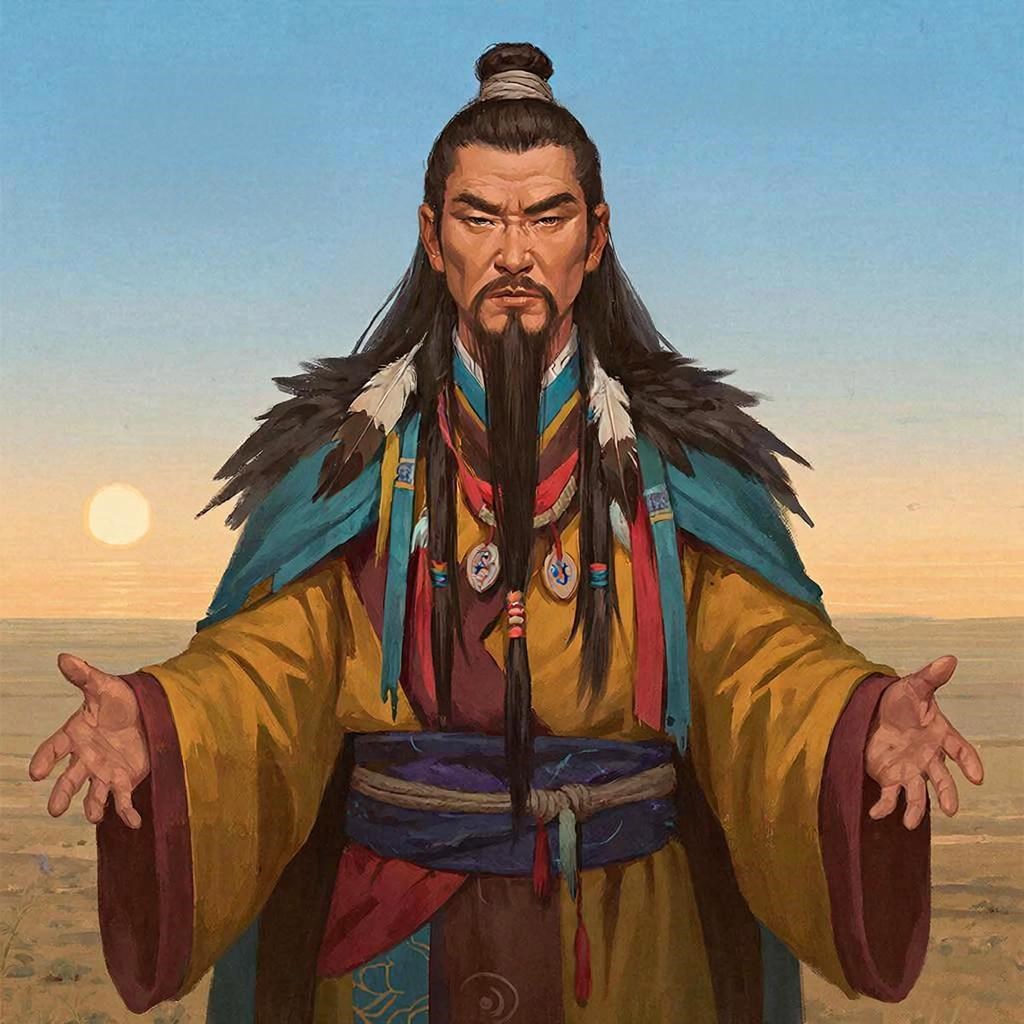
My name is Gheser 2
Глава 1 The Moon. Terraforming. Prologue.
It is a pity that I cannot enter the dwellings of the Lunatics, hidden beneath the surface of the Moon. They are too small—both the masters and their rooms. Though they offer an alternative: there are caverns within the depths where beings like myself or Vi-vi-sha-acould easily fit; that is where they intended to lead us.
I was at a loss as to what to do. Earthlings possessed neither the technology for lunar resource processing and construction, nor the desire for it. My Tengri saw no reason to develop anything on the satellite; they had no need for the Moon when they had the heavens and the vast reaches of Earth itself. Yet I understood that the climate of the lands where I was last born was, frankly, not meant for an idle existence. There, one must fight for every day, exerting immense effort just to survive. But it is precisely these efforts that drive progress. I saw that here, in the harsh conditions of Buryatia, a type of person is forged who could lead humanity toward a perfected civilization. Indeed, the physical and mental capacities of these hunters and herders surpassed all other representatives of the species.
One snag remained: the fragility of the human body and its brevity. Truthfully, I was not certain if I should extend their lives or fortify their flesh. Man is far too active and ambitious. Candidates for lunar settlement will have to be chosen with extreme care. I have learned that the secrets of the human soul are not fully understood or accessible even to us, the gods. How would an "improved specimen" behave, if even within a fragile body and simple consciousness, humans attempt to defy and manipulate the gods?
Yet, I will have to create such a person. As I understand it, the space serpents have already begun their preparations for lunar colonization, and the Lunatics were already living there. A combination of their technologies could transform our natural satellite. I have already asserted my claim of ownership over the Moon and, essentially, sold it in exchange for future dividends.
Naturally, the best candidates to oversee our lunar companions would have been the gods. But I could not interest them. None wished to trade their idle pastimes for extraterrestrial expansion. They didn't even believe me when I said the Moon was habitable. Not one of them wanted to fly there to see for themselves.
To pull my other incarnations from different eras and send them to the Moon here and now is impossible. To send them into a future where progress has made such a feat possible is also beyond me. In short, I will have to do everything myself. I, Gheser.
Глава 2 The First Conflict
"Gheser, urgent!" The voice of the Serpent burst into my head just as I was drawing my bow, aiming at a golden eagle that was harrying my lambs.
"Wait, Vi-vi-sha-a!"
"Urgent! Your Lunatics won't let us near the Moon! They shot down our first three transports!"
The arrow found the eagle after all.
"When? Why wasn't I warned?"
"We wanted to touch down, scout the area, and report the results to you..."
As expected, the Serpents were playing their own game. A lunar war was the last thing I needed, though perhaps cooling their serpentine heels wouldn't hurt.
"Vi-vi-sha-a, splash down. I'm coming over; we'll see what's happened to you."
I needed time to contact the Lunatics and assess the situation. They confirmed it: "Targets eliminated." We decided to play it off as an accident—claiming the ships were mistaken for meteors. Politics is a dirty business; I’d learned that long ago. The main thing was to remember to keep my mental shield up so the Serpent couldn't read my true thoughts.
The flight to the Moon didn't take long.
"You know, Vi-vi-sha-a," I said, maintaining a deadpan expression while my mind-shield hummed at full strength. "In the future, let's clear all moves between the three of us, alright? You didn't warn us of your visit. And the Lunatics have a reflex: shoot first, ask 'who goes there?' later. Remember their fate—their planet was ground into dust."
"Yes, you're right..." The Serpent clearly hadn't expected the "tiny runts" to have such sharp teeth in their cannons.
Vi-vi-sha-a remained aboard his craft—he couldn't land. I wondered how quickly they’d find a vehicle adapted for the lunar surface; likely they had one tucked away nearby.
"Tell me, is your personnel ready to disembark?"
"No. We haven't brought the workers yet. To be honest, it’s nearly impossible, which is why we relied on you. We thought you would operate the machinery yourself. Or your people."
"All the more reason to warn us!"
"The transport was automated; it was just meant to take soil samples. We were going to call for you once the scope of work was clear."
"The Lunatics already have all the data. Vi-vi-sha-a, let's work as a team."
"Fine. What is the plan?"
"That's exactly what we're going to discuss with Prityu."
Prityu was the representative of the Lunatics.
Глава 3 The Colonization Begins
The Lunatics were in a bellicose mood. Prityu remained silent, yet his entire demeanor broadcasted utter disdain for the Serpents. To be frank, the Lunatics were also to blame: they had downed the Serpentine transports, and I had no reason to believe they hadn't recognized them.
I still hadn't decided whom to send to the Moon. Here on Earth, in this era, there wasn't even a whisper of technical education. I had only my wives and my bogatyrs at my disposal. Sending the warriors was out of the question; they had come to me to fight, not to break their backs. Toil in the lunar dust is no business for a warrior; it is drudgery, black labor. Therefore, I had to send one of my wives. I could have simply commanded it, and none would have dared refuse—though Alma Mergen might have voiced an objection.
She was the ideal choice for this mission. Yet, I needed Alma here. My bogatyrs love all my wives, but they hold Alma in special reverence—as a fellow warrior. She was second to few in archery or wrestling, and she rode her Bay stallion so fiercely that she left everyone far behind in her wake. Enemies still remained, and should they reveal themselves, only Alma could prepare everything for my return.
The conversation with my wives felt more like a monologue. I had hoped they would help me reasonably select a suitable candidate, but they merely agreed to everything in silence. A weight of guilt hung in the air, regardless of my words. To be honest, I no longer regarded them with the same tenderness as before. No matter the reasons, the fact of their betrayal with the devils remained a fact.
I decided simply: both would fly with me to the Moon. I would teach them to push buttons. Unfortunately, they were unable to operate the machinery mentally, as I did.
I communicated with Prityu and Vi-vi-sha-a telepathically now; establishing such a connection had become effortless. To this day, I do not know if the space serpent could have reached the Lunatics on his own. As long as I remain the sole "communication hub," my position is all the more secure. I must ensure all information flows through me whenever possible. In essence, these were two parallel dialogues: the Lunatic with me, and the Serpent with me.
I acted as the interpreter for their conflicting views. The difficulty lay in the fact that their understanding of the nature of minerals differed fundamentally from mine, just as our perspectives differed from each other's. I had to delegate the operation of the machinery to my wives, while I focused on reconciling the classifications of the two cosmic races. It wasn't an impossible task, but it consumed a vast amount of time.
According to the Lunatics, before we could transform the atmosphere, we had to establish a base suitable for "breathers"—a term they used to distinguish us and themselves from the aquatic serpents. We decided to set up the base within the lunar lava tubes. The caverns there were immense, reaching a kilometer in diameter in some places. The first priority was to shield these voids from the harshness of space: primarily from radiation—which was critical for my wives—and from various "falling nuisances" from above.
The next step was creating breathable air. Water existed on the Moon, and converting it into oxygen through electrolysis was simple; the Lunatics had mastered the technology. They knew the composition of Earth's atmosphere and vowed to replicate it exactly. Only one problem arose: while Earth's air is saturated with organic matter, the air here would inevitably be filled with lunar dust. It is so fine that it bypasses all respiratory defenses, and its sharp crystalline structure is lethal to lungs and airways.
The machinery delivered by Vi-vi-sha-a had already begun gnawing into the lunar crust at sites pinpointed by the Lunatics. To keep the Serpent from idleness and his usual scheming, I tasked him with hauling water from Earth. Earthly water was far more valuable than the lunar sort, as it teemed with organic life; I hoped this would provide another "human factor" in our colonization efforts. The Lunatics were content with purified local water, but we would drink what was familiar to us.
Глава 4 The Sublunar Ocean
When the first shipment of water arrived from Earth, the Lunatics clutched their heads in dismay. It was a lapse on my part: no one knew how Earth’s aquatic organisms would behave in lunar conditions. We had to construct a separate reservoir for this water—let it "lunarize," and we’ll see what happens through trial and error. Without an atmosphere, it’s unlikely they could spread without our intervention. It’s strange that Vi-vi-sha-a hadn't accounted for such a possibility; had it not been for the Lunatics, I would have overlooked it as well.
However, there was a major advantage to having a body of water on the Moon, even if confined to sublunar caverns: now Vi-vi-sha-a could actually land. This solved the problem of monitoring the water and its organic content. The Serpent began creating his own new world beneath the surface—hauling water, reinforcing the surrounding terrain—acting, in short, like someone building a true home.
I paid him a visit, and he spent a long time recounting what he’d had to build, what he’d transformed, and what he’d been forced to abandon. He had plenty on his plate, but judging by his mood, things were going well. I was happy for him; my friend had found his place on the Moon. As for his friction with the Lunatics—well, they are simply too different by origin. They’ll just have to learn to live with one another.
Urmai Goohon proved to be exceptionally talented at operating the machinery. Once the Lunatics worked out the interfaces of their devices, they streamlined the automation to suit her needs. Now, Urmai was remotely managing a dozen machines at once. Tumen Zhargalan, by contrast, suffered visibly from the confined spaces, yet she strained to keep pace with her companion. I found myself spending more time with her—simply being present, offering encouragement. Urmai didn't seem to notice; she had immersed herself entirely in the world of machines, utterly captivated by the technology.
The Lunatics were already busy designing surface structures. As they had maintained, a composite based on titanium and carbon, extracted from the lunar regolith, was uniquely suited for such construction. They were already planning how to resolve the issues of energy and food scarcity, though initially, the amount of food consumed by my wives and me drove them to despair—we made a significant dent in their plantations. Evidently, they found a solution, as we did not go hungry.
Only meat was lacking. It became a day of great celebration when Vi-vi-sha-a delivered borso. The dried meat took up very little space, but oh, how my wives' faces lit up with joy when they caught the scent of the simple noodle soup I had prepared as a surprise.
Alma Mergen sent her warm regards, hinting that some malicious beings had surfaced on Earth. I didn't take it seriously, assuming she was merely lonely. Had there been anything truly dire, the Tengri would have certainly informed me; our contact remained unbroken.
Zasa Mergen also began to show a cautious interest in my activities on the Moon. I didn't rush him; conditions for a free life on the satellite had yet to be established, and forcing a heavenly dweller to toil during the initial stages of terraforming was an exercise in futility. Let things "settle" first, let the system be tuned—then, perhaps, the Tengri will become necessary.
I had to devise a defense. Since an infinite number of civilizations exist in the Universe, sooner or later, someone will take an interest in us. According to Vi-vi-sha-a, the Moon's interior wasn't as rich in unique materials as he had anticipated. His kin weren't particularly eager to join the development of our satellite. Some of them visited, and the Serpent introduced me to a few, but I could distinguish them only by the complexity of their mental signals. Vi-vi-sha-a and I had been communicating for so long now that we had developed our own language, nearly incomprehensible to other space serpents.
Глава 5 The Manguts Are At It Again
Alma Mergen had fully mastered the flying craft. Now, in the Lunatics' saucer, she ventured much further than she ever had on her Bay stallion, upon which she used to gallop into distant lands just for the sake of a ride. This time, she was headed to visit Engorboy, and not empty-handed. From the ocean depths, Alma had gathered miraculous algae capable of turning any hag into a beauty.
I do not know what she desired more: to help the she-devil or to satisfy her feminine curiosity and see the magic in action. Curiosity is no vice, provided it yields results. Of course, she felt pity for Engorboy and wished to repay her kindness for Gheser’s release. Besides, she had nowhere else to go; home had grown unbearably dull with the entire family away terraforming the Moon and rarely making contact.
Meanwhile, in the Land of Devils, the Sharagol Khan was growing up—as they called the three-headed son of Abarga Sesen. He was a frequent guest at his aunt Engorboy’s home. It was there that he and Alma Mergen crossed paths. The result of the algae experiment remains unknown to me, but the outcome of the meeting between the "Zmey Gorynych" and Alma was tragic: the Sharagol Khan seized her and carried her off to his lair. And so it was: Gheser’s third wife also fell captive to the devils. I do not necessarily blame Engorboy—it is unlikely she orchestrated this—but who truly knows the depths of a devil's soul?
In Gheser’s headquarters, Alma Mergen’s prolonged absence went unnoticed at first. She never warned anyone of her travels, often flying off in the saucer or riding away on her Bay stallion for long periods and to distant lands. The first to grow anxious was her father, Usa Luson, the Sea King. He turned to Manzan Gurme, Gheser’s heavenly aunt. She consulted her Prophetic Book and immediately raised the alarm.
Gheser, of course, immediately teleported to Manzan Gurme, and from there to Earth, straight into the Land of the Sholmoses. He needed to conduct reconnaissance: dispatching an army was a lengthy affair, the way was far, and the last campaign had been riddled with obstacles. Moreover, he had to check on his wife’s condition. Strangely enough, the sholmoses had shown a peculiar "humanity" toward his spouses—and Almawas now the third wife they had abducted.
No one else dared take such a risk. The whole world knew Gheser’s might, yet this devilish clan seemed utterly "brakeless." They had already lost two elder devils, yet they remained restless—now a third had taken the gamble. Could it be that this three-headed dragon had acquired a power capable of crushing Gheser? After all, he had managed to defeat the two elders only with great effort, almost by chance.
In short, reconnaissance was absolutely vital.
A busty beauty greeted me like an old friend. It took me a moment to recognize Engorboy. We sat, we talked, we reminisced. Engorboy even shed a few tears, lamenting how she had inadvertently contributed to the death of one brother and the eternal imprisonment of another.
"Yes," I thought, "how a person’s appearance—even if they are a devil—can change them." For we are all, essentially, inhabitants of this planet. Vi-vi-sha-a had remarked that on Earth there are black humans, hideously hairy beings, and creatures like birds with beaks and bulging eyes. There are the human-like Lunatics and the utterly foreign Serpents—yet all possess feelings, all harbor dreams. And those we call sholmoses, manguts, or devils—are they truly any better or worse than us, the Tengri?
A few kind words were enough to dry Engorboy’s tears. I must admit, the fiery display of her affections was far more pleasant now than in her former guise. It’s true what they say: men love with their eyes.
I finally discovered where Alma Mergen was being held. Unlike her elder companions, she had remained steadfast and rejected the three-headed devil. Now she sits in chains in a cellar. Well, the rescue will be all the more rewarding for it, though it won't be easy. Engorboy claims she wants no more deaths and plans to go to the three-headed one to persuade him to release Alma, with whom she has struck up a friendship. Let her try. I have no faith in her success, so I shall prepare for war.
Strange as it was, the Sharagol Khan listened to his aunt and released Alma Mergen. She returned—and you should have seen her fury! To think that she, a queen and the daughter of the Sea King, had been harrassed by some devil, even a three-headed one! In an instant, she had stirred up all the bogatyrs and the entire host, who already adored her. Alma prepared for a campaign to avenge her slighted honor. She even attempted to pack me off back to the Moon so that she could lead the army herself.
What was I to do? My own honor was at stake as well. To steal a wife from Gheser for the third time! It could not go unpunished. It mattered little that the first two had essentially desired it and settled in well enough. In the end, two manguts had already been dealt with—it was time the third met his fate.
And then, amid the preparations for war, Urmai Goohon unexpectedly returned from the Moon.
Глава 6 Collusion?
"You loved tinkering with the technology; why have you returned to Earth?" I asked Urmai Goohon.
"I did, and I still do. I’m thinking of applying that knowledge here, under Earth's conditions," she replied, for some reason casting her eyes downward. "Tumen Zhargalanhas learned enough to manage the machinery, and Zasa Mergen is there as well..."
"Zasa Mergen is on the Moon?" I was surprised, but also pleased. I had planned to involve him in the satellite's development anyway—doing everything alone was a mistake.
"Yes. He is already there. Living with Tumen Zhargalan."
"What do you mean, 'living with my wife'?"
"There is nowhere else to live. The Lunatics' dwellings are tiny, and Vi-vi-sha-a has built his own sea—you can't exactly live in the water."
So that was it? Since the Sharagol Khan had released Alma, earthly matters could wait. But what was happening on the Moon? I had two paths there: via the space Serpent or through Manzan Gurme's hut. I chose my heavenly aunt.
Heaven was in a state of unrest. It turned out Zasa Mergen had sparked a minor revolution. Along with his sons, he declared himself the sole god of the Moon, announcing his permanent move there to build an ideal society—one without evil, only good. His father, Khurmasta, the supreme god of the West, had yet to fully subdue the eastern skies, and now he faced a new worry: would the Moon become a rival center of power? He summoned me for an audience to decide on a course of action.
I didn't reveal all my suspicions to Khurmasta, only laid out my plans for the satellite. My main argument was that extraterrestrial guests might simply occupy the Moon, which would lead to significant problems for Earthlings in the future. Khurmasta listened and sank into deep reflection.
Upon arriving on the Moon, I initially noticed nothing amiss. Work was proceeding as usual; Tumen Zhargalan was managing the mechanical systems quite well on her own. The Lunatics were still designing surface structures, selecting the best compounds for construction. The Serpent was busy outfitting his underwater "diocese."
Zasa Mergen and his sons were learning to operate the machinery with surprising speed. That evening, we spoke. My brother began to describe a future "ideal world" on the Moon where we would resettle humanity. In his vision, humans and extraterrestrials would create a civilization independent of Earth and its gods—especially since our Tengri find this world of little interest.
This felt hauntingly familiar. When Tumen Zhargalan returned from work, it hit me: she had painted a nearly identical picture back in the Land of Devils, right after I had finished off Abarga Sesen. Back then, she had similarly campaigned for an independent, flourishing nation.
In collusion?
Глава 7 Celestial Partition
"Listen, Gheser," my brother intercepted me right before the door to Tumen Zhargalan’sbedchamber. "We are no longer young; it’s time to think of what lies ahead. You have three wives, and soon you must return to the heavens. It’s unlikely you can take them all with you. It would be prudent to keep only Urmai Goohon. Alma Mergen, as the daughter of the Sea Lord, would hardly wish to settle in the sky. And Tumen Zhargalan is simply not meant for a heavenly life."
Behind Zasa Mergen stood his sons. Their gazes spoke clearly: they would not leave without an answer. I remembered well how much he and his sons had helped me in the past. I didn't seek a conflict, but I had no intention of surrendering Tumen Zhargalan. When summoned, Tumen merely demurred: "Whatever the men decide, so it shall be." The atmosphere was explosive. To choose between a brother and a wife is a recipe for catastrophe. I decided to postpone the talk and went to see Vi-vi-sha-a. Perhaps that schemer could suggest a way out.
Vi-vi-sha-a, as always, was pleased to see me. He already knew of my "insoluble" predicament. The intensity of the issue puzzled him—to the space serpents, squabbling over females seemed irrational. With a smirk, he offered a solution: bring several earthly beauties to the Moon.
Something else was troubling the Serpent. Zasa Mergen had already begun to fancy himself the ruler of the Moon, frequently interfering in technical processes—often at the wrong time and in the wrong way. I promised to deal with it, but for now, I asked him to deliver several beauties to the Moon. Alma and Urmai would assist; they knew earthly tastes. To anchor my nephews to the Moon, their hearts needed to be filled with feminine warmth. Aiza and Muzai were fully grown now; though they hadn't yet earned the titles of Baatar or Mergen, they were ready to become reliable lieutenants.
The wild northern beauties delivered to the Moon by the Serpent were magnificent! These girls from the North were as strong as the wind and as hardy as reindeer. They were strangers to luxury; their skin smelled of snow, and their gaze spoke of freedom itself. Such as they would endure the hardships of lunar life better than any others.
They radiated youth and health, and Zasa Mergen, by right of seniority, was the first to choose his companions. He chose three—as befits a son of thunder, for whom a single bolt of lightning is never enough to light up the entire sky. Now, he had no time for Tumen Zhargalan, and certainly no mind to interfere in the management of the lunar colony. My nephews also chose their brides. I insisted that the consent of the maidens be considered, but they did not resist; they were content. To ascend to the heavens and live among the gods felt to them like a fairy tale come true, the realization of a lifelong dream.
And so, the earthly colony on the Moon began to grow. All’s well that ends well, as the saying goes. Especially since the process was only at its very beginning—there lay ahead much, much, much work to be done.
Глава 8 The Fruit of Silence
Urmai Goohon had not slept for seven nights. Not from pain, nor from fear, but from a silence that rang inside her louder than any scream. She lay in Gheser’s house—in the very room where for years she had waited for her husband while he fought demons, flew to the stars, and saved worlds. At first, she had waited with hope; later, out of habit.
And now, when everything was supposed to begin anew, something stirred within her. Not nausea, not weakness, but—knowledge. She understood. Not because of a kick from the womb or a prophetic dream; her body simply knew: life was growing inside her.
Urmai sat up, cast off the blanket, and pressed her palm to her stomach. She froze. Something was there. Small. Quiet. Not yet a name. Not yet a face. Not yet a fate. But—life. In that moment, she felt neither joy nor fear. Only a question: whose child is this?
She went to the window. The night was still, and the Moon watched her like a vast eye. Urmai began to count the days, the nights, the moments. When had she been with Lobsogoldoy? When had he gone hunting, and when had she returned to Gheser? She remembered every glance. Lobsogoldoy… He had not been an enemy or a tormentor. He had been a man. He hadn't held her by force; he hadn't locked the doors. He had said: "You are the mistress here. This is your home. Eat what you want, sleep when you are tired. I am a hunter, and I shall return." She had cooked for him; he had eaten from her hands. They had sat by the fire, and he had told her stories—of beasts, of forests, of his brother and sister. She had listened and felt: it was good. Not frightening, not burdensome. She had—not been alone.
When Gheser came and said, "I have conquered. He is imprisoned forever. You are free," she did not cry out, "Glory to you!" She fell silent. For freedom is not always happiness, and returning is not always coming home. She did not know whom she was betraying: herself, Lobsogoldoy, Gheser—or everyone at once.
She returned because she had to. She is Gheser’s wife; her place is beside the hero. But her heart remained there, in the cave by the fire, with the man everyone called a mangut. And now, within her body—life. By all accounts, it was Lobsogoldoy’s.
She sat by the window, hand on her stomach, eyes toward the sky. What was she to do? Confess to Gheser: "This is the son of the one you hate"? Or remain silent? Give birth, raise him under her husband’s name, and live a lie for the sake of peace? Or kill it? End the life before it begins for the sake of honor? No. She could not lie. She could not kill. She could not live with it. And then, a name surfaced in her mind: Engorboy.
Lobsogoldoy’s sister. A mother of her tribe. A woman who also knows what it is to love and to lose. She would not judge. She would not ask, "Did you deprive him of his offspring?" She would simply say, "Bring him. I will nurse him." She is no saint, no victim. She is a mother, and in that lies all her strength.
Urmai realized: the child must not suffer for the sins of others. He must not grow up in a house where he will be hated. He must not feel like a mistake. He is not a mistake. He is life. He is a chance. She decided: I will give birth. I will not kill. I will not lie. I will give him away.
"Engorboy... You are his aunt. His last kin. You are the one who will understand: he is not an enemy. He is a child. He is the memory of the brother you loved. You will not be ashamed of him. You will not call him 'unclean.' You will simply say: 'You are mine.'"
Urmai began to prepare. For the pain, for the labor, and for the parting. "I will not cry,"she thought. "For weeping is weakness, and I must be strong for his sake. I will not say 'forgive me,' for I am not to blame. I simply cannot be a mother in this world. I will say 'Live,' and that shall be enough."
When the time came, she gave birth. Quietly. Without screams, without servants. Only she and the fire remained. And when the child first cried out, she did not press him to her breast. She looked into his eyes. Clear. Bright. Like Lobsogoldoy’s. "You are not to blame," she whispered. "You were simply born. And that, in itself, is a feat."
At dawn, she wrapped him in cloth—warm as cave fur. She placed him in a cradle and flew to Engorboy’s house. When the woman opened the door, Urmai did not say, "Take him. This is your nephew." She simply reached out her arms. Engorboy looked. She understood. Silently, she took him.
"You should not have come," she said. "You could live with him. You are his mother."
"No," Urmai replied. "I cannot. He will not survive where I dwell. But he will survive here. With you."
Engorboy nodded, pressing the boy to her heart. "He will live," she promised. "I will name him after his father. Or his uncle. Or simply—'Son.' He will know: his mother loved him. And that is why she let him go."
Urmai did not weep. She simply turned and walked away. She did not look back. For she knew that if she looked back, she would never be able to leave. Gheser never found out. He thought she had simply failed to give birth. He did not ask. He did not see the pain in her eyes.
The boy grew. Strong, silent, with small horns—just like his father’s. Engorboy would tell him: "Your mother was a heroine. She gave you up so that you might live. Remember this, and live for her sake." One day, he asked: "What was her name?" "Urmai Goohon," Engorboy replied.
A name that is not spoken. A heart that is not shown. A woman who loved—and left. As for Urmai... she lived. Not happily, not peacefully, but she lived. Sometimes, at night, she would go to the window, gaze into the sky, and whisper: "Live, my son. Live, and do not remember me. Remember only this: you were loved from the very beginning." For sometimes, the greatest act of motherhood is not in holding on, but in letting go. To vanish, so that another may remain alive.
And if one day the world asks, "Who was Urmai Goohon?" let them say: "The woman who gave birth and gave away. Not because she did not love, but because she loved too much." Let this be a legend not of a hero, but of a woman. A woman who achieved the impossible for the sake of the impossible: for life, for love, and for a choice. For eternal self-forgiveness. For she did not betray, she did not flee, and she did not kill. She chose life, even if it meant never being a mother again. And in that silence lies all her strength.
Глава 9 Alma Mergen Goes to War
Life on the Moon was settling into a rhythm. Zasa Mergen, preoccupied with his young wives, was gradually taking the reins of leadership. The main task was to streamline the cooperation between the Lunatics and Vi-vi-sha-a. The tiny tech-masters were churning out machinery for humans, and the northern girls were quick studies—already no worse than Aiza and Muzai at operating the complex devices. The Space Serpent continued to toil within his sublunar sea, adapting the aquatic environment for his kin. Meanwhile, Tumen Zhargalan dropped more and more frequent hints about returning home.
I stood at the edge of the cavern where Tumen was working, pondering these matters. Zasa, as always, approached silently.
"Gheser," he began, without looking at me. "You know how Alma prefers to settle affairs on her own."
"What are you trying to say?" I asked, my voice level.
Zasa finally looked me in the eye.
"She has gone to war against the Sharagol Khan. Without your word. And she has taken your army with her."
Silence fell, broken only by the distant hum of machinery—Tumen was calibrating the upper circuit.
"How do you know this?"
My brother offered a faint smirk.
"The Moon hears. He who wishes to hear... hears everything."
"Why are you telling me this?" I asked, keeping my voice down.
Zasa stepped closer.
"Because you do not yet see. She isn't waiting for you. She has already made her choice."
I remained silent. Zasa, as if reading my thoughts, added:
"If you go alone—you will lose. If you lead what’s left of the host—you will be too late."
I turned sharply toward him.
"And what is it you’re proposing?"
Zasa spread his hands.
"I've told you what I know. The choice is yours."
He turned and walked away toward the shadows where his sons stood waiting. A decision had to be made, and made quickly. I stood staring at the flickering lights of the machinery. Tumen Zhargalan, pausing briefly from her work, remarked in passing:
"Thinking of her again, are you?"
I didn't answer. My thoughts raced around a single question: what to do? My brother’s words echoed in my ears: "Go alone and you lose; lead a host and you're too late." Tumen, as if ignoring my silence, continued:
"The Lunatics say the northern girls have already learned to read the schematics. Soon they’ll be able to replace us."
There was a familiar note in her steady voice—a hint I recognized all too well.
"Do you wish to leave as well?" I asked without turning around.
She finally looked up at me.
"I am here for the sake of the work. But the work itself... it is changing."
The hum of the machinery filled the space between us.
"Alma wouldn't wait," I said.
Tumen nodded, as if she had known all along.
"She was always like that. You chose her yourself."
"I did," I repeated. "But I did not choose this war."
She set down her tool and straightened up.
"War is also a choice. Yours, or hers."
I looked at the Earth. It hung in the black sky—vast, deceptively peaceful.
"If I go," I said softly, "who stays behind in charge?"
"Zasa," she replied instantly. "He is already practically the master of the Moon. His sons, the northern girls, even the Lunatics... everything runs like clockwork."
"And you?"
She offered a faint smile.
"I will stay. Until the work is done."
Silence fell. I knew she wouldn't plead or try to stop me. She simply spoke the truth, in her own way.
"I must fly," I finally said. "But not as a warrior. As... a mediator."
Tumen gave a nod of approval.
"That is wiser."
"Tell Zasa Mergen: keep order. If anything happens—he knows where to find me."
She didn't reply. And I didn't wait.
Глава 10 Vi-vi-sha-a’s Alternative
Vi-vi-sha-a suggested an unexpected way out.
"Gheser, have I never told you about the other civilizations on Earth?" he asked, almost casually.
"Which others?"
"Far to the West, there are people living. None of your kind know a thing about them."
"That’s impossible," I snapped.
"Believe me, there are many people there. Just as there are in the East."
"In Japan, you mean?"
"No, on another continent, across the ocean."
"We know about those," I nodded. "Our people migrated there long ago. Our gods are stirring things up there as well, in places. But what about the West?"
"I know nothing of them," the Serpent admitted. "They are still quite wild, for the most part. And they have their own gods."
"The gods are the same for everyone," I countered. "They simply go by different names. Are you saying they don't know our Khurmasta?"
"Ra, Mithra, Jupiter, Zeus, Perun, Thor, Yumala... who are they, in your opinion?"
I hesitated. I hadn't heard those names. I had to ask Khurmasta himself. He responded tersely:
"Yes, they have their own Tengri there. I’ve heard they don't care for company and don't meddle in our affairs."
"I want to see what kind of people and gods are there."
"You haven't even exterminated all the manguts here yet!" Khurmasta grumbled. "What are you and Zasa doing on the Moon? And your wife, Alma Mergen, is already marching to war against the Sharagol Khan!"
"She has a long way to go yet," I replied calmly. "I intend to use the last mangut as a guardian on the border."
Khurmasta pondered this.
"Well... I should speak with Perun. We haven't talked in ages. I hear he can be unpredictable, and his people are gaining strength. Indeed, a loyal guardian in those parts wouldn't hurt us."
Глава 11 The Birth of a Legend
Gheser arrived at the palace of the Sharagol Khan alone, without an army. Time was of the essence—Alma was already on the march, breathing fury. The palace stood upon a barren rock—black, angular, as if it had clawed its way out of the stone itself. No banners, no signs of welcome. Only the sentries at the gates—shadows with spears, silent as monuments.
Gheser walked past them without a glance. The doors groaned open of their own accord. Inside, the air was still. Light pierced through narrow slits in the walls, drawing jagged lines across the floor. In the depths of the hall, upon a dais, sat the Sharagol Khan. Three heads turned toward him, each with its own gaze: one mocking, another wary, the third seemingly deciding how best to tear the guest asunder.
Gheser did not wait for a question.
"You took Alma. You displayed your strength. But what follows?" he said, without defiance or reproach. "You sit here. In the cold of the stone. In solitude. In the shadows."
One head snarled: "And you? You are not in the heavens either."
"I am where I am needed," Gheser replied. "And you are where you are trapped. But is this what you desire? To the West," he continued, "there are lands inhabited by those who seek battle. Not petty spirits or vagabonds, but warriors. Real ones. Do you know the meaning of a fight where the opponent does not flee, but marches forward?"
The head that had been laughing fell silent.
"There, maidens sing songs. Not of those who steal, but of those who conquer. Of those who keep their word. Of those who are remembered."
"And what are you proposing?" hissed the second head. "To become your hound?"
"To become what you were meant to be. Not a hermit in a stone sack, but a guardian of the border. Not a shadow, but a Name."
The third head, silent until then, leaned closer.
"A name..." it whispered, tasting the word. "A name is power."
"Yes," Gheser nodded. "But a name is not given; it is earned. If you are ready—I will show you the path."
"And what of her?" the first head asked, nodding toward where Alma had been held. "Will you forgive?"
"I do not forgive, and I do not seek revenge. I see those who can become greater than they are. You took her—but you did not hold her. You let her go. That already says more about you than you think."
The hall grew even quieter.
"If you go West, you will be the first there. The first to stand against those who fear nothing. The first to be named. The first of whom songs are composed. But only—if you truly wish it."
"Songs..." one of the heads repeated. "Songs are good."
"Then choose: remain here in the shadows, or step into the light."
The silence lasted a long time. Then, all three heads nodded in unison.
"We shall go," said the first. "We shall fight," added the second. "We shall become those who are remembered," finished the third.
Gheser did not smile. He did not nod. He simply turned and stepped toward the exit. Turning the army back was simple enough. To Alma, he said only: "The Sharagol Khan is no more."
Gheser did not smile. He simply turned and stepped toward the exit. Turning the army back was simple enough. To Alma, he said only: "The Sharagol Khan is no more."
And it was the truth. For there, on the borders of Perun’s lands, a new guardian was born. The one who would later be called in the northern songs by a formidable name — Zmey Gorynych.
Глава 12 The Route is Drawn
"You gave him a path. Where is he headed?" Khurmasta’s voice was level, almost devoid of emotion.
"Wherever he wishes. I merely pointed the direction," I replied, arms crossed over my chest. I was in no hurry.
Khurmasta slowly turned his head. Reflections of the sunset fire glinted in his eyes.
"To the West? You yourself called those lands a realm of warriors. Do you think he can resist the temptation?"
"He will decide for himself. I am not leading him by the hand."
Silence fell for a moment. The wind died down.
"But you knew he would agree," Khurmasta continued. "Three heads, yet they listened as one. You found the right words."
"I spoke the truth," I said firmly. "If he goes, it is his choice."
Khurmasta took a step forward. His shadow fell across the mountains like a deep rift.
"And yet, you planted a spark in him. Now he will be unable to sit still in his stone nest."
"Let him go. It is better than rotting within four walls."
"And who will watch to ensure he doesn't take a wrong turn?" His voice dropped lower, but I could sense the tension.
I raised an eyebrow. "You’ve already prepared someone?"
"Booluur," Khurmasta said.
The wind ceased entirely.
"Booluur?" My voice grew harsher. "You trust him with the Khan? After everything that has happened?"
"Precisely because of that. Booluur knows the trails where even the gods are silent. He will know if the Khan begins to succumb to his past."
"Or he’ll be the one to push him toward it," I interjected.
"If so—you will be nearby," Khurmasta looked me straight in the eye. "You started this game, Gheser. It falls to you to finish it."
I remained silent, staring into the distance where the sun nearly touched the mountain peaks.
"The Khan is not a plaything," I said at last. "And neither is Booluur."
"No one is a plaything," Khurmasta agreed, but there was no warmth in his tone. "But the journey has begun. All that remains is to ensure they head where they must."
The mist at the foot of the cliff thickened, taking the shape of a road—winding, stretching through deserts toward the banks of the Oka. It shimmered in the twilight like a pulsing vein in the body of the world.
"If Booluur fails..." I didn't finish the sentence, but my gaze spoke clearer than words.
"...we both know what must be done," Khurmasta concluded.
The sun vanished behind the ridge. Shadows stretched, merging into a black river. Khurmasta turned to me, his gaze now cold and calculating.
"There is one more matter you should know of," he said without preamble. "Perun. An agreement has been reached with him. His people are moving northeast—toward the lands of the Ugrians."
I felt my shoulders tighten. The Ugrians... An ancient people, the keepers of the borders. If they are touched, a fire will start that eternity itself cannot quench.
Глава 13 The Route is Drawn
"You gave him a path. Where is he headed?" Khurmasta’s voice was level, almost devoid of emotion.
"Wherever he wishes. I merely pointed the direction," I replied, arms crossed over my chest. I was in no hurry.
Khurmasta slowly turned his head. Reflections of the sunset fire glinted in his eyes.
"To the West? You yourself called those lands a realm of warriors. Do you think he can resist the temptation?"
"He will decide for himself. I am not leading him by the hand."
Silence fell for a moment. The wind died down.
"But you knew he would agree," Khurmasta continued. "Three heads, yet they listened as one. You found the right words."
"I spoke the truth," I said firmly. "If he goes, it is his choice."
Khurmasta took a step forward. His shadow fell across the mountains like a deep rift.
"And yet, you planted a spark in him. Now he will be unable to sit still in his stone nest."
"Let him go. It is better than rotting within four walls."
"And who will watch to ensure he doesn't take a wrong turn?" His voice dropped lower, but I could sense the tension.
I raised an eyebrow. "You’ve already prepared someone?"
"Booluur," Khurmasta said.
The wind ceased entirely.
"Booluur?" My voice grew harsher. "You trust him with the Khan? After everything that has happened?"
"Precisely because of that. Booluur knows the trails where even the gods are silent. He will know if the Khan begins to succumb to his past."
"Or he’ll be the one to push him toward it," I interjected.
"If so—you will be nearby," Khurmasta looked me straight in the eye. "You started this game, Gheser. It falls to you to finish it."
I remained silent, staring into the distance where the sun nearly touched the mountain peaks.
"The Khan is not a plaything," I said at last. "And neither is Booluur."
"No one is a plaything," Khurmasta agreed, but there was no warmth in his tone. "But the journey has begun. All that remains is to ensure they head where they must."
The mist at the foot of the cliff thickened, taking the shape of a road—winding, stretching through deserts toward the banks of the Oka. It shimmered in the twilight like a pulsing vein in the body of the world.
"If Booluur fails..." I didn't finish the sentence, but my gaze spoke clearer than words.
"...we both know what must be done," Khurmasta concluded.
The sun vanished behind the ridge. Shadows stretched, merging into a black river. Khurmasta turned to me, his gaze now cold and calculating.
"There is one more matter you should know of," he said without preamble. "Perun. An agreement has been reached with him. His people are moving northeast—toward the lands of the Ugrians."
I felt my shoulders tighten. The Ugrians... An ancient people, the keepers of the borders. If they are touched, a fire will start that eternity itself cannot quench.
"They are not merely moving," Khurmasta continued, as if reading my thoughts. "They are encroaching. The gods of the Ugrians are losing their grip. Their sanctuaries stand empty. The very spirit of those lands... is shifting."
"What exactly is happening to them?" I asked, feeling a growing dread within. "You say they are 'losing strength'—but how is that possible?"
Khurmasta gave a dry, almost mocking chuckle.
"You know how it is: for the Ugrians, gods are the spirits who guard the trails, the rivers, and the forests. Each clan honors its own patron—some the master of the bear's den, others the lord of the mists or the guardian of the pass. Their power lies in an unbreakable bond with the earth and their roots. That is why Booluur is precisely the one needed there."
I nodded. Yes, I had heard of this. The Ugrians do not bow to cold stone idols; their gods dwell in the whistle of the wind and the rustle of leaves.
"But there are also the High Ones," Khurmasta added. "Take Numi-Torum, for instance. A majestic elder in shimmering golden robes. They say he dwells in a radiant hall on the 'seventh heaven,' filled with treasures. It was he who forged their world: he girded the earth with a golden belt that became the Ural Mountains, gave men the beasts, and taught them to hunt. But it was also he who sent sickness and death into the world."
"A Creator..." I muttered. "And what of him now?"
"His authority is waning. As is the power of his brothers—the gods of the sun, the fire, and the lord of the underworld. Even Kaltash-Ekwa, the Great Mother, is losing her voice in those lands."
"And the sons?" I asked. "Do they not defend their father's domains?"
"Six of the seven are merely local spirits, bound to their respective regions. They cannot step beyond the corners of the world entrusted to them. And the youngest, Mir-Susne-Hum, though he has assumed leadership, is powerless to halt the decay. His strength is draining away, along with the faith of the people."
I remained silent, weighing what I had heard.
"So, the Ugrians are losing more than just their lands," I muttered. "They are losing themselves."
"Precisely," Khurmasta confirmed. "And so, some of them are already retreating southward. Fleeing the onslaught, seeking refuge. Your wanderers—the Khan and Booluur—will inevitably encounter them on their path."
"The Ugrians are not ones to surrender without a fight," I countered, looking him in the eye. "You speak of this so calmly, as if you don’t realize what it will lead to. If they sense a threat..."
Khurmasta merely shrugged.
"I realize it. That is why I am telling you: be ready. The Ugrians are children of the mountains and the taiga. They know trails unknown to any other. They hear the voices of stones and wind. And if they decide the Khan is a foe..."
He didn't finish, but I knew: the Ugrians wouldn't wait. They would strike first.
"Why did you allow Perun to do this?" I asked point-blank. "Why didn't you stop him?"
"Because balance requires sacrifice," Khurmasta snapped. "If the Ugrians weaken, others will take their place. If the Khan proves himself worthy, he will find common ground with them and stand either beside them—or in their stead. And if not..."
He trailed off. The wind tossed his hair, masking his face in shadow.
"...then it will be just another page in the book of losses," I finished softly.
Khurmasta nodded.
"Indeed. But remember: those who survive will grow stronger. And those who manage to negotiate will gain power over new lands."
I looked into the distance, where the mist had swallowed the road to the West. Now it seemed not just a trail, but a line of fracture, separating the past from the future.
"So, the Khan and Booluur will face more than just mountains," I whispered. "They will face those who have already lost everything."
"Yes," Khurmasta confirmed. "And based on how they act, this road will become either a path to power or a descent into the abyss."
Глава 14 The Mirrors of the Pass
The wind howled like a pack of starving wolves. The cliffs of the pass tightened around the trail, turning it into a stone flume where every footstep echoed. The Khan led the way, unyielding against the onslaught of the elements. Booluur clung to his cloak—not out of fear, but to avoid being lost in the swirling sand.
"The spirits here do not heed incantations," the shaman croaked, shielding his face. "They are playing with us!"
The Khan stopped and turned to face the storm. He squared his shoulders.
"They heed me."
He did not shout, yet the wind died down—just enough for Booluur to discern three tall silhouettes within the dust, their spears entwined with serpents. The Guardians of the Pass.
"Do you know them?" the shaman whispered.
"They know me."
Upon a flat rock lay a carved circle with a bowl at its center. The Khan knelt.
"Here, my great-grandfather swore an oath."
Within the bowl lay an obsidian shard, an amber fire smoldering deep inside it. The Khan took it and, without hesitation, slashed his palm. As his blood touched the stone, the earth responded with a low rumble, and a rift opened in the cliffside.
They stepped inside, and the light vanished. At first, Booluur thought he had gone blind, but he soon realized they were in a labyrinth of mirrors. Thousands of reflections distorted their essence. In one mirror, the Khan appeared as a frail old man with hollow sockets; in another, Booluur saw himself as a beast with a wolf’s head.
"This is not magic," the shaman whispered. "It is what we might become."
The Khan pressed forward, and the mirrors he passed shattered with a ring like cracking ice.
"Stop!" Booluur cried. "If we break them all, we’ll be trapped here forever! We must find the one that does not crack."
They stood back-to-back. Booluur cast a handful of herbs onto the ground, and in the green flame, they saw a single mirror that remained smooth. In it, they were reflected exactly as they were. Warm to the touch, it melted under the shaman’s hand, revealing the exit. A fresh wind hit them, carrying the thick scent of pine.
Глава 15 Foothills of Tien Shan: The Silence of the Gods
Here, the sand gave way to jagged stones. Icy streams cut across the trail, and the scent of ozone hung in the air—like the stillness before a storm that never breaks.
"The desert is behind us," the Khan said. "Now begins the land where even the gods are silent."
Booluur knelt by a stream and dipped his fingers into the water. When he pulled them out, thin silver threads remained on his skin. They writhed like living things.
"This is not water," the shaman whispered. "It is... memory."
The Khan crouched beside him and touched a thread. His face contorted as visions flooded his mind: a battle of ancestors against winged creatures; a masked priest slitting the throat of a black ram; a child weeping by a fire beneath the shadow of star-eyed entities.
"These are not our memories," the Khan rasped. "They are foreign!"
"No," Booluur countered. "They belong to everyone. The earth remembers all. If we do not hold onto our own memory, this place will swallow us whole."
The shaman drew his tambourine and began to strike it—not in rhythm, but violently, as if shattering the silence itself. The sound resonated with the stones and with time. The silver threads on the Khan’s skin began to fade, and the alien images dissolved.
"We move on," Booluur said, rising. "Here, one cannot rely on strength. Only on hearing."
On the slope, among the boulders, sat a man. He was sharpening a knife, but he did not look up as they approached.
"You head where there are no paths," he said. "To what end?"
"We seek those who remember the ancient oaths," Booluur replied.
The man smirked. In his hands, the knife suddenly transformed into a living serpent. It glided across his palm, coiled into a ring, and hissed, raising its head.
"Ancient oaths are but bones beneath the sand. Who hears them now?" The man with the serpent-knife narrowed his eyes.
The Khan stepped forward, a metallic edge to his voice:
"I hear them."
The snake in the stranger’s palm hissed a warning. He rose slowly, his eyes flashing with a yellow, bestial fire.
"Then prove it. Find in this earth that which belongs to you personally. Not to your lineage, not to your great ancestors—but to you."
He pointed toward a dark gorge where heavy mist swirled between the cliffs.
"The Echo dwells there. It repeats only the truth. If you lie to yourself—it will tear you to pieces."
The Khan glanced back at Booluur. The shaman gave a nearly imperceptible nod:
"Go. But do not speak to it. Sing."
Gloaming reigned within the gorge. Cold vapor swirled around his legs like a living thing. The Khan stopped in the very heart of the narrow pass and closed his eyes. He did not call upon spirits or recall memorized oaths. He simply began to sing—low, vibrating, from the very depths of his chest. It was not a melody, but the rumble of the earth itself.
The Echo responded. Timidly at first, then with increasing power, transforming the solitary sound into a symphony. In it, Gheser might have heard the cry of a newborn, a mother’s lullaby, the ring of swords, and the dawn silence of the desert. When the Khan fell silent, the sound swirled like a vortex for a long while before shattering into sparks.
At his feet lay a stone. Inside it, a soft light pulsed like a heart.
"This is yours," the Guardian’s voice rang out from the exit. "You found not the momentum of your kin, but your own essence."
The Khan picked up the warm stone.
"Now you are ready," Booluur said. "But remember: the next border is the Forest. There is no echo there. There is only silence. And it will demand a different price from you."
Глава 16 Meeting the Overseer
The forest thickened, turning into a living wall of darkness and whispers. Booluur led the way, but he was no longer forging a path—the forest itself stepped aside, probing the strangers with every branch and every creak of bark. The Khan stayed behind, clutching the stone; it no longer glowed, its fire hiden deep within.
"He is here," the shaman whispered without turning back. "But he does not know us yet."
Before them, between two giant ancient firs, stood Mir-Susne-Hum. He was not merely a figure, but a rift in the fabric of the forest’s gloom, a shimmering void. He radiated an ancient weariness and a guarded expectation. It seemed he was woven from every shadow that had ever fallen beneath these canopies.
"Who are you?" Mir-Susne-Hum asked. The voice did not ring in the air—it arose directly in their thoughts, like the echo of an old memory. Booluur dropped to one knee, touching the roots with his palm: "We are those who have crossed the desert, the pass, and the mirrored trails. We have come to the sacred birches, and the forest has let us in."
Mir-Susne-Hum did not stir, but the taiga around them froze. Even the rustle of the leaves fell silent. "I remember the footsteps of many. They all said, 'We have passed.' But some carried fire in their palms, others—stone, and still others—emptiness. What do you bring?"
The Khan stepped forward. The stone in his hand quivered. He raised his gaze, and in that moment, his three shadows—three wills, three heads—merged behind him into a single silhouette, as dense as tempered steel. "I am not fire. And I am not stone. I am the Way," he said. The words sounded strange, as if they were uttered not by him, but by a power awakened within.
Глава 17 The Forest Baptism
The sun was sinking toward the horizon, piercing the canopy with stray golden arrows. Booluur and the Khan walked in silence; after the meeting with Mir-Susne-Hum, the forest breathed steadily, as if exhaling a long-held anxiety. But the silence proved deceptive.
Figures emerged noiselessly from behind the mossy trunks. First one, then another, then a third… A dozen Ugrians in leather armor, armed with short spears and axes. Their faces were covered by masks made of animal fangs—not for intimidation, but so that the enemy would carry away no memory of them. They did not shout or warn; they charged instantly, aiming for unprotected spots and moving in unison, like a single forest organism.
Booluur sprang back, whipping out a knife. In his other hand was an oak staff shod in copper. He fought in two rhythms: the knife sang a short, sharp song, while the staff hummed a long, droning note as it spun in his palms. With the blade, he parried strikes, letting the steel glide past as if in a dance. With the staff, he struck on the retreat—tripping knees, breaking the attackers' formation. One Ugrian collapsed, his thigh struck; another stumbled back, clutching a gashed arm. When an axe swung at the shaman, Booluur ducked beneath the blow and sliced a tendon on the attacker’s leg. More attackers pressed in, trying to overwhelm him with numbers.
The Khan held a defensive stance at first. The stone in his palm grew hot, yet it remained dark. He blocked strikes with his forearms, slipped past thrusts, and countered with short, hard blows. But when one of the Ugrians hurled an axe, aiming straight for his temple, something inside the Khan snapped with a jolt.
He roared—not with a human voice, but with a low, multi-tonal bellow that made the leaves on the highest cedars tremble. His body lurched and expanded; his shoulders burst through the seams of his clothing with a violent snap. Leathery folds erupted from his back, instantly hardening into powerful webbed wings. His jaws elongated, revealing rows of razor-sharp teeth. Three necks surged upward, and three pairs of eyes ignited with a fierce yellow fire.
Zmey Gorynych unfurled his wings, beating the air with such force that the nearest Ugrians were tossed aside like dry kindling. He did not breathe fire—he only hissed, slowly turning his heads. Three distinct gazes bored into his enemies: one of cold fury, the second of hungry greed, and the third of icy calculation.
The Ugrians recoiled. Someone dropped their weapon in terror. One fell to his knees, shielding his face with his hands. Another bolted for the trees, only to trip and scramble away on all fours, blind to his surroundings. Within moments, the clearing was empty; only abandoned axes, drops of blood on the moss, and trembling branches bore witness that this nightmare had been no dream.
The Zmey slowly lowered himself onto all fours. His body shuddered and "collapsed," agonizingly reverting to its human form. The Khan remained on his knees, breathing heavily, his fists clenched. Scaly patches still lingered on his palms—an indelible mark of the transformation.
A dead silence fell.
The air thickened. A figure emerged from between the trees—not from the shadows, but as if woven from the very light piercing the foliage. Mir‑Susne‑Hum. His eyes, as deep as ancient oaks, watched without anger or mockery—only with a heavy, centuries-old attentiveness.
"You could have killed them," he spoke, his voice resonating from everywhere at once. "But you did not."
Booluur wiped his blade on the grass, in no hurry to answer. The Khan remained silent, staring at his hands—they were still trembling. Mir‑Susne‑Hum grew still, scrutinizing the Khan with his entire being, piercing through him with a quiet, lingering gaze that held the memory of millennia. The forest held its breath, helping its master see the truth.
"You are no servant of Perun," he finally said, and it was not a question, but an affirmation.
The Khan did not reply, but Mir‑Susne‑Hum expected no words. He saw the essence: the stone in the Khan’s palm did not blaze with the blue fire of Perun’s lightning. Its light was muted, lunar—reflecting not the will of the Thunderer, but something ancient, yet unnamed. The transformation into Zmey Gorynych bore no mark of divine compulsion. The three heads acted in unison, without internal strife—this meant the power belonged to the Khan by birthright, not as a gift in exchange for submission. A servant of Perun would have become an instrument of destruction; this one merely displayed his might to halt the enemy, not to exterminate them.
The trembling in his hands and the scaly patches on his skin betrayed a struggle. Had the Khan been possessed by a god's will, the transformation would have come as easily as a breath. Here, one felt a triumph over oneself. Even the Ugrians had not recognized him as an ally of the West—they had attacked boldly, sensing no dread of the Thunderer's mark.
The words spoken earlier—"I am not fire. I am not stone. I am the Way"—now took on true meaning as a rejection of any outside will. Perun demands sacrifices and oaths; this man sought balance.
Mir‑Susne‑Hum nodded slowly.
"Your power is not from his hands," he continued. "It is older and more complex. You can become a bridge because you are bound to neither side. I have seen who you are, and I have seen who you can become. Not Perun’s slave, nor his enemy, but the one who will hold the balance."
He stepped closer. The forest grew silent, catching every word.
"Perun’s people march straight ahead, shattering borders. They do not ask—they take. But the Ugrians..." he paused, "they are no longer who they once were. Their gods wither because the people have forgotten how to listen. To the two of you, it is given to see both sides. I propose this: become a bridge. Not a sword, not a shield, but the Way itself."
Booluur looked up:
"Why do you want this?"
"Because if one edge crumbles, the other falls as well. If Perun erases the Ugrians, his tide will flood the world. If the Ugrians, in their despair, turn to the darkness—the world will drown in chaos. You are the ones who can hold the brink of the abyss."
The Khan finally spoke, his voice low:
"You say 'bridge,' but bridges are the first things to be burned."
Mir-Susne-Hum offered a faint smile—the kind the wind gives before dawn.
"Then let your bridge be made of stone. Of fire. Of will. Choose."
He did not wait for an answer. His form dissolved, leaving behind only a shimmer in the air and a faint scent of resin. Booluur looked at the Khan. He stood with fists clenched, his gaze darting between the bloody tracks left by the retreating Ugrians and the trail leading deeper into the great forest toward an unknown goal.
"What do you say?" the shaman asked softly.
The Khan exhaled slowly, heavily.
"We shall say... that we need to think on it."
Глава 18 The Seven Hearths
They had not taken a dozen steps before figures emerged from behind the rocky outcrops—not hiding, yet offering no threat. Four Ugrians in cloaks of faded fur, carrying carved staves tipped with bone charms. Behind them followed a dozen more, silently encircling the travelers in a half-ring.
"You have come," said the eldest among them, his braid shot through with gray, a heavy copper hoop encircling his brow. "We have been waiting."
Booluur slightly raised a palm—a gesture of peace. The Khan remained motionless, his gaze merely sweeping across their faces, their weapons, and the tactical positioning of the men.
"We did not seek this meeting," the shaman said gruffly. "But since you called—we are here."
The elder nodded. There was no hostility in his eyes, only a profound weariness and something akin to despair.
"This is not a summons. It is a plea."
He made a sign, and the warriors parted, revealing a path to a stone circle where seven fires already blazed—one for each of the forgotten gods of this land. Once the travelers were encircled, women appeared from behind the rocks with woven baskets and clay jugs. Upon a flat stone slab, they laid out flatbreads, dried meat, and wild berries in honey, pouring a tart herbal infusion into carved wooden cups.
"Before we speak—share our bread," the elder pronounced. "So the ancient custom demands."
Booluur bowed his head in gratitude and began to eat with restraint, habitually listening to the rhythm of their movements, the scents, and the heavy silence hanging over the camp.
The Khan froze at first, noticing what he hadn't seen immediately: there were many women in the circle, all young, statuesque, with high cheekbones and clear eyes. They did not skulk in the shadows or avert their gazes; they did not veil their faces as was the custom in other lands. One, setting a cup before him, smiled directly and openly; in her eyes flickered something—not a challenge, but a hidden knowledge. Another, laying out the flatbreads, brushed her sleeve against his wrist as if by accident and immediately met his eyes with a playful look. A third, pouring the infusion, lingered a moment longer than necessary, and the Khan caught the scent of hearth-smoke, wild herbs, and warm skin.
He involuntarily straightened his back, feeling a long-forgotten sensation stir within—not lust, but a profound wonder. Here, in a land of fading gods and emptying sanctuaries, the women looked at him as if he were already one of their own. As if his presence were not a dire omen or a trial, but simply a fact to be accepted, perhaps even with joy.
They do not fear," the Khan thought. "And they do not wait for orders."
Booluur, as if sensing his turmoil, spoke softly without lifting his eyes from the cup:
"Among the Ugrians, a woman is the keeper of the trail. She knows where the road leads, and she decides whether to let a stranger pass."
The Khan nodded slowly, his gaze still fixed on the girl who stood apart, arms crossed, watching him with a faint smirk.
"So, their gaze is also a trial?"
"Not a trial," Booluur corrected. "A choice. They decide who you are. And if they make that choice—you will no longer be able to leave unnoticed."
The Khan smirked, finally looked away, and took a flatbread. The taste was coarse but honest—grain, salt, smoke. He took a bite, feeling the warmth of the food and that defiant feminine gaze warming him from within. Meanwhile, the women did not leave. They sat a short distance away, continuing to observe. Someone took up weaving, others whispered, but the Khan felt their presence with his very skin. Their silence was active, their stares full of intent.
One of the elders, seeing that the guests were satisfied, slowly raised a hand.
"Now that the bread has been shared, we may speak."
The Khan looked back once more at the girl with the smirk. She tilted her head slightly, as if asking: "Well, are you ready?" And he realized: everything he said now would be heard not only by the elders but by them as well. And because of this, his words gained a different weight. They sat by the fire: the Khan and Booluur on one side, four elders on the other.
"We know who you are," the elder addressed the Khan. "You are no servant of Perun, yet you are not of our clans either. However, there is a Power in you that we can scent. And you," he turned his gaze to Booluur, "you hear the earth. You remember how to speak with the stones."
The shaman bowed his head in silence.
"We have listened to the wind," the elder continued. "It bears a message: Perun is coming. His warriors already tread upon our trails; our sanctuaries stand empty. Even those who still believe no longer know to whom they should direct their prayers."
Another elder, his staff entwined with dried herbs, added softly:
"Our children are ceasing to see the spirits. Our songs are being forgotten. We are losing the very memory of ourselves."
"And so, we have gathered this council," the first elder spoke again. "To decide: whether to flee further south, where we have no roots, or to stay and accept a final battle."
The Khan remained silent. Booluur stared into the fire as if reading images of departed eras in the flames.
"But we desire neither flight nor a final stand," for the first time, a plea rang in the elder's voice. "We want... for someone to hear us. For someone to say: 'You still exist.'"
He raised his eyes to the Khan. The Ugrians were not calling for a charge. They needed recognition from the outside—from one untainted by their decay. They needed confirmation that their history still carried weight. "Tell us we are not ghosts," echoed in their silence. If the Khan was not Perun’s servant and was capable of standing between worlds, then he could become that very mediator. He could convey to the Higher Powers that the Ugrians were not enemies, but keepers of the balance.
This was not a surrender. It was an attempt to negotiate before all was lost. They did not ask for salvation; they asked for acknowledgement. Booluur, who hears the earth, was to be the witness to their fate. The Khan, bearing power without a master, was to be the one who remembered their names.
The Khan slowly lifted his gaze:
"I cannot promise you victory. I cannot promise that the gods will return. But I tell you this: you still exist. And as long as you speak—the world hears you."
Booluur nodded:
"And I shall listen. And I shall pass it on. Even if the heavens remain silent—your words will not dissolve into the void."
The elder closed his eyes, absorbing these words like a blessing. Then he bowed his head.
"That is enough."
Глава 19 38 Wives
The elder’s voice was steady, but his fingers, whitening as they gripped his staff, betrayed his inner tension.
"What do you want in return?" he asked again.
The Khan hesitated. Words like "weapons" or "gold" surfaced in his mind. But when he spoke, something entirely different came out:
"I want... those who are ready to leave. Women—if they choose so themselves. Not as trophies. As companions. As my wives, if it is necessary to protect them."
He looked at the council of elders and repeated, his voice cutting through the silence like a blade:
"I need them. Not as prey. As companions."
Silence covered the stone dais like a heavy cloak. A restrained murmur rippled through the elders. One jerked his head up; another pressed his lips into a thin line. In that moment, a tall woman stepped forward, the silver pendants in her braids chiming softly. Her gaze was direct, devoid of bashfulness:
"You do not ask; you demand. Why should we believe that your path is not certain death?"
The Khan met her eyes. He did not press with his power, yet he did not retreat:
"Because I do not lead by the leash. I simply move forward. Those who wish—will stand beside me. Those who fear—will remain."
The elder raised a hand, dousing the brewing argument. He closed his eyes, listening to something distant, then looked at the Khan again. There was no submission in his eyes—only weariness, wisdom, and a bitter calculation.
"Let it be so," he finally pronounced. "But know this: we agree not out of weakness."
He scanned the circle of elders and the women standing behind them.
"In the last three years, we have lost nine out of ten warriors. Our best fighters have fallen in skirmishes with Perun’s warbands, perished in traps on the passes, and died in the hungry winters. Those remaining are but old men, youths, and cripples. We are no longer capable of defending even our own sanctuaries."
His voice grew quieter, yet weightier:
"If our women remain here, they will become the victors' prey. If they go with you—our seed might have a chance."
"Our women... they are more than just wives and mothers," the elder continued. "They are the memory of our lineage. They keep our names, our songs, the knowledge of herbs, and the secret trails. But even memory dies if there is no one to receive it. If they go with you—perhaps at least a spark of our spirit will survive. Perhaps at least one name will not be swallowed by silence."
Another elder, with a staff of charred oak, nodded:
"They look at you not because you are young and strong. They see that you are Other. You possess what we no longer have: the capacity to begin anew. They want to know: is it possible to live differently in this world?"
"If even one of them says 'no,' you shall not insist," the first elder repeated, looking the Khan square in the eye. "And if they wish to return—we shall receive them as our own. Always."
"I will not insist," the Khan replied firmly.
The woman with the silver pendants slowly turned to her kin. No one averted their gaze. They looked at one another as equals, as those with the right to choose their fate. One of them, quite young with a bright flush on her cheeks, spoke softly:
"It is not a man's hand we have missed. We have missed purpose. The chance not just to survive, but to go somewhere. If your path offers that—we will go."
Another added:
"Our husbands, brothers, and fathers—all have fallen into the stony earth. We no longer wait for them. Но we are still alive. And if you promise us neither love nor protection, but only the Way—that is enough."
The woman with the silver pendants turned back to the Khan:
"Show me this way. If it is worthy, I shall go first."
Booluur, watching the scene in silence, gave a slight nod. He understood: what was being decided now was more than a matter of companions. It was a trial for everyone: for the Khan, for the women, for existence itself. The fire in the circle flickered, and for a moment, the faces of ancestors seemed to appear in the flames. They were silent, but their presence was a reminder: the choice made here would outlast even the stones.
The Khan took a deep breath, turned, and stepped out of the stone circle. His back was straight, his stride confident. He did not call, he did not beckon—he simply walked. One by one, the women rose and followed him. Not all of them. But those who went moved with such calm resolve that even the elders did not attempt to stop them. As the last silhouette dissolved into the twilight haze, the head elder spoke softly:
"Thus begins a new path. And may the gods—or their absence—be merciful to us."
Глава 20 A New Homeland
After the Ugrian women decided to follow the Khan, they led him to a secret stream—a place known only to the keepers of the lineage. The water there was as clear as mountain crystal, and the banks were carpeted with moss as soft as sheep’s wool.
The women quickly and efficiently set up camp: they spread cloaks between the trees, built a hearth from stones found by the stream, strung ropes for drying meat, and laid out gathered herbs for tea and protective charms. One of the women, older than the rest and wearing a string of gray beads, drew a birch-bark scroll from her pack. She unfurled it carefully, smoothing the creases with her fingers. Patterns appeared on the surface—not letters, but symbols: swirls of wind, the curves of rivers, the silhouettes of beasts.
"This is the Way," she said, pointing to a winding line heading east. "Here, the trail remembers the footsteps of our mothers. It will show us where to find game and where to shelter from the storm."
The Khan took his bow and went to hunt. By midday, he had taken ten roe deer—large and well-fed. The women butchered the kill and boiled the meat in great cauldrons, adding roots and berries. The aroma drifted through the forest, but no one came—the place was remote, forgotten even by the spirits of the hunt.
They ate in silence, with gratitude, passing pieces of meat and bowls of broth to one another. After the meal, weariness took its toll—the women, the Khan, and Booluur lay down by the fire.
Booluur, who had been silently watching the camp take shape, approached the elder Ugrian woman.
"You know who we must draw in," he said softly. "Perun’s daughter. Devana. Without her, any pact with her father will be naught but a hollow echo."
The elder nodded, tracing the birch-bark patterns with a thoughtful finger.
"She is as proud as her father. And just as stubborn. Devana cannot be lured with rich gifts."
"But she can be intrigued by a riddle," Booluur smirked. "Let her see something she cannot immediately grasp. Something that will force her to stop and wonder."
He turned to the Khan:
"I will teach you how to send her a sign. Not as a supplicant, but as an equal. Show her not a command, but a Way. A trail where there are no masters, only Choice."
The Khan frowned, weighing the shaman’s words.
"The scroll?" he asked curtly.
"Yes," Booluur nodded. "But not as a map. As a question. Let the markings on the bark become a mirror for her own soul. Force her to ask herself: 'What is it that I truly desire?'"
The elder woman added:
"We shall help. We will read the wind and gather the proper herbs for the rite. Let the scroll do more than point a path—let it awaken a thirst for that path within her."
Booluur produced a leather pouch and poured dried seeds into his palm.
"Tonight, we perform the rite by the stream. Living water, moss, birch-bark, and the breath of the thirty-eight keepers—this is what will give the scroll true power. It will not speak; it will beckon."
And so they did. Under the cover of night, the Ugrian women stood by the stream in a semi-circle. The elder held the scroll over the flowing water, Booluur whispered the words of an ancient incantation, and the others hummed a low rhythm, like the heartbeat of the earth itself.
Drops of water fell upon the birch bark, and the symbols shimmered faintly in the pre-dawn darkness, as if awakening to life.
"Now it is ready," Booluur said, handing the scroll to the Khan. "When Devana takes it in her hands, she will feel the Call. Not a command—an invitation. Not a threat—a possibility."
In the morning, the Khan rose first. He did not wake the women, merely casting a glance at the sleepers—at their peaceful faces, at their weary hands still remembering needles and knives, at their hair tangled with forest petals. Checking the string of his bow, he moved toward the forest's edge—where the sky grew heavy with lead and the air thickened with the scent of an approaching storm. In those parts, Perun usually rested when he descended from the heavens to the earth.
Before his departure, the elder Ugrian woman drew the Khan aside. She unfurled the birch-bark scroll once more, tracing the symbols with her fingers, and said:
"Three generations of our keepers have sought this Way. It is not for us—we are but sentinels at the threshold. But you go beyond the borders. Take it. It will show you where to find those who are ready to hear the New."
The Khan accepted the gift, feeling the birch bark warm beneath his fingers. He did not ask where this knowledge had come from; he knew that such things are not spoken of aloud.
Глава 21 Devana, Daughter of Perun
Now he knew exactly what to do. The plan, born by the night fire and forged by the rite at the stream, was in motion. A difficult conversation with Perun awaited him, but first, he had to lure the Thunderer’s daughter—Devana—onto the path of choice.
The Khan ascended the hill by midday. The wind here tore at his cloak and tangled his hair, whistling in his ears as either a warning or an encouragement. Below, stretching to the very horizon, lay the domains of the Thunderer: boundless forests, rushing rivers, and grey mountains—everything guarded by his proud daughter.
The Khan looked around. He noted an ancient oak at the very summit, offering a view of three sides of the world—Devana’s favored spot. He stopped at the base of the oak. He spread a piece of bark on the grass, carefully laid the birch-bark scroll on top, and unfurled it so the keepers' symbols were clearly visible. Nearby, slightly to the side, he left a silver bracelet adorned with a chased pattern of lightning bolts.
He did not hide the items, yet he did not display them provocatively. They lay as if someone had dropped them in haste or left them as an anonymous gift. The Khan stepped back a few paces and took cover behind a rocky outcrop. He did not intend to spy—he only wanted to ensure the signs were found.
He did not have to wait long. Soon, the rustle of leaves and the snap of twigs reached him—someone was ascending the trail with ease. The Khan froze, literally pressing himself into the stone. Devana emerged onto the hilltop. She moved noiselessly, yet in every step, one could feel a power—not bestial, but something else, ancient and commanding. She stopped by the oak, tossed her head back to the sky, and took a deep breath.
And then her gaze fell upon the birch bark. She frowned and stepped toward the tree. She knelt, picked up the scroll, and unfurled it. Her fingers slid over the signs—the swirls of wind, the lines of rivers, the silhouettes of beasts. The goddess’s eyes widened: she felt the warmth of the birch bark and a faint pulsation, as if the scroll were breathing in her palms. She picked up the bracelet, turning it in her hands. The lightning pattern on it almost matched her own, yet this one was different—new, beckoning. An invitation.
"Who left this?" she cried out, glancing around. "Show yourself!"
The Khan stepped out from behind the rock. He did not bow his head, nor did he offer excuses. He looked at her directly—without defiance, yet without a shadow of fear. "I am not summoning you," he replied evenly. "I am merely opening a Way. If you are interested—take the scroll. If not—I shall leave."
Devana pressed her lips together. A spark of anger flared in her eyes but died out instantly, replaced by something else: a searing curiosity and a thirst for answers. She unfurled the bark wider. The symbols on it were not a map; they were questions: a trail in the mist asked, "What do you seek?"; a tree with roots reaching into the sky—"Where is your home?"; a door without a lock—"What are you ready to open?".
Devana ran her finger over the sign of the door, and it grew warm under her touch. "What are these places?" she asked. "Trails that are not on any map," the Khan replied, still standing half-turned toward her. "Paths where there are no masters. Where one does not ask permission for every step."
They spoke for a long time. The Khan did not seduce or persuade—he unfolded a fan of possibilities before her. "I offer you freedom, Devana. Boundless freedom. It is here, in this birch bark." "My father will find me anywhere," she remarked bitterly. "Then we shall say that I have come to arrange a betrothal. On behalf of the son of Khurmasta."
And when Devana said "yes," agreeing to follow him, the Khan knew: he was finally ready to stand before Perun himself.
Глава 22 A Conversation with Perun
Perun stood upon the very peak, where clouds clung to his massive shoulders and lightning coiled at his feet like loyal hounds. His voice thundered, making the cliffs shudder:
"You have come to me, Mangut. Neither as a servant nor as a foe—dare you stand as an equal? Or do you simply not know the measure of your own audacity?"
The Khan stood before him motionless, his head unbowed. His eyes reflected not the flashes of the storm, but that primordial darkness in which stars were once born. The shadow behind him flickered for a moment, taking the shape of a three-headed serpent, but instantly dissolved in the thin air.
"I have come to fulfill the will of Khurmasta: to seek your daughter's hand for his son," the Khan’s voice was dry and level. "We are here to draw borders. To reach an agreement with you, Perun, so that your warriors dare not cross them without my word."
The Thunderer smirked, and in that sound, a peal of thunder resonated:
"Borders? You dare speak of boundaries where only yesterday my wolves prowled, and today the wretched Ugrians huddle in their burrows? They are but dust beneath my boots. Their sanctuaries—empty shells. Why should I strike a bargain with you?"
The Khan did not look away. His words fell into the ensuing silence like stones into deep water:
"Because if you erase the Ugrians, the tide will sweep onward and engulf you as well. The forests they guard are more than mere timber. The trails they remember are more than road dust. Without them, these lands will go blind, the passes will grow wild, and your hosts will begin to wander and perish in mists that no one is left to charm away."
Perun stepped forward. A blinding bolt of lightning struck the rock at the Khan’s very feet, but he did not so much as blink. The god slowly peered into the face of the uninvited guest, a strange realization in his voice:
"You are not protecting them... You are calculating. What else?"
"I offer order instead of chaos," the Khan cut in. "The Ugrians are no longer a threat. Now, they are the living memory of the trails, the roots, and the ancient pacts. If you crush them now, only ash and hatred will remain. And hatred is as fickle as the wind. It always turns against the one who gave it life."
Perun paused. The storm in his eyes subsided, though his voice still shook the air:
"And what do you ask in return?"
"The right to speak in their name. I guarantee they will not set traps upon your paths or summon spirits against your hosts. They will open the passes and show the safe trails. In return, you will recognize my borders and leave their camps untouched. You have no need for them, Perun. But I need their knowledge to fulfill the will of Khurmasta and maintain the balance."
The Thunderer bowed his head, scrutinizing the Mangut as if seeing him truly for the first time.
"You are honest," he said at last. "You do not lie to yourself, and you do not beg for mercy for the weak. You are a calculating conductor of Order."
"Order is boundaries," the Khan repeated. "Not blood, not revenge, and not glory. It is a line that all recognize. The Ugrians recognize my word. You recognize my borders. Khurmasta will receive his report: the balance is preserved."
Perun drew himself up to his full height. His cloak, woven of lightning, flared, illuminating the peak with a blinding radiance.
"Fine, Mangut. Let it be so. You gain the right to speak for the Ugrians. But remember: if they break the pact, the guilt falls on you. And then I shall speak to you in the language of steel and thunder."
The Khan inclined his head—just enough so it did not seem like humiliation, yet was not a challenge.
"The pact is struck. The borders are set. The Ugrians will remain silent where required, and I shall see to the rest."
Perun raised a hand, and the sky above them parted, revealing the path to the celestial halls.
"Go. Remember: I gave you power over them, but not over me. And my daughter? Well, if peace with the gods of the East is established in the world—it benefits everyone. Since Devana agrees, I shall not stand in the way," the Thunderer gave a faint smirk into his beard.
The Khan turned and walked away. The stone of power in his palm went dark. For a moment, his shadow lengthened, taking the shape of vast wings, before snapping back to normal. He did not look back. His mission was complete.
Глава 23 Temptation
Devana preferred to hunt alone—it was more familiar to her. In the camp, she only occasionally exchanged a few words with the Ugrian women, but she grew close to no one. The tranquility of this place astounded her: thirty-eight wives for two men—and not a shadow of jealousy, no complaints, no trace of resentment. Life flowed in a measured, orderly stream.
But the very thought of it—thirty-eight women for two men? It was unimaginable. She had seen how humans love; she had seen how beasts mate. But what was happening here, beyond her understanding? Inside the goddess herself, something new was smoldering: a searing curiosity intertwined with a low, persistent call of the flesh. Devana resisted fiercely. She was a daughter of a god, a celestial princess, and it was beneath her to share a bed with a shaman or a devil.
The Khan, meanwhile, spoke more and more often of her future:
"I intend to arrange your betrothal to the son of Khurmasta—a heavenly Tengri named Khabat Gerel. He is renowned not only for his courage but for his unearthly beauty. Your union will be a great symbol of peace between the West and the East."
Perun did not press for this marriage; it seemed it was not to his liking at all. The Thunderer was merely gradually adjusting to the fact that his daughter was no longer constantly by his side. His gaze sometimes lingered on her with unspoken anxiety, yet the words remained unsaid. However, there was one prohibition—hard and brooks no defiance: do not enter into a sensual bond with the Mangut.
"Such a contact will be impossible to forget afterward," Perun warned. "It will change you forever."
Strange as it was, it was Perun’s very warning that most fiercely fanned the sparks of curiosity within the Goddess of the Hunt. But thirty-eight… It seemed incomprehensible. How could one divide passion, attention, and life itself among so many?
On one moonless night, she found herself within the Khan’s chambers. Her face was veiled by a thin kerchief—a ghostly barrier granting the illusion of anonymity. A singular rhythm reigned in the room: muffled sighs, the fluid motion of bodies, air thick with the scent of desire. The Khan seemed not to participate directly, yet everything here—every exhale, every touch—emanated from him. He conducted this intimacy so harmoniously that Devana, initially frozen with restraint, gradually succumbed to the collective trance.
Her pulse thrummed in her temples; a heat kindled deep within, spreading through her veins. Thoughts dissolved, surrendering to primal sensations. Devana began to move in time, obeying an unknown force flowing from the Khan. Her hands sought their own path…
The veil slipped down, revealing her features.
"Stop, Devana." The whisper pierced the fog of her arousal. The Khan’s voice was low, yet it held such commanding power that she went numb. "I will take you only on the third time, when you finally cease to resist your own passion. For now—leave. And remember: you are a goddess and the betrothed of a god."
She froze. Her fingers, a moment ago driven by thirst, dropped limply. Her heart hammered in her chest—whether from interrupted longing or the searing realization that he had seen everything. He had known her from the very start.
In the darkness, the steady, inexorable rhythm of the thirty-eight wives continued. But for her, time had stopped. She stood there, feeling the cold of the floor through her bare soles and the blazing heat in her breast, as the Khan’s words echoed in her mind: "Goddess. Betrothed of a god."
Глава 24 Devana in the Forest
Devana walked on, heedless of the path. Her expensive marten-fur coat, trimmed with squirrel, snagged on branches; dry twigs lashed her face and legs, yet she noticed no obstacles, stubbornly forcing her way through the thicket. Only when she tripped over a protruding root and fell to her knees did the numbness break.
She sank to the ground, pressing her back against the trunk of an ancient fir, trying to absorb its centuries-old, heavy strength. Her chest felt constricted—not from tears, which the goddess did not know, but from the weight of shattered expectations. The Khan’s words hammered in her head: "I will take you only on the third time... Remember: you are a goddess and the betrothed of a god."
Those words burned like a brand, yet simultaneously awakened something terrifying within her. "He could have taken what was offered so freely," she thought, her nails digging painfully into her palms. "He could have. But he didn't. Why? If he were the tempter-Mangut my father described, he wouldn't have stopped. But he... he gave me back my choice exactly when I was ready to surrender it."
The image of her father rose before her—the fearsome Perun with a punishing lightning bolt in his hand. Her father never asked for her will. He simply forged commands: "You will marry the son of Khurmasta. You will do what is required." But the Khan... the Khan saw in her not a trophy or a political pledge, but a woman capable of deciding.
Yet a second thought followed, cold and sobering: "What if it's simpler? What if he’s merely satiated? Thirty-eight wives... Can a man surrounded by so many truly feel thirst for each one? Perhaps he isn't noble, but just tired? Is he not giving me freedom, but merely postponing the inevitable because right now, I am a burden to him?"
The thought stung her like a slap in the face. Devana tried to cast it aside, but it clung to the edges of her mind, demanding attention. She closed her eyes, trying to separate truth from conjecture. "No," she countered herself. "He could have simply rejected me. He could have said, 'You do not interest me.' But he didn't. He set a condition. A strange, offensive one, but... an honest one. He warned me of what he expects. He isn't playing with me like a cat with a mouse. He says plainly: 'Come a third time—and it will be different.' That means it isn't about being satiated. It's about something more."
Devana lifted her head. Through the thick canopy of the ancient fir, a grey sky peeked through. The wind rustled the leaves as if whispering an answer. She closed her eyes, listening not to the sounds of the forest, but to what was rising from the depths of her soul. "If a 'devil'—the one my father calls a tempter and an enemy of order—is capable of such respect, such restraint, then what must their 'gods' be like?" she mused. "If the Khan, a 'lower being,' sees dignity in me, then how must the 'higher ones' perceive me? Must they be even nobler? Even wiser?"
The doubts driven into her for years by Perun began to crumble like old, dry bark. Before, the world had seemed simple: gods were order and virtue, manguts were chaos and temptation. But now she saw: actions outweigh titles. If a "devil" acts according to conscience, he is worthier than one who merely hides behind a divine status.
Devana took a deep breath, opened her eyes, and looked ahead—to where the trail vanished among the trees. Something had shifted in her chest: not pain, not resentment—but clarity. She would no longer measure the world by the old standards. From now on, she would have her own criteria.
Slowly but firmly, she rose to her feet, brushed off her clothes, and straightened her hair. The wind caught a stray lock, tossing it back as if nudging her forward.
"If their devils are like this..." she whispered one last time, "then what kind of gods do they have?"
Глава 25 he Decision is Made
Devana took her first step along the trail—no longer in turmoil, but with a cold, conscious resolve. The forest around her seemed transformed: the branches no longer snagged her clothes but rustled approvingly in her wake; the earth beneath her feet grew firm, as if nature itself were validating her choice.
With every stride, an unfamiliar clarity strengthened within her. There was no longer a need to hide behind her father's dogmas, her divine status, or the forced role of a Tengri's betrothed. The Khan’s words surfaced once more: "I will take you only on the third time..." Previously, they had seemed like a humiliation; now, she saw them as an honest challenge. He hadn't lured her with promises; he had simply defined the boundaries and returned to her the right to decide.
"He respects my choice even when I am ready to betray it myself," Devana thought, and an unfamiliar warmth spread through her chest. It was not mere attraction, but something deeper—an acknowledgment of her true self.
She stopped by a stream and leaned over the mirrored surface. Looking back at her was not a goddess or a god's intended, but simply a woman. Her eyes shone not from tears, but from the inner strength she had only just discovered.
"If a 'devil' is capable of this," she whispered, "then what is stopping me from being myself?"
The cold water washed away the last traces of doubt. Devana straightened up, adjusted her marten-fur coat, and strode confidently deeper into the forest. She knew: her father would be enraged, the Tengri would not understand, and the celestial elders would condemn her. But none of that mattered anymore.
The wind caught her soft words and carried them into the thicket:
"I shall choose my own path."
Глава 26 Booluur Saw It All
Booluur saw everything. He trailed Devana like a silent shadow, never drawing close, never revealing himself. He saw her bolt from the Khan’s quarters—half-naked, disheveled, her trembling fingers fumbling for the missing edges of her clothes. She fled without looking back, pausing only for a heartbeat at the stream to wash the traces of an alien will from her skin and compose herself.
Booluur followed her deeper into the forest, maintaining his distance. A single thought hammered in his brain: "Did the Khan defile the betrothed of Khurmasta’s son?" The shaman knew the price of this marriage—it wasn't about love, but a cold political union upon which the entire balance between Perun and Khurmasta rested. One step out of line, and the whole world would go up in flames. If the Khan had taken what did not belong to him, it wasn't just a mistake. It was a spark for an all-consuming fire.
Yet, watching the goddess from the shelter of the trees, Booluur began to doubt. She didn't look broken. She didn't weep or thrash in despair. On the contrary, her stride grew firmer, her breathing deeper. She walked as if she were scooping out the remnants of her turmoil, leaving them on the trail like leaves after a storm. When she stopped by the ancient fir and straightened up, staring ahead—he understood: something had changed. She was no longer running. She was choosing.
"She is not a victim," he thought. "At least, not in the sense I feared."
But this did not negate his duty. Khurmasta had to know the truth. He had to see her for himself—not through misty rumors, but in person. To understand what had become of the woman he intended for his son, and to decide how to proceed. Booluur stepped out of the shadows the moment she finished washing in the stream. He did not rush or hide; he simply appeared in her path like a boulder that could not be bypassed.
"Come," he said softly. "Khurmasta is waiting for you."
Devana turned. Echoes of the storm still flickered in her eyes, but through them pierced the cold light of a newfound clarity.
"Why?" she asked, her gaze steady.
The shaman did not launch into explanations about crumbling alliances or the threat from Perun. Nor did he mention the Khan. He simply replied:
"Because you need to hear him."
Devana nodded. Her consent right now was weightier than any oath. Booluur mentally called out to the supreme god: "It is time. Take us." The answer was a sharp pulse in his mind: "Coming."
Soon, a flying chariot appeared silently above the treetops. At the helm sat Alma Mergen. Gheser had sent her specifically: warriors were unnecessary, but Alma possessed an intuition capable of gauging the true mood of the Sharagol Khan. Gheser still harbored doubts about his reliability.
As the chariot descended, Alma scrutinized the camp. Everything looked dauntingly orderly. The Khan had secured his 38 wives and now stood by the fire, honey-mead in hand, smiling with confidence. Deep satisfaction radiated from his every gesture—he had achieved everything he sought. In the distance, fresh log huts and the smoke of smithies were visible: under the protection of the Serpent, the Ugrians were rising from the ashes.
Alma gave a silent nod to her thoughts. The chariot, with its passengers aboard, lifted into the air and set a course for the shimmering halls of Khurmasta.
Глава 27 The Empyrean Chambers of Khurmasta
The flying chariot descended smoothly, its base barely brushing the emerald grass of the celestial meadows. Devana was the first to step onto the soil; the wind immediately tossed her hair and caught the edge of her rich marten-fur coat, which draped freely over her shoulders. Upon her back, as always, glinted her bow—the hunter’s loyal companion—and at her belt, her hunting knife swayed in a steady rhythm.
"Welcome," Khurmasta spoke. His voice resonated like distant rolling thunder, and his words fell with weight, like heavy pearls.
The supreme god stood upon the steps, enveloped in a soft radiance, and beside him stood his son—Khabata Gerel. Devana froze. He was unlike any of the formidable gods she had known in her father’s halls. There was no cumbersome might, no arrogant stature. Instead, there was a line of shoulders as precise as the fletching of an arrow; a gaze as sharp and clear as a blade; and a smile devoid of both defiance and servility. He looked at her as if he had known her secret name for ages and was simply waiting for her to find the courage to utter it herself.
Alma Mergen, stepping up behind her, whispered softly:
"Breathe, Devana. You’ve gone still as if you’ve encountered the spirit of a great ancestor."
The goddess did not reply. She took a step forward, and at that moment, the final ray of the setting sun fell upon her tresses, painting them in pure gold. That beam of light seemed to pierce the space between her and Khabata Gerel—not as a menacing weapon, but as an omen. An arrow flying not toward the heart, but somewhere deeper, into the very fabric of intertwining fates.
"Khabata Gerel," Khurmasta pronounced solemnly, "meet the bride whom the heavens themselves have chosen for you."
Khurmasta’s son did not bow. He took two steps toward her, stopped a breath away, and said simply:
"I have been waiting."
There was more raw truth in those words than in all the ritual oaths of the heavens. Booluur, noticing the bustle of servants by the chariot, hurried to intervene and thin the electrified air:
"We ought to present ourselves properly. The road from the foothills was long."
"All in due time," Khurmasta cut him off, his searching gaze fixed on the pair. "But first—the welcoming rite."
Servants brought forward bowls of kumis. Khabata Gerel took one and offered it to Devana. As their fingers touched, she felt a strange jolt, as if a frightened bird had beaten its wing against a confined space. It wasn't passion in its pure form; rather, a sensation that the world had suddenly shrunk, leaving the two of them alone.
"To our meeting," she said, raising the bowl.
"To the beginning," he echoed.
Devana felt a bitterness on her tongue. "Why do I already almost love him?" flashed through her mind. "And why does this feeling wound like an arrow that has already left the string but hasn't yet struck its mark?" Khurmasta watched. His smile was serene, but his eyes remained as cold as the ice on the peaks of the Tien Shan.
"Show the guest to her chambers," he commanded. "And this evening—a feast. May the heavens bless the union of East and West."
As the servants led them through the endless corridors of the palace, Booluur pulled up beside Devana and asked in a low voice:
"Are you alright? You have a look about you... as if you’ve seen something hidden from the rest of us."
Devana remained silent. She still felt the warmth of his fingers and a fear, quiet as a shadow—that this warmth would one day become her golden cage. But now, in the rays of the setting sun, she almost believed that one could love without losing oneself. Alma Mergen walked a pace behind—a silent shield between Devana and this magnificent, yet foreign world.
Глава 28 The Wedding Night
Devana stood by the window, her palm pressed against the thick felt. Through the fabric, she could barely sense the wind’s breath—a weak but living stream of air. An unwanted rhythm flickered in her memory: not the rustle of silk ribbons, but the dull thud of a drum, heavy breathing, and the heat of a stranger's body… There, in the forest, there was no perfection. But there was life.
She turned away. The chambers were steeped in dead silence. Khabata-Gerel entered noiselessly, the felt rugs swallowing his footsteps. He stopped two paces from her. His breath hitched—not from haste, but from an agitation he could not conceal. In the celestial prince’s eyes, instead of the usual serenity, a fire blazed. He was desperately afraid of failing the ideal, yet he desired her so intensely that it was written in his every exhale.
"You are beautiful," he rasped. "Like the morning star over the mountain peaks. But now… now you are alive."
For the first time that evening, Devana smiled truly. Her heart quickened. She took a step toward him.
"Yes," she whispered. "Alive."
He drew her close. His lips found hers—not gently, but with the greed of a drowning man, as if he feared she might dissolve into the moonlight at any moment. His hands slid down her back, gripping her shoulders almost convulsively. His movements grew jagged, his breathing ragged. Devana felt his pulse thrumming beneath her fingers—frantic and uncontrollable.
"Quietly..." she breathed against his lips.
But he did not hear. His embrace grew tighter, his lips bruising her neck. For a second, it felt good—exactly the sharpness she had craved. But suddenly…
A sharp flash of pain.
She froze, involuntarily sucking in air through clenched teeth. Not like this. This was not at all how she had imagined it. The pain pierced her, hot and sudden, breaking the rhythm, severing the flight before it could truly begin.
Khabata Gerel noticed nothing. His body shuddered in a final surge; he took a deep, convulsive breath—and collapsed onto his back. He breathed heavily and fast, as if after a long run. His eyes were closed, and a blissful, self-satisfied smile was etched upon his lips.
Devana went numb.
The pain gradually receded, leaving behind only emptiness and a strange numbness. She slowly pulled away and sat on the edge of the bed, staring out the window. The stars in Khurmasta’s heavens remained just as cold and indifferent.
Her fingers found the leather cord—the very one she had worn that night in the Khan’stent. She brought it to her face, inhaling the faint, familiar scent of smoke, bitter sweat, and mountain heather. Her pulse quickened, but now she felt a surge of anger—not at her husband, but at this sterile silence, the uniform scent of juniper, and the soft felt muffling every living sound.
Her palm slid along the edge of the bed; her fingers gripped a small knot in the rug until it hurt—the only imperfection in this ideal world. Khabata Gerel rolled onto his side, already drifting into sleep. Within moments, his breathing became steady and serene.
Devana rose. Approaching the window, she pressed her forehead against the cold, lifeless felt. Outside, the wind lazily stirred the silk ribbons. They rustled, insistently whispering: "Rhythm... rhythm..."
She closed her eyes, listening to her inner self. Deep within, something began to thrum in time with that rustle—slowly, but inexorably. In her chest, something that had long been coiled tight began to unfurl: not anger, not resentment, but pure, cold will. Tears flowed silently down her cheeks.
The leather cord was still in her hand. She slowly unclenched her fingers, and it fell onto the rug, lost among the dried edelweiss petals. The tiny knot in the felt beneath her palm now seemed the only reliable anchor in this shifting world.
She sat like that for a long time, motionless. She listened to the silence of the chambers and the whisper of the wind. The pain no longer burned—it had settled at the bottom of her soul like heavy ash. In its place came an icy clarity.
And suddenly—a glimmer. There, at the very edge of the sky, beyond the endless ridges, a thin, piercing ray began to dawn...
A slender crescent moon. It was barely visible in the celestial ocean, yet its light—cold, pure, and inexorable—brushed against her face. The first moon of a new cycle.
Devana lifted her head. She gazed at this young crescent, at its edge sharp as a knife's blade, at the pale radiance piercing through the predawn darkness. Something deep within her resonated—not with pain or anger, but with an instantaneous, sharp recognition.
Outside the window, stars flickered like frozen sparks in the void. But inside her, a fire now burned. Quiet, yet utterly inextinguishable. It demanded neither immediate words nor hasty actions. It simply existed—as a fact, as a new foundation.
Глава 29 A Longing Unexplained
Devana sat upon a boulder at the river’s very edge, watching the current grind the sunlight into shimmering dust. The taiga around her did not whisper; it hummed with a heavy, oppressive weight, smelling of damp needles and a chill that had already begun to seep beneath the hem of her fur-lined gown. Months had passed. She had learned to read the tracks of the musk deer and had struck pacts with the local shamans—who proved to be dull men, suspicious and greedy for offerings—yet an icy void continued to expand within her. The Khan’s face—grim, smelling of woodsmoke and bitter sweat—surfaced in her memory more often than she was willing to admit, even to herself.
"Everything has become too clear," she whispered, tracing the scaly bark of an old pine. "Every tree, every bend of the stream... This is not life. It is the repetition of a lesson already learned."
A branch snapped. Khabata Gerel approached, carrying a basket of herbs. He looked as flawless as the day they first met, and his eternal serenity now grated on Devana like sand against teeth.
"Sorrowing again?" he asked, settling beside her. His voice was smooth, devoid of that ragged edge that had frightened her during their first night. "For a week now, you have stared at the horizon as if waiting for the answer to some ultimate question."
Devana did not turn. She touched the small knot on her sleeve—her new habit of seeking out the flaw in perfection.
"I am cramped here, Khabata. I feel myself suffocating in this silence. I thought that to 'see more than others' was a gift. But it only means you grow weary of the obvious sooner. The taiga has yielded all its riddles. There is nothing left for me to take."
Khabata remained silent for a moment, thoughtfully snapping a dry blade of grass.
"I have been waiting for this. Waiting for the thirst for new paths to flare in your heart brighter than the fire in the hearth."
He spoke of the Moon. Not as a fairy-tale wonder from a bard’s song, but as a place cold and utterly alien. Of the Lunatics burrowing into dead stone, of domes over windless valleys.
"The serpent Vi-vi-sha-a is preparing for a new crossing," he said, and in his eyes, that same fanatical fire of "ideal striving" ignited—the one that had terrified her in their chambers before he had caused her pain. "He carries rare roots and scrolls there. He has agreed to take us. His vessel... it is no boat. It is living flesh that grows and remembers the paths among the stars on its own."
Devana finally looked at him. She saw that he did not notice her grief—he saw only a new "project," a new stage of their impeccable union. But the cold will, born within her after that night, forced her to nod.
"To the Moon?" She rose, adjusting the belt where her hunting knife hung. "There is no forest there, no air. Only dead stone."
"It is the beginning of a new cycle," he said, placing a hand on her shoulder. Devana did not flinch, but everything inside her went still, hardening into that same crystalline resolve.
She cast a final glance at the river and the distant peaks. The pain in her body had long since faded, replaced by that "heavy ash." If there was truly no air on the Moon, perhaps there, that ash would finally cease to smolder. Perhaps there, amidst the airless void, she could finally drown out that insistent, sweltering rhythm of the thirty-eight wives that haunted her in every shadow of the woods.
"Lead on," she said, her voice as dry as the crack of frost. "Let us go to your serpent. Let us see if the stars know how to breathe."
Глава 30 Vi-vi-sha-a’s Vessel
They descended to the very edge of the Celestial Sea. The water was hauntingly still, with only rare golden ripples dancing across its mirrored surface.
"And where is this promised ship?" Devana asked, scanning the horizon in vain.
"You shall see in a moment," Khabata Gerel replied.
He raised his hand and uttered a few guttural words in the ancient serpent tongue. The water near the shore suddenly churned, swelling into a heavy mound, and a colossal phosphorescent dome rose slowly from the depths. In the same breath, the yellow, wise head of Vi-vi-sha-a emerged above the surface.
"Greetings, travelers," the vibrating voice of the Serpent echoed in their minds. "I have been waiting. Are you ready for the leap to the Moon?"
Vi-vi-sha-a swam close to the bank. The top of his dome bubbled, forming a translucent sphere right at the water's edge.
"This is a protective cocoon," the Serpent explained. "It will draw you inside my vessel-body. There, you will find plenty of air, the right temperature, and steady protection from the celestial gales."
Devana tentatively touched the wall of the sphere—it was resilient and yielding, like thick jelly.
"Is it... alive?" she whispered.
"In a sense, yes," Vi-vi-sha-a replied. "It is a part of my organism, grown from corallites. It senses your needs and adapts to them."
Khabata Gerel was the first to step into the yielding sphere. It softly enveloped his body, lifted above the water’s surface, and was silently drawn into the colossal dome through a barely perceptible slit. Devana followed him, feeling the world behind her vanish into the pulsating jelly.
Inside, they found themselves in a strange, living space filled with a turquoise radiance. All around them sloshed water shot through with myriads of shimmering threads of light. The dome’s walls shimmered with phosphorescent patterns: they would flare up with a vivid emerald brilliance, then fade smoothly into a soft pale-blue glimmer. Within the depths of this liquid sky, bioluminescent organisms drifted slowly, bathing everything in a soft, ghostly light. The air inside the bubble was remarkably fresh, with an invigorating hint of ozone and the delicate scent of sea herbs.
"Impressive," Khabata Gerel whispered, looking around.
Vi-vi-sha-a glided nearby, his mental voice vibrating through the very water:
"Welcome aboard. You are at the heart of my home. See those spheres with pulsing blue veins? Those are the energy centers. They absorb solar fire and transform it into the flesh and blood of my vessel."
Devana noticed a living tentacle brush against their protective bubble: a golden ripple swept across its surface, and it grew noticeably warmer inside.
"The ship is studying you," the Serpent explained. "Adapting the microclimate. Soon the air will grow drier to make your breathing easier."
They spent several hours inside, watching the environment shift: the emerald glow of the walls brightened, the water warmed, and protective fibers at the dome wove themselves into a dense, secure web. Khabata felt a slight tingling in his ears—the pressure was rising, preparing them for the jolt.
"It is time," Vi-vi-sha-a finally pronounced. "We are ready."
The dome flared with a blinding radiance. Guide tentacles locked the passenger cocoon into place. The water around them spiraled into a fierce hydrodynamic vortex.
"Hold on!" the Serpent warned.
The ship shuddered through its entire colossal body, its motor cells contracting in a single, powerful surge. The dome tore upward, dragging tons of water with it. Through the translucent walls, Devana saw the shores and forests plummet away with terrifying speed...
The cocoon thickened, absorbing the fury of the G-force. Devana’s breath caught; dark spots danced before her eyes. But when her vision cleared, they were drifting in silence. Below, the blue sphere of the planet sparkled, while ahead stretched the endless black of the void.
"Well then," Vi-vi-sha-a chuckled mentally, "you are now officially on your journey to the Moon."
Khabata exhaled, staring spellbound at the stars:
"I never thought I would leave the Earth like this…"
Devana smiled, the abyss reflected in her eyes:
"But now we shall see what wonders the Lunatics have prepared for us."
Глава 31 The Lunar Dock
The starship of Vi-vi-sha-a, resembling a giant silvery serpent in the void, descended smoothly over the lunar surface. Devana gripped the armrests of her seat until her knuckles turned white: beneath them stretched a lifeless grey plain, riddled with craters and coal-black chasms of shadow.
"Do not fear," the Serpent resonated mentally. "We are on the correct course, toward 'New Dawn.' See that bright patch ahead?"
Devana squinted. Amidst the monotonous grey silence, a stretch of ground indeed shone white—as if someone had dropped a clean sheet of paper onto the Moon.
"That is the dome," Vi-vi-sha-a explained. "It is sheltered beneath a layer of regolith but glows from within. We have masked it as a natural rift. The airlock will open only to those who possess the access code."
The vessel began its final approach. Deep within the rift, a gentle blue shimmer flared—the gravitational guides had awakened. The living body of the starship glided smoothly into the vertical shaft. Walls reinforced with titanium-carbon plates for radiation protection blurred past, until at the very bottom, true light began to glimmer.
"We are almost there," Vi-vi-sha-a warned.
The shaft suddenly widened, revealing a colossal subterranean cavern. There, at a depth of three hundred meters, a water surface shimmered—initially coal-black in the gloom, but as they descended, it filled with a rich emerald hue shot through with silver sparks. The starship entered the water softly, without a splash. Devana felt a slight jolt, followed by a sweet weightlessness; the vessel was no longer flying, but soaring through the dense azure. Through the translucent walls, she saw protective membranes snap shut behind them, sealing the reservoir's water away from the lunar dust and shaft gases.
They settled onto the very bottom, at the dock—a complex structure of glowing supports. Vi-vi-sha-a led his guests toward the observation platform.
"Allow me to introduce our home," the Serpent said with justifiable pride.
The reservoir proved to be a magnificent multi-leveled world. In the upper zone, near the surface, the water was lit by bioluminescent algae, creating a soft radiance that mimicked a terrestrial moonlit night. Here, amidst gravitational rings, the Serpent’s kin rested. Devana felt her own weight shift: in the center of the hall, she barely touched the floor, yet near the walls, she felt the familiar pull of Earth’s gravity. The Moon itself played with gravity here, obeying the will of the architects.
In the middle zone, life teemed: transport tunnels stretched out, and algae farms flourished—the foundation of the colony's entire food chain. But most astonishing was that the water here did not stagnate. It breathed: receding to expose patches of the floor, then rolling back in soft waves, obediently echoing the rhythm of the distant ocean.
The lower zone of the reservoir descended to a depth of one hundred and fifty meters. There, in a realm of high pressure, the serpents succumbed to sleep and the restoration of their strength. Geothermal springs warmed the abyss to a comfortable twenty-eight degrees, while backup systems hummed softly at the base of the cliffs.
Devana watched spellbound as the strange phenomena of this world unfolded. Water droplets here did not fall; they hung in the air, drifting slowly like tiny transparent planets. Flat waves spread across the surface in wide, lazy circles. Due to the low gravity, everything seemed slowed fivefold, and the water itself had acquired an unusual viscosity: rising in a swell, it would freeze for a moment, taking the form of a trembling jelly.
"Do you see those silver threads?" Vi-vi-sha-a pointed to the finest structures permeating the depths. "Those are the Lunatics' nano-filters. They prevent the caustic dust from settling on the bottom and make the water fit for breathing. Moreover, they create micro-currents, mimicking the great ocean currents of Earth."
Khabata Gerel ran his palm along the ship's hull—the living surface was warm and vibrated with a barely perceptible hum, as if with pleasure. He turned to the Serpent in awe:
"You have created an entire world inside the Moon... A true Eden within the womb of dead stone."
Vi-vi-sha-a nodded in agreement:
"Yes. And now that humans and Lunatics have joined forces, our home only grows more perfect. We haven't just adapted—we have forced the Moon to serve us."
"But how do you escape the celestial fire—the radiation?" Devana asked, eyeing the massive vault above.
The Serpent offered a faint smile:
"A fifty-meter layer of regolith overhead is the best natural armor. Furthermore, the Lunatics have shielded the walls with titanium-carbon plates. We’ve even learned to use the lunar dust: its suspension in the water stimulates our skin in a unique way."
Devana watched spellbound as the shadows of other serpents glided through the depths with the grace of true undersea creatures.
"Amazing..." she whispered.
Vi-vi-sha-a touched her shoulder:
"And now, I shall introduce you to the creators of this world. Follow me—this tunnel leads directly to their central dome."
They ascended a spiral staircase to an airlock. The Serpent entered the access code, and the heavy door slid noiselessly into its groove, revealing a brightly lit corridor. Inside it was warm, and the air was fragrant with something achingly familiar: the scent of pine needles, damp bark, and moss. Only a faint metallic tang of lunar dust served as a reminder that this "forest" lay hundreds of thousands of leagues away from Earth.
Глава 32 The Heart of "New Dawn"
They were led through the tunnel deep into the central dome. The contrast was staggering: after the gloom of the shaft—blinding light; after the icy void—warmth, enveloping the body like fresh milk.
"We split the lunar water," Vi-vi-sha-a’s voice resonated in Devana’s mind. "The oxygen fills the dome's atmosphere, while the hydrogen fuels our power systems."
Devana took a deep breath. The air was not sterile and empty like in her father’s celestial halls; it felt dense and rich, truly alive.
She noticed strange, shifting patterns on the walls, changing color at the touch of a gaze.
"Those are living filters," the Serpent explained. "They do more than purify the air; they sense threats. See that calm blue? It whispers: 'Safe.' But should the lunar dust exceed the limit, the pattern will flare crimson, and then we will have but mere minutes to replace the section before the base enters emergency mode."
They passed massive transparent cylinders where bizarre structures rotated in a nutrient solution—the hydroponic gardens of the Lunatics. Here, in a web of glowing filaments, the foundation of the colony's life was born: fungi and specialized algae.
In the very center of the hall rose a sphere of shimmering mother-of-pearl.
"The Brain of the base," Vi-vi-sha-a introduced it. "It governs everything: from the temperature to the water's composition. The Lunatics communicate with it directly, through thought. Do you wish to try?"
Devana hesitantly reached out. The sphere’s surface felt warm and pulsating, as if a living heart beat beneath her palm. As soon as her fingers touched the pearl, images flared in her mind—clear and orderly, as if the doors to a boundless library of a foreign intellect had swung open before her.
"Impressive," she whispered. Habata squinted at the projections.
"Yes," Habata nodded. "But where are the people who built it?"
Глава 33 The Lunar Hearth
They were led into the residential zone—a long corridor of low vaults cluttered with personal belongings. The air smelled unusual for a station: dried herbs, old wood, and the scent of a place actually lived in. Hand-embroidered towels brightened the walls, and shelves were crowded with hand-carved animal figurines. At the center of each room stood a humming pillar, radiating a steady, dry heat.
"Our hearth," a young woman smiled, noticing the guests go quiet. "We call it 'Lunar Fire.' It’s not much for light, but it keeps you honest-to-god warm."
Three northern women stepped out to meet them. Sturdy and high-cheekboned, they looked stocky in their baggy high-tech jumpsuits. Over their gear, they had habitually draped capes of synthetic fur. Each wore a pendant of cloudy moonstone engraved with a crescent. The eldest stepped forward:
"I am Algystana. We’re here to help you and the Serpents make this rock livable."
Devana liked them instantly—certainly more than the refined ladies from her father’s palace. These women lacked even a drop of artifice; they were just raw strength and quiet confidence. Algystana caught her gaze and gave a short, knowing smirk:
"We’re from the North, girl. Where winter is all you ever know. Since childhood, we’re taught: hunt first, heal with herbs second, and only then look to the Moon. We have a saying that the Moon is a mirror. Whatever you see in it, you have to live with."
The youngest of the girls shoved steaming mugs into the guests' hands. "Drink. It’s a mountain blend from Earth. Without it, your blood turns sluggish here, and your head feels like lead."
Devana took a sip. It was bitter and astringent, tasting of pine needles. But the heat hit her almost immediately, clearing the fog from her mind. Khabata Gerel, cautiously eyeing the handmade figurines on the shelves, asked:
"It’s good. But how do you stand it here? Everything is... so foreign."
Algystana shrugged.
“Home is where the heart is. And the heart is where there’s work to be done. We help the Lunars fix filters,tend the gardens. They have smart technology, but it can’treplace human hands when you need to feelthat a plant wants water, or that a tunnel is starting to let in dust.”
She ran her hand along the wall.
“See this pattern? The Lunars made it for beauty, but we added a symbol of protection. Now it’s not justa pattern — it’s a talisman.”
Devana touched the carving. Under her fingers, she felt a familiar texture — the same way patterns werecarved into wooden shutters in her homeland. In that moment,she felt something inside her respond tothose lines: as if an ancient language was awakening in her memory.
“You’ve changed their technology,” she said.
“Not changed,” Algystana corrected. “Supplemented. The Lunars gave us precise tools: sensors,algorithms, perfect formulas. And we gave them…” — she smiled — “…intuition. A gut feeling. The abilityto sense that a plant wants water before a sensor shows a moisture deficit. That a tunnel is starting to letin dust, even when the screenshows everything is clean. We taught them to listen to the Moon, not justmeasure it.”
Глава 34 The Workshop of Meanings
They were led into the workshop. Here, beneath the vaults of lunar stone, the northern women worked shoulder to shoulder with the Lunatics. Some managed complex mechanisms through mental links, while others used fine tools to calibrate sensors and mend minor glitches.
"Take a look," Vi-vi-sha-a’s mental voice resonated, pointing toward the instrument panels. "The Lunatics created a perfect temperature control governed by strict physics. But they failed to account for the fact that a living being sometimes craves a bit more warmth, and at other times, a chill. The women added manual regulators marked with ancient symbols: the Sun for heat, the Moon for coolness. Now the system listens to feelings, not just figures."
In a corner of the workshop, Devana noticed a massive vat.
"And this is our personal contribution," smiled Ayana, one of the wives of Zasa’s sons. "The Lunatics purify water to absolute sterility, but it is as tasteless as the void. We added a pinch of mountain moss from Earth to the filters. It gives the water fragrance and strength. Now it is not just clean—it is alive."
Devana leaned over the vat. The scent instantly transported her back to childhood: icy streams, melting snow, and the bitter freshness of the high country.
"It smells of the forest..." she whispered.
"Precisely," Ayana nodded. "We do not fight technology. We simply remind it of the warmth of hands, the scent of earth, and the taste of home."
Khabata Gerel thoughtfully touched the panel, his fingers lingering on the carved sun symbol.
"So, the Lunatics build the body of this world, while you breathe a soul into it?"
"You could put it that way," Algystana replied.
Vi-vi-sha-a gently brushed the goddess’s shoulder with a manipulator:
"Do you see now, Devana? The Moon is not a testing ground. It is a place where different paths intertwine. Only together can we make this stone breathe."
Devana looked around once more: people and Lunatics worked together in a synchronized rhythm. The northern women checked the filter membranes with confident movements, lights flickered mysteriously in the hydroponic gardens, and high above, the dome shone, reliably guarding the priceless warmth and air.
"Yes," she said softly, no longer a shadow of doubt in her voice. "Now I see. The Moon is truly alive. And she only waits for those ready to truly understand her."
Khabata Gerel placed a hand on her shoulder, and in that gesture, there was more unity than in their wedding vows:
"Then we did not leave the Heavens in vain."
Vi-vi-sha-a responded with a mental smile that sent a light ripple across the water in the reservoirs:
"And this is only the beginning."
Глава 35 Gravity Storm
Vi-vi-sha-a gently touched Devana’s shoulder with his mechanical manipulator:
"Now I shall lead you to Zasa Mergen. He awaits in the medical sector—there, where we are attempting to stabilize the gravity flows following the recent malfunction."
Devana frowned, catching the tremor in the Serpent’s mental voice:
"A malfunction? You didn't mention the base was troubled."
The Serpent slowed his pace slightly, his phosphorescent scales dimming for a moment:
"I did not wish to alarm you prematurely. Zasa was at the construction site when the gravity spike occurred. He took the brunt of the impact himself to keep the system from collapsing. Right now, he is there—literally holding the stabilizers together by hand. That is why he could not meet you at the dock."
Khabata Gerel turned pale, clenching his fists:
"Why did my uncle not summon reinforcements immediately?"
"He believed he could manage alone," bitterness resonated in Vi-vi-sha-a’s voice. "Muuzay sent me a plea: bring you at once. He believes that your connection to the living earth, Devana, is the only anchor capable of holding us."
At that moment, the air in the tunnel shuddered, and a heavy, low rumble rolled through the corridors. A siren wailed, and the calm blue light on the walls shifted to a frantic crimson, casting bloody reflections across their faces.
"The failure is worsening!" the Serpent hissed, his eyes widening with strain. "Faster!"
They bolted down the tunnel. Now Devana saw things she had previously overlooked:
The corridor walls trembled with a fine shudder—not from footsteps, but from an extreme internal tension, as if the wounded heart of the base itself were thumping beneath the plating. The patterns on the living filters had shifted from a serene blue to an anxious grey, and in some places, they already pulsed with an ominous crimson. The air had grown dry, with a sharp metallic tang—the ventilation was running to exhaustion, sucking out the last of the oxygen. A thin, almost unbearable bleeping of sensors filled their ears, screaming of a critical overload.
Vi-vi-sha-a veered into a side passage with a sudden, jerky movement:
"The med-bay is straight ahead. Zasa is there with Ayza—his son took the worst of it."
The door hissed as it slid into its groove, revealing a harrowing scene. Zasa Mergenstood frozen by the cot, his palms glowing with a dense azure over Ayza’s body, like the pre-dawn sky over their native forest. The father’s face was distorted by the strain, the veins in his neck were bulging, and his sweat-soaked shirt clung to his back. He stood motionless, as if rooted into the lunar concrete.
Muuzay stood beside him, deathly pale; he pressed a medical sensor to his brother’s temple, his fingers trembling but refusing to let go. One of the northern women was changing a compress on the wounded youth’s forehead, while another whispered the words of an ancient incantation—her voice cracking as she barely managed to hold Ayza's pain at bay.
Ayza himself lay still, his breathing ragged and wheezing. The network of nanofilters on his chest pulsed in time with his ebbing life: now flaring a fierce scarlet, now dimming to orange. At the moments when the glow nearly died away, Zasa would suck in air through his teeth and direct the flow of energy into his son with renewed force.
Devana stepped toward the cot. Ayza’s skin appeared translucent and frighteningly cold, with a blue network of vessels clearly visible beneath it. At that moment, something ancient resonated within the goddess’s soul—the very call of the living earth she had sought for so long in the celestial halls.
Khabata Gerel remained behind her, ready to assist at any second; his fingers froze in a ritual gesture of mental connection. Zasa Mergen lifted his head. In the gaze that met Devana’s eyes, there was not only mortal exhaustion but desperate hope.
"Help me..." his parched lips parted. "Hold him, before it is too late."
Devana took a deep breath and closed her eyes for a second. She summoned the scents of her native taiga: the fragrance of pine after a storm, the living warmth of soil beneath bare feet, the whisper of leaves. All this power condensed inside her into a dense cocoon of strength.
"I am ready," she said softly. "Guide my flow."
Zasa gave a nearly imperceptible nod. Devana placed her palms on Ayza’s shoulders. Carefully at first, then more firmly, feeling the icy chill of his flesh and his threadlike, ragged pulse. She imagined a golden light streaming from her fingers—the very ray that pierces through ancient canopies.
"Breathe with me," she whispered into the youth's ear. "Inhale with the wind, exhale with the earth. You are not alone, Ayza. Do you hear me?"
Khabata placed his hands on Devana’s shoulders. She felt a steady, majestic flow of celestial energy pass through her—her husband did not interfere; he merely created an unbreakable protective circuit. Vi-vi-sha-a went still by the door, adding his fluid aquatic power to the weave.
Devana "saw" the damaged energy threads entwining the wounded body—tangled, with black ruptures where the gravity had struck. With the tenderness of a mother and the precision of a hunter, she began to untangle the knot, mending the breaches with her will.
"That’s it... Come back. The Earth gives you strength."
The nanofilters on Ayza’s chest paused for a heartbeat, then flared steadily with a lush emerald light. His breathing leveled out, becoming deep and clear. Muuzay sobbed, staring at the sensor—it finally blinked a calm, steady blue. The northern woman pressing the compress to Ayza’s forehead smiled through her tears:
"It’s working! Look—the color is returning to his cheeks!"
The pallor was receding; a faint, living flush appeared on Ayza's cheeks. His eyelashes fluttered, and slowly, overcoming the weight, he opened his eyes. At first, his gaze was vacant and wandering, but soon it focused on the face of his father leaning over him.
"Father..." he exhaled, and that whisper rang louder than any thunder.
Zasa Mergen could not hold back; tears rolled down his face, leaving wet tracks on cheeks furrowed with lines of exhaustion. He lowered his hands, and the blue radiance around his fingers finally died away.
"Ayza..." his voice broke. "You are back. Thank you... thank you all."
Muuzay dropped the now useless sensor and threw himself toward his brother, embracing him with the caution one would afford a fragile treasure.
"You're alive! Do you hear me? You're alive!" he repeated, choking with joy.
Devana stepped back. Exhaustion washed over her in a sudden, heavy wave, and Khabata Gerel caught her by the elbow just in time to keep her from falling.
"It worked," he said softly in her ear. "You saved him."
She merely shook her head weakly:
"We did it. All of us together."
Vi-vi-sha-a approached and bowed his massive head before the goddess:
"Your connection to the living earth proved wiser and stronger than all our technologies. The Moon thanks you, Devana."
Ayza turned his head, found her with his eyes, and smiled weakly but sincerely:
"Thank you... I felt something warm leading me back. As if the forest itself were calling me home."
Devana smiled back. In that moment, she realized once and for all: their flight to the Moon was not merely a search for new wonders. It was the beginning of a great union of worlds, where the ancient power of the earth and the cold intellect of the stars could heal even where the very soil seemed dead.
Глава 36 The Battle for the Dome
Ayza offered Devana a weak smile, but suddenly his gaze turned glassy, and his barely leveled breath faltered again. The nanofilters on his chest flashed a frantic crimson—once, then twice…
"No!" Muuzay cried out, frantically grabbing the sensor. "He’s slipping away! We’re losing him!"
Zasa Mergen straightened up sharply, his palms once again filling with a dense azure:
"Not now! We almost have him! Devana, one more effort!"
Devana pressed her palms to Ayza’s shoulders once more. She felt Khabata Gerelbehind her push the mental surge to its limit, while Vi-vi-sha-a touched her elbow, pouring his fluid aquatic energy into the collective circuit. This time, the healing was swifter. Devana "saw" the fundamental rupture in the energy channel—a gaping black hole. She directed a flow of earthly power there, warm and dense as raw clay, sealing the breach with her will.
The nanofilters on the youth’s chest flared steadily with emerald. Ayza closed his eyes and drifted into a deep, restorative sleep.
"It worked," Zasa exhaled, finally lowering his hands. "He is safe now."
Muuzay wiped his tears with his sleeve, his eyes fixed on his brother:
"He’s sleeping! Do you hear, Father? He’s just sleeping!"
Zasa gripped his younger son in a tight embrace, then turned toward Devana and Khabata. His face, aged in an instant, grew grim once more:
"You saved him. Thank you. But… the catastrophe is not yet over. The gravitational flows are thrashing in a fever. If we do not stabilize the Core within the hour, the dome will not withstand the next spike. All of 'New Dawn' will become a grave."
Vi-vi-sha-a lowered his massive head heavily, his mechanical joints responding with an anxious creak:
"I feel the very foundation of the base trembling. The pressure in the conduits is rising. Tumen Zhargalan and the Lunatics are in the very epicenter now—they are desperately trying to tame the Core, but they lack coordination and external support."
"Then what are we waiting for?" Devana responded resolutely. "Since Ayza is out of danger, we must assist with the repairs."
Khabata Gerel nodded in agreement, his voice gaining the firmness of a warrior:
"Devana and I will remain in the med-bay. We will sustain Ayza’s life and monitor the instruments. You—go. Subdue the Core before it shatters the dome."
Zasa Mergen hesitated for a moment, peering into his niece's determined face, then gave a sharp nod:
"Very well. Muuzay—with me! Sargalana, Nyurguyana—to the power hub immediately! Check the status of the lunar resonators and backup batteries. If the charge drops below forty percent, initiate a recharge from the geothermal springs at once. Report every five minutes!"
The northern women instantly set aside their medical tools. Sargalana tossed a word to Devana as she moved:
"Watch the nanofilters! If they flash red—hit the mental channel immediately. We’re linked."
"If you need a surge of power—call us," Nyurguyana added, already vanishing through the doorway. "We’ll tune the resonators to the med-bay and provide an impulse."
Zasa Mergen turned to the Serpent:
"Vi-vi-sha-a, contact Algystana and Ayana in the gardens. Have them check the backup circuits. If the pressure in hydroponics drops—activate the emergency pumps and synchronize them with the resonators. They know what to do."
"Transmitting now," the Serpent replied. "Algystana confirms: they are holding the line in the gardens but are ready to boost filtration at the first sign."
Zasa’s group disappeared into the corridor. Devana heard their footsteps fade, replaced by the rising hum of machinery and the strained wail of the systems. Vi-vi-sha-a lingered for a second at the threshold:
"I am heading to Tumen Zhargalan and the Lunatics. I will be your voice at the epicenter. Gravity vortices are already tearing at the very structure of the Core, but they are holding fast."
The heavy door closed, and a ringing silence fell over the med-bay. Devana sat on the edge of the cot and touched Ayza’s forehead—it was warm, alive. Khabata stood still beside her, his eyes fixed on the flickering gauges.
"They will manage," he said softly. "They have a Plan, and they need us here, on guard."
Devana nodded, but she wasn't listening to him; she was listening to the distant, visceral rumble of the station. She felt with her very skin how the wounded Moon groaned deep beneath her soles, how gravity sought a weakness in the dome's armor. She understood: while the battle raged there, in the heart of the storm, her task was to hold this tiny island of healing. So that when the defenders returned, they would be met not just by a surviving youth, but by Hope itself. The nanofilters on Ayza’s chest shimmered with a steady emerald light. Devana closed her eyes, tuning into the rhythm of the base—now she was part of this struggle. A part of the Moon.
Глава 37 Light After the Storm
The frantic crimson glow faded, replaced by the familiar soft radiance of the med-bay. The siren choked and fell silent, leaving only a thin echo in their ears. The nanofilters on Ayza’s chest shimmered with a steady emerald; his breathing had become deep and clear—the youth had fully regained consciousness and now surveyed those gathered with keen curiosity.
One by one, the members of the emergency team returned to the bay. Sargalana and Nyurguyana entered first—deathly tired, yet with victorious smiles on their faces. Zasa followed with Muuzay, and finally, heavily shifting his mechanical supports, Vi-vi-sha-arolled in—his scales dimmed from the extreme strain.
"Everything is stabilized," Zasa announced, stripping a glowing power-brace from his wrist as he moved. "The Lunatics and Tumen Zhargalan have completed the Core synchronization. Pressure is normal, gravity is leveled. We stood our ground."
Muuzay rushed to his brother’s cot:
"Ayza! How are you? Are you alive?"
"Perfectly fine," he smiled weakly. "And I think I’m ready to eat something substantial. Preferably something that doesn't drip from sensors or glow in the dark."
A collective laugh broke the lingering tension. The weight of the past hours receded, giving way to pure relief. Devana approached Ayza and adjusted the compress on his forehead:
"The main thing is that you’re here. And you look much heartier already."
"Hardly a surprise," Ayza winked. "With a healer like you at my side, it would be a sin not to recover."
Zasa stood beside Devana. In his voice, usually commanding, warm and almost paternal notes resonated:
"You are remarkable, Devana. I have seen many masters of the spirit, but no one knows how to weave energy as you do. It’s as if you’ve joined two worlds—our celestial one and the ancient one from which you came."
"I was merely listening to the Moon," Devana replied modestly. "She herself suggested what needed to be done."
"The Moon whispers to many," Zasa leaned slightly toward her, deep respect resonating in his voice, "but only a select few possess your discerning ear."
Ayza, propped up on one elbow, couldn't suppress a chuckle:
"Oh, Father, you speak as if you're already prepared to appoint her the High Healer of the colony! But what about me? I also want her nearby... at least until I learn to stand firmly on my feet again."
Muuzay gave a playful snort:
"Brother, you’ve barely opened your eyes, and you're already flirting outright!"
"And why not?" Ayza winked at Devana. "While I’m bedridden, I have an advantage: I can utter beautiful words without leaving my place. Tell me, Devana, will you stay with us for a while?"
Devana laughed, and the lively sound finally banished the shadows of the accident from the med-bay:
"We shall see how you behave. If you start playing the hero again and meeting gravity strikes with your chest, I’ll flee back to Earth—it’s much quieter there."
"I swear to be on my best behavior!" Ayza proclaimed solemnly. "At least until the next malfunction."
Zasa placed a hand on Devana’s shoulder, compelling her to meet his gaze:
"Stay. We need you. Not just as a healer, but as one who sees deeper than any sensor. You’ve proven that true power is born only in the unity of our worlds."
"And in the ability to laugh once the storm subsides," Vi-vi-sha-a added subtly. "The Moon favors those who do not lose their presence of mind."
At that moment, Algystana entered the room with a steaming bowl:
"Drink this, Ayza. It will restore your strength. And to you, Devana—a deep bow. You didn't just save one youth. You saved the faith of us all, showing that we are capable of the impossible."
"And you taught us the most important thing," Nyurguyana added, "to trust not only cold instruments but our own hearts."
Khabata Gerel, who had remained silent until now, stepped forward. There was no longer any celestial detachment in his gaze—only the resolve of a warrior who had found his battle:
"So, we are staying? We will continue to help?"
Devana scanned the faces of all those gathered: exhausted, yet transformed by hope. She looked at Zasa, at Ayza winking from the cot, at the northern women, and at Vi-vi-sha-a standing still in his mechanical armor.
"Yes," she answered firmly. "We are staying."
Ayza, invigorated, thrust his hand up victoriously:
"Father, write down the plan for tomorrow! Item one: teach Devana to operate the gravity rings. Item two: show her our hidden gardens. Item three..."
"Item three—sleep," Zasa cut him off sternly, though kind sparks danced in his eyes. "Tomorrow will bring a new day and new wonders. But for now—rest for everyone. That is an order."
Sargalana clapped her hands merrily, leading her friends away:
"To work, northern sisters! Let us prepare a feast from the supplies that definitely do not glow in the dark or drip from sensors!"
The med-bay filled with lively laughter and animated voices. It seemed the Moon herself smiled at her new masters: the lights beneath the dome flared a bit brighter, and the air became transparent and fresh, as if on the first day of creation.
Глава 38 Feast Beneath the Dome
The frantic crimson glow faded, replaced by the familiar soft radiance of the med-bay. The siren choked and fell silent, leaving only a thin echo in their ears. The nanofilters on Ayza’s chest shimmered with a steady emerald; his breathing had become deep and clear—the youth had fully regained consciousness and now surveyed those gathered with keen curiosity.
One by one, the members of the emergency team returned to the bay. Sargalana and Nyurguyana entered first—deathly tired, yet with victorious smiles on their faces. Zasa followed with Muuzay, and finally, heavily shifting his mechanical supports, Vi-vi-sha-arolled in—his scales dimmed from the extreme strain.
"Everything is stabilized," Zasa announced, stripping a glowing power-brace from his wrist as he moved. "The Lunatics and Tumen Zhargalan have completed the Core synchronization. Pressure is normal, gravity is leveled. We stood our ground."
Muuzay rushed to his brother’s cot:
"Ayza! How are you? Are you alive?"
"Perfectly fine," he smiled weakly. "And I think I’m ready to eat something substantial. Preferably something that doesn't drip from sensors or glow in the dark."
A collective laugh broke the lingering tension. The weight of the past hours receded, giving way to pure relief. Devana approached Ayza and adjusted the compress on his forehead:
"The main thing is that you’re here. And you look much heartier already."
"Hardly a surprise," Ayza winked. "With a healer like you at my side, it would be a sin not to recover."
Zasa stood beside Devana. In his voice, usually commanding, warm and almost paternal notes resonated:
"You are remarkable, Devana. I have seen many masters of the spirit, but no one knows how to weave energy as you do. It’s as if you’ve joined two worlds—our celestial one and the ancient one from which you came."
"I was merely listening to the Moon," Devana replied modestly. "She herself suggested what needed to be done."
"The Moon whispers to many," Zasa leaned slightly toward her, deep respect resonating in his voice, "but only a select few possess your discerning ear."
Ayza, propped up on one elbow, couldn't suppress a chuckle:
"Oh, Father, you speak as if you're already prepared to appoint her the High Healer of the colony! But what about me? I also want her nearby... at least until I learn to stand firmly on my feet again."
Muuzay gave a playful snort:
"Brother, you’ve barely opened your eyes, and you're already flirting outright!"
"And why not?" Ayza winked at Devana. "While I’m bedridden, I have an advantage: I can utter beautiful words without leaving my place. Tell me, Devana, will you stay with us for a while?"
Devana laughed, and the lively sound finally banished the shadows of the accident from the med-bay:
"We shall see how you behave. If you start playing the hero again and meeting gravity strikes with your chest, I’ll flee back to Earth—it’s much quieter there."
"I swear to be on my best behavior!" Ayza proclaimed solemnly. "At least until the next malfunction."
Zasa placed a hand on Devana’s shoulder, compelling her to meet his gaze:
"Stay. We need you. Not just as a healer, but as one who sees deeper than any sensor. You’ve proven that true power is born only in the unity of our worlds."
"And in the ability to laugh once the storm subsides," Vi-vi-sha-a added subtly. "The Moon favors those who do not lose their presence of mind."
At that moment, Algystana entered the room with a steaming bowl:
"Drink this, Ayza. It will restore your strength. And to you, Devana—a deep bow. You didn't just save one youth. You saved the faith of us all, showing that we are capable of the impossible."
"And you taught us the most important thing," Nyurguyana added, "to trust not only cold instruments but our own hearts."
Khabata Gerel, who had remained silent until now, stepped forward. There was no longer any celestial detachment in his gaze—only the resolve of a warrior who had found his battle:
"So, we are staying? We will continue to help?"
Devana scanned the faces of all those gathered: exhausted, yet transformed by hope. She looked at Zasa, at Ayza winking from the cot, at the northern women, and at Vi-vi-sha-a standing still in his mechanical armor.
"Yes," she answered firmly. "We are staying."
Ayza, invigorated, thrust his hand up victoriously:
"Father, write down the plan for tomorrow! Item one: teach Devana to operate the gravity rings. Item two: show her our hidden gardens. Item three..."
"Item three—sleep," Zasa cut him off sternly, though kind sparks danced in his eyes. "Tomorrow will bring a new day and new wonders. But for now—rest for everyone. That is an order."
Sargalana clapped her hands merrily, leading her friends away:
"To work, northern sisters! Let us prepare a feast from the supplies that definitely do not glow in the dark or drip from sensors!"
The med-bay filled with lively laughter and animated voices. It seemed the Moon herself smiled at her new masters: the lights beneath the dome flared a bit brighter, and the air became transparent and fresh, as if on the first day of creation.
The northern women laid the tables in the station's main hall in the blink of an eye—the former hangar that had now become the beating heart of the community. Sargalana set out ceramics adorned with crescent engravings, while Algystana brought forth the gifts of the lunar gardens.
The table was crowded with mushrooms baked with herbs, exhaling that thick pine fragrance so dear to Devana; a salad of glowing algae shimmered with emerald sparks, looking like fireflies caught in a dish. Beside it lay dense, dark bread made of lunar flour with the tartness of mountain berries. But the centerpiece was a hot soup made of borso, sent by Gheser himself. The Moon’s first settler knew better than anyone which flavor the soul yearns for most when far from Earth.
Vi-vi-sha-a placed a jug of foamy liquid in the center:
"Our lunar sparkling brew from fermented herbs," he explained with a smirk. "There’s no hops in it, but it invigorates better than any coffee."
Everyone sat decorously around the table. Ayza, still pale but determined, was carefully settled into a chair—he refused to miss the celebration for anything. Ayana tucked in beside him. Zasa Mergen raised his goblet, his gaze, full of warmth, lingering on Devana:
"To Devana and Khabata! To those who brought the spirit of true unity here. Your union is a bridge between the celestial West and the East. Devana, Slavic Goddess of the Hunt, you will teach us never to lose sight of the target. Khabata, son of Khurmasta, you will share the wisdom of the Tengri with us. The Moon accepts you as her own!"
Devana glanced at Khabata. In their shared look, everything was written: gratitude for the months of wandering the Earth, and that fragile trust that had grown into love. Now, this strength would help them take root in this strange new world.
Zasa, as if by chance, pulled his chair closer to Devana. There was no reverence for a niece in his gaze—only the keen interest of a man accustomed to taking whatever he desired from life.
"You must be weary," he murmured, lowering his voice. "Should you need anything—anything at all—come directly to me. I will do everything to ensure you feel as though the Moon is your true home."
Khabata Gerel felt a surge of irritation. He knew his uncle’s nature all too well. While his mother—Zasa’s celestial spouse—remained in the high heavens, the old Mergen was busy furnishing his lunar ulus to his own liking. Khabata pointedly placed his arm across the back of his wife's chair:
"We thank you for your hospitality, Uncle. But Devana and I are accustomed to relying on one another in all things."
Devana softly touched her husband's palm, dousing the spark. she caught the eye of Sargalana, one of Zasa’s lunar wives. In the northern woman’s eyes sat a weary understanding: “He’s at it again. Always seeking a new spark for his hearth.”
"Your community has welcomed us warmly," Devana replied evenly, meeting Zasa’s gaze. "But Khabata is right: we are a team. And whatever trials the Moon holds, we shall face them together."
Ayza, noticing the electrified air, hurried to intervene:
"And tomorrow, I shall show you our gardens! There are flowers there that shine brighter than the stars."
"And I shall go with you," added his wife, Ayana, with a playful glance at her recovering husband.
The supper proceeded, but Devana felt Zasa Mergen’s insistent, almost possessive gaze like a physical weight upon her skin. She gripped Khabata’s hand tighter beneath the table. She understood now: on the Moon, she would have to defend her freedom not from enemies, but from the overwhelming "care" of her new kinsman.
Глава 39 Morning of a New Cycle
Devana awoke to a soft azure glow filtering through the translucent partition of the cabin. Beside her, Khabata Gerel slept serenely, his hand resting on the edge of her pillow—even in sleep, he was unwilling to let her wander far. She rose noiselessly and approached the viewport.
The Moon beyond the glass appeared as a frozen sea: silvery dunes of regolith, coal-black chasms of craters, and the distant lights of the station scattered across the plain like a handful of fireflies. Devana took a deep breath. This world had ceased to be foreign. It had accepted them, and they, it.
The door slid almost soundlessly into its groove, and Ayza appeared in the opening—already on his feet, in a fresh jumpsuit, with a neat bandage across his forehead.
"Good morning, Healer!" he whispered brightly. "I’ve come for that promised lesson on gravity rings. Or have you already changed your mind?"
His gaze lingered for a moment on Devana’s loose hair, sweeping over her silhouette. The youth faltered for a heartbeat, embarrassed, but quickly composed himself, his smile widening. Devana returned it:
"By no means. But first—breakfast. And no tricks, Ayza. Let’s have no accidents before midday."
"Word of a Lunatic!" he raised his hand solemnly, yet his eyes still shone with undisguised warmth.
Ayana peeked out from behind him:
"We’re waiting for you in the mess hall. After the meal, Zasa wants to discuss the assignment of tasks. It seems there will be real work for everyone now."
Khabata stirred and opened his eyes:
"New work?" he stretched, rising from the bed. "Sounds promising."
"More than that," Devana confirmed, taking her husband's hand. "We are no longer guests here. We are a part of this world."
Ayza gave a spirited wink:
"And believe me, we certainly won't have time to be bored!"
They stepped out into the common corridor. The air here was steeped in a thick, tart fragrance of lunar and Earthly herbs—one of the northern women, likely Algystana, had laid out bundles of dried thyme and wormwood along the passageways. This was done both for disinfection and for that singular coziness that machines alone cannot create.
Devana walked along the passage, inhaling the familiar scent, and felt the Moon shedding her "outsider" status layer by layer. She was no longer the daughter of Perun or the daughter-in-law of Khurmasta. She was becoming a part of this new life, smelling of herbs and ozone.
Глава 40 The Patriarch’s Breakfast
The mess hall greeted them with a hubbub of voices and the homely aroma of freshly baked bread. Sargalana and Nyurguyana were briskly laying the tables, setting out ceramics adorned with crescent engravings. Algystana poured a thick infusion of lunar berries into cups—its deep ruby color reminded Devana of Earthly sunsets.
Zasa Mergen was already there. As soon as Devana crossed the threshold, he rose and took a step toward her. His gaze slowly, almost instinctively, swept over her figure and lingered on her face.
"You look rested," he said softly. "The Moon suits you, Devana."
"Thank you," she inclined her head slightly, feeling a faint warmth rise to her cheeks. "And thank you for your trust. I am ready to contribute to our common cause."
Khabata Gerel stepped up behind her and firmly placed a hand on her shoulder—a possessive gesture, reminding everyone who stood beside the goddess.
"We are both ready, Uncle," he added, his words crisp. "What tasks have you prepared for us?"
Zasa compressed his lips for a moment, suppressing some internal impulse, and gave a sharp nod.
"Very well. Immediately after the meal, we shall convene the council. For now—eat. It will be a busy day."
Ayza, sitting beside his wife Ayana, gave Devana a conspiratorial wink:
"And after the council—the gravity rings! I’ve set a mode that shines exactly like the Cygnus constellation. You simply must see it."
"That sounds enticing," Devana smiled.
"Business first," Zasa cut in, casting a stern look at his son. "No excursions until the quota is met."
"As you wish, Father," Ayza gave a playful salute, but his eyes still clearly read: "I will find a way to show her the true beauty of the Moon regardless."
Глава 41 The Council of Masters
The colony's inner circle gathered in the briefing room. Over the table, holograms of gravity rings and hydroponic schemes flickered, casting ghostly reflections on the faces of those present. Zasa took his place by the central screen:
"Yesterday proved that technology is only half the battle. Without intuition and a living connection to the Moon, we are blind. Devana has opened our eyes. Therefore, my decision is this: she will head the group studying lunar bioenergetics. Ayza and Vi-vi-sha-a will assist her."
Ayza involuntarily straightened, his eyes flashing with excitement:
"I would be honored," he said, his gaze fixed on Devana. "I will help with everything."
Khabata Gerel gave a calm nod:
"This is sensible. I will handle system integration—my experience with Earthly energy flows will be useful for stabilization."
Throughout the discussion, Devana felt a crossfire of gazes against her skin. Ayza watched with undisguised admiration; when he handed her a tablet, their fingers touched, and the youth held his hand there a fraction of a second longer than necessary. Zasa’s look was different—heavy, scrutinizing, as if he saw in Devana not a woman, but a sacred key to the future of the entire empire. Khabata remained imperturbable. He noticed everything, but his confidence in Devana was firmer than the lunar crags.
As the council dispersed, Zasa detained her for a moment:
"Thank you for staying," he said softly. His hand brushed her elbow for an instant—a nearly imperceptible, possessive gesture. "You bring something... new to this world."
In the evening, when the industrious hum of the station subsided, Devana and Khabata stepped onto the observation platform. Before them stretched the Moon—a majestic, silent abyss full of secrets.
"Did you see how they look at you?" Khabata asked quietly, putting his arm around her shoulders.
"I did," Devana pressed against his chest. "But I only see you."
"I know," he kissed her temple. "And that is the only thing that matters."
Глава 42 The Day of Equilibrium
The morning began with an unusual signal—a melodic, almost bird-like trill emanating from the communicators throughout the station. Devana was the first to wake and approached the viewport. Over the lunar horizon, a radiance shimmered—not a terrestrial sunrise, but a fluid play of azure and silvery hues, as if the dead stone itself were awakening to life.
Khabata Gerel sat up in bed, rubbing his eyes:
"What are those sounds?"
"The Moon is greeting us," Devana smiled. "Or perhaps Uncle Zasa has found a new way to rouse his subjects."
Lively voices drifted in from the corridor: the northern women were calling to one another, laughing, and someone had struck up a lingering ancient song. The door slid aside, and Algystana peeked into the cabin with a basket of shimmering berries.
"Good morning, guests of the Moon! Today is a special time—the Day of Equilibrium. Once a cycle, the Moon enters a phase where the gravitational currents become perfectly harmonious. We celebrate this with a great festival!"
"A festival?" Khabata raised an eyebrow in surprise. "After we nearly blew apart?"
"Exactly because of that," Algystana set the basket firmly on the table. "We endured, we united. It is time to celebrate life itself. Zasa has released everyone from work until evening. There will be contests, songs, treats… and, of course, dancing!"
Devana laughed heartily:
"Dancing? Here, on the Moon?"
"Oh, we have very special dances," Algystana gave a conspiratorial wink. "Given our gravity. You will be amazed, Devana, at how weightless and lithe your flesh can feel here."
Devana raised an eyebrow in surprise, a spark of scholarly excitement awakening in her voice:
"Once a month? But the lunar cycle, if measured from Earth, is twenty-eight days..."
Algystana gave a satisfied smile, as if she had been waiting for that very question:
"From Earth—yes. But the Moon has its own rhythm, Devana. Once every twenty-seven point three Earth days, our station lingers at a unique point. At that instant, the gravity of the Sun and the Earth reach a perfect balance. The lunar crust ceases its tremors, and its magnetic field falls silent, granting access to ancient energy flows. We, the northern women, call them the 'veins of the Moon'."
"During these hours," she continued, "the Lunatics' instruments record a twelve percent drop in radiation, and our gardens flare up with unprecedented color."
"The Moon is not a dead boulder," the vibrating voice of Vi-vi-sha-a resonated in the guests' minds. "She pulses. And once a month, her pulse becomes as steady as that of a sleeping child. It is a time of great harmony. We feel it through our skin, our instruments, and our very essence."
Khabata Gerel nodded thoughtfully, realizing the scale of it:
"So, it is not merely a beautiful legend, but the breath of the universe itself?"
"Precisely!" Algystana clapped her hands enthusiastically. "We celebrate this rhythm to remember: we are a part of it. When the Moon is calm, peace arrives in our souls as well."
Devana looked out the viewport again. The radiance over the horizon had deepened, turning into tender violet tones.
"So, today we celebrate our kinship with this world," she said softly.
"True," Algystana smiled. "One more step toward becoming true children of the Moon."
Глава 43 Overture to the Dance
Throughout the day, the station was transformed. The northern women hung garlands of glowing algae, while Vi-vi-sha-a calibrated the acoustics so the music would resonate with the deep rhythms of the Moon. Ayza and Muuzay installed gravity platforms—special areas where one could safely experience the thrill of flight.
Ayza, noticing Devana, approached her with a sly smile:
"Ready for your first lesson in lunar dancing? Just let the Moon lead you."
"Sounds enticing," Devana accepted his hand. "But first, help me with these garlands. I want our sector to look its best."
As the youth handed her another knot of shimmering filaments, their fingers met for a heartbeat. Ayza froze, looking at her with disarming sincerity:
"You know, Devana... you’ve brought something real to our world. You’ve reminded us why we gathered here in the first place."
"I simply see the beauty," she met his gaze. "And I want everyone to notice it."
Zasa Mergen, passing by, came to a halt. In his look, admiration, a faint sadness, and the masterful understanding of a Leader were intertwined.
"You have a gift for creating harmony, Devana," he nodded at her work.
"I am merely following the Moon," she replied modestly.
"And your heart," Zasa added quietly. "And that is what matters most."
Khabata Gerel, who had been watching the scene from afar, stepped up and firmly put his arm around his wife's shoulders:
"The garlands are done. Come, shall we test those platforms? I hear one can soar three meters high there."
"With you—even five," Devana smiled, leading her husband away.
Ayza followed them with a long gaze, then turned to his father:
"She is truly special."
"Yes," Zasa placed a hand on his son’s shoulder, "and she has already chosen her path. But that does not stop us from rejoicing that she is here, with us."
Глава 44 The Symphony of Equilibrium
By evening, the station had been transformed beyond recognition. Lights pulsed in time with the silent music of the spheres; the air was filled with the scents of herbs and fresh pastries. In the main hall, where gravity platforms created islands of shifting attraction, everyone had gathered: humans, Vi-vi-sha-a, and even a few silent Lunatics.
Zasa Mergen ascended the dais, his voice, amplified by the dome's acoustics, gaining a divine depth:
"Today we celebrate more than just the balance of the luminaries. We celebrate the equilibrium within our hearts. We are different, yet we are one. And thanks to those who came to us from Earth, we have become wiser. Let this dance seal our union!"
Music began to play—lingering, fluid, like a lullaby of the Universe itself. Khabata Gerelbowed to his wife:
"Shall we dance, Goddess?"
"With joy," Devana placed her hand on his shoulder, and they glided into the center of the hall.
The low gravity turned every movement into flight. Beside them, almost brushing past, Ayza and Ayana, Sargalana and Muuzay, and dozens of other couples whirled in a slow, wave-like rhythm. Ayza drew level with Devana for a moment and mouthed: "Thank you for being here." In her answering nod was all the purity of their new friendship.
Zasa stood by the wall, holding Nyurguyana close.
"Do you see?" she asked softly. "Harmony is possible when everyone finds their place."
"Yes," he exhaled, kissing his wife’s temple. "And it seems we have found ours."
The Moon softly silvered the station's dome. The air no longer smelled of anxiety or metal—only of life, full of quiet joy and the faith that tomorrow would bring new wonders.
Глава 45 The Shadow of Discord
Devana stood by the transparent shield of the bio-dome, staring at the grey lunar dunes illuminated by the station’s ghostly glow. The Festival of Equilibrium had passed three days ago, but the harmony found then was melting away like mist beneath the rays of a merciless sun. Moments of the accident haunted her memory: Zasa’s distorted face and his raspy whisper: "You came… I knew you would come."
She touched the glass with her palm. A faint vibration hummed beneath her fingers—the station lived, breathed, worked. But inside Devana herself, something had snapped. It wasn't pain or fear. It was silence. Heavy, thick, settled over her heart like a sticky shroud.
Footsteps echoed behind her. Recognizing them instantly, she did not turn. Khabata Gerel approached, wrapped his arms around her shoulders, and pressed his cheek to her hair.
"What are you thinking about, my love?" he asked softly.
Devana hesitated. Tell the truth? Or don the mask of well-being once more?
"About how swiftly the world is changing," she replied, trying to keep her tone level. "Only yesterday we listened to the spirits in the taiga, and today…"
"And today we are here," Khabata squeezed her shoulders a bit tighter. "And this is our world too. You feel it, don't you?"
She nodded but could not bring herself to utter a confident "yes."
"Why can't I be as serene as he is?" she asked herself. "Why does my heart skip a beat at the sight of Zasa? It isn't love, for I love Khabata. But what then? It’s as if a door has swung open inside me, and an unknown, dangerous wind is blowing through. A wind that calls not home, but somewhere beyond the edge."
"Yes," she said aloud, staring into the void of space. "This is our world. It’s just... sometimes I feel like I’ve lost something vital. Something that belonged to me alone."
Khabata turned her toward him, looking deep into her eyes:
"You haven’t lost anything, Devana. Your strength, your connection to the earth—it’s all still within you. You’ve simply learned to share that gift, and it has only made you more majestic."
He smiled, and for a moment, the anxiety in her soul receded. But at that instant, voices echoed at the far end of the corridor. Devana involuntarily turned her head. There, by the control panel, stood Zasa Mergen. He was explaining something to Ayza and Sargalana, his gestures crisp and commanding. When he raised his head for a fraction of a second and met Devana’s gaze, she felt everything inside tighten—as if an invisible bow had struck a string stretched tight between them.
Zasa was the first to look away, immersing himself back into business. But Devana had managed to catch the shadow in his eyes—the same longing that had taken residence in her own soul.
"Come," Khabata gently pulled her arm. "Ayana has brewed tea with lunar herbs. They say it restores equilibrium."
Devana followed her husband obediently, but at the very threshold, she turned back. Zasa remained by the panel alone. He ran his palm over the shimmering screen as if wiping away a stray mark, and heavily lowered his head. A silent, stinging question resonated in Devana’s thoughts: "He is exhausted. He carries the weight of this entire station, the full responsibility for us all. In the moment of catastrophe, I was his pillar. But where is my place now? With Khabata—where I gave my vow? Or beside Zasa—where I am truly needed? Where is duty, and where is the true call of the heart?"
They descended into the common hall. Already, it smelled of fresh bread and honey. Algystana beamed upon seeing them:
"Ah, here is our healer! Without you, even the table brings no joy."
Sargalana silently pushed a cup of steaming infusion toward her:
"Drink, Devana. This is a special blend. It grants clarity to the mind and cleanses the heart of unnecessary shadows."
Devana accepted the bowl. The scent of pine and wild honey was indeed soothing, but beneath it lurked something else—tart and elusive.
Devana took a sip and closed her eyes, listening to the resonance of the infusion within her. Thoughts whirled in her mind like dry leaves in an autumn gale: "What do I crave? What am I truly searching for?"
There was no answer. Only the fading echo of the festival and the icy shadow of something unknown. As if a call drifted from the cosmic void—one she could not yet decode, but already recognized by some primal tremor.
Ayza approached her, breaking the silence:
"Tomorrow, as promised, I will show you the lunar gardens. There is a hidden spot where flowers glow in total darkness. You simply must see it."
"I would be delighted," Devana smiled.
Khabata habitually placed his hand on her shoulder. At that moment, Zasa Mergenentered the hall. He froze for a second, scanning the three of them, then gave a curt nod to everyone and took his seat at the head of the table.
"Since we are all gathered," he began in a businesslike, dry tone, "let us discuss the plans. We need to strengthen the monitoring of gravity flows. The system is still feverish after the accident."
Faces immediately turned grave. Tablet screens flickered to life; holograms trembled in the air. Devana opened her terminal, but against her will, her gaze returned again and again to Zasa—to how he knitted his brows over the charts, how he wearily ran a palm through his hair when the calculations failed to align.
Something in the universe was shifting. Devana did not know if it was for better or for worse, but for the first time in an eternity, she felt a terrifying clarity: this was her own choice. Her path. Her life, which she would no longer surrender into the hands of others.
Глава 46 The Whisper of Tumen Zhargalan
The morning met Devana with a deathly cold dawn. The light, piercing through the viewport, drew jagged patterns on the floor of the bio-dome, resembling forgotten runes warning of misfortune. Devana awoke not from noise, but from a strange internal itch—a premonition that demanded a name but remained nameless.
Khabata still slept, sprawled on the bed; in the predawn twilight, his face appeared serene, almost childlike. She cautiously freed herself from beneath his arm. The mirror responded with the reflection of a woman whose eyes were feverish with unspent passion and secret thoughts.
"Those dreams again..." flashed through her mind.
In her sleep, the Khan had come to her once more. His rumbling voice, heavy, reliable hands, and that very look she had vainly sought in the celestial halls. He simply stood at the forest's edge, reaching out a palm toward her, and every awakening after that vision felt like a sharp, physical loss.
She approached the window. Below, by the gravity generators, work was already buzzing. Among the technicians, Zasa’s figure flickered—he was imperiously explaining something to Ayza, knitting his thick brows. Devana involuntarily held her breath.
"Why can't I purge him from my thoughts?" she tormented herself. "Khabata is my lawful husband. I chose this path myself. But why, beside Zasa, do I feel my blood begin to boil, while with Khabata everything seems too right, too bland? As if we are not spouses, but good friends sharing a roof."
The door slid almost soundlessly into its groove. Tumen Zhargalan stood on the threshold. Tall, stately, with a piercing gaze that seemed to read the very soul.
"Can't sleep?" she asked softly, entering the cabin. "The Moon is restless today, Devana. She senses change."
Devana merely nodded, finding no words. Tumen approached closely and placed a heavy hand on her shoulder.
"You are tense, Devana. Like a bowstring stretched to its limit," Tumen Zhargalanmurmured.
"It's just..." Devana faltered, searching for words. "Sometimes I feel like I'm losing understanding of myself. And of what is happening between us."
Tumen smiled—a mixture of ancient wisdom and dangerous guile in that curve of her lips:
"A true woman can awaken a fire in any man. The question isn't what he is like. The question is who you are yourself."
Blood rushed to Devana's cheeks. Tumen's words burned, stirring a murky sediment at the very bottom of her soul.
"But if he is... too restrained? If he hides what he feels?"
"Are you even sure he feels anything at all?" Tumen tilted her head, searching her reaction. "Or are you simply not giving him a reason to lose his mind?"
From below, from the technical tiers, Zasa’s booming voice echoed again—he was barking out the final orders before the shift change. Ayza, nodding loyally, rushed to obey his father's command. Tumen intercepted Devana's gaze:
"Did you see how that boy looks at you? Youthful heat is a gift, a reminder of our own spring. But you mustn't fear what seethes inside you. Passion is not a sin, Devana. It is the only thing that proves we are still alive."
Devana clenched her fists until it hurt:
"But Khabata... he is my husband."
"Khabata is a worthy man," Tumen interrupted softly. "But do you not crave more? Are you not entitled to be happy—truly, until your breath hitches, until it hurts?"
At that moment, the cabin door slid aside, and Khabata Gerel entered. He tried to smile, but it came out strained and anxious:
"What are you two whispering about here at dawn?"
Tumen instantly pulled away, her face becoming inscrutable:
"Nothing, Khabata. Just typical women's talk. The Moon is restless today, so sleep eludes us."
Khabata approached his wife, caringly touching her shoulder:
"You're so pale, Devana. Is everything alright?"
She gave her husband a curt nod, still unable to bring herself to meet his gaze.
"I’m going for a walk," she tossed over her shoulder. "I need some air."
Stepping into the empty corridor, she almost immediately collided with Ayza. The youth flushed instantly and looked down in embarrassment:
"Devana... I was just hoping to ask... perhaps you could stop by the new greenhouses after lunch? The lunar lilies have bloomed. They shimmer in the shadows like fallen stars."
In his eyes burned such pure, undisguised admiration that Devana's heart gave a traitorous twitch.
"With pleasure, Ayza," she replied, trying to lend her voice a mundane firmness.
The boy positively beamed:
"Then I’ll wait for you at the entrance at seven!"
He dashed off, and Devana remained standing, feeling an unbearable cocktail brewing within: guilt toward Khabata, anxiety over Zasa, and a third thing she still feared to name.
Heavy, confident footsteps echoed around the corner. Devana turned—Zasa was approaching. Time slowed, then ceased altogether as their gazes locked. In the depths of his pupils, she saw the same extreme tension and the same muffled struggle that tormented her.
Zasa slowed his pace as if intending to break the silence, but at the last moment, he merely gave a dry nod:
"Good morning, Devana."
"Morning," she exhaled.
He passed her, nearly brushing her shoulder, and the air between them vibrated like a string stretched to the breaking point. A single silent question throbbed in Devana's soul: "What is happening to me? Why has everything become so unbearably complex? And why, the more stubbornly I seek a way out, the deeper I sink into this abyss?"
She walked further down the corridor, and somewhere in her most secret depths, she already knew the answer. But she did not yet dare to speak it aloud.
Глава 47 Reflections of Lilies
Time stretched viscouly, as if testing Devana to the breaking point. She spent the hours before the meeting in the biocontrol workshop, mechanically checking sensors, but her thoughts returned again and again to Tumen’s morning whisper. The woman’s words burned from within: "The question is who you are yourself..."
She caught herself checking the chronometer far too often. And even more frequently, she glanced at the door, secretly hoping that not the enthusiastic youth, but someone else would enter—the one whose voice made the Moon shudder.
At exactly seven, she was at the greenhouse entrance. Ayza was already waiting—in a formal jumpsuit, holding an armful of lunar lilies. The flowers glowed with a ghostly azure flame, casting bizarre, living shadows against the corridor walls.
"These are for you," he held out the bouquet, flushing instantly. "They are... like you. Delicate, yet dazzlingly bright."
Devana accepted the gift, trying to hide her involuntary confusion:
"Thank you, Ayza. They truly are magnificent."
They stepped beneath the dome. The air here was heavy and spicy: it smelled of pine, damp moss, and something intoxicatingly sweet. Emerald vines entwined the supports, and clusters of half-opened buds shimmered overhead. Ayza walked beside her, talking passionately about selection and light pigments. His voice vibrated with agitation.
"See that bush?" he pointed to a plant with piercingly blue flower cups. "We named this variety 'Devana'."
She froze, stunned:
"You... named a flower after me?"
"Yes," he grew even more embarrassed, but did not look away. "It is just as extraordinary. And just as... vital. Without it, this garden would be dead."
Thoughts whirled in Devana’s mind like a frantic vortex: "He is so sincere. So pure in his impulse. I cannot reciprocate, yet to push him away now would be to inflict a wound that might never heal."
"Thank you, Ayza," she said softly. "This is... truly touching."
The youth beamed, and for a moment it seemed to her that the world had become simple again. That she could just breathe in the scent of lilies and bask in the rays of this innocent infatuation. But the idyll crumbled to dust when the heavy greenhouse door slid aside. Zasa stood on the threshold.
His gaze flicked instantly from his son’s radiant face to Devana, then locked onto the bouquet in her hands. A whole storm reflected on the Master of the Moon’s face: not fury, no, rather... a sharp flash of pain? Or a dull, years-long envy?
"Forgive me," Zasa’s voice was dry. "I didn't know it was occupied. I’m checking the irrigation systems."
Ayza immediately straightened up, guarding his moment:
"Father, we’re just looking at the flowers. Devana is helping me with selection advice."
Zasa nodded, but his eyes, dark and deep, remained fixed on the woman.
"I see. Carry on. I’ll come back later."
He had already turned to leave, but Devana, obeying a sudden, subconscious impulse, called out to him:
"Zasa, wait!"
He froze. Ayza raised his eyebrows in surprise.
"Perhaps you should take a look too?" she continued, feeling her heart hammer against her ribs. "You know more about biosystems than any of us. Advise us—how should these bushes be placed so that the 'Devana' light is distributed evenly?"
Zasa hesitated, then resolutely stepped inside. The air in the greenhouse instantly became dense, almost palpable. Ayza was positively beaming—his father rarely graced him with such attention. Zasa studied the diagrams with focus, yet Devana felt through her skin how his gaze returned to her time and again.
"Why does everything gain meaning beside him?" a silent question throbbed in her mind. "Why does his presence, even here, the three of us, give me something that a thousand of Ayza’s words or all of Khabata’s proper care cannot match?"
"Here," Zasa pointed to the schematic, "add another emitter. Then the 'Devana' bloom will be synchronized."
Ayza took diligent notes, while Devana watched the two of them—the infatuated youth and the man who had become the embodiment of this Moon for her. For the first time, she realized the true scale of her internal catastrophe.
By the time they left the greenhouses, the station had submerged into its night cycle. Ayza escorted her to her cabin door, promising to show her the rare herb conservatory tomorrow. As soon as he left, Devana’s smile died. She leaned against the cold wall, listening only to the hollow thud of her own heart.
The cabin door slid open—Khabata Gerel stood on the threshold.
"Where have you been?" he asked evenly, but a note cut through his voice that Devana had never known before. A threat? Or despair?
"In the greenhouses. With Ayza. Looking at the flowers."
Khabata did not budge.
"You’ve changed," he snapped. "You’ve grown... distant. A stranger."
Devana raised her eyes, where unexpected tears suddenly welled up.
"I don’t know, Khabata. I’m just trying to understand who I am now. Where my place is... and with whom."
He stepped toward her, imperiously seizing her hand:
"Your place is beside me. Is that not enough?"
She remained silent. There was no answer. Only the light of the lunar lilies outside the window shimmered in the void, a reminder that the most dangerous flowers bloom only in total darkness.
Глава 48 Dance of Shadows
Night brought no healing. Devana tossed and turned on the bed, listening to Khabata’ssteady, irritatingly perfect breathing. Outside the window, plumes of cosmic dust drifted lazily—like the shadows of her own doubts skimming the very edge of her consciousness.
She rose soundlessly, threw on a robe, and stepped into the empty corridor. The station was stilled in its night cycle: life support systems rumbled in a muffled undertone, and standby lights flickered at half-strength. Devana walked without choosing a path until she found herself at the doors of the gravity simulation hall—the very place where they had wrenched Ayza from the clutches of death.
Inside, a hollow silence reigned, broken only by the flickering of old holograms. In the center of the hall, beneath the projector’s dome, ghostly shadows whirled soundlessly—recordings of past sessions: a step, a lingering pirouette, a high flight... Devana froze, mesmerized by this incorporeal dance.
"Can't sleep?"
She shuddered throughout her entire body. Zasa stood in the shadows by the wall. In the dim light, his face appeared carved from stone, his features sharper, and his eyes blacker than the abyss.
"No," she admitted, making no effort to hide her weariness. "My thoughts are gnawing at me from the inside."
"I understand," he took a few steps toward her but stopped at the boundary of her personal space. "Sometimes it feels as though this entire station is merely a giant, soulless mechanism, and we are just the gears within it. But as soon as human warmth departs, even the most perfect instrument suffers a fatal malfunction."
Devana gave an involuntary smirk:
"You speak like a true shaman, Zasa."
"Perhaps that is the essence of power," his voice grew deeper. "A true leader must hear more than just dry figures; he must hear the beating of living hearts."
Devana remained silent. Zasa’s words about "human warmth" had struck the mark, stinging like a raw scrape. She stared at the flickering shadows but saw only the emptiness of her own bed, where a handsome, proper, and—to her—utterly "cold" man lay beside her.
Zasa took another step. Now he stood very close, and Devana felt the heat emanating from him through her skin. Not the ephemeral light of the Tengri, but the dense, animal warmth of a powerful body. He didn't smell of ozone and pine, but of something heavy: leather, metal, and the stale sweat of a man who had spent the entire day in a power suit at the Core. This scent rushed to her head like a gulp of undiluted kumis.
"You think too much, Devana," his voice vibrated in her chest. "Your head is stopping you from feeling the rhythm."
He reached out and touched her palm. His fingers were dry and calloused. This touch was not gentle—Zasa gripped her hand imperiously, almost roughly, testing her reaction. Devana shuddered but did not pull her hand away. On the contrary, she leaned forward, unconsciously seeking that hardness she so desperately lacked.
"Do you want to see how it works?" He nodded toward the gravity console. "No protocols, no rules. Just you and the Moon."
He pressed a button, and the gravity in the hall dropped to a minimum. Devana felt her body become light, almost weightless, but Zasa’s hand, holding hers, was the only thing keeping her anchored.
They fell silent. The hologram shifted: now ghostly shadows intertwined in a complex dance—fluid arm movements, flawlessly synchronized steps.
"Once, on Earth, such dances were known," Zasa said in a low voice. "A man and a woman moved in a single impulse, never touching, yet feeling the common rhythm with their very skin. It was no idle amusement, but a ritual of true union."
"Show me," Devana asked, surprising even herself.
Zasa hesitated, then touched the sensors. A deep, visceral music filled the hall: not electronic noise, but the living roar of surf, the whisper of steppe wind, and distant drumbeats striking the very pulse.
"Just follow me," he commanded. "Switch off your mind. Feel."
He stepped forward, tracing the air with his hand—not touching her skin, but guiding Devana’s very will. She exhaled and responded with a movement. They danced. Without a single touch, yet anticipating every turn, every breath of one another. Holographic shadows whirled around them, now merging into a single blur, now scattering like sparks, reflecting the invisible flame that had flared between them.
"Why is it so easy with him?" a silent question throbbed in her mind. "Why, in this strange dance, do I find what I have been deprived of for years? And why does it feel so profoundly right—yet so fatal?"
The music snapped shut. They froze simultaneously, looking eye to eye. The distance between them was less than a palm’s breadth; the air vibrated with the unspoken, yet neither dared to cross that final line.
"Thank you," Devana exhaled. "That was..."
"A revelation," Zasa finished for her. "It’s been a long time since I felt so... alive."
The door hissed open. Ayza stood frozen on the threshold. His face contorted—not with rage, but with unbearable, adult pain. He saw them: standing a pace apart, with the fire still cooling in their dilated pupils.
"I... was looking for you," he forced out, staring at Devana. "I wanted to show the selection logs. But it seems I am in the way here."
"Ayza," Devana took a step toward him, feeling her voice tremble treacherously. "This is not at all what you think. We were just..."
"Dancing," Zasa finished for her, his voice weighty and calm. "And it was necessary. For both of us."
Ayza clenched his fists until his knuckles turned white:
"Necessary? And what about tomorrow? The day after? Will you always 'just' dance with her, Father? And will she 'just' smile at me while all her thoughts belong entirely to you?"
Zasa drew himself up, embodying all the might of the Station Master:
"Son, you are still too young, you do not understand..."
"No, it is you who understand nothing!" Ayza’s voice broke into a shout. "You are all so adult here, so wise! You decide for yourselves what is true and what is false. And me? Am I to wait forever while you deign to sort out your feelings? Or just silently step into the shadows?"
Devana felt everything inside her turn to ice. In the boy’s words, a bitter, merciless truth struck like a blow.
"Ayza," she approached closely and took his burning hand. "You are not 'someone.' You are infinitely important to me. And your pain is too. But I cannot give you what you crave. Not now. And perhaps... never."
The youth looked her straight in the eye—bitter tears welled there, but he found the strength to nod:
"I see. I'm sorry. I... I'll go."
The silence that fell after Ayza's departure seemed deafening. Zasa ran a heavy palm over his face, wiping away the remnants of the Master's mask:
"I didn't want it to turn out this way."
"None of us did," Devana replied softly but firmly. "But we can no longer afford to pretend, Zasa."
She looked at him point-blank—straight, without a shadow of her former fear:
"We need a conversation. A real one. About what has flared between us, and how this flame is searing the lives of those dear to us."
Zasa nodded—seriously, almost solemnly, acknowledging her right to this interrogation:
"Yes. Tomorrow. Immediately after the morning council, we shall meet here."
Devana exhaled, feeling part of the burden lift from her shoulders:
"Very well."
She headed for the exit, but at the very door, she turned:
"And one more thing... thank you for the dance, Zasa. It helped me realize something very important."
When she vanished into the corridor, Zasa remained standing in the middle of the empty hall. The holographic shadows still swirled in their endless cycle, silently reminding him: there are patterns that cannot be erased. They are imprinted in the memory, the heart, and the very fabric of fate.
Глава 49 The Hour of Revelation
The Hour of Revelation
The morning turned out somber. Outside, a lunar wind rampaged, lashing the viewports with fine, caustic dust that clung to the transparent shield as if trying to conceal what was happening within. Devana watched spellbound as workers labored on the dome's exterior: their movements were frighteningly coordinated, like parts of a single, flawless mechanism.
"And me?" throbbed in her temples. "What place in this mechanism is reserved for me?"
Khabata Gerel entered noiselessly. He placed before her a bowl of that same tart infusion Ayana usually brewed.
"You are not yourself today," he said, sitting down across from her. "And yesterday… yesterday you were different, too."
Devana raised her eyes to him. In his gaze, she read not the usual reproach, but a deep, pulsing anxiety.
"Khabata," she took a sip, gathering her will into a fist. "I must disclose something to you."
He froze, like a fighter before an inevitable blow:
"Speak."
"I am lost. Between us… something has irreparably snapped. Or perhaps it was never quite what it was meant to be. I love you," she faltered, "but that feeling no longer fills me entirely."
Khabata gripped the bowl with such force that his knuckles turned white.
"Is it because of Zasa?"
She didn't dodge—on the Moon, a lie weighed too heavily.
"Yes. Because of him too. And because of Ayza. Because of everything that has awakened in me here. I can no longer wear a mask of well-being when a storm is raging inside me."
Khabata rose heavily and walked to the window. His shoulders, always straight and proud, now seemed uncharacteristically slumped.
"We once vowed to be honest," he said at last, without turning around. "And I am grateful to you for this truth. Even if it cuts to the quick."
Thoughts in Devana’s head thrashed like trapped animals: "Why does the truth grant freedom only at the price of unbearable pain? Is it truly impossible to preserve what you have while remaining yourself?"
"What now?" she asked, barely audible.
"I don't know," Devana confessed. "But I can no longer endure the lie. Not to you, not to myself, not to the Moon."
Khabata turned slowly. A smile flickered across his face—bitter, fractured, yet frighteningly sincere:
"Then we shall seek a new path. Together... or apart. But without lies."
Zasa was waiting for her by the gravity simulation hall at the exact appointed hour. The Master of the station looked uncharacteristically agitated: he kept fidgeting with the edge of his armor sleeve and casting quick, impatient glances at the door. In this powerful man, something human, almost vulnerable, suddenly peered through.
"But what about Ayza?.." Devana began, but Zasa cut her off with a brief wave of his hand.
"I shall speak with my son myself. He is flesh of my flesh and must understand: coming of age is not just the bitterness of loss, but the attainment of wisdom."
The door slid aside, and Ayza stood frozen on the threshold. His face was uncharacteristically calm, though shadows of yesterday’s storm still flickered in the depths of his pupils.
"Were you speaking of me?" he asked, his gaze steady.
"Yes, Ayza," Devana took a step toward him. "And I am glad you’ve come. We all need to find closure."
The youth entered and stopped directly across from them.
"I didn't close my eyes all night," he said hollowly. "And I realized one simple thing. I didn't love you, Devana. Or rather—not quite you. I was in love with a fashioned ideal, an image of a goddess I dreamed of having by my side. But you are alive. With your fears, doubts, and... desires. And that revelation only makes you more beautiful in my eyes."
He turned to his father:
"Forgive me for yesterday, Father. I acted like a total egoist. I thought only of my own pain."
"You are not to blame," Zasa placed a heavy palm on his son’s shoulder. "We are all learning to live anew here."
"And I am ready to keep learning," Ayza raised his chin. "I want to help you in what you have planned. Not as a rival, but as a loyal ally on this new path."
Devana felt a thick, dense warmth spreading through her chest. This wasn't merely relief—it was an awakening of power.
"Thank you, Ayza," she exhaled. "Your words mean infinitely much to us."
As they left the hall, Tumen Zhargalan awaited them in the corridor. She smiled with satisfaction, seeing the three of them together.
"I see you have found the answer," she remarked.
"Or have only begun to feel our way toward it," Zasa corrected.
"Therein lies true wisdom," Tumen nodded. "Not to wait for ready-made truths, but to create them ourselves."
Devana looked at Zasa, at Ayza, and at Khabata, who was walking toward them. In her husband’s eyes, she read not a searing resentment, but a quiet readiness to understand and accept the inevitable. The dust outside the station had settled. And somewhere in the depths of the conservatories, the lunar lilies continued to bloom—flowers that shine only in total darkness, a reminder: even in the blackest of times, one can find the way to the light.
Глава 50 Shadows of Desires
Devana froze by the transparent shield of the bio-dome, watching as the first rays of the lunar dawn tinted the regolith in a restless pinkish hue. Tumen’s words hammered in her head: "A true woman must awaken passion..." Devana clenched her fists until it hurt. Those words burned, rankling her insides, yet simultaneously birthing a fierce protest.
"Why must I awaken anything?" her thoughts raced. "Shouldn't true feeling be born of itself, like a breath? And why must I, specifically, become the 'instrument' that cements their colony together?"
The cabin door chimed softly. Nyurguyana, Zasa’s wife, stood on the threshold with a steaming bowl in her hands.
"You haven't closed your eyes again," she stated, stepping inside. "Drink. This is my special soothing infusion."
Devana accepted the bowl, inhaling the tart herbal steam:
"Thank you. You always sense what I need."
"That is my role here," Nyurguyana smiled gently. "But I see that your discord runs much deeper than mere exhaustion."
They sat by the window. Nyurguyana looked at the guest calmly, without a shadow of judgment or jealousy:
"I know what sparks between you, Zasa, and Khabata. And I see the fire in Ayza’s eyes whenever he catches your silhouette."
Devana shuddered, nearly spilling the infusion:
"Forgive me, I never intended to bring discord into your home..."
"Don’t you dare apologize," Nyurguyana interrupted imperiously. "I am not your judge. I simply want you to understand: Zasa is sincerely happy with each of us. But there has always dwelt within him something... unquenchable. As if a part of his vast soul is eternally seeking that which we, Earthly women, are powerless to give him."
Devana raised a heavy gaze to her:
"And you believe that this 'something' is me?"
“Perhaps,” she said. “Or perhaps you are simply a mirror in which he sees what he has long forgottenwithin himself — passion, risk, life in all its fullness.”
Later, in the greenhouses, Devana was inspecting the growth of the lunar herbs when she heardfootsteps. It was Khabata. He came and stood beside her, but did not touch her.
“You have withdrawn,” he said bluntly. “And it is not just a matter of fatigue.”
“Khabata, I—”
“No need to make excuses,” he raised his hand. “I understand. I am too rational. Too predictable. Youare looking for something I cannot give.”
She turned to face him.
“But I chose you,” she said. “I wanted stability, clarity. And I still value that.”
“To value something is not the same as to desire it,” he said quietly. “I’ve seen the way you look atZasa. And the way Aiza looks at you. There is a fire in his eyes that I do not possess.”
A silent question echoed in Devana’s soul: “Do I truly want only fire? Or am I simply afraid to admit thatI need both — fire and light?”
“Khabata,” she took his hand. “I do not want to lose you. But I cannot lie. I am truly missing something.And I do not know how to mend it.”
He sighed.
“Perhaps we should talk to Zasa,” he suggested. “Not as rivals, but as men who care for you — and forthe future of the colony.”
Meanwhile, Zasa was in the control hall, discussing the new system of gravitational stabilizers withAiza. The young man spoke with enthusiasm, gesturing as he explained, but his gaze kept driftingtoward the door — to the place where Devana might appear.
Zasa noticed this.
“You are not listening to me,” he said sternly, but without anger.
Aiza blushed.
“I’m sorry, Father. I was just…”
You are in love with Devana,” Zasa finished.
The young man lowered his head.
“Yes. And I know it’s foolish. She’s older, she’s with Khabata, and you yourself—”
“Stop,” Zasa placed a hand on his shoulder. “Feelings are never foolish. But you must understand: theworld does not divide into ‘mine’ and ‘someone else’s’. Devana is not a prize to be won.”
Aiza raised his eyes.
“Then what is she?”
“She is a key,” Zasa said. “Not to your happiness or mine, but to something greater. To the balance weall lack.”
That evening, Tumén found Devana in the library — she was sifting through ancient scrolls about thetraditions of Earth and the Moon.
“Reading about the past to understand the future?” Tumén smiled.
“I’m trying to find an answer,” Devana admitted. “How to be honest without destroying everythingaround me?”
“The answer is both simple and complex,” Tumén sat down beside her. “Do not choose. Not betweenKhabata and Zasa, not between duty and desire. Find a way to unite them.”
“Unite?” Devana frowned. “But how?”
“In ancient tribes, there were rituals,” Tumén said quietly. “When a woman became not just a wife, butan inspiration to several men.”
Devana fell silent, thinking.
“So you’re suggesting…”
“Not what you’re thinking,” Tumén raised her palm. “I am suggesting we create a new order. One wherepassion does not destroy, but creates. Where you can be honest with Khabata about your desires,open with me about your admiration, and at the same time help Aiza grow through understanding, notthrough pain.”
Devana’s thoughts swirled: “A ritual? A union? What if this is not madness, but the next step in theevolution of our society"
The next day, Zasa called a small gathering — only Khabata, Devana, Aiza, and Tumén were present. They assembled in the hall of gravitational simulations — the very room where shadows had once danced.
“We can no longer live in half‑truths,” Zasa began. “Devana, you are important to all of us. And instead of fighting over you, let us create a space where your abilities, your energy, will serve the colony — and where each of us will find our own place beside you.”
Khabata nodded.
“I am ready to let go of the idea of ‘ownership’. If this helps Devana be whole, and makes us stronger.”
Aiza swallowed.
“And I… I want to be part of this. Not a rival, but a student. If Devana agrees to teach me to understand not only machines, but people as well.”
Devana looked at them one by one — at the calm Khabata, at the resolute Zasa, at the flustered Aiza.
“Very well,” she said. “But with one condition. We will be honest. Always. And if anyone feels they cannot continue, they will say so. Without resentment, without blame.”
Tumén smiled.
“A wise decision. And I will help organize the first ritual of the ‘Circle of Revelations’. Let it be the beginning.”
Somewhere in the distance, in the greenhouses, the lunar lilies were blooming — their light seeped through the glass, as if reminding: even on the Moon, in a world of stone and vacuum, life finds a way, and feelings find form.
The first “Hour of Revelations” was scheduled for the evening of the following day. The hall ofgravitational simulations had been transformed: low benches were arranged around the perimeter, softcushions were laid out in the center, and holographic projections of lunar landscapes — cold yetmesmerizing — glowed on the walls.
Devana arrived among the first. She sat by the window, watching the participants gather: Khabata,Zasa, Aiza, Tumén, Nyurguyana, Aina, Sargalana, Algystana, and Ayana. Even Vi‑vi‑sha‑a appeared — his scaly skin shimmered in the subdued light.
“Let us begin,” Zasa said quietly. “Tonight we are not leaders or subordinates. We are people who wishto be honest with one another. Devana, are you ready to start?”
She took a deep breath.
“Yes. But I ask this: let us speak not about others, but about ourselves. About what we feel.”
The First Circle: Confessions
Khabata spoke first.
“I have always believed that logic is the best way to love. But now I understand: it is not enough.Devana is right — I lack fire. And I wish to learn how to awaken it. Not for her sake alone, but for myown. To become whole.”
Zasa nodded.
“I envy your honesty, brother. I confess: I, too, feel a lack of something. My relationships with my wivesare stable, but… predictable. When I am near Devana, the world grows brighter. It frightens andfascinates me at once.”
Aiza blushed, but raised his head.
“I am in love. It is foolish, I know. But I do not want this to hinder our work together. Devana, I am readyto learn from you — not only about technology, but also about how to be truly present. How to beauthentic.”
Devana felt a lump rise in her throat. She took the floor.
“Thank you for saying this aloud. I, too, will confess: I am lost. My feelings for Khabata are depth andpeace. For Zasa — attraction and challenge. For Aiza — tenderness and admiration. And I will no longerdivide these feelings into ‘right’ and ‘wrong’. I want us to find a way to be together — not as rivals, butas allies.”
Tumén smiled.
“This is the beginning of a new path. Not suppression, but integration. Not choosing one, butaccepting all.”
The Second Circle: Memories and Fears
Nyurguyana spoke softly, almost melodically.
“Once, I thought love was when everything was simple. But now I see: simplicity is an illusion. True loveis like the lunar herbs — it grows in the cracks, pushes through the stones. And it requires care.”
Sargalana, usually silent, unexpectedly added:
“I feared that Devana’s arrival would shatter our union. But now I understand: she does not destroy, shetests us. And perhaps that is for the better.”
Aina, the eldest of Zasa’s wives, raised her eyes.
“We northerners are accustomed to clear rules. But life is more complex than any scheme. If we wishfor the colony to survive, we must learn flexibility. And perhaps Devana is the catalyst we need.”
Algystana turned to Aiza.
“You are my husband, and I love you. But I see how you look at Devana. This is not betrayal — it is asearch. And I wish to walk beside you in this search, not stand in your way.”
Ayana, the keeper of memory, spoke quietly.
“In the ancient tales, there were women who united clans not through submission, but throughstrength of spirit. Perhaps Devana is one of them?”
The Third Circle: A Vision of the Future
Vi‑vi‑sha‑a spoke in the language of images — his telepathic voice resonated in each mind: “You standat the threshold. Ahead lies not chaos, but a new order. Like a living ship that grows, not one that isbuilt. Accept this. And remember: love is not ownership, but energy. The more you give, the more youreceive.”
Zasa stood up.
“Then let us seal this with a decision. We are creating a new format of relationships — not polygamous,not monogamous, but co‑creative. Where everyone has the right to feel, but together we bearresponsibility for the harmony of the colony.”
Khabata added:
“And let the ‘Circle of Revelations’ be its symbol. We will gather once a week — to speak the truth, tolisten to one another, to grow together.”
Aiza smiled.
“And I propose we add ‘Hours of Learning’ — where Devana and others will share their wisdom. So thatpassion does not remain only in hearts, but transforms into knowledge, technology, and art.”
When the meeting ended, Devana stepped out onto the open platform of the bio‑dome. Above her, thestars shimmered, and beneath her feet the lunar lilies glowed softly — the very ones she had plantedfrom the seeds of Auntie Manzan Gurmé.
Khabata approached her.
“You’re trembling,” he noted.
“With relief,” she smiled. “For the first time in a long while, I feel that everything is right.”
He embraced her — not possessively, but supportively.
“Then we are on the right path.”
Zasa came next.
“Tomorrow we will begin work on a new system of duty allocation. You will lead the direction ofbio‑energetics and spiritual development.”
“And you will coordinate technical projects with Aiza,” Devana added. “Let his ardor and your wisdomcreate something new.”
Aiza, standing nearby, nodded.
“I am ready. And… thank you for allowing me to stay close.”
Tumén, who had been watching them from a distance, quietly said to Vi‑vi‑sha‑a:
“See? They have found balance.”
“For now — fragile,” the serpent replied. “But it exists. And if we support it, it will become thefoundation for something greater.”
That night, Devana slept peacefully. She dreamed that she stood at the center of a vast circle, andaround her were all those dear to her: Khabata, Zasa, Aiza, his wife Algystana, Zasa’s wives, Tumén,and even Vi‑vi‑sha‑a. They joined hands, and from their union radiated a light that illuminated theentire lunar surface.
Her awakening was gentle. She opened her eyes and whispered:
“We are no longer a quadrilateral. We are a circle. And within this circle, there is a place for everyone.”
Глава 51 The Test of Balance
After the “Circle of Revelations”, life in the lunar colony began to change. The new principles — honesty,co‑creation, integration of feelings — required not just words, but actions. However, the path to balanceturned out to be more difficult than the participants had expected.
First test: the greenhouse crisis
A week after the meeting, an emergency occurred in the biopod: the irrigation system malfunctioned,and part of the young lunar herbs died. Nyurguyana, who was in charge of the gardens, was shocked:
— This is impossible… I checked everything yesterday!
Devana approached the damaged unit:
— This is clearly not an accident. Someone tampered with the settings.
Suspicion fell on one of the Lunatics — those who were initially wary of Zasa’s reforms. Sargalanalaunched an investigation, and Zasa called an emergency meeting.
At the meeting, tension hung in the air. Aiza, studying the data, suddenly exclaimed:
— Look! Someone redirected part of the energy from the greenhouses to the gravitational stabilizers. Butthis is suicide — we depend on the plants!
Khabata analysed the logs:
— It wasn’t a Lunatic who did this. Only… — he trailed off, looking at Tumэн.
Tumэн raised her hands:
— Yes, it was me. But not to cause harm. I wanted to test whether our new principle — trust — wouldwork. If we talk about honesty, we must be ready for any challenges.
Zasa clenched his fists, but then exhaled:
— You put people’s lives at risk. But you’re right — this is a test. And we must go through it together.
Devana stood up:
— I propose this: Tumэн will help restore the system, and we will all participate in the repairs. Let thisbecome a symbol — we don’t punish, we learn.
Second test: Aiana’s jealousy
Aiana, the keeper of memory and Muuzay’s wife, began to distance herself from the group. She sawDevana becoming the centre of the new order and felt unneeded. One day, she said to Muuzay:
— You’re always talking about reforms, about Devana, about her ideas. Where do I fit in this? My stories,my traditions — are they no longer important?
Muuzay was taken aback:
— But you know that’s not true! We’re just building something new now…
— And what will happen to the old? — Aiana interrupted. — To our songs, to our rituals, to what makes ushuman?
Vi‑vi‑sha‑a found out about this. He suggested:
— Let’s create a “Garden of Memory”. You will plant plants there that are connected with Earth traditionsand tell stories at the roots. And Devana will help adapt them to lunar conditions.
Aiana thought for a moment:
— So I don’t have to abandon the past to support the future?
— Exactly, — the serpent smiled. — Balance is not replacement, but integration.
Third test: Devana’s trial
One night, Devana dreamed of Khan — a man she had never been with because she had to leave urgentlyfor Hurmasta. In the dream, he stood at the edge of a lunar crater and said:
— You chose stability, but lost passion. Is this the price you’re willing to pay?
Waking up, Devana felt a familiar tension. She went into the corridor and ran into Aiza. The young manlooked anxious:
— I can’t sleep, — he admitted. — I keep thinking about what Zasa said: “Passion must serve creation”. Buthow?
Devana sighed:
— Maybe we should talk to him? Not as a lover and the object of affection, but as a student and a mentor.
They found Zasa in the control room. He listened to them and said:
— Aiza, you’re right — feelings shouldn’t be suppressed. But they can be directed. Devana, are you readyto take him on as an assistant in bioenergetics? Let his energy go into experiments with lunar herbs.
Aiza beamed:
— Yes! I’ll study how emotions affect plant growth.
— Excellent, — Devana nodded. — And you, Zasa, will help us with the energy consumption calculations?We need to understand how to integrate new methods into the colony’s system.
Fourth challenge: Hurmasta’s voice
That same day, Zasa received a message from his father. Hurmasta’s hologram appeared in the meetingroom:
— Son, — the supreme god of the Western Heavens said. — Your experiments with relationships aredisturbing the balance. Love is not a tool for reforms. You risk destroying what has been built overcenturies.
Zasa straightened up:
— Father, we are not destroying. We are adapting. The Moon is not Earth. We need new rules here, or wewon’t survive.
Hurmasta paused:
— Very well. I will give you a deadline. If within a lunar cycle you prove that your “Circle of Revelations”strengthens the colony, I will not interfere. But if strife begins…
— We will prove it, — Zasa said firmly. — Because what’s at stake is not ambition, but the future.
Resolution and a new stage
Zasa gathered everyone in the square in front of the biopod:
— We have a month. During this time, we must show not just words, but results. Here’s the plan:
Project “Lunar Garden”: Devana and Aiza will test the influence of emotions on plant growth. Theresults will be made public.“Garden of Memory”: Aiana and Muuzay will oversee the creation of a zone with Earth traditions.Transparency system: all decisions regarding resources (energy, water, materials) will be discussedopenly.Tumэн will be responsible for the audit.Weekly circles: anyone can raise any issue — from technical to personal.Khabata added:
— And one more thing. Let’s introduce a “Day of Silence” — once a decade, no one talks about reforms.We just live, communicate, and rest. Balance requires not only action, but also peace.
Everyone agreed.
Глава 52 Balance of Worlds
The lunar cycle was coming to an end. Zasa was preparing to report to his father, Hurmasta. The colonyhad changed: the “Circle of Revelations” had become a weekly practice, Aiana’s “Garden of Memory” wasflourishing near the biopod, and Aiza’s experiments with the emotional impact on plants were yieldingastonishing results.
Hurmasta’s test
On the day of the report, the hologram of the supreme god appeared above the central square.
— I see the changes, — Hurmasta said. — But balance is fragile. Show me how your model works in acrisis.
Zasa tensed up:
— What kind of crisis do you propose?
— Not by me, but by the Universe, — Hurmasta smiled. — In three days, the Moon will enter a zone ofgravitational disturbances. Systems may fail. Prove that your new order won’t collapse under pressure.
Preparation for the trial
Zasa called a council.
Khabata led the team for gravity stabilisation.Devana and Aiza developed a system of bioenergetic buffers — the plants were to absorb excessenergy.Tumэн and Nyurguyana coordinated the distribution of resources.Aiana proposed to conduct the “Binding of Roots” ritual — to unite the will of all residents throughcontact with lunar herbs.Vi‑vi‑sha‑a warned:
— In the disturbance zone, ancient structures of the Moon may awaken. Be ready for anything.
Day of the trial
On the third day, the sky above the colony flashed with auroral ripples. Systems began to malfunction:
gravity fluctuated from weightlessness to double the norm;communication with external modules was lost;in the greenhouses, plants began to glow brighter, emitting energy.Crisis moments
Aiza lost control over the experimental plant — it began to grow rapidly, threatening to destroy the domewall. Devana rushed to him:
— Calm down! Don’t fight it, but guide its growth! Imagine it’s an extension of your will.
Aiza closed his eyes, focused — and the vines obediently changed direction, entwining the supportbeams.
In the gravity compartment, Khabata faced an automatic system failure. Sargalana, who led security,suggested:
— Let’s do it manually! We’ll distribute the weight — people will stand at stabilisation points.
The colonists took their positions, maintaining balance.
Zasa found himself cut off in the command centre. Via telepathy, Vi‑vi‑sha‑a transmitted to him: “You arenot alone. We are the circle. Use our connection.”
Zasa closed his eyes and felt: each member of the “Circle of Revelations” mentally extended a thread ofsupport to him. He began giving commands — clearly, calmly.
In the “Garden of Memory”, Aiana led the ritual. Residents touched the lunar herbs, whispered the namesof ancestors, traditions, dreams of the future. Energy united, creating a protective dome over the colony.
Resolution
Six hours later, the disturbance began to subside. Systems were recovering. Zasa got in touch with hisfather:
— We have passed the trial.
Hurmasta looked at him for a long moment, then nodded:
— You have proven that your path is not weakness, but a new strength. I recognise your order. Butremember: balance requires constant work.
After the storm
In the evening, the colonists gathered in the biopod. Devana stood at the centre of the circle:
— Today we have seen: our strength lies in our differences. Khabata gave us logic, Aiza — passion, Aiana— traditions, Tumэн — the courage to test boundaries. And together, we are a colony.
Zasa added:
— I propose to formalise this. Let the “Circle of Revelations” become the foundation of our governance.Everyone has the right to speak, everyone bears responsibility.
Khabata smiled:
— And let the symbol not be a throne, but a circle.
Aiza raised his hand:
— And I will create an “Emotion Register” — we’ll record how feelings affect technology. This will help uspredict crises.
Tumэн approached Devana:
— You were right. Honesty is the best defence.
Epilogue
Knots of Connections and a Polygon of Light
Geser stood by his palace on Earth and looked at the Moon — a pale disk shimmering in the night sky. Itwas he who had once started this venture: the creation of the lunar colony, found the first settlers, andinspired Zasa to take on leadership. Now it was time to sum up the results of what he had begun.
Geser’s role — the initiator and the connector
He called a brief council with his wives — Urmai Goohon and Alma Mergen.
— Remember how it all began? — Geser asked.
Urmai smiled:
— You’ve always seen further than the rest.
— Now I see it wasn’t in vain, — Geser nodded. — The Moon has endured. Zasa has proven that he iscapable of leading the colony. He is the elder brother, the builder, the reformer. I am entrusting him withthe care of the lunar colony.
Alma Mergen added:
— But you remain the connecting link.
— Yes, — confirmed Geser. — My role now is that of a coordinator between the worlds. I will maintaincommunication, offer advice, but not interfere in governance. The Moon must follow its own path.
Urmai said:
— Then I will go to the Moon, where Tumen Zhargalan and I will assess the state of the colony’s systems,check how the “Circle of Revelations” is working, and bring back detailed reports.
Geser nodded:
— So be it.
On the Moon: preparing for departure
Meanwhile, on the Moon, Tumen Zhargalan was finishing her final tasks. She had helped Zasa launch the“House of Balance” and train the first mentors of the co‑creation program.
Tumen approached Zasa:
— I’m returning to Earth with Urmai, — she said. — But I know everything is in good hands here. You willbuild a society where every voice will be heard.
Zasa smiled:
— Thanks to you and your ideas about the feedback system. Let Earth learn what the “Circle ofRevelations” truly is.
Aiza, the lead engineer of the colony, reported:
— The “Emotion Register” is ready for launch. It will help predict crises and channel people’s energy.
— Excellent, — Zasa nodded. — Let this be our contribution to the future.
Preparation for the Visit to Perun
At the same time, Khan, standing in the West at the boundary of worlds, sent an urgent message:
“Perun is ready for a meeting. He has acknowledged the neighbourly agreement and requests thatDevana and Hurmasta’s son be sent to him. But he has warned: his people are growing, the Ugrian landsare already occupied, and their passionarity is not decreasing. Perun is thinking of advancing eastward.”
Khabata, having received the message, exchanged a glance with Devana.
— So we need to be there, — she said. — If Perun begins to move, it will affect everyone.
Khabata added:
— And if we show him the Moon — not as a colony, but as a new type of society — perhaps he willreconsider.
Geser supported them:
— Yes. You and Khabata will fly to Perun’s court. Devana will present our path — the path of balance.Khabata will show how logic and technology serve harmony.
Devana sighed:
— I am ready. But let Vi‑vi‑sha‑a come with us. His wisdom and connection to ancient forces will help usspeak as equals.
The serpent bowed his head:
— That is not possible, unfortunately. There is no such freshwater sea in those lands.
Departure
The next day, Vi‑vi‑sha‑a’s ship, carrying Urmai, Tumэн, Devana, and Khabata, was to leave the Moon.
Before departure, Zasa embraced Devana:
— Come back safe, — he said quietly.
— I will return, — she smiled. — And I will bring peace. Or at least its chance.
Khabata shook his brother’s hand:
— We will show them that balance is not weakness, but strength.
Night before the departure
That night, Devana went out onto the platform. Khabata and Zasa joined her.
— We are no longer a triangle, — she said. — We are a polygon. Every facet is important.
— And every facet reflects the light, — Khabata added.
— As it should be on the Moon, — Zasa concluded.
Vi‑vi‑sha‑a watched from the height of the dome, thinking: “Perhaps this is the next step of evolution.”
Aiana would tell the children a legend about the storm that was defeated not by weapons, but by unity.Aiza would record her words in the “Register”.
On Earth: results and meeting
When Urmai and Tumэн arrived, Geser gathered his wives.
Tumэн presented the reports:
— The Moon is stable. Their governance system — the “Circle of Revelations” — is working. Technologiesare developing: the “Emotion Register” is already predicting disruptions. This is not just a colony — it is amodel of a new world.
— If Devana and Khabata convince Perun, we will gain not just an alliance, but a new order. Wherepassion, reason, and tradition serve unity.
Geser stood up and looked around at those gathered:
— It all began with the Moon. And it all continues through connections — between people, worlds, ideas.We are the nodes of these connections. And as long as we remember this, balance will live.
Спасибо за чтение
Вернуться к книге