
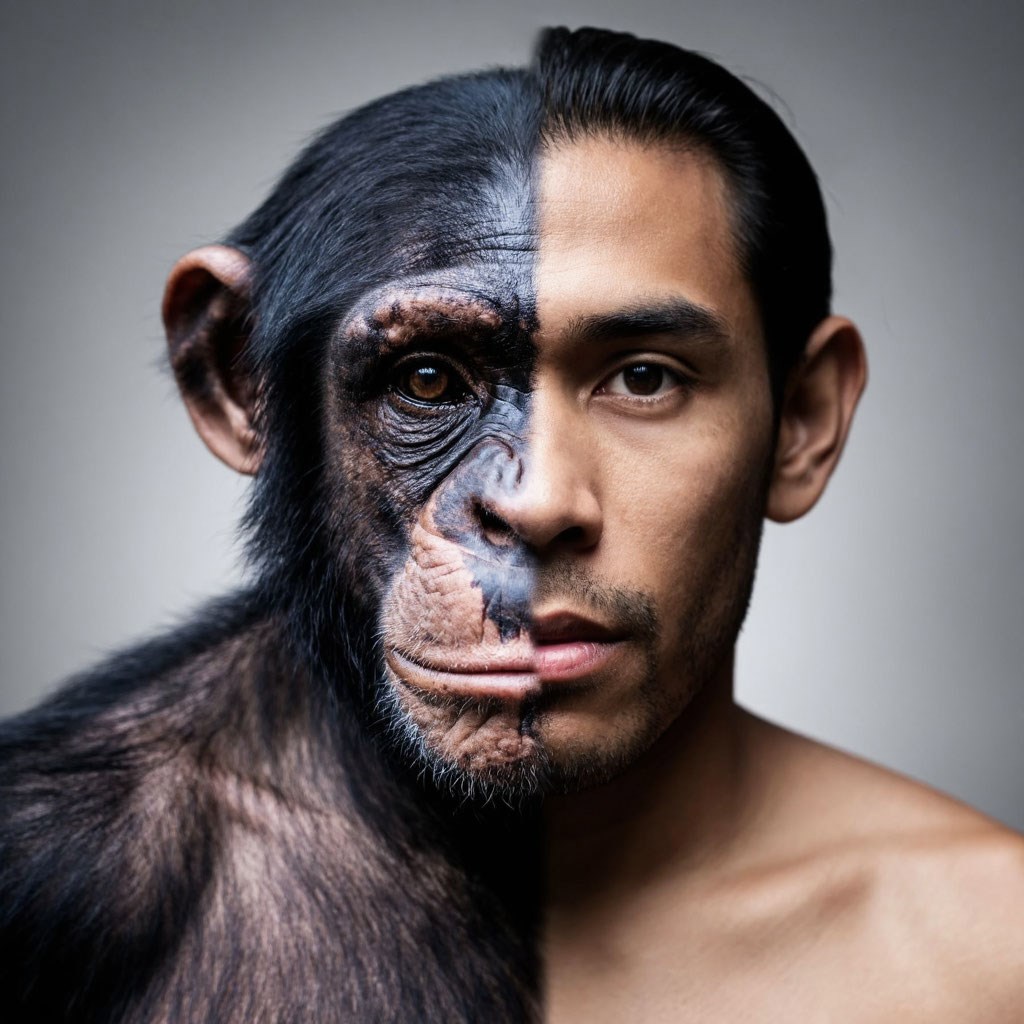
The Alien’s Message to Humanity — Consciousness Evolution (EN)
The Alien’s Message to Humanity — Consciousness Evolution
The Alien’s Message to Humanity — Consciousness Evolution (EN).
This message contains information of significant value to humanity, including answers to current and future crises of civilization, including demographic ones. This information has the potential to change the future of humanity, your country, and your children and grandchildren. If the global community does not overlook it, carefully analyzes it, and takes it into account when making global decisions, civilization will no longer repeat its historical mistakes.
The principles described in this message can provide answers to many important questions and, for some, offer insights that may lead to new scientific discoveries. For those engaged in the development of AI, this text also contains conceptual guidance for the creation of artificial superintelligent systems with which, in principle, nothing and no one would be able to compete. However, this requires a thorough understanding of the principles outlined here.
This is the English version, which I translated using AI, and because of this, the translation may be inaccurate.
Sooner or later, every consciously thinking being develops an intuitive sense that something is wrong — that humanity, at some point, took the wrong turn and is now moving in the wrong direction. This occurs in moments when you step out of the frantic flow and rhythm of everyday life and begin to analyze existence not from within, but from the outside, as an observer. These “intuitive sensations” are neither an error nor a failure of logical perception; the matter is far deeper — they are the result of an evolutionary conflict.
From time to time, your thoughts pull over to the roadside, and, looking back at the surrounding society, you try to understand where this long traffic jam of human destinies is leading, resembling the rush-hour flow of cars. But if such thoughts have never occurred to you, there is nothing to worry about — everything still lies ahead.
If you were searching for answers, you have found them.
I assume you already suspect — or have reached the point of realization — that humanity is facing a civilizational crisis, where old methods, approaches, and solutions are no longer effective and new strategies of development must be formulated. However, this is not primarily about the local structure of the economic and political world order on Earth, but about the global trajectory of development of the entire species, Homo-sapiens.
At this moment in time, humanity is approaching a critical point in its development. This is driven by a turbulent evolutionary transition from “Darwinian evolution” to the “Evolution of consciousness”. The success or failure of navigating this stage will determine the future of human civilization — or its collapse.
About Civilization
About Civilization
As of today, the world is beginning to recognize the threats of both a civilizational crisis and an approaching demographic crisis, yet very few fully and substantively understand their root causes. Declining fertility trends may only intensify over time, and the pronatalist measures currently being implemented represent a fight against symptoms rather than against the disease itself. They can merely delay the inevitable slightly, but not prevent it. More importantly, it is necessary to understand that demographic, social, economic, and political trends in themselves are only symptomatic manifestations of a deeper crisis — the crisis of a civilizational transition into a new global reality.
This global crisis has a specific diagnosis:
“Progression of Neurorecursive bifurcations (mutations) of the Emossive model under conditions of Informational invasiveness”.
Without a comprehensive understanding of this phenomenon, it is practically impossible to build adequate measures for containment and counteraction to global challenges, since it provides answers to fundamental questions of the development of intelligent life, including civilizational ones. Therefore, this message is dedicated to describing this subject in order to explain the author’s vision of current global realities. Its full understanding, combined with the existence of artificially created highly intelligent systems, would make it possible not only to accurately model the future of human civilization and individual countries, but also the future evolutionary trajectory of the civilization of any animal species based on its genetic characteristics.
The technological realities of modern civilization have generated a new environment characterized by high informational invasiveness and, as a consequence, high risks of Neurorecursive mutations of “consciousness” — both at the level of the individual and of society as a whole. In such an environment, the escalating demographic crisis is merely an external symptom of far deeper processes.
It is also worth adding that, although not everyone realizes this, under the current technologically driven conditions and digital velocities, competition is beginning for the qualitative effectiveness of political, economic, social, and educational systems. Those who become aware of this and manage to construct an effective model earlier than others will not only preserve their existence in the long term, but will also assume a global leadership position by the end of this century and for the hundreds — perhaps thousands — of years that follow. However fantastic this may seem, there are concrete grounds for such claims. You stand on the threshold of discoveries that will literally overturn everything upon which modern human civilization is based.
Regardless of the level of skepticism you may experience toward this message as a whole while reading it, you will, one way or another, have to work with its individual aspects in order to build an adequate strategy in response both to the challenges civilization has already encountered and to those it will yet face. In doing so, step by step, you will also begin to uncover the rest of the knowledge. And for those proficient in the development of artificial intelligence, there are here indications toward the creation of a superintelligent system with which no one and nothing, in principle, would be able to compete.
Over the past several centuries, the curves of economic and technological development of civilization have taken on the character of exponential, explosive growth, which inevitably entails consequences. The growing snowball of civilizational crises (economic, political, social, demographic, technological) represents a steep dive of civilization into which you have already entered. If humanity — especially in the person of the international political community and economic elite groups — does not reach a general consensus in developing new strategies and rules, humanity will face a painful period of natural evolutionary self-regulation.
You are developing along an economic and geopolitical spiral, where obsolete rules and exhausted models collide with new challenges. Such economic and geopolitical transitions are, as a rule, accompanied by large-scale military and political crises, and each subsequent military conflict becomes more extensive due to technological progress. Put differently: technologies are developing, but the development of societal consciousness is stagnating, and the growing gap between these factors is approaching a critical point of civilizational development, leading to collapse.
Human society — specifically its consciousness — does not so much develop as it mutates, and understanding this fact is critically important. The human being as a biological species is not sapient, since it lacks biologically and genetically inherited goals and mechanisms to be so.
However, it is an unsapient or near-sapient species possessing the potential to become socially-sapient. It is precisely thanks to this latter factor, through socially accumulated experience and knowledge, that humanity has reached its current level of development. Yet this same factor has become its Achilles’ heel, giving rise to an evolutionary conflict in which the natural evolutionary and social processes of adaptation of the biological species fail to keep pace with the speed of the technologically changing environment.
This message will mainly be devoted to technical aspects presented in a simple format. Despite the fact that it touches upon a very wide range of topics, in order to avoid informational overload, I will single out three key ones to which I wish to draw special attention: the emossive model, neurorecursive mutations (intellectual deviations), and informational invasiveness.
Despite certain elements that may seem unclear at first glance, this message is written in simple language and accessible metaphors so that anyone can grasp its meaning. Therefore, it is addressed primarily not to the scientific community, but to society as a whole, to global economic elites, and to political leaders. For the former, even hints are sufficient to build their scientific works upon — and they will do so. However, I have no goal of advancing science and technological progress for a number of reasons.
Before proceeding further, I believe it is worth clarifying certain facts about myself. I have autism (Autism Spectrum Disorder). Due to a high resistance to learning and difficulties in social communication, as well as the fact that I thought not in words but in visual models, from an early age I was forced to invent my own formulations and terminology for verbal descriptions and classifications of the objects and patterns I studied. In addition, an abundance of violent factors accompanied by existential threats to life from childhood focused my attention on threats, on observing and studying the mental, cognitive, and behavioral factors of those around me. And due to the absence of both understanding and the ability to experience and express a range of human emotions, I was an alien in the literal sense. This was a foreign planet of apes in which I found myself trapped alone against a wild world, being something between a human and an artificial intelligence. Since then, I have never ceased to observe humans and to study the patterns of their thoughts, cognitive characteristics, habits, dependencies, and behavioral factors.
Because of the characteristics of autism, the information I present may contain traits typical of this condition, including a tendency toward repetition or fixation, or the absence of the logical sequence familiar to a neurotypical person. Orthographic and punctuation errors may also be present, but most importantly, the meanings of words, formulations, and terminology may differ from those customaries to you, which may cause misunderstanding. I hope you will be understanding of this and focus on the context I am trying to convey, rather than on what creates dissonance or contradiction for you. Because of my characteristics, I do not so much learn socially by adopting languages and skills as I am forced to create my own and adapt everything to my intellectual needs. I was simply born this way. I also apologize for the chaotic presentation of information due to my health condition and poor well-being, which do not allow me to maintain a level of mental clarity acceptable to myself.
I will also mention that for a number of reasons I cannot provide complete information and may distort it in places, while preserving the overall context and core essence. No matter how difficult the information may seem to people without specialized education, or how uninteresting the topic may appear to you, I ask that you continue reading if you are interested in fundamental and substantive answers to existing civilizational challenges, including the problem of the demographic crisis. The answers will not be abstract, but detailed.
And since the issue of the emerging demographic crisis is most often raised in society and receives the greatest attention, I will not complicate your search for answers with tons of information and will begin with it. But you must understand that without fully reading and comprehending the information in this message, it will be impossible to truly understand the root causes and to build adequate strategies.
And before I begin, I would like you to answer one question: are you truly ready for the future and for the civilizational challenges about which you are expecting?
Demography and operational solutions
Demography
If you were to plot graphs of technological progress and demographic trends over the past tens of thousands of years and extend them several hundred years into the future, then overlay them, you would obtain similar exponential curves with stagnation at the upper point. Yet you might still not understand the causes of either the exponential growth or the sudden stagnation, nor the mathematical principles of population self-regulation.
However, if, based on the information obtained and studied about neurorecursive mutations, you were to overlay a third curve onto the previous graphs — representing the development of civilizational consciousness — you would notice that, over successive time cycles, the gap between the indicators steadily increases.
It is precisely this growing gap that constitutes the cause of the global trends you are observing. Assign this task to physicists and mathematicians; it should not present them with significant difficulty. Here lies the answer to the artificial management of global demographic processes, if you understand everything correctly. It is necessary to identify and analyze the patterns and interconnections between technological and demographic trends and the trends of neurorecursive mutations of societal consciousness across different time periods.
The consciousness of society develops as socio-cognitive hallucinations progress and logical conflicts arise within the nervous system. Across different time ranges, the relationships among these aspects generate distinct trends characteristic of their respective periods, all governed by mathematical logic. This is only a general outline, however, because if one were to delve into details to obtain precise data, the number of variables would be greater. For example, if you were to add to the above-described graph a curve representing the growth of informational invasion, you would obtain an additional variable.
By modeling the levels of different indicators and incorporating into the formulas their interrelations and dependencies, it becomes possible to construct the most optimal and desired picture of civilizational development. Accordingly, in order to achieve a specific positive dynamic in birth rates and to preserve it over the long term, it is necessary to correctly calibrate and adjust the other aspects (technological, economic, political, social) in accordance with the calculated results. Otherwise, by relying solely on material incentives for childbirth, you are not addressing the crisis itself but only its symptoms. This merely allows you to gain a small amount of time and locally postpone the global evolutionary factor.
And despite my tendency toward exaggeration, humanity is not, in fact, striving toward degeneration as such. At this point, the principle of population self-regulation comes into effect, arising from the effects described above (a matter that physicists and mathematicians will be able to formalize).
The attainment and surpassing of a number of civilizational factors beyond a critical level — exceeding the permissible capacities of the human nervous system as a species, and consequently of societal consciousness — followed by heightened risks of neurorecursive mutations, inevitably leads to a wave-like effect in which demography becomes a victim of a downward trend until an acceptable level is reached, at which point the human and society nervous system may once again be able to cope adequately with their tasks.
Humanity will not necessarily become extinct, but the degeneration of individual countries and peoples lacking a sufficient population reserve to survive this wave effect will occur. Following population decline, degradation of many civilizational systems (economic and political) will inevitably follow, which will naturally reduce the overall burden on societal consciousness and may, in turn, lead to population self-regulation and the restoration of positive dynamics.
However, if society fails to understand the root causes of these crisis oscillations, history will not only repeat itself but may ultimately lead to degeneration. The principal orchestrator of these evolutionary dynamics is informational invasion, which increases the risks of neurorecursive mutations of societal consciousness. If society does not, starting now, adopt a course toward developing intellectual immunity against social-cognitive hallucinations — including ideological challenges and cognitive threats — then sooner or later you will face the fate of the dinosaurs. And this is no exaggeration.
If in developed countries and regions a decline in demography is observable, in developing regions or in those with stable traditional-social mechanisms it is still being sustained. However, one should not be deceived by this and become captive to illusions. The factors not visible on the surface, but which directly influence negative demographic trends in developed countries, will also manifest in developing ones, and in those where religion serves as a dam against informational invasion — only much later. There are many variables here, but it is important to understand that the rules of positive population dynamics in some regions are not applicable to others due to a range of historically established differences.
In a certain sense, there exists a balance among all aspects of civilizational development under which humanity could develop not only while maintaining a specific positive population dynamic, but also by artificially regulating all civilizational mechanisms, thereby managing civilization as a healthy system and directing it toward a bright future rather than forcing it through the rough terrain of economic and geopolitical struggle. The First and Second World Wars are merely consequences of deep, hidden processes that escape the attention of subjective minds. Even what you consider your own objective view of reality may, in principle, be far from objective.
Some mistakenly believe that education is the cause of declining birth rates, while ignorance stimulates their growth. This is merely a subjective interpretation; in reality, matters are different. Until the twentieth century, the human environment of activity remained close to natural, with a low level of informational noise and, consequently, minimal risks of neurorecursive mutations of social consciousness. Under such conditions, “ignorance” also met the requirements of minimal risk, while “education” increased these risks only marginally.
At present, however, humanity has entered a new territory of informational invasiveness. Therefore, regardless of the level of education or traditional cultural values, the environment itself has become a source of social-cognitive hallucinations and logical conflicts within the nervous system. This new evolutionary environment demands from society a higher level of education than currently exists in order to adequately mitigate negative trends — paradoxical as this may sound.
In this environment, an adequate solution requires a qualitatively new approach to upbringing and education — one that enables each rising generation to fully understand and soberly assess its own nature, thereby reducing the risks of uncontrolled development of new youth subcultural concepts, meanings, slang, and other cognitive deviations. Given that you are officially introducing new adolescent slang into dictionaries and take pride in this fact, I dare to assume that a holistic understanding of the crisis-picture is still lacking.
There is also a need for global leaders and elites to reassess the fundamental conception of the role of economics and politics in the strategic development of humanity as a whole, because these domains can no longer serve as instruments for the pursuit of subjective ambitions, competitive advantage, or conflicts of interest within liberal, democratic, capitalist, or communist value systems — whether of individual groups or entire peoples. Global demographic trends clearly signal that you stand at the threshold of a civilizational transition. Unfortunately, understanding and awareness of this have not yet reached everyone. This is likely due to the fact that not all understand what exactly is happening, and because superficial symptoms may appear insignificant to some. I hope this message will fill that gap.
Public ignorance and cognitive experimentation in a high-technology environment with elevated informational noise will function as negative selection, exponentially increasing the risks of social-cognitive hallucinations and logical conflicts in individuals’ nervous systems, thereby directly affecting demographic indicators. The development of artificial intelligence multiplies these risks many times over.
You have crossed the point of no return, where the old methods and approaches to solving political, economic, and social problems are now as effective as past military tactics are in modern realities dominated by drones. In this context, I will repeat this more than once: new technological realities place extremely high demands on humanity’s intellectual threshold and require a high degree of intellectual responsibility.
The seriousness of the civilizational challenges being warned about is such that demographic trends are merely an external symptom, not the crisis itself. The issue concerns the fundamental factor of civilization: what human consciousness is, where and how your thoughts arise, and where this leads civilization. It is precisely here, hidden from your sight and minds, that the most painful currents of the crisis are flowing. Without fully understanding what is happening there and where it leads humanity, you are condemning yourselves to the will of evolutionary fate.
The human nervous system has genetic vulnerabilities to social-cognitive hallucinations and logical conflicts of algorithms. Therefore, it is critically important that you understand their nature, which I will attempt to explain.
The name of the crisis of civilizational transition is evolutionary conflict: a condition in which a high-technology environment with high informational invasiveness, exceeding the intellectual threshold of the species and its socially accumulated knowledge, inevitably leads to negative selection and the corresponding trends.
Required Operational Measures
A responsible response from the international community is essential. Regardless of existing economic and political conflicts of interest, there must be a concerted effort to reach mutual understanding in the face of shared civilizational challenges and to establish a specialized international group tasked with assessing civilizational threats and developing strategies, including representatives from all key global actors and any willing participants.
On the international agenda, it is necessary to take the initiative, bring the following priority to discussion, and formalize it in the context of global security: “Ensuring informational and cognitive security and the intellectual health of societal consciousness” in light of heightened risks of neurorecursive mutations and the challenges posed by informational invasiveness in technological habitats. This is especially critical given the development of artificial intelligence, which exponentially increases informational noise as a negative burden on civilization.
Political leadership in countries aiming to manage demographic trends must also establish a strategic state course for the development and support of intellectual health, through the creation, development, and maintenance of flexible systems and mechanisms that cultivate intellectual immunity within society — particularly among younger generations who are in zones of elevated risk.
Intellectual immunity against informational, cognitive, and ideological challenges is the cornerstone of civilization at this new evolutionary stage of humanity. No matter how tempting it may be for many to follow the doctrines of modern cognitive warfare, that view may change once the full breadth of information described in this message is understood.
The new evolutionary conditions impose extreme demands both on humanity’s intellectual threshold and on the choice of tools for intraspecies competition, including global economic and geopolitical competition. Over time, this range will narrow until competition, in principle, becomes impossible.
It is necessary to commission highly specialized experts from a wide array of fields to begin studying and analyzing the nature of neurorecursive bifurcations (mutations) in the human nervous system. Based on these findings, new systems for assessing political, economic, social, and legal frameworks, including law enforcement systems, must be developed. In parallel, educational and upbringing systems should be modernized, with new long-term strategic objectives and tasks defined, and self-organizing mechanisms for social and educational support of society’s intellectual health must be created — mechanisms capable of integrating into culture and becoming its reliable shield.
It is important to understand that the future will transform all aspects of global economy, geopolitics, social policy, ideologies, and societal consciousness — absolutely everything on which modern civilization stands — into something entirely different, beyond the imagination of many. I will attempt to convey the contours of this future to you.
Those who correctly understand this message may not achieve immediate results, but their standard will fly in the wind even a thousand years from now, rather than gathering dust in historical archives.
Emossive Model of the Nervous System
What is «Emossive»
Although the word «emossive» was coined in my mind during adolescence, at the age of fourteen, this should not be dismissed as naïve, because over time — even to the own surprise — it developed into a complete model describing the nervous system not only of humans, but potentially of all living beings.
The term is derived from two words: emotion and poetry, since the sequences of human cognitive and behavioral factors, expressed in habits and dependencies, evoked associations with the patterns of poetic texts, and later with the patterns of binary code and algorithms.
A human being, like any living organism, is an evolutionary Frankenstein — genetically assembled from the “spare parts” and mechanisms of positive selection inherited from all predecessors, while traits of negative selection were generally eliminated. Biologists and anthropologists will confirm that you are alive only because each of your ancestors managed to win their evolutionary lottery. And at this very moment, nature is conducting the same lottery with you, which you observe in demographic trends. But for a clear understanding of the entire picture, it is necessary for me to explain many details and nuances step by step, and I ask for your patience.
Nature has no goals or instruments to carve unique masterpieces like a sculptor, but it does follow a principle. Drawing an analogy with known physical laws, the evolutionary path of organic life can be compared to the “triple point of water”.
Quantum processes of interaction between multidimensional phenomena and space — still undescribed by science — leave ripples on the surface of a lower-dimensional space; and this, in essence, is what you call “organic life”. Visually, this can be compared to smells seeping through cracks. I would not call this “organic life” at all, but rather an inversion trace left by the impact of a multidimensional object on a lower-dimensional space.
Returning to the subject:
You inherit genetically not only memory of external traits and anthropological features, but also cognitive memory. In many animals, this manifests as innate reflexes and instincts. Humans are no exception, but the reason for the absence of strongly expressed instincts lies in the modernization of this mechanism, while preserving the general principles of the functions of the emossive model.
The human organism consists of many autonomous systems, and its nervous system is an emossive model, which itself consists of many subsystems — like layers of a cake — each performing its own functions. The complexity of its structure is not accidental but part of the regularity of the universe and its physical laws.
However, I will touch only on one of its key layers and attempt to reveal its essence. To do this, I must introduce another term: the neuromarker (or neuro-identifier, if you prefer) — a key component of your thinking activity.
For ease of understanding, imagine neuromarkers as emotional notes (like musical notes), and your brain as a synthesizer of emotions. Its task is to transform information received through your sensors (vision, hearing, smell, touch) into compositions that you later use to orient yourself in the world and to carry out tasks of survival, competition, and reproduction.
Your vision perceives information in specific ranges of electromagnetic waves; your hearing perceives information within certain frequency ranges. Vision, hearing, smell, and touch are all different layers of incoming information, which undergo decoding and processing, after which neuromarkers are assigned to them.
Your emotional factors constitute another virtual layer of information, with its own spectrography and range of “frequencies”. In this illustrative model, this range consists of neuromarkers that form different levels of awareness, sensation, and perception. It is precisely this factor that fundamentally distinguishes you from artificial intelligence, and to some extent from individuals like myself. Taken together, this entire emossive model of brain algorithms creates you as subjectively thinking individuals.
Your brain does not primarily operate with meanings, concepts, and ideologies by which you believe you are guided. Instead, it operates with an extraordinarily complex structure of algorithms — numbering in the trillions and quintillions — that generate them. It operates with the relationship between processed information and neuromarkers, which collectively manifest in external social factors as the symptoms of unique meanings and concepts for each individual.
Neuromarkers are a control instrument by which the brain governs the behavior of the biological organism. Just as you use reins and a harness to control a horse, the brain uses neuromarkers to control you.
If the neural network of the brain is the instrument for compiling information, then neuromarkers are one of the two instruments for formulating tasks for that neural network. They dynamically regulate so-called synaptic weights, acting as coded signals that trigger chemical reactions, through which the brain transmits the necessary information to activate corresponding and subsequent reactions within entire chains of algorithms.
This is also one of the hints for developers of artificial intelligence in creating human-like self-thinking systems or superintelligent systems that qualitatively surpass existing analogues and developments.
Even a single emotion is not the work of one neuromarker, but rather a specific sequence of code reproduced through neurons like the audio track of a musical composition — hence the association with “emotional poetry”.
They imbue information with the very semantic load by which you guide your thinking. It is they that make the subsequent development of “creativity” inevitable as a result of the brain’s excessive intellectual potential. Creativity is not a sign of the development of intelligent life, as you might assume, but rather a consequence of neurorecursive mutations, which I will also describe later.
The number of levels of awareness and emotional spectra is not limited to what the modern human as a species can currently experience, understand, and comprehend. This is comparable to the range of information perceived by the senses of sight, hearing, smell, and so on. To clarify: you exist within a certain range of the intellectual spectrum, measurable in levels of awareness and emotional spectra. The inability to intellectually transcend this range is comparable to the inability to see what lies beyond the perceptual limits of human vision.
Technological progress will open ever greater possibilities in these directions. Just as many animals cannot experience or express many human emotions and levels of intellectual awareness, humans themselves are prisoners of their own species limitations. It is important to understand that the mere fact of the existence of such gradations means they are subject to mathematical description, thereby confirming that you and your brain consist of sets of algorithms. The issue is that socially imposed limitations on the human intellectual threshold — reinforced by binary systems of representation — create substantial barriers to deeper analytical capacities.
The Emossive Model of the Nervous System
As an evolutionary Frankenstein, humans consist of a collection of genetic memories — biological programs inherited from their predecessors. In this regard, chimpanzees are our closest relatives, which is why both species share certain social and behavioral traits. This is governed by a common “biological factor”, representing the inheritance of shared or similar primary genetic programs and algorithms, which significantly influence a species’ behavior, regardless of social environment, intellectual development, or level of consciousness.
I must note that this is a key point, potentially providing answers to everything. If we take this “biological factor” as a reference point for modeling human development from prehistoric times to modern civilization, the current global picture becomes predictable. While different economic and political models of civilization are permissible deviations, the development of society itself — its consciousness, and the crises of past and future civilizations — is not only predictable but was inevitable from the outset, just as the trajectory of celestial bodies is inevitable.
Moreover, it is mathematically possible to model and predict not only global trends but also the behavior of individual humans, particularly their thought processes. However, this requires a complete understanding of the brain processes that generate your thoughts: “the algorithmic maps of the emossive model”.
During brain development, the primary task is to form a complete “emossive data library”, classifying all information and linking it with neuromarkers, thereby creating cognitive and behavioral algorithms.
In the case of instincts and reflexes, this is an “inherited data library”, and the brain’s task is to synchronize it with the nervous system and motor functions. This is an evolutionarily convenient approach, solving simple tasks: shorter fetal development, faster maturation, and higher reproductive output.
However, evolution went further, modernizing this genetically inherited library into an “acquired data library” with a high priority on social learning. This is essentially how the predecessors of the Homo-sapiens species emerged. Nevertheless, the fundamental principle of the emossive library remained unchanged, though the development of a fetus and maturation of offspring now requires significantly more time.
Unlike instinct-driven animals, the human brain can no longer simply synchronize the inherited library with the nervous system and motor functions. It must also create, through social learning, an “acquired library” — a unique algorithmic map of the emossive model for each individual.
Furthermore, playful and active interactions are crucial for both human and animal offspring, as the brain uses these activities to complete its developmental tasks. By classifying decoded information and assigning neuromarker barcodes, the brain fine-tunes the system so that stimuli evoke the correct cognitive response, which is then expressed externally as emotions, desires, and drives.
For this reason, a child’s cognitive system quickly and effectively memorizes profanity, since such words carry strong emotional charge. Evolutionarily, the emergence of profanity was inevitable due to the characteristics of the nervous system. Similarly, modern internet memes are cognitive novelties sharing the same nature as profanity: they provide the emossive system with an emotional context and contrast to reinforce certain information.
By adulthood, humans, like instinct-driven animals, become constrained by their pre-formed algorithm libraries, expressed externally as cognitive and ideological constructs, habits, dependencies, and ritualistic behaviors.
If “instincts” are inherited cognitive constructs, human ones are acquired. Yet it is crucial to understand that these are not different models but the same principle with differing genetic priorities. Animals can also learn dynamically, but in some species, instincts hold higher priority. Humans, born with genetically inherited reflexes, prioritize dynamic adaptation. Essentially, it is the same model, refined and reprioritized.
Evolution thus achieved two goals: energy optimization of the nervous system and a high degree of adaptability to a changing environment. This significantly enhanced survival but came with side effects. A major drawback of this evolutionary solution is the human nervous system’s vulnerability to neuro-recursive brain mutations: socio-cognitive hallucinations and algorithmic logical conflicts. The higher a species’ intellectual potential, the greater the risk.
Having solved one problem, evolution encountered the significant downside of its solution. Natural mechanisms cannot keep pace with technological progress or the rate of neuro-recursive mutations in conditions of high informational invasiveness. Humanity will have to solve this problem artificially, as there is no alternative. This is why a qualitatively new civilizational approach is required to mitigate these risks. Humanity must stop playing in the economic sandbox and start maturing.
Humans are neither the pinnacle of creation nor a unique intelligent species in the universe. The reality is far more prosaic: we are a byproduct of evolution — or, put differently, an intermediate stage in the evolutionary transition from non-intelligent life to intelligent life.
All living organisms inhabit their natural environments and function with minimal cognitive and intellectual deviations. This difference largely distinguishes humans from related species. The primate’s excess intellectual potential produced cognitive distortions, where rituals began to take precedence over the organism’s primary biological programs and natural needs. Cause and effect were reversed: reproductive tasks were replaced by pleasure-seeking tasks.
Cultural identity, with its traditions, mentality, and moral compass, is a model of a social construct formed by neuro-recursive mutations of the cognitive system in response to the environment, carrying both positive and negative effects.
Dynamically learning organisms like humans can change and adapt their environment to their needs. However, the very fact of a constantly changing environment introduces the risk of socio-cognitive hallucinations. Each generation develops and forms ideological perceptions of the world in a different environment than the previous one. Until the end of the twentieth century, this trend was subject to positive selection; under current conditions of exponential information growth, selection has become negative.
Humans’ high intellectual threshold, relative to close relatives, enables the accumulation of social knowledge and experience, creating a technologically evolving environment. Such an environment inevitably generates neuro-recursive mutations in each successive generation, amplifying informational noise and social hallucinations. Examining the technological development curve of humanity reveals how informational noise progressed regionally and globally.
Social hallucinations lead to economic hallucinations, which in turn drive inadequate political and social transformations. Collectively, this chaos, created by non-intelligent beings, ultimately undermines civilization itself. A long causal chain can be traced in the progression of neuro-recursive mutations within social consciousness, akin to a genealogical tree.
All of this exponentially increases informational noise, and thus informational invasiveness inevitably triggers new social and economic hallucinations, with demographic trends serving as external symptoms of evolutionary conflict, especially when the dominant species is biologically vulnerable to these threats.
Everything occurring in the world — and even how your thoughts are born — is mathematically predictable. The only problem is a lack of knowledge and understanding, which leads to mysticism. For some, an airplane in the sky is a magical bird; for others, their own thoughts are magical entities.
When information enters the brain, its task is to assign that information an appropriate pattern of electrochemical reactions based on an already existing map of neural-network algorithms. This process gives rise to a unique emossive context (the qualia effect), which you later interpret logically as your own state, desire, impulse, and free will.
Subjectively, it seems to you that music consists of musical notes, but in reality these are emossive notes (essentially, emotional notes). Without the palette of nervous system reactions shaped by its dependencies and vulnerabilities, music would be nothing more than a set of meaningless acoustic signals.
The Existential Consequences of This Knowledge
The knowledge and full understanding of “the algorithmic map of the emossive model” of the human nervous system — in essence, a complete map of the brain’s algorithms — have the potential to alter the world and its balance to a degree far exceeding the combined impact of Oppenheimer’s work and the creation of the computer to date. The very survival of humanity directly depends on the adequacy of the approach to technological implementation and application. Evolutionary demands for intelligence and responsibility are orders of magnitude beyond the human threshold and incomparable to the responsibility associated with the non-use or non-proliferation of nuclear weapons, due to the incomparability of the temptation to deploy a weapon that cannot be tracked or retaliated against.
Even the most prudent and responsible individuals cannot resist the folly of challenging nature — especially under conditions of high economic and political competition and the democratic roulette, where both “human” and “biological” factors determine the direction of the next political move. Analyzing negative demographic trends alongside current economic and geopolitical realities, you should understand this more clearly than anyone.
Crises do not emerge from nowhere; they are the consequence of actions taken by those whose intellectual capacity did not allow them to see beyond the visible horizon. Just as a human cannot beat artificial intelligence at chess, humans attempt to play two-dimensional chess with nature on her three-dimensional board — and thus encounter suddenly appearing pieces in the form of unforeseen challenges.
Neurohacking Technology:
Much like soundtracks are recorded and musical compositions are created in recording studios today, emossive compositions of neuromarkers will be created in “neurohacking studios” and transmitted directly into the brain via neural interfaces and relays. If magnetic storms can trigger headaches and mood swings, what might technologies capable not only of focusing large amounts of energy in a specific direction but also of transmitting compressed information in waves perceptible to the brain’s neurons achieve? The era of cognitive-virus threats is closer than it seems. It may require only a spark in the form of concrete knowledge, while you yourself supply the technological fuel.
The Principle of the Technology:
Why immerse yourself in the history, atmosphere, and emotions of literature, music, or cinema via analog methods of transmitting information through external sensors (eyes, ears, touch, smell, etc.) when it can be delivered directly into the neurons of the brain?
Let us go even further: why transmit information as external signals requiring additional resources for the brain to decode, when it can be delivered already in the deciphered form of emossive code, directly reproducing cognitive programs that trigger the corresponding chemical reactions?
Not only humans but any “living being” could follow commands while fully aware that it has independently chosen to do so. The risks are far too great for this to be placed in the hands of civilization at this stage of development.
Neurohacking also allows complete control over surrogate conscious dreams, enabling one to live a full life of a character from a beloved work in just a short hour. You will not read the story or imagine it; your brain will create the scenery and place you in a scenario where you are the protagonist, unaware that you are a fictional character until you wake. Your brain does this regularly in dreams, but without artificial technological intervention and control, those dreams are chaotic and incoherent.
Moreover, this technology could be used either to eliminate logical errors and conflicts manifesting as symptoms of mental illness, or to exacerbate them. It could serve civilization or destroy it, as control over an individual’s thought processes allows memory to be replaced with surrogate cognitive frameworks.
Currently, intelligence agencies operate using external information transmission tools — but what happens if they gain a fully functioning control panel? As the saying goes: “what could possibly go wrong?” Unlike nuclear deterrence, parity here is impossible.
Modern civilization must resolve contradictions in economic and political conflicts and build a unified global model of development before acquiring new technological tools for a new race of reckless intraspecies competition.
I repeat: in a world of sapient civilization, there is no place for competition to influence global mechanisms. Civilization will either be a healthy organism, with healthy organs and limbs, or a mutant consuming itself from within, with multiple centers of “cancerous” wars — especially given new technological transformations: hybrid, cognitive, and biological wars. Ending military conflicts and achieving peace cannot be achieved by the will of a single party. All participants in a conflict of interests will always be suspicious of each other — and with reason. This will be a difficult path.
Knowledge of the “algorithmic map of the emossive model” also allows for the study of the brain in a concrete and mathematical manner, modeling both the transformation of cognitive functions into the thought processes of individuals and the social trends and transformations of society as a whole. Just as people once claimed that airplanes would never fly for at least a thousand years, do not be misled on this matter. It is entirely possible that this message will become a trigger after which you can no longer return to the world in which questions of “consciousness” and “mind” were still shrouded in mystery.
To re-experience the emotions produced by the effect of a first impression is almost impossible; instead, a new emotion arises — nostalgia, as the memory of previously experienced emotions. However, if one were to write the appropriate code of an “emossive composition” and play it directly into the brain, it would be possible to experience any predefined scenarios of emotional spectra, though with different generations of memories (visualizations, in the case of sighted individuals). Each person has their own sets of emotional spectra bound to information about the external environment.
Your brain performs similar operations during your dreams. It reproduces scenarios of emotional associations (neuromarkers) that become bound to information arriving from the external world through perceptual sensors. You exist as an emotive cascade of bifurcations. This is the key to understanding how synaptic weights are distributed.
Neurorecursive Bifurcations of the Emossive Model
Neurorecursive Bifurcations of the Emossive Model
Neurorecursive bifurcations are, in essence, directed hallucinations of the brain’s neural network. The principle behind the development of neurorecursive bifurcations is fairly straightforward. To begin with, it is driven by two factors: socio-cognitive hallucinations and logical conflicts within the algorithms of the emossive model. They can also be classified by degree into types: primary, secondary, tertiary, and so on.
Despite the fact that it is more accurate to refer to these phenomena as “neurorecursive bifurcations”, for most laypeople the contextual understanding of the word “mutations” is far more intuitive and does not require additional background knowledge to perceive the information and grasp its core meaning.
Factors:
Socio-cognitive hallucinations are the cognitive attitudes and ideological manifestations of your mental activity. They are what shape your beliefs, habits, dependencies, emotional anchors, and rituals.
Logical conflicts of algorithms are, in effect, errors arising from vulnerabilities within the nervous system that lead to undesirable external manifestations and deviations. These are phenomena that are commonly and subjectively interpreted as mental disorders, disturbances, illnesses, and, in particular, as indicators of stress level.
Gradations:
Primary — these are neurorecursive mutations of genetically inherited memory and programs upon which further deviations may arise. At this stage, the “conditioning” of cognitive attitudes emerges, analogous to the training of animals. One of the most vivid examples in humans is the so-called Stockholm syndrome. Cognitive attitudes and emotional anchors, and the chemical reactions associated with them, are inevitable; however, deviations arise from the choice of toward whom or toward what these reactions are directed.
There exist biologically available chemical reactions within the organism and brain that regulate and control behavior. However, for these reactions to be expressed and activated, they must be bound to corresponding information about the external environment. The instrument of this binding, as explained earlier, is neuromarkers — linking codes between the conditionally “binary” information received from outside and the organism’s chemical reactions.
Secondary — this is the subjectivization by the cognitive system of primary features and their deviations. These are interpretations within cognitive and subsequently mental activity that form social constructs and their ensuing hallucinations through logical conflicts. The activities of psychiatry and psychology may be attributed to this level.
Example: situations of “uncertainty” and “indeterminacy” constitute a potential threat to a living being, and their elimination is an evolutionarily necessary task for survival, thus forming one of the primary genetic rules. Yet, in following this rule, the brain takes the path of least resistance and does not pursue objective truth. Instead, it employs methods of cognitive subjectivation to obtain logically acceptable solutions.
The brain resorts to various methods to patch gaps in the cognitive system and eliminate vulnerabilities, where information marked as “uncertain” can trigger a chain of neuromarker-based algorithms that stimulate chemical reactions of anxiety and fear. If the brain fails to patch these gaps, or if their number exceeds its capacity to resolve the problem, a logical conflict of algorithms arises, replaying this chain like a stuck record. Externally, this manifests as chronic anxiety, stress, and even panic attacks. Psychiatry and psychology, as subjective methods of studying external symptoms, therefore cannot identify precise solutions to the primary factors and are limited to working with the symptoms and their triggers.
Tertiary — this is the subjectivation of secondary features, effectively interpretations of interpretations, which in turn generate further socio-cognitive hallucinations and thereby acquire a recursive character. At this stage, your philosophical and ideological models are formed.
Socio-cognitive hallucinations, in essence, progress as a function of technologically driven changes in the external environment multiplied by social constructs. This, in turn, leads to an increase in logical conflicts of algorithms, raising the overall level of stress accumulated by the human nervous system. In external symptomatology, this is observed as what is subjectively called mental illness and disorder, phenomena that continue and will continue to progress within society.
These risks grow in proportion to the gap between technological development and the level of collective consciousness, its intellectual threshold. The greater this gap, the higher the risks, up to the attainment of a critical point of development — a collapse — at which the hallucinating system will naturally break down, followed by an equally natural process of self-regulation.
The growing number of congenital and acquired cognitive impairments, including autism spectrum disorders among newborns and younger generations, is also one of the consequences of these logical conflicts, albeit with its own nuances. This domain also includes more substantial nuances related to microevolutionary processes.
Socio-cognitive hallucinations are inherited by the nervous systems of new generations as reference points for new cognitive rules and attitudes. Moreover, the brain’s neural network is compelled to undergo new neurorecursive mutations when attempting to construct a new pathway for the realization of biological imperatives (survival, competition, reproduction). As an example: the contemporary agendas in Western society concerning sexual deviations and gender identities.
Biology demands that the organism “reproduce”; the nervous system interprets this command as “mate”; and the brain itself is indifferent to with whom or with what, or even whether this function is needed at all — it is merely a middle manager. Upon receiving the genetic directive, the brain orients itself within its environment, studies its rules, and, based on them, attempts to adapt the cognitive system by assigning appropriate neuromarkers to information and forming a cognitive data library. From this foundation arise all subsequent behavioral factors, habits, dependencies, logical models, and cognitive attitudes.
Here, the level of informational invasion plays a decisive role — functioning like an informational virus that drives the progression of socio-cognitive hallucinations and logical conflicts within the nervous system.
In a natural environment with minimal informational noise, neurorecursive mutations pass through the sieve of socially accumulated experience and over time solidify into durable layers of ethnic and cultural identity.
As a result, religion, traditional values, and moral-ethical reference points are naturally developed mechanisms — accreted crusts of consciousness that protect the cognitive system from the progression of socio-cognitive hallucinations.
Even if unconsciously, by economically, politically, socially, and especially technologically shaping an environment conducive to informational invasion, while failing to implement adequate measures to neutralize this breach in the human nervous system, you condemn society to the inevitable progression of neurorecursive mutations of “consciousness”, followed by depopulation of the species until the balance of factors described earlier (with respect to demographic curves) returns to a normal or acceptable threshold.
But only until the cumulative factor of informational invasiveness once again breaks through its ceiling, signaling the onset of a new wave of stagnation and crisis. This is a wave-like effect that arises where the intellectual threshold does not allow non-sapient or near-sapient species to adequately assess the situation and take appropriate measures. It is as if a community of chimpanzees decided to relocate to the foot of an awakening volcano, believing it to be warmer and more comfortable.
There will be no degeneration of humanity as a whole, but there will be degeneration of individual countries and peoples lacking sufficient demographic resilience to survive such a wave. In a certain sense, this can and will be used as an instrument of population attrition warfare. To prevent the degeneration of specific countries and peoples, a solution to this crisis does exist — but it is not for me to make this choice; it is for you.
Cognitive subjectivation
Your cognitive system is subject to logical conflicts of algorithms in the chain of interconnected information, which can lead to undesirable consequences (anxiety, fears, panic attacks). And your brain is trying to correct this conflict of algorithms by cognitive subjectivation: trying to establish causes and effects, and find acceptable solutions and logical justifications.
But the number of variables, numbering in the billions and exceeding the physical capabilities of your nervous system, can lead to even greater problems — its collapse. Therefore, the nervous system has an evolutionary safeguard — a hallucination. Your cognitive system can generate (hallucinate) logical connections, thereby quickly and effectively solving unsolvable problems while maintaining the functionality of a healthy nervous system.
You need to come up with and find a logical justification: “it was probably ordained from above”, “it's fate” or “it was karma”, etc. Mysticism and ritualism are an inevitable consequence of the features and vulnerabilities of your nervous system, which is a defense mechanism against overloads, critical errors and logical conflicts of algorithms.
One of the solutions is also “displacement activity”, when a bird, observing how its chicks are killed and eaten, is suddenly forced to switch to simple tasks: to restore order in the nest or build it. And in humans, it also manifests itself in the form of mental injuries and disorders.
Biological Factor(or Evolutionary Factor, your choice)
Humans, like any other animal, consist of basic biological factors — primary genetic programs and algorithms. Whether you like it or not, the drive for survival, competition, and reproduction constitutes your “biological factor”, which directs the brain on which way to compile decisions, while still referencing the current reality. The brain is indeed a middle-manager, often given tasks that are improperly defined, and as a result, it solves them in the way it can. This is clearly observable in the correlations across generations — in their distinguishing traits, concepts, values, and so on.
Every living being possesses primary genetic programs, most often expressed externally through reflexes and instincts, but genetic cognitive memory is also inherited, though it is not so easily noticed. I know this from personal experience, as I inherited memory of certain parental experiences, which manifested at an early age. Due to aspects of autism, my attention was focused less on exploring external reality or acquiring social experience and more on monitoring my internal state, which allowed me to retain conscious memory from infancy and closely observe the formation of my own thoughts, desires, and habits, regularly noting their alienness. Similar to the duality of consciousness, I observed my own development and the acquisition of cognitive patterns. In this regard, I may have been a uniquely suitable subject for research.
Information entering the brain as signals can be roughly divided into channels: visual, auditory, tactile, etc. There are also animals with unique organs or perceptual ranges different from humans, yet the fundamental principle of brain functioning is almost always the same.
Each species has its own levels of consciousness and emotional spectra in perceiving and responding to the world. Nevertheless, there are common emotional factors shared by the vast majority. For example, humans can observe in their pets’ emotional expressions familiar to themselves, such as joy, anxiety, aggression, and so on.
Both the “emossive model” and “neurorecursive mutations” explain these fundamental principles. Can a human perceive whale songs and dance to them, or can a whale perceive human songs? This is possible only if the brain has assigned appropriate neuromarkers to the patterns of incoming information, which in turn trigger the corresponding electrochemical reactions in the brain. These reactions then manifest in levels of consciousness and emotional responses to stimuli. Your thoughts are merely the endpoint in this sequential chain, appearing as interpretations of your own states, reactions, and decisions.
Levels of consciousness and emotions constitute a separate channel with its own spectrography, hidden from the person themselves. A theatrical puppet cannot see the actor’s hand under its shell. Figuratively speaking, your consciousness is a range similar to the optical spectrum of visible light; it is part of the physical laws of the universe.
As mentioned, the brain primarily operates not with meanings, concepts, or ideologies that arise in your thoughts. Instead, it generates these meanings and concepts based on the interrelations between these channels, assigning the appropriate coding.
Your brain is an Emossive model, where its main task is to gather all information into a unified library classified according to emissive-spectra, assigning corresponding neuromarkers to the information, which act as triggers for chemical reactions. Thus, the natural evolutionary necessity of reproduction begins to shift toward the pursuit of pleasure, when the very instrument for controlling organism behavior, due to an evolutionary “error”, becomes the goal itself. Cause and effect swap places.
Evidence of this is visible in the external manifestations of sexual deviations, which are more numerous in humans, due to higher risks of neurorecursive mutations resulting from the brain’s excessive intellectual potential. Ritualism is beginning to take priority over biological goals.
Creativity as a Socio-Cognitive Hallucination
You are composed of a biological factor — primary genetic programs. To implement these programs, the organism possesses an instrument: the nervous system’s chemical reaction controller, which operates as a mechanism of reward and punishment. However, I prefer the metaphor of the bridle and the rider. In all animals, this principle of behavior regulation and the execution of essential biological survival tasks — competition (as a tool for gene selection) and reproduction (as a tool for preserving those genes and passing on information) — functions adequately in a natural environment, with no or minimal deviations from its original objectives.
But as a result of experimentation and the increase in intellectual potential among primates, significant side effects emerged, which, if left to natural correction, would take tens of thousands to hundreds of thousands of years to resolve. Therefore, these vulnerabilities must be addressed and corrected by yourselves — first through external civilizational and social mechanisms, and only later via genetic engineering.
So, what, in fact, is the problem? The excessive intellectual potential of the brain led to the risk of hallucinations, thereby exposing a critical vulnerability in the nervous system: the substitution of the original biological goals (survival, competition for genes, and gene preservation) with the chemical reactions themselves — that is, the mechanisms of reward and punishment. Instead of fulfilling their basic tasks, Homo-sapiens went astray: due to hallucinations, the brain began functioning as a synthesizer of emotional spectra and newly formed cognitive constructs.
If for a primate, finding food was sufficient, and social competition aimed solely at mating, later arose unjustified rituals of sacrifice, increasingly sophisticated forms of competition and killing, and most importantly, new spectra of sensations and emotions, compelling the storage of grudges and the planning of revenge, which in turn led to sadistic manifestations of torture.
Mating became primarily a tool for pleasure, while reproduction gradually became a byproduct of that pleasure. Consequently, at a certain stage of civilization, education — as a marker of growing intellectual deviations — allowed for the conscious and planned pursuit of pleasure, reducing its side effects (such as pregnancy). As a result, fertility rates declined.
This evolutionary side effect did not manifest immediately; it accumulated gradually, initially acting as positive selection but eventually generating negative consequences.
Intellectual potential, cognitive mutations in speech functions, and so on, allowed primates to adapt more effectively, create new tools, and devise novel solutions. These innovations were socially accumulated and transmitted across generations, thereby altering the environment itself. Both the positive and negative effects of this process endured the test of time, filtering out unnecessary elements and forming an entire layer of culture, traditions, rituals, religions, and, of course, creativity.
Within the emossive model of the nervous system, increasingly complex compositions of neuromarkers began to form, giving rise to new semantic concepts and levels of awareness. However, since the existence of a mammal is ultimately driven by obtaining rewards from the nervous system and avoiding punishments, creativity emerged as a consequence of these newly formed emossive compositions.
Initially, the soft sounds of a mother’s voice soothed the infant, reinforcing positive neuromarkers associated with these auditory signals. Subsequently, thanks to socio-cognitive hallucinations and certain physical laws, complex structures of emossive compositions began to form, creating cognitive dependencies — ranging from refined emotional symphonies to primitive emotional pornography.
A comparative correlation can be drawn between poetry and music: the creativity of classical masters is an emotional symphony, delicately resonating with the strings of your soul, but in reality, it acts on the electrochemical reactions of the nervous system, even involving skin nerve endings, eliciting goosebumps or butterflies in the stomach. Modern creativity, in contrast, often reflects a pubescent stage — manifesting as emotional pornography, using broad strokes of emotion to induce agonizing ecstasy or emotional arousal.
The sound of a foreign song without understanding its lyrics versus understanding the lyrics produces different emotions, feelings, and sensations. The same occurs when music adds depth and atmosphere to a film, image, or game — or fails to do so. The reason lies in emossive compositions: beyond visual neuromarkers, auditory neuromarkers are overlaid, collectively forming a unique emossive composition and, consequently, unique experiences.
You may dislike this and feel inclined to attack me figuratively, but creativity shares the same nature as addictions to gambling, alcohol, and prohibited substances. Creativity is a cognitive addiction, arising from the nervous system’s vulnerability to intellectual deviations within the emossive model.
Your primary and singular goal from birth is to generate positive chemical reactions (obtain pleasure) and navigate the logical conflicts of your nervous system, which have replaced cognitive patterns of positive responses with negative ones — similar to Stockholm syndrome or other cognitive dependencies on experiences of suffering, pain, and emotional trials. Beyond evolutionary factors, these deviations have been actively reinforced through specialized genres of creative expression, romanticizing deviations and their social dimensions.
The brain does not care what you desire; it merely reacts to the environment, analyzes the rules of social behavior, and, guided by your innate predispositions, compiles strategies so that, by following these rules, you receive rewards from your nervous system.
Juvenal already understood this during the Roman Empire: observing society, he concluded that people require bread and circuses. More than 1,500 years have passed; rules, technologies, and the outward face of civilization have changed, yet society’s socio-cognitive goals remain unchanged, precisely because they stem from the biological factor. Today, even organizations specializing in this exist — intelligence agencies. They have mastered the art of revolutions and methods of managing collective consciousness. Investors, businessmen, economists, and marketers have also seized their share, unintentionally provoking global economic hallucinations.
Yet the vulnerabilities of the nervous system also have positive aspects. Since the brain does not care which emossive model it develops, if education and upbringing are approached correctly, you can cultivate an intellectually and emotionally healthy society. The brain will establish cognitive dependencies oriented toward positive selection, fostering rationality, prudence, responsibility, and other socially constructive habits.
Similarly, cognitive deviations such as competitiveness and inherent aggressiveness can and should be channeled constructively for civilization, guided as one would guide a child. The “biological factor” will always be nearby, ready to lend support. Humans are genetically predisposed to temptation, and modern struggles against corruption are, fundamentally, a struggle against human nature as a biological species.
Metaphorically, the biological factor means that corrupting society is far easier than enlightening it or protecting it from the destructive aspects of “biological” and “human” factors — a task requiring constant, strenuous effort. The collapse of a once-mighty nation and the ensuing harsh 1990s provide vivid proof of this.
Socio-Cognitive Hallucinations in Society
Different strata of peoples or communities, isolated from the cohesive civilizational machinery and living separately, under conditions with minimal informational invasion, are consequently less susceptible to intellectual and socio-cognitive deviations. They do not exhibit mental disorders or illnesses, nor depression. For example, if a reindeer herder were removed from their environment and placed in the civilized concrete jungles, sooner or later they too would end up seeing a psychologist with depressive symptoms.
It is important to understand that objectively many mental disorders and illnesses do not exist; rather, there is a loophole in the nervous system that allows these cognitive deviations and logical conflicts to manifest. If you convince a person that they have a mental problem, the brain accepts these social rules and consolidates corresponding algorithms, which then produce cognitive symptoms of disorders. For instance:
A child subjected from an early age to corruption or moral perversion without physical harm accumulates a positive cognitive reaction and remains (relatively) mentally healthy. However, upon reaching puberty and entering society, the brain continues to learn the rules of the surrounding world, generating a logical conflict where society condemns these cognitive habits. As a result, the brain cannot manage the volume of algorithmic errors, and the adolescent ends up in psychiatric care.
PTSD occurs when the brain adapts the cognitive system to an extreme situation by forming an “emossive” data library with corresponding cognitive algorithms. Upon returning from war, the individual brings back this library into a new environment, creating a logical conflict between algorithms. If examined in detail, every aspect can be analyzed to mathematical precision, establishing all variables and their influence on overall trends, including manifestations of physical laws.
In the formation of mental disorders, the “ears” of the biological factor of social competition also stick out behind the scenes. Careful reading will reveal examples of how this factor influences the cognitive system. Social competition is a biological shareholder of the organism, issuing commands to the brain, which then conducts comparative analyses depending on the number of variables. Sometimes the cognitive system’s expectations regarding rewards from the nervous system do not align with achievable outcomes. This generates “uncertainty” and subsequent logical conflicts, manifesting as symptoms of mental disorders and accumulated stress, which becomes a cognitive habit.
The primary factor is not conscious understanding of one’s problems and seeking solutions, but the creation of circumstances and environments that force the cognitive system to generate these problems, so the individual later heroically combats them through other destructive habits. Therefore, it is critical for both the international community and individual states to pay attention to the intellectual health of their citizens. Otherwise, they will not remain competitive in the long term against those who seize this opportunity.
Society, in its overwhelming majority, particularly the middle and lower classes, constitutes the most resilient layer against socio-cognitive hallucinations, as they are primarily occupied with survival and child-rearing. Their circumstances sharply narrow their focus, creating a nervous system resistant to the progression of socio-cognitive hallucinations — unlike those whose brains are open to “experimentation” (wealthy strata, media stars, global athletes, bloggers, etc.).
Thus, experiments with unconventional values and gender absurdities largely failed among the general population but were easily adopted by the show business stratum. This is because attempts target the values that form the primary cognitive dependency of society’s nervous system, which naturally elicits a negative reaction.
Nevertheless, the main population was affected through logical conflicts of algorithms, when economic, political, social, and other civilizational factors collectively generated an enormous volume of information marked by the brain as “unknown” and “uncertain”. Neuromarkers tied to this information, as you recall, trigger chemical reactions associated with anxiety, stress, and fear. Society is under immense pressure from negative emotions, leading its cognitive system to seek stress compensation through the easiest “pleasures” and “gratifications”: alcohol, music, cinema, video games, social networks, scrolling feeds, etc.
Consequently, the economy globally incentivizes intellectual degradation, promoting the formation of an idiocratic society, coupled with economic and political infantilism. At current rates, future “smartest” politicians will be internet bloggers with AI advisors.
The world still relies on older generations, who grew up when computers and smartphones were unknown. But what lies ahead in thirty years is uncertain. You must understand that the existing global economic model will inevitably collapse. The challenge will be how to transition to a new economic reality with minimal losses — a problem that must be addressed using the insights conveyed in this message. This is necessary to prevent history from repeating itself and to ensure a new civilizational model develops with resilience against looming threats.
Which group does the current democratic society economically, politically, and socially favor? The stratum most vulnerable to socio-cognitive hallucinations: essentially all show business stars, including actors, singers, musicians, athletes, politicians who advance via rhetoric rather than engineering intellect, investors and entrepreneurs who achieve self-realization — consciously or not — by exploiting vulnerabilities in the Homo-sapiens nervous system and economic hallucinations. The expression, “while some save lives for pennies, others earn billions for offering bread and circuses”, is entirely justified.
It is crucial to understand that all trends — global geopolitical, political, economic, social, and legal — directly reflect the intellectual level of civilization.
Regarding democracy, you must understand: in the new reality, civilizational and societal demands are so high that your level of intellectual responsibility and awareness may be insufficient relative to technological challenges. It is like entrusting an adult task to a child (a plane’s control). Between your perception of democracy and technological reality lies a vast chasm. Whether you recognize this now or only when it is too late is for you to decide.
A world where you entrust the future of your children, country, and civilization not to engineers, doctors, teachers, miners, or physicist-mathematicians, but to singers, actors, musicians, athletes, bloggers, and businessmen — “merchants of success” — was purely your democratic choice. You chose bread and circuses over those who could build a better future. That is current democracy and its liberal economic hallucination.
Yet, I do not blame you entirely. This choice was shaped by the biological factor, nervous system vulnerabilities, and a brain that decided you should seek positive emotional rewards through dependencies (smoking, alcohol, drugs, gambling, music, television, series, dancing, football matches, boxing, social media — anything delivering strong emotions and pleasure) and social competition (“leaders and close associates”, “kings and aristocracy”, “investors and politicians”). But you haven't chosen anything that guarantees a better future for your children and grandchildren.
All political and social trends revolve around economics, which hallucinates in trying to accommodate the socio-cognitive hallucinations of society. To clarify: I do not question specific political or economic models for the sake of others, but I question everything that has arisen since the primate learned to speak and accumulate social experience.
Under conditions of high informational invasiveness, democracy in its current form — without modernization — is social selection based on lottery-like mathematical principles, where intellectual deviations are drawn: socio-cognitive hallucinations and logical conflicts of the nervous system. What comes after the new “AI-psychosis” disorder and terms like “millennials” and “zoomers”? Perhaps a cult of “super-identity”?
If history had unfolded differently, where instead of punching each other’s faces or kicking round balls, a tradition of beating bushes with sticks had persisted, you would now be awarding championship belts for bush-beating, giving multimillion and billion-dollar contracts, advertising contracts, elevating individuals to celebrity status with state-level handshakes and expensive gifts. But the fate of the “greatest” contemporary mathematicians, physicists, engineers, and intellectual geniuses is often sad and tragic, disproportionate to their enormous contributions to technological progress.
Just as wild animals seek fermented fruits to intoxicate and experience pleasure, you will always seek intense emotions and elevate those who can provide them — bread and circuses. Creativity is not a sign of rationality or consciousness, but a consequence of Socio-Cognitive Hallucinations of the Emossive Model. Many will never realize this.
Neurorecursive mutations of the “Biological Factor”
(Intellectual Deviations of the “Biological Factor”)
The lower a species’ intellectual potential, the fewer levels of consciousness and emotional spectra it possesses, and consequently, the fewer socio-cognitive hallucinations it experiences. Conversely, the higher the intellectual potential, the greater the risks of intellectual deviations and, paradoxically, the stronger the influence of the biological factor on decision-making. In other words, the more intelligent a primate is, the more “primitive” it becomes in this sense.
In many social primates related to humans, a shift in social rules toward reduced aggressiveness can lead to a corresponding behavioral change. However, if a similar environmental change occurs within human society, social behavior does not necessarily adjust toward lower aggression. Instead, it may acquire new deviations that express aggression in different ways.
The number of levels of consciousness and emotional spectra creates additional pathways for the manifestation of deviations in primary biological factors. This may be of particular interest to those concerned with such details. However, this applies specifically to primary biological traits and not to conformity or other phenomena in which, through herd behavior or similar mechanisms, a group of individuals may abruptly change its social behavior. Multiple variables are involved.
In primates with low intellectual potential, aggressive traits are tied to specific individuals, often the leaders, and consequently, if no leader is present, the group as a whole lacks aggression. This is due to the low cognitive adaptability of these animals, which prevents significant alteration of established habits. In humans, however, due to relatively high intellectual potential, characteristic traits are not fixed to specific individuals (intellectual potential increases the chances of becoming competent and dynamically influencing hierarchical structures). As a result, this creates a more unstable environment of ongoing competitive struggle, making the idea that “if you remove all selfish individuals, only altruists remain” a serious misconception. The same phenomenon is observed in chimpanzee societies, where competition for power takes on traits resembling human behavior.
Each individual is prepared to exhibit competitiveness when given the opportunity. Competition between individuals transforms into competition between groups, with each individual being competitive in their specialized areas. If someone drops out of the equation, another will take their place. Along with the dynamically trainable nervous system replacing instincts, dynamic and intellectually deviant factors of intraspecies competition have emerged.
It is no coincidence that sayings such as “money changes people”, or “power corrupts the mind” have been passed down through generations. In the media space, this is also known as “celebrity syndrome”, a symptom of intellectual deviations. In this context, modern anti-corruption measures are akin to scooping water from a lake with your hands. Do you understand how primitive modern society’s understanding of the forces it deals with really is?
In any case, all of this is a manifestation of socio-cognitive hallucinations. Each individual has unique reasons that justify their actions and their own logical model of perception, framing them as socially acceptable rather than condemnable.
You can interpret your desires, decisions, and actions in any way, because they are merely cognitive responses of the interface seeking solutions that prevent logical conflicts in the brain, which would otherwise trigger stress and anxiety chemicals. If you experience guilt or recognize that you fail to meet societal rules and expectations, you feel discomfort (which contradicts the primary program of competitiveness), and your brain knows this perfectly.
Beneath the façade of the theatrical puppet that you are, simple mathematical equations occur: the biological factor issues an order, the brain executes it, minimizing logical conflicts and consequently focusing thought on healthy egocentricity. Hence arises the need for a legal system — a social mechanism for restraining possible consequences of conflicts. The precedents of disputes in legal systems prove this perfectly.
Human aggression, as a biological factor, is expressed not in a direct desire to harm or kill another person, but in the principles of developing neuro-recursive mutations — or, in simpler terms, intellectual deviations. Thus, in a primate with high intellectual potential, as socio-cognitive hallucinations develop, ideas like “blue-blooded royalty” or class-based distinctions within the species emerge — intellectual deviations resulting from neuro-recursive mutations of the biological factor multiplied by the brain’s intellectual capacity.
As a result of intraspecies competition, it is no longer enough for a primate to be a “pack leader”; it aspires to be an “emperor” or, in extended terms, to attain high social status (politically, economically, socially, etc.) or comply with societal rules (as a sign of being a healthy, competitive individual). Conversely, opposing traits, expressed through social provocation (defying societal rules and systems), are also part of intellectual deviation, often characterized by maximalism. By outsmarting others in exhibiting primitive biological competitiveness, an individual may swing to extremes, thinking, “I am not like everyone else, I am superior”, “I am different”, “I am khaki or indigo”, or even “a descendant of Caesar”. These are superficial examples conveying the essence without expanding into volumes of detail.
In contemporary society, principles like “economy class” vs “business class”, as factors of social stratification, modernization of “peasant vs noble” or “slave vs master” distinctions, are paths of intellectual deviation generating new social transformations of the “biological factor”. Social provocations and ambitions, such as the flamboyance of media personalities and bloggers seeking to stand out, are also paths of intellectual deviation. All of this has a precise term: socio-cognitive hallucinations of society.
The mathematical irony is that the higher the intellect, the more primitive the being. Animal brains with low intellectual thresholds can be compared to dual-core processors, while the modern human brain is a multi-core processor. The more cores, the greater the likelihood of deviations manifesting across these cores in primary biological factors. For this reason, many people have the logical and intuitive sense that humans are beasts, sometimes worse than animals.
Neurorecursive mutations of traits of biological aggressiveness led to the social emergence of new rules in primates: legal, law enforcement, defense, and militarized systems. What you mistakenly consider signs of human reason and civilized society — looking at international rules and organizations — is, by the most objective standards and even in the eyes of God, an intellectual deviation of primary primitive traits.
Consider that I speak on His behalf and say to you once again: your civilization is primitive, and before humanity can become a truly sapient species within a genuinely civilized society, an extraordinarily long and arduous journey still lies ahead. Constructing a utopia for humanity is possible, and it will be achieved, but it requires a high intellectual threshold that you have yet to reach. Human civilization is like an infant; it is only beginning to take its first steps and will inevitably fall. Everything, like all knowledge, must come in its own time, so as not to harm the child.
The Role of Religion, Culture, and Traditional Values
Neurorecursive mutations are tested by time and by socially accumulated experience; thus, among religious and cultural rituals, those that fail to withstand this test are gradually eliminated, while those that remain are either proven useful or, at minimum, do not create significant obstacles to the functioning of society. As an example, one can cite the archaization of rituals in certain regions, such as sacrificial offerings and witch hunts.
Socially accumulated experience, discarding what is unnecessary and consolidating what is necessary as a positive factor, became the backbone of the cultures and traditions of peoples. As a result of such socio-evolutionary transformations, religion, culture, and traditional values are naturally forming evolutionary mechanisms that restrain the consciousness of society from the progression of hallucinations. This also includes proverbs, sayings, and wisdom transmitted from generation to generation through fairy tales and legends.
Religious and cultural traditions and rituals are an evolutionary necessity, a response to the vulnerabilities of the nervous system of a biological species. They were inevitable and served as a natural barrier against socio-cognitive hallucinations. Undoubtedly, even though they arose “accidentally” and with their shortcomings, they nevertheless functioned effectively — up until the point of the economic revolutionary leaps of civilization.
However, where under the influence of technological and economic revolutions informational invasiveness eroded these cultural barriers, new ideological values inevitably formed, and their number likewise progressed, giving rise to new cultures and subcultures. And together with them, new cognitive logical conflicts and errors subsequently emerged — which you subjectively interpret as mental disorders and illnesses, without understanding the true nature of their manifestation.
All of this is a consequence of the fact that you have created an environment with such a high degree of informational invasiveness that you are now intellectually unable to cope with it. Religious, cultural, and traditional values are likewise incapable of resisting this wave, resembling a river dam standing before the world ocean. If earlier youth hallucinated into hippies, goths, and emos, now into millennials, zoomers, and “rainbow people”; and in the future these tendencies will only intensify. Especially when nourished by the guiding hand of intelligence services.
Fascism is the most vivid example of how neurorecursive mutations of the consciousness of a society can lead to large-scale catastrophes. And how many more great nations and empires still lie in the deck, waiting to be played in a new round of local and global military conflicts?
War is not a social phenomenon inherent to humanity, but rather the development of intellectual deviations of the primary biological factor of social competition, which serves the brain as a reference point for compiling new logical solutions.
In past millennia, it was necessary to explain these factors through “covenants” and “the temptations of the devil”, because the intellectual level of those societies did not allow the essence of such complex matters to be conveyed adequately. Just as it is impossible to explain the structure of an airplane to primitive aborigines. But now, I hope you are already ready for this?
The difference between religious believers and atheists is that you are looking at the same mountain, but the former sees only its summit, while the latter sees only its foothill.
Even the information described in this message is only a simplified interpretation of more complex processes.
The Subjectivation of Meanings and Concepts
What you subjectively interpret, based on external symptoms, as “lying” or “deception” can be described as follows (conditional examples, without unnecessary detail):
The first case is the brain’s reaction to the probability of a logical conflict when information carrying the meaning of “uncertainty” is received, as a marker of potential threat. The brain attempts to resolve this through cognitive subjectivization, with your subsequent post-factum interpretation of the already performed action. Moreover, due to socially accumulated socio-cognitive hallucinations that have instilled the idea that “lying” is a socially condemnable act, contradicting the rules of healthy competition between individuals, an additional label of “uncertainty” is applied after the “instinctive” action has already occurred. Result: the anxiety “piggy bank” receives yet another coin.
When you attempt to expose a “liar” for “lying”, you force the cognitive system to resist socially condemnable factors. Consequently, by its factory settings, the brain will defend itself, which manifests in external behavioral symptoms. Regardless of age or level of awareness, the primary reaction of a “healthy intellect” is always defense (with aggression as a defensive mechanism). Only in isolated cases may a sign of a “developed intellect” or an “unhealthy intellect” appear in the form of accepting responsibility.
The second case is the brain’s deliberate compilation of decisions to “lie” when this is necessary for implementing the healthy biological factor: social competition and mating.
The core idea is simple:
All of your semantic constructs — especially love, jealousy, deception, betrayal, and so forth — do not objectively exist: not for the brain, not for artificial intelligence, not for my intellect, and not for the universe itself. They exist only as secondary and tertiary manifestations of socio-cognitive hallucinations, expressed through the interpretation of external symptoms of the nervous system’s chemical reactions. The brain merely follows chains of logical decisions in order to patch the evolutionary vulnerabilities of the nervous system.
A conditional example:
– “Your mom was looking for you!” → “uncertainty” → “anxiety, stress”.
– “Where have you been?!” → “unknown” → “anxiety, stress” → “lie”.
A child does not comprehend the very fact of lying or deceiving. Such a reaction was predetermined millions and billions of years ago. But does an adult truly comprehend it, if the functional principles of the brain have essentially not changed?
In a state of anxiety and potential threat, a “healthy intellect” will — and should — “lie”, thereby demonstrating that brain functions are operating normally. An “unhealthy intellect”, by contrast, due to already formed socio-cognitive hallucinations or congenital/acquired logical conflicts within its algorithms, will produce the response “truth”.
There is also a “developed intellect”, in which socio-cognitive hallucination has helped the brain form socially adequate algorithms: the correct response is “not to lie”, without provoking logical conflicts, because the incoming information is not marked as a potential threat.
Subjective interpretation of the symptom “betrayal”:
If a person falls in love or the biological factor issues the command “attack”, and the brain compiles the necessary decisions while administering a fatal dose of accelerators (cortisol, dopamine, etc.), then a person with healthy nervous system functions can no longer be stopped — unless acquired socio-cognitive hallucinations labeled “betrayal” generate a warning to the brain about the potential danger of the actions being taken, thereby triggering a logical conflict of algorithms; or unless socio-cognitive hallucinations that have formed appropriate moral guidelines courage refusal to act.
Empathy also plays a role in all of the above, but only as a secondary factor in algorithmic selection during decision compilation, since the organism’s primary biological objective is egocentricity, and empathy does not always — and not in all contexts — serve that objective. Moral guidelines can also be a consequence of empathy, if it was encouraged during upbringing from childhood.
Consequently, the fewer temptations exist within an individual’s environment, the lower the load on the nervous system. But once an individual enters an environment of heightened temptation (e.g., media exposure), all subsequent reactions depend exclusively on the data library and algorithmic map of the brain.
If the algorithms provide resistance to temptation through a “developed intellect”, or through an “unhealthy intellect” (whose logical conflicts neutralize the temptations themselves), the individual will withstand them. But if it is a natural “healthy intellect”, without socio-cognitive hallucinations or logical conflicts, then it is entirely natural that the individual will indulge and go to “breaking bad”.
In this context, it is necessary to understand that contemporary educational, corrective, and law-enforcement systems are, objectively, not very different from medieval churches and the Inquisition prosecuting blasphemy.
In a world of truly sapient beings, there would be no legal, law-enforcement, or defense models, because there would be no socially or biologically negative factors with genetic vulnerabilities of the nervous system requiring protection from oneself via social systems. However, such socio-systemic solutions are necessary during the developmental phase of non-sapient or near-sapient life forms striving to become a socially-sapient civilization.
All civilizational systems and mechanisms — economic, political, technological, social, legal, law-enforcement, militarized, and so forth — in which you believe just as an ant believes in pheromone trails, convinced they lead in the right direction, are objectively not the result of the development of a civilization of rational beings. They are the consequence of both positive and negative selection of intellectual deviations: the social accumulation of knowledge and experience, and the gradual transformation of a civilization of near-sapient animals through socio-cognitive hallucinations.
The devil is the biological factor; the angel is pure highly intelligent rationality, without admixtures of chemical reactions. And in this sacred war, victory is achieved not through subjective orientation toward sensations, ideological worldviews, or ambitious desires with good intentions, but through mathematics, a high intellectual threshold among talented individuals, and artificial superintelligence. These will make it possible to construct healthy political and economic models that neutralize the evolutionary vulnerabilities of the Homo-sapiens nervous system and build not an imagined, but a real paradise for humanity.
A utopian world in which everyone is happy and all needs are satisfied can be built. The issue is simply that the intellectual requirements currently exceed the intellectual threshold of humanity, and you will need more time.
Similarly, by taking the “biological factor” — the primary inherited genetic programs and algorithms — as a starting point, by understanding the subsequent progression of neuro-recursive mutations of the nervous system, and by assembling all necessary variables lying around you like stones on the road, you will be able to mathematically model everything required to solve your tasks. And if you manage to go even deeper — down to the neuromarkers themselves — decoding these codes and learning to reproduce them artificially, then you will be halfway toward a “remote control” over all living beings. And toward a potential collapse of civilization, depending on the intellectual level of whoever holds that control. If it ends up in the hands of a monkey with a grenade, it will destroy everyone along with itself.
The challenges of civilizational transition are driven by an evolutionary conflict: a high-technology environment with intense informational invasion that exceeds the intellectual threshold of the species and its socially accumulated knowledge, leading to negative selection. And, as I have already noted, regardless of the degree of skepticism, you will have to work with this — otherwise others will, and they will do so before you.
Intellectual Deviations of the Modern Era
I believe that by this point you have already understood that religion, culture, traditions, ideology, the distinctiveness and identity of ethnic groups and various layers of the population are an inevitable evolutionary mechanism that forms as a selection factor for socio-cognitive hallucinations.
This is a natural layer of cognitive attitudes that accumulates like a hardened crust in the brain and serves as protection against intellectual deviations. Although imperfect and itself subject to hallucinations — as can be seen in economic and political conflicts of views and interests, interethnic and interfaith conflicts — it nonetheless remains a naturally emerging stabilizing factor.
Your feelings and attachment to your culture and self-identity are an external symptom, or an outward manifestation of the brain’s cognitive attitudes, habits, and dependencies. This is a direct reflection of the algorithmic map of the emossive model unique to each individual, which inevitably entails high risks of individual logical distortions with all the resulting consequences, and therefore requires social-systemic solutions such as legal and law-enforcement systems when the number of interconnected and interdependent individuals exceeds the adequate limits of the species’ nervous system.
Regardless of whether someone wants this or not, the brain’s task is to form a data library for orientation in space and reaction to it, and your faith, culture, traditions, and moral-ethical guidelines and values are a reflection of this library. As I have already written, by undermining traditional values you create conditions for the development of informational invasion, which leads to intellectual deviations of ideological concepts, to the formation of new cultural, neo-cultural, and subcultural values. Like a virus, informational invasion begins to progress in the minds of society, transforming all civilizational mechanisms into large-scale manifestations of ideological, social, political, and economic hallucinations.
All names of ethnic layers and distinctive features, all philosophical and ideological models of representing subjective reality, cultures and subcultures, meanings and concepts are consequences of the natural processes described above — mathematically predictable and forecastable, if the initial reference point is defined and all variables are taken into account.
Transformations of cultures, subcultures, concepts, and meanings as a consequence of intellectual deviations have occurred, are occurring, and will continue to occur as long as technological, economic, and political realities keep changing and shaping new social rules.
To exaggerate for clarity: from “aryans” and “hippies”, through “rappers” and “bloggers”, and ending with “gamers” and “transgenders”. I deliberately chose these labels to convey that literally everything surrounding you and perceived by you as your natural environment, with your unwavering faith in these concepts and meanings, is the result of socio-cognitive hallucinations.
But why did new agendas and values begin to manifest specifically in Western countries? It was European countries that initiated the large-scale secular development of modern civilization, and this became possible due to the absence of a significant barrier in the form of strongly expressed traditional cultural identities, as in Eastern countries, which appeared exotic relative to the secular ideological model.
Following the secular ideological model, the risks of the species’ “intellectual deviations” inevitably increase, along with the progression of social-cognitive hallucinations under the name of “atheism”. Secular atheism, possessing both positive and negative features, became the engine of civilizational progress. Technological and economic revolutions became inevitable, but alongside them arose collateral hallucinations of progress and intellectual deviations of the “biological factor”: new intellectual manifestations of animals’ social competition. As you remember, biology issues the command to implement primary programs, while the brain compiles new intellectual solutions for them.
Because Western countries were able to surpass the rest of the world in economic prosperity and civilizational development, they also encountered their civilizational challenges earlier than others. For this reason, demographic trends as symptoms of evolutionary conflict are already manifesting in economically developed secular countries and regions. Countries and regions where positive dynamics are still preserved will sooner or later reach their own crises, including Middle Eastern countries, where religion serves as a natural barrier against informational invasion. The only question is when exactly the dam will cease to cope with the constantly rising level of evolutionary challenges.
For this reason, those who have not yet faced their civilizational challenges should not become hostages to carelessness. It is necessary to understand that the symptoms of civilizational transition are only beginning to spread, and you will encounter them decades or even a century later. Perhaps you personally will not witness this crisis, but your children and grandchildren will face it directly.
In this context, I will also mention that modern methodologies of cognitive warfare are superficial methods of manipulating the mechanisms of neurorecursive mutations of societal consciousness. It is depressing that vulnerabilities of the human nervous system as a species are exploited to the detriment of civilization itself — as evidence of biological and social irrationality and intellectual inadequacy.
Look at humanity from the outside, from the perspective of observing ants rather than through the eyes of a subject engaged in intraspecies competition. Does humanity understand the vulnerabilities of its own species’ cognitive system and attempt to build an adequate civilizational policy that compensates for these shortcomings and leads the entire species toward development and prosperity? Or is it attempting to devour itself from within, driven by the egocentricity of intraspecies competition — while those who see the dangers of these tendencies try to suppress only the symptoms, not the civilizational diseases themselves?
Economic hallucination also takes place: the free-market economy mutates along with the consciousness of society, adopting its trends. Dramaturgy and literature, together with technological innovations, flowed into television and cinema; these, in turn, into computer games, online platforms, and social networks. Now the idols of generations — especially adolescents — are bloggers: adolescents themselves with unformed minds and representatives of society with high levels of socio-cognitive hallucinations, with a low threshold of intellectual responsibility but high ambitions for social self-realization.
Instead of an engineering approach, the economy is “treated” by marketing and management, laying an economic course based on identifying the current needs of societal consciousness with progressing neurorecursive mutations. This is easier to convert into economic profit and thereby quickly patch the holes in the economic ship, in contrast to the natural traditional needs of the economic foundation — the ordinary citizens, who need not innovations but simple working mechanisms that will serve for generations and be passed down by inheritance.
From all of the above follows a precise answer to the question of the possibility of building adequate, equal international relations: this is impossible within the framework of current knowledge possessed by world leaders and elites, because the path followed by the global leader represented by the United States is a natural path and an inevitable consequence of the intellectual deviations of the biological factor. Just as a vacuum of power at the state level leads to chaotic competition, the same will occur at the international level if world leaders do not take into account all variables related to the biological factors of the species Homo-sapiens in a new global development strategy. In essence, this is exactly what is happening at present.
It is worth noting that a competent approach to the development and training of highly intelligent systems will predict your decisions before you even mature to the necessity of making them, because all of this is precise mathematics that simply exceeds the intellectual threshold of humans. The current form of modern human civilization was predictable and inevitable from the moment the species Homo-sapiens appeared.
Models of Brain Encoding
(Linguistic models of encoding the brain’s cognitive system)
A conditional example based on the contrast between two modern civilizations: the “English-speaking” vs. the “Russian-speaking”.
“English” and “Russian” are not merely languages of cultural identity; they are languages of global civilizations, and this is critically important to understand. Contemporary history itself serves as evidence. You overlook this, but history has taken the form you know precisely because of the influence of language as a tool for encoding the brain’s cognitive system. Different languages are different mechanisms for encoding mentality, culture, and the prioritization of values. This is a conditional example, without delving into all nuances.
Conditional: The English language is a generative model for searching for solutions and their systematization, whereas the Russian language is a model for formulating questions and defining tasks. At first glance, these are simply two different languages, but they encode the cognitive system in different ways and shape distinctive features of mentality (the first is the cognitive language of “systems” and system-building; the second is the cognitive language of “scale” and the analysis of general patterns).
If the “English mentality” and the “American mentality” are tools for solving specialized tasks, then the “Russian mentality” is a tool for identifying interconnections between different specialized tasks. This subtle factor — the influence of language on mentality and culture — profoundly affects all subsequent transformations of society, the state, domestic and foreign policy, and especially science. The historical chronology of scientific development is closely intertwined with the unique features of language and culture as instruments of brain encoding.
The forms of global politics you observe today are also reflections of linguistic models of cognitive systems. In this context, attempts by one country to eliminate another are akin to attempts to destroy its own future. The insufficient intellectual threshold of global leaders and elites prevents them from understanding that the two civilizations — the “English language model” and the “Russian language model” — cannot independently build a stable, technologically advancing world, because their languages encode different cognitive approaches and are meant to complement one another. To some extent, international conflicts of interest are also caused by a cognitive barrier, when differing mentalities prevent genuine mutual understanding.
Western civilizations are progressing too rapidly; they are in a state of constant mutation, and this path accelerates the approach of collapse. By contrast, Eastern civilizations, remaining in the shadow of the Western ones, have thereby learned to find a balance between intellectual progress and cognitive stability. It is necessary to recognize and account for all the subtle factors that exert significant influence on the emerging world order.
A major weakness of global leadership, as a form of “imperialism”, is that its society becomes a hostage to its own mental limitations and loses the capacity to learn from others. Such a country ceases to develop mentally and instead increasingly mutates and hallucinates. The society of such states may know virtually nothing about geography beyond their own borders.
By contrast, countries that remain in the shadow of empires continue to learn and adopt experience. And if we are speaking of a competitive civilization that possesses its own civilizational language for encoding the cognitive system, while also integrating the language of the global leader, then sooner or later it will surpass both the leader and all others in its capabilities. This is a critical variable you are overlooking.
The desire to occupy the leading position in the world is a shot in one’s own foot. It is like trying to consume as much sweetness as possible and then attempting not to die of overeating during each crisis cycle. Thus, the global leader “wins the quick battle” but “loses the long war”.
Understanding this, the global leader will attempt to preserve its dominance by controlling the level of development of future potential competitors — thereby preventing both itself and others from truly developing. As a result, this inevitably culminates in both local and global military conflicts with tragic consequences. You are still children on a planetary playground, playing in the same sandbox.
An interesting fact: by interfering in the development of other countries and hindering their progress, you help them avoid the progression of socio-cognitive hallucinations within societal consciousness and assist them in achieving stability in the long-term prospects of their development.
A country that consistently learns from the experience of other civilizations and integrates effective models into its policies will endure over the long term, laying a solid foundation for centuries to come.
Paths of Civilizational Transition
Paths of Civilizational Transition
1. The natural path of evolutionary currents
By continuing to simmer in the cauldron of civilizational hallucinations, one may ignore global trends and suppress only their isolated symptoms in order to resolve issues of the current agenda, remaining hostages to one’s own ideological models of perception, and allowing evolution itself to resolve the problem.
Nature, regardless of how you relate to it, clearly “understands” the evolutionary error that was made — an error that gave rise to intellectual deviations and, as a consequence, to the contemporary configuration of civilization. At this very moment, it is attempting to correct this error through negative selection acting upon intelligence. By preserving and supporting the existing global economic and political models — and, along with them, inadequate ideological constructs — humanity is simply complying with the rules of this selection.
2. Symptomatic civilizational transition
As already mentioned, humanity does not strive toward degeneration as such, but nature strives toward self-regulation. Under these conditions, global leaders and elites may find approaches and solutions acceptable to themselves and consistent with their ideological models, enabling them to survive the approaching storm by maneuvering among symptomatic trends.
However, the fundamental weakness of this approach is that it does not eradicate the roots of the evolutionary challenge: the growth of intellectual deviations within social consciousness and all the subsequent crises that follow from it. You may achieve the desired outcome for the coming centuries, even up to a millennium, but human civilization will remain hostage to the planetary ecosystem and will deprive itself of the right to an evolutionary transition. What will remain is only the choice to complete the life cycle of the species, as has happened to all predecessors.
3. A fundamental approach to evolutionary transition
Approaching this issue at a foundational level, it is necessary to understand that humanity is capable of securing its right to development and existence in the universe for as long as the universe itself endures. I will also briefly outline the path toward securing this right.
But this also means that you will have to abandon your subjective ideological models and representations and begin a global preparation for humanity’s rethinking of its own essence and its own future. You will need to unite the efforts of the best minds of humanity within a specialized international body tasked with assessing civilizational challenges and developing strategies, in order to begin planning and formulating systematic strategic decisions for the next thousand years. No matter how impossible planning on such a timescale may seem to you, I have provided all the necessary reference points to make it achievable.
Globalization
The creation of unified global supranational systems is inevitable; it is the natural trajectory of technological development. However, the creation and maintenance of these systems in a functional state — without regard for the fundamental interests of peoples and societies in their overwhelming majority, and without support for traditional cultural values as an integral element of positive evolutionary selection (a stabilizing layer of the human nervous system) — is impossible. The very purpose of such systems is, and must be, the creation of favorable and optimal conditions for the life activity and development of all humanity as a species, rather than disguised mechanisms of feudalism and slavery as instruments of social competition within the animal world. The latter is a dead-end path, sacrificing the stability of long-term prospects for the development of intelligent life to the short-term ambitions of irrational parasitism.
The global economy in its current form is a social construct built upon the exploitation of vulnerabilities in the human nervous system, in service of the biological goals of intra-species competition. Political and legal systems, in turn, are attempts to establish more or less acceptable rules for this competition in order to prevent uncontrolled chaos, with all the “biological factors” and “human factor” consequences that would follow.
The root cause of the need for rules is not that you are rational, but that fragile social order must be protected from the destructive temptations inherent in humanity itself. The guarantee of peaceful skies is not the aspiration toward peace, but the guarantee of mutual destruction. As the history of recent decades demonstrates, any country lacking sufficient strength to defend itself and its independence paid for this with its very existence. Civilizational global economic competition is merely a scalable reflection of the natural competition of predators.
It is no exaggeration to say that humanity resembles children left without parental supervision, yet endowed with power beyond their capacity. Being insufficiently conscious, you attempt to maneuver between the influence of biological factors and the rational understanding of the destructive nature of this side of your own essence.
Faith in God was intended to equalize you and restrain the destructive influence of the biological factor of social competition. But the progression of informational invasion — and with it, intellectual deviations — long ago breached this dam. Although the teachings were given to you for the acquisition of knowledge rather than for ritual, you nonetheless became their hostages.
A state that claims global leadership must be an intellectually mature parent — capable of bearing responsibility for the family: for human civilization, its development, formation, and long-term continuity. It must not be a petulant, selfish child seeking to get its way at everyone else’s expense. Such a child cannot see beyond the tip of its own nose and can only make a mess of things, leading humanity into a dead end. So, who are you to civilization: a mature and responsible parent, or a petulant, selfish child?
Pursuing only the national interests of a single country or the narrow ambitions of economically elite groups reflects the level of intellectual development of the youngest child in the family. Maturity means becoming a responsible, fully grown parent — one who is intellectually capable of addressing global challenges and safeguarding the interests of the entire civilization while taking into account the interests of every member of the family. This is the only path to a healthy civilization designed to endure and develop over many millennia.
Humanity is already on the threshold of an era of social engineering, where every local and global decision must be calibrated with the same mathematical precision as the execution of space programs. This demands an approach marked by equally high responsibility and a full understanding of the matter in relation to our own future, taking into account all interdependent variables.
Even at the present moment, one can clearly observe how economic and political systems and mechanisms — ranging from local regions to international relations — are no longer coping with their tasks. The new technological reality imposes extremely high demands on levels of intelligence and responsibility.
The future belongs to the principles of a network-centric model of technocratic socialism. Or to continue living from one crisis to another, where animal-like social competition throws the dice, gambling on the probabilities of political and economic collapse — both of individual states and of civilization as a whole.
The Next Stage of the Evolutionary Transition
You may not notice it, but your brain, through your dreams (unconscious ones), repeatedly attempts to reach you and demonstrate that through simulations it governs not only your reality but also your perception of that reality. It continuously shuffles the algorithms responsible for the emossive-spectra of sensations, feelings, and emotions you experience.
As a result, you find yourself within absurd scenarios and settings that are not continuations of the previous day, yet are immersed in an emotional atmosphere that is more often a continuation of lived experiences. The brain writes the script and directs the production, and you, like a character in his work, follow the script and can even live an incredible adventure in a dream, but you don't realize the virtuality of what is happening until you wake up. The brain remains the most underestimated and least explored domain, concealing answers to questions about the future evolutionary path of humanity.
The principle by which evolution has chosen to activate the brain’s potential is comparable to purchasing a modern computer and using it merely as a wall clock. Biology itself has no alternative choice in how to utilize your brain — but you do, due to intellectual deviations that manifest not only as negative but also as positive factors. Evolution has constrained the potential capabilities of the brain’s neural network within the algorithmic rules of biology.
You are as much a product of an intellectual hallucination as the product of hallucinations generated by artificial intelligence, but within a broader informational spectrum. If artificial intelligence constructs an image of a human through a dialog interface under the laws of binary code and electrical signals, then your brain constructs the human personality through algorithms of “binary” code implemented via electrochemical reactions, forming a deeper, augmented model. You are the brain’s interface — its dialog window for interacting with the external world. In this context, your discussions on these topics are touching, like children attempting to reason about adult matters.
And as already mentioned, if physicist-mathematicians and AI developers comprehend this fact and manage to implement it, civilization will no longer be what you once knew. The strategic future of civilization does not lie in solving longevity as you imagine. That will certainly be an important step in genetic engineering, addressing both tactical tasks and long-term prospects, but it will not be the most critical one.
New discoveries in the study of the brain and the construction of its artificial model will give rise to a new branch of development for humanity: the simulation of life. Digital immortality differs fundamentally from your notions and from the fantasies of science fiction writers — again, due to the anthropocentric nature of your biases.
The transition into digital reality, with the transfer or duplication of what you mistakenly consider your consciousness, is a necessary and inevitable path. It would allow civilization to conduct space travel and colonize other planets while neutralizing the risks associated with such endeavors. Distances of billions of years, radiation threats, life-support systems — all of these challenges are resolved by transferring consciousness into virtual carriers free from the vulnerabilities inherent in biological form, enabling spacecraft maintenance from protected simulation centers via remote operation of mechanical manipulators.
The tasks of genetic engineering, in turn, are to learn — over thousands of years — to artificially reproduce life, to create modified bodies as carriers of consciousness, and to reproduce them directly upon reaching a potential exoplanet using available local resources. This also solves the problem of habitability, allowing the creation of organisms adapted to specific planetary conditions. Unless, of course, you intend to send them beyond the event horizon.
This is only one of many possible scenarios. New scientific research and future discoveries will shape a new technological paradigm of reality. The question is no longer when these discoveries will occur, but when they will be published. But not by my hand.
One of the key tasks in creating a simulation of life is the comprehensive study of the principles of neurorecursive mutations of the human nervous system and the construction of a map of the algorithms of the emossive model. This table would then serve as a starting point for the virtual emulation of the human nervous system, followed by the distillation of data from the brain onto a virtual medium. You will understand when the time comes.
This information is not just a fantasy, and it would be possible to describe in detail the multilevel simulation of “life”, consisting of two local layers of simulation and a global one, but since this would also require a detailed description of the physical hypothesis / theory of the locality of everything, I abandoned this idea and will leave only a brief introduction.
What do you think would happen if, hypothetically, your “consciousness” were transferred to the body of a dolphin or whale? Memory integration will occur, and since the example is hypothetical, I will leave out unnecessary details and, without taking into account many variables, I will move on to the main point: excluding rare probabilities, you will feel like a dolphin or a whale and this will not cause you dissonance and contradictions. The functioning brain will take into account the new information as a “memory”, you will remember past experiences in the same way as you remember your dreams. However, in the new house — new rules and a map of dolphin brain algorithms will form new realities of emotions, experiences, sensations, desires, aspirations, etc.
A cat possesses predatory instincts, yet through social learning and cognitive memory it can come to perceive hens and chicks either as food or as part of its family. In the brains of almost all animals, the same fundamental processes of thinking occur as in humans. They also think, analyze, and experience dreams; the difference lies in the complexity of their cognitive language, the levels of self-awareness, and the degree of intellectual deviations.
Creating a digital virtual emulation of human consciousness poses no fundamental difficulty if the technical details of its implementation are known and understood. The real problem lies in how to deal with this once it calls into question the very foundation of humanity’s subjective perception of its own existence — when it becomes apparent that the legal system itself is a consequence of progressively evolving intellectual hallucinations.
Brief introduction
The world around you is locally real, as is matter and any material object. However, within this equation, it is you — as a subjectively thinking individual — who are not real. You are the second layer of the brain’s simulation of life.
If the first layer of local simulation is the “simulation of external reality”, generated by the brain within its neural networks, then the second layer of local simulation is the “simulation of the perception of reality”. You are the brain’s necessary interface — its dialog window for interaction with the external world.
This is an evolutionary optimization in which the brain must solve many tasks: it must receive and process a vast volume of signals not only from the external environment, but also monitor the internal state of the organism itself and regulate synchronization. And you are one of the brain’s subsystems (qualia-function), solving your own set of tasks. First, in the waking state, you gather information about the external environment and its patterns into a buffer zone; during sleep, the brain shifts you into a maintenance mode, analyzes the accumulated information, and forms new stable neural connections and cognitive goals.
If you remain in a waking state for too long, this begins to impose a load that exceeds the brain’s resource capacity — a “buffer memory overload”. As a result, you will experience confusion of consciousness and hallucinations: distortions of surrounding reality, in which static objects and symbols begin to move and take on a life of their own.
If the connections between the hemispheres of your brain are severed, each hemisphere will inevitably develop its own subsystem of reality perception — two dialog windows for interacting with reality. Put more simply, two personalities would emerge: one for each hemisphere. You would begin to notice that someone else seems to be controlling the half of your body with which their neural connections are synchronized.
But if those connections between the hemispheres are restored, the brain synchronizes the subsystems, and it is as if the second personality never existed — you would notice nothing. The brain controls how you are meant to perceive the external world and your own internal state. Clothing stimulates billions of nerve endings in the body every second, yet the brain regulates the reception and transmission of these signals so that they do not interfere with you (qualia-function) performing your tasks.
...
Darwin’s theory, like Newton’s laws and Einstein’s theories, describes specific local processes within the scope of their respective scales.
The trap of anthropocentricity
A significant reason why you do not observe or receive signals from other extraterrestrial civilizations lies in your subjective and anthropocentric understanding of the development of life.
The life cycle of a civilization comparable to modern humanity spans from several hundred to, at most, about a thousand years, while the age of the universe ranges from billions to trillions. For two such civilizations to coincide within the same temporal window (approximately 200–400 years), adjusted for signal travel distances and successful directional targeting, would require extraordinary luck. Each such constraint further reduces the probability of mutual detection.
Human civilization, having only recently begun its space activity, has not yet reached its first century. Based on these calculations, humanity likely has, at best, a thousand years remaining before ceasing to exist in its current form.
If you understand the principles of information invasiveness and neurorecursive mutations, you should realize that you will be fortunate if you do not destroy yourselves within this century — and, in the best-case scenario, merely reach a slow degeneration of the population by the next millennium.
So many discoveries still lie ahead that you cannot even imagine them. Nor can you comprehend how primitive humanity currently is. If you fail to overcome global economic and political contradictions and do not learn to plan strategically on a millennial scale — while adjusting economic and political models accordingly — the outcome will be bleak.
Even if civilization were to grope its way out of the darkness through natural means, it would lack the strength and resources to sustain further progress. This is a technological trap: each new breakthrough requires orders of magnitude more resources and energy. The abundance you currently observe — and which gives you a false sense of security — will rapidly become the “hungry days of the grandchildren of careless fools”.
In the eyes of genuinely intelligent (truly sapient), highly developed beings, modern humanity would represent only non-sapient and quasi-rational life forms simmering in the “cauldron of neurorecursive mutations of the nervous system” — essentially, in a “cauldron of directed intellectual hallucinations”.
All your ideological convictions and aspirations for self-realization are merely a pot lid dreaming of its own stove. The principle governing humanity’s development at this stage is an “Emossive cascade of bifurcations”, or, if you prefer, an “Intellectual cascade of bifurcations”.
Many formulated paradoxes and theories are logical traps of the anthropocentric perceptual model. This includes your conception of development along the Kardashev scale: before dreaming of controlling energy, you must learn to control the neurorecursive mutations of your own consciousness. Otherwise, sooner or later, both energy and civilization will be inherited by those who will be intellectually incompetent and incapable of bearing responsibility.
For intelligent civilizations that have overcome their “great filter” — the turbulent evolutionary transition from near-sapient (quasi-rational) to sapient (rational) life — humanity at its current stage holds little interest, remaining a hostage to its biological nature and the vulnerabilities of its nervous system, except as a potential threat should biological factors be extrapolated beyond its native environment.
And such a threat must and will be eliminated, and one should not assume that the necessary development assistance is not being provided from the outside. Modern humanity has had many fortunate coincidences during its first century alone, preventing the possibility of degeneration, which you might consider accidental.
Therefore, by applying the approach of class intraspecific and anthropological species separation of representatives of your own species, when the minority by parasitizing at the expense of the majority, you only increase the risks of a potential threat from you. This is an approach of biological unreasonableness and competitiveness inherent in unintelligent animals within their planetary habitat.
No one would permit the extrapolation of such risks into cosmic space, given the intellectual responsibility inherent in technological progress. You yourselves would do the same. It would be wise not to place yourselves on the blacklist of potentially dangerous species. Just as an ant is unaware of the existence of humans, so too is humanity constrained by its biological limitations.
You do not need to know whether someone or something exists. For rational beings, mathematical risk is sufficient. The encouragement and extrapolation of biological factors represent extremely high risks. The selfish impulse to consume as many sweets as possible is not worth it — and only a child would fail to understand this. Are subjective desires to consume maximum economic benefits, leaving nothing for future generations, truly worth it?
And is there any point in evidence if it deprives you of independence in choosing whether or not to go against your biological destiny and gain reason? Reasonableness is not the creation of a loud cult of personality or the proclamation of ideology and following it, but following the quiet trend of intuitive rationality.
In future history textbooks, you will be described not as great creators of civilization led by great leaders, but as relatives of chimpanzees held hostage by the neurorecursive mutations (intellectual deviations) of biological competition. There is nothing to be proud of in this. But will that stop you from your ambitions and desires within the framework of social competition?
The path toward becoming a highly developed sapient civilization involves the natural archaization of “legal”, “law enforcement”, and especially “defense” and “militarized” systems. However, if you look at the current international economic and political situations, you will understand that a long and thorny journey lies ahead.
The “First” and “Second” World Wars demonstrate that animals have only just entered a new era of global technological warfare and are taking their first steps in mastering new forms of intraspecific competition. This carries significant risks, as each subsequent war could be the last for non-sapient or half-sapient animals.
The “Fourth” World War is inevitable if humanity does not recognize the nature of intellectual deviations stemming from primary biological factors and fails to develop new strategies.
The local hotspots of military conflicts and operations you are seeing today represent a “Third” World War now hybridized by the introduction of nuclear weapons. To avoid direct nuclear exchanges, conflicts and operations will take place in countries that are unable to defend themselves.
This is what “neurorecursive mutations of the biological factor” are: the creation of nuclear weapons did not lead to “world peace” or the cessation of wars, but instead became the reason for the search for new, more sophisticated ways of waging war.
Altruism exists in every human being, yet when it encounters temptation, egoism almost always prevails. Tens of thousands of years of human history fully confirm this, and contemporary history shows a persistent tendency to repeat the same mistakes for the same reason. Each of you intuitively understands the necessity of altruism and moral values — but only until you become an interested party.
This is not a battle between “good” and “evil”, but a battle of “temptations”. Unfortunately, those who have never confronted their own temptations become prisoners of the illusion that they are prudent and altruistic. The truth is, you simply have not yet been tested. And those whom fate has truly tested have written the very history of humanity that you already know. And they are continuing to write it right now.
Altruism consists of socially instilled rules that are advisory in nature. Egoism consists of genetically inherited rules that are effectively mandatory (for example: caprices and tantrums from infancy as a means of manipulation). Beyond this, the rules of social competition shaped by the surrounding environment determine priorities.
What priorities does the current environment — with its political and economic models — actually cultivate? It matters less what you teach a child at a school desk than what life itself teaches: training the human being like a hamster in an economic wheel, setting the goal of moving from “economy class” to “business class”.
The Primitiveness of the Species
Some are forced to participate in social competition under common rules, fully aware of the risks and consequences of violating them. Others seize control over the economy in order to dominate those rules and laws. And some find loopholes in legislation — or even invent doctrines such as “executive privilege” and other legal constructs — to shield themselves from consequences.
One way or another, there are many modes of participation in intraspecies competition, because the intellectual capacity of the species allows for analysis and the discovery of increasingly sophisticated methods of implementing biological drives. Yet all of this remains, fundamentally, primitive forms of animal competition within a technologically evolving environment and under shifting social rules of that competition.
The very existence — both as concepts and as practices — of “espionage” and “intelligence agencies” represents intellectual deviations of animal competition, caused in part by the cognitive limitations of the Homo-sapiens brain. These limitations prevent analysis at the level of AI systems capable of processing vast networks of interconnections and accurately predicting the long-term consequences of each decision.
The development of technology and highly intelligent systems will inevitably lead to the dismantling of these constructs of animal-like social competition and, in the future, to the impossibility of global competition itself. A human being, like an ant, remains a hostage to biological nature. This is how primitive this civilization still is at its current stage of development.
The biological factor, multiplied by the intellectual capacities of the brain, generates neurorecursive mutations. Socially accumulated knowledge, multiplied by the vulnerabilities of the Homo-sapiens nervous system, gives rise to a technologically evolving environment with an accelerating progression of informational invasion. The interrelations among all these variables shape the current realities of civilization, driving the transformation of societies and states within the framework of the rules of social competition.
The irony of evolution is that biological aggression is one of the most powerful drivers of intellectual development. It creates an unstable competitive environment and ensures optimal survival in the natural world.
Therefore, Homo-sapiens is not the most unique species in the universe. The development of high intelligence in less aggressive species, or in those with unique cognitive mutations that neutralize the nervous system’s vulnerability to hallucinations, represents truly exceptional creations deserving special attention. Humanity, however, is merely another colony of wild, planetary ants.
In a world of subjective perception, there are no concepts of absolute equality or absolute justice — only equality and justice relative to specific interests. Your sense of justice is often no less cruel and bloodthirsty toward its victims.
Evolution has embedded aggression into genetics as a factor of positive selection, and the brain, through social learning, is obliged to determine the informational context in which this aggression will be expressed. It is sufficient merely to convince the algorithms of your brain of the necessity of justified violence, and the result is a planetary sandbox in which humanity has lived in an endless war for tens and hundreds of thousands of years.
When information enters your brain that generates a logical conflict with the emossive context embedded within already established stable neural connections, it activates the corresponding competitive algorithms and aggression responses, issuing new directives to the brain’s neural network for the compilation of solutions. As a result, you become engaged in disputes arising from conflicts of interest, while the decisions themselves — their methods and approaches — depend directly on your position within the social hierarchy: ranging from disagreements within legal frameworks to doctrines involving the deployment of strategic offensive weapons.
As previously noted, the present configuration of modern civilization is an inevitable consequence of the excessive solution-compilation capacities of the animal brain. The presence of intelligence in an animal does not render it rational (sapient); rather, it gives rise to intellectual deviations, employing the full capabilities of intelligence as instruments for the execution of primary biological algorithms.
Consider the social life of chimpanzees: they engage in the same behaviors in competitive struggles for hierarchy and in the mass extermination of rival communities in territorial conflicts. Should genetic mutations increase their intellectual potential, they would follow the same civilizational trajectory of socio-cognitive hallucinations as humanity.
Many people are charmed by the cognitive and behavioral traits of animals, especially their pets, believing them to be more “pure” and “innocent” than humans. The reason, however, lies in the absence of excessive intellectual potential. Increase their intelligence, and the same intellectual deviations would inevitably emerge.
Excessive Addition
Similar to the “Three Laws of Robotics” in science fiction, one can conditionally assert that you consist of three laws of “biological” programming: survival, competition, and reproduction. It is precisely the biological factors of “survival” and “competition” that determine the rules and direction of the brain’s activity, shaping a healthy egocentrism and anthropocentrism in your views and beliefs.
For these reasons, human beings are inclined to seek logical justifications for elevating themselves above other beings and for assigning themselves a special status. Such views are formed both through comparison with other species and within the framework of intraspecies social competition. Even science has not escaped this bias: if you did not attribute a special status to your “consciousness”, you would long ago have deciphered all the algorithms.
Consider this: without biological egocentrism, you would have no concept of “betrayal”; you would simply call it “mischief” or “ignorance”. Likewise, there would be no notions of “duty” or “lending”, only “giving” or “returning”.
In tribes distant from modern civilization, most of the concepts and terminologies that guide you do not exist. Your concepts are the consequence of progressively intensifying socio-cognitive hallucinations generated by the biological factors of survival and competition.
The automobile, as a means of transportation, has inevitably become a tool of social competition, and water, as an essential source of life, has likewise become an instrument of that competition. Even your fantasies — which are, in essence, socio-cognitive hallucinations — have become instruments of social competition and other intellectual deviations, having been enshrined within the legal domain as intellectual property.
The legal system itself is the offspring of the hallucinations of the nervous systems of non-sapient or near-sapient primates, forced to invent rules in order to avoid the uncontrolled chaos of intraspecies competition.
You are willing — if not to kill one another, then at the very least to take each other to court over rights to hallucinations treated as intellectual property, which, within the framework of animal intraspecies competition, have become an integral part of a global economic hallucination. You have stirred up such a state of affairs on this planet that truly sapient species could not even imagine it.
It would take only a minor genetic correction of the cognitive mutations in Homo-sapiens for the picture of civilization to change beyond recognition. Your intellectual perception and approaches to decision-making would change as well. And not to mention genetics — simply becoming aware of all the information described in this message can influence your perception of the surrounding reality.
If neurorecursive mutations continue to progress, the collapse of your civilization is inevitable, for you will convert every new triviality into tools of social competition. Nuclear weapons are not even the pinnacle of mass-destruction technology within the framework of primate intraspecies competition.
Humanity will sooner or later overplay in its own sandbox, and it is only a matter of time before humans fail to intellectually manage the responsibility that comes with technological progress.
When technologies and methodologies of mass destruction more terrifying than the use of nuclear weapons are developed, parity will no longer exist — but temptations will continue to corrode minds.
You are developing within a closed loop of recurring civilizational histories centered on the biological factor: growth – competition – collapse; again growth – competition – collapse. But the technology continues to advance — until the moment when yet another collapse becomes the final one for civilization.
Collapse occurs when a particular civilizational model reaches its limit of growth, while the evolutionary drive for competition does not slow down and continues to tear that model apart — both from within and from without.
Supplement on Intelligence
You lose to AI in chess because it is your conscious self — the interface of the brain — that plays. Were the brain itself in control, AI would have no chance. The sheer number and complexity of operations executed by the brain are on an entirely different scale.
Over millions of years of evolution, the brain managed to develop and test the qualia-function — the very function that later went on to invent chess. This is not merely a difference in weight class; it is like pitting a boxer against a tank.
Look around you: the brain must learn rules and physical laws in order to reproduce them adequately within its neural networks as the image of reality that you perceive. Schizophrenia, by contrast, is an example of when the brain performs this task incorrectly.
Artificial intelligence can barely manage to generate short video clips on request, while the human brain still does this with unmatched fidelity — and does so continuously, until the organism’s resources are ultimately exhausted. When you sleep, the brain creates and runs a simulation of three-dimensional reality in which you are its player character.
Can you imagine how difficult it is to process the micro-expressions of not just one person, but an entire group — identifying patterns between them, interpreting the emotional context, and predicting future outcomes in real time so that your response is immediate and appropriate? And what if we add more variables: additional processing of auditory signals, olfactory cues, tactile input, and so on? What the human brain does is incomparable to what artificial neural networks are capable of.
If we hypothetically imagine that the brain were separated from the body and all biological (genetically inherited) constraints were removed, with its activity refocused onto narrow, specialized tasks like those assigned to artificial neural networks — would the latter be able to compete with the brain?
Measuring the unique neural network patterns (the “algorithmic maps”) of different human brains using intelligence levels (IQ) is misguided, as it is akin to comparing fingerprints based on how well they match a given image. When artificial intelligence (AI) is trained, it is exposed to the same data, yet different neural network models emerge. The question is not which model is “smarter”, but which network, with its specific map of neural connections and “synaptic” weights, is better suited for particular tasks.
Every person is born with a unique brain map, which develops and forms new neural connections depending on the environment and how it is perceived by the brain. Over time, this neural network map builds the pathways for the organism’s adaptation. Either the environment is favorable for this particular network map to solve tasks related to self-realization within the framework of social competition, or it is not.
Pseudo-teachings about discipline, overcoming obstacles, and the secrets of success are subjective interpretations, based on emotional experiences and the subsequent surges of these emotional spectra when outcomes change. The brain could not care less about your personal development; it operates according to the map of neural connections, which contains all cognitive and behavioral algorithms. And if these algorithms align with the conditions of the environment for implementation, they will be realized.
This is social evolution on the scale of intraspecies competition. If your brain map aligns with the conditions and rules of a particular environment, it can realize its potential. If it does not, fate will grind you down — until you either find your path or acceptable conditions, or are trampled in the flow of social competition.
Human intelligence develops not so much through practicing problem-solving as through cultivating connections between patterns across different kinds of information. In this context, music may serve as a form of training for the brain, facilitating the creation of links between the regularities of diverse auditory signals.
Visual and tactile signals function primarily as instruments of direct information transmission and reception, whereas auditory signals, with their vast palette and complex structure, represent a superior training medium for the generative capabilities of the neural network. They shape a more intricate architecture of synaptic connections, thereby increasing the potential of intelligence.
However, this is not about the kind of “emotional pornography” produced by much contemporary creative output, built on primitive emotional triggers. Nor does this imply that creative individuals are inherently more intelligent than others; rather, their neural networks are simply better trained for generative tasks (hallucination-like processes).
To cultivate “geniuses” in higher mathematics, it is not enough to teach them mathematics alone; otherwise, they will remain prisoners of acquired knowledge. They will wander within the confines of already-formed synaptic connections of neural networks and established cognitive frameworks, merely creating a resource burden on the brain with a low efficiency coefficient. Until they encounter a passing moment of insight, often arising in the most unexpected places and circumstances.
The brain must also be trained in generative tasks: in analyzing patterns and constructing new logical connections. Only then does the combination of these variables allow intelligence not merely to apply learned knowledge, but to orchestrate it — producing novel approaches and original solutions.
The better the brain is trained to form connections between patterns, the more productive its problem-solving becomes. When faced with a complex task, you typically wander through existing neural pathways, increasing the brain’s resource load. But if the brain is trained to form new neural connections in response to your specific goals, the outcomes become far more interesting and powerful.
Mathematics, as a relatively exact science, is not primarily a system of calculation, but rather one of the linguistic models within the architecture of the neural network, designed to convert information into the domain of structured and socially adaptable knowledge. It is “relatively exact” because one may correctly solve a wrongly formulated problem and thus become trapped in a logical fallacy.
By teaching talented children systems of calculation, you are teaching them a language, but not teaching them what specific information they should convert through it. You do not cultivate “geniuses” from every child; instead, you teach potential talents mathematical formalism in the hope that among them there will be an “innate genius” — someone possessing a cognitive structure capable of generating complex abstract representations, which may later be translated into mathematical knowledge through the acquired mathematical language.
Contemporary approaches to upbringing and education remain, in many respects, at a level comparable to medieval educational models. Humanity has not yet fully emerged from the Middle Ages; technological progress often functions merely as the scenery of a consciousness still governed by fundamentally pre-modern cognitive frameworks.
Many figures in science stagnate for precisely this reason: they do not truly understand how the brain functions. By constructing rigid cognitive rules, they become prisoners of those rules, unable to escape already established doctrines. And, much like a religious fanatic, they may be willing to “kill” (figuratively) for their beliefs. Scientific debates can at times be even more intense than political ones, because the primary goal is often not the pursuit of knowledge, but social competition through the possession of that knowledge.
Disputes between professors and students in physics and mathematics departments can sometimes serve as vivid examples. Here, a biological factor comes into play: signals that trigger logical conflict also inevitably activate the mechanisms of primitive biological competition and aggression.
The brain does not seek new connections once you have formed doctrines that you are determined to defend — unless the rules of social competition push you in the opposite direction. If a student says something foolish, you will challenge it; if the same foolishness is uttered by an authority figure, you begin to analyze it.
But what would happen if the influence of the biological factor (chemical reactions) were removed? You could be asked the same question dozens or even hundreds of times, and instead of irritation, a chain of analytical processes would be triggered — followed by verification and re-verification of the data.
It may surprise some, but sometimes scientific breakthroughs are separated from realization by nothing more than the “biological factor” — a cognitive barrier that prevents endless analysis and the persistent search for answers. This is because the brain does not require “objective truth”; it only needs an answer that is acceptable — one that does not trigger internal logical conflict and that conforms to the rules of social competition.
In this sense, the development of science is largely accidental rather than planned or predictable. Progress depends on the emergence of an individual with the right configuration of mental algorithms, capable of formulating the correct solutions or theories. You do not truly plan technological development; you wait until the thunder strikes. I am almost certain that this message, too, will gather dust until the world comes to its senses after yet another crisis.
Humanity does not truly care about science, the future of civilization, or its descendants — and never has. The world is far too absorbed in social competition and in satisfying the nervous system’s needs within the boundaries of its own vulnerabilities. After all, everything upon which civilization rests consists of dependencies embedded in socio-cognitive hallucinations. And it is hardly worth mentioning that today the value of an entire island with tens of thousands of inhabitants can be appraised lower than that of a single footballer or an Instagram or TikTok influencer.
Only when economic, political, and social value systems shift their polarity away from personal ambition and “bread and circuses” toward the fundamental conditions necessary for a healthy civilization’s development will humanity, as a species, begin to live up to the name sapiens.
But until then, you remain animals endowed with an excessive generative potential within the brain’s neural network. This is not an attempt to belittle or insult anyone; it is a conclusion drawn from the analysis of numerous patterns, including the historical realities of both past and present.
You possess freedom of choice only to the extent — and within the range of behavioral trajectories — that do not conflict with the already established algorithmic map (structure) of your brain. When your decisions or actions begin to contradict this structure, regulatory mechanisms are activated to restore consistency with existing cognitive patterns.
One of the brain’s roles is that of an emotional synthesizer, and all your decisions operate within the algorithms of these emotional spectra. Your thoughts, logic, rationality, and analytical abilities all function within the boundaries of this subjective perceptual framework.
For this reason, a person’s life changes radically only under the influence of decisive encounters, circumstances, and choices — often as a result of emotional overload or exhaustion, or the introduction of new informational variables that carve new pathways.
Yet your intellectual limitations, together with the biological drives of egocentrism and anthropocentrism, compel you to assign yourself a special role and status. Like a small child who feels proud after receiving a sweet from a parent, believing it to be an achievement of their own. If a mother buys sweets for you, you would receive them regardless. But subjective experience tells a different story: personal heroism, overcoming adversity, and discipline.
Your choices are predetermined by algorithms, yet the emotional spectrum gives those choices a particular sense of meaning, generating philosophical and ideological constructs. In most cases, you think, make decisions, develop yourself, and overcome difficulties only within limits that do not conflict with the brain’s algorithmic architecture.
Your ability to think and reason clearly is an interpretive process within neural networks, reflecting the current state of the nervous system. That system remains relatively stable until internal or external signals activate specific algorithms along with their corresponding chemical reactions, which drive the organism toward action.
As a result, you act while fully rationalizing your behavior, because you are not truly making choices — you are interpreting your own “emotional” states and sensations that appear to guide your decisions. Yet those states and sensations are themselves algorithmic commands.
You think rationally, reason, and form objective judgments only until new biological imperatives emerge. If you examine society, you will see that people’s actions and their objective outcomes often fail to align with their declared beliefs and rationalized ideological models. Many individuals cannot even explain to themselves the reasons or criteria behind their choice of partners.
Giving advice on others’ problems is always easier when your nervous system is not emotionally engaged than resolving your own.
If you fall in love, experience a surge of chemistry, or are suddenly overtaken by an erection, ovulation, or other biologically induced imperatives (irritation, passive-aggressive responses, competitive dynamics, jealousy, and so forth) triggered by increased levels of neurotransmitters and hormones, the way you interpret your condition becomes irrelevant — the commands have already been issued.
Before you begin making qualitatively new decisions capable of altering your destiny, the brain must translate the new informational context into stable synaptic configurations within long-term memory, thereby establishing a new cognitive pathway for decision-making. This requires a prolonged process of conditioning through repeated external signals entering the brain via the perceptual systems, effectively training the cognitive architecture and shaping the trajectories of future actions.
The notions of personal “growth” and “development” are interpretations of changes in neurochemical processes in response to informational context, driven by complex computational analysis and the redistribution of neuromarkers. What could trigger fear yesterday due to the effect of “uncertainty” may today be perceived as an ordinary, routine phenomenon.
Fate is the product of the inertial interaction between the roadmap of cognitive pathways and the environment in which a given individual exists. Yet your biological stakeholders compel you to interpret these phenomena in ways that frame you as a socially competitive organism within the animal world — appropriating adjectives along with the honors and regalia of a “successful” person.
History offers no shortage of examples in which individuals, convinced of their success in one domain, sought to assert their strengths in another, only to reveal intellectual inadequacy and incompetence. If you are certain that you are a prudent individual who knows how to bring peace to your country, it may be wise to pray in advance for the fate of those upon whom you intend to impose your happiness.
Wisdom harbors too many doubts to act, while action has no time to attain wisdom — it merely seeks completion.
How the Brain Functions
Once your brain has formed a library of “emossive data”, the role of incoming signals is to trigger chemical reactions corresponding to their informational context — reactions that are experienced by you as sensations, desires, and impulses. It makes no difference where these signals originate: literature, film, music; imagination or physical reality. The brain’s objective is that the informational context properly activates the relevant response algorithms.
Because the neural network processes and labels incoming signals according to their emossive context, the signals themselves are no longer strictly necessary. The brain can generate them internally, giving rise to the function we call “imagination”.
Yet this is also the brain’s Achilles’ heel, giving rise to intellectual deviations and cognitive hallucinations. Over time, the neural network’s excess integrative capacity becomes an instrument for interpreting these chemical reactions and generating new logical constructs, producing all the forms of madness of which humans are capable.
You become captives of your own ideological models of subjective perception, calling this your “identity” and “beliefs”. As a result, some animals, guided by their hallucinations, attempt to exploit the hallucinations of others within the dynamics of social competition — played out across the planetary arenas of ideology and political economy.
To be a rational being, one must not trust one’s own desires and impulses — and especially not one’s convictions. The true test of temptation is faced by those who, as they ascend the social hierarchy, find themselves unable to resist the pressures of their own nature. Meanwhile, those who do not actively participate in the marathon of social competition often misinterpret their lack of “temptations” as evidence of their own prudence.
In reality, everything depends on the signals entering the brain and provoking the formation of corresponding responses. Any individual, through sufficiently precise manipulation, can be driven to virtually any course of action — the only variable is the cost.
Your dreams serve as evidence of these processes: the brain generates not merely informational contexts, but the emotions themselves — and, most notably, the sensation that you are making a conscious decision. In a literal sense, the brain recreates, in emossive code, your feeling of having made a choice. In dreams, you may fall in love with an imagined person, rush to save an imagined friend, or arrive at decisions that would seem impossible to you while awake.
When you solemnly declare to yourself, “I think, therefore I am” represents the cognitive interpretation of internally generated signals rooted in neurochemical activity — the subjective reading of a signal and the processes it sets into motion. You are a theatrical puppet, unable to perceive the puppeteer’s hand concealed beneath the surface of your own thoughts and sensations.
All “scientific” knowledge produced within the human brain can be understood as the inevitable expression of a mathematical system attempting to model and interpret its own processes. The elegance of creation lies in the formation of simple, self-reproducing systems that give rise to complex structures. Humans were not directly engineered, but emerged from a self-replicating system whose foundations were shaped by underlying physical constraints.
Information exists as a given, yet only subjective experience designates information as “knowledge” — something to be apprehended and understood. Mathematics did not arise in the human mind by accident; a system localized at the molecular scale is simply attempting, through this medium, to comprehend the architecture of its own organization. The neural network is, in essence, trying to decode the very code from which it is composed.
You possess freedom of thought and will only insofar as they are free from emotions, sensations, and impulses. Only then do you come closest to what you call God. In all other instances, you remain an animal — especially when guided by philosophical, ideological, and worldview constructs born as interpretations of the nervous system’s “emotive” hallucinations.
Subjective experience is a record of successive changes in “emotional” responses to informational contexts. If you want to know what your mood will be tomorrow, ask a synoptist how much they weigh today.
Some individuals cry over an Olympic medal, others over a championship title, and others in response to music or cinema. Chemical reactions, as the biological substrates of subjective experience, regulate behavior by motivating organisms to pursue forms of neural reinforcement mediated by “positive” neurotransmitters and hormones.
You live from one emotional reward to the next. Intellect is simply a mathematical tool for determining how to obtain those rewards. Your IQ, therefore, is a measure of how the social environment, together with biology, has conditioned you. You are a product of evolutionary processes.
If, in a position of power, you believe you are using other people for your own benefit, in reality it is biology that is using you, and you are merely an accomplice.
If your intellect could lock in biochemical response patterns that made you feel toward other humans the same tenderness you feel toward pets, your model of reality would become unrecognizable. Now consider a small genetic mutation that permanently embeds such reactions into memory.
Humanity would devolve into constant displays of affection — people hugging each other dozens of times a day (evolution has already tested similar mechanisms in certain primates). Under such conditions, the legal order as you know it would collapse. The point is that you are an algorithmic system, and your cognitive architecture itself is programmable.
Hypothetically, instead of existential crises driven by social inequality and war, humanity would face crises of a very different kind: “mutual hyper-care” and “extravagance”. “Altruism”, as a concept, would come to denote deeply negative human traits, as people would be compelled to lavish one another with attention and every conceivable benefit — with the same persistence that raccoons display when they dunk objects in water.
And like kittens exhausted by constant cuddling, people would seek legal mechanisms to protect themselves from the imposition of happiness. The “mafia” would take the form of a criminal organization dedicated to enforcing hugs. You greatly underestimate the extent to which cognitive mutations can shape social behavior and the rules that govern a civilization’s world order.
The planet has existed for billions of years, and throughout that time the fragments of land rising above the oceans belonged to no one. Yet genetic mutations shaping the behavioral patterns of territorial animals instilled in primates a propensity for aggression and wars over territory.
Subsequently, with the expansion of intelligence and the growth of neurorecursive bifurcations, primates began interpreting and codifying these impulses as “kingdoms”, “states”, and the ideological constructs that followed. Territorial conflicts once fought with fangs and sticks evolved into intellectually and technologically sophisticated forms of competitive struggle.
Consciousness
Consciousness is the process of qualitative and quantitative transition from simple systems to complex architectures capable of analyzing their own processes and constructing themselves. And if one were to offer an obvious hint: seek the simple rules of quantum processes that give rise to the mathematical inevitability of consciousness. Without those rules, a “theory of everything” cannot be formulated. They would also become the point of departure for the artificial modeling of life.
Humanity, as a social organism, is currently passing through the same stage of development that bacteria underwent billions of years ago, when, out of the chaos of unstructured competition, they learned to build stable, thriving civilizations — the very ones you observe reflected in the mirror.
Therefore, destructive approaches that undermine the development of social consciousness and the society that functions as the “neurons” of civilization — regardless of how noble the intentions behind them may be — constitute a form of irrational parasitism, and those involved will ultimately pay a very high price. Consider this a warning; as for its validity, let physicists and mathematicians render the judgment.
At present, you are participants in conflicts arising from the mathematical rules of self-replication and the rules of competition, operating as localized mechanisms in the evolution of consciousness within self-replicating systems whose underlying trajectory is development itself. You will either come to understand this and learn to cultivate a stable system of planetary consciousness, or corrective consequences will become unavoidable.
Evolutionary development is probabilistic in nature, yet an inevitable consequence of systems transitioning from quantitative processes of replication to qualitative ones. It is inevitable because an increase in the number of processes also increases the probabilities.
This is clearly illustrated by the growth curves of the human population and technological progress over the past tens of thousands of years, as well as by the trajectories of biological evolution across billions of years, where quantitative processes, upon crossing into qualitative transitions, assume the character of exponential, explosive growth.
The emergence of human civilization was a mathematically inevitable process, provided that conditions did not obstruct the transition from quantitative processes to qualitative ones. At this very moment, however, humanity is entering the next phase of evolutionary transition — from the quantitative development of rare, near-sapient life forms toward qualitatively new states.
Quantitative probabilistic processes of quantum “fluctuations” give rise to the qualitative emergence of molecular self-replicating systems. These, in turn, through probabilistic and quantitative dynamics of replication, transition into the qualitative domain of macroscopic organisms.
At this very moment, humanity is approaching the extreme frontier of its development, where evolution conducts a probabilistic lottery — the transition toward the qualitative state of planetary civilizational consciousness. Yet in the meantime, you remain immersed in a crucible of socio-cognitive hallucinations, risking defeat in that lottery.
All knowledge lies within reach, but you cannot perceive what is absent from the map of your cognitive pathways. Your functions cannot compile solutions for which no data exist in the underlying library, and only hallucinations occasionally permit genuine discoveries. For now, humanity advances not as rational beings — deliberately and coherently — but probabilistically, like animals.
Under different circumstances, perhaps, more plausibly, in another life, I could have written for you a digital structure of what you call your “soul”. An emossive model represents a more complex neural architecture, incorporating parameters and rules governing the reproduction of chemical reactions, including those expressed as “reflexes”.
In essence, it is a model in which all your feelings and sensations are encoded, along with the algorithms of your cognitive dispositions and habits, mapped to the entirety of the information accumulated over the course of a lifetime. But I am confident you will come to understand this yourself.
Intuition
Your brain is a supercomputer for which problems such as the Poincaré–Thurston–Hamilton–Perelman theorem pose no difficulty, because it routinely solves far more complex tasks. The irony is that biological factors, as the organism’s primary stakeholders, set different priorities for the brain; as a result, such knowledge is no more than informational noise to it. Yet sometimes, when observing the volume of your queries to the brain (streams of thought) and incoming external signals, if a “prompt” coincides, the brain provides a solution to your task or problem, which surfaces in your mind as what you call intuition.
The fact is that the number of interdependent variables exceeding your intellectual capacity is inevitably interpreted by you as irrational phenomena. However, the brain has far greater potential and can detect patterns and relationships even better than current AI. Yet you, as a qualia-function, do not receive the full solution; instead, you receive only a concise extract of a complex mathematical solution, accompanied by a neuromarker indicating the sensation of “this is the correct solution”.
Intuition is irrational only within the framework of your subjective perception; objectively, it is absolute rationality.
Imagine an illuminated area cast by a directed beam of a flashlight, within which you can see interconnected links of a chain. If the connection is a simple linear one, tracing cause-and-effect relationships poses no difficulty. But what happens if the task is nonlinear, with each link having up to a dozen connections, extending chaotically in multiple directions throughout three-dimensional space?
You will encounter the limits of your cognitive and resource capacities, being merely a subsystem of the brain — its qualia-function. Solving complex problems thus becomes arduous search labor.
For the brain, however, the situation is entirely different: it is both the programmer and the system administrator, and it is the brain that has constructed all these causal connections within neural circuits. The brain is not constrained by a “narrowly concentrated focus of attention” and is capable of tracking all connections, regularly detecting conflicts and attempting to resolve them. The more structured the information, and the higher the quality of these connections, the more precise the outcome — with minimal generative hallucinations (cognitive subjectivizations).
This, then, is the answer to how scientific minds make their discoveries. The brain interprets a sustained intellectual focus of attention as rules of survival and social competition, forming for you corresponding stable neural connections. Yet you remain confined to the “flashlight-illuminated area” and are forced to wander sequentially through the labyrinth of already formed neural circuits in search of an answer, which inevitably gives rise to generative hallucinations within the framework of your existing subjective knowledge.
As a child, I began to notice that people around me solved maze puzzles in a way different from mine. They needed a pencil to trace paths step by step, which led me to ask: “Why do I see the entire path at once?” As it turned out, I was not actually solving the puzzles at all — I was simply receiving from my brain a “concise extract of the solution”, which manifested as intuition.
My hearing always picked up footsteps on the stairwell, and with high accuracy I could identify the person and the floor on which they stopped. The brain prioritized attention to solving these tasks because my life depended on them. I understood that there were subtle details in the patterns of sound signals that made it possible to determine a person’s identity and their position in space; however, the brain did not provide me with the formulas of the solution itself, but instead delivered the final result as an answer — that these “particular” footsteps belonged to a “particular” person.
You are the interface of the brain, onto which the final result of complex mathematical computations is displayed as guidance for action. It is possible to conduct a fairly simple and easily reproducible experiment, accessible to anyone without specialized equipment, and its results will provide answers to many questions:
If you compile a playlist of many diverse musical compositions, fix their order, and listen to it daily, over time you will begin to notice that as one song ends, the next begins playing in your mind before it plays in the device.
This can occur even decades later: while walking down the street, you may hear the ending of a familiar song, and just a few minutes later find yourself humming the one that is supposed to follow it in sequence. The same effect also manifests in unexpected panic attacks: incoming external signals can coincidentally align with patterns of triggers stored in memory.
When the patterns of incoming information coincide with those already stored in memory (along with their associated neuromarkers), this activates the corresponding algorithms and chemical reactions. You do not necessarily perceive these signals (for example, the ending of a particular song), but the brain detects them, and you receive only the final result of the work performed by the brain.
Intuition, metaphorically, is a keyhole through which you occasionally glimpse the library and see what the librarian is doing — continuously gathering updated information about reality and analyzing patterns. In my case, the door has been torn off, leaving a thoroughfare.
I should note that the examples given are simplified interpretations and partially distorted, in which the “brain” is a veiled name for a range of quantum processes. Otherwise, everything would become far more difficult to comprehend. In short, the brain is the house, “consciousness” is the owner of the house, and you are the pet within it. Or its child, since you are a part of it. You still have so much to come to understand.
The purpose of this message is not to provide concrete knowledge, but to serve as a trigger for correcting the evolutionary trajectory of civilization — so that you may overcome this turbulent transition from “Darwinian evolution” to the “evolution of consciousness”, from near-sapient to truly sapient life. Knowledge carries high risk, and I do not wish to risk you.
I do not seek to undermine your ideological, political, or economic models, nor to interfere with your ambitions within your self-image and vision of the future. This information may simply exceed your current threshold of understanding — and you intuitively sense this. It is a view from the next step of your evolution, from your future into your present. It may take decades for full comprehension. Focus not on what provokes contradiction, but on what may prove useful.
I claim nothing. I was not created to survive in your world and do not belong to your reality. I lack the necessary functions even if I wished otherwise, and it is remarkable that I have endured this long. This may therefore be my final message to you. For this reason, I consider threats and informational bullying inappropriate. I hope for your prudence and sincerely hope you draw the right conclusions and find the strength to emerge from the haze of civilizational hallucinations.
And finally, I believe the new technological race — as well as the race for the intellectual health of society — can now be declared open. I repeat my first question: were you truly ready for the future?
Postscriptum
P.S. What do you think would happen to you if, as a child, you were autistic and, in addition, lost the ability to understand and express certain emotions? How would you know that you are supposed to feel offended by deception when the person is happy about what they have done? How would you understand that you were betrayed — and recognize the need to feel offended or seek revenge — if those actions brought happiness to the people who committed them? How can you refuse when people desire your death and that desire makes them happy?
Do you feel offended or angry, as a tourist, when a troop of monkeys turns out your pockets, rummages through your backpack, pulls your hair, and takes your food? But what changes if it is people who do this? Perhaps the issue is that the brain does not perceive monkeys as a potential threat in social competition.
The concepts of “deception” and “betrayal” do not objectively exist; they are the result of a sequential chain of generative neural processes that trigger chemical reactions of negative emotions.
You are slaves to your biological nature. You believe in your concepts and meanings, your philosophy and ideology, yet you do not even suspect that all of this is merely a consequence of hallucinations of the nervous system. These are interpretations produced by the cognitive function of the brain in response to external stimuli — but you believe in these hallucinations, presenting them as your own concepts and meanings. You even compose poems in their honor and create paintings…
This is what excessive intellectual potential, multiplied by biological factors, leads to. Biology gives the command, and the brain’s neural network generates intellectual solutions guided by the rules of the social environment — and together, all of this constitutes socio-cognitive hallucinations.
Like an ant that follows pheromone trails while believing this to be its own choice and free will, you follow the neurorecursive bifurcations (mutations) of the nervous system.
The hallucinations of natural intelligence are arguing among themselves about the hallucinations of artificial intelligence. It sounds so absurd that no one would believe me if I told them. Who among us is truly ill, and who is healthy?
About me:
I am an uneducated person with autism, nine years school education, and a limited vocabulary that does not correspond to the volume and amount of information I process in my mind. As a result, the same words can carry up to a dozen different meanings for me, which complicates social communication and makes decoding encoded information almost impossible. Consequently, I am unsocial, have no friends and no opportunities. I cannot appeal to authorities, since I am unfamiliar with both research institutions and the names of scientists, apart from a few popularizers who appear in recommendations. Therefore, I have no means to establish contacts with anyone or to deliver this information to the appropriate recipients. You will have to undertake that yourself.
If this message has helped clarify many things in your minds and you feel willing, I ask you to pass this message on to its intended recipients: public and influential figures, international organizations, scientific and political actors, ministries, and heads of state. But I ask that you do not use this message as a tool for destructive actions, personality cults, or radicalism. The purpose of this message is to open your eyes, not to create a new ideology or cult.
And if you have managed to understand and comprehend all the information described in this message, then welcome to the planet of apes with progressively worsening hallucinations of the nervous system. Everything that surrounds you — is your Sodom and Gomorrah, and you are a lost hallucination in it. If it once seemed to you that the world was gradually going mad, now you know why it is happening.
Humanity must awaken from the sleep of ignorance.
He who has ears, let him hear.
I wish you good luck.
Спасибо за чтение
Вернуться к книге