
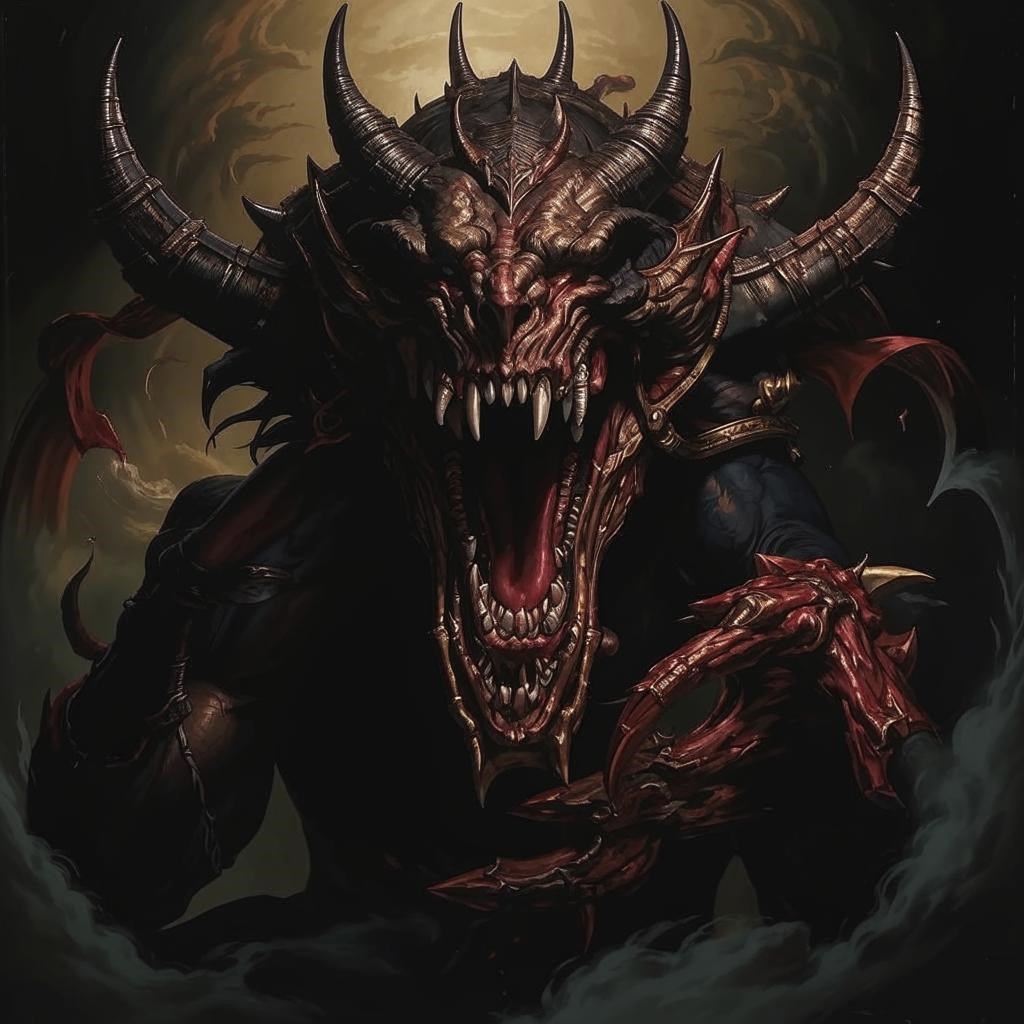
My name is Gheser.
Глава 1
I
I am lying in a cradle, and a huge raven is standing over me with its black wings spread wide and its beak agape. It is five times my size and clearly wants to eat me. There is no time to worry. I grab its beak with both hands and tear its mouth in half. I am covered in its black blood, and I have pissed myself. I pissed myself not out of fear, but simply because I still don’t know how to control myself. Yes, I am a baby. And I am only a couple of days old.
I am still holding the two halves of the huge beak in my hands — in my baby hands — when I finally hear screams and footsteps. An arrow whistles through the air, plunges into the raven’s body, and knocks us to the ground. Strong hands grab me and lift me up. The blood-soaked beak slips, but I do not let go. Someone else, trying to pull the raven away, drags it toward himself, and we all fall on top of it.
There are two voices: a male voice — the one who pulled the raven — and a female voice, the one holding me. They speak Buryat. They call me their son. I do not understand immediately; they are speaking an ancient dialect. The woman tries to persuade me to let go of the beak. I try to respond, but my tongue will not obey me. This is my mother.
Arguing with each other, my parents finally manage to separate me from the raven. “Are you crazy? Why are you pulling like that?” “It’s you who gets knocked over by a breeze, old woman!” Yes, my parents are old — clearly over forty.
After moving away from the struggle, they stare at me in silence, then at the raven’s torn beak. Suddenly, the old man drops to his knees and begins to whisper prayers, praying for me. The stunned woman comes to life. She walks past her husband into the yurt, pours water into a wooden trough, and places me inside. “Cold!” I want to scream, but all that comes from my throat is a loud squeak. Jerking my bottom, I easily tip the trough over. With a squeal, the old woman jumps away from me, her eyes bulging. “Boleob, boleob,” (“I won’t do it again, I won’t”) she whispers.
The old man crawls to the source of the noise, falls to his knees next to me, and hits his balding head several times on the mud formed by the spilled water. Swear words come back to my mind. I am covered in mud, I am cold, and these two unreasonable old people are doing nothing to at least warm the water and wash me.
II
Where am I from? That is a long story. In the twenty-first century, I was a good boxer. In the twentieth century, a thirty-year-old rebel. In the nineteenth, a Huvaraka. In the seventeenth, a Sagittarius.
I am immortal. I am reborn again and again. Of course, everyone is reborn — but only I remember all my past lives. And now, a new birth. In my previous life, I was a god. My name is Buhe Baligte, which means Mighty Lucky. I am the son of the supreme god Khurmast Tengri.
But let’s go in order. The Upper World is not calm either. It is divided into two parts: fifty-five Tengrians in the West and forty-four in the East. They live forever. Most of the time they feast and visit one another. When they grow bored, they start wars among themselves. They become so carried away that they sometimes forget their direct duty: to maintain order on Earth. And so disasters happen — floods, droughts, dzuds, taiga fires. But more on that later, if anyone is interested in celestial quarrels.
This time, the bone of contention was a worthless stretch of land between them: Segen Sebdeg. Empty. Arid. What possessed Atai Ulaan, leader of the Eastern Tengrians? Why did Khurmast Tengri, the eldest of the Western gods, become enraged? It is not for us to judge. The two leaders fought for a long time. Earthquakes shook the land, thunder roared, lightning split the sky, volcanoes erupted.
Khurmast won. He cut Atai Ulaan into pieces and cast him from the sky to the ground. A feast followed — a celebration of victory. But not for long. His older sister, Manzan Gurme, came to him with terrible news. The fragments of Atai Ulaan’s body had fallen to Earth and transformed into shomos and mangadkhai. They caused great suffering, tormenting people. And the people prayed to the gods.
At first, Khurmast himself intended to descend to Earth to restore order. Perhaps he felt guilt. But this was not fitting for a supreme god. So they sent me. I was ordered to be born into a poor, elderly, childless family. They had begged desperately for a son. They begged more than anyone, more powerfully than anyone.
III
In the evening, when they calmed down, my parents washed me and wrapped me up. And I wanted to eat like an animal — I said so in a loud voice, as babies do.
"Now, son, now, my little hero," I suddenly heard in my head. Can Mom hear me? Does she understand? And I can hear her! "When?" I tried to ask mentally. "Wait a bit, I'll handle the cattle." "No! I want it now!" "Okay."
"Old man," she said aloud to her husband, "the son is asking for food. Manage the yard yourself." My father nodded understandingly. He smiled at his wife, smiled at me, and left.
Her breasts, which were not small but full of milk, emptied quickly. Satiety blissfully spread through my body, and I fell asleep.
I woke up. It was dark. I was even hungrier. There was almost no milk left in her breasts. I bit, but the few drops that appeared only teased my appetite. What to do? It’s too early for me to eat the cold meat in the pot — I’m still young, and it threatens me with indigestion.
Bending my legs, I turned over and got on all fours. Oh, I’m not two days old anymore, but two months old! Miracles? What’s so wonderful about that? Am I a god or not? I crawled to the hearth and tasted the meat, but I had no teeth. It wasn’t worth the risk.
I had noticed sheep outside in the evening. And lambs. I crawled out. The lambs were penned separately. A dozen ewes, offering almost no resistance, fed me their milk. I fell asleep right there.
I woke up again. I wanted to eat again. More than ever. The sheep’s productivity didn't cover my needs. I got to my feet and went to the only cow. Five or six liters of milk soothed my hunger. Probably for a couple of hours. It was already getting light. No, something had to be done about this insatiable appetite.
The door of the yurt opened, and my father came out. When he saw me, he froze for a moment. "Father, it's me, your son." The old man looked inside the yurt, making sure that the other me wasn't there, then he opened the door and motioned me inside.
And then, I heard the sound of an airplane. What? There are still several thousand years before the advent of flying machines...
Глава 2
I tilted my head back and saw about a hundred flying objects. Zooming in—the gods have that option—I saw they were enormous mosquitoes, the size of three-year-old stallions.
Yes, the sholmoses of Atai Ulaan wanted to finish me off while I was still young. “Hide under the rock!” I shouted to my parents and ran toward a pine grove a couple of kilometers from the yurt.
My parents understood; they probably weren't ordinary people either. “Grab the silver whip, the one woven three times!” my mother’s voice prompted in my mind. I looked back and saw my father galloping toward me on a sheree—a small four-legged stool. He caught up and covered me with a bull hide. This enormous, specially tanned hide was no ordinary skin; it provided invisibility. The need to reach the shade of the pine forest vanished. The attacking mosquitoes lost sight of us. My father took the silver whip and lashed out at a monster that had flown within ten meters. Struck by a magical shock, the stallion-sized mosquito disintegrated into millions of tiny ones. What a scourge!
“Take this, you can do better,” my father said, handing me the three-layered whip. In my hand, the weightless whip stretched to the sky. I only had to swing it once, and hundreds of enormous mosquitoes dissolved into thin air.
Millions of tiny mosquitoes swarmed around us, but they couldn’t find us. Neither my father nor I could do anything about them en masse, and catching them one by one was beyond even the power of a god. So they continued to fly through the taiga, searching for fresh blood. How many times, in all my reincarnations, have I regretted not taking my father's special bull hide with me. We finally escaped them only after climbing a hill where a gentle breeze, the khius, blew away those flying, biting misunderstandings.
At the yurt, my mother greeted us with meat simmering in a cauldron. Driven by my insatiable appetite, I devoured an entire lamb in one sitting; my parents only got a couple of ribs each. This time, I slept soundly until nightfall.
I reached for her breast. The milk was cloying, slightly sweet. Strangely, I didn't feel the same hunger I'd felt all day. As I sucked, the sight of the white breast and the nipple in my mouth suddenly caused a rush of blood to my groin. Clearly, I wasn't five years old anymore, like when I was running from the mosquitoes. My downy hair and erection hinted that I was already fifteen. How old was I? Even though I had been born only three days ago, how old was this consciousness? Fifty, a hundred, or a thousand years old?
I remembered my second fight in the ring. I won the first one yesterday. I knew I would win from the first seconds; my opponent was frankly weak. Но здесь, в противоположном углу, стоял громила на голову выше меня. How did he even make weight? A week before the competition, I weighed 60 kg and had to drop 6 kg to get into the 54 kg category. It was tough. How did this Gulliver get into my class? “Just go forward and punch!” my coach said. And that’s what I did. I threw a one-two to the head, hitting his gloves, but it was clear he felt the blows. About ten seconds later, I broke through with my left, right to the jaw. I saw his eyes blur, his hands drop. “Right!” my corner shouted. There it was—the jaw. If I landed my right, a knockout was guaranteed. Но вместо моего удара прилетел ответ. My vision darkened. “Right!” they shouted from the other corner. My opponent didn't miss his chance. I lost that fight.
And here, no one would give me a second chance. Atai Ulaan, in all his incarnations, would try to destroy me before I destroyed him. After all, my destiny among people was to rid them of his spawn. How many were there? What forms did they take? Someone needed to tell me, but those supreme gods were stalling again. I hadn't expected my enemy to strike so soon. For now, sleep. And then—get married.
I dreamed of a sorcerer. He would come in the morning disguised as a healer. The fight would not be easy.
I woke to voices outside. “How are you? Is your wife well? Are your horses healthy? I heard you had a son! I travel through the villages healing people. I can look at your firstborn and cure him of all ailments. Present and future.” I jumped up and rushed to the door. A hunched old man stood before my parents, smiling ingratiatingly. Instead of a helpless infant, the sorcerer was taken aback by a teenager flying toward him. He barely managed to straighten up before his staff, a fiery flower blooming at its tip, flew aside. I charged him like a bull, though I was hardly stronger than a goat. Nevertheless, I knocked him down.
In mid-air, his head transformed into a bear’s, and ten-centimeter claws sprouted from his fingers. Before I even landed, I plunged my hands into his chest and ripped out his heart. His claws closed on the back of my head, tearing my scalp and pulling it down over my eyes. My head ended up in the bear’s mouth, but he didn't have time to close his jaws. I bit off his tongue and lost consciousness.
As I later learned, my parents spent another half hour fighting off boar-sized rats that kept trying to get to me as I lay in the arms of the dead bear. Exhausted—they weren't young, after all—they barely managed to pull my head out of the bear’s mouth before I choked on his blood. We came to almost simultaneously. With difficulty, they pulled my scalp back into place and secured it. “Oh, my boy,” my mother sighed, looking at my disfigured face, “who will ever marry you?” I rejoiced at the abundance of meat from the boars and the huge bear. It was a shame about the sheep and cows, though—they would soon be gone, given my appetite.
Глава 3
A kick landed squarely on my nose. I fell backward, sprawling onto my back. My legs were tied to the chair legs, my hands bound behind me to the chairback.
Lucky timing. Moments ago, I was in a humble yurt, cared for by loving parents, albeit barely alive. Now, here I am, smack dab in the middle of Russia's harsh 1990s. Hard times, indeed, but nothing compared to the era I was just cast out of—with flying horse-sized mosquitoes, pig-like rats, and shape-shifting sorcerers.
"Micha! Didn't I tell you not to hit him in the face? We've got papers to sign at the notary." "I've been wanting to mess up this punk's looks forever. Look at what he did to Marinka!" "You idiot, Micha. We'll evict him from his apartment instead. All the girls will flock to you then." "Bastard, why are you grinning?" Another kick landed in my ribs.
The situation was straightforward. These guys weren't going to kill me. Why else would they leave my face intact? I chuckled inwardly, remembering how Marinka used to squirm awkwardly whenever she tried to avoid me.
"How long did I chase her? Then you showed up, flashed a smile, and bam—she went with you!" A shot to the liver. That’s not going to help—my liver can’t handle that kind of abuse.
"You're stupid, Micha," I thought. "Even if she's trash, why grab her in public or pin her against bathroom walls? Women crave affection." Another fist slammed into my cheekbone, then again. It was normal for teenage boys in Ulan-Ude to sport broken noses and bruised faces. Black eyes fade in two weeks.
But what was happening here was serious. Three apartments were at stake. Did I know who was behind this? Or was it simply greed driving their stupidity?
Nikolaich and Vova pushed Micha out the door. "So, let's talk now?" They set the chair upright, with me still tied to it. "What's there to discuss?" I wondered aloud. "Why aren't you hiding your faces? You obviously intend to see this through." "Don't play dumb! You ripped me off!" "No, I didn't cheat you! It was a fair deal. You sold me vouchers, I bought them and paid cash on the spot." "You used those vouchers to buy an apartment! Meanwhile, what could I buy with the money you gave me? The chair you're sitting on?"
"Hold on, Nikolaich. Remember, I bought your vouchers at a price higher than the market value. Then I sold the shares and bought an apartment with the proceeds." "But you bought those shares with my vouchers!" "Wait. Think about it. You could have invested those vouchers yourself in the auctions. I advised you, didn't I? I told you how it worked." "Yeah, sort of..." "You chose a quick profit instead. You tripled your money. Tell me, what did you pay for them in Taksimo? And what price did you sell them to me for? I took the risks. I waited, I worked to find big buyers. I talked to people, explained the opportunities."
Sure, we can always talk. I wasn't planning on keeping this apartment anyway. I'll earn more elsewhere. "Earn more? You'll speculate, eh?" "Yes, I'll speculate. What's wrong with that? Но связывать меня и избивать — это неправильно, мужики!" "That was Micha. We didn't mean to hurt you." "Come on, Nikolaich, let's be reasonable." "Fine, we'll talk." "Untie me."
Vova started untying my hands. As he moved to untie my feet, I snapped my wrist and delivered a chopping blow to the base of his skull—not hard enough to break anything, but enough to drop him. Vova collapsed. Stepping free, I aimed a heel kick to Nikolaich's stomach. I saw Micha sprinting away through the doorway. Without my trusty silver whip, I had to rely on my bare hands. Time brings the right tools.
"Let's keep talking," I said to Nikolaich, who was slumped against the wall. "You know why I'm not sending you to prison? Because you're moving North to live with your sister. You'll earn Northern wages. Retire early. I'll teach you how to make real money. Speculation. Have you heard of nephrite? You'll buy more than one apartment!"
I'll keep Vova here. He'll be my driver. Micha, too—he's joining the team. I won't hold the bruises against him. Not entirely, anyway.
Глава 4
Word of the miraculous boy eventually reached Sargal Noyon, the supreme ruler of the region. I knew he was the one responsible for my parents' dire circumstances—and he was, in fact, my father's own elder brother. His lack of principles, combined with a ruthless, selfish ambition, spoke not only of cruelty but of a sharp intelligence. After all, how else does one become the wealthiest and highest-ranking official in the land?
Deciding to bring me close—aware of my divine origins and likely fearing that I might seek vengeance for my father—he sent for me. But revenge is a human preoccupation. My true calling is far greater: to rid the mortal realm of Atai Ulaan’s monstrous spawn.
I was still too weak to confront my primary enemies head-on. Strength must be gathered gradually, for the battles ahead promise to be grand. I had already repelled the initial wave of attacks, and my adversary now realized that dealing with me would be no easy feat (though I knew it to be impossible).
I needed allies. Should I grow strong, Sargal Noyon would support me, especially with his two growing sons to consider. My parents, of course, remained steadfast by my side, having already proven their loyalty and skill.
And I required a wife—a family to return to, someone to ease my spirit amidst the turmoil of the world. Moreover, significant events awaited me in different lifetimes and incarnations; I would have to exert every ounce of my will.
My appearance, however, was horrific. My nose and mouth were torn open, constantly leaking fluid, and my eyes were clouded with discharge. Thus, in Sargal’s camp, they called me Nyusata Nyuurgai—the "Snot-Covered Ugly Creature." I ignored their mocking laughter. Snotty-face? So be it.
To test my skills, I trained with Sargal's sons. My cousins, Altan Shagai and Mungen Shagai, were brilliant scholars and warriors. But against the wisdom and strength of a Son of God, their talents paled in comparison. Out of respect for them and their father, I deliberately threw our fights, shot my arrows with less accuracy, and solved their puzzles more slowly than I was able.
Everything went exactly as planned.
On the Northwestern frontier, two brides were eligible: Tumen Zhargalan ("Ten Thousand Joys"), daughter of Temeen Ulan Khan, and Urmai Goohon ("Shining Grace"), daughter of Shaazgay Bayan Khan. Both Khans announced a grand tournament for suitors.
I attended the event. Both women captured my heart instantly.
Imposing heroes, clad in sturdy armor and carrying powerful horn bows, sat astride magnificent steeds. Both women watched eagerly, anticipating a marriage to one of these dashing men. These champions excelled in archery, wrestling, and wit.
None of them, however, accounted for the presence of the "Sniveling Ugly Face."
Imagine their shock when, one by one, these titans looked skyward, finding themselves defeated by my techniques. Their arrows, which had filled the targets completely, were shattered into splinters by my precise shots. My speeches silenced the most learned among them, leaving them speechless. To cement my victory, I hurled boulders over mountain peaks and shot the tails off fleeing gophers with impossible ease.
The competitors had no choice but to acknowledge defeat. Only Khara Zutan, my paternal uncle, harbored a bitter, festering envy.
Tumen Zhargalan and Urmai Goohon were brought home to my parents. They would assist my mother by the hearth and aid my father with our rapidly expanding herd. Sargal Noyon restored his favor to his younger brother, "gifting"—or rather, returning—the livestock that was rightfully ours. The princesses, too, arrived bearing gifts, and for a moment, there was peace.
Глава 5
To prevent my wives from quarreling, I should have kept them apart, ensuring they saw as little of each other as possible. No matter how beautiful my princesses were, their jealousy inspired remarkable ingenuity. Unfortunately, I lacked the means to do so; we had only one yurt, which belonged to my parents.
I had no desire to lie with them in the guise of the "Snotty Ugly One." Yet, once married, they were prepared to fulfill their wifely duties. I did not force their affection; I didn't touch either of them. In the evenings, they would sit side by side, their radiant eyes glancing warily at each other from their corner. My parents, mindful of their royal blood, did not pressure them. Surprisingly, their shared "straw widowhood" seemed to bring them closer, and they began to handle the chores together. After all, who else did they have? I had no slaves to do the work.
Meanwhile, my constant training—the labor I chose over the dalliances and far-fetched whims of my beautiful wives—bore fruit. My body surged with power. It felt as though I could turn the earth itself upside down. Those around me could see it, and I began to gather brave men for my army. All that remained was to accumulate "material fat"—the wealth needed for war. For this, I turned to my heavenly father.
Khurmast Tengri greeted me favorably, though it was clear that the shadow of Atai Ulaan still troubled him. I received everything I requested. Khurmast did not rush me, but he sternly reminded me of my divine purpose.
And so, in the early morning, I rode up to my parents' yurt in my heavenly form. Belgen, my horse, was like a bolt of lightning; his hooves struck sparks from the earth, his eyes flashed like storm clouds, and his silver harness—crafted by the master smiths of the North—shone brighter than the sun. Behind me rode my thirty-three mighty warriors.
My parents were overcome with joy, realizing they had raised a truly extraordinary being. And my wives? They were ecstatic! Their past disappointments were forgotten in an instant. Now, they were the consorts of Abai Gesar, the hero destined to purge the land of all its sorows. It did not take long for the rest of the host to gather: three hundred commanders and their three thousand soldiers drew their blades under my command.
Глава 6
Three thousand warriors require coordination. What better way to train them than through a great hunt?
The first hunt went well; the men were strong and skilled. We drove the game into a narrowing circle, the prey growing more numerous by the minute. I stood apart on higher ground, observing the flaws in our formation. Suddenly, a roe deer broke through the line and raced away, evading pursuit. This is my prey! I thought.
I gave chase and drew my bow, but suddenly, an arrow whistled in from the opposite side, striking down a tiger. A hunter on a bay stallion galloped toward the beast, hoisted it onto his horse without breaking stride, and sped away. Who dared such insolence?
The rider was no ordinary hunter. In an instant, he became a small red dot against the green horizon. "Belgen!" I shouted to my horse. "Show him your divine speed!" Belgen accelerated, leaping from one hilltop to the next. Soon, the rider was the size of a hare; another jump, and he was as large as a wolf. A few more bounds and I would have him in my grasp. But I did not catch him. The youth leapt off a sheer cliff into the sea and vanished.
I tied Belgen to a hazel tree, propped him up with my spear, and dove into the waves. At the bottom of the sea, it was as if I were on land: the sun was shining, birds were flying, and a magnificent palace rose before me. It was the palace of the Sea King, Usa Luson. The "man" on the bay horse turned out to be his daughter, Alma Mergen. She was furious, accusing her father of deceiving her—he had promised that no horse on earth could rival her bay. She was a woman of formidable spirit!
Usa Luson consulted his magical book in surprise. It confirmed that no horse could match hers, save for the steed of the son of the Heavenly Tengri, Khurmast—with whom the Sea King had once exchanged sashes to betroth their children. The name of that groom was Buhe Beligte.
Then, I stepped forward.
My betrothed was beautiful but capricious; she did not agree to marry me immediately. After ten days, however, her gaze softened, and the shared bed brought us together. Alma Mergen seemed to submit, but not entirely. Between our restless hours of sleep, she would give me a potion to dull my memory. Even a Son of God can be captivated by a woman’s charms if she offers a magical draft. I was no longer Abai Gesar, but the obedient, weary husband of a singular and strong-willed wife. I lost track of time. Occupied with the household by day and my wife by night, I lived on, even after our daughter was born.
The heavenly gods only noticed my absence when Atai Ulaan’s creatures became active once more. They no longer heard Gesar’s thunderous voice or the rhythmic gallop of Belgen.
Khurmast sent my sisters to search for me. They found Belgen still tied to the hazel tree on the shore. Descending into the realm of Usa Luson, they found me—a man who had forgotten himself—tending to foals. Usa Luson was struck with shame and reprimanded his daughter, and at last, we all returned home.
It had been a good time: a beautiful wife, a little daughter, and weather that knew neither heat nor cold. No worries, no huge black crows, no boar-sized rats, no bear-shifting sorcerers. Was I drugged? No... I was in the 20th century, where events were unfolding that demanded my immediate involvement.
Глава 7
Vanya, a Chinese man from the Barguzin taiga, spent six months traveling south by secret paths with a knapsack full of gold sand. On the mainland, the Soviet government was already in full control. He was in his forties, and this was his third attempt to strike it rich. He was mining in secret; in the taiga, the law was the forest itself, and the prosecutor was a bear. Navigating through populated areas was a high-risk endeavor.
During his first trek fifteen years ago, he was stopped at the very first settlement. He traded a small sack of gold for a bag of bread and a supply of ammunition. He left quite happy to have encountered a wealthy villager who appreciated his goods and offered something in return, rather than killing him on the spot to take the gold for nothing. Mishukha, that very peasant, was a savvy businessman who saw further than his fellow villagers. He understood that securing a steady supply of precious goods was more important than robbing and killing a prospector only to drink away the loot, as he had heard others did.
Expanding the business and attracting other prospectors proved difficult, as they were reluctant to share their connections with competitors, yet the turnover grew regardless. Mishukha established ties with city merchants. He knew they bought his gold for a pittance, but given what it cost him, everything paid off a hundredfold. Thus, Vanya found a permanent buyer. He didn’t give away all his gold, of course—only a tenth. He traded the gold dust for food, while burying and collecting nuggets larger than cockroaches. Over five years, he gathered a substantial bag and, using a path unknown to Mishukha, headed south.
The turbulent revolutionary years passed unnoticed in the taiga. People were killing each other over incomprehensible things, acting worse than beasts. Mishukha would sometimes mention that some were for the Tsar and others against, but Vanya found it uninteresting. He knew for certain that upon returning home with a bag of gold, he would buy up the entire neighborhood and become a true Wang. He liked this Russian name, Vanya, precisely because it was phonetically identical to the Chinese title of honorable rank. To him, being "Vanya" meant being a king.
It is possible to reach Manchuria itself through the taiga, and Vanya nearly succeeded. He chose his paths meticulously, observing a settlement for weeks before selecting a person to contact for a supply of provisions that one man could carry. Everything was going well until he stumbled south of the railroad. The lad he chose turned out to be a Komsomol member. The entire local cell ganged up on Vanya, tied him up, and turned him over to the authorities. There was a trial. Prison. The camps. Vanya lost track of the years.
In the camps, a respected thief learned of his adventures and persuaded him to escape. Five of them fled together. Vanya insisted on heading North from the railroad; he remembered the taiga paths and the people he had dealt with profitably. He told no one about his buried gold or the rifle and ammunition. Most of his old acquaintances in the villages were still alive and living well, thanks to the gold Vanya had left them years ago. Some had even risen to power. They gladly supplied the escapees with food, hoping Vanya would return to trade gold with them once more.
Thus, all five reached Baunt. With five pairs of hands, the work moved quickly. However, to avoid distracting themselves with hunting for food, they had to eat three of their companions, one by one. The urkas are simple men.. Vanya knew he was in no danger of becoming food; without him, no one would make it out of the taiga alive. The deadly disputes remained among the thieves. That same winter, they began their journey back. At one of the campsites, just as they were leaving the northern taiga, Vanya cold-bloodedly killed his last companion. It was freezing, and fresh meat would stay good for a month. By the time he reached his hidden cache, Vanya was still full of strength, sustained by the fresh meat.
I learned about the adventures of Vanya the Chinese man from Orion, a participant in our uprising against collectivization. At his birth, the Buryat midwife who delivered him named him Arya, for he was so pale, wide-eyed, and restless. Later, during his baptism, the Orthodox priest, without a second thought, recorded his name as Orion. He was a simple, dekulakized peasant whose goal in joining the rebellion was to cross the border—but not before taking revenge on the GPU agents, Komsomol members, and communards for the humiliations he had suffered.
Глава 8
“So why are you telling me about this Chinese man?”
“Look, Batuha,” Orion replied. “I want to clear out, head to China. Shall we go together?”
“You think your Vanya is waiting for you there?”
“There is no Vanya. He’s dead.”
“You’ve lost your mind!” I still hadn't caught his drift. “And what are we supposed to do there with our bare asses?”
“Gold!”
“What are you saying? You killed this Vanya? Took the gold for yourself?” Orion silently turned away. “And now you want me to come along just so you can eat me on the way?”
“I didn't kill him. He barely made it to our place. He gave the gold to my father himself. He asked that if my father ever reached China, he should help his wife and son.”
I didn't exactly believe him. His father had arrived as a pauper. Later, he built a large inn at the post station, and then something in the city. There were whispers that some travelers tended to go missing after spending a night at his place.
The rebel organization began to form last autumn. Its leadership consisted of experienced individuals who had fought against the Semyonovites ten years prior; these former partisans formed the group's core. Dissatisfaction with Bolshevik rule had been brewing for a long time. The Soviet government had already gained significant strength and had embarked on the country's industrialization. These trends eventually reached our region. To accelerate the construction of an industrial economy, the country required both funds and labor, both of which could only be found in the countryside. The peasants who had grown wealthier were not skilled at, nor particularly eager to, work for the market: the meager Transbaikal soil and harsh weather were ill-suited for commercial agriculture. While there were some surpluses, the state sought to seize them at fixed prices, and the money received for agricultural goods did not cover production costs. Seeders, tractors, and other machinery cost enormous amounts of money, and only large farms could afford to purchase them. Therefore, collective farms (kolkhozes) began to be organized. Powerful ideological and forceful pressure on the peasants intensified, and it was this that sparked a storm of discontent. The struggle against the kulaks—against prosperous households—and their dekulakization led to armed resistance.
Of course, I could not alter the course of history itself. Yet, armed with knowledge of both the future and the past, I was bound to do something to prevent the impending slaughter. Possessing certain, nearly magical capabilities, I had to take action in this small corner of the world to improve the well-being of both myself and the people around me.
The uprising was scheduled for early March 1930. It was doomed; that much was clear from the start. Furthermore, the rebel organization had been under the thumb of the GPU from the very beginning. They knew everything—except for the Buryat uluses that planned to join the revolt. Connections with the Semyonovite underground had been established, rifles and ammunition had been smuggled across the border, and some weapons had been kept hidden since the war. But partisan detachments stood no chance against regular Red Army units armed with machine guns and artillery. The rebel leaders insisted that the uprising would be widespread, claiming that city dwellers and even the military would take part. I knew this was not true.
The whole thing felt like a massive provocation. Perhaps some foreign intelligence center was justifying its funding, hoping for international resonance. But according to my observations, these future provocations were the result of operational work by law enforcement forces. Their goal was to identify hidden and potential supporters of armed struggle against Bolshevism in the event of a direct Japanese intervention in the Far East, which was anticipated for 1933-34.
It was necessary to stop the uprising.
And what to do next? I’ll figure that out later.
Глава 9
The rebel committee was in session in a hut thick with tobacco smoke and the stench of moonshine. My goal was to delay the uprising by at least a month. At the beginning of March, Stalin’s article "Dizzy with Success" was due to be published, in which he criticized the methods used to force the people into collective farms. This was precisely why I had traveled with the Buryat delegation to the meeting with our neighbors in the Russian village. My second task was to try and identify the provocateur planted by the GPU.
The communards—especially the Komsomol members, fifteen-to-seventeen-year-old upstarts—were committing all sorts of outrages against those who opposed collectivization. They forcibly removed household goods and led cows and pigs from the farmyards to the collective barn, which had been seized from the wealthiest villager. That man had been dekulakized and deported somewhere along with his family. There were rumors of beatings and even rapes, though I found the latter hard to believe. In short, they had tasted power in the village and were aggressively fulfilling the collectivization plan. This article was supposed to dampen their fervor.
How could I possibly stop these embittered, bearded men? Even my "urban Russian" speech drew suspicion; spy mania flourished here as well. It was a miracle I avoided a swift execution. The people were so pushed to the brink that killing me would be like swatting a mosquito. They were former Red partisans, after all—during the Civil War, they had learned to shoot without a second thought, or else be shot themselves.
"I was a farmhand until 1914," one man began. "In 1914, I started farming for myself, but I lived in deep poverty and only managed to get back on my feet and improve my life about three years ago. Last year, I sowed three and a half dessiatines, one of which died on the vine. From the rest, I harvested 195 poods of grain. According to the tax assessment, I paid 12 rubles and 30 kopecks, which I consider a fair and lawful tax. But during the grain procurements, I was ordered to surrender 150 poods of surplus to the state fund. I gave 153 poods. A short while later, I was told to give 21 poods to the seed fund; I gave that too. Then they demanded another 30 poods. I swept my granary clean and only scraped together 21 poods, which I surrendered. I was left with about 10 poods of flour; not a single pound of grain remained. Despite this, for failing to deliver those final 9 poods, they inventoried and seized all my property: my horse, my cart, my light carriage, and my sewing machine. I have been turned back into a farmhand. And I am not the only one. My brother, for example, works in logging. They tried to force him to surrender 7 poods of grain. Where would he get grain? They took his only cart."
And that was only the most civil speech at the meeting.
In such an environment, finding a provocateur proved impossible.
There was only one thread left. Kravchenko. This khokhol was supposed to appear in a year's time. He would present himself as an emissary from Moscow, sent to us by the anti-Bolshevik underground—some political parties or other—to organize an armed uprising. It was a clumsy fabrication; those parties had been dreamed up in the offices of the GPU.
Глава 10
“Listen, brother,” I said. My elder brother had been dekulakized and was a fervent supporter of the uprising. “This whole affair is doomed to fail! A detachment of border guards is marching from Kyakhta, armed with cannons and machine guns.”
“The Cossacks in Kyakhta are supposed to support us,” he shot back.
“What Cossacks? The real Cossacks crossed the border ten years ago. All that’s left is the rabble, and they’re all Red now.”
“We are on our own land! Death will await them behind every tree, in every ravine!”
“Our ‘warriors’ are only brave in front of their wives,” I countered. “Remember—did anyone say a word when they led your livestock out of the yard? And those who came for the cattle were just fifteen-year-old boys. People just stood there and watched; some were even gloating.”
“They had a militiaman with a Nagant revolver with them.”
“We’ll take it all back. I’ll get everything back for you.”
“Will you give me back my fifteen calves? They stole fifty of my cows! They haven’t touched you yet because you’re acquainted with People's Commissar Don. But they’ll take everything from you too, once they’ve eaten through all the collective farm’s livestock. Even today, they’re slaughtering a head of cattle every single day. They don’t want to work, but they want to eat every day!”
“Orion has gold,” I said, my final argument. For a fleeting second, my brother’s eyes lit up, but they extinguished just as quickly.
“Where would he get gold? And even if he has it, what good is it? If we buy cows, they’ll just seize them again. With gold, the only option is to flee across the border. And even then, what do we do with it there? How do we sell it? Do you even know? If I run to China, what do I do with my wife and children? Abandon everything? No, brother. This government has to be overthrown.”
Our talk today went nowhere. To be honest, even I didn’t know what to do yet.
Meanwhile, a new directive on dekulakization arrived. Those who had seen it said my name was on the list. I had failed to convince any of the rebels to back down.
All that remained was to somehow protect the Komsomol boys from slaughter. They were destined to be the first victims of the uprising. But how could I do this without undermining my own comrades? I would have to wait for the moment the revolt began to argue against excessive measures and executions.
There is one way out: everyone must join the collective farm. We must develop it intelligently, the way strong, prosperous households know how—not like these shiftless, horseless loafers who were the first to rush into the kolkhoz. My mind is made up. This is exactly what I will do.
Глава 11
The Tengri dwell in the heavens, governing the fates of the human world. Then there are the gods of the Underworld, where the souls of men periodically descend.
But there are also the shamans, who worship the spirits of the land: the mountains, the rivers... These spirits are not gods. They inhabit a world parallel to that of the gods, weaving their own magic, sometimes in direct defiance of the divine will. They are not subject to the gods' authority. These worlds intersect, and there are clashes when the interests of one collide with the other.
Once, there lived Booluur. A powerful shaman. The strongest of them all. While dwelling in the heavens, I knew nothing of him. And then, I encountered him.
Poor, helpless humans—they decide nothing, they master nothing: neither time, nor space, nor destiny. Are humans bold and decisive only because they do not know their own fate? What can they truly achieve? Only procreation. Within their meager lifespan, none of them can solve even their own problems, let alone influence the development of the universe.
Yet, here is Booluur, attempting to sway the fates of the world against the will of the gods. What drives him? Why does he interfere in the realm of the heavens? Not even the gods know the answer.
Booluur has decided to resurrect Atai Ulaan. But is such a thing even possible?
From time to time, such men appear: Siddhartha Gautama, Confucius, Lao Tzu, Aristotle, Jesus, Muhammad—those who are dissatisfied with the world and the deeds of the gods, attempting to create their own pantheon. Then there are others: Alexander the Great, Genghis Khan, Montezuma, Napoleon—who, with the help of the gods, strive to build a world that is just by their own definition.
So, Booluur prepares to resurrect Atai Ulaan? Well, perhaps that is for the best; I will not have to hunt down every scattered piece of his severed body. Will I prevail? The Western Tengri have promised their aid. I shall put both my own strength and the power of the heavenly hosts to the test.
I sat by the threshold of Tumen Zhargalan’s palace, my mind drifting after our fiery encounter. The memory of my first wife’s cries, the sweetness of her thighs, and her body arching in pure abandon lingered in my senses. Desire stirred within me once more. I peered behind the curtain—she was fast asleep, breathing softly. It felt wrong to wake her. Very well, then; I would go to the other. In the heart of the ulus stood the house of my third wife, Alma Mergen. Was she still awake, I wondered?
Глава 12
I finally fell asleep in the house of Urmai Goohon. When you take three wives, you must work for three.
"The dogs are barking," Urmai Goohon whispered, waking me in the middle of the night. "Has some ill-willed soul slipped into the ulus?"
I stepped outside, only to find that the weapons I had left by the threshold were broken. My warriors, my sentries, were all fast asleep. "Belgen!" I called out. My horse galloped to my side. "I hear it too," he said. "I saw a shadow creeping through the dark. Mount up; we shall catch this intruder."
"Khara Zutan! Oh, Uncle!" I muttered as we cornered him. I knew he envied me, but I had not expected him to turn traitor. Khara Zutan raised his head, his eyes clouded, held fast under a spell. I reached into my pouch and drew out sand from Olkhon—the kind that breaks any enchantment—and cast a handful at him.
Khara Zutan came to his senses instantly. He looked around and collapsed to his knees.
"Hurry, Gesar!" he cried. "Arkhan Shutkher is in the ulus—the one born from the head of Atai Ulaan!"
"We have time," I replied. "Speak."
"It’s a long story. It was I who broke your weapons. It was I who drugged your warriors with a sleeping potion. Arkhan Shutkher cast a spell over me; he enchanted my mind."
"He is nowhere to be seen yet. Keep talking," I said. But no sooner had the words left my lips than a terrifying roar erupted from the edge of the ulus.
"Come to me, Gesar! I will tear you to pieces! I know your warriors sleep! I know you are left without a blade! We shall fight with our bare hands!"
Without a single command, Belgen lunged forward, galloping toward the sound.
Arkhan Shutkher stood there, his maw agape, revealing fangs as large as knives and claws like those of a bear. I had fought a bear before; I would not repeat my mistakes. The key was to stay clear of his swiping paws and snapping jaws—and to move faster. I waved Belgen away and waited. Arkhan roared and lunged at me. I stepped aside, tripping him as he passed. But instead of sprawling flat, he tucked into a roll and sprang back to his feet.
No, this was no bear. This was a lynx! And a lynx must be fought differently. They are swift and agile, but they lack endurance. Several times I managed to dodge his flashing claws, landing glancing blows with my fists and heels against his ribs. I noticed his leaps were growing heavier, while my own reactions only sharpened.
I found my opening and seized him from behind, my arms locked under his armpits and my legs hooked around his thighs. My teeth sank deep into the scruff of his neck. He was trapped. His limbs flailed in the air, his head twisted, and his jaws snapped, but he could not reach me. I waited until his strength withered, then hurled him among the boulders. I struck his head with a heavy stone. His brains scattered, and blood surged forth. He went still.
Глава 13
Khara Zutan led his cattle to the watering hole, right across the lake from my palaces. Seething with resentment toward me, he tore a birch tree out by its roots. In a fit of helpless rage, he trampled the roots and the fallen leaves. Suddenly, from beneath the upturned earth, the head of a demon appeared.
"Who are you, little man? Why do you break trees without cause? For this, I shall punish you!"
"You could kill me, demon, and doubtless you would win," Khara Zutan stammered in fear. "But my nephew, Gesar, will take his revenge on you. Look—there are his palaces. He is near."
"Yes, your nephew is strong; I have heard of him," the demon mused. "But are you not Khara Zutan? Is it not your brides that Gesar took for himself?"
"It is I," he replied, his jealousy flaring up once more, magnified by the demon’s dark magic.
"I shall rid you of him," the demon promised. "I will return Tumen Zhargalan to you, and Urmai Goohon I shall take for myself. But he is well-armed; everyone knows of his silver whip, woven in three layers. If you strip him of his weapons and lull his warriors to sleep, I will be able to defeat him."
And so, Khara Zutan was deceived and enchanted. As for the demon, he was none other than Arkhan Shutkher, the manifestation of Atai Ulaan’s severed head.
Once again, the supreme gods had slept through the threat—or perhaps they had simply drunk it away.
Khurmasta refused to accept my grievance:
"What is this, Gesar? We eliminated that threat. And without your help, I might add." He then went on to recount another war between heaven and earth. The head of Atai Ulaanhad not fallen to the ground but remained suspended between the sky and the earth, transforming into Arkhan Shutkher, who flew about causing misery to mankind. He practiced his malice in secret until Booluur appeared—a mortal shaman who intended to resurrect Atai Ulaan.
Why did the shaman feel the need to do this? It was because the spawn of the Eastern Tengri's leader had become far too pestilent for the people to bear. The earthly shamans found it increasingly difficult to fight these disasters, so Booluur resolved to send Atai Ulaan back to the heavens where he belonged. Once he was gone, the shamans could handle the earthly troubles on their own. Arkhan Shutkher liked the idea and sent out a call to all of Atai Ulaan’s spawn. They all gathered, yet Booluur’s magic failed him. He performed his rituals for a day, then a night, then a second day and a third. Nothing worked. The enchantments of the Tengri were too potent for a mortal shaman to overcome.
In desperation, Booluur decided to appeal to the Eastern Tengri themselves, for Atai Ulaan had once been their leader. The Eastern Tengri met and argued. Some said they should bring back their leader; others refused to help a mortal shaman, claiming that these were earthly problems for humans to solve themselves. Secretly, the Easternmost Tengri whispered to Booluur that Atai Ulaan’s soul was imprisoned in a jar belonging to Esege Malaan, who kept the vessel sealed with his own finger. Without that soul, Atai Ulaan could never be reassembled.
So, Booluur transformed himself into a bumblebee and flew toward Esege Malaan.
Глава 14
The Western Tengri learned of the gathering of Atai Ulaan’s spawn. They came flying, crawling, and swimming from every corner of the world. They were plotting something foul; there was no doubt about it. Khurmasta sent two of his Tengri to Earth to scout the land. They discovered the truth: the monsters intended to resurrect Atai Ulaan, and Arkhan Shutkher was leading them. And who else could it be? He was the head, after all.
Meanwhile, Booluur reached Esege Malaan and bit him hard on the cheek. Esege Malaan clutched his face in pain, and in that moment of distraction, the soul of Atai Ulaan escaped from the jar.
When Khurmasta’s messengers learned of this, they resolved to destroy Arkhan Shutkher immediately, knowing that without the head, Atai Ulaan would be useless. But Arkhan was no fool; he fled and hid behind the Sun and the Moon. The Tengri could not reach him there.
"Why have you hidden Arkhan, that black devil, behind your backs?" the messengers demanded of the celestial bodies. "Why have you shielded him with your golden spines? Why have you covered him with your tender breasts? Did you do this out of the kindness of your hearts, or does the demon Arkhan strike fear into you? Or are you so bold that you wish to become our enemies?"
The children of the Sun and the Moon heard these words and were outraged.
"Who is this so insolent?" they cried. "Show yourself and fight!"
The Tengri were skilled diplomats; they managed to persuade the Sun-faced one, and even the Moon-faced one wavered, though he eventually decided to hear the other side. One night, the Son of the Moon and Arkhan sat down together. The demon, of course, was silver-tongued and began to sway the Moon-faced one; after all, they were kindred by their very nature.
Seeing this, the Tengri did not wait. They loosed two arrows at the pair. One arrow struck the ground between the legs of the Son of the Moon—for they could not have killed him—while the second pierced the demon. Arkhan Shutkher fell to the earth with the arrow in him, plunging into a lake. Believing him dead, the Tengri returned to Khurmasta and reported their success.
But Arkhan Shutkher did not die. He lay hidden beneath the lake's shore, where he remained until Khara Zutan disturbed him.
Глава 15
My country, the land of the Singing Lark, flourishes. The horses are well-fed, the livestock is fertile, and the earth is bountiful. The people rejoice in the sun and the rain, the frost and the spring. My warriors train, guarding the peace of a growing population. Мои жены цветут. My uncles have accepted my leadership and are growing wealthy. What more could a Khan desire? Yet I know that not all the world's evils have been vanquished. It is simply too early for me. My wings are not yet strong enough for a distant flight; my bones have not yet hardened like iron; my gaze cannot yet pierce through mountains.
A messenger arrived from a far-off land. Gal Nurman, born from the cervical vertebra of Atai Ulaan, is ravaging the country of Ganga. I had already been warned by the heavens about him; I was informed of his power. The Tengri strictly forbade me from engaging Gal Nurman in battle, for he is twice as strong as I am—I would not prevail. I had to ask the envoy from Ganga to wait a while, perhaps ten years, until I had gathered sufficient strength.
But my bogatyrs and commanders gathered in a crowd and entered the palace. "How can this be?" they demanded. "Khurmasta Tengri holds them under his protection—how can we refuse them aid after that?" My uncle, Sargal Noyon, echoed their sentiments.
"Eh, it's too early," I thought. "I am too weak to face him." But I had to go; I could not lose the respect of my own army, and my uncle’s interference left me no choice. The country of Ganga is far away; perhaps I will find my strength along the road. It is decided. We march.
We traveled for a long time. At night, we ascended the mountain ridge overlooking the country of Ganga. Before my eyes, the campfires were as numerous as the stars in the sky. By daybreak, we saw that the entire steppe was blanketed in yurts—nothing like our own land. The livestock wandered like ants; the people scurried like midges. There was not a single vacant spot along the riverbanks. It was a vast and populous country with a massive army. My warriors finally saw that I had been right: to descend into the valley for a pitched battle would mean losing this war.
We had to lure the enemy into the ravines, into the mountains. Here, the odds would even out a little.
So, we held our ground up high. We needed to bait them, and besides, our provisions were running thin. I sent my warriors on a raid to seize some of their cattle.
It wasn't long before Gal Nurman himself paid us a visit. He did not act defiantly, but he was composed. It was clear he knew the balance of power. Why hadn't he attacked at once? Since the guest arrived in peace, I was obliged to negotiate. Gal Nurman was courteous. One might never guess that he was the same being who had doomed this country to death—not the one bringing plague and misery, as the envoy had so colorfully described. Over a meal of their own meat, washed down with kumis from their own horses, we held a leisurely conversation.
"Why should we fight?" he asked. "Your lands lie far beyond these mountains, and I have plenty of work here. I never intended to cross the ridge into lands where yurts are a day’s ride apart. Look at this place—the hovels are huddle so close that two riders cannot pass each other. Why have you come to make war? Tell me what you want; perhaps I will give it all to you without a fight."
I might have believed the enemy leader, were it not for the fact that I knew his nature: he was a spawn of Atai Ulaan himself. And their kind cannot exist without bringing harm to mankind.
"Very well," I thought. "If a full-scale war is to be avoided, we shall arrange duels between our champions." It was better than a senseless bath of blood.
The fighters stepped forth to wrestle. My bogatyrs were bold and well-trained, and Gal Nurman’s warriors were brave and fierce; they fought as equals, man to man. Yet the enemy’s host was twice as large. Someone’s nerves snapped, and the sabers began to flash. My warrior struck off his opponent’s head, rode back, and flung it at Gal Nurman’s feet. Gal Nurman flew into a rage, and I made little effort to appease him—I would never hand my own man over to his judgment. He lunged at me. My foe was powerful; I held my ground, but the strength was not on my side.
Meanwhile, in the heavens, two children playing by chance happened to look down at the earth and reported what they saw to Khurmasta. My heavenly father asked Manzan Gurme for an emerald the size of a horse’s head—a stone capable of shattering any obstacle. He gave it to my brother, Zasa Mergen, and sent him to earth to aid me.
By then, Gal Nurman had already driven me into the ground—first to my knees, then to my waist, and finally to my neck. Zasa Mergen saw this, and since he could not gallop to me in time, he hurled the emerald straight from the heavens. By my great fortune, the stone struck Gal Nurman square in the third eye upon his forehead, and he dropped dead. Seeing the death of their leader, his troops—who had seemed on the verge of victory—ceased their fighting at once.
Глава 16
Gal Nurman had dwelt in a magnificent palace, not in the barren fields where one might expect a brigand to live. And in that palace lived his concubine, Galdai Goohon, like a queen. The palace was beautiful, well-kept, and ornate. Yet the fairest thing of all was its mistress, who greeted us graciously, as if she had been waiting. She was as beautiful as the sun at its zenith, as a swan upon the glassy sea, as a lone flower in the dark depths of the taiga. My warriors were enchanted to a man—the old and the young, the single and the married alike. Even my brother, Zasa Mergen, puffed out his chest, ready to carry this devil’s wife off to his own yurt in the heavens.
But she knew how to strike at the mind! First, I felt a sense of universal sorrow. A loneliness so profound I wanted to sob for my mother. And where was I? Surrounded by a crowd of joyfully excited men. When I entered and saw her, Galdai Goohon merely cast a lingering, absent-minded glance over me. What was this? Love at first sight? I felt a sudden urge to abandon everything and fling it at her feet: all my treasures, my Homeland, my mother…
Had I not been the son of a god, had I not been the husband of a goddess, I would have lain at the feet of this beauty like a love-struck fool, calling it supreme happiness, the ultimate bliss. But my warriors, though they were great bogatyrs, were unversed in the guile of women and vulnerable to sorcerous suggestions. They would have slaughtered each other over this witch.
I seized my saber and hacked her in two.
“What have you done?” Zasa Mergen burst in, his voice trembling with rage. “Why did you kill her? I would have defeated your bogatyrs in fair combat, and Galdai Goohonwould have been mine! You are no brother of mine from this day forth; I shall aid you no longer! If not for me, you would be lying hacked to pieces beneath the earth right now!”
Then, a thin shriek pierced the air. From the severed womb, a six-month-old unborn fetus tumbled out, hissing through its teeth:
“I did not have time to be born. You freed me from the womb too soon—I pity myself. You hacked a beautiful woman in two—I pity my mother. You killed Gal Nurman before his time—I pity my father. Had I been born when I was meant to be, I would have hunted you down like a gray hare. I would have crushed you in a single fist with the sheer excess of my strength. That is why I regret my mother did not carry me to term. But do not rejoice too soon; I will grow nonetheless, and I will have my revenge.”
“Perhaps you were right after all, brother,” Zasa Mergen muttered, finally awakening from the enchantment. “Had you waited to gather your strength as fate decreed, this offspring of Gal Nurman would have brought great calamities upon the earth.”
He drew his saber and struck the devilish spawn. The blade shattered into splinters. He lunged with a spear, but the spearhead twisted like wax. My bogatyrs, too, shook off the witch's spell and joined in, trying to finish off the unborn devil. It was in vain. The creature only hissed, threatening to slaughter them all once it had grown.
We were forced to summon the Heavenly Smiths. While they stoked the forge and readied the bellows, they heated the demon-child until it was white-hot, hammering it down until it was the size of a grain of sand. To the very last, it continued to hiss its threats. Then, with one final whispered curse, it dissolved into nothingness.
Глава 17
We returned home only to be met by my uncle, Sargal Noyon, with grim news: Orgoli, a colossal dragon that devours everything in its path, had appeared on the borders of his domain. The taiga, with its ancient trees that Uncle Sargal guarded so carefully for the construction of ships to trade with Japan, was being swallowed by Orgoli along with all its inhabitants. The frontier settlements had already fallen under attack. My uncle did not rush me, seeing that we had just returned from a long and arduous journey. Orgoli, learning of my long absence, had decided to fulfill Atai Ulaan’s will: to avenge Gal Nurman—and especially his unborn son—by laying waste to my country. Orgoli had manifested from Atai Ulaan’s right arm, and he grew stronger by the day, swelling in size. We had to hurry.
We prepared quickly; not a single one of my bogatyrs refused to go, and both of my uncles joined the host.
My most capricious wife, Alma Mergen, was particularly meticulous in preparing me for the road, which somewhat puzzled me. There was something in her eyes—something she knew or suspected, yet she did not dare to voice it. I told myself: I will settle this when I return.
The journey was short. The taiga began immediately beyond Sargal Noyon’s lands, but it was unrecognizable. The grass had withered, the trees had dried up, and the streams had dwindled to nothing; not a single forest beast was in sight.
Suddenly, I heard something. I sharpened my senses, focusing my sight and hearing. Dust was billowing in the distance, and through the haze, a struggle emerged—a chaotic tangle of massive, serpent-like bodies. It was hard to see clearly through the grit. Warning my uncles and bogatyrs to stay back, I urged Belgen to full speed. As we galloped closer, I saw a great yellow-sided serpent locked in combat with the dragon. The serpent had coiled thrice around the dragon’s neck, its fangs sunk deep into the beast's right eye. The air around them began to howl, a vortex whipping up trees and boulders. A whirlwind swallowed them both. I caught only a final glimpse: the dragon seized the serpent with its taloned claws and tore its body into small pieces.
Who was this hero who had stood in Orgoli’s path? Who was it that refused to let our land be destroyed before my return? I remembered the downcast gaze of my troublesome Alma Mergen, and the rumors that before me, she had a suitor among the Western Tengri. When I return, we shall give this hero his due for all his deeds.
Then the whirlwind seized me along with my horse, and I flew straight into the dragon's maw. I managed to thrust my spear into the root of its tongue, bracing it firmly against the roof of its mouth.
My warriors galloped up. Some let fly their arrows, others unsheathed their swords. Sargal Noyon took a running leap and sprang onto the dragon’s back. Only Khara Zutanraised a panic: “The dragon has swallowed Gesar! We can’t win without him! We must run while we still can!” He wheeled his horse and fled, three others following his lead. “Stay!” Sargal shouted from above. “We came with Gesar, and we shall die with Gesar!”
“Careful with that sword, Uncle! Don’t go stabbing me by mistake!” I shouted from deep within the beast. “And you boys, watch your aim! Your arrows are piercing right through—you'll skewer me too! I’ve nearly reached the dragon’s heart... I'm closing in on its soul!”
In truth, I was in no mood for joking. It was dark, cramped, and slick. The dragon’s internal muscles seemed to have a life of their own, fighting against me. That was when my silver whip proved its worth; it glowed in the darkness, lashing out like a high-pressure hose to clear my path. Finally, I reached the chest. His heart had to be here somewhere. But was the soul there too? I hacked into the heart. Luck was on my side—his anatomy was much like a man’s. With that, the beast drew its last breath. And with its final exhale, I was launched out of him like a cork from a bottle of champagne.
Khara Zutan eventually returned, unable to look anyone in the eye for shame. To distract him and let him atone for his cowardice, I ordered him to flay the dragon and butcher the carcass, distributing the meat to the people who had suffered from its raids. He threw himself into the task with zeal, joined by the three cowards who had followed him. To each his own; not everyone is meant to be a hero. He did the job well—flayed it, cut it up, and handed it out, making sure not to cheat himself, of course. Truth be told, they forgot about me in the process, but I didn't care. Another thought was giving me no peace. I decided then to pay a visit to my father-in-law, Usa Luson
Глава 18
I told him of the battle with Orgoli, and of the yellow-bodied serpent who had fought and perished. Usa Luson expressed his wonder, yet he revealed nothing of the unknown hero. Мои намеки о Алма Мэргэн остались без ответа. It was only natural: what father would speak to his daughter’s detriment? He merely made a passing mention of the four hidden deceits, which could be turned to one's advantage with the aid of a golden staff. This staff he gave to me as a parting gift.
I did not stay the night; I made ready for home. Stepping out of the palace, I soon found myself beneath a massive weight of water. The last time I had dwelt here, lost in my long amnesia, it had been different—everything then was as it is on dry land: the sun shone, birds flew, and livestock grazed.
The depths were vast now; the sun was invisible, with only a faint glimmer reflecting from far above. Yet I did not get wet; I was encased in an air bubble. Moving forward and to the sides, I realized the sphere followed me. When I tried to jump, having no solid ground beneath my feet, I found myself back on the seafloor. I could not leap out of it to swim to the surface. I could not exactly sink my teeth into the air to climb. Only one way remained: to walk toward the shore along the bottom.
I walked until I grew weary. By my senses, night had already fallen. What can one do when there is nothing to be done? Sleep. To be honest, the silence and the still waters beyond the walls of my bubble pleased me. Peace—that was what I had been lacking of late. Thoughts of my wives, my parents, my warriors, and other people did not trouble me for now. Everything was well-ordered; they could manage perfectly well without me. I found a reasonably level spot and lay down to sleep.
“Human!” Someone was trying to wake me. “Human!”
I woke with difficulty, not immediately grasping where I was. I felt comfortable, as if I had already died and nothing could trouble me again.
“Human, you have been asleep for half a day. Wake up.” The voice was unfamiliar. It spoke like a man, yet knowing my location, believing in its human nature seemed impossible.
“Who are you?” I was finally awake. Who could speak a human tongue at such depths? I understood the languages of fish and sea beasts to some extent, but this voice was different.
“And who are you?”
“I am Gesar—son of the heavenly dwellers. Presently, I inhabit the body of a long-dweller of the Earth.”
“Oh, so you realized at once that we are not of this Earth?” The statement surprised me. I had simply meant a resident of the surface, a human.
“Yes,” I replied. What else was there to say?
“Remarkable! That will make things much simpler.”
“Why did you wake me? I am resting from the affairs of the world.” I felt no immediate threat, yet my experience taught me to remain on guard, even among the denizens of heaven. I slowly began to gather my inner energy. Just in case.
“Do not worry, Son of Heaven. We will not harm you.”
“Then why did you wake me?” Could they be aliens? the thought flashed through my mind.
“And here we thought you understood immediately,” the echo replied with a hint of disappointment. Yes, the voice was like an echo. “And we like your comparison.” It was as if the voice smiled. They can hear my thoughts!
“Yes, Gesar.” Now I understood why the voice sounded like an echo—I wasn't hearing it with my ears, but inside my head. “Of course. How else could we speak with you under the water?”
“Fine! So, why did you wake me?”
“We have been on Earth for a long time. I have never seen such a phenomenon, and I grew curious. I waited a long while for you to wake. I thought you had fallen into a lethargy. So, I roused you.”
“So you woke me out of mere boredom? Very well, let it be. But why are you in the water?”
“Our planet is composed entirely of water; that is why we live in the water here on Earth as well. Furthermore, it is safer here; no humans dwell in the water, save for those subjects of Usa Luson. And even they are not truly in the water. According to the Intergalactic Code, we do not initiate contact with underdeveloped civilizations.”
“Underdeveloped? Us?” The words escaped me. After all, I had lived in another time, where space had long been charted and settled. But before I spoke, I managed to place a barrier over my mind to block their perception of my thoughts.
Глава 19
“You can do that too?” the voice asked.
“Hide my thoughts? We are the Tengri, after all!”
“Remarkable. I have been watching you for a long time, since your very birth into this body. I saw you tear the beak of the great raven and how you killed the bear. I am drawn to your pure soul and clear intentions. Such things are found in neither humans, nor beasts, nor the heavenly dwellers of this planet. I sense millions of entities within you.”
“We are the Tengri,” I repeated.
“That is what I do not understand. It exists nowhere else in the Universe. Do you exist across different worlds?”
“The world is one,” I replied. “We, the Tengri, master both time and space. We live in this world, which we once believed to be the only one.”
“Oh, the Universe is infinite! It contains countless worlds. But how do you manage so many entities within a single consciousness?”
“It is quite simple. While I inhabit this body, I use the possibilities afforded by this specific time and space.”
“Do you ever leave this body? And what becomes of it then?”
“I am always with it. Only in critical moments do I activate special capabilities. The rest of the time, this body lives on its own, without supernatural powers.”
“Amazing! Tell me…”
“Wait,” I interrupted. “You say you watch me constantly. Can you answer one question?”
“Of course.”
“Did you see my last battle?”
“I did.”
“Then perhaps you know who that yellow-bodied serpent was—the one who held back Orgoli until my arrival?”
“That was I.”
“But he perished. I saw it with my own eyes.”
“We cannot die. Had you not galloped to the rescue, I would have revived and returned to the fray. I was merely waiting for you. That dragon was particularly hideous, especially in its desires. That is why I had to intervene and stop it before you arrived.”
“I see. And our heavenly dwellers, once again, let everything take its course.”
“Yes, I waited for their intervention as well. It never came. But I could not stand aside, seeing what he was doing. Regardless, all the miracles will be credited to you. I simply helped a little.”
“So that’s how it is. And what does Alma Mergen have to do with this?”
“You know of that as well?”
“I do.”
“Well, she is not truly involved. I have known her since she was a child. She grew up here, with Usa Luson, in the sea. Sometimes we talk. In fact, we are always in contact.”
“Did she know you would go before us?”
“Yes. And she knows that we are forbidden from appearing before either humans or the Tengri.”
“I assume I am not to tell anyone about you?”
“Correct.”
“Fine. I need to reflect on this. But first, I need to sleep. If I understand correctly, you can pull this bubble onto dry land? Can you do that once I have finally slept my fill?”
“Of course,” the voice said. And I fell asleep once more.
Глава 20
I woke, stretched, and looked around. Belgen stood nearby, fully saddled.
“You have slept long, master,” he said. “The second arm of Atai Ulaan has appeared. He is called Sherem Minaata, which means ‘The One with the Cast-Iron Whip.’ The Tengri warn you: this is a foe you must face alone. Your bogatyrs cannot aid you.”
Well, I dealt with the right arm; perhaps I can manage the left as well. Belgen brought me to the site swiftly. There stood the brute, a single tusk jutting from his maw. He was smiling, beckoning me with his hand. I galloped toward him, drew my bow, and fired. The arrow simply bounced off him. I fired again, aiming for his open mouth. I hit the mark, but to no effect; he merely spat out the broken shaft. Belgen leapt higher than the trees as I lashed out with my silver whip. Sherem met it with his cast-iron one and snapped mine in two. Belgen landed closer; I swung my saber and brought it down upon his neck—but the blade, which could cleave stone, shattered into tiny pieces. I leapt from my horse, seized his arms to lift and hurl him to the ground, only to find myself tossed over a hill like a tuft of down.
What a turn of events! I called for Belgen and galloped boldly away from him.
“I’ll be back soon!” I shouted. Let him think I have a plan.
At home, Alma Mergen met me. I told her of my failure, and she laid into me.
"Why did you go there alone?" my wife stormed. "Did you start believing too much in your own magical powers? Or have you forgotten whose spawn they are? They are the offspring of Atai Ulaan—the supreme Tengri of the East, leader of the forty-four great warriors!" Alma Mergen was in a fury. I understood: she was terrified for me. I had to stop her before anyone else heard the great Abai Gesar being scolded like a schoolboy.
"Tell me, wife," I interrupted. "What is this yellow serpent that slithers to see you while I am away?"
She fell silent instantly. Her face turned red, then deathly pale. Then she began to tell me of Vi-vi-sha-a—for that was the serpent's name. But well, those are family matters; they are of no concern to you.
In the end, we concluded that I could not succeed without the help of the heavenly dwellers. My faithful wife is wise indeed!
Khurmasta, however, did not react as I had hoped. He dismissed me, saying they had already equipped me with everything—both strength and wit—so I should solve the problem myself. Perhaps someone had reported my dissatisfaction with the Tengri to him? With no other choice, I went to Manzan Gurme, my beloved aunt, who had doted on me since childhood.
“Dearest Aunt! They sent me to Earth to fight an evil not of my making. I have battled all kinds of manguts, and at times it felt as though it would be my final fight in this life. Only the memory of your teachings gave me strength and helped me prevail. Father used to help me, sending my brothers to my aid. But today he met me coldly and told me to deal with it myself. Yet this spawn of Atai Ulaan’s left arm is invulnerable. He must have been a southpaw in life.”
Manzan Gurme was beating wool at the time; she silently handed me one of her willow switches. And that was all!
I rode home with a straight back, but once inside, I slumped before Alma Mergen. I showed her the switch that Manzan Gurme had given me.
“This is no ordinary thing!” my wife said. “Go and fight!”
Well, my beloved wife wouldn't send me to my death.
Sherem Minaata lashed his cast-iron whip across my back, but I felt nothing! My aunt’s switch was strapped behind me, taking the blow. I grabbed it and held it against the strike of his whip. The switch remained unbroken! Now I wielded it like a saber. The enemy retreated. He grew weak. And then—he died!
Phew.
Глава 21
I stayed home for a week. How good it felt! My wives were happy. Everything worked so smoothly that I began to feel redundant here. Yet the aquatic alien never left my mind—nor did his stories of a multitude of inhabited planets. Even as a Tengri, I had never heard of such things.
In my other incarnations, everything followed its course.
The uprising of 1930 was suppressed before it could truly develop. I tried to save the foolish Komsomol boys, but the idiots, instead of hiding in the nearby forest, fled across the ridge—following the same path where the lamas of the local datsun had once fled from them. It was understandable, in a way; that route had been known for ages for smuggling contraband into China and escaping to Mongolia as far back as the Witte reforms. There, they ran straight into the local rebels and were executed. Orion and his brother were arrested and shot. Bato, my avatar of that time, escaped arrest because he had avoided participating in the uprising. By joining the collective farm, he avoided dekulakization. He took in the children of his brother and sister, who had also been detained and executed, to raise them as his own.
The kulak-rebels—about thirty men—gathered at a settlers’ farmstead, where they were issued rifles. They set out at night to reach the ulus by dawn.
I spent half the night galloping there to warn the Komsomol members; they were the primary targets. The boys, seemingly half-asleep, gathered quickly—evidently, they had a standing agreement for such an occasion. Sitting on a hill, I waited until they emerged from the settlement on collective-farm horses. They managed to stay ahead of the rebels by only a few minutes, whose cavalcade appeared on another pass. The Komsomol sped off at a gallop. The rebels gathered at the militiaman's house; when he stepped out, half-awake, they shot him instantly. By then, the Komsomol's trail had long gone cold. The rebels caused a brief stir: they distributed grain, reclaimed livestock, and held a rally declaring that the rule of the communards had been overthrown.
Then a border guard truck arrived with a machine gun. A single burst was enough for the rebels to drop their rifles and surrender.
The trial by the "Troika" was swift. Nearly all were shot right there behind the outskirts and buried in three large pits, dug by the condemned themselves.
I entered the astral field to search for Orion. "Hey, Bratila!"—that was my nickname for him, a common term used by local Russians for Buryats. I called to his astral body. Of course! Where else would he be? Toiling over his gold. He had buried it in a rush, not very deep. He was terrified someone would find it, so he was clinging to this world with the last of his strength. His transparent shadow was exhausted, barely visible. When he recognized me, his round, frightened eyes clouded over with a kind mist. "Don't worry, I'll use your gold to buy machinery: tractors, seeders, separators." We settled on that. To whom else could he leave his fortune? His entire kin had been shot, his wife and children driven away. Of course, if I survive, I will help his remaining family when they return to their homeland.
They chose a mere boy to be the chairman of the collective farm. How could he—a lad who had never owned so much as a half-dead calf—possibly know which way to twist a bullock’s tail? I had to find a place for that gold, so I decided to put it toward the development of the kolkhoz. After all, how did these collective farmers differ from farmhands? They were the same shiftless, horseless loafers as before. To achieve success, it didn't matter to me where the profits of my labor went. If I established myself in a leading role within the farm—which was more than possible—both the gold and my experience would play their part.
Bair, who lived at the turn of the century, was unable to continue his athletic career due to poor eyesight; he was barred from competitions. However, he had mastered his striking to such a degree that he could drop anyone with a single blow. I hope he does not stray onto a shaky path. He is a student in the faculty of economics and is doing well in his studies. He already has business plans in mind. Let everything take its natural course.
In short, there too, I found no great need for my direct intervention.
Once again, I have confirmed that it is impossible to change history—or even the fate of specific individuals. The "Butterfly Effect" theory is simply inadequate. No matter what I do, strangers act as the gods have ordained. All I can do is provide a safeguard for my own incarnations; I am forced to play the role of a guardian angel, but that is all that HISTORY allows me!
When I inhabit a body, I can feel the "umbrella" of that guardian angel. В критические моменты, the human consciousness, under its control, makes the only correct decision in a fraction of a second—a feat unthinkable for an ordinary human. The body and mind transcend the limits of the species: a speeding car without brakes stops exactly five centimeters away. The body is suddenly flung from a spot where, seconds later, a shell explodes. A combination is calculated in the mind that would normally take months to work out.
I believe I’ll go and speak with Vi-vi-sha-a—as Alma Mergen named that underwater serpent.
Глава 22
Arriving at the seashore, I made my way to Usa Luson’s palace without a second thought. Stepping forward, I soon found myself encased in the same air bubble as before. I had suspected then, and knew for certain now, that the golden staff was the key. Mentally, I called out to the water serpent. He answered immediately; perhaps he was bored with nothing to do, or perhaps he needed me for some purpose of his own. To be honest, I too was growing a bit weary of life on land. In the heat of battle with various monsters, I could lose myself, but it had all become rather standard, however dangerous. But here—there was the aquatic environment, and more importantly, other planets—things even the Tengri knew nothing about.
“Ishcha-a!” I hissed a greeting in the serpent’s tongue. “Greetings, Gesar! I have been waiting for you!” “Shcha-aas,” I asked. “Where are you? Show yourself.” “This earthly tongue is foreign to me,” the voice replied. “Let’s speak simply, as we did last time.” “Fine. Show yourself.”
Beyond the curtain of water, the familiar yellow serpentine body appeared. “I wonder, how do you breathe?” I asked. “How do humans breathe underwater? They don’t. I hold my breath when I surface; here, I breathe like any fish.” “And is your ship made of water?” “Indeed it is. Would you like to see?” “I am curious.”
Vi-vi-sha-a brought me to the ship. It was something organic. Once inside, a sense of pure impossibility took hold of me, though as a Tengri, I had seen much in my lifetime and throughout my many reincarnations. The smooth surfaces of the walls phosphoresced incredibly, as if millions of jellyfish had been pressed together yet remained alive. It was like looking through millions of stars on a cloudless night with enhanced vision—except here, they were at arm's length, reacting to my touch and shimmering with millions of shades.
When I stepped onto the floor, I initially sank to my knees, plunging deeper, but the structure instantly shifted; it hardened and pushed my legs back out. The surface became firm, flat, and smooth. My air bubble molded itself to the surrounding walls, and the pulsing surface bloomed even more fantastically as it transitioned from a watery environment to an airy one. My guide swam silently ahead, glancing back to show me the way. Reaching a chamber with a transparent viewport, he stopped and gestured toward a chair, which my bubble glided onto. As I sat, the exterior lights flared to life.
We were stationed on the seabed. Sparse underwater vegetation swayed in time with the currents. Rare fish, nearly transparent, drifted slowly over thickets of seaweed, while others darted swiftly between them. Then, the craft rose from the floor—at first slowly, then accelerating rapidly through the water. The speed was barely felt. We burst forth from the sea and hurtled vertically upward. The G-force was immense; I nearly lost consciousness. We reached the stratosphere.
“Have you kidnapped me?” I asked jokingly. “Yes,” came the cool, composed reply.
Глава 23
I didn't kill anyone. I simply teleported to the hut of my aunt, Manzan Gurme.
I stayed the night at her place. Quietly, bit by bit, I managed to find out who had been slandering me to the Tengri. Of course, it was Khara Zutan. What a man! What did I ever do to harm him? Why has he turned against me so bitterly? And he is my own uncle! Yet, I can do nothing to him. With enemies, it’s simple: you come, you see, you kill. Но это же дядя!
Upon returning home, I went—as has become my custom of late—to Alma Mergen first.
And what do you think? Khara Zutan has messed up again!
He showed up at Tumen Zhargalan’s palace, drunk out of his mind, and began harassing her, claiming she was destined for him and that I, Gesar, had stolen his happiness. Does he think I can’t handle three wives? I had intended to question Alma Mergen further about her acquaintance, the alien serpent, but it seems I’ll have to deal with this character first.
As for Tumen Zhargalan? She summoned the bogatyrs; they dragged Zutan out of the palace by his hair and kicked him into the street. Harsh treatment for the Khan’s own uncle? Perhaps. But he had it coming. Had I been there myself, I would have held him to an even stricter account.
And what of Khara Zutan? He nursed a bitter grudge. Instead of repenting and blaming the drink, he went looking for a protector, since the heavenly dwellers no longer accept him.
How does one do such a thing? Everyone knows the way: you slaughter a black ram and summon the sholmoses and their leader—if you know the right incantations, of course. After sunset, Khara Zutan rode into the forest, lit a fire in a clearing, and began his sorcery. He begged for the sholmoses to manifest for a long time, but they knew well why he was calling. They are terrified of Gesar; he has destroyed too many of their kind. They flew and leaped around the fire, staying just out of the light—everyone loves the taste of meat, and devils even more so. Zutan grew angry, mocking the sholmoses for their cowardice, calling them "wet frogs" instead of devils. And it worked! Drawn by the light and the scent of meat, the chief sholmos, Abarga Sesen, stepped into the firelight.
Zutan complained of his fate to the manifested leader of the sholmoses. Abarga Sesen—whose name means "The Wise Giant"—was no fool; he wouldn't do harm for nothing. He set a condition: one of Gesar’s wives must be his. This suited Khara Zutan perfectly; according to custom, once Gesar was gone, all his wives would fall to him. They argued a bit over who would get whom, but finally reached an agreement. Zutan decided he would keep Urmai Goohon for himself, as she was the most compliant. As for Alma Mergen, custom or not, she would never surrender to anyone. So, he promised Tumen Zhargalanto Abarga Sesen, who agreed, though he had expected Zutan to insist on her, knowing how long he had coveted her.
Abarga Sesen taught him how to destroy Gesar. Under the cover of night, Zutan crept in and placed enchanted sheep intestines into Tumen Zhargalan’s boot. In the morning, she slid her foot in and crushed them. A slate-blue mist rose from the mess; breathing it in, Gesar fell ill.
Gesar did not die, for he is a son of the heavenly dwellers, but he grew sickly, withering more and more each day. Tumen Zhargalan, blaming herself for his illness, began to fade even faster. Gesar’s mother, Naran Goohon, whispered to Zhargalan that she was the only one who could save him—by surrendering herself to the chief sholmos, Abarga Sesen. There was no other way; his sorcery was too potent, and even the Tengri could not match it. Knowing that neither Gesar nor his bogatyrs would ever agree to give his wife to the sholmoses, Naran Goohon secretly spirited Tumen Zhargalan away to their land.
It was a strange country. Everything seemed much like the world of men, yet nothing was as it should be. Naked men wandered about, leading great birds and beasts by their halters. They were polite, inquiring after her health and her destination.
"I am weary of my human husband. I wish to meet the chief sholmos, Abarga Sesen," she answered every time. Upon hearing the name of the great leader, the advances of the naked men vanished instantly. She was spoken for. Travelers passed her along, carrying her on great magpies the size of donkeys, on ravens as large as cows, and on the backs of wolves, until finally, Abarga Sesen himself met her astride a snow-white stallion. He received her tenderly, fed her, and laid her down to sleep. With him. The moment the act of love was consummated, Gesar was cured.
Глава 24
What was I to do?
When Gesar realized the cause of his illness and the manner of his cure, his first impulse was to punish Khara Zutan—both for himself and for Tumen Zhargalan. “Oh, my Zhargalan, you know that I am immortal,” he thought. “If I leave this body, I will be reborn in another instantly. Was my sickness worth your sacrifice?”
“She is not beaten there; she does not suffer. She lives like a queen,” his mother’s voice addressed him mentally. “Perhaps, she is better off there?”
Gesar fell into thought. The rage seething within him would not subside; his imagination was vivid, and scenes of Abarga Sesen’s endearments flashed in his mind as if they were real. Was Zhargalan suffering in his embrace, or was it the peak of passion that distorted her face so? He could not extinguish the fire within, but his jealousy was kept from turning into hatred by the realization that Zhargalan had done this—and was doing it still—for his sake. Who could forbid her from finding pleasure? And in such matters, the Chief Sholmos was undoubtedly a virtuoso.
“Should I leave her there? After all, I have two other wives. Just as beautiful and yielding, who pity Zhargalan... or do they only pretend to?” Did Urmai Goohon and, especially, Alma Mergen sincerely grieve for her?
Does a Tengri, a son of Heaven, truly know everything within the human soul? He should, yet he had already seen that the human soul is vast; to understand what each person truly hides is difficult—perhaps impossible. Especially women; at times, even they do not know what they will do in the next moment. Certainly, Tumen Zhargalan had initially sacrificed her honor for her husband, Gesar. But what did she want now? Would she be glad to be rescued and returned to her usual palace—which was better than a common shepherd’s yurt, but no better than the palace of her youth, and certainly no match for the fairytale halls of the Chief Sholmos? Only she could answer that.
I set out to find Khara Zutan. They say he fled and is in hiding. Well, I know exactly where he is.
“Gesar, your father has set out to kill Khara Zutan!” My mother’s voice burst into my consciousness in a panic. “He deserves it,” I replied mentally. “I would have killed him myself.” “But he is your uncle!” “If not for that, I would have ended him long ago!” “Sengelen says he will first chop off his arms, then his legs, and only then his head!” That is excessive, I thought. What would people say? One must not stain oneself with needless cruelty. Still, I had intended to find him to punish him for what he did to me and my wife. “I’m leaving now,” I sent back.
I felt no pity for Khara Zutan; he had earned a bitter death. Yet I was repulsed by these medieval excesses. And besides, would killing him be a greater punishment than the daily reminder of his baseness, with a rescued Tumen Zhargalan constantly before his eyes? For I would rescue her regardless, whether she wished it or not. I would settle them side by side. Let them look into each other's eyes and remember their deeds.
As I approached Khara Zutan’s house, loud screams rang out—someone was shrieking, things were crashing; it was like an earthquake in a single dwelling. I dismounted without haste and entered.
The scene was grim: everything was scattered and broken. In the center of the room, Sengelen had forced Khara Zutan’s head onto a saddle lying on the floor. Holding him by his braid, he had an axe raised high. I did not rush; I sensed the performative nature of the scene immediately. As soon as my father saw me, the axe swung down—and severed Khara Zutan’s braid.
This resolution removed the need for the brutal punishment I was expected to deliver. I took the axe from my father’s hand and walked out. My heart felt lighter now that the situation was resolved. My mother is a wise woman indeed.
Глава 25
At first, Gheser planned to take Khara Zutan with him, intending to drive him forward in the vanguard as khashar—a human shield—to make him answer for his misdeeds. Zutan had access to the palace of Abarga Sesen and knew how to slip inside unnoticed. Yet, as Gheser had learned many times before, relying on him would be a grave mistake. Besides, no other horse could keep pace with Belgen.
He galloped alone. Belgen leaped over rivers and vaulted across mountains. The land of the Chief Sholmos was far away. Did his wife, Tumen Zhargalan, even wait for him? He needed to see for himself, perhaps unobserved, how she lived there. Was his mother right? His mother was a wise woman, to be sure—but she was his mother, and to Zhargalan, she was merely a mother-in-law. Lost in thought, Gheser hardly noticed how far he had traveled from his homeland, yet the lair of Abarga Sesen was still a long ride away. He cursed his own slow wits, realizing he could not teleport across the earth, but only to the heavens, to the Tengri.
"Wait! From the heavens, I can descend to any point on Earth!" Rebuking himself for his lack of foresight, Gheser instantly found himself in the hut of Manzan Gurme.
"Greetings, Aunt! How do you fare? How is your health? Is your livestock thriving?"
"Greetings, Gheser! Alive and well, I see."
"Aunt, I wish to seek your counsel. I am riding to rescue Tumen Zhargalan, but I have my doubts. Does she even need me? Does she truly want to be freed? They say she lives there in luxury, without a care in the world, provided with everything she desires."
Manzan Gurme slowly poured the tea, arranged the treats, and sat down across from Gheser.
“Have you ever walked, Gheser, in boots that were beautiful but ill-fitting? Have you ever worn a heavy fur coat in the summer heat? Comfort is only good when the person beside you is dear, when the native steppes are outside your window, and when your own land’s nature caresses you, even with its storms. Go and rescue your Zhargalan. But your thoughts are in the wrong place, Gheser.”
“Where should my thoughts be, then?”
“You only ended up here by chance. You should have sought counsel from your elders before such a long journey. A grueling battle lies ahead. Abarga Sesen is no ordinary devil; he is the Chief Devil. He cannot be taken with common weapons. His sorcery is potent—even we, the Tengri, cannot best him easily.”
“Once again, Aunt, you are right!”
“Grey hairs may be appearing in your beard, yet you are still that same foolish boy. I suspect that the key to defeating him lies with Abarga Sesen’s own sister.”
“What kind of key could that be?”
“Perhaps Tumen Zhargalan will tell you; for me, it remains a mystery. I do know there is a warm sea not far from the Chief Devil’s palace where he goes to bathe. Perhaps this knowledge will aid you. If you do it—do not fear; if you fear—do not do it; and once it is done—do not regret!”
Gheser descended into the land of Abarga Sesen. The demon might be wise, but Gheser’s cause was just. He would find the answer to this riddle.
Глава 26
Abarga Sesen was happy. So magnificent was his new wife, Tumen Zhargalan, that he forgot his own villainy; he could not tear himself away from her. She was as fair to the eye as she was to the touch. Eventually, weary of such relentless attention, Zhargalan found a plausible excuse to send him for a dip in the sea—perhaps sensing that Gheser was waiting there.
Abarga stepped onto the shore and found two young boys playing. The sight of the frolicking children touched a human chord within him; he even wondered if he and Zhargalan should have children of their own. He approached them and began to play, competing to see who was the more accurate marksman. Then, one of the boys struck Abarga Sesen squarely in the eye. The "Wise Giant" proved not so wise after all; he failed to realize that it was Gheser who had transformed into these toddlers. The Devil grew slightly vexed but, in his good humor, did not even punish the boys. An arrow could not cause him great harm—his death did not lie there.
Abarga Sesen returned to his wife.
Zhargalan recognized the arrow at once; it was Gheser's. She gave Abarga Sesen a sleeping draught, waited for her new husband to drift off, and then bound him with magical fetters under the pretext of removing the "splinter" from his eye. She then hurried to her first husband. Finally, Gheser believed her and gave her his trust. Tumen Zhargalan resolved to discover exactly where Abarga Sesen’s death was hidden.
The Chief Devil had a three-headed son—a future Zmey Gorynych, perhaps. The creature was still small. She abducted the hatchling and handed him over to Gheser. Why was the boy needed? So that Gheser, transforming into his likeness, could go to Abarga’s sister, Engorboy, who kept that "death" hidden somewhere. In the guise of the Devil’s nephew, he could enter her home—for she allowed no one inside except for her own trusted lovers.
Zhargalan sent Gheser on his way, while she herself began to fawn over the bound Abarga in every possible way, so the lovestruck Devil would forget everything in the world. (I didn't make this up; that's how it is in the tale. It gets even more scandalous later, when Gheser had to use his "manly prowess" to appease the Devil's sister—but I think we’ll skip that part.) In short, Gheser discovered exactly where Abarga Sesen’s death was hidden. It was kept in a cellar beneath his sister's house, under heavy guard. Gheser dealt with them—the guards, I mean. He also successfully handled Engorboy, the Devil’s sister, so thoroughly that she fell into a death-like slumber; he bound her as well and brought Abarga Sesen’s death out into the light. Such is the power of an enemy's infatuation in the hands of experienced agents.
A hero is a hero! Gheser did not kill Abarga by stealth. He rode up to the palace walls and openly declared his challenge. Whether out of innate malice or a purely human sense of jealousy, Abarga Sesen leapt from the wall straight at Gheser, unable to contain his rage, confident in his invulnerability. He lunged at his rival, who had dared to threaten his domestic bliss, in a fit of unbridled fury. He landed right on top of Gheser and crushed his own death, which Gheser was holding against his chest. And just like that—he vanished. He dissolved into thin air. That, it seems, is how one must kill immortal devils: they can only die by their own hand. This is why evils are immortal in all worlds—for what devil would ever choose to kill himself?
But Gheser’s adventures in the land of devils did not end there. Zhargalan had conceived a plan. Apparently, treachery is absorbed from one's environment and company. She plotted to remain and rule this country alongside Gheser. Subconsciously—or perhaps as her primary motive—she wanted to become the hero's only wife. To achieve this, she drugged Gheser with a potion of forgetfulness. Gheser forgot where he came from, where he was, and why he had come; the devilish lands began to seem quite to his liking.
Once again, Gheser’s heavenly sisters came to his rescue. It was not the first time they had to save their enchanted brother from the charms of women. Awakening from the poison, Gheser grew furious with his wife; he gave her a thorough lashing with his whip, beating out the devilish influence. He destroyed everything that could be destroyed in that place and headed home, accompanied by a now-submissive Tumen Zhargalan
Глава 27
A couple of days had passed since our return. We had rested. It was peaceful. Now it was time to deal with the alien kidnapper.
Vi-vi-sha-a had said he was constantly in contact with Alma Mergen. It was time to bring this wife, too, out into the open.
“Well, wife, start talking,” I said. “About what, my dear?” “Why did your old acquaintance want to snatch me away?” “I know nothing about that. Believe me. Vi-vi-sha-a and I spoke only briefly recently. He is up there now. High above. He was asking about you.” “Well then, let’s have a word with him.” “You can do it yourself. Try.”
“Hey, you heavenly brigand,” I called out to him mentally. “Yes, Gheser,” he responded instantly. “Are you up in the stratosphere somewhere?” “Yes, up high.” “Don’t stall. Explain yourself. Why did you want to steal me?” “I didn't want to. We were just joking. You joked. I joked.” “You know, I could have killed you for jokes like that.” “You know we cannot be killed.” “In a way, I cannot be killed either. But as I understand it, you regenerate in your old body? Whereas I am born anew.” “So, why did you run away then?”
“Self-preservation kicked in,” I replied. “And we were too high up. I didn't think I could return without your ship. But I tried it, and the teleportation worked.”
“An interesting technique! Or is it a natural ability?”
“Natural, strictly natural. But don’t get distracted—why did you want to take me off-planet?”
“I didn't want to take you away. I wanted to show you the beauty of your world from above, from space.”
“You’re being evasive, serpent. Why didn't you warn me? The G-force nearly crushed me.”
“That is how we always fly. You are a Tengri, an almighty god—it didn't occur to me that such an ascent would be so taxing for you.”
“I have some free time now. We should meet. Talk. I won’t deny it: I’m curious about space and your stories of extraterrestrial life.”
“Of course, let us meet. Come to the sea with your golden staff. By the time you arrive, I will have landed.”
True to his word, when I galloped to Usa Luson’s castle, submerged in my air bubble, and called out to the yellow serpent, he answered at once.
“Only I’m not stepping foot in your ship again,” I warned. “You’ll just whisk me away somewhere.”
“A pity. I truly wanted to show you the Earth. It is magnificent from above.”
“I’ve seen the Earth from space. In another time.”
“Ah, I keep forgetting that you can travel through time.”
“So, what shall we talk about?”
“You were the one who called me,” he noted. “You said you wanted to talk.”
“True. I don’t even know where to begin; I know nothing of these things. You know what? Let’s fly somewhere beyond Earth’s orbit. To Mars, for instance.”
“We can do that. I promise: the moment you say the word, we will return to this very sea. Though it will take a bit more time.”
“I must warn my people so they don’t think I’m lost.”
“Already done. I have informed Alma Mergen.”
The surface of Mars was just as lifeless as I had seen it many years later on television and the Internet. There were mountains and ravines—the ones people in the Middle Ages called "canals." The serpent told me that beneath the surface, there are seas of liquid water, fit for consumption. The problem with Mars is the gradual loss of its atmosphere; because its magnetic field is weak, the air is slowly stripped away into open space by the solar wind. A sudden itch for terraforming seized me—I am a god, after all. But Vi-vi-sha-a cooled my fantasies. Restoring a magnetic field is nearly impossible. To turn Mars into a second Earth would require a colossal amount of energy, which would be better spent on more suitable planets. He immediately suggested we fly to one of them.
By my intuition, I felt I could still teleport from Martian orbit back to the hut of Manzan Gurme, but how would that work beyond the bounds of our solar system? After a brief exchange with Vi-vi-sha-a, I concluded that his true intent was, after all, to spirit me away to another galaxy. Who can compete with the deviousness of the human mind? Not even a serpent.
The root of the problem was mundane. This aquatic race faces difficulties in conquering the universe due to their fundamentally unfortunate origin: they are water-dwellers. Yet almost all life-sustaining planets are terrestrial. Life exists not only as carbon-based derivatives; it exists on foundations of sulfur, phosphorus, silicon, mercury, and other materials I could barely fathom. And all of them live on solid ground.
This is why the serpent race recruits, abducts, and finds every possible way to acquire beings capable of living on solid ground, without water, to colonize terrestrial planets where materials essential for their civilization’s growth are mined. It is a standard story: they have exhausted their own planet's resources, much like most advanced societies. Thus, as the possessor of unique qualities, I am of extraordinary interest to them. I must admit, the prospect of terraforming Mars into a place where humans, beasts, or Tengri could live captivated me. It turns out the Serpents possess technologies made of solid materials; it is on these that the abducted and recruited land-dwellers work.
Somehow, I must convince them to start this project on Mars, which, as I know, humans have always yearned to colonize.
I gained considerable experience in piloting an interstellar craft. However, there was one problem I had to solve: the splitting of consciousness. To ensure the ship understood that I was addressing it specifically, I had to establish a communication channel that could be isolated from my other thoughts. The synchronization was successful. Everything worked out. I wouldn't say it was easy; I struggled particularly with catching the ship's responses. It was difficult to separate the craft's feedback from the mass of my own thoughts swirling inside my head. My mind became so sensitive that upon returning to Earth—or rather, to the water—I felt a deafening mental noise. Everyone was whispering. Fish of all sizes and temperaments. I was afraid to step onto dry land, knowing there were far more thinking beings there. The problem had to be solved immediately, or I would lose my mind.
Глава 28
I can no longer hunt. I hear everything the prey thinks—their terror, their shrieks of despair drive me to the brink of madness. Now, I would go into the forest alone, lie down, and listen: to the ants, the bumblebees, the mosquitoes. I had always spoken with Belgen, but to hear what other beasts thought was extraordinarily curious, even intriguing. Perhaps this sense of curiosity was instilled in me so that I would not lose interest in life. My existence lasts a very long time—infinitely long. Were it not for this curiosity, life would be tedious, and I would become indifferent to everything happening around me.
Could it be that because of this—this sense of life’s monotony—certain supernatural entities commit their outrages, simply to brighten their endless existence? A bland, flavorless existence—is there any punishment more cruel? By committing their unspeakable atrocities, they diversify their stale lives, while others occupy themselves by fighting against them. In essence, "bad" gods and "good" gods share the same origin. It is just that some create evil, while others combat it, and in this way, they entertain themselves.
Suddenly, I heard a metallic voice. I heard it with my ears—distinctly—rather than sensing it as I had done when listening to the animal world. I followed the sound for a long time. I spent a good hour rummaging through the tall forest grass until I found a stone with a metallic sheen. I picked it up.
“Careful, human! Your gravity is monstrous! Be gentle in your movements.”
Resting in my palm was a UFO, exactly as they used to draw them in the twentieth century: a flattened saucer with tiny viewports.
Is this an epidemic? A second alien already! Of course, it was a machine. From the rhythm of its speech, one could tell instantly that it was a robot.
“I ask you to be cautious. My mechanisms can withstand sudden movements, yet still…”
I realized then that I wasn't hearing this voice with my ears after all. To be precise, the sound was physical, not mental, but pitched at such an ultrasonic frequency that while a human ear might hear it, it could not distinguish the words.
“We have tried in vain to establish contact with humans,” the voice continued. “You are the first who has heard us.”
“Naturally,” I replied. “Who in their right mind would listen to ants, or to tiny beings like them—or you?”
“Physical mass and size do not determine the degree of intelligence,” the robot countered.
“That is likely true. It is remarkable that you caught both my eye and my ear. Had I not learned to sense the mental atmosphere, I would never have heard you either.”
Глава 29
Lunatic—that was the name I gave him—spent a long while recounting the fate of his race. I tucked him into the fold of my robe and kept him with me at all times. His people had suffered a genocide; only two thousand living souls remained.
They were humanoids, much like us. Their evolution had followed a similar path, though they descended not from primates, but from flying mammals similar to our bats. Consequently, their internal structure resembled a human’s, though there were discrepancies regarding their limbs—not that this had hindered them from creating such advanced flying craft.
Why "Lunatics"? Because they had repurposed our Moon as their temporary refuge. This brought back my conversations with Vi-vi-sha-a about terraforming. The Moon, more than any other planet or satellite, was suited for the creation of habitable conditions. And here were the perfect executors: the Lunatics. True, the Moon was a bit oversized for them, but that was a plus—it left more room for Earthlings.
Regarding the universal war the Lunatic's robot kept mentioning, I needed more information from the underwater-space serpent, for he hadn't breathed a word about it. Once I had that data, I would form my own impression of the sincerity of both alien races. I was starting to dislike the dynamics within this intergalactic community. The serpent was being evasive; the Lunatic was crying genocide. I know for a fact that throughout Earth's history, no one has influenced its civilizations—or am I wrong? Could all the humans, beasts, gods, and souls of Earth have collectively missed an extraterrestrial influence? It was possible, but highly unlikely. Therefore, I decided not to lose sleep over interstellar politics: star-alliances, intergalactic wars—it was all far from Earth. Throughout our history, it hadn't affected us. Let them fight. We fight constantly here, too—it is natural selection, and it only makes all the creatures on this planet stronger.
The capabilities of the Tengri—and, in the future, of humans—give hope that Earth is ready to stand against any universal threat. Nowhere else in the Universe is there a civilization so honed for the extermination of its own kind. Should an extraterrestrial menace appear, one can only hope that Earthlings, once united, would successfully resist it. Perhaps such a threat would be the very thing to unify the representatives of our biosphere.
Aliens of all stripes have disregarded Earth because its inhabitants and its entire ecosystem are far too fragile; we are seen as a danger to no one. They perceived Earth as a civilization of perhaps a thousand erratic, underdeveloped savages who had divided the biosphere into several nearly isolated communities. To them, "Earth civilization" meant only a thousand Earthlings—referring to us, the Tengri—who cultivated the plants and animals of our planet, often mercilessly culling the results of failed experiments.
Humans, and indeed the entire animal kingdom, were seen as a failure—so fragile and short-lived are they. And the gods? They are more consumed by their internal squabbles than by the problems of the "ants"—the humans on the ground.
Yet, the capabilities of the heavenly dwellers—manifested in me—captured the interest of Vi-vi-sha-a’s kin as a potential source for resource production for their own benefit. Such powers were common in interstellar space, and we, the Tengri, could speak to them as equals. The rest of the ecosystem, humans included, was considered so imperfect that it wasn't even taken into account.
Let them think so. We know better—that human females are magnificent vessels for incubation. Perhaps only one in tens of thousands of fruits proves successful. Only that one will achieve the status of a god. Some will become spirits of the mountains, trapped between heaven and earth, while the majority will remain a reserve for the transformation of quantity into quality.
It is strange that they disregarded the spirits; in terms of power, they could easily rival the gods. Likely, the issue lies in their incorporeality, which is of little use for the extraction of minerals.
Vi-vi-sha-a took the news of the Lunatics calmly.
"The Lunatics? Ridiculous. Those tiny runts are extraordinarily persistent and pushy creatures. I know them. Do not let their size deceive you. True, their planet was smashed into souvenirs, but they crawl into every little crack and appear where they are least expected."
"And why didn’t you tell me about the universal war?"
"Who needs it? That war. The land-dwellers are constantly fighting among themselves as if space isn't big enough for them."
"And the aquatic races? Do you not fight as well?"
"We have no one to fight. Water planets are rare and far apart, on opposite ends of the Universe. And the inhabitants of the land have no use for water worlds."
"And what about you? You need planets without water. That is why you took an interest in me."
"Yes, we need individuals capable of working on dry land. Mineral extraction is simpler there."
"What do you say to the terraforming of the Moon?"
"It is more realistic than remaking Mars. There is enough water at the lunar poles to create air—and, eventually, an atmosphere. The energy is practically limitless since the sun almost never sets at the poles. Yes, this project is more feasible. We have enough technology for it. And the Lunatics... they could serve as free labor. They have nowhere else to go. As for Earth, it is of no use for now. You could occupy yourself with something far more interesting."
“And who needs it? That war,” Vi-vi-sha-a continued. “The land-dwellers are constantly fighting among themselves, as if space isn’t vast enough for them.”
“And the aquatic ones? Do you not fight as well?”
“We have no one to fight. Water planets are rare and distant from one another, scattered at opposite ends of the Universe. Besides, the inhabitants of the land have no use for water worlds.”
“And what of you? You need planets without water. That is why you took an interest in me.”
“Yes, we need individuals capable of working on dry land. Mineral extraction is much simpler there.”
“What do you say to the terraforming of the Moon?”
“It is more realistic than remaking Mars. There is enough water at the lunar poles to produce air—and, eventually, an atmosphere. The energy is practically limitless, as the sun almost never sets at the poles. Yes, this project is far more feasible. We have the technology for it. And the Lunatics... they could serve as free labor. They have nowhere else to go. As for Earth, it is of no use for now. You could occupy yourself with something far more interesting.”
“And what would that be?”
“The exploration of deep space. Isn't that intriguing?”
“I don’t know if I could teleport back to Earth from there,” I said. “And without that, I’m not willing to take the risk.”
“But we can fly you back,” the serpent countered. “Well, no matter. Your Moon has more than enough minerals.”
“Wait. Are you planning to strip-mine our Moon for raw materials?”
“And how do you expect to do it? To transform it without our involvement?”
“I suppose it would be difficult without you. The Lunatics' projects would have to be scaled up to our size. And for that, we’d need to ship everything from Earth. Transport people, too. For the Lunatics, given their size, transportation would take an age. And they couldn't possibly carry humans.”
“And with whom would we negotiate? There is no global government on Earth.”
“Earthlings have no concern for such things yet. It seems I’ll be doing everything alone.”
“There is, of course, the option for us to offload our own workers onto the Moon,” the serpent suggested.
“And who would allow you to do that?”
“Earthlings? Now that is truly laughable.”
“What about the Lunatics?”
“There are too few of them left.”
“Enough to resist you.”
“Indeed, you land-dwellers cannot live without your wars,” he sighed. “Very well, try to manage without us then.”
“Wait. Let’s agree right now that we’ll arrive at a proper conclusion regardless. Let’s not be fickle—like Alma Mergen.”
The bargaining went on for a long time. I had not yet asked the opinion of the Lunatics. However, the Moon terraforming project had completely captivated me.
The Lunatics had built their dwellings inside lava tubes; they said they had multi-story buildings in there. They welcomed the proposal to create an atmosphere. Their attitude toward the involvement of the water serpents was quite favorable, characterizing them as honest merchants. Regarding the sharing of raw materials, they had no objections. Due to their size, their requirements were minuscule, and as for scaling their technologies to our dimensions, they requested time to run all the calculations. By all accounts, they were excellent technologists and far from greedy traders. Everything measured by their scale was so small to us that it barely entered into our equations.
For now, I haven't decided how to divide the profits. Essentially, the primary beneficiaries today were the serpents. To the Lunatics and me, the result of the Moon’s transformation was what mattered most.
With whom should I consult? On Earth, I saw no one who might be interested in such a project. It seems no one but me will even lift a finger. I recall from the future that Indian legends held traces of great flying ships. The country of Ganga is best suited for recruiting those wishing to move to wealthier regions. As for our people and the Tengri—they eat their fill and lack for nothing. Here, one would find only idle adventure-seekers.
What should I demand from the underwater-space serpents?
Vi-vi-sha-a, as always, was pointedly benevolent. Should I demand their technologies for extracting raw materials from the depths of the Earth’s oceans? They would be useful in the future. I decided to ask him directly:
“You know, I don’t even know what to demand from you. In the future, the Moon will be in great demand, but right now, we Earthlings need nothing.”
“And what would you say to eternal life?”
“I am already eternal.”
“I mean for humans—your wives, for instance.”
“Wives are a transient value. And granting eternal life to ordinary people is unwise; they will multiply to ten billion as it is. It’s only when their numbers grow that the Moon’s resources will be needed, but that won't be for many thousands of years. It seems that for now, no one but me is interested in terraforming the Moon.”
“In that case, let us do this,” the serpent suggested. “We shall agree that ten thousand years from now, when humanity is in need, we will provide whatever is required.”
“And how shall we define that in the contract?”
“We will agree on this: whatever Earth needs when humans are ready to land on the Moon, we shall provide them with the technology and everything necessary for, let’s say, fifty years.”
“For ten thousand Earth years!” I countered. “That is how long you will be extracting profit from the Moon. And after that, you will depart voluntarily, leaving the Moon as a place where only humans and Lunatics have the right to dwell.”
Hey, you people living in the era of lunar exploration! Demand restitution from the Space Serpents!
Глава 30
Bato became a respected collective farmer, serving as an agronomist and veterinarian by drawing upon his extensive experience in independent farming and my own modest knowledge in the field. The primary obstacle for the villagers was their "farmhand psychology." They shirked their duties just as they had when working for the kulaks. This slave mentality would prove impossible to overcome even throughout the entire eighty years of Soviet rule.
My task was to organize the work so that the kolkhoz I now belonged to would be successful within the framework of the existing state order. At first glance, executing this plan did not seem overly complex; after all, the immutable laws of economics function under any conditions. To feed my people—and the members of the collective farm had indeed become my people: workers, farmhands, serfs, the labels mattered little—it was my duty to provide them all with acceptable living conditions and to shield them from the many state-driven excesses that were bound to occur in the environment where I was forced to exist.
In the 1930s, collectivization, firstly, released a massive labor force for accelerated industrialization, but, secondly, it utterly shattered the former self-sustaining way of life in the countryside. The peasantry, which had already been migrating heavily to the cities, filled the urban working-class districts, making industrial growth possible. Plants and factories were built by the thousands. These essentially semi-artisanal plants demanded more skilled hands, and the state encouraged public literacy by every means possible.
In agriculture, however, the underpowered collective farms could not fully provide the country with food. The famine of 1932-1933 forced the country's leadership to reconsider some of its priorities. In Siberia, land leasing was permitted to increase the efficiency of individual farming. This had no effect; the people had seen with their own eyes the fate of the NEPmen and the kulaks, who had believed the slogans of the early 1920s and developed successful enterprises under Bukharin’s call: “Enrich yourselves!” All of them had ended up repressed, shot, or exiled to grueling labor in the mines and logging camps.
How could I officially legitimize the gold? To do so, I would have to establish a prospecting artel. In 1930, private prospecting was prohibited, and prospectors were being liquidated as a class, just like the small-scale farmers—the kulaks. How could I, a low-level manager of a minor collective farm, bring about a change in the attitude toward gold mining in such a vast country? After all, I knew that the state had nothing to sell but gold to purchase the machinery and equipment needed for the Bolsheviks' proclaimed industrialization. Only grain remained. Yet when a massive labor force was needed—the very reason the foundations of the peasantry were being dismantled—it immediately led to a drop in grain harvests and state deliveries. A total zeitnot! Especially when one knows that in a decade, the USSR’s gold mining industry would save the country from a hard-currency famine on the international market and help it endure the Great War.
I had to pay a visit to Mishukha, the man who used to buy gold from Vanya the Chinese. He met a strange face with suspicion, but at the sight of the gold nuggets, he peeled off some cash. I suspect he cheated me handsomely. I needed a distribution channel, so I sold the first batch without haggling. Since it was late evening, I stayed the night—a perfect excuse to scout the situation in the trade without revealing my source of gold. According to Mishukha, over a bottle of cloudy moonshine, the authorities were squeezing the prospectors hard, but not quite like the kulaks—after all, go and try to find a man in the depths of the taiga. The distribution channels established before the Revolution were still functioning; neither the Tsar nor the current state took part in this scheme. The gold flowed into China, bypassing all government structures.
For now, I had nowhere to spend this money. I bought some clothes for my nephews and fed them well. In the village, the label "children of an enemy of the people" wasn't as prevalent as it was among the urban intelligentsia. Still, I had to exert some effort: I organized a Pioneer troop in the ulus, and the older children joined the Komsomol. I had to do everything to ensure the memory of their repressed parents was forgotten, replaced by the new ideology of a builder of Communism. Otherwise, they would be doomed to the miserable existence of social outcasts.
Meanwhile, something in the country was shifting. A state cannot be purely ideological by its very nature. Only a state that can secure its own viability remains sustainable. It seizes every opportunity to survive.
Prospecting was rehabilitated. The Glavzoloto trust was established—a state within a state, within whose structure communist laws held almost no sway. Prospectors earned tens or even hundreds of times more than a factory worker. A lucky prospector could earn in a month ten times what an ordinary laborer made in a year. The leadership of this trust streamlined the entire industry. No longer did a prospector need to seek secret paths to sell his haul. He didn't even necessarily have to wash the gold himself. Upon discovering a deposit, he could officially register it. He was entitled to payment for exploration, could apply for a state loan to develop the claim, or simply receive a bounty for the discovery. Most often, prospectors extracted the surface layer themselves and handed over the deep-vein mining to the state.
The general situation in the settlements had also improved. Now, prospectors no longer hid their income; they shopped in specialized stores where entry was barred to ordinary customers. This led to more prudent spending. Previously, a lucky prospector might treat the entire settlement to drink, simply because he had nowhere else to put his earnings; now, he could focus on securing his future and starting a family. Where before a prospector was a perennial bachelor who would drink away a month’s wages in a single sitting, he was now a desirable suitor, capable of providing well for a household.
Law enforcement had also strengthened its grip. Previously, a prospector was always in the crosshairs of bandits. His first rule was to hide his gold vein from everyone—most of all from fellow wanderers of the taiga. When two such men met, usually only one walked away alive. Now, the militiamen showed no mercy to outlaws. This was the first wave of law enforcement, not yet infected by bribery. The punitive power in the country was merciless even toward its own agents—perhaps toward them most of all.
Глава 31
Gheser returned home; all was well in his land. Were there any remnants of Atai Ulaan left? It seemed that if any remained, they had gone to ground, unable to contend with Gheser’s might.
All was well, until once again: cherchez la femme.
Engorboy had not forgotten Gheser. She pined for his divine touch—for how could one ever forget such a thing? He would never take her as a wife, of course. But how was she to have him?
She had another brother, Lobsogoldoy. He was lacking in both stature and wit, yet he was insatiably lecherous. She summoned him and showed him how exquisite Gheser’s wives truly were. This little devil’s ambitions far outstripped those of any mortal man. He remembered how Abarga Sesen had boasted of Tumen Zhargalan, who had come to him of her own accord to save Gheser. Lobsogoldoy salivated at the thought; the devilish world, with its fair demon-mothers and daughters, no longer held any charm for him.
Lobsogoldoy thought and thought, but could devise no plan. So, he set out for Gheser’s palace, hoping for a stroke of luck. He needed a pretext to act. After all, the sholmosesare "honest" devils; their conscience forbids them from harming humans without a cause.
And then, luck found him. Gheser set out for a hunt. He had grown weary of domestic fare and craved wild game. Or perhaps he simply needed to clear his head, away from his three beautiful wives. He was a warrior, after all; it was no fit business to fight his battles or hunt his prey while tethered to a woman’s skirt.
Lobsogoldoy encountered Gheser in the forest, picked a fight over the prey, and forced a quarrel. At first, Gheser didn't take the little devil seriously; he grabbed him by the scruff of the neck, intending to toss him over a mountain so he wouldn't be underfoot. But no! Lobsogoldoy proved nimble—he must have studied jiu-jitsu, for he used Gheser's own strength against him, yielding only to nearly throw the hero onto his back. “Oh, is that so?” Gheser thought, beginning to take the tiny grappler more seriously. He tried to corner and hobble his opponent so he wouldn't hop about like a flea. But it was no use. The imp slipped under his armpits, scrambled between his legs, and delivered insulting kicks from behind. Finally, Gheser managed to seize him by the tail. But the creature scrambled onto his neck, latched onto his ears, and wouldn't be pried off.
At long last, with great effort, Gheser managed to pin the little devil. “It’s over,” he thought. But the imp let fly a spray from his backside right into Gheser’s face and, seizing the moment of confusion, tore himself free. Only the tail remained in Gheser's hands. “You little sh**!” the Son of Heaven roared, genuinely incensed. Who would find that pleasant? And you couldn't tell a soul—they’d laugh you out of the ulus. He grabbed his whip and, holding the imp by what was left of his tail, gave him a thorough thrashing. Sure, it wasn't a "fair" fight—using a whip against an unarmed foe. Но разве тот дрался честно?
Gheser let Lobsogoldoy go, thinking the little rascal had had enough of his "treat" from the whip. But that was exactly what the devil wanted. Now he had a pretext to harm Gheser.
Глава 32
Engorboy convened a small council with Lobsogoldoy and two of her other sisters to devise a plan to punish Gheser. According to their scheme, Gheser was to fall to Engorboy, while Urmai Goohon was to be taken by Lobsogoldoy. They knew that in open combat, even together, they could do nothing against Gheser—he had defeated their brother Abarga, whom even the Tengri feared to face. But they found Gheser’s weak point: Urmai Goohon’s childlessness.
Lobsogoldoy, aided by his sisters, exerted a constant mental influence over Urmai Goohon, fueling an uncontrollable longing for a child. This is the desire of any woman, so the devils' machinations fell upon fertile soil. Urmai Goohon had a dream: that her barrenness could be cured by the White Old Man (Sagaan Ubgen), who dwelt in a magnificent golden palace. Such a palace had recently appeared near Gheser’s lands.
The appearance of the palace immediately drew my suspicion. My scouts found nothing amiss; a beautiful palace stood there, housing Sagaan Ubgen in deep meditation, unresponsive to external stimuli. My own visit revealed little else, though I was unable to scan him—the sorcerer was formidable, it seemed. He merely acknowledged my presence with a benevolent nod.
Urmai Goohon became increasingly insistent that I take her to this elder. I suspected a trap, yet who can ignore the persistent, mounting pleas of a wife? With a heavy heart and after alerting my guards, I brought her to the White Old Man. As soon as we crossed the threshold, the doors slammed shut, and I was stripped of my powers. It turned out that it wasn't the elder who was the sorcerer, but the building itself—it acted as a shield, severing me from my own abilities and the protection of my patrons. The elder threw a silver bowl at me—one so similar to the bowl of Manzan Gurme that it had earlier helped convince me of his virtue. The bowl struck me square in the forehead. I was so clumsy and weakened that I could neither react nor dodge the blow.
Gheser was transformed into a donkey. Instantly, the White Old Man shed his disguise and revealed himself as Lobsogoldoy. This little imp had actually outwitted me; I had not expected such a sophisticated gambit from him. Lobsogoldoy leaped onto the helplessly sprawling donkey and saddled it. The harness was enchanted—it would prevent Gheser from ever regaining his true form. Thus, Urmai Goohon became the captive of the little devil, and Gheser fell under the absolute power of Engorboy. What the imp did to Urmai Goohon, and what his sister did to Gheser in his donkey form, is not spoken of in polite society; I suspect ordinary folk cannot even fathom that such things are possible.
Глава 33
Aiza and Muzai, the now-grown grandsons of Khurmasta Tengri, had made it their duty to keep an eye on the Middle World. It was they who noticed what had befallen Gheserand Urmai Goohon.
Khurmasta realized action was needed and sent Zasa Mergen to Gheser’s aid. He descended to Earth, straight to Gheser’s palace. The warriors were already mounted and ready to ride to their Khan’s rescue, if only they knew where to go. Zasa Mergen took command and led the way. The bogatyrs remembered their shared campaign to the country of Ganga, where they had fought shoulder to shoulder. Gheser’s brother didn't have to convince anyone; he stood at the head of the host, for only he knew where to find Urmai Goohon and her husband.
But trouble began from the very start. Horses went lame, warriors brawled, and the supply train fell behind. The column stretched thin and began to dwindle. Where were the bogatyrs vanishing to? Surely they weren't deserting? It turned out that leading an army is not the same as being the toastmaster at heavenly feasts. Zasa Mergen began to realize this, but he only grew angry and cursed, which further soured the mood of the troops.
A vast sea blocked their path. For the Tengri's steed, the water was only knee-deep, but the bogatyrs were mere men, and their horses were ordinary earthly beasts. The army was forced to circle the sea, wasting time and losing what remained of their discipline. The disagreements among commanders and the quarrels among soldiers meant nothing to Zasa Mergen; he galloped ahead, oblivious to obstacles. Yet the hurdles grew steeper and more frequent. The forests became denser, the mountains taller. Zasa Mergen hacked at the trees and cleaved the mountains to clear a path for his army.
A flow of lava blocked their path—impassable and unflyable, even for the Tengri Zasa Mergen, let alone the ordinary warriors. Yet here, too, the son of a god found a way: he summoned a killing frost, not forgetting to shield his troops with a thermal veil. The lava cooled. They passed this hurdle as well.
At last, doubts about the success of the campaign crept into Zasa Mergen’s mind. Something was wrong. He turned to Manzan Gurme for counsel. The Mother of the World consulted her prophetic book: they could not overcome the devils' machinations. They had to return. According to the book, only Alma Mergen could save her sister-in-law and her husband. She would save them not because she was a warrior, but because of her beauty.
What was Zasa Mergen to do? Return in disgrace? He pressed the army onward. But then, a boundless sea rose before them—a sea filled not with water, but swarming with worms, emitting a stench so foul that the warriors began to die.
What could he do? What would Gheser say if his entire host perished before even reaching the battle?
Zasa Mergen turned back.
Глава 34
Zasa Mergen returned to the heavens and recounted his failure. Manzan Gurme then summoned the sisters of Bukhe Beligte (Gheser’s heavenly sisters), provided them with the meat of celestial livestock and the potent drink of heavenly mares, and sent them to Earth. Their mission: to persuade Alma Mergen to take up the quest, for the Book of Prophecies declared that only she could overcome Lobsogoldoy. How? That was for her to decide.
Gheser’s sisters descended to Earth to deliver the message. Alma Mergen received them with all due hospitality, feasting on the celestial meat and drinking the heavenly brew. At first, she was gripped by fear. If Gheser himself could not best this devil, how could she, a "weak woman," hope to succeed? The sisters tried to move her to pity, describing Gheser’s wretched fate in the form of a donkey.
The heavenly drink did its work; Alma Mergen’s spirit soared. As is well known—what can stop a fired-up Buryat woman? Not even two fired-up Buryat men could manage it. Alma Mergen made her preparations, turned once or twice before the mirror, and was ready for the road. But how to get there?
“Vi-vi-sha-a!” she called out mentally. “Do you know what has happened to Gheser?”
“I know everything that you know, Almakhan,” the serpent replied.
“Can you help?”
“I would have crawled there long ago, but the devil’s land is too far from the sea.”
“There is a sea nearby; Gheser told me. Abarga Sesen used to bathe there. Though it’s likely freshwater.”
“That simplifies things. I will try to solve this problem. Do you know of the Lunatics?”
“Yes.”
“They have constructed a scaled-up flying carriage for humans. You can make use of it. They have weapons as well, though I doubt they will be of much use. I’ve heard they are rather weak against your sholmoses.”
The transport problem was solved. Now, I had to figure out how to fight Lobsogoldoy. If I could lure him into the sea, I hoped the Serpent would deal with him. Gheser had told me about the Lunatics—the tiny ones—and I had asked him to show them to me. He said Earth’s gravity was too much for them, it would crush them, but they had robots. What are robots? I suppose they are like the spirits, the masters of the lands, who can act independently of humans.
Manzan Gurme had sent word that the key to defeating Lobsogoldoy was his weakness for women. Therefore, I, Alma Mergen, must be the one to vanquish him.
The flying carriage turned out to be small; it would fit only me. It was a pity I couldn't take my horse; he is as swift as the wind, and things would be easier with him. Nor could I take any of Gheser’s bogatyrs. I had to do everything myself. Men!
“What of you, baatars?” I challenged them. “Your Khan is in captivity, turned into a donkey, plowing the earth and hauling burdens in the enemy’s camp. Can you not stand for your land, for your honor? You returned and now you sleep soundly! It seems the time has come for us women to take up the sword and mount the warhorse. Half the road has already been cleared through the forests and mountains by Zasa Mergen. Wait there until I free your leader!”
I felt less afraid now. After all, whom else should I be fickle with? I knew the bogatyrs hadn't returned by choice; they were ready to die for Gheser. But the devil's sorcery was too potent even for a Tengri. I know, I know—but let them worry. It serves them right!
The flying saucer was flat, like a frying pan with a lid. As I approached, the lid flipped open. Inside, there was only a single bed that could fit one person. And a small person at that. I settled in, and from the sides, flat straps extended and bound me. My sisters-in-law would have already panicked and succumbed to fear. The lid closed, and all around me, many, many little lights began to glow.
“Captain, the craft is ready for operation,” a voice rang out.
“And how am I supposed to... op-operate it?” I stammered.
“Give the command for lift-off and specify the direction.”
“We need to go to the land of the Sholmoses.”
“Commands must specify both the direction of travel and the speed.”
“Upward!” I commanded, and the carriage soared. In the viewports, the Earth began to recede faster and faster, and the Moon grew until it was no smaller than the Earth itself. No, I wasn't afraid. Well, hardly. In fact, I even found I liked flying this way. It was almost like jumping over mountains and rivers on my bay stallion. During the ascent, I was pressed into the bed so hard it was difficult to breathe. But then, I ceased to feel the weight of my own body. A thrill that is hard to describe took hold of me.
“Stop!” I cried, and all motion ceased. The surface of the Earth lay before me as if on the palm of my hand. And it is round! The Earth! But where do the Tengri dwell? I could see only the Earth and the Moon, and many, many—a countless number of stars.
“Downward,” I commanded, “only not so fast.” The carriage descended much more slowly than it had risen. I grew hungry. By the time we returned, night had already fallen. I climbed out and went home. In the morning, I will set out to rescue Gheser.
Глава 35
Alma Mergen woke early. She stretched, rose, and preened before the mirror. She stroked her flat belly, her curvaceous hips, and her full breasts—each in turn, posing first in profile, then from the other side. She examined her swan-like neck, her lips as she pursed and stretched them, her brows, and her nose from every angle. Once her morning ritual was complete, she dressed, then changed her mind and dressed again, finally beginning to pack for the journey. After a meal, she gathered the rest of her things into three bags: one for clothes, one for weapons, and one for food. After one last change of outfit, she stepped outside, called her Bay stallion, and loaded him up. The horse stood still, obediently following her to the flying craft.
The saucer fits everything, with just enough room left for the pilot’s seat, into which Alma Mergen squeezed herself. The Bay stallion remained behind, his magnificent large eyes blinking in bewilderment. Settling into the reclined pilot’s chair, Alma commanded: “Upward!” The craft surged into the sky.
“Stop! To the right. Oh, no—to the left! Oh, wait—to the right. Stop! Oh, mother!”
The machine could not parse the final command and simply hovered in place. To the spectators below, it looked as though the craft was rehearsing the Buryat Yokhor circle dance in all its various styles: the swift Tunka, the slow Aga, the spirited Ekhirit. Yokhor-yo, yokhor-yo…
Alma Mergen had been a stubborn child and remained a persistent woman, but the behavior of this machine from the far future was difficult for her to grasp—and even harder to pilot. She didn't panic, but she realized this wasn't working. Her heart already thirsted for battle; she wanted to vanquish the wicked little devil here and right now.
Her gaze fell upon the sea where she had been born. After all, the underwater Serpenthad intended to go with her. Pointing a finger at the watery expanse, she ordered: “There. Slowly.” The flying craft began to glide steadily toward the sea.
“Vi-vi-sha-a!”
“Yes, Almakhan, I am here,” the serpent replied, his voice carrying a distinct note of amusement. “Wait a moment, I haven’t quite finished my preparations.”
“Perhaps you’ll go in your own flying wagon too? Can it fly through the air?”
“Of course. Otherwise, I’d never make it there.”
From beneath the water, a massive craft began to rise—hundreds of times larger than the one holding Alma. In shape, it resembled not a saucer, but a kazan (cauldron). Naturally, it wasn't made of iron; Alma Mergen saw that at once.
“Maybe I could fit in with you? Yours is so big.”
“I would be delighted, Almakhan. But we’ll have to split up eventually, and a second craft will be vital there. Alma, set your seat to the upright position. Give that command. Good. Now, order it to switch to manual control. Correct. Do you see the half-wheel in front of you? Take hold of it. Now, try moving it slowly. You can control the speed with your voice. Just tell the machine. Well done!”
The flight of the aerial craft became orderly. Gradually, Alma grew accustomed to it; it turned out to be no more difficult than guiding a horse with reins. Even on horseback, you use your voice to command more speed.
The two flying machines raced side by side toward the land of the devils. At first, Alma simply ordered her craft to follow the leader, but soon she began to pilot it herself—circling the great flying "kazan," darting ahead, dipping low, and soaring up from beneath. Her experience grew, and soon Alma Mergen was gliding through the air without a hint of nerves, savoring the sheer pleasure of it. Vi-vi-sha-a joined in the game for a while, for the sake of practice and coordination.
Having crossed the ridges of the high mountains, the two flying craft approached the Land of the Devils. The sea turned out to be a vast lake, into which Vi-vi-sha-a plunged with his ship. Alma touched down near the palace of Lobsogoldoy, the black bokholdoy.
Глава 36
Alma Mergen took one last look at her reflection in the waters of the lake and headed toward the palace of Lobsogoldoy. She knocked; the door was opened by Urmai Goohon. To say Urmai was shocked would be an understatement. Smiling, Alma brushed past her stunned sister-in-law and entered the house. The home was well-kept and furnished according to Urmai Goohon’s own taste. “Well,” Alma thought, “my friend is living quite comfortably, it seems.”
“And where is the master of the house?” Alma asked. “Out hunting.” “How are you faring?” “Not badly.” “Do you not miss home?” “Miss whom? Gheser is not far from here. Sometimes I ride out to see him.” “And where is he?” “At the home of Engorboy, Lobsogoldoy’s sister.” “Do you not think of returning?” “If Gheser comes to his senses, perhaps I shall,” Urmai replied. She paused, then added: “And if Lobsogoldoy is gone.” “In that case, I am off to the Sholmos’s sister. Perhaps I can return him to his true form. Will you help me kill your devil?” “He has done nothing ill to me.” “He stole you!” “What is one to do,” Urmai countered, “if a lawful husband cannot protect his own? Let him who is capable of protection be the protector.”
Alma Mergen did not stay long; she even refused the offer of refreshments. Her path now lay toward Lobsogoldoy’s sister—that was where Gheser was.
“Vi-vi-sha-a. Did you hear the conversation? Of course, you did. I am flying to Gheser; let him decide what to do with Urmai Goohon.”
“I’ll handle that little devil, don’t you worry,” I said.
The journey was short. From the height, Engorboy’s dwelling was clearly visible. Almaspotted the donkey. Is that him? she wondered. Alma Mergen touched down in the courtyard and approached openly.
“You? Alone?” Engorboy was genuinely surprised. “Where are his bogatyrs? Where are the Tengri?” Her appearance was hideous. “If I looked like that, I’d hang myself,” Alma Mergen thought.
“They could not cross your obstacles,” Alma replied.
“And are you not afraid?”
“I am. But I cannot live without Gheser.”
“Well then, come in, since you’re here.”
Believe it or not, the two women sat and chatted about their girl talk. They drank and became friendly. Beneath Engorboy’s monstrous exterior, Alma saw the tragedy of a woman deprived of happiness—a miserable soul who could only lure men through deceit, violence, or coin.
“I’m sick of your donkey. You can’t talk to him, you can’t connect,” Engorboy confessed, opening up. “And I can’t even break the spell. Take him, if that’s what he wants.”
Still hardly believing her luck, Alma Mergen went to the donkey and touched him. The beast gave no reaction. She tugged at the lead, and he followed her submissively.
“Thank you, Engorboy! Wait a while—perhaps I can help you with something.”
“How could you help me?”
“I am the daughter of the Sea God. There are miraculous remedies on the ocean floor that can turn toads into beautiful maidens.” Alma glanced at Engorboy, wondering if the comparison had offended her. But the witch, a bit tipsy, only smiled. It seemed she didn't often do good deeds or receive sincere gratitude.
Глава 37
Stepping out of the palace and approaching the flying carriage, Alma called out to Vi-vi-sha-a. He did not answer at once. It took three attempts to reach him—something that had never happened before.
“Yes, I hear you, Almakhan,” he finally replied. “I have brought Gheser out. He won’t fit in my carriage. Fly over; we’ll load him into yours.” “I cannot. Lobsogoldoy has frozen the lake. I won’t be able to take off until it thaws.” “What are we to do?” “I will contact your father. Let him think of something.” After a short while, the donkey vanished. “Your father says it is settled. Manzan Gurme has pulled your Gheser up to her realm. Fly home.” “But what about you?” “Do not worry. I’ll find a way.” “I cannot leave it like this. I’ll speak with Lobsogoldoy. Perhaps we should leave Urmaiwith him?” “That is not for us to decide. Let Gheser choose what to do. You fly on; tell him everything.”
When Alma Mergen arrived home, Gheser was already there in his true form. Tumen Zhargalan had already welcomed him, fed him, and warmed him. Exhausted, Alma did not interfere; she went to her own house and fell into a peaceful sleep. She had accomplished a great feat!
In the morning, Gheser came to see her. He sat at the table in silence and accepted her hospitality. He listened to her story. “Tomorrow, I set out to rescue Urmai Goohon,” he declared. “She is happy there,” Alma countered. “Perhaps you should leave Lobsogoldoy be; he takes good care of her.” “She is my wife!” “But she is happy there.” “Silence, woman!” he barked, leaving the house in a fit of anger. She wanted to shout after him that Vi-vi-sha-a was far more deserving of rescue, but she held her tongue.
“He didn’t even thank me,” she thought to herself.
Gheser set out immediately, using the flying saucer. His troops were still stationed where Alma Mergen had told them to wait; they likely didn't even know their Khan had already been freed.
The bogatyrs were still blocked by that same lake, swarming with worms. Gheser could now fly over it without any trouble, but he needed his warriors too. Vi-vi-sha-a had mentioned the Lunatics' weaponry on their craft. It was time to see what it could do. Gheser found a button on the control panel with an icon of a barrel, flew over the lake, and pressed it. A beam shot out from beneath the hull; tilting the craft, he directed the ray into the water. Something was happening down there—it began to smell like shashlik. That mass of protein was simply being cooked under the beam. Naturally, the ray was too weak to boil the entire lake.
He searched for other capabilities hidden within this flying machine. An air cannon. Some sort of explosive packets. In short, what could a civilization provide whose interstellar ships could fit in the palm of my hand? Even this scaled-up copy could barely fit me alone. To scale up the weaponry, one would have to scale up the power consumption as well. For now, there was no solution.
“I’ll go alone,” he decided. “This beam should be enough to free the underwater-interplanetary serpent.”
“Vi-vi-sha-a, how are you holding up?”
“Sitting here, waiting,” the serpent replied. “The ice along the shores is starting to thaw; I’ll be able to break free soon.”
“I’m flying in now.”
I approached from the far side of the lake and melted the ice with the Lunatics’ beam. The Underwater Serpent burst forth into the air aboard his ship.
“Don’t rush into an attack, Gheser,” he warned. “Lest he turn you into a donkey once again.”
“That only happened because of my own blunder. I let my guard down; I didn't expect such cunning from him.”
“I, too, placed excessive faith in my own invulnerability,” the serpent mused. “If his elder brother, Abarga Sesen, had his death hidden elsewhere, it is likely the same for this little devil.”
“The old trick with his sister won't work again. She knows me far too well now. If only we knew where his ‘death’ is. With whom? Where?”
“So, we cannot kill him, it seems?”
“It appears so. He is immortal.”
“Perhaps we should just leave him be?”
“My wife is there!” I snapped. “And don't you dare hint that she’s happy. We’ll quarrel.”
“He can control stones, water, and trees. It won't be easy to get to the man himself.”
“Yet both you and I broke free.”
“Yes. We were caught by chance, and we escaped by chance. It seems our powers are evenly matched.”
“Fine, let him live, then. Just let him release my Urmai Goohon.”
“Do you remember how his brother, Abarga Sesen, died? He killed himself.”
“And that, too, was by chance. Though I knew where his death was hidden.”
“What is our move? For now, I see no way out.”
“There is one option. To trap him somewhere—to keep him within walls from which there is no escape.”
“Perhaps Urmai Goohon would agree to help lull his vigilance? But would she want to?”
“I’m going in. If she refuses, that will be her choice. Let her live with the devil.”
“Urmai lives freely. She is often home alone. We must wait until Lobsogoldoy goes out to hunt; he loves to amuse himself that way.”
“And where is he now?”
Approaching Lobsogoldoy’s palace was simple. The hard part would be deceiving his four sentries: two flying through the air, and two crawling beneath the earth. They had already seen this flying craft and allowed it to pass. But the person they had allowed through was Alma Mergen. That meant I had to ask her to fly here again.
“You’ll have to bring Alma, my underwater-interplanetary friend,” I said. “I only hope she doesn’t decide to be fickle.”
“I’ll bring her,” he replied.
“In the meantime,” I decided, “I shall try to boil the lake.”
The Lunatics reacted instantly. Their swarm of robots did not keep me waiting. As it turned out, even the total energy of the Lunatics would not suffice to boil that lake in a thousand years. However, their radars found a ford—a ridge stretching across the lakebed where the maximum depth was no more than a meter and a half, visible on the surface as a scattering of islands near the center. The Lunatic robots proposed a gradual advance to the opposite shore. The worms, after all, were not as fluid as water, and the robots’ strength would be enough to hold back their pressure for a time. They would clear the path to the bottom, a few meters at a stretch, advancing from island to island. This breach could only accommodate a few dozen men.
And so it was decided: my bogatyrs—all thirty-three of them—stepped into the cleared niche, free of worms. A circle of safety formed around them; as they moved forward, the dense mass of worms closed in behind them once more. I sent the rest of the warriors around the lake from both sides to hack through the thickets, creating a diversion for Lobsogoldoy, who surely would not ignore this encroachment upon his obstacles.
Alma Mergen arrived. The Serpent didn't have to persuade her; she began to pack immediately to the accompaniment of Vi-vi-sha-a’s grumbling.
“You wanted to speak with the devil, to try and reason with him,” I told her. “Go then, try.”
Alma Mergen touched down before the palace and, with a graceful stride, headed straight for it.
“You, Serpent, will deal with the sentries,” I commanded. “If you can kill them instantly—good. If not, your task is to keep them away from the fray. The thirty-three bogatyrs will remain on the surface to intercept anything rushing to the Devil’s aid.”
Lobsogoldoy could not fail to notice the beauty of Alma Mergen. He met her personally and escorted her to his private chambers, even as he tried to monitor the forest being hacked down around the lake. He found himself powerless against the mass of worms and unable to influence the swarm of robots. To have two of Gheser’s exquisite wives in his bedroom was beyond his wildest dreams. The two women provided such a perfect distraction that the Serpent was able to overcome all four of the palace sentries. The tender words and soft touches of the two beauties drained Lobsogoldoy of his will; such was his nature that he preferred these caresses over commanding his defensive forces, which were struggling with their last strength against the encroaching enemy.
Having dealt with the guards, the Serpent began to assist the bogatyrs, destroying the animated trees and stones that were rushing toward the palace in its defense. The troops marching around the lake found it far easier to hack through the thickets now that the forest had ceased its unnatural growth.
Thus, Lobsogoldoy remained enthralled by the women until Gheser himself appeared in his bedchamber. Just as he had the first time, Gheser seized the devil by his tail and gave him a thorough thrashing with his whip. The devil only smiled, even as the women joined in on his execution. And so, Lobsogoldoy remained—tightly bound and crushed beneath a mountain, trapped in a state of eternal, languid inaction. A blissful smile never left his lips, as far as his victors could tell. Only one thought remained in his mind: "If only Tumen Zhargalan were here too..."
End of Book One.
Спасибо за чтение
Вернуться к книге